Article

Clinical Utility of Quantitative Parameters of Salivary Gland Scintigraphy for Diagnosing Burning Mouth Syndrome


1
Department of Otorhinolaryngology-Head and Neck Surgery, Soonchunhyang University Seoul Hospital, 59 Daesagwan-ro, Yongsan-gu, Seoul 04401, Korea
2
Department of Nuclear Medicine, Soonchunhyang University Cheonan Hospital, 31, Suncheonhyang 6-gil, Dongnam-gu, Cheonan 31151, Korea
3
Department of Otorhinolaryngology-Head and Neck Surgery, Soonchunhyang University Cheonan Hospital, 31, Suncheonhyang 6-gil, Dongnam-gu, Cheonan 31151, Korea
*
Authors to whom correspondence should be addressed.
These authors contributed equally to this work.
Diagnostics 2022, 12(9), 2256; https://doi.org/10.3390/diagnostics12092256

Submission received: 12 August 2022 / Revised: 13 September 2022 / Accepted: 16 September 2022 / Published: 18 September 2022
(This article belongs to the Special Issue Current Concepts and Prospects of Diagnostics in Oral Diseases)

Abstract

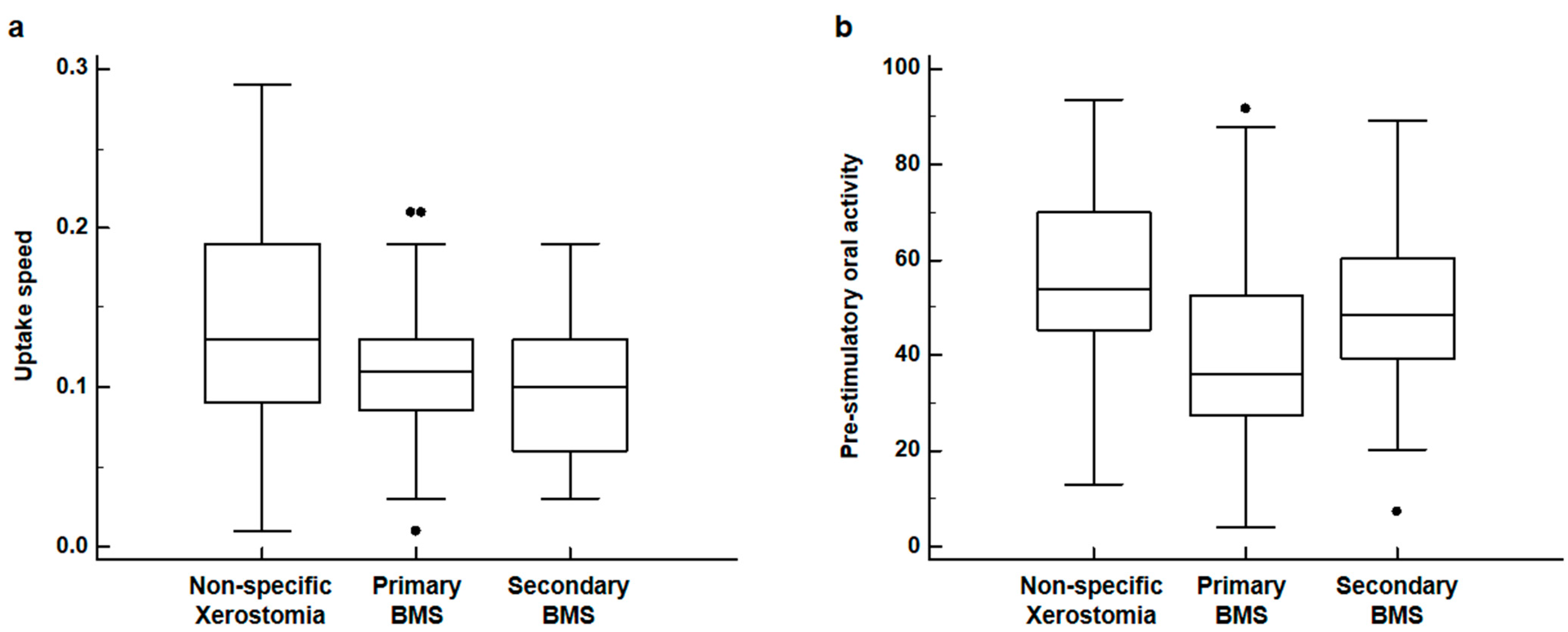
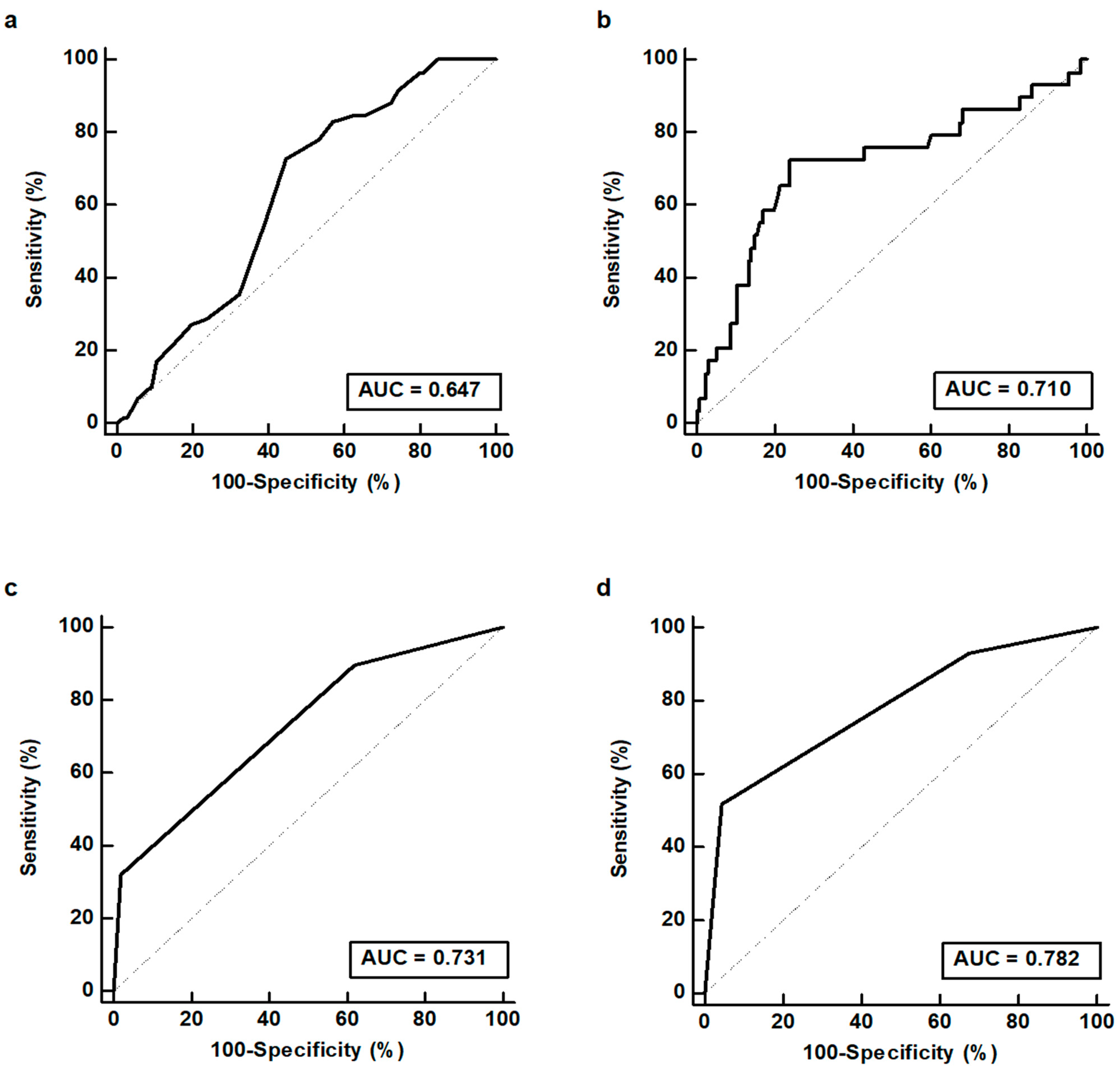
Burning mouth syndrome (BMS) is a chronic disorder characterized by a burning sensation in the oral cavity, often accompanied by xerostomia, with no relevant clinical or laboratory findings. This study aimed to investigate diagnostic values of quantitative parameters of salivary gland scintigraphy for BMS in patients with xerostomia. A total of 164 patients who underwent salivary gland scintigraphy for the workup of xerostomia were retrospectively reviewed. All patients were classified into patient groups with primary BMS, secondary BMS, and non-specific xerostomia. From salivary gland scintigraphy, 22 quantitative parameters were calculated and their diagnostic values were assessed based on the area under the receiver operating characteristic curve (AUC) values. Among salivary gland scintigraphy parameters, uptake speed in the left submandibular gland showed the highest AUC value (0.647) for detecting BMS and pre-stimulatory oral activity showed the highest AUC value (0.710) for detecting primary BMS. A salivary gland scintigraphy scoring system based on these two parameters further enhanced the diagnostic ability, demonstrating AUC values of 0.731 for BMS and 0.782 for primary BMS. These results suggest a potential diagnostic value of the quantitative parameters of salivary gland scintigraphy for detecting BMS in patients with xerostomia.
Keywords: burning mouth syndrome; radionuclide imaging; salivary gland; xerostomia burning mouth syndrome; radionuclide imaging; salivary gland; xerostomia