Review

Recent Advances in the Diagnosis of Enamel Cracks: A Narrative Review
Restorative Dentistry Department, King Abdulaziz University, P.O. Box 80209, Jeddah 21589, Saudi Arabia
Diagnostics 2022, 12(8), 2027; https://doi.org/10.3390/diagnostics12082027

Submission received: 31 May 2022 / Revised: 8 August 2022 / Accepted: 13 August 2022 / Published: 22 August 2022
(This article belongs to the Special Issue Current Concepts and Prospects of Diagnostics in Oral Diseases)

Abstract

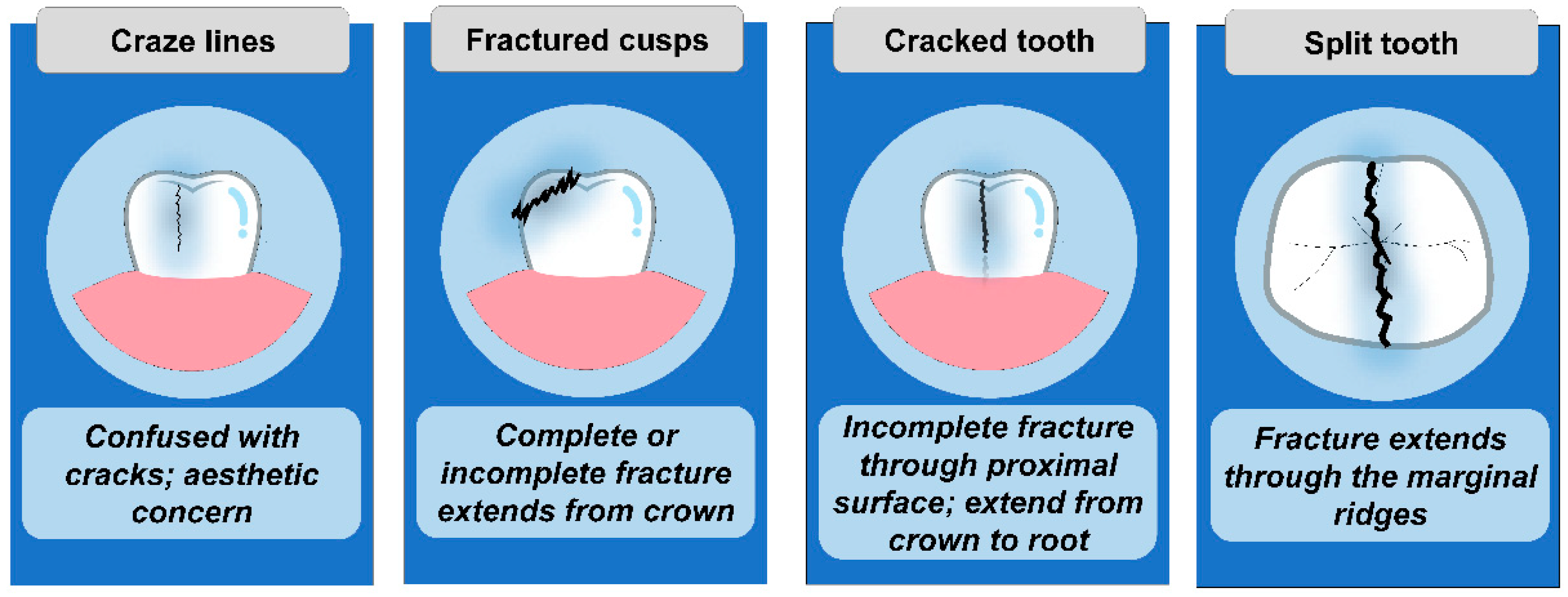
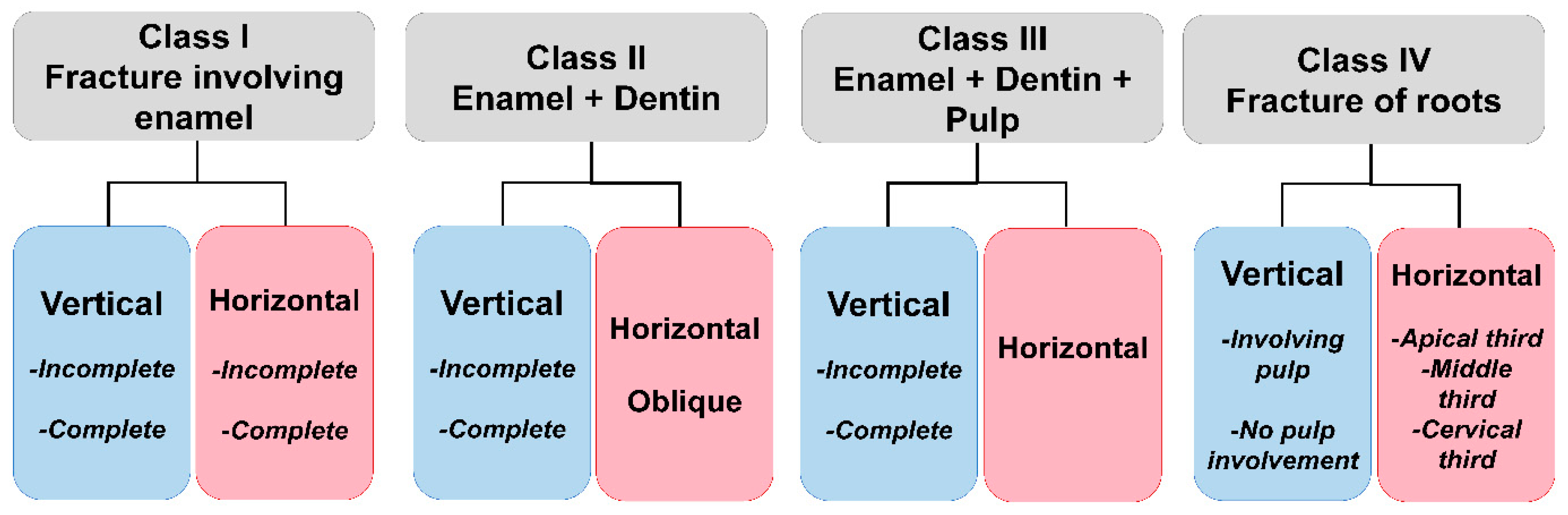
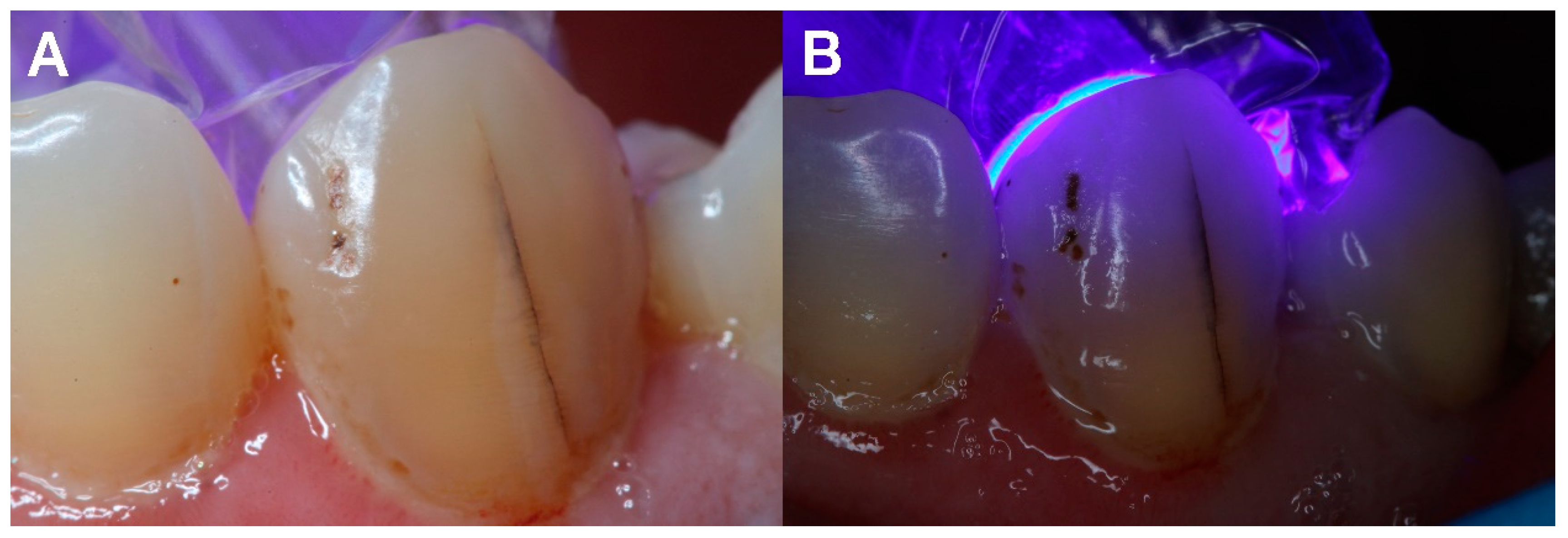
Cracked teeth can pose a diagnostic dilemma for a clinician as they can mimic several other conditions. The constant physiological stress along with any pathological strain like trauma or iatrogenic causes can lead to the development of microcracks in the teeth. Constant exposure to immense stress can cause the progression of these often-undiagnosed tooth cracks to cause tooth fractures. This review aims to outline the etiology of tooth cracks, their classification, and recent advances in the diagnosis of enamel cracks. Diagnosing a cracked tooth can be an arduous task as symptoms differ according to the location and extension of the incomplete fracture. Early detection is critical because restorative treatment can prevent fracture propagation, microleakage, pulpal or periodontal tissue involvement, and catastrophic cusp failure. Older methods of crack detection are not sensitive or specific. They include clinical examination, visual inspection, exploratory excavation, and percussion test. The dye test used blue or gentian violet stains to highlight fracture lines. Modern methods include transillumination, optical coherence tomography Swept-Source Optical Coherence Tomography (SSOCT), near-infrared imaging, ultrasonic system, infrared thermography, and near-infrared laser. These methods appear to be more efficacious than traditional clinical dental imaging techniques in detecting longitudinal tooth cracks. Clinically distinguishing between the various types of cracks can be difficult with patient-reported signs and symptoms varying according to the location and extension of the incomplete fracture. Cracks are more common in restored teeth. Technological advances such as transillumination allow for early detection and enhanced prognosis.
Keywords: cusp failure; cracked tooth; diagnosis; enamel cracks; imaging; transillumination; swept-source optical coherence Tomography cusp failure; cracked tooth; diagnosis; enamel cracks; imaging; transillumination; swept-source optical coherence Tomography