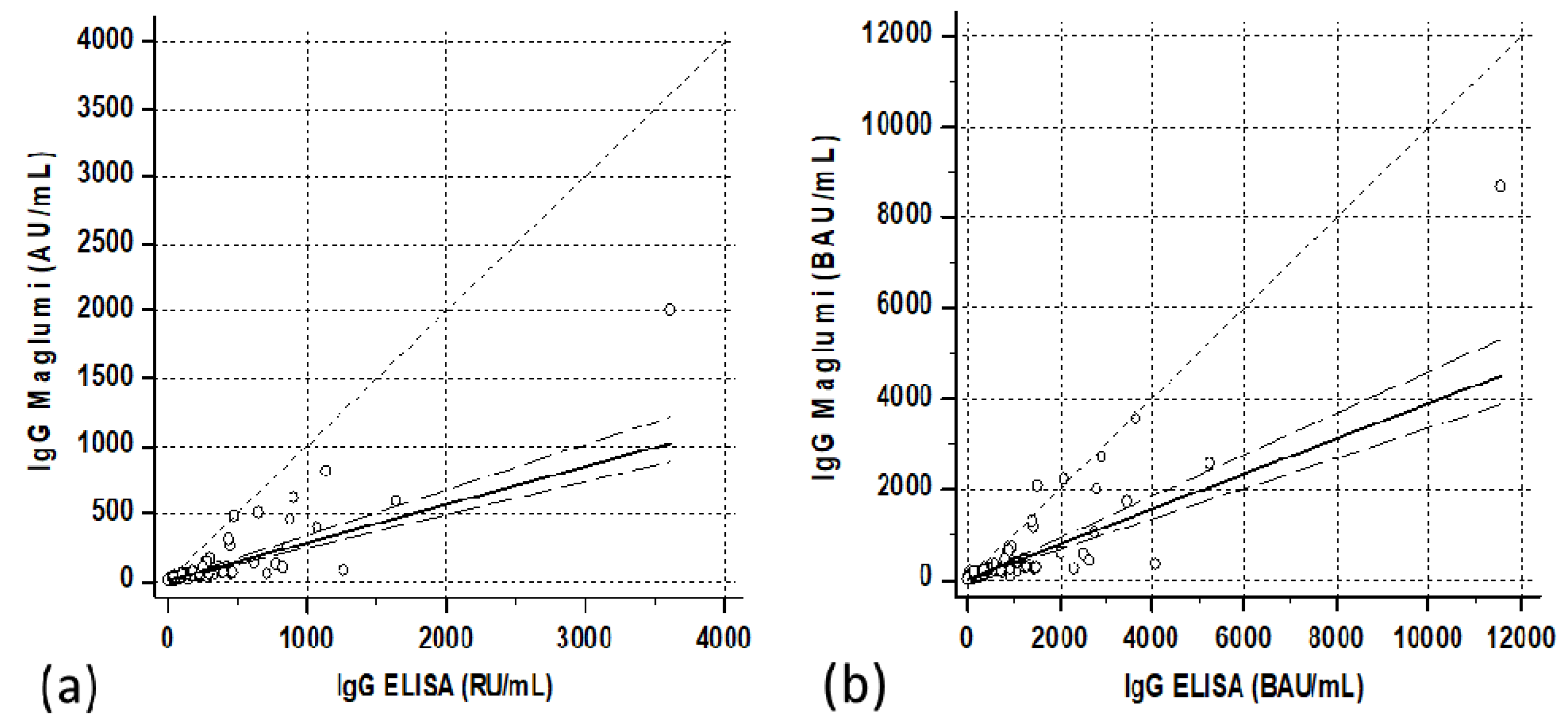
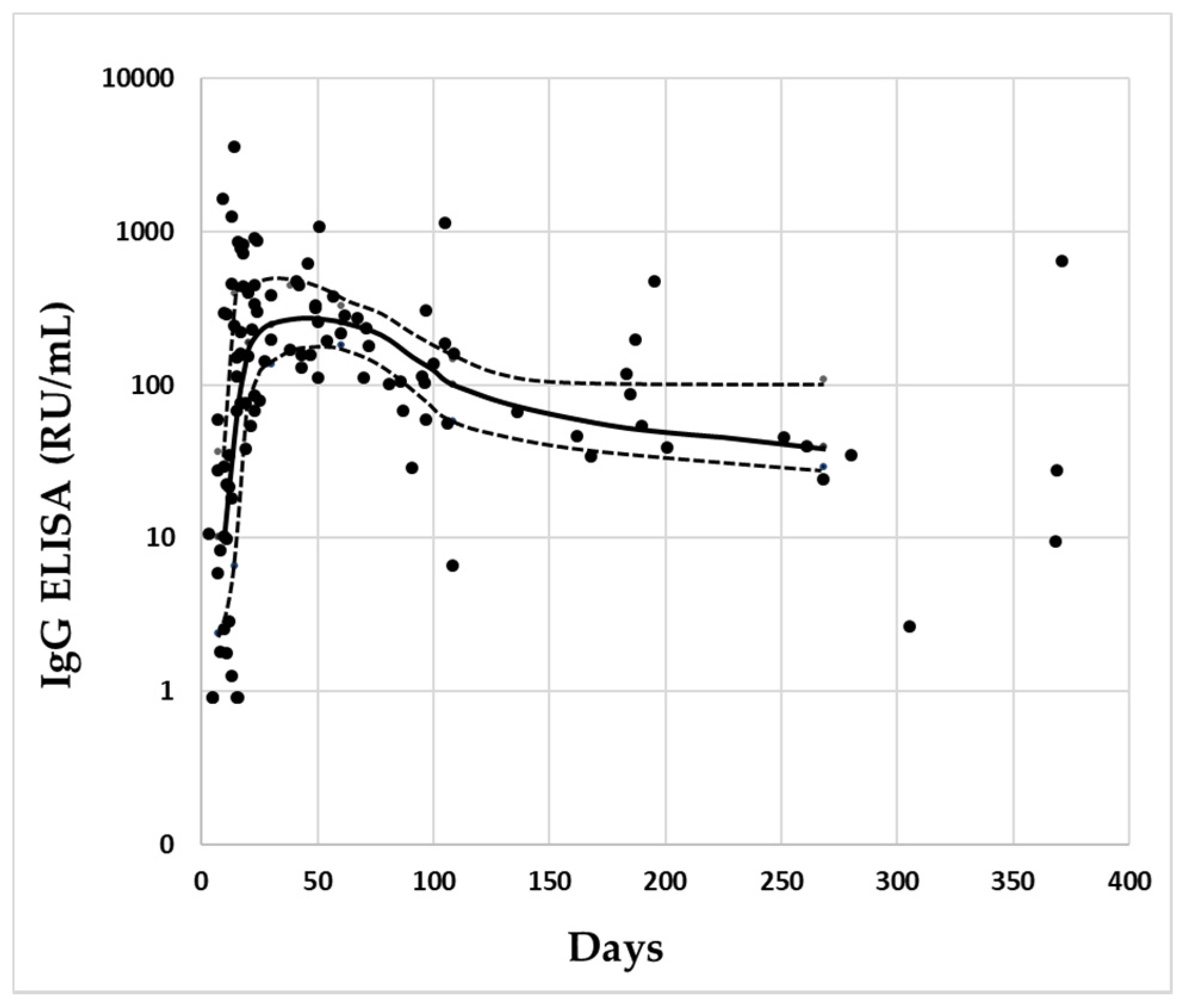
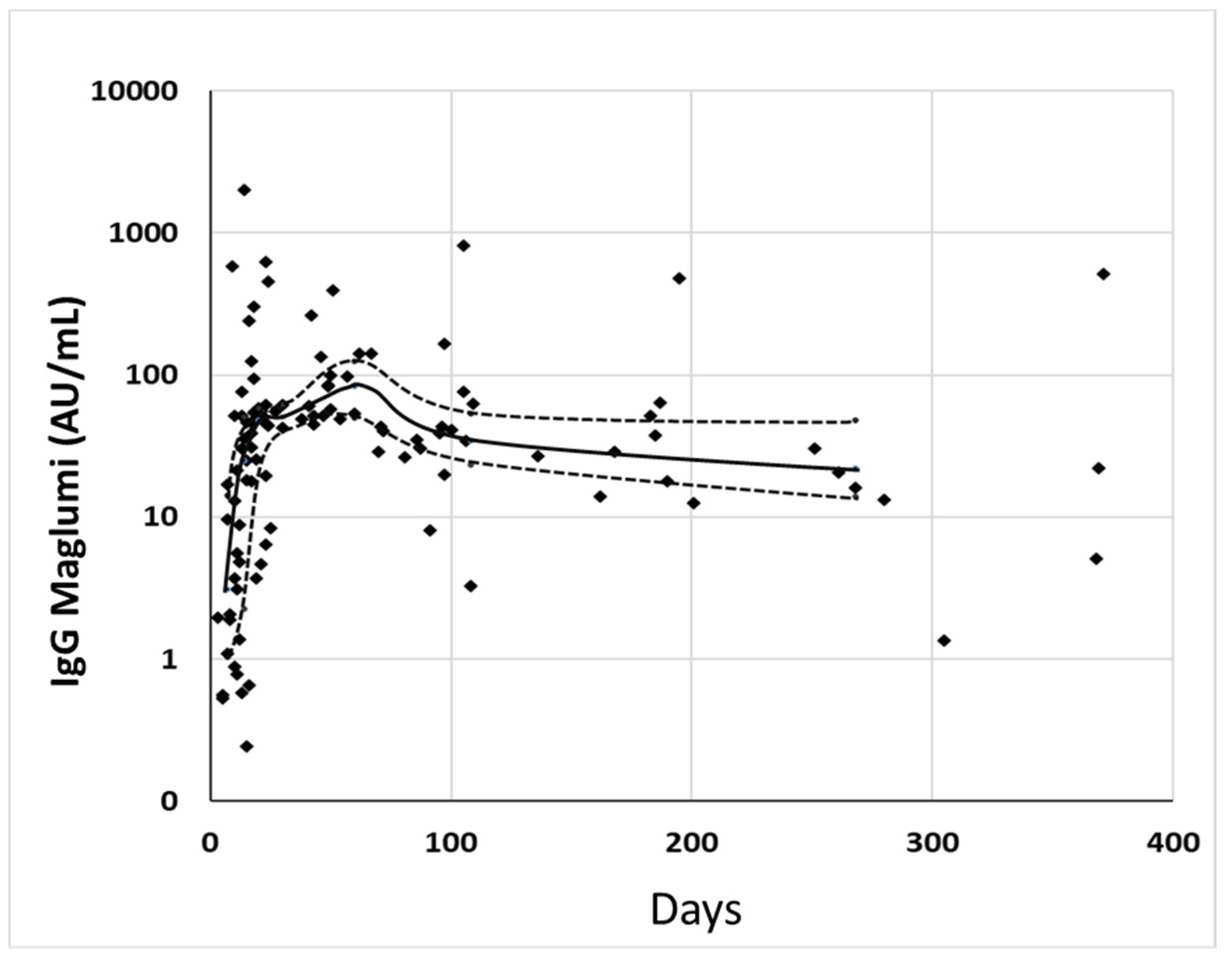
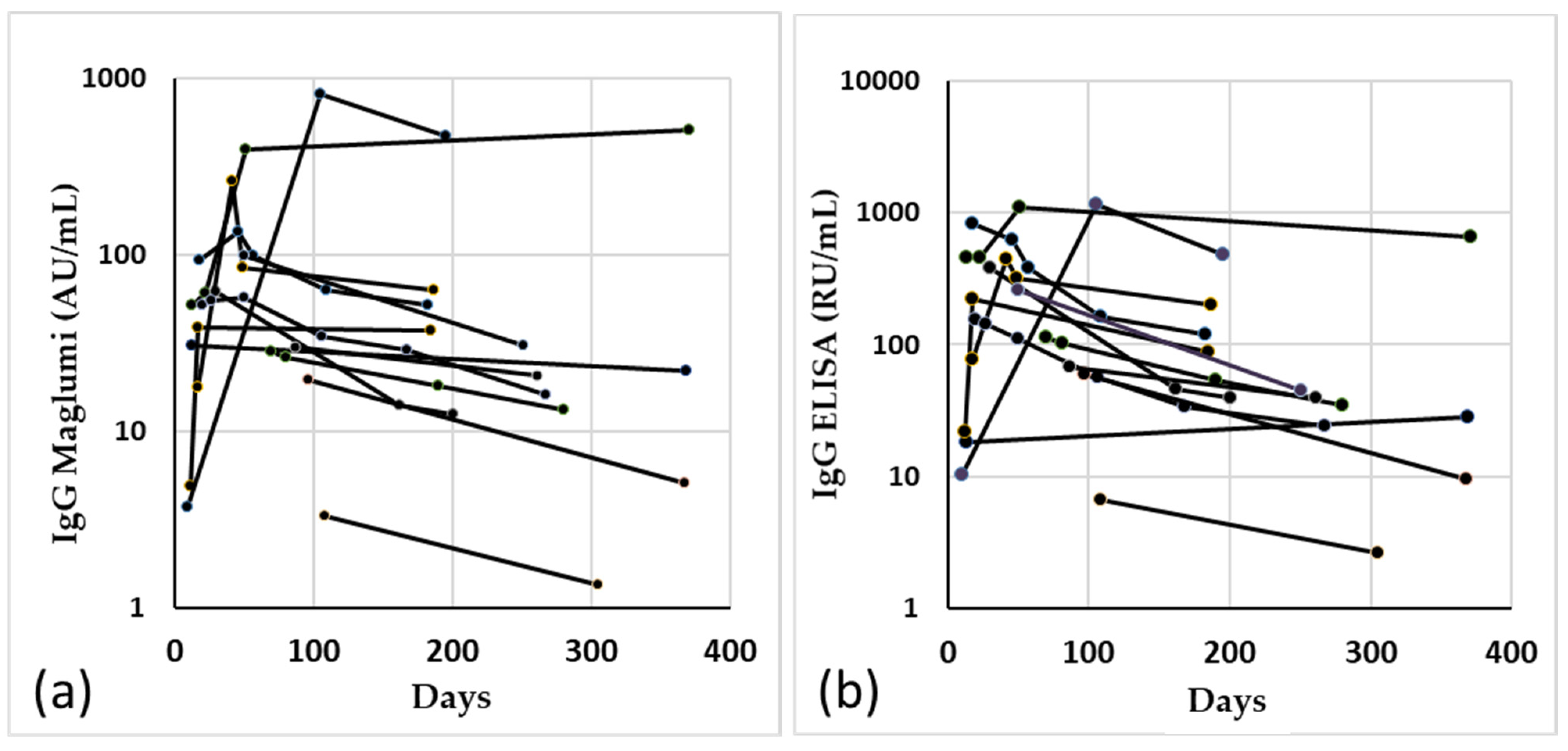
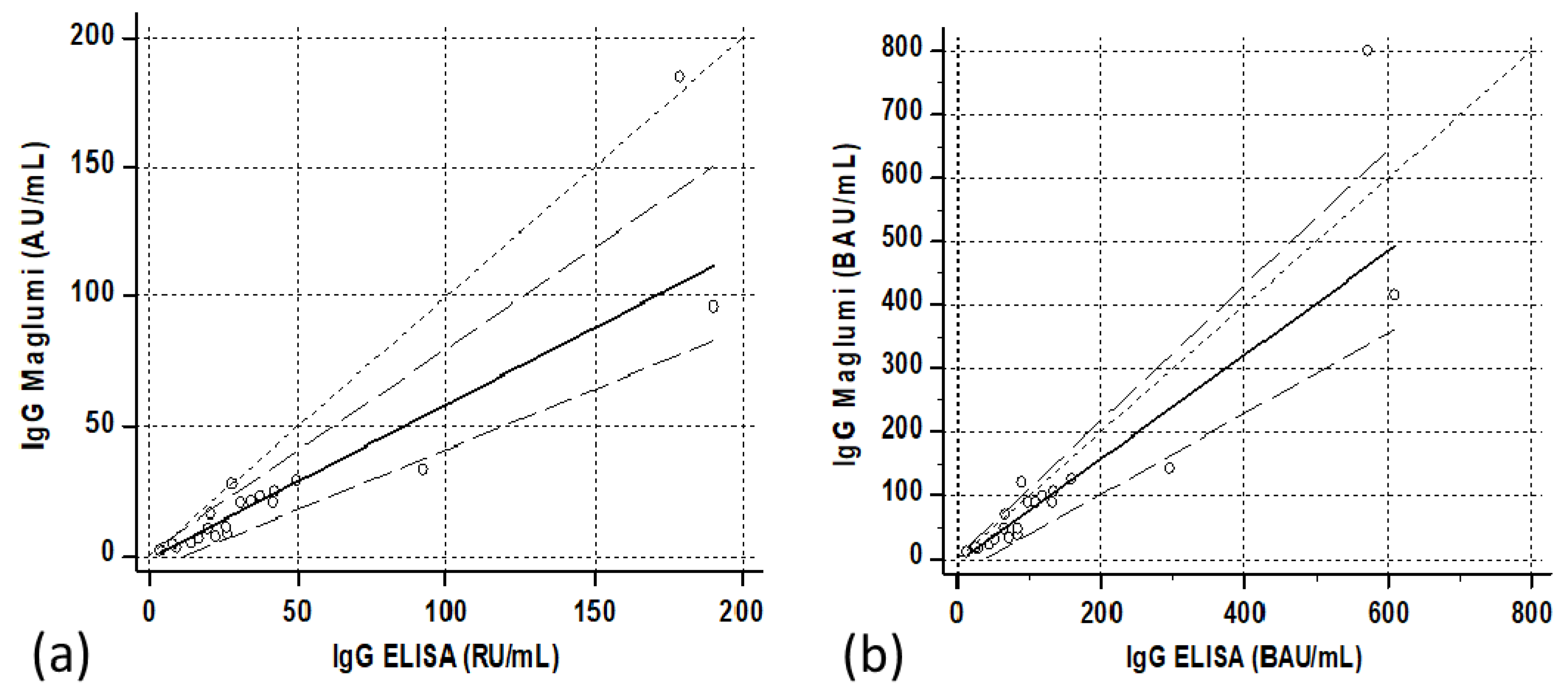
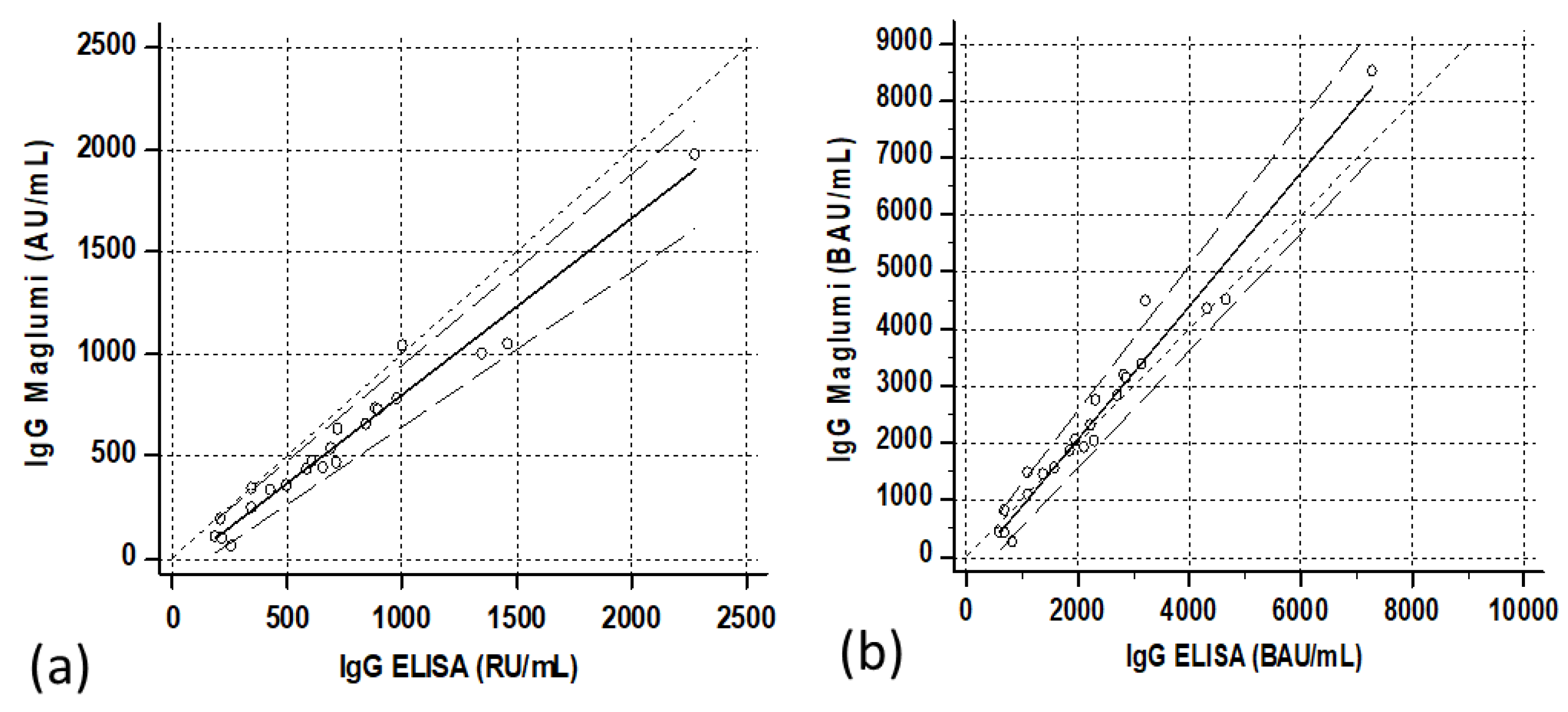
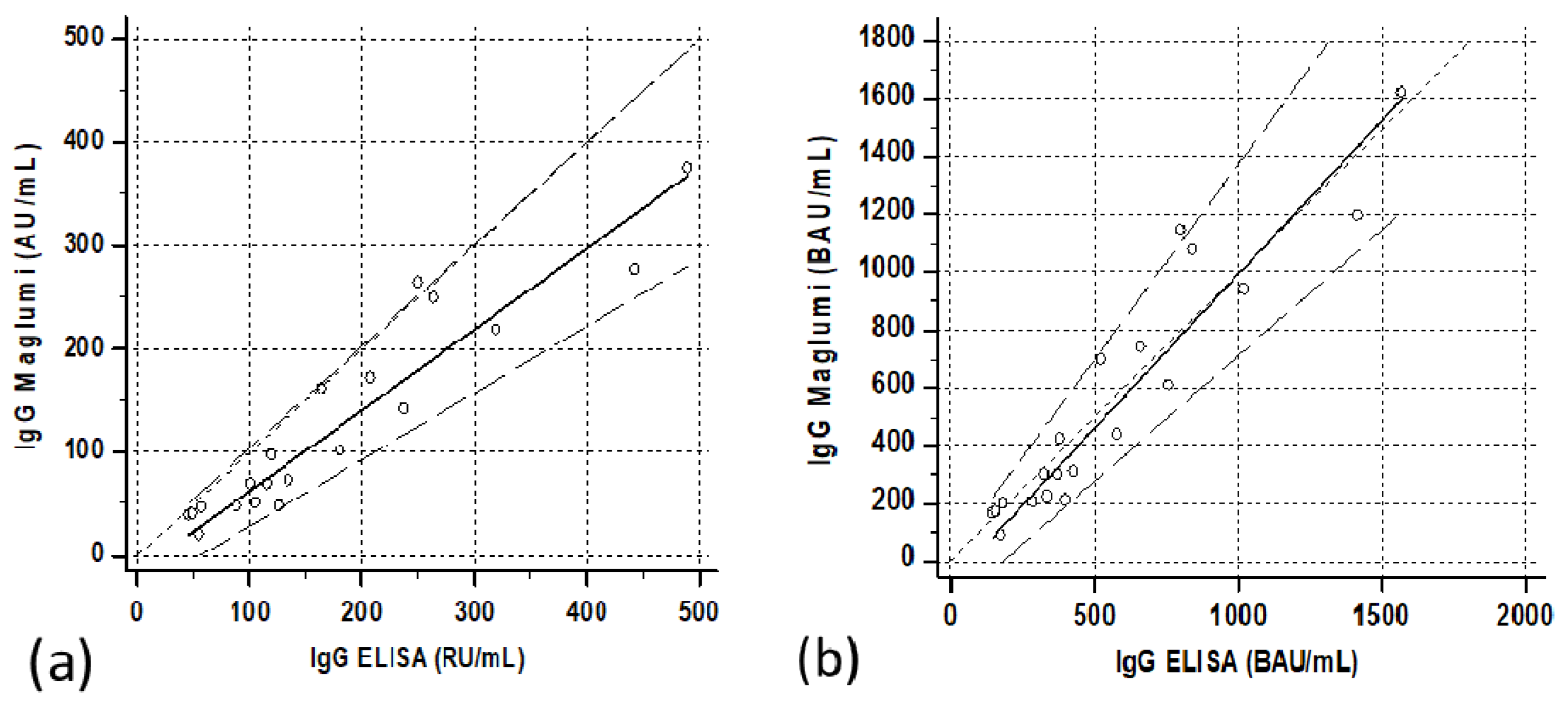
Antibodies against SARS-CoV-2 Time Course in Patients and Vaccinated Subjects: An Evaluation of the Harmonization of Two Different Methods

Abstract
Share and Cite
Dittadi, R.; Seguso, M.; Bertoli, I.; Afshar, H.; Carraro, P. Antibodies against SARS-CoV-2 Time Course in Patients and Vaccinated Subjects: An Evaluation of the Harmonization of Two Different Methods. Diagnostics 2021, 11, 1709. https://doi.org/10.3390/diagnostics11091709
Dittadi R, Seguso M, Bertoli I, Afshar H, Carraro P. Antibodies against SARS-CoV-2 Time Course in Patients and Vaccinated Subjects: An Evaluation of the Harmonization of Two Different Methods. Diagnostics. 2021; 11(9):1709. https://doi.org/10.3390/diagnostics11091709
Chicago/Turabian StyleDittadi, Ruggero, Mara Seguso, Isabella Bertoli, Haleh Afshar, and Paolo Carraro. 2021. "Antibodies against SARS-CoV-2 Time Course in Patients and Vaccinated Subjects: An Evaluation of the Harmonization of Two Different Methods" Diagnostics 11, no. 9: 1709. https://doi.org/10.3390/diagnostics11091709
APA StyleDittadi, R., Seguso, M., Bertoli, I., Afshar, H., & Carraro, P. (2021). Antibodies against SARS-CoV-2 Time Course in Patients and Vaccinated Subjects: An Evaluation of the Harmonization of Two Different Methods. Diagnostics, 11(9), 1709. https://doi.org/10.3390/diagnostics11091709