Comparative Analysis of Plasma Biomarkers of Alzheimer’s Disease and Frontotemporal Dementia: The Dual Role of Soluble Fractalkine as a Biomarker of Frontotemporal Dementia and Its Neuroprotective Effects in Cortical Neurons “In Vitro”

 ,
,  and
and
Abstract
1. Introduction
Aims
2. Materials and Methods
2.1. Clinical Selection of Participants
2.1.1. Inclusion Criteria: Clinical Selection of Patients
2.1.2. Exclusion Criteria
2.2. ELISAs for Biochemical Markers: Blood Collection for Biomarker Analysis
Soluble Fractalkine
2.3. Neuropathological and Histological Methods
2.4. Cortical Neurons Culture In Vitro
2.4.1. Materials Used in In Vitro Studies
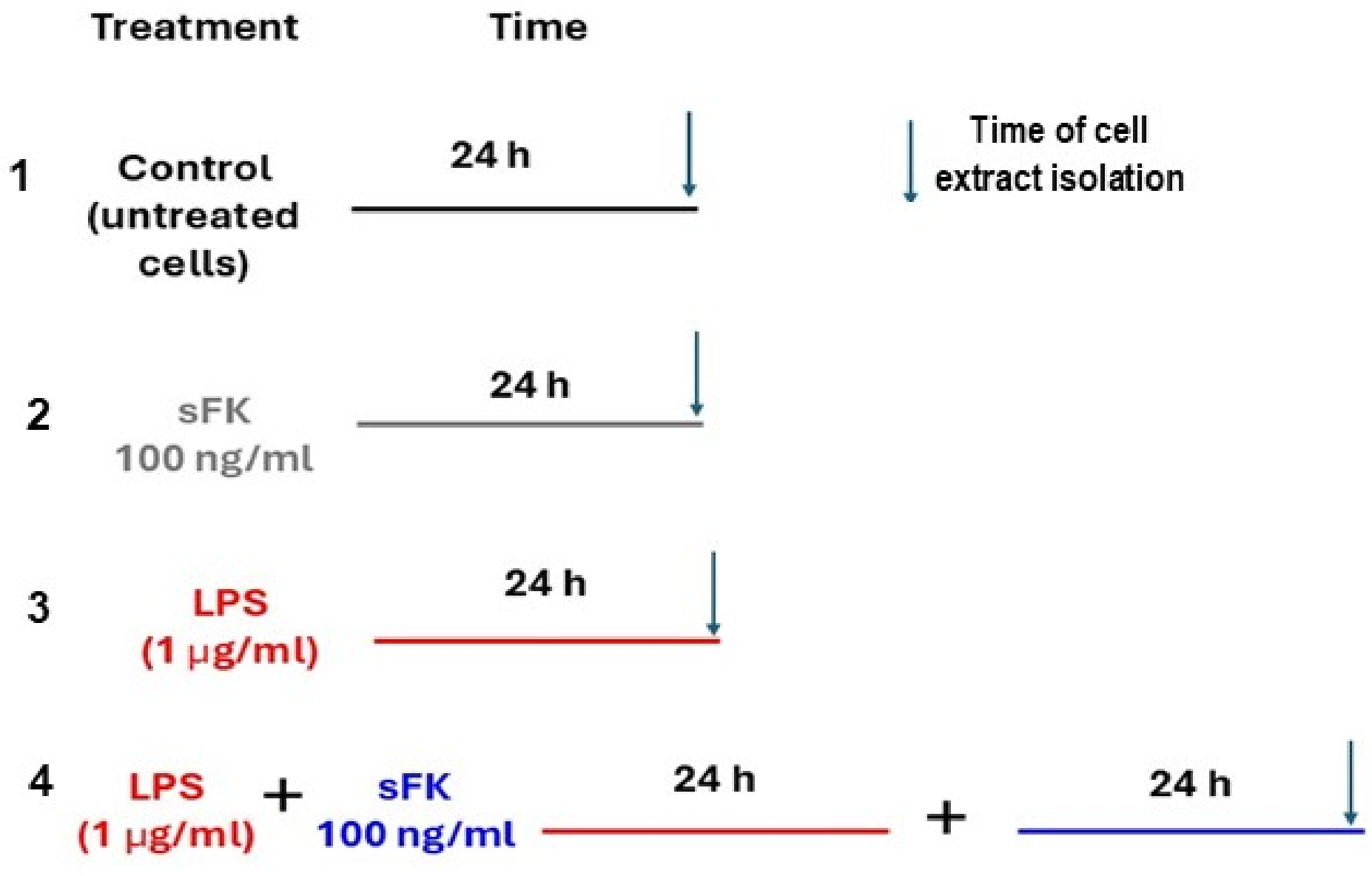
2.4.2. Cell Isolation, Culture, and Treatment
2.4.3. Ethics Statement on the Use of Animals
2.4.4. Assessment of Cell Viability by MTT Assay
2.4.5. Caspase-3 Activation
2.5. Statistical Analysis
3. Results
3.1. Comparison of Systemic Levels of Biomarkers of Cognitive Dysfunction in AD and FTD

| Peripheral Biomarker | Kolmogorov–Smirnov | Kruskal-Wallis (H Statistic) | Dunn’s Test with Holm- Adjusted p Values | |||
|---|---|---|---|---|---|---|
| CX3CR1 | Cont | AD | FTD | H = 104.9; p < 0.001 * | Dunn’s test and Holm method AD vs. cont, p < 0.0001 * FTD vs. cont, p < 0.0001 * AD vs. FTD, p = 0.15, n.s. | |
| KS distance | 0.1 | 0.19 | 0.193 | |||
| p value | 0.006 | <0.0001 | <0.0001 | |||
| Passed normality test | ||||||
| (alpha = 0.05)? | No | No | No | |||
| p summary | ||||||
| Soluble Factalkine (sFK) | Cont | AD | FTD | H = 10.01, p = 0.007 * | Dunn’s test and Holm method AD vs. cont, p = 0.08, n.s. FTD vs. cont, p = 0.006 * AD vs. FTD, p = 0.8, n.s. | |
| KS distance | 0.24 | 0.16 | 0.15 | |||
| p value | <0.0001 | <0.0001 | <0.0001 | |||
| Passed normality test | ||||||
| (alpha = 0.05)? | No | No | No | |||
| p summary | ||||||
| TDP-43 | Cont | AD | FTD | H = 13.72, p = 0.001 * | Dunn’s test and Holm method AD vs. cont, p = 0.2, n.s. FTD vs. cont, p = 0.0006 * AD vs. FTD, p = 0.15, n.s. | |
| KS distance | 0.32 | 0.26 | 0.27 | |||
| p value | <0.0001 | <0.0001 | <0.0001 | |||
| Passed normality test | ||||||
| (alpha = 0.05)? | No | No | No | |||
| p summary | ||||||
| p-tau217 | Cont | AD | FTD | H = 97.3, p < 0.001 * | Dunn’s test and Holm method AD vs. cont, p < 0.0001 * FTD vs. cont, p < 0.0001 * AD vs. FTD, p= 0.9, n.s. | |
| KS distance | 0.33 | 0.26 | 0.27 | |||
| p value | <0.0001 | <0.0001 | <0.0001 | |||
| Passed normality test | ||||||
| (alpha = 0.05)? | No | No | No | |||
| p summary | ||||||
| GFAP | Cont | AD | FTD | H = 93.9, p < 0.001 * | AD vs. cont, p < 0.0001 * FTD vs. cont, p < 0.0001 * AD vs. FTD, p = 0.6, n.s. | |
| KS distance | 0.1 | 0.14 | 0.12 | |||
| p value | 0.1 | 0.00095 | 0.03 | |||
| Passed normality test | ||||||
| (alpha = 0.05)? | Yes | No | No | |||
| p summary | ||||||
| NfL M | Cont | AD | FTD | H = 84.2, p < 0.001 * | Dunn’s test and Holm method AD vs. cont, p < 0.001 * FTD vs. cont, p < 0.001 * AD vs. FTD, p = 0.8, n.s. | |
| KS distance | 0.3 | 0.23 | 0.25 | |||
| p value | <0.0001 | <0.0001 | <0.0001 | |||
| Passed normality test | ||||||
| (alpha = 0.05)? | No | No | No | |||
| p summary | ||||||
| Seropositive patients | Mann-Whitney (MN) test | |||||
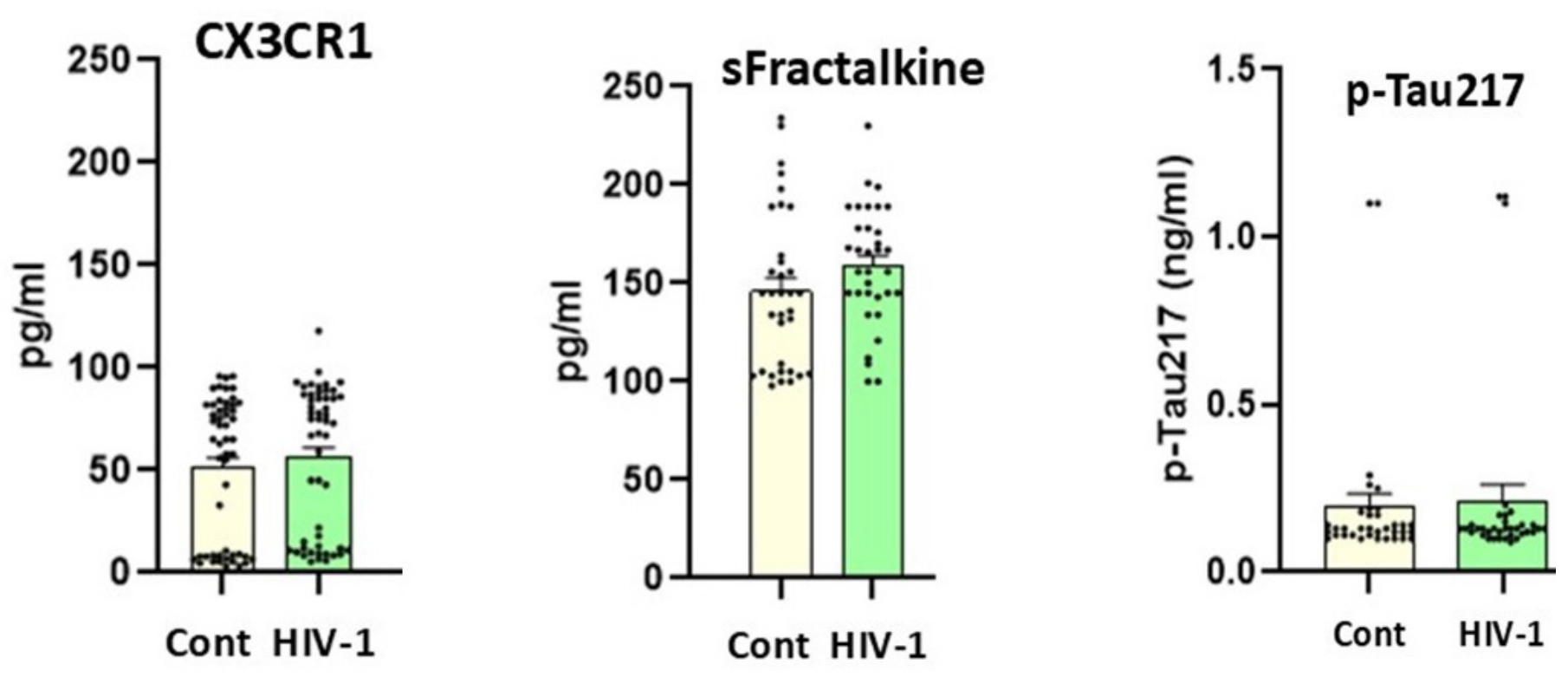
| CX3CR1 | - | (MW), p = 0.9, n.s. - | - | |||
| sFK | - | (MW), p = 0.99, n.s. - | - | |||
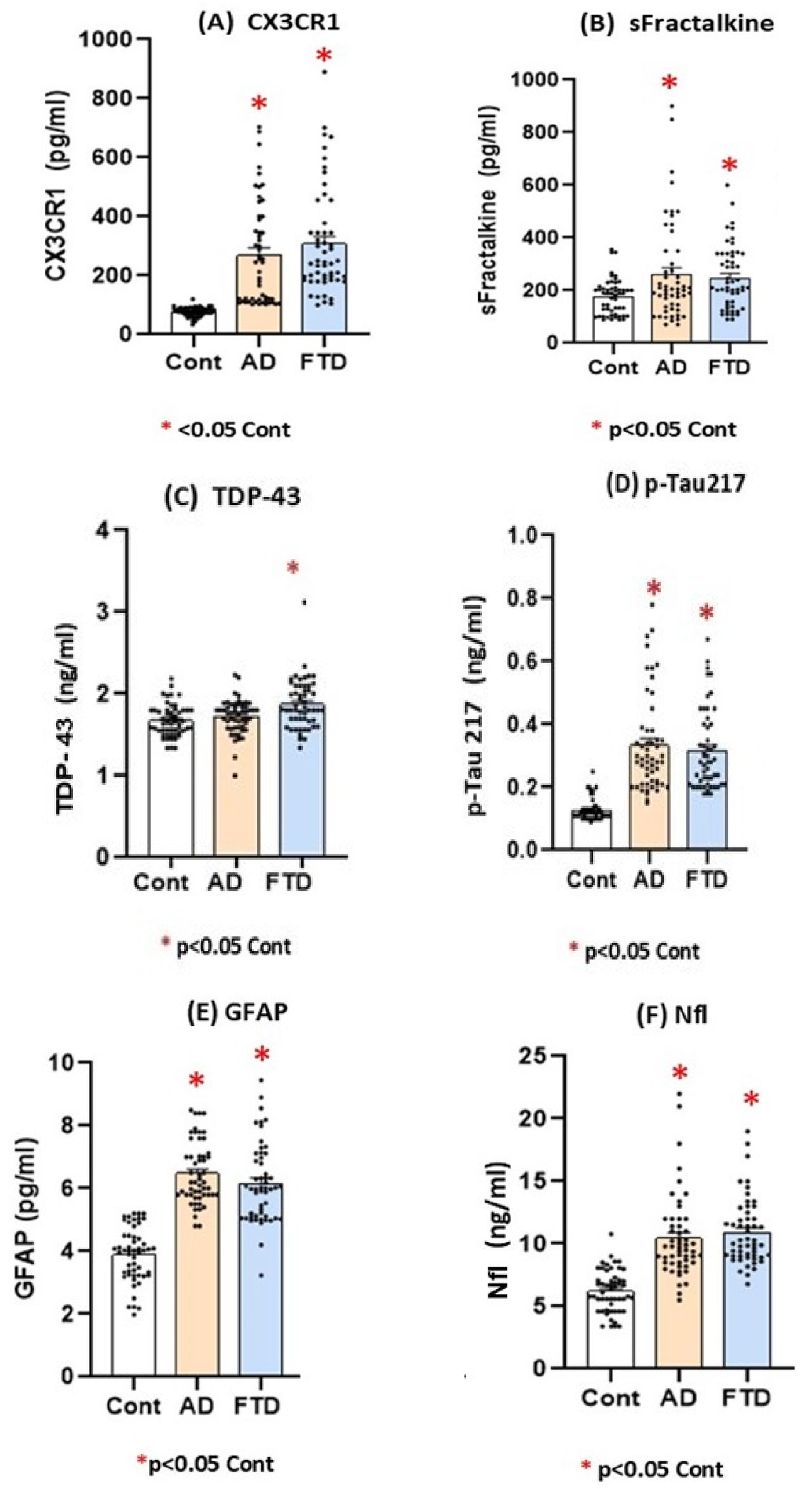
3.2. Comparative Levels of Peripheral Biomarkers Involved in Cognitive Impairment Between AD or FTD Patients
3.3. CX3CR1/sFK and p-Tau217 in Seropositive Patients
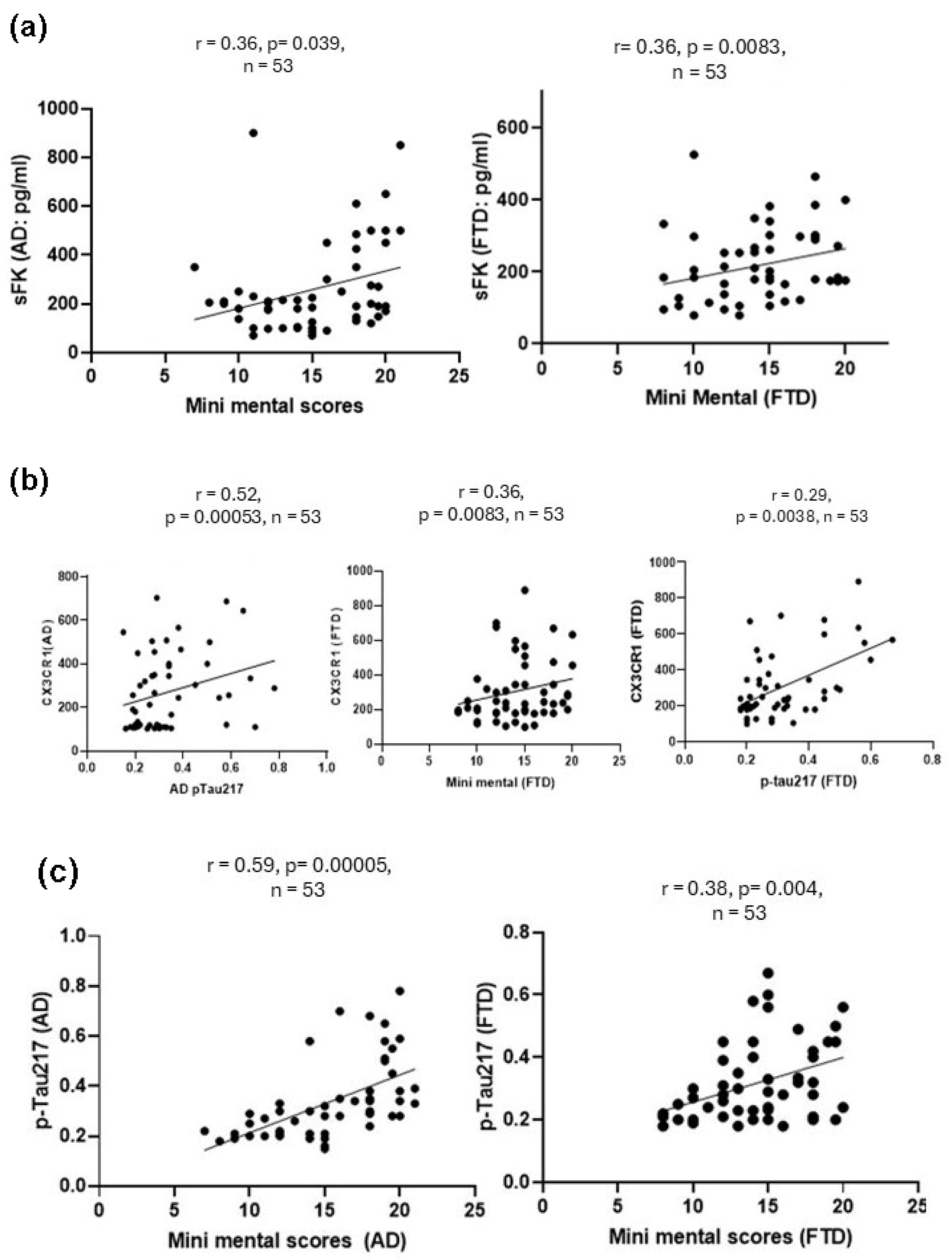
3.4. Correlations Between Mini-Mental Scores (MMSE) and Biomarkers of Dementia in Plasma
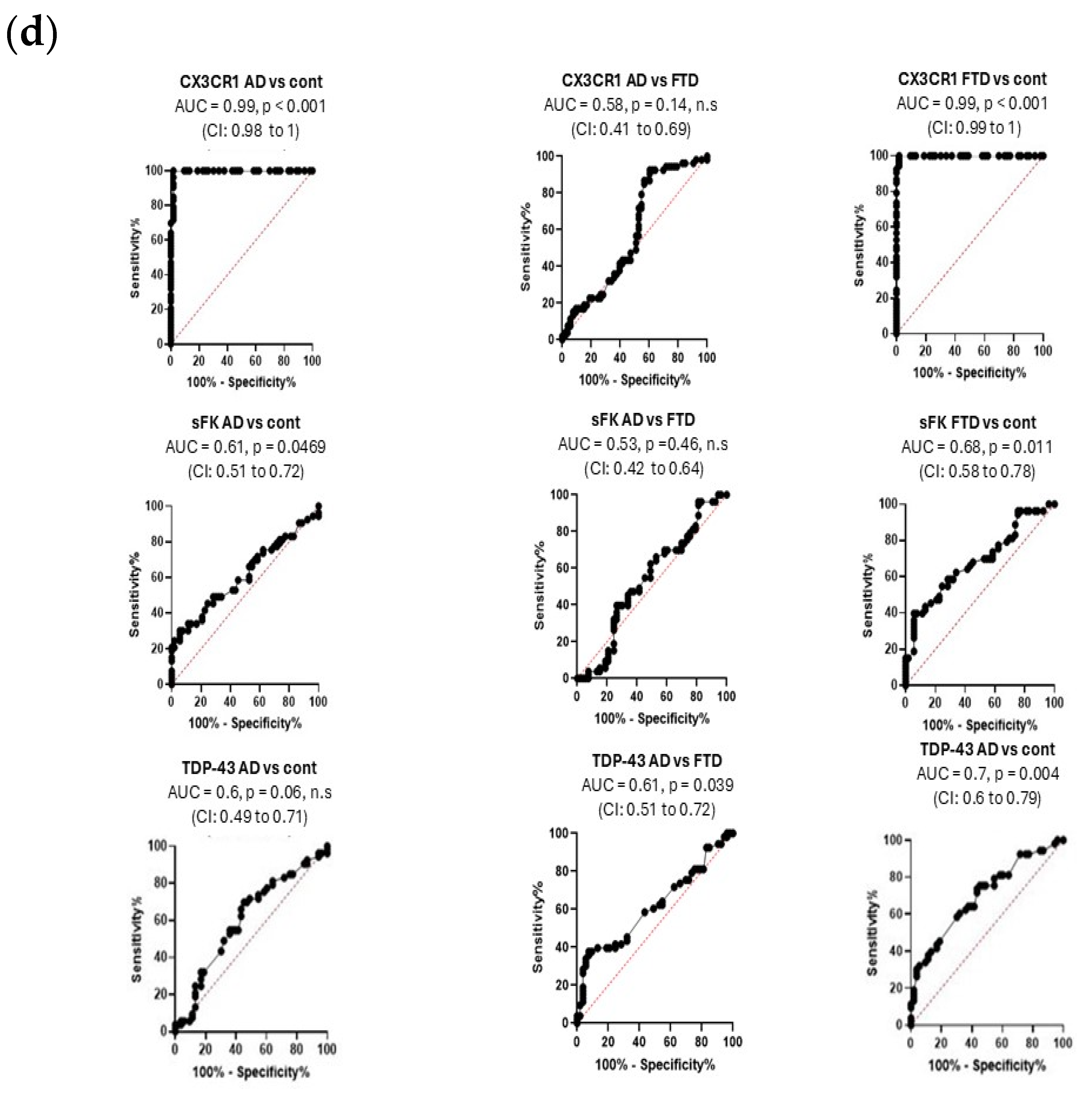
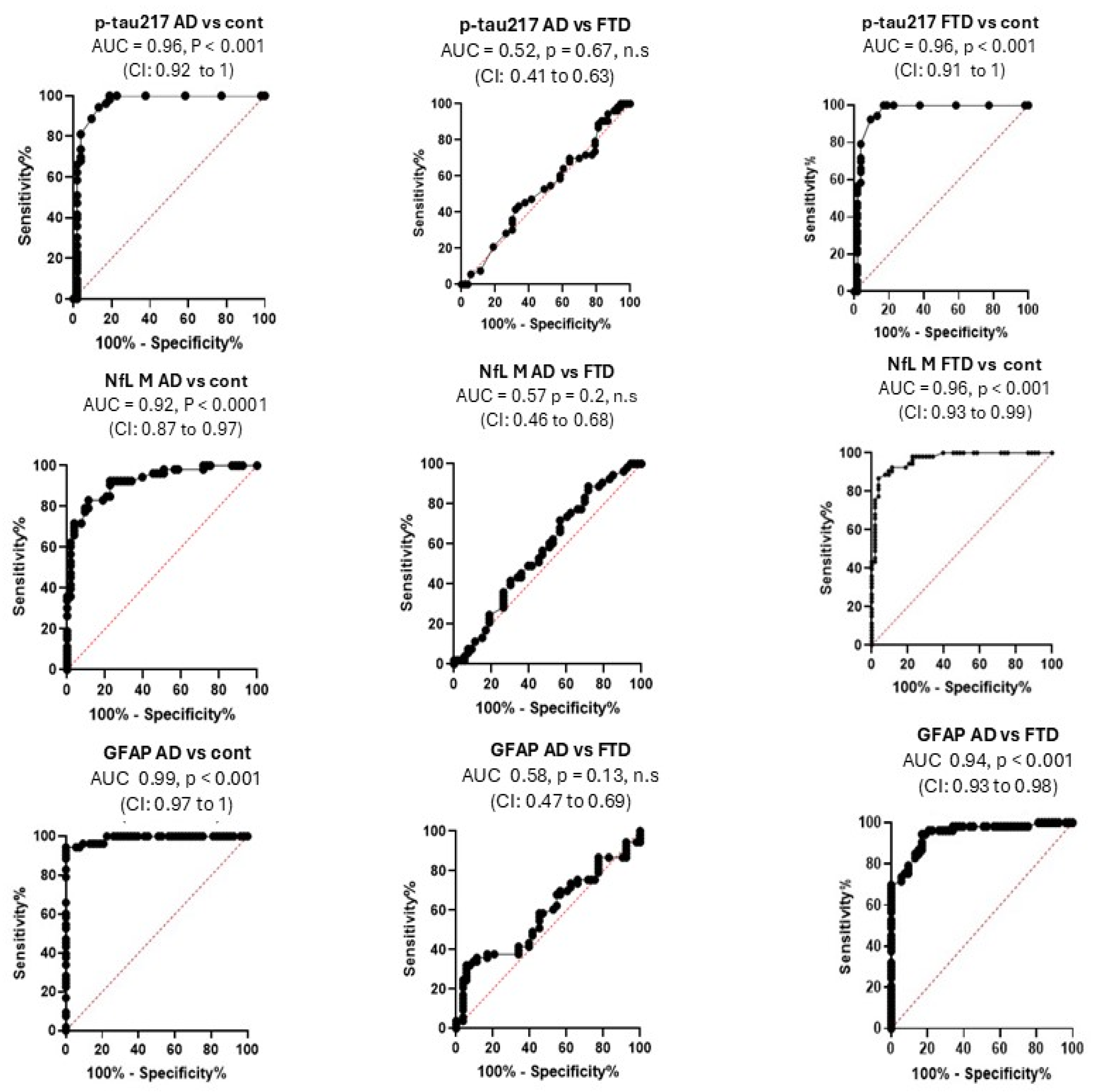
3.5. ROC Curve Analysis of Peripheral Biomarkers in AD and FTD
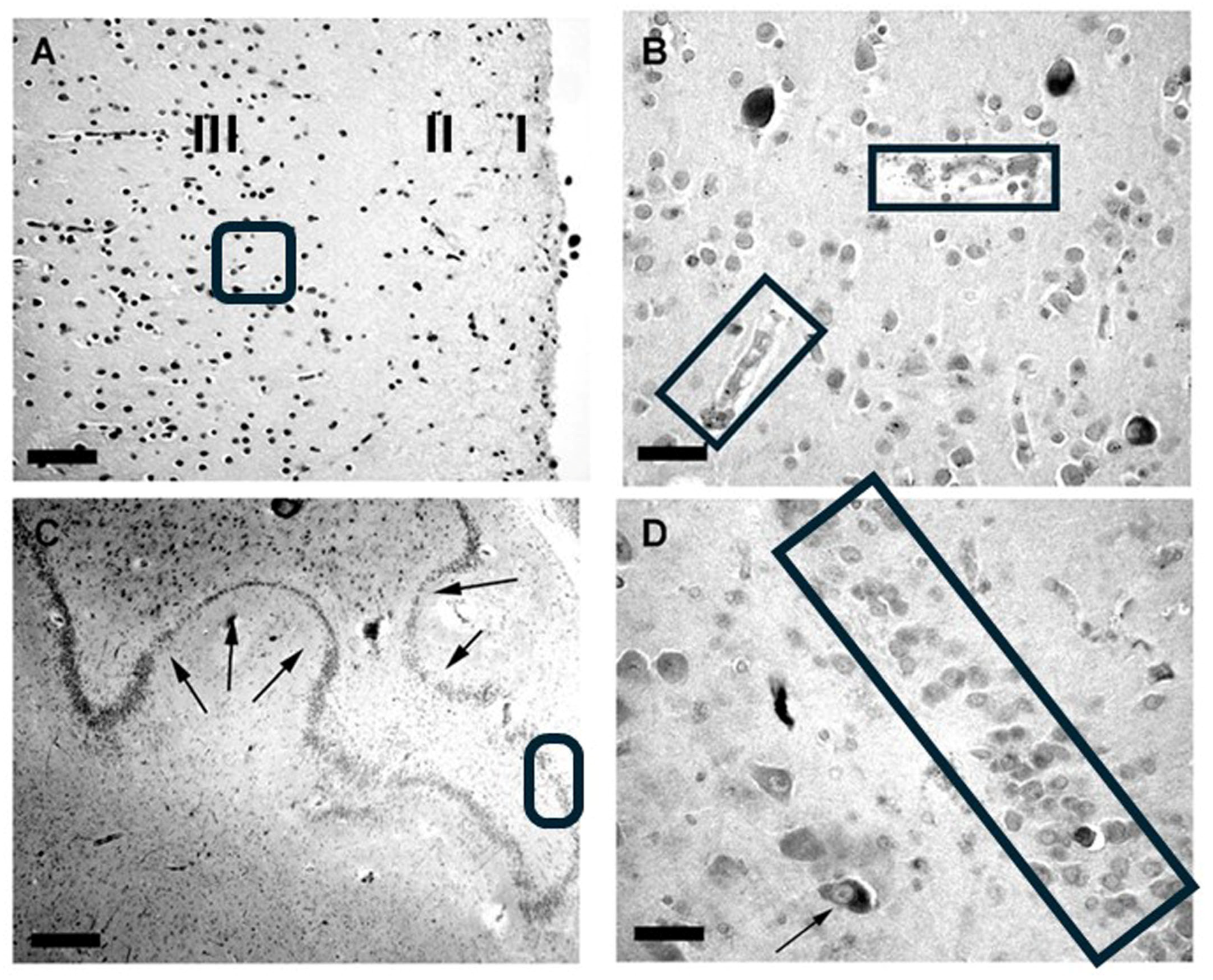
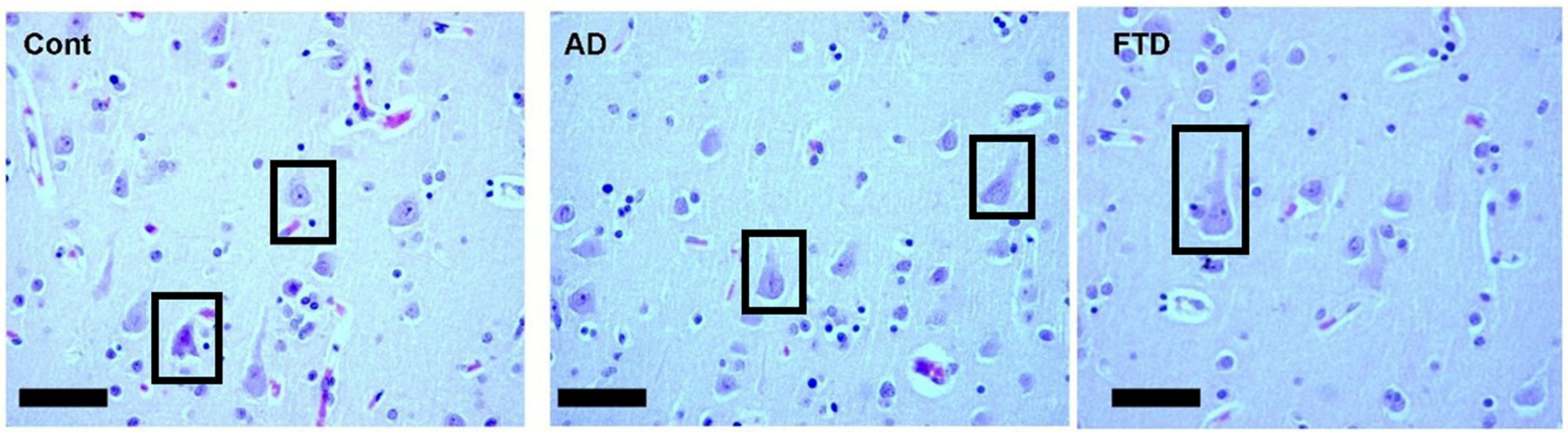
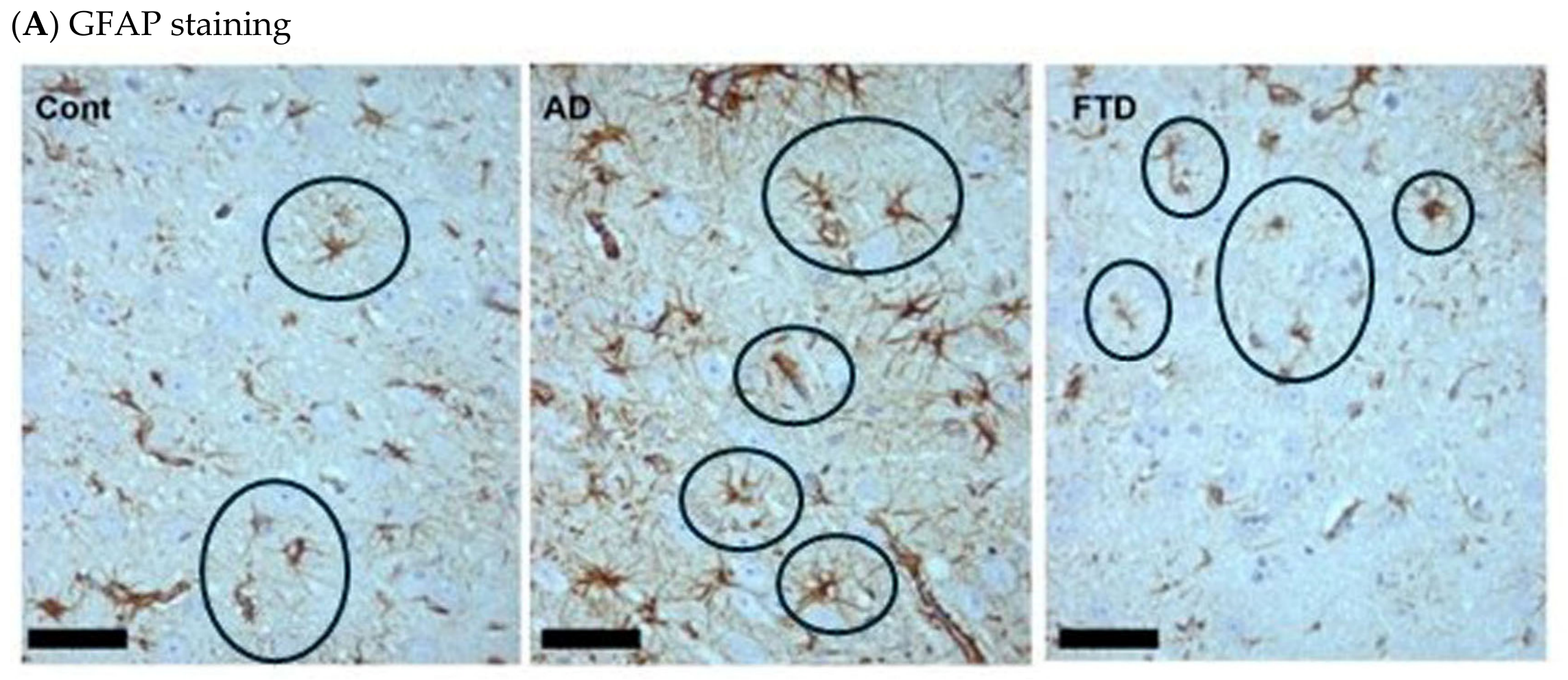
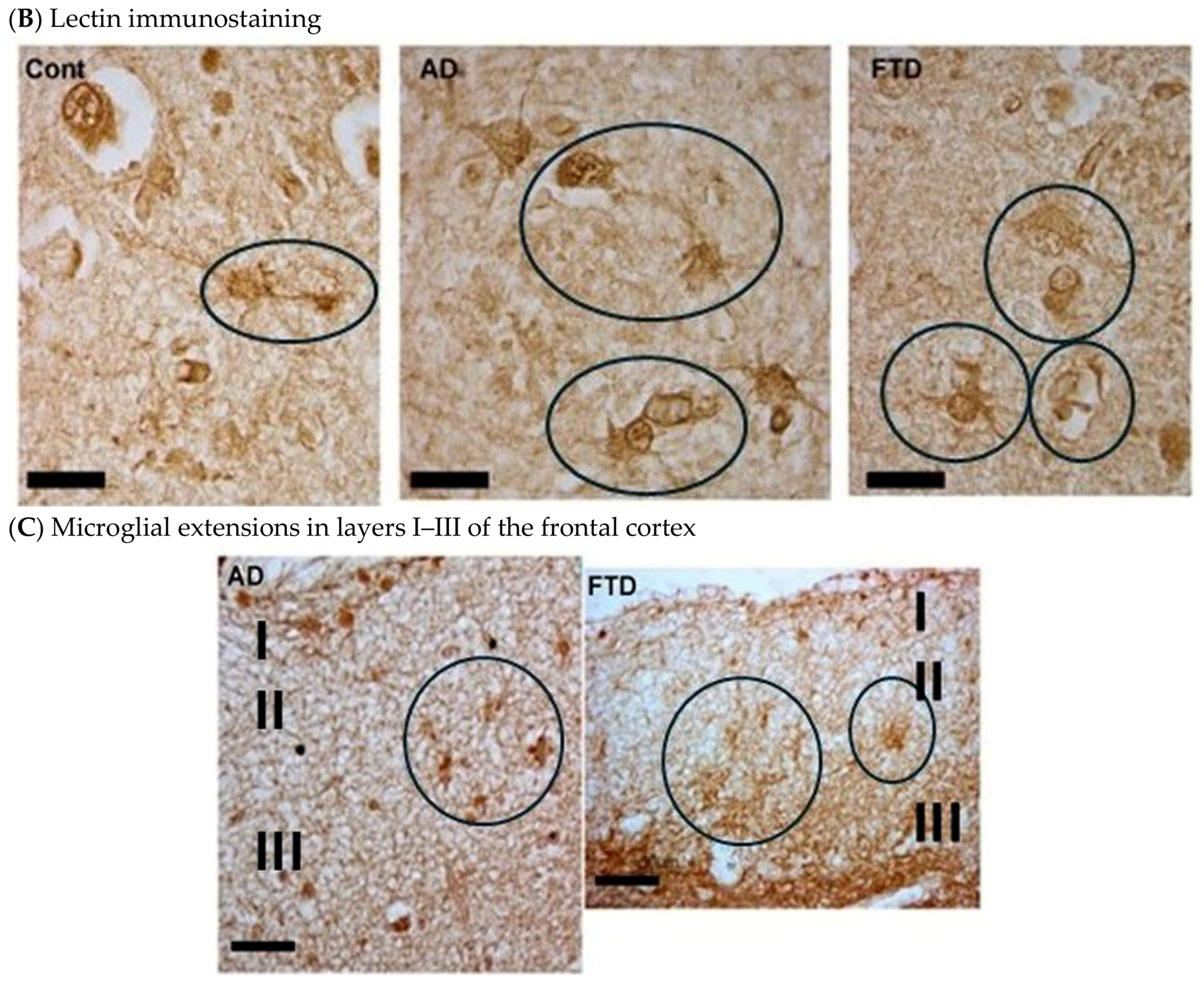
4. Neuropathological Alterations in Human Post-Mortem Brains of AD and FTD Patients
5. Neuroprotective Effects of Soluble Recombinant Fractalkine Protein in Cortical Neurons Exposed to Lipopolysaccharide (LPS) for 7 DIV
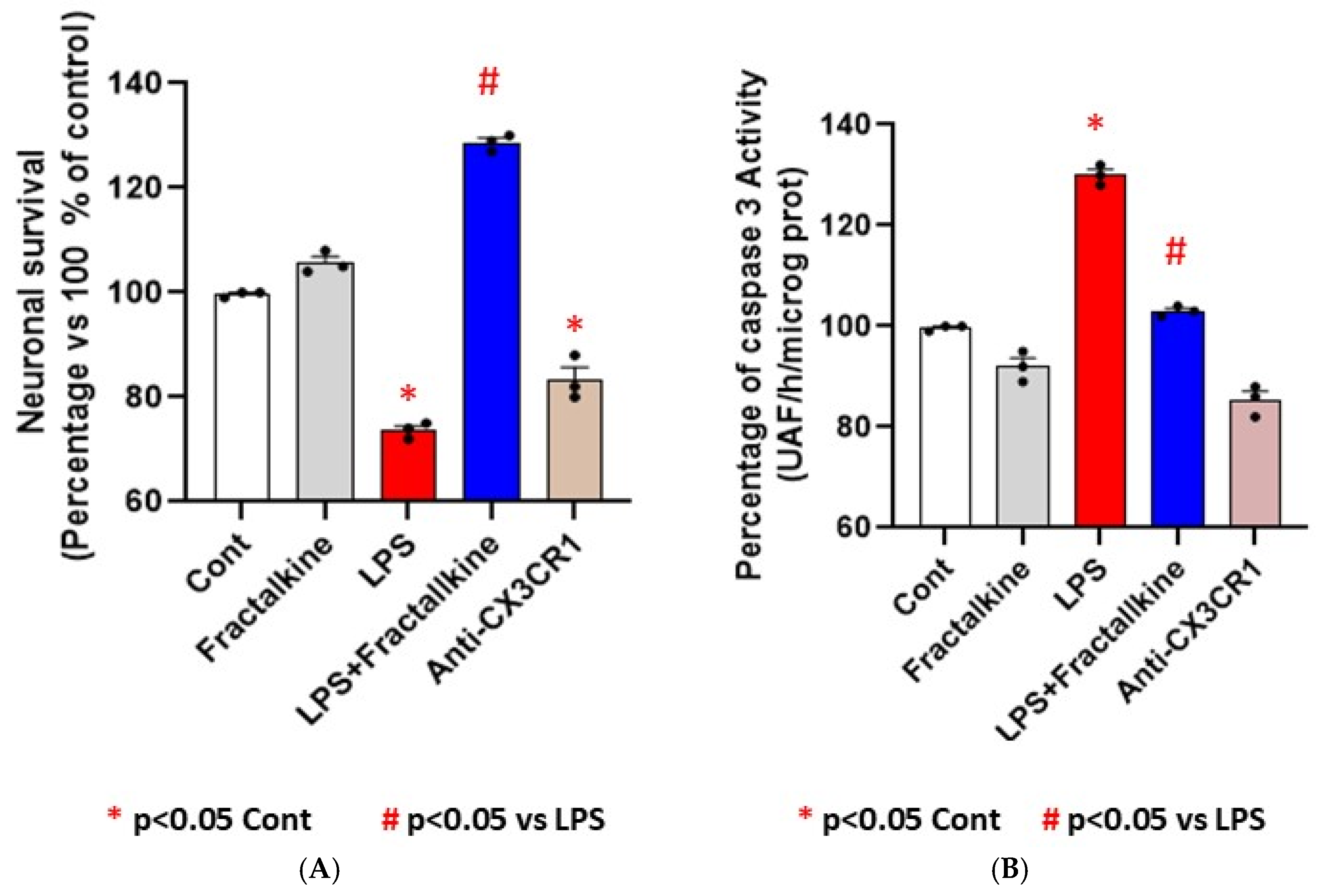
5.1. In Vitro Evaluation of the Anti-Apoptotic Effects of Fractalkine on Cortical Neurons Under LPS-Induced Inflammation
5.1.1. Bifactorial ANOVA Analysis for MTT Assay and Caspase-3 Activity
MTT
Caspase3 Activity
6. Discussion
7. Conclusions
8. Limitations and Future Perspectives
Supplementary Materials
Author Contributions
Funding
Institutional Review Board Statement
Informed Consent Statement
Data Availability Statement
Conflicts of Interest
References
- Kelliny, S.; Zhou, X.F.; Bobrovskaya, L. Alzheimer’s Disease and Frontotemporal Dementia: A Review of Pathophysiology and Therapeutic Approaches. J. Neurosci. Res. 2025, 103, e70046. [Google Scholar] [CrossRef] [Scilit]
- Maiese, K. Dementia, mood disorders, and aging: Bridging new avenues of care through shared biological pathways. Aging Adv. 2026, 3, 142–151. [Google Scholar] [CrossRef] [Scilit] [PubMed] [PubMed Central]
- Thangaleela, S.; Ali, A.; Tandoro, Y.; Wang, C.-K. Shared Neuroinflammatory Mechanisms Across Dementia Types: An Integrative Review. Int. J. Mol. Sci. 2026, 27, 179. [Google Scholar] [CrossRef] [Scilit]
- Ilchovska, Z.G.; Lockwood, J.; Proctor, E.; Hosseini, A.A.; Ralph, M.A.L.; Jung, J. The neural bases of frontotemporal dementia and primary progressive aphasia subtypes: Insights from activation likelihood estimation meta-analyses of 8057 patients. Brain Commun. 2026, 8, fcag223. [Google Scholar] [CrossRef] [Scilit]
- Zetterberg, H.; Teunissen, C.; van Swieten, J.; Kuhle, J.; Boxer, A.; Rohrer, J.D.; Mitic, L.; Nicholson, A.M.; Pearlman, R.; McCaughey, S.M.; et al. The role of neurofilament light in genetic frontotemporal lobar degeneration. Brain Commun. 2022, 5, fcac310. [Google Scholar] [CrossRef] [Scilit]
- Nasir, A.R.; Nouh, C.D. TDP-43-proteinopathy at the crossroads of tauopathy: On copathology and current and prospective biomarkers. Front. Cell Neurosci. 2025, 19, 1671419. [Google Scholar] [CrossRef] [Scilit] [PubMed] [PubMed Central]
- Liu, B.; Chen, X.; Wang, J.; Chen, J.; Zhao, B.; Jin, X.; Jiang, M.; Wang, J.; Liao, W.; Yang, B.; et al. TDP-43: Unveiling the hidden key to cellular fate decisions. Cell Commun. Signal. 2025, 23, 453. [Google Scholar] [CrossRef] [Scilit]
- Jiao, B.; Ouyang, Z.; Liu, Y.; Zhang, C.; Xu, T.; Yang, Q.; Zhang, S.; Zhu, Y.; Wan, M.; Xiao, X.; et al. Evaluating the diagnostic performance of six plasma biomarkers for Alzheimer’s disease and other neurodegenerative dementias in a large Chinese cohort. Alzheimers Res. Ther. 2025, 17, 71. [Google Scholar] [CrossRef] [Scilit]
- Rodríguez, J.J.; Zallo, F.; Gardenal, E.; Cabot, J.; Busquets, X. Prominent and Conspicuous Astrocyte Atrophy in Human Sporadic and Familial Alzheimer’s Disease. Brain Struct. Funct. 2023, 228, 2103–2113. [Google Scholar] [CrossRef] [Scilit]
- Rodríguez, J.; Gardenal, E.; Zallo, F.; Cabot, J.; Busquets, X. Early PSA-NCAM reduction in the dentate gyrus and impaired plasticity in the Alzheimer’s disease 3xTg-mice model. Acta Histochem. 2024, 126, 152194. [Google Scholar] [CrossRef] [Scilit]
- Rodríguez, J.; Gardenal, E.; Zallo, F.; Arrue, A.; Cabot, J.; Busquets, X. Astrocyte S100β expression and selective differentiation to GFAP and GS in the entorhinal cortex during ageing in the 3xTg-Alzheimer’s disease mouse model. Acta Histochem. 2024, 126, 152131. [Google Scholar] [CrossRef] [Scilit]
- Rodríguez, J.J.; Zallo, F.; Gardenal, E.; Cabot, J.; Busquets, X. Entorhinal Cortex Astrocytic Atrophy in Human Frontotemporal Dementia. Brain Struct. Funct. 2024, 229, 695–703. [Google Scholar] [CrossRef] [Scilit]
- Bondi, M.W.; Edmonds, E.C.; Salmon, D.P. Alzheimer’s Disease: Past, Present, and Future. J. Int. Neuropsychol. Soc. 2017, 23, 818–831. [Google Scholar] [CrossRef] [Scilit] [PubMed] [PubMed Central]
- Gaur, A.; Gallagher, D.; Herrmann, N.; Chen, J.J.; Marzolini, S.; Oh, P.; Amemiya, Y.; Seth, A.; Kiss, A.; Lanctôt, K.L. Neurofilament Light Chain as a Biomarker of Global Cognition in Individuals with Possible Vascular Mild Cognitive Impairment. J. Geriatr. Psychiatry Neurol. 2025, 38, 62–72. [Google Scholar] [CrossRef] [Scilit]
- Sheng, J.; Yan, J.; Xu, Y.; Xu, X.; Zhang, X.; Wang, A.; Liu, B.; Ma, J.; Duan, X.; Zhou, H.; et al. Frontotemporal dementia associated CHCHD10V57E mutation aggravates tau pathology via disrupting the CHCHD10-Rab7A-TBC1D15 complex. Cell Death Dis. 2026, 17, 762. [Google Scholar] [CrossRef] [Scilit]
- Creekmore, B.C.; Watanabe, R.; Lee, E.B. Neurodegenerative Disease tauopathies. Annu. Rev. Pathol. 2023, 19, 345–370. [Google Scholar] [CrossRef] [Scilit]
- Hirota, Y.; Sakakibara, Y.; Ibaraki, K.; Takei, K.; Iijima, K.M.; Sekiya, M. Distinct Brain Pathologies Associated with Alzheimer’s Disease Biomarker-Related Phospho-tau 181 and Phospho-tau 217 in App Knock-in Mouse Models of Amyloid-β Amyloidosis. Brain Commun. 2022, 4, fcac286. [Google Scholar] [CrossRef] [Scilit]
- Wennström, M.; Janelidze, S.; Nilsson, K.P.R.; The Netherlands Brain Bank; Serrano, G.E.; Beach, T.G.; Dage, J.L.; Hansson, O. Cellular Localization of P-tau217 in Brain and Its Association with p-tau217 Plasma Levels. Acta Neuropathol. Commun. 2022, 10, 3. [Google Scholar] [CrossRef] [Scilit]
- Roveta, F.; Bonino, L.; Piella, E.M.; Rainero, I.; Rubino, E. Neuroinflammatory Biomarkers in Alzheimer’s Disease: From Pathophysiology to Clinical Implications. Int. J. Mol. Sci. 2024, 25, 11941. [Google Scholar] [CrossRef] [Scilit]
- Noda, M.; Doi, Y.; Liang, J.; Kawanokuchi, J.; Sonobe, Y.; Takeuchi, H.; Mizuno, T.; Suzumura, A. Fractalkine attenuates excito-neurotoxicity via microglial clearance of damaged neurons and antioxidant enzyme hemo oxygenase-1 expression. J. Biol. Chem. 2011, 286, 2308–2319. [Google Scholar] [CrossRef] [Scilit]
- Lauro, C.; Catalano, M.; Trettel, F.; Limatola, C. Fractalkine in the nervous system: Neuroprotective or neurotoxic molecule? Ann. N. Y. Acad. Sci. 2015, 1351, 141–148. [Google Scholar] [CrossRef] [Scilit] [PubMed]
- Fu, W.; Ho, P.C. Blood-based biomarkers for Alzheimer’s disease: Advances in early detection and monitoring of age-related neurodegeneration. Ageing Res. Rev. 2026, 117, 103058. [Google Scholar] [CrossRef] [Scilit] [PubMed]
- Mocchetti, I.; Campbell, L.A.; Harry, G.J.; Avdoshina, V. When human immunodeficiency virus meets chemokines and microglia: Neuroprotection or neurodegeneration? J. Neuroimmune Pharmacol. 2013, 8, 118–131. [Google Scholar] [CrossRef] [Scilit] [PubMed] [PubMed Central]
- Llamas-Velasco, S.; Llorente-Ayuso, L.; Contador, I.; Bermejo-Pareja, F. Spanish versions of the minimental State Examination (MMSE). Quest. Their Use Clin. Pract. Rev. Neurol. 2015, 61, 363–371. (In Spanish) [Google Scholar] [CrossRef] [Scilit] [PubMed]
- Shu, S.Y.; Ju, G.; Fan, L.Z. The glucose oxidase-DAB-nickel method in peroxidase histochemistry of the nervous system. Neurosci. Lett. 1988, 85, 169–171. [Google Scholar] [CrossRef] [Scilit]
- Merino, J.J.; Garcimartín, A.; López-Oliva, M.E.; Benedí, J.; González, M.P. The Impact of CXCR4 Blockade on the Survival of Rat Brain Cortical Neurons. Int. J. Mol. Sci. 2016, 17, 2005. [Google Scholar] [CrossRef] [Scilit]
- Kukull, W.A.; Larson, E.B.; Reifler, B.V.; Lampe, T.H.; Yerby, M.S.; Hughes, J.P. The validity of 3 clinical diagnostic criteria for Alzheimer’s disease. Neurology 1990, 40, 1364–1369. [Google Scholar] [CrossRef] [Scilit] [PubMed]
- McKhann, G.; Drachman, D.; Folstein, M.; Katzman, R.; Price, D.; Stadlan, E.M. Clinical diagnosis of Alzheimer’s disease: Report of the NINCDS-ADRDA Work Group under the auspices of Department of Health and Human Services Task Force on Alzheimer’s Disease. Neurology 1984, 34, 939–944. [Google Scholar] [CrossRef] [Scilit] [PubMed]
- Carmona, P.; Molina, M.; Toledano, A. Blood-based biomarkers of Alzheimer’s disease: Diagnostic algorithms and new technologies. Curr. Alzheimer Res. 2016, 13, 450–464. [Google Scholar] [CrossRef] [Scilit]
- Piguet, O.; Clarke, A.J.; Foxe, D.; Tse, N.Y.; Teng, H.; Burrell, J.R.; Cheung, S.C.; Carrick, J.; Devenney, E.; Halliday, G.M.; et al. Fourteen years later: Reviewing the diagnostic criteria for behavioral-variant frontotemporal dementia. Alzheimers Dement. 2025, 21, e70604. [Google Scholar] [CrossRef] [Scilit] [PubMed] [PubMed Central]
- Liu, Y.; Chen, S.; Li, S.; Pei, Z.; Fan, S.; Guo, Y. Diagnostic and inclusion criteria in Alzheimer’s disease clinical trials: A systematic review of the past decade. J. Alzheimer’s Dis. Rep. 2025, 9, 25424823251362444. [Google Scholar] [CrossRef] [Scilit]
- Valletta, M.; Vetrano, D.L.; Gregorio, C.; Rizzuto, D.; Winblad, B.; Canevelli, M.; Andersson, S.; Dale, M.; Fredolini, C.; Laukka, E.J.; et al. Blood biomarkers of Alzheimer’s disease and progression across different stages of cognitive decline in the community. Nat. Commun. 2025, 16, 10412. [Google Scholar] [CrossRef] [Scilit] [PubMed] [PubMed Central]
- Khalil, M.; Teunissen, C.E.; Otto, M.; Piehl, F.; Sormani, M.P.; Gattringer, T.; Barro, C.; Kappos, L.; Comabella, M.; Fazekas, F.; et al. Neurofilaments as Biomarkers in Neurological Disorders. Nat. Rev. Neurol. 2018, 14, 577–589. [Google Scholar] [CrossRef] [Scilit]
- Zecca, C.; Urso, D.; Dell’Abate, M.T.; Borlizzi, F.; Rollo, E.; Logroscino, G. Neurofilament light and GFAP predict survival in frontotemporal dementia spectrum: A population-based study. Neurobiol. Dis. 2026, 225, 107421. [Google Scholar] [CrossRef] [Scilit] [PubMed]
- Preische, O.; Schultz, S.A.; Apel, A.; Kuhle, J.; Kaeser, S.A.; Barro, C.; Gräber, S.; Kuder-Buletta, E.; LaFougere, C.; Laske, C.; et al. Serum neurofilament dynamics predicts neurodegeneration and clinical progression in presymptomatic Alzheimer’s disease. Nat. Med. 2019, 25, 277–283. [Google Scholar] [CrossRef] [Scilit] [PubMed] [PubMed Central]
- Honey, M.I.J.; van Maurik, I.S.; van Harten, A.C.; Gouda, M.; van Leeuwenstijn, M.; Mank, A.; Trieu, C.; Bouteloup, V.; Chêne, G.; Pellegrin, I.; et al. Individualized Prediction of Clinical Progression to Dementia Using Plasma Biomarkers in Non-Demented Elderly. Alzheimers Res. Ther. 2025, 18, 4. [Google Scholar] [CrossRef] [Scilit]
- Janelidze, S.; Stomrud, E.; Smith, R.; Palmqvist, S.; Mattsson, N.; Airey, D.C.; Proctor, N.K.; Chai, X.; Shcherbinin, S.; Sims, J.R.; et al. Cerebrospinal fluid p-tau217 performs better than p-tau181 as a biomarker of Alzheimer’s disease. Nat. Commun. 2020, 11, 1683. [Google Scholar] [CrossRef] [Scilit]
- Riccardi, N.; Martin, A.; Pytel, D.; Newman-Norlund, S.; Carroll, S.L.; Rorden, C.; Fridriksson, J.; Bonilha, L. Brain age gradients as intermediate phenotypes linking plasma p-tau217 to cognition in community-dwelling older adults. npj Dement. 2026, 2, 54. [Google Scholar] [CrossRef] [Scilit]
- Gonzalez-Ortiz, F.; Kac, P.R.; Brum, W.S.; Zetterberg, H.; Blennow, K.; Karikari, T.K. Plasma Phospho-tau in Alzheimer’s Disease: Towards Diagnostic and Therapeutic Trial Applications. Mol. Neurodegener. 2023, 18, 18. [Google Scholar] [CrossRef] [Scilit]
- Anderer, S. Biomarker P-tau217 May Help Predict Long-Term Dementia Risk. JAMA 2026, 335, 1291. [Google Scholar] [CrossRef] [Scilit] [PubMed]
- Ashton, N.J.; Janelidze, S.; Mattsson-Carlgren, N.; Binette, A.P.; Strandberg, O.; Brum, W.S.; Karikari, T.K.; González-Ortiz, F.; Di Molfetta, G.; Meda, F.J.; et al. Differential roles of Aβ42/40, p-tau231 and p-tau217 for Alzheimer’s trial selection and disease monitoring. Nat. Med. 2022, 28, 2555–2562. [Google Scholar] [CrossRef] [Scilit] [PubMed] [PubMed Central]
- Palmqvist, S.; Janelidze, S.; Quiroz, Y.T.; Zetterberg, H.; Lopera, F.; Stomrud, E.; Su, Y.; Chen, Y.; Serrano, G.E.; Leuzy, A.; et al. Discriminative accuracy of plasma phospho-tau217for Alzheimer disease vs other neurodegenerative disorders. JAMA 2020, 324, 772–781. [Google Scholar] [CrossRef] [Scilit]
- Barthélemy, N.R.; Horie, K.; Sato, C.; Bateman, R.J. Blood plasma phosphorylated-tau isoforms track CNS change in Alzheimer’s disease. J. Exp. Med. 2020, 217, e20200861. [Google Scholar] [CrossRef] [Scilit]
- Barthélemy, N.R.; Li, Y.; Joseph-Mathurin, N.; Gordon, B.A.; Hassenstab, J.; Benzinger, T.L.S.; Buckles, V.; Fagan, A.M.; Perrin, R.J.; Goate, A.M.; et al. A soluble phosphorylated tau signature links tau, amyloid and the evolution of stages of dominantly inherited Alzheimer’s disease. Nat. Med. 2020, 26, 398–407. [Google Scholar] [CrossRef] [Scilit]
- Varela-Vidales, C.A.; Martínez-Hernández, A.; Hernández-Castellanos, E.; Delgado-Lara, D.L.C. P-tau217 as a Biomarker in Alzheimer’s Disease: Applications in Latin American Populations. Int. J. Mol. Sci. 2025, 26, 6633. [Google Scholar] [CrossRef] [Scilit] [PubMed] [PubMed Central]
- Gaetani, L.; Nardi, G.; Parnetti, L. Can the integration of blood-based biomarkers into Alzheimer’s disease diagnosis revolutionize the field? Expert. Rev. Neurother. 2026, 26, 839–852. [Google Scholar] [CrossRef] [Scilit] [PubMed]
- Gicas, K.M.; Honer, W.G.; Petyuk, V.A.; Wilson, R.S.; Boyle, P.A.; Leurgans, S.E.; Schneider, J.A.; De Jager, P.L.; Bennett, D.A. Primacy and Recency Effects in Verbal Memory Are Differentially Associated with Post-Mortem Frontal Cortex p-tau 217 and 202 Levels in a Mixed Sample of Community-Dwelling Older Adults. J. Clin. Exp. Neuropsychol. 2023, 45, 770–785. [Google Scholar] [CrossRef] [Scilit]
- Shcherbinin, S.; Andersen, S.W.; Evans, C.D.; Lo, A.C.; Lu, M.; Navitsky, M.; Collins, E.C.; Sims, J.R.; Brooks, D.A.; Mintun, M.A. TRAILBLAZER-ALZ Study: Dynamics of Amyloid Reduction after Donanemab Treatment. Alzheimer’s Dement. 2021, 17, e057492. [Google Scholar] [CrossRef] [Scilit]
- Sims, J.R.; Lu, M.; Schade, A.E.; Brooks, D.A.; Mintun, M.A. TRAILBLAZER-ALZ Studies: Plasma P-tau Assays and the Initial Performance in Clinical Trials. J. Prev. Alzheimer’s Dis. 2021, 8, S2. [Google Scholar]
- Rissman, R.A.; Donohue, M.C.; Langford, O.; Raman, R.; Abdel-Latif, S.; Yaari, R.; Holdridge, K.C.; Sims, J.R.; Molina-Henry, D.; Jimenez-Maggiora, G.; et al. Longitudinal Phospho-tau217 Predicts Amyloid Positron Emission Tomography in Asymptomatic Alzheimer’s Disease. J. Prev. Alzheimers Dis. 2024, 11, 823–830. [Google Scholar] [CrossRef] [Scilit] [PubMed] [PubMed Central]
- Mattsson-Carlgren, N.; Janelidze, S.; Bateman, R.J.; Smith, R.; Stomrud, E.; Serrano, G.E.; Reiman, E.M.; Palmqvist, S.; Dage, J.L.; Beach, T.G.; et al. Soluble P-tau217 reflects amyloid and tau pathology and mediates the association of amyloid with tau. EMBO Mol. Med. 2021, 13, e14022. [Google Scholar] [CrossRef] [Scilit]
- Woo, M.S.; Therriault, J.; Jonaitis, E.M.; Wilson, R.; Langhough, R.E.; Rahmouni, N.; Benedet, A.L.; Ashton, N.J.; Tissot, C.; Lantero-Rodriguez, J.; et al. Identification of late-stage tau accumulation using plasma phospho-tau217. eBioMedicine 2024, 109, 105413. [Google Scholar] [CrossRef] [Scilit]
- Devanarayan, V.; Doherty, T.; Charil, A.; Sachdev, P.; Ye, Y.; Murali, L.K.; Llano, D.A.; Zhou, J.; Reyderman, L.; Hampel, H.; et al. Plasma ptau217 Predicts Continuous Brain Amyloid Levels in Preclinical and Early Alzheimer’s Disease. Alzheimers Dement. 2024, 20, 5617–5628. [Google Scholar] [CrossRef] [Scilit]
- Aguillon, D.; Langella, S.; Chen, Y.; Sanchez, J.S.; Su, Y.; Vila-Castelar, C.; Vasquez, D.; Zetterberg, H.; Hansson, O.; Dage, J.L.; et al. Plasma p-tau217 predicts in vivo brain pathology and cognition in autosomal dominant Alzheimer’s disease. Alzheimers Dement. 2023, 19, 2585–2594. [Google Scholar] [CrossRef] [Scilit]
- Leuzy, A.; Smith, R.; Cullen, N.C.; Strandberg, O.; Vogel, J.W.; Binette, A.P.; Borroni, E.; Janelidze, S.; Ohlsson, T.; Jögi, J.; et al. Biomarker-Based Prediction of Longitudinal tau Positron Emission Tomography in Alzheimer Disease. JAMA Neurol. 2022, 79, 149–158. [Google Scholar] [CrossRef] [Scilit]
- Hojjati, S.H.; Butler, T.A.; Zare, S.J.M.; Reihanian, A.; Khalafi, M.; Foldi, N.; Shah, S.; Jafari, H.; Li, Y.; Zhou, L.; et al. Diagnostic utility of plasma p-tau217 differs by Alzheimer’s disease tau-based subtypes. Alzheimers Dement. 2025, 17, e70227. [Google Scholar] [CrossRef] [Scilit] [PubMed] [PubMed Central]
- Lai, R.; Li, B.; Bishnoi, R. P-tau217 as a Reliable Blood-Based Marker of Alzheimer’s Disease. Biomedicines 2024, 12, 1836. [Google Scholar] [CrossRef] [Scilit]
- Burnham, S.C.; Hu, H.; Tang, Y.; Sireci, A.; Pontecorvo, M.J.; Schulz, P.E.; Laird, R.D.; Schreiber, C.P.; Beck, R.C. P-tau217 Testing Impact on Intended Management of Patients Presenting with Cognitive Impairment: A Randomized Clinical Utility Study. Alzheimers Dement. 2025, 17, e70201. [Google Scholar] [CrossRef] [Scilit]
- Mao, X.; Wang, Y.; Luan, Y.; Wang, Y.; Wang, J.; Dai, W.; Guan, Y.; Huang, Q.; Gunn, R.N.; Ossenkoppele, R.; et al. Interplay between astrocyte reactivity and APOE ε4 status is associated with accelerated pTau-related tau pathology in Alzheimer’s disease. Mol. Neurodegener. 2025, 20, 115. [Google Scholar] [CrossRef] [Scilit] [PubMed] [PubMed Central]
- Wong, J.; Wang, T.; Datta, R.; Abdollahi, R.O.; Li, J.; Rowe, C.C.; Henley, D.; Kolb, H.C.; Saad, Z.S.; Alzheimer’s Disease Neuroimaging Initiative. Tau positron emission tomography analysis methods for the quantification of tau spread in preclinical and early Alzheimer’s disease. Alzheimers Dement. 2026, 22, e71573. [Google Scholar] [CrossRef] [Scilit] [PubMed] [PubMed Central]
- Ossenkoppele, R.; Smith, R.; Ohlsson, T.; Strandberg, O.; Mattsson, N.; Insel, P.S.; Palmqvist, S.; Hansson, O. Associations between tau, Aβ, and cortical thickness with cognition in Alzheimer disease. Neurology 2019, 92, e601–e612. [Google Scholar] [CrossRef] [Scilit] [PubMed] [PubMed Central]
- Noguchi-Shinohara, M.; Yoshinobu, T.; Ozaki, T.; Muramatsu, D.; Shima, A.; Sakashita, Y.; Tada, Y.; Yamaguchi, H.; Komatsu, J.; Ikeda, T.; et al. Higher phosphorylated tau levels predict cognitive decline and amyloid-related imaging abnormalities during lecanemab treatment: Clinical practice data. Alzheimers Res. Ther. 2025, 17, 251. [Google Scholar] [CrossRef] [Scilit] [PubMed] [PubMed Central]
- Iemmolo, M.; Ghersi, G.; Bivona, G. The Cytokine CX3CL1 and ADAMs/MMPs in Concerted Cross-Talk Influencing Neurodegenerative Diseases. Int. J. Mol. Sci. 2023, 24, 8026. [Google Scholar] [CrossRef] [Scilit]
- Kim, T.-S.; Lim, H.-K.; Lee, J.Y.; Kim, D.-J.; Park, S.; Lee, C.; Lee, C.-U. Changes in the Levels of Plasma Soluble Fractalkine in Patients with Mild Cognitive Impairment and Alzheimer’s Disease. Neurosci. Lett. 2008, 436, 196–200. [Google Scholar] [CrossRef] [Scilit]
- Finneran, D.; Li, Q.; Subbarayan, M.S.; Joly-Amado, A.; Kamath, S.; Dengler, D.G.; Gordon, M.N.; Jackson, M.R.; Morgan, D.; Bickford, P.C.; et al. Concentration and Proteolysis of CX3CL1 May Regulate the Microglial Response to CX3CL1. Glia 2023, 71, 245–258. [Google Scholar] [CrossRef] [Scilit]
- Fuhrmann, M.; Bittner, T.; Jung, C.K.; Burgold, S.; Page, R.M.; Mitteregger, G.; Haass, C.; LaFerla, F.M.; Kretzschmar, H.; Herms, J. Microglial Cx3cr1 knockout prevents neuron loss in a mouse model of Alzheimer’s disease. Nat. Neurosci. 2010, 13, 411–413. [Google Scholar] [CrossRef] [Scilit]
- Chen, H.R.; Chen, C.W.; Kuo, Y.M.; Chen, B.; Kuan, I.S.; Huang, H.; Lee, J.; Anthony, N.; Kuan, C.Y.; Sun, Y.Y. Monocytes promote acute neuroinflammation and become pathological microglia in neonatal hypoxic-ischemic brain injury. Theranostics 2022, 12, 512–529. [Google Scholar] [CrossRef] [Scilit]
- Bhaskar, K.; Konerth, M.; Kokiko-Cochran, O.N.; Cardona, A.; Ransohoff, R.M.; Lamb, B.T. Regulation of tau pathology by the microglial fractalkine receptor. Neuron 2010, 68, 19–31. [Google Scholar] [CrossRef] [Scilit]
- Imai, T.; Hieshima, K.; Haskell, C.; Baba, M.; Nagira, M.; Nishimura, M.; Kakizaki, M.; Takagi, S.; Nomiyama, H.; Schall, T.J.; et al. Identification and molecular characterization of fractalkine receptor CX3CR1, which mediates both leukocyte migration and adhesion. Cell 1997, 91, 521–530. [Google Scholar] [CrossRef] [Scilit]
- Karikari, T.K.; Emeršič, A.; Vrillon, A.; Lantero-Rodriguez, J.; Ashton, N.J.; Kramberger, M.G.; Dumurgier, J.; Hourregue, C.; Čučnik, S.; Brinkmalm, G.; et al. Head-to-head comparison of clinical performance of CSF phospho-tau T181 and T217 biomarkers for Alzheimer’s disease diagnosis. Alzheimers Dement. 2021, 17, 755–767. [Google Scholar] [CrossRef] [Scilit]
- Letendre, S.L.; Zheng, J.C.; Kaul, M.; Yiannoutsos, C.T.; Ellis, R.J.; Taylor, M.J.; Marquie-Beck, J.; Navia, B.; HIV Neuroimaging Consortium. Chemokines in cerebrospinal fluid correlate with cerebral metabolite patterns in HIV-infected individuals. J. Neurovirol. 2011, 17, 63–69. [Google Scholar] [CrossRef] [Scilit]
- Nash, K.R.; Lee, D.C.; Hunt, J.B., Jr.; Morganti, J.M.; Selenica, M.L.; Moran, P.; Reid, P.; Brownlow, M.; Yang, G.-Y.; Savalia, M.; et al. Fractalkine overexpression suppresses tau pathology in a mouse model of tauopathy. Neurobiol. Aging 2013, 34, 1540–1548. [Google Scholar] [CrossRef] [Scilit]
- Chatterjee, M.; Özdemir, S.; Fritz, C.; Möbius, W.; Kleineidam, L.; Mandelkow, E.; Biernat, J.; Doğdu, C.; Peters, O.; Cosma, N.C.; et al. Plasma Extracellular Vesicle tau and TDP-43 as Diagnostic Biomarkers in FTD and ALS. Nat. Med. 2024, 30, 1771–1783. [Google Scholar] [CrossRef] [Scilit]
- Goossens, J.; Vanmechelen, E.; Trojanowski, J.Q.; Lee, V.M.; Van Broeckhoven, C.; van der Zee, J.; Engelborghs, S. TDP-43 as a possible biomarker for frontotemporal lobar degeneration: A systematic review of existing antibodies. Acta Neuropathol. Commun. 2015, 3, 15. [Google Scholar] [CrossRef] [Scilit][Green Version]
- Solje, E.; Benussi, A.; Buratti, E.; Remes, A.M.; Haapasalo, A.; Borroni, B.; Brugnolo, A. State-of-the-Art Methods and Emerging Fluid Biomarkers in the Diagnostics of Dementia—A Short Review and Diagnostic Algorithm. Diagnostics 2021, 11, 788. [Google Scholar] [CrossRef] [Scilit]
- Bauer, C.E.; Zachariou, V.; Sudduth, T.L.; Van Eldik, L.J.; Jicha, G.A.; Nelson, P.T.; Wilcock, D.M.; Gold, B.T. Plasma TDP-43 levels are associated with neuroimaging measures of brain structure in limbic regions. Alzheimers Dement. 2023, 15, e12437. [Google Scholar] [CrossRef] [Scilit]
- Foulds, P.; McAuley, E.; Gibbons, L.; Davidson, Y.; Pickering-Brown, S.M.; Neary, D.; Snowden, J.S.; Allsop, D.; Mann, D.M. TDP-43 protein in plasma may index TDP-43 brain pathology in Alzheimer’s disease and frontotemporal lobar degeneration. Acta Neuropathol. 2008, 116, 141–146. [Google Scholar] [CrossRef] [Scilit] [PubMed] [PubMed Central]
- Foulds, P.; Davidson, Y.; Mishra, M.; Hobson, D.J.; Humphreys, K.M.; Taylor, M.; Johnson, N.; Weintraub, S.; Akiyama, H.; Arai, T.; et al. Plasma phosphorylated-TDP-43 protein levels correlate with brain pathology in frontotemporal lobar degeneration. Acta Neuropathol. 2009, 118, 647–658. [Google Scholar] [CrossRef] [Scilit] [PubMed] [PubMed Central]
- Cook, A.K.; Lin, B.; Song, Y.; Greathouse, K.M.; Kaplelach, A.K.; Love, M.L.; Davis, S.E.; Stoll, A.C.; Hall, J.A.; Hakim, A.R.; et al. Human TDP-43 expression worsens FTD-related phenotypes in progranulin-insufficient mice. Neurobiol. Dis. 2026, 227, 107475. [Google Scholar] [CrossRef] [Scilit] [PubMed] [PubMed Central]
- Schindler, S.E.; Galasko, D.; Pereira, A.C.; Rabinovici, G.D.; Salloway, S.; Suárez-Calvet, M.; Khachaturian, A.S.; Mielke, M.M.; Udeh-Momoh, C.; Weiss, J.; et al. Acceptable Performance of Blood Biomarker Tests of Amyloid Pathology-Recommendations from the Global CEO Initiative on Alzheimer’s Disease. Nat. Rev. Neurol. 2024, 20, 426–439. [Google Scholar] [CrossRef] [Scilit]
- Vila-Castelar, C.; Chen, Y.; Langella, S.; Lopera, F.; Zetterberg, H.; Hansson, O.; Dage, J.L.; Janelidze, S.; Su, Y.; Chen, K.; et al. Sex differences in blood biomarkers and cognitive performance in individuals with autosomal dominant Alzheimer’s disease. Alzheimer’s Dement. 2023, 19, 4127–4138. [Google Scholar] [CrossRef] [Scilit]
- Binette, A.P.; Janelidze, S.; Cullen, N.; Dage, J.L.; Bateman, R.J.; Zetterberg, H.; Blennow, K.; Stomrud, E.; Mattsson-Carlgren, N.; Hansson, O. Confounding Factors of Alzheimer’s Disease Plasma Biomarkers and Their Impact on Clinical Performance. Alzheimer’s Dement. 2023, 19, 1403–1414. [Google Scholar] [CrossRef] [Scilit]
- Daniilidou, M.; Öhlund-Wistbacka, U.; Hagman, G.; Rosenberg, A.; Ashton, N.; Zetterberg, H.; Blennow, K.; Matton, A.; Kivipelto, M. Enhancing diagnostic precision in Alzheimer’s disease: Impact of comorbidities on blood biomarkers for clinical integration. Alzheimers Dement. 2025, 21, e70931. [Google Scholar] [CrossRef] [Scilit]
- Zhuang, T.; Yang, Y.; Ren, H.; Zhang, H.; Gao, C.; Chen, S.; Shen, J.; Ji, M.; Cui, Y. Alzheimer’s Disease Neuroimaging Initiative. Novel plasma protein biomarkers: A time-dependent predictive model for Alzheimer’s disease. Arch. Gerontol. Geriatr. 2025, 129, 105650. [Google Scholar] [CrossRef] [Scilit] [PubMed]
- Algeciras-Schimnich, A. Effect of kidney function on plasma pTau217 concentrations using different pTau217 assays. Alzheimers Dement. 2025, 20, e088364. [Google Scholar] [CrossRef] [Scilit] [PubMed Central]
- Jack, C.R., Jr.; Andrews, J.S.; Beach, T.G.; Buracchio, T.; Dunn, B.; Graf, A.; Hansson, O.; Ho, C.; Jagust, W.; McDade, E.; et al. Revised criteria for diagnosis and staging of Alzheimer’s disease: Alzheimer’s Association Workgroup. Alzheimer’s Dement. 2024, 20, 5143–5169. [Google Scholar] [CrossRef] [Scilit]


| Variables | Age-Matched Controls | AD | FTD | p | |
|---|---|---|---|---|---|
| Size samples Number of women | 53 | 53 | 53 | - | |
| 21 ± 9 | 21 ± 7 | 34 ± 8 | - | ||
| BMI index (kg/m2) | 22.5 ± 4 | 21.34 ± 6 | 23 ± 8 | p = 0.4 | |
| Education (years) | 7 ± 2 | 6 ± 3 | 6.4 ± 1 | p = 0.38 | |
| Age of onset (years) | 68 ± 7 | 70 ± 6.8 | p = 0.9 | ||
| mini mental scores (MMSE test) | 29 ± 2.1 | 15 ± 0.52 * | 14.1 ± 0.46 * | * p < 0.05 | AD or FTD vs. cont |
| Range of Detection by ELISA | ROC Curve AUC Values and 95% of CI | |
|---|---|---|
| CX3CR1 (15.5 pg/mL) | AD vs. cont | AUC = 0.99, p < 0.001 (95% of CI: 0.98 to 1) |
| FTD vs. cont | AUC = 0.99, p < 0.001 (95% of CI: 0.99 to 1) | |
| FTD vs. AD | AUC = 0.58, p < 0.14, n.s. (95% of CI: 0.41 to 0.69) | |
| sFK (78 pg/mL) | AD vs. cont | AUC = 0.61, p = 0.046 (95% of CI: 0.51 to 0.72) |
| FTD vs. cont | AUC = 0.68, p = 0.011 (95% of CI: 0.58 to 0.78) | |
| FTD vs. AD | AUC = 0.53, p = 0.4, n.s. (95% of CI: 0.42 to 0.64) | |
| TDP-43 (0.0468 ng/mL) | AD vs. cont | AUC = 0.6, p < 0.05 (95% of CI: 0.49 to 0.71) |
| FTD vs. cont | AUC = 0.7, p = 0.004 (95% of CI: 0.6 to 0.79) | |
| FTD vs. AD | AUC= 0.61, p < 0.039 (95% of CI: 0.51 to 0.72) | |
| p-tau217 (0.32 pg/mL) | AD vs. cont | AUC = 0.96, p <0 001 (95% of CI: 0.91 to 1) |
| FTD vs. cont | AUC = 0.94, p < 0.001 (95% of CI: 0.92 to 1) | |
| FTD vs. AD | AUC= 0.52, p < 0.67, n.s. (95% of CI: 0.41 to 0.63) | |
| GFAP (9.38 pg/mL) | AD vs. cont | AUC = 0.99, p < 0.001 (95% of CI: 0.97 to 1) |
| FTD vs. cont | AUC = 0.94, p < 0.001 (CI: 0.93 to 0.98) | |
| FTD vs. AD | AUC= 0.58, p < 0.13, n.s. (95% of CI: 0.47 to 0.69) | |
| NfL M (5 ng/mL) | AD vs. cont | AUC = 0.92, p < 0.0001 (95% of CI: 0.87 to 0.97) |
| FTD vs. cont | AUC = 0.96, p < 0.001 (95% of CI: 0.93 to 0.99) | |
| FTD vs. AD | AUC = 0.57, p = 0.2, n.s. (95% of CI: 0.46 to 0.68) |
Disclaimer/Publisher’s Note: The statements, opinions and data contained in all publications are solely those of the individual author(s) and contributor(s) and not of MDPI and/or the editor(s). MDPI and/or the editor(s) disclaim responsibility for any injury to people or property resulting from any ideas, methods, instructions or products referred to in the content. |
© 2026 by the authors. Licensee MDPI, Basel, Switzerland. This article is an open access article distributed under the terms and conditions of the Creative Commons Attribution (CC BY) license.
Share and Cite
Merino, J.J.; Rodríguez-Arellano, J.J.; Busquets, X.; Flores, A.I.; Toledano, A. Comparative Analysis of Plasma Biomarkers of Alzheimer’s Disease and Frontotemporal Dementia: The Dual Role of Soluble Fractalkine as a Biomarker of Frontotemporal Dementia and Its Neuroprotective Effects in Cortical Neurons “In Vitro”. Life 2026, 16, 1554. https://doi.org/10.3390/life16091554
Merino JJ, Rodríguez-Arellano JJ, Busquets X, Flores AI, Toledano A. Comparative Analysis of Plasma Biomarkers of Alzheimer’s Disease and Frontotemporal Dementia: The Dual Role of Soluble Fractalkine as a Biomarker of Frontotemporal Dementia and Its Neuroprotective Effects in Cortical Neurons “In Vitro”. Life. 2026; 16(9):1554. https://doi.org/10.3390/life16091554
Chicago/Turabian StyleMerino, José Joaquín, José Julio Rodríguez-Arellano, Xavier Busquets, Ana I. Flores, and Adolfo Toledano. 2026. "Comparative Analysis of Plasma Biomarkers of Alzheimer’s Disease and Frontotemporal Dementia: The Dual Role of Soluble Fractalkine as a Biomarker of Frontotemporal Dementia and Its Neuroprotective Effects in Cortical Neurons “In Vitro”" Life 16, no. 9: 1554. https://doi.org/10.3390/life16091554
APA StyleMerino, J. J., Rodríguez-Arellano, J. J., Busquets, X., Flores, A. I., & Toledano, A. (2026). Comparative Analysis of Plasma Biomarkers of Alzheimer’s Disease and Frontotemporal Dementia: The Dual Role of Soluble Fractalkine as a Biomarker of Frontotemporal Dementia and Its Neuroprotective Effects in Cortical Neurons “In Vitro”. Life, 16(9), 1554. https://doi.org/10.3390/life16091554