1. Introduction
Milk protein is a critical determinant of the nutritional quality of dairy products. It provides essential amino acids for growth in young animals and serves various physio-logical roles, including the production of bioactive peptides and immune system enhancement [
1,
2]. Protein composition varies among different livestock species. In cow’s milk, casein constitutes approximately 80% of the total protein making it ideal for cheese production [
3,
4]. Milk protein is a critical determinant of the nutritional quality of dairy products. It provides essential amino acids for growth in young animals and serves various physiological roles, including the production of bioactive peptides and immune system enhancement [
1,
2]. Protein composition varies among different livestock species. In cow’s milk, casein constitutes approximately 80% of the total protein, making it ideal for cheese production [
3,
4]. The protein profile of mare’s milk is notably similar to that of human milk, with a whey protein to casein ratio of approximately 1:1, in contrast to cow’s milk, where casein accounts for about 80% of the total protein [
5,
6]. Due to its low allergenicity, mare’s milk is considered a premium raw material for hypoallergenic dairy products and is also a potential alternative for infants with milk protein allergies [
7]. However, mare’s milk contains a lower overall protein content compared to cow’s milk, particularly essential amino acids such as arginine, methionine, and histidine. This limitation hinders the full utilization of its nutritional potential [
8]. Therefore, nutritional interventions aimed at optimizing the amino acid profile of mare’s milk could enhance its protein nutritional value.
In livestock production, the use of functional feed additives to regulate lactation performance and milk quality is a widely adopted nutritional strategy. Cysteamine zinc (CS-Zn), a dual-function additive combining cysteamine (CS) and zinc (Zn), offers notable advantages in animal metabolism [
9]. CS is a bioactive peptide involved in coenzyme A composition, with antioxidant and anti-inflammatory properties that may contribute to animal health, and may enhance the quality of animal products [
10]. Previous studies have indicated that CS has been suggested to reduce somatostatin levels in certain animal models [
9], potentially influencing growth hormone (GH) secretion indirectly. However, direct evidence in mares is lacking; therefore, any role of CS in GH secretion or protein deposition in mares remains speculative. Zn, as a cofactor for numerous essential enzymes is directly involved in protein and nucleic acid synthesis, as well as cell division and proliferation [
11]. Drawing on findings from other species, it is speculated that CS-Zn supplementation may be associated with alterations in the GH/SS axis, which may be related to changes in lactation performance. However, because GH and somatostatin were not directly measured in the present study, this potential mechanism remains speculative and requires direct experimental validation. Yang et al. [
12] conducted a study by supplementing lactating dairy cows with CSH. The results showed that at a supplemental dose of 30 g/d, the growth hormone concentration was significantly higher than that in the control group (
p < 0.05), while the differences in growth hormone levels at other doses were not significant. Wang et al.’s [
13] study involving mid-lactation Holstein dairy cows CS-Zn supplementation led to significantly reduced plasma somatostatin levels and elevated GH content. Furthermore, supplementation of 20 g/(d·cow) CS in lactating Holstein dairy cows resulted in significantly higher milk production (
p < 0.05), as well as fat content and protein content (
p < 0.01) compared to the control group. Fan et al. [
14] have also conducted research showing that supplementing CS-Zn in lactating sows can has also been shown to improve feed intake milk production and promote piglet growth. However, no study has yet integrated metabolomics and amino acid profiling to assess the effects of CS-Zn on mare milk composition. Unlike previous research in dairy cows and sows, this study focuses on mares and provides, for the first time, a comprehensive analysis of milk metabolites. All mechanistic interpretations are hypothesis-generating and require direct experimental validation, including hormone assays and mammary epithelial cell studies.
Therefore, this experiment selected Yili mares in lactation as the research subjects to investigate the effects of CS-Zn supplementation on the milk production composition under consistent feeding conditions. Additionally, metabolomics was employed to analyze overall changes in milk metabolites and amino acid metabolism. This study aimed to investigate the associations between CS-Zn supplementation and changes in milk production, milk composition, amino acid profiles, and milk metabolites in lactating mares, thereby providing preliminary evidence for future studies on the nutritional regulation of mare milk quality.
2. Materials and Methods
2.1. Experimental Design and Treatment
This study was conducted from June to October 2023 at the Kuudel Grassland of Zhaosu Farm in Zhaosu County, Yili Kazakh Autonomous prefecture. The experiment spanned 100 days, including a 10-day pre-feeding period and a 90-day main feeding period. All experimental procedures were approved by the Committee for the Welfare and Ethics of Laboratory Animals at Xinjiang Agricultural University (Approval Number: 2021092).
The data for this study were derived from previous research [
15]. Twenty-four healthy lactating mares, with similar calving dates and an average body weight of 395.50 ± 28.60 kg, were randomly divided assigned to four groups, each consisting of six mares. The groups were as follows: control group (0 mg/kg·BW CS-Zn), experimental group I (3 mg/kg·BW), experimental group II (5 mg/kg·BW), and experimental group III (7 mg/kg·BW). All mares were kept under identical grazing conditions including grazing time, drinking time, milking time, and grazing pasture. The supplementation dosages were based on the study by Wang et al. [
16], and the best dosage group (7 mg/kg·BW) along with the control group were selected for further in-depth analysis. It is important to note that only the control and the highest dose (7 mg/kg) groups were selected for the present analysis. The two intermediate dose groups (3 and 5 mg/kg) were excluded because preliminary data analysis revealed that they did not induce significant changes in milk yield, milk composition, or metabolite profiles compared to the control group, and no clear dose-response trend was observed. Thus, their biological relevance was limited. Focusing on the control and the optimal dose (7 mg/kg) allowed us to concentrate on the most biologically contrasting groups, a common strategy in exploratory metabolomic studies to avoid dilution effects. Nevertheless, the exclusion of intermediate doses precludes a complete dose-response assessment, which is a major limitation of this study. Future studies should include all dose groups in a systematic dose-response design.
Each day at 08:30, the mares and their foals were herded from the grazing pasture to the milking area. The mares in each group were administered the corresponding dose of CS-Zn in edible glutinous rice capsules (2.3 cm long, 0.8 cm in diameter), which were placed into their mouths to ensure ingestion At 09:00, the mares were separated from their foals, marking the start of the milking period, which lasted until 17:00. During this 8-h period, the mares were tethered and milked every 2 h, while the foals were kept apart and did not drink the mares’ milk. At 17:00, after the last milking session, the mares and foals were reunited and returned to the grazing pasture. For the remaining 16 h, the mares and foals grazed freely, with the mares eating and the foals nursing as desired. Despite the standardized milking and grazing protocols, factors such as ambient temperature, pasture quality fluctuations, and individual mare temperament were not fully controlled, which may have contributed to variability within the groups.
2.2. Pasture Grass, Plasma, Feces and Mare’s Milk Sample Collection
During the experimental period, fecal and forage samples from the mares were collected on the 28th and 30th days of each 30-day interval and immediately stored at −20 °C. After thawing at room temperature, the samples were mixed to calculate the dry matter intake (DMI) of forage by the mares. The acid-insoluble ash (AIA) method was employed for this purpose, which has been validated for use in grazing ruminants and horses in previous research [
17]. However, it is acknowledged that this method assumes complete recovery of AIA and constant digestibility, which may not be entirely accurate. Although the AIA method is widely used, its expected error magnitude in horses is approximately 5–10% compared to total fecal collection; future studies should consider using indigestible markers such as n-alkanes for more accurate estimates.
Therefore, intake estimates should be interpreted as approximate.
The calculation formula is as follows: TDI .
In this formula: TDI represents the dry matter intake of the experimental mare (kg·day
−1·mare
−1), F represents the dry matter excretion of the experimental mare per day (kg·day
−1·mare
−1),a represents the dry matter AIA content in the feces (%), and b represents the dry matter AIA content in the forage consumed by the mare (%). After calculation, the average DMI of the experimental mares was determined to be 12.98 ± 2.25 kg. The forage types in the grazing pasture included cocksfoot, smooth bromegrass, prairie needlegrass, alfalfa, prairie rough ryegrass, and various weeds. The types and nutritional levels of the mixed forage in the pasture are presented in
Table 1.
During the trial period, the milk yield of each mare was recorded every other day during 8 h of tethering. Using the 8-h milk yield, the 24-h yield was estimated, and the average milk production over a 30-day period was calculated. On days 0, 30, 60, and 90, 100 mL of milk, 10 mL of plasma, and 50 mL of feces were collected from each mare and stored at −80 °C for later analysis.
2.3. Milk Composition Analysis
The MASTER ECO milk component analyzer (Instrument Series: 38,489) was used to measure the milk protein, fat, lactose, and non-fat solids in the milk samples.
2.4. Analysis of Amino Acid Metabolism in Mare’s Milk
For the preparation of samples, 50 μL of the milk sample was pipetted into an Ep tube. Then, 91 μL of distilled water, 100 μL of 0.15% sodium deoxycholate (DOC), and 4 μL of 100 μg/mL internal standard solution (Lys-d4/Try-d5/Gln-d4) were added. The mixture was vortexed and sonicated for 10 min (at 5 °C, 40 kHz). Afterward, 5 μL of 10 M trichloroacetic acid (TCA) was added, mixed by vertexing, and precipitated at freezing temperature for 10 min. The sample was centrifuged at 4 °C and 14,000 rcf for 10 min, and 50 μL of the supernatant was transferred to a new tube and mixed with 350 μL of water. The final solution was vortexed and filtered through a 0.2 μm pTFE filter membrane (Biotage) before LC-MS analysis.
Chromatographic conditions: AdvanceBioMS SpentMedia (2.1 × 50 mm, 2.7 µm), column temperature set at 40 °C, and injection volume of 1 μL. Mobile phase A 0.1% formic acid, 10 mM ammonium formate 95% water; mobile phase B 0.1% formic acid, 10 mM ammonium formate, 95% acetonitrile.
Data analysis was performed using AB Sciex quantitative software OS, applying default parameters for automatic identification and integration of each ion fragment, with manual verification as necessary. A linear regression standard curve was generated, plotting the mass spectrometry peak area of the analyte as the vertical axis against the analyte concentration as the horizontal axis. Sample concentrations were calculated by substituting the mass spectrometry peak area of the analyte into the linear equation.
2.5. Analysis of the Metabolome of Mare Milk
A volume of 100 μL sample of mare’s milk was placed in an Ep tube, followed by the addition of 400 μL of an 80% methanol-water solution. The mixture was vortexed and incubated on ice for 5 min and then centrifuged at 15,000× g, 4 °C for 20 min. A portion of the supernatant was then transferred and diluted with mass spectrometry-grade water to a methanol concentration of 53%. After a second centrifugation at 15,000× g, 4 °C for 20 min, the supernatant was collected and injected into the LC-MS for analysis. For the QC sample equal volumes from each experimental sample were combined. The blank sample was prepared by replacing the experimental sample with a 53% methanol-water solution. The pre-treatment of both the QC and blank samples followed the same procedure as the experimental sample.
Chromatographic conditions included a HypersilGold C18 column: at a temperature of 40 °C, with a flow rate of 0.2 mL/min. Mobile phase A consisted of 0.1% formic acid, while mobile phase B was methanol. The scan range was m/z 100–1500. The ESI source settings were as follows: spray voltage at 3.5 kV, sheath gas flow rate at 35 psi, auxiliary gas flow rate at 10 L/min, ion transmission tube temperature at 320 °C, ion import RF level at 60, auxiliary gas heater temperature at 350 °C, and polarity set to both positive and negative; MS/MS secondary scans were conducted in a data-dependent manner.
The raw data files were imported into the CD 3.3 search software for processing. Simple screening of parameters such as retention time and mass-to-charge ratio was conducted for each metabolite. Peak area correction was performed using the first QC sample to improve identification accuracy. The mass deviation was set to 5 ppm, with a signal intensity deviation of 30% and the inclusion of adduct ions for peak extraction. The peak area was quantified, and target ions were integrated. The molecular formula was predicted based on the molecular ion peak and fragment ions, which were compared with mzCloud (
https://www.mzcloud.org/), mzVault and Masslist databases. Background ions were removed using the blank sample. The original quantitative results were standardized using the following formula: sample original quantitative value/(sum of sample metabolite quantitative values/sum of QC1 sample metabolite quantitative values). This calculation yielded relative peak areas. Compounds with a coefficient of variation (CV) in relative peak areas greater than 30% in the QC sample were excluded. Finally, the metabolite identification and relative quantification results were obtained. Data processing was carried out using the Linux operating system (CentOS version 6.6) and software R and python.
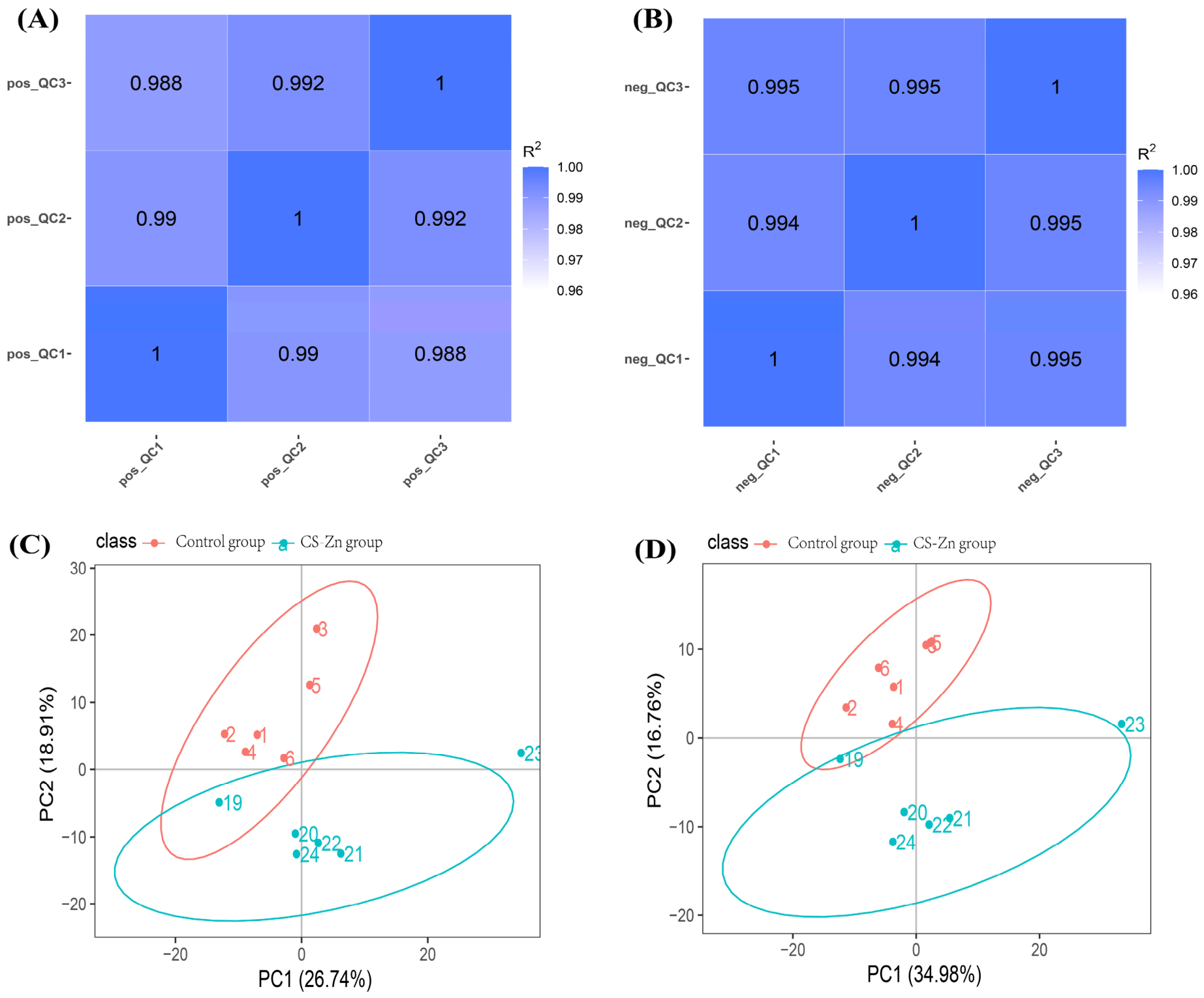
2.6. Metabolomics Data Processing and Quality Control
Raw LC-MS data were processed using Compound Discoverer 3.3 software, with automatic peak extraction, alignment, and retention time correction. Normalization was performed using total peak area normalization, followed by QC-based correction using the first QC sample as a reference. Metabolites with a CV greater than 30% in QC samples were excluded. This CV threshold is a standard in untargeted metabolomics to ensure data reproducibility. Metabolite identification was based on accurate mass (mass tolerance ≤ 5 ppm), retention time, and MS/MS fragmentation patterns. According to the Metabolomics Standards Initiative (MSI), putative annotations were assigned at confidence level 2 (putatively annotated compounds).
2.7. Statistical Analysis
All data are presented as mean ± standard deviation (SD). Each mare was considered an experimental unit for milk yield, milk composition, amino acid content, and metabolomics analysis. Routine statistical analyses were conducted using SPSS 27.0 software. Based on the results of previous experiments, this study focused primarily on comparing the control group (0 mg/kg) with the optimal dose group (7 mg/kg). For comparisons between the two groups, an independent samples
t-test was applied to data with a normal distribution. A
p value < 0.05 was considered statistically significant, and
p < 0.01 was considered highly significant. For metabolomics data annotation, the KEGG database (
https://www.genome.jp/kegg/pathway.html accessed on 1 April 2026), HMDB database (
https://hmdb.ca/metabolites accessed on 1 April 2026), and Lipid Maps database (

http://www.lipidmaps.org/) were utilized. Multivariate statistical analysis, was performed using the metabolomics data processing software metaX. The data were transformed, followed by principal component analysis (PCA) and partial least squares discriminant analysis (PLS-DA), to calculate the variable importance in projection (VIP) value for each metabolite. PLS-DA models were validated using 200 permutation tests, and overfitting was assessed by the Q
2 intercept (Q
2 intercept < 0 indicates no overfitting). PCA was used exclusively for exploratory data visualization and not for statistical inference. Univariate analysis was performed using a
t-test to calculate the statistical significance (
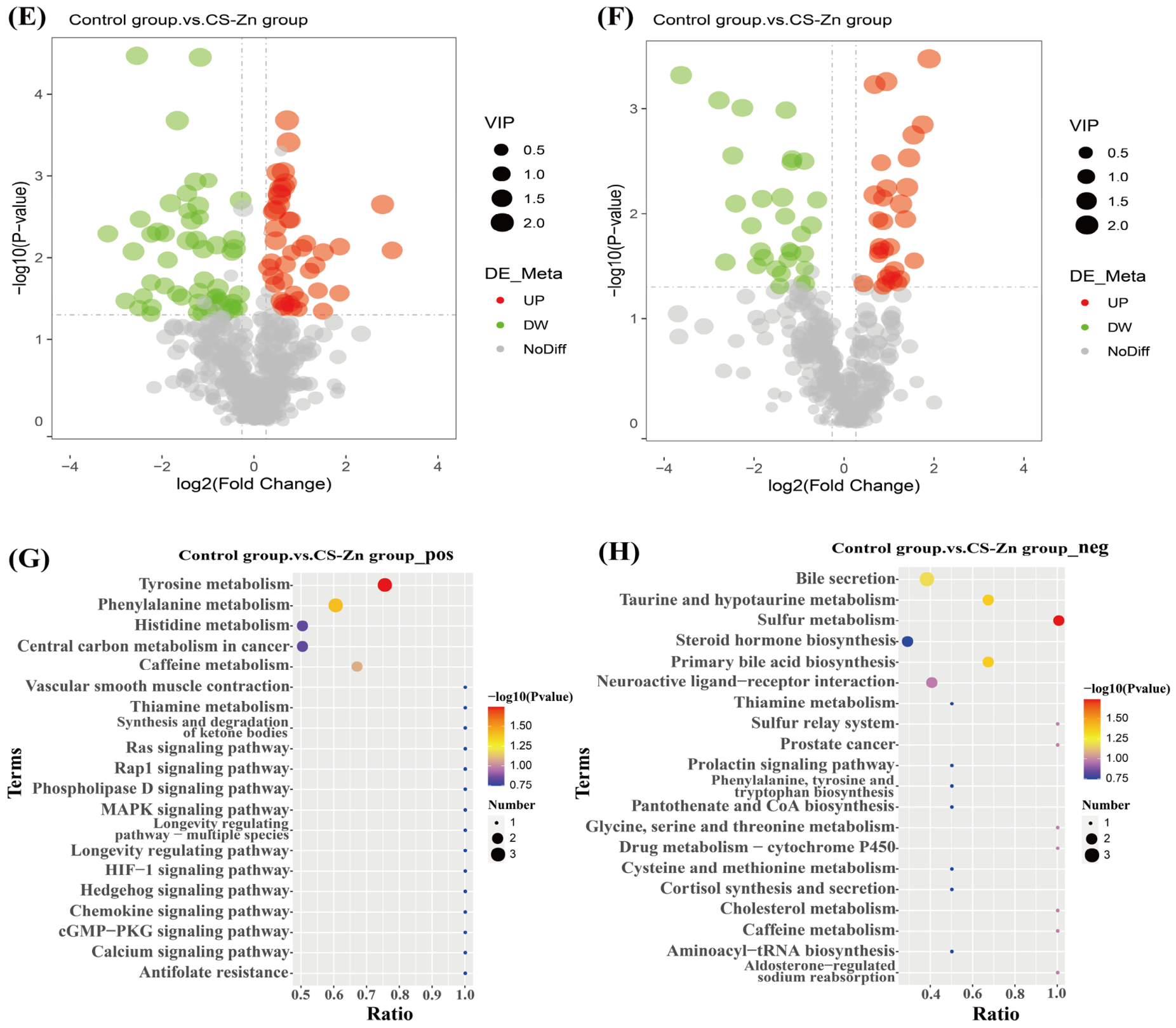
P -value) of each metabolite between the two groups, and the fold change (FC) was calculated. Differential metabolites were selected based on the following criteria: VIP > 1,
p < 0.05, and FC ≥ 2 or FC ≤ 0.5. All figures were generated using Origin 2024 software.
4. Discussion
It is important to note that this study did not directly measure key hormones such as somatostatin and growth hormone (GH), nor did it assess mammary epithelial cell proliferation markers. Therefore, any mechanistic interpretations regarding endocrine regulation or mammary cellular processes should be considered speculative and hypothesis-generating. Direct experimental validation, including hormone assays and mammary epithelial cell studies, is required to establish causality.
In the present study, CS-Zn supplementation at 7 mg/kg BW was associated with increased milk yield, milk fat, lactose, non-fat solids, and milk protein in mares, accompanied by notable alterations in milk metabolite and amino acid profiles. These findings provide preliminary evidence that CS-Zn may be related to changes in mare milk composition and metabolic characteristics. However, the present results should not be interpreted as direct evidence that CS-Zn regulates lactation through the GH/SS axis.
Previous studies in other species have suggested that cysteamine may be associated with changes in somatostatin and GH levels [
12,
18], and GH has been reported to participate in nutrient partitioning, mammary gland development, and lactational regulation [
19,
20,
21]. Cysteamine supplementation has also been reported to affect milk yield and mammary cell-related traits in dairy cows, dairy goats, and rats [
12,
22].Similarly, Lv et al. [
23] observed that as the cysteamine dose increased, milk fat percentage, protein percentage, and protein yield followed a significant quadratic trend, first increasing and then decreasing. Based on these studies, it is speculated that CS-Zn may influence lactation-related metabolic regulation through pathways involving the GH/SS axis. However, because GH, somatostatin, and mammary epithelial cell proliferation markers were not measured in the present study, this potential mechanism remains speculative and requires direct validation. In addition, there are considerable differences in digestive physiology between horses and ruminants. Horses are hindgut fermenters, characterized by rapid gastric emptying, high enzymatic digestion in the small intestine, and extensive microbial fermentation in the large intestine [
24,
25], whereas ruminants rely on rumen fermentation. Furthermore, the whey-to-casein ratio in mare mill is approximately 1:1, in contrast to the casein-dominant composition of bovine milk [
5,
26].Therefore, the mechanisms reported in ruminants cannot be directly extrapolated to mares, and the findings of the present study should be validated in horse-specific studies.
Changes in milk composition are closely linked to the metabolic state of the mother, with small-molecule metabolites in milk serving as key indicators of both milk quality and maternal metabolism [
27]. The metabolomics analysis in this study revealed that CS-Zn supplementation was associated with significant alterations in lipid and lipid-like metabolites, which corresponded to the observed increase in milk fat content. Further analysis highlighted the upregulation of cAMp, taurine, and biotin as key features. Elevated cAMp levels may be linked to enhanced milk secretion, aligning with the increase in milk yield [
28]. The increased taurine level may be related to the role of cysteamine as a precursor for taurine biosynthesis [
29,
30]. However, because hormone concentrations and mammary lipid synthesis markers were not directly measured, the relationship among taurine metabolism, endocrine regulation, and milk fat synthesis remains hypothetical and requires further experimental validation. Biotin, a critical coenzyme involved in fatty acid, carbohydrate, and amino acid metabolism [
31], may play a role in optimizing nutrient conversion into milk components. Because no direct measurements of somatostatin, GH, or mammary epithelial cell activity were performed in this study, the following interpretations are correlational and hypothesis-generating only. However, these interpretations remain speculative and are based on correlational data; causal mechanisms have yet to be directly validated and require further experimental investigation. Additionally, oxo adipic acid and methionine were detected as metabolites in mare milk. Oxo adipic acid, a product of essential amino acids like tryptophan and lysine, is involved in amino acid metabolism [
32], while methionine, a sulfur-containing essential amino acid, plays a pivotal role in protein synthesis, and its deficiency impairs this process [
33].
Amino acids serve as both the building blocks for milk protein synthesis and regulatory factors during lactation [
34], with their metabolic changes closely linked to improvements in milk yield and composition. In mare milk, the whey-to-casein ratio is approximately 1:1 [
35], and whey proteins are rich in limiting amino acids such as lysine and methionine [
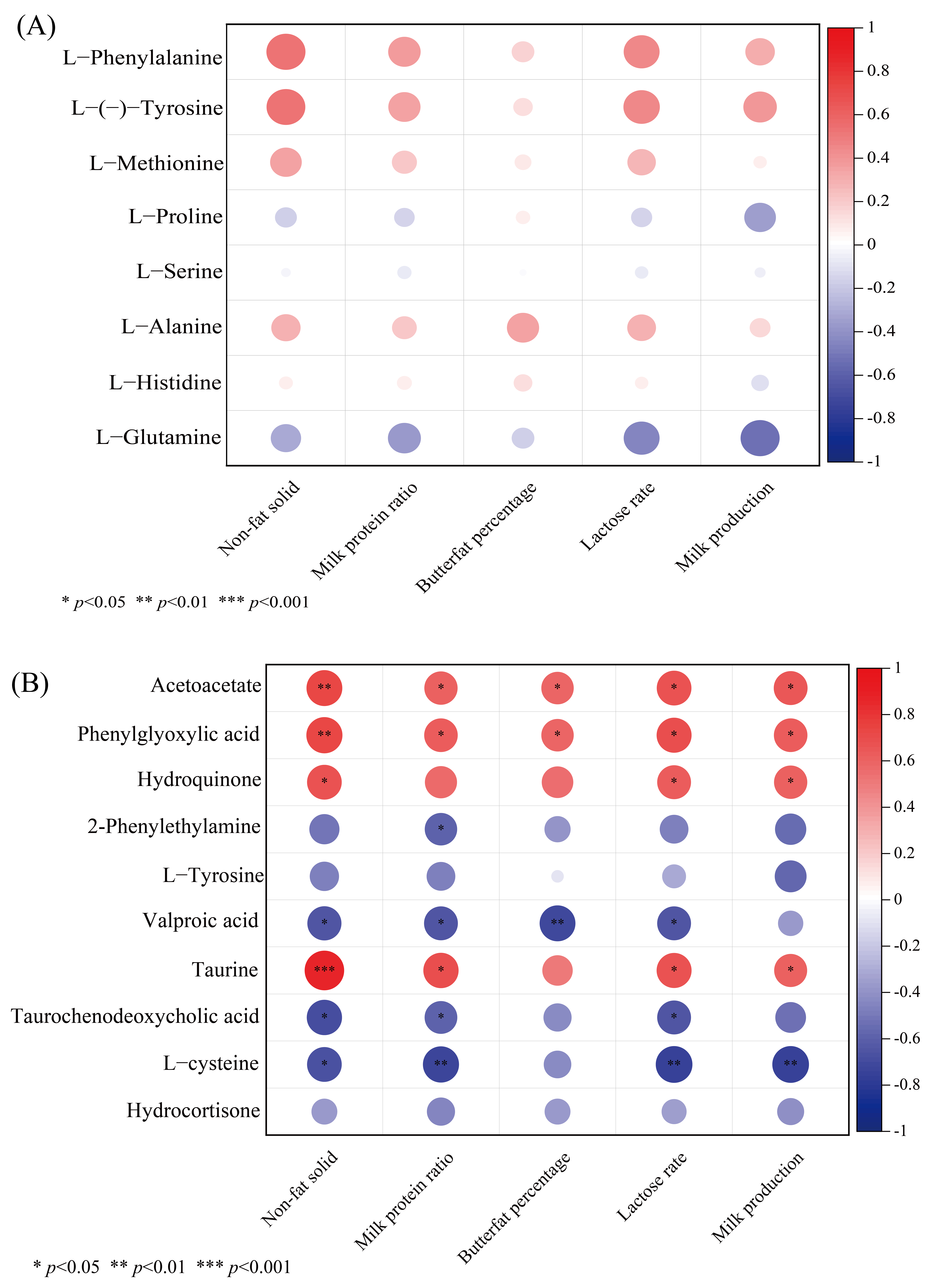
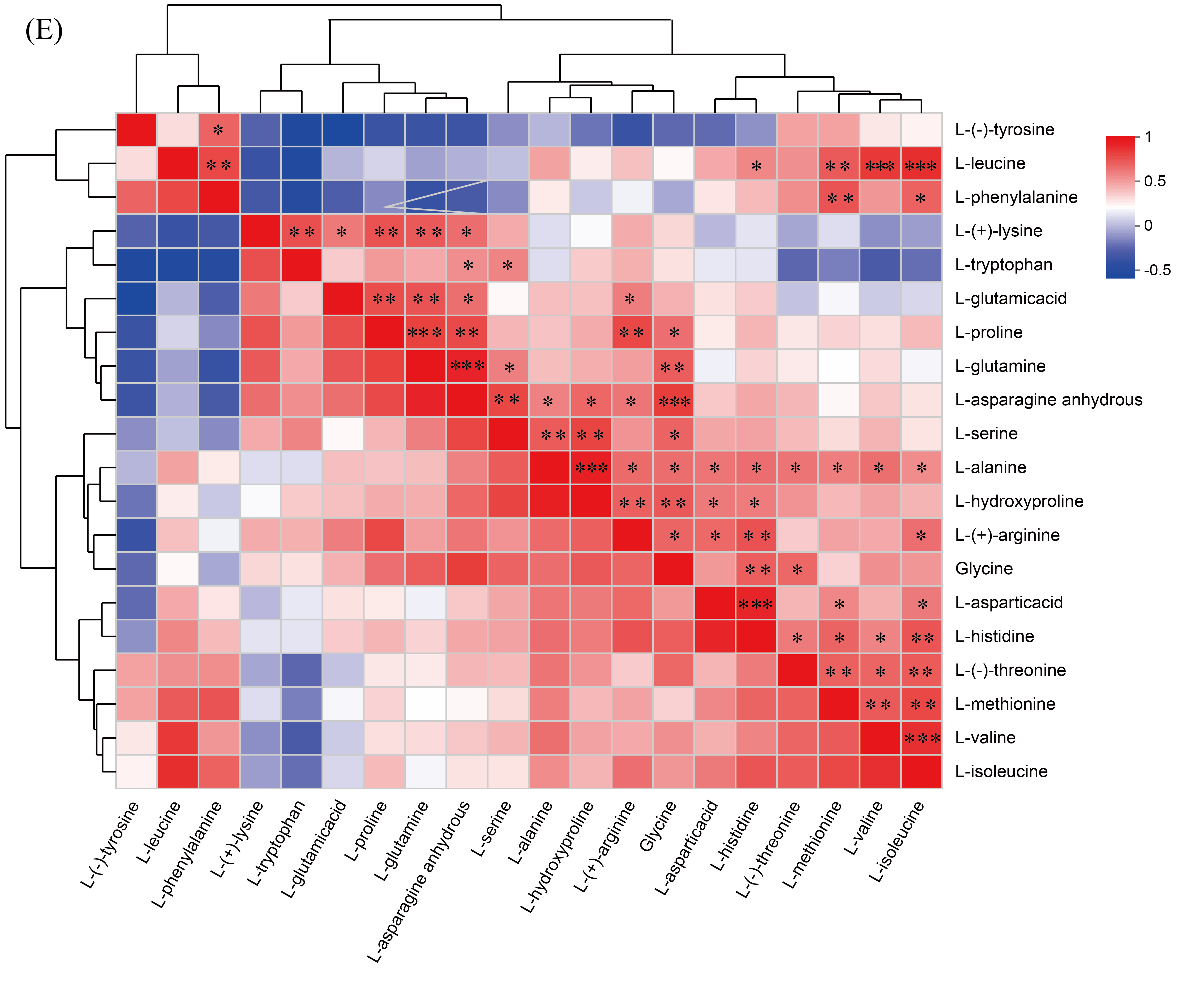
36], which are essential for human nutrition. In this study, the 20 detected amino acids exhibited differential changes: some essential amino acids (e.g., isoleucine, tryptophan, lysine, valine) increased, potentially providing more substrates for milk protein synthesis, while others (e.g., leucine, methionine, phenylalanine, threonine) decreased, possibly due to higher metabolic demands associated with increased mammary activity. Among the non-essential amino acids, only alanine and tyrosine increased, while all others decreased, with L-glutamine and L-proline showing significant reductions. The decreases in these two amino acids may reflect their increased utilization by the mammary gland for milk protein synthesis. In lactating mammals, amino acids are actively taken up by mammary epithelial cells and incorporated into casein and whey proteins. A decrease in free amino acid levels in milk could indicate enhanced protein synthesis or altered nitrogen balance. However, without direct measurements of nitrogen balance or amino acid flux analysis, this interpretation remains speculative and warrants further experimental validation. The KEGG pathway enrichment analysis revealed that the differential amino acids were primarily enriched in pathways such as ABC transporters, aminoacyl-tRNA biosynthesis, and protein digestion and absorption. ABC transporters facilitate the transmembrane transport of amino acids and other nutrients, while aminoacyl-tRNA biosynthesis is a critical step in protein synthesis. The enrichment of these pathways suggests that CS-Zn may enhance milk protein synthesis by promoting amino acid transport and improving protein synthesis efficiency. Notably, the marked increase in milk protein was accompanied by reductions in glutamine and proline, indicating that these amino acids may be preferentially utilized for milk protein synthesis or metabolized by mammary epithelial cells. Further correlation analysis revealed that certain metabolites (e.g., acetoacetate, phenyl glyoxylic acid) were positively correlated with milk fat, lactose, milk protein, and non-fat solids, while valproic acid was negatively correlated with milk components. Acetoacetate, a ketone body, is an important substrate for mammary energy metabolism and provides energy for the synthesis of milk fat, protein, and lactose [
37]. phenyl glyoxylic acid may be involved in amino acid metabolism, with its level change reflecting protein metabolism and synthesis efficiency. Hydroquinone was positively correlated with milk protein. While hydroquinone is known for its antioxidant properties, its role in milk synthesis remains unclear, and this finding should be interpreted cautiously, requiring further experimental validation. Similarly, the negative correlation of valproic acid with several milk components is intriguing, but its biological significance in mare milk remains uncertain. However, direct experimental evidence is lacking, and these interpretations should be considered preliminary.
The small sample size (n = 6 per group) in this study may increase the risk of type II errors and potential overfitting in multivariate models (e.g., pLS-DA). Therefore, the results should be interpreted with caution. Additionally, the study did not measure somatostatin, GH, or mammary epithelial cell proliferation markers, making any mechanistic interpretations regarding endocrine regulation and cell proliferation speculative and aimed solely at hypothesis generation. Although two intermediate dose groups (3 and 5 mg/kg) were initially included in the experimental design, only the control group and the highest dose group (7 mg/kg) were compared. Additionally, the exclusion of the two intermediate dose groups (3 and 5 mg/kg) was based on their lack of significant effects on lactation performance and milk metabolites in our preliminary analysis. While this focus on extreme groups is methodologically reasonable for hypothesis generation, it limits our ability to draw dose-response conclusions. The exclusion of the intermediate doses precludes a complete dose-response assessment, preventing conclusions regarding the optimal dose and limiting the generalizability of the findings. Future studies should incorporate dose-response designs, larger sample sizes, direct measurements of relevant hormones and cell proliferation markers, and the validation of metabolite biomarkers across different mare populations.