A High-Fat/High-Sugar Diet Is Associated with Reduced Motor Unit Number and Neuromuscular Dysfunction in Late-Middle-Aged Female Rats: A Pilot Study

 ,
,  , , ,
, , ,  , and
, and
Abstract
1. Introduction
2. Methods
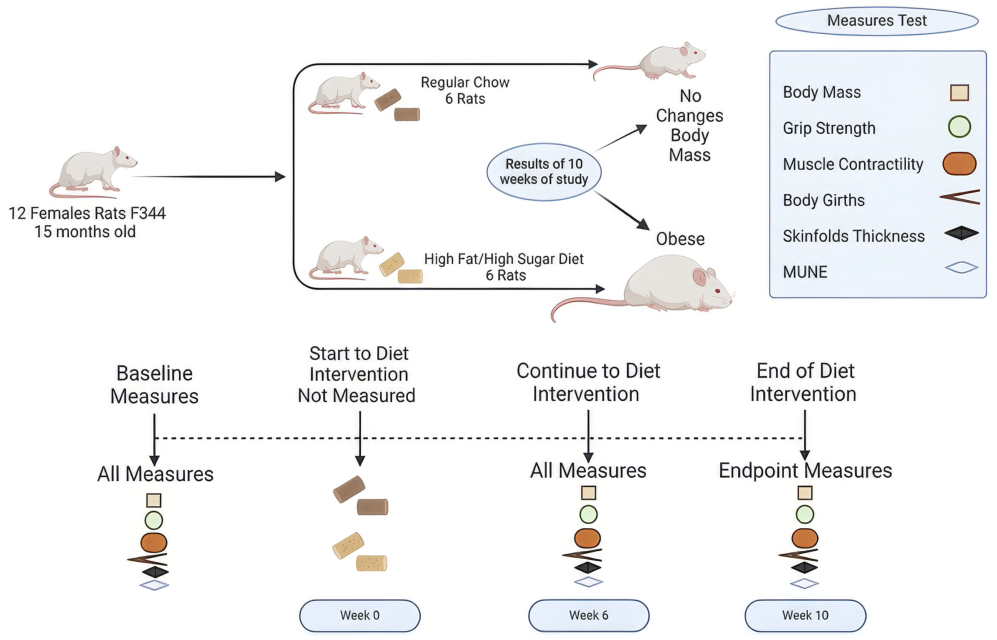
2.1. Overview and Study Design
2.2. Rats’ Diet Composition in the Study
2.3. Anesthesia and Preparation Protocols
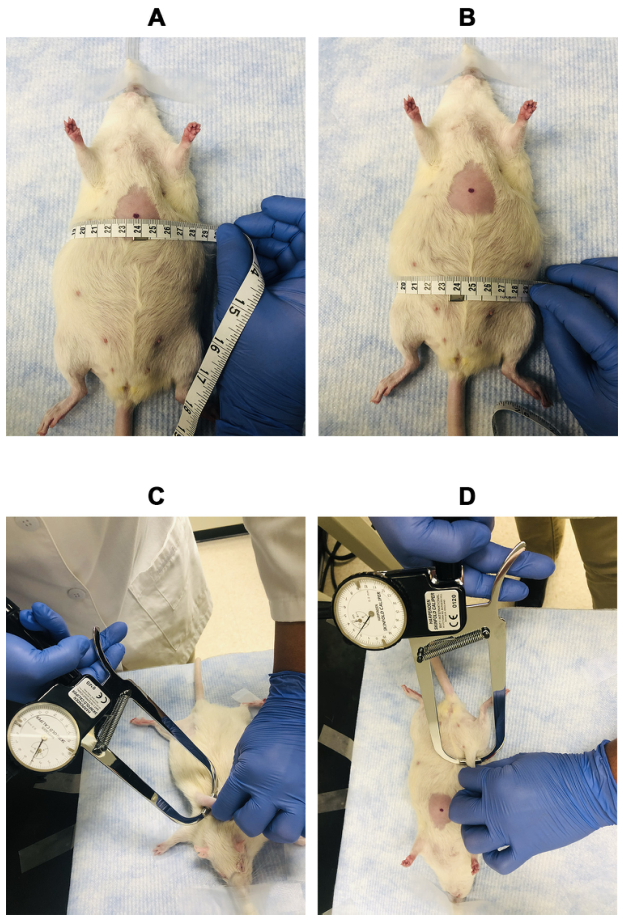
2.4. Body Composition (Body Mass, Girths, and Skinfolds Thickness)
2.5. Assessment of Grip Strength
2.6. Muscle Contractility Torque Measurement
2.7. Evaluation of Motor Unit Number Estimation
2.8. Statistical Analysis
3. Results
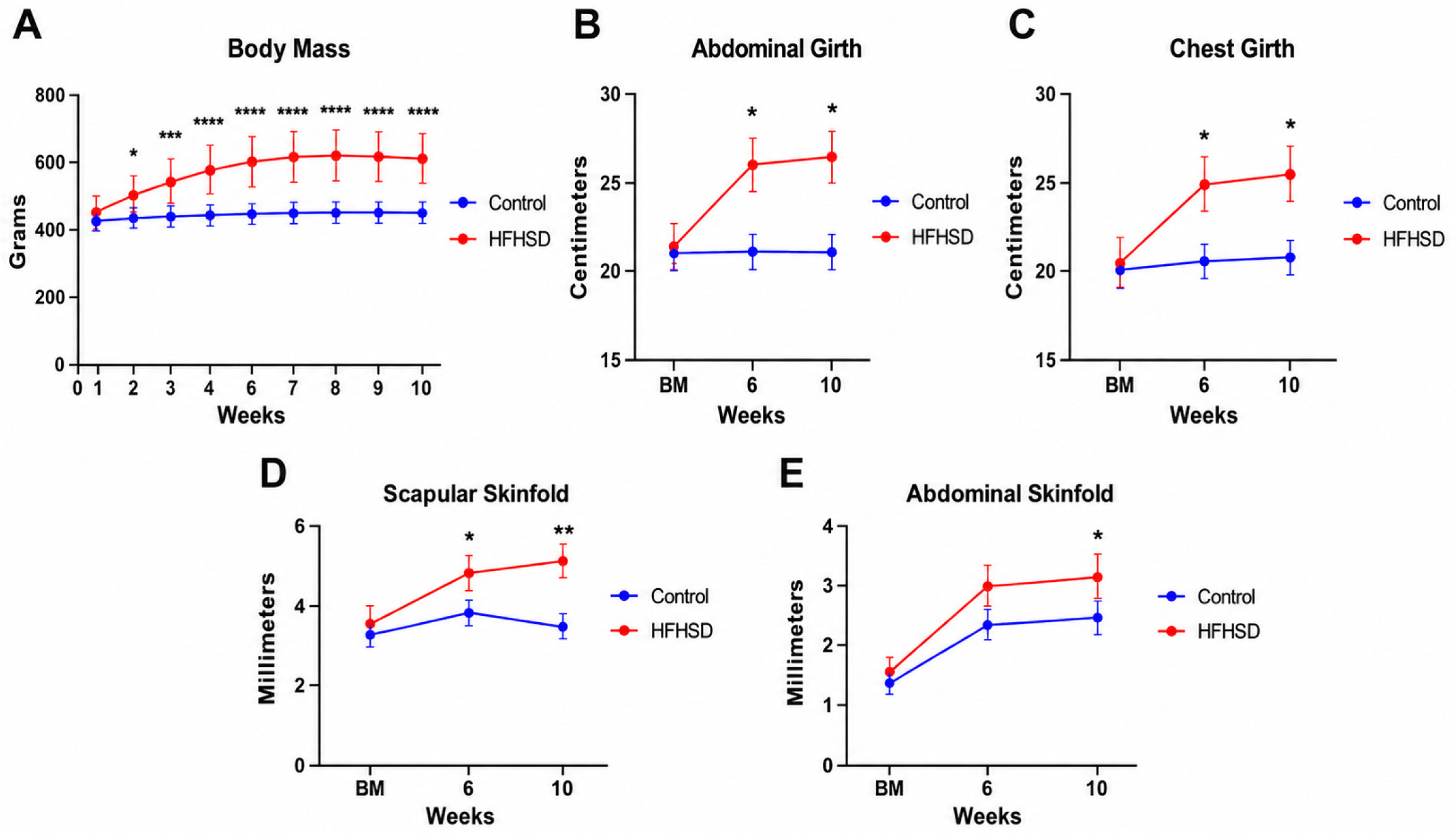
3.1. High-Fat/High-Sugar Diet Induces Adiposity-Related Increases in Body Composition Measures
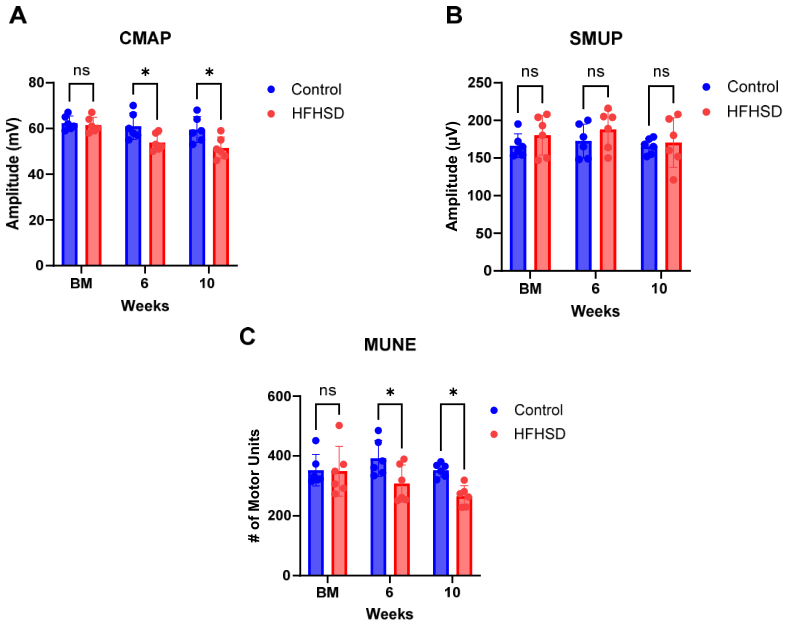
3.2. High-Fat/High-Sugar Diet Reduces Motor Unit Number Estimation in Late Middle-Aged Rats
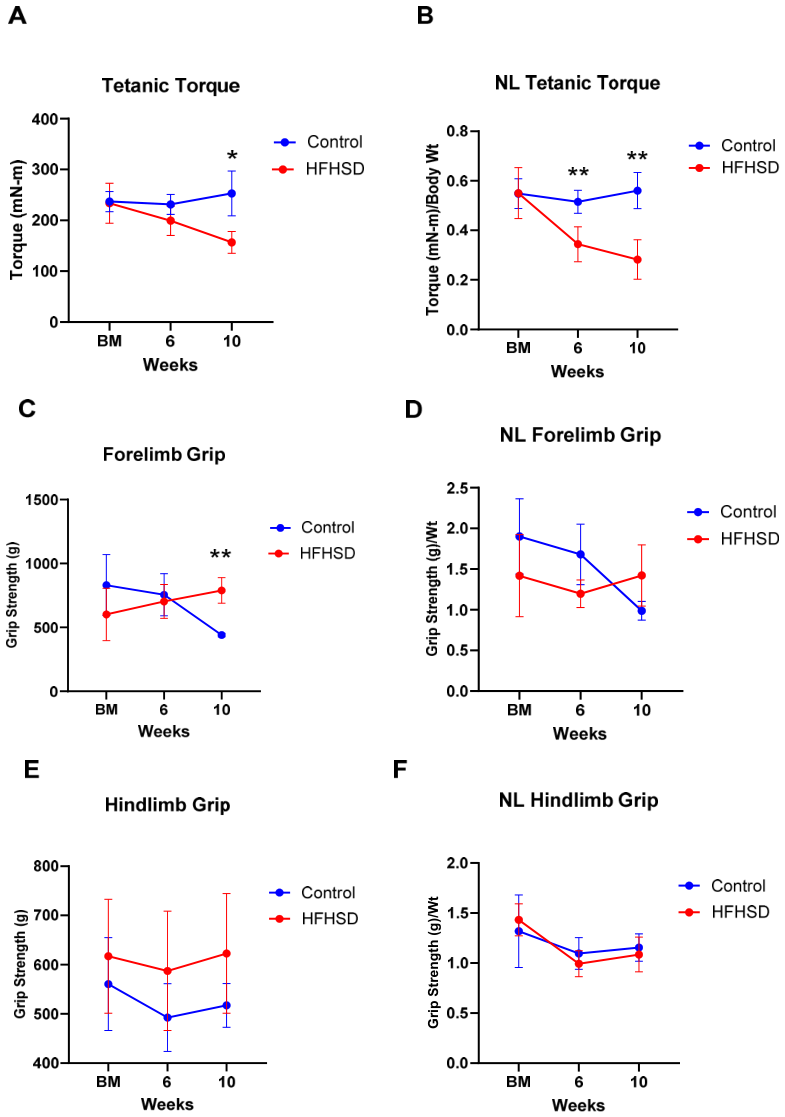
3.3. High-Fat/High-Sugar Diet Impairs Muscle Contractility and Reveals Dissociation Between Absolute and Normalized Strength
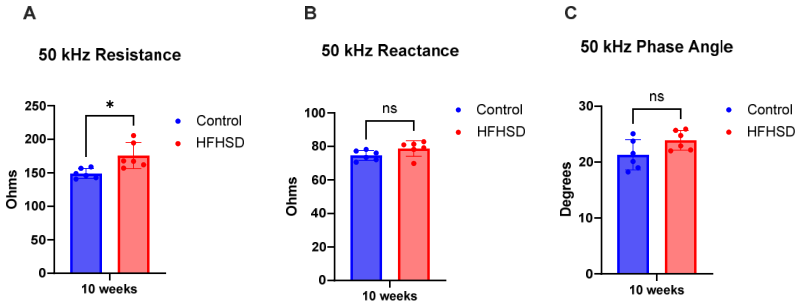
3.4. High-Fat/High-Sugar Diet Alters Muscle Electrical Properties at 50 kHz
4. Discussion
4.1. High-Fat/High-Sugar Diet and Body Composition in Late-Middle-Aged Rats
4.2. High-Fat/High-Sugar Diet Reduces Motor Unit Number Estimation
4.3. Potential Physiological Mechanisms Underlying Motor Unit Number Estimation Decline
4.4. Muscle-Specific Effects and Variability in Contractile Outcomes
5. Conclusions
6. Limitations and Future Directions
Author Contributions
Funding
Institutional Review Board Statement
Informed Consent Statement
Data Availability Statement
Conflicts of Interest
References
- Oike, H.; Ogawa, Y.; Azami, K. Long-Term Feeding of a High-Fat Diet Ameliorated Age-Related Phenotypes in SAMP8 Mice. Nutrients 2020, 12, 1416. [Google Scholar] [CrossRef] [PubMed]
- Moreno-Fernández, S.; Garcés-Rimón, M.; Vera, G.; Astier, J.; Landrier, J.F.; Miguel, M. High Fat/High Glucose Diet Induces Metabolic Syndrome in an Experimental Rat Model. Nutrients 2018, 10, 1502. [Google Scholar] [CrossRef] [PubMed]
- Longo, M.; Zatterale, F.; Naderi, J.; Parrillo, L.; Formisano, P.; Raciti, G.A.; Beguinot, F.; Miele, C. Adipose Tissue Dysfunction as Determinant of Obesity-Associated Metabolic Complications. Int. J. Mol. Sci. 2019, 20, 2358. [Google Scholar] [CrossRef]
- Pataky, M.W.; Wang, H.; Yu, C.S.; Arias, E.B.; Ploutz-Snyder, R.J.; Zheng, X.; Cartee, G.D. High-Fat Diet-Induced Insulin Resistance in Single Skeletal Muscle Fibers is Fiber Type Selective. Sci. Rep. 2017, 7, 13642. [Google Scholar] [CrossRef]
- Tallis, J.; James, R.S.; Seebacher, F. The effects of obesity on skeletal muscle contractile function. J. Exp. Biol. 2018, 221, jeb163840. [Google Scholar] [CrossRef]
- Messa, G.A.M.; Piasecki, M.; Hurst, J.; Hill, C.; Tallis, J.; Degens, H. The impact of a high-fat diet in mice is dependent on duration and age, and differs between muscles. J. Exp. Biol. 2020, 223, jeb217117. [Google Scholar] [CrossRef]
- McCormick, R.; Vasilaki, A. Age-related changes in skeletal muscle: Changes to life-style as a therapy. Biogerontology 2018, 19, 519–536. [Google Scholar] [CrossRef]
- Skelton, D.A. Explosive power and asymmetry in leg muscle function in frequent fallers and non-fallers aged over 65. Age Ageing 2002, 31, 119–125. [Google Scholar] [CrossRef]
- Grosicki, G.J.; Zepeda, C.S.; Sundberg, C.W. Single muscle fibre contractile function with ageing. J. Physiol. 2022, 600, 5005–5026. [Google Scholar] [CrossRef] [PubMed]
- Cuoco, A.; Callahan, D.M.; Sayers, S.; Frontera, W.R.; Bean, J.; Fielding, R.A. Impact of Muscle Power and Force on Gait Speed in Disabled Older Men and Women. J. Gerontol. A Biol. Sci. Med. Sci. 2004, 59, 1200–1206. [Google Scholar] [CrossRef] [PubMed]
- Henderson, R.D.; McCombe, P.A. Assessment of Motor Units in Neuromuscular Disease. Neurotherapeutics 2017, 14, 69–77. [Google Scholar] [CrossRef]
- Lee, W.S.; Cheung, W.H.; Qin, L.; Tang, N.; Leung, K.S. Age-associated Decrease of Type IIA/B Human Skeletal Muscle Fibers. Clin. Orthop. Relat. Res. 2006, 450, 231–237. [Google Scholar] [CrossRef]
- Bunn, J.A. Aging and the Motor Unit. J. Sports Med. Doping Stud. 2012, S1, e001. [Google Scholar] [CrossRef]
- Padilla, C.J.; Harrigan, M.E.; Harris, H.; Schwab, J.M.; Rutkove, S.B.; Rich, M.M.; Clark, B.C.; Arnold, W.D. Profiling age-related muscle weakness and wasting: Neuromuscular junction transmission as a driver of age-related physical decline. Geroscience 2021, 43, 1265–1281. [Google Scholar] [CrossRef] [PubMed]
- Hotamisligil, G.S. Inflammation, metaflammation and immunometabolic disorders. Nature 2017, 542, 177–185. [Google Scholar] [CrossRef] [PubMed]
- Addison, O.; Marcus, R.L.; LaStayo, P.C.; Ryan, A.S. Intermuscular Fat: A Review of the Consequences and Causes. Int. J. Endocrinol. 2014, 2014, 309570. [Google Scholar] [CrossRef] [PubMed]
- Piasecki, M.; Ireland, A.; Stashuk, D.; Hamilton-Wright, A.; Jones, D.A.; McPhee, J.S. Age-related neuromuscular changes affecting human vastus lateralis. J. Physiol. 2016, 594, 4525–4536. [Google Scholar] [CrossRef]
- Manini, T.M.; Clark, B.C. Dynapenia and Aging: An Update. J. Gerontol. Ser. A 2012, 67A, 28–40. [Google Scholar] [CrossRef]
- Sertié, R.A.L.; Caminhotto R de, O.; Andreotti, S.; Campaña, A.B.; de Proença, A.R.G.; de Castro, N.C.; Lima, F.B. Metabolic adaptations in the adipose tissue that underlie the body fat mass gain in middle-aged rats. Age 2015, 37, 87. [Google Scholar] [CrossRef] [PubMed]
- Chugh, D.; Iyer, C.C.; Wang, X.; Bobbili, P.; Rich, M.M.; Arnold, W.D. Neuromuscular junction transmission failure is a late phenotype in aging mice. Neurobiol. Aging 2020, 86, 182–190. [Google Scholar] [CrossRef]
- Fogarty, M.J.; Porras, M.A.G.; Mantilla, C.B.; Sieck, G.C. Diaphragm neuromuscular transmission failure in aged rats. J. Neurophysiol. 2019, 122, 93–104. [Google Scholar] [CrossRef]
- Carter, L.G.; Qi, N.R.; De Cabo, R.; Pearson, K.J. Maternal Exercise Improves Insulin Sensitivity in Mature Rat Offspring. Med. Sci. Sports Exerc. 2013, 45, 832–840. [Google Scholar] [CrossRef]
- Datta, P.; Zhang, Y.; Parousis, A.; Sharma, A.; Rossomacha, E.; Endisha, H.; Wu, B.; Kacprzak, I.; Mahomed, N.N.; Gandhi, R.; et al. High-fat diet-induced acceleration of osteoarthritis is associated with a distinct and sustained plasma metabolite signature. Sci. Rep. 2017, 7, 8205. [Google Scholar] [CrossRef]
- Padilla, C.J.; Harris, H.; Volek, J.S.; Clark, B.C.; Arnold, W.D. Effects of a ketogenic diet on motor function and motor unit number estimation in aged C57BL/6 mice. J. Nutr. Health Aging 2024, 28, 100219. [Google Scholar] [CrossRef] [PubMed]
- Sliwowska, J.H.; Barker, J.M.; Barha, C.K.; Lan, N.; Weinberg, J.; Galea, L.A.M. Stress-induced suppression of hippocampal neurogenesis in adult male rats is altered by prenatal ethanol exposure. Stress. 2010, 13, 302–314. [Google Scholar] [CrossRef]
- Shi, Y.; Lu, Z.; Song, W.; Wang, Y.; Zhou, Q.; Geng, P.; Zhou, Y.; Wang, S.; Han, A. The Impact of Baohuoside I on the Metabolism of Tofacitinib in Rats. Drug Des. Devel Ther. 2024, 18, 931–939. [Google Scholar] [CrossRef]
- Morgan, C.J. Use of proper statistical techniques for research studies with small samples. Am. J. Physiol.-Lung Cell. Mol. Physiol. 2017, 313, L873–L877. [Google Scholar] [CrossRef]
- Priego, T.; Sánchez, J.; Picó, C.; Palou, A. Sex-differential Expression of Metabolism-related Genes in Response to a High-fat Diet. Obesity 2008, 16, 819–826. [Google Scholar] [CrossRef] [PubMed]
- Eckel, L.A.; Moore, S.R. Diet-induced hyperphagia in the rat is influenced by sex and exercise. Am. J. Physiol.-Regul. Integr. Comp. Physiol. 2004, 287, R1080–R1085. [Google Scholar] [CrossRef] [PubMed]
- Taraschenko, O.D.; Maisonneuve, I.M.; Glick, S.D. Resistance of male Sprague–Dawley rats to sucrose-induced obesity: Effects of 18-methoxycoronaridine. Physiol. Behav. 2011, 102, 126–131. [Google Scholar] [CrossRef]
- Roca, P.; Rodriguez, A.M.; Oliver, P.; Bonet, M.; Quevedo, S.; Picó, C.; Palou, A. Brown adipose tissue response to cafeteria diet-feeding involves induction of the UCP2 gene and is impaired in female rats as compared to males. Pflug. Arch. Eur. J. Physiol. 1999, 438, 628–634. [Google Scholar] [CrossRef]
- Quirós Cognuck, S.; Reis, W.L.; Silva, M.; Debarba, L.K.; Mecawi, A.S.; de Paula, F.J.; Franci, C.R.; Elias, L.L.; Antunes-Rodrigues, J. Sex differences in body composition, metabolism-related hormones, and energy homeostasis during aging in Wistar rats. Physiol. Rep. 2020, 8, e14597. [Google Scholar] [CrossRef]
- Pellizzon, M.A.; Ricci, M.R. Choice of laboratory rodent diet may confound data interpretation and reproducibility. Curr. Dev. Nutr. 2020, 4, nzaa031. [Google Scholar] [CrossRef] [PubMed]
- Bastías-Pérez, M.; Serra, D.; Herrero, L. Dietary Options for Rodents in the Study of Obesity. Nutrients 2020, 12, 3234. [Google Scholar] [CrossRef] [PubMed]
- Park, S.B.; Yang, S.J. Ketogenic diet preserves muscle mass and strength in a mouse model of type 2 diabetes. PLoS ONE 2024, 19, e0296651. [Google Scholar] [CrossRef]
- Tekus, E.; Miko, A.; Furedi, N.; Rostas, I.; Tenk, J.; Kiss, T.; Szitter, I.; Balasko, M.; Helyes, Z.; Wilhelm, M.; et al. Body fat of rats of different age groups and nutritional states: Assessment by micro-CT and skinfold thickness. J. Appl. Physiol. 2018, 124, 268–275. [Google Scholar] [CrossRef] [PubMed]
- Marshall, M.W.; Smith, B.P.; Munson, A.W.; Lahmanhn, R.P. Prediction of carcass fat from body measurements made on live rats differing in age, sex and strain. Br. J. Nutr. 1969, 23, 353–369. [Google Scholar] [CrossRef]
- Owendoff, G.; Ray, A.; Bobbili, P.; Clark, L.; Baumann, C.W.; Clark, B.C.; Arnold, W.D. Optimization and construct validity of approaches to preclinical grip strength testing. J. Cachexia Sarcopenia Muscle 2023, 14, 2439–2445. [Google Scholar] [CrossRef]
- Sheth, K.A.; Iyer, C.C.; Wier, C.G.; Crum, A.E.; Bratasz, A.; Kolb, S.J.; Clark, B.C.; Burghes, A.H.; Arnold, W.D. Muscle strength and size are associated with motor unit connectivity in aged mice. Neurobiol. Aging 2018, 67, 128–136. [Google Scholar] [CrossRef]
- Iyer, S.R.; Shah, S.B.; Lovering, R.M. The Neuromuscular Junction: Roles in Aging and Neuromuscular Disease. Int. J. Mol. Sci. 2021, 22, 8058. [Google Scholar] [CrossRef]
- Wier, C.G.; Crum, A.E.; Reynolds, A.B.; Iyer, C.C.; Chugh, D.; Palettas, M.S.; Heilman, P.L.; Kline, D.M.; Arnold, W.D.; Kolb, S.J. Muscle contractility dysfunction precedes loss of motor unit connectivity in SOD1(G93A) mice. Muscle Nerve 2019, 59, 254–262. [Google Scholar] [CrossRef]
- Arnold, W.D.; Sheth, K.A.; Wier, C.G.; Kissel, J.T.; Burghes, A.H.; Kolb, S.J. Electrophysiological Motor Unit Number Estimation (MUNE) Measuring Compound Muscle Action Potential (CMAP) in Mouse Hindlimb Muscles. J. Vis. Exp. 2015, 103, 52899. [Google Scholar] [CrossRef] [PubMed]
- Ibrahem, A.K.; Al-Mahdawi, A.M.; Hamdan, F.B. Motor unit number estimation versus compound muscle action potential in the evaluation of motor unit loss in amyotrophic lateral sclerosis. Egypt J. Neurol. Psychiatr. Neurosurg. 2021, 57, 45. [Google Scholar] [CrossRef]
- de Carvalho, M.; Barkhaus, P.E.; Nandedkar, S.D.; Swash, M. Motor unit number estimation (MUNE): Where are we now? Clin. Neurophysiol. 2018, 129, 1507–1516. [Google Scholar] [CrossRef]
- Gooch, C.L.; Doherty, T.J.; Chan, K.M.; Bromberg, M.B.; Lewis, R.A.; Stashuk, D.W.; Berger, M.J.; Andary, M.T.; Daube, J.R. Motor unit number estimation: A technology and literature review. Muscle Nerve 2014, 50, 884–893. [Google Scholar] [CrossRef]
- Hill, C.; James, R.S.; Cox, V.M.; Seebacher, F.; Tallis, J. Age-related changes in isolated mouse skeletal muscle function are dependent on sex, muscle, and contractility mode. Am. J. Physiol. Regul. Integr. Comp. Physiol. 2020, 319, R296–R314. [Google Scholar] [CrossRef] [PubMed]
- Ahad, M.A.; Rutkove, S.B. Electrical impedance myography at 50 kHz in the rat: Technique, reproducibility, and the effects of sciatic injury and recovery. Clin. Neurophysiol. 2009, 120, 1534–1538. [Google Scholar] [CrossRef][Green Version]
- Sanchez, B.; Rutkove, S.B. Electrical Impedance Myography and Its Applications in Neuromuscular Disorders. Neurotherapeutics 2017, 14, 107–118. [Google Scholar] [CrossRef]
- Rutkove, S.B. Electrical impedance myography: Background, current state, and future directions. Muscle Nerve 2009, 40, 936–946. [Google Scholar] [CrossRef]
- He, M.; Wang, J.; Wang, Y.; Sui, J.; Zhang, M.; Ding, X.; Zhao, Y.; Chen, Z.; Ren, X.; Shi, B. High-fat diet-induced adipose tissue expansion occurs prior to insulin resistance in C57BL/6J mice. Chronic Dis. Transl. Med. 2020, 6, 198–207. [Google Scholar] [CrossRef] [PubMed]
- Kappe, C.; Zhang, Q.; Nyström, T.; Sjöholm, Å. Effects of high-fat diet and the anti-diabetic drug metformin on circulating GLP-1 and the relative number of intestinal L-cells. Diabetol. Metab. Syndr. 2014, 6, 70. [Google Scholar] [CrossRef]
- Motil, K.J.; Geerts, S.; Annese, F.; Neul, J.L.; Benke, T.; Marsh, E.; Lieberman, D.; Skinner, S.A.; Glaze, D.G.; Heydemann, P.; et al. Anthropometric Measures Correspond with Functional Motor Outcomes in Females with Rett Syndrome. J. Pediatr. 2022, 244, 169–177.e3. [Google Scholar] [CrossRef]
- Melo, B.P.; Zacarias, A.C.; Oliveira, J.C.C.; de Souza, L.M.C.; Sabino, J.; Ferreira, A.V.M.; Tonoli, C.; dos Santos, M.L.; de Avelar, G.F.; Meeusen, R.; et al. Thirty days of combined consumption of a high-fat diet and fructose-rich beverages promotes insulin resistance and modulates inflammatory response and histomorphometry parameters of liver, pancreas, and adipose tissue in Wistar rats. Nutrition 2021, 91–92, 111403. [Google Scholar] [CrossRef]
- Han, J.; Nepal, P.; Odelade, A.; Freely, F.D.; Belton, D.M.; Graves, J.L.; Maldonado-Devincci, A.M. High-Fat Diet-Induced Weight Gain, Behavioral Deficits, and Dopamine Changes in Young C57BL/6J Mice. Front Nutr. 2021, 7, 591161. [Google Scholar] [CrossRef]
- Stott, N.L.; Marino, J.S. High Fat Rodent Models of Type 2 Diabetes: From Rodent to Human. Nutrients 2020, 12, 3650. [Google Scholar] [CrossRef] [PubMed]
- Sampey, B.P.; Vanhoose, A.M.; Winfield, H.M.; Freemerman, A.J.; Muehlbauer, M.J.; Fueger, P.T.; Newgard, C.B.; Makowski, L. Cafeteria Diet Is a Robust Model of Human Metabolic Syndrome With Liver and Adipose Inflammation: Comparison to High-Fat Diet. Obesity 2011, 19, 1109–1117. [Google Scholar] [CrossRef] [PubMed]
- Poggiogalle, E.; Rossignon, F.; Carayon, A.; Capel, F.; Rigaudière, J.-P.; Vincent, S.D.S.; Le-Bacquer, O.; Salles, J.; Giraudet, C.; Patrac, V.; et al. Deleterious Effect of High-Fat Diet on Skeletal Muscle Performance Is Prevented by High-Protein Intake in Adult Rats but Not in Old Rats. Front Physiol. 2022, 12, 749049. [Google Scholar] [CrossRef] [PubMed]
- Shi, L.; Tu, B.P. Acetyl-CoA and the regulation of metabolism: Mechanisms and consequences. Curr. Opin. Cell Biol. 2015, 33, 125–131. [Google Scholar] [CrossRef]
- Reis-Costa, A.; Belew, G.D.; Viegas, I.; Tavares, L.C.; Meneses, M.J.; Patrício, B.; Gastaldelli, A.; Macedo, M.P.; Jones, J.G. The Effects of Long-Term High Fat and/or High Sugar Feeding on Sources of Postprandial Hepatic Glycogen and Triglyceride Synthesis in Mice. Nutrients 2024, 16, 2186. [Google Scholar] [CrossRef] [PubMed]
- González-Muniesa, P.; Milagro, F.I.; Campión, J.; Martínez, J.A. Reduction in energy efficiency induced by expression of the uncoupling protein, UCP1, in mouse liver mitochondria. Int. J. Mol. Med. 2006, 17, 591–597. [Google Scholar] [CrossRef]
- Kennedy, A.R.; Pissios, P.; Otu, H.; Roberson, R.; Xue, B.; Asakura, K.; Furukawa, N.; Marino, F.E.; Liu, F.-F.; Kahn, B.B.; et al. A high-fat, ketogenic diet induces a unique metabolic state in mice. Am. J. Physiol.-Endocrinol. Metab. 2007, 292, E1724–E1739. [Google Scholar] [CrossRef]
- Silvennoinen, M.; Rinnankoski-Tuikka, R.; Vuento, M.; Hulmi, J.J.; Torvinen, S.; Lehti, M.; Kivelä, R.; Kainulainen, H. High-fat feeding induces angiogenesis in skeletal muscle and activates angiogenic pathways in capillaries. Angiogenesis 2013, 16, 297–307. [Google Scholar] [CrossRef]
- Khan, I.M.; Perrard, X.Y.; Brunner, G.; Lui, H.; Sparks, L.M.; Smith, S.R.; Wang, X.; Shi, Z.-Z.; Lewis, D.E.; Wu, H.; et al. Intermuscular and perimuscular fat expansion in obesity correlates with skeletal muscle T cell and macrophage infiltration and insulin resistance. Int. J. Obes. 2015, 39, 1607–1618. [Google Scholar] [CrossRef]
- Wallace, M.A.; Aguirre, N.W.; Marcotte, G.R.; Marshall, A.G.; Baehr, L.M.; Hughes, D.C.; Hamilton, K.L.; Roberts, M.N.; Lopez-Dominguez, J.A.; Miller, B.F.; et al. The ketogenic diet preserves skeletal muscle with aging in mice. Aging Cell. 2021, 20, e13322. [Google Scholar] [CrossRef]
- Busutil, R.; Espallardo, O.; Torres, A.; Martínez-Galdeano, L.; Zozaya, N.; Hidalgo-Vega, Á. The impact of obesity on health-related quality of life in Spain. Health Qual. Life Outcomes 2017, 15, 197. [Google Scholar] [CrossRef]
- Clark, B.C.; Rutkove, S.; Lupton, E.C.; Padilla, C.J.; Arnold, W.D. Potential Utility of Electrical Impedance Myography in Evaluating Age-Related Skeletal Muscle Function Deficits. Front. Physiol. 2021, 12, 666964. [Google Scholar] [CrossRef] [PubMed]
- Fogarty, M.J.; Marin Mathieu, N.; Mantilla, C.B.; Sieck, G.C. Aging reduces succinate dehydrogenase activity in rat type IIx/IIb diaphragm muscle fibers. J. Appl. Physiol. 2020, 128, 70–77. [Google Scholar] [CrossRef] [PubMed]
- Baek, K.W.; Jung, Y.K.; Kim, J.S.; Hah, Y.-S.; Kim, S.-J.; Yoo, J.-I. Rodent Model of Muscular Atrophy for Sarcopenia Study. J. Bone Metab. 2020, 27, 97. [Google Scholar] [CrossRef]
- Doherty, T.J.; Vandervoort, A.A.; Brown, W.F. Effects of Ageing on the Motor Unit: A Brief Review. Can. J. Appl. Physiol. 1993, 18, 331–358. [Google Scholar] [CrossRef] [PubMed]
- Narici, M.V.; Maffulli, N. Sarcopenia: Characteristics, mechanisms and functional significance. Br. Med. Bull. 2010, 95, 139–159. [Google Scholar] [CrossRef]
- Kent-Braun, J.A.; Ng, A.V. Skeletal muscle oxidative capacity in young and older women and men. J. Appl. Physiol. 2000, 89, 1072–1078. [Google Scholar] [CrossRef]
- Seebacher, F.; Tallis, J.; McShea, K.; James, R.S. Obesity-induced decreases in muscle performance are not reversed by weight loss. Int. J. Obes. 2017, 41, 1271–1278. [Google Scholar] [CrossRef] [PubMed]
- Lee, K.Y.; Singh, M.K.; Ussar, S.; Wetzel, P.; Hirshman, M.F.; Goodyear, L.J.; Kispert, A.; Kahn, C.R. Tbx15 controls skeletal muscle fibre-type determination and muscle metabolism. Nat. Commun. 2015, 6, 8054. [Google Scholar] [CrossRef] [PubMed]
- Lang, T.; Streeper, T.; Cawthon, P.; Baldwin, K.; Taaffe, D.R.; Harris, T.B. Sarcopenia: Etiology, clinical consequences, intervention, and assessment. Osteoporos. Int. 2010, 21, 543–559. [Google Scholar] [CrossRef]
- Bollinger, L.M. Potential contributions of skeletal muscle contractile dysfunction to altered biomechanics in obesity. Gait Posture 2017, 56, 100–107. [Google Scholar] [CrossRef]
- Tomlinson, D.J.; Erskine, R.M.; Morse, C.I.; Winwood, K.; Onambélé-Pearson, G. The impact of obesity on skeletal muscle strength and structure through adolescence to old age. Biogerontology 2016, 17, 467–483. [Google Scholar] [CrossRef]
- Rolland, Y.; Lauwers-Cances, V.; Cristini, C.; van Kan, G.A.; Janssen, I.; Morley, J.E.; Vellas, B. Difficulties with physical function associated with obesity, sarcopenia, and sarcopenic-obesity in community-dwelling elderly women: The EPIDOS (EPIDemiologie de l’OSteoporose) Study. Am. J. Clin. Nutr. 2009, 89, 1895–1900. [Google Scholar] [CrossRef]
- Pua, Y.H.; Tay, L.; Clark, R.A.; Thumboo, J.; Tay, E.-L.; Mah, S.-M.; Ng, Y.-S. Associations of height, weight, and body mass index with handgrip strength: A Bayesian comparison in older adults. Clin. Nutr. ESPEN 2023, 54, 206–210. [Google Scholar] [CrossRef]
- Li, Y.; Guo, W.; Li, H.; Wang, Y.; Liu, X.; Kong, W. The Change of Skeletal Muscle Caused by Inflammation in Obesity as the Key Path to Fibrosis: Thoughts on Mechanisms and Intervention Strategies. Biomolecules 2025, 15, 20. [Google Scholar] [CrossRef] [PubMed]
- Blaauw, B.; Schiaffino, S.; Reggiani, C. Mechanisms modulating skeletal muscle phenotype. Compr. Physiol. 2013, 3, 1645–1687. [Google Scholar] [CrossRef]
- Zuurbier, C.J.; Huijing, P.A. Changes in geometry of activily shortening unipennate rat gastrocnemius muscle. J. Morphol. 1993, 218, 167–180. [Google Scholar] [CrossRef] [PubMed]
- Armstrong, R.B.; Phelps, R.O. Muscle fiber type composition of the rat hindlimb. Am. J. Anat. 1984, 171, 259–272. [Google Scholar] [CrossRef]
- Tam, C.S.; Power, J.E.; Markovic, T.P.; Yee, C.; Morsch, M.; McLennan, S.V.; Twigg, S.M. The effects of high-fat feeding on physical function and skeletal muscle extracellular matrix. Nutr. Diabetes 2015, 5, e187. [Google Scholar] [CrossRef] [PubMed]
- Fujiwara, M.; Yoshito, N.; Iwata, M.; Lee-Hotta, S.; Inoue, T.; Aizawa, Y.; Kametaka, S.; Asai, Y.; Suzuki, S. Median nerve injury does not contribute to early onset of decreased grip strength due to repetitive reaching and grasping tasks in rats. Neuro Endocrinol. Lett. 2020, 41, 76–85. [Google Scholar] [PubMed]



| Outcome Variable | Control (Mean ± SD) | HFHSD (Mean ± SD) | p-Value |
|---|---|---|---|
| Body Composition | |||
| Body Mass (g) | 445.6 ± 22.28 | 553.1 ± 27.66 | 0.0046 |
| Abdominal Girth (cm) | 21.1 ± 1.06 | 24.6 ± 1.23 | 0.0001 |
| Chest Girth (cm) | 20.4 ± 1.02 | 23.4 ± 1.17 | 0.0002 |
| Scapula Skinfold (mm) | 3.53 ± 0.18 | 4.47 ± 0.22 | 0.0008 |
| Abdominal Skinfold (mm) | 2.2 ± 0.11 | 2.5 ± 0.12 | 0.0060 |
| Neuromuscular Electrophysiology | |||
| CMAP (mV) | 61.8 ± 5.94 | 56.8 ± 9.09 | 0.0219 |
| SMUP (µV) | 144.2 ± 14.9 | 168.5 ± 31.1 | 0.6898 |
| MUNE Hindlimb (# motor units) | 370.0 ± 18.5 | 300.1 ± 15.01 | 0.0071 |
| Muscle Contractility | |||
| Tetanic Torque (mN·m) | 240.5 ± 12.03 | 196.6 ± 9.83 | 0.0023 |
| NL Tetanic Torque (mN·m/wt) | 0.541 ± 0.03 | 0.392 ± 0.02 | 0.0005 |
| Muscle Strength | |||
| Forelimb Grip (g) | 571.1 ± 28.56 | 716.3 ± 35.81 | 0.0273 |
| NL Forelimb Grip (g/wt) | 1.145 ± 0.06 | 1.659 ± 0.08 | 0.1924 |
| Hindlimb Grip Strength (g) | 516.6 ± 25.83 | 579.2 ± 28.96 | 0.6281 |
| NL Hindlimb Grip Strength (g/wt) | 1.174 ± 0.06 | 1.086 ± 0.05 | 0.2323 |
Disclaimer/Publisher’s Note: The statements, opinions and data contained in all publications are solely those of the individual author(s) and contributor(s) and not of MDPI and/or the editor(s). MDPI and/or the editor(s) disclaim responsibility for any injury to people or property resulting from any ideas, methods, instructions or products referred to in the content. |
© 2026 by the authors. Licensee MDPI, Basel, Switzerland. This article is an open access article distributed under the terms and conditions of the Creative Commons Attribution (CC BY) license.
Share and Cite
Padilla, C.J.; Hodge, S.R.; Carvajal, W.; Ferreyro-Bravo, F.; Suzuki, M.; Esbona, K.; Gurovich, A.N.; Clark, B.C.; Volek, J.S. A High-Fat/High-Sugar Diet Is Associated with Reduced Motor Unit Number and Neuromuscular Dysfunction in Late-Middle-Aged Female Rats: A Pilot Study. Life 2026, 16, 946. https://doi.org/10.3390/life16060946
Padilla CJ, Hodge SR, Carvajal W, Ferreyro-Bravo F, Suzuki M, Esbona K, Gurovich AN, Clark BC, Volek JS. A High-Fat/High-Sugar Diet Is Associated with Reduced Motor Unit Number and Neuromuscular Dysfunction in Late-Middle-Aged Female Rats: A Pilot Study. Life. 2026; 16(6):946. https://doi.org/10.3390/life16060946
Chicago/Turabian StylePadilla, Carlos J., Samuel R. Hodge, Wiliam Carvajal, Fernando Ferreyro-Bravo, Masatoshi Suzuki, Karla Esbona, Alvaro N. Gurovich, Brian C. Clark, and Jeff S. Volek. 2026. "A High-Fat/High-Sugar Diet Is Associated with Reduced Motor Unit Number and Neuromuscular Dysfunction in Late-Middle-Aged Female Rats: A Pilot Study" Life 16, no. 6: 946. https://doi.org/10.3390/life16060946
APA StylePadilla, C. J., Hodge, S. R., Carvajal, W., Ferreyro-Bravo, F., Suzuki, M., Esbona, K., Gurovich, A. N., Clark, B. C., & Volek, J. S. (2026). A High-Fat/High-Sugar Diet Is Associated with Reduced Motor Unit Number and Neuromuscular Dysfunction in Late-Middle-Aged Female Rats: A Pilot Study. Life, 16(6), 946. https://doi.org/10.3390/life16060946