Article

Systematic Analysis of the Populus ADF Gene Family and the Expression Patterns Under Osmotic Stress


1
Department of Life Sciences, Yuncheng University, Yuncheng 044000, China
2
Shanxi Technology Innovation Center of High Value-Added Echelon Utilization of Premium Agro-Products, Yuncheng 044000, China
3
Department of Resource Management, Tangshan Normal University, Tangshan 063000, China
4
Institute of Horticultural Crops, Yunnan Academy of Agricultural Sciences, Kunming 650205, China
*
Author to whom correspondence should be addressed.
Life 2026, 16(5), 800; https://doi.org/10.3390/life16050800
Submission received: 27 March 2026 / Revised: 28 April 2026 / Accepted: 5 May 2026 / Published: 11 May 2026

Abstract

Actin Depolymerizing Factor (ADF) proteins are key regulators of actin cytoskeleton dynamics, mediating numerous essential plant life processes, including cell elongation, division, and signal transduction in response to environmental stress. Although ADF functions are well characterized in herbaceous plants, systematic analysis of poplar ADFs and their roles in osmotic stress response remains largely unexplored. In this study, we identified 14 PtADF genes in the Populus trichocarpa genome, mapped across ten distinct chromosomes. Phylogenetic analysis categorized all the ADFs into seven groups, with PtADFs displaying conserved motifs. PtADF gene family expansion was primarily attributed to whole-genome duplication (WGD) events. Evolutionary constraint analysis, evidenced by a Ka/Ks ratio < 1, indicated significant selective pressure on these genes. Promoter regions of PtADF genes were enriched with cis-acting elements responsive to hormones and stresses. Transcriptome profiling showed that five PtADF genes were significantly induced under drought stress. We then identified the homologous genes of PtADFs in P. euphratica, a Populus species with superior environmental stress adaptability, and qRT-PCR analysis revealed that four homologous PeADFs were significantly induced by mannitol treatment. These results characterize the basic features of the PtADF gene family and provide a general reference for screening candidate PeADF genes for further research in poplar.

1. Introduction

Among the various abiotic stresses, water stress is a prevalent and significantly detrimental factor affecting plant health, particularly for sessile plants [1]. This situation has been further aggravated by global warming along with the increase in high-temperature weather events, which has led to higher water resource consumption [2]. The impacts caused by drought stress are multifaceted, encompassing oxidative damage, impaired growth and development, damage to membrane compounds and nucleic acids, reduced photosynthesis, metabolic disorder, and apoptosis [3]. Osmotic stress is a primary physiological consequence triggered by drought-induced water deficit. Under drought conditions, the decreased soil moisture upsets the water potential gradient across cell membranes, leading to cell dehydration, reduced cell turgor, and metabolic dysfunction [4,5]. Plants employ two strategies to cope with drought and osmotic stress. One strategy is minimizing water consumption by closing stomata, reducing growth rates, and inducing senescence or dormancy [6,7,8]; the other is enhancing water absorption by modifying root structures, utilizing hydrotropism, and adopting specialized C4 or CAM photosynthetic pathways [9,10,11]. Plants have evolved interrelated regulatory pathways enabling prompt response and adaptation to their environment [12]. They can quickly perceive stress signals and initiate the expression of stress-responsive genes, including various transcription factors and osmotic regulatory genes, which are involved in the synthesis of stress-related metabolites.
Actin, a principal constituent of the cytoskeleton, serves as a crucial factor in the cellular stress response. In plant cells, actin is present in two forms: globular actin (G-actin) and filamentous actin (F-actin). The actin depolymerizing factor (ADF/cofilin) is highly conserved across eukaryotic cells and plays a key role in regulating actin filament assembly and disassembly dynamics [13]. Research has demonstrated that ADFs influence plant growth and development and stress adaptation by responding to various physiological and stress signals [14]. In Arabidopsis, the genome encodes 11 ADF proteins, which can be categorized into four distinct subcategories (I-IV) [15]. The maize genome contains 13 ADF genes (ZMADF1ZMADF13), among which three genes (ZmADF2, ZmADF3, and ZmADF4) show specific responses to drought stress [16]. In rice, eleven OsADF genes demonstrated varying expression patterns across different developmental stages and tissues, indicating different functions of these OsADFs in growth and reproduction. Overexpression of OsADF3 enhanced primary root length, germination, and survival rates, thereby increasing tolerance to mannitol and drought stress in Arabidopsis [17]. Similarly, soybean GmADF13 takes a positive role in regulating drought stress by activating the expression of GmbZIP1, GmDREB1A, and GmANK114 [18].
Populus has become a key species in addressing climate change due to its unique physiological adaptations, fast growth rate, and its role as an ecological indicator [19,20,21]. In the context of climate change, poplars are of vast potential in mitigating the greenhouse effect by making a significant contribution to carbon sequestration [19]. However, as an important tree species for ecological restoration and shelterbelts, the ADF genes and their roles in drought/osmotic resistance remain understudied in poplar, despite extensive progress having been made in other plant species. In this study, we systematically identified and characterized the ADF gene family in P. trichocarpa at a genome-wide level, including phylogeny, conserved motifs, domains, gene structures, chromosomal distribution, and collinearity. Based on transcriptome data, we further investigated the expression profiles of PtADFs under drought stress. In addition, as P. euphratica is an important poplar species with splendid adaptation ability to drought, high salinity, and osmotic stress, and it possesses great application value in forest genetics research and breeding [22,23]; we used P. euphratica as experimental material and performed qRT-PCR to analyze the expression patterns of candidate stress-responsive PeADFs. This study clarifies the characteristics of the P. trichocarpa ADF family, screens candidate PeADFs responsive to osmotic stress in P. euphratica, and lays a foundation for further functional research in poplar.

2. Materials and Methods

2.1. Plant Materials

Comparable 1-year-old P. euphratica seedlings were trimmed to 15 cm and cultivated in pots (30 cm × 20 cm) for 60 days. To simulate osmotic stress in P. euphratica, D-mannitol was used in accordance with well-established protocols from published poplar studies [24,25,26]. Slight experimental modifications were made with reference to three peer-reviewed studies on osmotic stress in woody plants, including two previous studies on P. euphratica [27,28] and one relevant study on apples [29]. Seedlings were carefully removed from the soil and hydroponically cultured in 10 L containers containing Hoagland nutrient solution supplemented with 300 mM D-mannitol. Roots were continuously aerated to maintain an adequate oxygen supply during the treatment. Leaf tissues were sampled at 0, 3, 9, 24, and 36 h after mannitol treatment and immediately frozen in liquid nitrogen and stored at −80 °C for RNA isolation.

2.2. Identification and Prediction of Physicochemical Properties of ADFs in Populus

Genomic data for P. trichocarpa were obtained from the Phytozome database (https://phytozome-next.jgi.doe.gov/, accessed on 12 March 2025). Homologs of Arabidopsis thaliana ADF genes were identified in the P. trichocarpa genome using their full-length amino acid sequences of AtADFs. Conserved protein domains of all the candidate PtADF sequences were further verified using the SMART database (http://smart.embl-heidelberg.de/, accessed on 18 March 2025). Physicochemical properties of the PtADFs, including amino acid sequence length, molecular weight, isoelectric point, and instability index, were analyzed with the ProtParam tool on the ExPASy server (https://web.expasy.org/protparam, accessed on 20 March 2025). Subcellular localization of the PtADF family was predicted using the Plant-mPLoc server (http://www.csbio.sjtu.edu.cn/bioinf/plant-multi/, accessed on 21 March 2025).

2.3. Construction of the Phylogenetic Tree

A. thaliana genomic data were sourced from the TAIR database (https://www.arabidopsis.org/), while the genomic sequences for Salix purpurea, Oryza sativa, and Malus domestica were obtained from the Phytozome database (https://phytozome-next.jgi.doe.gov/). The best-fit evolutionary model was selected using ModelTest-NG v0.1.7 [30], and a maximum likelihood (ML) phylogenetic tree was subsequently constructed using RAxML-NG v2.0.0 (https://github.com/amkozlov/raxml-ng, accessed on 16 April 2026) with a Bootstrap parameter set to 1000 [31]. The resulting tree was visualized and annotated using the ITOL online server (https://itol.embl.de/, accessed on 16 April 2026).

2.4. Chromosome Localization and Synteny Analysis

We used TBtools software v2.0.30 (https://github.com/CJ-Chen/TBtools-II/, accessed on 14 June 2025 ) to visualize the chromosomal locations of identified PtADF genes [32]. Intraspecific and interspecific collinearity analysis is crucial for the investigation of gene families [33]. The syntenic relationships among PtADF genes were analyzed using TBtools, and the Python implementation of MCScanX (JCVI v0.9.14) was employed to identify collinear blocks of ADF genes across multiple species, including A. thaliana, Solanum lycopersicum, P. trichocarpa, O. sativa, and S. purpurea. Gene duplication analysis was conducted utilizing DupGen finder with the default settings [34,35]. To assess evolutionary divergence among duplicated PtADF genes, TBtools was used to calculate synonymous (Ks) and nonsynonymous (Ka) substitution rates, as well as the Ka/Ks ratio for each gene pair [34].

2.5. Analysis of Conserved Motifs, Domains, and Gene Structures

Conserved motifs of PtADF proteins were identified using the MEME online server (http://meme-suite.org/), with the maximum number of conserved motifs set to 10. The NCBI Conserved Domain Database (CDD) was used to predict conserved structural domains (https://www.ncbi.nlm.nih.gov/Structure/cdd/wrpsb.cgi, accessed on 20 March 2025). The GFF3 annotation file of P. trichocarpa was used to analyze the exon–intron structure of PtADF genes. Conserved motifs, domains, and gene structures were visualized using TBtools.

2.6. Prediction of the Cis-Acting Elements of PtADF Promoters

The 2000 bp sequences upstream of the ATG start codon for all PtADF genes were extracted from the genome and defined as promoter regions. These promoter sequences were then submitted to the PlantCARE database (https://bioinformatics.psb.ugent.be/webtools/plantcare/htm, accessed on 5 July 2025) for cis-element prediction [36], and the results were visualized using TBtools.

2.7. Expression Pattern Analysis

To investigate the expression patterns of PtADFs under various water stress conditions, we downloaded publicly available RNA-seq data from the NCBI database (project accession: PRJEB19784). Transcriptome data corresponding to short-term and prolonged drought treatments were extracted to characterize the stress-responsive expression of identified PtADF family members. Subsequent data normalization and heatmap visualization were performed using R software (v. 4.3.2; https://www.r-project.org/) to illustrate the expression patterns of PtADF genes under drought conditions.

2.8. RNA Extraction and qRT-PCR Analysis

For each treatment, five healthy P. euphratica seedlings with uniform growth status were selected. After treatment, leaf tissues were harvested. Total RNA from P. euphratica leaves was extracted using a Plant Total RNA Extraction Kit (Aidlabs Bio Inc., Beijing, China). RNA quality and concentration were evaluated using a NanoDrop 2000 Spectrophotometer (Thermo Fisher Scientific, Waltham, MA, USA). Subsequently, 2 μg of total RNA from each sample was used for cDNA synthesis with the Fast Quant RT Kit (Tiangen Biotech Co., Ltd., Beijing, China) following the manufacturer’s guidelines. Quantitative real-time PCR assays were performed as previously described [37]. We conducted the assay using SuperStar Universal SYBR Master Mix (Beijing CoWin Biotech Co., Ltd. (Beijing, China)), on a CFX96 real-time PCR detection system (Bio-Rad, Hercules, CA, USA). The qRT-PCR thermal cycling conditions were as follows: an initial incubation at 95 °C for 3 min, followed by 40 cycles of denaturation at 95 °C for 15 s and annealing at 60 °C for 15 s. Relative gene expression levels were calculated using the 2−ΔΔCt method, with poplar 18S rRNA serving as the internal reference gene for normalization, as described previously [27,37,38,39]. For qRT-PCR, leaf tissues from five individual seedlings were pooled into a single composite sample for each treatment group. Three technical replicates were set for each qRT-PCR reaction. The primers used in this study are listed in Supplementary Table S1.

2.9. Statistical Analysis

All experimental data are presented as mean ± SD. Different lowercase letters indicate significant differences based on one-way ANOVA and Tukey’s test (p < 0.05) [40,41]. Normality and homogeneity of variance were verified before ANOVA. One-way ANOVA was used to detect overall expression differences. Tukey’s post hoc test was applied to compare each D-mannitol treatment time point with the 0 h control.

3. Results

3.1. Identification of PtADFs in Poplar

Based on the integration of identification results from NCBI online BLAST and verification results from SMART analysis, we ultimately determined that the genome of P. trichocarpa encodes 14 ADF family members (designated as PtADFs). These 14 PtADF members were named in correspondence with their homologous ADF genes in A. thaliana (AtADFs) (Table 1). Among these PtADF proteins, the length of amino acid sequences ranged from 137 to 146 residues, with molecular weights varying from 15.792 kDa to 16.844 kDa. The theoretical isoelectric points (pI) of these proteins ranged from 5.11 to 8.41, and their instability indices were between 28.62 and 59.68 (Table 1). Subcellular localization prediction indicated that all 14 PtADF proteins are localized in the cytoplasm (Table 1). Additionally, multiple sequence alignment revealed that the amino acid sequences of all the PtADF proteins share a high similarity of 77.94% (Figure 1).

3.2. Phylogenetic Analysis of the ADF Family Members

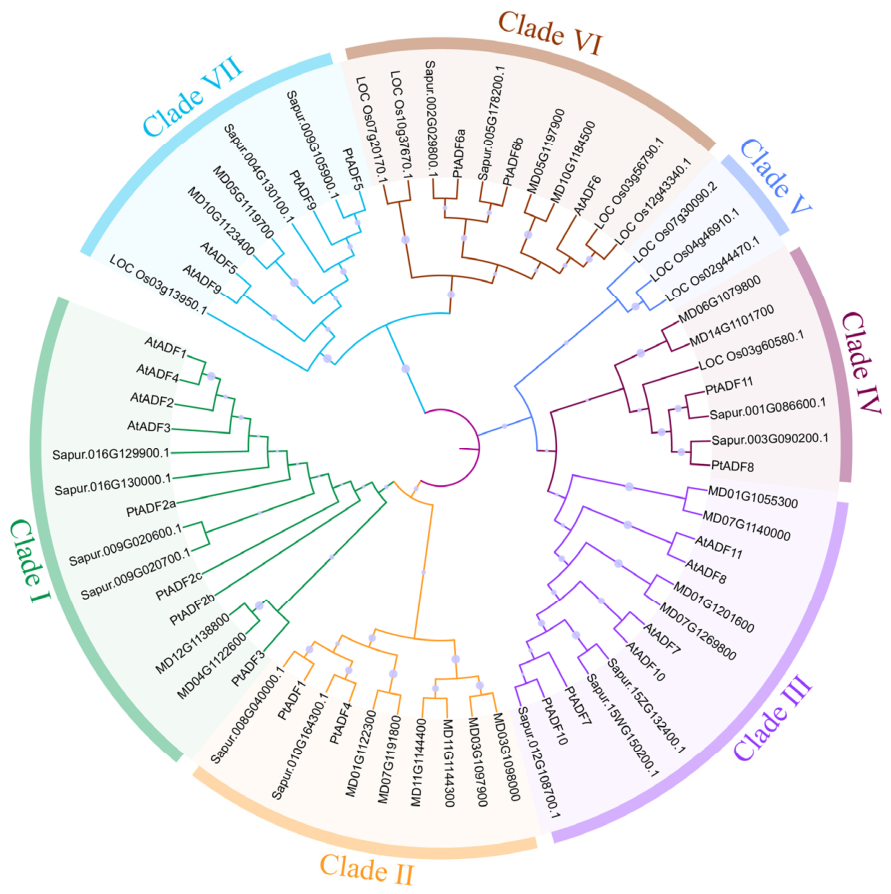
To investigate the evolutionary relationships among the PtADF gene family of P. trichocarpa, a phylogenetic tree was constructed using the maximum likelihood (ML) approach together with the ADFs of A. thaliana, S. purpurea, O.sativa, and M. domestica. As illustrated in Figure 2, the ADF proteins could be divided into seven distinct clades. Among them, PtADF members were distributed across six clades. Clade I included AtADF1-4, and PtADF2a, PtADF2b, PtADF2c, and PtADF3. Clade II comprised PtADF1 and PtADF4. Clade III and Clade IV had a relatively close relationship, harboring AtADF7-8, AtADF10-11, as well as PtADF7, PtADF10, PtADF8, and PtADF11. Clade VI consisted of 11 members, dominated by ADF6 homologs containing PtADF6a and PtADF6b. In Clade VII, PtADF5 exhibited homology with AtADF5, implying potentially conserved functions. Additionally, AtADF9 and PtADF9 were also assigned to Clade VII.

3.3. Chromosomal Spread and Duplication Event Analysis of the PtADF Genes

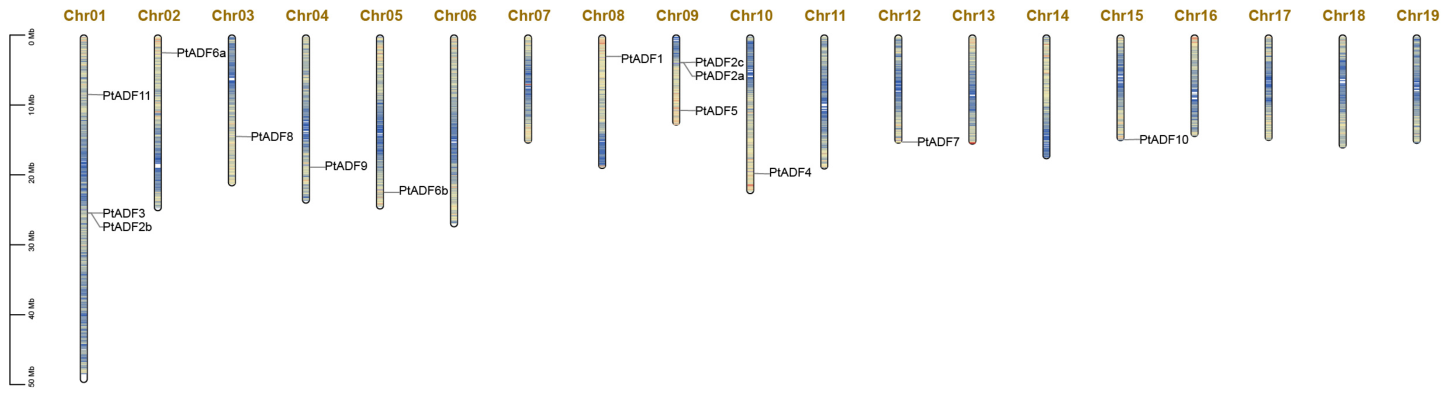
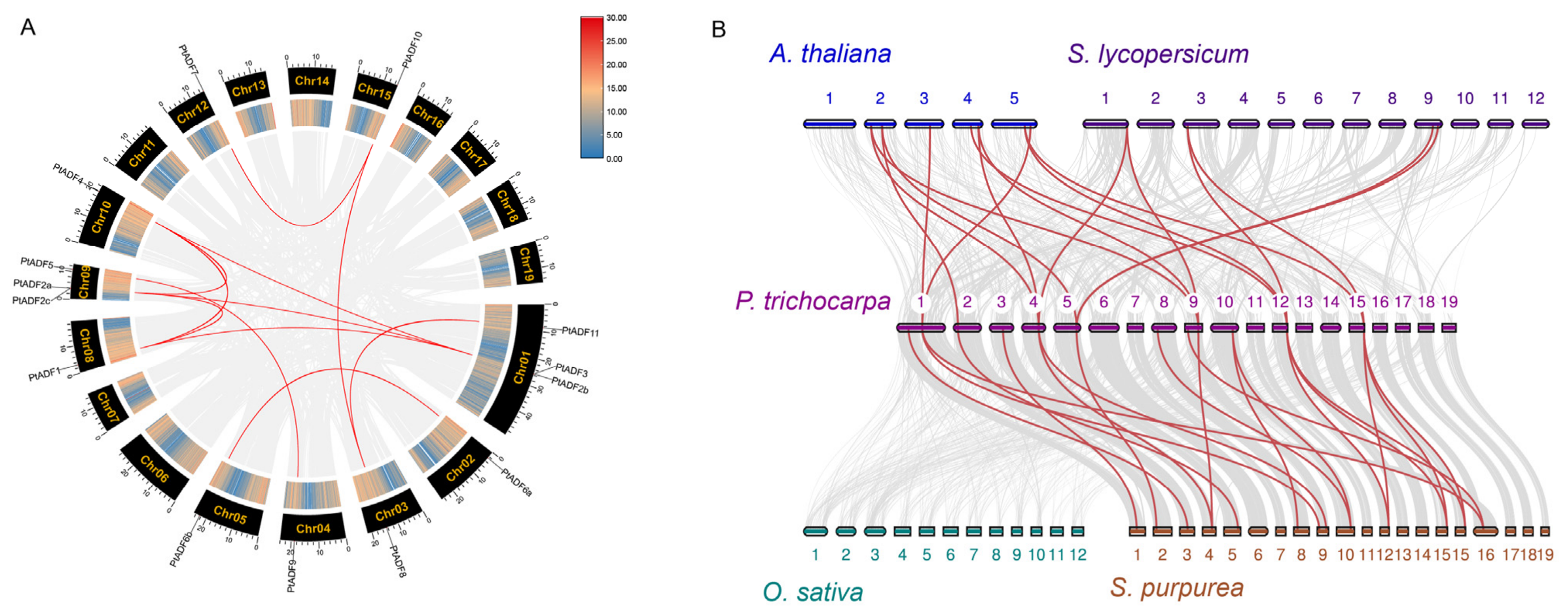
All the PtADFs were successfully mapped to the linkage groups of the P. trichocarpa genome, exhibiting an uneven distribution across 10 chromosomes (Figure 3). Chromosomes 1 and 9 harbor the highest number of PtADF genes, with three members distributed on each. In contrast, only one PtADF gene is located on chromosomes 2, 3, 4, 5, 8, 10, 12, and 15. Gene duplication serves as a significant source of genetic material that drives species adaptation and diversification in plants [42,43]. We identified 11 syntenic gene pairs within the PtADF family (Figure 4A). To further investigate the evolutionary patterns of PtADFs, we calculated the Ka, Ks, and Ka/Ks ratios for these duplicated gene pairs. All pairs showed a Ka/Ks ratio less than 1 (Table 2), suggesting that the PtADF family has undergone strong purifying selection throughout the course of evolution. For comprehensively elucidating the phylogenetic mechanisms of PtADFs, we analyzed the synteny between P. trichocarpa and four additional species, including A. thaliana, S. lycopersicum, O. sativa, and S. purpurea. The results indicated that PtADFs exhibited close origin relationships with S. purpurea, S. lycopersicum, and A. thaliana. By contrast, PtADFs demonstrated a relatively distant genetic relationship with O. sativa (Figure 4B).

3.4. Structural Characterization of the PtADF Genes

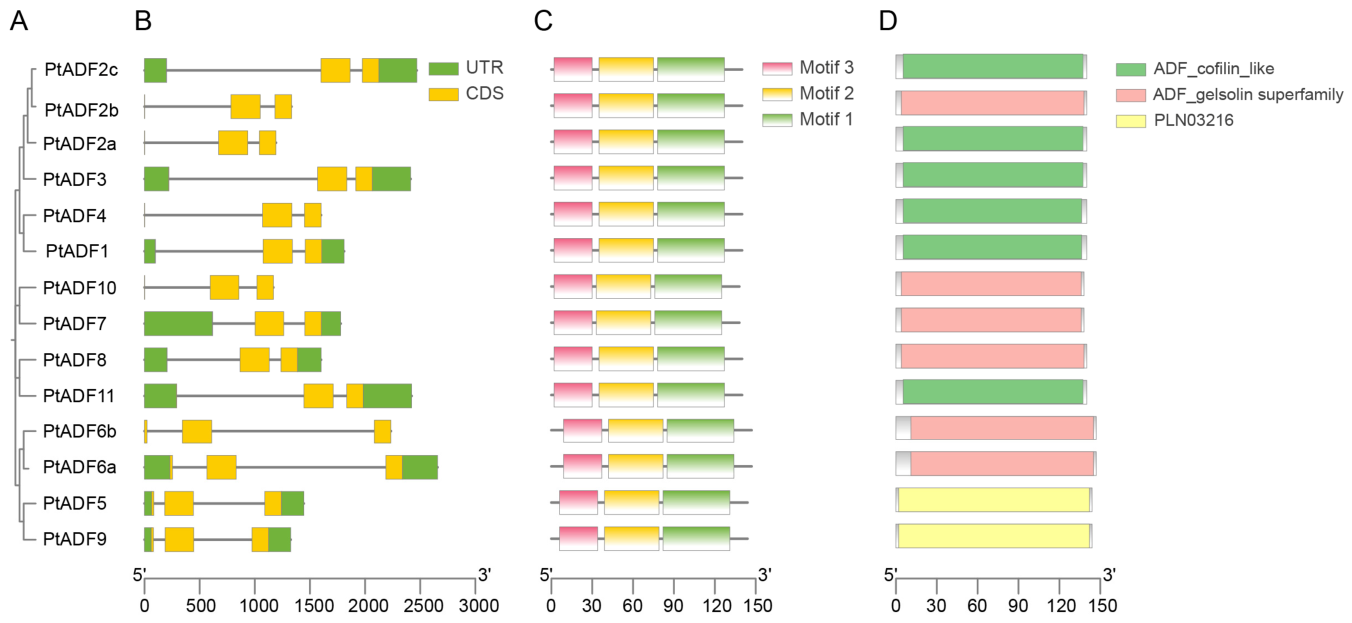
To elucidate the evolutionary relationships among various members of the PtADF gene family, a phylogenetic tree was constructed based on the 14 PtADF protein sequences (Figure 5A). We then analyzed their gene structures, conserved protein motifs, and conserved domains. Structural characterization showed that all PtADF members harbored three exons and two introns (Figure 5A). Meanwhile, three conserved motifs were identified in PtADF proteins via the MEME server (Figure 5C). These motifs were widely distributed across all the PtADFs, indicating that they are highly conserved during evolution. In addition, we identified three conserved domains (ADF gelsolin superfamily, PLN03216, and ADF cofilin_like) in the PtADF proteins using the CDD (Figure 5D). Among the analyzed PtADF proteins, six contained an ADF_cofilin_like domain, six contained the ADF_gelsolin superfamily domain, and the remaining two possessed the PLN03216 conserved domain (Figure 5D).

3.5. Promoter Cis-Acting Elements Analysis of the PtADF Genes

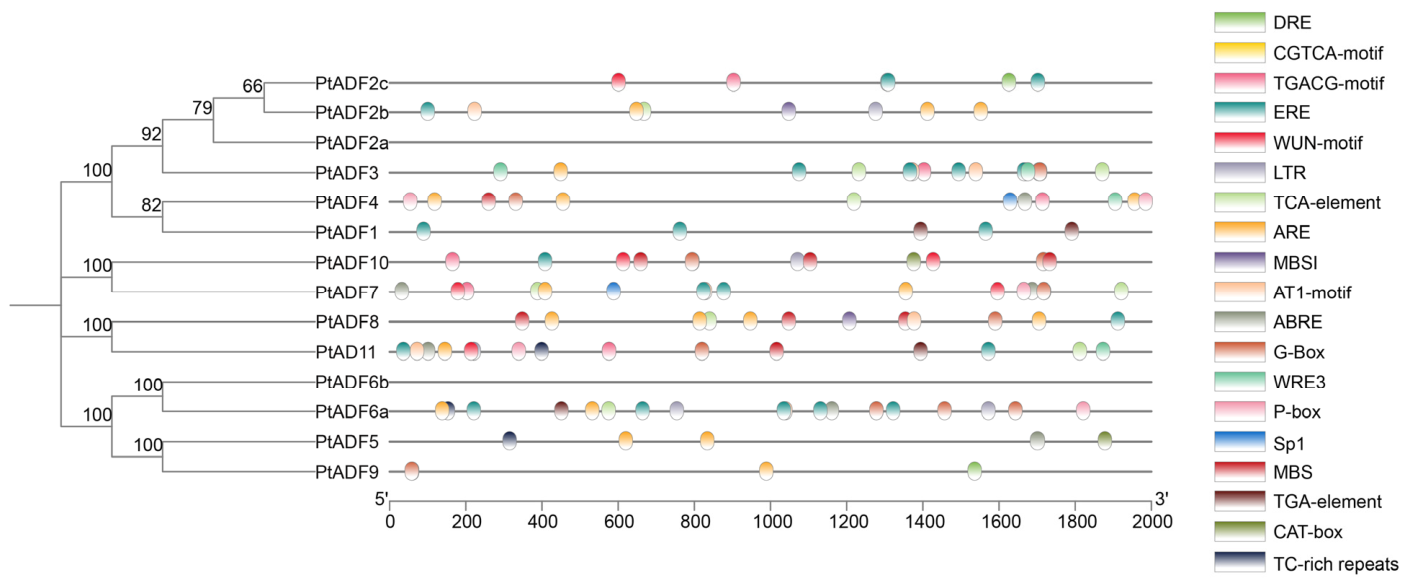
The cis-acting elements in the promoters of PtADF genes were analyzed using the PlantCARE database (Figure 6). A variety of cis-acting elements related to growth and development were identified, including meristem expression elements (CAT-box), light-responsive elements (Sp1, AT1-motif, G-box), gibberellin-responsive elements (P-box), and auxin-responsive elements (TGA-element), among others (Figure 6). For instance, auxin-responsive elements were detected in the PtADF1 promoter, and P-box elements were found in the promoter region of PtADF4, implying that the transcription of these genes may be regulated by the corresponding phytohormones. Similarly, elements related to flavonoid biosynthesis were identified in the promoters of PtADF2b and PtADF8.
Moreover, abundant stress-related cis-elements were identified in the promoter regions of PtADFs, including those associated with biotic stresses (salicylic acid and MeJA responsiveness) and abiotic stresses (low temperature, anaerobic induction, dehydration, and salt stress). For example, the MBS element, an MYB-binding site associated with drought-inducible gene expression, was identified in the promoters of PtADF8 and PtADF10. PtADF5 contained defense- and stress-responsive elements including ABRE in its promoter (Figure 6).

3.6. Expression Profiles of the Poplar ADFs Under Various Water Stress Conditions

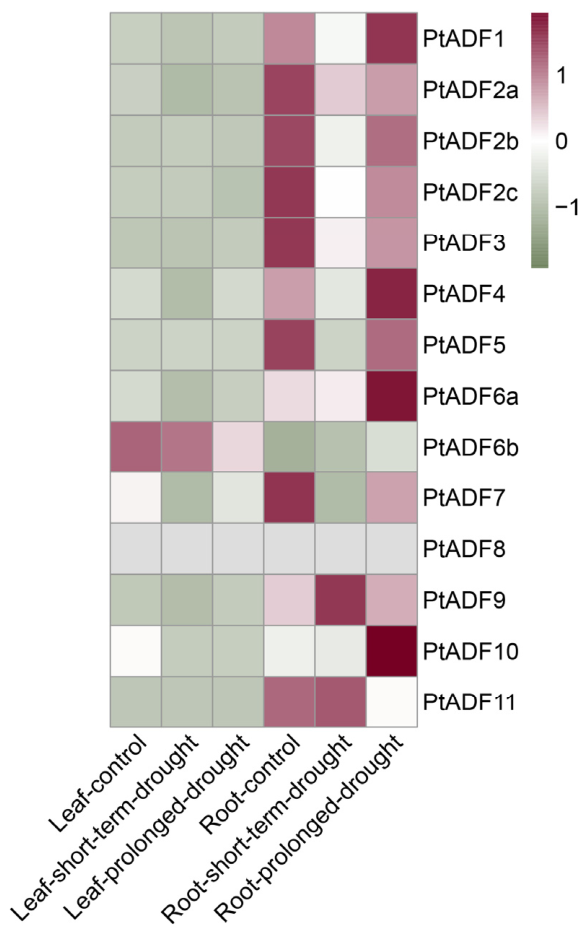
Plants’ life processes are closely linked to the functions of the cytoskeleton. Microfilaments, which are primarily composed of actin, are a crucial component of the cytoskeleton. An increasing number of studies have demonstrated that ADFs/cofilin play roles in stress responses [44]. Expression analysis of 14 PtADF genes under drought stress revealed five upregulated members (Figure 7). Specifically, PtADF4, PtADF6a, PtADF6b, PtADF9, and PtADF10 were induced in roots under prolonged drought stress. The expression of PtADF6b and PtADF9 in roots was also activated by short-term drought stress. Notably, PtADF9 was upregulated in both leaves and roots in response to drought, with higher expression levels detected in leaves under prolonged drought stress (Figure 7). In roots, the expression of PtADF2a/2b/2c, PtADF3, and PtADF7 was downregulated under both short-term and prolonged drought stress. Meanwhile, PtADF11 showed an obvious reduction in expression under prolonged drought stress (Figure 7). In leaves, the expression of PtADF2a/2b/2c and PtADF7 was repressed by prolonged drought stress, whereas the transcript level of PtADF3 decreased under short-term drought stress (Figure 7).
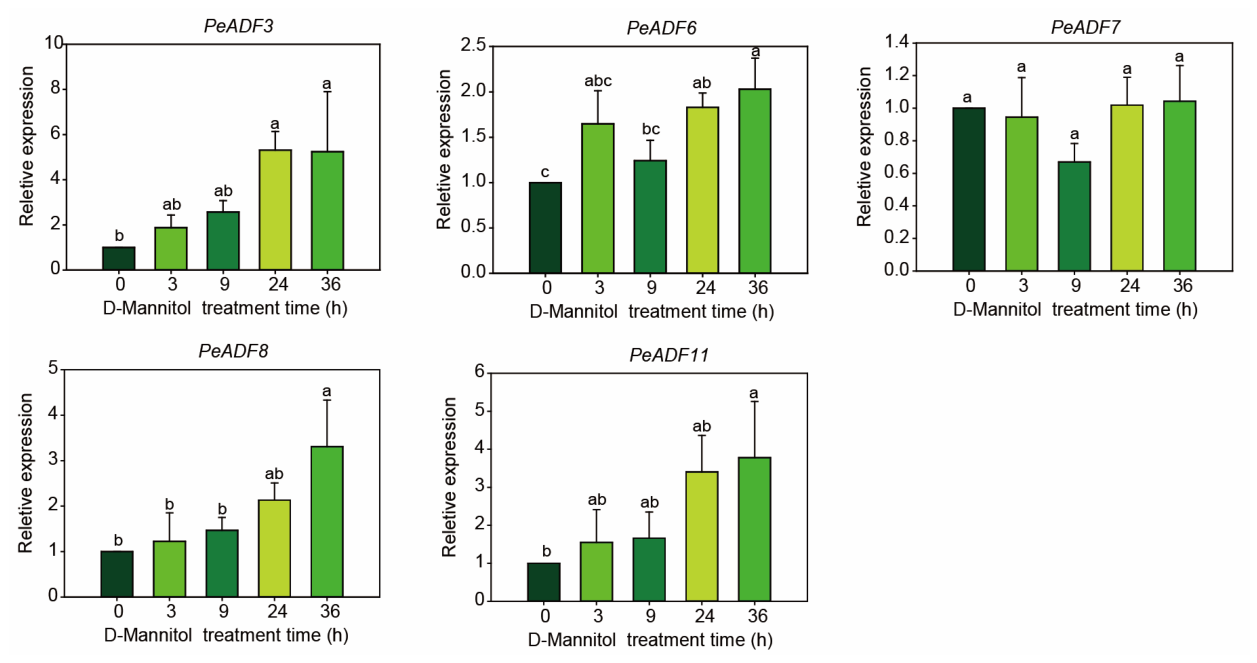
Given its strong adaptability to extreme environments, P. euphratica, a typical desert riparian tree with exceptional drought resistance, serves as an excellent woody model for identifying stress-tolerance genes. Combined with the transcriptome expression profiles of P. trichocarpa (Figure 7), five upregulated PtADF genes were initially selected to screen their orthologous genes in P. euphratica. Based on the phylogenetic relationships of ADFs between the two poplar species (Figure S1), four definite orthologous pairs were identified: PtADF4, PtADF6a, PtADF6b, and PtADF9 corresponded to PeADF7, PeADF8, PeADF6, and PeADF3 in P. euphratica, respectively. PtADF10 lacked an orthologous gene in P. euphratica and thus was excluded from subsequent analysis. Since PtADF9 was upregulated in both leaves and roots under drought (Figure 7), we further analyzed PeADF11 via qRT-PCR. PeADF11 is an ortholog of PtADF5 and clusters in the same phylogenetic clade as PtADF9. As shown in Figure 8, PeADF8 was significantly upregulated at 36 h under mannitol treatment. PeADF6 and PeADF3 were significantly upregulated at 24 h and 36 h after mannitol treatment. PeADF7 exhibited a slight downward trend at 9 h compared with the control. PeADF11, which clustered in the same clade as PeADF3, also showed a remarkable increase, with expression levels approximately 3.8-fold higher at 36 h. Overall, PeADF3 showed the strongest induction trend, followed by PeADF11, PeADF8, and PeADF6. These data revealed distinct osmotic stress-responsive expression patterns of the five PeADF genes in P. euphratica leaves. Some genes showed pronounced induction, while one individual gene exhibited a weak response.

4. Discussion

ADFs are highly conserved actin-binding proteins that modulate F-actin dynamics and regulate plant growth and development [14]. Angiosperms harbor numerous ADF genes, and genome-wide identification of the ADF family has been widely reported in higher plants [44]. Although 14 poplar ADFs have been reported previously [45], a systematic genome-wide analysis remains lacking. Here, 14 PtADF genes were identified, with a similar number reported in other plants: 11 in tomato [46], 11 in Mimulus guttatus [45], 13 in maize [16], and 9 in Medicago sativa [47]. Conserved ADF_gelsolin or ADF_cofilin_like domains were also detected in PtADF proteins (Figure 5D). Tandem and segmental duplications are major drivers of gene family expansion during evolution. Segmental duplication occurs more frequently owing to repetitive chromosomal regions [48,49]. Whole-genome duplication (WGD) is widespread in angiosperm evolution and improves environmental adaptability [50]. Our results show that WGD events substantially drove PtADF family evolution (Table 2; Figure 4A), in agreement with earlier findings. The genus Populus underwent a recent WGD event, and duplicated genes derived from this event occupy a large proportion of the poplar genome [51]. However, segmental duplications have been reported in the ADF families of alfalfa, wheat, tomato and maize, whereas no tandem duplication was detected [16,46,47,52]. Furthermore, all duplicated gene pairs in P. trichocarpa had Ka/Ks ratios < 1 (Table 2), revealing strong purifying selection for the PtADF family. Such strong purifying selection maintains the functional stability of duplicated genes throughout evolution.
ADF proteins are generally short. PtADFs consist of 137–146 amino acids, with molecular weights ranging from 15.792 kDa to 16.844 kDa (Table 1). These characteristics are more consistent with findings in alfalfa and tomato than with those in wheat [46,47,52]. Phylogenetic analysis and conserved motif analysis revealed that closely related PtADF gene pairs (PtADF8/PtADF11 and PtADF5/PtADF9) shared identical conserved motifs (Figure 5). The phylogenetic tree and synteny analysis in P. trichocarpa revealed that PtADF genes share a closer genetic relationship with S. purpurea than with rice (Figure 4). This observation may be attributed to the fact that both poplar (Populus) and willow (Salix) belong to the Salicaceae family [53].
Research has demonstrated the vital roles of ADFs in plant stress responses [14]. Numerous stress and hormone-responsive cis-elements were detected in PtADF promoters (Figure 6). It is well documented that hormones regulate plant stress responses [5,54]. Hormone-responsive cis-elements in PtADF promoters suggest that PtADF expression may be regulated by diverse endogenous and exogenous stimuli. ADF4 significantly enhanced drought resistance in Arabidopsis via CARK3-mediated phosphorylation regulation [55]. Similarly, SaADF2 maintains actin filament stability to improve drought tolerance [56]. AtADF7 acted as a positive regulator of osmotic tolerance by inhibiting VLN1, thereby modulating F-actin dynamics in root hairs under osmotic stress [57]. In this study, drought stress induced the expression of PtADF4, PtADF6a, PtADF6b, PtADF9, and PtADF10 (Figure 7). These stress-responsive PtADF genes were used to screen homologous genes in P. euphratica, and one phylogenetically related gene was additionally selected for expression analysis (Figure S1). Four PeADF genes were induced by mannitol, while PeADF7 displayed a slight downward trend (Figure 8). Notably, the expression pattern of PeADF7 (putative ortholog of PtADF4) was not fully consistent with its P. trichocarpa ortholog in the RNA-seq data (Figure 7 and Figure 8 and Figure S1). This discrepancy may arise from multiple factors, although orthologous relationships between the two species were well-supported by the phylogenetic tree (Figure S1). In P. trichocarpa, PtADF4 expression was reduced in leaves under short- and prolonged drought, and elevated in roots under prolonged drought. PeADF7 also tended to decrease in leaves under mannitol treatment (Figure 7 and Figure 8), suggesting strong tissue-specific regulation of poplar. Tissue-specific expression patterns of ADF homologs also widely exist in other plant species. Subclass III AtADF5 and AtADF9 exhibit weak expression in vegetative tissues, while subclass IV AtADF6 is moderately expressed in various tissues. In particular, AtADF9 is highly accumulated in root subapical regions, trichomes and callus [15], and AtADF5 is specifically expressed in root tip meristems [58]. In addition, ZmADF5 presents moderate expression in maize leaves [16]. In wheat, the expression of TaADF varied among different tissues at the same growth stage [52]. These results suggest that ADF gene expression varies among species, which may reflect functional specialization in different tissues. However, cross-species comparisons are constrained by inherent differences in drought adaptation, distinct stress treatments (soil drought vs. D-mannitol simulation), and potential regulatory divergence between orthologs. Accordingly, cross-species expression inferences should be made with caution.
Beyond varied tissue expression, ADF genes across subclades exert distinct regulatory roles in development and stress adaptation. AtADF6 acts as a negative regulator of plant resistance to powdery mildew by inhibiting RPW8.2 [59]. Similarly, GhADF6 negatively regulates resistance to Verticillium dahliae in cotton [60]. TaADF14/20, which belongs to the same clade as AtADF6, showed a decreased expression following freezing treatment [52]. In maize, ZmADF6/9/11, which has a closer genetic relationship with ADF6, showed increased expression levels responding to drought and heat stress [16]. Although ADF5 and ADF9 belong to the same subgroup, only ADF5 is critical for mature pollen function [61], and ADF9 is involved in pavement cell morphogenesis and is negatively regulated by MYB52 [62]. Another report showed that AtADF5 mediates actin cytoskeleton remodeling during ABA-induced stomatal closure, contributing to drought tolerance [63]. In our study, the ADF5/9 orthologs in P. euphratica, PeADF11/3, were upregulated under mannitol treatment (Figure 8), consistent with drought-induced expression of maize ZmADF5/8 [16]. Building on these findings, future work will explore their expression patterns under natural drought and investigate whether ABA may participate in their regulatory mechanisms. This study focuses on PeADF expression responses to osmotic stress. Meanwhile, given that plant water status assessment is critical for drought research, systematic water physiological measurements will be performed in further studies.

5. Conclusions

In this study, we conducted a genome-wide identification and comprehensive analysis of the ADF gene family in P. trichocarpa. A total of 14 PtADF genes were identified and unevenly distributed across ten chromosomes, with systematic characterization of their physicochemical properties, gene structures, phylogeny, and cis-regulatory elements. Promoter analysis revealed numerous stress- and hormone-related cis-elements, suggesting that PtADF genes may be potentially regulated at the transcriptional level under stress conditions. Expression analysis revealed that four PeADF members were induced under osmotic stress. Combined with bioinformatic findings, these expression data provide preliminary candidate genes for further stress-related research in poplar.

Supplementary Materials

The following supporting information can be downloaded at https://www.mdpi.com/article/10.3390/life16050800/s1, Table S1: Primers used in this study. Table S2: qRT-PCR supplementary data. Figure S1: Phylogenetic analysis of ADF family genes in Populus trichocarpa and Populus euphratica.

Author Contributions

Conceptualization, Y.Y.; formal analysis, Y.S.; data curation, Y.Y., H.A., H.-G.L., Y.S., B.F. and P.L.; writing—original draft preparation, Y.Y.; writing—review and editing, Y.Y. and H.-G.L.; funding acquisition, H.A. and Y.Y. All authors have read and agreed to the published version of the manuscript.

Funding

This research was funded by the Fundamental Research Program of Shanxi Province (202303021222241), the Excellent Doctoral Research Project in Shanxi Province (No. LJZX-202506), Doctoral Scientific Research Start-up Funding of Yuncheng University (YQ-2024005), the Shanxi Province Technological Innovation Center Base Project (Grant No. 202404010920021,CX-202512), and Scientific and Technological Research Projects of Higher Education Institutions in Hebei Province (Z2020132).

Institutional Review Board Statement

Not applicable.

Informed Consent Statement

Not applicable.

Data Availability Statement

The publicly available RNA-seq dataset analyzed in this study was retrieved from the NCBI database with the project accession PRJEB19784. Original qRT-PCR data are listed in Table S2. All other data supporting the findings of this study are included within the article.

Conflicts of Interest

The authors declare no conflicts of interest.

References

  1. Zhu, J.K. Abiotic Stress Signaling and Responses in Plants. Cell 2016, 167, 313–324. [Google Scholar] [CrossRef] [Scilit] [PubMed]
  2. Gupta, A.; Rico-Medina, A.; Caño-Delgado, A.I. The Physiology of Plant Responses to Drought. Science 2020, 368, 266–269. [Google Scholar] [CrossRef] [Scilit] [PubMed]
  3. Kim, J.-S.; Kidokoro, S.; Yamaguchi-Shinozaki, K.; Shinozaki, K. Regulatory Networks in Plant Responses to Drought and Cold Stress. Plant Physiol. 2024, 195, 170–189. [Google Scholar] [CrossRef] [Scilit]
  4. Yu, B.; Chao, D.-Y.; Zhao, Y. How Plants Sense and Respond to Osmotic Stress. J. Integr. Plant Biol. 2024, 66, 394–423. [Google Scholar] [CrossRef] [Scilit]
  5. Waadt, R.; Seller, C.A.; Hsu, P.-K.; Takahashi, Y.; Munemasa, S.; Schroeder, J.I. Plant Hormone Regulation of Abiotic Stress Responses. Nat. Rev. Mol. Cell Biol. 2022, 23, 680–694. [Google Scholar] [CrossRef] [Scilit] [PubMed]
  6. Zhang, H.; Zhu, J.; Gong, Z.; Zhu, J.K. Abiotic Stress Responses in Plants. Nat. Rev. Genet. 2022, 23, 104–119. [Google Scholar] [CrossRef] [Scilit]
  7. Guo, C.; Zhang, K.; Sun, H.; Zhu, L.; Zhang, Y.; Wang, G.; Li, A.; Bai, Z.; Liu, L.; Li, C. Root Cortical Senescence Enhances Drought Tolerance in Cotton. Plant Cell Environ. 2025, 48, 615–633. [Google Scholar] [CrossRef] [Scilit]
  8. Sun, H.; Yan, L.; Li, Z.; Cheng, W.; Lu, R.; Xia, X.; Ping, J.; Bian, C.; Wei, N.; You, C.; et al. Drought Shortens Subtropical Understory Growing Season by Advancing Leaf Senescence. Glob. Change Biol. 2024, 30, e17304. [Google Scholar] [CrossRef] [Scilit]
  9. Zhang, Y.; Wu, X.; Wang, X.; Dai, M.; Peng, Y. Crop Root System Architecture in Drought Response. J. Genet. Genom. 2025, 52, 4–13. [Google Scholar] [CrossRef] [Scilit]
  10. Bailey-Serres, J.; Parker, J.E.; Ainsworth, E.A.; Oldroyd, G.E.D.; Schroeder, J.I. Genetic Strategies for Improving Crop Yields. Nature 2019, 575, 109–118. [Google Scholar] [CrossRef] [Scilit]
  11. Zahedi, S.M.; Karimi, M.; Venditti, A. Plants Adapted to Arid Areas: Specialized Metabolites. Nat. Prod. Res. 2021, 35, 3314–3331. [Google Scholar] [CrossRef] [Scilit] [PubMed]
  12. Suzuki, N.; Rivero, R.M.; Shulaev, V.; Blumwald, E.; Mittler, R. Abiotic and Biotic Stress Combinations. New Phytol. 2014, 203, 32–43. [Google Scholar] [CrossRef] [Scilit]
  13. Maciver, S.K.; Hussey, P.J. The ADF/Cofilin Family: Actin-Remodeling Proteins. Genome Biol. 2002, 3, reviews3007.1. [Google Scholar] [CrossRef] [Scilit] [PubMed]
  14. Inada, N. Plant Actin Depolymerizing Factor: Actin Microfilament Disassembly and More. J. Plant Res. 2017, 130, 227–238. [Google Scholar] [CrossRef] [Scilit]
  15. Ruzicka, D.R.; Kandasamy, M.K.; McKinney, E.C.; Burgos-Rivera, B.; Meagher, R.B. The Ancient Subclasses of Arabidopsis ACTIN DEPOLYMERIZING FACTOR Genes Exhibit Novel and Differential Expression. Plant J. 2007, 52, 460–472. [Google Scholar] [CrossRef] [Scilit] [PubMed]
  16. Huang, J.; Sun, W.; Ren, J.; Yang, R.; Fan, J.; Li, Y.; Wang, X.; Joseph, S.; Deng, W.; Zhai, L. Genome-Wide Identification and Characterization of Actin-Depolymerizing Factor (ADF) Family Genes and Expression Analysis of Responses to Various Stresses in Zea Mays L. Int. J. Mol. Sci. 2020, 21, 1751. [Google Scholar] [CrossRef] [Scilit]
  17. Huang, Y.C.; Huang, W.L.; Hong, C.Y.; Lur, H.S.; Chang, M.C. Comprehensive Analysis of Differentially Expressed Rice Actin Depolymerizing Factor Gene Family and Heterologous Overexpression of OsADF3 Confers Arabidopsis thaliana Drought Tolerance. Rice 2012, 5, 33. [Google Scholar] [CrossRef] [Scilit]
  18. Wang, D.; Du, M.; Lyu, P.; Li, J.; Meng, H.; Liu, X.; Shi, M.; Gong, Y.; Sha, Q.; Men, Q.; et al. Functional Characterization of the Soybean Glycine Max Actin Depolymerization Factor GmADF13 for Plant Resistance to Drought Stress. Plants 2024, 13, 1651. [Google Scholar] [CrossRef] [Scilit]
  19. Fiege, C.; Germer, S.; Schwarz, A.; Bischoff, W.-A.; Pecenka, R. Coarser Root Residues Are a Major Subsoil Carbon Sink after Re-Conversion of Poplar Short Rotation Coppice Plantation to Cropland. Biomass Bioenergy 2025, 200, 108029. [Google Scholar] [CrossRef] [Scilit]
  20. Rosso, L.; Cantamessa, S.; Bergante, S.; Biselli, C.; Fricano, A.; Chiarabaglio, P.M.; Gennaro, M.; Nervo, G.; Secchi, F.; Carra, A. Responses to Drought Stress in Poplar: What Do We Know and What Can We Learn? Life 2023, 13, 533. [Google Scholar] [CrossRef] [Scilit]
  21. Guan, P.; Zheng, Y.; Lei, G.; Liu, Y.; Zhu, L.; Guo, Y.; Wang, Y.; Xi, B. Near-Earth Remote Sensing Images Used to Determine the Phenological Characteristics of the Canopy of Populus tomentosa B301 under Three Methods of Irrigation. Remote Sens. 2022, 14, 2844. [Google Scholar] [CrossRef] [Scilit]
  22. Gai, Z.; Zhai, J.; Chen, X.; Jiao, P.; Zhang, S.; Sun, J.; Qin, R.; Liu, H.; Wu, Z.; Li, Z. Phylogeography Reveals Geographic and Environmental Factors Driving Genetic Differentiation of Populus sect. Turanga in Northwest China. Front. Plant Sci. 2021, 12, 705083. [Google Scholar] [CrossRef] [Scilit]
  23. Brosché, M.; Vinocur, B.; Alatalo, E.R.; Lamminmäki, A.; Teichmann, T.; Ottow, E.A.; Djilianov, D.; Afif, D.; Bogeat-Triboulot, M.-B.; Altman, A.; et al. Gene Expression and Metabolite Profiling of Populus euphratica Growing in the Negev Desert. Genome Biol. 2005, 6, R101. [Google Scholar] [CrossRef] [Scilit]
  24. Ibáñez, C.; Vergara, A.; Castro, D.; Bascunan-Godoy, L.; Sjölander, J.; Jurca, M.; Pin, P.A.; Nilsson, O.; Eriksson, M.E. The Circadian Clock of Populus Affects Physiological, Transcriptional and Metabolomic Responses to Osmotic and Ionic Components of Salt Stress. npj Biol. Timing Sleep 2025, 2, 34. [Google Scholar] [CrossRef] [Scilit]
  25. Zhao, J.-J.; Xiang, X.; Yang, P.; Li, J.; Li, H.; Wei, S.-Y.; Wang, R.-Q.; Wang, T.; Huang, J.; Chen, L.-H.; et al. Genome-Wide Analysis of C2H2.2 Gene Family in Populus trichocarpa and the Function Exploration of PtrC2H2.2-6 in Osmotic Stress. Int. J. Biol. Macromol. 2024, 283, 137937. [Google Scholar] [CrossRef] [Scilit]
  26. Wang, H.; Zhao, S.; Gao, Y.; Yang, J. Characterization of Dof Transcription Factors and Their Responses to Osmotic Stress in Poplar (Populus trichocarpa). PLoS ONE 2017, 12, e0170210. [Google Scholar] [CrossRef] [Scilit] [PubMed]
  27. Li, H.-G.; Yang, Y.; Liu, M.; Zhu, Y.; Wang, H.-L.; Feng, C.-H.; Niu, M.-X.; Liu, C.; Yin, W.; Xia, X. The In Vivo Performance of a Heat Shock Transcription Factor from Populus euphratica, PeHSFA2, Promises a Prospective Strategy to Alleviate Heat Stress Damage in Poplar. Environ. Exp. Bot. 2022, 201, 104940. [Google Scholar] [CrossRef] [Scilit]
  28. Yang, Y.; Li, H.-G.; Wang, J.; Wang, H.-L.; He, F.; Su, Y.; Zhang, Y.; Feng, C.-H.; Niu, M.; Li, Z.; et al. ABF3 Enhances Drought Tolerance via Promoting ABA-Induced Stomatal Closure by Directly Regulating ADF5 in Populus euphratica. J. Exp. Bot. 2020, 71, 7270–7285. [Google Scholar] [CrossRef] [Scilit] [PubMed]
  29. Guo, R.; Zhang, X.; Li, M.; Zhang, H.; Wu, J.; Zhang, L.; Xiao, X.; Han, M.; An, N.; Xing, L.; et al. MdNup62 Involved in Salt and Osmotic Stress Tolerance in Apple. Sci. Rep. 2023, 13, 20198. [Google Scholar] [CrossRef] [Scilit]
  30. Darriba, D.; Posada, D.; Kozlov, A.M.; Stamatakis, A.; Morel, B.; Flouri, T. ModelTest-NG: A New and Scalable Tool for the Selection of DNA and Protein Evolutionary Models. Mol. Biol. Evol. 2020, 37, 291–294. [Google Scholar] [CrossRef] [Scilit]
  31. Kozlov, A.M.; Darriba, D.; Flouri, T.; Morel, B.; Stamatakis, A. RAxML-NG: A Fast, Scalable and User-Friendly Tool for Maximum Likelihood Phylogenetic Inference. Bioinformatics 2019, 35, 4453–4455. [Google Scholar] [CrossRef] [Scilit]
  32. Chen, C.; Wu, Y.; Li, J.; Wang, X.; Zeng, Z.; Xu, J.; Liu, Y.; Feng, J.; Chen, H.; He, Y.; et al. TBtools-II: A “One for All, All for One” Bioinformatics Platform for Biological Big-Data Mining. Mol. Plant 2023, 16, 1733–1742. [Google Scholar] [CrossRef] [Scilit] [PubMed]
  33. Wei, Y.; Zhai, J.; Geng, S.; Zhang, S.; Zhao, Y.; Cui, B.; Shan, H.; Li, Y.; Wang, C.; Li, P.; et al. Genome-Wide Identification and Functional Analysis of TCX Gene Family and the Critical Role of GhTCX17 in Response to Drought and Salt Stress in Cotton. Funct. Integr. Genom. 2025, 25, 129. [Google Scholar] [CrossRef] [Scilit] [PubMed]
  34. Li, H.-G.; Yang, L.; Fang, Y.; Wang, G.; Lyu, S.; Deng, S. A Genome-Wide-Level Insight into the HSF Gene Family of Rhodomyrtus tomentosa and the Functional Divergence of RtHSFA2a and RtHSFA2b in Thermal Adaptation. Plant Physiol. Biochem. 2025, 220, 109460. [Google Scholar] [CrossRef] [Scilit]
  35. Qiao, X.; Li, Q.; Yin, H.; Qi, K.; Li, L.; Wang, R.; Zhang, S.; Paterson, A.H. Gene Duplication and Evolution in Recurring Polyploidization-Diploidization Cycles in Plants. Genome Biol. 2019, 20, 38. [Google Scholar] [CrossRef] [Scilit] [PubMed]
  36. Lescot, M.; Déhais, P.; Thijs, G.; Marchal, K.; Moreau, Y.; Van de Peer, Y.; Rouzé, P.; Rombauts, S. PlantCARE, a Database of Plant Cis-Acting Regulatory Elements and a Portal to Tools for in Silico Analysis of Promoter Sequences. Nucleic Acids Res. 2002, 30, 325–327. [Google Scholar] [CrossRef] [Scilit]
  37. Yang, Y.; Li, H.-G.; Liu, M.; Wang, H.-L.; Yang, Q.; Yan, D.-H.; Zhang, Y.; Li, Z.; Feng, C.-H.; Niu, M.; et al. PeTGA1 Enhances Disease Resistance against Colletotrichum gloeosporioides through Directly Regulating PeSARD1 in Poplar. Int. J. Biol. Macromol. 2022, 214, 672–684. [Google Scholar] [CrossRef] [Scilit]
  38. Su, Y.; Li, H.G.; Wang, Y.; Li, S.; Wang, H.L.; Yu, L.; He, F.; Yang, Y.; Feng, C.H.; Shuai, P.; et al. Poplar miR472a Targeting NBS-LRRs Is Involved in Effective Defence against the Necrotrophic Fungus Cytospora chrysosperma. J. Exp. Bot. 2018, 69, 5519–5530. [Google Scholar] [CrossRef] [Scilit]
  39. Liu, X.; Bao, Y.; Zhang, M.-Y.; Zhang, H.; Niu, M.-X.; Liu, S.-J.; Liu, M.-Y.; Huang, M.-B.; Liu, C.; Yin, W.; et al. SC35-Mediated bZIP49 Splicing Regulates K+ Channel AKT1 for Salt Stress Adaptation in Poplar. Nat. Commun. 2025, 16, 7266. [Google Scholar] [CrossRef] [Scilit]
  40. Xiang, Z.-X.; Li, W.; Lu, Y.-T.; Yuan, T.-T. Hydrogen Sulfide Alleviates Osmotic Stress-Induced Root Growth Inhibition by Promoting Auxin Homeostasis. Plant J. 2023, 114, 1369–1384. [Google Scholar] [CrossRef] [Scilit]
  41. He, F.; Niu, M.-X.; Wang, T.; Li, J.-L.; Shi, Y.-J.; Zhao, J.-J.; Li, H.; Xiang, X.; Yang, P.; Wei, S.-Y.; et al. The Ubiquitin E3 Ligase RZFP1 Affects Drought Tolerance in Poplar by Mediating the Degradation of the Protein Phosphatase PP2C-9. Plant Physiol. 2024, 196, 2936–2955. [Google Scholar] [CrossRef] [Scilit]
  42. Moore, R.C.; Purugganan, M.D. The Early Stages of Duplicate Gene Evolution. Proc. Natl. Acad. Sci. USA 2003, 100, 15682–15687. [Google Scholar] [CrossRef] [Scilit]
  43. Fan, Y.; Cui, Q.; Li, S.; Li, Y.; Yi, G.; Wang, C.; Liu, Q.; Zhang, J.; Rao, G. Genome-Wide Identification of Phenylacetaldehyde Reductase Genes and Molecular Docking Simulation Study of OePAR1 in Olives. Forests 2025, 16, 630. [Google Scholar] [CrossRef] [Scilit]
  44. Sun, Y.; Shi, M.; Wang, D.; Gong, Y.; Sha, Q.; Lv, P.; Yang, J.; Chu, P.; Guo, S. Research Progress on the Roles of Actin-Depolymerizing Factor in Plant Stress Responses. Front. Plant Sci. 2023, 14, 1278311. [Google Scholar] [CrossRef] [Scilit] [PubMed]
  45. Roy-Zokan, E.M.; Dyer, K.A.; Meagher, R.B. Phylogenetic Patterns of Codon Evolution in the ACTIN-DEPOLYMERIZING FACTOR/COFILIN (ADF/CFL) Gene Family. PLoS ONE 2015, 10, e0145917. [Google Scholar] [CrossRef] [Scilit] [PubMed]
  46. Khatun, K.; Robin, A.H.K.; Park, J.-I.; Kim, C.K.; Lim, K.-B.; Kim, M.-B.; Lee, D.-J.; Nou, I.S.; Chung, M.-Y. Genome-Wide Identification, Characterization and Expression Profiling of ADF Family Genes in Solanum lycopersicum L. Genes 2016, 7, 79. [Google Scholar] [CrossRef] [Scilit]
  47. Shi, M.; Wang, Y.; Lv, P.; Gong, Y.; Sha, Q.; Zhao, X.; Zhou, W.; Meng, L.; Han, Z.; Zhang, L.; et al. Genome-Wide Characterization and Expression Analysis of the ADF Gene Family in Response to Salt and Drought Stress in Alfalfa (Medicago sativa). Front. Plant Sci. 2025, 15, 1520267. [Google Scholar] [CrossRef] [Scilit]
  48. Panchy, N.; Lehti-Shiu, M.; Shiu, S.-H. Evolution of Gene Duplication in Plants. Plant Physiol. 2016, 171, 2294–2316. [Google Scholar] [CrossRef] [Scilit]
  49. Cannon, S.B.; Mitra, A.; Baumgarten, A.; Young, N.D.; May, G. The Roles of Segmental and Tandem Gene Duplication in the Evolution of Large Gene Families in Arabidopsis thaliana. BMC Plant Biol. 2004, 4, 10. [Google Scholar] [CrossRef] [Scilit]
  50. Xu, S.; Guo, Z.; Feng, X.; Shao, S.; Yang, Y.; Li, J.; Zhong, C.; He, Z.; Shi, S. Where Whole-Genome Duplication Is Most Beneficial: Adaptation of Mangroves to a Wide Salinity Range between Land and Sea. Mol. Ecol. 2023, 32, 460–475. [Google Scholar] [CrossRef] [Scilit]
  51. Shi, T.; Zhang, X.; Hou, Y.; Jia, C.; Dan, X.; Zhang, Y.; Jiang, Y.; Lai, Q.; Feng, J.; Feng, J.; et al. The Super-Pangenome of Populus Unveils Genomic Facets for Its Adaptation and Diversification in Widespread Forest Trees. Mol. Plant 2024, 17, 725–746. [Google Scholar] [CrossRef] [Scilit]
  52. Xu, K.; Zhao, Y.; Zhao, S.; Liu, H.; Wang, W.; Zhang, S.; Yang, X. Genome-Wide Identification and Low Temperature Responsive Pattern of Actin Depolymerizing Factor (ADF) Gene Family in Wheat (Triticum aestivum L.). Front. Plant Sci. 2021, 12, 618984. [Google Scholar] [CrossRef] [Scilit] [PubMed]
  53. Hou, J.; Ye, N.; Dong, Z.; Lu, M.; Li, L.; Yin, T. Major Chromosomal Rearrangements Distinguish Willow and Poplar After the Ancestral “Salicoid” Genome Duplication. Genome Biol. Evol. 2016, 8, 1868–1875. [Google Scholar] [CrossRef] [Scilit]
  54. Aerts, N.; Pereira Mendes, M.; Van Wees, S.C.M. Multiple Levels of Crosstalk in Hormone Networks Regulating Plant Defense. Plant J. 2021, 105, 489–504. [Google Scholar] [CrossRef] [Scilit]
  55. Peng, L.; He, J.; Yao, H.; Yu, Q.; Zhang, Q.; Li, K.; Huang, Y.; Chen, L.; Li, X.; Yang, Y.; et al. CARK3-Mediated ADF4 Regulates Hypocotyl Elongation and Soil Drought Stress in Arabidopsis. Front. Plant Sci. 2022, 13, 1065677. [Google Scholar] [CrossRef] [Scilit]
  56. Sengupta, S.; Mangu, V.; Sanchez, L.; Bedre, R.; Joshi, R.; Rajasekaran, K.; Baisakh, N. An Actin-Depolymerizing Factor from the Halophyte Smooth Cordgrass, Spartina alterniflora (SaADF2), Is Superior to Its Rice Homolog (OsADF2) in Conferring Drought and Salt Tolerance When Constitutively Overexpressed in Rice. Plant Biotechnol. J. 2019, 17, 188–205. [Google Scholar] [CrossRef] [Scilit] [PubMed]
  57. Bi, S.; Li, M.; Liu, C.; Liu, X.; Cheng, J.; Wang, L.; Wang, J.; Lv, Y.; He, M.; Cheng, X.; et al. Actin Depolymerizing Factor ADF7 Inhibits Actin Bundling Protein VILLIN1 to Regulate Root Hair Formation in Response to Osmotic Stress in Arabidopsis. PLoS Genet. 2022, 18, e1010338. [Google Scholar] [CrossRef] [Scilit]
  58. Dong, C.-H.; Kost, B.; Xia, G.; Chua, N.-H. Molecular Identification and Characterization of the Arabidopsis AtADF1, AtADF5 and AtADF6 Genes. Plant Mol. Biol. 2001, 45, 517–527. [Google Scholar] [CrossRef] [Scilit]
  59. Wang, W.; Wen, Y.; Berkey, R.; Xiao, S. Specific Targeting of the Arabidopsis Resistance Protein RPW8.2 to the Interfacial Membrane Encasing the Fungal Haustorium Renders Broad-Spectrum Resistance to Powdery Mildew. Plant Cell 2009, 21, 2898–2913. [Google Scholar] [CrossRef] [Scilit]
  60. Sun, Y.; Zhong, M.; Li, Y.; Zhang, R.; Su, L.; Xia, G.; Wang, H. GhADF6-Mediated Actin Reorganization Is Associated with Defence against Verticillium Dahliae Infection in Cotton. Mol. Plant Pathol. 2021, 22, 1656–1667. [Google Scholar] [CrossRef] [Scilit]
  61. Zhu, J.; Nan, Q.; Qin, T.; Qian, D.; Mao, T.; Yuan, S.; Wu, X.; Niu, Y.; Bai, Q.; An, L.; et al. Higher-Ordered Actin Structures Remodeled by Arabidopsis ACTIN-DEPOLYMERIZING FACTOR5 Are Important for Pollen Germination and Pollen Tube Growth. Mol. Plant 2017, 10, 1065–1081. [Google Scholar] [CrossRef] [Scilit]
  62. Qiu, T.; Su, Y.; Guo, N.; Zhang, X.; Jia, P.; Mao, T.; Wang, X. MYB52 Negatively Regulates ADF9-Meditated Actin Filament Bundling in Arabidopsis Pavement Cell Morphogenesis. J. Integr. Plant Biol. 2024, 66, 2379–2394. [Google Scholar] [CrossRef] [Scilit]
  63. Qian, D.; Zhang, Z.; He, J.; Zhang, P.; Ou, X.; Li, T.; Niu, L.; Nan, Q.; Niu, Y.; He, W.; et al. Arabidopsis ADF5 Promotes Stomatal Closure by Regulating Actin Cytoskeleton Remodeling in Response to ABA and Drought Stress. J. Exp. Bot. 2019, 70, 435–446. [Google Scholar] [CrossRef] [Scilit]
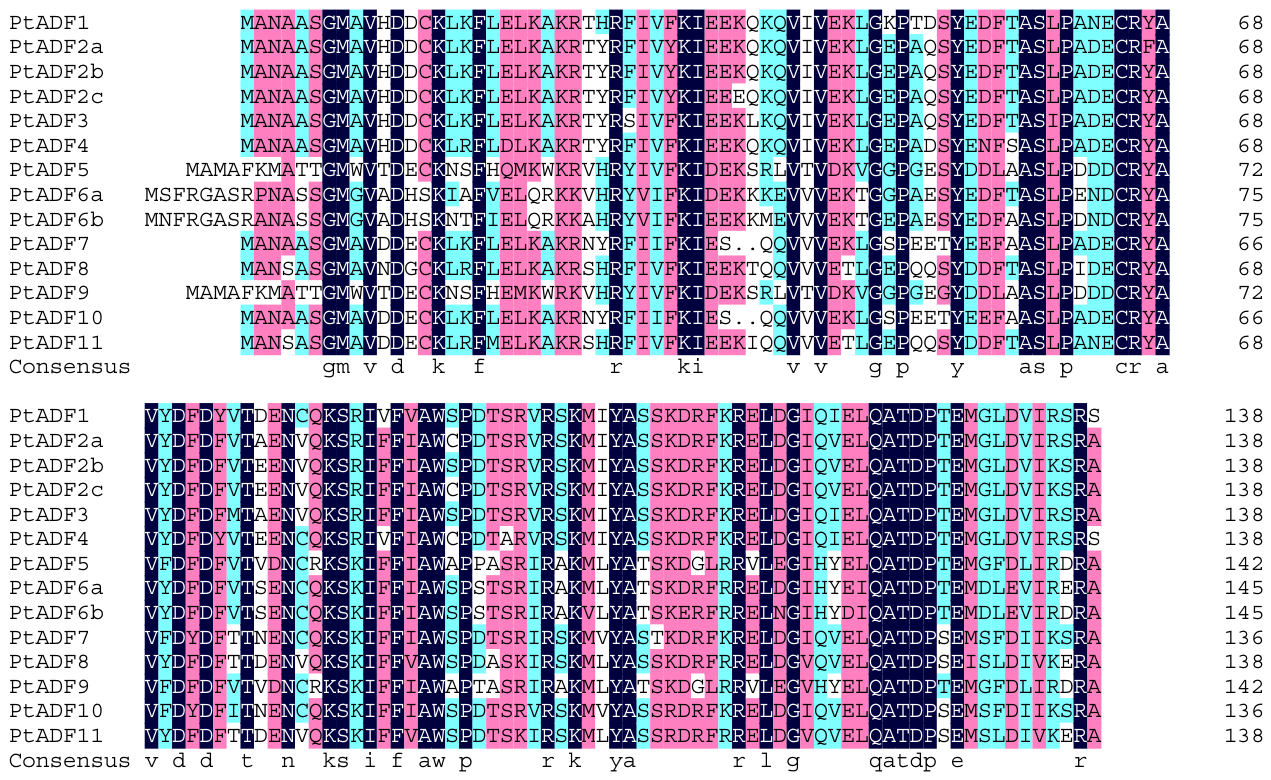
Figure 1. Amino acid sequence alignment of the PtADFs protein of poplar trees (Populus trichocarpa).
Life 16 00800 g001
Figure 2. A phylogenetic analysis of the plant ADF gene family across P. trichocarpa, A. thaliana, S. purpurea, O. sativa, and M. domestica.
Life 16 00800 g002
Figure 3. Chromosomal locations of PtADFs in poplar. The lengths and gene densities of the 19 chromosomes were represented by bands. Blue lines indicated relatively low gene densities.
Life 16 00800 g003
Figure 4. Syntenic analysis of the ADF gene family. (A) Intra-chromosomal synteny of ADF genes in P. trichocarpa. Red lines represent collinear gene pairs of PtADF members, and the legend indicates gene density across each chromosome. (B) Cross-species synteny comparison of ADF genes between P. trichocarpa and four other plant species, including A. thaliana, S. lycopersicum, O. sativa, and S. purpurea. Gray lines denote conserved syntenic blocks between pairs of genomes, whereas red lines highlight the syntenic ADF homologous gene pairs.
Life 16 00800 g004
Figure 5. Phylogenetic relationships, gene structures, motif distribution, and domains of the PtADF genes. (A) Phylogenetic tree constructed from PtADFs. (B) Exon–intron structures of the PtADF genes. Green boxes and black lines represent the UTRs and introns, respectively. (C) Motif distribution of the PtADF members. (D) Conserved domain analysis of the PtADF proteins. Different domains are indicated in various colors.
Life 16 00800 g005
Figure 6. Annotation and distribution of the cis-elements in the PtADFs promoters. Different colors indicated different cis-acting elements, including stress and growth-related cis-elements.
Life 16 00800 g006
Figure 7. The heatmap illustrates the expression profile of poplar PtADF genes under water stress. Different colors indicate the relative transcript abundance of each gene.
Life 16 00800 g007
Figure 8. Expression levels of P. euphratica ADF genes under osmotic stress (D-mannitol treatment) detected by qRT-PCR. Different lowercase letters indicate significant differences at p < 0.05 (ANOVA followed by Tukey’s multiple comparison test).
Life 16 00800 g008
Table 1. Detailed information on the PtADF genes.
Gene NameGene IDProtein Length/aaIsoelectric
Point (PI)
Protein
Molecular
Mass/kDa
Instability IndexPredicted Subcellular Locations
PtADF1Potri.008G052100.21397.6716.07151.84Cytoplasm
PtADF2aPotri.009G028200.11396.6015.9946.73Cytoplasm
PtADF2bPotri.001G236700.21395.9216.02049.62Cytoplasm
PtADF2cPotri.009G028100.41395.3016.03749.87Cytoplasm
PtADF3Potri.001G236400.21396.6015.94551.87Cytoplasm
PtADF4Potri.010G208500.21395.9116.04753.43Cytoplasm
PtADF5Potri.009G133100.11438.4116.51436.39Cytoplasm
PtADF6aPotri.002G038800.11467.7516.82939.57Cytoplasm
PtADF6bPotri.005G223800.21466.8416.84440.76Cytoplasm
PtADF7Potri.012G141600.11375.1315.79252.81Cytoplasm
PtADF8Potri.003G125500.11395.2615.96054.20Cytoplasm
PtADF9Potri.004G173800.11437.7016.47428.62Cytoplasm
PtADF10Potri.015G144500.11375.1315.80455.62Cytoplasm
PtADF11Potri.001G106200.11395.1116.09659.68Cytoplasm
Table 2. Ka/Ks analysis and Gene duplication type of the orthologous PtADF genes. WGD: whole-genome duplication.
Gene PairsKaKsKa/KsSelective TypeGene Duplication Type
PtADF11-PtADF80.0309960.5227180.059298PurifyingWGD
PtADF3-PtADF10.0637160.9800650.065012PurifyingWGD
PtADF3-PtADF2c0.0311650.4053470.076885PurifyingWGD
PtADF3-PtADF40.0637660.7625370.083624PurifyingWGD
PtADF6a-PtADF6b0.054930.3426360.160317PurifyingWGD
PtADF8-PtADF100.1574351.9341720.081396PurifyingWGD
PtADF9-PtADF50.0180960.3826730.047288PurifyingWGD
PtADF1-PtADF2a0.0668521.4594330.045807PurifyingWGD
PtADF1-PtADF40.040730.2202180.184955PurifyingWGD
PtADF2c-PtADF40.0569741.4468860.039377PurifyingWGD
PtADF7-PtADF100.0140560.2795980.050271PurifyingWGD
Disclaimer/Publisher’s Note: The statements, opinions and data contained in all publications are solely those of the individual author(s) and contributor(s) and not of MDPI and/or the editor(s). MDPI and/or the editor(s) disclaim responsibility for any injury to people or property resulting from any ideas, methods, instructions or products referred to in the content.