Flecainide in Structural Heart Disease: Reconsidering Its Role in Contemporary Arrhythmia Management

 , , , , ,
  ,
,  , , and
Abstract
- Key Messages
- The historical restriction of flecainide in SHD is based largely on CAST and should not be extrapolated uncritically to all structural substrates.
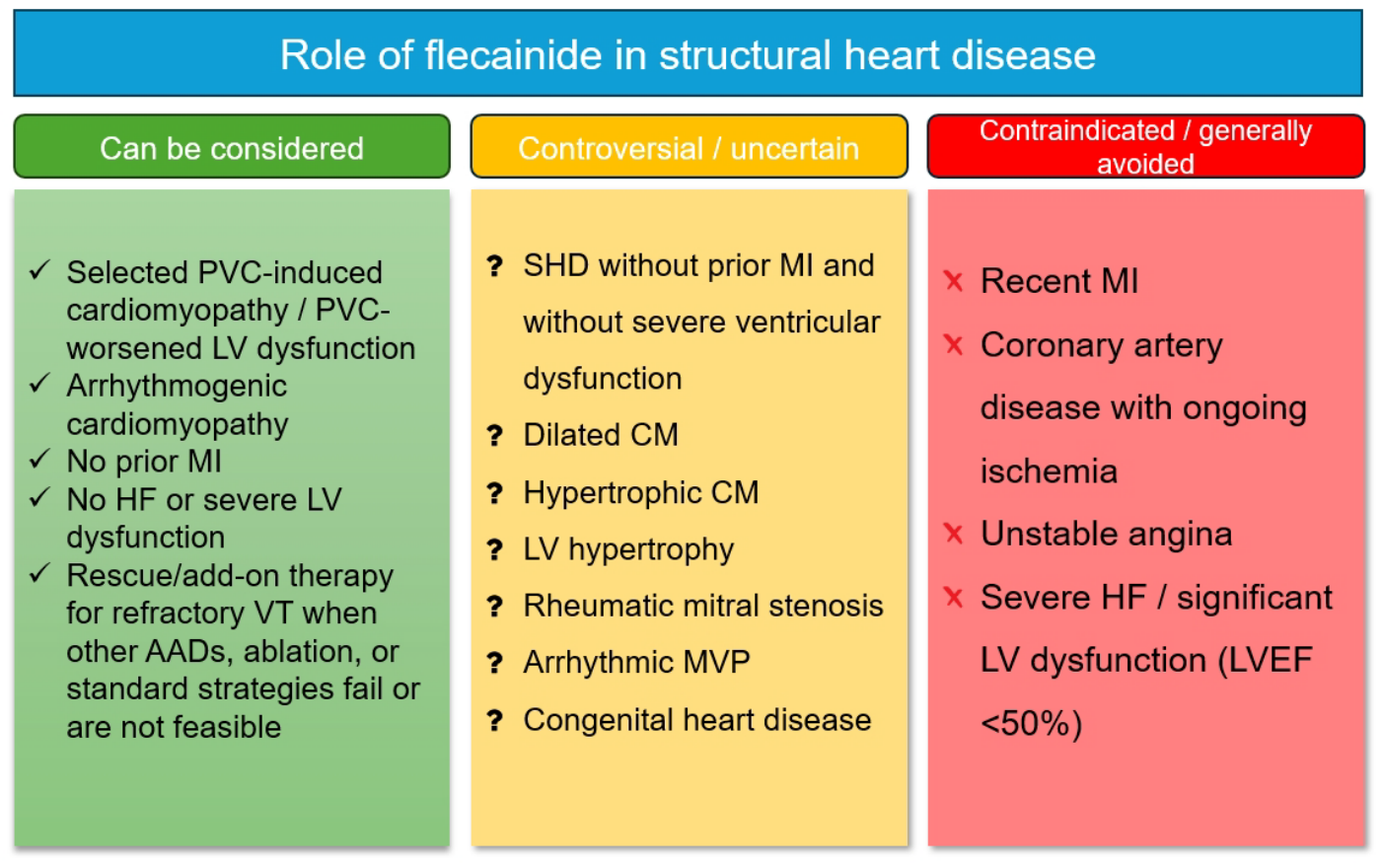
- Flecainide-related risk appears to be substrate-dependent, with greatest concern in the presence of active ischemia, significant scar, reduced LV systolic function, or conduction disease.
- Contemporary evidence in selected phenotypes is encouraging but remains observational, retrospective, and highly selected; therefore, it should be regarded as hypothesis-generating rather than practice-changing.
- Any consideration of flecainide beyond conventional indications requires careful phenotyping, appropriate baseline evaluation, and close specialist monitoring.
1. Introduction
2. Pharmacodynamic and Pharmacokinetic Properties of Flecainide
3. CAST and the Overextension of Its Findings to Structural Heart Disease
4. The Changing Landscape of Coronary Artery Disease Since CAST
5. Emerging Evidence for Use of Flecainide in Structural Heart Disease
5.1. Coronary Artery Disease
5.2. Left Ventricular Hypertrophy
5.3. Valvular Heart Disease
5.4. Nonischemic Cardiomyopathy
5.4.1. Dilated Cardiomyopathy
5.4.2. Arrhythmogenic Cardiomyopathy
5.4.3. Premature Ventricular Complex-Induced Cardiomyopathy
5.5. Congenital Heart Disease
6. Contradictions and Percussions
7. Evidence Gaps and Future Directions
8. Conclusions
Author Contributions
Funding
Institutional Review Board Statement
Informed Consent Statement
Data Availability Statement
Conflicts of Interest
References
- Van Gelder, I.C.; Rienstra, M.; Bunting, K.V.; Casado-Arroyo, R.; Caso, V.; Crijns, H.J.G.M.; De Potter, T.J.R.; Dwight, J.; Guasti, L.; Hanke, T.; et al. 2024 ESC Guidelines for the management of atrial fibrillation developed in collaboration with the European Association for Cardio-Thoracic Surgery (EACTS). Eur. Heart J. 2024, 45, 3314–3414. [Google Scholar] [CrossRef]
- Merino, J.L.; Tamargo, J.; Blomström-Lundqvist, C.; Boriani, G.; Crijns, H.J.G.M.; Dobrev, D.; Goette, A.; Hohnloser, S.H.; Naccarelli, G.V.; A Reiffel, J.; et al. Practical Compendium of Antiarrhythmic Drugs: A Clinical Consensus Statement of the European Heart Rhythm Association of the European Society of Cardiology. EP Eur. 2025, 27, euaf076. [Google Scholar] [CrossRef]
- Chung, S.-C.; Lai, A.; Lip, G.Y.H.; Lambiase, P.D.; Providencia, R. Impact of anti-arrhythmic drugs and catheter ablation on the survival of patients with atrial fibrillation: A population study based on 199 433 new-onset atrial fibrillation patients in the UK. EP Eur. 2023, 25, 351–359. [Google Scholar] [CrossRef]
- Zeppenfeld, K.; Tfelt-Hansen, J.; de Riva, M.; Winkel, B.G.; Behr, E.R.; Blom, N.A.; Charron, P.; Corrado, D.; Dagres, N.; de Chillou, C.; et al. 2022 ESC Guidelines for the management of patients with ventricular arrhythmias and the prevention of sudden cardiac death. Eur. Heart J. 2022, 43, 3997–4126. [Google Scholar] [CrossRef]
- Könemann, H.; Dagres, N.; Merino, J.L.; Sticherling, C.; Zeppenfeld, K.; Tfelt-Hansen, J.; Eckardt, L. Spotlight on the 2022 ESC guideline management of ventricular arrhythmias and prevention of sudden cardiac death: 10 novel key aspects. EP Eur. 2023, 25, euad091. [Google Scholar] [CrossRef] [PubMed]
- Brugada, J.; Katritsis, D.G.; Arbelo, E.; Arribas, F.; Bax, J.J.; Blomström-Lundqvist, C.; Calkins, H.; Corrado, D.; Deftereos, S.G.; Diller, G.-P.; et al. 2019 ESC Guidelines for the management of patients with supraventricular tachycardiaThe Task Force for the management of patients with supraventricular tachycardia of the European Society of Cardiology (ESC). Eur. Heart J. 2020, 41, 655–720. [Google Scholar] [CrossRef]
- Echt, D.S.; Liebson, P.R.; Mitchell, L.B.; Peters, R.W.; Obias-Manno, D.; Barker, A.H.; Arensberg, D.; Baker, A.; Friedman, L.; Greene, H.L.; et al. Mortality and morbidity in patients receiving encainide, flecainide, or placebo. The Cardiac Arrhythmia Suppression Trial. N. Engl. J. Med. 1991, 324, 781–788. [Google Scholar] [CrossRef]
- The Cardiac Arrhythmia Suppression Trial (CAST) Investigators. Preliminary report: Effect of encainide and flecainide on mortality in a randomized trial of arrhythmia suppression after myocardial infarction. N. Engl. J. Med. 1989, 321, 406–412. [CrossRef] [PubMed]
- Grigoriou, K.; Karakasis, P.; Theofilis, P.; Vlachakis, P.K.; Milaras, N.; Patoulias, D.; Antoniadis, A.P.; Fragakis, N. Metabolic Remodeling and Mitochondrial Stress in Atrial Fibrillation: Mechanisms and Translational Targets. Rev. Cardiovasc. Med. 2025, 26, 44688. [Google Scholar] [CrossRef] [PubMed]
- Hochstadt, A.; Merdler, I.; Jankelson, L. Class Ic antiarrhythmic drugs and structural heart disease—Time for a randomized controlled study? Heart Rhythm, 2026; in press. [CrossRef]
- Karakasis, P.; Theofilis, P.; Milaras, N.; Vlachakis, P.K.; Patoulias, D.; Karamitsos, T.; Antoniadis, A.P.; Fragakis, N. Epigenetic Drivers of Atrial Fibrillation: Mechanisms, Biomarkers, and Therapeutic Targets. Int. J. Mol. Sci. 2025, 26, 5253. [Google Scholar] [CrossRef]
- Karakasis, P.; Theofilis, P.; Vlachakis, P.K.; Milaras, N.; Kalinderi, K.; Patoulias, D.; Antoniadis, A.P.; Fragakis, N. Gene Therapy for Cardiac Arrhythmias: Mechanisms, Modalities and Therapeutic Applications. Med. Sci. 2025, 13, 102. [Google Scholar] [CrossRef] [PubMed]
- Echt, D.S.; Ruskin, J.N. Use of Flecainide for the Treatment of Atrial Fibrillation. Am. J. Cardiol. 2020, 125, 1123–1133. [Google Scholar] [CrossRef]
- Campbell, T.J.; Vaughan Williams, E.M. Voltage- and time-dependent depression of maximum rate of depolarisation of guinea-pig ventricular action potentials by two new antiarrhythmic drugs, flecainide and lorcainide. Cardiovasc. Res. 1983, 17, 251–258. [Google Scholar] [CrossRef]
- Hellestrand, K.J.; Bexton, R.S.; Nathan, A.W.; Spurrell, R.A.; Camm, A.J. Acute electrophysiological effects of flecainide acetate on cardiac conduction and refractoriness in man. Br. Heart J. 1982, 48, 140–148. [Google Scholar] [CrossRef] [PubMed]
- Borchard, U.; Boisten, M. Effect of flecainide on action potentials and alternating current-induced arrhythmias in mammalian myocardium. J. Cardiovasc. Pharmacol. 1982, 4, 205–212. [Google Scholar] [CrossRef]
- Josephson, M.A.; Ikeda, N.; Singh, B.N. Effects of flecainide on ventricular function: Clinical and experimental correlations. Am. J. Cardiol. 1984, 53, 95B–100B. [Google Scholar] [CrossRef] [PubMed]
- Holmes, B.; Heel, R.C. Flecainide A preliminary review of its pharmacodynamic properties and therapeutic efficacy. Drugs 1985, 29, 1–33. [Google Scholar] [CrossRef]
- Follmer, C.H.; Colatsky, T.J. Block of delayed rectifier potassium current, IK, by flecainide and E-4031 in cat ventricular myocytes. Circulation 1990, 82, 289–293. [Google Scholar] [CrossRef] [PubMed]
- Tamargo, J.; Caballero, R.; Gómez, R.; Valenzuela, C.; Delpón, E. Pharmacology of cardiac potassium channels. Cardiovasc. Res. 2004, 62, 9–33. [Google Scholar] [CrossRef]
- Lei, M.; Wu, L.; Terrar, D.A.; Huang, C.L.-H. The modernized classification of cardiac antiarrhythmic drugs: Its application to clinical practice. Heart Rhythm 2025, 22, e500–e506. [Google Scholar] [CrossRef]
- Watanabe, H.; Chopra, N.; Laver, D.; Hwang, H.S.; Davies, S.S.; Roach, D.E.; Duff, H.J.; Roden, D.M.; Wilde, A.A.M.; Knollmann, B.C. Flecainide prevents catecholaminergic polymorphic ventricular tachycardia in mice and humans. Nat. Med. 2009, 15, 380–383. [Google Scholar] [CrossRef]
- Rabêlo Evangelista, A.B.; Monteiro, F.R.; Nearing, B.D.; Belardinelli, L.; Verrier, R.L. Flecainide-induced QRS complex widening correlates with negative inotropy. Heart Rhythm 2021, 18, 1416–1422. [Google Scholar] [CrossRef]
- Legrand, V.; Materne, P.; Vandormael, M.; Collignon, P.; Kulbertus, H.E. Comparative haemodynamic effects of intravenous flecainide in patients with and without heart failure and with and without beta-blocker therapy. Eur. Heart J. 1985, 6, 664–671. [Google Scholar] [CrossRef] [PubMed]
- Josephson, M.A.; Kaul, S.; Hopkins, J.; Kvam, D.; Singh, B.N. Hemodynamic effects of intravenous flecainide relative to the level of ventricular function in patients with coronary artery disease. Am. Heart J. 1985, 109, 41–45. [Google Scholar] [CrossRef] [PubMed]
- Conard, G.J.; Ober, R.E. Metabolism of flecainide. Am. J. Cardiol. 1984, 53, 41B–51B. [Google Scholar] [CrossRef]
- Tamargo, J.; Le Heuzey, J.-Y.; Mabo, P. Narrow therapeutic index drugs: A clinical pharmacological consideration to flecainide. Eur. J. Clin. Pharmacol. 2015, 71, 549–567. [Google Scholar] [CrossRef] [PubMed]
- Forland, S.C.; Cutler, R.E.; McQuinn, R.L.; Kvam, D.C.; Miller, A.M.; Conard, G.J.; Parish, S. Flecainide pharmacokinetics after multiple dosing in patients with impaired renal function. J. Clin. Pharmacol. 1988, 28, 727–735. [Google Scholar] [CrossRef]
- Karakasis, P.; Theofilis, P.; Vlachakis, P.K.; Apostolos, A.; Ktenopoulos, N.; Grigoriou, K.; Patoulias, D.; Antoniadis, A.P.; Fragakis, N. Arrhythmia-Induced Cardiomyopathy in Atrial Fibrillation: Pathogenesis, Diagnosis, and Treatment. Life 2025, 15, 1675. [Google Scholar] [CrossRef]
- Valembois, L.; Audureau, E.; Takeda, A.; Jarzebowski, W.; Belmin, J.; Lafuente-Lafuente, C. Antiarrhythmics for maintaining sinus rhythm after cardioversion of atrial fibrillation. Cochrane Database Syst. Rev. 2019, 9, CD005049. [Google Scholar] [CrossRef]
- Faber, T.S.; Zehender, M.; Krahnefeld, O.; Daisenberger, K.; Meinertz, T.; Just, H. Propafenone during acute myocardial ischemia in patients: A double-blind, randomized, placebo-controlled study. J. Am. Coll. Cardiol. 1997, 29, 561–567. [Google Scholar] [CrossRef] [PubMed]
- Nattel, S. Experimental evidence for proarrhythmic mechanisms of antiarrhythmic drugs. Cardiovasc. Res. 1998, 37, 567–577. [Google Scholar] [CrossRef] [PubMed]
- Akiyama, T.; Pawitan, Y.; Greenberg, H.; Kuo, C.S.; Reynolds-Haertle, R.A.; CAST Investigators. Increased risk of death and cardiac arrest from encainide and flecainide in patients after non-Q-wave acute myocardial infarction in the Cardiac Arrhythmia Suppression Trial. Am. J. Cardiol. 1991, 68, 1551–1555. [Google Scholar] [CrossRef]
- Anderson, J.L.; Platia, E.V.; Hallstrom, A.; Henthorn, R.W.; Buckingham, T.A.; Carlson, M.D.; Carson, P.E. Interaction of baseline characteristics with the hazard of encainide, flecainide, and moricizine therapy in patients with myocardial infarction. A possible explanation for increased mortality in the Cardiac Arrhythmia Suppression Trial (CAST). Circulation 1994, 90, 2843–2852. [Google Scholar] [CrossRef]
- Greenberg, H.M.; Dwyer, E.M.J.; Hochman, J.S.; Steinberg, J.S.; Echt, D.S.; Peters, R.W. Interaction of ischaemia and encainide/flecainide treatment: A proposed mechanism for the increased mortality in CAST I. Br. Heart J. 1995, 74, 631–635. [Google Scholar] [CrossRef]
- Murphy, L.; Renodin, D.; Antzelevitch, C.; Di Diego, J.M.; Cordeiro, J.M. Extracellular proton depression of peak and late Na+ current in the canine left ventricle. Am. J. Physiol. Heart Circ. Physiol. 2011, 301, H936–H944. [Google Scholar] [CrossRef]
- Shaw, R.M.; Rudy, Y. Electrophysiologic effects of acute myocardial ischemia. A mechanistic investigation of action potential conduction and conduction failure. Circ. Res. 1997, 80, 124–138. [Google Scholar] [CrossRef]
- Veeraraghavan, R.; Gourdie, R.G.; Poelzing, S. Mechanisms of cardiac conduction: A history of revisions. Am. J. Physiol. Heart Circ. Physiol. 2014, 306, H619–H627. [Google Scholar] [CrossRef]
- De Groot, J.R.; Coronel, R. Acute ischemia-induced gap junctional uncoupling and arrhythmogenesis. Cardiovasc. Res. 2004, 62, 323–334. [Google Scholar] [CrossRef]
- Verheule, S.; Schotten, U. Electrophysiological Consequences of Cardiac Fibrosis. Cells 2021, 10, 3220. [Google Scholar] [CrossRef] [PubMed]
- Kotadia, I.; Whitaker, J.; Roney, C.; Niederer, S.; O’Neill, M.; Bishop, M.; Wright, M. Anisotropic Cardiac Conduction. Arrhythmia Electrophysiol. Rev. 2020, 9, 202–210. [Google Scholar] [CrossRef]
- Ciaccio, E.J.; Coromilas, J.; Wit, A.L.; Peters, N.S.; Garan, H. Source-Sink Mismatch Causing Functional Conduction Block in Re-Entrant Ventricular Tachycardia. JACC Clin. Electrophysiol. 2018, 4, 1–16. [Google Scholar] [CrossRef]
- King, J.H.; Huang, C.L.-H.; Fraser, J.A. Determinants of myocardial conduction velocity: Implications for arrhythmogenesis. Front. Physiol. 2013, 4, 154. [Google Scholar] [CrossRef]
- Vrints, C.; Andreotti, F.; Koskinas, K.C.; Rossello, X.; Adamo, M.; Ainslie, J.; Banning, A.P.; Budaj, A.; Buechel, R.R.; Chiariello, G.A.; et al. 2024 ESC Guidelines for the management of chronic coronary syndromes. Eur. Heart J. 2024, 45, 3415–3537. [Google Scholar] [CrossRef]
- Tsiachris, D.; Kotoulas, S.C.; Doundoulakis, I.; Antoniou, C.-K.; Botis, M.; Pamporis, K.; Argyriou, N.; Karanikola, A.-E.; Tsioufis, P.; Kordalis, A.; et al. Reappraising Use of Flecainide for Atrial Fibrillation and Ventricular Arrhythmias in Structural Heart Disease Patients. Medicina 2025, 61, 1845. [Google Scholar] [CrossRef] [PubMed]
- Ashraf, H.; Ko, N.K.; Ladia, V.; Agasthi, P.; Prendiville, T.; O’Herlihy, F.; Pujari, S.H.; Mulpuru, S.K.; Scott, L.; Sorajja, D. Use of Flecainide in Stable Coronary Artery Disease: An Analysis of Its Safety in Both Nonobstructive and Obstructive Coronary Artery Disease. Am. J. Cardiovasc. Drugs 2021, 21, 563–572. [Google Scholar] [CrossRef] [PubMed]
- Thomsen, A.F.; Jøns, C.; Jabbari, R.; Jacobsen, M.R.; Stampe, N.K.; Butt, J.H.; Olsen, N.T.; Kelbæk, H.; Torp-Pedersen, C.; Fosbøl, E.L.; et al. Long-term risk of new-onset arrhythmia in ST-segment elevation myocardial infarction according to revascularization status. EP Eur. 2023, 25, 931–939. [Google Scholar] [CrossRef]
- Rillig, A.; Eckardt, L.; Borof, K.; Camm, A.J.; Crijns, H.J.G.M.; Goette, A.; Breithardt, G.; Lemoine, M.D.; Metzner, A.; Rottner, L.; et al. Safety and efficacy of long-term sodium channel blocker therapy for early rhythm control: The EAST-AFNET 4 trial. EP Eur. 2024, 26, euae121. [Google Scholar] [CrossRef]
- Kirchhof, P.; Andresen, D.; Bosch, R.; Borggrefe, M.; Meinertz, T.; Parade, U.; Ravens, U.; Samol, A.; Steinbeck, G.; Treszl, A.; et al. Short-term versus long-term antiarrhythmic drug treatment after cardioversion of atrial fibrillation (Flec-SL): A prospective, randomised, open-label, blinded endpoint assessment trial. Lancet 2012, 380, 238–246. [Google Scholar] [CrossRef]
- Kiani, S.; Sayegh, M.N.; Ibrahim, R.; Bhatia, N.K.; Merchant, F.M.; Shah, A.D.; Westerman, S.B.; De Lurgio, D.B.; Patel, A.M.; Thompkins, C.M.; et al. The Feasibility and Safety of Flecainide Use Among Patients with Varying Degrees of Coronary Disease. JACC Clin. Electrophysiol. 2023, 9, 1172–1180. [Google Scholar] [CrossRef]
- Burnham, T.S.; May, H.T.; Bair, T.L.; Anderson, J.A.; Crandall, B.G.; Cutler, M.J.; Day, J.D.; Freedman, R.A.; Knowlton, K.U.; Muhlestein, J.B.; et al. Long-term outcomes in patients treated with flecainide for atrial fibrillation with stable coronary artery disease. Am. Heart J. 2022, 243, 127–139. [Google Scholar] [CrossRef]
- Huang, T.-C.; Su, P.-H.; Lin, H.-W.; Lee, P.-T.; Liao, Y.; Chen, C.-Y.; Yap, L.-H.; Lin, S.-H.; Li, Y.-H. Class Ic antiarrhythmic therapy after PCI in new-onset atrial fibrillation: Safety and clinical outcomes from a nationwide cohort. Heart Rhythm, 2026; in press. [CrossRef]
- Tsioufis, P.; Tsiachris, D.; Argyriou, N.; Doundoulakis, I.; Kordalis, A.; Antoniou, C.K.; Botis, M.; Zamanis, I.; Matthaiopoulos, G.; Tsioufis, K. Flecainide vs Amiodarone for the cardioversion of Atrial Fibrillation in the Emergency Department in patients with Coronary Artery Disease and preserved ejection fraction. FLECA-ED study. EP Eur. 2025, 27, euaf085.325. [Google Scholar] [CrossRef]
- Sangpornsuk, N.; Rungpradubvong, V.; Tiensantisuk, T.; Leelapattana, P.; Chokesuwattanakul, R.; Prechawat, S. Flecainide use in arrhythmic patients who have structural heart disease. Ther. Adv. Drug Saf. 2025, 16, 20420986251316464. [Google Scholar] [CrossRef] [PubMed]
- Tsioufis, P.; Tsiachris, D.; Doundoulakis, I.; Kordalis, A.; Antoniou, C.-K.; Vlachakis, P.K.; Theofilis, P.; Manta, E.; Gatzoulis, K.A.; Parissis, J.; et al. Rationale and Design of a Randomized Controlled Clinical Trial on the Safety and Efficacy of Flecainide versus Amiodarone in the Cardioversion of Atrial Fibrillation at the Emergency Department in Patients with Coronary Artery Disease (FLECA-ED). J. Clin. Med. 2023, 12, 3961. [Google Scholar] [CrossRef] [PubMed]
- Haruki, S.; Minami, Y.; Suzuki, A.; Hagiwara, N. Effects of flecainide on left ventricular pressure gradient and symptoms in obstructive hypertrophic cardiomyopathy: A comparison of flecainide and disopyramide. Heart Vessel. 2015, 30, 604–610. [Google Scholar] [CrossRef]
- Ghosh, A.; Kapoor, A.; Khanna, R.; Sahu, A.; Kumar, S.; Garg, N.; Tewari, S.; Goel, P. A pilot study on the acute conversion and maintenance of sinus rhythm in rheumatic atrial fibrillation using oral flecainide. Indian Heart J. 2020, 72, 383–388. [Google Scholar] [CrossRef]
- Tripathi, U.; Kapoor, A.; Kumar Agarwal, S.; Tewari, P.; Pande, S.; Chandra, B.; Sahu, A.; Khanna, R.; Kumar, S.; Garg, N.; et al. Flecainide for conversion and maintenance of sinus rhythm after mitral valve replacement in rheumatic atrial fibrillation. Indian Heart J. 2023, 75, 352–356. [Google Scholar] [CrossRef] [PubMed]
- Aabel, E.W.; Dejgaard, L.A.; Chivulescu, M.; Helle-Valle, T.M.; Edvardsen, T.; Hasselberg, N.E.; Hegbom, F.; Lie, Ø.H.; Haugaa, K.H. Flecainide in patients with arrhythmic mitral valve syndrome: A case series. Heart Rhythm 2023, 20, 635–636. [Google Scholar] [CrossRef]
- Raad, M.; Yogasundaram, H.; Oranefo, J.; Guandalini, G.; Markman, T.; Hyman, M.; Schaller, R.; Supple, G.; Deo, R.; Nazarian, S.; et al. Class 1C Antiarrhythmics for Premature Ventricular Complex Suppression in Nonischemic Cardiomyopathy with Implantable Cardioverter-Defibrillators. JACC Clin. Electrophysiol. 2024, 10, 846–853. [Google Scholar] [CrossRef]
- Sherman, A.; Tawney, A.; Mehta, N. Flecainide and propafenone safety in patients with non-ischemic cardiomyopathy. J. Am. Coll. Cardiol. 2022, 79, 128. [Google Scholar] [CrossRef]
- Gaine, S.; Rolland, T.; Asatryan, B.; Laredo, M.; Sampognaro, J.; Carrick, R.T.; Peretto, G.; Muller, S.; Villatore, A.; Murray, B.; et al. Long-Term Follow-Up Data on Flecainide Use as an Antiarrhythmic in Arrhythmogenic Right Ventricular Cardiomyopathy: A Multicenter Study. JACC Clin. Electrophysiol. 2025, 11, 1159–1170. [Google Scholar] [CrossRef]
- Rolland, T.; Badenco, N.; Maupain, C.; Duthoit, G.; Waintraub, X.; Laredo, M.; Himbert, C.; Frank, R.; Hidden-Lucet, F.; Gandjbakhch, E. Safety and efficacy of flecainide associated with beta-blockers in arrhythmogenic right ventricular cardiomyopathy. EP Eur. 2022, 24, 278–284. [Google Scholar] [CrossRef]
- Ermakov, S.; Gerstenfeld, E.P.; Svetlichnaya, Y.; Scheinman, M.M. Use of flecainide in combination antiarrhythmic therapy in patients with arrhythmogenic right ventricular cardiomyopathy. Heart Rhythm 2017, 14, 564–569. [Google Scholar] [CrossRef]
- Hyman, M.C.; Mustin, D.; Supple, G.; Schaller, R.D.; Santangeli, P.; Arkles, J.; Lin, D.; Muser, D.; Dixit, S.; Nazarian, S.; et al. Class IC antiarrhythmic drugs for suspected premature ventricular contraction-induced cardiomyopathy. Heart Rhythm 2018, 15, 159–163. [Google Scholar] [CrossRef]
- Mann, S.A.; Castro, M.L.; Ohanian, M.; Guo, G.; Zodgekar, P.; Sheu, A.; Stockhammer, K.; Thompson, T.; Playford, D.; Subbiah, R.; et al. R222Q SCN5A mutation is associated with reversible ventricular ectopy and dilated cardiomyopathy. J. Am. Coll. Cardiol. 2012, 60, 1566–1573. [Google Scholar] [CrossRef]
- Peters, S.; Johnson, R.; Zentner, D.; James, P.; Kalman, J.M.; Fatkin, D. Long-Term Efficacy and Safety of Sodium Channel Antagonists in Patients with p.R222Q SCN5A-Related Arrhythmic Dilated Cardiomyopathy. JACC Clin. Electrophysiol. 2021, 7, 126–128. [Google Scholar] [CrossRef] [PubMed]
- Kotoulas, S.; Tsiachris, D.; Botis, M.; Kordalis, A.; Varvarousis, D.; Leventopoulos, G.; Kallergis, E.; Doundoulakis, I.; Poulimenos, L.E.; Tsioufis, K. Effect of Flecainide in Idiopathic Premature Ventricular Contractions and the Induced Cardiomyopathy—UNIFLECA: A Single Arm, Non-Randomized Trial: Review of the Literature and Initial Results. J. Pers. Med. 2025, 15, 132. [Google Scholar] [CrossRef]
- Cunningham, T.; Uzun, O.; Morris, R.; Franciosi, S.; Wong, A.; Jeremiasen, I.; Sherwin, E.; Sanatani, S. The Safety and Effectiveness of Flecainide in Children in the Current Era. Pediatr. Cardiol. 2017, 38, 1633–1638. [Google Scholar] [CrossRef]
- Hauguel-Moreau, M.; Guedeney, P.; Dauphin, C.; Auffret, V.; Clerc, J.-M.; Marijon, E.; Elbaz, M.; Aldebert, P.; Beygui, F.; Khalil, W.A.; et al. Flecainide to Prevent Atrial Arrhythmia After Patent Foramen Ovale Closure: AFLOAT Study, A Randomized Clinical Trial. Circulation 2024, 150, 1659–1668. [Google Scholar] [CrossRef]
- Smeets, R.M.A.; van Beynum, I.M.; van Kesteren, C.; Cornette, J.M.J.; van der Zande, J.A.; Roos-Hesselink, J.W.; Beex-Oosterhuis, M.M.; Flint, R.B. The maternal exposure of digoxin and flecainide in relation to the safety and effectiveness in the treatment of non-hydropic fetal tachycardia. Heart Rhythm 2025, 22, 3020–3027. [Google Scholar] [CrossRef]
- Bertels, R.A.; Kammeraad, J.A.E.; van Geloven, N.; Filippini, L.H.; van der Palen, R.L.F.; Tak, R.O.; Frerich, S.; Vanagt, W.; Rehbock, J.J.; Knobbe, I.; et al. ECTOPIC trial: The efficacy of flEcainide Compared To metOprolol in reducing Premature ventrIcular Contractions: A randomized open-label crossover study in pediatric patients. Heart Rhythm 2025, 22, 536–543. [Google Scholar] [CrossRef]
- Strizek, B.; Berg, C.; Gottschalk, I.; Herberg, U.; Geipel, A.; Gembruch, U. High-dose flecainide is the most effective treatment of fetal supraventricular tachycardia. Heart Rhythm 2016, 13, 1283–1288. [Google Scholar] [CrossRef]
- Moffett, B.S.; Valdes, S.O.; Lupo, P.J.; delaUz, C.; Miyake, C.; Krenek, M.; Kim, J.J. Flecainide use in children with cardiomyopathy or structural heart disease. Pediatr. Cardiol. 2015, 36, 146–150. [Google Scholar] [CrossRef] [PubMed]
- Aliot, E.; Capucci, A.; Crijns, H.J.; Goette, A.; Tamargo, J. Twenty-five years in the making: Flecainide is safe and effective for the management of atrial fibrillation. EP Eur. 2011, 13, 161–173. [Google Scholar] [CrossRef]
- Basza, M.; Maciejewski, C.; Bojanowicz, W.; Balsam, P.; Grabowski, M.; Mitkowski, P.; Kempa, M.; Kowalski, O.; Kalarus, Z.; Jaguszewski, M.; et al. Flecainide in clinical practice. Cardiol. J. 2023, 30, 473–482. [Google Scholar] [CrossRef]
- Joglar, J.A.; Chung, M.K.; Armbruster, A.L.; Benjamin, E.J.; Chyou, J.Y.; Cronin, E.M.; Deswal, A.; Eckhardt, L.L.; Goldberger, Z.D.; Gopinathannair, R.; et al. 2023 ACC/AHA/ACCP/HRS Guideline for the Diagnosis and Management of Atrial Fibrillation: A Report of the American College of Cardiology/American Heart Association Joint Committee on Clinical Practice Guidelines. Circulation 2024, 149, e1–e156. [Google Scholar] [CrossRef] [PubMed]
- Page, R.L.; Joglar, J.A.; Caldwell, M.A.; Calkins, H.; Conti, J.B.; Deal, B.J.; Estes, N.M.; Field, M.E.; Goldberger, Z.D.; Hammill, S.C.; et al. 2015 ACC/AHA/HRS Guideline for the Management of Adult Patients with Supraventricular Tachycardia: Executive Summary: A Report of the American College of Cardiology/American Heart Association Task Force on Clinical Practice Guidelines and the Heart Rhyth. Circulation 2016, 133, e471–e505. [Google Scholar] [CrossRef] [PubMed]
- Al-Khatib, S.M.; Stevenson, W.G.; Ackerman, M.J.; Bryant, W.J.; Callans, D.J.; Curtis, A.B.; Deal, B.J.; Dickfeld, T.; Field, M.E.; Fonarow, G.C.; et al. 2017 AHA/ACC/HRS guideline for management of patients with ventricular arrhythmias and the prevention of sudden cardiac death: Executive summary: A Report of the American College of Cardiology/American Heart Association Task Force on Clinical Practice Gu. Heart Rhythm 2018, 15, e190–e252. [Google Scholar] [CrossRef]
- Karakasis, P.; Pamporis, K.; Theofilis, P.; Milaras, N.; Vlachakis, P.K.; Grigoriou, K.; Patoulias, D.; Karamitsos, T.; Antoniadis, A.P.; Fragakis, N. Inflammasome Signaling in Cardiac Arrhythmias: Linking Inflammation, Fibrosis, and Electrical Remodeling. Int. J. Mol. Sci. 2025, 26, 5954. [Google Scholar] [CrossRef]
- Zaman, S.; Wasfy, J.H.; Kapil, V.; Ziaeian, B.; Parsonage, W.A.; Sriswasdi, S.; Chico, T.J.A.; Capodanno, D.; Colleran, R.; Sutton, N.R.; et al. The Lancet Commission on rethinking coronary artery disease: Moving from ischaemia to atheroma. Lancet 2025, 405, 1264–1312. [Google Scholar] [CrossRef] [PubMed]
- Anderson, J.L.; Morrow, D.A. Acute Myocardial Infarction. N. Engl. J. Med. 2017, 376, 2053–2064. [Google Scholar] [CrossRef]
- Corrado, D.; Link, M.S.; Calkins, H. Arrhythmogenic Right Ventricular Cardiomyopathy. N. Engl. J. Med. 2017, 376, 61–72. [Google Scholar] [CrossRef] [PubMed]
- Arbelo, E.; Protonotarios, A.; Gimeno, J.R.; Arbustini, E.; Barriales-Villa, R.; Basso, C.; Bezzina, C.R.; Biagini, E.; A Blom, N.; A de Boer, R.; et al. 2023 ESC Guidelines for the management of cardiomyopathies. Eur. Heart J. 2023, 44, 3503–3626. [Google Scholar] [CrossRef]
- Karakasis, P.; Vlachakis, P.K.; Theofilis, P.; Ktenopoulos, N.; Patoulias, D.; Fyntanidou, B.; Antoniadis, A.P.; Fragakis, N. Atrial Cardiomyopathy in Atrial Fibrillation: A Multimodal Diagnostic Framework. Diagnostics 2025, 15, 1207. [Google Scholar] [CrossRef]
- Prasad, S.K.; Akbari, T.; Bishop, M.J.; Halliday, B.P.; Leyva-Leon, F.; Marchlinski, F. Late gadolinium enhancement imaging and sudden cardiac death. Eur. Heart J. 2025, 46, 3555–3568. [Google Scholar] [CrossRef]
- Somberg, J. The Resurgence of Flecainide. Cardiol. Res. 2024, 15, 67–68. [Google Scholar] [CrossRef]
- Adams, W.P.; Hoeker, G.S.; Poelzing, S. Flecainide sensitizes conduction to hyponatremia through an ephaptic mechanism. Heart Rhythm 2025, 23, 974–984. [Google Scholar] [CrossRef]
- Karakasis, P.; Antoniadis, A.P.; Theofilis, P.; Vlachakis, P.K.; Milaras, N.; Patoulias, D.; Karamitsos, T.; Fragakis, N. Digital Twin Models in Atrial Fibrillation: Charting the Future of Precision Therapy? J. Pers. Med. 2025, 15, 256. [Google Scholar] [CrossRef] [PubMed]


| Study/Author | Study Design | Population Included | Number of Patients | Findings (Efficacy and Safety) |
|---|---|---|---|---|
| Kirchhof et al. (Flec-SL) [49] | Prospective randomized open-label blinded-endpoint trial | Adults with persistent AF undergoing cardioversion; mostly no or minimal structural heart disease; small CAD subgroup | 635 randomized | Efficacy: Flecainide was superior to no antiarrhythmic therapy at 4 weeks, with Kaplan–Meier survival free from persistent AF of 70.2% vs. 52.5% (p = 0.016). Long-term flecainide was more effective than short-term therapy after cardioversion. Safety: Serious adverse events were infrequent and similar across groups; among patients with CAD, events were not increased (1/37 [3%] vs. 9/583 [2%]; p = 0.462). |
| Ashraf et al. [46] | Retrospective cohort | Flecainide-treated patients with stable CAD evaluated by coronary angiography or myocardial perfusion imaging; included no/minimal, nonobstructive, and obstructive CAD; prior MI and LV dysfunction excluded | 348 | Safety: No increase in all-cause mortality across CAD strata over 10 years (p = 0.60), no excess ventricular arrhythmia burden (p = 0.25), no increased mortality with reversible perfusion defects (p = 0.14) or multivessel disease (p = 0.89). Efficacy: Not designed as a comparative efficacy study. |
| Kiani et al. [50] | Retrospective real-world cohort | AF patients treated with class Ic vs. class III antiarrhythmic drugs; CAD stratified as none, nonobstructive, or obstructive; excluded prior VT/VF, ICD, and nonrevascularized MI | 3445 class Ic vs. 2216 class III | Safety: No excess mortality signal in selected nonobstructive CAD, but in obstructive CAD class Ic therapy was associated with worse event-free survival versus sotalol (HR 3.80, 95% CI 1.67–8.67; p = 0.002). Efficacy: Not primarily an efficacy study. |
| Burnham et al. [51] | Retrospective cohort with propensity matching | AF patients with stable CAD treated with flecainide vs. class III antiarrhythmic drugs; separate subgroup after PCI/CABG | Population 1: 1114 vs. 1114; Population 2: 150 vs. 1453 | Safety: In matched stable CAD, flecainide was associated with lower VT (5.8% vs. 8.5%; p = 0.02), lower HF hospitalization (12.5% vs. 18.3%; p < 0.0001), and lower mortality (9.1% vs. 19.3%; p < 0.0001). In the PCI/CABG subgroup, outcomes numerically favored flecainide but were not statistically significant. Efficacy: Lower MACE with flecainide (22.9% vs. 36.6%; p < 0.0001). |
| Huang et al. [52] | Nationwide retrospective cohort | Adults with new-onset AF after PCI; class Ic users vs. nonusers in chronic coronary syndrome | 3750 | Safety: No increase in ventricular arrhythmia (asHR 0.89, 95% CI 0.69–1.15; p = 0.37); lower all-cause mortality (asHR 0.61, 95% CI 0.57–0.66; p < 0.01). Efficacy: Lower MACE (asHR 0.64, 95% CI 0.59–0.68) and lower cerebrovascular events (asHR 0.81, 95% CI 0.66–0.99; p = 0.04). |
| Rillig et al. (EAST-AFNET 4 analysis) [48] | Post hoc analysis of randomized trial | Early AF patients receiving sodium channel blockers for rhythm control; included selected stable cardiovascular disease, including prior MI/CABG/PCI | 689 SCB users among 1395 early rhythm-control patients; 41 had prior MI/CABG/PCI | Safety: Primary safety outcome was not increased and was numerically lower with sodium channel blocker therapy (2.9 vs. 4.2 per 100 patient-years; adjusted p = 0.015). Efficacy: Primary efficacy outcome occurred less often with sodium channel blocker therapy (3.0 vs. 4.9 per 100 patient-years; p < 0.001); sinus rhythm at 2 years in 88% vs. 82%. |
| Tsioufis et al. (FLECA-ED) [53] | Preliminary randomized multicenter study | Paroxysmal AF with CAD, no residual ischemia, and ejection fraction > 35%; IV flecainide vs. amiodarone in the emergency department | 25 total (10 flecainide, 15 amiodarone) | Safety: No safety signal with flecainide in this preliminary cohort; the only significant adverse event occurred in the amiodarone arm. Efficacy: Faster cardioversion with flecainide (35 vs. 679 min; p < 0.001); 100% of flecainide-treated patients were discharged in sinus rhythm within 6 h, whereas 73% of amiodarone-treated patients required hospitalization. |
| Sangpornsuk et al. [54] | Retrospective cohort | Flecainide-treated arrhythmic patients with and without structural heart disease; structural heart disease included a small chronic coronary syndrome subgroup | 336 total; 47 structural heart disease; 5 chronic coronary syndrome | Safety: VT/VF occurred in 4.2% of structural heart disease patients vs. 1.0% without structural heart disease (p = 0.17); structural heart disease was not independently associated with VT/VF (adjusted OR 4.8, 95% CI 0.6–38.44; p = 0.14). Importantly, among the 5 chronic coronary syndrome patients, no patient experienced VT/VF after flecainide. Deaths were non-arrhythmic. |
| Study/Author | Study Design | Population Included | Number of Patients | Findings (Efficacy and Safety) |
|---|---|---|---|---|
| Ghosh et al. [57] | Prospective single-center study | Chronic rheumatic AF after successful balloon mitral valvotomy; excluded LV/RV dysfunction, significant CAD risk, severe pulmonary hypertension, LA > 60 mm, AF > 5 years | 50 | Efficacy: SR at discharge in 38/50 (76%); maintained in 30/38 (79%) at 1 year (60% overall). Better NYHA class and physical QoL in those maintaining SR. Safety: No major complications, systemic embolism, deaths, hospitalizations, or proarrhythmia; no significant PR/QRS/QTc change. |
| Tripathi et al. [58] | Prospective single-center study | Chronic rheumatic AF after mitral valve replacement; excluded LV/RV dysfunction, severe pulmonary hypertension, LA > 80 mm, AF > 5 years, CAD/risk factors | 25 | Efficacy: SR in 21/25 (84%) at discharge; maintained in 16/21 (76%) initial converters and 16/25 (64%) overall at 6 months. Better NYHA class, QoL, and LA strain in those maintaining SR. Safety: No thromboembolism, major bleeding, hospitalizations, or deaths; no significant overall PR/QRS/QTc change. |
| Aabel et al. [59] | Case series | High-risk arrhythmic mitral valve syndrome with ventricular arrhythmias refractory to beta-blockers; normal coronary angiogram and no other structural heart disease | 7 | Efficacy: NSVT reduced from 21 episodes/90 patient-months to 0/250 patient-months; PVC burden fell from 4.2% to 0.4%/24 h (p < 0.001). Safety: No serious adverse effects or worsening ventricular arrhythmia burden; QRS increased by 16 ms. |
| Study/Author | Study Design | Population Included | Number of Patients | Findings (Efficacy and Safety) |
|---|---|---|---|---|
| Dilated cardiomyopathy | ||||
| Raad et al. [60] | Retrospective cohort | Patients with nonischemic cardiomyopathy and implantable cardioverter–defibrillators treated with class Ic agents for PVC suppression; ischemia excluded in all | 34 total; 23 flecainide, 11 propafenone | Efficacy: PVC burden decreased from 20% ± 13% to 6% ± 7% (p < 0.001); LVEF improved from 33% ± 9% to 37% ± 10% (p = 0.01); biventricular pacing increased from 85% ± 9% to 93% ± 7% (p = 0.005). Safety: Sustained VT occurred in 2 patients on therapy vs. 9 in the prior 12 months; HF admissions fell from 3 to 2; no deaths occurred during follow-up. |
| Sherman et al. [61] | Retrospective real-world cohort | Patients with nonischemic cardiomyopathy treated with class Ic agents for atrial fibrillation or PVC suppression | 210 total; 86 flecainide, 124 propafenone | Efficacy: Mostly descriptive; mean PVC burden decreased by 1.08% (p = 0.604). Safety: No sustained VT and no cardiac deaths during treatment; 9 patients (4.29%) had NSVT; 5 deaths (2.3%) occurred, all adjudicated as unrelated to antiarrhythmic therapy. |
| Hypertrophic cardiomyopathy | ||||
| Haruki et al. [56] | Retrospective cohort | Patients with obstructive hypertrophic cardiomyopathy treated with oral flecainide compared with disopyramide | 15 flecainide; 33 disopyramide | Efficacy: LV pressure gradient fell from 79.8 ± 36.6 to 39.2 ± 36.7 mmHg (p = 0.003); percent reduction −47.9% ± 43.2%, comparable to disopyramide (p = 0.425). NYHA class improved (p = 0.021). Safety: No significant adverse side effects, no early discontinuation, and no need for myectomy or alcohol septal ablation in flecainide-treated patients. |
| Arrhythmogenic cardiomyopathy | ||||
| Gaine et al. [62] | Multicenter retrospective cohort | Patients with definite ARVC receiving flecainide; included genotype-positive and gene-elusive cases, with and without left ventricular involvement | 191 | Efficacy: PVC burden decreased from 2190 to 418 (p < 0.001); NSVT fell from 35.1% to 21.5% (p = 0.003). In patients with prior ventricular arrhythmia, yearly VA episodes fell from 1.1 [0.4–1.6] to 0 [0–0.3] episodes/year (p < 0.001). Safety: Flecainide was well tolerated; discontinuation rate 7.9%. Overall mortality was 1.6%, with no arrhythmic sudden cardiac death; findings were consistent even in patients with left ventricular involvement (34.6%). |
| Rolland et al. [63] | Retrospective single-center cohort | Patients with definite or borderline ARVC treated with flecainide plus beta-blockers for persistent symptomatic ventricular arrhythmias | 100 | Efficacy: PVC burden decreased from median 2370 [1572–3400] to 415 [97–730] (p < 0.0001); programmed ventricular stimulation positivity fell from 94% off treatment to 40% on treatment (p < 0.001). Safety: Sustained VA occurred in 22 patients during follow-up, corresponding to an event rate of 5% at 1 year and 25% at 5 years; no deaths, no Brugada ECG pattern, and no hemodynamic impairment were reported. |
| Ermakov et al. [64] | Retrospective case series | Patients with definite ARVC refractory to single-agent therapy and/or catheter ablation treated with flecainide plus sotalol or metoprolol | 8 | Efficacy: 6/8 achieved excellent arrhythmia control and remained free of major ventricular arrhythmias for a mean of 35.5 months. Safety: 2/8 had recurrent arrhythmias within 2 months and underwent repeat ablation; no major safety signal was emphasized in this small series. |
| PVC-induced cardiomyopathy | ||||
| Hyman et al. [65] | Retrospective cohort | Patients with suspected PVC-induced cardiomyopathy treated with flecainide or propafenone after failed ablation and/or prior antiarrhythmic therapy | 20 | Efficacy: PVC burden decreased from 36.2% ± 3.5% to 10.0% ± 2.4% (p < 0.001); LVEF improved from 37.4% ± 2.0% to 49.0% ± 1.9% (p < 0.001). Similar improvement was seen in patients with limited myocardial delayed enhancement. Safety: Over 3.8 ± 0.9 years, no sustained ventricular arrhythmias or sudden cardiac deaths occurred. |
| Mann et al. [66] | Family-based genotype–phenotype study | Members of a large kindred with p.R222Q SCN5A–related arrhythmic dilated cardiomyopathy, characterized by frequent multifocal PVCs and variable DCM | 17 genotype-positive carriers; treatment data highlighted in affected family members | Efficacy: In affected carriers with DCM, sodium channel–blocking therapy with flecainide or amiodarone led to marked reduction in ventricular ectopy and recovery of LV systolic function; reverse remodeling occurred over about 6 months after therapy initiation. Safety: The study emphasized clinical benefit without a major flecainide-related proarrhythmic signal in treated carriers. |
| Hyman et al. [67] | Retrospective cohort | Patients with suspected PVC-induced cardiomyopathy treated with flecainide or propafenone after failed ablation and/or prior antiarrhythmic therapy | 20 | Efficacy: PVC burden decreased from 36.2% ± 3.5% to 10.0% ± 2.4% (p < 0.001); LVEF improved from 37.4% ± 2.0% to 49.0% ± 1.9% (p < 0.001). Similar improvement was seen in patients with limited myocardial delayed enhancement. Safety: Over 3.8 ± 0.9 years, no sustained ventricular arrhythmias or sudden cardiac deaths occurred. |
| Kotoulas et al. (UNIFLECA) [68] | Prospective single-arm, nonrandomized study | Adults with frequent idiopathic PVCs (>5% burden on 2 Holters) who declined or were ineligible for ablation; a subset had impaired LVEF consistent with PVC-induced cardiomyopathy | 35 treated; 19 with 1-month outcome data | Efficacy: Flecainide produced a mean PVC burden reduction of 76.2% in the first month; 63.1% achieved a reduction > 80%. Symptomatic improvement occurred in 74%, complete symptom resolution in 25.8%, and functional improvement was observed in patients with baseline LVEF impairment. Safety: No patient had a QRS increase > 25%, and no major adverse effects were reported. |
| Study/Author | Study Design | Population Included | Number of Patients | Findings (Efficacy and Safety) |
|---|---|---|---|---|
| Hauguel-Moreau et al. (AFLOAT) [70] | Prospective multicenter randomized open-label trial with blinded endpoint evaluation | Adults after patent foramen ovale closure randomized to flecainide for 3 months, flecainide for 6 months, or standard care | 186 | Efficacy: Flecainide did not reduce post-procedural atrial arrhythmia; the primary endpoint occurred in 26.8% of flecainide-treated patients vs. 25.4% with standard care. Safety: Atrial arrhythmia occurred in 28.5% overall during 6 months, mostly in the first month; the study did not identify a preventive benefit of flecainide in this setting. |
| Smeets et al. [71] | Retrospective case series | Pregnant women treated transplacentally for non-hydropic fetal tachycardia; digoxin first-line, with flecainide added for treatment failure | 28 pregnancies; 18 required flecainide | Efficacy: Digoxin alone restored sinus rhythm in 9/28 (32%); after addition of flecainide, overall conversion increased to 26/28 (93%). Safety: Flecainide increased maternal side effects, mainly nausea, but these were manageable with dose reduction; median fetal-to-maternal flecainide ratio was 0.82. |
| Bertels et al. (ECTOPIC) [72] | Randomized open-label crossover trial | Children with frequent idiopathic premature ventricular contractions (>15% burden) and structurally normal hearts treated successively with flecainide and metoprolol | 19 | Efficacy: Mean PVC reduction was 10.6 percentage points with flecainide vs. 2.4 percentage points with metoprolol; between-treatment difference 8.2 percentage points (p = 0.031). A reduction to PVC burden < 5% occurred in 9/18 on flecainide vs. 1/17 on metoprolol. Safety: No major safety signal was highlighted in this small pediatric crossover study. |
| Strizek et al. [73] | Retrospective observational study | Fetuses with supraventricular tachyarrhythmia with and without hydrops treated transplacentally; flecainide, digoxin + flecainide, or digoxin | 46 fetuses; 42 treated; 28 flecainide monotherapy, 4 digoxin + flecainide | Efficacy: Among fetuses treated with flecainide as first-line therapy (monotherapy or combination), 26/32 (81.2%) converted to sinus rhythm; with flecainide monotherapy, conversion occurred in 72.2% of hydropic and 90% of nonhydropic fetuses, with median time to sinus rhythm 3 days. Safety: Maternal side effects were rare; one asymptomatic mother developed a Brugada ECG pattern that resolved after flecainide discontinuation. |
| Cunningham et al. [69] | Retrospective 2-center cohort | Pediatric patients receiving flecainide for supraventricular or ventricular arrhythmias; included children with CHD, cardiomyopathy, and normal hearts | 175 total; 20 CHD, 2 cardiomyopathy | Efficacy: Arrhythmia control was achieved in 90% of CHD patients vs. 77% in those with normal hearts. Safety: Flecainide-associated cardiac dysfunction requiring discontinuation occurred in 2 patients (1%), proarrhythmia in 3 (2%), and no cardiac arrests occurred; fewer than 3% discontinued because of flecainide-related adverse events. |
| Moffett et al. [74] | Retrospective multicenter administrative cohort | Children with CHD or cardiomyopathy receiving enteral antiarrhythmic therapy for supraventricular arrhythmias | 3544 total; 229 received flecainide | Efficacy: Primarily a utilization/safety study; flecainide use rose from 4.6% in 2004 to 8.7% in 2011. Safety: Cardiac arrest occurred in 3.0% and overall mortality in 4.3% of flecainide-treated patients, but flecainide was not associated with higher cardiac arrest or death than other antiarrhythmics on multivariable analysis; mortality in cardiomyopathy was 2.9%, and no patient with single-ventricle physiology died. |
Disclaimer/Publisher’s Note: The statements, opinions and data contained in all publications are solely those of the individual author(s) and contributor(s) and not of MDPI and/or the editor(s). MDPI and/or the editor(s) disclaim responsibility for any injury to people or property resulting from any ideas, methods, instructions or products referred to in the content. |
© 2026 by the authors. Licensee MDPI, Basel, Switzerland. This article is an open access article distributed under the terms and conditions of the Creative Commons Attribution (CC BY) license.
Share and Cite
Karakasis, P.; Grigoriou, K.; Theofilis, P.; Iliakis, P.; Vlachakis, P.K.; Ktenopoulos, N.; Apostolos, A.; Patoulias, D.; Antoniadis, A.P.; Fragakis, N. Flecainide in Structural Heart Disease: Reconsidering Its Role in Contemporary Arrhythmia Management. Life 2026, 16, 778. https://doi.org/10.3390/life16050778
Karakasis P, Grigoriou K, Theofilis P, Iliakis P, Vlachakis PK, Ktenopoulos N, Apostolos A, Patoulias D, Antoniadis AP, Fragakis N. Flecainide in Structural Heart Disease: Reconsidering Its Role in Contemporary Arrhythmia Management. Life. 2026; 16(5):778. https://doi.org/10.3390/life16050778
Chicago/Turabian StyleKarakasis, Paschalis, Konstantinos Grigoriou, Panagiotis Theofilis, Panagiotis Iliakis, Panayotis K. Vlachakis, Nikolaos Ktenopoulos, Anastasios Apostolos, Dimitrios Patoulias, Antonios P. Antoniadis, and Nikolaos Fragakis. 2026. "Flecainide in Structural Heart Disease: Reconsidering Its Role in Contemporary Arrhythmia Management" Life 16, no. 5: 778. https://doi.org/10.3390/life16050778
APA StyleKarakasis, P., Grigoriou, K., Theofilis, P., Iliakis, P., Vlachakis, P. K., Ktenopoulos, N., Apostolos, A., Patoulias, D., Antoniadis, A. P., & Fragakis, N. (2026). Flecainide in Structural Heart Disease: Reconsidering Its Role in Contemporary Arrhythmia Management. Life, 16(5), 778. https://doi.org/10.3390/life16050778