


A Narrative Review on Abnormalities in the Hemostatic System in Diabetes Mellitus: Pathophysiology, Clinical Implications, and Therapeutics

 , , , and
Abstract
1. Introduction
Diabetes Mellitus and the Coagulation Cascade
2. Literature Search Strategy
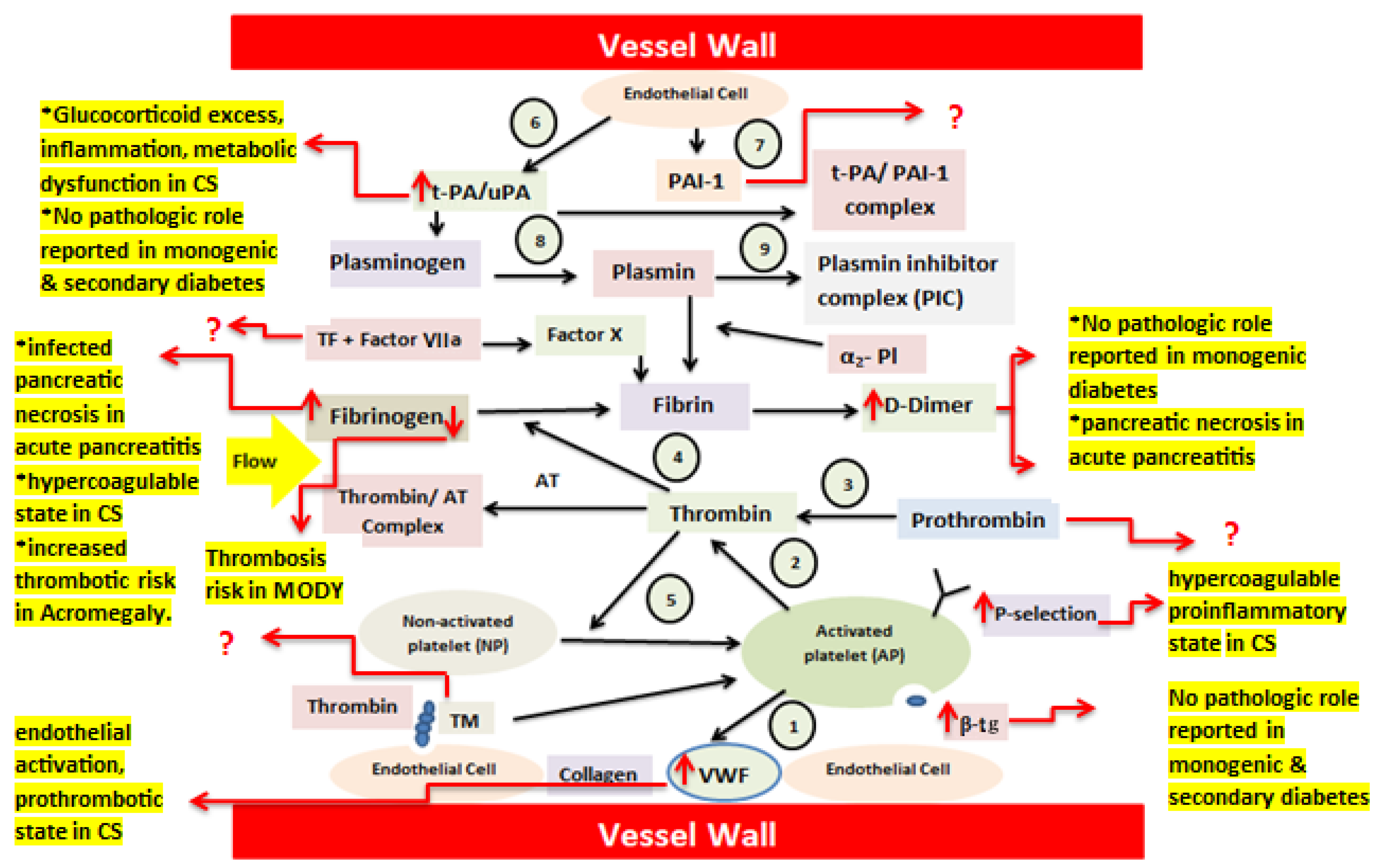
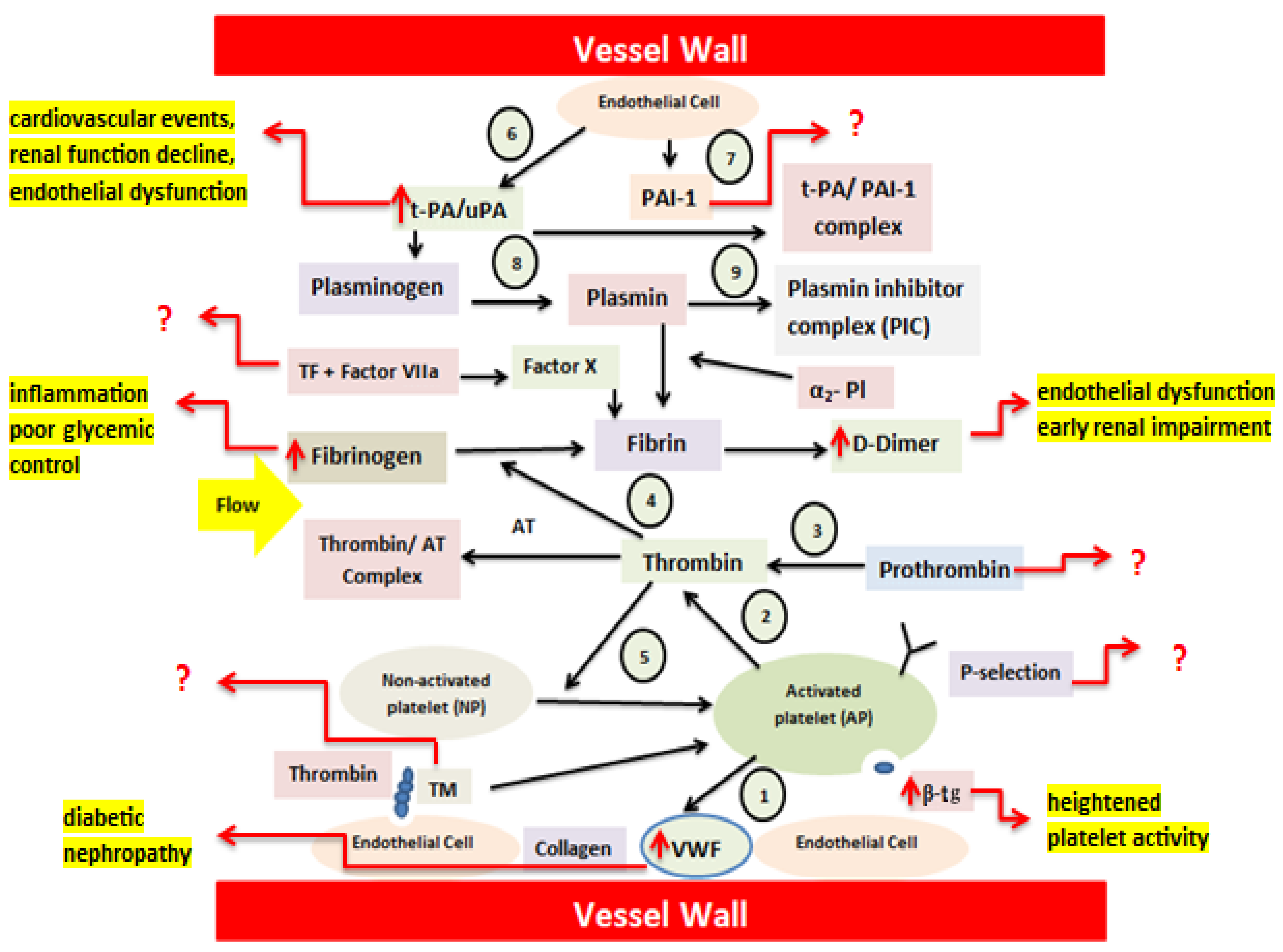
3. Pathophysiological Mechanisms of Coagulation Abnormalities in Various Forms of Diabetes
4. Role of Major Coagulation Biomarkers in the Pathogenesis of Diabetes Subtypes
4.1. D-Dimer
4.1.1. T1DM
4.1.2. T2DM
4.1.3. GDM
4.1.4. Monogenic and Secondary Diabetes
4.1.5. Diabetic Complications
4.2. Fibrinogen
4.2.1. T1DM
4.2.2. T2DM
4.2.3. Monogenic Diabetes (e.g., MODY)
4.2.4. Secondary Diabetes
Pancreatitis-Associated Diabetes
Cushing’s Syndrome
Acromegaly
4.2.5. Diabetic Complications
4.3. P-Selectin
4.3.1. T1DM
4.3.2. T2DM
4.3.3. GDM
4.3.4. Secondary Diabetes
Pancreatitis-Associated Diabetes
Cushing’s Syndrome
4.3.5. Diabetic Complications
4.4. suPAR (Soluble Urokinase Plasminogen Activator Receptor)
4.4.1. T1DM
4.4.2. T2DM
4.4.3. GDM
4.4.4. Secondary Diabetes
Pancreatitis-Associated Diabetes
Cushing’s Syndrome
4.4.5. Diabetic Complications
4.5. Tissue Plasminogen Activator (tPA)
Type 1 Diabetes Mellitus (T1DM)
4.6. vWF
4.6.1. T1DM
4.6.2. T2DM
4.6.3. GDM
4.6.4. Secondary Diabetes
Cushing’s Syndrome-Related Diabetes
Acromegaly-Related Diabetes
4.6.5. Diabetes-Related Complications
4.7. β-Thromboglobulin (β-TG)
4.7.1. T1DM
4.7.2. T2DM
4.7.3. Diabetes-Related Complications
4.8. Prothrombin
4.8.1. T2DM
4.8.2. GDM
4.8.3. Cushing’s Syndrome-Related Diabetes
4.9. Tissue Thromboplastin
T2DM
4.10. PAI-1
4.10.1. T2DM
4.10.2. GDM
4.10.3. Secondary Diabetes
Cushing’s Syndrome-Related Diabetes
Acromegaly-Related Diabetes
4.10.4. Diabetes-Related Complications
4.11. Thrombomodulin (TM) in GDM
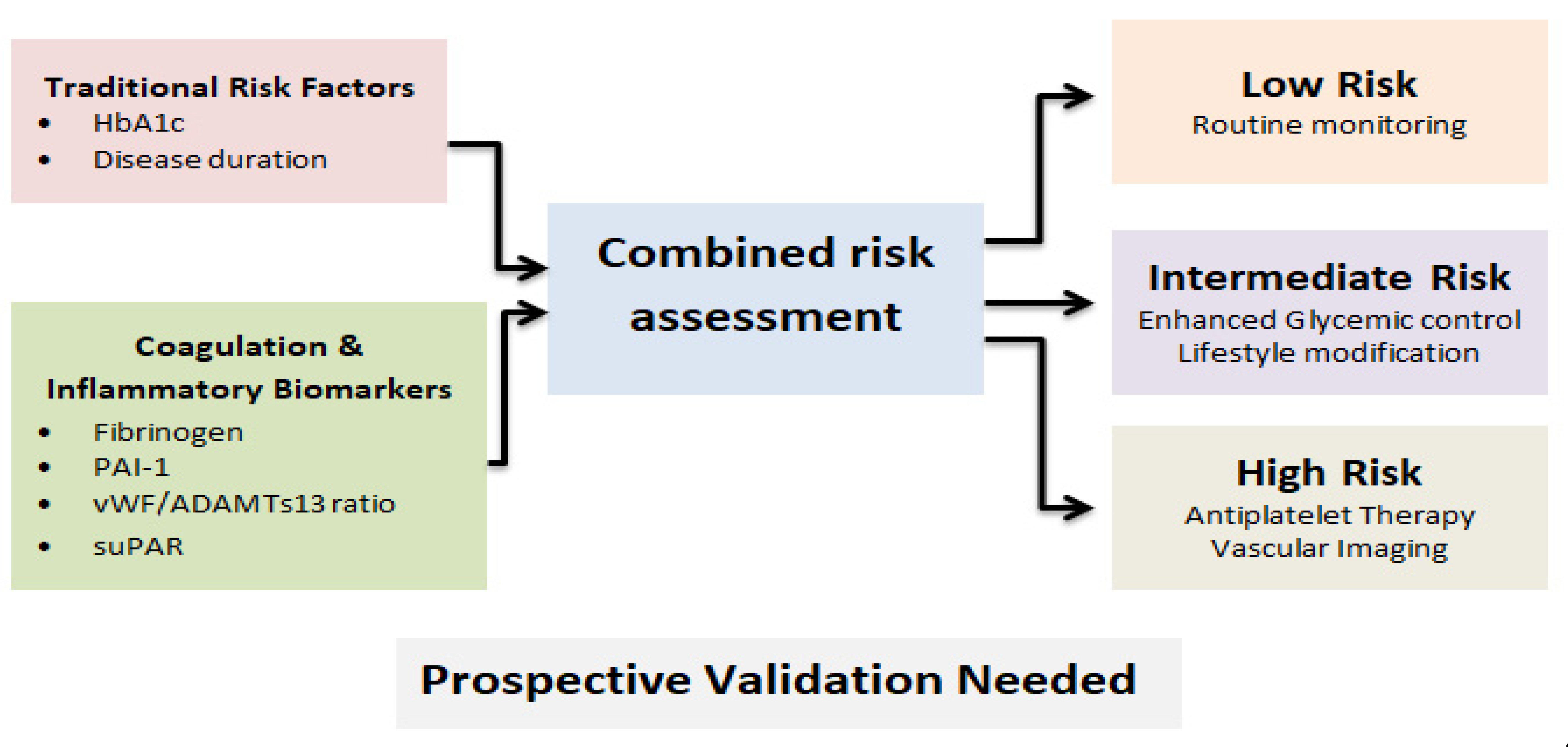
5. Clinical Implications and Practical Utility of Coagulation Biomarkers
6. Effect of Therapeutics on Coagulation Biomarkers in Diabetes Subtypes

| Coagulation Marker | Type of Diabetes | Therapeutic Intervention | Effect/Outcome | Clinical and Preclinical Evidence |
|---|---|---|---|---|
| TF | T2DM | TF pathway inhibitors, anti-TF antibodies, microRNAs | Reduced platelet TF production; antithrombotic/anti-inflammatory effects in preclinical studies [132,133] | No clinical translation due to bleeding risk |
| PAI-1 | T2DM | Metformin, TZDs, insulin sensitizers | Reduced PAI-1 levels; improved fibrinolysis [118,119,120,121] | Preclinical and clinical evidence; direct PAI-1 inhibitors not yet approved |
| tPA | T2DM | Metformin | Decreased PAI-1; improved fibrinolytic balance [118] | Limited human evidence |
| TM | T2DM | Recombinant TM, rTMD1, ETAR blocker (Atrasentan) | Reduced β-cell apoptosis, improved glucose tolerance, nephroprotection, enhanced wound/corneal healing [123,124,125,126,127] | Preclinical strong evidence; limited clinical data |
| vWF | T2DM | Intensive insulin therapy | Improved endothelial function; potential early marker [122] | Early-stage T2DM; monitoring utility suggested |
| P-selectin | T2DM | Insulin, Metformin | Reduced platelet hyperreactivity; improved vascular function [128,129] | Clinical evidence in T2DM only |
| β-TG | T1DM | Experimental: AN leaves extract, glyburide | Reduced platelet hyperactivity in rats; variable human correlation with glycemic control [130,136] | Limited therapeutic relevance; T1DM evidence mostly experimental |
| suPAR | T1DM, T2DM | Dapagliflozin | No significant change in serum suPAR levels [63,131] | Experimental and clinical trials; marker not suitable for therapy monitoring |
| TF, PAI-1, TM, vWF, P-selectin | GDM, Monogenic, Secondary Diabetes | None reported | N/A | Major knowledge gap |
7. Methodological Limitations and Evidence Strength
8. Conclusions
Author Contributions
Funding
Institutional Review Board Statement
Informed Consent Statement
Data Availability Statement
Conflicts of Interest
References
- American Diabetes Association Professional Practice Committee. Diagnosis and Classification of Diabetes: Standards of Care in Diabetes—2025. Diabetes Care 2025, 48, S27–S49. [Google Scholar] [CrossRef]
- Banday, M.Z.; Sameer, A.S.; Nissar, S. Pathophysiology of Diabetes: An Overview. Avicenna J. Med. 2020, 10, 174–188. [Google Scholar] [CrossRef] [PubMed]
- Safdar, N.Z.; Kietsiriroje, N.; Ajjan, R.A. The Cellular and Protein Arms of Coagulation in Diabetes: Established and Potential Targets for the Reduction of Thrombotic Risk. Int. J. Mol. Sci. 2023, 24, 15328. [Google Scholar] [CrossRef] [PubMed]
- Lemkes, B.A.; Hermanides, J.; Devries, J.H.; Holleman, F.; Meijers, J.C.M.; Hoekstra, J.B.L. Hyperglycemia: A Prothrombotic Factor? J. Thromb. Haemost. 2010, 8, 1663–1669. [Google Scholar] [CrossRef] [PubMed]
- Ceriello, A. Coagulation Activation in Diabetes Mellitus: The Role of Hyperglycaemia and Therapeutic Prospects. Diabetologia 1993, 36, 1119–1125. [Google Scholar] [CrossRef]
- Papachristoforou, E.; Lambadiari, V.; Maratou, E.; Makrilakis, K. Association of Glycemic Indices (Hyperglycemia, Glucose Variability, and Hypoglycemia) with Oxidative Stress and Diabetic Complications. J. Diabetes Res. 2020, 2020, 7489795. [Google Scholar] [CrossRef]
- Getu, F.; Aynalem, M.; Bizuneh, S.; Enawgaw, B. The Prevalence of Coagulopathy and Associated Factors Among Adult Type II Diabetes Mellitus Patients Attending the University of Gondar Comprehensive Specialized Hospital, Northwest Ethiopia. Diabetes Metab. Syndr. Obes. 2022, 15, 579–590. [Google Scholar] [CrossRef]
- Gorar, S.; Alioglu, B.; Ademoglu, E.; Uyar, S.; Bekdemir, H.; Candan, Z.; Saglam, B.; Koc, G.; Culha, C.; Aral, Y. Is There a Tendency for Thrombosis in Gestational Diabetes Mellitus? J. Lab. Physicians 2016, 8, 101–105. [Google Scholar] [CrossRef]
- Barale, C.; Russo, I. Influence of Cardiometabolic Risk Factors on Platelet Function. Int. J. Mol. Sci. 2020, 21, 623. [Google Scholar] [CrossRef]
- Sobczak, A.I.S.; Stewart, A.J. Coagulatory Defects in Type-1 and Type-2 Diabetes. Int. J. Mol. Sci. 2019, 20, 6345. [Google Scholar] [CrossRef]
- Goto, S. Mechanism of thrombus formation in regard to diet. In New Insights into Metabolic Syndrome; IntechOpen: London, UK, 2020. [Google Scholar]
- Anjum, F.; Gilani, M.; Latif, M.; Sattar, A.; Ashraf, H.; Rafaqat, S. The Role of Coagulation in Heart Failure: A Literature Review. Curr. Heart Fail. Rep. 2024, 21, 277–291. [Google Scholar] [CrossRef] [PubMed]
- Domingueti, C.P.; Dusse, L.M.S.; Fóscolo, R.B.; Reis, J.S.; Annichino-Bizzacchi, J.M.; De Andrade Orsi, F.L.; De Moraes Mazetto, B.; Das Graças Carvalho, M.; Gomes, K.B.; Fernandes, A.P.; et al. Von Willebrand Factor, ADAMTS13 and D-Dimer Are Correlated with Different Levels of Nephropathy in Type 1 Diabetes Mellitus. PLoS ONE 2015, 10, e0132784. [Google Scholar] [CrossRef]
- El Asrar, M.A.; Adly, A.A.; El Hadidy, E.S.; Abdelwahab, M.A. D-Dimer Levels in Type 1 and Type 2 Diabetic Children and Adolescents; Relation to Microvascular Complications and Dyslipidemia “own Data and Review. Pediatr. Endocrinol. Rev. 2012, 3, 657–668. [Google Scholar]
- Zhou, B.Y.; Zhang, Q.; Hu, Y.C.; Wang, L.; Zhang, J.X.; Cong, H.L.; Wang, L. Association of D-Dimer with Long-Term Prognosis in Type 2 Diabetes Mellitus Patients with Acute Coronary Syndrome. Nutr. Metab. Cardiovasc. Dis. 2022, 32, 1955–1962. [Google Scholar] [CrossRef] [PubMed]
- Patel, K.P.; Patel, N.B.; Patel, S.A. Association of D-Dimer Level with Renal Parameters and Cardiovascular Events in Type 2 Diabetes Mellitus: A Retrospective Cohort Study. J. Clin. Diagn. Res. 2023, 17, BC18–BC21. [Google Scholar] [CrossRef]
- Wang, J.; Huang, R.; Tian, S.; Lin, H.; Guo, D.; An, K.; Wang, S. Elevated Plasma Level of D-Dimer Predicts the High Risk of Early Cognitive Impairment in Type 2 Diabetic Patients as Carotid Artery Plaques Become Vulnerable or Get Aggravated. Curr. Alzheimer Res. 2019, 16, 396–404. [Google Scholar] [CrossRef]
- Zhuang, L.; Yu, C.; Xu, F.; Zhao, L.H.; Wang, X.H.; Wang, C.H.; Ning, L.Y.; Zhang, X.L.; Zhang, D.M.; Wang, X.Q.; et al. Increased Plasma D-Dimer Levels May Be a Promising Indicator for Diabetic Peripheral Neuropathy in Type 2 Diabetes. Front. Endocrinol. 2022, 13, 930271. [Google Scholar] [CrossRef]
- Fernández-Castañer, M.; Camps, I.; Fernández-Real, J.M.; Domenech, P.; Martínez-Brotons, F. Increased Prothrombin Fragment 1+2 and D-Dimer in First Degree Relatives of Type 2 Diabetic Patients. Acta Diabetol. 1996, 33, 118–121. [Google Scholar] [CrossRef]
- Pangaribuan, J.P.; Pase, M.A. Correlation between HbA1C and D-Dimer in Type 2 Diabetic with COVID-19 Patients. J. Endocrinol. Trop. Med. Infect. Dis. 2021, 3, 145–151. [Google Scholar] [CrossRef]
- Siennicka, A.; Kłysz, M.; Chełstowski, K.; Tabaczniuk, A.; Marcinowska, Z.; Tarnowska, P.; Kulesza, J.; Torbe, A.; Jastrzȩbska, M. Reference Values of D-Dimers and Fibrinogen in the Course of Physiological Pregnancy: The Potential Impact of Selected Risk Factors-A Pilot Study. Biomed. Res. Int. 2020, 2020, 3192350. [Google Scholar] [CrossRef]
- Zaini, R.; Al-Rehaili, A.; Kufia, R. Evaluation of Plasma D-Dimer Concentration among Normal and Complicated Pregnancies, Saudi Arabia. Int. J. Women’s Health Reprod. Sci. 2019, 7, 17–23. [Google Scholar] [CrossRef]
- Mallah, F.; Zeinalzadeh, M.; Alvandfar, D. Changes of D Dimer in Women with Gestational Diabetes and Healthy Women after Elective Cesarean Section. Iran. J. Obstet. Gynecol. Infertil. 2021, 22, 1–7. [Google Scholar]
- Xue, E.; Shi, Q.; Guo, S.; Zhang, X.; Liu, C.; Qian, B.; Guo, X.; Hu, N.; Jiang, F.; Tao, J.; et al. Preexisting Diabetes, Serum Calcium and D-Dimer Levels as Predictable Risk Factors for Pancreatic Necrosis of Patients with Acute Pancreatitis: A Retrospective Study. Expert. Rev. Gastroenterol. Hepatol. 2022, 16, 913–921. [Google Scholar] [CrossRef]
- Jia, X.; Zhang, X.; Sun, D.; Yang, N.; Li, R.; Luo, Z. Triglyceride to HDL-C Ratio Is Associated with Plasma D-Dimer Levels in Different Types of Pancreatitis. Sci. Rep. 2022, 12, 12952. [Google Scholar] [CrossRef] [PubMed]
- Newton, M.V. D-Dimer as a Marker of Severity and Prognosis in Acute Pancreatitis. Int. J. Appl. Basic Med. Res. 2024, 14, 101–107. [Google Scholar] [CrossRef]
- Joseph, A.; Harikrishnan, C.P.; Oommen, A.N.; Nair, A. D-Dimer as a Predictor of Severity and Outcome in Acute Pancreatitis. J. Med. Sci. Res. 2024, 12, 275–280. [Google Scholar] [CrossRef]
- Fukuoka, H.; Takeuchi, T.; Matsumoto, R.; Bando, H.; Suda, K.; Nishizawa, H.; Takahashi, M.; Hirota, Y.; Iguchi, G.; Takahashi, Y. D-Dimer as a Significant Marker of Deep Vein Thrombosis in Patients with Subclinical or Overt Cushing’s Syndrome. Endocr. J. 2014, 61, 1003–1010. [Google Scholar] [CrossRef]
- Zhao, H.; Zhang, L.D.; Liu, L.F.; Li, C.Q.; Song, W.L.; Pang, Y.Y.; Zhang, Y.L.; Li, D. Blood Levels of Glycated Hemoglobin, D-Dimer, and Fibrinogen in Diabetic Retinopathy. Diabetes Metab. Syndr. Obes. 2021, 14, 2483–2488. [Google Scholar] [CrossRef] [PubMed]
- Yu, Y.; Zhu, C.; Lin, Y.; Qian, Q.; Shen, X.; Zou, W.; Wang, M.; Gong, J.; Chen, M.; Liu, L.; et al. Plasma D-Dimer Levels Are Associated with Disease Progression in Diabetic Nephropathy: A Two-Center Cohort Study. Ren. Fail. 2023, 45, 2285868. [Google Scholar] [CrossRef]
- Gupta, P.; Bhambani, P.; Narang, S. Study of Plasma Fibrinogen Level and Its Relation to Glycemic Control in Type-2 Diabetes Mellitus Patients Attending Diabetes Clinic at a Tertiary Care Teaching Hospital in Madhya Pradesh, India. Int. J. Res. Med. Sci. 2016, 9, 3748–3754. [Google Scholar] [CrossRef][Green Version]
- Bembde, A.S. A Study of Plasma Fibrinogen Level in Type-2 Diabetes Mellitus and Its Relation to Glycemic Control. Indian J. Hematol. Blood Transfus. 2012, 28, 105–108. [Google Scholar] [CrossRef]
- Barazzoni, R.; Zanetti, M.; Davanzo, G.; Kiwanuka, E.; Carraro, P.; Tiengo, A.; Tessari, P. Increased Fibrinogen Production in Type 2 Diabetic Patients without Detectable Vascular Complications: Correlation with Plasma Glucagon Concentrations. J. Clin. Endocrinol. Metab. 2000, 85, 3121–3125. [Google Scholar] [CrossRef]
- Abdul Razak, M.K.; Sultan, A.A. The Importance of Measurement of Plasma Fibrinogen Level among Patients with Type- 2 Diabetes Mellitus. Diabetes Metab. Syndr. Clin. Res. Rev. 2019, 13, 1151–1158. [Google Scholar] [CrossRef]
- Jones, R.L.; Peterson, C.M. Reduced Fibrinogen Survival in Diabetes Mellitus. A Reversible Phenomenon. J. Clin. Investig. 1979, 63, 485–493. [Google Scholar] [CrossRef] [PubMed]
- Sagar, R.C.; Phoenix, F.; Thanabalasingham, G.; Naseem, K.; Ajjan, R.A.; Owen, K.R. Maturity Onset Diabetes of the Young and Fibrin-Related Thrombosis Risk. Diabetes Vasc. Dis. Res. 2020, 17, 1–5. [Google Scholar] [CrossRef]
- Aranda, G.; Fernandez-Ruiz, R.; Palomo, M.; Romo, M.; Mora, M.; Halperin, I.; Casals, G.; Enseñat, J.; Vidal, O.; Diaz-Ricart, M.; et al. Translational Evidence of Prothrombotic and Inflammatory Endothelial Damage in Cushing Syndrome after Remission. Clin. Endocrinol. 2018, 88, 415–424. [Google Scholar] [CrossRef]
- Quilliot, D.; Walters, E.; Guerci, B.; Fruchart, J.C.; Duriez, P.; Drouin, P.; Ziegler, O.; Quilliot, D.; Walters, E.; Guerci, B.; et al. Effect of the Inflammation, Chronic Hyperglycemia, or Malabsorption on the Apolipoprotein A-IV Concentration in Type 1 Diabetes Mellitus and in Diabetes Secondary to Chronic Pancreatitis. Metabolism 2001, 50, 1019–1024. [Google Scholar] [CrossRef]
- Sui, Y.; Zhao, Z.; Zhang, Y.; Zhang, T.; Li, G.; Liu, L.; Tan, H.; Sun, B.; Li, L. Fibrinogen-like Protein 1 as a Predictive Marker for the Incidence of Severe Acute Pancreatitis and Infectious Pancreatic Necrosis. Medicina 2022, 58, 1753. [Google Scholar] [CrossRef]
- Kastelan, D.; Dusek, T.; Kraljevic, I.; Polasek, O.; Giljevic, Z.; Solak, M.; Salek, S.Z.; Jelcic, J.; Aganovic, I.; Korsic, M. Hypercoagulability in Cushing’s Syndrome: The Role of Specific Haemostatic and Fibrinolytic Markers. Endocrine 2009, 36, 70–74. [Google Scholar] [CrossRef] [PubMed]
- Erem, C.; Nuhoglu, I.; Yilmaz, M.; Kocak, M.; Demirel, A.; Ucuncu, O.; Ersoz, H.O. Blood Coagulation and Fibrinolysis in Patients with Cushing’s Syndrome: Increased Plasminogen Activator Inhibitor-I, Decreased Tissue Factor Pathway Inhibitor, and Unchanged Thrombin-Activatable Fibrinolysis Inhibitor Levels. J. Endocrinol. Investig. 2009, 32, 169–174. [Google Scholar] [CrossRef] [PubMed]
- Landin-Wilhelmsen, K.; Tengborn, L.; Wilhelmsen, L.; Bengtsson, B.Å. Elevated Fibrinogen Levels Decrease Following Treatment of Acromegaly. Clin. Endocrinol. 1997, 46, 69–74. [Google Scholar] [CrossRef] [PubMed]
- Kyriakakis, N.; Lynch, J.; Seejore, K.; Phoenix, F.; Oxley, N.; Orme, S.; Ajjan, R.; Murray, R. SUN-075 Higher Fibrinogen and Clot Density in Patients with Acromegaly: The Role of Adverse Body Composition to the Increased Thrombotic Potential. J. Endocr. Soc. 2019, 3. [Google Scholar] [CrossRef]
- Sartorio, A.; Cattaneo, M.; Bucciarelli, P.; Bottasso, B.; Porretti, S.; Epaminonda, P.; Faglia, G.; Arosio, M. Alterations of Haemostatic and Fibrinolytic Markers in Adult Patients with Growth Hormone Deficiency and with Acromegaly. Exp. Clin. Endocrinol. Diabetes 2000, 108, 486–492. [Google Scholar] [CrossRef]
- Zhuang, Y.; Lin, X.; Chen, X.; Wu, X.; Zhang, J. Fibrinogen Function Indexes Are Potential Biomarkers of Diabetic Peripheral Neuropathy. Diabetol. Metab. Syndr. 2022, 14, 13. [Google Scholar] [CrossRef]
- Jilma, B.; Fasching, P.; Ruthner, C.; Rumplmayr, A.; Ruzicka, S.; Kapiotis, S.; Wagner, O.F.; Eichler, H.-G. Elevated Circulating P-Selectin in Insulin Dependent Diabetes Mellitus. Thromb. Haemost. 1996, 76, 328–332. [Google Scholar] [CrossRef]
- Yoo, S.D.; Kim, I.J.; Kim, K.Y. Elevated Levels of Soluble E-Selectin and P-Selectin in Patients with NIDDM. Korean Diabetes Assoc. 1998, 22, 23–34. [Google Scholar]
- Kubisz, P. Endothelial and Platelet Markers in Diabetes Mellitus Type 2. World J. Diabetes 2015, 6, 423. [Google Scholar] [CrossRef]
- Jones, S.P.; Girod, W.G.; Granger, D.N.; Palazzo, A.J.; Lefer, D.J. Reperfusion Injury Is Not Affected by Blockade of P-Selectin in the Diabetic Mouse Heart. Am. J. Physiol. Heart Circ. Physiol. 1999, 277, 763–769. [Google Scholar] [CrossRef] [PubMed]
- Ali, O.S.M.; Shouman, M.S.; Mahfouz, M.H.; Zidan, R.A. Role of Soluble P-Selectin among Type 2 Diabetic Patients with and without Coronary Heart Disease. Egypt. J. Biochem. Mol. Biol. 2012, 30, 77–90. [Google Scholar]
- Aref, S.; Sakrana, M.; Hafez, A.A.; Hamdy, M. Soluble P-Selectin Levels in Diabetes Mellitus Patients with Coronary Artery Disease. Hematology 2005, 10, 183–187. [Google Scholar] [CrossRef]
- Kahal, H.; Aburima, A.; Spurgeon, B.; Wraith, K.S.; Rigby, A.S.; Sathyapalan, T.; Kilpatrick, E.S.; Naseem, K.M.; Atkin, S.L. Platelet Function Following Induced Hypoglycaemia in Type 2 Diabetes. Diabetes Metab. 2018, 44, 431–436. [Google Scholar] [CrossRef]
- Liu, Y.; Burdon, K.P.; Langefeld, C.D.; Beck, S.R.; Wagenknecht, L.E.; Rich, S.S.; Bowden, D.W.; Freedman, B.I. P-Selectin Gene Haplotype Associations with Albuminuria in the Diabetes Heart Study. Kidney Int. 2005, 68, 741–746. [Google Scholar] [CrossRef]
- Alzahrani, F.M.; Alhassan, J.A.; Alshehri, A.M.; Farooqi, F.A.; Aldossary, M.A.; Abdelghany, M.K.; Ibrahim, H.; El-Masry, O.S. The Impact of SELP Gene Thr715Pro Polymorphism on SP-Selectin Level and Association with Cardiovascular Disease in Saudi Diabetic Patients: A Cross-Sectional Case-Control Study. Saudi J. Biol. Sci. 2023, 30, 103579. [Google Scholar] [CrossRef]
- Kaur, R.; Singh, J.; Kapoor, R.; Kaur, M. Putative Functional Non-Coding Polymorphisms in SELP Significantly Modulate SP-Selectin Levels, Arterial Stiffness and Type 2 Diabetes Mellitus Susceptibility. BMC Endocr. Disord. 2020, 20, 1–14. [Google Scholar] [CrossRef]
- Zhang, H.; Chen, Z.; Wang, X. Differentiated Serum Levels of Krüppel-like Factors 2 and 4, SP-Selectin, and SE-Selectin in Patients with Gestational Diabetes Mellitus. Gynecol. Endocrinol. 2022, 38, 1121–1124. [Google Scholar] [CrossRef] [PubMed]
- Prázný, M.; Ježková, J.; Horová, E.; Lazárová, V.; Hána, V.; Kvasnička, J.; Pecen, L.; Marek, J.; Škrha, J.; Kršek, M. Impaired Microvascular Reactivity and Endothelial Function in Patients with Cushing’s Syndrome: Influence of Arterial Hypertension. Physiol. Res. 2008, 57, 13–22. [Google Scholar] [CrossRef] [PubMed]
- Noda, K.; Nakao, S.; Ishida, S.; Ishibashi, T. Leukocyte Adhesion Molecules in Diabetic Retinopathy. J. Ophthalmol. 2012, 2012, 279037. [Google Scholar] [CrossRef]
- Avci, E.; Uzeli, S. The Role of Adhesion Molecules and Cytokines in Patients with Diabetic Nephropathy. Biomed. Res. 2016, 2016, S343–S348. [Google Scholar]
- Sherif, E.M.; El Maksood, A.A.A.; Youssef, O.I.; Salah El-Din, N.Y.; Khater, O.K.M. Soluble Urokinase Plasminogen Activator Receptor in Type 1 Diabetic Children, Relation to Vascular Complications. J. Diabetes Complicat. 2019, 33, 628–633. [Google Scholar] [CrossRef] [PubMed]
- Theilade, S.; Lyngbæk, S.; Hansen, T.W.; Eugen-Olsen, J.; Fenger, M.; Rossing, P.; Jeppesen, J.L. Soluble Urokinase Plasminogen Activator Receptor Levels Are Elevated and Associated with Complications in Patients with Type 1 Diabetes. J. Intern. Med. 2015, 277, 362–371. [Google Scholar] [CrossRef]
- Guthoff, M.; Wagner, R.; Randrianarisoa, E.; Hatziagelaki, E.; Peter, A.; Häring, H.U.; Fritsche, A.; Heyne, N. Soluble Urokinase Receptor (SuPAR) Predicts Microalbuminuria in Patients at Risk for Type 2 Diabetes Mellitus. Sci. Rep. 2017, 7, 40627. [Google Scholar] [CrossRef]
- Curovic, V.R.; Theilade, S.; Winther, S.A.; Tofte, N.; Eugen-Olsen, J.; Persson, F.; Hansen, T.W.; Jeppesen, J.; Rossing, P. Soluble Urokinase Plasminogen Activator Receptor Predicts Cardiovascular Events, Kidney Function Decline, and Mortality in Patients with Type 1 Diabetes. Diabetes Care 2019, 42, 1112–1119. [Google Scholar] [CrossRef]
- Heraclides, A.; Jensen, T.M.; Rasmussen, S.S.; Eugen-Olsen, J.; Haugaard, S.B.; Borch-Johnsen, K.; Sandbæk, A.; Lauritzen, T.; Witte, D.R. The Pro-Inflammatory Biomarker Soluble Urokinase Plasminogen Activator Receptor (SuPAR) Is Associated with Incident Type 2 Diabetes among Overweight but Not Obese Individuals with Impaired Glucose Regulation: Effect Modification by Smoking and Body Weight. Diabetologia 2013, 56, 1542–1546. [Google Scholar] [CrossRef]
- Amadi, K.-M.; Huang, Y.; Ismail, A.; Hayek, S.; Vasbinder, A.; Pratley, R.E.; Banerjee, M.; Busui, R.; Catalan, T.C.; Erne, G.; et al. 20-LB: Impact of Optimal Medical Therapy, Insulin Sensitization, and Revascularization Strategies on Soluble Urokinase Plasminogen Activator Receptor and Its Association with Cardiovascular Outcomes—A BARI-2D Ancillary Study. Diabetes 2023, 72, 20-LB. [Google Scholar] [CrossRef]
- Hillman, M.; Landin-Olsson, M. Soluble Urokinase-Plasminogen Activator Receptor (SuPAR) and Natural Phosphorylcholine IgM Antibodies in Patients at Clinical Onset of Diabetes Mellitus. J. Diabetes Mellit. 2011, 1, 96–103. [Google Scholar] [CrossRef]
- Haugaard, S.B.; Andersen, O.; Hansen, T.W.; Eugen-Olsen, J.; Linneberg, A.; Madsbad, S.; Olsen, M.H.; Jørgensen, T.; Borch-Johnsen, K.; Jeppesen, J. The Immune Marker Soluble Urokinase Plasminogen Activator Receptor Is Associated with New-Onset Diabetes in Non-Smoking Women and Men. Diabet. Med. 2012, 29, 479–487. [Google Scholar] [CrossRef]
- Mohammed, M.S.; Ahmed, H.S. Plasminogen Activator Urokinase Receptor as a Diagnostic and Prognostic Biomarker in Type 2 Diabetic Patients with Cardiovascular Disease. J. Cardiovasc. Thorac. Res. 2023, 15, 154–160. [Google Scholar] [CrossRef] [PubMed]
- Gerszi, D.; Orosz, G.; Török, M.; Szalay, B.; Karvaly, G.; Orosz, L.; Hetthéssy, J.; Vásárhelyi, B.; Török, O.; Horváth, E.M.; et al. Risk Estimation of Gestational Diabetes Mellitus in the First Trimester. J. Clin. Endocrinol. Metab. 2023, 108, e1214–e1223. [Google Scholar] [CrossRef] [PubMed]
- Friess, H.; Cantero, D.; Graber, H.; Tang, W.; Guo, X.; Kashiwagi, M.; Zimmermann, A.; Gold, L.; Korc, M.; Buchler, M.W. Enhanced Urokinase Plasminogen Activation in Chronic Pancreatitis Suggests a Role in Its Pathogenesis. Gastroenterology 1997, 113, 904–913. [Google Scholar] [CrossRef]
- Lupușoru, G.; Ailincăi, I.; Sorohan, B.M.; Andronesi, A.; Achim, C.; Micu, G.; Caragheorgheopol, A.; Manda, D.; Lupușoru, M.; Ismail, G. Serum Soluble Urokinase Plasminogen Activator Receptor as a Potential Biomarker of Renal Impairment Severity in Diabetic Nephropathy. Diabetes Res. Clin. Pract. 2021, 182, 109116. [Google Scholar] [CrossRef]
- Aslan, S.; Demirdal, T.; Erbak, H.; Aslan, C. The Role of Soluble Urokinase Plasminogen Activator Receptor (SuPAR) in the Diagnostics of Diabetic Foot Infection. Infect. Dis. 2020, 52, 107–113. [Google Scholar] [CrossRef]
- Myrup, B.; Rossing, P.; Jensen, T.; Gram, J.; Kluft, C.; Jespersen, J. The Effect of the Relationship between Tissue-Type Plasminogen Activator and Plasminogen Activator Inhibitor Type 1 on Tissue-Type Plasminogen Activator Activity in Insulin-Dependent Diabetes Mellitus. Fibrinolysis Proteolysis 1994, 8, 22–24. [Google Scholar] [CrossRef]
- Kittaka, M.; Wang, L.; Sun, N.; Schreiber, S.S.; Seeds, N.W.; Fisher, M.; Zlokovic, B.V. Brain Capillary Tissue Plasminogen Activator in a Diabetes Stroke Model. Stroke 1996, 27, 712–719. [Google Scholar] [CrossRef]
- Verrotti, A.; Greco, R.; Basciani, F.; Morgese, G.; Chiarelli, F. Von Willebrand Factor and Its Propeptide in Children with Diabetes. Relation between Endothelial Dysfunction and Microalbuminuria. Pediatr. Res. 2003, 53, 382–386. [Google Scholar] [CrossRef][Green Version]
- Frankel, D.S.; Meigs, J.B.; Massaro, J.M.; Wilson, P.W.; O’Donnell, C.J.; D’Agostino, R.B.; Tofler, G.H. Von Willebrand Factor, Type 2 Diabetes and Risk of Cardiovascular Disease. Circulation 2008, 118, 2533–2539. [Google Scholar] [CrossRef]
- Peng, X.; Wang, X.; Fan, M.; Zhao, J.; Lin, L.; Liu, J. Plasma Levels of von Willebrand Factor in Type 2 Diabetes Patients with and without Cardiovascular Diseases: A Meta-Analysis. Diabetes Metab. Res. Rev. 2020, 36, e3193. [Google Scholar] [CrossRef]
- Umadevi, B.; Roopakala, M.S.; Silvia, W.D.C.; Kumar, P.K. Role of Von Willebrand Factor in Type 2 Diabetes Mellitus Patients. J. Evol. Med. Dent. Sci. 2016, 5, 6075–6079. [Google Scholar] [CrossRef]
- Chen, Y.; Huang, D.; Liu, J.; Zeng, F.; Tang, G.; Lei, W.; Wang, H.; Jiang, Y.; Shentu, W.; Wang, H. Non-Invasive Detection of Fetal Vascular Endothelial Function in Gestational Diabetes Mellitus. Front. Endocrinol. 2021, 12, 763683. [Google Scholar] [CrossRef] [PubMed]
- Tirosh, A.; Lodish, M.; Lyssikatos, C.; Belyavskaya, E.; Feelders, R.A.; Stratakis, C.A. Coagulation Profile in Patients with Different Etiologies for Cushing Syndrome: A Prospective Observational Study. Horm. Metab. Res. 2017, 49, 365–371. [Google Scholar] [CrossRef]
- Campello, E.; Marobin, M.; Barbot, M.; Radu, C.M.; Voltan, G.; Spiezia, L.; Gavasso, S.; Ceccato, F.; Scaroni, C.; Simioni, P. The Haemostatic System in Acromegaly: A Single-Centre Case–Control Study. J. Endocrinol. Investig. 2020, 43, 1009–1018. [Google Scholar] [CrossRef]
- Stehhouwer, C.D.A. Von Willebrand Factor and Development of Diabetic Nephropathy in IDDM. Diabetes 1991, 40, 971–976, Erratum in Diabetes 1991, 40, 1746.. [Google Scholar] [CrossRef]
- Dhanesha, N.; Chauhan, A.K. ADAMTS13/VWF Axis Potentially Contributes to Diabetic Nephropathy By Regulating PAI-1 Levels. Blood 2015, 126, 2240. [Google Scholar] [CrossRef]
- Cobert, B.L.; Smit Sibinga, C.T.; Das, P.C. Beta-thromboglobulin: A story of value? In Bloodtransfusion and Problems of Bleeding; Springer: Dordrecht, The Netherlands, 1982; pp. 53–62. [Google Scholar]
- Matthews, J.H.; O’Connor, J.F.; Hearnshaw, J.R.; Wood, J.K. Beta Thromboglobulin and Glycosylated Haemoglobin in Diabetes Mellitus. Scand. J. Haematol. 1979, 23, 421–426. [Google Scholar] [CrossRef]
- Vicari, A.M.; Macagni, A. Primary Platelet Activation in Recent-Onset Type 1 Diabetes Mellitus. Scand. J. Clin. Lab. Investig. 1990, 50, 429–432. [Google Scholar] [CrossRef]
- Rosove, M.H.; Frank, H.J.L.; Harwig, S.S.L. Plasma Beta-Thromboglobulin, Platelet Factor 4, Fibrinopeptide A, and Other Hemostatic Functions during Improved, Short-Term Glycemic Control in Diabetes Mellitus. Diabetes Care 1984, 7, 174–179. [Google Scholar] [CrossRef]
- Librenti, M.C.; D’Angelo, A.; Micossi, P.; Garimberti, B.; Mannucci, P.M.; Pozza, G. Β-Thromboglobulin and Fibrinopeptide a in Diabetes Mellitus As Markers of Vascular Damage. Acta Diabetol. Lat. 1985, 22, 39–45. [Google Scholar] [CrossRef] [PubMed]
- Preston, S.; Wright, G.J.; Starr, K.; Barclay, A.N.; Brown, M.H. Binds to a Ligand on Macrophages. Cell. Immunol. 1997, 27, 1911–1918. [Google Scholar] [CrossRef]
- Fritschi, J.; Christe, M.; Lämmle, B.; Marbet, G.A.; Berger, W.; Duckert, F. Platelet Aggregation, Beta-Thromboglobulin and Platelet Factor 4 in Diabetes Mellitus and in Patients with Vasculopathy. Thromb. Haemost. 1984, 52, 236–239. [Google Scholar] [PubMed]
- Thukral, S.; Hussain, S.; Bhat, S.; Kaur, N.; Reddy, A. Prothrombin Time (PT) and Activated Partial Thromboplastin Time (APTT) in Type 2 Diabetes Mellitus, a Case Control Study. Int. J. Contemp. Med. Res. 2018, 5, 5–9. [Google Scholar] [CrossRef]
- Sauls, D.L.; Banini, A.E.; Boyd, L.C.; Hoffman, M. Elevated Prothrombin Level and Shortened Clotting Times in Subjects with Type 2 Diabetes. J. Thromb. Haemost. 2007, 5, 638–639. [Google Scholar] [CrossRef]
- Ahmad, S.; Rashid, H.M.; Rahman, W.U.; Mujahid, M.; Waleed, H.M.; Ul, W.; Shahzad, H. Assessment of Variations in PT, APTT and Platelet Count and Their Correlation with Glycated Hemoglobin in Type 2 Diabetes Mellitus. RADS J. Biol. Res. Appl. Sci. 2021, 12, 108–112. [Google Scholar] [CrossRef]
- Mahjabeen, S.; Selim, S.; Mustari, M.; Rajib, M.H.; Rahman, A.K.M.S.; Fariduddin, M.; Hasanat, M.A. Association of Plasma Fibrinogen and Insulin Resistance in Women with Gestational Diabetes Mellitus. Arch. Clin. Biomed. Res. 2022, 6, 492–502. [Google Scholar] [CrossRef]
- Koutroumpi, S.; Spiezia, L.; Albiger, N.; Barbot, M.; Bon, M.; Maggiolo, S.; Gavasso, S.; Simioni, P.; Frigo, A.; Mantero, F.; et al. Thrombin Generation in Cushing’s Syndrome: Do the Conventional Clotting Indices Tell the Whole Truth? Pituitary 2014, 17, 68–75. [Google Scholar] [CrossRef]
- Hamid, H.; Coric, S.; Rafaqat, S.; Gluscevic, S.; Mercantepe, F.; Klisic, A. Role of Coagulation Irregularities in Cholangiocarcinoma: A review. J. Med. Biochem. 2025, 45, 237–244. [Google Scholar] [CrossRef]
- Ambelu, Y.A.; Shiferaw, M.B.; Abebe, M.; Enawgaw, B. Prothrombin Time, Activated Partial Thromboplastin Time and Platelet Counts of Type II Diabetes Mellitus: A Comparative Study. J. Diabetes Metab. Disord. 2018, 17, 117–121. [Google Scholar] [CrossRef] [PubMed]
- Sapkota, B.; Shrestha, S.K.; Poudel, S. Association of Activated Partial Thromboplastin Time and Fibrinogen Level in Patients with Type II Diabetes Mellitus. BMC Res. Notes 2013, 6, 485. [Google Scholar] [CrossRef]
- Fu, G.; Yan, Y.; Chen, L.; Zhang, M.; Ming, L. Shortened Activated Partial Thromboplastin Time and Increased Superoxide Dismutase Levels Are Associated with Type 2 Diabetes Mellitus. Ann. Clin. Lab. Sci. 2018, 48, 469–477. [Google Scholar] [PubMed]
- Vaidyula, V.R.; Rao, A.K.; Mozzoli, M.; Homko, C.; Cheung, P.; Boden, G. Effects of Hyperglycemia and Hyperinsulinemia on Circulating Tissue Factor Procoagulant Activity and Platelet CD40 Ligand. Diabetes 2006, 55, 202–208. [Google Scholar] [CrossRef]
- Sillen, M.; Declerck, P.J. A narrative review on plasminogen activator inhibitor-1 and its (patho) physiological role: To target or not to target? Int. J. Mol. Sci. 2021, 22, 2721. [Google Scholar] [CrossRef]
- Mossberg, K.; Olausson, J.; Fryk, E.; Jern, S.; Jansson, P.A.; Brogren, H. The Role of the Platelet Pool of Plasminogen Activator Inhibitor-1 in Well-Controlled Type 2 Diabetes Patients. PLoS ONE 2022, 17, e0267833. [Google Scholar] [CrossRef]
- Coudriet, G.M.; Stoops, J.; Orr, A.V.; Bhushan, B.; Koral, K.; Lee, S.; Previte, D.M.; Dong, H.H.; Michalopoulos, G.K.; Mars, W.M.; et al. A Noncanonical Role for Plasminogen Activator Inhibitor Type 1 in Obesity-Induced Diabetes. Am. J. Pathol. 2019, 189, 1413–1422. [Google Scholar] [CrossRef]
- Lalić, K.; Jotić, A.; Rajković, N.; Singh, S.; Stošić, L.; Popović, L.; Lukić, L.; Miličić, T.; Seferović, J.P.; Maćešić, M.; et al. Altered Daytime Fluctuation Pattern of Plasminogen Activator Inhibitor 1 in Type 2 Diabetes Patients with Coronary Artery Disease: A Strong Association with Persistently Elevated Plasma Insulin, Increased Insulin Resistance, and Abdominal Obesity. Int. J. Endocrinol. 2015, 2015, 390185. [Google Scholar] [CrossRef]
- Moustapha, M.; Chadhli-Chaieb, M.; Mahjoub, T.; Chaieb, L. Genetic and Metabolic Determinants of Plasminogen Activator Inhibitor 1 (PAI-1) in Tunisian Type 2 Diabetes Patients. Open J. Endocr. Metab. Dis. 2017, 7, 141–150. [Google Scholar] [CrossRef][Green Version]
- Yarmolinsky, J.; Bordin Barbieri, N.; Weinmann, T.; Ziegelmann, P.K.; Duncan, B.B.; Inês Schmidt, M. Plasminogen Activator Inhibitor-1 and Type 2 Diabetes: A Systematic Review and Meta-Analysis of Observational Studies. Sci. Rep. 2016, 6, 17714. [Google Scholar] [CrossRef] [PubMed]
- Brazionis, L.; Rowley, K.; Jenkins, A.; Itsiopoulos, C.; O’Dea, K. Plasminogen Activator Inhibitor-1 Activity in Type 2 Diabetes: A Different Relationship with Coronary Heart Disease and Diabetic Retinopathy. Arterioscler. Thromb. Vasc. Biol. 2008, 28, 786–791. [Google Scholar] [CrossRef] [PubMed]
- Umpaichitra, V.; Hussain, M.M.; Castells, S. Plasminogen Activator Inhibitor-1 and Tissue-Plasminogen Activator in Minority Adolescents with Type 2 Diabetes and Obesity. Pediatr. Res. 2005, 58, 483–487. [Google Scholar] [CrossRef][Green Version]
- Batiha, G.E.S.; Al-kuraishy, H.M.; Al-Maiahy, T.J.; Al-Buhadily, A.K.; Saad, H.M.; Al-Gareeb, A.I.; Simal-Gandara, J. Plasminogen Activator Inhibitor 1 and Gestational Diabetes: The Causal Relationship. Diabetol. Metab. Syndr. 2022, 14, 4–9. [Google Scholar] [CrossRef]
- Tiongco, R.E.; Dizon, G.; Catacata, M.; Dominguez, M.J.; Navarro, A.; Villavieja, A.; Pineda-Cortel, M.R. Plasminogen Activator Inhibitor-1 Levels in Prior Gestational Diabetes Mellitus: A Systematic Review and Meta-Analysis. Int. J. Diabetes Dev. Ctries. 2024, 45, 480–487. [Google Scholar] [CrossRef]
- Delaroudis, S.P.; Efstathiadou, Z.A.; Koukoulis, G.N.; Kita, M.D.; Farmakiotis, D.; Dara, O.G.; Goulis, D.G.; Makedou, A.; Makris, P.; Slavakis, A.; et al. Amelioration of Cardiovascular Risk Factors with Partial Biochemical Control of Acromegaly. Clin. Endocrinol. 2008, 69, 279–284. [Google Scholar] [CrossRef]
- Nicholas, S.B.; Aguiniga, E.; Ren, Y.; Kim, J.; Wong, J.; Govindarajan, N.; Noda, M.; Wang, W.; Kawano, Y.; Collins, A.; et al. Plasminogen Activator Inhibitor-1 Deficiency Retards Diabetic Nephropathy. Kidney Int. 2005, 67, 1297–1307. [Google Scholar] [CrossRef]
- Jasmiad, N.B.; Ghani, R.B.A.; Agarwal, R.; Ismail, Z.B.; Abdullah, A.A.M.; Idorus, M.Y. Relationship between Serum and Tear Levels of Tissue Plasminogen Activator and Plasminogen Activator Inhibitor-1 in Diabetic Retinopathy. BMC Ophthalmol. 2022, 22, 4–11. [Google Scholar] [CrossRef]
- Tamura, Y.; Kawao, N.; Yano, M.; Okada, K.; Okumoto, K.; Chiba, Y.; Matsuo, O.; Kaji, H. Role of Plasminogen Activator Inhibitor-1 in Glucocorticoid-Induced Diabetes and Osteopenia in Mice. Diabetes 2015, 64, 2194–2206. [Google Scholar] [CrossRef]
- Magriples, U.; Hsu, C.; Chan, D.W.; Copel, J.A. Circulating thrombomodulin levels and clinical correlates in pregnant diabetics. Am. J. Perinatol. 1997, 14, 605–608. [Google Scholar] [CrossRef] [PubMed]
- Dong, F.; Lv, Z.; Di, P. Use of Thrombomodulin-Modified Thrombin Generation in Uncomplicated Pregnancy: The Normal Range and Prothrombotic Phenotype. Scand. J. Clin. Lab. Investig. 2023, 83, 79–85. [Google Scholar] [CrossRef]
- Cheng, L.; Fu, Q.; Zhou, L.; Fan, Y.; Liu, F.; Fan, Y.; Zhang, X.; Lin, W.; Wu, X. D-Dimer as a Predictor of Cardiovascular Outcomes in Patients with Diabetes Mellitus. BMC Cardiovasc. Disord. 2022, 22, 82. [Google Scholar] [CrossRef]
- Cho, Y.W.; Yang, D.H.; Oh, D.Y.; Baick, S.H.; Kim, S.K.; Kim, S.J.; Hong, S.Y. Plasma t-PA and PAI- 1 antigen concentrations in non-insulin dependent diabetic patients: Effects of treatment modality on fibrinolysis. Korean J. Intern. Med. 1992, 7, 81. [Google Scholar] [CrossRef]
- Yu, Y.; Li, W.; Xu, L.; Wang, Y. Circadian rhythm of plasminogen activator inhibitor-1 and cardiovascular complications in type 2 diabetes. Front. Endocrinol. 2023, 14, 1124353. [Google Scholar] [CrossRef]
- Altalhi, R.; Pechlivani, N.; Ajjan, R.A. PAI-1 in diabetes: Pathophysiology and role as a therapeutic target. Int. J. Mol. Sci. 2021, 22, 3170. [Google Scholar] [CrossRef] [PubMed]
- Lyon, C.J.; Hsueh, W.A. Effect of plasminogen activator inhibitor–1 in diabetes mellitus and cardiovascular disease. Am. J. Med. 2003, 115, 62–68. [Google Scholar] [CrossRef] [PubMed]
- Tian, J.; Wang, J.; Li, Y.; Villarreal, D.; Carhart, R.; Dong, Y.; Liu, K. Endothelial function in patients with newly diagnosed type 2 diabetes receiving early intensive insulin therapy. Am. J. Hypertens. 2012, 25, 1242–1248. [Google Scholar] [CrossRef][Green Version]
- Okano, Y.; Takeshita, A.; Yasuma, T.; Toda, M.; Nishihama, K.; Fridman D’Alessandro, V.; Gabazza, E.C. Protective role of recombinant human thrombomodulin in diabetes mellitus. Cells 2021, 10, 2237. [Google Scholar] [CrossRef]
- van Aanhold, C.C.; Dijkstra, K.L.; Bos, M.; Wolterbeek, R.; van den Berg, B.M.; Bruijn, J.A.; Baelde, H.J. Reduced glomerular endothelial thrombomodulin is associated with glomerular macrophage infiltration in diabetic nephropathy. Am. J. Pathol. 2021, 191, 829–837. [Google Scholar] [CrossRef]
- Yang, S.M.; Ka, S.M.; Wu, H.L.; Yeh, Y.C.; Kuo, C.H.; Hua, K.F.; Chen, A. Thrombomodulin domain 1 ameliorates diabetic nephropathy in mice via anti-NF-κB/NLRP3 inflammasome-mediated inflammation, enhancement of NRF2 antioxidant activity and inhibition of apoptosis. Diabetologia 2014, 57, 424–434. [Google Scholar] [CrossRef] [PubMed]
- Chen, K.Y.; Peng, I.C.; Wu, H.L.; Kuo, C.H.; Huang, Y.H. Recombinant Thrombomodulin Domain 1 Promotes Diabetic Corneal Wound Healing by Inhibiting HMGB1 Production and NLRP3 Inflammasome. Mediat. Inflamm. 2026, 2026, 8089754. [Google Scholar] [CrossRef] [PubMed]
- Cheng, T.L.; Lai, C.H.; Chen, P.K.; Cho, C.F.; Hsu, Y.Y.; Wang, K.C.; Wu, H.L. Thrombomodulin promotes diabetic wound healing by regulating toll-like receptor 4 expression. J. Investig. Dermatol. 2015, 135, 1668–1675. [Google Scholar] [CrossRef]
- Mohammed, H.R.; Othman, R.B.; Alghurabi, H.; Hussein, R.M.; Al-Obaidi, Z.; Abdesselem, H. Comparison of clinical characteristics, microvascular complications and inflammatory markers in type 2 diabetic patients under insulin versus metformin treatment: A cross-sectional study at Karbala Diabetic Center, Iraq. Medicine 2024, 103, e40330. [Google Scholar] [CrossRef]
- Hantrakun, P.; Sekararithi, R.; Jaiwongkam, T.; Kumfu, S.; Chai-Adisaksopha, C.; Chattipakorn, N.; Jatavan, P. Effect of metformin on reducing platelet dysfunction in gestational diabetes mellitus: A randomized controlled trial. Endocr. Connect. 2022, 11, e220110. [Google Scholar] [CrossRef]
- Borsey, D.Q.; Dawes, J.; Fraser, D.M.; Prowse, C.V.; Elton, R.A.; Clarke, B.F. Plasma beta-thromboglobulin in diabetes mellitus. Diabetologia 1980, 18, 353–357. [Google Scholar] [CrossRef]
- Zhu, K.; Mukherjee, K.; Wei, C.; Hayek, S.S.; Collins, A.; Gu, C.; Sever, S. Truncated suPAR simultaneously causes kidney disease and autoimmune diabetes mellitus. J. Am. Soc. Nephrol. 2022, 33, 108. [Google Scholar] [CrossRef]
- Gerrits, A.J.; Koekman, C.A.; van Haeften, T.W.; Akkerman, J.W.N. Platelet tissue factor synthesis in type 2 diabetic patients is resistant to inhibition by insulin. Diabetes 2010, 59, 1487–1495. [Google Scholar] [CrossRef] [PubMed]
- Cimmino, G.; Cirillo, P. Tissue factor: Newer concepts in thrombosis and its role beyond thrombosis and hemostasis. Cardiovasc. Diagn. Ther. 2018, 8, 581. [Google Scholar] [CrossRef] [PubMed]
- Oda, H.; Nagamatsu, T.; Osuga, Y. Thrombomodulin and pregnancy in the limelight: Insights into the therapeutic aspect of thrombomodulin in pregnancy complications. J. Thromb. Haemost. 2022, 20, 1040–1055. [Google Scholar] [CrossRef] [PubMed]
- Takeshi, N. Thrombomodulin as a new therapeutic target for preeclampsia. J. Reprod. Immunol. 2022, 153, 103704. [Google Scholar] [CrossRef]
- Asad, M.; Munir, T.A.; Afzal, N. Acacia nilotica leave extract and glyburide: Comparison of fasting blood glucose, serum insulin, β-thromboglubulin levels and platelet aggregation in streptozotocin induced diabetic rats. JPMA-J. Pak. Med. Assoc. 2011, 61, 247. [Google Scholar]
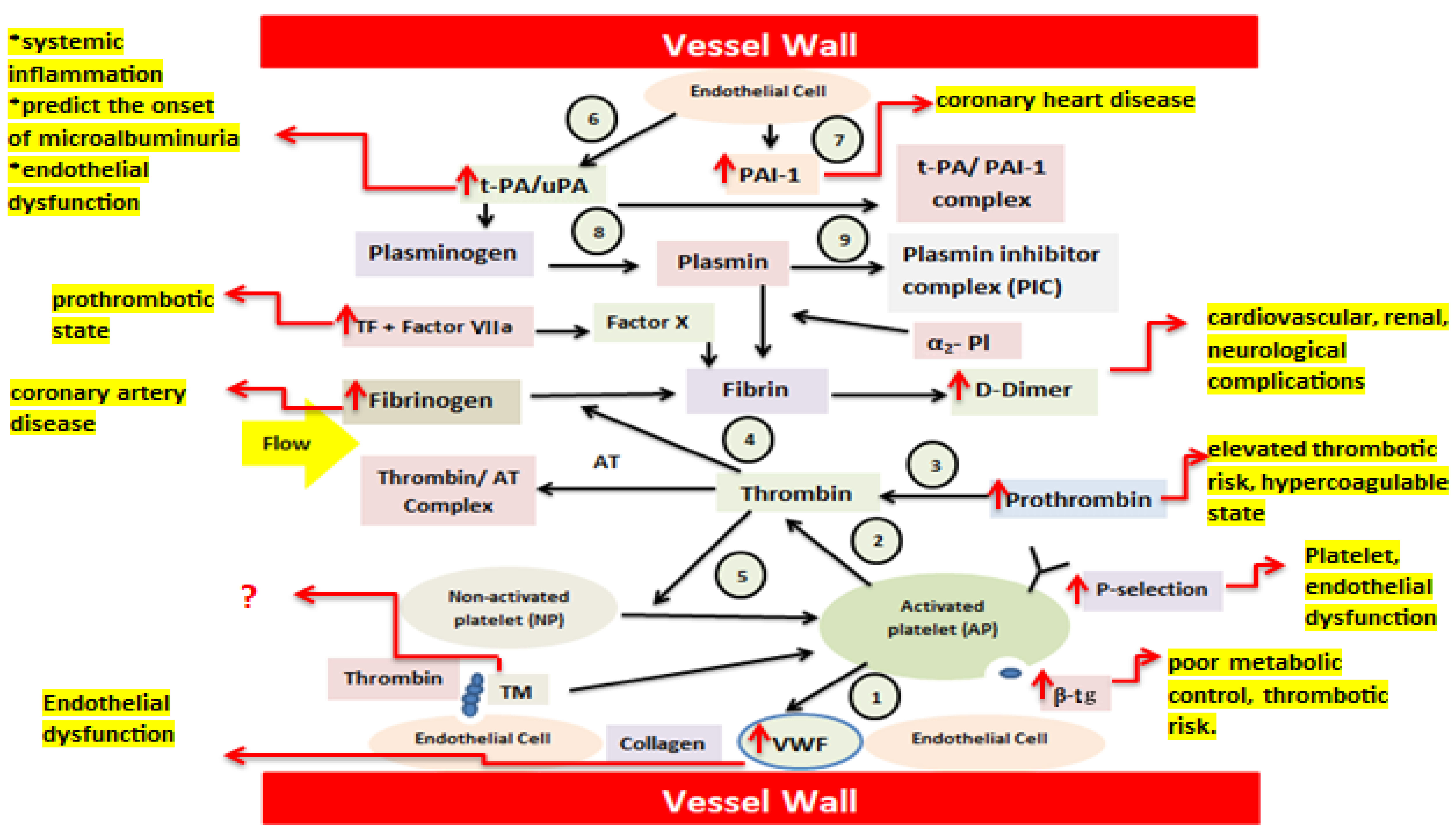
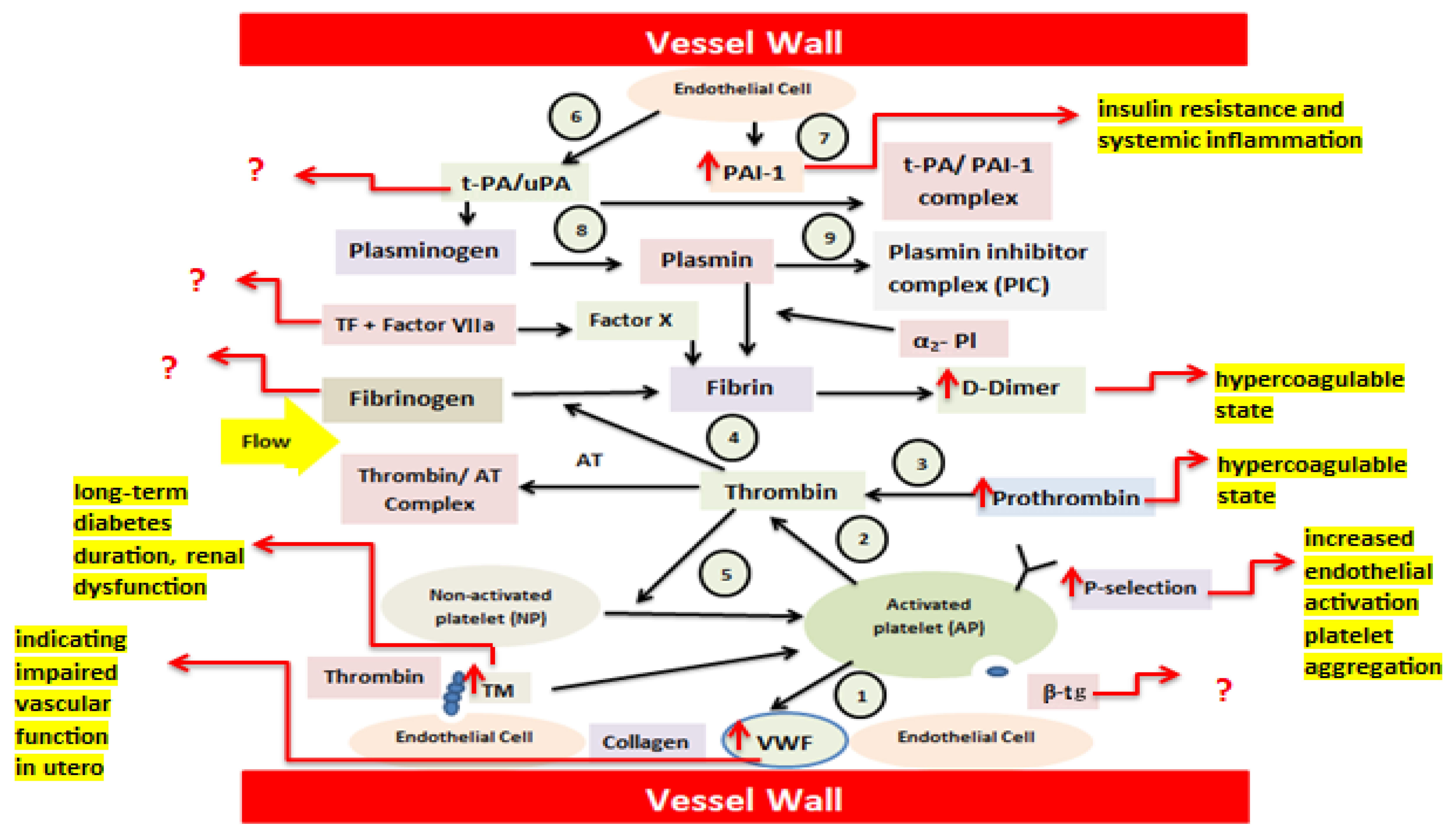


| Diabetes Type | D-Dimer | Fibrinogen | PAI-1 | vWF | P-Selectin | suPAR | β-TG | TM | Pathological Effects |
|---|---|---|---|---|---|---|---|---|---|
| T1DM | ↑ | ↑/↔ | ↔ | ↑ (early DN) | ↑ | ↑ (CVD risk) | ↑ | ↔ | Endothelial dysfunction |
| T2DM | ↑↑ | ↑↑ | ↑↑ | ↑↑ | ↑ | ↑↑ | ↑ | ↑ | Hypercoagulability + inflammation |
| GDM | ↑ | ↑ | ↑ | ↑ | ↑ | ↑ (early predictor) | ? | ↔ | Increased thrombosis risk during pregnancy |
| Monogenic DM | ↔ | ↓ | ? | ? | ? | ? | ? | ? | Minimal changes |
| Secondary DM | ↑ | ↑ | ↑ | ↑ | ↑ | ? | ? | ↔ | Hormone-induced coagulopathy |
| Biomarker | Pathophysiologic Role | Most Affected Diabetes Type | Clinical Implications | Key References |
|---|---|---|---|---|
| D-dimer | Fibrin degradation product reflecting thrombin generation and fibrinolysis | T2DM, DN progression | Predicts cardiovascular events and nephropathy severity | [30,117] |
| Fibrinogen | Acute-phase reactant promoting atherothrombosis | T2DM with CAD/ACS | Independent predictor of cardiovascular outcomes | [32,39,45] |
| PAI-1 | Inhibits fibrinolysis; associated with insulin resistance and obesity | T2DM, obesity | High PAI-1 predicts incident diabetes and vascular risk | [106,107] |
| vWF | Marker of endothelial activation and damage | T2DM, CVD | Elevated levels indicate endothelial dysfunction | [76,77] |
| suPAR | Indicator of immune activation and endothelial injury | T1DM, T2DM (DKD) | Predicts CV events and eGFR decline | [62,63] |
Disclaimer/Publisher’s Note: The statements, opinions and data contained in all publications are solely those of the individual author(s) and contributor(s) and not of MDPI and/or the editor(s). MDPI and/or the editor(s) disclaim responsibility for any injury to people or property resulting from any ideas, methods, instructions or products referred to in the content. |
© 2026 by the authors. Licensee MDPI, Basel, Switzerland. This article is an open access article distributed under the terms and conditions of the Creative Commons Attribution (CC BY) license.
Share and Cite
Rafaqat, S.; Hamid, H.; Bashir, F.; Abaid, H.; Klisic, A.; Rafaqat, S.; Mercantepe, F. A Narrative Review on Abnormalities in the Hemostatic System in Diabetes Mellitus: Pathophysiology, Clinical Implications, and Therapeutics. Life 2026, 16, 648. https://doi.org/10.3390/life16040648
Rafaqat S, Hamid H, Bashir F, Abaid H, Klisic A, Rafaqat S, Mercantepe F. A Narrative Review on Abnormalities in the Hemostatic System in Diabetes Mellitus: Pathophysiology, Clinical Implications, and Therapeutics. Life. 2026; 16(4):648. https://doi.org/10.3390/life16040648
Chicago/Turabian StyleRafaqat, Sana, Hafsa Hamid, Fakhra Bashir, Hijab Abaid, Aleksandra Klisic, Saira Rafaqat, and Filiz Mercantepe. 2026. "A Narrative Review on Abnormalities in the Hemostatic System in Diabetes Mellitus: Pathophysiology, Clinical Implications, and Therapeutics" Life 16, no. 4: 648. https://doi.org/10.3390/life16040648
APA StyleRafaqat, S., Hamid, H., Bashir, F., Abaid, H., Klisic, A., Rafaqat, S., & Mercantepe, F. (2026). A Narrative Review on Abnormalities in the Hemostatic System in Diabetes Mellitus: Pathophysiology, Clinical Implications, and Therapeutics. Life, 16(4), 648. https://doi.org/10.3390/life16040648