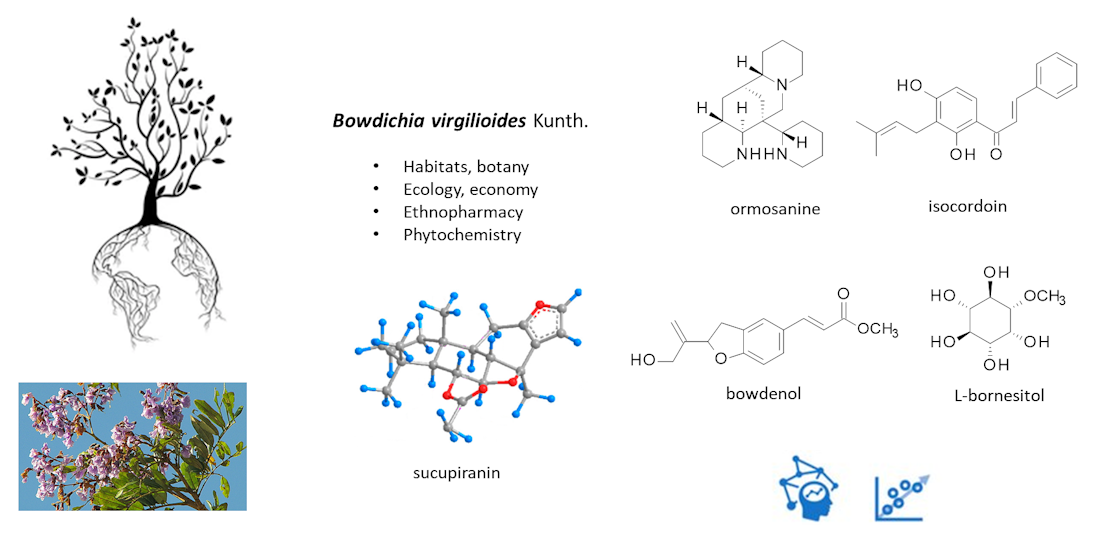
Pharmacological and Medicinal Properties of the South American Medicinal Plant Bowdichia virgilioides Kunth and Its Bioactive Products

Abstract
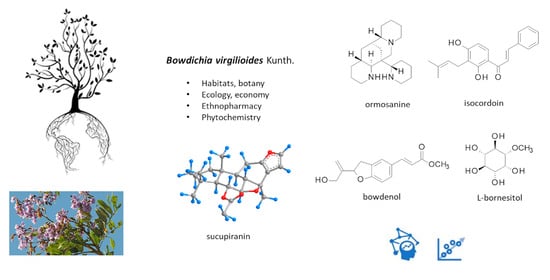
1. Introduction
2. Bowdichia virgilioides Kunth
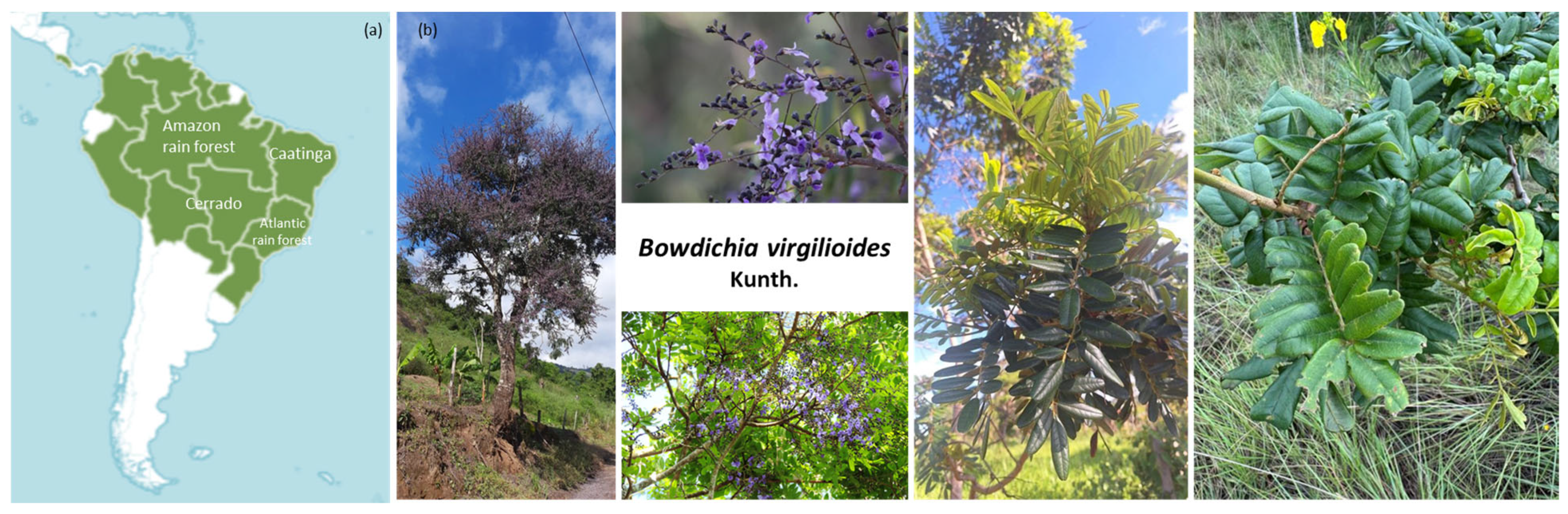
2.1. Distribution, Preservation, and Characteristics
2.2. Exploitation
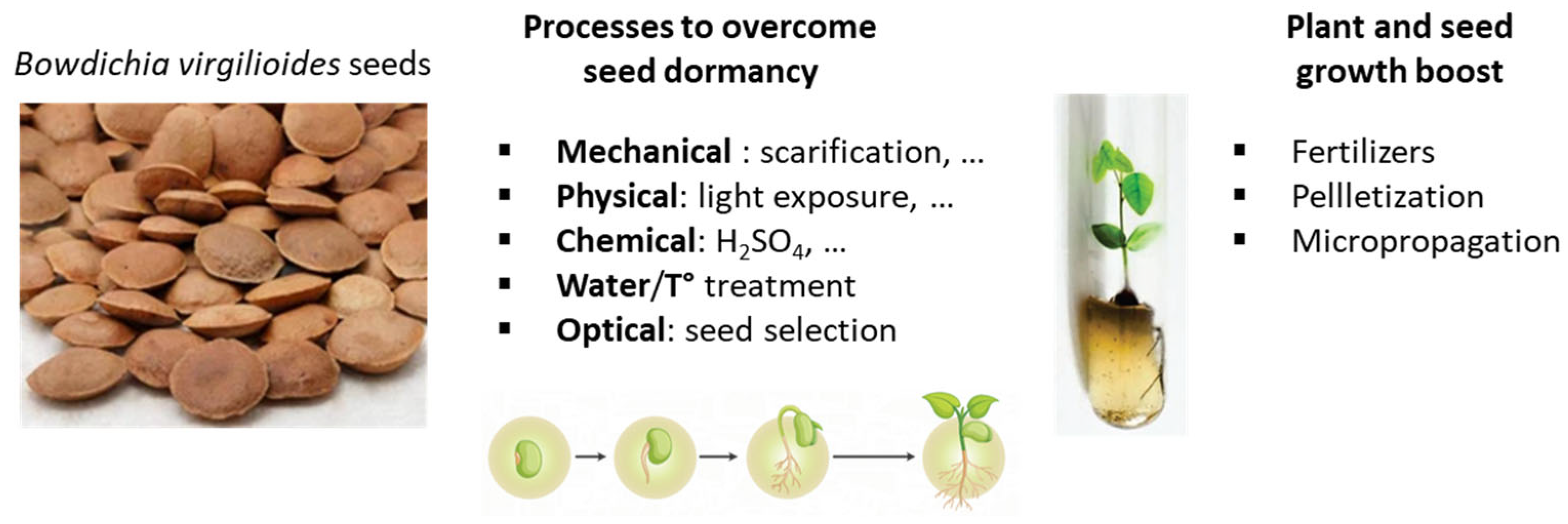
2.3. Seeds and Plant Propagation
3. Pharmacology of Bowdichia virgilioides Extracts

| Plant Part | Type of Extract | Main Observations | Refs. |
|---|---|---|---|
| Stem bark | Aqueous | Antinociceptive effect. The extract reduced pain (61% and 74% pain inhibition at 200 and 400 mg/kg, respectively) in a model of abdominal writhing induced by acetic acid. | [85] |
| Stem bark | Aqueous | Antimicrobial and anti-inflammatory effects. Reduction in the damaged area in a wound infected with S. aureus and improvement of the wound contraction. The extract induced type-1 collagen deposition and favorized fibroblast accumulation in the wound area. | [86] |
| Stem bark | Aqueous | Antibacterial activity, notably against Staphylococcus aureus, S. epidermidis and S. saprophyticus. Modest antimalarial activity against P. falciparum. | [87] |
| Stem bark | Ethanolic | Antimalarial activity. Traditional use by the Tacana community (Bolivian Andes). Activity against both Plasmodium falciparum chloroquine resistant (D2) and sensitive strains (F32) (IC50 = 1 µg/mL). Toxic in vivo against P. berghei. | [88] [89] |
| Stem bark | Aqueous | Anxiolytic effect observed after a single acute oral treatment with the extract (200–400 mg/kg), without compromising motor activity. | [90] |
| Stem bark | Aqueous (decoction) | Immune effects: alteration of thymocytes and B-lymphocytes functions. Mice orally treated with the extract showed a decreased thymus weight, a reduction in B lymphocytes proliferation, enhanced IL-10 secretion, and decreased TNF-α production. | [91] |
| Stem bark | Aqueous | Antiallergic effect. The extract inhibited ovalbumin-induced histamine release in mice tissue. It also reduced the TNFα level in the pleural effluent and inhibited the mRNA expression of cytokines IL-5 and CCL11 in pleural leukocytes after ovalbumin challenge. | [92] |
| Stem bark | Ethanolic | Antinociceptive effect. Inhibition of carrageenan-induced hind paw edema and reduction in exudate volume upon oral treatment at 1000 mg/kg, associated with a marked reduction in leukocyte accumulation. Potent inhibition of writhing and licking (70–80%). | [93] |
| Bark | Hydroethanolic | Decrease in oxidative stress. Oral administration of the extract (200 mg/kg) for 21 days reduced lipoperoxidation in the plasma and brain, and increased sulfhydryl levels in the brain and muscles. | [94] |
| Bark | Hydroethanolic | Antioxidant and antinociceptive effects evidenced in models of orofacial pain induced by formalin, glutamate, or capsaicin. | [95] |
| Inner bark and leaves | Aqueous | Antinociceptive and anti-inflammatory activities in a model of acetic acid-induced writhing in mice, upon oral treatment with the extracts at 200 and 400 mg/kg. | [96] |
| Root bark | Methanolic | Antihyperglycemic effect in diabetic rats, attributed to the inhibition of intestinal glucose absorption. The extract (500 mg/kg, oral) reduced hyperglycemia after a glucose overload. | [97] |
| Roots | Hydroethanolic | Rats orally treated with the extract (200 mg/kg) showed a marked reduction in plasma and gastrocnemius tissue lipid peroxidation and oxidative stress (55–66%). | [98] |
| Roots | Organic | Modest antioxidant activity and marked toxicity in a brine shrimp lethality assay. Best effect with the methanol extract. | [99] |
| Heartwood | Cyclohexane | Larvicidal activity. Showed 100% mortality at 50–100 μg/mL against fourth instar larvae of Aedes aegypti. | [100] |
| Leaves | Ethanolic | Antibacterial activity. The extract complexed with β-cyclodextrin showed synergistic effects when combined with gentamicin and ciprofloxacin against Staphylococcus aureus and Pseudomonas aeruginosa. | [101] |
| Leaves | Entire fresh leaves, untreated | The leaves induced the ripening of banana by increasing respiration and ascorbic acid production, and reducing chlorophyll and pH. | [102] |
| Leaves | Essential oil from steam distillation | Antimicrobial activity, notably against fungi Candida albicans, C. guilliermondii, and C. stellatoidea. | [103] |
| Seeds | Supercritical CO2 extraction of essential oil. | Solvent-free extraction to produce extracts containing antioxidant small molecules (essentially fatty acids). | [104] |
| Seeds | Essential oil from steam distillation or cold pressing | A dentifrice formulation prepared with 1% EO from B. virgilioides showed adequate organoleptic and physicochemical properties, in addition to an anti-biofilm activity. However, it revealed a marked abrasiveness. | [105] |
| Seeds | Essential oil obtained after hydrodistillation | Antimicrobial activity, notably against Gram-positive bacteria (Bacillus subtilis, B. bulgaricus, Enterococcus faecalis and Staphylococcus aureus), associated with the presence of sesquiterpenes. | [106] |
4. Phytochemical Constituents of B. virgilioides
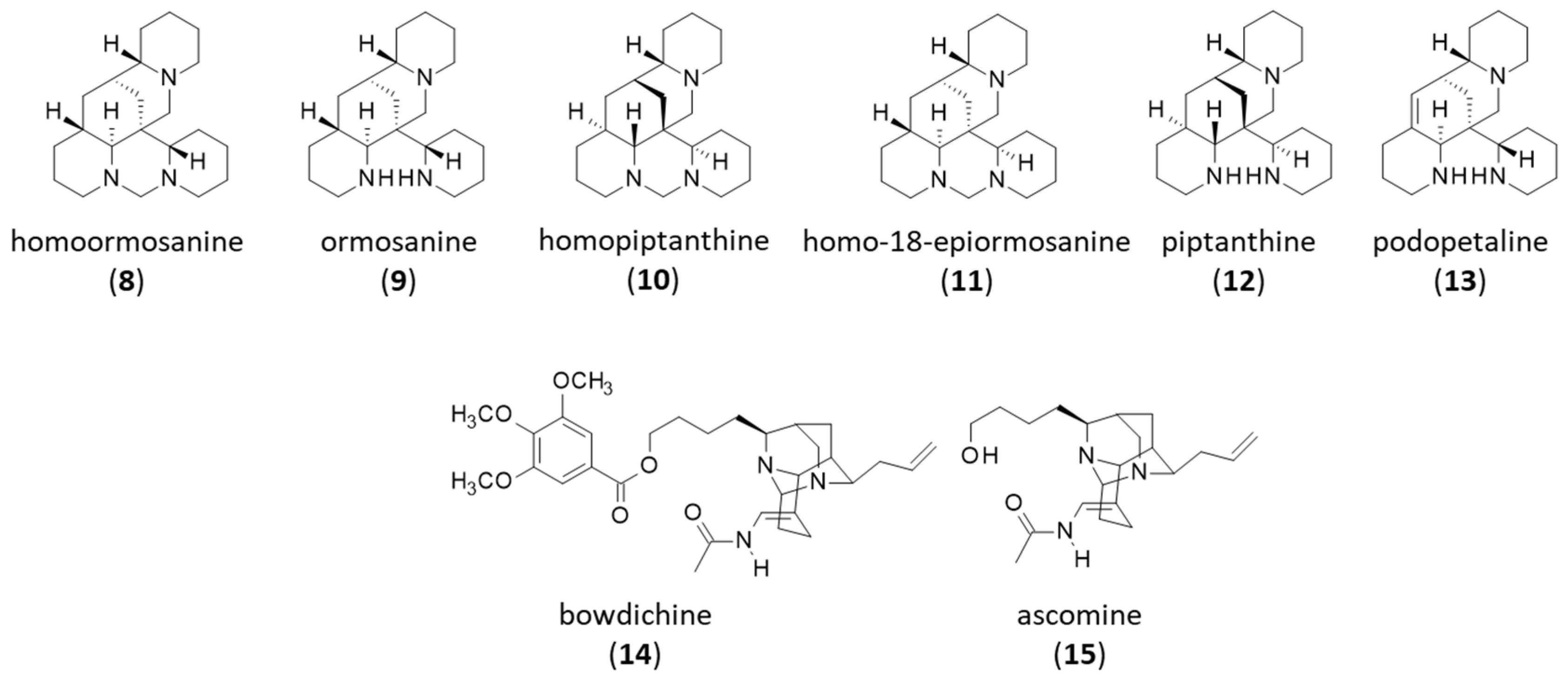
4.1. Alkaloids
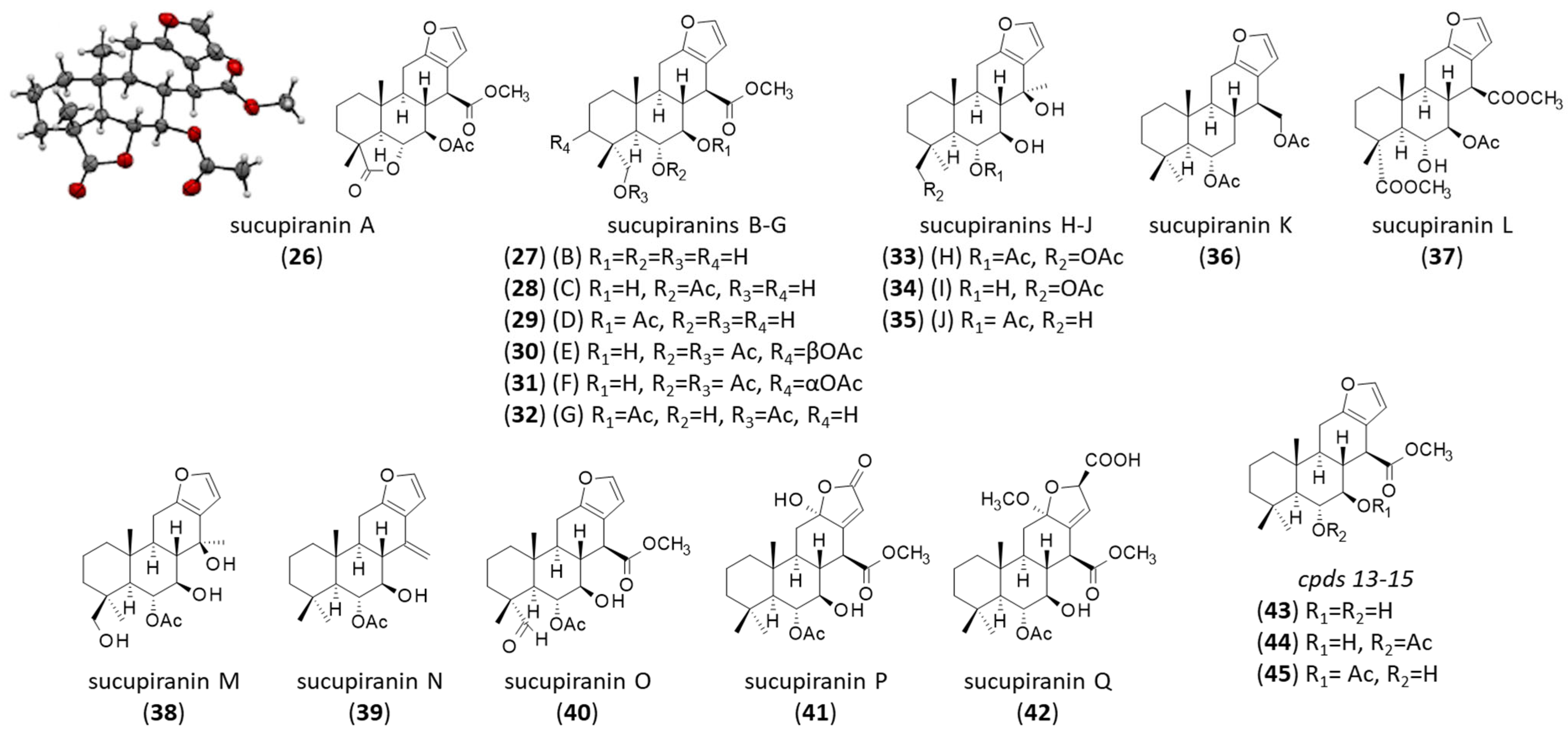
4.2. Di- and Triterpenoids
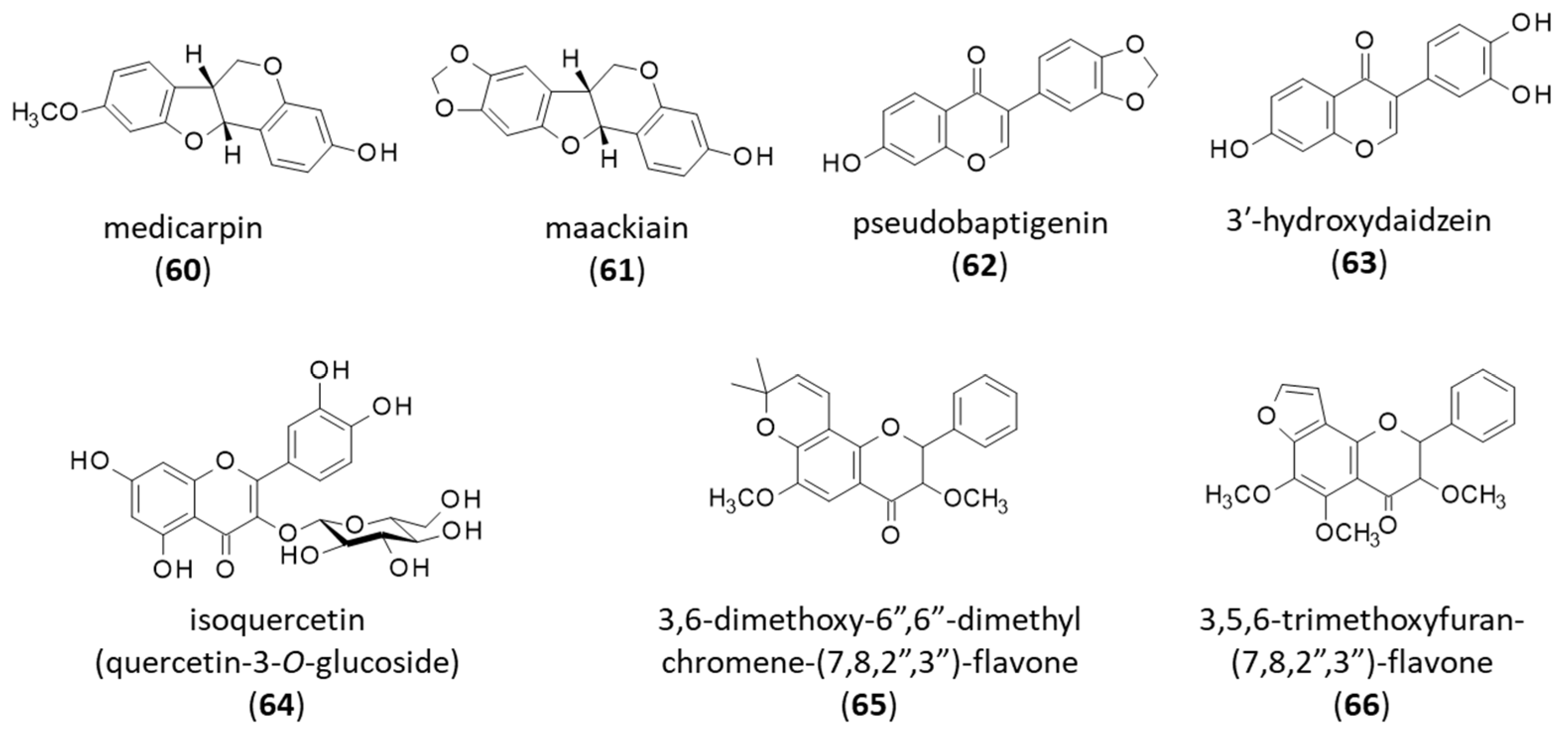
4.3. Isoflavones and Other Flavonoids
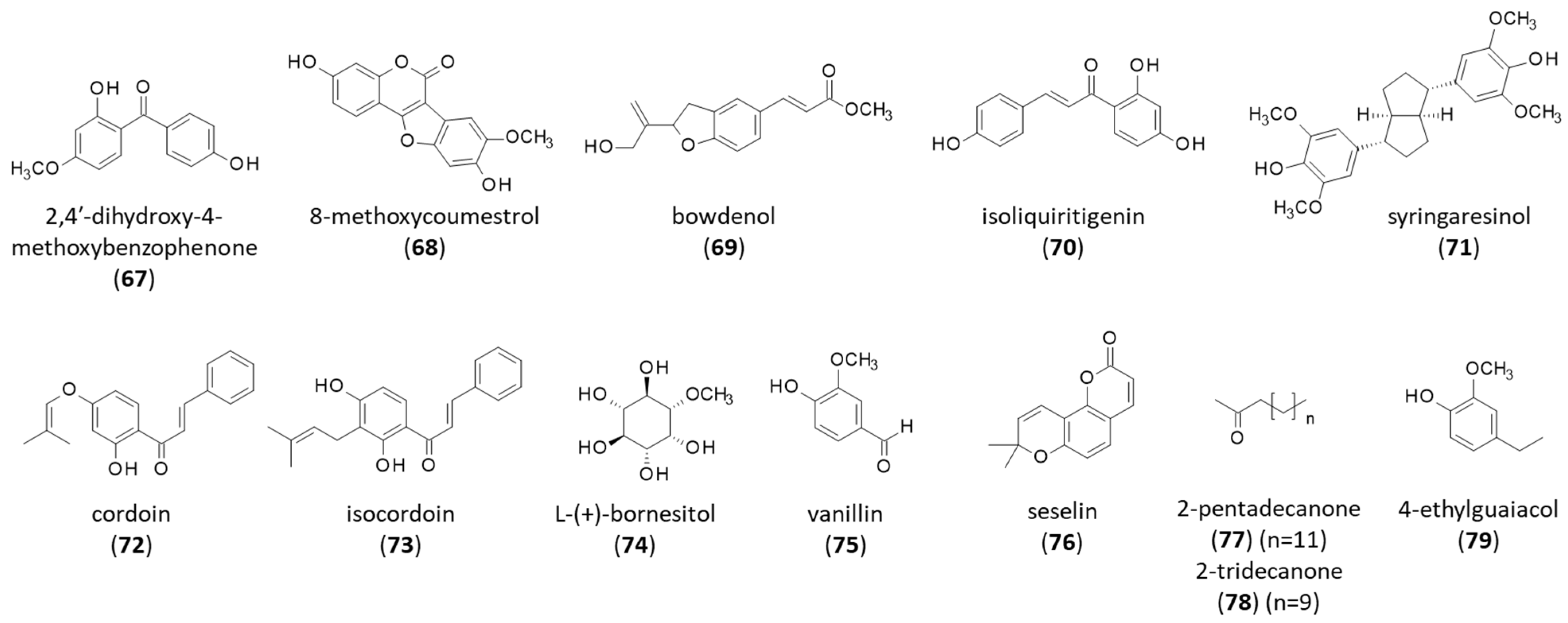
4.4. Phenols, and Other Compounds
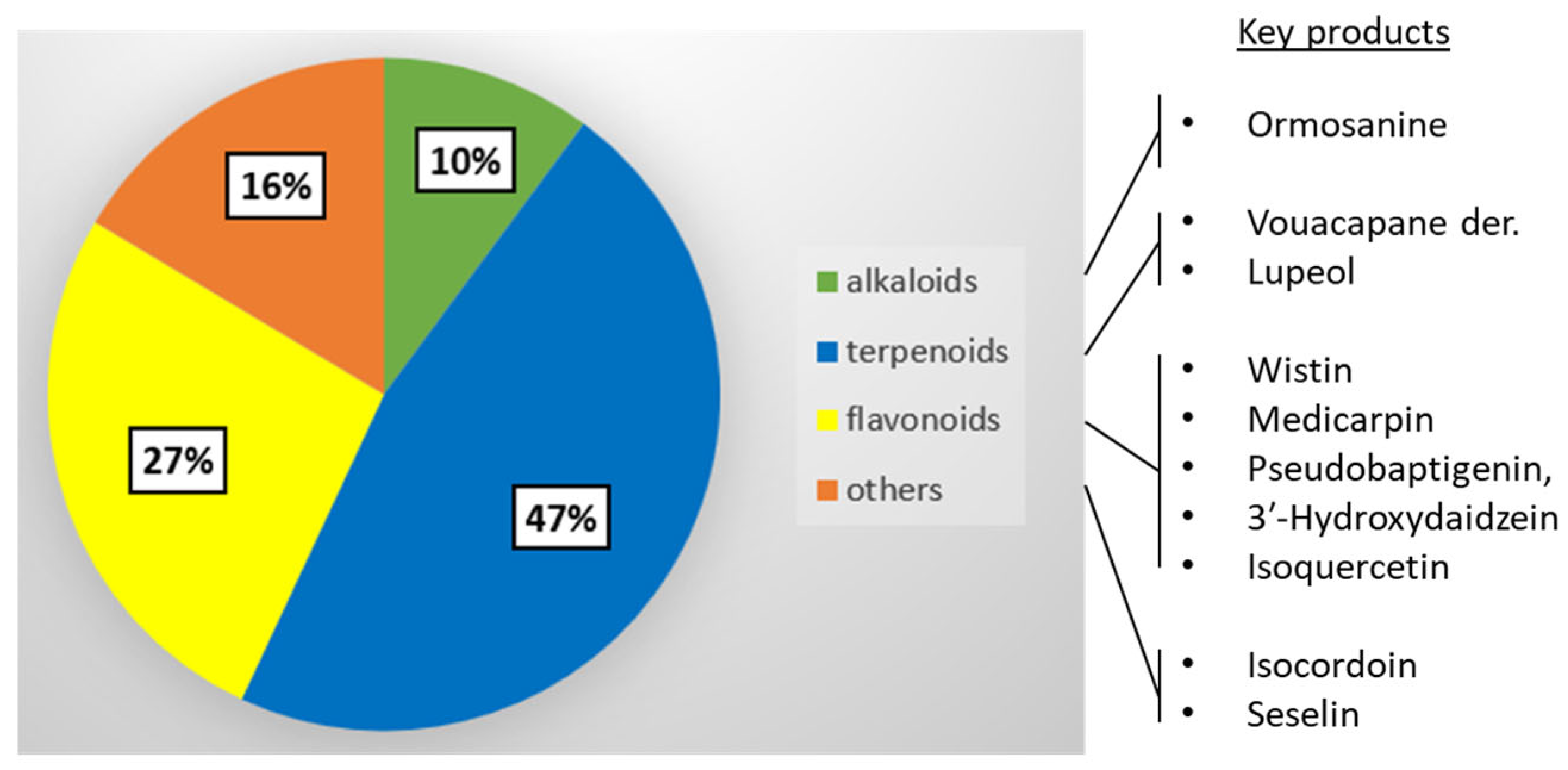
5. Discussion
Funding
Institutional Review Board Statement
Informed Consent Statement
Data Availability Statement
Conflicts of Interest
Abbreviations
| CPI | Conservation priority index |
| COX-2 | Cyclooxygenase-2 |
| HER2 | Epidermal growth factor receptor 2 |
| iNOS | Inducible nitric oxide synthase |
| MAPK | Mitogen-activated protein kinase |
| NO | Nitric oxide |
| PPAR | Peroxisome proliferator-activated receptor |
| ROS | Reactive oxygen species |
References
- Foucher, A.; Tassano, M.; Chaboche, P.A.; Chalar, G.; Cabrera, M.; Gonzalez, J.; Cabral, P.; Simon, A.C.; Agelou, M.; Ramon, R.; et al. Inexorable land degradation due to agriculture expansion in South American Pampa. Nat. Sustain. 2023, 6, 662–670. [Google Scholar] [CrossRef]
- Bochow, N.; Boers, N. The South American monsoon approaches a critical transition in response to deforestation. Sci. Adv. 2023, 9, eadd9973. [Google Scholar] [CrossRef] [PubMed]
- Bottino, M.J.; Nobre, P.; Giarolla, E.; da Silva, M.B., Jr.; Capistrano, V.B.; Malagutti, M.; Tamaoki, J.N.; de Oliveira, B.F.A.; Nobre, C.A. Amazon savannization and climate change are projected to increase dry season length and temperature extremes over Brazil. Sci. Rep. 2024, 14, 5131. [Google Scholar] [CrossRef]
- Sales, L.P.; Galetti, M.; Pires, M.M. Climate and land-use change will lead to a faunal “savannization” on tropical rainforests. Glob. Change Biol. 2020, 26, 7036–7044. [Google Scholar] [CrossRef] [PubMed]
- Lefebvre, D.; Williams, A.G.; Kirk, G.J.D.; Paul Burgess, J.; Meersmans, J.; Silman, M.R.; Román-Dañobeytia, F.; Farfan, J.; Smith, P. Assessing the carbon capture potential of a reforestation project. Sci. Rep. 2021, 11, 19907. [Google Scholar] [CrossRef]
- Le, H.D.; Smith, C.; Herbohn, J.; Harrison, S. More than just trees: Assessing reforestation success in tropical developing countries. J. Rural Stud. 2012, 28, 5–19. [Google Scholar] [CrossRef]
- Cole, R.J.; Werden, L.K.; Arroyo, F.C.; Quirós, K.M.; Cedeño, G.Q.; Crowther, T.W. Forest restoration in practice across Latin America. Biol. Conserv. 2024, 294, 110608. [Google Scholar] [CrossRef]
- Vincent, J.R.; Curran, S.R.; Ashton, M.S. Forest Restoration in Low- and Middle-Income Countries. Annu. Rev. Environ. Resour. 2021, 46, 289–317. [Google Scholar] [CrossRef] [PubMed]
- Gholami, H. Amazon Reforestation: Restoring the Rainforest. 3 July 2024. Available online: https://protectearth.foundation/amazon-reforestation/ (accessed on 30 November 2025).
- Rodrigues de Oliveira, F.É.; de Almeida Ferreira, E.; Fernandes, R.; Santos Tavares, V.N.; de Almeida Araújo, Y.; Lima, J.L.; de Sousa Antunes, L.F.; da Costa Chagas, N.R.; Nogueira de Freitas, P.L.; Tavares Lemos, C.; et al. Droughts, livestock expansion, and Forest degradation: A 37-year assessment of landscape change in a semiarid municipality of Brazil. Sci. Total Environ. 2025, 986, 179733. [Google Scholar] [CrossRef]
- Jaquetti, R.K.; Gonçalves, J.F.C.; Nascimento, H.E.M.; da Costa, K.C.P.; Maia, J.M.F.; Schimpl, F.C. Fertilization and seasonality influence on the photochemical performance of tree legumes in forest plantation for area recovery in the Amazon. PLoS ONE 2021, 16, e0243118. [Google Scholar] [CrossRef]
- Souza, E.M.; Pereira, G.S.; Silva-Mann, R.; Álvares-Carvalho, S.V.; Ferreira, R.A. A comparative framework of the Erythrina velutina tree species in reforested land and native populations. Genet. Mol. Res. 2016, 15. [Google Scholar] [CrossRef]
- Campos, J.L.A.; Albuquerque, U.P. Indicators of conservation priorities for medicinal plants from seasonal dry forests of northeastern Brazil. Ecol. Indic. 2021, 121, 106993. [Google Scholar] [CrossRef]
- dos Santos Souza, A.; Albuquerque, U.P.; Borba do Nascimento, A.L.; Santoro, F.R.; Torres-Avilez, W.M.; Paiva de Lucena, R.F.; Monteiro, J.M. Temporal evaluation of the Conservation Priority Index for medicinal plants. Acta Bot. Bras. 2017, 31, 169–179. [Google Scholar] [CrossRef]
- Rocha, F.V.; de Lima, R.B.; da Cruz, D.D. Conservation Priorities for Woody Species Used by a Quilombo Community on the Coast of Northeastern Brazil. J. Ethnobiol. 2023, 39, 158–179. [Google Scholar]
- de Oliveira, R.L.C.; de Almeida, L.F.P.; Scudeller, V.V.; Barbosa, R.I. Conservation priorities for woody medicinal plants in an indigenous community in a savanna area of the northern Brazilian Amazon. Ambiente Gestão Desenvolv. 2021, 14, 38–44. [Google Scholar] [CrossRef]
- Oliveira, T.M.L.D. Seria Bowdichia virgilioides uma importante aliada da restauração florestal em cenários de mudança climática? (Can Bowdichia virgilioides be an important ally for forest restoration in climate change scenario?). Bachelor’s Thesis, Universidade Federal do Rio Grande do Norte, Macaiba, Brazil, 2023. Available online: https://repositorio.ufrn.br/items/0b843a09-1e7b-4884-b934-3c4575c6745a (accessed on 30 November 2025).
- Xavier, V.; Pireda, S.; Da Cunha, M. Composição e distribuição de espécies em biomas da Diagonal Seca no Brasil. In Congresso Fluminense de Pós-Graduação-CONPG; Essentia Editora IFFluminense: Rio de Janeiro, Brazil, 2023. [Google Scholar]
- Costa-Coutinho, J.M.; Jardim, M.A.G.; Miranda, L.S.; Castro, A.A.J.F. Climate change effects on marginal savannas from central-north Brazil. An. Acad. Bras. Cienc. 2022, 94, e20210191. [Google Scholar]
- Arantes, C.S.; Rodrigues-Souza, J.; do Prado, J.A., Jr.; do Vale, V.S.; de Oliveira, R.M.C. Açao facilitadora de Bowdichia virgilioides Kunth. (Fabaceae) na colonizaçao de espécies em uma àrea de Cerado sentido restrito. Caminhos Geogr. 2015, 16, 16–26. [Google Scholar]
- de Silvério Arantes, C.; do Vale, V.S.; de Oliveira, A.P.; do Prado Júnior, J.A.; de Faria Lopes, S.; Schiavini, I. Forest species colonizing cerrado open areas: Distance and area effects on the nucleation process. Braz. J. Bot. 2014, 37, 143–150. [Google Scholar] [CrossRef]
- Latreille, A.J.; Wünsch, D.G.; de Souza, J.T.; Talgatti, M.; da Silveira, A.G.; de Oliveira, L.H.; Santini, E.J. Propriedades físico-mecânicas em madeira de Dipteryx alata, Astronium graveolens, Bowdichia virgilioides e Eucalyptus grandis. Rev. Inst. Florest. 2018, 30, 143–150. [Google Scholar]
- Oliveira, A.P.A.D.; Crispim-Filho, A.J.; Santos, V.R.S.; Costa, A.C.; Silva, K.L.F. Physiological and morphoanatomic responses of Bowdichia virgilioides kunth. (Fabaceae) to glyphosate. Rev. Árvore 2021, 45, e4528. [Google Scholar]
- Oliveira, A.P.A.; de Costa, A.C.; Crispim Filho, A.J.; Freitas, D.A.C.; de Silva, K.L.F. Respostas fisiológicas e morfoanatômicas de Bowdichia virgilioides Kunth. (Fabaceae) submetidas ao herbicida paraquat. Rev. Agronegócio Meio Ambiente 2022, 15, 1–21. [Google Scholar] [CrossRef]
- de Araújo, E.P.; Silva, K.L.F. Morphoanatomical responses of Bowdichia virgilioides (Fabaceae) to glyphosate drift in Brazilian cerrado agroecosystem. Rev. Ibero-Am. Ciênc. Ambient. 2021, 12, 112–124. [Google Scholar]
- Borgiani, R.; Grombone-Guaratini, M.T.; Vargas, B.C.; Martins, A.E.; Camargo, M.G.G.; Morellato, L.P.C. Floristic composition, pollination and seed-dispersal systems in a target cerrado conservation area. Biota Neotrop. 2022, 22, e20211318. [Google Scholar] [CrossRef]
- Rosa-Magri, M.M.; Meneghin, S.P. Evaluation of the germination characteristics of the tree known as “sucupira-preta”(Bowdichia virgilioides Kunth-Fabaceae). Bioikos 2014, 28, 3–10. [Google Scholar]
- Rojas, R.; Ribon, R. Guild birds Bowdichia virgilioides (Fabacea, Faboideae) in cerrado Furnas, Minas Gerais. Rev. Bras. Ornitol.-Braz. J. Ornithol. 2013, 5, 6. [Google Scholar]
- Rojas, R.; Ribon, R. Guilda de aves em Bowdichia virgilioides (Fabaceae: Faboideae) em área de cerrado de Furnas, Minas Gerais. Ararajuba 1997, 5, 189–194. [Google Scholar]
- da Silva, A.L.G.; Chaves, S.R.; Brito, J.M. Reproductive biology of Bowdichia virgilioides Kunth (Fabaceae). Acta Sci. Biol. Sci. 2011, 33, 463–470. [Google Scholar] [CrossRef]
- da Silva, V.F.; de Holanda Leite, M.J.; da Silva, J.P.; de Souza, A.M.; de Melo, L.L.D.S.; Marangon, L.C.; Marangon, A.L.P.F. Floristic Composition and Phytosanitary State of Arboreal Coverage in the Urban Park of City of Recife, Pernambuco. J. Exp. Agric. Int. 2019, 37, 1–10. [Google Scholar] [CrossRef]
- da Costa, J.S.; Lima e Lima, L.C.; da Costa, I.R.S. Structure and spatial distribution of Bowdichia virgilioides Kunth. (Leguminosae-Papilionoideae) in a fragment of Atlantic Forest, Bahia, Brazil. Rev. Biol. 2019, 19, 1–7. [Google Scholar] [CrossRef]
- Carvalho, C.S.; Lima, H.C.; de Moraes, P.L.R.; Cardoso, D.B.O.S. Assessing the nomenclatural history of the sucupira-branca trees: Friedrich Sellow’s (1789–1831) collections, typification and checklist of the Neotropical legume genus Pterodon. Taxon 2023, 72, 159–172. [Google Scholar] [CrossRef]
- Hoscheid, J.; Cardoso, M.L. Sucupira as a Potential Plant for Arthritis Treatment and Other Diseases. Arthritis 2015, 2015, 379459. [Google Scholar] [CrossRef]
- Costa, A.C.S.; Pereira, B.L.C.; Silva, M.F.D.A.; Lengowski, E.C.; Oliveira, A.C. Colorimetric characterization of Amazonian tropical hardwood floors. Adv. For. Sci. 2021, 8, 1511–1518. [Google Scholar]
- Costa, A.C.S.; Oliveira, A.C.; Pereira, B.L.C.; Silva, J.R.M.D.; Oliveira, M.B.D.; Xavier, C.N. Quality of tropical hardwood floors. Rev. Árvore 2021, 45, e4503. [Google Scholar] [CrossRef]
- Brandão, M.; Ferreira, P.B.D. Flora apícola do cerrado. Inf. Agropecuário Belo Horiz. 1991, 15, 4–8. [Google Scholar]
- Lorenzi, H. Árvores Brasileiras: Manual de Identificação e Cultivo de Plantas Arbóreas do Brasil, 4th ed.; Instituto Plantarum: Nova Odessa, SP, Brazil, 2002; Volume 1, ISBN 85-86174-16-X. [Google Scholar]
- Barbosa, R.I.; Fearnside, P.M. Wood density of trees in open savannas of the Brazilian Amazon. For. Ecol. Manag. 2004, 199, 115–123. [Google Scholar] [CrossRef]
- Baldin, T.; Santos, J.; dos Santos, V.; Colen, F.; Baraúna, E.; Donária, M. Valuation of seven Cerrado woods in charcoal production. Ciênc. Florest. 2025, 35, e87000. [Google Scholar] [CrossRef]
- de Souza-Pinto, N.; Scheel-Ybert, R. Charcoal anatomy of Brazilian species. II. 15 native species occurring in Atlantic or Amazon rainforest. An. Acad. Bras. Cienc. 2021, 93, e20190983. [Google Scholar] [CrossRef]
- de Albuquerque, A.N.; de Figueiredo e Albuquerque, M.C.; de Mendonça, E.A.F.; de Cinque, D.M.; Okumura, R.S.; Coletti, A.J. Morphological aspects of fruits, seeds and seedlings Bowdichia virgilioides Kunth. Rev. Cienc. Agrar. 2015, 58, 233–239. [Google Scholar]
- da Silva, L.B.; Ferreira, A.M.; Araújo, S.S.; Lourenço, M.C. Transportation of brazilian wood to Portugal in the 18th and 19th centuries. Braz. J. Dev. Curitiba 2020, 6, 53728–53745. [Google Scholar]
- Esteves, G.; Chiari, G.; Valenzuela, C.A.; Cardoso, A.A.; Santos Filho, P.R.D.; Santos, B.R. Storage temperatures for Bowdichia virgilioides seeds: An endangered species. Agrocienc. Urug. 2022, 26, 678. [Google Scholar] [CrossRef]
- Soares, J.T.; Pola, L.A.V.; Maia, H.E.M.; Adriano, M.V.R.; Figueiredo, A.M.S.P.; Gonçalves Ede, O.; Machado, E.L.M.; de Moura, C.C. Improvement of Bowdichia virgilioides germination efficiency using induced fire and seed color selection. Rev. Caatinga Mossoró 2025, 38, e12756. [Google Scholar] [CrossRef]
- Lima, J.M.E.; Smiderle, O.J.; Oliveira, J.A.; Carvalho, M.L.M.D. Técnicas de análise de imagem para caracterização da qualidade de sementes de paricarana (Bowdichia virgilioides Kunth). Ciênc. Florest. 2018, 28, 1202–1216. [Google Scholar] [CrossRef]
- Dalanhol, S.J.; Rezende, E.H.; Azevedo de Abreu, D.C.; Nogueira, A.C. Teste de Condutividade Elétrica em Sementes de Bowdichia virgilioides Kunth. Floresta Ambiente 2014, 21, 69–77. [Google Scholar] [CrossRef]
- Albuquerque, K.S.; Guimarães, R.M. Evaluation of seed quality of black sucupira (Bowdichia virgilioides Kunth.) by X ray test. Ciênc. Agrotecnol. 2008, 32, 1713–1718. [Google Scholar] [CrossRef]
- dos Santos, J.F.; Mendonça, A.V.R.; de Souza, M.O. Dormancy of Bowdichia virgilioides Kunth seeds. Cientifica 2020, 48, 250–256. [Google Scholar] [CrossRef]
- Conceição, T.A.; Mendonça, A.V.R.; de Souza, M.O.; Souza, J.S.; Moreira, R.F.C. Seed collection environment: Effects of forest cover reduction on biometrics and seed lot quality of Bowdichia virgilioides Kunth. Científica 2019, 47, 327–336. [Google Scholar] [CrossRef]
- Brauwers, L.R.; Camargo, I.D.; Duran, J.A.R.; Martinotto, C. Effect of substrates and phosphorus fertilization on the Paratudo (Tabebuia caraiba (Mart.) Bur.) and Sucupira preta (Bowdichia virgilioides HBK). Seedlings development. Acta Hortic. 2002, 569, 161–165. [Google Scholar] [CrossRef]
- Matsuoka, M.; Faria, A.Y.K.; Loureiro, M.D.F. Arbuscular mycorrhizal fungi in sucupira-preta (Bowdichia virgilioides HBK) and paratudo (Tabebuia caraiba (Mart.) Bur): Effect of substrata and phosphorus fertilization in the colonization. Acta Hortic. 2002, 569, 317–320. [Google Scholar] [CrossRef]
- Cruz, F.V.D.S.; Gomes, M.P.; Bicalho, E.M.; Garcia, Q.S. Fertilization assures mineral nutrition but does not overcome the effects of Fe accumulation in plants grown in iron ore tailings. Environ. Sci. Pollut. Res. Int. 2022, 29, 18047–18062. [Google Scholar] [CrossRef] [PubMed]
- Santana do Carmo, R.; Sousa, A.S.; Souza, A.C.; Sousa, L.K.N.; da Silva, C.M.; da Silva, W.A. Overcoming dormancy in Bowdichia virgilioides Kunth seeds. Rev. Gest. Soc. Ambient. 2025, 19, e012357. [Google Scholar]
- Silva, R.G.; de Santana, D.G.; Guimarães, C.C.; da Silva, E.A.A. Permeability to water and viability in heteromorphic color seeds of Bowdichia virgilioides Kunth. Rev. Árvore 2021, 45, e4525. [Google Scholar] [CrossRef]
- Oliveira, G.M.; de Freitas, T.A.S.; Vasconcelos, R.S.; de Almeida, C.V.C.; Silva, J.G.; de Jesus Silva, J. Luminosidade e curva de embebição de água para sementes de espécies florestais. Rev. Cien. Intelletto 2019, 4, 16–25. [Google Scholar]
- Kanegae, M.F.; Braz, V.D.S.; Franco, A.C. Efeitos da seca sazonal e disponibilidade de luz na sobrevivência e crescimento de Bowdichia virgilioides em duas fitofisionomias típicas dos cerrados do Brasil Central. Braz. J. Bot. 2000, 23, 459–468. [Google Scholar] [CrossRef]
- Coêlho, C.B.; Paulo, F.V.L.; Viana, B.L. Dormancy overcoming in Bowdichia virgilioides Kunth seeds. Rev. Ciênc. Agric. 2019, 17, 73–79. [Google Scholar] [CrossRef]
- Smiderle, O.J.; Schwengber, L.A.M. Superação dadormência em sementes de paricarana (Bowdichia virgilioides Kunth.). Rev. Bras. Sementes 2011, 33, 407–414. [Google Scholar] [CrossRef]
- Smiderle, O.J.; de Sousa, R.D.C.P. Dormência em sementes de paricarana (Bowdichia virgilioides Kunth-Fabaceae-Papilionidae). Rev. Bras. Sementes 2003, 25, 72–75. [Google Scholar] [CrossRef]
- Sampaio, L.D.V.; Peixoto, C.P.; Peixoto, M.D.F.D.S.; Costa, J.A.; Garrido, M.D.S.; Mendes, L.N. Sulfuric acid for overcoming seed dormancy of sucupira-preta (Bowdichia virgilioides HBK-Fabaceae) seeds. Rev. Bras. Sementes 2001, 23, 184–190. [Google Scholar] [CrossRef]
- Albuquerque, K.S.; Guimarães, R.M. Physiological behavior of Bowdichia virgilioides kunth. seeds under different temperature and light conditions. Cerne 2007, 13, 64–70. [Google Scholar]
- Silva, L.M.M.; de Aguiar, I.B.; Rodrigues, T.J.D. Seed germination of Bowdichia virgilioides Kunth, under water stress. Rev. Bras. Eng. Agríc. Ambient. 2001, 5, 115–118. [Google Scholar] [CrossRef]
- Gonçalves, J.V.S.; Albrecht, J.M.F.; Soares, T.S. Physical characterization and evaluation of pre-imbibition treatment in the germination of Sucupira (Bowdichia virgilioides Kunth) seeds. Cerne 2008, 14, 330–334. [Google Scholar]
- Cândido Barreto, S.S.; Alves, E.U.; da Silva, T.I.; Vieira Rodrigues, E.; de Melo Gonçalves, A.C.; Oliveira Silva, M.D.; Santos Moura, S.D.S. Metodología para testes de germinación y vigor de semillas de Bowdichia virgilioides. Idesia 2019, 37, 95–102. [Google Scholar] [CrossRef]
- Ribeiro-Oliveira, J.P.; Ranal, M.A.; de Santana, D.G. A amplitude amostral interfere nas medidas degerminação de Bowdichia virgilioides Kunth. Ciênc. Florest. 2013, 23, 623–634. [Google Scholar]
- Albuquerque, K.S.; Guimarães, R.M.; de Almeida, I.F.; da Consolação Sampaio, A.C. Métodos para a superação da dormência em sementes de Sucupira-preta (Bowdichia virgilioides Kunth.). Methods for dormancy overcoming of black sucupira (Bowdichia virgilioides Kunth.) seeds. Ciênc. Agrotec. 2007, 31, 1716–1721. [Google Scholar]
- Ferronato, A.; Dignart, S.; Camargo, I.P. Caracterização das sementes e comparação de métodos para determinar o teor de água em sementes de sucupira-preta (Bowdichia virgilioides H.B.K.—Papilionoideae) e pé-de-anta (Cybistax antisyphilitica Mart.—Bignoniaceae). Rev. Bras. Sementes 2000, 22, 206–214. [Google Scholar]
- Matheus, M.T.; Vieira, B.D.C.; Oliveira, S.A.D.S.; Bacelar, M. Desiccation tolerance of seeds of Bowdichia virgilioides Kunth.-Fabaceae. Rev. Caatinga 2009, 22, 89–92. [Google Scholar]
- Pereira, W.V.S.; Faria, J.M.R.; Tonetti, O.A.O.; José, A.C.; Melo, L.A.D. Loss of desiccation tolerance in seeds of tree species during germination: Theoretical and practical implications. Rev. Árvore 2018, 42, e420503. [Google Scholar] [CrossRef]
- da Silva, P.O.; da Costa, A.M.; Carlos, L. Phenology of Bowdichia virgilioides (Fabaceae): A native medicinal species of the Cerrado. Rev. Bras. Plantas Med. 2021, 20, 306–313. [Google Scholar]
- Montanhim, G.C.; Haneda, R.N.; Lombardi, A.T.; Lima, M.I.S. Uso de biomassa de algas para a peletização de sementes de Bowdichia virgilioides Kunth. Rev. Árvore 2014, 38, 867–877. [Google Scholar] [CrossRef]
- de Moura, L.C.; Titon, M.; Fernandes, J.S.C.; Santana, R.C.; de Oliveira, M.L.R. Sucupira-preta micropropagation through axillary buds. Pesq. Agropec. Bras. 2012, 47, 1691–1698. [Google Scholar]
- de Oliveira, R.M.; da Cunha Neto, A.R.; Calvelli, J.V.B.; Ferreira, E.B.; de Andrade, M.D.; Mincato, R.L.; Santos, B.R. Biosolids Treated as a Nutritional Alternative for in vitro Culture of Bowdichia virgilioides Kunth. Bull. Environ. Contam. Toxicol. 2024, 113, 28. [Google Scholar] [CrossRef] [PubMed]
- de Moura, L.C.; Titon, M.; Fernandes, J.S.C.; Santana, R.C. In vitro germination and acclimation of sucupira-preta seedlings (Bowdichia virgilioides Kunth.). Biosci. J. 2014, 30, 678–687. [Google Scholar]
- Boaventura Filho, M.A.; Leite, M.A.; Mc Leod, L.; Santos, B.R.; dos Santos Filho, P.R. Spontaneous vegetative propagules differentiation in Bowdichia virgilioides seedlings maintained at MS basal medium. Rev. Ceres 2021, 68, 55–60. [Google Scholar] [CrossRef]
- Rodrigues, C.G.; Gomes, S.M. Floral ontogeny and anatomy reveal the gynophore origin and nature in Bowdichia virgilioides (Fabaceae). Bot. J. Linn. Soc. 2025, 208, 182–196. [Google Scholar]
- Silva, L.N.R.; Oliveira, E.C.P.; Baratto, L.C. Amazonian useful plants described in the book “Le Pays des Amazones” (1885) of the Brazilian propagandist Baron de Santa-Anna Nery: A historical and ethnobotanical perspective. J. Ethnobiol. Ethnomed. 2024, 20, 26. [Google Scholar] [CrossRef] [PubMed]
- Rocha, F.A.B.; Paganotte, D.M. Use of Sucupira oil in therapy. Revista Ibero-Americana de Humanidades. Ciênc. Educ. 2022, 8, 561–572. [Google Scholar]
- Machado, M.S.L.; Bruno, K.A.; de Oliveira Melo, M.; Koike, M.K. Fitoterapia brasileira: Análise dos efeitos biológicos da sucupira (Bowdichia virgilioides e Pterodon emarginatus). Braz. J. Nat. Sci. 2018, 2, 15–21. [Google Scholar]
- Leite, L.H.I.; Tintino, S.R.; Figueredo, F.G.; Oliveira, C.D.M.; Oliveira, L.D.; Siebra, A.L.D.A.; Sampaio, R.D.S.; Boligon, A.A.; Souza, D.O.; Athayde, M.L.; et al. Study on the chemical composition and antibacterial activity of Bowdichia virgilioides kunth (Sucupira)-Fabaceae-Papilonoidae. Bol. Latinoam. Caribe Plantas Med. Aromat. 2014, 13, 477–487. [Google Scholar]
- de Carvalho Nilo Bitu, V.; de Carvalho Nilo Bitu, V.; Matias, E.F.; de Lima, W.P.; da Costa Portelo, A.; Coutinho, H.D.; de Menezes, I.R. Ethnopharmacological study of plants sold for therapeutic purposes in public markets in Northeast Brazil. J. Ethnopharmacol. 2015, 172, 265–272. [Google Scholar] [CrossRef] [PubMed]
- Souza, R.K.; da Silva, M.A.; de Menezes, I.R.; Ribeiro, D.A.; Bezerra, L.R.; Souza, M.M. Ethnopharmacology of medicinal plants of Carrasco, northeastern Brazil. J. Ethnopharmacol. 2014, 157, 99–104. [Google Scholar] [CrossRef]
- Milliken, W.; Walker, B.E.; Howes, M.R.; Forest, F.; Nic Lughadha, E. Plants used traditionally as antimalarials in Latin America: Mining the tree of life for potential new medicines. J. Ethnopharmacol. 2021, 279, 114221. [Google Scholar] [CrossRef]
- Silva, J.P.; Rodarte, R.S.; Calheiros, A.S.; Souza, C.Z.; Amendoeira, F.C.; Martins, M.A.; Silva, P.M.; Frutuoso, V.S.; Barreto, E. Antinociceptive activity of aqueous extract of Bowdichia virgilioides in mice. J. Med. Food 2010, 13, 348–351. [Google Scholar] [CrossRef]
- Agra, I.K.; Pires, L.L.; Carvalho, P.S.; Silva-Filho, E.A.; Smaniotto, S.; Barreto, E. Evaluation of wound healing and antimicrobial properties of aqueous extract from Bowdichia virgilioides stem barks in mice. An. Acad. Bras. Cienc. 2013, 85, 945–954. [Google Scholar]
- Assis, I.B.; da Rocha, E.M.M.; Guimarães, D.S.M.; do Nascimento Pereira, G.A.; Pereira, F.P.; Ferreira, J.M.S.; Barreto, E.O. Evaluation of biological activity, toxicity, and phytochemical content of Bowdichia virgilioides (Fabaceae) aqueous extract. Pharmacogn. Mag. 2018, 14, 57. [Google Scholar] [CrossRef]
- Deharo, E.; Bourdy, G.; Quenevo, C.; Muñoz, V.; Ruiz, G.; Sauvain, M. A search for natural bioactive compounds in Bolivia through a multidisciplinary approach. Part V. Evaluation of the antimalarial activity of plants used by the Tacana indians. J. Ethnopharmacol. 2001, 77, 91–98. [Google Scholar] [CrossRef] [PubMed]
- Bourdy, G.; DeWalt, S.J.; Chávez de Michel, L.R.; Roca, A.; Deharo, E.; Muñoz, V.; Balderrama, L.; Quenevo, C.; Gimenez, A. Medicinal plants uses of the Tacana, an Amazonian Bolivian ethnic group. J. Ethnopharmacol. 2000, 70, 87–109. [Google Scholar] [CrossRef]
- Vieira, L.F.D.A.; Reis, M.D.D.S.; Brandão, A.R.A.; Viana, I.M.M.; da Silva, J.P.; Barreto, E.; Smaniotto, S. Anxiolytic-like effect of the extract from Bowdichia virgilioides in mice. Rev. Bras. Farmacogn. 2013, 23, 680–686. [Google Scholar]
- dos Santos Reis, M.D.; de Araújo Vieira, L.F.; Alves Brandão, A.R.; Barreto, E.; Smaniotto, S. The effects of aqueous extract of Bowdichia virgilioides Kunth in the immune functions of thymocytes and B lymphocytes. J. Med. Plants Res. 2020, 14, 247–257. [Google Scholar] [CrossRef]
- da Silva, J.P.; de Souza Ferro, J.N.; da Silva Filho, B.F.; da Silva, L.A.N.F.; Souza, T.P.M.; de Carvalho Matos, H.; de Frias Carvalho, V.; Rodarte, R.S.; Barreto, E. Aqueous extract of Bowdichia virgilioides stem bark inhibition of allergic inflammation in mice. J. Med. Plants Res. 2016, 10, 575–584. [Google Scholar] [CrossRef][Green Version]
- Barros, W.M.; Rao, V.S.; Silva, R.M.; Lima, J.C.; Martins, D.T. Anti-inflammatory effect of the ethanolic extract from Bowdichia virgilioides H.B.K stem bark. An. Acad. Bras. Cienc. 2010, 82, 609–616. [Google Scholar] [PubMed]
- Costa, L.S.; Aidar, F.J.; Matos, D.G.; Oliveira, J.U.; Santos, J.L.D.; Almeida-Neto, P.F.; Souza, R.F.; Pereira, D.D.; Garrido, N.D.; Nunes-Silva, A.; et al. Effects of Resistance Training and Bowdichia virgilioides Hydroethanolic Extract on Oxidative Stress Markers in Rats Submitted to Peripheral Nerve Injury. Antioxidants 2020, 9, 941. [Google Scholar] [CrossRef]
- Shan, A.Y.K.V.; de Almeida, E.C.V.; dos Santos, A.L.L.M.; de Lima, A.C.B.; Souza Santos, C.C.; Santana Souza, M.T.; Damascena, N.P.; de Araújo, S.S.; dos Santos, J.L.; Paixão, M.S.; et al. Antioxidant and antinociceptive effect of the hydroethanolic extract and fractions of the bark of Bowdichia virgilioides in orofacial pain. Afr. J. Pharm. Pharmacol. 2016, 10, 320–329. [Google Scholar] [CrossRef]
- Thomazzi, S.M.; Silva, C.B.; Silveira, D.C.; Vasconcellos, C.L.; Lira, A.F.; Cambui, E.V.; Estevam, C.S.; Antoniolli, A.R. Antinociceptive and anti-inflammatory activities of Bowdichia virgilioides (sucupira). J. Ethnopharmacol. 2010, 127, 451–456. [Google Scholar] [CrossRef] [PubMed]
- Silva, A.C.; Dos Santos, M.P.; de França, S.A.; da Silva, V.C.; da Silva, L.E.; de Figueiredo, U.S.; Dall’Oglio, E.L.; Júnior, P.T.; Lopes, C.F.; Baviera, A.M.; et al. Acute and subchronic antihyperglycemic activities of Bowdichia virgilioides roots in non-diabetic and diabetic rats. J. Intercult. Ethnopharmacol. 2015, 4, 57–63. [Google Scholar] [CrossRef] [PubMed]
- Dos Santos, J.L.; Dantas, R.E.; Lima, C.A.; de Araújo, S.S.; de Almeida, E.C.; Marçal, A.C.; Estevam Cdos, S. Protective effect of a hydroethanolic extract from Bowdichia virgilioides on muscular damage and oxidative stress caused by strenuous resistance training in rats. J. Int. Soc. Sports Nutr. 2014, 11, 58. [Google Scholar] [CrossRef]
- Cardoso, K.V.; Santos, D.C.D.; David, J.M. Chemical composition and biological activities of extracts and isolated compounds from the roots of Bowdichia virgilioides (Fabaceae). Quim. Nova 2025, 48, e-20250037. [Google Scholar] [CrossRef]
- Habbu, P.V.; Miskin, N.; Kulkarni, V.H.; Bhat, P.; Joshi, A.; Bhandarkar, A.; Bhandarkar, A.; Kulkarni, S.; Dixit, S.R.; Vaijanathappa, J. Isolation, characterization, and cytotoxic studies of secondary metabolites from the leaves of Bauhinia foveolata Dalzell: An endemic tree from the Western Ghats, India. J. Appl. Pharm. Sci. 2020, 10, 135–148. [Google Scholar] [CrossRef][Green Version]
- dos Santos Silva, E.; Pessoa, R.T.; de Morais Oliveira-Tintino, C.D.; Tintino, S.R.; Alencar, G.G.; de Araújo, G.A.; Siqueira, G.M.; Melo Coutinho, H.D.; Mendes Silva, T.; Oliveira, N.C.; et al. Antibacterial activity and modulatory effects of Bowdichia virgilioides ethanolic extract and its β-cyclodextrin inclusion complex against multidrug-resistant bacteria. J. Drug Deliv. Sci. Technol. 2025, 111, 107200. [Google Scholar] [CrossRef]
- da Costa Nascimento, R.; de Oliveira Freire, O.; Ribeiro, L.S.; Araújo, M.B.; Finger, F.L.; Soares, M.A.; Wilcken, C.F.; Zanuncio, J.C.; Souto Ribeiro, W. Ripening of bananas using Bowdichia virgilioides Kunth leaves. Sci. Rep. 2019, 9, 3548. [Google Scholar] [CrossRef]
- Almeida, J.R.G.D.S.; Silva-Filho, R.N.D.; Nunes, X.P.; Dias, C.D.S.; Pereira, F.D.O.; Lima, E.D.O. Antimicrobial activity of the essential oil of Bowdichia virgilioides Kunt. Rev. Bras. Farmacogn. 2006, 16, 638–641. [Google Scholar] [CrossRef]
- Vieira, G.V.; Souza, M.R.d.R.; Hiranobe, C.T.; Goncalves, J.E.; Moritz, C.M.F.; Sakai, O.A.; e Silva, L.M.S.; da Silva, M.J.; da Silva, E.A.; dos Santos, R.J.; et al. Kinetics of Supercritical CO2 Extraction from Burrito (Aloysia polystachya) Leaves and Sucupira-Preta (Bowdichia virgilioides) Seeds. Separations 2025, 12, 6. [Google Scholar] [CrossRef]
- Dos Santos, A.C.M.; Mendes, F.S.F.; Pompeo, F.T.; Watanabe, E.; Macedo, A.P.; de Souza, V.O.P.; Paranhos, H.F.O.; Silva-Lovato, C.H. Effectiveness of experimental dentifrices based on essential oils on biofilm on complete dentures: An in vitro study. J Appl. Oral Sci. 2024, 32, e20230397. [Google Scholar] [CrossRef]
- Rodrigues, M.O.; Alves, P.B.; Nogueira, P.C.; Machado, S.M.; Moraes, V.R.; Ribeiro, A.D.S.; Silva, E.S.; Feitosa, J.G.R. Volatile constituents and antibacterial activity from seeds of Bowdichia virgilioides Kunt. J. Essent. Oil Res. 2009, 21, 286–288. [Google Scholar] [CrossRef]
- Franco, G.L.; Souza, J.G.D.; Martha, G.D.O.D.; Faria, F.J.C.; Vedovatto, M.; Ítavo, L.C.V.; d’Oliveira, M.C.; Moreira, A.P. Óleo da semente de sucupira-preta (Bowdichia virgilioides Kunth) como aditivo zootécnico para bovinos de corte. Rev. Bras. Saúde Produção Anim. 2025, 26, e20240012. [Google Scholar] [CrossRef]
- Hartwich, C.; Dünnenberger, E. Ueber eine als Jaborandi in den Handel gekommene Alcornocorinde und über Alcornocorinden im Allgemeinen. Arch. Pharm. 1900, 238, 341–352. [Google Scholar] [CrossRef][Green Version]
- The Editor. Gleaning in Materia Medica. Am. J. Pharm. 1886, 58, 613. [Google Scholar]
- Torrenegra, G.R.; Escarria, R.S.; Bauereiss, O.P.; Achenbach, H. Homoormosanine, The Major Alkaloid of the Bark from Bowdichia virgiloides. Planta Med. 1985, 51, 276–277. [Google Scholar] [CrossRef]
- Calle, A.J.; Rivera Umana, A.; Moreno, E. Isolation of lupeol from the bark of Bowdichia virgiloides H.B.K. Rev. Col. Cienc. Quim-Farm 1983, 4, 93–94. [Google Scholar]
- Singha, A.; Chakraborty, A.; Sil, S.K. Lupeol: Ethnopharmacological insights and therapeutic potential in human health. 3Biotech 2025, 15, 199. [Google Scholar] [CrossRef]
- Luo, X.; Li, J.; Cen, Z.; Feng, G.; Hong, M.; Huang, L.; Long, Q. Exploring the therapeutic potential of lupeol: A review of its mechanisms, clinical applications, and advances in bioavailability enhancement. Food Chem. Toxicol. 2025, 196, 115193. [Google Scholar] [CrossRef]
- Sen, K.; Kumar Das, S.; Ghosh, N.; Sinha, K.; Sil, P.C. Lupeol: A dietary and medicinal triterpene with therapeutic potential. Biochem. Pharmacol. 2024, 229, 116545. [Google Scholar] [CrossRef] [PubMed]
- Parvez, A.; Rahman, M.A.; Rahman, M.M.; Shimki, A.I.; Ahmmed, S.; Supti, F.A.; Hasan, M.H.; Bristi, M.S.A.; Ansari, S.A.; Islam, M.T. Broad-Spectrum Therapeutic Potentials of the Multifaceted Triterpene Lupeol and Its Derivatives. Chem. Biodivers. 2025, 22, e202402286. [Google Scholar] [CrossRef]
- AlMousa, L.A.; Pandey, P.; Lakhanpal, S.; Kyada, A.K.; Malathi, H.; Nayak, P.P.; Hussain, A.; Hasan, T.N.; Alagal, R.I.; Khan, F. An updated review deciphering the anticancer potential of pentacyclic triterpene lupeol and its nanoformulations. Front. Pharmacol. 2025, 16, 1594901. [Google Scholar] [CrossRef]
- Marinho, L.C.; Carneiro Da Cunha, M.T.M.; Thomas, G.; Barbosa Filho, J.M. Constituents of Bowdichia virgilioides. Fitoterapia 1994, 65, 475. [Google Scholar]
- Ticona, J.C.; Gutierrez, D.; Salamanca, E.; Ruiz, G.; Paredes, C.; Udaeta, E.; Rodríguez, N.; Garcia, G.; López, I.; Jiménez, A.; et al. Estudio fitoquimico de la hojas de Bowdichia virgilioides. Rev. Bol. Quim. 2006, 23, 34–39. [Google Scholar]
- Barbosa-Filho, J.M.; Guedes Da Silva Almeida, J.R.; De Oliveira Costa, V.C.; Leitão Da-Cunha, E.V.; Da Silva, M.S.; Braz-Filho, R. Bowdichine, a new diaza-adamantane alkaloid from Bowdichia virgilioides. J. Asian Nat. Prod. Res. 2004, 6, 11–17. [Google Scholar] [CrossRef]
- Bravo, J.A.; Lavaud, C.; Bourdy, G.; Deharo, E.; Giménez, A.; Sauvain, M. Antimalarial activity of ormosanine and homoormosanine from Bowdichia virgiloides. Rev. Boliv. Quim. 2002, 19, 12–17. [Google Scholar]
- An, Y.; Li, J.; Liu, Y.; Fan, M. Ormosanine improves neuronal functions in spinal cord-injured rats by blocking peroxynitrite/calpain activity. Transl. Neurosci. 2020, 11, 182–191. [Google Scholar] [CrossRef] [PubMed]
- Kim, G.J.; Chung, K.H.; Lee, K.J.; An, J.H. Ormosanine from Akebia quinata suppresses ethanol-induced inflammation and apoptosis and activates antioxidants via the mitogen activated protein kinase signaling pathway. J. Funct. Foods 2018, 48, 357–366. [Google Scholar] [CrossRef]
- Torrenegra, R.; Bauereiss, P.; Achenbach, H. Homoormosanine-type alkaloids from Bowdichia virgilioides. Phytochemistry 1989, 28, 2219–2221. [Google Scholar] [CrossRef]
- Wong-Ng, W.; Cheng, P.T.; Nyburg, S.C. The Triplet Monoclinic and Co-Crystallizing Triclinic Polymorphs of the Quasi-Racemates of (-)-Podopetaline and (-)-Ormosanine. Acta Cryst. 1984, B40, 151–158. [Google Scholar] [CrossRef]
- Le, P.M.; Martin, M.T.; Van Hung, N.; Guénard, D.; Sévenet, T.; Platzer, N. NMR study of quinolizidine alkaloids: Relative configurations, conformations. Magn. Reason. Chem. 2005, 43, 283–293. [Google Scholar] [CrossRef]
- Liu, H.J.; Sato, Y.; Valenta, Z.; Wilson, J.S.; Yu, T.T.J. Ormosia alkaloids. VII. Total synthesis of ormosanine, piptanthine, 18-epiormosanine, and d,l-panamine. Can. J. Chem. 1976, 54, 97–109. [Google Scholar] [CrossRef]
- Liu, H.J.; Valenta, Z.; Yu, T.T.J. Total synthesis of the ormosia alkaloids ormosanine, piptanthine, and panamine. J. Chem. Soc. D Chem. Commun. 1970, 17, 1116. [Google Scholar] [CrossRef]
- Trevisan, T.C.; Silva, E.A.; Dall’Oglio, E.L.; da Silva, L.E.; da Silva Velozo, E.; Vieira, P.C.; de Sousa, P.T., Jr. New quinolizidine and diaza-adamantane alkaloids from Acosmium dasycarpum (Vog.) Yakovlev—Fabaceae. Tetrahedron Lett. 2008, 49, 6289–6292. [Google Scholar] [CrossRef]
- Nuzillard, J.M.; Connolly, J.D.; Delaude, C.; Richard, B.; Zèches-Hanrot, M.; Le Men-Olivier, L. Computer-assisted structural elucidation. Alkaloids with a novel diaza-adamantane skeleton from the seeds of Acosmium panamense (Fabaceae). Tetrahedron 1999, 55, 11511–11518. [Google Scholar]
- Gheidari, D.; Mehrdad, M.; Hoseini, F. Virtual screening, molecular docking, MD simulation studies, DFT calculations, ADMET, and drug likeness of Diaza-adamantane as potential MAPKERK inhibitors. Front. Pharmacol. 2024, 15, 1360226. [Google Scholar] [CrossRef] [PubMed]
- Suslov, E.V.; Ponomarev, K.Y.; Volcho, K.P.; Salakhutdinov, N.F. Azaadamantanes, a New Promising Scaffold for Medical Chemistry. Russ. J. Bioorg. Chem. 2021, 47, 1133–1154. [Google Scholar] [CrossRef] [PubMed]
- Kubo, M.; Uemura, M.; Harada, K.; Ohsaki, A.; Fukuyama, Y. A new pimarane-type diterpenoid from the seeds of Bowdichia virgilioides. Nat. Prod. Commun. 2016, 11, 917–919. [Google Scholar] [CrossRef] [PubMed]
- Leal, N.R.F.; Vigliano, M.V.; Pinto, F.A.; de Sousa, T.V.; Velozo, L.S.M.; Sabino, K.C.C.; Justo, M.D.G.; Coelho, M.G.P. Anti-inflammatory effect of diterpenes-enriched fractions from Pterodon polygalaeflorus through inhibition of macrophage migration and cytokine production. J. Pharm. Pharmacol. 2018, 70, 808–820. [Google Scholar] [CrossRef]
- Spindola, H.M.; Carvalho, J.E.D.; Ruiz, A.L.T.; Rodrigues, R.A.; Denny, C.; Sousa, I.M.; Tamashiro, J.Y.; Foglio, M.A. Furanoditerpenes from Pterodon pubescens Benth with selective in vitro anticancer activity for prostate cell line. J. Braz. Chem. Soc. 2009, 20, 569–575. [Google Scholar] [CrossRef]
- Santana, A.L.; Maranhão, C.A.; Santos, J.C.; Cunha, F.M.; Conceição, G.M.; Bieber, L.W.; Nascimento, M.S. Antitermitic activity of extractives from three Brazilian hardwoods against Nasutitermes corniger. Int. Biodeterior. Biodegrad. 2010, 64, 7–12. [Google Scholar] [CrossRef]
- Oliveira, L.A.R.; Oliveira, G.A.R.; Borges, L.L.; Bara, M.T.F.; Silveira, D. Vouacapane diterpenoids isolated from Pterodon and their biological activities. Rev. Bras. Farmacogn. 2017, 27, 663–672. [Google Scholar] [CrossRef]
- Servín-García, G.; Chacón-García, L.; Islas-Jácome, A.; Gómez-Hurtado, M.A.; Rodríguez-García, G.; del Río, R.E.; Cortés-García, C.J. Late-stage functionalization of Vouacapane derivatives from Caesalpinia platyloba by a Groebke−Blackburn−Bienaymé reaction. J. Heterocycl. Chem. 2023, 60, 1903–1910. [Google Scholar] [CrossRef]
- Kasahara, T.; Endo, Y.; Harada, K.; Kubo, M.; Hirano, T.; Eto, T.; Kagechika, H.; Fukuyama, Y.; Osaki, A. Structure and bioactivity of new furanocassane diterpenoids from Bowdichia virgilioides. Abstr. Symp. Nat. Org. Compd. 2015, 57, 285–290; Poster P3. [Google Scholar]
- Endo, Y.; Kasahara, T.; Harada, K.; Kubo, M.; Etoh, T.; Ishibashi, M.; Ishiyama, A.; Iwatsuki, M.; Otoguro, K.; Omura, S.; et al. Sucupiranins A-L, Furanocassane Diterpenoids from the Seeds of Bowdichia virgilioides. J. Nat. Prod. 2017, 80, 3120–3127. [Google Scholar] [CrossRef]
- Endo, Y.; Kasahara, T.; Asakura, K.; Mori, A.; Funasaki, M.; Akisue, G.; Etoh, T.; Harada, K.; Fukuyama, Y.; Matsuzaki, K.; et al. Sucupiranins M–Q, five new furanocassane-type diterpenoids from the seeds of Bowdichia virgilioides. Tetrahedron 2019, 75, 130511. [Google Scholar] [CrossRef]
- Fascio, M.; Mors, W.B.; Gilbert, B.; Mahajan, J.R.; Monteiro, M.B.; Santos Filho, D.D. Diterpenoid furans from Pterodon species. Phytochemistry 1976, 15, 201–203. [Google Scholar] [CrossRef]
- Erharuyi, O.; Adhikari, A.; Falodun, A.; Jabeen, A.; Imad, R.; Ammad, M.; Choudhary, M.I.; Gören, N. Cytotoxic, Anti-inflammatory, and Leishmanicidal Activities of Diterpenes Isolated from the Roots of Caesalpinia pulcherrima. Planta Med. 2017, 83, 104–110. [Google Scholar] [CrossRef]
- Matsuno, Y.; Deguchi, J.; Hirasawa, Y.; Ohyama, K.; Toyoda, H.; Hirobe, C.; Ekasari, W.; Widyawaruyanti, A.; Zaini, N.C.; Morita, H. Sucutiniranes A and B, new cassane-type diterpenes from Bowdichia nitida. Bioorg. Med. Chem. Lett. 2008, 18, 3774–3777. [Google Scholar] [PubMed]
- Matsuno, Y.; Deguchi, J.; Hosoya, T.; Hirasawa, Y.; Hirobe, C.; Shiro, M.; Morita, H. Sucutiniranes C-F, cassane-type diterpenes from Bowdichia nitida. J. Nat. Prod. 2009, 72, 976–979. [Google Scholar]
- Deguchi, J.; Horiguchi, K.; Wong, C.P.; Hosoya, T.; Iihoshi, A.; Kaneda, T.; Morita, H. Sucutinirane-diterpene derivatives induce apoptosis via oxidative stress in HL-60 cells. J. Nat. Med. 2014, 68, 723–729. [Google Scholar] [CrossRef] [PubMed]
- Omokhua, A.G.; McGaw, L.J.; Finnie, J.F.; Van Staden, J. Chromolaena odorata (L.) R.M. King & H. Rob. (Asteraceae) in sub-Saharan Africa: A synthesis and review of its medicinal potential. J. Ethnopharmacol. 2016, 183, 112–122. [Google Scholar] [PubMed]
- Velozo, L.S.M.; Da Silva, B.P.; Da Silva, E.M.B.; Parente, D.J. Constituents from the roots of Bowdichia virgilioides. Fitoterapia 1999, 70, 532–535. [Google Scholar] [CrossRef]
- Juck, D.B.; De Rezende, L.C.; David, J.P.; De Queiroz, L.P.; David, J.M. Two new isoflavonoids from Bowdichia virgilioides. Nat. Prod. Res. 2006, 20, 27–30. [Google Scholar] [CrossRef]
- Silva, T.L.; Fernandes, J.B.; Silva, M.F.D.G.D.; Consolaro, H.N.; Sousa, L.R.D.; Vieira, P.C. New cathepsin V inhibitor from stems of Bowdichia virgilioides. Rev. Bras. Farmacogn. 2019, 29, 491–494. [Google Scholar] [CrossRef]
- Velozo, L.S.; da Silva, B.P.; Bernardo, R.R.; Parente, J.P. Odoratin 7-O-β-D-glucopyranoside from Bowdichia virgilioides. Phytochemistry 1999, 52, 1473–1477. [Google Scholar] [CrossRef]
- An, J.; Ryu, G.; Shin, S.A.; Kim, H.; Ahn, M.J.; Lee, J.H.; Lee, C.S. Wistin Exerts an Anti-Inflammatory Effect via Nuclear Factor-κB and p38 Signaling Pathways in Lipopolysaccharide-Stimulated RAW264.7 Cells. Molecules 2022, 27, 5719. [Google Scholar] [CrossRef]
- Suzuki, M.; Nakamura, F.; Taguchi, E.; Nakata, M.; Wada, F.; Takihi, M.; Inoue, T.; Ohta, S.; Kawachi, H. 4′,6-Dimethoxyisoflavone-7-O-beta-D-glucopyranoside (wistin) is a peroxisome proliferator-activated receptor alpha (PPARα) agonist in mouse hepatocytes. Mol. Cell Biochem. 2018, 446, 35–41. [Google Scholar] [CrossRef]
- Sanada, M.; Hayashi, R.; Imai, Y.; Nakamura, F.; Inoue, T.; Ohta, S.; Kawachi, H. 4′,6-dimethoxyisoflavone-7-O-beta-D-glucopyranoside (wistin) is a peroxisome proliferator-activated receptor gamma (PPARγ) agonist that stimulates adipocyte differentiation. Anim. Sci. J. 2016, 87, 1347–1351. [Google Scholar] [CrossRef] [PubMed]
- Han, M.; Shin, S.A.; Kim, H.; Ahn, M.J.; Lee, C.S. Anti-cancer effects of wistin on malignant melanoma cells. Appl. Biol. Chem. 2025, 68, 18. [Google Scholar] [CrossRef]
- Wagner, H.; Bohringer, W. Synthese der Isoflavonglykoside Wistin und Orobol-7-β-D-glucosid (Orobosid?). Chem. Berichte 1968, 101, 1626–1629. [Google Scholar] [CrossRef] [PubMed]
- McMurry, T.B.H.; Theng, C.Y. The constitution and synthesis of afromosin. J. Chem. Soc. 1960, 300, 1491–1498. [Google Scholar] [CrossRef]
- Bezerra-Silva, P.C.; Santos, J.C.; Santos, G.K.; Dutra, K.A.; Santana, A.L.; Maranhão, C.A.; Nascimento, M.S.; Navarro, D.M.; Bieber, L.W. Extract of Bowdichia virgilioides and maackiain as larvicidal agent against Aedes aegypti mosquito. Exp. Parasitol. 2015, 153, 160–164. [Google Scholar] [CrossRef]
- Wahyuni, D.K.; Wacharasindhu, S.; Bankeeree, W.; Punnapayak, H.; Putri, S.P.; Prasongsuk, S. Biotransformation of medicarpin from homopterocarpin by Aspergillus niger and its biological characterization. Sci. Rep. 2025, 15, 21371. [Google Scholar] [CrossRef] [PubMed]
- Shen, Z.; Yin, L.; Chang, M.; Wang, H.; Hao, M.; Liang, Y.; Guo, R.; Bi, Y.; Wang, J.; Yu, C.; et al. Medicarpin suppresses lung cancer cell growth in vitro and in vivo by inducing cell apoptosis. Acta Pharm. 2024, 74, 149–164. [Google Scholar] [CrossRef]
- Ying, L.; Hao, M.; Zhang, Z.; Guo, R.; Liang, Y.; Yu, C.; Yang, Z. Medicarpin suppresses proliferation and triggeres apoptosis by upregulation of BID, BAX, CASP3, CASP8, and CYCS in glioblastoma. Chem. Biol. Drug Des. 2023, 102, 1097–1109. [Google Scholar] [CrossRef]
- Haider, W.; Pan, W.; Wang, D.; Niaz, W.; Zaman, M.K.; Ullah, R.; Ullah, S.; Rafiq, M.; Yu, B.; Cong, H. Maackiain: A comprehensive review of its pharmacology, synthesis, pharmacokinetics and toxicity. Chem. Biol. Interact. 2025, 405, 111294. [Google Scholar] [CrossRef]
- Kauffmann, A.C.; Sousa, M.C.; Ribeiro, T.A.; Jacinto, M.J.; Sousa, P.T., Jr.; Silva, V.C. Compounds from the Root Bark of Bowdichia virgilioides. Chem. Nat. Compd. 2021, 57, 927–928. [Google Scholar] [CrossRef]
- Salam, N.K.; Huang, T.H.; Kota, B.P.; Kim, M.S.; Li, Y.; Hibbs, D.E. Novel PPAR-gamma agonists identified from a natural product library: A virtual screening, induced-fit docking and biological assay study. Chem. Biol. Drug Des. 2008, 71, 57–70. [Google Scholar] [CrossRef]
- Ray, S.; Gupta, S.; Panda, G.; Chatterjee, P.; Das, A.; Patawri, P.; Hosseinzadeh, P.; Ray, A.; Banerjee, S. Identification of pseudobaptigenin as a novel polyphenol-based multi-target antagonist of different hormone receptors for breast cancer therapeutics. J. Biomol. Struct. Dyn. 2024, 42, 5502–5514. [Google Scholar] [CrossRef] [PubMed]
- Tung, Y.C.; Chou, R.F.; Nagabhushanam, K.; Ho, C.T.; Pan, M.H. 3′-Hydroxydaidzein Improves Obesity Through the Induced Browning of Beige Adipose and Modulation of Gut Microbiota in Mice with Obesity Induced by a High-Fat Diet. J. Agric. Food Chem. 2020, 68, 14513–14522. [Google Scholar] [CrossRef]
- Sugiyama, Y.; Sakurai, Y.; Hirota, A. Isolation of 2,4,4′-trihydroxydeoxybenzoin and 3′-hydroxydaidzein from soybean miso. Biosci. Biotechnol. Biochem. 2010, 74, 1293–1294. [Google Scholar] [CrossRef]
- Chen, Y.C.; Sugiyama, Y.; Abe, N.; Kuruto-Niwa, R.; Nozawa, R.; Hirota, A. DPPH radical-scavenging compounds from dou-chi, a soybean fermented food. Biosci. Biotechnol Biochem. 2005, 69, 999–1006. [Google Scholar]
- Cai, Y.; Peng, S.; Duan, B.; Shao, Y.; Li, X.; Zou, H.; Fan, H.; You, Z. Isoquercetin Alleviates Diabetic Retinopathy Via Inhibiting p53-Mediated Ferroptosis. Cell Biol. Int. 2025, 49, 852–864. [Google Scholar] [CrossRef]
- Zhou, S.; Liao, F.; Wen, H. Isoquercetin alleviates osteoarthritis via regulating the NOX4/Nrf2 redox imbalance in senescent chondrocytes. Int. J. Biol. Macromol. 2025, 306, 141562. [Google Scholar] [CrossRef]
- Kaur, D.; Singh, S. Isoquercetin Neuroprotective Molecular Targets in Parkinson’s Disease: Recent Highlights and Future Perspectives. Lett. Drug Des. Discov. 2024, 21, 3639–3647. [Google Scholar] [CrossRef]
- Yang, Q.; Kang, Z.H.; Zhang, J.; Qu, F.; Song, B. Neuroprotective Effects of Isoquercetin: An In Vitro and In Vivo Study. Cell J. 2021, 23, 355–365. [Google Scholar] [PubMed]
- Chen, J.; Hamm, L.L.; Bundy, J.D.; Kumbala, D.R.; Bodana, S.; Chandra, S.; Chen, C.S.; Starcke, C.C.; Guo, Y.; Schaefer, C.M.; et al. Combination Treatment with Sodium Nitrite and Isoquercetin on Endothelial Dysfunction among Patients with CKD: A Randomized Phase 2 Pilot Trial. Clin. J. Am. Soc. Nephrol. 2020, 15, 1566–1575. [Google Scholar] [CrossRef] [PubMed]
- Wang, Q.Y.; Wang, H.Y.; Zhang, W.G.; Xu, J.Z. Economical one-pot synthesis of isoquercetin and D-allulose from quercetin and sucrose using whole-cell biocatalyst. Enzym. Microb. Technol. 2024, 176, 110412. [Google Scholar] [CrossRef]
- Arriaga, A.M.C.; Gomes, G.A.; Braz-Filho, R. Constituents of Bowdichia virgilioides. Fitoterapia 2000, 71, 211–212. [Google Scholar] [CrossRef]
- Na, Z.; Song, Q.S.; Hu, H.B. Flavonoids from twigs of Millettia pubinervis. Nat. Prod. Commun. 2014, 9, 1721–1722. [Google Scholar] [CrossRef]
- Triana, J.; López, M.; Pérez, F.J.; Platas, J.G.; Estévez, F.; León, J.F.; Hernández, J.C.; Brouard, I.; Bermejo, J. Chemical constituents of Tolpis species. Fitoterapia 2009, 80, 437–441. [Google Scholar] [CrossRef] [PubMed]
- Youn, U.J.; Lee, Y.S.; Jeong, H.N.; Nam, J.W.; Lee, Y.J.; Son, Y.M.; Hwang, E.S.; Seo, E.K. Minor phenolic constituents of the Anemarrhenae rhizoma. Nat. Prod. Sci. 2009, 15, 203–207. [Google Scholar]
- Mutlu, E.; Garner, C.E.; Wegerski, C.J.; McDonald, J.D.; McIntyre, B.S.; Doyle-Eisele, M.; Waidyanatha, S. Metabolism and disposition of 2-hydroxy-4-methoxybenzophenone, a sunscreen ingredient, in Harlan Sprague Dawley rats and B6C3F1/N mice; a species and route comparison. Xenobiotica 2020, 50, 689–704. [Google Scholar] [CrossRef]
- Tanimoto, S.; Toshimitsu, A. Synthesis of ultraviolet absorbers having 2-hydroxybenzophenone moiety as the functional group. Bull. Inst. Chem. Res. Kyoto Univ. 1992, 69, 560–570. [Google Scholar]
- Lecaille, F.; Chazeirat, T.; Saidi, A.; Lalmanach, G. Cathepsin V: Molecular characteristics and significance in health and disease. Mol. Asp. Med. 2022, 88, 101086. [Google Scholar] [CrossRef]
- Mitrović, A.; Senjor, E.; Jukić, M.; Bolčina, L.; Prunk, M.; Proj, M.; Nanut, M.P.; Gobec, S.; Kos, J. New inhibitors of cathepsin V impair tumor cell proliferation and elastin degradation and increase immune cell cytotoxicity. Comput. Struct. Biotechnol. J. 2022, 20, 4667–4687. [Google Scholar] [CrossRef]
- Potter, T.; Hauck, C.; Pôças, E.S.; Diedrichs, H.; Adam, C.; Reuter, H.; Wittwer, T.; Wahlers, T.; da Silva, A.J.; Costa, P.R.; et al. Inhibition of the α1β1 isoform of the Na, K-ATPase by 8-methoxycoumestrol without positive inotropic effect in human myocardium--novel aspects of cardiac glycoside pharmacology. J. Cardiovasc. Pharmacol. 2009, 54, 5–10. [Google Scholar] [CrossRef] [PubMed]
- Melo, P.A.; Pinheiro, D.A.; Ricardo, H.D.; Fernandes, F.F.; Tomaz, M.A.; El-Kik, C.Z.; Strauch, M.A.; da Fonseca, T.F.; Sifuentes, D.N.; Calil-Elias, S.; et al. Ability of a synthetic coumestan to antagonize Bothrops snake venom activities. Toxicon 2010, 55, 488–496. [Google Scholar] [CrossRef] [PubMed]
- Pôças, E.S.; Touza, N.A.; Pimenta, P.H.; Leitão, F.B.; Neto, C.D.; da Silva, A.J.; Costa, P.R.; Noël, F. Insights into the mechanism of Na+,K+-ATPase inhibition by 2-methoxy-3,8,9-trihydroxy coumestan. Bioorg. Med. Chem. 2008, 16, 8801–8805. [Google Scholar] [CrossRef]
- Melo, F.N.; Navarro, V.R.; Silva, M.S.; Da-Cunha, E.V.; Barbosa-Filho, J.M.; Braz-Filho, R. Bowdenol, a new 2,3-dihydrobenzofuran constituent from Bowdichia virgilioides. Nat. Prod. Lett. 2001, 15, 261–266. [Google Scholar] [CrossRef] [PubMed]
- Fonseca, B.F.; Predes, D.; Cerqueira, D.M.; Reis, A.H.; Amado, N.G.; Cayres, M.C.; Kuster, R.M.; Oliveira, F.L.; Mendes, F.A.; Abreu, J.G. Derricin and derricidin inhibit Wnt/β-catenin signaling and suppress colon cancer cell growth in vitro. PLoS ONE 2015, 10, e0120919. [Google Scholar] [CrossRef]
- Taddeo, V.A.; Epifano, F.; Genovese, S.; Fiorito, S. Inhibition of soybean 15-lipoxygenase by naturally occurring acetophenones and derricidin. Nat. Prod. Commun. 2015, 10, 589–590. [Google Scholar] [CrossRef]
- Silva, V.; Muñoz, E.; Ferreira, C.; Russo, A.; Villena, J.; Montenegro, I.; Birchmeier, D.; Madrid, A. In Vitro and In Silico Cytotoxic Activity of Isocordoin from Adesmia balsamica Against Cancer Cells. Int. J. Mol. Sci. 2025, 26, 2238. [Google Scholar] [CrossRef] [PubMed]
- Da Silva, G.F.; De Campos Buzzi, F.; Santin, J.R.; Yam-Puc, A.; Escalante-Erosa, F.; Sosa, K.G.; Klein, L.C., Jr.; Peña Rodriguez, L.M.; Cechinel Filho, V.; Quintão, N.L.M. Anti-inflammatory and anti-hypersensitive effects of the chalcone isocordoin and its semisynthetic derivatives in mice. Behav. Pharmacol. 2020, 31, 716–727. [Google Scholar] [CrossRef]
- Escobar, B.; Montenegro, I.; Villena, J.; Werner, E.; Godoy, P.; Olguín, Y.; Madrid, A. Hemi-Synthesis and Anti-Oomycete Activity of Analogues of Isocordoin. Molecules 2017, 22, 968. [Google Scholar] [CrossRef]
- Ichimura, K.; Kohata, K.; Mukasa, Y.; Yamaguchi, Y.; Goto, R.; Suto, K. Identification of L-Bornesitol and Changes in Its Content during Flower Bud Development in Sweet Pea (Lathyrus odoratus L.). Biosci. Biotechnol. Biochem. 1999, 63, 189–191. [Google Scholar] [CrossRef]
- Endringer, D.C.; Pezzuto, J.M.; Braga, F.C. NF-κB inhibitory activity of cyclitols isolated from Hancornia speciosa. Phytomedicine 2009, 16, 1064–1069. [Google Scholar]
- Moreira, L.N.; Silva, G.C.; Câmara, D.V.; Pádua, R.M.; Lemos, V.S.; Braga, F.C.; Cortes, S.F. The Cyclitol L-(+)-Bornesitol as an Active Marker for the Cardiovascular Activity of the Brazilian Medicinal Plant Hancornia speciosa. Biol. Pharm. Bull. 2019, 42, 2076–2082. [Google Scholar] [CrossRef] [PubMed]
- Moreira, L.N.; Feltrin, C.; Gonçalves, J.E.; de Castro, W.V.; Simões, C.M.O.; de Pádua, R.M.; Cortes, S.F.; Braga, F.C. Determination of l-(+)-bornesitol, the hypotensive constituent of Hancornia speciosa, in rat plasma by LC-MS/MS and its application on a pharmacokinetic study. Biomed. Pharmacother. 2020, 132, 110900. [Google Scholar] [CrossRef]
- Singh, S.; Semwal, B.C.; Singh, B.; Singh, A.P.; Panda, S.P. Vanillin: A Review on the Therapeutic Potential as an Anti-inflammatory Agent. Recent Adv. Inflamm. Allergy Drug Discov. 2025. Online ahead of print. [Google Scholar] [CrossRef]
- Arriaga, Â.M.C.; Machado, M.I.L.; Gomes, G.A.; Craveiro, A.A. Volatile Constituents from Roots of Bowdichia virgilioides Kunt. J. Essent. Oil Res. 1998, 10, 205–206. [Google Scholar] [CrossRef]
- Gu, M.; Xue, Z.; Lv, S.; Cai, Y.; Zhang, L.; Gao, X. Corynebacterium sp. 2-TD Mediated Toxicity of 2-Tridecanone to Helicoverpa armigera. Toxins 2022, 14, 698. [Google Scholar] [CrossRef]
- Api, A.M.; Belsito, D.; Botelho, D.; Bruze, M.; Burton, G.A.; Cancellieri, M.A.; Chon, H.; Dagli, M.L.; Date, M.; Dekant, W.; et al. RIFM fragrance ingredient safety assessment, 2-tridecanone, CAS Registry Number 593-08-8. Food Chem. Toxicol. 2022, 169, 113408. [Google Scholar] [CrossRef]
- Feng, L.; Sun, Y.; Song, P.; Xu, L.; Wu, X.; Wu, X.; Shen, Y.; Sun, Y.; Kong, L.; Wu, X.; et al. Seselin ameliorates inflammation via targeting Jak2 to suppress the proinflammatory phenotype of macrophages. Br. J. Pharmacol. 2019, 176, 317–333, Correction in Br. J. Pharmacol. 2023, 180, 681. [Google Scholar] [CrossRef]
- Machado, A.; Peixoto, A.S. Resina e esseância de Sucupira. Estudo quõâmico e aplicacoä es. Rev. Chim. Ind. 1939, 8, 23–25. [Google Scholar]
- Machado, A. Oil (resin) of “sucupira”(Bowdichia virgilioides seeds). Rev. Assoc. Bras. Farm. 1936, 17, 117–118. [Google Scholar]
- dos Santos Reis, M.D.; Souza Ferro, J.N.; de Porto, F.L.; Vrijdags Calado, R.; Medeiros Souza, T.P.; Barreto, E. Medicinal Properties of the Bowdichia virgilioides Kunth: An Evidence-Based Review. In Bioactives and Pharmacology of Legumes, 1st ed.; Pullaiah, T., Ed.; Apple Academic Press: Cambridge, MA, USA, 2023; Chapter 10. [Google Scholar] [CrossRef]
- Usman, M.; Khan, W.R.; Yousaf, N.; Akram, S.; Murtaza, G.; Kudus, K.A.; Ditta, A.; Rosli, Z.; Rajpar, M.N.; Nazre, M. Exploring the Phytochemicals and Anti-Cancer Potential of the Members of Fabaceae Family: A Comprehensive Review. Molecules 2022, 27, 3863. [Google Scholar] [CrossRef]
- Mongalo, N.I.; Raletsena, M.V. An Inventory of South African Medicinal Plants Used in the Management of Sexually Transmitted and Related Opportunistic Infections: An Appraisal and Some Scientific Evidence (1990-2020). Plants 2022, 11, 3241. [Google Scholar] [CrossRef] [PubMed]
- Obistioiu, D.; Cocan, I.; Tîrziu, E.; Herman, V.; Negrea, M.; Cucerzan, A.; Neacsu, A.G.; Cozma, A.L.; Nichita, I.; Hulea, A.; et al. Phytochemical Profile and Microbiological Activity of Some Plants Belonging to the Fabaceae Family. Antibiotics 2021, 10, 662. [Google Scholar] [CrossRef] [PubMed]
- Prajapati, J.; Maitreya, A.; Pandya, H.; Solanki, H. A review on bioactive compounds of Fabaceae family. Int. J. Sci. Res. Tech. 2025, 2, 266–272. [Google Scholar] [CrossRef]
- Noviany, N.; Hadi, S.; Nofiani, R.; Lotulung, P.D.; Osman, H. Fabaceae: A significant flavonoid source for plant and human health. Phys. Sci. Rev. 2023, 8, 3897–3907. [Google Scholar] [CrossRef]
- de Alcantara Lemos, J.; Oliveira, A.E.M.F.M.; Araujo, R.S.; Townsend, D.M.; Ferreira, L.A.M.; de Barros, A.L.B. Recent progress in micro and nano-encapsulation of bioactive derivatives of the Brazilian genus Pterodon. Biomed. Pharmacother. 2021, 143, 112137. [Google Scholar] [CrossRef] [PubMed]
- Dalimunthe, A.; Carensia Gunawan, M.; Dhiya Utari, Z.; Dinata, M.R.; Halim, P.; Estherina, S.; Pakpahan, N.; Sitohang, A.I.; Sukarno, M.A.; Yuandani Harahap, Y.; et al. In-depth analysis of lupeol: Delving into the diverse pharmacological profile. Front. Pharmacol. 2024, 15, 1461478. [Google Scholar] [CrossRef]
- Sohag, A.A.M.; Hossain, M.T.; Rahaman, M.A.; Rahman, P.; Hasan, M.S.; Das, R.C.; Khan, M.K.; Sikder, M.H.; Alam, M.; Uddin, M.J.; et al. Molecular pharmacology and therapeutic advances of the pentacyclic triterpene lupeol. Phytomedicine 2022, 99, 154012. [Google Scholar] [CrossRef]
- Wal, A.; Srivastava, R.S.; Wal, P.; Rai, A.; Sharma, S. Lupeol as a magical drug. Pharm. Biol. Eval. 2015, 2, 142–151. [Google Scholar]
- Zhang, X.; Luo, Y.; Gao, Q.; Huang, Z.; Li, C. Isoquercitrin triggers the ferroptosis of ovarian cancer via SLC7A11-dependent manner to repress its tumorigenesis. Discov. Oncol. 2025, 16, 1795. [Google Scholar]
- Ali, M.L.; Roky, A.H.; Azad, S.M.A.K.; Shaikat, A.H.; Meem, J.N.; Hoque, E.; Ahasan, A.M.F.; Islam, M.M.; Arif, M.S.R.; Mostaq, M.S.; et al. Autophagy as a targeted therapeutic approach for skin cancer: Evaluating natural and synthetic molecular interventions. Cancer Pathog. Ther. 2024, 2, 231–245. [Google Scholar] [CrossRef]
- Song, B.; Niu, W.; Sun, H.; Hao, M.; Xie, R.; Lv, J.; Tong, C.; Jin, C. Isoquercitrin: From natural source to clinical candidate—Synthesis, pharmacology, and metabolic safety. Fitoterapia 2025, 185, 106766. [Google Scholar]
- Lizarralde-Iragorri, M.A.; Parachalil Gopalan, B.; Merriweather, B.; Brooks, J.; Hill, M.; Lovins, D.; Pierre-Charles, R.; Cullinane, A.; Dulau-Florea, A.; Lee, D.Y.; et al. Isoquercetin for thromboinflammation in sickle cell disease: A randomized double-blind placebo-controlled trial. Blood Adv. 2024, 8, 172–182. [Google Scholar] [CrossRef] [PubMed]
- Liu, J.; Ren, L.; Wang, H.; Li, Z. Isoquercitrin Induces Endoplasmic Reticulum Stress and Immunogenic Cell Death in Gastric Cancer Cells. Biochem. Genet. 2023, 61, 1128–1142. [Google Scholar] [CrossRef] [PubMed]
- Borges-Argáez, R.; Vela-Catzín, T.; Yam-Puc, A.; Chan-Bacab, M.J.; Moo-Puc, R.E.; Cáceres-Farfán, M. Antiprotozoal and cytotoxic studies on some isocordoin derivatives. Planta Med. 2009, 75, 1336–1338. [Google Scholar] [CrossRef]
- Russo, A.; Cardile, V.; Avola, R.; Graziano, A.; Montenegro, I.; Said, B.; Madrid, A. Isocordoin analogues promote apoptosis in human melanoma cells via Hsp70. Phytother. Res. 2019, 33, 3242–3250. [Google Scholar] [CrossRef]
- Wang, Y.; Yu, Y.; Hou, Y.P.; Mao, X.W.; Liu, Z.L.; Cui, J.; Wang, B.; Xu, S.; Qian, Y.Y.; Jiang, Y.Q.; et al. Crucial Role of the Ca(2+)/CN Signaling Pathway in the Antifungal Activity of Seselin against Botrytis cinerea. J. Agric. Food Chem. 2023, 71, 9772–9781. [Google Scholar] [CrossRef] [PubMed]
- Morim, M.P.; Filardi, F.L.R.; Sartori, Â.L.B.; Simon, M.F.; Iganci, J.R.V.; Lewis, G.P.; Cavalcante de Lima, H.; Lughadha, E.N.; Fernandes, M.F.; Paganucci de Queiroz, L.; et al. The Brazil Flora Group—Leguminosae. Assembling the Brazilian flora: Overview of Leguminosae diversity. Braz. J. Bot. 2024, 47, 1245–1271. [Google Scholar] [CrossRef]
- de Souza, L.A.G. Biodiversity of Fabaceae in the Brazilian Amazon and its timber potential for the future. In Tropical Forests-Ecology, Diversity and Conservation Status; Camona, E.C., Musarella, C.M., Ortiz, A.C., Eds.; IntechOpen: London, UK, 2023. [Google Scholar] [CrossRef]






| Parameters | Main Observations | Ref. |
|---|---|---|
| Thermal scarification | Comparison of processes to overcome seeds dormancy. Thermal scarification (water at 80 °C for 10 min) is more efficient than chemical and mechanical scarification (90% germination vs. 70%). | [54] |
| Seed color | Study of the relation of seed coat color with permeability and viability. Seeds with a reddish color are more permeable and present a greater physiological potential favoring germination. | [55] |
| Luminosity | Impact of luminosity (light and dark) on germination of sucupira seeds after a mechanical scarification. Germination in the presence of light is largely superior compared to in the absence of light. Impact of shading on plant and seedling growth. Unshaded leaves can fix much more CO2 than leaves beneath the grass canopy. | [56] [57] |
| Chemical treatment and burning | Treatment of colored seeds (red/orange) with 70% alcohol and fire for 60 s to overcome seed dormancy | [45] |
| Chemical treatments | Comparison of methods for improving seed germination. Immersion in sulfuric acid (10 min) and in hot water (80 °C, 5 min) is recommended for overcoming seed dormancy. The same as above, with or without additional immersion in 2.5% sodium hypochlorite for 1 min. Immersion in sulfuric acid (4–8 min) followed with neutralization with CaCO3 (2%, 3 min) to improve germination rate and speed. Evaluation of the impact of osmotic changes (induced with polyethyleneglycol PEG-6000) on seed germination. Water stress hindered seed germination. | [58] [59,60,61] [62] [63] |
| Water imbibition | Water imbibition (48–36 h) of seeds increases the percentage and speed of germination. | [64] |
| Water and temperature analyses | Combination of a 30 °C temperature and volume of water (2.5 × weight of the seeds) to favor seed germination. | [65] |
| Morphometry + chemical treatment | Optimal process to break dormancy: treatment with boiling water (100 °C, 10 sec.) + immersion in hypochlorite (2%, 5 min.) of orange/red seeds. | [46] |
| Germinability | Analysis of seed germinability parameters: time to germination, speed, frequency, and synchrony of the seed germination. | [66] |
| Temperature and light | Influence of temperature and light on seed germination. Optimal germination T° = 25 °C; seeds indifferent to light conditions. | [67] |
| Moisture content | Conditions for analysis of seed water content (103 °C for 17 h or 132 °C for 1 h). | [68] |
Disclaimer/Publisher’s Note: The statements, opinions and data contained in all publications are solely those of the individual author(s) and contributor(s) and not of MDPI and/or the editor(s). MDPI and/or the editor(s) disclaim responsibility for any injury to people or property resulting from any ideas, methods, instructions or products referred to in the content. |
© 2026 by the author. Licensee MDPI, Basel, Switzerland. This article is an open access article distributed under the terms and conditions of the Creative Commons Attribution (CC BY) license.
Share and Cite
Bailly, C. Pharmacological and Medicinal Properties of the South American Medicinal Plant Bowdichia virgilioides Kunth and Its Bioactive Products. Life 2026, 16, 358. https://doi.org/10.3390/life16020358
Bailly C. Pharmacological and Medicinal Properties of the South American Medicinal Plant Bowdichia virgilioides Kunth and Its Bioactive Products. Life. 2026; 16(2):358. https://doi.org/10.3390/life16020358
Chicago/Turabian StyleBailly, Christian. 2026. "Pharmacological and Medicinal Properties of the South American Medicinal Plant Bowdichia virgilioides Kunth and Its Bioactive Products" Life 16, no. 2: 358. https://doi.org/10.3390/life16020358
APA StyleBailly, C. (2026). Pharmacological and Medicinal Properties of the South American Medicinal Plant Bowdichia virgilioides Kunth and Its Bioactive Products. Life, 16(2), 358. https://doi.org/10.3390/life16020358