Biomechanical Investigation of Head Injuries Caused by Baseball Bat Strikes with Different Bat Sizes and Velocities: A Finite Element Simulation Study

Abstract
1. Introduction
2. Methods
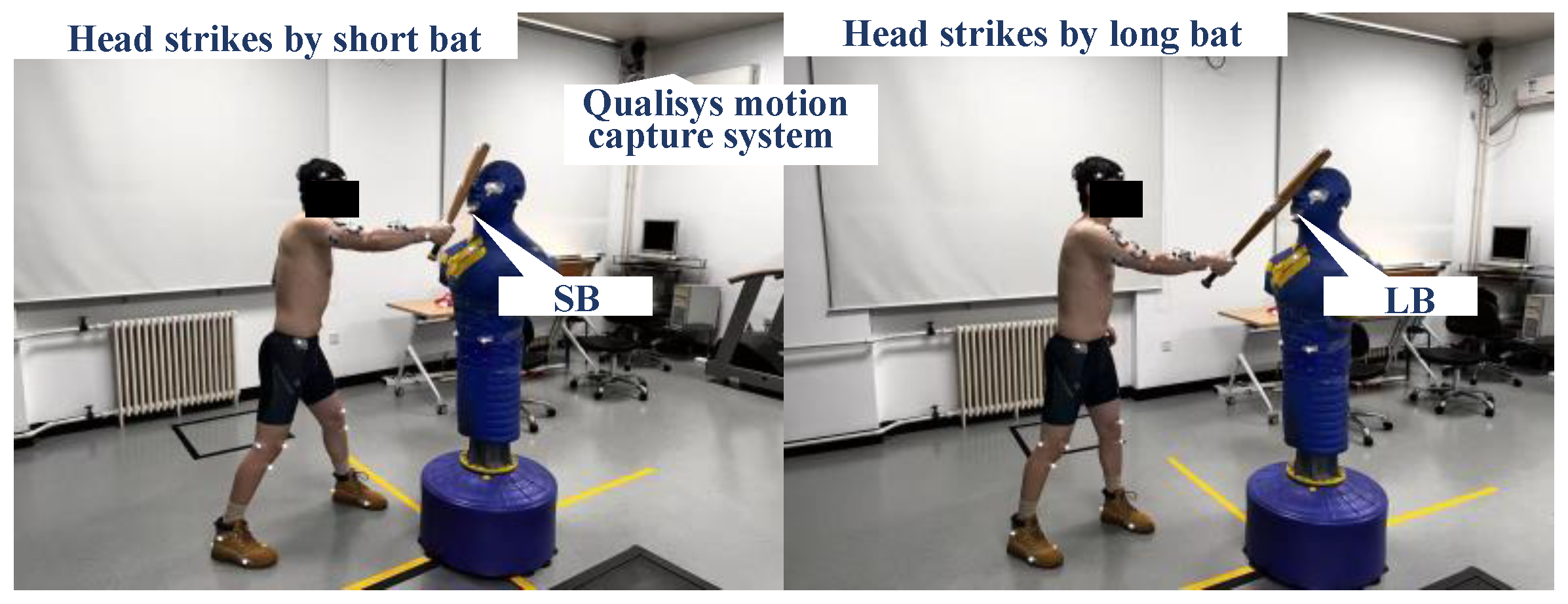
2.1. Striking Experiment
2.2. Finite Element Modeling
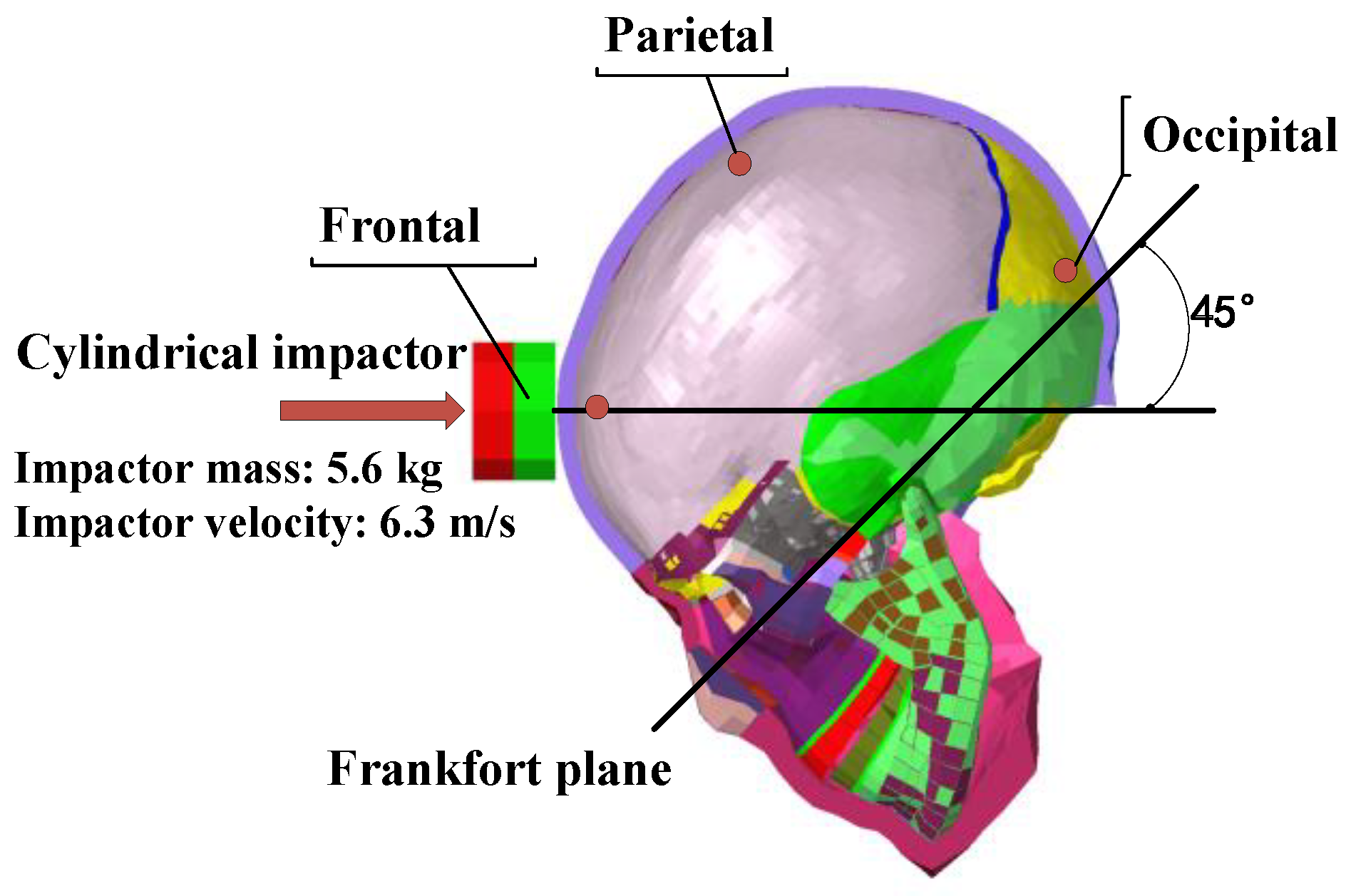
2.3. Model Validation
2.4. Striking Simulations
- (1)
- Peak intracranial pressure (ICP) (kPa)
- (2)
- Head3ms acceleration (Head3ms) (g)
3. Results
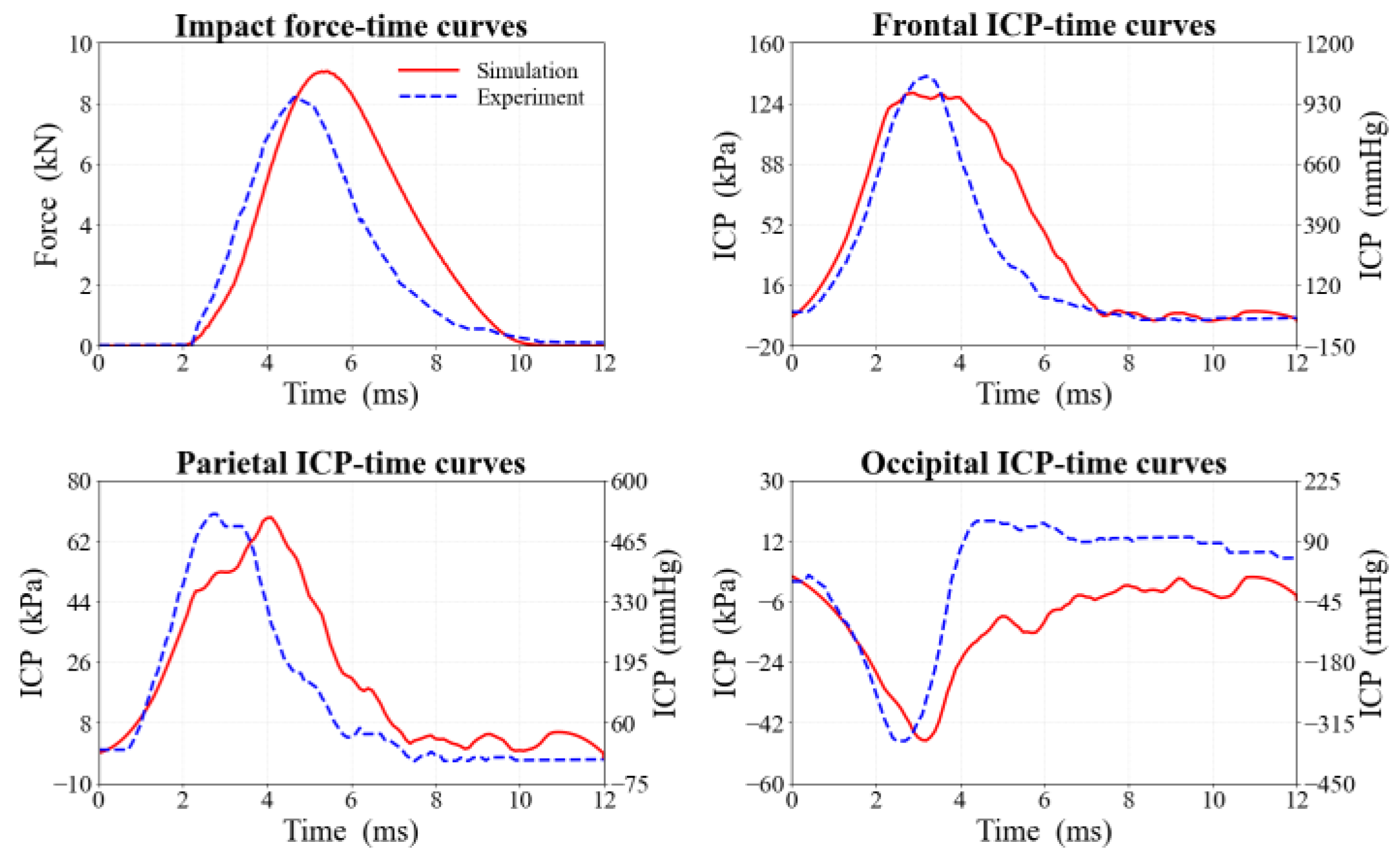
3.1. Model Validation
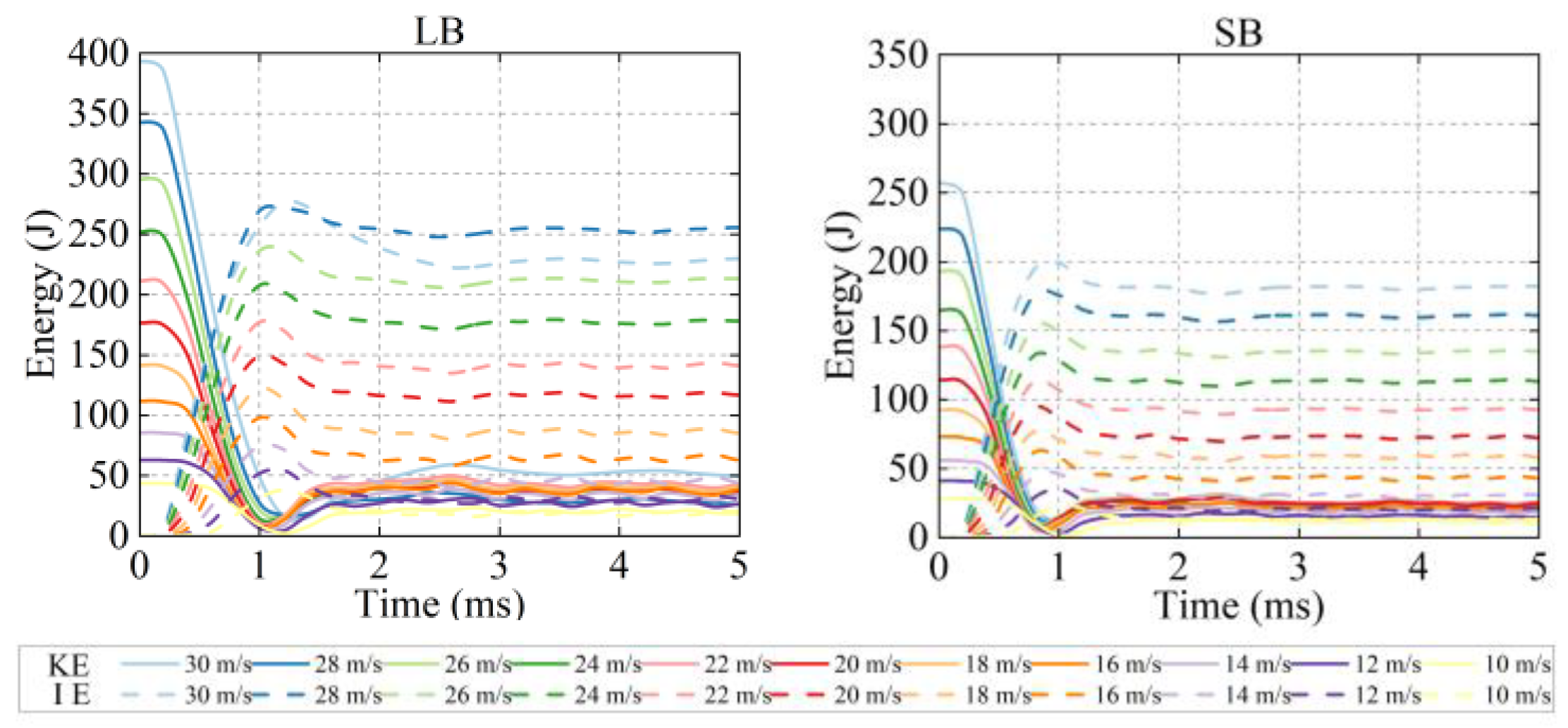
3.2. Energy
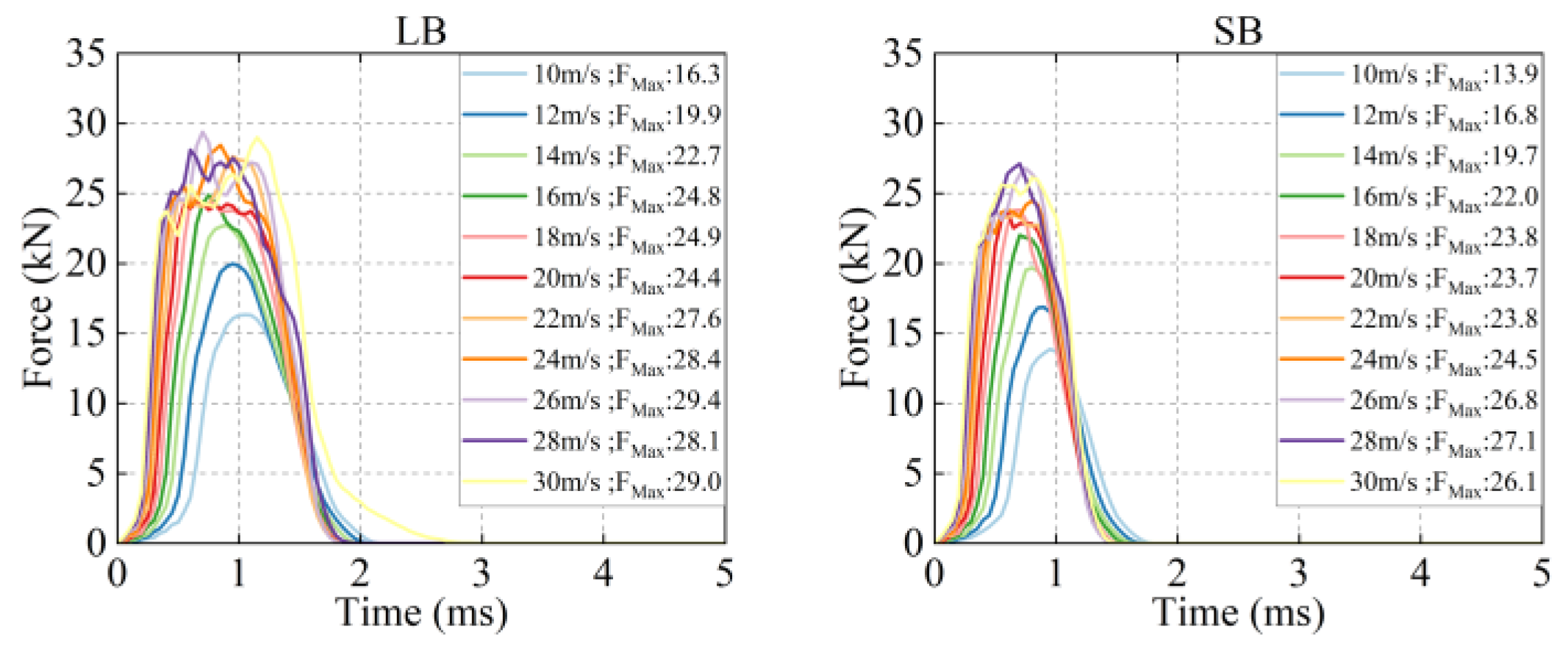
3.3. Force
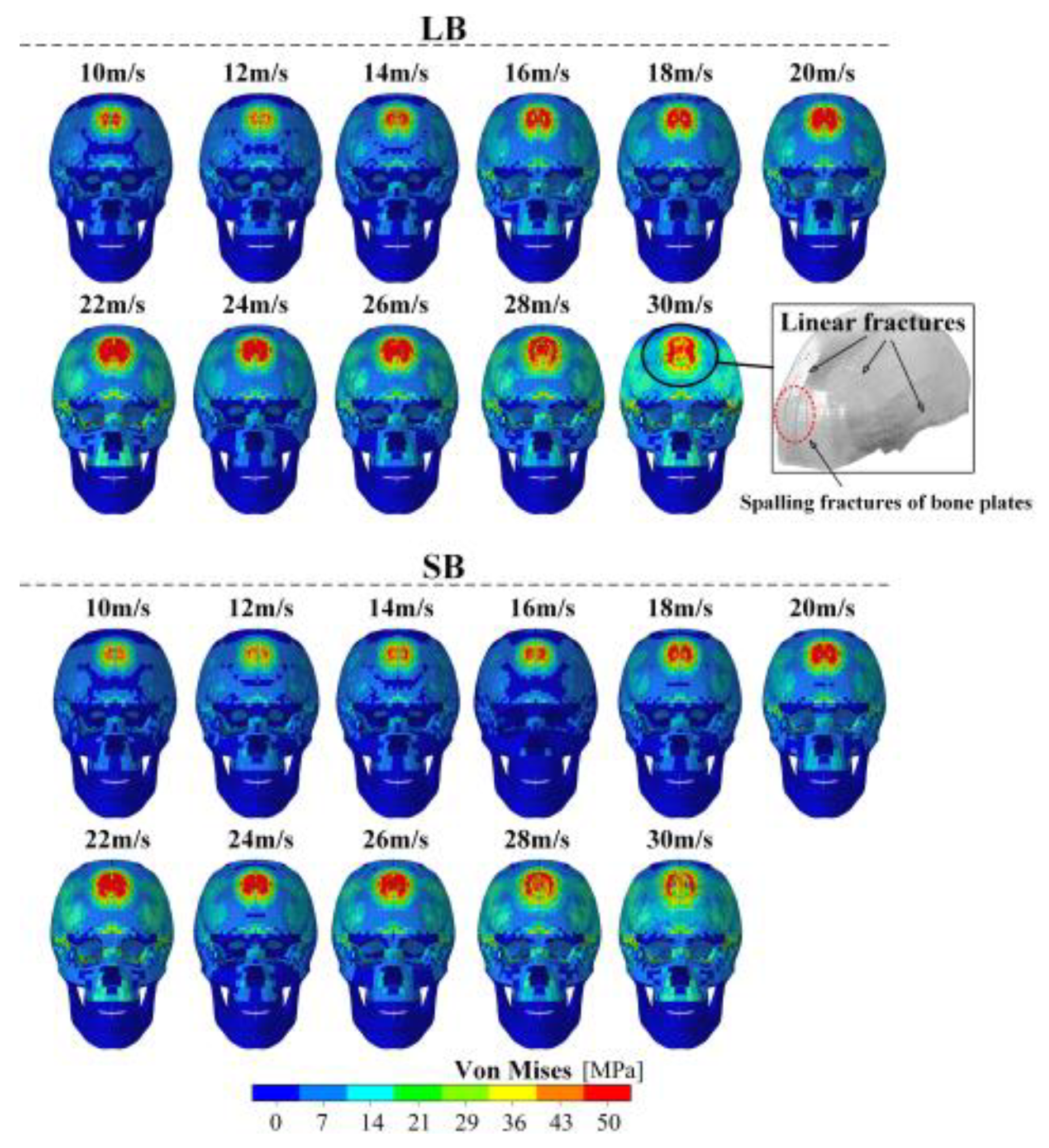
3.4. Stress Distributions
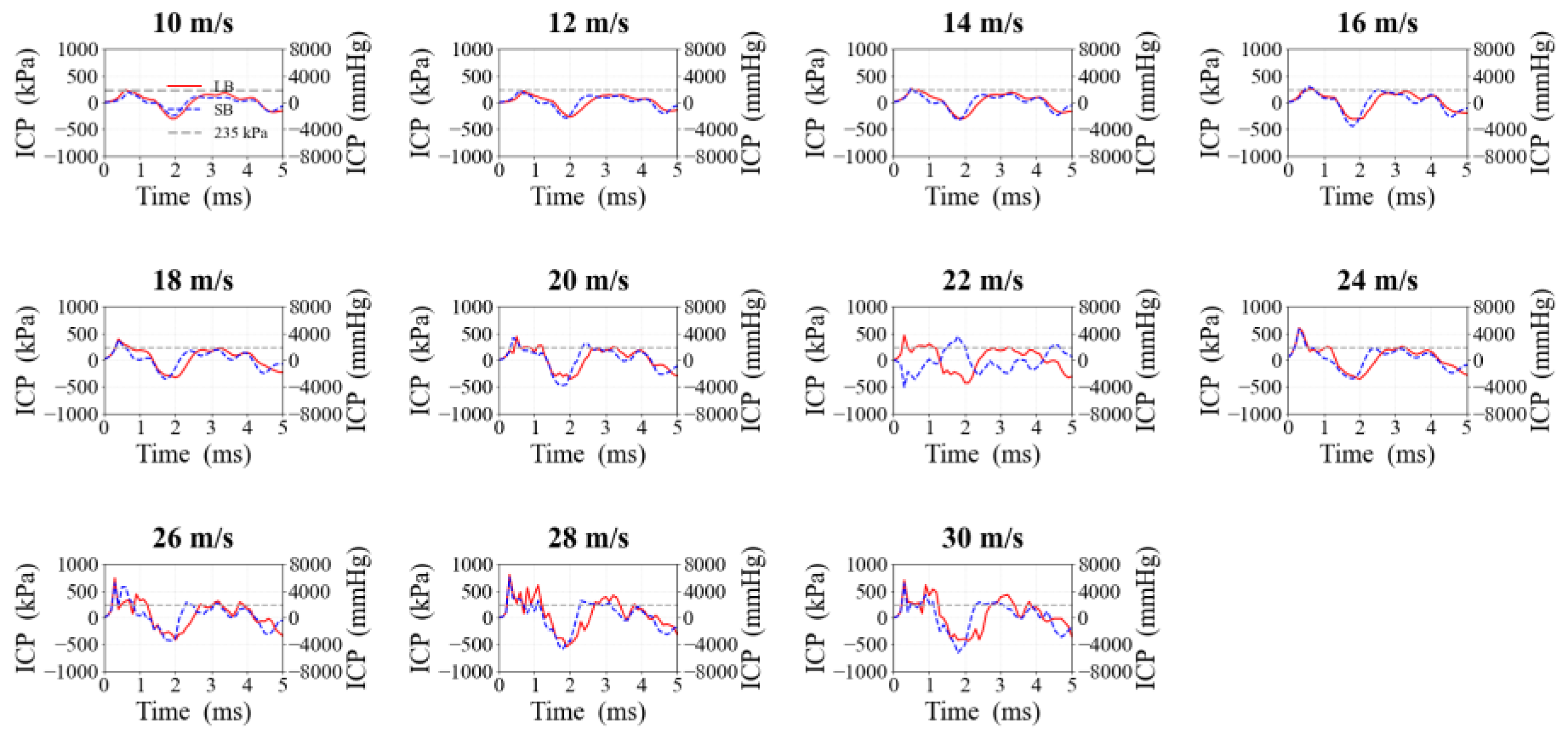
3.5. ICP
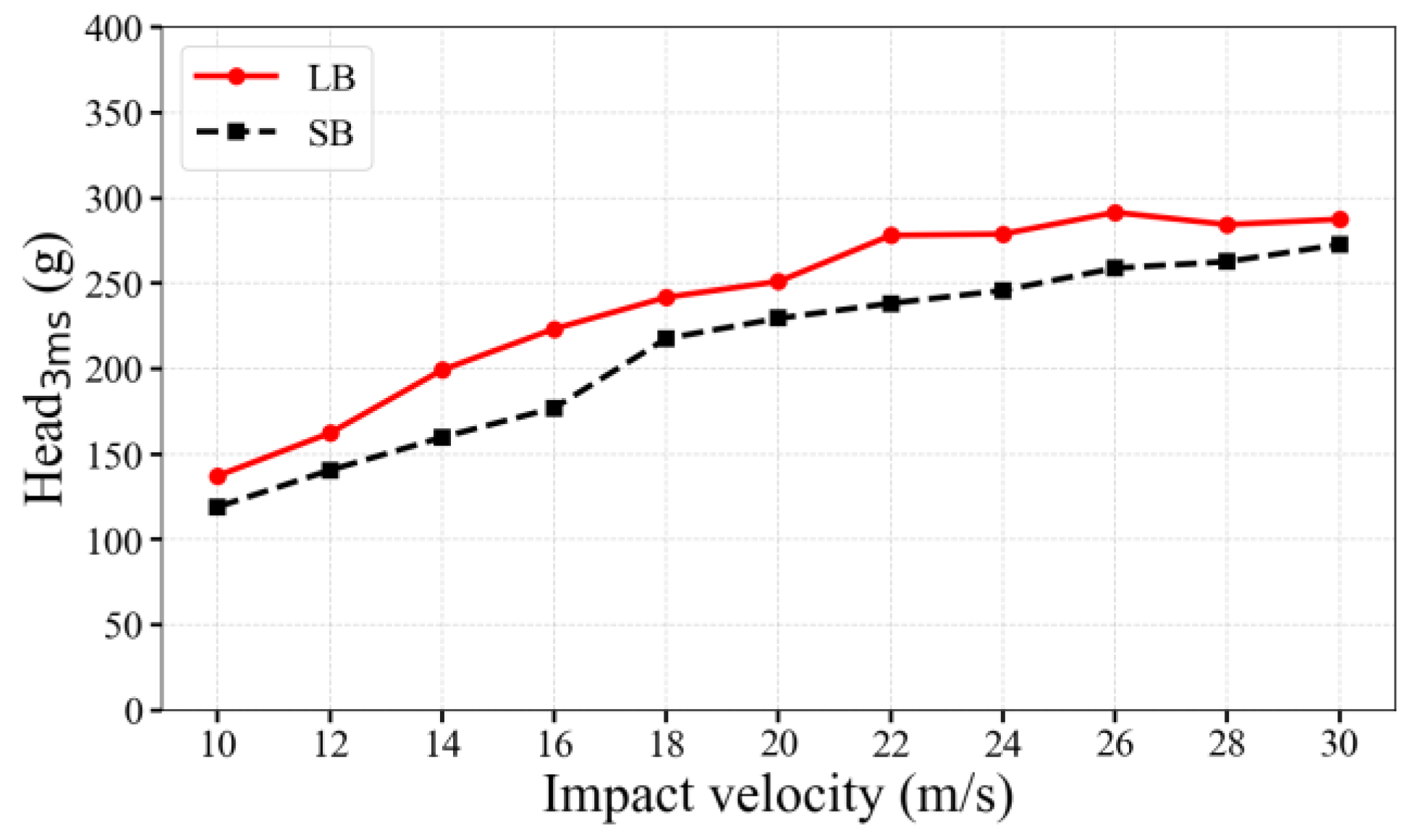
3.6. Head3ms
4. Discussion
5. Conclusions
Author Contributions
Funding
Institutional Review Board Statement
Informed Consent Statement
Data Availability Statement
Conflicts of Interest
References
- Langlois, J.A.; Rutland-Brown, W.; Wald, M.M. The epidemiology and impact of traumatic brain injury: A brief overview. J. Head Trauma Rehabil. 2006, 21, 375–378. [Google Scholar] [CrossRef] [Scilit] [PubMed]
- Centers for Disease Control and Prevention. Traumatic Brain Injury & Concussion-TBI Data. Available online: https://www.cdc.gov/traumatic-brain-injury/data-research/index.html (accessed on 1 November 2025).
- Saukko, P.; Knight, B. Knight’s Forensic Pathology, 4th ed.; CRC Press: Boca Raton, FL, USA, 2016. [Google Scholar]
- Shkrum, M.J.; Ramsay, D.A. Forensic Pathology of Trauma: Common Problems for the Pathologist; Humana Press Inc.: Totowa, NJ, USA, 2008. [Google Scholar]
- Ruan, J.; Prasad, P. The effects of skull thickness variations on human head dynamic impact responses. Stapp Car Crash J. 2001, 45, 395–414. [Google Scholar] [CrossRef] [Scilit]
- Unterharnscheidt, F.J. Translational Versus Rotational Acceleration: Animal Experiments with Measured Input; SAE Technical Paper; SAE: Warrendale, PA, USA, 1971. [Google Scholar]
- El Sayed, T.; Mota, A.; Fraternali, F.; Ortiz, M. Biomechanics of traumatic brain injury. Comput. Methods Appl. Mech. Eng. 2008, 197, 4692–4701. [Google Scholar] [CrossRef] [Scilit]
- Mychasiuk, R.; Hehar, H.; Candy, S.; Ma, I.; Esser, M.J. The direction of the acceleration and rotational forces associated with mild traumatic brain injury in rodents effect behavioural and molecular outcomes. J. Neurosci. Methods 2016, 257, 168–178. [Google Scholar] [CrossRef] [Scilit] [PubMed]
- Young, L.; Rule, G.T.; Bocchieri, R.T.; Walilko, T.J.; Burns, J.M.; Ling, G. When physics meets biology: Low and high-velocity penetration, blunt impact, and blast injuries to the brain. Front. Neurol. 2015, 6, 89. [Google Scholar] [CrossRef] [Scilit]
- Li, H.; Lu, R.J.; Wu, P.; Yuan, Y.; Yang, S.; Zhang, F.F.; Jiang, J.; Tan, Y. Numerical simulation and analysis of midfacial impacts and traumatic brain injuries. Ann. Transl. Med. 2021, 9, 459. [Google Scholar] [CrossRef] [Scilit]
- Nahum, A.M.; Smith, R.; Ward, C.C. Intracranial pressure dynamics during head impact. In Proceedings of the 21st Stapp Car Crash Conference, New Orleans, LA, USA, 19–21 October 1977. [Google Scholar]
- Ward, C.C.; Thompson, R.B. The development of a detailed finite element brain model. In Proceedings of the 19th Stapp Car Crash Conference, San Diego, CA, USA, 17–19 November 1975; Volume 6. [Google Scholar]
- Hardy, W.N.; Foster, C.D.; Mason, M.J.; Yang, K.H.; King, A.I.; Tashman, S. Investigation of Head Injury Mechanisms Using Neutral Density Technology and High-Speed Biplanar X-ray. Stapp Car Crash J. 2001, 45, 337–368. [Google Scholar] [CrossRef] [Scilit]
- Yoganandan, N.; Pintar, F.A.; Sances, A., Jr.; Walsh, P.R.; Ewing, C.L.; Thomas, D.J.; Snyder, R.G. Biomechanics of skull fracture. J. Neurotrauma 1995, 12, 659–668. [Google Scholar] [CrossRef] [Scilit]
- Smith, D.H.; Johnson, V.E.; Stewart, W. Chronic neuropathologies of single and repetitive TBI: Substrates of dementia? Nat. Rev. Neurol. 2013, 9, 211–221. [Google Scholar] [CrossRef] [Scilit]
- Li, K.; Wang, J.; Liu, S.; Su, S.; Feng, C.; Fan, X.; Yin, Z. Biomechanical behavior of brain injury caused by sticks using finite element model and Hybrid-III testing. Chin. J. Traumatol. 2015, 18, 65–73. [Google Scholar] [CrossRef] [Scilit]
- Kleiven, S. Predictors for traumatic brain injuries evaluated through accident reconstructions. Stapp Car Crash J. 2007, 51, 81–114. [Google Scholar] [CrossRef] [Scilit] [PubMed]
- Li, H.Y.; Liu, W.G.; Cui, S.H.; He, G.L.; Xia, P.; He, L.J.; Lü, W.L. Reconstruction and quantitative evaluation of blunt injury cases by finite element method. J. Forensic Med. 2022, 38, 452–458. (In Chinese) [Google Scholar] [CrossRef] [Scilit]
- Yao, S.G.; Kong, L.X.; Xu, P.; Xiao, X.L.; Peng, Y. Investigation on the dynamic characteristic of occupant during the frontal collision between high-speed train and obstacle. Accid. Anal. Prev. 2024, 199, 107495. [Google Scholar] [CrossRef] [Scilit] [PubMed]
- Wang, L.; Meloro, C.; Fagan, M.J.; Kissane, R.W.P.; Bates, K.T.; Askew, G.N.; Watson, P.J. Regional variation of the cortical and trabecular bone material properties in the rabbit skull. PLoS ONE 2024, 19, e0298621. [Google Scholar] [CrossRef] [Scilit]
- Tse, K.M.; Lim, S.P.; Tan, V.B.C.; Lee, H.P. A review of head injury and finite element head models. J. Eng. Technol. 2015, 1, 28. [Google Scholar]
- Yang, J.; Li, S.X.; Yuan, S.F.; Shi, Y.; Ni, B.; Yang, C.P.; Guo, W.X.; Wang, M.Z.; Hao, W.Y. Spatial relationships among offender, knife, and victim during slashing attacks: Implications for crime scene reconstruction. Int. J. Leg. Med. 2024, 138, 1821–1829. [Google Scholar] [CrossRef] [Scilit]
- Yang, J.; Li, S.X.; Huang, Y.H.; Yu, J.L.; Chen, Y.Y.; Zhang, H.; Sun, J.N.; Guo, L.Y.; Hao, W.Y. Effects of attacker gender and knife type on the biomechanical characteristics of slashing behavior. J. Med. Biomech. 2025, 40, 6. (In Chinese) [Google Scholar]
- Mao, Z.Y.; Li, Z.M.; Niu, W.X.; Cai, Z.H. The simulation analysis on biomechanical responses of human head under different loading conditions. J. Med. Biomech. 2016, 31, 532–539. (In Chinese) [Google Scholar]
- Madhukar, A.; Ostoja-Starzewski, M. Finite Element Methods in Human Head Impact Simulations: A Review. Ann. Biomed. Eng. 2019, 47, 1832–1854. [Google Scholar] [CrossRef] [Scilit]
- Xin, C.L.; Xue, Z.Q.; Tu, J.; Wang, X.Q.; Sun, F.T. Handbook of Commonly Used Material Parameters for Finite Element Analysis; China Machine Press: Beijing, China, 2020. (In Chinese) [Google Scholar]
- Gurdjian, E.S.; Lissner, H.R. Deformation of the skull in head injury; a study with the stresscoat technique. Surg. Gynecol. Obs. 1945, 81, 679–687. [Google Scholar]
- Lindgren, N.; Henningsen, M.J.; Jacobsen, C.; Villa, C.; Kleiven, S.; Li, X. Prediction of skull fractures in blunt force head traumas using finite element head models. Biomech. Model. Mechanobiol. 2024, 23, 207–225. [Google Scholar] [CrossRef] [Scilit]
- Rashid, B.; Destrade, M.; Gilchrist, M.D. Mechanical characterization of brain tissue in tension at dynamic strain rates. J. Mech. Behav. Biomed. Mater. 2014, 33, 43–54. [Google Scholar] [CrossRef] [Scilit]
- Sone, J.Y.; Kondziolka, D.; Huang, J.H.; Samadani, U. Helmet efficacy against concussion and traumatic brain injury: A review. J. Neurosurg. 2017, 126, 768–781. [Google Scholar] [CrossRef] [Scilit] [PubMed]
- Freitas, C.J.; Mathis, J.T.; Scott, N.; Bigger, R.P.; Mackiewicz, J. Dynamic response due to behind helmet blunt trauma measured with a human head surrogate. Int. J. Med. Sci. 2014, 11, 409–425. [Google Scholar] [CrossRef] [Scilit] [PubMed]
- Gao, Y.; Li, Z.D.; Zou, D.H.; Ma, H.X.; Chen, Y.J.; Zhong, L.W. Parameterized Analysis of Craniocerebral Injury Caused by Fist. J. Forensic Med. 2021, 37, 344–350. (In Chinese) [Google Scholar] [CrossRef] [Scilit]
- Post, A.; Kendall, M.; Koncan, D.; Cournoyer, J.; Blaine Hoshizaki, T.; Gilchrist, M.D.; Brien, S.; Cusimano, M.D.; Marshall, S. Characterization of persistent concussive syndrome using injury reconstruction and finite element modelling. J. Mech. Behav. Biomed. Mater. 2015, 41, 325–335. [Google Scholar] [CrossRef] [Scilit]
- Pavan, P.G.; Nasim, M.; Brasco, V.; Spadoni, S.; Paoloni, F.; d’Avella, D.; Khosroshahi, S.F.; de Cesare, N.; Gupta, K.; Galvanetto, U. Development of detailed finite element models for in silico analyses of brain impact dynamics. Comput. Methods Programs Biomed. 2022, 227, 107225. [Google Scholar] [CrossRef] [Scilit]
- Rail Safety and Standards Board. GM/RT2100: Railway Vehicle Structures and Passive Safety; Rail Safety and Standards Board: London, UK, 2012. [Google Scholar]
- Wang, L.; Cheung, J.T.; Pu, F.; Li, D.; Zhang, M.; Fan, Y. Why do woodpeckers resist head impact injury: A biomechanical investigation. PLoS ONE 2011, 6, e26490. [Google Scholar] [CrossRef] [Scilit]

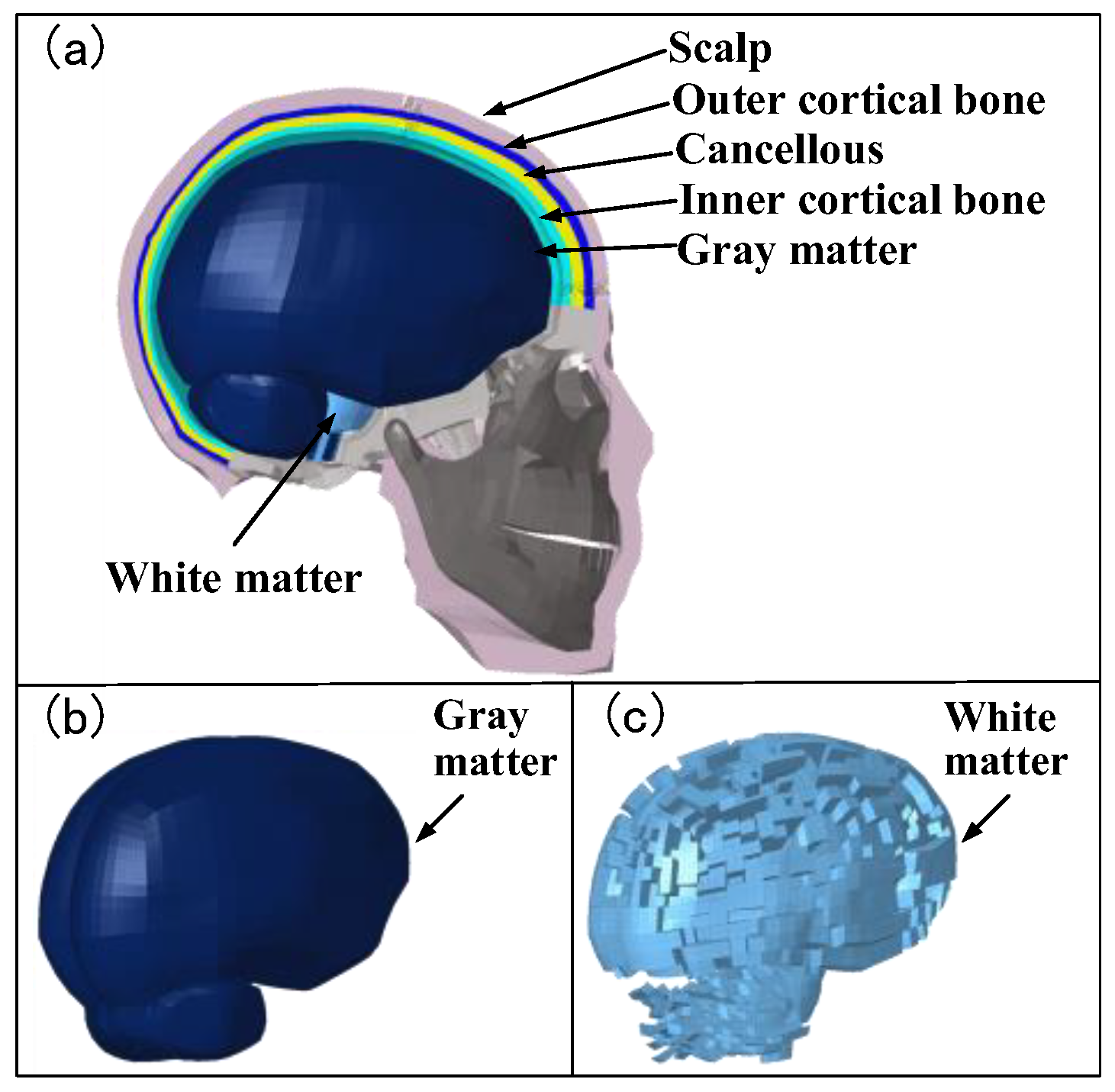



| Tissue | Thickness | Element Type | Number of Meshes |
|---|---|---|---|
| Outer cortical bone | 2.4 mm | Hexahedron | 12,654 |
| Cancellous | 3.2 mm | Hexahedron | 16,872 |
| Inner cortical bone | 2.4 mm | Hexahedron | 29,526 |
| Gray matter | -- | Hexahedron | 52,276 |
| White matter | -- | Hexahedron | 67,564 |
| Part | Material Model | Density (kg/m3) | Poisson’s Ratio | Parameters |
|---|---|---|---|---|
| Outer cortical bone | Elastic plastic | 2100 | 0.25 | E = 15,000 MPa, σγ = 98.98 MPa |
| Cancellous | Elastic plastic | 1000 | 0.22 | E = 13,700 MPa, σγ = 5 MPa |
| Inner cortical bone | Elastic plastic | 2100 | 0.25 | E = 13,700 MPa, σγ = 98.98 MPa |
| Cerebrospinal fluid | Viscoelastic | 1000 | -- | K = 2000 MPa, G0 = 0.0005 MPa; GI = 0.0001 MPa; λ = 80 |
| Gray matter | Viscoelastic | 1000 | -- | K = 2160 MPa, G0 = 0.006 MPa; GI = 0.012 MPa; λ = 80 |
| White matter | Viscoelastic | 1000 | -- | K = 2160 MPa, G0 = 0.006 MPa; GI = 0.012 MPa; λ = 80 |
| Wood bat | Elastic plastic | 600 | 0.3 | E = 10,000 MPa, σγ = 30 MPa |
Disclaimer/Publisher’s Note: The statements, opinions and data contained in all publications are solely those of the individual author(s) and contributor(s) and not of MDPI and/or the editor(s). MDPI and/or the editor(s) disclaim responsibility for any injury to people or property resulting from any ideas, methods, instructions or products referred to in the content. |
© 2025 by the authors. Licensee MDPI, Basel, Switzerland. This article is an open access article distributed under the terms and conditions of the Creative Commons Attribution (CC BY) license.
Share and Cite
Zhang, H.; Yang, J.; Guo, L.; Sun, J.; Li, S.; Hao, W. Biomechanical Investigation of Head Injuries Caused by Baseball Bat Strikes with Different Bat Sizes and Velocities: A Finite Element Simulation Study. Life 2026, 16, 9. https://doi.org/10.3390/life16010009
Zhang H, Yang J, Guo L, Sun J, Li S, Hao W. Biomechanical Investigation of Head Injuries Caused by Baseball Bat Strikes with Different Bat Sizes and Velocities: A Finite Element Simulation Study. Life. 2026; 16(1):9. https://doi.org/10.3390/life16010009
Chicago/Turabian StyleZhang, Han, Jin Yang, Luyi Guo, Jiani Sun, Shangxiao Li, and Weiya Hao. 2026. "Biomechanical Investigation of Head Injuries Caused by Baseball Bat Strikes with Different Bat Sizes and Velocities: A Finite Element Simulation Study" Life 16, no. 1: 9. https://doi.org/10.3390/life16010009
APA StyleZhang, H., Yang, J., Guo, L., Sun, J., Li, S., & Hao, W. (2026). Biomechanical Investigation of Head Injuries Caused by Baseball Bat Strikes with Different Bat Sizes and Velocities: A Finite Element Simulation Study. Life, 16(1), 9. https://doi.org/10.3390/life16010009