Cell Surface Markers of Mesenchymal Stem Cells: Current Knowledge and Advances in Characterization Technologies

 ,
,  ,
,  ,
, 

Abstract
1. Introduction
2. Phenotypic Identity of MSCs: Overview of Classical Markers
2.1. Canonical ISCT Markers: CD105, CD73, and CD90
2.1.1. CD105
2.1.2. CD73
2.1.3. CD90 (Thy-1)
2.2. CD44: A Bridge Between Phenotype and Function
2.3. Negative Markers Defining Non-Mesenchymal Phenotypes
3. Emerging and Promising Surface Markers for MSCs
3.1. CD271 (LNGFR, p75NTR)
3.2. CD146 (MCAM)
3.3. Stro-1
3.4. GD2 (Disialoganglioside)
3.5. SUSD2 (Sushi Domain-Containing 2)
3.6. CD49f (Integrin α6)
3.7. Emerging Markers from Omics-Based Analyses
3.8. Toward Combinatorial Marker Panels
4. Tissue-Specific MSC Markers
4.1. Bone Marrow-Derived MSCs (BM-MSCs)
4.2. Adipose Tissue-Derived MSCs (AT-MSCs)
4.3. Umbilical Cord-Derived MSCs (UC-MSCs)
4.4. Dental Pulp-Derived MSCs (DP-MSCs)
4.5. Placental and Amniotic MSCs
4.6. Synovial Membrane-Derived MSCs (SM-MSCs)
5. Markers Associated with Clonogenicity (CFU-F)
5.1. Definition and Biological Importance of CFU-F
5.2. Predictive Markers of Clonogenic MSC Subsets
5.2.1. CD146
5.2.2. CD271
5.2.3. SUSD2
5.2.4. PDGFRα
5.2.5. LEPR
5.2.6. CXCL12
5.2.7. CD51
6. Novel Methodologies for MSC Identification
7. Practical Applications of MSC Markers
7.1. Marker-Guided Selection and Purification of MSCs
7.2. Impact of Surface Phenotype on Immunomodulatory Properties
7.3. Influence of Markers on Differentiation Potential
7.4. Marker-Dependent Effects on Therapeutic Efficacy
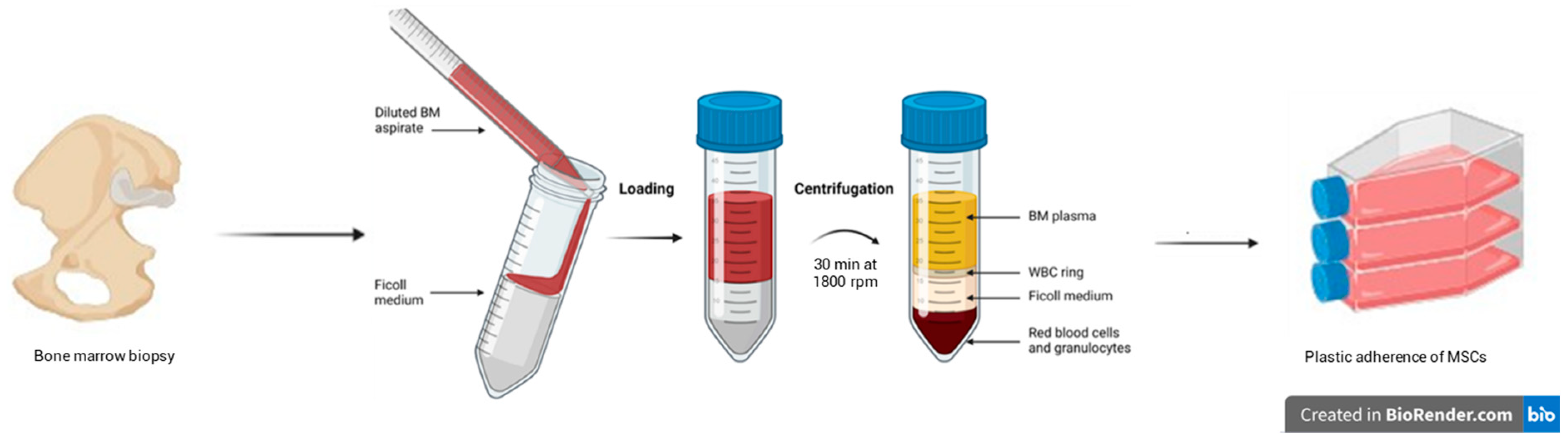
7.5. Pittenger Protocol
8. Limitations in the Use of Antibodies
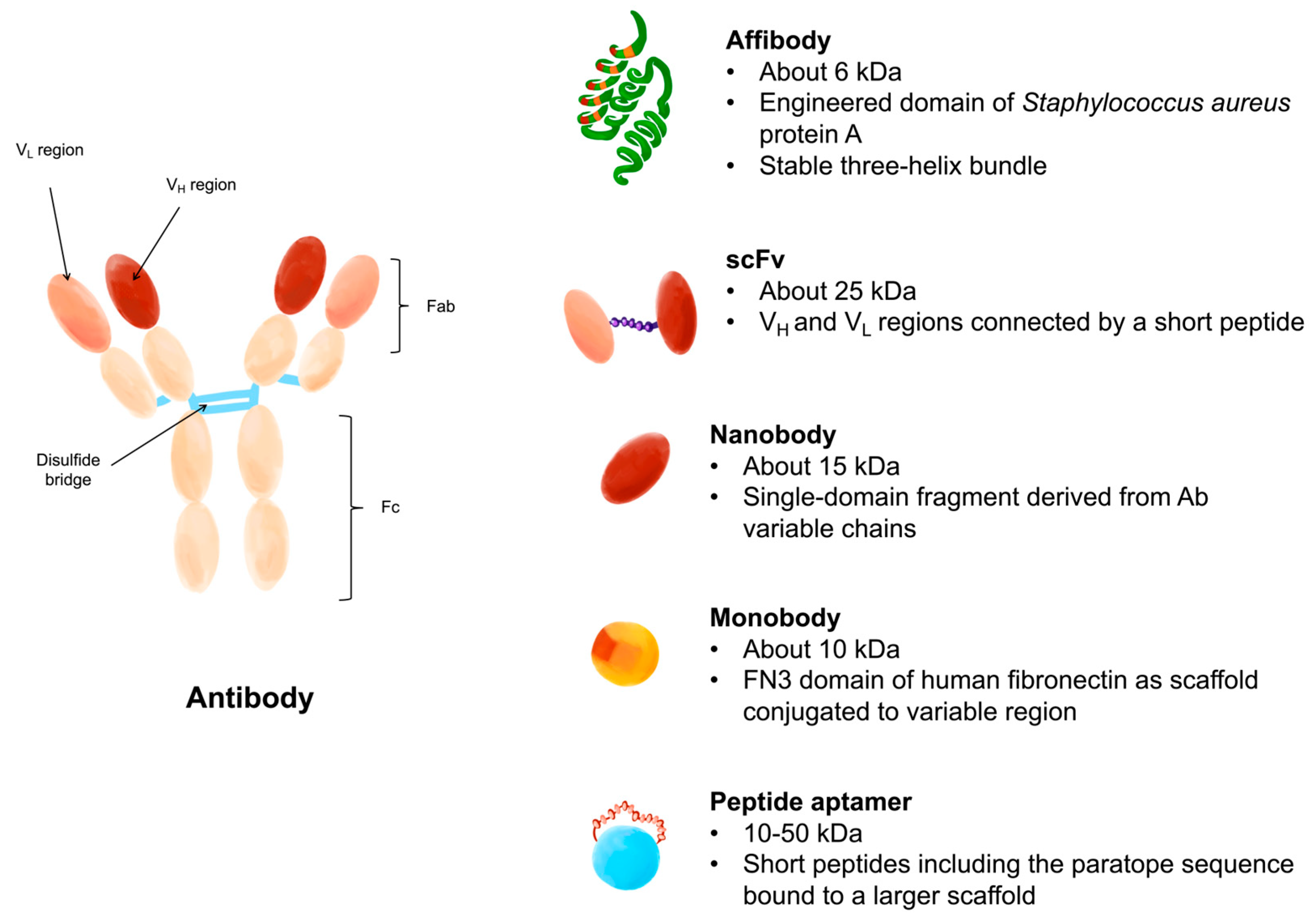
8.1. Affibodies
8.2. Single-Chain Variable Fragments
8.3. Nanobodies
8.4. Monobodies
8.5. Peptide Aptamers
9. Discussion
Author Contributions
Funding
Institutional Review Board Statement
Informed Consent Statement
Data Availability Statement
Conflicts of Interest
Abbreviations
| BM-MSCs | bone marrow-derived mesenchymal stem cells |
| MSCs | mesenchymal stem cells |
| AT-MSCs | adipose tissue mesenchymal stem cells |
| UC-MSCs | umbilical cord mesenchymal stem cells |
| DP-MSCs | dental pulp mesenchymal stem cells |
| GMP | good manufacturing practice |
| ISCT | international society for cellular therapy |
| ECD | extracellular domain |
| GPI | glycosyl-phosphatidylinositol |
| HBD | hyaluronan-binding domain |
| HA | hyaluronic acid |
| LNGFR | low-affinity nerve growth factor receptor |
| CFU-F | colony-forming units-fibroblasts |
| MCAM | melanoma cell adhesion molecule |
| CCP | complement control protein |
| HSC | hematopoietic stem cell |
| SM-MSCs | synovial membrane-derived MSCs |
| CXCL12 | CXC motif chemokine ligand 12 |
| scRNA-seq | single-cell RNA sequencing |
| FACS | fluorescence-activated cell sorting |
| MACS | magnetic-activated cell sorting |
| IDO | indoleamine 2,3-dioxygenase |
| GvHD | graft-versus-host disease |
| HER2 | human epidermal growth factor receptor 2 |
| scFv | single-chain fragments |
| sdAb | single-domain antibodies |
| PA | peptide aptamers |
References
- Mahla, R.S. Stem cells applications in regenerative medicine and disease therapeutics. Int. J. Cell Biol. 2016, 2016, 6940283. [Google Scholar] [CrossRef] [Scilit]
- Mason, C.; Dunnill, P. A brief definition of regenerative medicine. Regen. Med. 2008, 3, 1–5. [Google Scholar] [CrossRef] [Scilit] [PubMed]
- Roberts, T.T.; Rosenbaum, A.J. Bone grafts, bone substitutes and orthobiologics: The bridge between basic science and clinical advancements in fracture healing. Organogenesis 2012, 8, 114–124. [Google Scholar] [CrossRef] [Scilit]
- Jarrige, M.; Frank, E.; Herardot, E.; Martineau, S.; Darle, A.; Benabides, M.; Domingues, S.; Chose, O.; Habeler, W.; Lorant, J.; et al. The future of regenerative medicine: Cell therapy using pluripotent stem cells and acellular therapies based on extracellular vesicles. Cells 2021, 10, 240. [Google Scholar] [CrossRef] [Scilit]
- Kolios, G.; Moodley, Y. Introduction to stem cells and regenerative medicine. Respiration 2012, 85, 3–10. [Google Scholar] [CrossRef] [Scilit]
- Liu, S.P.; Fu, R.H.; Huang, S.J.; Huang, Y.C.; Chen, S.Y.; Chang, C.H.; Liu, C.H.; Tsai, C.H.; Shyu, W.C.; Lin, S.Z. Stem Cell Applications in Regenerative Medicine for Neurological Disorders. Cell Transplant 2013, 22, 631–637. [Google Scholar] [CrossRef] [Scilit] [PubMed]
- Maloney, J.; Strand, N.; Wie, C.; Pew, S.; Dawodu, A.; Dunn, T.; Johnson, B.; Eells, A.; Viswanath, O.; Freeman, J. Current Review of Regenerative Medicine Therapies for Spine-Related Pain. Curr. Pain Headache Rep. 2023, 28, 949–955. [Google Scholar] [CrossRef] [Scilit] [PubMed]
- Kishino, Y.; Tohyama, S.; Morita, Y.; Soma, Y.; Tani, H.; Okada, M.; Kanazawa, H.; Fukuda, K. Cardiac Regenerative Therapy Using Human Pluripotent Stem Cells for Heart Failure: A State-of-the-Art Review. J. Card. Fail. 2023, 29, 503–513. [Google Scholar] [CrossRef] [Scilit]
- Yan, D.; Song, Y.; Zhang, B.; Cao, G.; Zhou, H.; Li, H.; Sun, H.; Deng, M.; Qiu, Y.; Yi, W. Progress and application of adipose-derived stem cells in the treatment of diabetes and its complications. Stem Cell Res. Ther. 2024, 15, 3. [Google Scholar] [CrossRef] [Scilit]
- Zaripova, L.N.; Midgley, A.; Christmas, S.E.; Beresford, M.W.; Pain, C.; Baildam, E.M.; Oldershaw, R.A. Mesenchymal Stem Cells in the Pathogenesis and Therapy of Autoimmune and Autoinflammatory Diseases. Int. J. Mol. Sci. 2023, 24, 16040. [Google Scholar] [CrossRef] [Scilit]
- Herberts, C.A.; Kwa, M.S.G.; Hermsen, H.P.H. Risk factors in the development of stem cell therapy. J. Transl. Med. 2011, 9, 29. [Google Scholar] [CrossRef] [Scilit]
- Han, X.; Liao, R.; Li, X.; Zhang, C.; Huo, S.; Qin, L.; Xiong, Y.; He, T.; Xiao, G.; Zhang, T. Mesenchymal stem cells in treating human diseases: Molecular mechanisms and clinical studies. Signal Transduct. Target. Ther. 2025, 10, 262. [Google Scholar] [CrossRef] [Scilit]
- Wang, Z.; Ren, L.; Li, Z.; Qiu, Q.; Wang, H.; Huang, X.; Ma, D. Impact of Different Cell Types on the Osteogenic Differentiation Process of Mesenchymal Stem Cells. Stem Cells Int. 2025, 2025, 5551222. [Google Scholar] [CrossRef] [Scilit]
- Manuguerra-GagnÉ, R.; Boulos, P.R.; Ammar, A.; Leblond, F.A.; Krosl, G.; Pichette, V.; Lesk, M.R.; Roy, D.-C. Transplantation of mesenchymal stem cells promotes tissue regeneration in a glaucoma model through laser-induced paracrine factor secretion and progenitor cell recruitment. Stem Cells 2013, 31, 1136–1148. [Google Scholar] [CrossRef] [Scilit] [PubMed]
- Nöth, U.; Steinert, A.F.; Tuan, R.S. Technology insight: Adult mesenchymal stem cells for osteoarthritis therapy. Nat. Clin. Pract. Rheumatol. 2008, 4, 371–380. [Google Scholar] [CrossRef] [Scilit]
- Kopen, G.C.; Prockop, D.J.; Phinney, D.G. Marrow stromal cells migrate throughout forebrain and cerebellum, and they differentiate into astrocytes after injection into neonatal mouse brains. Proc. Natl. Acad. Sci. USA 1999, 96, 10711–10716. [Google Scholar] [CrossRef] [Scilit]
- Samsonraj, R.M.; Raghunath, M.; Nurcombe, V.; Hui, J.H.; van Wijnen, A.J.; Cool, S.M. Concise review: Multifaceted characterization of human mesenchymal stem cells for use in regenerative medicine. Stem Cells Transl. Med. 2017, 6, 2173–2185. [Google Scholar] [CrossRef] [Scilit]
- Florea, V.; Rieger, A.C.; DiFede, D.L.; El-Khorazaty, J.; Natsumeda, M.; Banerjee, M.N.; Tompkins, B.A.; Khan, A.; Schulman, I.H.; Landin, A.M. Dose comparison study of allogeneic mesenchymal stem cells in patients with ischemic cardiomyopathy (the TRIDENT study). Circ. Res. 2017, 121, 1279–1290. [Google Scholar] [CrossRef] [Scilit]
- Hare, J.M.; Fishman, J.E.; Gerstenblith, G.; Velazquez, D.L.D.; Zambrano, J.P.; Suncion, V.Y.; Tracy, M.; Ghersin, E.; Johnston, P.V.; Brinker, J.A. Comparison of allogeneic vs autologous bone marrow–derived mesenchymal stem cells delivered by transendocardial injection in patients with ischemic cardiomyopathy: The POSEIDON randomized trial. JAMA 2012, 308, 2369–2379. [Google Scholar] [CrossRef] [Scilit] [PubMed]
- Rodríguez-Fuentes, D.E.; Fernández-Garza, L.E.; Samia-Meza, J.A.; Barrera-Barrera, S.A.; Caplan, A.I.; Barrera-Saldaña, H.A. Mesenchymal stem cells current clinical applications: A systematic review. Arch. Med. Res. 2021, 52, 93–101. [Google Scholar] [CrossRef] [Scilit] [PubMed]
- Orozco, L.; Munar, A.; Soler, R.; Alberca, M.; Soler, F.; Huguet, M.; Sentís, J.; Sánchez, A.; García-Sancho, J. Treatment of knee osteoarthritis with autologous mesenchymal stem cells: A pilot study. Transplantation 2013, 95, 1535–1541. [Google Scholar] [CrossRef] [Scilit] [PubMed]
- Vega, A.; Martín-Ferrero, M.A.; Del Canto, F.; Alberca, M.; García, V.; Munar, A.; Orozco, L.; Soler, R.; Fuertes, J.J.; Huguet, M. Treatment of knee osteoarthritis with allogeneic bone marrow mesenchymal stem cells: A randomized controlled trial. Transplantation 2015, 99, 1681–1690. [Google Scholar] [CrossRef] [Scilit]
- Santoro, A.; Voto, A.; Fortino, L.; Guida, R.; Laudisio, C.; Cillo, M.; D’Ursi, A.M. Bone defect treatment in regenerative medicine: Exploring natural and synthetic bone substitutes. Int. J. Mol. Sci. 2025, 26, 3085. [Google Scholar] [CrossRef] [Scilit] [PubMed]
- Lan, T.; Luo, M.; Wei, X. Mesenchymal stem/stromal cells in cancer therapy. J. Hematol. Oncol. 2021, 14, 195. [Google Scholar] [CrossRef] [Scilit] [PubMed]
- Saadh, M.J.; Alhuthali, H.M.; Gonzales Aníbal, O.; Asenjo-Alarcón, J.A.; Younus, D.G.; Alhili, A.; Adhab, Z.H.; Alsalmi, O.; Gharib, A.F.; Pecho, R.D.C. Mesenchymal stem cells and their extracellular vesicles in urological cancers: Prostate, bladder, and kidney. Cell Biol. Int. 2024, 48, 3–19. [Google Scholar] [CrossRef] [Scilit]
- Song, N.; Scholtemeijer, M.; Shah, K. Mesenchymal Stem Cell Immunomodulation: Mechanisms and Therapeutic Potential. Trends Pharmacol. Sci. 2020, 41, 653–664. [Google Scholar] [CrossRef] [Scilit]
- Planat-Benard, V.; Varin, A.; Casteilla, L. MSCs and Inflammatory Cells Crosstalk in Regenerative Medicine: Concerted Actions for Optimized Resolution Driven by Energy Metabolism. Front. Immunol. 2021, 12, 626755. [Google Scholar] [CrossRef] [Scilit]
- Rivera-Cruz, C.M.; Shearer, J.J.; Figueiredo Neto, M.; Figueiredo, M.L. The Immunomodulatory Effects of Mesenchymal Stem Cell Polarization within the Tumor Microenvironment Niche. Stem Cells Int. 2017, 2017, 4015039. [Google Scholar] [CrossRef] [Scilit]
- Le Blanc, K.; Tammik, C.; Rosendahl, K.; Zetterberg, E.; Ringden, O. HLA expression and immunologic properties of differentiated and undifferentiated mesenchymal stem cells. Exp. Hematol. 2003, 31, 890–896. [Google Scholar] [CrossRef] [Scilit]
- Wang, T.; Zhang, J.; Liao, J.; Zhang, F.; Zhou, G. Donor genetic backgrounds contribute to the functional heterogeneity of stem cells and clinical outcomes. Stem Cells Transl. Med. 2020, 9, 1495–1499. [Google Scholar] [CrossRef] [Scilit]
- Song, L.I.N.; Tuan, R.S. Transdifferentiation potential of human mesenchymal stem cells derived from bone marrow. FASEB J. 2004, 18, 980–982. [Google Scholar] [CrossRef] [Scilit]
- Yang, J.-D.; Wang, J.-C.; Feng, X.-M.; Li, Y.-N.; Xiao, H.-X. The isolation and cultivation of bone marrow stem cells and evaluation of differences for neural-like cells differentiation under the induction with neurotrophic factors. Cytotechnology 2014, 66, 1007–1019. [Google Scholar] [CrossRef] [Scilit]
- Phinney, D.G. Functional heterogeneity of mesenchymal stem cells: Implications for cell therapy. J. Cell. Biochem. 2012, 113, 2806–2812. [Google Scholar] [CrossRef] [Scilit]
- Dominici, M.; Le Blanc, K.; Mueller, I.; Slaper-Cortenbach, I.; Marini, F.C.; Krause, D.S.; Deans, R.J.; Keating, A.; Prockop, D.J.; Horwitz, E.M. Minimal criteria for defining multipotent mesenchymal stromal cells. The International Society for Cellular Therapy position statement. Cytotherapy 2006, 8, 315–317. [Google Scholar] [CrossRef] [Scilit]
- Baer, P.C. Adipose-derived mesenchymal stromal/stem cells: An update on their phenotype in vivo and in vitro. World J. Stem Cells 2014, 6, 256. [Google Scholar] [CrossRef] [Scilit] [PubMed]
- Lupatov, A.Y.; Vdovin, A.S.; Vakhrushev, I.V.; Poltavtseva, R.A.; Yarygin, K.N. Comparative analysis of the expression of surface markers on fibroblasts and fibroblast-like cells isolated from different human tissues. Bull. Exp. Biol. Med. 2015, 158, 537–543. [Google Scholar] [CrossRef] [Scilit] [PubMed]
- Pham, H.; Tonai, R.; Wu, M.; Birtolo, C.; Chen, M. CD73, CD90, CD105 and Cadherin-11 RT-PCR screening for mesenchymal stem cells from cryopreserved human cord tissue. Int. J. Stem Cells 2018, 11, 26–38. [Google Scholar] [CrossRef] [Scilit] [PubMed]
- Dallas, N.A.; Samuel, S.; Xia, L.; Fan, F.; Gray, M.J.; Lim, S.J.; Ellis, L.M. Endoglin (CD105): A marker of tumor vasculature and potential target for therapy. Clin. Cancer Res. 2008, 14, 1931–1937. [Google Scholar] [CrossRef] [Scilit]
- Chen, L.; Qi, T.; Zhang, B.; Wang, X.; Zheng, M. NT5E (CD73) as a prognostic biomarker and therapeutic target associated with immune infiltration in lung adenocarcinoma. Sci. Rep. 2025, 15, 4340. [Google Scholar] [CrossRef] [Scilit]
- Alcedo, K.P. CD73 Is a Critical Regulator of Hepatocytes in Homeostasis and Disease. Doctoral Dissertation, The University of North Carolina at Chapel Hill, Chapel Hill, NC, USA, 2021. [Google Scholar]
- Valdivia, A.; Avalos, A.M.; Leyton, L. Thy-1 (CD90)-regulated cell adhesion and migration of mesenchymal cells: Insights into adhesomes, mechanical forces, and signaling pathways. Front. Cell Dev. Biol. 2023, 11, 1221306. [Google Scholar] [CrossRef] [Scilit]
- Primeaux, M.; Gowrikumar, S.; Dhawan, P. Role of CD44 isoforms in epithelial-mesenchymal plasticity and metastasis. Clin. Exp. Metastasis 2022, 39, 391–406. [Google Scholar] [CrossRef] [Scilit]
- Chen, M.-Y.; Lie, P.-C.; Li, Z.-L.; Wei, X. Endothelial differentiation of Wharton’s jelly–derived mesenchymal stem cells in comparison with bone marrow–derived mesenchymal stem cells. Exp. Hematol. 2009, 37, 629–640. [Google Scholar] [CrossRef] [Scilit]
- Nassiri, F.; Cusimano, M.D.; Scheithauer, B.W.; Rotondo, F.; Fazio, A.; Yousef, G.M.; Syro, L.V.; Kovacs, K.; Lloyd, R.V. Endoglin (CD105): A review of its role in angiogenesis and tumor diagnosis, progression and therapy. Anticancer Res. 2011, 31, 2283–2290. [Google Scholar]
- Bellón, T.; Corbi, A.; Lastres, P.; Calés, C.; Cebrián, M.; Vera, S.; Cheifetz, S.; Massague, J.; Letarte, M.; Bernabéu, C. Identification and expression of two forms of the human transforming growth factor-β-binding protein endoglin with distinct cytoplasmic regions. Eur. J. Immunol. 1993, 23, 2340–2345. [Google Scholar] [CrossRef] [Scilit]
- Gougos, A.; Letarte, M. Primary structure of endoglin, an RGD-containing glycoprotein of human endothelial cells. J. Biol. Chem. 1990, 265, 8361–8364. [Google Scholar] [CrossRef] [Scilit]
- Alt, A.; Miguel-Romero, L.; Donderis, J.; Aristorena, M.; Blanco, F.J.; Round, A.; Rubio, V.; Bernabeu, C.; Marina, A. Structural and functional insights into endoglin ligand recognition and binding. PLoS ONE 2012, 7, e29948. [Google Scholar] [CrossRef] [Scilit] [PubMed]
- González Muñoz, T.; Amaral, A.T.; Puerto-Camacho, P.; Peinado, H.; de Álava, E. Endoglin in the spotlight to treat cancer. Int. J. Mol. Sci. 2021, 22, 3186. [Google Scholar] [CrossRef] [Scilit] [PubMed]
- Pham, L.H.; Vu, N.B.; Van Pham, P. The subpopulation of CD105 negative mesenchymal stem cells show strong immunomodulation capacity compared to CD105 positive mesenchymal stem cells. Biomed. Res. Ther. 2019, 6, 3131–3140. [Google Scholar] [CrossRef] [Scilit]
- Aslan, H.; Zilberman, Y.; Kandel, L.; Liebergall, M.; Oskouian, R.J.; Gazit, D.; Gazit, Z. Osteogenic differentiation of noncultured immunoisolated bone marrow-derived CD105+ cells. Stem Cells 2006, 24, 1728–1737. [Google Scholar] [CrossRef] [Scilit]
- Duff, S.E.; Li, C.; Garland, J.M.; Kumar, S. CD105 is important for angiogenesis: Evidence and potential applications. FASEB J. 2003, 17, 984–992. [Google Scholar] [CrossRef] [Scilit]
- Varma, M.J.O.; Breuls, R.G.M.; Schouten, T.E.; Jurgens, W.J.F.M.; Bontkes, H.J.; Schuurhuis, G.J.; Ham, S.M.V.; Milligen, F.J.V. Phenotypical and functional characterization of freshly isolated adipose tissue-derived stem cells. Stem Cells Dev. 2007, 16, 91–104. [Google Scholar] [CrossRef] [Scilit]
- Yoshimura, K.; Shigeura, T.; Matsumoto, D.; Sato, T.; Takaki, Y.; Aiba-Kojima, E.; Sato, K.; Inoue, K.; Nagase, T.; Koshima, I. Characterization of freshly isolated and cultured cells derived from the fatty and fluid portions of liposuction aspirates. J. Cell. Physiol. 2006, 208, 64–76. [Google Scholar] [CrossRef] [Scilit] [PubMed]
- Minor, M.; Alcedo, K.P.; Battaglia, R.A.; Snider, N.T. Cell type-and tissue-specific functions of ecto-5′-nucleotidase (CD73). Am. J. Physiol.-Cell Physiol. 2019, 317, C1079–C1092. [Google Scholar] [CrossRef] [Scilit]
- Gao, H.; Zhang, T.; Li, K.; Li, X. CD73: A new immune checkpoint for leukemia treatment. Front. Immunol. 2025, 16, 1486868. [Google Scholar] [CrossRef] [Scilit]
- Airas, L.; Niemelä, J.; Salmi, M.; Puurunen, T.; Smith, D.J.; Jalkanen, S. Differential regulation and function of CD73, a glycosyl-phosphatidylinositol–linked 70-kD adhesion molecule, on lymphocytes and endothelial cells. J. Cell Biol. 1997, 136, 421–431. [Google Scholar] [CrossRef] [Scilit]
- Hashikawa, T.; Takedachi, M.; Terakura, M.; Saho, T.; Yamada, S.; Thompson, L.F.; Shimabukuro, Y.; Murakami, S. Involvement of CD73 (ecto-5′-nucleotidase) in adenosine generation by human gingival fibroblasts. J. Dent. Res. 2003, 82, 888–892. [Google Scholar] [CrossRef] [Scilit] [PubMed]
- Strohmeier, G.R.; Lencer, W.I.; Patapoff, T.W.; Thompson, L.F.; Carlson, S.L.; Moe, S.J.; Carnes, D.K.; Mrsny, R.J.; Madara, J.L. Surface expression, polarization, and functional significance of CD73 in human intestinal epithelia. J. Clin. Investig. 1997, 99, 2588–2601. [Google Scholar] [CrossRef] [Scilit]
- Tamajusuku, A.S.K.; Carrillo-Sepulveda, M.A.; Braganhol, E.; Wink, M.R.; Sarkis, J.J.F.; Barreto-Chaves, M.L.M.; Battastini, A.M.O. Activity and expression of ecto-5′-nucleotidase/CD73 are increased by thyroid hormones in vascular smooth muscle cells. Mol. Cell. Biochem. 2006, 289, 65–72. [Google Scholar] [CrossRef] [Scilit] [PubMed]
- Barry, F.; Boynton, R.; Murphy, M.; Zaia, J. The SH-3 and SH-4 antibodies recognize distinct epitopes on CD73 from human mesenchymal stem cells. Biochem. Biophys. Res. Commun. 2001, 289, 519–524. [Google Scholar] [CrossRef] [Scilit]
- de Oliveira Bravo, M.; Carvalho, J.L.; Saldanha-Araujo, F. Adenosine production: A common path for mesenchymal stem-cell and regulatory T-cell-mediated immunosuppression. Purinergic Signal. 2016, 12, 595–609. [Google Scholar] [CrossRef] [Scilit]
- Chandanala, S.; Mohan, G.; Manukonda, D.-L.; Kumar, A.; Prasanna, J. A novel role of CD73-IFNγ signalling axis in human mesenchymal stromal cell mediated inflammatory macrophage suppression. Regen. Ther. 2024, 26, 89–101. [Google Scholar] [CrossRef] [Scilit]
- Haeryfar, S.M.; Hoskin, D.W. Thy-1: More than a mouse pan-T cell marker. J. Immunol. 2004, 173, 3581–3588. [Google Scholar] [CrossRef] [Scilit]
- Pont, S. Thy-1: A lymphoid cell subset marker capable of delivering an activation signal to mouse T lymphocytes. Biochimie 1987, 69, 315–320. [Google Scholar] [CrossRef] [Scilit]
- Zucchini, A.; Del Zotto, G.; Brando, B.; Canonico, B. CD90. J. Biol. Regul. Homeost. Agents 2001, 15, 82–85. [Google Scholar] [PubMed]
- Craig, W.; Kay, R.; Cutler, R.L.; Lansdorp, P.M. Expression of Thy-1 on human hematopoietic progenitor cells. J. Exp. Med. 1993, 177, 1331–1342. [Google Scholar] [CrossRef] [Scilit] [PubMed]
- Jurisic, G.; Iolyeva, M.; Proulx, S.T.; Halin, C.; Detmar, M. Thymus cell antigen 1 (Thy1, CD90) is expressed by lymphatic vessels and mediates cell adhesion to lymphatic endothelium. Exp. Cell Res. 2010, 316, 2982–2992. [Google Scholar] [CrossRef] [Scilit]
- Rege, T.A.; Hagood, J.S. Thy-1 as a regulator of cell-cell and cell-matrix interactions in axon regeneration, apoptosis, adhesion, migration, cancer, and fibrosis. FASEB J. 2006, 20, 1045–1054. [Google Scholar] [CrossRef] [Scilit]
- Saalbach, A.; Wetzig, T.; Haustein, U.F.; Anderegg, U. Detection of human soluble Thy-1 in serum by ELISA: Fibroblasts and activated endothelial cells are a possible source of soluble Thy-1 in serum. Cell Tissue Res. 1999, 298, 307–315. [Google Scholar] [CrossRef] [Scilit]
- Didamson, O.C.; Chandran, R.; Abrahamse, H. Biomarkers and signaling pathways of esophageal cancer stem cells: Promising targets to limit the metastatic potential and stemness. In Cancer Stem Cells and Signaling Pathways; Elsevier: Amsterdam, The Netherlands, 2024; pp. 439–455. [Google Scholar]
- Lin, C.-S.; Xin, Z.-C.; Dai, J.; Lue, T.F. Commonly used mesenchymal stem cell markers and tracking labels: Limitations and challenges. Histol. Histopathol. 2013, 28, 1109. [Google Scholar] [PubMed]
- Boxall, S.A.; Jones, E. Markers for characterization of bone marrow multipotential stromal cells. Stem Cells Int. 2012, 2012, 975871. [Google Scholar] [CrossRef] [Scilit]
- Dieterle, M.P.; Gross, T.; Steinberg, T.; Tomakidi, P.; Becker, K.; Vach, K.; Kremer, K.; Proksch, S. Characterization of a Stemness-optimized purification method for human dental-pulp stem cells: An approach to standardization. Cells 2022, 11, 3204. [Google Scholar] [CrossRef] [Scilit]
- Moraes, D.A.; Sibov, T.T.; Pavon, L.F.; Alvim, P.Q.; Bonadio, R.S.; Da Silva, J.R.; Pic-Taylor, A.; Toledo, O.A.; Marti, L.C.; Azevedo, R.B. A reduction in CD90 (THY-1) expression results in increased differentiation of mesenchymal stromal cells. Stem Cell Res. Ther. 2016, 7, 97. [Google Scholar] [CrossRef] [Scilit]
- Campioni, D.; Rizzo, R.; Stignani, M.; Melchiorri, L.; Ferrari, L.; Moretti, S.; Russo, A.; Bagnara, G.P.; Bonsi, L.; Alviano, F. A decreased positivity for CD90 on human mesenchymal stromal cells (MSCs) is associated with a loss of immunosuppressive activity by MSCs. Cytom. Part B Clin. Cytom. J. Int. Soc. Anal. Cytol. 2009, 76, 225–230. [Google Scholar] [CrossRef] [Scilit]
- Machado, C.V.; Passos, S.T.; Campos, T.M.C.; Bernardi, L.; Vilas-Bôas, D.S.; Nör, J.E.; Telles, P.D.S.; Nascimento, I.L. The dental pulp stem cell niche based on aldehyde dehydrogenase 1 expression. Int. Endod. J. 2016, 49, 755–763. [Google Scholar] [CrossRef] [Scilit]
- Naz, S.; Khan, F.R.; Khan, I.; Zohra, R.R.; Salim, A.; Mohammed, N.; Ahmad, T. Comparative analysis of dental pulp stem cells and stem cells from human exfoliated teeth in terms of growth kinetics, immunophenotype, self-renewal and multi lineage differentiation potential for future perspective of calcified tissue regeneration. Pak. J. Med. Sci. 2022, 38, 1228. [Google Scholar] [CrossRef] [Scilit]
- Cowman, M.K.; Turley, E.A. Functional organization of extracellular hyaluronan, CD44, and RHAMM. Proteoglycan Res. 2023, 1, e4. [Google Scholar] [CrossRef] [Scilit]
- Naor, D. interaction between hyaluronic acid and its receptors (CD44, RHAMM) regulates the activity of inflammation and cancer. Front. Immunol. 2016, 7, 39. [Google Scholar] [CrossRef] [Scilit] [PubMed]
- Prochazka, L.; Tesarik, R.; Turanek, J. Regulation of alternative splicing of CD44 in cancer. Cell. Signal. 2014, 26, 2234–2239. [Google Scholar] [CrossRef] [Scilit] [PubMed]
- Gotley, D.C.; Fawcett, J.; Walsh, M.D.; Reeder, J.A.; Simmons, D.L.; Antalis, T.M. Alternatively spliced variants of the cell adhesion molecule CD44 and tumour progression in colorectal cancer. Br. J. Cancer 1996, 74, 342–351. [Google Scholar] [CrossRef] [Scilit]
- Pęcak, A.; Skalniak, Ł.; Pels, K.; Książek, M.; Madej, M.; Krzemień, D.; Malicki, S.; Władyka, B.; Dubin, A.; Holak, T.A. Anti-CD44 DNA aptamers selectively target cancer cells. Nucleic Acid Ther. 2020, 30, 289–298. [Google Scholar] [CrossRef] [Scilit]
- Mollentze, J.; Durandt, C.; Pepper, M.S. An in vitro and in vivo comparison of osteogenic differentiation of human mesenchymal stromal/stem cells. Stem Cells Int. 2021, 2021, 9919361. [Google Scholar] [CrossRef] [Scilit]
- Zhou, W.; Lin, J.; Zhao, K.; Jin, K.; He, Q.; Hu, Y.; Feng, G.; Cai, Y.; Xia, C.; Liu, H. Single-cell profiles and clinically useful properties of human mesenchymal stem cells of adipose and bone marrow origin. Am. J. Sports Med. 2019, 47, 1722–1733. [Google Scholar] [CrossRef] [Scilit]
- Kolf, C.M.; Cho, E.; Tuan, R.S. Mesenchymal stromal cells: Biology of adult mesenchymal stem cells: Regulation of niche, self-renewal and differentiation. Arthritis Res. Ther. 2007, 9, 204. [Google Scholar] [CrossRef] [Scilit] [PubMed]
- Lin, G.; Liu, G.; Banie, L.; Wang, G.; Ning, H.; Lue, T.F.; Lin, C.-S. Tissue distribution of mesenchymal stem cell marker Stro-1. Stem Cells Dev. 2011, 20, 1747–1752. [Google Scholar] [CrossRef] [Scilit]
- Martinez, C.; Hofmann, T.J.; Marino, R.; Dominici, M.; Horwitz, E.M. Human bone marrow mesenchymal stromal cells express the neural ganglioside GD2: A novel surface marker for the identification of MSCs. Blood 2007, 109, 4245–4248. [Google Scholar] [CrossRef] [Scilit] [PubMed]
- Lv, F.-J.; Tuan, R.S.; Cheung, K.M.; Leung, V.Y.L. Concise review: The surface markers and identity of human mesenchymal stem cells. Stem Cells 2014, 32, 1408–1419. [Google Scholar] [CrossRef] [Scilit] [PubMed]
- Khanmohammadi, M.; Mukherjee, S.; Darzi, S.; Paul, K.; Werkmeister, J.A.; Cousins, F.L.; Gargett, C.E.J.C.; Research, T. Identification and characterisation of maternal perivascular SUSD2+ placental mesenchymal stem/stromal cells. Cell Tissue Res. 2021, 385, 803–815. [Google Scholar] [CrossRef] [Scilit]
- Li, M.; Mao, J.; Wang, G.; Chen, J.; Hong, J.; Wang, X.; Liang, B.; Song, D. The function of CD164 in breast cancer and its possibility as a molecular biomarker: Bioinformatics analysis and experimental validation. Front. Immunol. 2025, 16, 1601547. [Google Scholar] [CrossRef] [Scilit]
- Feuer, R. Tickling the CD200 Receptor: A Remedy for Those Irritating Macrophages. Am. J. Pathol. 2007, 171, 396–398. [Google Scholar] [CrossRef] [Scilit]
- Hong, Y.-K.; Lee, Y.-C.; Cheng, T.-L.; Lai, C.-H.; Hsu, C.-K.; Kuo, C.-H.; Hsu, Y.-Y.; Li, J.-T.; Chang, B.-I.; Ma, C.-Y. Tumor endothelial marker 1 (TEM1/Endosialin/CD248) enhances wound healing by interacting with platelet-derived growth factor receptors. J. Investig. Dermatol 2019, 139, 2204–2214. [Google Scholar] [CrossRef] [Scilit]
- Orchard-Webb, D.J.; Lee, T.C.; Cook, G.P.; Blair, G.E. CUB domain containing protein 1 (CDCP1) modulates adhesion and motility in colon cancer cells. BMC Cancer 2014, 14, 754. [Google Scholar] [CrossRef] [Scilit]
- Battula, V.L.; Treml, S.; Abele, H.; Bühring, H.-J. Prospective isolation and characterization of mesenchymal stem cells from human placenta using a frizzled-9-specific monoclonal antibody. Differentiation 2008, 76, 326–336. [Google Scholar] [CrossRef] [Scilit]
- Barilani, M.; Banfi, F.; Sironi, S.; Ragni, E.; Guillaumin, S.; Polveraccio, F.; Rosso, L.; Moro, M.; Astori, G.; Pozzobon, M. Low-affinity nerve growth factor receptor (CD271) heterogeneous expression in adult and fetal mesenchymal stromal cells. Sci. Rep. 2018, 8, 9321. [Google Scholar] [CrossRef] [Scilit]
- Cuthbert, R.; Boxall, S.A.; Tan, H.B.; Giannoudis, P.V.; McGonagle, D.; Jones, E. Single-platform quality control assay to quantify multipotential stromal cells in bone marrow aspirates prior to bulk manufacture or direct therapeutic use. Cytotherapy 2012, 14, 431–440. [Google Scholar] [CrossRef] [Scilit]
- Álvarez-Viejo, M.; Menéndez-Menéndez, Y.; Otero-Hernández, J. CD271 as a marker to identify mesenchymal stem cells from diverse sources before culture. World J. Stem Cells 2015, 7, 470. [Google Scholar] [CrossRef] [Scilit] [PubMed]
- Sorrentino, A.; Ferracin, M.; Castelli, G.; Biffoni, M.; Tomaselli, G.; Baiocchi, M.; Fatica, A.; Negrini, M.; Peschle, C.; Valtieri, M. Isolation and characterization of CD146+ multipotent mesenchymal stromal cells. Exp. Hematol. 2008, 36, 1035–1046. [Google Scholar] [CrossRef] [Scilit] [PubMed]
- Chen, J.; Luo, Y.; Hui, H.; Cai, T.; Huang, H.; Yang, F.; Feng, J.; Zhang, J.; Yan, X. CD146 coordinates brain endothelial cell–pericyte communication for blood–brain barrier development. Proc. Natl. Acad. Sci. USA 2017, 114, E7622–E7631. [Google Scholar] [CrossRef] [Scilit]
- Mocan, D.; Jipa, R.; Jipa, D.A.; Lala, R.I.; Puschita, M.; Rasinar, F.-C.; Balta, D.-F.; Groza, I.-S.; Uzum, A. Soluble CD146 in Heart Failure: Pathophysiological Role and Diagnostic Potential. Biomedicines 2025, 13, 1370. [Google Scholar] [CrossRef] [Scilit]
- Alvarez, R.; Lee, H.-L.; Hong, C.; Wang, C.-Y. Single CD271 marker isolates mesenchymal stem cells from human dental pulp. Int. J. Oral Sci. 2015, 7, 205–212. [Google Scholar] [CrossRef] [Scilit]
- Ning, H.; Lin, G.; Lue, T.F.; Lin, C.-S. Mesenchymal stem cell marker Stro-1 is a 75kd endothelial antigen. Biochem. Biophys. Res. Commun. 2011, 413, 353–357. [Google Scholar] [CrossRef] [Scilit] [PubMed]
- Martinez, C.; Hofmann, T.J.; Marino, R.; Dominici, M.; Horwitz, E.M. GD2+ Selected Mesenchymal Stromal Cells (MSCs) Demonstrate a More Robust Proliferation and Differentiation Potential Compared to Unselected Cells. Blood 2007, 110, 1919. [Google Scholar] [CrossRef] [Scilit]
- Hennes, D.M.Z.B.; Rosamilia, A.; Werkmeister, J.A.; Gargett, C.E.; Mukherjee, S. Endometrial SUSD2+ mesenchymal stem/stromal cells in tissue engineering: Advances in novel cellular constructs for pelvic organ prolapse. J. Pers. Med. 2021, 11, 840. [Google Scholar] [CrossRef] [Scilit]
- Sparovec, T.G.; Markert, U.R.; Reif, P.; Schoell, W.; Moser, G.; Feichtinger, J.; Mihalic, Z.N.; Kargl, J.; Gargett, C.E.; Gold, D. The fate of human SUSD2+ endometrial mesenchymal stem cells during decidualization. Stem Cell Res. 2022, 60, 102671. [Google Scholar] [CrossRef] [Scilit]
- Gurung, S.; Werkmeister, J.A.; Gargett, C.E. Inhibition of transforming growth factor-β receptor signaling promotes culture expansion of undifferentiated human endometrial mesenchymal stem/stromal cells. Sci. Rep. 2015, 5, 15042. [Google Scholar] [CrossRef] [Scilit] [PubMed]
- Darzi, S.; Werkmeister, J.A.; Deane, J.A.; Gargett, C.E. Identification and characterization of human endometrial mesenchymal stem/stromal cells and their potential for cellular therapy. Stem Cells Transl. Med. 2016, 5, 1127–1132. [Google Scholar] [CrossRef] [Scilit]
- Krebsbach, P.H.; Villa-Diaz, L.G. The role of integrin α6 (CD49f) in stem cells: More than a conserved biomarker. Stem Cells Dev. 2017, 26, 1090–1099. [Google Scholar] [CrossRef] [Scilit]
- Zha, K.; Li, X.; Tian, G.; Yang, Z.; Sun, Z.; Yang, Y.; Wei, F.; Huang, B.; Jiang, S.; Li, H. Evaluation of CD49f as a novel surface marker to identify functional adipose-derived mesenchymal stem cell subset. Cell Prolif. 2021, 54, e13017. [Google Scholar] [CrossRef] [Scilit]
- Niehage, C.; Steenblock, C.; Pursche, T.; Bornhäuser, M.; Corbeil, D.; Hoflack, B. The cell surface proteome of human mesenchymal stromal cells. PLoS ONE 2011, 6, e20399. [Google Scholar] [CrossRef] [Scilit]
- Camilleri, E.T.; Gustafson, M.P.; Dudakovic, A.; Riester, S.M.; Garces, C.G.; Paradise, C.R.; Takai, H.; Karperien, M.; Cool, S.; Sampen, H.-J.I. Identification and validation of multiple cell surface markers of clinical-grade adipose-derived mesenchymal stromal cells as novel release criteria for good manufacturing practice-compliant production. Stem Cell Res. Ther. 2016, 7, 107. [Google Scholar] [CrossRef] [Scilit] [PubMed]
- Watt, S.M.; Bühring, H.-J.; Simmons, P.J.; Zannettino, A.W.C. The stem cell revolution: On the role of CD164 as a human stem cell marker. npj Regen. Med. 2021, 6, 33. [Google Scholar] [CrossRef] [Scilit] [PubMed]
- Pietilä, M.; Lehtonen, S.; Tuovinen, E.; Lähteenmäki, K.; Laitinen, S.; Leskelä, H.-V.; Nätynki, A.; Pesälä, J.; Nordström, K.; Lehenkari, P. CD200 positive human mesenchymal stem cells suppress TNF-alpha secretion from CD200 receptor positive macrophage-like cells. PLoS ONE 2012, 7, e31671. [Google Scholar] [CrossRef] [Scilit]
- Canepa, D.D.; Casanova, E.A.; Arvaniti, E.; Tosevski, V.; Märsmann, S.; Eggerschwiler, B.; Halvachizadeh, S.; Buschmann, J.; Barth, A.A.; Plock, J.A. Identification of ALP+/CD73+ defining markers for enhanced osteogenic potential in human adipose-derived mesenchymal stromal cells by mass cytometry. Stem Cell Res. Ther. 2021, 12, 7. [Google Scholar] [CrossRef] [Scilit]
- Chen, S.; Liang, B.; Xu, J. Unveiling heterogeneity in MSCs: Exploring marker-based strategies for defining MSC subpopulations. J. Transl. Med. 2024, 22, 459. [Google Scholar] [CrossRef] [Scilit]
- Ghazanfari, R.; Zacharaki, D.; Li, H.; Ching Lim, H.; Soneji, S.; Scheding, S. Human primary bone marrow mesenchymal stromal cells and their in vitro progenies display distinct transcriptional profile signatures. Sci. Rep. 2017, 7, 10338. [Google Scholar] [CrossRef] [Scilit]
- da Costa Pereira Cestari, M.; Falavigna Tovo, R.; Franco Bueno, D. MSC-Derived Secretome and Exosomes in Dermatology: Mechanisms, Therapeutic Opportunities, and Scientific Challenges—A Narrative Review. Int. J. Dermatol. 2025. [Google Scholar] [CrossRef] [Scilit]
- Stroncek, D.F.; Jin, P.; McKenna, D.H.; Takanashi, M.; Fontaine, M.J.; Pati, S.; Schäfer, R.; Peterson, E.; Benedetti, E.; Reems, J.-A. Human mesenchymal stromal cell (MSC) characteristics vary among laboratories when manufactured from the same source material: A report by the cellular therapy team of the biomedical excellence for safer transfusion (BEST) collaborative. Front. Cell Dev. Biol. 2020, 8, 458. [Google Scholar] [CrossRef] [Scilit] [PubMed]
- Allouh, M.Z.; Rizvi, S.F.A.; Alamri, A.; Jimoh, Y.; Aouda, S.; Ouda, Z.H.; Hamad, M.I.K.; Perez-Cruet, M.; Chaudhry, G.R. Mesenchymal stromal/stem cells from perinatal sources: Biological facts, molecular biomarkers, and therapeutic promises. Stem Cell Res. Ther. 2025, 16, 127. [Google Scholar] [CrossRef] [Scilit] [PubMed]
- Ong, W.K.; Tan, C.S.; Chan, K.L.; Goesantoso, G.G.; Chan, X.H.D.; Chan, E.; Yin, J.; Yeo, C.R.; Khoo, C.M.; So, J.B.Y. Identification of specific cell-surface markers of adipose-derived stem cells from subcutaneous and visceral fat depots. Stem Cell Rep. 2014, 2, 171–179. [Google Scholar] [CrossRef] [Scilit]
- Bunnell, B.A.; Flaat, M.; Gagliardi, C.; Patel, B.; Ripoll, C. Adipose-derived stem cells: Isolation, expansion and differentiation. Methods 2008, 45, 115–120. [Google Scholar] [CrossRef] [Scilit]
- Czerwiec, K.; Zawrzykraj, M.; Deptuła, M.; Skoniecka, A.; Tymińska, A.; Zieliński, J.; Kosiński, A.; Pikuła, M. Adipose-derived mesenchymal stromal cells in basic research and clinical applications. Int. J. Mol. Sci. 2023, 24, 3888. [Google Scholar] [CrossRef] [Scilit] [PubMed]
- Trigo, C.M.; Rodrigues, J.S.; Camões, S.P.; Solá, S.; Miranda, J.P. Mesenchymal stem cell secretome for regenerative medicine: Where do we stand? J. Adv. Res. 2025, 70, 103–124. [Google Scholar] [CrossRef] [Scilit]
- Ali, H.; Al-Yatama, M.K.; Abu-Farha, M.; Behbehani, K.; Al Madhoun, A. Multi-lineage differentiation of human umbilical cord Wharton’s jelly mesenchymal stromal cells mediates changes in the expression profile of stemness markers. PLoS ONE 2015, 10, e0122465. [Google Scholar] [CrossRef] [Scilit]
- Liu, S.; Hou, K.D.; Yuan, M.; Peng, J.; Zhang, L.; Sui, X.; Zhao, B.; Xu, W.; Wang, A.; Lu, S. Characteristics of mesenchymal stem cells derived from Wharton’s jelly of human umbilical cord and for fabrication of non-scaffold tissue-engineered cartilage. J. Biosci. Bioeng. 2014, 117, 229–235. [Google Scholar] [CrossRef] [Scilit]
- Chetty, S.; Yarani, R.; Swaminathan, G.; Primavera, R.; Regmi, S.; Rai, S.; Zhong, J.; Ganguly, A.; Thakor, A.S. Umbilical cord mesenchymal stromal cells—From bench to bedside. Front. Cell Dev. Biol. 2022, 10, 1006295. [Google Scholar] [CrossRef] [Scilit] [PubMed]
- Abbaspanah, B.; Reyhani, S.; Mousavi, S.H. Applications of umbilical cord derived mesenchymal stem cells in autoimmune and immunological disorders: From literature to clinical practice. Curr. Stem Cell Res. Ther. 2021, 16, 454–464. [Google Scholar] [CrossRef] [Scilit]
- Hussein, M. Advancing regenerative therapies with umbilical cord–derived mesenchymal stem cells: A review. Biomol. Biomed. 2025, 26, 537–546. [Google Scholar] [CrossRef] [Scilit] [PubMed]
- Rosaian, A.S.; Rao, G.N.; Mohan, S.P.; Vijayarajan, M.; Prabhakaran, R.C.; Sherwood, A. Regenerative capacity of dental pulp stem cells: A systematic review. J. Pharm. Bioallied Sci. 2020, 12, S27–S36. [Google Scholar] [CrossRef] [Scilit]
- Bar, J.K.; Lis-Nawara, A.; Grelewski, P.G. Dental pulp stem cell-derived secretome and its regenerative potential. Int. J. Mol. Sci. 2021, 22, 12018. [Google Scholar] [CrossRef] [Scilit] [PubMed]
- Inada, E.; Saitoh, I.; Terajima, M.; Kiyokawa, Y.; Kubota, N.; Yamaza, H.; Morohoshi, K.; Nakamura, S.; Sato, M. Engineered Human Dental Pulp Stem Cells with Promising Potential for Regenerative Medicine. BioTech 2025, 14, 88. [Google Scholar] [CrossRef] [Scilit]
- Gan, L.; Liu, Y.; Cui, D.; Pan, Y.; Zheng, L.; Wan, M. Dental tissue-derived human mesenchymal stem cells and their potential in therapeutic application. Stem Cells Int. 2020, 2020, 8864572. [Google Scholar] [CrossRef] [Scilit]
- Fu, J.; Li, X.; Jin, F.; Dong, Y.; Zhou, H.; Alhaskawi, A.; Wang, Z.; Lai, J.; Yao, C.; Ezzi, S.H.A. The potential roles of dental pulp stem cells in peripheral nerve regeneration. Front. Neurol. 2023, 13, 1098857. [Google Scholar] [CrossRef] [Scilit]
- Xing, W.-B.; Wu, S.-T.; Wang, X.-X.; Li, F.-Y.; Wang, R.-X.; He, J.-H.; Fu, J.; He, Y. Potential of dental pulp stem cells and their products in promoting peripheral nerve regeneration and their future applications. World J. Stem Cells 2023, 15, 960. [Google Scholar] [CrossRef] [Scilit]
- Zhu, Y.; Yang, Y.; Zhang, Y.; Hao, G.; Liu, T.; Wang, L.; Yang, T.; Wang, Q.; Zhang, G.; Wei, J. Placental mesenchymal stem cells of fetal and maternal origins demonstrate different therapeutic potentials. Stem Cell Res. Ther. 2014, 5, 48. [Google Scholar] [CrossRef] [Scilit]
- de Laorden, E.H.; Rodilla, B.L.; Arroyo-Hernández, M.; Iglesias, M. Advances in human amniotic placenta membrane-derived mesenchymal stromal cells (hAMSCs) for regenerative medicine: Enhancing therapeutic potential with biomaterials and scaffolds. Front. Bioeng. Biotechnol. 2025, 13, 1590393. [Google Scholar] [CrossRef] [Scilit] [PubMed]
- Siddesh, S.E.; Gowda, D.M.; Jain, R.; Gulati, A.; Patil, G.S.; Anudeep, T.C.; Jeyaraman, N.; Muthu, S.; Jeyaraman, M. Placenta-derived mesenchymal stem cells (P-MSCs) for COVID-19 pneumonia—A regenerative dogma. Stem Cell Investig. 2021, 8, 3. [Google Scholar] [CrossRef] [Scilit] [PubMed]
- Papait, A.; Vertua, E.; Magatti, M.; Ceccariglia, S.; De Munari, S.; Silini, A.R.; Sheleg, M.; Ofir, R.; Parolini, O. Mesenchymal stromal cells from fetal and maternal placenta possess key similarities and differences: Potential implications for their applications in regenerative medicine. Cells 2020, 9, 127. [Google Scholar] [CrossRef] [Scilit]
- De La Torre, P.; Pérez-Lorenzo, M.J.; Flores, A.I. Human placenta-derived mesenchymal stromal cells: A review from basic research to clinical applications. In Stromal Cells-Structure, Function, and Therapeutic Implications; Intechopen: London, UK, 2018. [Google Scholar]
- Mizuno, M.; Katano, H.; Mabuchi, Y.; Ogata, Y.; Ichinose, S.; Fujii, S.; Otabe, K.; Komori, K.; Ozeki, N.; Koga, H. Specific markers and properties of synovial mesenchymal stem cells in the surface, stromal, and perivascular regions. Stem Cell Res. Ther. 2018, 9, 123. [Google Scholar] [CrossRef] [Scilit]
- Neybecker, P.; Henrionnet, C.; Pape, E.; Grossin, L.; Mainard, D.; Galois, L.; Loeuille, D.; Gillet, P.; Pinzano, A. Respective stemness and chondrogenic potential of mesenchymal stem cells isolated from human bone marrow, synovial membrane, and synovial fluid. Stem Cell Res. Ther. 2020, 11, 316. [Google Scholar] [CrossRef] [Scilit]
- Roth, S.P.; Burk, J.; Brehm, W.; Troillet, A. MSC in tendon and joint disease: The context-sensitive link between targets and therapeutic mechanisms. Front. Bioeng. Biotechnol. 2022, 10, 855095. [Google Scholar] [CrossRef] [Scilit]
- Fellows, C.R.; Matta, C.; Zakany, R.; Khan, I.M.; Mobasheri, A. Adipose, bone marrow and synovial joint-derived mesenchymal stem cells for cartilage repair. Front. Genet. 2016, 7, 213. [Google Scholar] [CrossRef] [Scilit] [PubMed]
- Vadhan, A.; Gupta, T.; Hsu, W.-L. Mesenchymal stem cell-derived exosomes as a treatment option for osteoarthritis. Int. J. Mol. Sci. 2024, 25, 9149. [Google Scholar] [CrossRef] [Scilit]
- Ng, C.Y.; Chai, J.Y.; Foo, J.B.; Mohamad Yahaya, N.H.; Yang, Y.; Ng, M.H.; Law, J.X. Potential of exosomes as cell-free therapy in articular cartilage regeneration: A review. Int. J. Nanomed. 2021, ume 16, 6749–6781. [Google Scholar] [CrossRef] [Scilit] [PubMed]
- Friedenstein, A.J.; Chailakhjan, R.K.; Lalykina, K.S. The development of fibroblast colonies in monolayer cultures of guinea-pig bone marrow and spleen cells. Cell Prolif. 1970, 3, 393–403. [Google Scholar] [CrossRef] [Scilit] [PubMed]
- Dmitrieva, R.I.; Minullina, I.R.; Bilibina, A.A.; Tarasova, O.V.; Anisimov, S.V.; Zaritskey, A.Y. Bone marrow-and subcutaneous adipose tissue-derived mesenchymal stem cells: Differences and similarities. Cell Cycle 2012, 11, 377–383. [Google Scholar] [CrossRef] [Scilit]
- Espagnolle, N.; Guilloton, F.; Deschaseaux, F.; Gadelorge, M.; Sensébé, L.; Bourin, P. CD 146 expression on mesenchymal stem cells is associated with their vascular smooth muscle commitment. J. Cell. Mol. Med. 2014, 18, 104–114. [Google Scholar] [CrossRef] [Scilit]
- Behm, C.; Schwarz, K.; Miłek, O.; Krämmer, A.; Andrukhov, O. Properties of MSC populations enriched in CD146-expressing MSCs—A systematic review and meta-analysis of in vitro studies. Front. Bioeng. Biotechnol. 2025, 13, 1668681. [Google Scholar] [CrossRef] [Scilit] [PubMed]
- Sivasubramaniyan, K.; Harichandan, A.; Schumann, S.; Sobiesiak, M.; Lengerke, C.; Maurer, A.; Kalbacher, H.; Bühring, H.-J. Prospective isolation of mesenchymal stem cells from human bone marrow using novel antibodies directed against Sushi domain containing 2. Stem Cells Dev. 2013, 22, 1944–1954. [Google Scholar] [CrossRef] [Scilit]
- Farahani, R.M.; Xaymardan, M. Platelet-derived growth factor receptor alpha as a marker of mesenchymal stem cells in development and stem cell biology. Stem Cells Int. 2015, 2015, 362753. [Google Scholar] [CrossRef] [Scilit]
- Pinho, S.; Lacombe, J.; Hanoun, M.; Mizoguchi, T.; Bruns, I.; Kunisaki, Y.; Frenette, P.S. PDGFRα and CD51 mark human nestin+ sphere-forming mesenchymal stem cells capable of hematopoietic progenitor cell expansion. J. Exp. Med. 2013, 210, 1351–1367. [Google Scholar] [CrossRef] [Scilit]
- Zhou, B.O.; Yue, R.; Murphy, M.M.; Peyer, J.G.; Morrison, S.J. Leptin-receptor-expressing mesenchymal stromal cells represent the main source of bone formed by adult bone marrow. Cell Stem Cell 2014, 15, 154–168. [Google Scholar] [CrossRef] [Scilit]
- Nakatani, T.; Nagasawa, T. Bone marrow niches for hematopoietic stem cells in homeostasis and aging. Exp. Hematol. 2025, 144, 104749. [Google Scholar] [CrossRef] [Scilit]
- Aoki, K.; Kurashige, M.; Ichii, M.; Higaki, K.; Sugiyama, T.; Kaito, T.; Ando, W.; Sugano, N.; Sakai, T.; Shibayama, H. Identification of CXCL12-abundant reticular cells in human adult bone marrow. Br. J. Haematol. 2021, 193, 659–668. [Google Scholar] [CrossRef] [Scilit] [PubMed]
- Hanoun, M.; Frenette, P.S. This niche is a maze; an amazing niche. Cell Stem Cell 2013, 12, 391–392. [Google Scholar] [CrossRef] [Scilit]
- Xie, D.-M.; Li, Y.-L.; Li, J.; Li, Q.; Lu, G.; Zhai, Y.; Zhang, J.; Huang, Z.; Gao, X. CD51 distinguishes a subpopulation of bone marrow mesenchymal stem cells with distinct migratory potential: A novel cell-based strategy to treat acute myocardial infarction in mice. Stem Cell Res. Ther. 2019, 10, 331. [Google Scholar] [CrossRef] [Scilit]
- Bara, J.J.; Richards, R.G.; Alini, M.; Stoddart, M.J. Concise review: Bone marrow-derived mesenchymal stem cells change phenotype following in vitro culture: Implications for basic research and the clinic. Stem Cells 2014, 32, 1713–1723. [Google Scholar] [CrossRef] [Scilit]
- Wang, Z.; Chai, C.; Wang, R.; Feng, Y.; Huang, L.; Zhang, Y.; Xiao, X.; Yang, S.; Zhang, Y.; Zhang, X. Single-cell transcriptome atlas of human mesenchymal stem cells exploring cellular heterogeneity. Clin. Transl. Med. 2021, 11, e650. [Google Scholar] [CrossRef] [Scilit]
- Zhang, C.; Han, X.; Liu, J.; Chen, L.; Lei, Y.; Chen, K.; Si, J.; Wang, T.-Y.; Zhou, H.; Zhao, X. Single-cell transcriptomic analysis reveals the cellular heterogeneity of mesenchymal stem cells. Genom. Proteom. Bioinform. 2022, 20, 70–86. [Google Scholar] [CrossRef] [Scilit]
- Li, H.; Wang, Y.; Zhu, G.; Ma, Q.; Huang, S.; Guo, G.; Zhu, F. Application progress of single-cell sequencing technology in mesenchymal stem cells research. Front. Cell Dev. Biol. 2024, 11, 1336482. [Google Scholar] [CrossRef] [Scilit] [PubMed]
- Mo, C.; Guo, J.; Qin, J.; Zhang, X.; Sun, Y.; Wei, H.; Cao, D.; Zhang, Y.; Zhao, C.; Xiong, Y. Single-cell transcriptomics of LepR-positive skeletal cells reveals heterogeneous stress-dependent stem and progenitor pools. EMBO J. 2022, 41, e108415. [Google Scholar] [CrossRef] [Scilit]
- Gao, Y.; Chi, Y.; Chen, Y.; Wang, W.; Li, H.; Zheng, W.; Zhu, P.; An, J.; Duan, Y.; Sun, T. Multi-omics analysis of human mesenchymal stem cells shows cell aging that alters immunomodulatory activity through the downregulation of PD-L1. Nat. Commun. 2023, 14, 4373. [Google Scholar] [CrossRef] [Scilit] [PubMed]
- Zhao, H.; Liu, Z.; Chen, H.; Han, M.; Zhang, M.; Liu, K.; Jin, H.; Liu, X.; Shi, M.; Pu, W. Identifying specific functional roles for senescence across cell types. Cell 2024, 187, 7314–7334. [Google Scholar] [CrossRef] [Scilit]
- Shin, S.; Lee, J.; Kwon, Y.; Park, K.-S.; Jeong, J.-H.; Choi, S.-J.; Bang, S.I.; Chang, J.W.; Lee, C. Comparative proteomic analysis of the mesenchymal stem cells secretome from adipose, bone marrow, placenta and Wharton’s jelly. Int. J. Mol. Sci. 2021, 22, 845. [Google Scholar] [CrossRef] [Scilit]
- Kehl, D.; Generali, M.; Mallone, A.; Heller, M.; Uldry, A.-C.; Cheng, P.; Gantenbein, B.; Hoerstrup, S.P.; Weber, B. Proteomic analysis of human mesenchymal stromal cell secretomes: A systematic comparison of the angiogenic potential. npj Regen. Med. 2019, 4, 8. [Google Scholar] [CrossRef] [Scilit]
- Mohaqiq, M.; Movahedin, M.; Dizaji, M.M.; Mazaheri, Z. Upregulation of integrin-α6 and integrin-β1 gene expressions in mouse spermatogonial stem cells after continues and pulsed low intensity ultrasound stimulation. Cell J. (Yakhteh) 2017, 19, 634. [Google Scholar]
- Gieseke, F.; Böhringer, J.; Bussolari, R.; Dominici, M.; Handgretinger, R.; Müller, I. Human multipotent mesenchymal stromal cells use galectin-1 to inhibit immune effector cells. Blood J. Am. Soc. Hematol. 2010, 116, 3770–3779. [Google Scholar] [CrossRef] [Scilit] [PubMed]
- Pontikoglou, C.; Langonné, A.; Ba, M.A.; Varin, A.; Rosset, P.; Charbord, P.; Sensébé, L.; Deschaseaux, F. CD200 expression in human cultured bone marrow mesenchymal stem cells is induced by pro-osteogenic and pro-inflammatory cues. J. Cell. Mol. Med. 2016, 20, 655–665. [Google Scholar] [CrossRef] [Scilit] [PubMed]
- Fernández-Zapata, C.; Leman, J.K.H.; Priller, J.; Böttcher, C. The use and limitations of single-cell mass cytometry for studying human microglia function. Brain Pathol. 2020, 30, 1178–1191. [Google Scholar] [CrossRef] [Scilit]
- Mebarki, M.; Moine-Picard, C.; Enjaume-Rauch, R.; Laurent-Puig, A.; Suissa, A.; Feyants, V.; Larghero, J.; Cras, A. Pooling umbilical cord-mesenchymal stromal cells derived from selected multiple donors reduces donor-dependent variability and improves their immunomodulatory properties. Stem Cell Res. Ther. 2025, 16, 252. [Google Scholar] [CrossRef] [Scilit] [PubMed]
- Maijenburg, M.W.; Kleijer, M.; Vermeul, K.; Mul, E.P.J.; van Alphen, F.P.J.; van der Schoot, C.E.; Voermans, C. The composition of the mesenchymal stromal cell compartment in human bone marrow changes during development and aging. Haematologica 2012, 97, 179. [Google Scholar] [CrossRef] [Scilit]
- Letouzey, V.; Tan, K.S.; Deane, J.A.; Ulrich, D.; Gurung, S.; Ong, Y.R.; Gargett, C.E. Isolation and characterisation of mesenchymal stem/stromal cells in the ovine endometrium. PLoS ONE 2015, 10, e0127531. [Google Scholar] [CrossRef] [Scilit]
- Ke, C.; Chen, J.; Guo, Y.; Chen, Z.W.; Cai, J. Migration mechanism of mesenchymal stem cells studied by QD/NSOM. Biochim. Biophys. Acta (BBA)-Biomembr. 2015, 1848, 859–868. [Google Scholar] [CrossRef] [Scilit]
- Van Grouw, A.; Colonna, M.B.; Maughon, T.S.; Shen, X.; Larey, A.M.; Moore, S.G.; Yeago, C.; Fernández, F.M.; Edison, A.S.; Stice, S.L. Development of a robust consensus modeling approach for identifying cellular and media metabolites predictive of mesenchymal stromal cell potency. Stem Cells 2023, 41, 792–808. [Google Scholar] [CrossRef] [Scilit]
- Viswanathan, S.; Shi, Y.; Galipeau, J.; Krampera, M.; Leblanc, K.; Martin, I.; Nolta, J.; Phinney, D.G.; Sensebe, L. Mesenchymal stem versus stromal cells: International Society for Cell & Gene Therapy (ISCT®) Mesenchymal Stromal Cell committee position statement on nomenclature. Cytotherapy 2019, 21, 1019–1024. [Google Scholar] [CrossRef] [Scilit] [PubMed]
- Chinnadurai, R.; Rajan, D.; Qayed, M.; Arafat, D.; Garcia, M.; Liu, Y.; Kugathasan, S.; Anderson, L.J.; Gibson, G.; Galipeau, J. Potency analysis of mesenchymal stromal cells using a combinatorial assay matrix approach. Cell Rep. 2018, 22, 2504–2517. [Google Scholar] [CrossRef] [Scilit] [PubMed]
- Mastrolia, I.; Foppiani, E.M.; Murgia, A.; Candini, O.; Samarelli, A.V.; Grisendi, G.; Veronesi, E.; Horwitz, E.M.; Dominici, M. Challenges in clinical development of mesenchymal stromal/stem cells: Concise review. Stem Cells Transl. Med. 2019, 8, 1135–1148. [Google Scholar] [CrossRef] [Scilit]
- Frenea-Robin, M.; Marchalot, J. Basic principles and recent advances in magnetic cell separation. Magnetochemistry 2022, 8, 11. [Google Scholar] [CrossRef] [Scilit]
- Nicodemou, A.; Danisovic, L. Mesenchymal stromal/stem cell separation methods: Concise review. Cell Tissue Bank. 2017, 18, 443–460. [Google Scholar] [CrossRef] [Scilit]
- Kuçi, Z.; Kuçi, S.; Zircher, S.; Koller, S.; Schubert, R.; Bönig, H.; Henschler, R.; Lieberz, R.; Klingebiel, T.; Bader, P. Mesenchymal stromal cells derived from CD271+ bone marrow mononuclear cells exert potent allosuppressive properties. Cytotherapy 2011, 13, 1193–1204. [Google Scholar] [CrossRef] [Scilit]
- Yang, Z.X.; Han, Z.-B.; Ji, Y.R.; Wang, Y.W.; Liang, L.; Chi, Y.; Yang, S.G.; Li, L.N.; Luo, W.F.; Li, J.P. CD106 identifies a subpopulation of mesenchymal stem cells with unique immunomodulatory properties. PLoS ONE 2013, 8, e59354. [Google Scholar] [CrossRef] [Scilit]
- Chen, Z.; Yao, M.-W.; Shen, Z.-L.; Li, S.-D.; Xing, W.; Guo, W.; Li, Z.; Wu, X.-F.; Ao, L.-Q.; Lu, W.-Y. Interferon-gamma and tumor necrosis factor-alpha synergistically enhance the immunosuppressive capacity of human umbilical-cord-derived mesenchymal stem cells by increasing PD-L1 expression. World J. Stem Cells 2023, 15, 787. [Google Scholar] [CrossRef] [Scilit]
- Priyadarshani, P.; Van Grouw, A.; Liversage, A.R.; Rui, K.; Nikitina, A.; Tehrani, K.F.; Aggarwal, B.; Stice, S.L.; Sinha, S.; Kemp, M.L. Investigation of MSC potency metrics via integration of imaging modalities with lipidomic characterization. Cell Rep. 2024, 43, 114579. [Google Scholar] [CrossRef] [Scilit]
- Dreger, T.; Watson, J.T.; Akers, W.; Molligan, J.; Achilefu, S.; Schon, L.C.; Zhang, Z. Intravenous application of CD271-selected mesenchymal stem cells during fracture healing. J. Orthop. Trauma 2014, 28, S15–S19. [Google Scholar] [CrossRef] [Scilit] [PubMed]
- Sarıkaya, A.; Aydın, G.; Özyüncü, Ö.; Şahin, E.; Uçkan-Çetinkaya, D.; Aerts-Kaya, F. Comparison of immune modulatory properties of human multipotent mesenchymal stromal cells derived from bone marrow and placenta. Biotech. Histochem. 2022, 97, 79–89. [Google Scholar] [CrossRef] [Scilit]
- Lee-Sayer, S.S.M.; Dong, Y.; Arif, A.A.; Olsson, M.; Brown, K.L.; Johnson, P. The where, when, how, and why of hyaluronan binding by immune cells. Front. Immunol. 2015, 6, 150. [Google Scholar] [CrossRef] [Scilit]
- Chamberlain, G.; Smith, H.; Rainger, G.E.; Middleton, J. Mesenchymal stem cells exhibit firm adhesion, crawling, spreading and transmigration across aortic endothelial cells: Effects of chemokines and shear. PLoS ONE 2011, 6, e25663. [Google Scholar] [CrossRef] [Scilit]
- Galipeau, J.; Sensébé, L. Mesenchymal stromal cells: Clinical challenges and therapeutic opportunities. Cell Stem Cell 2018, 22, 824–833. [Google Scholar] [CrossRef] [Scilit]
- Pittenger, M.F.; Mackay, A.M.; Beck, S.C.; Jaiswal, R.K.; Douglas, R.; Mosca, J.D.; Moorman, M.A.; Simonetti, D.W.; Craig, S.; Marshak, D.R. Multilineage potential of adult human mesenchymal stem cells. Science 1999, 284, 143–147. [Google Scholar] [CrossRef] [Scilit]
- Morrison, S.L.; Johnson, M.J.; Herzenberg, L.A.; Oi, V.T. Chimeric human antibody molecules: Mouse antigen-binding domains with human constant region domains. Proc. Natl. Acad. Sci. USA 1984, 81, 6851–6855. [Google Scholar] [CrossRef] [Scilit] [PubMed]
- Neuberger, M.S.; Williams, G.T.; Fox, R.O. Recombinant antibodies possessing novel effector functions. Nature 1984, 312, 604–608. [Google Scholar] [CrossRef] [Scilit] [PubMed]
- Mitra, S.; Tomar, P.C. Hybridoma technology; advancements, clinical significance, and future aspects. J. Genet. Eng. Biotechnol. 2021, 19, 1–12. [Google Scholar] [CrossRef] [Scilit]
- Parray, H.A.; Shukla, S.; Samal, S.; Shrivastava, T.; Ahmed, S.; Sharma, C.; Kumar, R. Hybridoma technology a versatile method for isolation of monoclonal antibodies, its applicability across species, limitations, advancement and future perspectives. Int. Immunopharmacol. 2020, 85, 106639. [Google Scholar] [CrossRef] [Scilit]
- Schonbrunn, A. Antibody can get it right: Confronting problems of antibody specificity and irreproducibility. Mol. Endocrinol. 2014, 28, 1403–1407. [Google Scholar] [CrossRef] [Scilit]
- Chames, P.; Van Regenmortel, M.; Weiss, E.; Baty, D. Therapeutic antibodies: Successes, limitations and hopes for the future. Br. J. Pharmacol. 2009, 157, 220–233. [Google Scholar] [CrossRef] [Scilit]
- Liu, W.; Wu, C. A mini-review and perspective on multicyclic peptide mimics of antibodies. Chin. Chem. Lett. 2018, 29, 1063–1066. [Google Scholar] [CrossRef] [Scilit]
- Uhlen, M.; Guss, B.; Nilsson, B.; Gatenbeck, S.; Philipson, L.; Lindberg, M. Complete sequence of the staphylococcal gene encoding protein A. A gene evolved through multiple duplications. J. Biol. Chem. 1984, 259, 1695–1702. [Google Scholar] [CrossRef] [Scilit]
- Nygren, P.Å. Alternative binding proteins: Affibody binding proteins developed from a small three-helix bundle scaffold. FEBS J. 2008, 275, 2668–2676. [Google Scholar] [CrossRef] [Scilit] [PubMed]
- Myers, J.K.; Oas, T.G. Preorganized secondary structure as an important determinant of fast protein folding. Nat. Struct. Biol. 2001, 8, 552–558. [Google Scholar] [CrossRef] [Scilit]
- Nilsson, B.; Moks, T.; Jansson, B.; Abrahmsén, L.; Elmblad, A.; Holmgren, E.; Henrichson, C.; Jones, T.A.; Uhlen, M. A synthetic IgG-binding domain based on staphylococcal protein A. Protein Eng. Des. Sel. 1987, 1, 107–113. [Google Scholar] [CrossRef] [Scilit] [PubMed]
- Löfblom, J.; Feldwisch, J.; Tolmachev, V.; Carlsson, J.; Ståhl, S.; Frejd, F.Y. Affibody molecules: Engineered proteins for therapeutic, diagnostic and biotechnological applications. FEBS Lett. 2010, 584, 2670–2680. [Google Scholar] [CrossRef] [Scilit]
- Ahlgren, S.; Orlova, A.; Wållberg, H.; Hansson, M.; Sandström, M.; Lewsley, R.; Wennborg, A.; Abrahmsén, L.; Tolmachev, V.; Feldwisch, J. Targeting of HER2-expressing tumors using 111In-ABY-025, a second-generation affibody molecule with a fundamentally reengineered scaffold. J. Nucl. Med. 2010, 51, 1131–1138. [Google Scholar] [CrossRef] [Scilit] [PubMed]
- Alhuseinalkhudhur, A.; Lubberink, M.; Lindman, H.; Tolmachev, V.; Frejd, F.Y.; Feldwisch, J.; Velikyan, I.; Sörensen, J. Kinetic analysis of HER2-binding ABY-025 Affibody molecule using dynamic PET in patients with metastatic breast cancer. EJNMMI Res. 2020, 10, 21. [Google Scholar] [CrossRef] [Scilit] [PubMed]
- Ahmad, Z.A.; Yeap, S.K.; Ali, A.M.; Ho, W.Y.; Alitheen, N.B.M.; Hamid, M. scFv antibody: Principles and clinical application. J. Immunol. Res. 2012, 2012, 980250. [Google Scholar] [CrossRef] [Scilit]
- Huston, J.S.; Levinson, D.; Mudgett-Hunter, M.; Tai, M.-S.; Novotný, J.; Margolies, M.N.; Ridge, R.J.; Bruccoleri, R.E.; Haber, E.; Crea, R. Protein engineering of antibody binding sites: Recovery of specific activity in an anti-digoxin single-chain Fv analogue produced in Escherichia coli. Proc. Natl. Acad. Sci. USA 1988, 85, 5879–5883. [Google Scholar] [CrossRef] [Scilit]
- Ho, M.; Nagata, S.; Pastan, I. Isolation of anti-CD22 Fv with high affinity by Fv display on human cells. Proc. Natl. Acad. Sci. USA 2006, 103, 9637–9642. [Google Scholar] [CrossRef] [Scilit]
- Galeffi, P.; Lombardi, A.; Pietraforte, I.; Novelli, F.; Di Donato, M.; Sperandei, M.; Tornambé, A.; Fraioli, R.; Martayan, A.; Natali, P.G. Functional expression of a single-chain antibody to ErbB-2 in plants and cell-free systems. J. Transl. Med. 2006, 4, 39. [Google Scholar] [CrossRef] [Scilit]
- Choo, A.B.H.; Dunn, R.D.; Broady, K.W.; Raison, R.L. Soluble expression of a functional recombinant cytolytic immunotoxin in insect cells. Protein Expr. Purif. 2002, 24, 338–347. [Google Scholar] [CrossRef] [Scilit]
- Chowdhury, P.S.; Viner, J.L.; Beers, R.; Pastan, I. Isolation of a high-affinity stable single-chain Fv specific for mesothelin from DNA-immunized mice by phage display and construction of a recombinant immunotoxin with anti-tumor activity. Proc. Natl. Acad. Sci. USA 1998, 95, 669–674. [Google Scholar] [CrossRef] [Scilit]
- Liu, S.Y.; Eary, J.F.; Petersdorf, S.H.; Martin, P.J.; Maloney, D.G.; Appelbaum, F.R.; Matthews, D.C.; Bush, S.A.; Durack, L.D.; Fisher, D.R. Follow-up of relapsed B-cell lymphoma patients treated with iodine-131-labeled anti-CD20 antibody and autologous stem-cell rescue. J. Clin. Oncol. 1998, 16, 3270–3278. [Google Scholar] [CrossRef] [Scilit] [PubMed]
- Chari, R.V.J. Targeted delivery of chemotherapeutics: Tumor-activated prodrug therapy. Adv. Drug Deliv. Rev. 1998, 31, 89–104. [Google Scholar] [CrossRef] [Scilit] [PubMed]
- Gattenloehner, S.; Jörissen, H.; Huhn, M.; Vincent, A.; Beeson, D.; Tzartos, S.; Mamalaki, A.; Etschmann, B.; Muller-Hermelink, H.K.; Koscielniak, E. A human recombinant autoantibody-based immunotoxin specific for the fetal acetylcholine receptor inhibits rhabdomyosarcoma growth in vitro and in a murine transplantation model. BioMed Res. Int. 2010, 2010, 187621. [Google Scholar] [CrossRef] [Scilit]
- Hamers-Casterman, C.; Atarhouch, T.; Muyldermans, S.; Robinson, G.; Hammers, C.; Songa, E.B.; Bendahman, N.; Hammers, R. Naturally occurring antibodies devoid of light chains. Nature 1993, 363, 446–448. [Google Scholar] [CrossRef] [Scilit] [PubMed]
- Harmsen, M.M.; De Haard, H.J. Properties, production, and applications of camelid single-domain antibody fragments. Appl. Microbiol. Biotechnol. 2007, 77, 13–22. [Google Scholar] [CrossRef] [Scilit]
- Fan, R.; Du, J.; Park, K.-W.; Chang, L.H.; Strieter, E.R.; Andrew, T.L. Immobilization of Nanobodies with Vapor-Deposited Polymer Encapsulation for Robust Biosensors. ACS Appl. Polym. Mater. 2021, 3, 2561–2567. [Google Scholar] [CrossRef] [Scilit]
- Campuzano, S.; Salema, V.; Moreno-Guzmán, M.; Gamella, M.; Yáñez-Sedeño, P.; Fernández, L.A.; Pingarrón, J.M. Disposable amperometric magnetoimmunosensors using nanobodies as biorecognition element. Determination of fibrinogen in plasma. Biosens. Bioelectron. 2014, 52, 255–260. [Google Scholar] [CrossRef] [Scilit]
- Guo, K.; Wustoni, S.; Koklu, A.; Díaz-Galicia, E.; Moser, M.; Hama, A.; Alqahtani, A.A.; Ahmad, A.N.; Alhamlan, F.S.; Shuaib, M. Rapid single-molecule detection of COVID-19 and MERS antigens via nanobody-functionalized organic electrochemical transistors. Nat. Biomed. Eng. 2021, 5, 666–677. [Google Scholar] [CrossRef] [Scilit] [PubMed]
- Koklu, A.; Wustoni, S.; Guo, K.; Silva, R.; Salvigni, L.; Hama, A.; Diaz-Galicia, E.; Moser, M.; Marks, A.; McCulloch, I. Convection Driven Ultrarapid Protein Detection via Nanobody-Functionalized Organic Electrochemical Transistors. Adv. Mater. 2022, 34, 2202972. [Google Scholar] [CrossRef] [Scilit] [PubMed]
- Buonocore, M.; Marino, C.; Grimaldi, M.; Santoro, A.; Firoznezhad, M.; Paciello, O.; Prisco, F.; D’Ursi, A.M. New putative animal reservoirs of SARS-CoV-2 in Italian fauna: A bioinformatic approach. Heliyon 2020, 6, e05430. [Google Scholar] [CrossRef] [Scilit]
- Hantschel, O.; Biancalana, M.; Koide, S. Monobodies as enabling tools for structural and mechanistic biology. Curr. Opin. Struct. Biol. 2020, 60, 167–174. [Google Scholar] [CrossRef] [Scilit]
- Jacobs, S.A.; Diem, M.D.; Luo, J.; Teplyakov, A.; Obmolova, G.; Malia, T.; Gilliland, G.L.; O’Neil, K.T. Design of novel FN3 domains with high stability by a consensus sequence approach. Protein Eng. Des. Sel. 2012, 25, 107–117. [Google Scholar] [CrossRef] [Scilit]
- Koide, A.; Bailey, C.W.; Huang, X.; Koide, S. The fibronectin type III domain as a scaffold for novel binding proteins. J. Mol. Biol. 1998, 284, 1141–1151. [Google Scholar] [CrossRef] [Scilit]
- Koide, A.; Wojcik, J.; Gilbreth, R.N.; Hoey, R.J.; Koide, S. Teaching an old scaffold new tricks: Monobodies constructed using alternative surfaces of the FN3 scaffold. J. Mol. Biol. 2012, 415, 393–405. [Google Scholar] [CrossRef] [Scilit]
- Oliver, H. Monobodies as possible next-generation protein therapeutics—A perspective. Swiss Med. Wkly. 2017, 147, w14545. [Google Scholar]
- Chandler, P.G.; Buckle, A.M. Development and differentiation in monobodies based on the fibronectin type 3 domain. Cells 2020, 9, 610. [Google Scholar] [CrossRef] [Scilit] [PubMed]
- Sha, F.; Salzman, G.; Gupta, A.; Koide, S. Monobodies and other synthetic binding proteins for expanding protein science. Protein Sci. 2017, 26, 910–924. [Google Scholar] [CrossRef] [Scilit] [PubMed]
- Spencer-Smith, R.; Koide, A.; Zhou, Y.; Eguchi, R.R.; Sha, F.; Gajwani, P.; Santana, D.; Gupta, A.; Jacobs, M.; Herrero-Garcia, E. Inhibition of RAS function through targeting an allosteric regulatory site. Nat. Chem. Biol. 2017, 13, 62–68. [Google Scholar] [CrossRef] [Scilit] [PubMed]
- Sullivan, M.A.; Wentworth, T.; Kobie, J.J.; Sanz, I. Anti-idiotypic monobodies for immune response profiling. Methods 2012, 58, 62–68. [Google Scholar] [CrossRef] [Scilit]
- Du, Y.; Zhang, T.-H.; Meng, X.; Shi, Y.; Hu, M.; Yuan, S.; La, C.Y.; Li, S.-X.; Liu, S.; Li, J. Development of high affinity monobodies recognizing SARS-CoV-2 antigen. Res. Sq. 2020. [Google Scholar] [CrossRef] [Scilit]
- Di Micco, S.; Rahimova, R.; Sala, M.; Scala, M.C.; Vivenzio, G.; Musella, S.; Andrei, G.; Remans, K.; Mammri, L.; Snoeck, R. Rational design of the zonulin inhibitor AT1001 derivatives as potential anti SARS-CoV-2. Eur. J. Med. Chem. 2022, 244, 114857. [Google Scholar] [CrossRef] [Scilit]
- Rizk, S.S.; Moustafa, D.M.; ElBanna, S.A.; Nour El-Din, H.T.; Attia, A.S. Nanobodies in the fight against infectious diseases: Repurposing nature’s tiny weapons. World J. Microbiol. Biotechnol. 2024, 40, 209. [Google Scholar] [CrossRef] [Scilit]
- Albert, C.; Bracaglia, L.; Koide, A.; DiRito, J.; Lysyy, T.; Harkins, L.; Edwards, C.; Richfield, O.; Grundler, J.; Zhou, K. Monobody adapter for functional antibody display on nanoparticles for adaptable targeted delivery applications. Nat. Commun. 2022, 13, 5998. [Google Scholar] [CrossRef] [Scilit]
- Colas, P.; Cohen, B.; Jessen, T.; Grishina, I.; McCoy, J.; Brent, R. Genetic selection of peptide aptamers that recognize and inhibit cyclin-dependent kinase 2. Nature 1996, 380, 548–550. [Google Scholar] [CrossRef] [Scilit]
- Reverdatto, S.; Burz, D.S.; Shekhtman, A. Peptide aptamers: Development and applications. Curr. Top. Med. Chem. 2015, 15, 1082. [Google Scholar] [CrossRef] [Scilit]
- Mascini, M.; Palchetti, I.; Tombelli, S. Nucleic acid and peptide aptamers: Fundamentals and bioanalytical aspects. Angew. Chem. Int. Ed. 2012, 51, 1316–1332. [Google Scholar] [CrossRef] [Scilit]
- Shin, C.; Kim, S.S.; Jo, Y.H. Extending traditional antibody therapies: Novel discoveries in immunotherapy and clinical applications. Mol. Ther.-Oncolytics 2021, 22, 166–179. [Google Scholar] [CrossRef] [Scilit]
- Zajc, C.U.; Salzer, B.; Taft, J.M.; Reddy, S.T.; Lehner, M.; Traxlmayr, M.W. Driving CARs with alternative navigation tools–the potential of engineered binding scaffolds. FEBS J. 2021, 288, 2103–2118. [Google Scholar] [CrossRef] [Scilit]
- Armiento, V.; Spanopoulou, A.; Kapurniotu, A. Peptide-based molecular strategies to interfere with protein misfolding, aggregation, and cell degeneration. Angew. Chem. Int. Ed. 2020, 59, 3372–3384. [Google Scholar] [CrossRef] [Scilit]
- Famulok, M.; Hartig, J.S.; Mayer, G. Functional aptamers and aptazymes in biotechnology, diagnostics, and therapy. Chem. Rev. 2007, 107, 3715–3743. [Google Scholar] [CrossRef] [Scilit]
- Tan, W.; Wang, H.; Chen, Y.; Zhang, X.; Zhu, H.; Yang, C.; Yang, R.; Liu, C. Molecular aptamers for drug delivery. Trends Biotechnol. 2011, 29, 634–640. [Google Scholar] [CrossRef] [Scilit] [PubMed]
- Skaanning, L.K.; Santoro, A.; Skamris, T.; Martinsen, J.H.; D’Ursi, A.M.; Bucciarelli, S.; Vestergaard, B.; Bugge, K.; Langkilde, A.E.; Kragelund, B.B. The non-fibrillating N-terminal of α-synuclein binds and co-fibrillates with heparin. Biomolecules 2020, 10, 1192. [Google Scholar] [CrossRef] [Scilit] [PubMed]
- Santoro, A.; Buonocore, M.; Grimaldi, M.; Napolitano, E.; D’Ursi, A.M. Monitoring the Conformational Changes of the Aβ (25−35) Peptide in SDS Micelles: A Matter of Time. Int. J. Mol. Sci. 2023, 24, 971. [Google Scholar] [CrossRef] [Scilit] [PubMed]
- Goyal, D.; Shuaib, S.; Mann, S.; Goyal, B. Rationally designed peptides and peptidomimetics as inhibitors of amyloid-β (Aβ) aggregation: Potential therapeutics of Alzheimer’s disease. ACS Comb. Sci. 2017, 19, 55–80. [Google Scholar] [CrossRef] [Scilit] [PubMed]
- Kim, S.-H.; Lee, E.-H.; Lee, S.-C.; Kim, A.R.; Park, H.-H.; Son, J.-W.; Koh, S.-H.; Yoon, M.-Y. Development of peptide aptamers as alternatives for antibody in the detection of amyloid-beta 42 aggregates. Anal. Biochem. 2020, 609, 113921. [Google Scholar] [CrossRef] [Scilit] [PubMed]
- Zanforlin, E.; Zagotto, G.; Ribaudo, G. An overview of new possible treatments of Alzheimer’s disease, based on natural products and semi-synthetic compounds. Curr. Med. Chem. 2017, 24, 3749–3773. [Google Scholar] [CrossRef] [Scilit]
- Santoro, A.; Grimaldi, M.; Buonocore, M.; Stillitano, I.; Gloria, A.; Santin, M.; Bobba, F.; Saponetti, M.S.; Ciaglia, E.; D’Ursi, A.M. New Aβ (1–42) ligands from anti-amyloid antibodies: Design, synthesis, and structural interaction. Eur. J. Med. Chem. 2022, 237, 114400. [Google Scholar] [CrossRef] [Scilit] [PubMed]
- Norman, R.A.; Ambrosetti, F.; Bonvin, A.M.J.J.; Colwell, L.J.; Kelm, S.; Kumar, S.; Krawczyk, K. Computational approaches to therapeutic antibody design: Established methods and emerging trends. Brief. Bioinform. 2020, 21, 1549–1567. [Google Scholar] [CrossRef] [Scilit]
- Buonocore, M.; Grimaldi, M.; Santoro, A.; Covelli, V.; Marino, C.; Napolitano, E.; Novi, S.; Tecce, M.F.; Ciaglia, E.; Montella, F. Exploiting the features of short peptides to recognize specific cell surface markers. Int. J. Mol. Sci. 2023, 24, 15610. [Google Scholar] [CrossRef] [Scilit]
- Buonocore, M.; Santoro, A.; Grimaldi, M.; Covelli, V.; Firoznezhad, M.; Rodriquez, M.; Santin, M.; D’Ursi, A.M. Structural analysis of a simplified model reproducing SARS-CoV-2 S RBD/ACE2 binding site. Heliyon 2022, 8, e11568. [Google Scholar] [CrossRef] [Scilit]
- Grimaldi, M.; Santoro, A.; Buonocore, M.; Crivaro, C.; Funicello, N.; Sublimi Saponetti, M.; Ripoli, C.; Rodriquez, M.; De Pasquale, S.; Bobba, F. A new approach to supramolecular structure determination in pharmaceutical preparation of self-assembling peptides: A case study of lanreotide Autogel. Pharmaceutics 2022, 14, 681. [Google Scholar] [CrossRef] [Scilit]



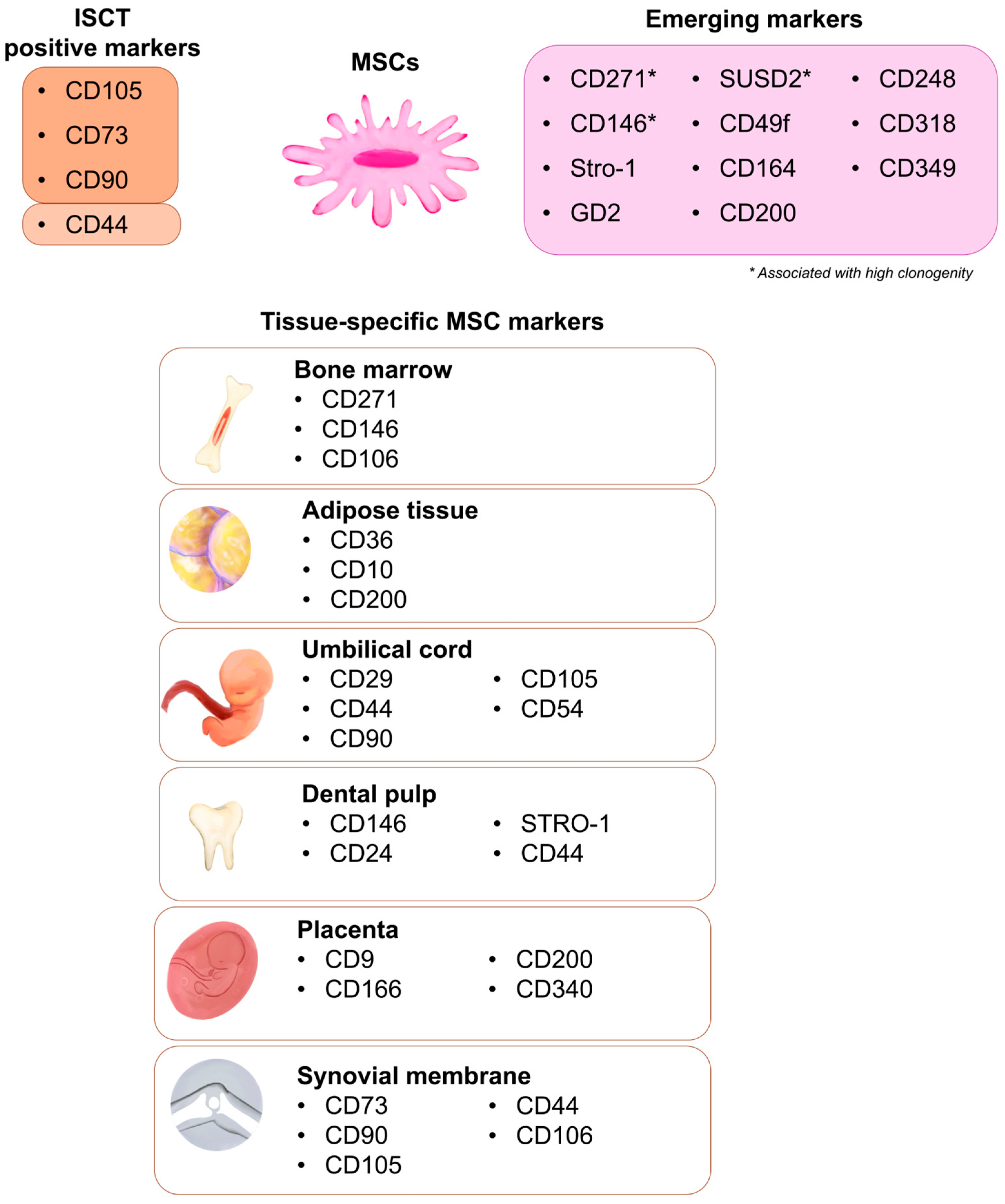
| Marker | Biological Role | Expression Profile | Specificity for MSCs | Notes |
|---|---|---|---|---|
| CD105 (Endoglin) | TGF-β co-receptor; regulates angiogenesis and osteogenesis | Endothelial cells, MSCs, fibroblasts | Moderate | Expressed in endothelium and tumors; up-regulated in inflammation [38] |
| CD73 (NT5E) | Catalyzes AMP in adenosine; immunomodulation | MSCs, lymphocytes, endothelial cells | Low/moderate | Broad expression; up-regulated in cancer and ischemia [39,40]. |
| CD90 (Thy-1) | Cell adhesion and signaling; fibroblast activation | MSCs, neurons, fibroblasts | Low | Species variability; not preserved across mammals [41]. |
| CD44 | HA receptor; migration, homing | MSCs, leukocytes, epithelial cells | Moderate | Multiple splice variants; context-dependent [42]. |
| CD34/CD45/CD14/CD19/HLA-DR | Hematopoietic markers | Blood, immune cells | Negative identifiers | May be transiently expressed in early progenitors [43]. |
| Marker | Biological Role | Expression Profile | Specificity for MSCs | Notes |
|---|---|---|---|---|
| CD271 (LNGFR) | Regulates neural growth, survival, and apoptosis. | BM-MSC | Moderate | High clonogenicity, hematopoietic support. |
| CD146 (MCAM) | Cell adhesion; promotes migration and angiogenesis | Perivascular MSCs | Low/moderate | Pericyte-like MSCs; high immunomodulation. |
| Stro-1 | Undefined role | BM-MSC | High | Considered the most known MSC marker [85]. However the Stro-1 antigen has not been identified yet [86]. |
| GD2 | Involved in cell adhesion and signaling | BM-MSC, neural-like MSCs | High for BM-MSCs. | Promising as a single marker to isolate MSCs from bone marrow [87]. However, a portion of BM-MSCs CD34+ or CD19+ cells also express GD2 [88]. |
| SUSD2 | Involved in cell adhesion and immune modulatory functions | BM, placenta | Moderate | It can promote the enrichment of CFU-F colonies if combined with canonical MSC markers [89]. |
| CD49f (Integrin α6) | Laminin receptor | BM-MSC, AT-MSC | Low | Primitive progenitors; limited specificity [88]. |
| CD164 | Sialomucin regulating adhesion, migration and proliferation | BM-MSC | Moderate | Stromal progenitor enrichment [90]. |
| CD200 | Immunoregulation | AT-MSC, placental MSC | Low/moderate | Inhibits macrophage activation [91]. |
| CD248 (Endosialin) | Tissue remodeling, angiogenesis | Pericytes | Low | Vascular regeneration marker [92]. |
| CD318 (CDCP1) | Adhesion and migration | BM-MSC | Moderate | Stress-response and repair [93]. |
| CD349 (Frizzled-9) | Wnt receptor mediating wnt/β-catenin signaling | BM-MSC | Moderate | Wnt-dependent osteogenesis [94]. |
| Tissue of Origin | Distinctive Markers | Biological/Functional Notes |
|---|---|---|
| Bone Marrow (BM-MSCs) | Commonly associated with CD271+, CD146+, CD106+ | High CFU-F frequency; perivascular niche; osteogenic and hematopoietic support. |
| Adipose Tissue (AT-MSCs) | Typically enriched in CD36+, CD10+, CD200+ | Strong adipogenic and angiogenic potential; high immunomodulation. |
| Umbilical Cord (UC-MSCs) | Commonly express CD29+, CD44+, CD90+, CD105+, CD54+ | High proliferation, low immunogenicity; suitable for allogeneic use. |
| Dental Pulp (DP-MSCs) | Often associated with CD146+, CD24+, Stro-1+, CD44+ | Neurogenic potential; high responsiveness to neural induction. |
| Placenta/Amniotic MSCs | Frequently enriched in CD9+, CD166+, CD200+, CD340+ | Strong immunosuppressive profile; fetal tissue regeneration. |
| Synovial MSCs | Commonly express CD73+, CD90+, CD105+, CD44+, CD106+ | Mechanotransductive properties; chondrogenic potential. |
| Marker | Main Association | Functional Correlate | Biological Role/Notes |
|---|---|---|---|
| CD146 (MCAM) | Perivascular MSCs | High proliferation, angiogenesis | Primitive, multipotent progenitors. |
| CD271 (LNGFR) | BM stromal progenitors | CFU-F enrichment, skeletal stem cells | Highly specific for BM-MSCs. |
| SUSD2 | BM, placenta | Self-renewal, secondary colony formation | Marker of clonogenic persistence. |
| PDGFRα | BM, AT | Proliferation, trophic support | Growth factor signaling; HSC niche regulation. |
| LEPR (CD295) | BM perivascular | Niche-forming activity | Supports HSCs; osteo-adipogenic lineage. |
| CXCL12 (SDF-1) | CAR stromal cells | Chemotaxis, HSC retention | Secreted factor; identifies niche MSCs. |
| CD51 (Integrin αV) | Skeletal progenitors | Adhesion, osteogenesis | TGF-β activation; osteogenic bias. |
Disclaimer/Publisher’s Note: The statements, opinions and data contained in all publications are solely those of the individual author(s) and contributor(s) and not of MDPI and/or the editor(s). MDPI and/or the editor(s) disclaim responsibility for any injury to people or property resulting from any ideas, methods, instructions or products referred to in the content. |
© 2025 by the authors. Licensee MDPI, Basel, Switzerland. This article is an open access article distributed under the terms and conditions of the Creative Commons Attribution (CC BY) license.
Share and Cite
Santoro, A.; Grimaldi, M.; Marino, C.; Napolitano, E.; Buonocore, M.; D’Ursi, A.M. Cell Surface Markers of Mesenchymal Stem Cells: Current Knowledge and Advances in Characterization Technologies. Life 2026, 16, 10. https://doi.org/10.3390/life16010010
Santoro A, Grimaldi M, Marino C, Napolitano E, Buonocore M, D’Ursi AM. Cell Surface Markers of Mesenchymal Stem Cells: Current Knowledge and Advances in Characterization Technologies. Life. 2026; 16(1):10. https://doi.org/10.3390/life16010010
Chicago/Turabian StyleSantoro, Angelo, Manuela Grimaldi, Carmen Marino, Enza Napolitano, Michela Buonocore, and Anna Maria D’Ursi. 2026. "Cell Surface Markers of Mesenchymal Stem Cells: Current Knowledge and Advances in Characterization Technologies" Life 16, no. 1: 10. https://doi.org/10.3390/life16010010
APA StyleSantoro, A., Grimaldi, M., Marino, C., Napolitano, E., Buonocore, M., & D’Ursi, A. M. (2026). Cell Surface Markers of Mesenchymal Stem Cells: Current Knowledge and Advances in Characterization Technologies. Life, 16(1), 10. https://doi.org/10.3390/life16010010