Article

Diversity of Groundwater Microbial Communities near Sludge Repositories with Different Types and Levels of Pollution


by
Nadezhda Popova
and
Alexey Safonov
*
Frumkin Institute of Physical Chemistry and Electrochemistry Russian Academy of Sciences (IPCE RAS), 31-4, Leninsky Prospect, 119071 Moscow, Russia
*
Author to whom correspondence should be addressed.
Life 2025, 15(12), 1854; https://doi.org/10.3390/life15121854
Submission received: 14 October 2025 / Revised: 26 November 2025 / Accepted: 29 November 2025 / Published: 2 December 2025
(This article belongs to the Section Microbiology)

Abstract

Multicomponent pollution of groundwater with nitrates and sulfates is a common issue associated with mining and ore-processing operations. This work presents the first large-scale comparative study of groundwater microbial communities from six geographically distant sites in the Russian Federation with varying levels of nitrate and sulfate pollution. Based on high-throughput 16S rRNA sequencing data and hydrochemical analysis, a statistically significant influence of the pollution type on the structural and functional diversity of the microbiome was established. Nitrates act as a stimulating factor, increasing alpha-diversity, while sulfates have an inhibitory effect. Principal component and correlation analysis revealed spatial grouping of samples according to the predominant pollution type. Microbiome representatives common to all sites under unpolluted conditions were identified: Bacteroides, Iamia, and Paenibacillus; and under high pollution levels: Acidovorax, Pseudomonas, Sphingomonas, Acinetobacter, and Limnohabitans. Based on the obtained data, it is concluded that representatives of these genera are the most promising and universal for isolation and use in bioremediation.

1. Introduction

The stability of ecosystems is fundamentally linked to the functional and phylogenetic diversity of their microbial communities, which drive the biogeochemical cycles responsible for the flux of bioessential elements through living matter [1]. Within anthropogenically impacted environments, the efficacy of these microbial biogeochemical processes becomes critical for maintaining ecological stability and intrinsic self-purification potential [2]. These processes are particularly important in oligotrophic ecosystems, such as wetlands and groundwater, which are characterized by low nutrient levels, scarce organic matter, and cold temperatures [3]. Due to the limitations, such systems are highly susceptible to pollution and often unable to recover autonomously [4,5]. A prime example is groundwater affected by surface storage of chemical waste from metal ore mining and processing [6,7]. The widespread use of nitric and sulfuric acids in these industries leads to significant leaching of soluble pollutants—including nitrate, sulfate, and carbonate anions, as well as iron and other metals—into adjacent aquifers [8,9,10,11]. Wastes from uranium mining are of particular concern due to the presence of highly toxic uranyl ions [8]. Such multicomponent groundwater pollution is a common challenge, typically addressed through engineered solutions, most commonly through the installation of reactive or low-permeability (e.g., slurry wall) subsurface barriers [12,13,14,15,16].
The principle of in situ bioremediation relies on harnessing the innate biogeochemical capabilities of indigenous microbial communities. This promising and cost-effective approach involves stimulating natural nitrogen and sulfur cycles through the addition of organic substrates and phosphorus sources [17,18]. Such stimulation promotes the reduction of nitrate to molecular nitrogen via denitrification, as well as the conversion of sulfate to sulfide through sulfate reduction, leading to the precipitation of mineral phases. Notably, these microbial processes also facilitate the immobilization of uranium and other toxic metals, both through the formation of stable mineral phases [17,19] and direct enzymatic reduction [20,21,22]. Theoretical frameworks for applying in situ bioremediation to radionuclide-polluted aquifers are well-established [23,24,25]. Furthermore, field studies conducted at radiochemical sites in the USA and China [26,27,28,29] have validated this strategy for the comprehensive removal of nitrogen compounds and organic pollutants from groundwater. The success of in situ bioremediation is largely governed by the physiological diversity and abundance of the native microbiota [30]. Consequently, identifying microbial taxa that are widespread across polluted sites with varying pollution profiles is crucial for developing effective biopreparations, which can be administered alongside organic substrates to enhance remediation.
Hence, characterizing microbial diversity in polluted environments is essential for a dual purpose: evaluating the ecosystem’s intrinsic self-purification potential and determining the feasibility of in situ bioremediation. This is particularly relevant for groundwater ecosystems, which present unique challenges for anaerobic remediation processes due to their characteristic low levels of organic matter and phosphorus, consistently low temperatures (typically 6–10 °C), and transitional redox conditions. Additionally, the high salinity often encountered in polluted plumes necessitates the activity of halotolerant or halophilic bacteria. A critical functional requirement is the presence of a complete denitrifying community capable of reducing nitrate fully to molecular nitrogen, thereby preventing the accumulation of toxic intermediates like nitrite or ammonium, which could otherwise exacerbate system toxicity and undermine the bioremediation effort.
This study investigates the microbial diversity in groundwater systems at six geographically distinct locations across the Russian Federation, all of which are subject to comparable pollution profiles dominated by nitrates, sulfates, and ammonium. The sites encompass major industrial facilities, including the JSC Angarsk Electrochemical Plant (AECC) (Irkutsk Region, Russia), JSC Chepetsk Mechanical Plant (ChMP) (Udmurt Republic, Russia), and JSC Zelenogorsk Electrolysis and Chemical Plant (ECP) (Krasnoyarsk Krai, Russia), PJSC Novosibirsk Chemical Concentrates Plant (NCCP) (Novosibirsk region, Russia), and the Sublimation plant (SP) (Tomsk region, Russia), which are involved in processing polymetallic ores and purifying various metals, including uranium. The Siberian Chemical Combine (SCC) (Tomsk region), also included, specializes in reprocessing irradiated nuclear fuel. A common feature of these sites is the long-term surface storage of nitric and sulfuric acid wastes, neutralized with calcium hydroxide, in slurry reservoirs. After decades of operation (exceeding 50 years), the integrity of these reservoirs’ liners has been compromised, resulting in the leaching of soluble components—notably nitrates, sulfates, and carbonates—into the underlying groundwater. Detailed site characteristics are available in previous publications [17,31,32].
The current status of these sites varies; for instance, an impermeable barrier utilizing liquid glass technology has been installed in the area of the B2 basin (SCC), which was decommissioned in 2012, while the other facilities remain operational. Promisingly, pilot-scale trials of in situ bioremediation near the ChMP and B2 repositories demonstrated successful nitrate removal. This was achieved by stimulating the indigenous microbial community with a mixture of sugar and whey [33,34]. These trials identified biological nitrate removal as a critical initial step, as it drives the reduction of the redox potential, thereby establishing the anoxic conditions required for subsequent sulfate reduction. Ammonium elimination, meanwhile, can occur aerobically via nitrifying bacteria or anaerobically through the anammox process. Previous microbiological assessments at the AECC, NCCP, and ChMP sites revealed that highly polluted zones support physiologically diverse consortia comprising denitrifiers, nitrifiers, and anammox bacteria, underscoring the potential for stimulating these native communities to remediate nitrate pollution [35,36]. Furthermore, integrated monitoring has shown that microbial activity can induce geochemical conditions favorable for the precipitation and immobilization of various metals within biogenic mineral sediments [19].
The primary objective of this research was to evaluate how groundwater microbial diversity is influenced by physicochemical conditions across six sites impacted by nitrate-sulfate slurry reservoirs, and to identify consistent successional patterns in community structure in relation to the composition and magnitude of multicomponent pollution. From an applied perspective, a key goal was to identify the most prevalent and ubiquitous microbial taxa across the studied sites as potential candidates for developing specialized bioremediation consortia.

2. Materials and Methods

In this work, 18 groundwater samples collected from 6 sites from depths of 10–20 m were used for comparison. Samples were taken from zones located near the waste reservoir (10–30 m), characterized by a high pollution level; at an intermediate distance (30–100 m); and in zones not affected by the reservoir (background samples). Sample labeling is provided in Table 1. The geography of sampling differed significantly (Figure 1) and included the central part of the Russian Federation (Glazov city, Udmurt Republic, 58°08′ N 52°40′ E), Novosibirsk Oblast (Novosibirsk, Russia, 55°01′ N. 82°55′ E), Krasnoyarsk Krai (Seversk, 56°29′19″ N. 84°57′08″ E, Zelenogorsk, 56°06′00″ N 94°35′00″ E), and Irkutsk Oblast (Angarsk, 52°34′ N 103°55′ E).

2.1. Sampling

Following a 15–30 min fluid circulation to purge the wells, groundwater was sampled from 10–20 m depth. Samples for cation and anion analysis were collected in 200 mL bottles without fixation in triplicate. For U and Fe analysis samples were fixed by high grade pure HNO3 to pH 1 in triplicate. For molecular biology, 2 L of water (in duplicate) were fixed with ethanol (1:1 v/v) and filtered through 0.22-μm membranes. For microbiological cultivation on nutrient media, samples were collected in 100 mL sterile glass bottles in triplicate. Prior to inoculation, the samples were stored in a refrigerator at 4 °C for 3–5 days. Temperature, pH, and Eh were measured on-site immediately after sampling.
For this study, the most significant components in terms of concentration, as well as elements with notable toxicity (e.g., uranium), were selected for analysis. The analysis of the samples did not detect organic pollutants (e.g., hydrocarbons, POPs) or radionuclides other than uranium, as the sites in question are associated with metal and uranium ore processing enterprises. The concentrations of heavy metals (Zn, V, Mo, Cr) were low in the proximal zone and fell below the detection limit in areas with intermediate pollution levels. Consequently, data on their concentrations, along with any potential contribution to biogeochemical processes, were excluded from the present manuscript.
The level of pollution used in the statistical analysis was determined both by the location of the wells and by parameters such as total dissolved solids (TDS), nitrate ion concentration, and the concentrations of other major components. The study utilized existing monitoring wells and hydrogeological data provided by the industrial sites. No specialized drilling was conducted for this particular investigation.

2.2. Analytical Methods

2.2.1. Hydrochemical Analysis

The uranium and iron concentrations in the water samples were analyzed immediately after sample collection and filtration through a 0.45-µm glass filter by Inductively Coupled Plasma Mass Spectrometry (ICP-MS) X Series2 (Thermo Fisher Scientific, Waltham, MA, USA, https://www.fishersci.com/shop/products/icap-6500duoview-icp-oes-spect/NC1982295, accessed on 11.09.2025).
Anion and cation concentrations were measured using a capillary gel electrophoresis system (Capel-105M, LUMEX Instruments, Saint Petersburg, Russia, https://www.lumexinstruments.com/catalog/capillary-electrophoresis/capel-105m.php, accessed on 09.08.2025).
The Eh and pH values were determined using an ANION-4100 pH meter/ionomer (Novosibirsk, Russia, http://www.anion.nsk.su/, accessed on 02.08.2025) with an electrode combination vs. Ag/AgCl electrode.
Total organic carbon in water was measured using an Elementar Vario EL III CHN analyzer (Elementar Analysensysteme GmbH, Langenselbold, Germany).

2.2.2. Molecular Analysis

DNA was extracted from groundwater samples fixed with ethanol by filtering through membrane filters with a pore diameter of 0.22 µm (Millipore, Merck, Darmstadt, Germany). The sediment from the filter surface was washed off with a solution containing 0.15 M NaCl and 0.1 M Na2EDTA (pH 8.0). The Pure LinkTM Microbiome DNA Purification KIT (ThermoFisher Scientific, Waltham, MA, USA) was used for DNA extraction according to the manufacturer’s recommendations.
High-Throughput Sequencing of V4 Fragments of the 16S rRNA Gene: To determine the composition of microbial communities in the biofilms, the hypervariable V4 region of the 16S rRNA gene was amplified. Amplification was performed in a mixture containing 5 µL of each primer (6 µM concentration), 5 µL of DNA solution, and 15 µL of PCR mix (1 U polymerase, 0.2 mM of each dNTP, 2.5 mM Mg2+), using primers Pro341F-Pro805R [37]. Each sample was amplified in triplicate, then the replicates were pooled together and purified by electrophoresis in a 2% agarose gel using a kit for extraction and purification of PCR products from the gel (Eurogen, Moscow, Russia). Sequencing was performed using the MiSeq platform (Illumina, San Diego, CA, USA) and the MiSeq V3 (600 cycles) reagent kit (Illumina, San Diego, CA, USA) according to the manufacturer’s recommendations. Gene libraries were created using dual barcoding, as described previously [38].
Bacterial community libraries were created using the online SILVA resource (https://www.arb-silva.de/ngs/, accessed on 24.09.2025). Raw reads were processed and assembled as previously described [39]. Contigs were binned and refined, MAGs were reassembled by BASALT v1.1.0 [40]. MAGs were analyzed by METABOLIC v4.0 [41]. Adapters and primers were trimmed with cutadapt v2.8 [42], quality filtering was done by Trimmomatic v0.36 [43]. Demultiplexing was done by deML v1.1.4 [44]. Chimeric sequences were removed and the amplicon sequence variant (ASV) table was constructed using Dada2 v1.26.0 package [45] and the SILVA 138.2 database [45]
Determination of the number of main physiological bacterial groups (aerobic organotrophic and anaerobic denitrifying bacteria, ferric iron-reducing, sulfur-reducing, nitrite and ammonium oxidizing) was determined by inoculating 10-fold dilutions of groundwater samples (in triplicate) into liquid nutrient media. Microbial numbers were calculated according to the most probable number technique using McCready tables. Media content is described in [34,46] and provided in Table A1.

2.2.3. Statistical Methods

Data statistical processing was performed in the Origin 2024 program using built-in tools. A one-way, two-way analysis of variance (ANOVA were further used to test the significance level of the hydrochemical parameters influence. The iVikodak online platform (https://web.rniapps.net/iVikodak/, accessed on 24 September 2025) [47] was used to predict the functional characteristics of bacterial communities. Biodiversity indices were calculated via Past4 statistical software (https://palaeo-electronica.org/2001_1/past/pastprog/univar.html, accessed on 24 September 2025). Venn diagrams were constructed using the online resource E-Venn (https://www.bic.ac.cn/test/venn/#/, accessed on 24 September 2025) [48].

3. Results

3.1. Comparison of Sample Chemical Composition

The hydrogeochemical analysis and diversity indices of the collected groundwater samples are summarized in Table A1. All objects differ statistically significantly in hydrogeochemical and microbiological parameters (p < 0.001, Table A3, Table A4 and Table A5). Background samples exhibited reducing redox potentials, low overall mineralization, and diminished concentrations of organic matter and bioessential elements. Their anion composition was dominated by bicarbonates and sulfates, which are characteristic of natural groundwater systems. Iron concentrations in these pristine zones varied across horizons, ranging from hundreds of µg/L to several mg/L. In contrast, samples influenced by technogenic impact showed marked elevation in the concentrations of nitrates, sulfates, bicarbonates, ammonium, calcium, sodium, and iron. Notably, iron content reached levels as high as 17 mg/L in heavily polluted samples. Uranium was detected in the range of 0.4–2 mg/L in polluted groundwater, substantially exceeding the maximum permissible concentration.
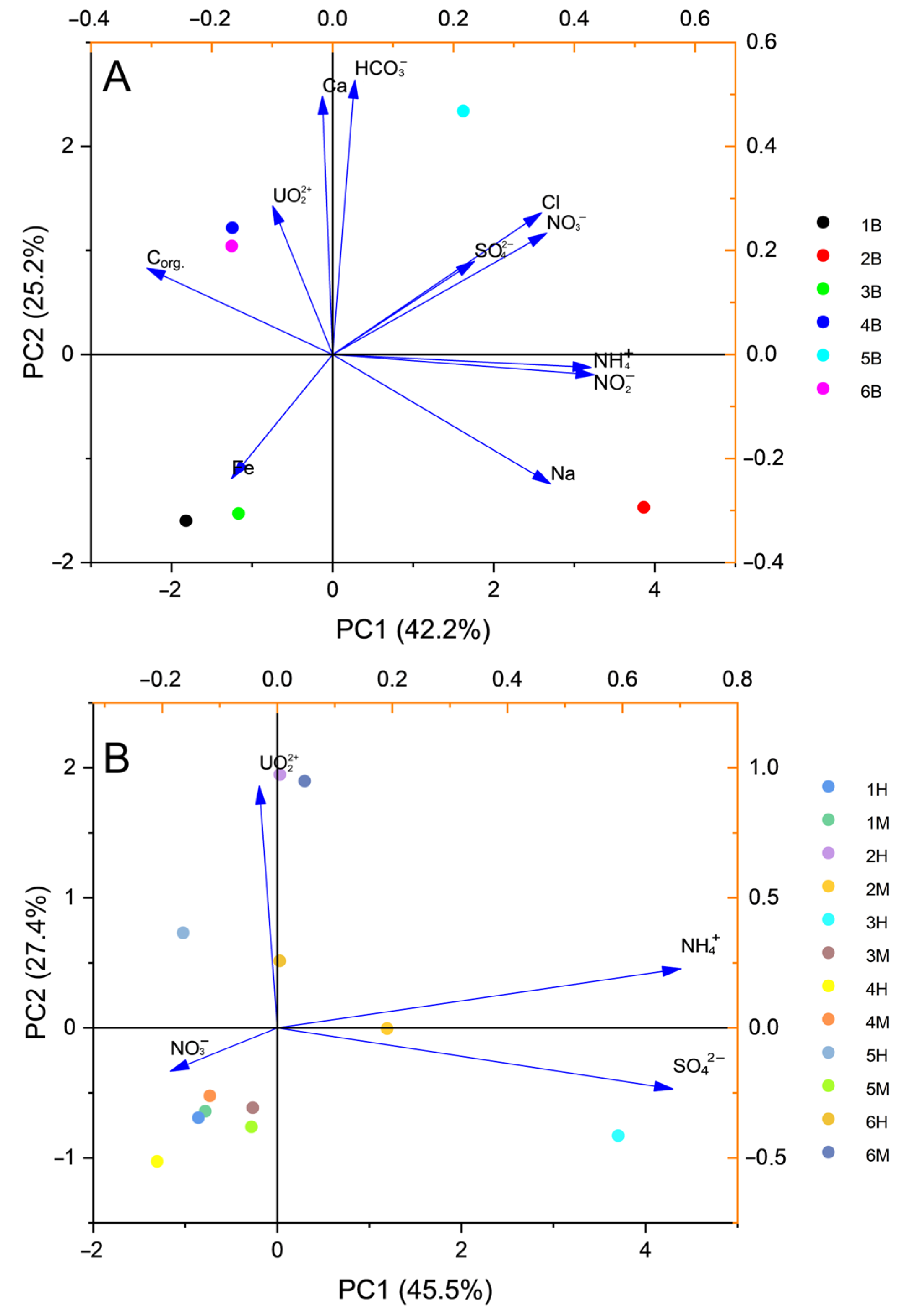
Multivariate analysis (Principal component analysis, PCA) based on solute concentrations revealed distinct sample clustering (Figure 2A,B). Background samples from Sites 1, 3, 4, and 6 grouped together and were associated with higher organic carbon content. A discernible correlation was also observed between the anions of nitric and sulfuric acids, alongside ammonium and carbonate ions, specifically in groundwater from Sites 2 and 5. Further analysis focusing on wells with medium and high pollution levels (Figure 2B) showed a clear clustering of samples 1M, 1H, 3M, 4M, 4H, 5M, and 5H along Principal Component 1 (PC1), indicating a strong common influence of nitrate pollution. Sample 3H was uniquely characterized by a pronounced positive loading of sulfate and ammonium ions. Furthermore, samples 2H, 2M, and 6M were distinguished along PC2, primarily due to their significant uranium pollution.

3.2. Characterization of Biodiversity in Background and Polluted Samples

3.2.1. Microbial Diversity Gradients Relative to Pollution Sources

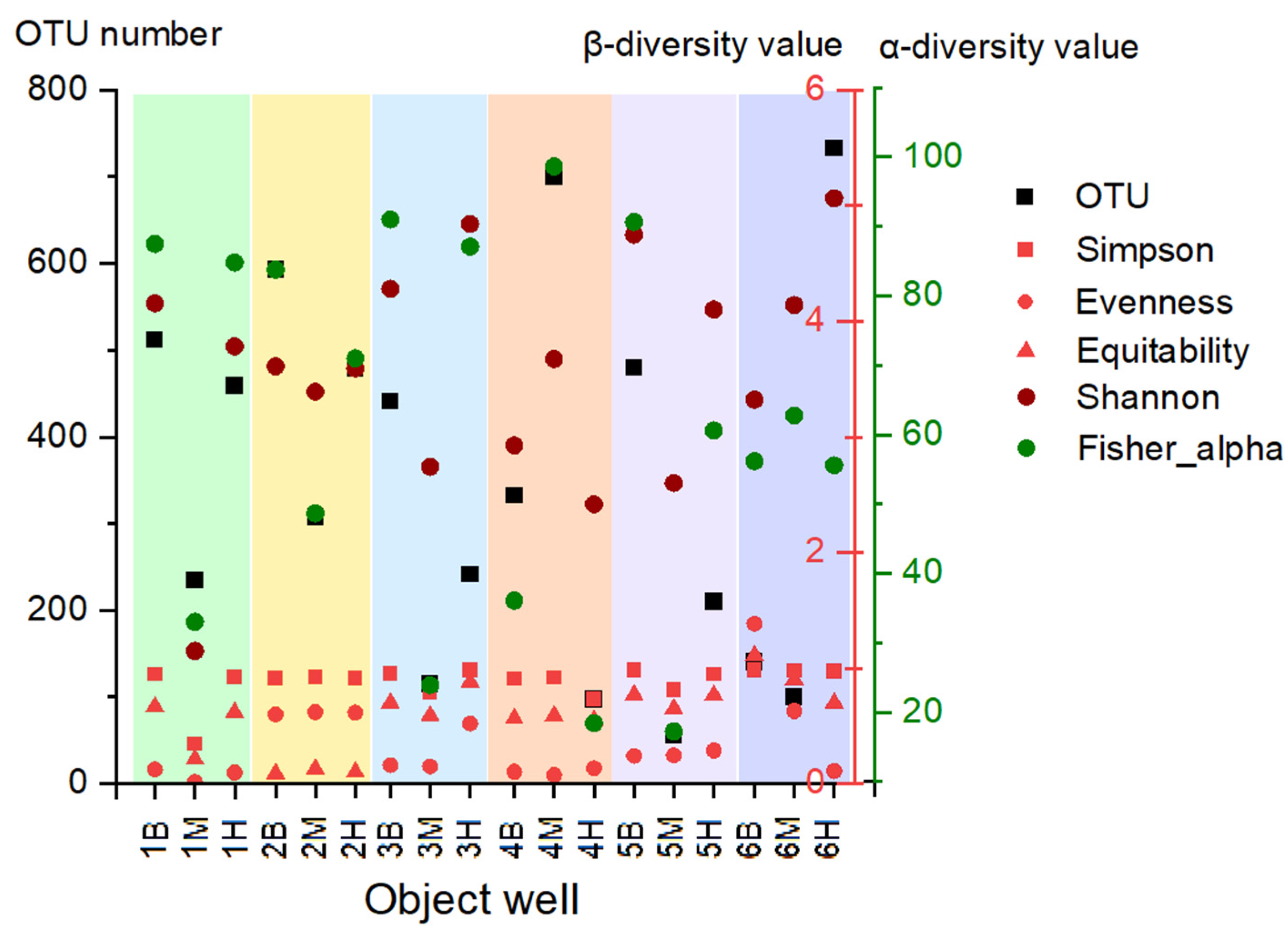
Analysis of biodiversity parameters revealed substantial heterogeneity in microbial communities across all sampling zones, encompassing background areas and those with medium to high pollution levels (Figure 3). The highest levels of biodiversity, based on both OTU counts and diversity indices, were generally associated with background wells (1B, 2B, 3B, 5B). In contrast, the most taxonomically impoverished communities (OTUs < 150) were identified in several aquifers subject to medium and high pollution pressure, specifically 3M, 4H, 5M, 6M, and 6H. An interesting exception was community 1M, which exhibited a high taxonomic richness relative to other polluted sites; however, the strong dominance of specific groups within this community led to a reduction in its overall diversity indices, including Simpson, Shannon, Evenness, and Fisher. However, in samples from sites 3 and 6, high diversity was found in zones with medium and high pollution levels (3M, 6H). Characterization of alpha-diversity (Fisher index) demonstrated high index values in samples from background wells and wells with medium pollution levels (1–2M, 4M, 6M), with the exception of sites 3M and 5M.
The response of microbial diversity to increasing pollution pressure varied substantially among the sites. Sites 1, 2, 3 and 5 exhibited a diversity minimum at intermediate pollution levels. Conversely, a positive relationship was found at Site 6, where diversity increased with the pollution gradient, while Site 4 showed a similar peak in diversity at a medium pollution level.

3.2.2. Phylogenetic Composition of Background Samples

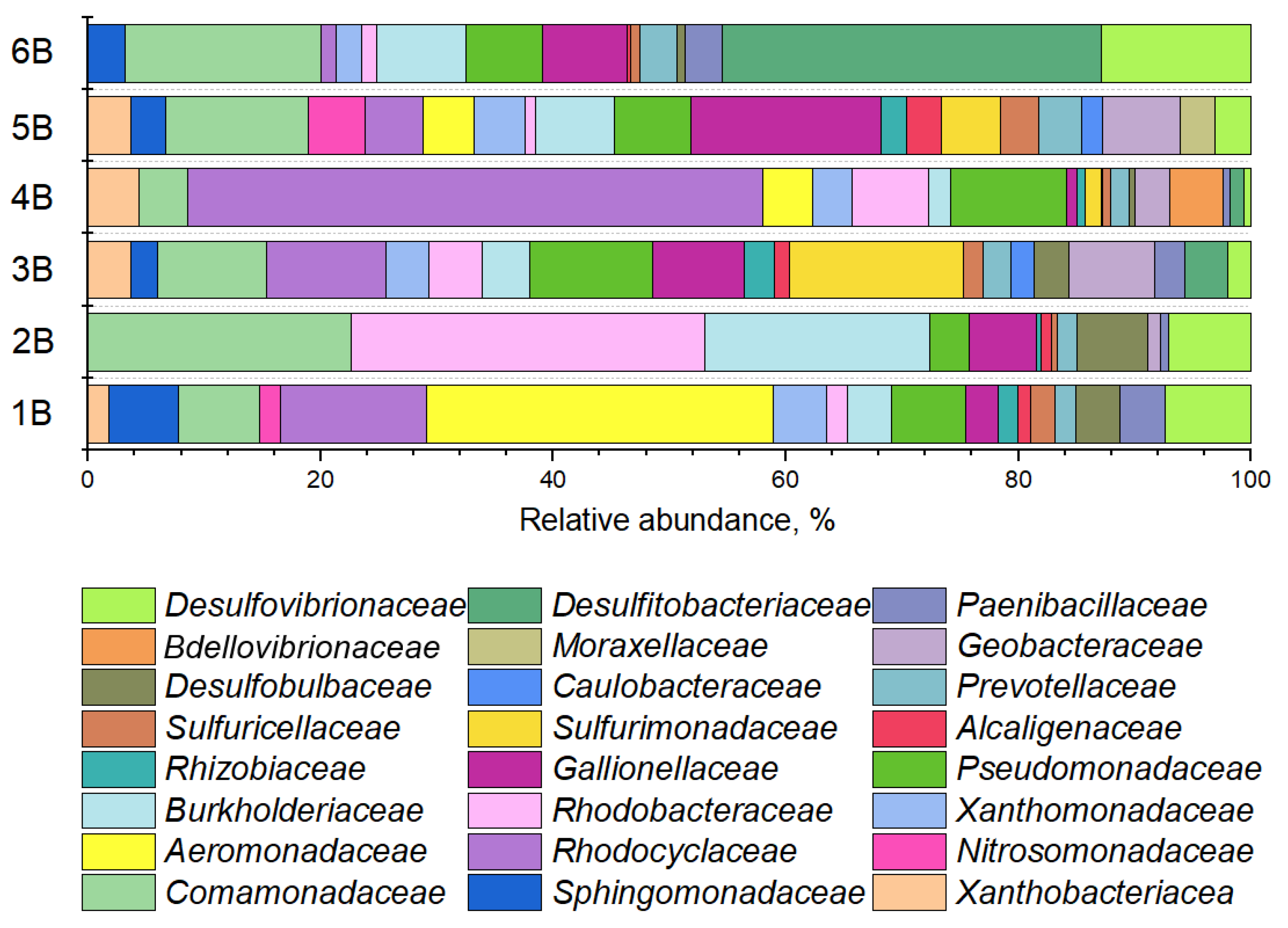
In the composition of microbial communities from background samples (Figure 4), bacteria typical of oligotrophic habitats involved in iron and sulfur cycles were found, as well as organotrophic bacteria from the families Comamonadaceae, Rhodocyclaceae, Rhodobacteraceae, Burkholderiaceae, Pseudomonadaceae, Gallionellaceae, Prevotellaceae, Desulfovibrionaceae.
The phylogenetic structure of the background groundwater communities revealed distinct site-specific profiles, which were determined by the unique geochemical and geological parameters of the aquifers. In sample 1B, the microbial community was dominated by members of the family Aeromonadaceae. These mesophilic bacteria are recognized for their metabolic versatility, being capable of heterotrophic nitrification and aerobic denitrification under elevated pH conditions, with some strains also demonstrating Fe(III) reduction capabilities [49]. A different composition was observed in community 2B, where a consortium of Comamonadaceae, Rhodobacteraceae, and Burkholderiaceae collectively accounted for over 70% of the relative abundance. Taxa within these families are known for their central roles in nitrogen and sulfur cycling and possess the genetic potential for heavy metal reduction [50,51,52]. In contrast, community 3B lacked a strongly dominant taxon, with the most abundant group, Sulfurimonadaceae—implicated in sulfur-driven autotrophic denitrification [53]—comprising just over 10% of the population. A markedly different structure was found in community 4B, which was characterized by a pronounced dominance of Rhodocyclaceae, representing approximately half of the entire community. Meanwhile, community 5B was primarily composed of Comamonadaceae and iron-oxidizing bacteria from the family Gallionellaceae, which together constituted nearly 30% of its composition. Finally, the background community 6B was dominated by sulfate-reducing bacteria affiliated with the family Desulfitobacteriaceae [54].
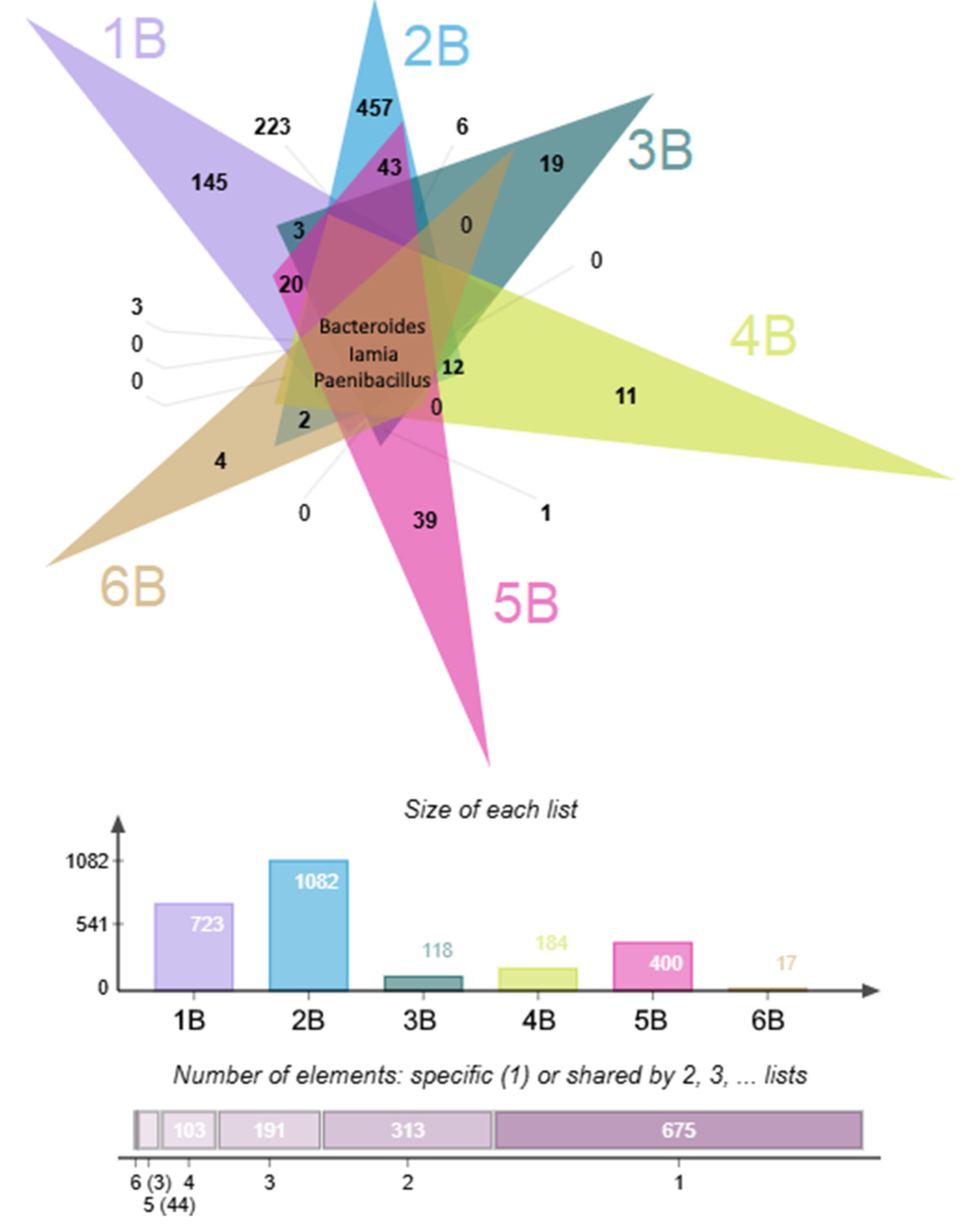
A comparative analysis of all background communities, visualized via Venn diagram (Figure 5), identified a core set of genera ubiquitous across all sites, including Bacteroides, Iamia, and Paenibacillus. Beyond this universal core, significant sharing of taxa was observed, with 44 genera common to five out of the six sites and 103 genera shared among four sites, indicating a considerable degree of phylogenetic overlap within these groundwater ecosystems.

3.2.3. Phylogenetic Composition of Polluted Samples

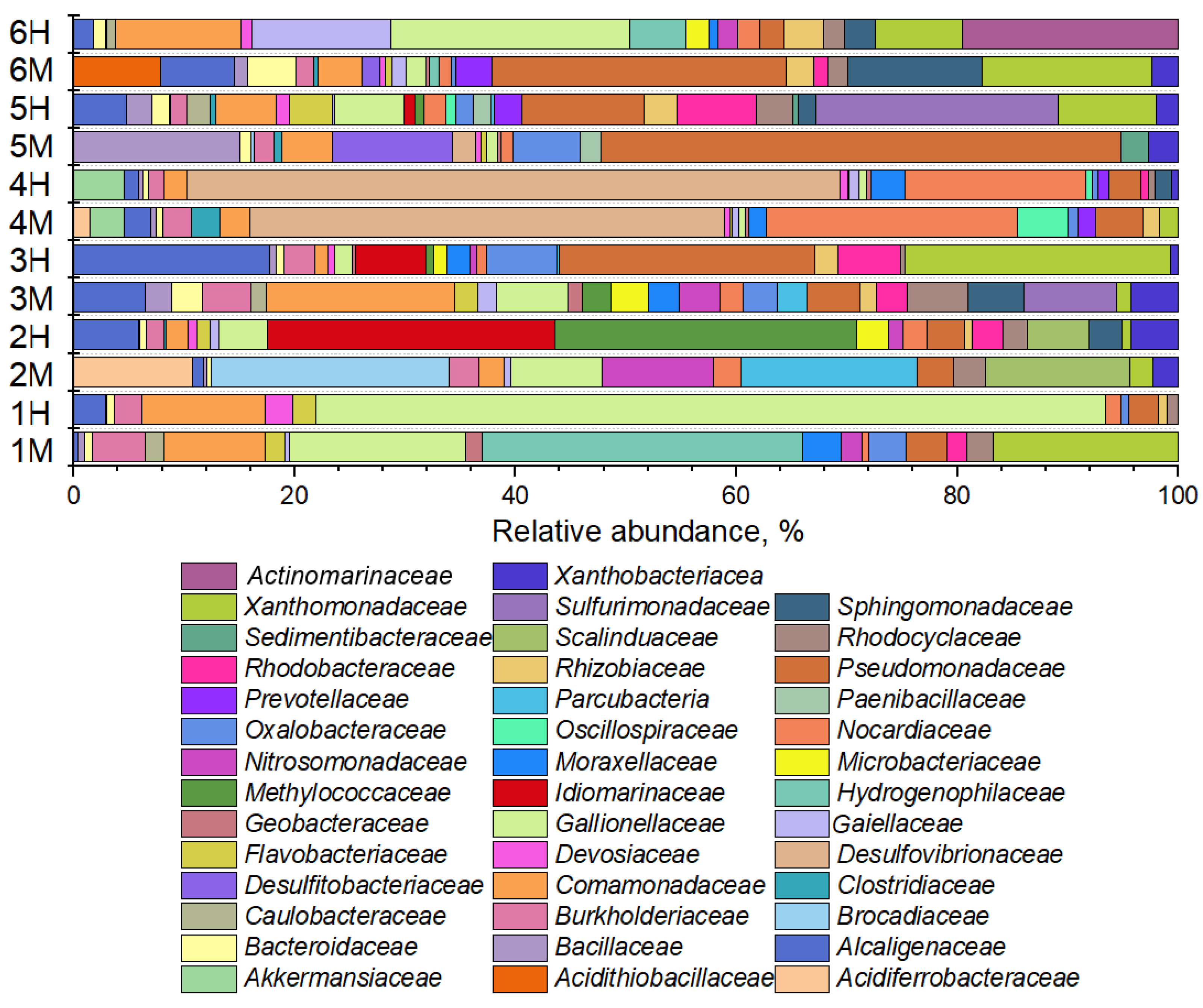
The phylogenetic analysis of polluted groundwater samples revealed the recurrent presence of several bacterial families, including Alcaligenaceae, Bacillaceae, Bacteroidaceae, Burkholderiaceae, Comamonadaceae, Gaiellaceae, Gallionellaceae, Nocardiaceae, Pseudomonadaceae, Rhodocyclaceae, Xanthomonadaceae and Xanthobacteriacea (Figure 6).
At Site 1, characterized by nitrate-dominated pollution, the communities were dominated by Gallionellaceae (increasing from 17.6% in 1M to 83% in 1H) and Comamonadaceae (9% in 1M to 13.7% in 1H). The moderately contaminated sample 1M also showed significant abundances of Hydrogenophilaceae (21.1%) and Xanthomonadaceae (16.3%). Notably, samples from Site 2, subject to high ammonium pollution, harbored specialized microorganisms, including anammox bacteria from the families Brocadiaceae (11.2% in 2M) and Scalinduaceae (16.6% in 2M, 7.4% in 2H). These samples also contained acidophilic iron- and sulfur-oxidizing Acidiferrobacteraceae (11.2% in 2M) [55] and nitrate-reducing Idiomarinaceae (27.7% in 2H) [56]. The community under mixed nitrate-sulfate pollution at Site 3 (sample 3M) was composed of Comamonadaceae (15%) and Sulfurimonadaceae (7.6%). Under more severe multicomponent pollution (3H), the community shifted towards denitrifying Alcaligenaceae (18.6%) [57], with dominant representation from Pseudomonadaceae (24.2%) and Xanthomonadaceae (25.1%). A unique pattern was observed at Site 4, where sulfate-reducing Desulfovibrionaceae were exclusively detected under extreme nitrate pollution (36.1% in 4M, 48.8% in 4H), co-occurring with Nocardiaceae (19.1% in 4M, 13.5% in 4H). At Site 5, subject to nitrate-sulfate pollution, the community in sample 5M was dominated by Pseudomonadaceae (40.2%), Bacillaceae (12.8%), and Desulfitobacteriaceae (9.2%). Under higher pollution (5H), the community transitioned to dominance by Sphingomonadaceae (22%), Pseudomonadaceae (11%), and Xanthomonadaceae (8.9%). Finally, at Site 6 with multicomponent pollution including uranium, the community in sample 6M comprised Pseudomonadaceae (25.5%), Sphingomonadaceae (11.7%), Xanthomonadaceae (14.7%), and Acidithiobacillaceae (7.5%). In the more polluted area, the community shifted toward Gallionellaceae (21.8%), Comamonadaceae (11.4%), Gaiellaceae (12.5%), and Xanthomonadaceae (8%).
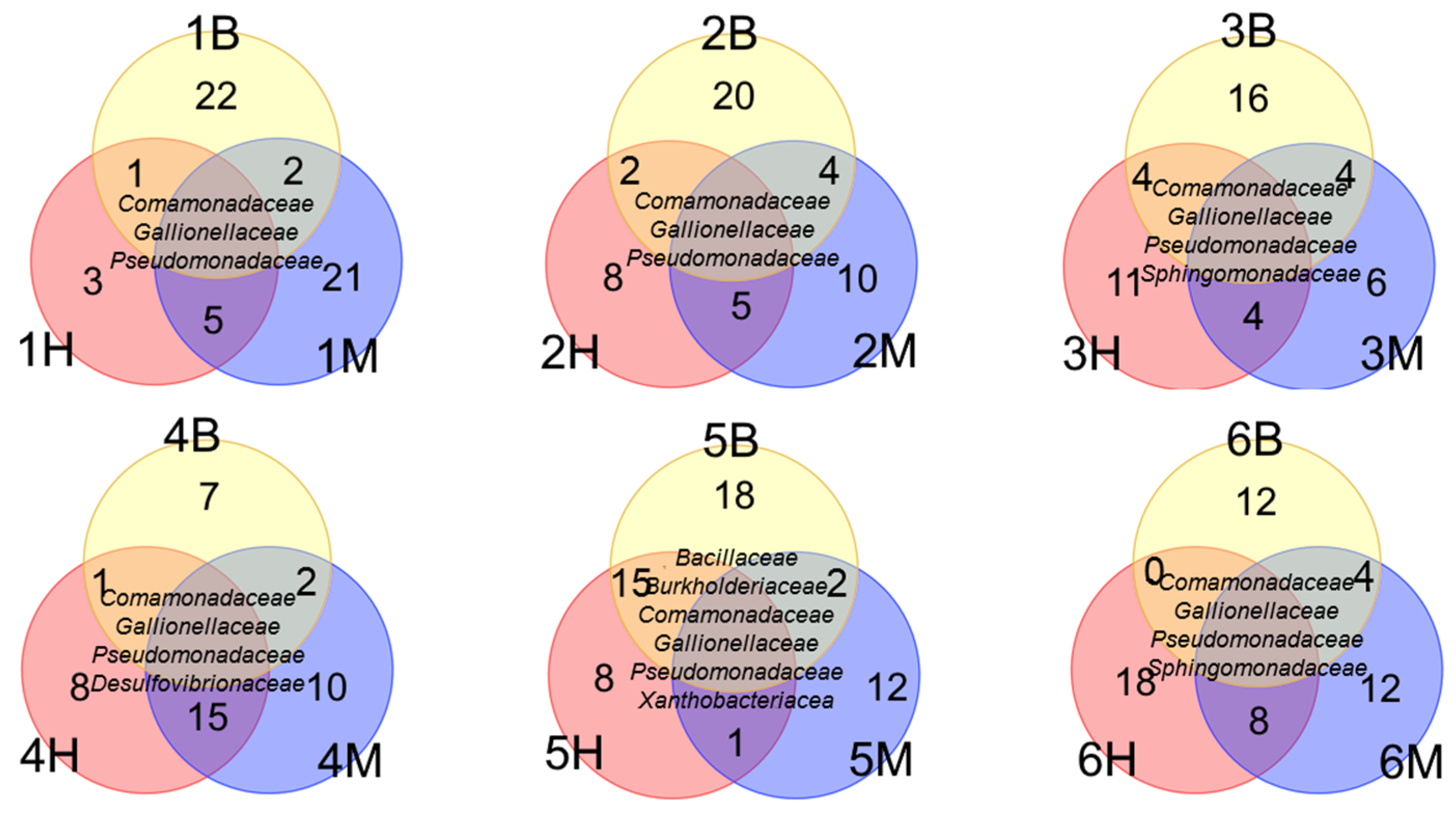
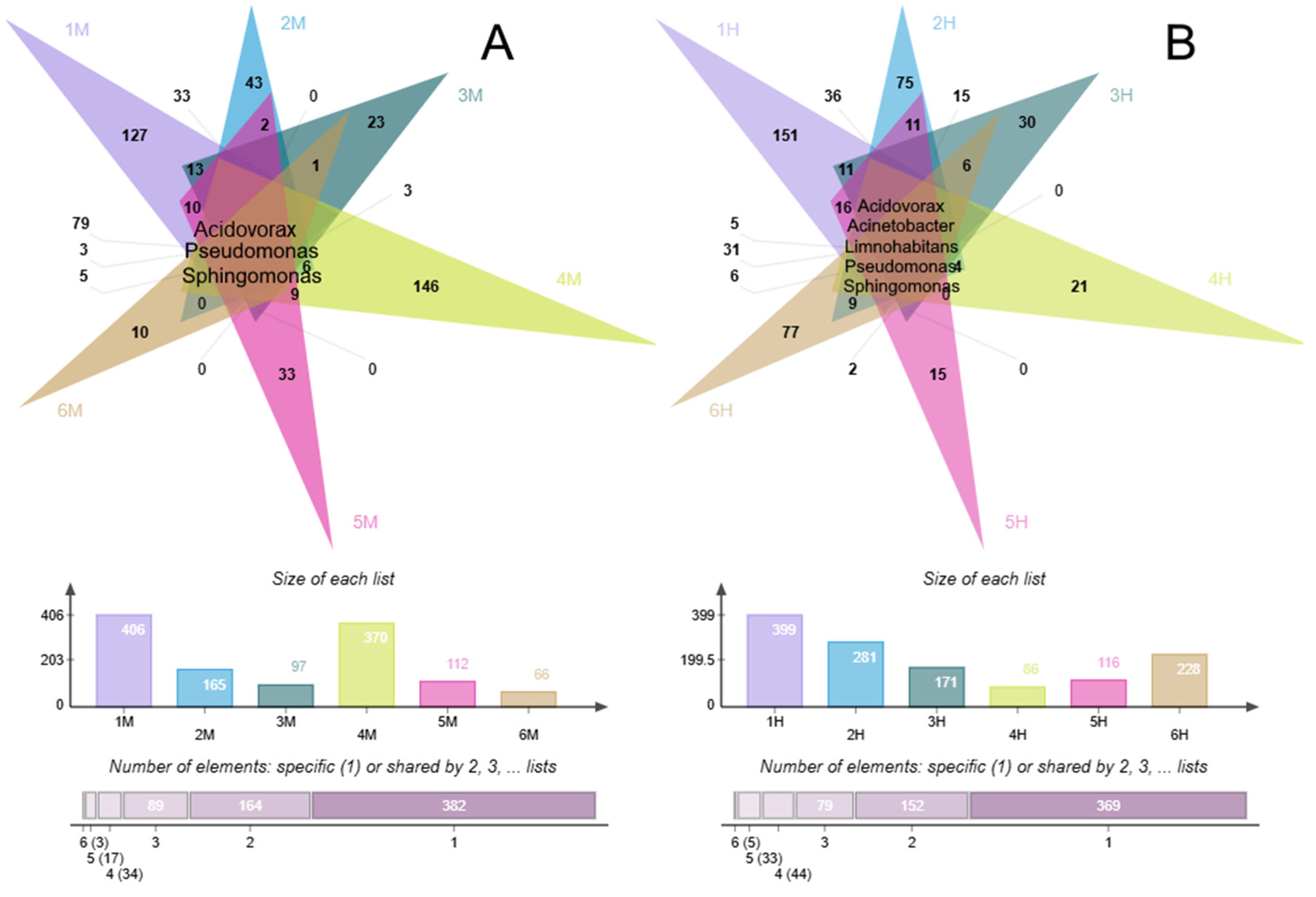
Comparative analysis revealed a conserved core of bacterial families across all polluted sites, consisting of Comamonadaceae, Gallionellaceae, and Pseudomonadaceae (Figure 7). Additional shared phylogenetic features included the presence of Sphingomonadaceae in Sites 3 and 6, and the consistent detection of Desulfovibrionaceae across all samples from Site 4. The communities from Site 5 showed the highest internal similarity, sharing six common taxa. At the genus level, we identified a universal core of Acidovorax, Pseudomonas, and Sphingomonas across all polluted samples (Figure 8). Furthermore, all highly polluted communities specifically contained Acinetobacter and Limnohabitans.
The degree of phylogenetic overlap varied substantially with pollution intensity. Communities from moderately polluted samples showed significantly lower similarity (17 genera shared among 5 sites; 34 among 4 sites) compared to background communities (44 and 103 genera, respectively). In contrast, heavily polluted samples demonstrated greater phylogenetic convergence (33 genera shared among 5 sites; 44 among 4 sites), indicating consistent selection for specific bacterial lineages under severe pollution pressure.

3.3. Metabolic Potential of Microbial Communities

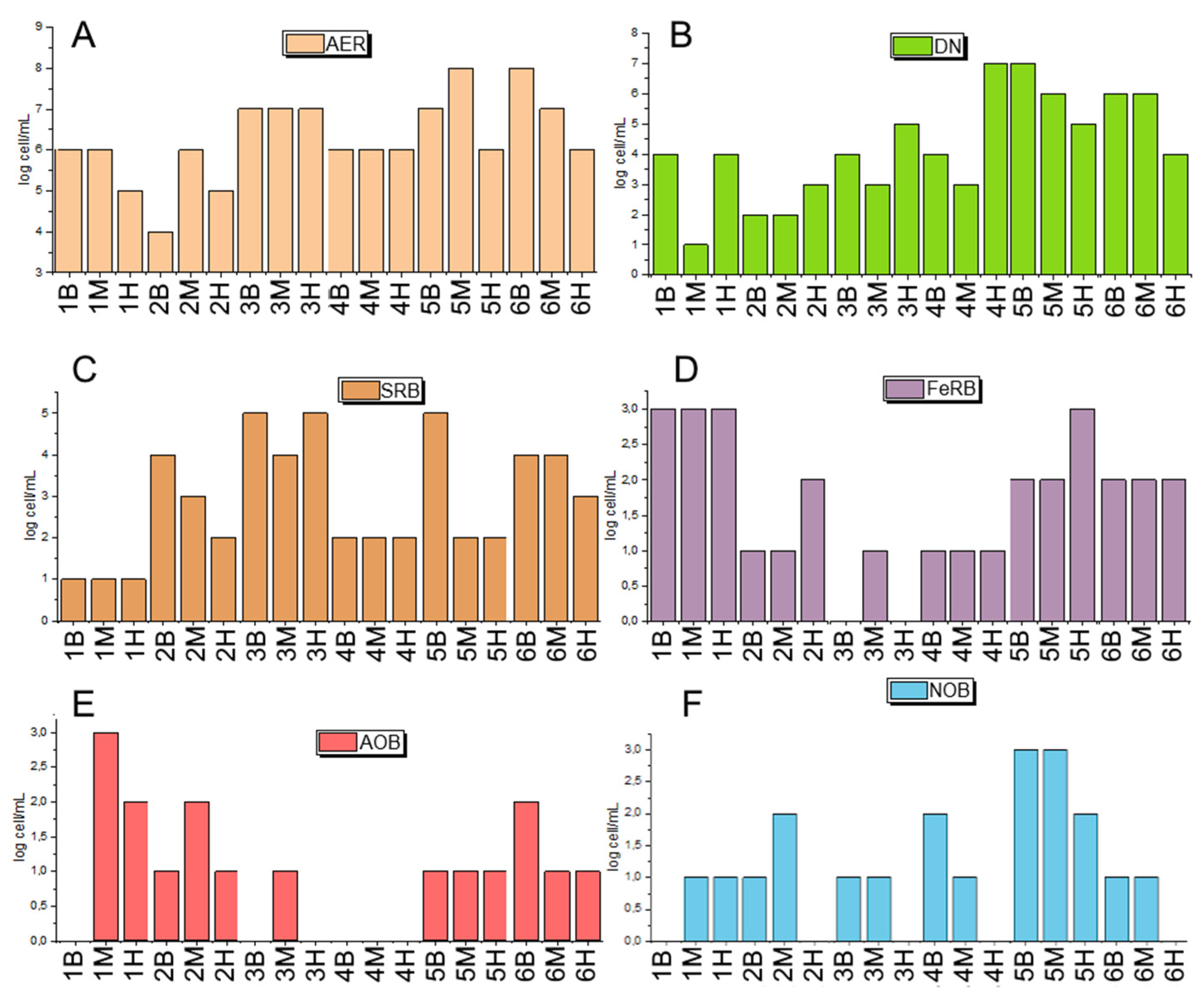
Cultivation-based analysis of major physiological groups revealed distinct patterns across the pollution gradient (Figure A1). Denitrifying and aerobic bacteria showed increased abundance in moderately polluted zones compared to background areas. Quantification of denitrifying microorganisms indicated consistently high levels (>1000 cells/mL) across most samples (1B, 1H, 3B, 3H, 4B, 4H, 5B–H, 6B–H), with peak abundances observed in samples 4H, 5M, and 6M. Sulfate-reducing microorganisms reached their maximum densities in the most heavily polluted zones, while iron-reducing bacteria remained relatively scarce (<100 cells/mL), with elevated counts detected only in communities 1B–H and 5H.
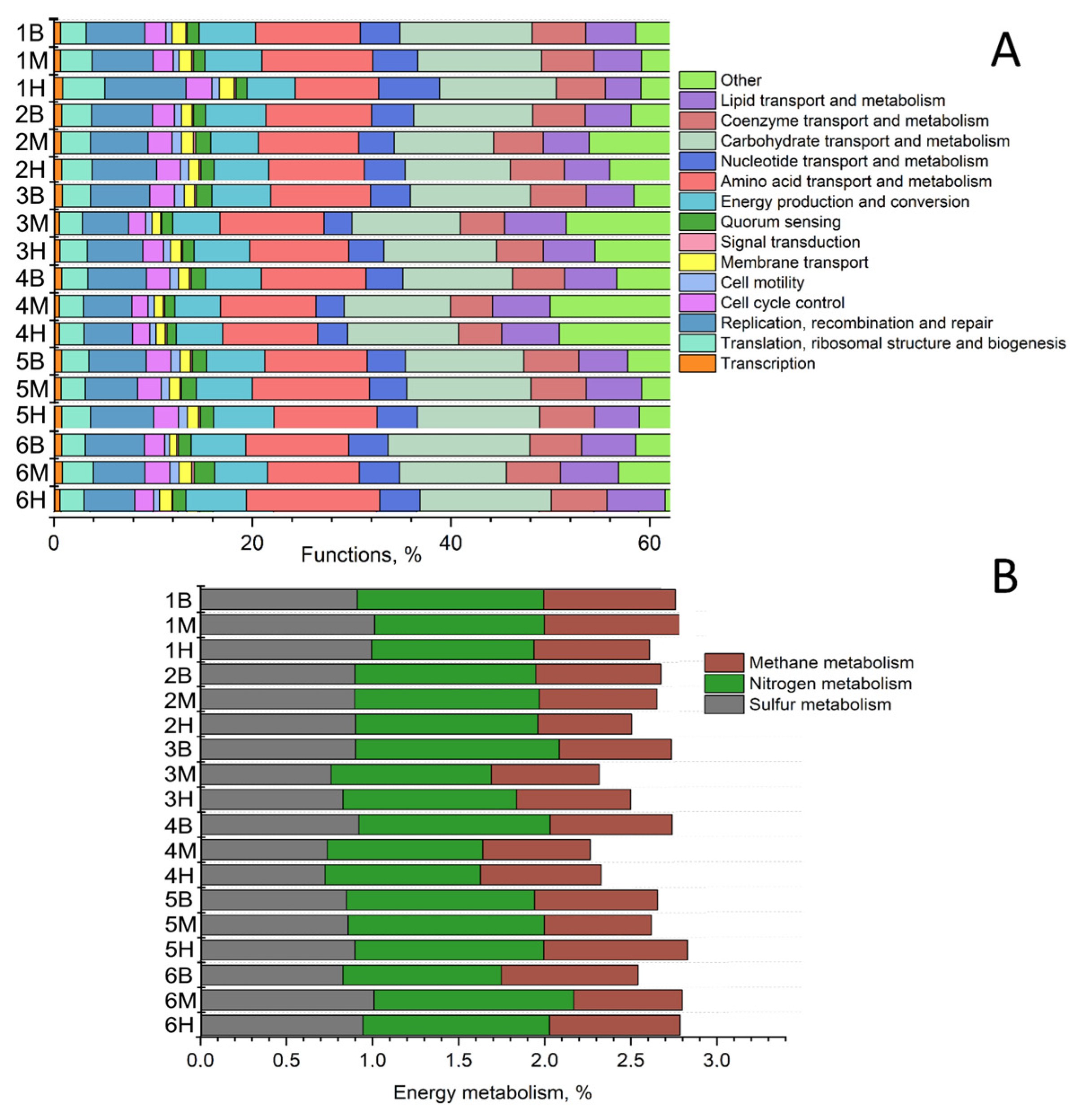
Functional potential analysis using iVikodak with the KEGG database revealed systematic shifts in metabolic capabilities between polluted and background zones across multiple hierarchy levels. At KEGG Level 2 (Figure A2A), notable variability was observed in genetic information processing pathways (encompassing transcription, translation, and replication), with particularly elevated representation in communities 1H and 2H, suggesting enhanced cellular activity and growth in these polluted environments. Environmental information processing functions—including membrane transport, signal transduction, and quorum sensing—were most prominent in communities 2M, 6M, and 3B. Membrane transport capabilities were especially well-represented across communities from site 1 (1B–H) and in samples 2M, 6M, 6H, 3H, and 5H, indicating robust capacity for nutrient uptake and environmental interaction. Energy metabolism genes displayed a non-linear response to contamination, with elevated levels in highly polluted samples relative to background, but reduced representation in moderately polluted zones. Communities from site 1 (1B–H) constituted an exception to this pattern, maintaining elevated energy metabolism even at intermediate pollution levels.
At KEGG Level 3 (Figure A2B), analysis of specific biogeochemical pathways revealed further functional specialization. Sulfur metabolism genes showed parallel abundance patterns in sites 2 and 5, while reaching minimum levels in communities 4M, 4H, 6B, and 3M. Maximum sulfur metabolic potential was observed in communities 1B–H and 6M. Nitrogen metabolism genes were most strongly represented in communities 1B, 3B, 3H, 4B, 6M, 6H, and across all samples from site 5 (5B–H). In contrast, nitrogen transformation capabilities were minimal in communities 4M, 4H, 6B, and 3M. Methane metabolism genes were uniformly low across all communities, indicating limited involvement of methanogenic or methanotrophic processes in these ecosystems.

3.4. Correlation Analyses of Hydrochemical and Microbiological Parameters

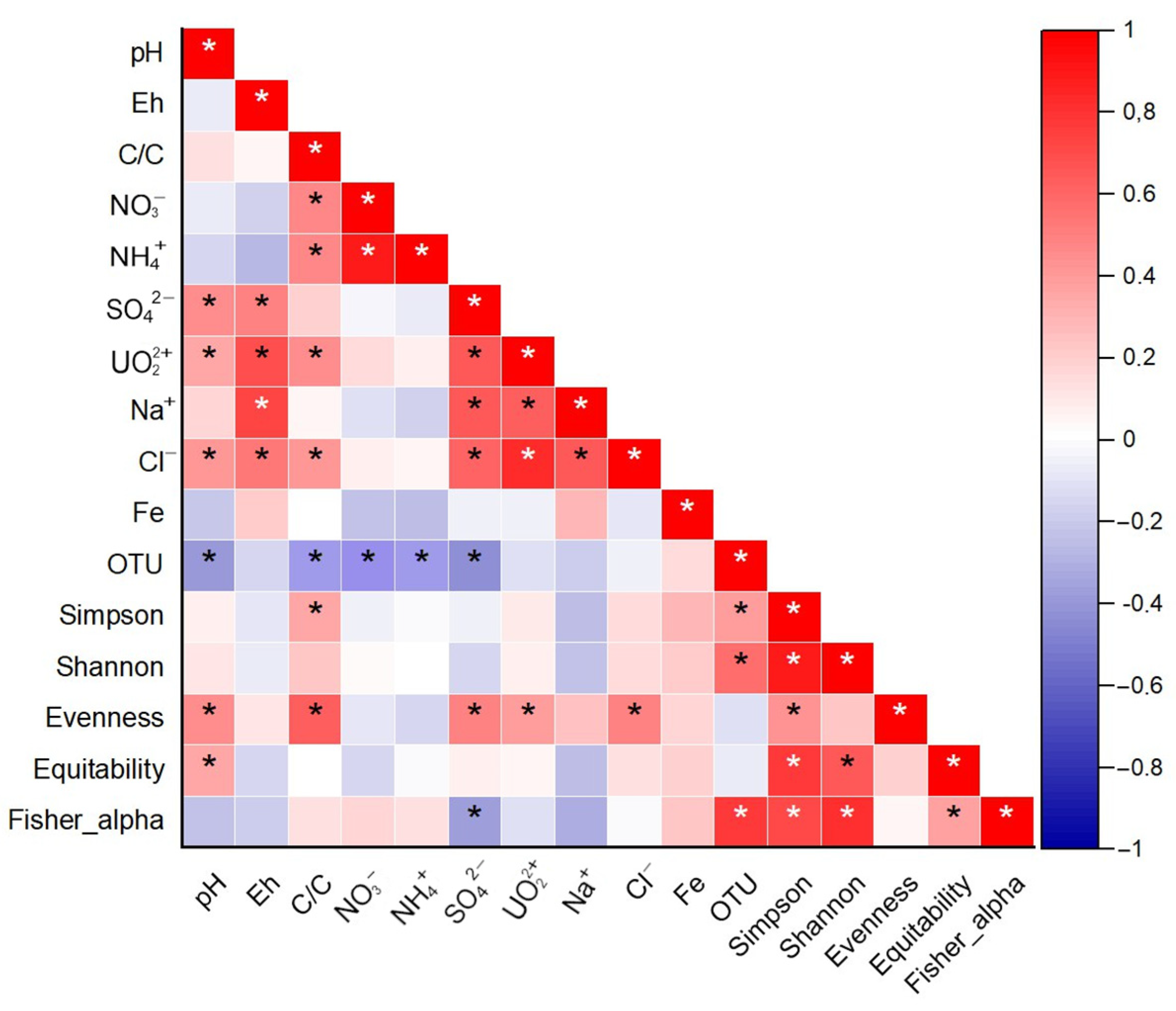
Correlation analysis of hydrochemical and biodiversity relationships revealed systematic patterns in microbial community development under chemical pollution stress (Figure A3). The significant positive correlation between nitrogenous pollutants and OTU richness suggests a dual role for nitrogen compounds—acting both as stressors and as growth-stimulating nutrients that alleviate natural nitrogen limitation in oligotrophic groundwater systems. Notably, we observed a significant inverse relationship between microbial abundance and environmental pH, potentially reflecting both community adaptation to moderately acidic conditions created by pollutants and pH alterations resulting from microbial metabolite production. While nitrate pollution generally correlated with increased taxonomic richness, sulfate contamination demonstrated a strong negative association with OTU numbers. Analysis of community evenness revealed significant dependencies on pH, sulfate, uranyl, and chloride concentrations. Elevated levels of these ions appear to suppress taxonomic dominance, fostering more uniform community structures where no single taxon gains competitive advantage under chemical stress conditions.
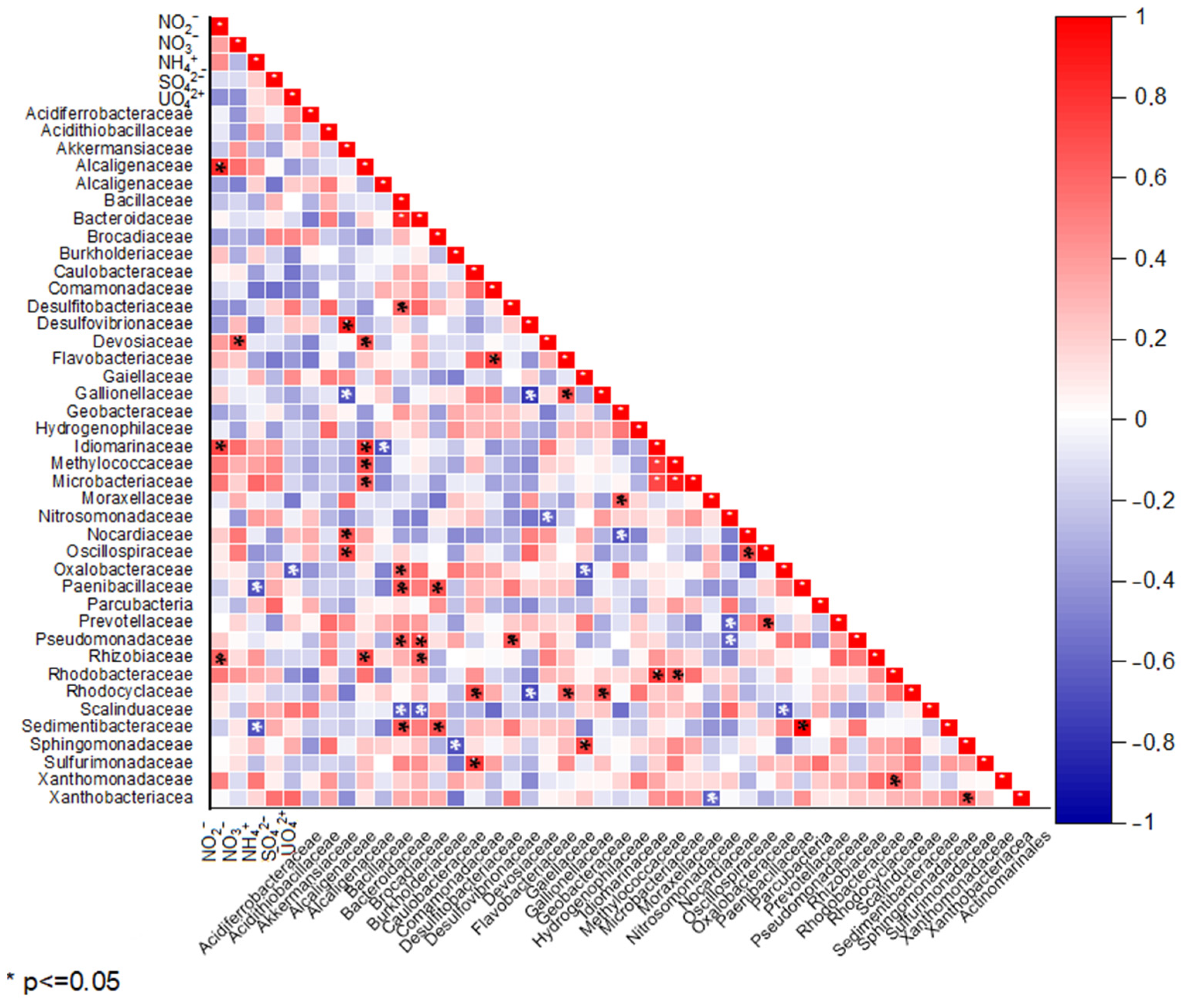
Correlation analysis between taxonomic composition and pollution levels identified specific family-pollutant relationships (Figure A4). Nitrate concentration showed significant positive correlations with Devosiaceae and Pseudomonadaceae, and strong associations with Alcaligenaceae, Idiomarinaceae, Nocardiaceae, Oscillospiraceae, Rhodobacteriaceae, and Xanthomonadaceae. Ammonium pollution correlated significantly with Scalinduaceae and showed strong positive relationships with Xanthomonadaceae, Rhizobiaceae, Alcaligenaceae, and Microbacteriaceae. Sulfate contamination demonstrated significant positive correlations with Desulfovibrionaceae and Sulfurimonadaceae, and notable associations with Parcubacteria, Xanthomonadaceae, Brocadiaceae, Microbacteriaceae, and Idiomarinaceae. While uranium showed no significant positive correlations, it influenced Oxalobacteraceae distribution and exhibited direct relationships with Xanthobacteriaceae, Scalinduaceae, Rhodobacteriaceae, Galiellaceae, Desulfitobacteriaceae, Brocadiaceae, and Acidithiobacillaceae.
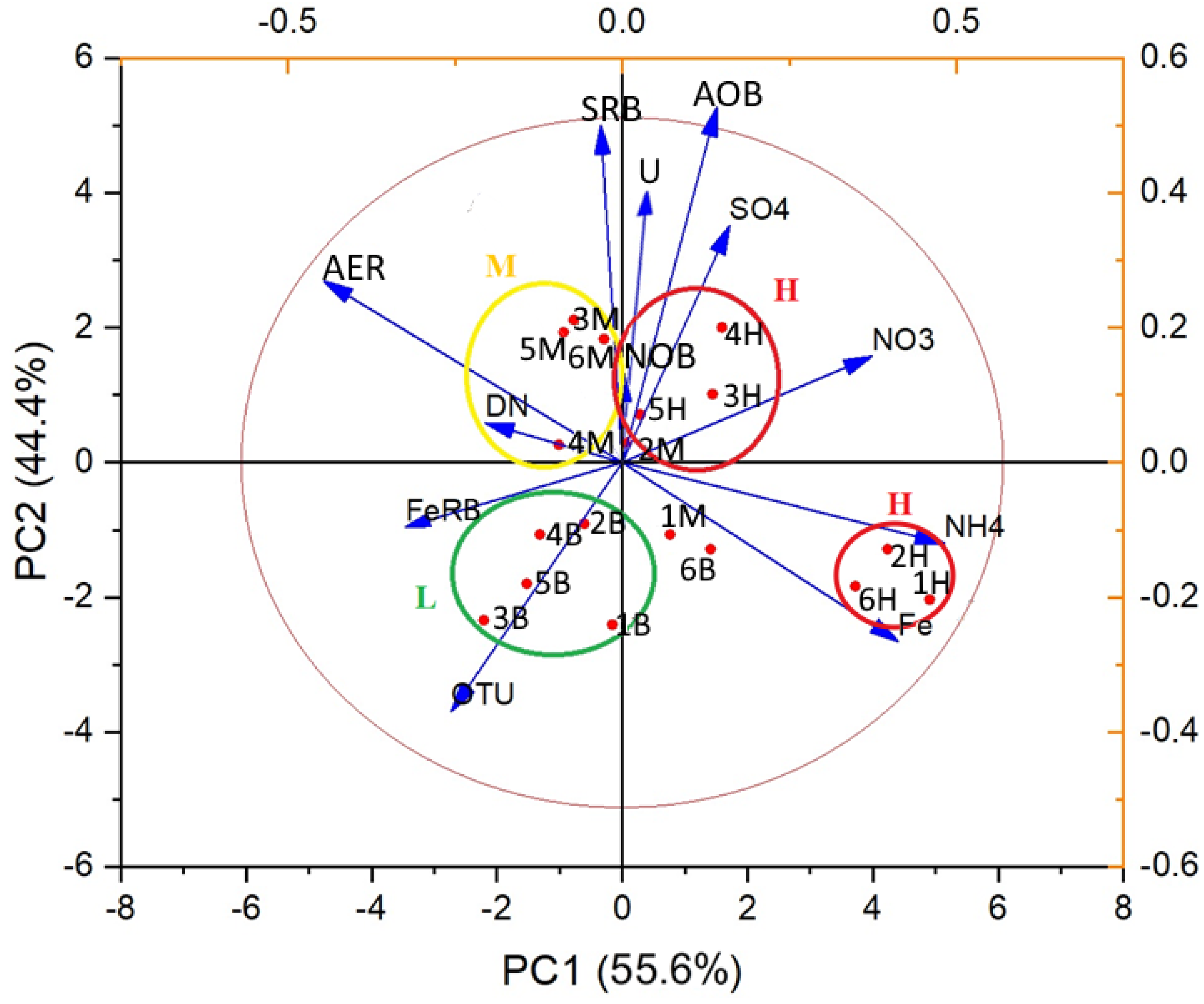
Principal component analysis (PCA) clearly resolved spatial separation of microbial communities along contamination gradients (Figure 9). Background communities (Group L), clustering inversely to major pollutants along PC1, maintained higher OTU richness and were enriched with iron-cycling bacteria from Geobacteraceae and Gallionellaceae. Iron-oxidizing bacteria of the family Gallionellaceae (Gallionella, Sideroxydans) and iron-reducing bacteria of the family Geobacteraceae (Geobacter), under conditions of limited nutrient access, are capable of using clays as electron donors and humic substances as electron acceptors [58,59,60], suggesting their key role in anaerobic organic matter oxidation alongside aerobic organotrophs (Acinetobacter, Acidovorax, Bacillus, Pseudomonas, Sphingopyxis).
Ammonium-rich samples (1H, 2H, 6H) formed distinct clusters characterized by nitrogen-cycling specialists from Gallionellaceae, Comamonadaceae, Hydrogenophilaceae, Xanthomonadaceae, and Scalinduaceae, facilitating complete nitrogen compound processing from ammonium oxidation to removal. Samples with high sulfate-nitrate content clustered with nitrifying and sulfate-reducing bacteria, though 16S rRNA analysis detected Desulfovibrionaceae exclusively at Site 4, despite cultivation-based evidence of sulfate reduction at multiple sites. Sulfur-oxidizing bacteria (Acidithiobacillaceae, Sulfurimonadaceae) were widely distributed, with some Gallionellaceae and Hydrogenophilaceae representatives also capable of oxidizing reduced sulfur compounds [61,62,63,64].
Moderately polluted zones were dominated by aerobic heterotrophs and denitrifiers (Pseudomonadaceae, Comamonadaceae), thriving despite organic carbon limitation due to available nitrate, ammonium, sulfate, and bicarbonate.

4. Discussion

We examined groups of monitoring wells located along the flow path of the groundwater at varying distances from the 6 different U-containing sludge storage facilities: nearby wells (10–30 m) and intermediately located wells (30–50 m). In all cases, background samples were collected at a significant distance from the facilities (100–200 m) in areas situated away from the groundwater flow direction. The compositional analysis of the collected samples indicated that the multicomponent pollution was defined by elevated concentrations of nitrate, sulfate, ammonium, and bicarbonate ions. Uranium exhibited no significant correlations, which can be attributed to its relatively low environmental concentrations. Figure A3 presents a Spearman correlation diagram illustrating the relationship between microbial diversity and pollution types. Elevated nitrogen concentrations were strongly correlated with reduced microbial alpha-diversity (OTU count), showing significant negative correlations with nitrate (r = −0.68, p < 0.001), ammonium (r = −0.72, p < 0.001), and nitrite (r = −0.61, p = 0.002). Pollution type significantly shaped community response: nitrate mono-pollution (Sites 1, 4) reduced both biodiversity and nitrogen metabolism gene representation, while dual nitrate and ammonia contamination enhanced nitrogen cycle genes in energy metabolism (Figure A2). A potential explanation for this is that multicomponent pollution fostered two adaptation strategies—either diversifying nitrogen-cycling specialists (denitrifying bacteria, nitrifying bacteria, etc.) (3M, 3H) or selecting specialized dominants capable of utilizing both oxidized and reduced nitrogen forms (Brocadiaceae, Scalinduaceae) [36,65] (Sites 2, 3). Collectively, these factors may lead to a synergistic effect in the microbial community’s response to contamination. Furthermore, recent research has revealed potential couplings between the biogeochemical cycles of iron, sulfur, and other elements [50].
However, given that nitrate ions were the dominant contaminant across all sites, we posit that nitrate is the primary factor shaping the microbial community structure in the polluted zones and steering the direction of the dominant microbial processes. This is because denitrification is the most expected process in the investigated habitats under oxygen-limited conditions. This is supported by an observed increase in the abundance of denitrifying bacteria in areas with medium-level nitrate pollution at all sites, as well as in one site with high-level pollution (for example, Site 3). Further corroboration comes from increased diversity indices in zones with medium and even high levels of pollution (for example, Site 6), and by an enhanced contribution of nitrogen metabolism genes in communities 1B, 3B, 3H, 4B, 6M, 6H, and across all samples from site 5 (5B–H). In contrast, nitrogen transformation capabilities were minimal in communities 4M, 4H, 6B, and 3M (Figure 2A).
Correlation analysis between taxonomic composition and pollution levels identified specific family-pollutant relationships (Figure A4). Nitrate concentration showed significant positive correlations with Devosiaceae and Pseudomonadaceae, and strong associations with Alcaligenaceae, Idiomarinaceae, Nocardiaceae, Oscillospiraceae, Rhodobacteriaceae, and Xanthomonadaceae. Nitrate pollution consistently selected for bacteria performing dissimilatory nitrate reduction (Acidovorax, Pseudomonas) [66,67,68,69,70] and iron redox cycling (Acidovorax, Pseudomonas, Gallionella) [66,71]. Acinetobacter, a heterotrophic denitrifying bacteria [72,73,74], as well as Azoarcus and Thauera [70,75], also possess genes encoding nitrite reductases (nirS and nirK) and are commonly present in aquifers with nitrogen pollution. The remarkable functional resilience of these microbial communities to nitrate stress was further evidenced by the prevalence of diverse nitrogen-cycling microorganisms.
However, it is known that an intensive denitrification process under high nitrate concentrations requires the presence of high concentrations of compounds that act as electron donors [76,77]. Based on the results of chemical analysis, the organic electron donors necessary for intensive denitrification are virtually absent. The phosphorus content in the groundwater was below the instrument’s detection limit. The primary cause can be attributed to the development of lithotrophic bacteria that utilize carbonates as a carbon source. The organic matter they produce can subsequently serve as an electron donor for denitrification.
Therefore, the accumulation of organic matter necessary for nitrate removal could be driven by the activity of nitrifying bacteria capable of oxidizing ammonium while utilizing carbonates as a carbon source. However, their active development is likely limited by the low oxygen concentrations [78]. Among ammonium oxidating bacteria (AOB), only Nitrosomonas was found in polluted groundwater samples of Sites 1, 3, 4 and 6. Nitrite-Oxidizing Bacteria (NOB) such as Nitrospira and Nitrobacter were present in polluted Sites 3, 4, 5 and 6 in extremely small quantities (<0.5% OTU abundance). Therefore, the nitrifying family Nitrosomonadaceae thrived under these conditions, exhibiting a positive correlation with ammonium levels (r = 0.54, p = 0.008). Moreover, ammonium pollution showed strong positive relationships with Xanthomonadaceae, Rhizobiaceae, Alcaligenaceae, and Microbacteriaceae.
Anammox bacteria, detected in samples from Site 2, are capable of participating in the lithotrophic reduction of nitrate using ammonium as an electron donor. Earlier, we demonstrated complete nitrogen removal capacity through the anammox process, with Brocadiaceae and Scalinduaceae dominating samples 2M and 2H [36,46]. Metagenomic analysis confirmed anammox genetic potential, though only the 2M community (Ca. Frigussubterria udmurtiae S40-1) possessed the NrfA nitrite reductase fragment enabling nitrate reduction to ammonium [36]. These analyses also revealed novel taxa, including Ca. Frigussubterria, a new Ca. Kuenenia species, and two new Ca. Scalindua strains. Metagenomic data from Site 2 showed high copy numbers of nitrogen cycle genes (NirC, NarK, NirS, NirK, Hox, Hdh, Nar, NxrABC, NrfA) [36], along with universal stress response capabilities (reactive oxygen species detoxification, assimilatory sulfate reduction) [36] (Figure A2) and outer membrane cytochromes suggesting insoluble Fe(III)/Mn(IV) reduction potential.
Thus, the nitrogen cycle in the studied aquifers is complex and requires detailed, site-specific investigation. Our analysis identified multiple phylogenetic groups participating in nitrogen removal: denitrifying Alcaligenaceae (Achromobacter, Alcaligenes, Pusillimonas) [57,79]; denitrifying and ammonium-oxidizing Comamonadaceae (Acidovorax, Comamonas, Limnohabitans, Rhodoferax, Thiomonas) [69,80]; denitrifying and nitrogen-fixing Pseudomonadaceae (Azotobacter, Pseudomonas, Rhizobacter) [69,81]; dissimilatory nitrate-reducing Hydrogenophilaceae (Hydrogenophilus) [82]; nitrate-reducing Idiomarinaceae (Aliidiomarina) [56]; nitrogen-fixing and nitrate-reducing Nocardiaceae [83,84]; and nitrifying-denitrifying Sphingomonadaceae (Sphingobium, Sphingomonas, Sphingopyxis) [85] alongside nitrogen-fixing and denitrifying Xanthomonadaceae (Arenimonas, Luteimonas, Lysobacter, Thermomonas, Xanthomonas) [85,86]. Moreover, the significant negative correlation between nitrogenous pollutants and OTU richness (Figure A3) suggests a dual role for nitrogen compounds—acting both as stressors and as growth-stimulating nutrients that alleviate natural nitrogen limitation in oligotrophic groundwater systems.

Prospects for In Situ Bioremediation

In situ bioremediation of nitrate-contaminated aquifers is a promising remediation strategy. Its implementation is relatively straightforward and requires minimal capital investment. This approach can be performed either by stimulating the intrinsic biogeochemical potential of the autochthonous microbial community through the introduction of soluble organic electron donors, or by supplementing it with specialized microbial consortia (bioaugmentation). The use of such bioaugmentation preparations may be particularly effective in cases of severe pollution. Bioaugmentation has proven to be an effective strategy for nitrate removal across diverse environmental matrices, including wastewater [87], groundwater [88], and soil [89].
Our study identified multiple microbial taxa consistently associated with extremal nitrate and ammonium pollution across all sites located over 1000 km apart on average. Comparative analysis revealed a conserved core of bacterial families across all polluted sites, consisting of Comamonadaceae, Gallionellaceae, Pseudomonadaceae (Figure 7), Sphingomonadaceae. At the genus level, we identified a universal core of Acidovorax, Pseudomonas, and Sphingomonas across all polluted sites (Figure 8). Furthermore, all highly polluted communities specifically contained Acinetobacter and Limnohabitans. Most promising candidates for nitrate removal are organotrophic bacteria with modest cultivation requirements, making them suitable for biopreparation development.
Microbial communities in groundwater denitrification hotspots are consistently dominated by denitrifying genera, including Acidovorax, Pseudomonas, Sphingomonas, and Bacillus, which harbor the essential functional genes nirS/nirK and nosZ [69,70,76,90,91].
The genus Pseudomonas, in particular, is frequently employed as a model denitrifying microorganism due to its well-characterized physiology and genetics [90,92]. It is ubiquitous across diverse ecosystems and is often a dominant taxon within aquifer microbial communities [69,93]. Similarly, the genus Acidovorax is a common constituent of groundwater microbiota [70,92]. The presence and activity of these bacterial genera are thus considered critical for the effective natural attenuation of nitrate pollution in groundwater systems [68].
At Site 1, rock-based biofilm enrichment cultures achieved efficient nitrate removal [35,76], yielding pure isolates (Bacillus proteolyticus I-16-d, Paenibacillus glucanolyticus strains II-2181-a and II-25-e, Microbacterium flavescens II-25-m) capable of reducing nitrate, chromate, pertechnetate, and uranyl ions. Previous work also isolated Shewanella strains from this site with dual nitrate and uranyl reduction capabilities [94]. The success of this approach, whether using adapted monocultures or specialized bacterial consortia, is largely attributable to the microbial community’s enrichment of key functional genes associated with the nitrate assimilation and Dissimilatory Nitrate Reduction to Ammonium (DNRA) pathways. Among the most promising candidates for such biopreparations are members of the genera Bacillus and Paenibacillus [76,95].
The utilization of anammox bacteria as bioremediation agents has not yet become widespread, primarily due to the challenges associated with their isolation and cultivation. However, the anammox bacteria discovered in our studies, which inhabit groundwater at a constant temperature of 8–10 °C, are of considerable interest and hold potential for future biotechnology applications.
We successfully established anammox enrichment cultures in flow-through reactors using aquifer-derived biofilms [46]. These enrichments contained not only Planctomycetes but also Pseudomonadaceae, Rhodanobacteraceae, Xanthomonadaceae, and Alcaligenaceae. Bioaugmentation trials using Site 2 communities with both native (Ca. Scalindua) and non-native (Ca. Kuenenia) anammox consortia demonstrated promising results [96].

5. Conclusions

Multicomponent groundwater pollution from nitric and sulfuric acid waste storage represents a persistent challenge for mining and ore processing industries. Our comprehensive analysis across six polluted sites identified core microbial taxa—including the families Comamonadaceae, Gallionellaceae, and Pseudomonadaceae—with consistent nitrate reduction capabilities, highlighting their potential for in situ bioaugmentation applications. Field experiments confirm that nitrate removal initiates critical redox transitions that enable subsequent ammonium and sulfate elimination. Our findings demonstrate that pollution chemistry fundamentally shapes aquifer microbial community structure: nitrogenous compounds generally stimulate taxonomic diversity and functional specialization, while sulfate exerts inhibitory effects, significantly reducing biodiversity. The observed decline in microbial diversity and denitrifier abundance in high-nitrate zones indicates limited intrinsic remediation capacity, necessitating bioaugmentation strategies. The dominant microbial groups identified in polluted sites—particularly Acidovorax, Bacillus, Pseudomonas, Sphingomonas, Acinetobacter, and Limnohabitans—represent optimal candidates for developing targeted biopreparations. Consequently, identifying such widespread microbial taxa across differentially polluted sites provides a robust foundation for developing effective bioremediation consortia for application with organic substrate amendments.

Author Contributions

Conceptualization, N.P. and A.S.; methodology, N.P. and A.S.; software, N.P.; validation, A.S.; formal analysis, A.S.; investigation, N.P. and A.S.; resources, A.S.; data curation, N.P. and A.S.; writing—original draft preparation, N.P. and A.S.; writing—review and editing, A.S.; visualization, N.P.; supervision, A.S.; project administration, A.S.; funding acquisition, A.S. All authors have read and agreed to the published version of the manuscript.

Funding

This work was supported by state assignments from The Ministry of Science and Higher Education of the Russian Federation.

Institutional Review Board Statement

Not applicable.

Informed Consent Statement

Not applicable.

Data Availability Statement

All data generated or analyzed during this study are included in this published article.

Acknowledgments

This work was performed using the equipment of the Core Facilities Center of IPCE RAS (CKP FMI IPCE RAS).

Conflicts of Interest

The authors declare no conflicts of interest.

Appendix A

Table A1. Selective media composition.
Bacterial GroupMedia Composition
Aerobic organotrophic bacteria10 g/L tryptone, 5 g/L yeast extract, 1 g/L glucose, pH = 7.5.
Denitrifying bacteriaAdkins medium for denitrifying bacteria (DB) contained (g/L): NH4Cl—1.0; KH2PO4—0.75; K2HPO4—1.5; NaNO3—1.0; NaCl—0.8; Na2SO4—0.1; MgSO4·7H2O—0.1; KCl—0.1, yeast extract—0.5; glucose—1.0; CH3COONa—1.0, pH = 7, gas phase—Ar.
Sulfate-reducing bacteriaPostgate B medium (g/L): NaCl —1.0; KH2PO4—0.5; NH4Cl—1.0; CaSO4·2H2O—1.0; MgSO4·7H2O—2; yeast extract—1.0; sodium lactate—4; Na2S·9H2O—0.2, pH = 7.
Nitrifying ammonium to nitriteWinogradskiy medium for stage I nitrifiers (AOB) contained (g/L tap water): (NH4)2SO4—2.0; K2HPO4—1.0; MgSO4 ∙ 7H2O—0.5; NaCl—2.0; FeSO4 ∙ 7H2O—0.05; CaCO3—5.0, pH = 8.
Nitrifying nitrite to nitrateWinogradskiy medium for stage II nitrifiers (NOB) contained (g/L tap water): NaNO2—1.0; K2HPO4—0.5; MgSO4 ∙ 7H2O—0.5; NaCl—0.5; FeSO4 ∙ 7H2O—0.4; Na2CO3—1.0, pH = 8.
Iron reducing bacteriaModified IRB medium (g/L tap water): CaCl2 ∙ 2H2O—0.1; NaH2PO4—0.6; MgCl2 ∙ 6H2O—0.1; MgSO4 ∙ 7H2O—0.1; MnCl2 ∙ 4H2O—0.005; Na2MoO4∙ 2H2O—0.001; NH4Cl—1.0; KCl—0.1; NaCl—0.1;
NaHCO3—2.0; yeast extract—0.5; CH3COONa—0.75; Iron(III) citrate —1.5, pH = 7.
Table A2. Sample hydrochemistry, mg/L.
SamplepHeH
mV
C/C
mg/L
NO3
mg/L
NO2
mg/L
HCO3
mg/L
SO42−
mg/L
NH4+
mg/L
Ca2+
mg/L
U
mg/L
Corg.
mg/L
Na
mg/L
Cl
mg/L
∑Fe
mg/L
1B7.06 −30127<0.200.2379.31.8<0.517.5<0.0112.24.061.444.8
1M6.06655070150017.42411521.73050.0614.52451.44.3
1H6.56787000268034.535779.36.2308.60.7218.76394.4217.5
2B7.38−10512711.52.853.821.47.8313.2<0.013.310010.92.1
2M6.6787900224048.910562370361630.90.0616.9465424.1
2H7.413412,800430056.6100497021621900.4323.1279023005.1
3B7.39−1151730.80.02126.926.70.933.8<0.013.75.250.513.9
3M9.26−5027007896.9180.6974.7614610.094.820.62.20.7
3H8.03−310,500329052.1197.6824856912830.049.1117.81190.27
4B7.7−2735508.540.06267161.2146<0.0113.76.213.30.7
4M6.413466202333.548.9294142.529.61143.50.12667.41070.6
4H7.48017,01011,2000.061953581.1729600.146.1137660.9
5B7.1−19072912.021.4549303.71123<0.015.50.24113.4
5M7.8−28374311240.616117690.23561.5814.96855902.6
5H7.979012,109616944.71804701.0314360.0214.61249320012.3
6B7.09−507430.20.5243.712.72.4114.1<0.0111.86.28.66.1
6M7.7298268020911.8358.5278.2273.824.72.046.542.519.22.3
6H7.341101706121.721.9412.6290.7188.911880.8212.7125.745.72.4
SampleStandard deviation
pHeHC/CNO3NO2HCO3SO42−NH4+Ca2+UCorg.NaClFe
1B0.1 −1511.30.00.05.80.10.01.30.00.90.30.10.4
1M0.122386.4109.51.317.611.10.122.30.01.117.90.10.3
1H0.115442195.62.526.15.80.522.50.11.446.60.31.3
2B0.11−2311.30.80.23.91.60.61.00.00.27.30.80.2
2M0.114476.3163.53.677.1173.026.446.10.01.233.93.10.3
2H0.1125673.5313.94.173.370.815.8159.90.01.7203.7167.90.4
3B0.11−2423.40.10.09.31.90.12.50.00.30.40.01.0
3M0.2−16145.857.60.513.271.24.533.70.00.41.50.20.1
3H0.15−5578240.23.814.4602.141.593.70.00.78.68.70.0
4B0.12−2478.30.60.019.51.20.13.40.01.00.50.20.1
4M0.112229.5170.33.621.510.42.283.50.00.44.97.80.0
4H0.1115673.5817.60.014.226.10.1216.10.00.410.04.80.1
5B0.1−2143.20.90.140.12.20.39.00.00.40.00.80.2
5M0.12−6165.582.10.011.8129.10.04.10.11.150.043.10.2
5H0.1417567.9450.33.313.134.30.1104.80.01.191.2233.60.9
6B0.1−948.80.00.017.80.90.28.30.00.90.50.60.4
6M0.1216114.115.30.926.220.320.01.80.10.53.11.40.2
6H0.112792.68.91.630.121.213.886.70.10.99.23.30.2
Table A3. Multiple ANOVA analysis of main contaminants and responding OTU variance with pollution level groups: background (B), medium (M), high (H).
ParameterF-Valuep-Valueη2 (Partial eta-Squared)Group Difference (Tukey HSD)
NO345.2172.14 × 10−9 *0.834B < M < H (p < 0.001)
NH4+62.8934.78 × 10−11 *0.875B < M < H (p < 0.001)
SO42−38.5421.56 × 10−8 *0.811B < M, B < H, M ≠ H (p < 0.01)
U51.6345.23 × 10−10 *0.851B < M < H (p < 0.001)
Fe89.3262.45 × 10−13 *0.908B < M < H (p < 0.001)
OTU28.1943.67 × 10−7 *0.758B > M, B > H, M < H (p < 0.01)
* p < 0.001.
Table A4. Two-way ANOVA analysis of site and pollution level variance.
FactorF-Valuep-Valueη2 (Partial eta-Squared)
Site28.45<0.0010.672
Contamination level45.18<0.0010.781
Site/contamination level12.73<0.0010.534
Table A5. One-way ANOVA analysis of samples within equal pollution level groups: background (B), medium (M), high (H).
Pollution LevelBackgroundMediumHigh
F-value38.72 *42.15 *35.89 *
* p < 0.001.
Figure A1. Log cell counts of the main functional groups of microorganisms in groundwater samples. (A) AER—aerobic organotrophic bacteria, (B) DN—denitrifying, (C) SRB—sulfate-reducing, (D) FeRB—iron-reducing microorganisms, (E) AOB—nitrifying ammonium to nitrite, (F) NOB—nitrifying nitrite to nitrate.
Life 15 01854 g0a1
Figure A2. Metabolic pathway analysis via IVikodak global (A) and local mapper (B), associated with KEGG database.
Life 15 01854 g0a2
Figure A3. Correlation plot of hydrochemical and biodiversity relationships (* indicates p < 0.05 values).
Life 15 01854 g0a3
Figure A4. Spearman correlation diagram showing the presence of connections (* indicates p < 0.05) between hydrochemical parameters and phylogenetic diversity across all samples.
Life 15 01854 g0a4

References

  1. Cadotte, M.W.; Dinnage, R.; Tilman, D. Phylogenetic Diversity Promotes Ecosystem Stability. Ecology 2012, 93, S223–S233. [Google Scholar] [CrossRef]
  2. An, S.; Song, Y.; Fu, Q.; Qi, R.; Wu, Z.; Ge, F.; Lu, X.; An, W.; Han, W. Reclaimed Water Use Improved Polluted Water’s Self-Purification Capacity—Evidenced by Water Quality Factors and Bacterial Community Structure. J. Clean. Prod. 2023, 386, 135736. [Google Scholar] [CrossRef]
  3. Wagner, I.; Zalewski, M. Temporal Changes in the Abiotic/Biotic Drivers of Selfpurification in a Temperate River. Ecol. Eng. 2016, 94, 275–285. [Google Scholar] [CrossRef]
  4. Aly, W.; Williams, I.D.; Hudson, M.D. Metal Contamination in Water, Sediment and Biota from a Semi-Enclosed Coastal Area. Environ. Monit. Assess. 2013, 185, 3879–3895. [Google Scholar] [CrossRef]
  5. Ostroumov, S.A. On the Biotic Self-Purification of Aquatic Ecosystems: Elements of the Theory. Doklady biological sciences: Proceedings of the Academy of Sciences of the USSR, Biological sciences sections/translated from Russian. Dokl. Biol. Sci. 2004, 396, 206–211. [Google Scholar] [CrossRef]
  6. Ritter, L.; Solomon, K.; Sibley, P.; Hall, K.; Keen, P.; Mattu, G.; Linton, B. Sources, Pathways, and Relative Risks of Contaminants in Surface Water and Groundwater: A Perspective Prepared for the Walkerton Inquiry. J. Toxicol. Environ. Health Part A 2002, 65, 1–142. [Google Scholar]
  7. Boguslavskii, A.E.; Gas’kova, O.L.; Shemelina, O.V. Geochemical Model of the Environmental Impact of Low-Level Radioactive Sludge Repositories in the Course of Their Decommissioning. Radiochemistry 2016, 58, 323–328. [Google Scholar] [CrossRef]
  8. Boguslavsky, A.E.; Gaskova, O.L.; Naymushina, O.S.; Popova, N.M.; Safonov, A.V. Environmental Monitoring of Low-Level Radioactive Waste Disposal in Electrochemical Plant Facilities in Zelenogorsk, Russia. Appl. Geochem. 2020, 119, 104598. [Google Scholar] [CrossRef]
  9. Saracino, A.; Phipps, H. Groundwater Contaminants and Contaminant Sources. Watersheds Groundw. Drink. Water A Pract. Guide 2008, 3497, 73. [Google Scholar]
  10. Lyubimova, T.P.; Lepikhin, A.P.; Parshakova, Y.N.; Tsiberkin, K.B. Numerical Modeling of Liquid-Waste Infiltration from Storage Facilities into Surrounding Groundwater and Surface-Water Bodies. J. Appl. Mech. Tech. Phys. 2016, 57, 1208–1216. [Google Scholar] [CrossRef]
  11. Bowell, R.J.; Williams, K.P.; Connelly, R.J.; Sadler, P.J.K.; Dodds, J.E. Chemical Containment of Mine Waste. Geol. Soc. Spec. Publ. 1999, 157, 213–240. [Google Scholar] [CrossRef]
  12. Plessl, K.; Russ, A.; Vollprecht, D. Application and Development of Zero-Valent Iron (ZVI) for Groundwater and Wastewater Treatment. Int. J. Environ. Sci. Technol. 2023, 20, 6913–6928. [Google Scholar] [CrossRef]
  13. Joshi, K.; Kechavarzi, C.; Sutherland, K.; Ng, M.Y.A.; Soga, K.; Tedd, P. Laboratory and In Situ Tests for Long-Term Hydraulic Conductivity of a Cement-Bentonite Cutoff Wall. J. Geotech. Geoenvironm. Eng. 2010, 136, 562–572. [Google Scholar] [CrossRef]
  14. Jayasundara, R.B.C.D.; Udayagee, K.P.P.; Karunarathna, A.K.; Manage, P.M.; Nugara, R.N.; Abhayapala, K.M.R.D. Permeable Reactive Barriers as an In Situ Groundwater Remediation Technique for Open Solid Waste Dumpsites: A Review and Prospect; Springer: Berlin/Heidelberg, Germany, 2023; p. 234. [Google Scholar]
  15. Valhondo, C.; Carrera, J.; Martínez-Landa, L.; Wang, J.; Amalfitano, S.; Levantesi, C.; Diaz-Cruz, M.S. Reactive Barriers for Renaturalization of Reclaimed Water during Soil Aquifer Treatment. Water 2020, 12, 1012. [Google Scholar] [CrossRef]
  16. Fagoyinbo, C.V.O.; Dairo, V.A. Groundwater Contamination and Effective Ways of Rectification. Pharmacogenomics 2016, 3, 1749–1756. [Google Scholar]
  17. Boguslavsky, A.; Shvartseva, O.; Popova, N.; Safonov, A. Biogeochemical In Situ Barriers in the Aquifers near Uranium Sludge Storages. Water 2023, 15, 3020. [Google Scholar] [CrossRef]
  18. Majone, M.; Verdini, R.; Aulenta, F.; Rossetti, S.; Tandoi, V.; Kalogerakis, N.; Agathos, S.; Puig, S.; Zanaroli, G.; Fava, F. In Situ Groundwater and Sediment Bioremediation: Barriers and Perspectives at European Contaminated Sites. New Biotechnol. 2015, 32, 133–146. [Google Scholar] [CrossRef]
  19. Artemiev, G.; Safonov, A. Authigenic Mineral Formation in Aquifers near the Uranium Sludge Storage Facility of Chepetsky Mechanical Plant during the Formation of a Biogeochemical Barrier in a Laboratory and Field Experiment. Minerals 2023, 13, 1319. [Google Scholar] [CrossRef]
  20. Williams, K.H.; Bargar, J.R.; Lloyd, J.R.; Lovley, D.R. Bioremediation of Uranium-Contaminated Groundwater: A Systems Approach to Subsurface Biogeochemistry. Curr. Opin. Biotechnol. 2013, 24, 489–497. [Google Scholar] [CrossRef]
  21. Long, P.E.; Williams, K.H.; Davis, J.A.; Fox, P.M.; Wilkins, M.J.; Yabusaki, S.B.; Fang, Y.; Waichler, S.R.; Berman, E.S.F.; Gupta, M.; et al. Bicarbonate Impact on U(VI) Bioreduction in a Shallow Alluvial Aquifer. Geochim. Cosmochim. Acta 2015, 150, 106–124. [Google Scholar] [CrossRef]
  22. Suzuki, Y.; Kelly, S.D.; Kemner, K.M.; Banfield, J.F. Direct Microbial Reduction and Subsequent Preservation of Uranium in Natural Near-Surface Sediment. Appl. Environ. Microbiol. 2005, 71, 1790–1797. [Google Scholar] [CrossRef]
  23. Suzuki, Y.; Banfield, J.F. Geomicrobiology of Uranium. In Uranium: Mineralogy, Geochemistry, and the Environment; Walter de Gruyter GmbH & Co KG: Berlin, Germany, 2019. [Google Scholar]
  24. Newsome, L.; Morris, K.; Lloyd, J.R. The Biogeochemistry and Bioremediation of Uranium and Other Priority Radionuclides. Chem. Geol. 2014, 363, 164–184. [Google Scholar] [CrossRef]
  25. Lloyd, J.R. Microbial Reduction of Metals and Radionuclides. FEMS Microbiol. Rev. 2003, 27, 411–425. [Google Scholar] [CrossRef] [PubMed]
  26. Anderson, R.T.; Vrionis, H.A.; Ortiz-Bernad, I.; Resch, C.T.; Long, P.E.; Dayvault, R.; Karp, K.; Marutzky, S.; Metzler, D.R.; Peacock, A.; et al. Stimulating the In Situ Activity of Geobacter Species to Remove Uranium from the Groundwater of a Uranium-Contaminated Aquifer. Appl. Environ. Microbiol. 2003, 69, 5884–5891. [Google Scholar] [CrossRef]
  27. Senko, J.M.; Istok, J.D.; Suflita, J.M.; Krumholz, L.R. In-Situ Evidence for Uranium Immobilization and Remobilization. Environ. Sci. Technol. 2002, 36, 1491–1496. [Google Scholar] [CrossRef]
  28. Xu, M.; Wu, W.M.; Wu, L.; He, Z.; Van Nostrand, J.D.; Deng, Y.; Luo, J.; Carley, J.; Ginder-Vogel, M.; Gentry, T.J.; et al. Responses of Microbial Community Functional Structures to Pilot-Scale Uranium in Situ Bioremediation. ISME J. 2010, 4, 1060–1070. [Google Scholar] [CrossRef] [PubMed]
  29. Wu, W.M.; Carley, J.; Luo, J.; Ginder-Vogel, M.A.; Cardenas, E.; Leigh, M.B.; Hwang, C.; Kelly, S.D.; Ruan, C.; Wu, L.; et al. In Situ Bioreduction of Uranium (VI) to Submicromolar Levels and Reoxidation by Dissolved Oxygen. Environ. Sci. Technol. 2007, 41, 5716–5723. [Google Scholar] [CrossRef]
  30. Wufuer, R.; Duo, J.; Li, W.; Fan, J.; Pan, X. Bioremediation of Uranium-and Nitrate-Contaminated Groundwater after the in Situ Leach Mining of Uranium. Water 2021, 13, 3188. [Google Scholar] [CrossRef]
  31. Gaskova, O.L.; Boguslavsky, A.E.; Shemelina, O.V. Uranium Release from Contaminated Sludge Materials and Uptake by Subsurface Sediments: Experimental Study and Thermodynamic Modeling. Appl. Geochem. 2015, 55, 152–159. [Google Scholar] [CrossRef]
  32. Gaskova, O.L.; Boguslavsky, A.E. Groundwater Geochemistry Near the Storage Sites of Low-Level Radioactive Waste: Implications for Uranium Migration. Procedia Earth Planet. Sci. 2013, 7, 288–291. [Google Scholar] [CrossRef]
  33. Artemyev, G.D.; Safonov, A.V.; Zubkov, A.A.; Myasnikov, I.Y.; Novikov, A.P. Experience of Creating an in Situ Biogeochemical Barrier in Contaminated Groundwater at Nuclear Fuel Cycle Facilities. Part 1. At. Energy 2025, 137, 190–197. [Google Scholar] [CrossRef]
  34. Safonov, A.V.; Babich, T.L.; Sokolova, D.S.; Grouzdev, D.S.; Tourova, T.P.; Poltaraus, A.B.; Zakharova, E.V.; Merkel, A.Y.; Novikov, A.P.; Nazina, T.N. Microbial Community and in Situ Bioremediation of Groundwater by Nitrate Removal in the Zone of a Radioactive Waste Surface Repository. Front. Microbiol. 2018, 9, 1985. [Google Scholar] [CrossRef]
  35. Babich, T.L.; Popova, N.M.; Sokolova, D.S.; Perepelov, A.V.; Safonov, A.V.; Nazina, T.N. Microbial and Monosaccharide Composition of Biofilms Developing on Sandy Loams from an Aquifer Contaminated with Liquid Radioactive Waste. Microorganisms 2024, 12, 275. [Google Scholar] [CrossRef]
  36. Litti, Y.; Elcheninov, A.; Botchkova, E.; Chernyh, N.; Merkel, A.; Vishnyakova, A.; Popova, N.; Zhang, Y.; Safonov, A. Metagenomic Evidence of a Novel Anammox Community in a Cold Aquifer with High Nitrogen Pollution. J. Environ. Manag. 2024, 365, 121629. [Google Scholar] [CrossRef]
  37. Takahashi, S.; Tomita, J.; Nishioka, K.; Hisada, T.; Nishijima, M. Development of a Prokaryotic Universal Primer for Simultaneous Analysis of Bacteria and Archaea Using Next-Generation Sequencing. PLoS ONE 2014, 9, e105592. [Google Scholar] [CrossRef] [PubMed]
  38. Fadrosh, D.W.; Ma, B.; Gajer, P.; Sengamalay, N.; Ott, S.; Brotman, R.M.; Ravel, J. An Improved Dual-Indexing Approach for Multiplexed 16S RRNA Gene Sequencing on the Illumina MiSeq Platform. Microbiome 2014, 2, 6. [Google Scholar] [CrossRef] [PubMed]
  39. Slobodkin, A.I.; Rusanov, I.I.; Slobodkina, G.B.; Stroeva, A.R.; Chernyh, N.A.; Pimenov, N.V.; Merkel, A.Y. Diversity, Methane Oxidation Activity, and Metabolic Potential of Microbial Communities in Terrestrial Mud Volcanos of the Taman Peninsula. Microorganisms 2024, 12, 1349. [Google Scholar] [CrossRef]
  40. Qiu, Z.; Yuan, L.; Lian, C.A.; Lin, B.; Chen, J.; Mu, R.; Qiao, X.; Zhang, L.; Xu, Z.; Fan, L.; et al. BASALT Refines Binning from Metagenomic Data and Increases Resolution of Genome-Resolved Metagenomic Analysis. Nat. Commun. 2024, 15, 2179. [Google Scholar] [CrossRef] [PubMed]
  41. Zhou, Z.; Tran, P.Q.; Breister, A.M.; Liu, Y.; Kieft, K.; Cowley, E.S.; Karaoz, U.; Anantharaman, K. METABOLIC: High-Throughput Profiling of Microbial Genomes for Functional Traits, Metabolism, Biogeochemistry, and Community-Scale Functional Networks. Microbiome 2022, 10, 33. [Google Scholar] [CrossRef]
  42. Martin, M. Cutadapt Removes Adapter Sequences from High-Throughput Sequencing Reads. EMBnet. J. 2011, 17, 10–12. [Google Scholar] [CrossRef]
  43. Bolger, A.M.; Lohse, M.; Usadel, B. Trimmomatic: A Flexible Trimmer for Illumina Sequence Data. Bioinformatics 2014, 30, 2114–2120. [Google Scholar] [CrossRef] [PubMed]
  44. Renaud, G.; Stenzel, U.; Maricic, T.; Wiebe, V.; Kelso, J. DeML: Robust Demultiplexing of Illumina Sequences Using a Likelihood-Based Approach. Bioinformatics 2015, 31, 770–772. [Google Scholar] [CrossRef] [PubMed]
  45. Quast, C.; Pruesse, E.; Yilmaz, P.; Gerken, J.; Schweer, T.; Yarza, P.; Peplies, J.; Glöckner, F.O. The SILVA Ribosomal RNA Gene Database Project: Improved Data Processing and Web-Based Tools. Nucleic Acids Res. 2013, 41, D590–D596. [Google Scholar] [CrossRef] [PubMed]
  46. Botchkova, E.; Vishnyakova, A.; Popova, N.; Sukhacheva, M.; Kolganova, T.; Litti, Y.; Safonov, A. Characterization of Enrichment Cultures of Anammox, Nitrifying and Denitrifying Bacteria Obtained from a Cold, Heavily Nitrogen-Polluted Aquifer. Biology 2023, 12, 221. [Google Scholar] [CrossRef]
  47. Nagpal, S.; Haque, M.M.; Singh, R.; Mande, S.S. IVikodak-A Platform and Standard Workflow for Inferring, Analyzing, Comparing, and Visualizing the Functional Potential of Microbial Communities. Front. Microbiol. 2019, 10, 3336. [Google Scholar] [CrossRef]
  48. Yang, M.; Chen, T.; Liu, Y.X.; Huang, L. Visualizing Set Relationships: EVenn’s Comprehensive Approach to Venn Diagrams. iMeta 2024, 3, e184. [Google Scholar] [CrossRef]
  49. Chen, M.; Wang, W.; Feng, Y.; Zhu, X.; Zhou, H.; Tan, Z.; Li, X. Impact Resistance of Different Factors on Ammonia Removal by Heterotrophic Nitrification-Aerobic Denitrification Bacterium aeromonas Sp. HN-02. Bioresour. Technol. 2014, 167, 456–461. [Google Scholar] [CrossRef]
  50. Park, S.Y.; Zhang, Y.; Kwon, J.S.; Kwon, M.J. Multi-Approach Assessment of Groundwater Biogeochemistry: Implications for the Site Characterization of Prospective Spent Nuclear Fuel Repository Sites. Sci. Total Environ. 2024, 926, 171918. [Google Scholar] [CrossRef]
  51. Griebler, C.; Lueders, T. Microbial Biodiversity in Groundwater Ecosystems. Freshw. Biol. 2009, 54, 649–677. [Google Scholar] [CrossRef]
  52. Marmonier, P.; Galassi, D.M.P.; Korbel, K.; Close, M.; Datry, T.; Karwautz, C. Groundwater Biodiversity and Constraints to Biological Distribution. In Groundwater Ecology and Evolution; Academic Press: Amsterdam, The Netherlands, 2023. [Google Scholar]
  53. Ihara, H.; Hori, T.; Aoyagi, T.; Hosono, H.; Takasaki, M.; Katayama, Y. Stratification of Sulfur Species and Microbial Community in Launched Marine Sediment by an Improved Sulfur-Fractionation Method and 16S RRNA Gene Sequencing. Microbes Environ. 2019, 34, 199–205. [Google Scholar] [CrossRef]
  54. Petzsch, P.; Poehlein, A.; Johnson, D.B.; Daniel, R.; Schlömann, M.; Mühling, M. Genome Sequence of the Moderately Acidophilic Sulfate-Reducing Firmicute Desulfosporosinus Acididurans (Strain M1T). Genome Announc. 2015, 3, 10–1128. [Google Scholar] [CrossRef]
  55. Hallberg, K.B.; Hedrich, S.; Johnson, D.B. Acidiferrobacter Thiooxydans, Gen. Nov. Sp. Nov.; an Acidophilic, Thermo-Tolerant, Facultatively Anaerobic Iron- and Sulfur-Oxidizer of the Family Ectothiorhodospiraceae. Extremophiles 2011, 15, 271–279. [Google Scholar] [CrossRef]
  56. Yang, M.; Xue, Q.; Zuo, Z.; Zhou, J.; Zhang, S.; Li, M.; Zhou, H.; Zhang, M.; Kumar, S.; Li, W.; et al. Aliidiomarina Halalkaliphila Sp. Nov., a Haloalkaliphilic Bacterium Isolated from a Soda Lake in Inner Mongolia Autonomous Region, China. Int. J. Syst. Evol. Microbiol. 2022, 72, 005263. [Google Scholar] [CrossRef] [PubMed]
  57. Luo, Z.; Hu, S.; Zhang, Y.; Yu, G.; Yang, Y.; Li, Q.; Duan, P. Study on Enhancement of Denitrification Performance of Alcaligenes Faecalis. Separations 2023, 10, 597. [Google Scholar] [CrossRef]
  58. Zhou, N.; Kupper, R.J.; Catalano, J.G.; Thompson, A.; Chan, C.S. Biological Oxidation of Fe(II)-Bearing Smectite by Microaerophilic Iron Oxidizer Sideroxydans Lithotrophicus Using Dual Mto and Cyc2 Iron Oxidation Pathways. Environ. Sci. Technol. 2022, 56, 17443–17453. [Google Scholar] [CrossRef]
  59. Fabisch, M.; Beulig, F.; Akob, D.M.; Küsel, K. Surprising Abundance of Gallionella-Related Iron Oxidizers in Creek Sediments at PH 4.4 or at High Heavy Metal Concentrations. Front. Microbiol. 2013, 4, 390. [Google Scholar] [CrossRef]
  60. Lovley, D.R. Microbe Profile: Geobacter Metallireducens: A Model for Novel Physiologies of Biogeochemical and Technological Significance. Microbiology 2022, 168, 001138. [Google Scholar] [CrossRef]
  61. Ibáñez, A.; Garrido-Chamorro, S.; Coque, J.J.R.; Barreiro, C. From Genes to Bioleaching: Unraveling Sulfur Metabolism in Acidithiobacillus Genus. Genes 2023, 14, 1772. [Google Scholar] [CrossRef]
  62. Wang, R.; Xu, S.; Jiang, C.; Zhang, Y.; Bai, N.; Zhuang, G.; Bai, Z.; Zhuang, X. Impacts of Human Activities on the Composition and Abundance of Sulfate-Reducing and Sulfur-Oxidizing Microorganisms in Polluted River Sediments. Front. Microbiol. 2019, 10, 231. [Google Scholar] [CrossRef]
  63. Han, Y.; Perner, M. The Globally Widespread Genus Sulfurimonas: Versatile Energy Metabolisms and Adaptations to Redox Clines. Front. Microbiol. 2015, 6, 989. [Google Scholar] [CrossRef]
  64. Kadnikov, V.V.; Ivasenko, D.A.; Beletskii, A.V.; Mardanov, A.V.; Danilova, E.V.; Pimenov, N.V.; Karnachuk, O.V.; Ravin, N.V. A Novel Uncultured Bacterium of the Family Gallionellaceae: Description and Genome Reconstruction Based on Metagenomic Analysis of Microbial Community in Acid Mine Drainage. Microbiology 2016, 85, 449–461. [Google Scholar] [CrossRef]
  65. Hu, P.; van Loosdrecht, M.; Gu, J.D.; Yang, Y. The Core Anammox Redox Reaction System of 12 Anammox Bacterial Genera and Their Evolution and Application Implications. Water Res. 2025, 281, 123551. [Google Scholar] [CrossRef]
  66. Araú, L.R.; de Deus Barbosa, A.E.A. Identification of Bacterial Species with Nitrogen, Phosphorus and Sulfur Bioremediation Pathways in Wastewater Treatment Plants. J. Environ. Sci. Technol. 2020, 14, 1–12. [Google Scholar] [CrossRef]
  67. Fei, Y.; Zhang, B.; Zhang, Q.; Chen, D.; Cao, W.; Borthwick, A.G.L. Multiple Pathways of Vanadate Reduction and Denitrification Mediated by Denitrifying Bacterium acidovorax Sp. Strain BoFeN1. Water Res. 2024, 257, 121747. [Google Scholar] [CrossRef]
  68. Wang, Z.; Yang, Y.; Kümmel, S.; Richnow, H.H.; Nijenhuis, I.; Vogt, C. Heterotrophic Nitrate Reduction Potential of an Aquifer Microbial Community from Psychrophilic to Thermophilic Conditions. Sci. Total Environ. 2025, 967, 178716. [Google Scholar] [CrossRef]
  69. Xu, B.; He, J.; Zou, H.; Zhang, J.; Deng, L.; Yang, M.; Liu, F. Different Responses of Representative Denitrifying Bacterial Strains to Gatifloxacin Exposure in Simulated Groundwater Denitrification Environment. Sci. Total Environ. 2022, 850, 157929. [Google Scholar] [CrossRef]
  70. Heylen, K.; Gevers, D.; Vanparys, B.; Wittebolle, L.; Geets, J.; Boon, N.; De Vos, P. The Incidence of NirS and NirK and Their Genetic Heterogeneity in Cultivated Denitrifiers. Environ. Microbiol. 2006, 8, 2012–2021. [Google Scholar] [CrossRef]
  71. Ayangbenro, A.S.; Olanrewaju, O.S.; Babalola, O.O. Sulfate-Reducing Bacteria as an Effective Tool for Sustainable Acid Mine Bioremediation. Front. Microbiol. 2018, 9, 1986. [Google Scholar] [CrossRef] [PubMed]
  72. Yuan, L.; Wang, Y.; Zhang, L.; Palomo, A.; Zhou, J.; Smets, B.F.; Bürgmann, H.; Ju, F. Pathogenic and Indigenous Denitrifying Bacteria are Transcriptionally Active and Key Multi-Antibiotic-Resistant Players in Wastewater Treatment Plants. Environ. Sci. Technol. 2021, 55, 10862–10874. [Google Scholar] [CrossRef]
  73. Chen, J.; Hanke, A.; Tegetmeyer, H.E.; Kattelmann, I.; Sharma, R.; Hamann, E.; Hargesheimer, T.; Kraft, B.; Lenk, S.; Geelhoed, J.S.; et al. Impacts of Chemical Gradients on Microbial Community Structure. ISME J. 2017, 11, 920–931. [Google Scholar] [CrossRef] [PubMed]
  74. Zhang, R.; Xu, X.; Jia, D.; Lyu, Y.; Hu, J.; Chen, Q.; Sun, W. Sediments Alleviate the Inhibition Effects of Antibiotics on Denitrification: Functional Gene, Microbial Community, and Antibiotic Resistance Gene Analysis. Sci. Total Environ. 2022, 804, 150092. [Google Scholar] [CrossRef]
  75. Shinoda, Y.; Sakai, Y.; Uenishi, H.; Uchihashi, Y.; Hiraishi, A.; Yukawa, H.; Yurimoto, H.; Kato, N. Aerobic and Anaerobic Toluene Degradation by a Newly Isolated Denitrifying Bacterium, Thauera Sp. Strain DNT-1. Appl. Environ. Microbiol. 2004, 70, 1385–1392. [Google Scholar] [CrossRef] [PubMed]
  76. Zeng, X.; Hosono, T.; Ohta, H.; Niidome, T.; Shimada, J.; Morimura, S. Comparison of Microbial Communities inside and Outside of a Denitrification Hotspot in Confined Groundwater. Int. Biodeterior. Biodegrad. 2016, 114, 104–109. [Google Scholar] [CrossRef]
  77. Green, C.T.; Puckett, L.J.; Böhlke, J.K.; Bekins, B.A.; Phillips, S.P.; Kauffman, L.J.; Denver, J.M.; Johnson, H.M. Limited Occurrence of Denitrification in Four Shallow Aquifers in Agricultural Areas of the United States. J. Environ. Qual. 2008, 37, 994–1009. [Google Scholar] [CrossRef] [PubMed]
  78. Utom, A.U.; Werban, U.; Leven, C.; Müller, C.; Knöller, K.; Vogt, C.; Dietrich, P. Groundwater Nitrification and Denitrification Are Not Always Strictly Aerobic and Anaerobic Processes, Respectively: An Assessment of Dual-Nitrate Isotopic and Chemical Evidence in a Stratified Alluvial Aquifer. Biogeochemistry 2020, 147, 211–223. [Google Scholar] [CrossRef]
  79. Gao, Y.J.; Zhang, T.; Hu, L.K.; Liu, S.Y.; Li, C.C.; Jin, Y.S.; Liu, H. Bin Denitrification Characteristics of the Low-Temperature Tolerant Denitrification Strain Achromobacter Spiritinus HS2 and Its Application. Microorganisms 2024, 12, 451. [Google Scholar] [CrossRef]
  80. Finneran, K.T.; Johnsen, C.V.; Lovley, D.R. Rhodoferax ferrireducens Sp. Nov., a Psychrotolerant, Facultatively Anaerobic Bacterium That Oxidizes Acetate with the Reduction of Fe(III). Int. J. Syst. Evol. Microbiol. 2003, 53, 669–673. [Google Scholar] [CrossRef]
  81. Zhou, L.; Liu, W.; Duan, H.; Dong, H.; Li, J.; Zhang, S.; Zhang, J.; Ding, S.; Xu, T.; Guo, B. Improved Effects of Combined Application of Nitrogen-Fixing Bacteria Azotobacter Beijerinckii and Microalgae Chlorella Pyrenoidosa on Wheat Growth and Saline-Alkali Soil Quality. Chemosphere 2023, 313, 137409. [Google Scholar] [CrossRef]
  82. Pandey, C.B.; Kumar, U.; Kaviraj, M.; Minick, K.J.; Mishra, A.K.; Singh, J.S. DNRA: A Short-Circuit in Biological N-Cycling to Conserve Nitrogen in Terrestrial Ecosystems. Sci. Total Environ. 2020, 738, 139710. [Google Scholar] [CrossRef]
  83. Chauhan, S.; Kumari, A.; Devi, S.; Saini, P. Effect of N2-Fixing Non-Frankia Actinomycete Inoculum on the Growth and Nodulation Status of Elaeagnus Umbellata Thunb. Ecol. Front. 2025, 45, 959–968. [Google Scholar] [CrossRef]
  84. Maier, S.; Kratz, A.M.; Weber, J.; Prass, M.; Liu, F.; Clark, A.T.; Abed, R.M.M.; Su, H.; Cheng, Y.; Eickhorst, T.; et al. Water-Driven Microbial Nitrogen Transformations in Biological Soil Crusts Causing Atmospheric Nitrous Acid and Nitric Oxide Emissions. ISME J. 2022, 16, 1012–1024. [Google Scholar] [CrossRef] [PubMed]
  85. Yang, X.C.; Han, Z.Z.; Ruan, X.Y.; Chai, J.; Jiang, S.W.; Zheng, R. Composting Swine Carcasses with Nitrogen Transformation Microbial Strains: Succession of Microbial Community and Nitrogen Functional Genes. Sci. Total Environ. 2019, 688, 555–566. [Google Scholar] [CrossRef]
  86. Zhao, R.; Chen, Y.; Qu, J.; Jin, P.; Zheng, Z.; Cui, Z. Insights into the Variations of Hao-Dependent Nitrifying and Nir-Dependent Denitrifying Microbial Communities in Ammonium-Graduated Lake Environments. Appl. Sci. 2019, 9, 3229. [Google Scholar] [CrossRef]
  87. Fontalvo, N.P.M.; Gamero, W.B.M.; Ardila, H.A.M.; Gonzalez, A.F.P.; Ramos, C.G.; Muñoz, A.E.P. Removal of Nitrogenous Compounds from Municipal Wastewater Using a Bacterial Consortium: An Opportunity for More Sustainable Water Treatments. Water Air Soil Pollut. 2022, 233, 339. [Google Scholar] [CrossRef]
  88. Demir, Ö.; Atasoy, A.D.; Çalış, B.; Çakmak, Y.; Di Capua, F.; Sahinkaya, E.; Uçar, D. Impact of Temperature and Biomass Augmentation on Biosulfur-Driven Autotrophic Denitrification in Membrane Bioreactors Treating Real Nitrate-Contaminated Groundwater. Sci. Total Environ. 2022, 853, 158470. [Google Scholar] [CrossRef] [PubMed]
  89. You, Y.; Chi, Y.; Chen, X.; Wang, J.; Wang, R.; Li, R.; Chu, S.; Yang, X.; Zhang, D.; Zhou, P. A Sustainable Approach for Bioremediation of Secondary Salinized Soils: Studying Remediation Efficiency and Soil Nitrate Transformation by Bioaugmentation. Chemosphere 2022, 300, 134580. [Google Scholar] [CrossRef] [PubMed]
  90. Bellini, M.I.; Gutiérrez, L.; Tarlera, S.; Scavino, A.F. Isolation and Functional Analysis of Denitrifiers in an Aquifer with High Potential for Denitrification. Syst. Appl. Microbiol. 2009, 36, 505–516. [Google Scholar] [CrossRef]
  91. Jones, C.M.; Graf, D.R.H.; Bru, D.; Philippot, L.; Hallin, S. The Unaccounted yet Abundant Nitrous Oxide-Reducing Microbial Community: A Potential Nitrous Oxide Sink. ISME J. 2013, 7, 417–426. [Google Scholar] [CrossRef]
  92. Philippot, L. Denitrifying Genes in Bacterial and Archaeal Genomes. Biochim. Biophys. Acta-Gene Struct. Expr. 2002, 1577, 355–376. [Google Scholar] [CrossRef]
  93. Li, Z.; Yu, E.; Zhang, K.; Gong, W.; Xia, Y.; Tian, J.; Wang, G.; Xie, J. Water Treatment Effect, Microbial Community Structure, and Metabolic Characteristics in a Field-Scale Aquaculture Wastewater Treatment System. Front. Microbiol. 2020, 11, 930. [Google Scholar] [CrossRef]
  94. Babich, T.L.; Safonov, A.V.; Grouzdev, D.S.; Andryuschenko, N.D.; Zakharova, E.V.; Nazina, T.N. Bacteria of the Genus Shewanella from Radionuclide-Contaminated Groundwater. Microbiology 2019, 88, 613–623. [Google Scholar] [CrossRef]
  95. Muter, O. Current Trends in Bioaugmentation Tools for Bioremediation: A Critical Review of Advances and Knowledge Gaps. Microorganisms 2023, 11, 710. [Google Scholar] [CrossRef] [PubMed]
  96. Vishnyakova, A.; Popova, N.; Artemiev, G.; Botchkova, E.; Litti, Y.; Safonov, A. Effect of Mineral Carriers on Biofilm Formation and Nitrogen Removal Activity by an Indigenous Anammox Community from Cold Groundwater Ecosystem Alone and Bioaugmented with Biomass from a “Warm” Anammox Reactor. Biology 2022, 11, 1421. [Google Scholar] [CrossRef] [PubMed]
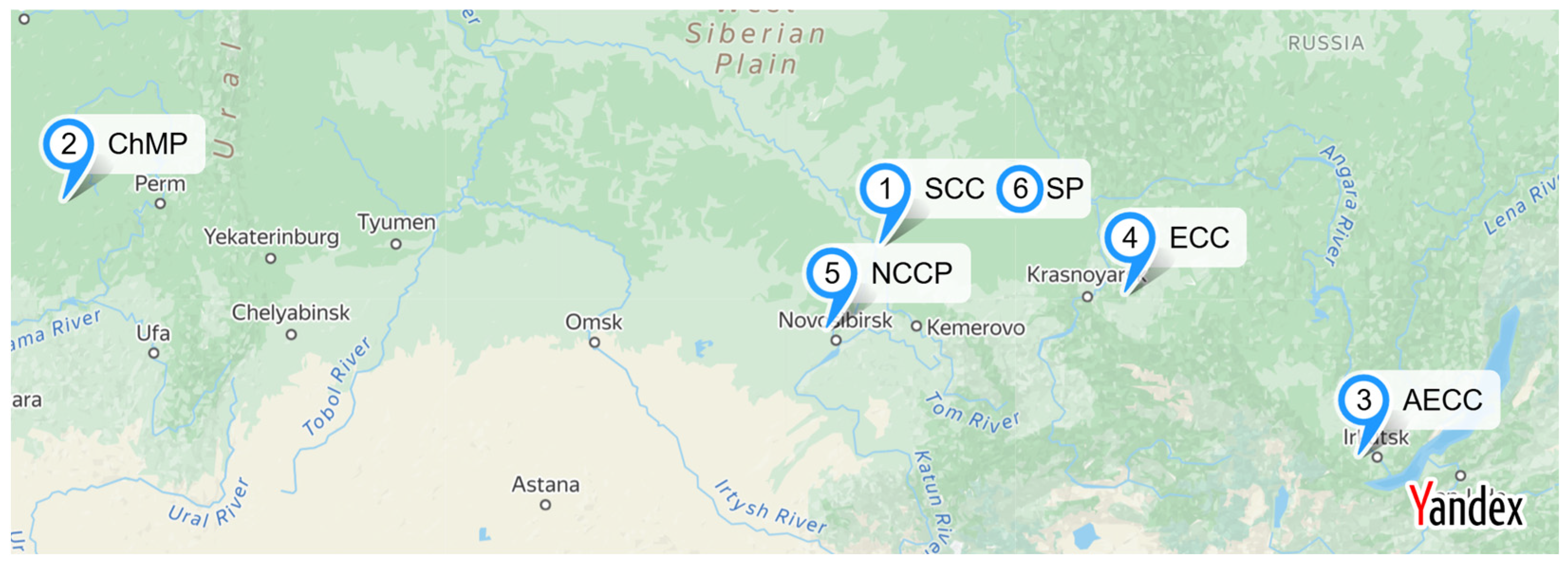
Figure 1. Sampling map of 6 sites (generated via https://yandex.ru/map-constructor, accessed on 10 October 2025).
Life 15 01854 g001
Figure 2. Principal component analysis (PCA) of the chemical composition of samples from background (A) and polluted zones (B).
Life 15 01854 g002
Figure 3. Biodiversity indices of microbial communities from sites with different pollution levels. Green—Site 1, yellow—Site 2, blue—Site 3, orange—Site 4, violet—Site 5, purple—Site 6.
Life 15 01854 g003
Figure 4. Diversity of groundwater background sample microbiomes at the family level.
Life 15 01854 g004
Figure 5. Venn diagrams showing the overlap of the background bacterial communities (core microbiome), the total amount of present genera in each community, and the number of shared genera between 6, 5, 4, 3, and 2 communities and genera belonging to a single community.
Life 15 01854 g005
Figure 6. Phylogenetic composition of contaminated groundwater microbiomes.
Life 15 01854 g006
Figure 7. Shared phylogenetic features across polluted sites. Venn diagram illustrating the number of common (inner sector) and unique (outer sector) bacterial families among sampling sites (OTU > 1%).
Life 15 01854 g007
Figure 8. Venn diagrams showing the overlap of the bacterial communities with moderate pollution (A) and heavy pollution (B), the total amount of present genera in each community, and the number of shared genera between 6, 5, 4, 3, and 2 communities and genera belonging to a single community.
Life 15 01854 g008
Figure 9. Principal component analysis (PCA) diagram of the sample distribution depending on the pollution level and bacterial physiological groups. Group L—low pollution (background samples): 1B, 2B, 3B, 4B, 5B; M—medium pollution level: 3M, 4M, 5M, 6M; H—high pollution level: 3H, 4H, 5H, 2M, 2H, 1H, 6H. Outliers: 1M, 6B. The arrows: AER—aerobic bacteria, SRB—sulfate-reducing bacteria, AOB—ammonium oxidizing bacteria, NOB—nitrite oxidizing bacteria, FeRB—ferric iron-reducing bacteria, DN—denitrifying bacteria.
Life 15 01854 g009
Table 1. Sample labeling.
Sample LabelSitePollution LevelDepth, m
1B1. Radioactive Waste Storage Basin “B2”, Siberian Chemical Combine (Seversk, Krasnoyarsk Krai)Background15
1MMedium15
1HHigh15
2B2. Slurry Reservoir, Chepetsk Mechanical Plant (Glazov, Udmurt Republic)Background11
2MMedium11
2HHigh11
3B3. Slurry Reservoir, Angarsk Electrolysis Chemical Combine (Angarsk, Irkutsk Region)Background9
3MMedium9
3HHigh9
4B4. Slurry Reservoir, Electrolysis Chemical Combine (Zelenogorsk, Krasnoyarsk Krai)Background12
4MMedium12
4HHigh12
5B5. Slurry Reservoir, Novosibirsk Chemical Concentrates Plant (Novosibirsk, Novosibirsk Region)Background15
5MMedium15
5HHigh15
6B6. Slurry Reservoir, Sublimate Plant (Seversk, Krasnoyarsk Krai)Background20
6MMedium20
6HHigh20
Disclaimer/Publisher’s Note: The statements, opinions and data contained in all publications are solely those of the individual author(s) and contributor(s) and not of MDPI and/or the editor(s). MDPI and/or the editor(s) disclaim responsibility for any injury to people or property resulting from any ideas, methods, instructions or products referred to in the content.