Article

Personalized Management of Patients with Proliferative Diabetic Vitreoretinopathy
Department of Ophthalmology, Semmelweis University, 1085 Budapest, Hungary
*
Author to whom correspondence should be addressed.
These authors contributed equally to this work.
Life 2024, 14(8), 993; https://doi.org/10.3390/life14080993
Submission received: 14 July 2024 / Revised: 5 August 2024 / Accepted: 7 August 2024 / Published: 9 August 2024

Abstract

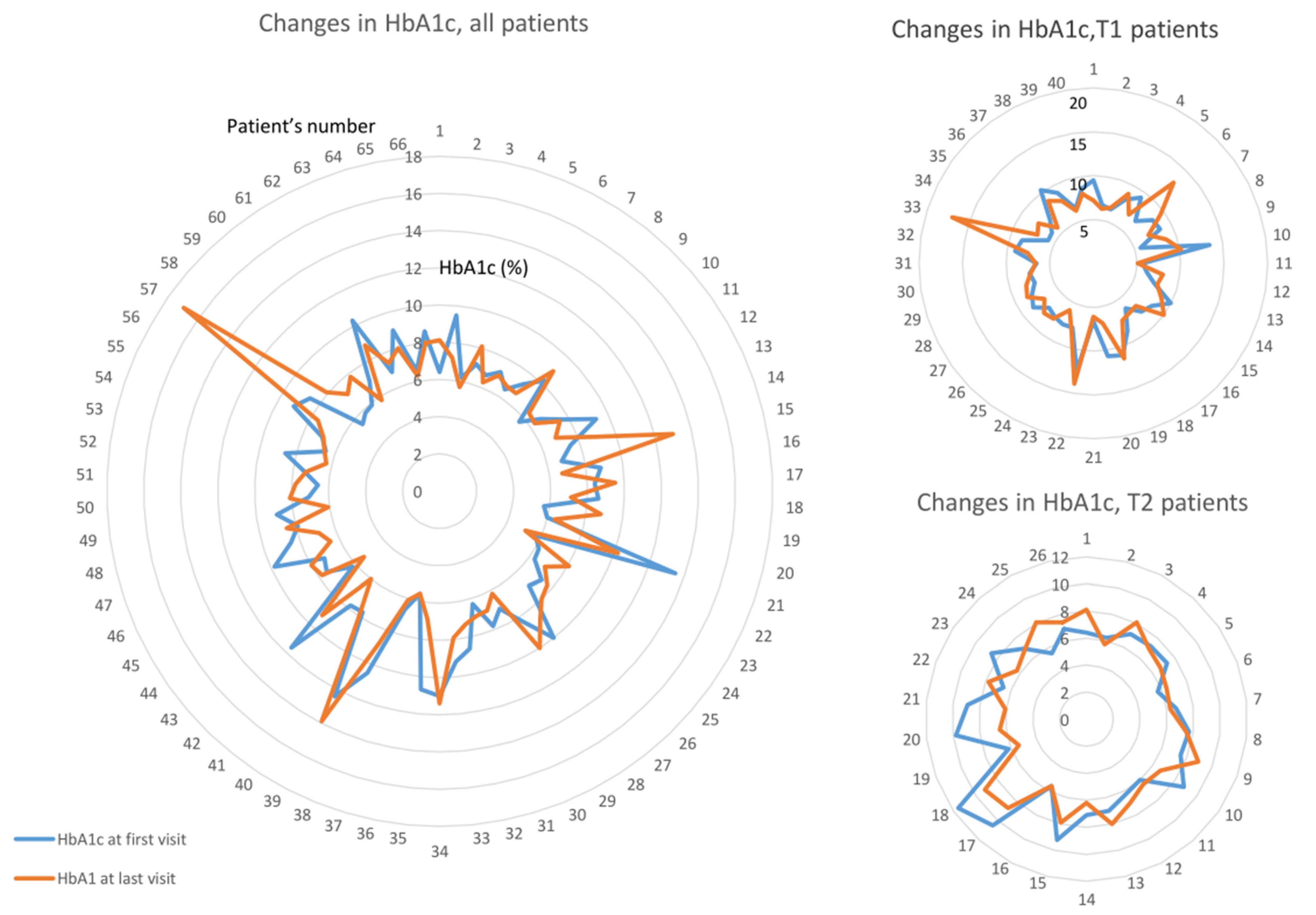
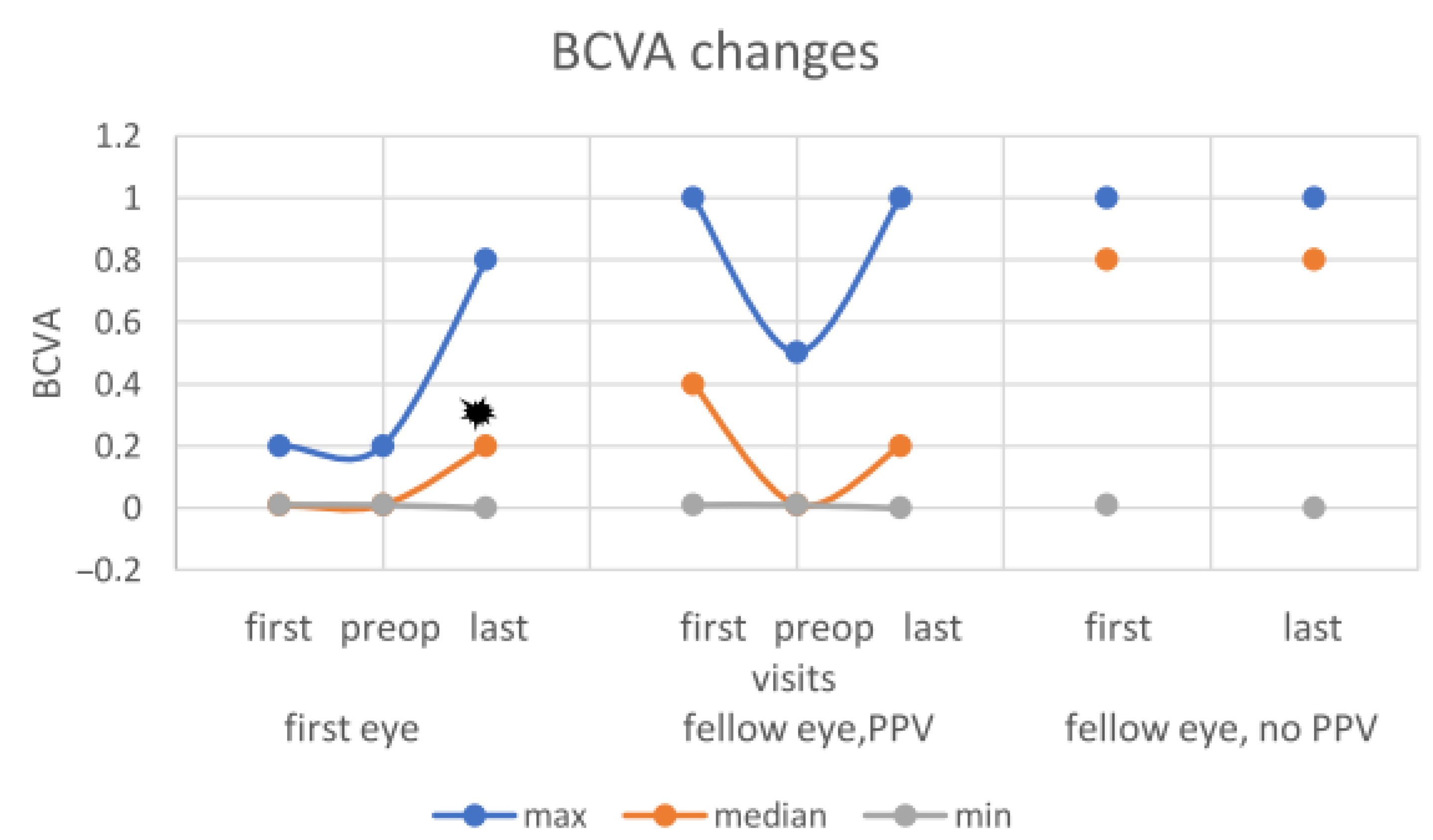
Purpose: To evaluate prognostic factors for visual outcome in patients with diabetes who have undergone vitrectomy (PPV) for severe proliferative diabetic vitreoretinopathy (PDVR) in at least one eye in the past 15 years. Methods: Medical records of 132 eyes of 66 patients were analyzed (median age 52 years 21–80; patients with type 1/2 diabetes 40/26; median follow-up 38 months 9–125). Correlations between final favorable visual outcome defined as 0.5≤ best-corrected visual acuity (BCVA) and prognostic factors (age, sex, type and duration of diabetes, metabolic status, BCVA, diabetic retinopathy status, data of preoperative management, data of vitrectomy, and postoperative complications) were analyzed. Results: BCVA improved significantly in the entire study cohort (from median 0.05 min–max 0.001–1 to 0.32, 0.001–1, p < 0.001). Visual stabilization was achieved in the majority of patients, and good visual acuity (0.5 ≤ BCVA) was maintained in more than one-third of the eyes. Multivariable GEE statistics showed that in addition to the duration of diabetes and stable HbA1c values, only preoperative tractional macular detachment proved to be an independent significant predictor of visual outcome. Conclusions: Pars plana vitrectomy is a useful tool when performed early before tractional macular detachment. However, long-term visual stability can only be achieved with good metabolic control.
Keywords: proliferative diabetic retinopathy; pars plana vitrectomy; HbA1c; visual acuity; tractional macular detachment proliferative diabetic retinopathy; pars plana vitrectomy; HbA1c; visual acuity; tractional macular detachment