Article

Bladder Cancer Cells Exert Pleiotropic Effects on Human Adipose-Derived Stem Cells
1
Department of Tissue Engineering, Chair of Urology and Andrology, Collegium Medicum, Nicolaus Copernicus University, Karłowicza 24, 85-092 Bydgoszcz, Poland
2
Department of Immunology, Collegium Medicum, Nicolaus Copernicus University, Sklodowskiej-Curie 9, 85-094 Bydgoszcz, Poland
*
Author to whom correspondence should be addressed.
Life 2022, 12(4), 549; https://doi.org/10.3390/life12040549
Submission received: 22 February 2022 / Revised: 29 March 2022 / Accepted: 5 April 2022 / Published: 7 April 2022
(This article belongs to the Section Cell Biology and Tissue Engineering)

Abstract

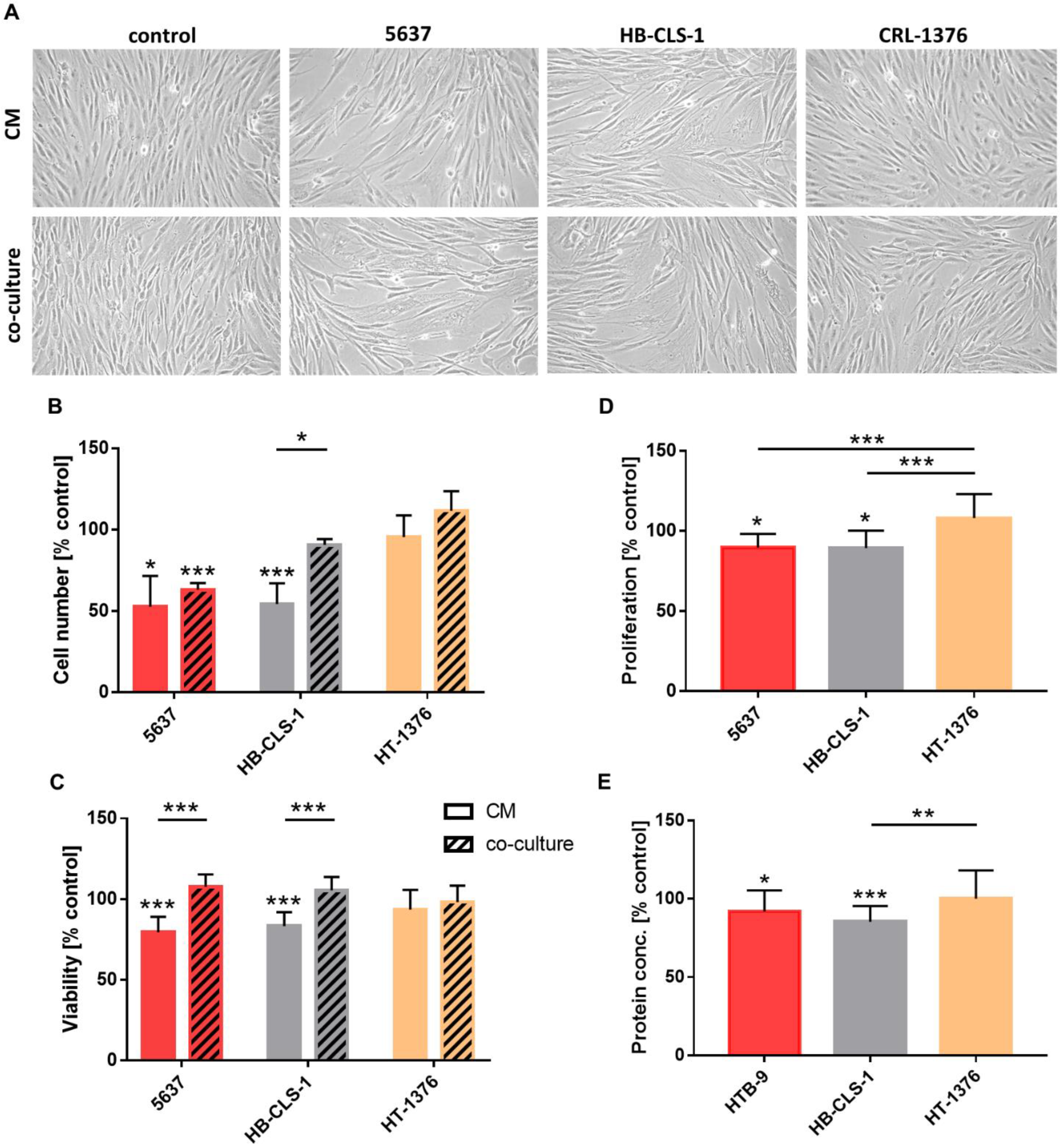
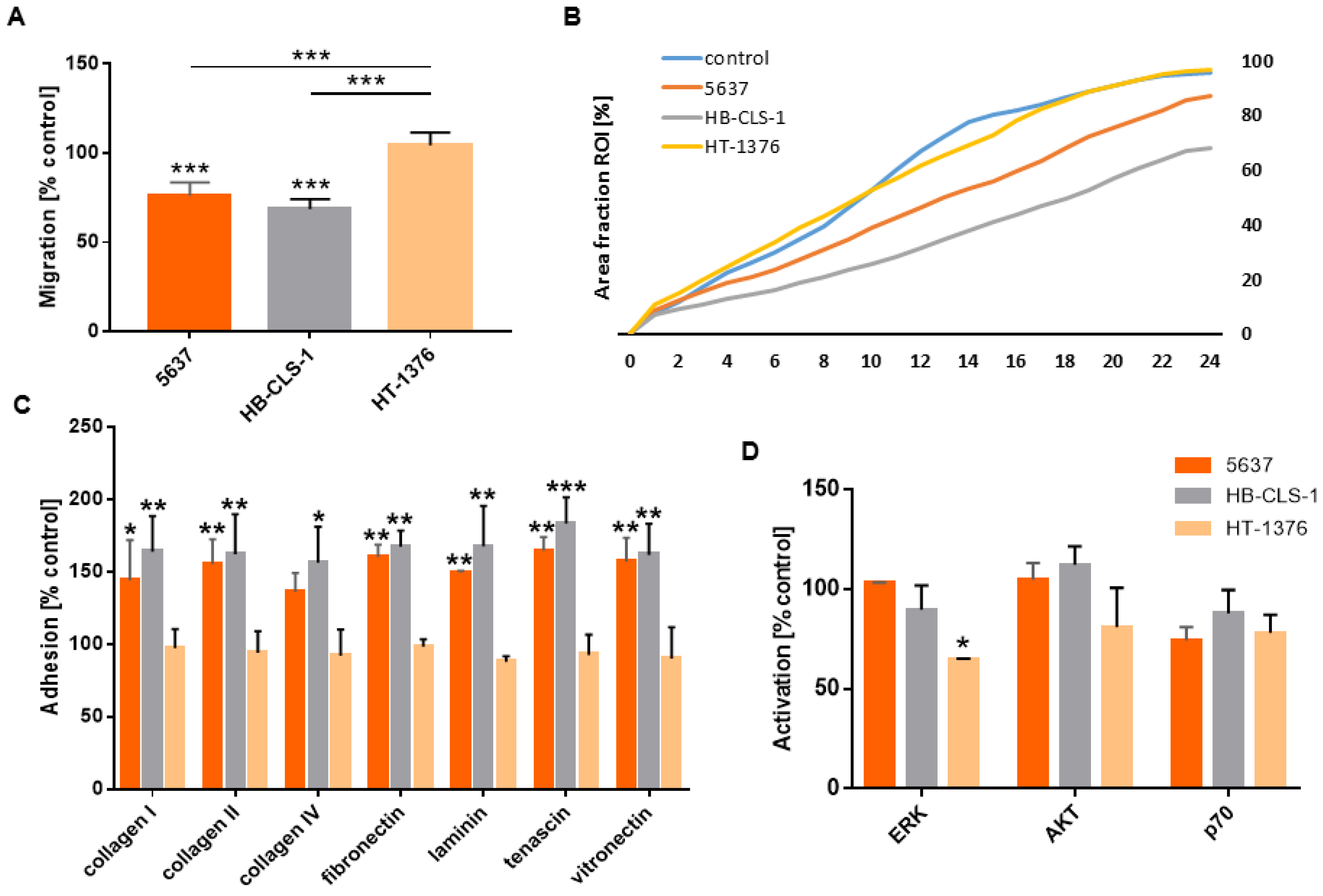
Stem cell-based therapies are considered one of the most promising disciplines in biomedicine. Bladder cancer patients could benefit from therapies directed to promote healing after invasive surgeries or to lessen urinary incontinence, a common side effect of both cancer itself and the treatment. However, the local delivery of cells producing large amounts of paracrine factors may alter interactions within the microenvironment. For this reason, reconstructive cellular therapies for patients with a history of cancer carry a potential risk of tumor reactivation. We used an indirect co-culture model to characterize the interplay between adipose-derived stem cells and bladder cancer cells. Incubation with ASCs increased MCP-1 secretion by bladder cancer cells (from 2.1-fold to 8.1-fold, depending on the cell line). Cancer cell-derived factors altered ASC morphology. Cells with atypical shapes and significantly enlarged volumes appeared within the monolayer. Incubation in a conditioned medium (CM) containing soluble mediators secreted by 5637 and HB-CLS-1 bladder cancer cell lines decreased ASC numbers by 47.5% and 45.7%. A significant increase in adhesion to ECM components, accompanied by reduced motility and sheet migration, was also observed after incubation in CM from 5637 and HB-CLS-1 cells. No differences were observed when ASCs were co-cultured with HT-1376 cells. Our previous and present results indicate that soluble mediators secreted by ASCs and bladder cancer cells induce opposite effects influencing cells that represent the non-muscle-invasive urinary bladder.
Keywords: bladder cancer; adipose-derived stem cells; cell-based therapies; cancer recurrence bladder cancer; adipose-derived stem cells; cell-based therapies; cancer recurrence