
A Tool Wear Prediction Network Fusing Visual-Acoustic Cross-Attention and Interval Guidance

Abstract
1. Introduction
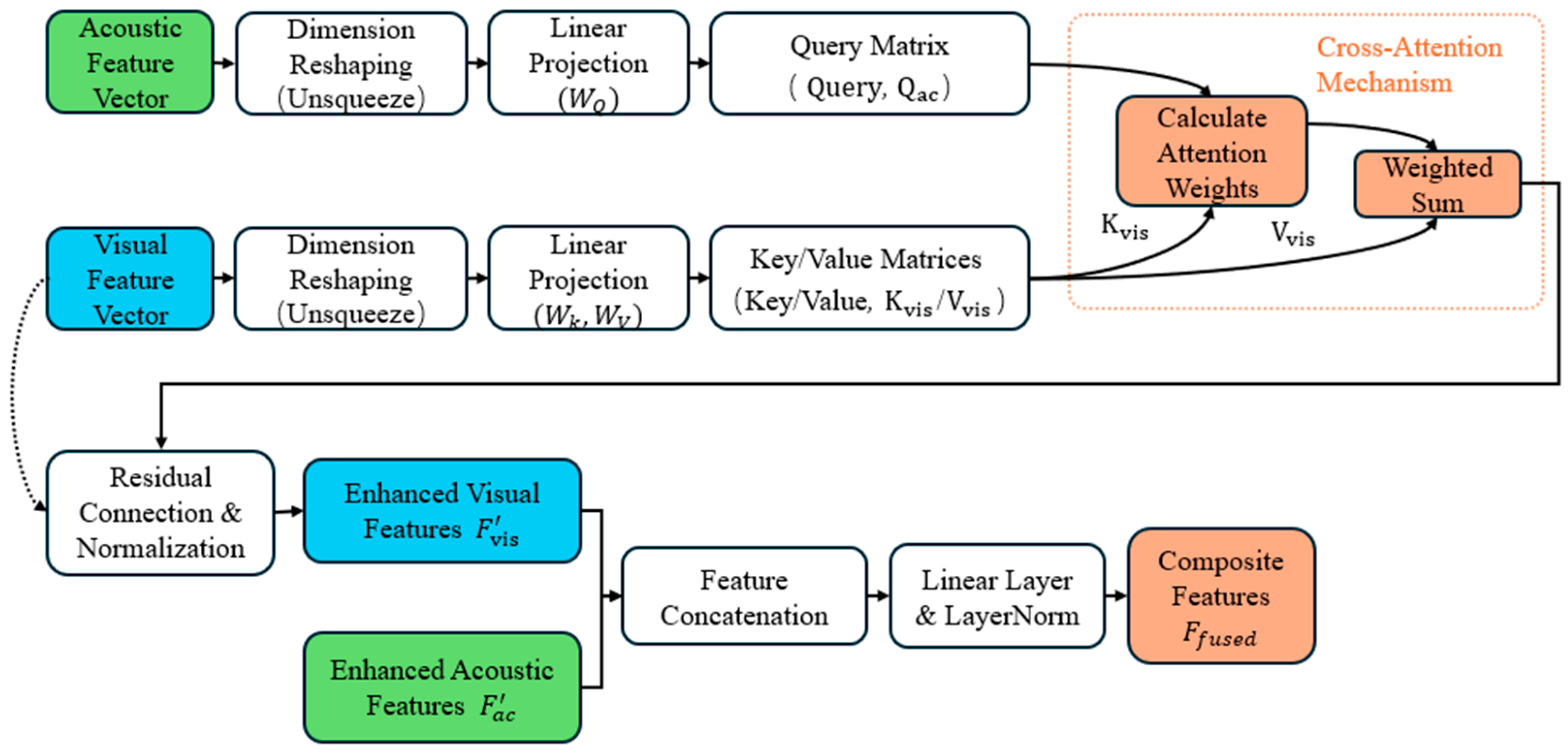
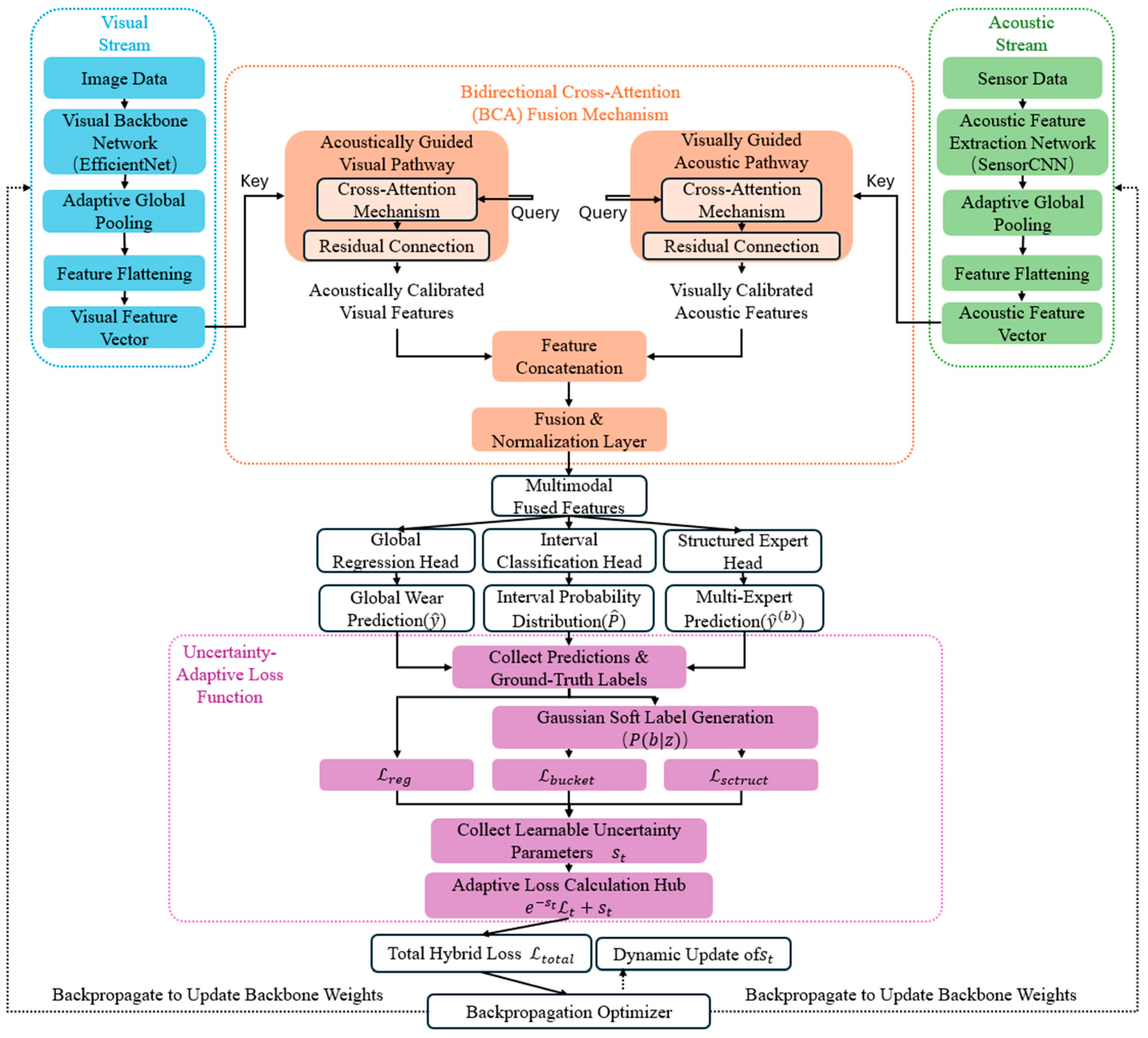
- A Novel Bidirectional Causal Fusion Framework: Unlike traditional static concatenation or standard self-attention, we propose a Bidirectional Cross-Attention (BCA) mechanism to explicitly address the semantic misalignment between heterogeneous sensors. By utilizing acoustic dynamics to reverse-verify visual features (and vice versa), this mechanism establishes a physical causality loop. It effectively filters out unilateral environmental noise and transient vibration artifacts, ensuring deep semantic alignment across modalities without relying on simple feature stacking.
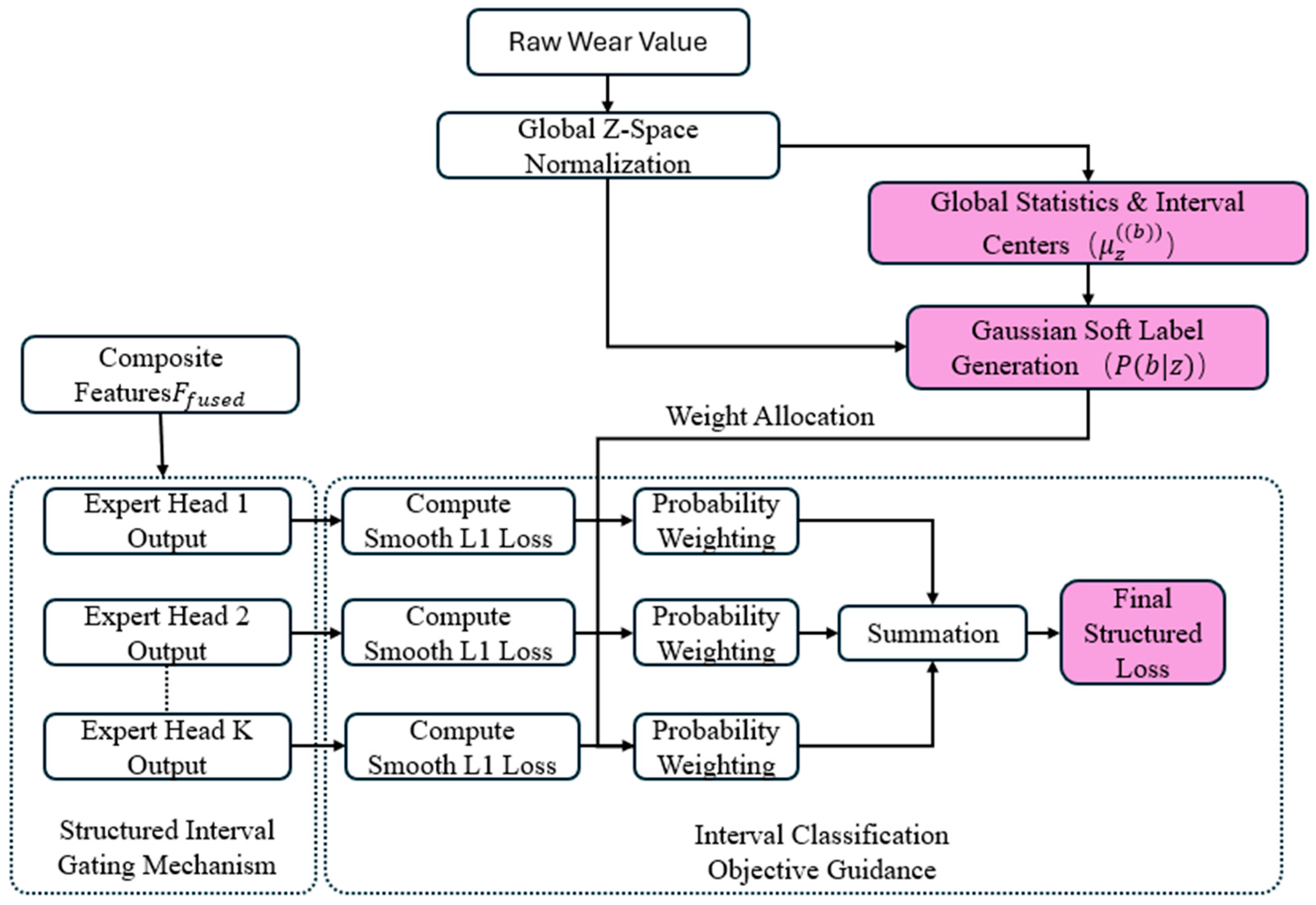
- Physics-Informed Interval-Guided Learning (IGL): To address the predictive lag of traditional end-to-end regression models during severe wear stages, we introduce a dual-layer cognitive framework. By converting known physical wear intervals into a Gaussian soft-labeling space, coarse-grained physical state classifications are dynamically used to gate fine-grained expert regression heads, ensuring continuous smoothness across the tool’s lifecycle.
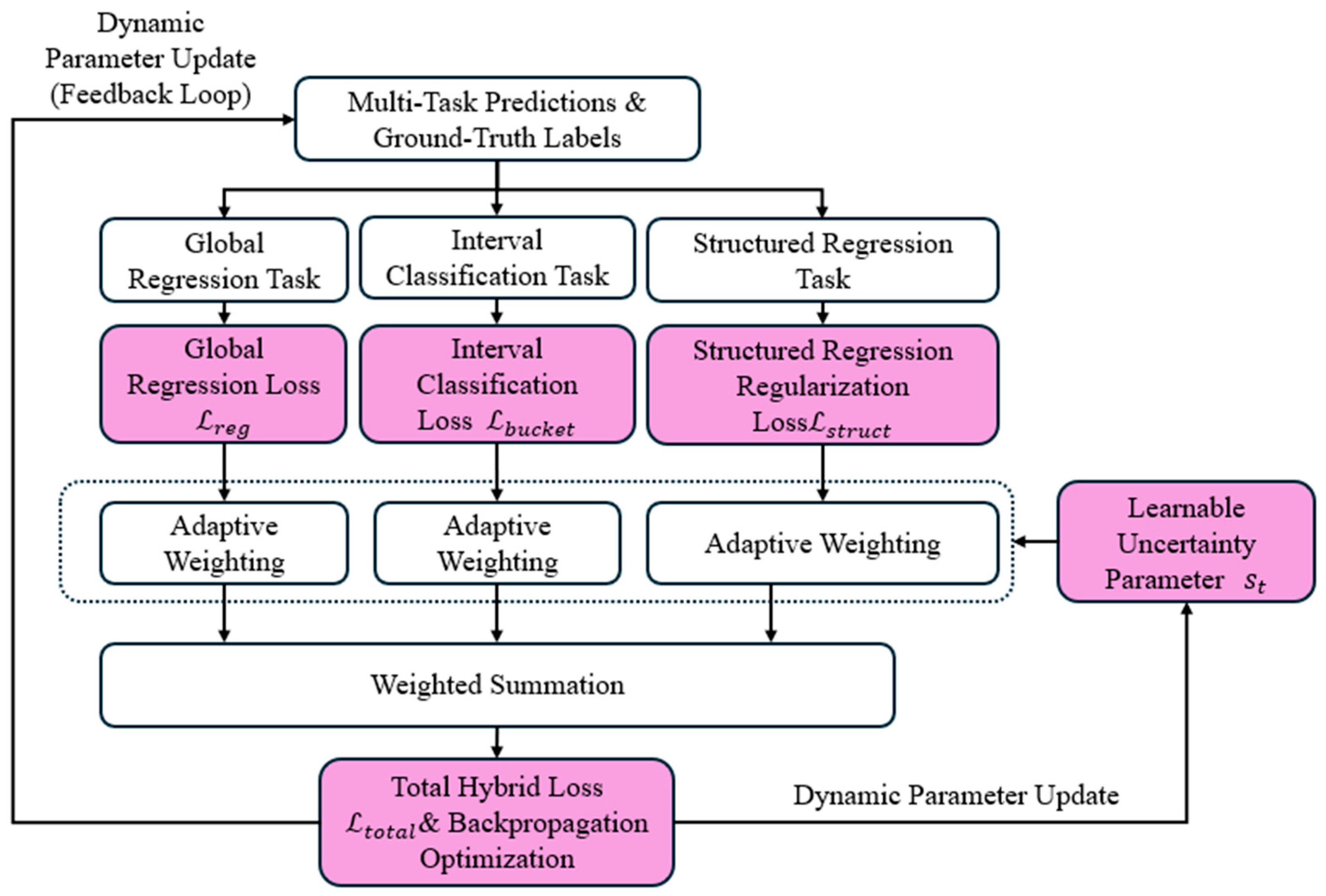
- Uncertainty-Adaptive Multi-Task Optimization for Tool Wear: While traditional multi-task networks frequently suffer from gradient dominance, we uniquely tailored a homoscedastic uncertainty-based loss strategy to orchestrate our specific tri-branch architecture (global regression, interval gating, and local expert regression). Instead of relying on blind manual hyperparameter tuning, this mechanism mathematically quantifies the intrinsic noise of each physical task to dynamically resolve dimensional discrepancies. By continuously modulating task weights, it prevents simple tasks from overwhelming complex ones during abrupt wear transitions, thereby mathematically guaranteeing the highly synergistic convergence of qualitative wear state identification and quantitative wear depth prediction.
2. Methods
2.1. Heterogeneous Feature Coding and Spatial Alignment
2.1.1. Visual Stream Image Data Processing
2.1.2. Acoustic Flow Sensor Data Processing
2.2. Bidirectional Cross-Attention Mechanism
2.2.1. Visually Guided Acoustic Pathways
2.2.2. Acoustic Guidance of Visual Pathways
2.3. Learning Strategies Based on Interval Guidance and Adaptive Loss
Interval-Guided Learning Strategies
- Early Break-in Stage μm: This interval captures the rapid initial wear behavior where the micro-roughness and microscopic irregularities of the brand-new cemented carbide inserts are quickly flattened under high mechanical and thermal shocks.
- Pre-stable Wear Stage μm and Late Stable Wear Stage μm: These two intervals represent the steady-state wear phase dominated by uniform abrasive and adhesive wear. Splitting this phase at μm allows the model to capture the subtle inflection point where the wear rate transitions from a strictly linear mode to an accelerating accumulation of micro-fractures.
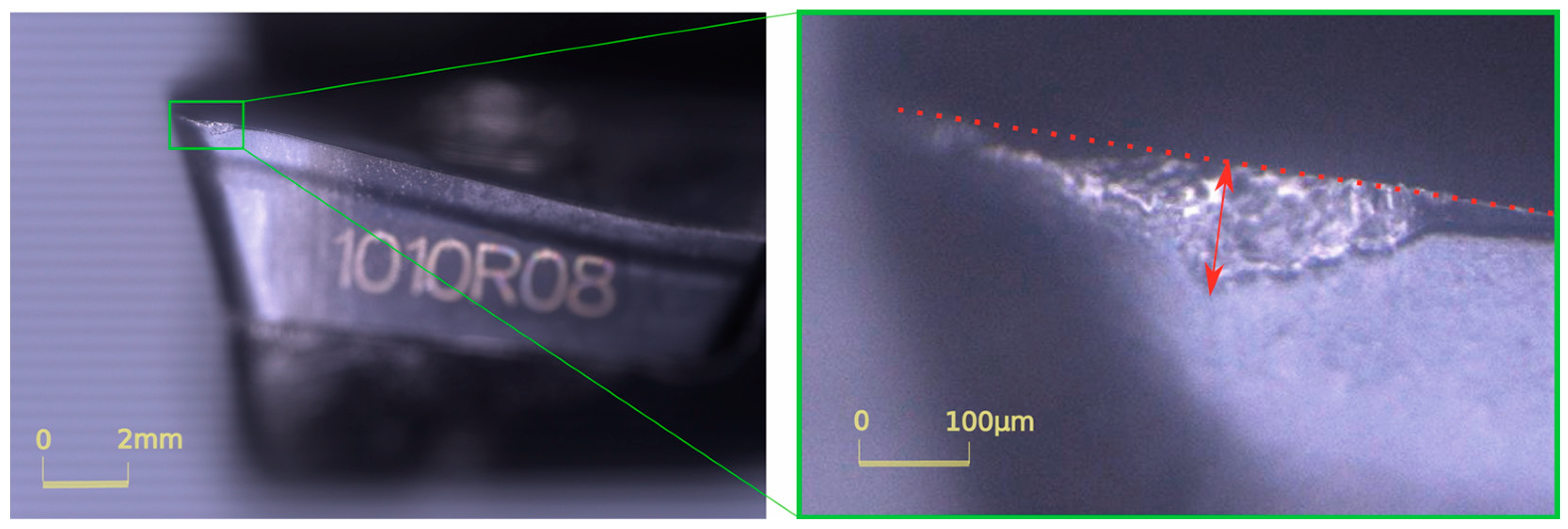
- Severe Wear Stage μm: This threshold aligns with the practical failure inflection points of carbide milling cutters. According to the ISO 8688 standard [42], while 300 μm is often used as a hard failure criterion for uniform flank wear, experimental observations in the MATWI dataset indicate that beyond μm, the tool enters a rapid degradation zone characterized by prominent micro-chipping, severe adhesive peeling, and high-frequency acoustic emission shocks.
2.4. Uncertainty Adaptive Loss Function
- Global Regression Loss : For this primary task, the Smooth L1 loss is employed to measure the difference between the global regression head output and the ground-truth wear value (after Z-space normalization).
- Interval classification loss : Soft-target cross-entropy is utilized as coarse-grained guidance. As detailed in Section 2.1, the supervisory signal is based on the probability distribution generated by the Gaussian kernel. This forces the interval classifier to learn the transitional probabilities of wear states, rather than making binary classifications.Here, represents the probability distribution predicted by the model.
- Structured Regression Regularization Loss : As described in Section 2.1, this method uses soft-label probabilities as a gating mechanism to collaboratively optimize the local perception capabilities of the multi-expert regression heads.
3. Results
3.1. Experimental Setup
| Algorithm 1 Pseudocode of the proposed algorithm. |
| Input: Raw visual image
, raw sensor signal , ground-truth tool wear label
number of physical intervals
, total training epochs
, batch size
. Output: Trained network weights , learned uncertainty parameters , final wear prediction |
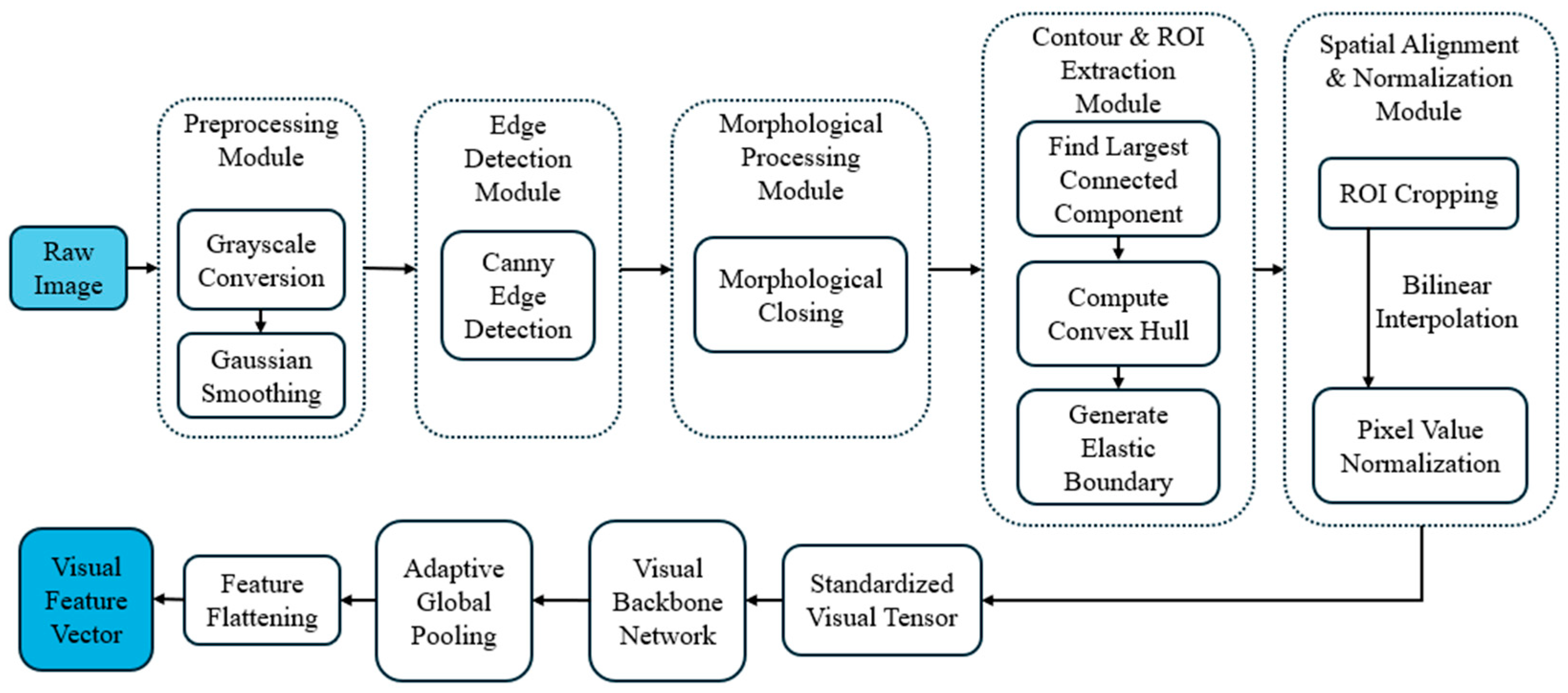
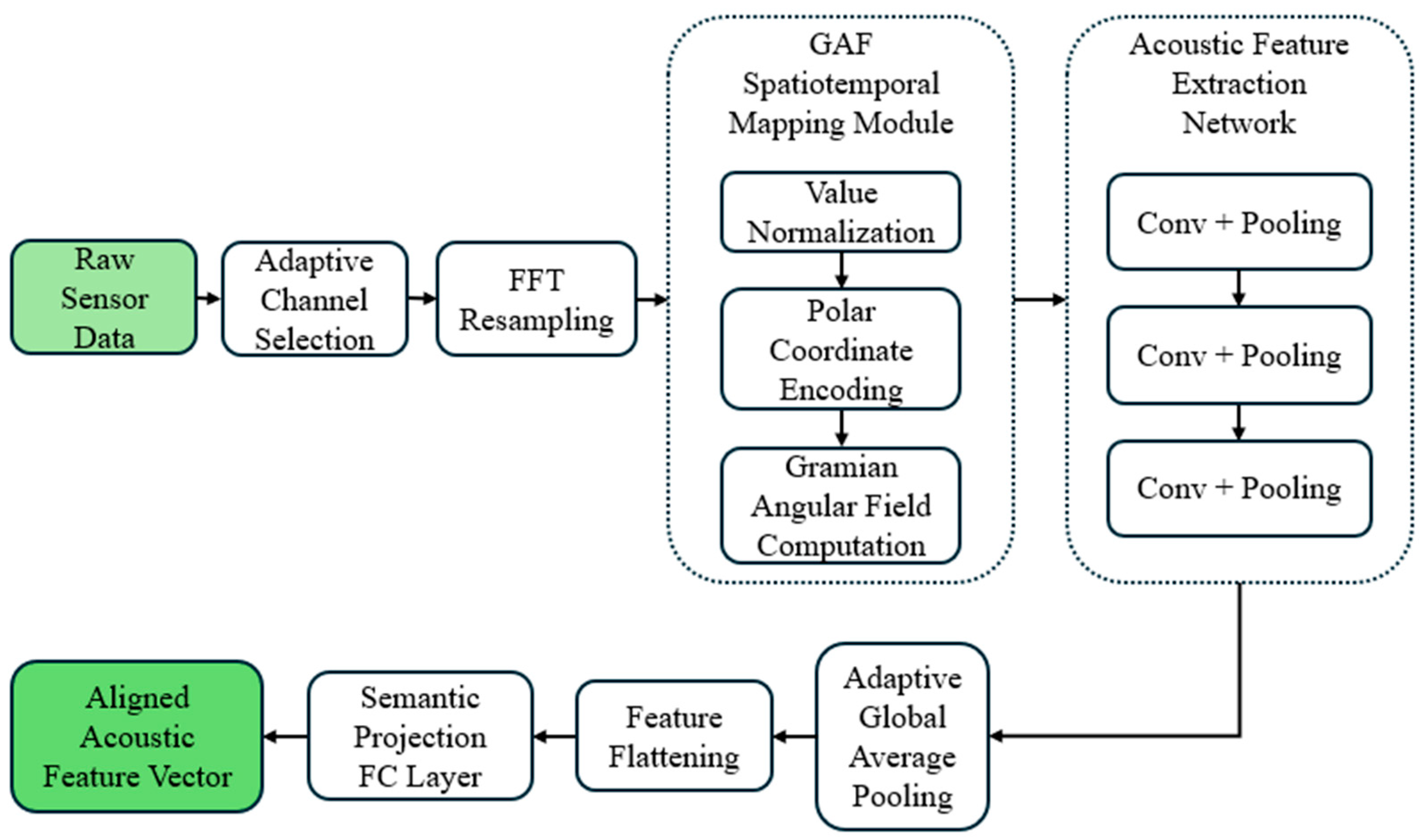
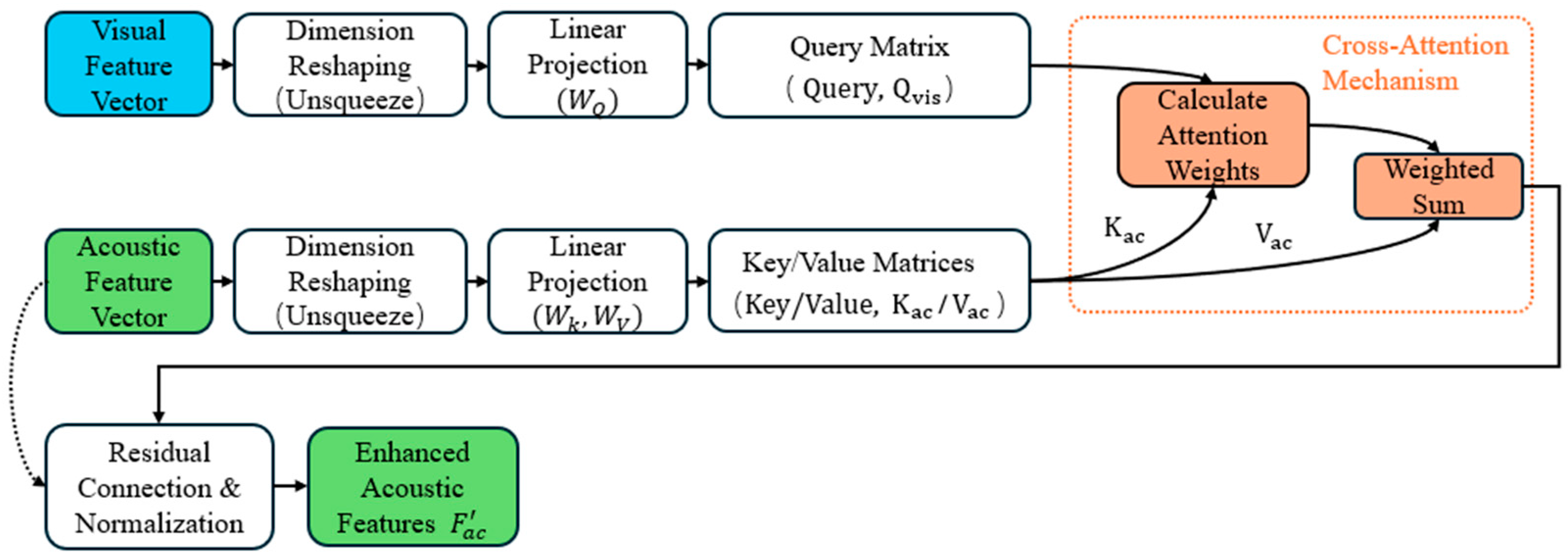
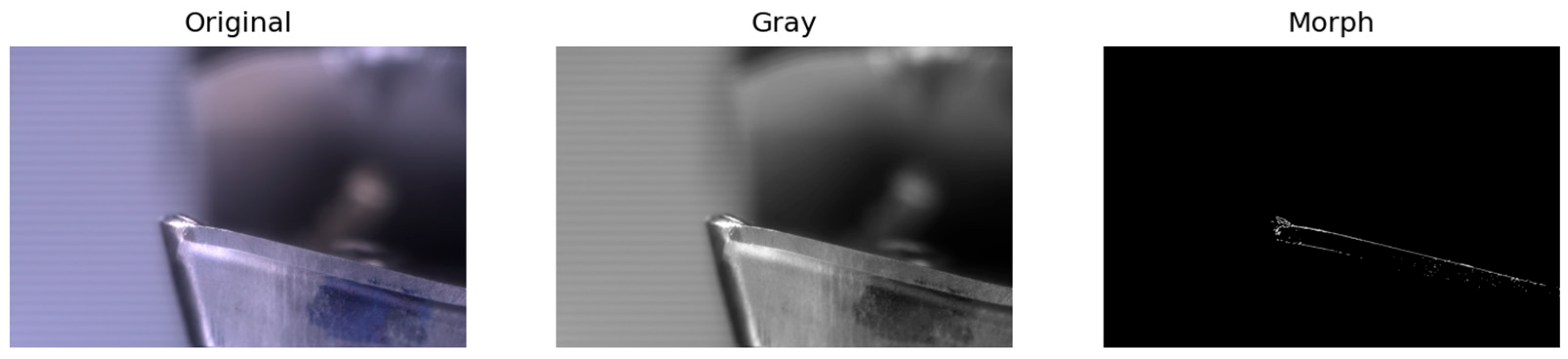
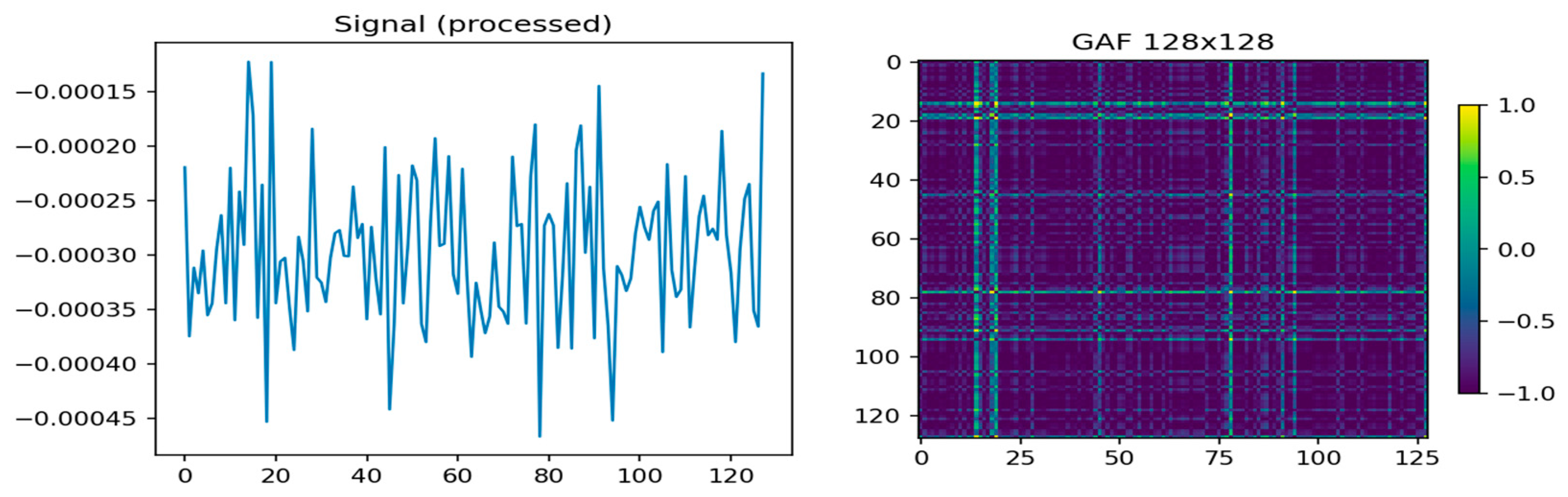
| Training Phase: Phase 1: Prior Knowledge & Global Statistics Initialization 1: Calculate global mean and standard deviation from the training set (Equation (15)). 2: Calculate interval centers and dispersions for each physical bucket (Equation (16), Figure 6). 3: Initialize network weights and multi-task uncertainty parameters . Phase 2: Multimodal Training 4: For to do 5: For each mini-batch of size do Step A: Multimodal Preprocessing (Figure 2 and Figure 3) 6: Extract ROI image using adaptive dual-threshold (Equation (2)) and elastic bounding (Equation (3)). 7: Apply adaptive channel selection and FFT resampling to (Equation (4)). 8: Map the 1D signal to a 2D GAF spatiotemporal matrix (Equations (5)–(7)). 9: Extract initial Visual Feature and Acoustic Feature via respective backbones. Step B: BCA Fusion Mechanism (Figure 4 and Figure 5) 10: Compute Visually Calibrated Acoustic Features (Equations (8)–(10)). 11: Compute Acoustically Calibrated Visual Features (Equations (11)–(13)). 12: Concatenate and normalize to obtain Composite Features (Equation (14)). Step C: Multi-Task Predictions & Soft Labels (Figure 6) 13: Feed to parallel heads: get global wear , expert predictions , and interval logits . 14: Standardize into Z-score and generate Gaussian soft labels (Equation (17)). Step D: Uncertainty-Adaptive Optimization (Figure 7) 15: Compute base losses: (Equation (18)), (Equation (19)), and (Equation (20)). 16: Compute the Uncertainty-Adaptive Joint Loss using (Equations (21) and (22)). 17: Backpropagate to update parameters and using the optimizer. 18: End For 19: End For Phase 3: Inference 20: Preprocess test data as in Step A to obtain . 21: Output the standardized prediction from the global regression head. 22: Perform reverse normalization mapping to obtain the final predicted wear value . 23: Return |
3.2. Performance Analysis of Model Data Preprocessing
3.3. Model Comparative Experiments
3.4. Ablation Experiment
4. Discussion
4.1. The Necessity of Physical Causality in Multimodal Fusion
4.2. Overcoming Predictive Hysteresis in Nonlinear Wear Degradation
4.3. Failure Case Analysis and Limitations
- Severe Chipping Coupled with Image Degradation: During the severe wear stage, catastrophic micro-chipping often causes metallic debris to adhere to the cutting edge, severely degrading the local image quality. In such extreme cases, the adaptive ROI algorithm may erroneously extract the adhered chip as the tool contour. Because the visual feature vector is fundamentally corrupted by this geometric illusion, the Visually Guided Acoustic Pathway retrieves incorrect dynamic weights. Consequently, even though the acoustic stream successfully captures the high-frequency chipping transient, the semantic mismatch suppresses this critical acoustic feature, occasionally leading the model to underestimate the actual wear volume.
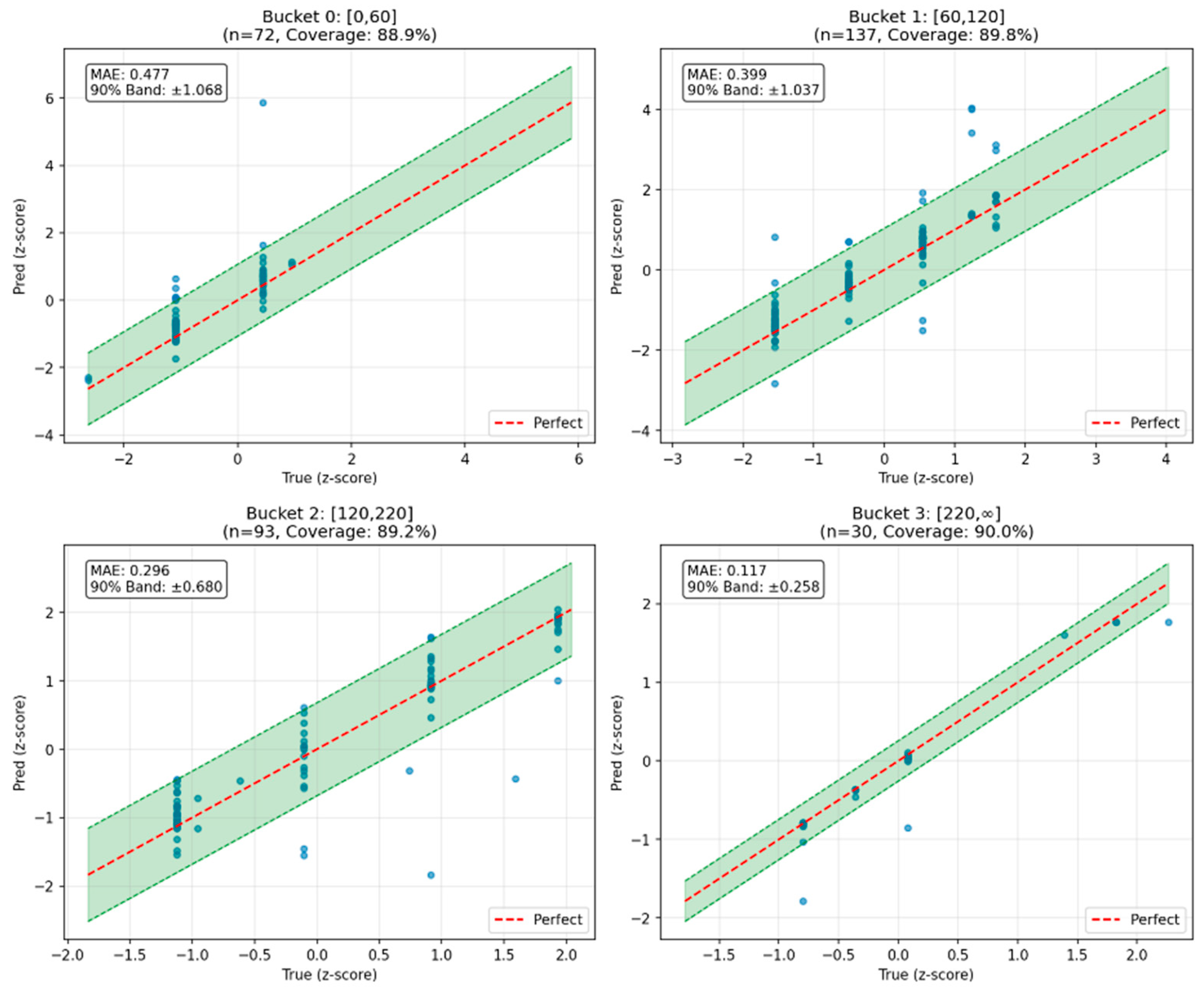
- Sensor Noise in Physical Transition Zones: Another primary source of error occurs at the exact boundary between the late stable wear and severe wear stages (e.g., around the 220 μm threshold). In this transition zone, the simultaneous occurrence of continuous abrasive friction and intermittent microscopic fractures generates highly non-stationary sensor noise in the acoustic emission channel. Although the Interval-Guided Learning (IGL) strategy employs Gaussian soft labels to smooth these boundary transitions, the extreme variance in the acoustic stream can temporarily overwhelm the visual stream. This sensor noise forces the model to oscillate unpredictably between the regression experts of Bucket 2 and Bucket 3, resulting in localized prediction spikes.
5. Conclusions
- The proposed visual-acoustic collaborative mechanism effectively suppresses background noise and unifies the spatial dimensions of heterogeneous features during preprocessing via adaptive ROI extraction and GAF spatiotemporal mapping. Moreover, the Bidirectional Cross-Attention (BCA) mechanism mutually corroborates acoustic dynamics and visual morphology, effectively alleviating feature misjudgments prevalent in single-modality environments.
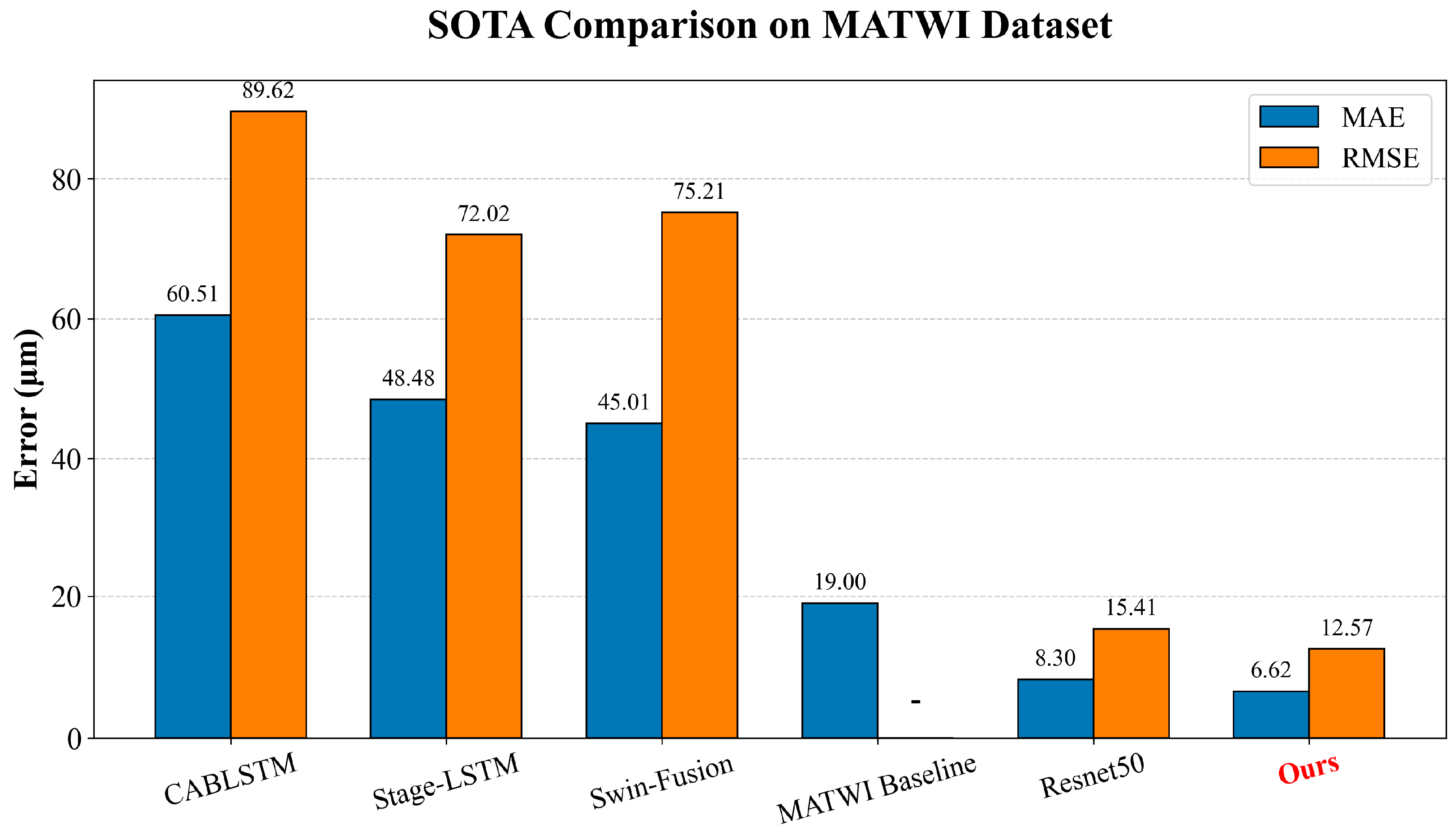
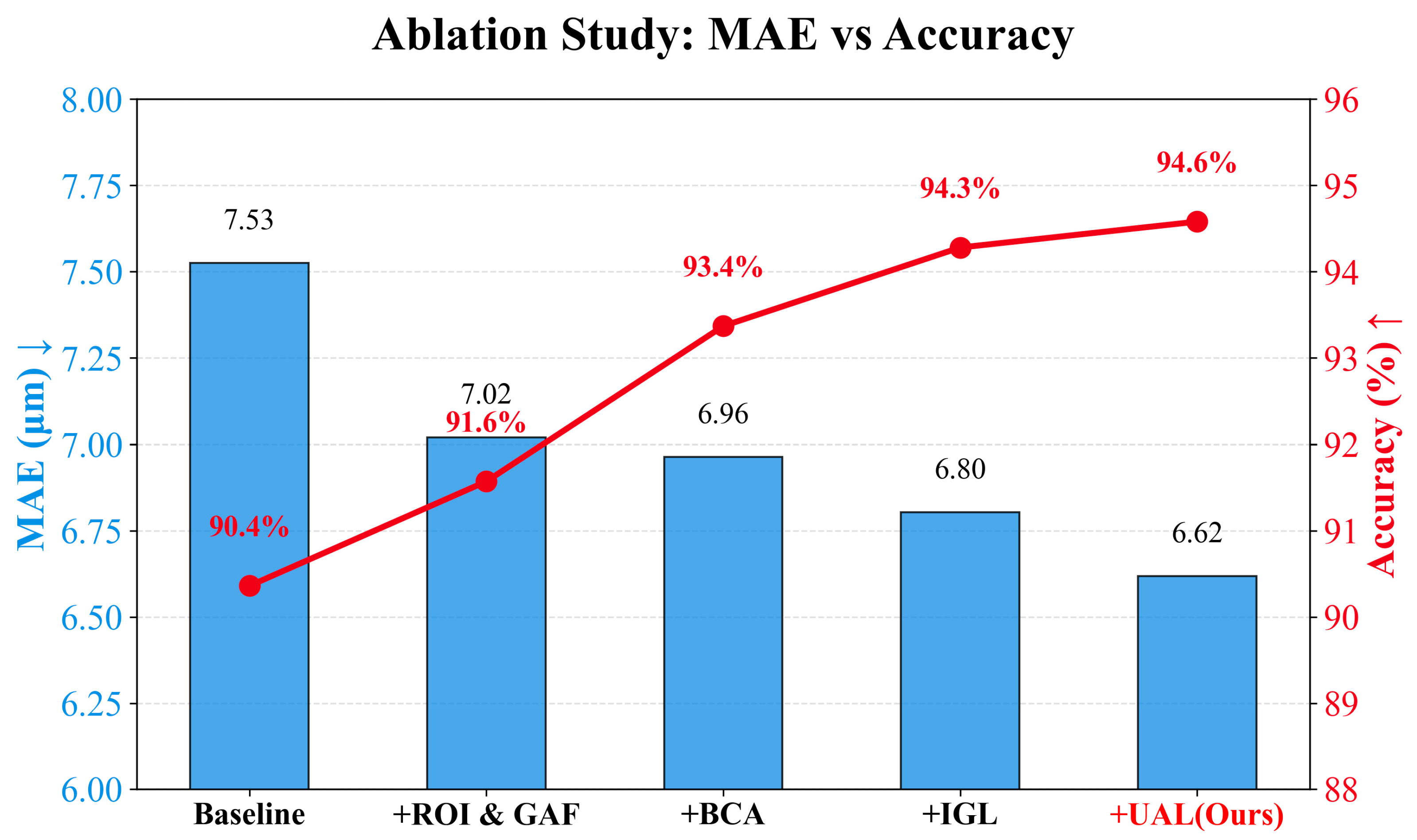
- To address the nonlinear degradation characteristics of tool wear, the IGL strategy employs soft-label dynamically gated local expert regression heads. This achieves a cascaded prediction from coarse-grained qualitative classification to fine-grained quantitative regression. This mechanism effectively mitigates the predictive hysteresis and fitting distortions common in traditional single networks during severe wear periods. Validation on the MATWI dataset demonstrates a classification accuracy of 94.58% for the physical degradation stages, with the mean absolute error (MAE) optimized to a minimum of 6.6183 μm.
- To resolve dimensional discrepancies and optimization conflicts between interval classification and wear regression tasks, this paper applies a UAL strategy based on homoscedastic uncertainty. This approach balances gradient conflicts among tasks without requiring tedious manual parameter tuning, ensuring the stable convergence of the joint optimization. Ultimately, it reduces the overall prediction error by approximately 65% compared to the official benchmark.
Author Contributions
Funding
Data Availability Statement
Conflicts of Interest
References
- Ge, Y.; Teo, H.H.; Moey, L.K. Deep learning models for intelligent tool condition monitoring and prediction—A review. AIP Conf. Proc. 2025, 3324, 030004. [Google Scholar] [CrossRef] [Scilit]
- Assafo, M.; Langendoerfer, P. Tool Condition Monitoring Under Different Operating Conditions Using ML with Scarce Data: A Review. Preprints 2026, 2026050129. [Google Scholar] [CrossRef] [Scilit]
- Wang, H.; Sun, W.; Sun, W.; Ren, Y.; Zhou, Y.; Qian, Q.; Kumar, A. A novel tool condition monitoring based on Gramian angular field and comparative learning. Int. J. Hydromechatron. 2023, 6, 93–107. [Google Scholar] [CrossRef] [Scilit]
- Zhou, Y.; Xue, W. Review of tool condition monitoring methods in milling processes. Int. J. Adv. Manuf. Technol. 2018, 96, 2509–2523. [Google Scholar] [CrossRef] [Scilit]
- Guo, Q.; Yao, H.; Xu, Y.; Lu, B.; Ma, Z.; Huang, Y.; Shi, M. Transformer fault diagnosis method based on Gramian Angular Field and optimized parallel ShuffleNetV2. Sci. Rep. 2025, 15, 23829. [Google Scholar] [CrossRef] [Scilit] [PubMed]
- Pan, H.; Xu, H.; Zheng, J.; Shao, H.; Tong, J. A semi-supervised matrixized graph embedding machine for roller bearing fault diagnosis under few-labeled samples. IEEE Trans. Ind. Inform. 2023, 20, 854–863. [Google Scholar]
- Yang, H.; Yang, X.; Sun, D.; Hu, Y. A MID-1DC+ LRT Multi-Task Model for SOH Assessment and RUL Prediction of Mechanical Systems. Sensors 2025, 25, 1368. [Google Scholar] [CrossRef] [Scilit] [PubMed]
- Cheng, Y.; Xue, J.; Lu, M.; Zhou, S.; Gai, X.; Guan, R. MS-DenseNet-GRU tool wear prediction method based on attention mechanism. Struct. Health Monit. 2025, 24, 517–533. [Google Scholar]
- Chai, A.; Fang, Z.; Lian, M.; Huang, P.; Guo, C.; Yin, W.; Wang, L.; He, E.; Li, S. Hi-MDTCN: Hierarchical Multi-Scale Dilated Temporal Convolutional Network for Tool Condition Monitoring. Sensors 2025, 25, 7603. [Google Scholar] [CrossRef] [Scilit] [PubMed]
- Zhang, S.; Song, B.; Zhao, F.; Sun, G.; Meng, F. A decoupling method for compound faults of rolling bearings based on multi-modal bidirectional cross-attention fusion and contrastive learning. Meas. Sci. Technol. 2025, 36, 106131. [Google Scholar] [CrossRef] [Scilit]
- Sun, M.; Wang, X.; Guo, K.; Huang, X.; Sun, J.; Li, D.; Huang, T. Tool wear monitoring based on physics-informed Gaussian process regression. J. Manuf. Syst. 2024, 77, 40–61. [Google Scholar] [CrossRef] [Scilit]
- Wu, J.Y.; Wu, M.; Chen, Z.; Li, X.; Yan, R. A joint classification-regression method for multi-stage remaining useful life prediction. J. Manuf. Syst. 2021, 58, 109–119. [Google Scholar] [CrossRef] [Scilit]
- Li, Z.; Meurer, M.; Bergs, T. Deep Learning Based Tool Wear Estimation Considering Cutting Conditions. Procedia CIRP 2024, 130, 133–138. [Google Scholar] [CrossRef] [Scilit]
- He, X.; Zhong, M.; He, C.; Wu, J.; Yang, H.; Zhao, Z.; Yang, W.; Jing, C.; Li, Y.; Gao, C. A novel tool wear identification method based on a semi-supervised LSTM. Lubricants 2025, 13, 72. [Google Scholar] [CrossRef] [Scilit]
- Kendall, A.; Gal, Y.; Cipolla, R. Multi-task learning using uncertainty to weigh losses for scene geometry and semantics. In Proceedings of the IEEE Conference on Computer Vision and Pattern Recognition, Salt Lake City, UT, USA, 18–23 June 2018; pp. 7482–7491. [Google Scholar]
- Li, T.; Zhao, Z.; Sun, C.; Cheng, L.; Chen, X.; Yan, R.; Gao, R.X. WaveletKernelNet: An interpretable deep neural network for industrial intelligent diagnosis. IEEE Trans. Syst. Man. Cybern. Syst. 2021, 52, 2302–2312. [Google Scholar]
- Sun, S.; Wang, R.; An, B. Quantitative stock investment by routing uncertainty-aware trading experts: A multi-task learning approach. arXiv 2022, arXiv:2207.07578. [Google Scholar]
- De Pauw, L.; Jacobs, T.; Goedemé, T. MATWI: A Multimodal Automatic Tool Wear Inspection Dataset and Baseline Algorithms. In Proceedings of the International Conference on Computer Vision Systems; Springer: Cham, Switzerland, 2023; pp. 255–269. [Google Scholar]
- Astakhov, V.P. The assessment of cutting tool wear. Int. J. Mach. Tools Manuf. 2004, 44, 637–647. [Google Scholar] [CrossRef] [Scilit]
- Teti, R.; Jemielniak, K.; O’donnell, G.; Dornfeld, D. Advanced monitoring of machining operations. CIRP Ann. 2010, 59, 717–739. [Google Scholar] [CrossRef] [Scilit]
- Wu, X.; Liu, Y.; Zhou, X.; Mou, A. Automatic identification of tool wear based on convolutional neural network in face milling process. Sensors 2019, 19, 3817. [Google Scholar] [CrossRef] [Scilit] [PubMed]
- Marinescu, I.; Axinte, D.A. A critical analysis of effectiveness of acoustic emission signals to detect tool and workpiece malfunctions in milling operations. Int. J. Mach. Tools Manuf. 2008, 48, 1148–1160. [Google Scholar] [CrossRef] [Scilit]
- Dutta, S.; Pal, S.; Mukhopadhyay, S.; Sen, R. Application of digital image processing in tool condition monitoring: A review. CIRP J. Manuf. Sci. Technol. 2013, 6, 212–232. [Google Scholar] [CrossRef] [Scilit]
- Canny, J. A computational approach to edge detection. IEEE Trans. Pattern Anal. Mach. Intell. 2009, 6, 679–698. [Google Scholar]
- Li, X. A brief review: Acoustic emission method for tool wear monitoring during turning. Int. J. Mach. Tools Manuf. 2002, 42, 157–165. [Google Scholar] [CrossRef] [Scilit]
- Wang, Z.; Oates, T. Imaging time-series to improve classification and imputation. In Proceedings of the 24th International Joint Conference on Artificial Intelligence (IJCAI), Buenos Aires, Argentina, 25–31 July 2015; pp. 3939–3945. [Google Scholar]
- Hojati, F.; Azarhoushang, B. Predicting critical machining conditions using time-series imaging and deep learning in slot milling of titanium alloy. In Proceedings of the Upper-Rhine Artificial Intelligence Symposium UR-AI 2022: AI Applications in Medicine and Manufacturing, Villingen-Schwenningen, Germany, 19 October 2022; pp. 57–63. [Google Scholar]
- Krishnakumar, P.; Rameshkumar, K.; Ramachandran, K.I. Machine learning based tool condition classification using acoustic emission and vibration data in high speed milling process using wavelet features. Intell. Decis. Technol. 2018, 12, 265–282. [Google Scholar] [CrossRef] [Scilit]
- Kamat, P.V.; Nargund, A.; Kumar, S.; Patil, S.; Sugandhi, R. Tool Wear Prediction in Milling: A comparative analysis based on machine learning and deep learning approaches. Int. J. Comput. Digit. Syst. 2021, 3, 206–211. [Google Scholar]
- Hofmann, J.; Veitenheimer, C.V.; Fei, C.; Chen, C.; Wang, H.; Zhao, L.; Groche, P. Development of Robust Machine Learning Models for Tool-Wear Monitoring in Blanking Processes Under Data Scarcity. Appl. Sci. 2025, 15, 10323. [Google Scholar] [CrossRef] [Scilit]
- Li, N.; Liu, Z.; Wang, X.; Jiang, J.; Wei, Y. CdualTAL: Multi-domain tool wear prediction using a dual-channel Transformer and cross-attention network. Eng. Inf. Technol. Electron. Eng. 2026, 27, 1–13. [Google Scholar] [CrossRef] [Scilit]
- Xie, Z.; Zhang, C.; Gao, S.; Liu, Y.; Li, Y.; Tian, B.; Guo, H. Adaptive Multimodal Time–Frequency Feature Fusion for Tool Wear Recognition Based on SSA-Optimized Wavelet Transform. Machines 2025, 13, 1077. [Google Scholar] [CrossRef] [Scilit]
- Alkhalefah, H. Tool-Life Estimation Model in Milling Processes Using Multi-Head Cross-Covariance Attention Fusion-Based Dilated Dense Bi-Directional Gated Recurrent Unit. Mathematics 2025, 13, 3798. [Google Scholar] [CrossRef] [Scilit]
- Chen, X.; Zhang, H.; Fu, Y.; Song, Q.; Zhang, H.; Yi, J.; Zhou, Y. Symmetrized dot pattern enhanced cross-attention DDPM method for tool condition monitoring. AIP Adv. 2025, 15, 11. [Google Scholar] [CrossRef] [Scilit]
- Gavina, C.G.; Hemalatha, K.L.; Ranganath, K.J.; Rajanna, S.; Shivananda Nayaka, H. A smart manufacturing framework for tool wear analysis and RUL estimation using multimodal deep learning. Concurr. Eng. 2026, 34, 35–62. [Google Scholar]
- Wei, P.; Li, R.; Liu, X.; Gao, H.; Dai, M.; Zhang, Y.; Zhao, W.; Liu, E. Research on tool wear state identification method driven by multi-source information fusion and multi-dimension attention mechanism. Robot. Comput.-Integr. Manuf. 2024, 88, 102741. [Google Scholar] [CrossRef] [Scilit]
- Hou, C.; Zheng, L. A multi-task joint learning model based on transformer and customized gate control for predicting remaining useful life and health status of tools. Sensors 2024, 24, 4117. [Google Scholar] [CrossRef] [Scilit] [PubMed]
- Kim, H.; Lee, S.; Lee, J.; Park, K.-H.; Nam, S. Enhancing tool wear prediction accuracy by integrating Multi-Task learning with cutting force Estimation. Int. J. Precis. Eng. Manuf.-Green Technol. 2025, 12, 969–989. [Google Scholar] [CrossRef] [Scilit]
- Serin, G.; Sener, B.; Ozbayoglu, A.M.; Unver, H.O. Review of tool condition monitoring in machining and opportunities for deep learning. Int. J. Adv. Manuf. Technol. 2020, 109, 953–974. [Google Scholar] [CrossRef] [Scilit]
- Rehman, A.U.; Nishat, T.S.R.; Ahmed, M.U.; Begum, S.; Ranjan, A. Chip analysis for tool wear monitoring in machining: A deep learning approach. IEEE Access 2024, 12, 112672–112689. [Google Scholar] [CrossRef] [Scilit]
- Huang, M.; Xie, X.; Sun, W.; Li, Y. Tool wear prediction model using multi-channel 1D convolutional neural network and temporal convolutional network. Lubricants 2024, 12, 36. [Google Scholar] [CrossRef] [Scilit]
- ISO 8688-2; Tool Life Testing with End Mills—Part 2: End Milling of Steel. International Organization for Standardization: Geneva, Switzerland, 1989.
- He, K.; Zhang, X.; Ren, S.; Sun, J. Deep residual learning for image recognition. In Proceedings of the IEEE Conference on Computer Vision and Pattern Recognition, Las Vegas, NV, USA, 27–30 June 2016. [Google Scholar]



| Model | MAE | RMSE | Acc |
|---|---|---|---|
| CABLSTM | 60.5118 | 89.6246 | - |
| Stage-LSTM | 48.4795 | 72.0207 | 64.22% |
| Swin-Fusion | 45.0145 | 75.2110 | - |
| MATWI Baseline | 19 | - | - |
| Resnet50 | 8.3002 | 15.4149 | - |
| Our model | 6.6183 | 12.5657 | 94.58% |
| Model | MAE | RMSE | Bucket-Acc | Acc |
|---|---|---|---|---|
| Baseline | 7.5252 | 13.9997 | - | 90.36% |
| Baseline + ROI and GAF | 7.0207 | 12.9812 | - | 91.57% |
| Baseline + ROI and GAF + BCA | 6.9636 | 12.7337 | 91.87% | 93.37% |
| Baseline + ROI and GAF + BCA + IGL | 6.8028 | 12.6166 | 92.47% | 94.28% |
| Baseline + ROI and GAF + BCA + IGL + UAL | 6.6183 | 12.5657 | 93.37% | 94.58% |
Disclaimer/Publisher’s Note: The statements, opinions and data contained in all publications are solely those of the individual author(s) and contributor(s) and not of MDPI and/or the editor(s). MDPI and/or the editor(s) disclaim responsibility for any injury to people or property resulting from any ideas, methods, instructions or products referred to in the content. |
© 2026 by the authors. Licensee MDPI, Basel, Switzerland. This article is an open access article distributed under the terms and conditions of the Creative Commons Attribution (CC BY) license.
Share and Cite
Zhang, X.; Pang, R.; Zhou, R.; Wang, Z. A Tool Wear Prediction Network Fusing Visual-Acoustic Cross-Attention and Interval Guidance. Machines 2026, 14, 826. https://doi.org/10.3390/machines14070826
Zhang X, Pang R, Zhou R, Wang Z. A Tool Wear Prediction Network Fusing Visual-Acoustic Cross-Attention and Interval Guidance. Machines. 2026; 14(7):826. https://doi.org/10.3390/machines14070826
Chicago/Turabian StyleZhang, Xilu, Ruying Pang, Ruikun Zhou, and Zhiping Wang. 2026. "A Tool Wear Prediction Network Fusing Visual-Acoustic Cross-Attention and Interval Guidance" Machines 14, no. 7: 826. https://doi.org/10.3390/machines14070826
APA StyleZhang, X., Pang, R., Zhou, R., & Wang, Z. (2026). A Tool Wear Prediction Network Fusing Visual-Acoustic Cross-Attention and Interval Guidance. Machines, 14(7), 826. https://doi.org/10.3390/machines14070826