Article

Deep Learning-Based Automation for Converting 2D Engineering Drawings into 3D Solid Models

1
Department of Mechanical Engineering, Chung Yuan Christian University, Taoyuan City 320, Taiwan
2
R&D Center for Smart Manufacturing, Chung Yuan Christian University, Taoyuan City 320, Taiwan
*
Author to whom correspondence should be addressed.
Machines 2026, 14(7), 781; https://doi.org/10.3390/machines14070781

Submission received: 25 May 2026 / Revised: 2 July 2026 / Accepted: 9 July 2026 / Published: 12 July 2026
(This article belongs to the Section Automation and Control Systems)

Abstract

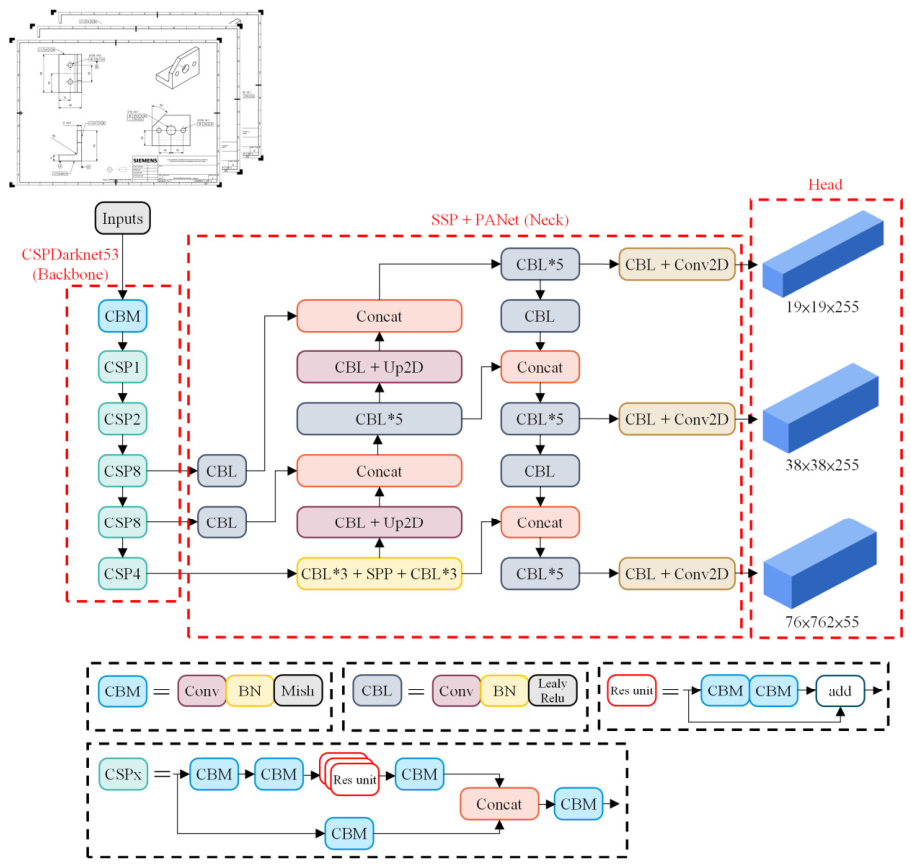
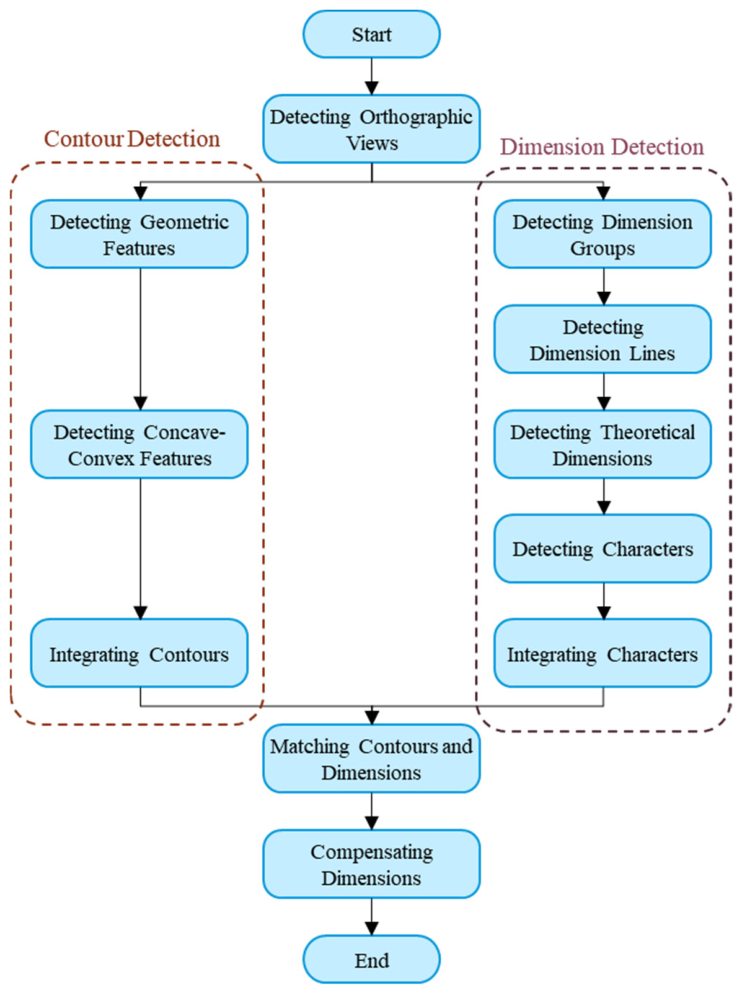
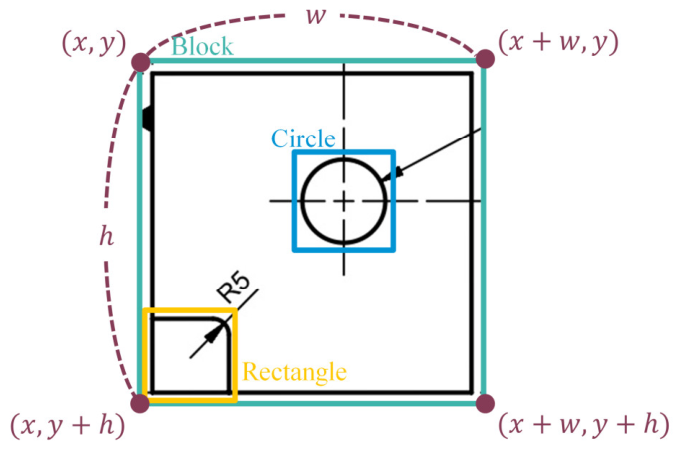
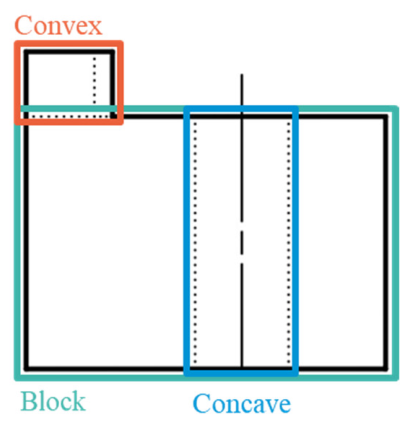
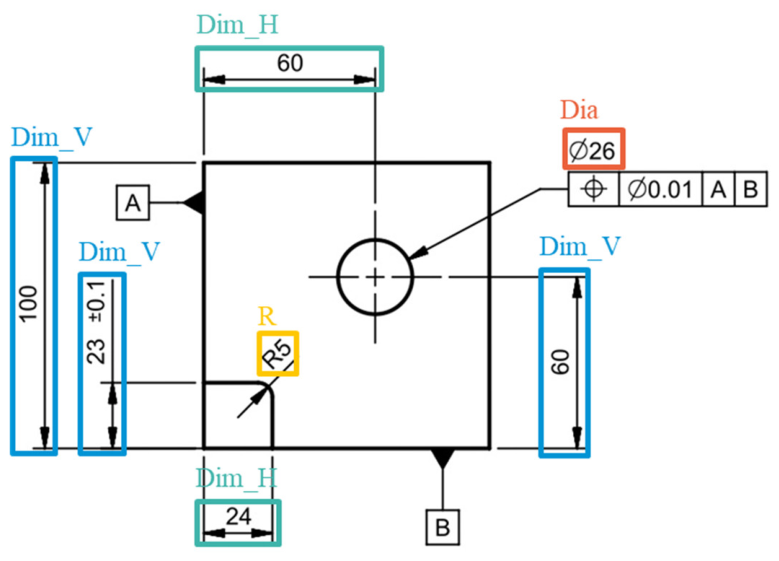
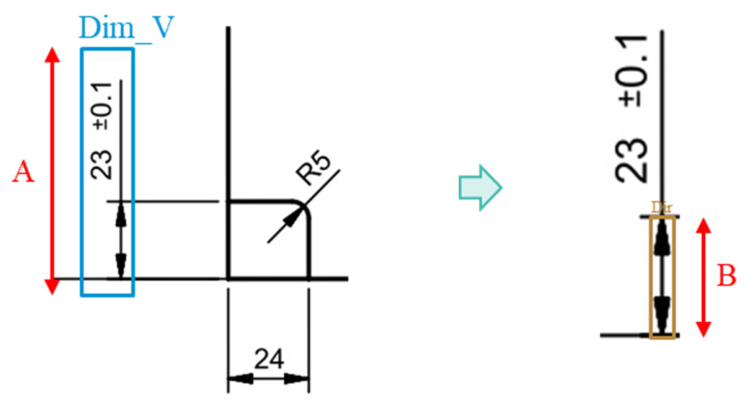
Engineering drawings are one of the most essential references in the product research and development process. With the rapid advancement of computer hardware and software, the presentation of engineering drawings has evolved from traditional hand-drafting to computer-aided design (CAD). However, in current practice, transforming 2D drawings into 3D models still requires manual operation in CAD software. This process is time-consuming, labor-intensive, and prone to errors if engineers misinterpret the drawings, which may result in defective models. To address this issue, this study employs the Darknet SDK (Software Development Kit) to train YOLO (You Only Look Once) models using 2D engineering drawings as training data. By performing image segmentation and classification of drawing features, seven feature-specific YOLO models were trained to detect: orthographic views (100%), geometric features (100%), convex/concave features (99.9%), dimension groups (99.8%), dimension lines (99.1%), theoretical dimensions (98.6%), and text characters (93.6%). These pretrained models are then used to extract dimensional and geometric information from 2D drawings. The corresponding dimensional values are matched with the relative size and edge lengths of detected objects in the images and stored in a relational database. Subsequently, Siemens NX CAD software, along with its NX Open secondary development modules, was integrated to convert the recognized 2D drawing features into 3D models. This approach reduces dimensional errors in 2D-to-3D model conversion, ensures the accuracy of feature recognition, and improves the efficiency of model generation.
Keywords: 2D engineering drawings; image segmentation; deep learning; feature recognition; NX secondary development 2D engineering drawings; image segmentation; deep learning; feature recognition; NX secondary development