
Article

QR-DESO-Based Active Disturbance Rejection Control for PMSGs Under Aperiodic and Periodic Disturbances

1
School of Mechano-Electronic Engineering, Xidian University, Xi’an 710071, China
2
State Key Laboratory of High Voltage Direct Current, Electric Power Research Institute, China Southern Power Grid, Guangzhou 510663, China
*
Author to whom correspondence should be addressed.
Machines 2026, 14(6), 658; https://doi.org/10.3390/machines14060658 (registering DOI)
Submission received: 26 April 2026 / Revised: 25 May 2026 / Accepted: 1 June 2026 / Published: 5 June 2026
(This article belongs to the Section Automation and Control Systems)

Abstract

Permanent magnet synchronous generators (PMSGs) are inevitably subject to aperiodic and periodic disturbances due to complex operating conditions and internal coupling effects. To improve speed regulation under such disturbances, this paper develops a hierarchical control framework that integrates a parameter-decoupled extended state observer (DESO) with quasi-resonant control. A novel parameter decoupling method enables independent tuning of the observer bandwidth and controller parameters, while the quasi-resonant control module specifically targets periodic torque ripples caused by the tower shadow effect. Simulation results under stochastic wind conditions confirm that the proposed QR-DESO significantly outperforms conventional methods, reducing the speed tracking root mean square error (RMSE) by 61.8 % and the total harmonic distortion (THD) to 0.17 % . The system also exhibits strong robustness against ± 20 % parameter mismatches, validating its effectiveness for offshore wind power applications.

1. Introduction

With rapid social development, global energy demand and consumption have surged, leading to critical issues such as energy scarcity and environmental pollution. As a clean, renewable resource, wind energy is pivotal for achieving energy transition and mitigating climate change [1,2,3]. In 2024, the global offshore wind market saw an added capacity of 8 GW, bringing the worldwide cumulative installed capacity to 83.2 GW. Based on the market forecast in [3], the global offshore wind capacity is projected to exceed 240 GW by 2030. Amidst the technological evolution of offshore wind equipment, the permanent magnet synchronous generator (PMSG) is emerging as a primary choice and a key trend for future large-capacity wind turbines, owing to its high efficiency, high power density, and simplified drive train via direct-drive architecture [4,5,6,7].
The inherent electromechanical coupling of PMSG, combined with the extreme offshore operating environment, subjects the system to strong coupling and time-varying, complex, composite disturbances. These factors severely limit control precision and operational reliability [8]. These disturbances primarily stem from three sources: first, aerodynamic and environmental disturbances, such as stochastic wind speed fluctuations, periodic 1-P (rotor frequency) loads caused by wind shear, and 3-P aerodynamic impacts resulting from the tower shadow effect [9]; second, internal system disturbances, including parameter drifts and harmonic interference triggered by inverter nonlinearities [10]; and third, structural coupling disturbances, manifested as the nonlinear superposition of blade aeroelastic effects and electromagnetic perturbations [11]. The synergy of these interference sources—originating from the wind, the ocean, and the unit itself—poses a significant threat to the stable operation of the entire system.
Regarding disturbance rejection for offshore PMSGs, conventional standalone control strategies struggle to meet the requirements of complex operating conditions. Although Proportional–Integral–Derivative (PID) control is widely utilized in wind power systems due to its structural simplicity and ease of implementation, it lacks robustness against nonlinear and time-varying disturbances. Consequently, it is ill-suited for complex offshore scenarios where aperiodic and periodic disturbances coexist [12]. This necessitates the integration of advanced disturbance rejection algorithms, for example, Sliding Mode Control (SMC) [13,14,15], Disturbance Observer-Based Control (DOBC) [16,17,18], and Active Disturbance Rejection Control (ADRC) [19,20,21]. While SMC offers strong robustness and rapid dynamic response, traditional SMC inevitably suffers from chattering due to excessive switching gains. This chattering effect leads to mechanical wear, hindering its application in wind energy conversion systems [22]. To mitigate this, researchers have proposed modifying the sliding surface and reaching laws [23,24,25]. Similarly, DOBC achieves effective suppression by designing a transfer function from disturbance to output that approximates zero. However, its success hinges on precisely known model parameters; otherwise, the accuracy of the inverse nominal model is significantly compromised [26,27]. Furthermore, designing low-pass filters to eliminate high-frequency sensor noise remains a complex task. ADRC addresses unknown disturbances by estimating and compensating for them in real-time via an Extended State Observer (ESO). Nevertheless, conventional ESOs are typically limited to observing errors from non-periodic disturbances [28]. Increasing the observer bandwidth to reduce steady-state error often leads to heightened sensitivity to high-frequency noise. This trade-off between observation capability and noise immunity complicates the parameter tuning process. Complementing these control-oriented advances, recent work on wind power forecasting has introduced novel data-efficient frameworks to address the limited historical data availability in practical wind farm scenarios [29].
To further enhance ADRC performance, significant research has been conducted, which can be categorized into two main directions: structural optimization of ADRC [30,31,32] and the integration of harmonic control techniques [33,34]. Reference [30] proposes an adaptive Linear Active Disturbance Rejection Control (LADRC) scheme that enhances disturbance rejection performance while reducing sensitivity to noise. However, its parameters remain strongly coupled, complicating tuning and making it difficult to optimize both transient response and steady-state accuracy simultaneously. In [31], a two-degree-of-freedom (2-DOF) ADRC current control method based on an Improved Extended State Observer (IESO) is proposed to enhance dynamic response speed and steady-state tracking accuracy. Nevertheless, its harmonic suppression capability is limited, and it fails to handle multi-frequency periodic disturbances common in wind turbine applications. In [32], two ADRC controllers considering speed measurement noise are proposed, which employ an integrator as a speed filter to improve dynamic performance. However, this introduces additional phase lag and may degrade the system’s stability margin. In [33], an Extended Harmonic State Observer (EHSO) is developed to estimate and attenuate specific periodic disturbances. It maintains dynamic performance comparable to a conventional ESO at low frequencies, but its bandwidth is inherently limited and lacks adaptability to frequency drifts under variable wind speeds. In [34], Combined Coefficient Filter-based ADRC (CCF-ADRC) is proposed to suppress harmonics. Although it achieves effective harmonic suppression, the additional filter increases the computational burden and limits the system’s bandwidth.
To overcome the inherent parameter coupling of traditional ADRC and address the poor adaptability and large phase lag of existing harmonic suppression methods, this paper proposes a composite control framework, namely “Control Law + QR-DESO”. In this framework, the baseline control law ensures excellent dynamic response and steady-state accuracy. A disturbance extended state observer (DESO) is integrated to estimate and compensate for aperiodic disturbances in real time. Meanwhile, a quasi-resonant controller (QRC) is introduced to suppress periodic disturbances at characteristic frequencies, achieving comprehensive disturbance rejection. Simulation results demonstrate that the proposed method outperforms conventional strategies in speed tracking, chattering reduction, and disturbance rejection capability. The main contributions of this paper are summarized as follows:
(1)
Development of a Parameter-Decoupled Extended State Observer (DESO)
To address the issue of heavy coupling between bandwidth parameters and speed loop control parameters in conventional ESOs—which often limits disturbance estimation accuracy—this paper proposes a decoupled design that enables the completely independent configuration of observer bandwidth and speed controller parameters. This method allows for the independent optimization of observer gains based on the actual frequency range of interference without compromising speed-tracking performance, thereby maximizing the precision of disturbance estimation.
(2)
Construction of a Hierarchical Composite Control Framework for Complex Disturbances
Aiming at the complex disturbance environment of offshore wind power systems, a hierarchical “Control Law + QR-DESO” architecture is established. This framework leverages a baseline control law to guarantee fundamental tracking performance, utilizes the DESO for real-time estimation and compensation of non-periodic wideband disturbances, and incorporates QRC to precisely capture and suppress the 3-P periodic loads induced by the tower shadow effect. This approach achieves comprehensive and efficient coverage across diverse disturbance scenarios.
The remainder of this paper is organized as follows. In Section 2, the mathematical models of the PMSG and disturbances are established, alongside the conventional ESO framework. Section 3 details the proposed QR-DESO-based disturbance estimation method, followed by an in-depth analysis of its estimation capability and disturbance rejection performance. The experimental results and performance verifications are presented in Section 4. Finally, Section 5 concludes this paper.

2. Modeling of PMSG and Disturbance and Analysis of Conventional ESO

2.1. Mathematical Model of the PMSG

The electromagnetic torque equation of the PMSG is [1]:
T e = 3 2 η p i q i d L d L q + ψ f
where i d and i q are the d- and q-axis components of the stator current, respectively; L d and L q are the d- and q-axis components of the stator inductance, respectively; ψ f is the magnetic flux; and η p is the number of pole pairs of the generator.
The electromechanical coupling kinematic equation of the wind turbine is [3]:
J d ω m d t = T m T e B ω m
where J is the moment of inertia of the rotating shaft; B is the transmission damping coefficient; T m is the torque of the wind turbine blade; and ω m is the mechanical rotor speed.

2.2. Disturbance Analysis

In practical operation, the control system is subjected to various disturbances, mainly including aerodynamic torque, parameter perturbation, unmodeled dynamics, and nonlinear characteristics. Some disturbances act directly on the torque in the speed loop, while others induce speed fluctuations indirectly through interactions with the mechanical structure. As shown in Figure 1, these disturbances can be categorized into two types: periodic disturbances and aperiodic disturbances [1,21].
The 3P load fluctuations induced by the tower shadow effect are one of the primary sources of fatigue damage in wind turbines. Furthermore, their frequency is often close to the natural frequencies of the tower and blades, which can easily trigger resonance. Therefore, this paper focuses on the periodic disturbances caused by the tower shadow effect, and the resulting pulsating torque acting on the wind turbine system can be modeled as:
Δ T = A · T N · sin ( 3 θ )
where T N is the rated torque of the wind turbine; θ is the mechanical rotor angle of the PMSG; and A is the amplitude coefficient of the 3P periodic torque ripple. Considering typical operating conditions, A is set between 0.05 and 0.15 to represent common magnitudes of tower shadow-induced torque pulsations in wind turbine applications.
Taking into account the variations in internal model parameters and the effects of external disturbances, Equation (2) can be rewritten as:
d ω m d t = 1.5 η p ψ f J i q B J ω m + D 0 ( t ) + Δ T
where D 0 ( t ) = J f w Δ B ω m 1.5 η p Δ ϕ f i q + T m + Δ T m + T t J , where Δ T m , Δ ϕ f , and Δ B are the uncertainties caused by the measurement error of the wind turbine blade torque, the disturbance of the rotor flux, and the variation in the damping coefficient, respectively; T t includes additional mechanical disturbances not explicitly modeled, such as the effects of inverter nonlinearity, cogging torque, and other unmodeled torque pulsations; and f w denotes environmental disturbances, such as wind speed fluctuations and turbulence in the airflow. It should be noted that practical offshore wind turbine operating constraints, including pitch coupling effects, DC-link voltage fluctuations, and salt-induced parameter drift, are also implicitly included in the lumped total disturbance D 0 ( t ) . In accordance with the core idea of ADRC, all unmodeled dynamics and various complex disturbances are regarded as unified total disturbance, which can be accurately observed and compensated in real time.

2.3. Analysis of Conventional ESO

For the speed control loop, the state-space equation is as follows:
ω ˙ = b 0 i q + f f = B ω m / J + D 0 ( t ) + Δ T
where speed ω is defined as the state variable x 1 ; f is the total disturbance in the generator drive system, defined as the extended state variable x 2 ; and b 0 represents the plant model parameter, which can be expressed as
b 0 = 3 η p ψ f 2 J
The ESO used to estimate the total disturbance can be expressed as [21]:
e 1 = z 1 x 1 z ˙ 1 = z 2 β 1 e 1 + b 0 u z ˙ 2 = β 2 e 1
where z 1 is the estimated value of the state variable x 1 , that is, the generator speed; z 2 is the estimated value of the extended state variable x 2 , namely the total disturbance f.
According to the bandwidth tuning method in [35], the gain coefficients of the ESO are designed as [ β 1 , β 2 ] T = [ 2 ω eso , ω eso 2 ] T .
Therefore, after estimating the disturbance using the observer, the control law for the generator current can be designed as follows:
b 0 i q = k ω ω ref ω f ^
It is well known that there exists a coupling relationship between speed tracking parameters and disturbance estimation parameters. Thus, the disturbance rejection transfer function G f - e s o (from the estimated disturbance f ( s ) to the estimated speed x 1 ( s ) ) is worthy of in-depth investigation. Perform Laplace transformation on Equation (7) and eliminate z 1 to obtain:
z 2 ( s ) = β 2 s x 1 ( s ) b 0 i q ( s ) s 2 + β 1 s + β 2
Substituting Equation (8) and simplifying yields:
z 2 ( s ) = β 2 ( s + k ω ) s ( s + β 1 ) x 1 ( s )
Combining Equation (5) and Equation (8) yields:
( s + k ω ) x 1 ( s ) + z 2 ( s ) = f ( s )
Substituting Equation (10) into Equation (11) and simplifying yields:
G f -eso ( s ) = x 1 ( s ) f ( s ) = ( s + β 1 ) s ( s + k ω ) ( s 2 + β 1 s + β 2 )
It can be seen that the disturbance rejection performance of the traditional ESO is coupled, and both are jointly affected by speed loop control coefficient k ω and observer coefficients β 1 / β 2 , so they cannot be optimized independently.

3. Proposed QR-DESO Strategy

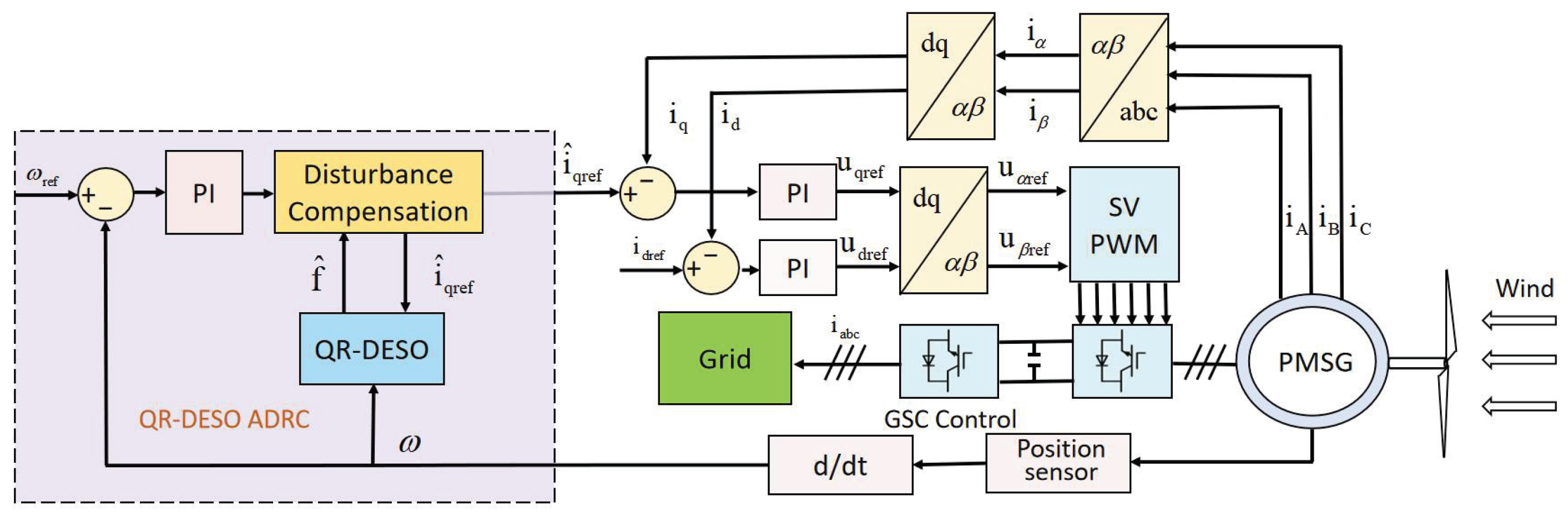
The overall control block diagram of the permanent magnet synchronous generator (PMSG)-based wind energy conversion system (WECS) is shown in Figure 2, where independent control systems are deployed for both the generator-side and grid-side converters. Specifically, the generator-side converter adopts the rotor field-oriented vector control strategy with a dual-loop structure, in which the maximum power point tracking (MPPT) module generates the optimal speed reference ω ref , the outer speed loop controller employs the QR-DESO control strategy proposed in this paper to track the reference speed, the inner current loop controller adopts PI control to generate the d / q -axis voltage references, and the switching signals for controlling the generator-side converter are finally generated via space vector pulse width modulation (SVPWM).

3.1. Structure of the Proposed QR-DESO

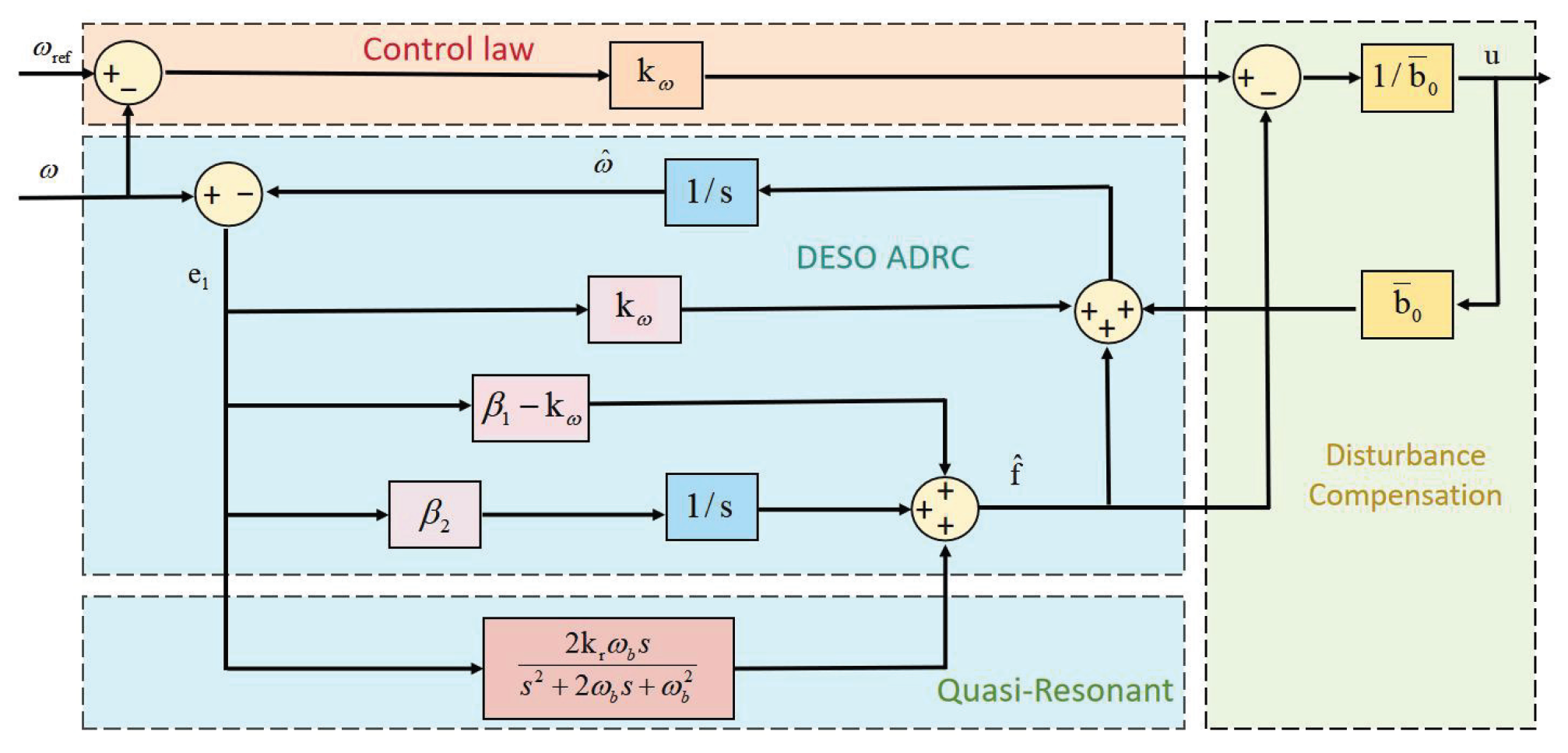
A structure block diagram of the proposed QR-DESO is shown in Figure 3.
To achieve the structural decoupling strategy, ideally, the target closed-loop disturbance rejection dynamics should be completely decoupled from the tracking coefficient k ω and reduced to a clean, independent second-order bandpass filter, which can be expressed as:
G f -deso ( s ) = x 1 ( s ) f ( s ) = s s 2 + β 1 s + β 2
It can be seen that the disturbance rejection performance is determined only by β 1 / β 2 (independent of the controller coefficient k ω ), and the disturbance suppression capability can be optimized independently.
Substituting Equation (13) into Equation (11), the designed DESO can be expressed as:
e 1 = z 1 x 1 z ˙ 1 = z 2 k ω e 1 + b ¯ 0 u z 2 = ( k ω β 1 ) e 1 β 2 e 1 d t
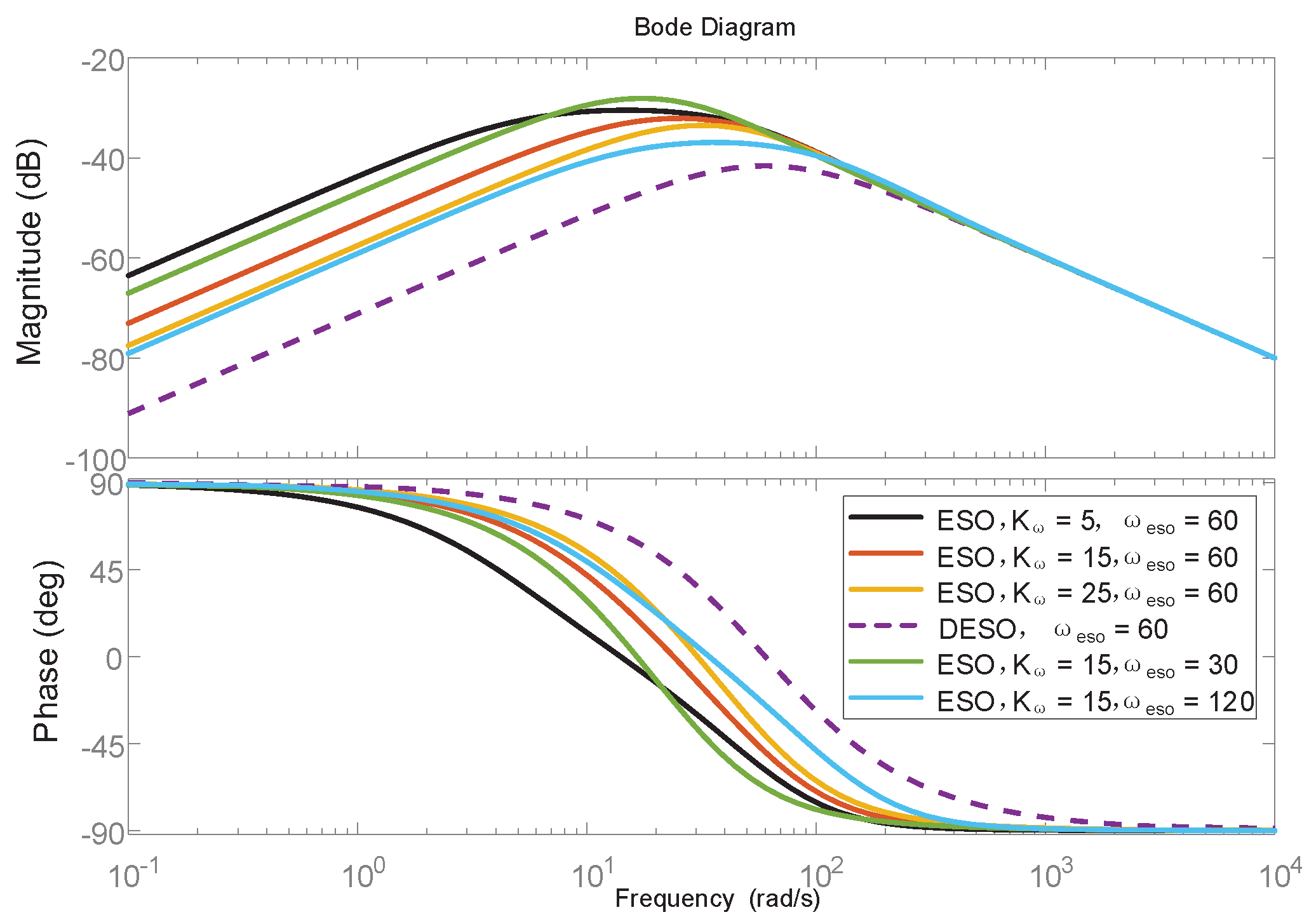
In Figure 4, the Bode plots of the disturbance estimation error transfer functions for the conventional ESO and the proposed DESO are compared under different parameter values. The parameters k ω and ω eso significantly affect the amplitude–frequency characteristics of the conventional ESO: increasing these parameters improves the disturbance estimation speed but also amplifies noise and introduces larger errors, forming an inherent coupling contradiction that makes it impossible to simultaneously optimize disturbance rejection and noise suppression, resulting in difficult parameter tuning and degraded practical performance. In contrast, the DESO has a lower magnitude across the entire frequency range, and its performance remains unaffected by parameter variations, effectively solving the coupling problem and achieving superior disturbance estimation accuracy and disturbance rejection capability.
The disturbance caused by the tower shadow effect is a periodic disturbance with definite frequency and stable amplitude. The core advantage of the quasi-resonant controller (QRC) is that it is designed with high gain at specific frequency points, which can accurately capture such periodic signals with fixed frequency (or small-amplitude fluctuations).
R ( s ) = k r ω b s s 2 + ω b s + ω n 2
where k r is the proportional coefficient, ω b is the bandwidth coefficient, and ω n is the suppressed disturbance angular frequency, which can be adjusted according to the frequency of the periodic disturbance to be suppressed. The controller is mainly aimed at the periodic disturbance caused by the tower shadow effect, so ω n is set to three times of ω ( ω n varies with the speed ). k r and ω b are the key parameters for adjusting the gain bandwidth of the quasi-resonant controller.
The QR-DESO is ultimately formulated as:
e 1 = z 1 x 1 z ˙ 1 = z 2 k ω e 1 + b ¯ 0 u z 2 = ( k ω β 1 R ) e 1 β 2 e 1 d t

3.2. Performance Analysis

1. Disturbance Estimation Capability: Estimation error is a key indicator for analyzing estimation accuracy. In this section, we derive the transfer function from the closed-loop disturbance to the estimation error, and compare the magnitudes of the frequency content of disturbances in the Bode plot. The smaller the magnitude, the higher the estimation accuracy.
For the traditional ESO, G e - e s o ( s ) is given as follows:
G e -eso ( s ) = e f ( s ) f ( s ) = s ( s + β 1 ) s 2 + β 1 s + β 2
For the proposed DESO, G e - d e s o ( s ) is given as follows:
G e -deso ( s ) = e f ( s ) f ( s ) = s ( s + k ω ) s 2 + β 1 s + β 2
For the proposed QR-DESO, G f - q r - d e s o ( s ) is given as follows:
G e -qr-deso ( s ) = e f ( s ) f ( s ) = s ( s + k ω ) s 2 + ( β 1 + R ( s ) ) s + β 2
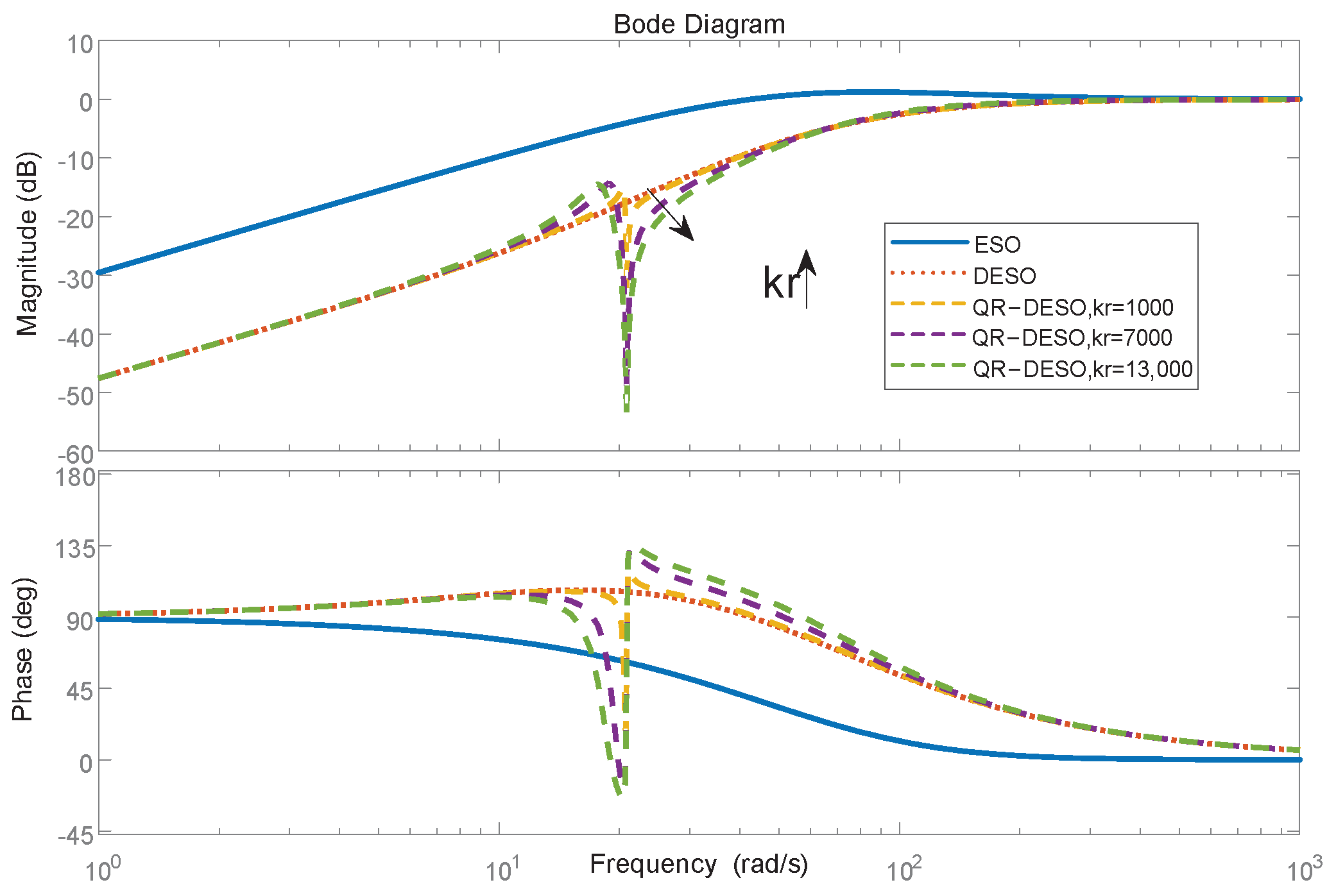
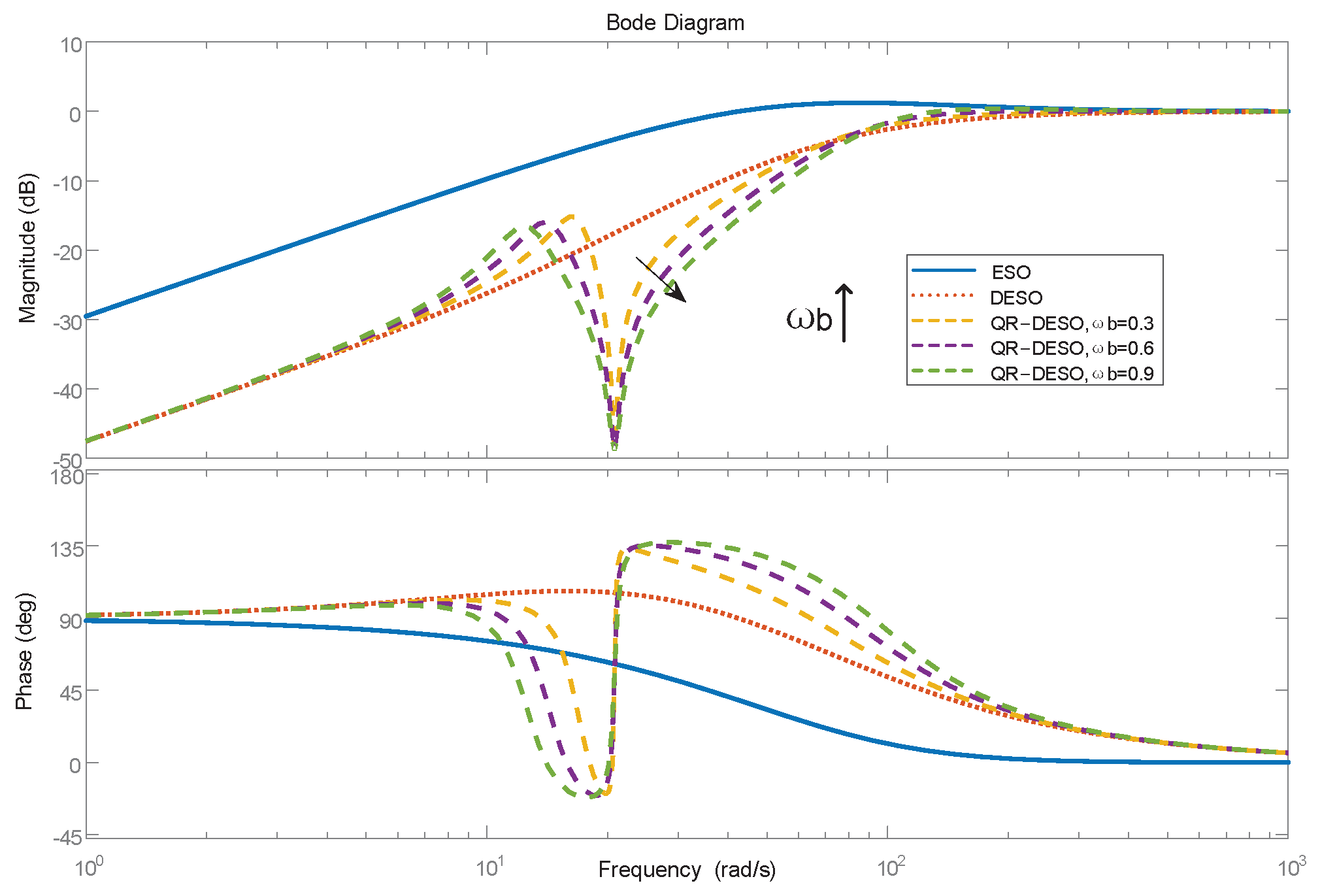
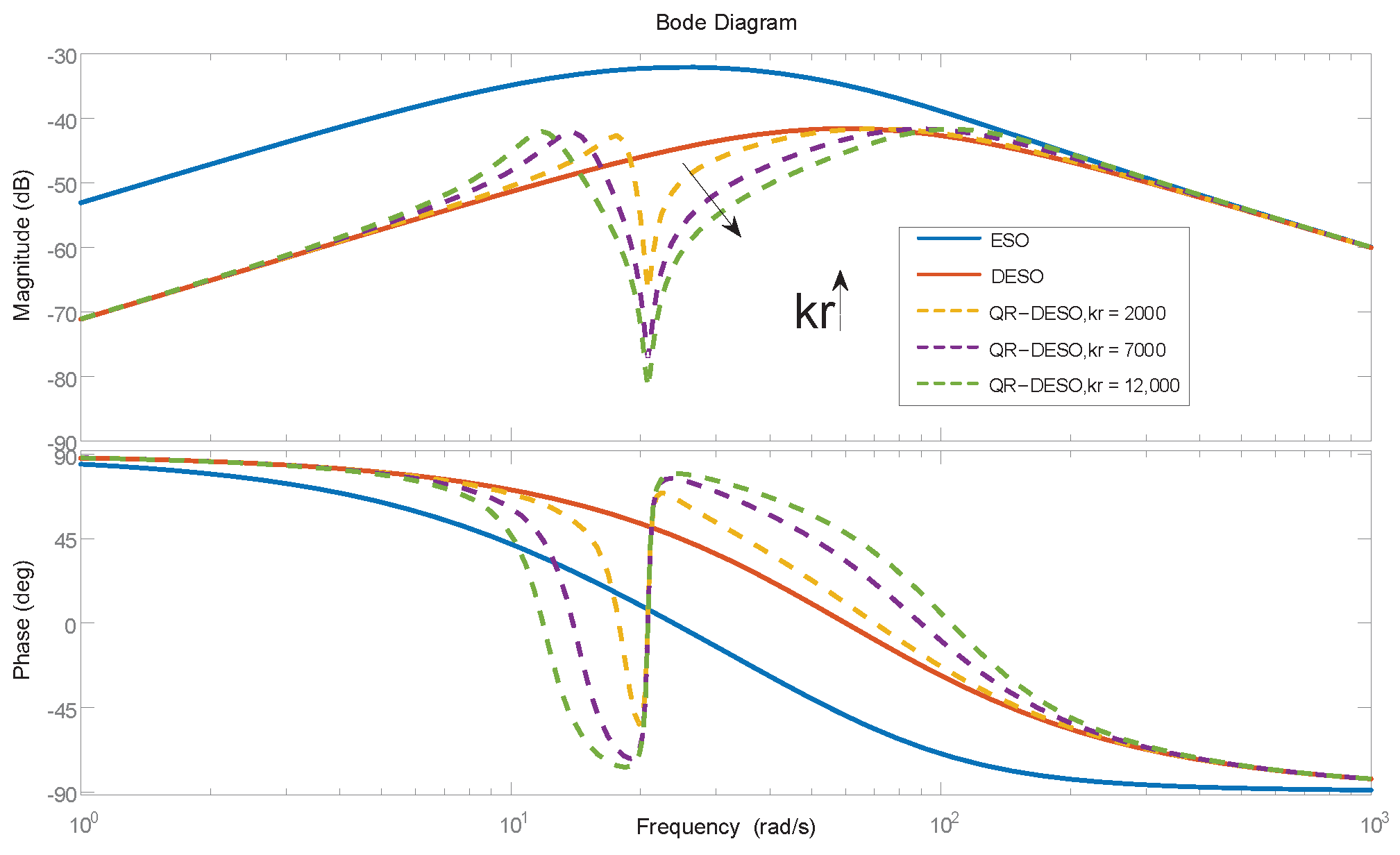
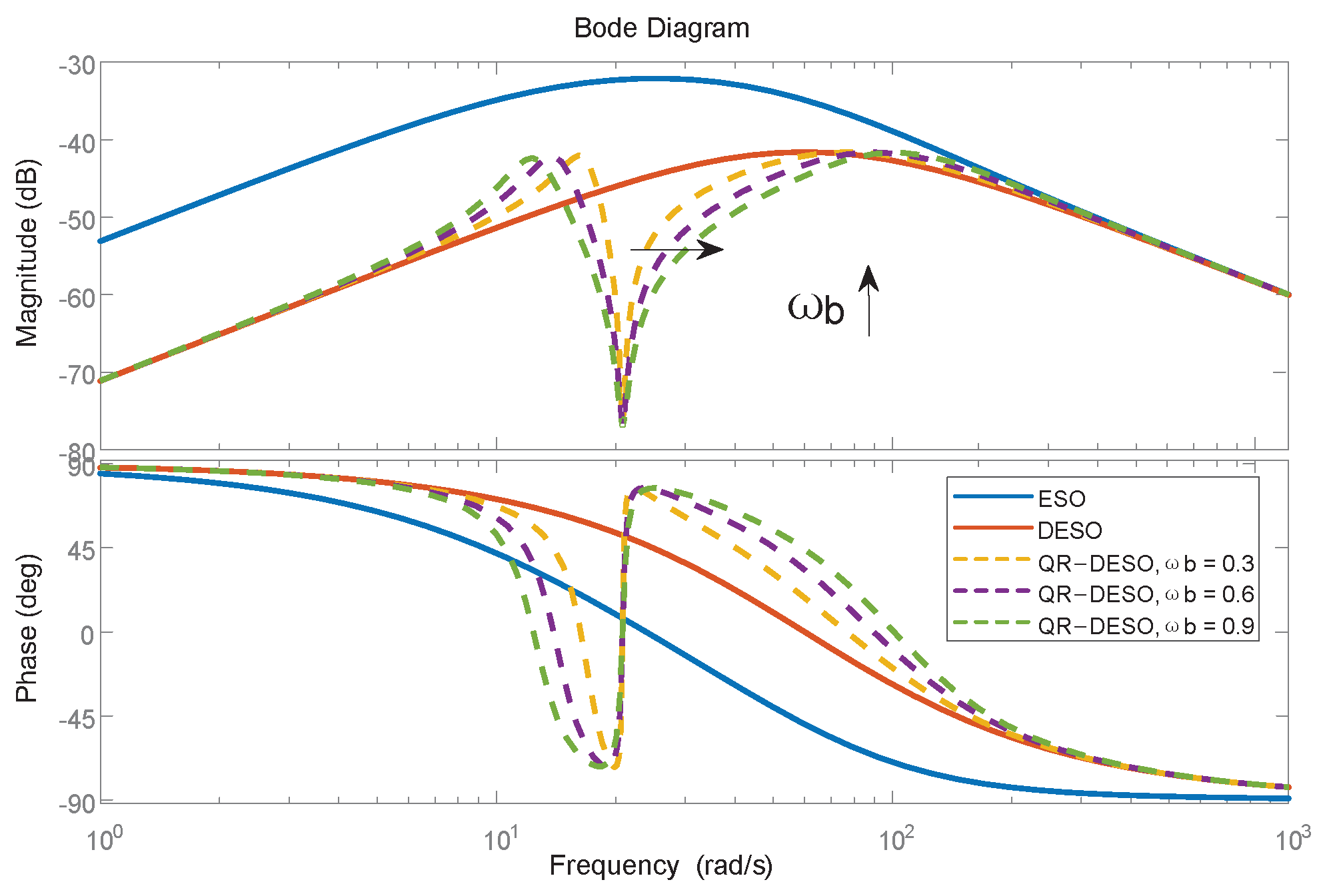
In Figure 5 and Figure 6, the Bode plots of the transfer function of estimation error to disturbance for different algorithms are plotted with identical parameter values, and only the parameters of the quasi-resonant controller for the proposed QR-DESO are compared under different values. As observed from the magnitude curves, compared with other algorithms, the proposed DESO and QR-DESO have a larger slope in the low-frequency region and a significantly smaller magnitude, which indicates that their disturbance estimation errors are smaller. Meanwhile, in the frequency range of periodic disturbances, the QR-DESO curve also exhibits an obvious downward trend, which is attributed to the introduction of the quasi-resonant controller. This demonstrates that the proposed QR-DESO scheme will have stronger estimation capability in handling periodic disturbances. From the phase curves in Figure 5 and Figure 6, the system maintains a positive phase margin (PM) above 45° and a gain margin (GM) larger than 6 dB across the operating frequency range. These values quantitatively confirm that the proposed QR-DESO has sufficient stability margins, ensuring good robustness against disturbances and avoiding potential oscillation risks.
2. Disturbance Rejection Performance: To analyze the disturbance rejection performance of the closed-loop system, the transfer function G f ( s ) from disturbance to speed is deduced in this section, which indicates the extent of the disturbance’s impact on the speed. The smaller the magnitude of the frequency content of the disturbance, the stronger the rejection performance will be.
G f -qr-deso ( s ) = x 1 ( s ) f ( s ) = s s 2 + ( β 1 + R ( s ) ) s + β 2
Figure 7 and Figure 8 show the Bode plots of the speed-to-disturbance transfer function under different parameter conditions. It can be found that in the low-frequency and mid-frequency regions, the magnitude of the proposed QR-DESO ADRC is generally shifted downward by 10 to 20 dB compared with conventional ADRC, which indicates that the influence of disturbances on speed is smaller, and the proposed method exhibits stronger advantages in aperiodic disturbance rejection performance. From the phase curves in Figure 7 and Figure 8, it can be observed that the system maintains a positive phase margin (PM) above 45° and a gain margin (GM) larger than 6 dB across the operating frequency range. These values quantitatively confirm that the proposed QR-DESO has sufficient stability margins, ensuring good robustness against disturbances and avoiding potential oscillation risks.

4. Validation by Numerical Simulation

The architecture of the simulation platform for the permanent magnet wind power generation system, constructed in the MATLAB(R2021b)/Simulink environment, is illustrated in Figure 2. Initiated by the aerodynamic characteristic modeling unit, the wind turbine aerodynamic model is driven by input wind speed parameters, which convert the captured wind energy into mechanical torque. This mechanical transmission is coupled to the permanent magnet synchronous generator (PMSG) body via the transmission system. To achieve MPPT and constant power closed-loop control, the system adopts a vector control architecture and establishes a d-q-axis decoupling control model. In the experiment, the proportional gain K ω of the speed loop controller is set to 15, and the observer bandwidth ω e s o is set to 60. The amplitude A of the torque is set to 10 % . The experimental parameters are listed in Table 1.

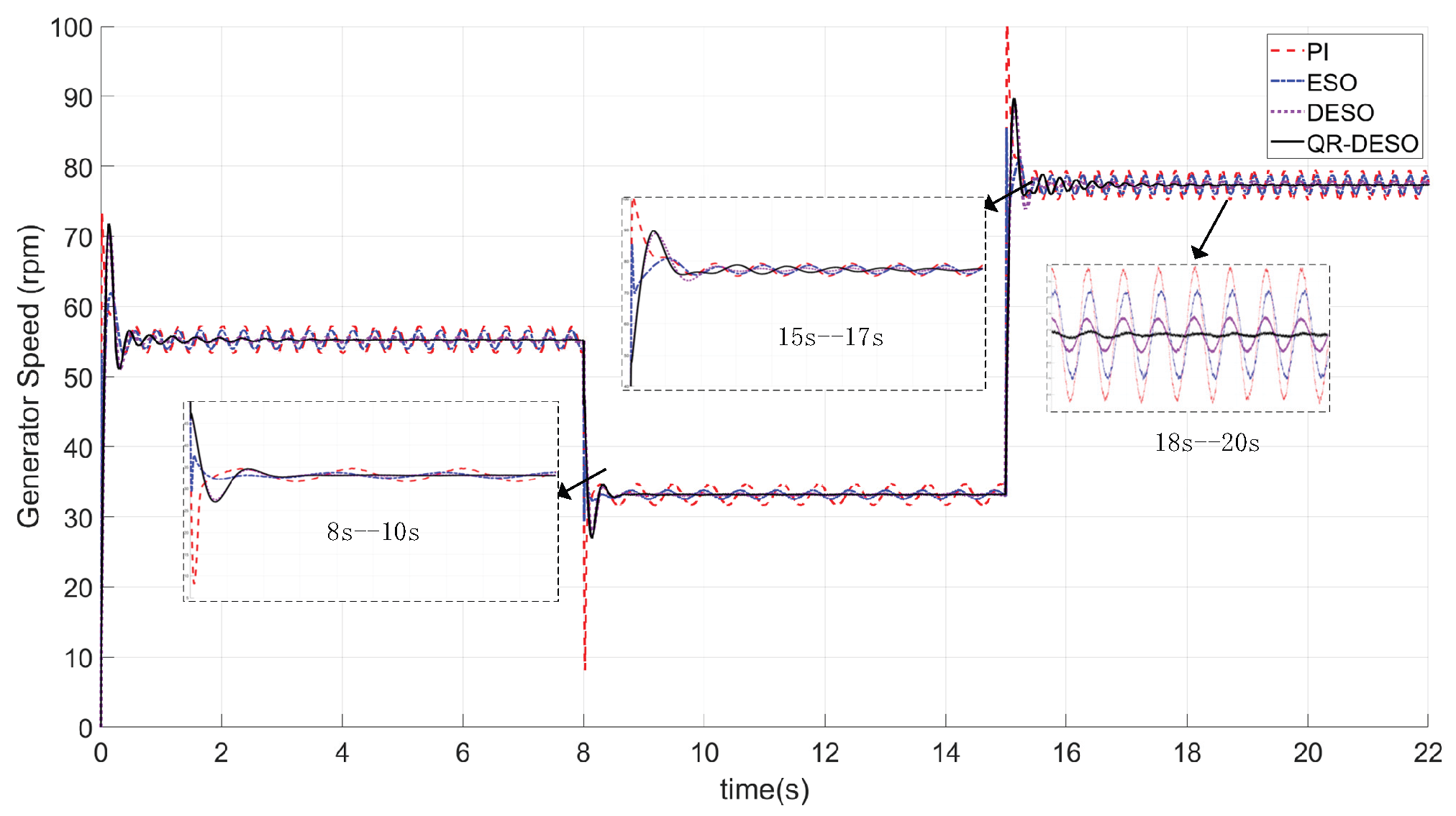
4.1. Step-Change Wind Speed Test

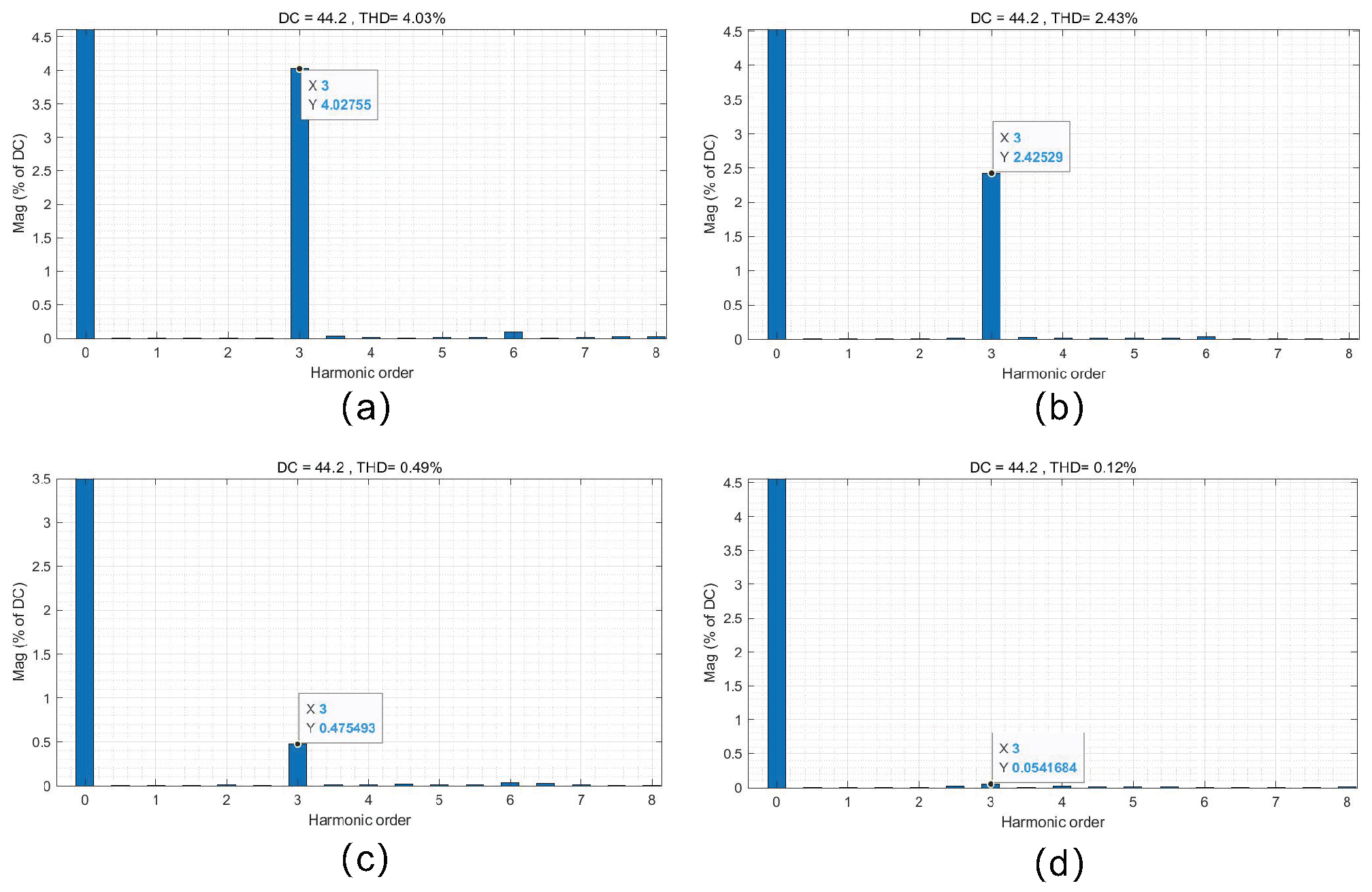
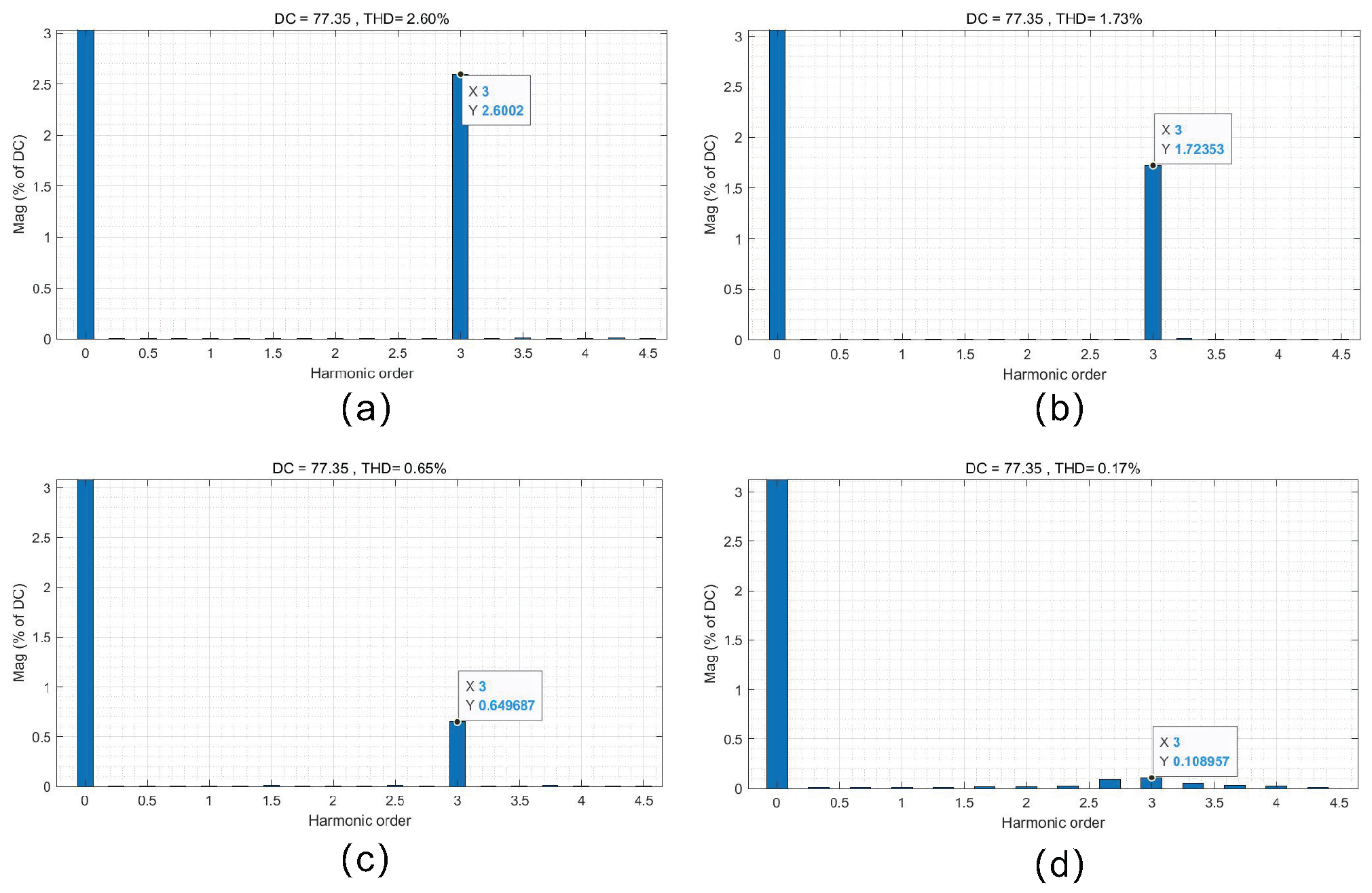
In this experiment, two step changes in wind speed are introduced to verify the disturbance rejection capability of the proposed control method. At 8 s, the wind speed suddenly drops from 10 m/s to 6 m/s, and at 15 s, it suddenly rises from 6 m/s to 14 m/s. The steady-state precision and harmonic suppression capabilities are further validated in Figure 9 and Figure 10. As illustrated in the time-domain waveforms in Figure 9, the PI, ESO, and DESO methods suffer from evident speed ripples due to periodic load fluctuations. However, the QR-DESO significantly smooths the speed trajectory. This is corroborated by the FFT analysis in Figure 10, where the THD is drastically reduced from 2.60 % (PI) to 0.17 % (QR-DESO). Specifically, the 3rd harmonic magnitude is attenuated by over 95 % , proving that the QR-DESO can effectively eliminate targeted periodic disturbances while maintaining robust tracking. A quantitative performance comparison of the four controllers under this ramp wind speed condition is presented in Table 2. Compared with the conventional PI controller, the proposed QR-DESO reduces the settling time from 0.257 s to 0.221 s, the steady-state error from 1.1590 to 0.0746, and the RMSE from 1.4221 to 0.1862. Notably, the STD of the speed error is also reduced from 1.4213 to 0.1744, indicating superior fluctuation suppression capability. Although the ESO achieves a low overshoot of 18.08%, it exhibits larger steady-state error and RMSE than the QR-DESO. The DESO shows improved precision over the ESO but suffers from longer settling time and higher overshoot. Overall, the QR-DESO achieves the best balance between dynamic response, steady-state accuracy, and disturbance rejection performance.

4.2. Ramp Change Wind Speed Test

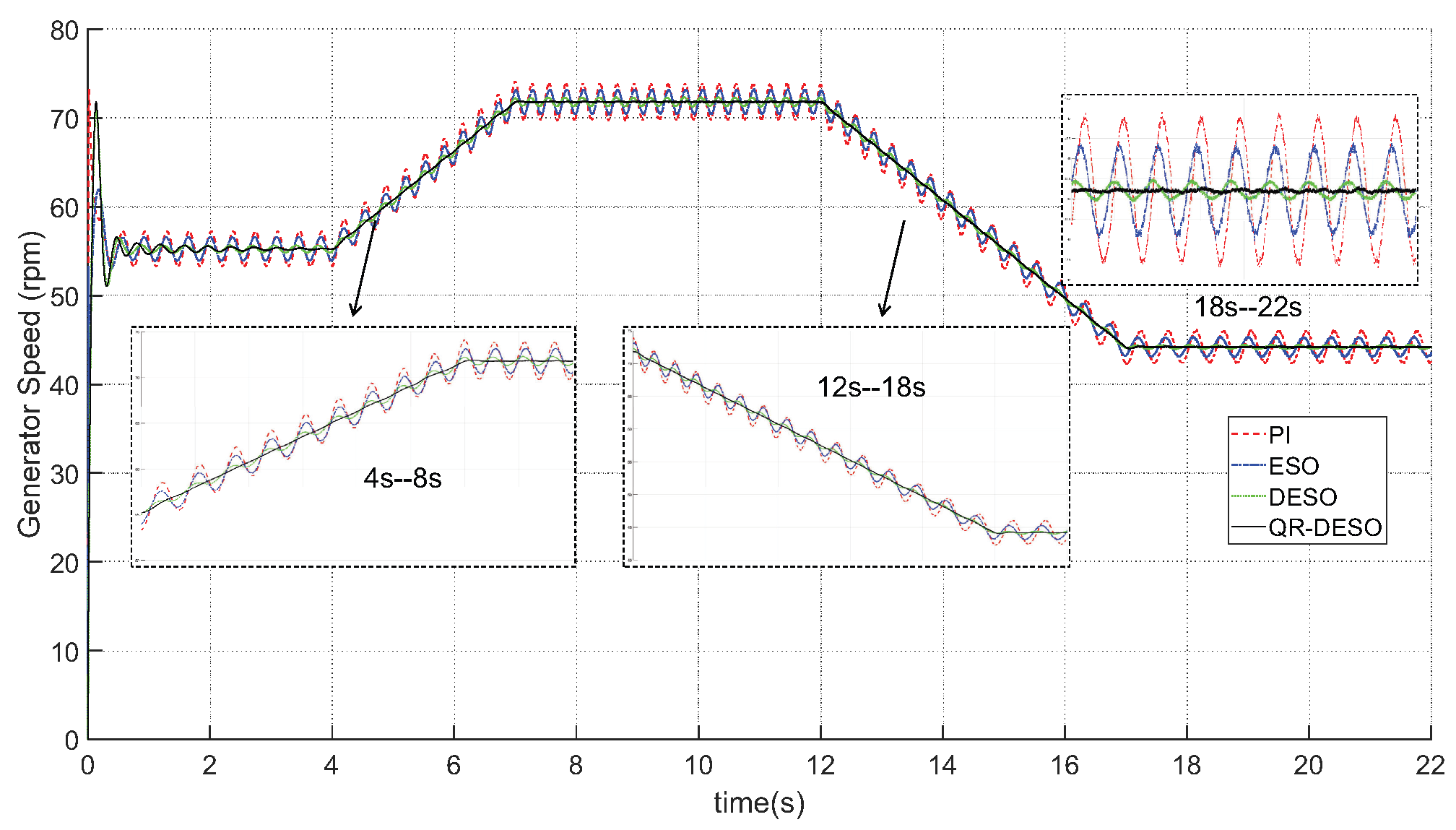
In this experiment, two ramp wind speed variations are introduced to verify the speed tracking capability of the proposed control method. The wind speed rises from 10 m/s to 14 m/s at a rate of 1 m/s at 4 s, and then drops to 5 m/s at a rate of −1 m/s at 12 s. To verify the effectiveness of the proposed control strategy, all experiments are carried out under the same operating conditions. The dynamic tracking performance under ramp references is illustrated in Figure 11 and Figure 12. As shown in the time-domain trajectories (Figure 11), the PI and ESO controllers exhibit significant oscillations, whereas the QR-DESO provides a smooth and precise response during both acceleration and deceleration. This is further supported by the frequency-domain analysis in Figure 12, where the THD is suppressed to a minimum of 0.12 % by the QR-DESO. These results numerically demonstrate that the quasi-resonant component effectively eliminates periodic speed ripples even when the operating point is continuously varying. A quantitative performance comparison of the four controllers under this ramp wind speed condition is presented in Table 3. The results show that the proposed QR-DESO achieves the lowest RMSE and STD values, indicating significantly improved tracking accuracy and fluctuation suppression capability compared with the conventional PI controller. It also outperforms both the ESO and DESO methods, demonstrating superior control precision and robustness under varying operating conditions. These results numerically demonstrate that the quasi-resonant component effectively eliminates periodic speed ripples even when the operating point is continuously varying.

4.3. Parameter Mismatch

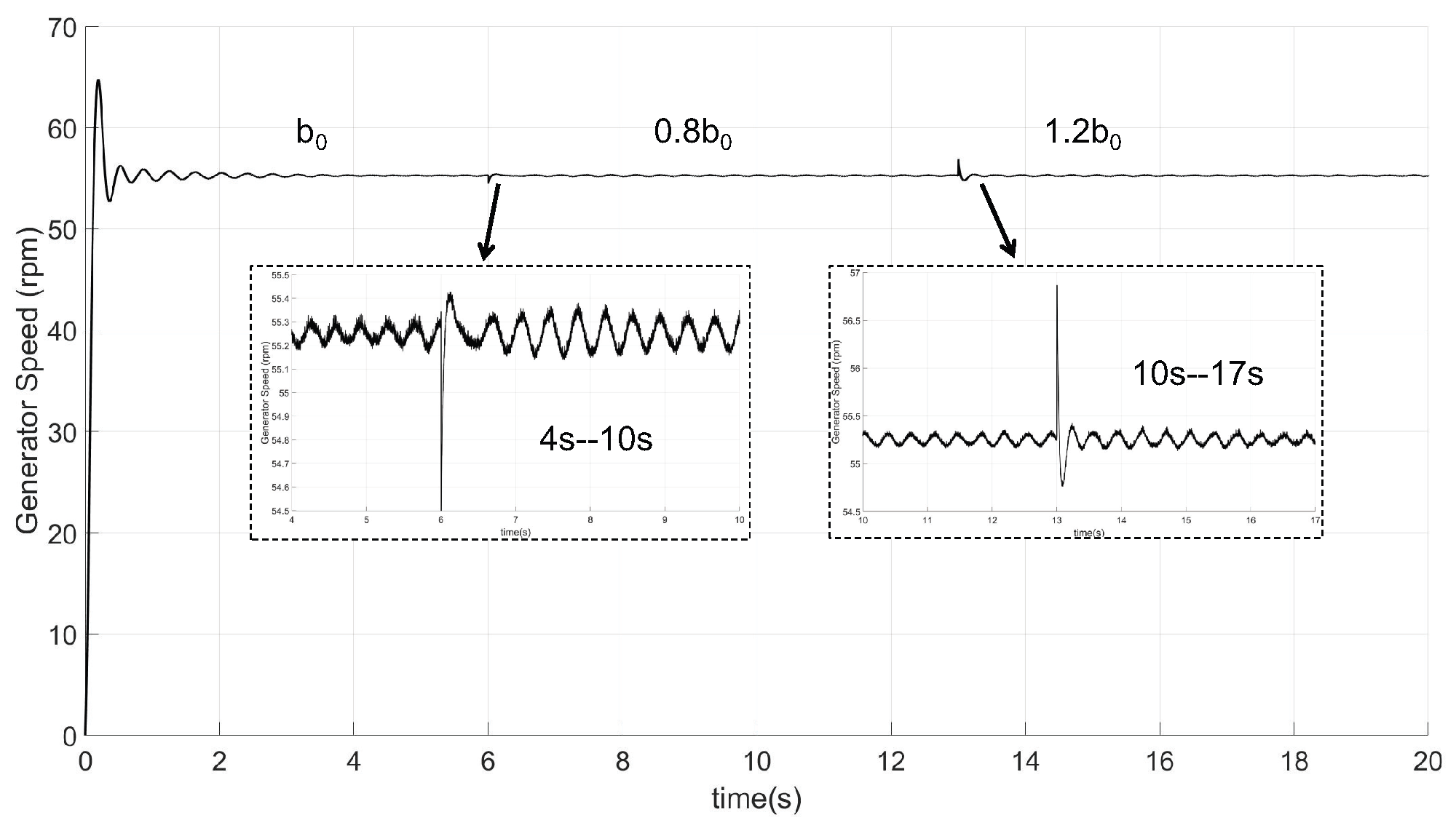
As illustrated in Figure 13, the control gain is initially set to its nominal value b 0 . At t = 6 s, the gain is decreased to 0.8 b 0 , and at t = 13 s, it is increased to 1.2 b 0 to simulate ± 20 % parameter mismatch. As shown in the magnified insets (4–10 s and 10–17 s), the generator speed exhibits only a minor instantaneous spike at the moment of the gain change. However, the QR-DESO quickly compensates for this parameter-induced disturbance, and the system returns to its steady-state tracking almost immediately. These results demonstrate that the proposed controller maintains high stability and strong parameter robustness, even when a significant mismatch occurs between the nominal model and the actual system.

4.4. Turbulent Wind Speed Test

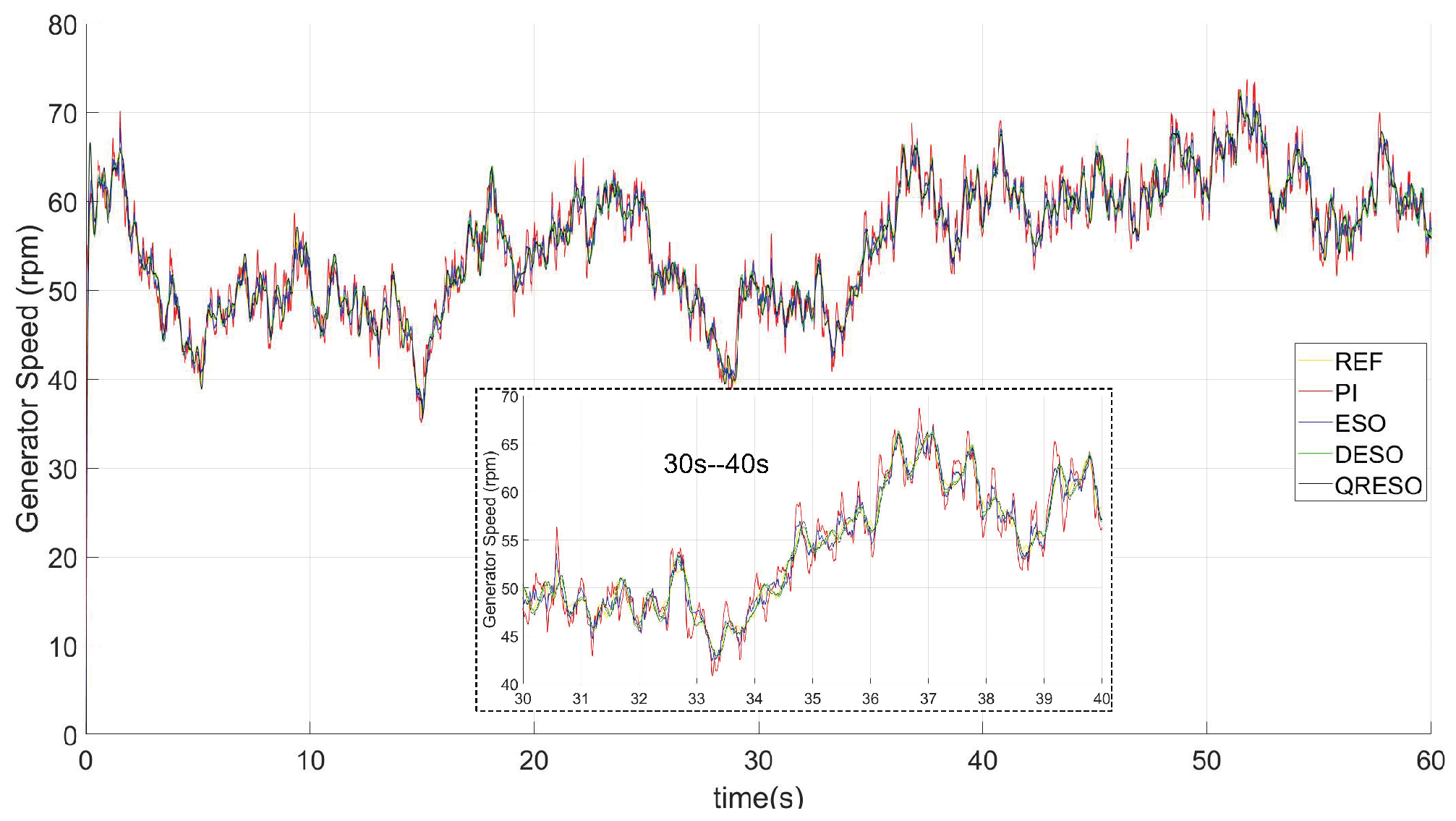
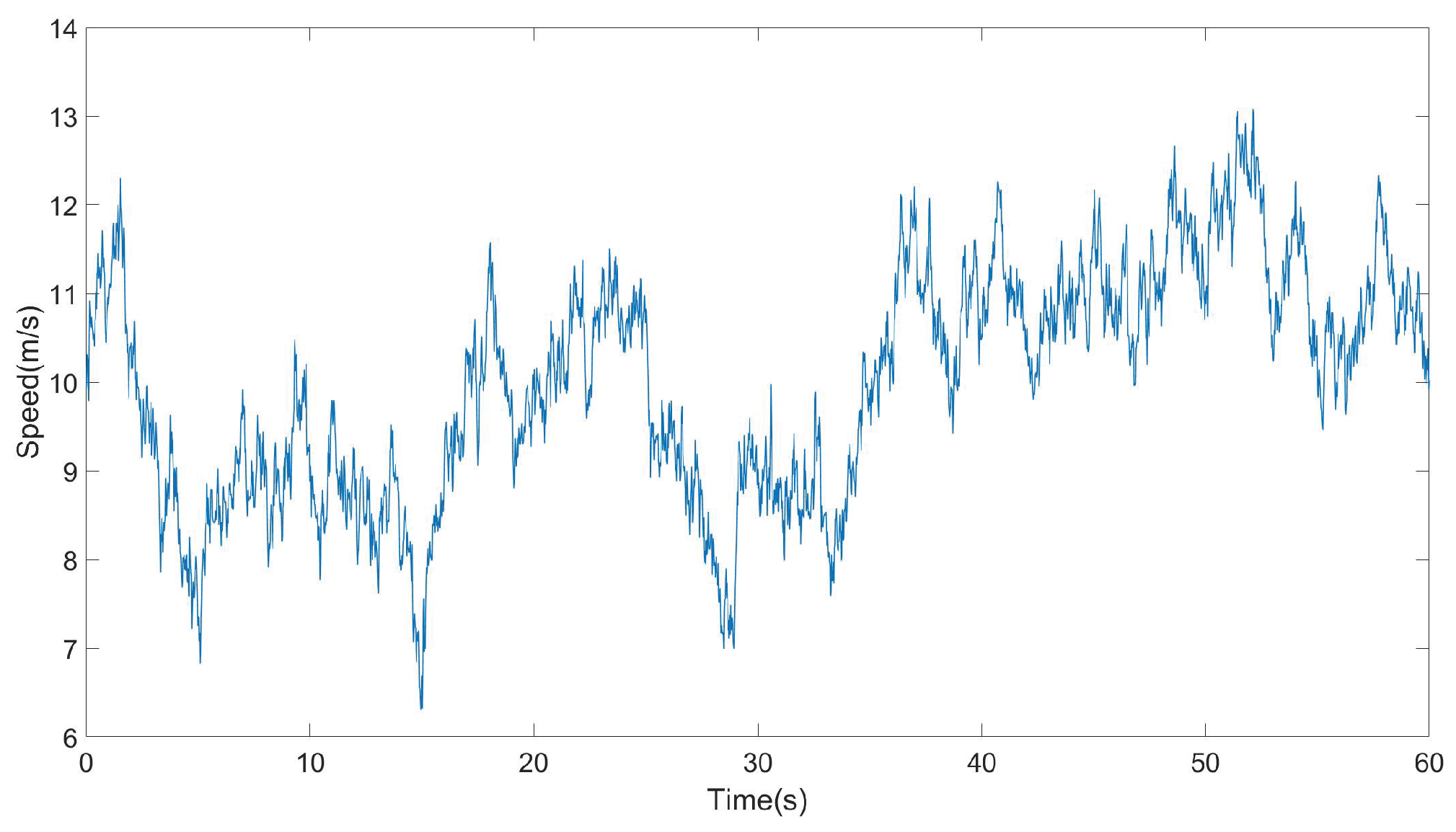
To further demonstrate the advantages and practical feasibility of the proposed QR-DESO, a stochastic wind condition scenario is employed. The random wind speed is synthesized by superimposing a mean wind speed with turbulent fluctuating components, generating a 60 s time series of stochastic turbulent wind speed that aligns with real-world wind power operating conditions. The generated random wind profile, which fluctuates between 6 m/s and 14 m/s, is illustrated in Figure 14. The generator speed tracking performance of the different controllers under the stochastic wind speed profile defined above is illustrated in Figure 15. As illustrated in Figure 15, while all controllers are capable of following the generator speed reference, significant discrepancies in tracking performance emerge under rapid wind speed fluctuations. The conventional PI control exhibits substantial oscillations and a pronounced steady-state deviation, indicating poor noise immunity. Although the ESO reduces tracking errors through active disturbance estimation, it suffers from non-negligible phase lag, a consequence of the inherent coupling between noise filtering requirements and parameter tuning. In contrast, the proposed DESO and QR-DESO methods, as highlighted in the magnified inset (30–40 s), minimize oscillations and achieve the most precise alignment with the reference trajectory. This performance validates its superior tracking accuracy and robust anti-interference capability in complex offshore environments.
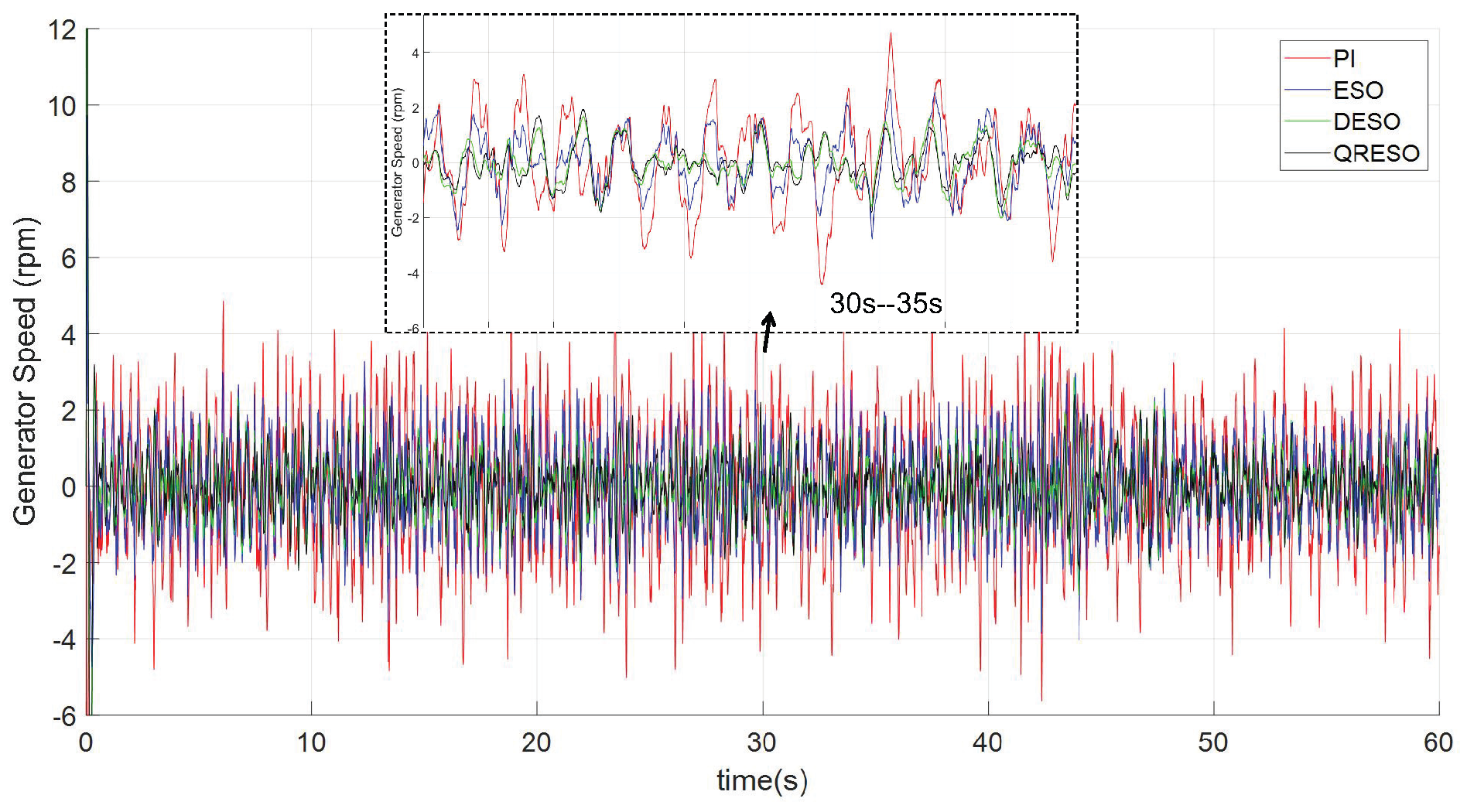
The generator speed tracking error trajectories are depicted in Figure 16. Although all controllers maintain a relatively low mean tracking error, significant discrepancies exist in their fluctuation amplitudes. The conventional PI control exhibits substantial oscillations (red line), indicating its high sensitivity to stochastic disturbances and measurement noise. While the ESO succeeds in reducing the average error, it fails to sufficiently suppress high-frequency fluctuations. In contrast, the proposed DESO and QR-DESO methods, as highlighted in the magnified inset (30–35 s), achieve the smallest fluctuation amplitudes and minimize oscillations. This demonstrates their superior performance in mitigating high-frequency chatter and validates the effectiveness of the proposed disturbance rejection strategies. To further evaluate the tracking accuracy quantitatively, the root mean square error (RMSE) and Standard Deviation (STD) of the generator speed for each controller are calculated and summarized in Table 4. The data reveals a progressive improvement in control precision and fluctuation suppression. Compared with the conventional PI controller ( R M S E = 1.687 , S T D = 1.699 ), the proposed QR-DESO ( R M S E = 0.645 , S T D = 0.694 ) achieves a significant reduction in tracking error by approximately 61.8% and a reduction in fluctuation amplitude by about 59.2%. Furthermore, even when compared to the ESO ( R M S E = 1.112 , S T D = 1.111 ) and the DESO ( R M S E = 0.745 , S T D = 0.747 ), the QR-DESO demonstrates the highest precision, with RMSE improvements of 42.0% and 13.4% and STD improvements of 37.5% and 7.1%, respectively. These results numerically confirm that the integration of parameter decoupling and quasi-resonant suppression effectively enhances the system’s steady-state accuracy and robustness against complex disturbances.

5. Conclusions

This paper proposes a QR-DESO method that aims to realize smooth tracking of the optimal speed for a PMSG and enhance the disturbance rejection performance of the system, thereby improving the power generation efficiency of the PMSG. A DESO is proposed to address the parameter coupling problem existing in traditional PI and ESO schemes. Subsequently, a QR is designed to estimate the periodic disturbances of the system in real time, so as to suppress harmonics and further improve the disturbance rejection performance. Experimental results show that the proposed control method outperforms PI and ESO in both dynamic response speed and disturbance suppression capability. QR-DESO has a stronger disturbance rejection ability and better robustness when dealing with parameter mismatch. Finally, the turbulent wind speed test shows that the proposed control method has higher accuracy in tracking the optimal rotor speed. Future research will focus on the current-loop control of a PMSG, with emphasis on solving the harmonic suppression problem to improve power quality and further optimizing overall system performance to ensure the reliable operation of the PMSG under various operating conditions.

Author Contributions

Conceptualization, J.C. and Z.D.; methodology, Y.Z. and G.L.; software, J.C., Y.Z. and C.L.; validation, J.C.; formal analysis, W.H. and G.L.; investigation, C.L., J.Y., W.H. and G.L.; resources, Z.D.; writing—original draft, J.C., Y.Z., J.Y. and W.H.; visualization, C.L. and J.Y.; supervision, G.L. and Z.D.; project administration, G.L.; funding acquisition, Z.D. All authors have read and agreed to the published version of the manuscript.

Funding

This research was funded by the National Key Research and Development Program of China (2023YFB4203200) and in part by the Natural Science Foundation of Shaanxi Province (2025JC-YBMS-482).

Data Availability Statement

The original contributions presented in this study are included in the article. Further inquiries can be directed to the corresponding author.

Conflicts of Interest

Authors Yihua Zhu, Chao Luo and Jiawei Yu were employed by the company China Southern Power Grid. The remaining authors declare that the research was conducted in the absence of any commercial or financial relationships that could be construed as a potential conflict of interest.

References

  1. Wei, C.; Yin, T.; Qiao, W.; Zhu, Y. Disturbance Rejection Control for PMSGs Based on Novel Sliding Mode Control Law and Unknown System Disturbance Estimator. IEEE Trans. Energy Convers. 2025, 40, 3142–3151. [Google Scholar] [CrossRef]
  2. Catalán, P.; Wang, Y.; Arza, J.; Chen, Z. A Comprehensive Overview of Power Converter Applied in High-Power Wind Turbine: Key Challenges and Potential Solutions. IEEE Trans. Power Electron. 2023, 38, 6169–6195. [Google Scholar] [CrossRef]
  3. Alhassan, A.B.; Do, T.D. The Influence of Higher-Order Disturbance Estimation on Wind Power Generation of WECS Using SMC with Sensorless Wind Speed Estimation. IEEE Access 2025, 13, 62179–62197. [Google Scholar] [CrossRef]
  4. Global Wind Energy Council. Global Wind Report 2025; Global Wind Energy Council: Brussels, Belgium, 2025. [Google Scholar]
  5. Li, S.; Haskew, T.A.; Swatloski, R.P.; Gathings, W. Optimal and Direct-Current Vector Control of Direct-Driven PMSG Wind Turbines. IEEE Trans. Power Electron. 2012, 27, 2325–2337. [Google Scholar] [CrossRef]
  6. Benadja, M.; Rezkallah, M.; Benhalima, S.; Hamadi, A.; Chandra, A. Hardware Testing of Sliding Mode Controller for Improved Performance of VSC-HVDC Based Offshore Wind Farm Under DC Fault. IEEE Trans. Ind. Appl. 2019, 55, 2053–2063. [Google Scholar] [CrossRef]
  7. Zhang, Z.; Zhao, X.; Fu, L.; Edrah, M. Stability and Dynamic Analysis of the PMSG-Based WECS with Torsional Oscillation and Power Oscillation Damping Capabilities. IEEE Trans. Sustain. Energy 2022, 13, 2196–2210. [Google Scholar] [CrossRef]
  8. Jia, F.; Xu, Z.; Tan, X.; Chen, L.; Ji, L.; Fu, Y. Suppression Scheme for WECS’s Forced Torsional Vibration Under Continuous Wind Disturbance Considering Power Yield and Smoothness. IEEE Trans. Energy Convers. 2025, 40, 701–711. [Google Scholar] [CrossRef]
  9. Vilar Moreno, C.; Amaris Duarte, H.; Usaola Garcia, J. Propagation of Flicker in Electric Power Networks Due to Wind Energy Conversion Systems. IEEE Trans. Energy Convers. 2002, 17, 267–272. [Google Scholar] [CrossRef]
  10. Wei, C.; Song, C.; Zhang, C.; Qiao, W.; Shen, Y. Zero-Phase Virtual Sampling-Based Anti-Disturbance Repetitive Control for Permanent Magnet Synchronous Generators. IEEE Trans. Energy Convers. 2025, 40, 950–958. [Google Scholar] [CrossRef]
  11. Li, J.; Geng, H. Rotor Speed Control in Above-Rated Wind Speed Region for Floating Offshore Wind Turbine. IEEE Trans. Sustain. Energy 2024, 15, 1640–1651. [Google Scholar] [CrossRef]
  12. Errouissi, R.; Al-Durra, A. A Novel PI-Type Sliding Surface for PMSG-Based Wind Turbine with Improved Transient Performance. IEEE Trans. Energy Convers. 2018, 33, 834–844. [Google Scholar] [CrossRef]
  13. Palanimuthu, K.; Mayilsamy, G.; Lee, S.R.; Jung, S.Y.; Joo, Y.H. Fault Ride-Through for PMVG-Based Wind Turbine System Using Coordinated Active and Reactive Power Control Strategy. IEEE Trans. Ind. Electron. 2023, 70, 5797–5807. [Google Scholar] [CrossRef]
  14. Chen, Y.; Liu, X. A Variable Rate Supertwisting Sliding Mode Speed Control with Overcurrent Protection for PMSM Considering Aperiodic and Periodic Disturbances. IEEE Trans. Power Electron. 2025, 40, 5787–5798. [Google Scholar] [CrossRef]
  15. Li, C.; Pan, T.; Ding, S. Finite-Time Fast Integral Terminal Sliding-Mode Speed Control Method with Disturbance Observer for SPMSM. IEEE Trans. Power Electron. 2025, 40, 10694–10704. [Google Scholar] [CrossRef]
  16. Tang, S.; Cao, Y.; Shi, T.; Yan, Y.; Xia, C. Online Estimation of Load Torque and Moment of Inertia Incorporating Extended Disturbance Observer with Trigger. IEEE Trans. Power Electron. 2025, 40, 5731–5742. [Google Scholar] [CrossRef]
  17. Do, T.D. Disturbance Observer-Based Fuzzy SMC of WECSs Without Wind Speed Measurement. IEEE Access 2017, 5, 147–155. [Google Scholar] [CrossRef]
  18. Cheng, Z.; Li, L.; Bai, X.; Liu, X.; Zhong, C.; Liu, J. 3-DOF H Voltage Robustness Control for PMSG Extended Range Powertrain. IEEE Trans. Transp. Electrif. 2025, 11, 5734–5747. [Google Scholar] [CrossRef]
  19. Huang, C.; Zhao, H. Error-Based Active Disturbance Rejection Control for Wind Turbine Output Power Regulation. IEEE Trans. Sustain. Energy 2023, 14, 1692–1701. [Google Scholar] [CrossRef]
  20. Huang, C.; Zhuang, J. Error-Based Active Disturbance Rejection Control for Pitch Control of Wind Turbine by Improved Coyote Optimization Algorithm. IEEE Trans. Energy Convers. 2022, 37, 1394–1405. [Google Scholar] [CrossRef]
  21. Wu, H.; Gan, C.; Wang, H.; Wang, S.; Qu, R.; Liu, X. Active Disturbance Rejection Speed Control with Double-Stage-ESO Considering Aperiodic and Periodic Disturbances for PMSM Drives. IEEE Trans. Ind. Electron. 2024, 1–12. [Google Scholar] [CrossRef]
  22. Dong, H.; Yang, X.; Gao, H.; Yu, X. Practical Terminal Sliding-Mode Control and Its Applications in Servo Systems. IEEE Trans. Ind. Electron. 2023, 70, 752–761. [Google Scholar] [CrossRef]
  23. Junejo, A.K.; Xu, W.; Mu, C.; Ismail, M.M.; Liu, Y. Adaptive Speed Control of PMSM Drive System Based on a New Sliding-Mode Reaching Law. IEEE Trans. Power Electron. 2020, 35, 12110–12121. [Google Scholar] [CrossRef]
  24. Zhu, Y.; Liu, X. Adaptive Sliding Mode Predictive Speed Control of PMSM Using a New Hybrid Reaching Law. IEEE J. Emerg. Sel. Top. Ind. Electron. 2025, 6, 1601–1610. [Google Scholar] [CrossRef]
  25. Wang, Y.; Feng, Y.; Zhang, X.; Liang, J. A New Reaching Law for Antidisturbance Sliding-Mode Control of PMSM Speed Regulation System. IEEE Trans. Power Electron. 2020, 35, 4117–4126. [Google Scholar] [CrossRef]
  26. Chen, Q.; Wang, M.; Nan, Y.; Wei, C. Unknown System Dynamic Estimator-Based Two-Phase Power Reaching Law Control for DC–DC Buck Converter. IEEE Trans. Circuits Syst. I Regul. Pap. 2023, 70, 4641–4649. [Google Scholar] [CrossRef]
  27. Zhou, H.; Xu, J.; Chen, C.; Tian, X.; Liu, G. Disturbance-Observer-Based Direct Torque Control of Five-Phase Permanent Magnet Motor Under Open-Circuit and Short-Circuit Faults. IEEE Trans. Ind. Electron. 2021, 68, 11907–11917. [Google Scholar] [CrossRef]
  28. Pradhan, P.P.; Subudhi, B.; Ghosh, A. A Robust Multiloop Disturbance Rejection Controller for a Doubly Fed Induction Generator-Based Wind Energy Conversion System. IEEE J. Emerg. Sel. Top. Power Electron. 2022, 10, 6266–6273. [Google Scholar] [CrossRef]
  29. Meng, Q.; Gao, Y.; He, Y.; Hussain, S.; Lu, J.; Chen, Y.; Qin, C.; Luo, F.; Guerrero, J.M. PowerMistral: A data-efficient wind power forecasting framework leveraging pre-trained large language models. Appl. Energy 2026, 411, 127625. [Google Scholar] [CrossRef]
  30. Liu, C.; Luo, G.; Duan, X.; Chen, Z.; Zhang, Z.; Qiu, C. Adaptive LADRC-Based Disturbance Rejection Method for Electromechanical Servo System. IEEE Trans. Ind. Appl. 2020, 56, 876–889. [Google Scholar] [CrossRef]
  31. Lin, S.; Cao, Y.; Li, C.; Wang, Z.; Shi, T.; Xia, C. Two-Degree-of-Freedom Active Disturbance Rejection Current Control for Permanent Magnet Synchronous Motors. IEEE Trans. Power Electron. 2023, 38, 3640–3652. [Google Scholar] [CrossRef]
  32. Zuo, Y.; Mei, J.; Jiang, C.; Yuan, X.; Xie, S.; Lee, C.H.T. Linear Active Disturbance Rejection Controllers for PMSM Speed Regulation System Considering the Speed Filter. IEEE Trans. Power Electron. 2021, 36, 14579–14592. [Google Scholar] [CrossRef]
  33. Hu, M.; Hua, W.; Wang, Z.; Li, S.; Wang, P.; Wang, Y. Selective Periodic Disturbance Elimination Using Extended Harmonic State Observer for Smooth Speed Control in PMSM Drives. IEEE Trans. Power Electron. 2022, 37, 13288–13298. [Google Scholar] [CrossRef]
  34. Yang, F.; Jiang, F.; Xu, Z.; Qiu, L.; Xu, B.; Zhang, Y. Complex Coefficient Active Disturbance Rejection Controller for Current Harmonics Suppression of IPMSM Drives. IEEE Trans. Power Electron. 2022, 37, 10443–10454. [Google Scholar] [CrossRef]
  35. Li, S.; Liu, Z. Adaptive Speed Control for Permanent-Magnet Synchronous Motor System with Variations of Load Inertia. IEEE Trans. Ind. Electron. 2009, 56, 3050–3059. [Google Scholar] [CrossRef]
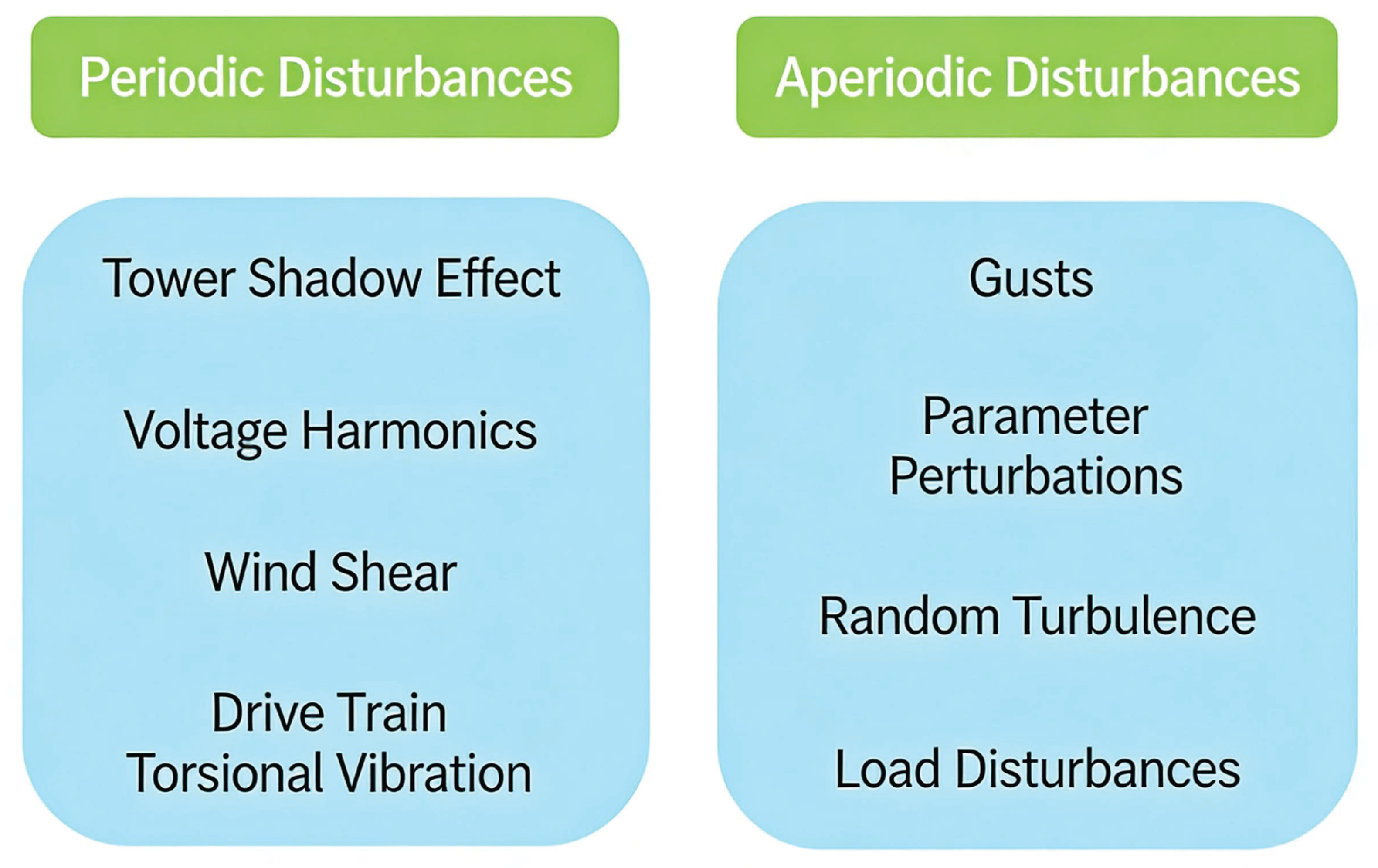
Figure 1. Disturbance classification.
Machines 14 00658 g001
Figure 2. Structure of the proposed method.
Machines 14 00658 g002
Figure 3. Block diagram of the proposed QR-DESO.
Machines 14 00658 g003
Figure 4. Bode plot of G f -eso ( s ) and G f -deso ( s ) with different k ω and ω eso .
Machines 14 00658 g004
Figure 5. Bode plot of G e -eso ( s ) , G e -deso ( s ) and G e -qr-deso ( s ) with different kr.
Machines 14 00658 g005
Figure 6. Bode plot of G e -eso ( s ) , G e -deso ( s ) and G e -qr-deso ( s ) with different ω b .
Machines 14 00658 g006
Figure 7. Bode plot of G f -eso ( s ) , G f -deso ( s ) and G f -qr-deso ( s ) with different kr.
Machines 14 00658 g007
Figure 8. Bode plot of G f -eso ( s ) , G f -deso ( s ) and G f -qr-deso ( s ) with different ω b .
Machines 14 00658 g008
Figure 9. Dynamic speed tracking performance under varying step references.
Machines 14 00658 g009
Figure 10. Harmonic spectrum analysis (FFT) of the generator speed tracking error for different controllers. (a) PI. (b) ESO. (c) DESO. (d) QR-DESO.
Machines 14 00658 g010
Figure 11. Dynamic speed tracking performance under ramp references.
Machines 14 00658 g011
Figure 12. Harmonic frequency spectra of the tracking error under ramp-up conditions for different controllers. (a) PI. (b) ESO. (c) DESO. (d) QR-DESO.
Machines 14 00658 g012
Figure 13. Robustness verification of QR-DESO under parameter mismatch.
Machines 14 00658 g013
Figure 14. A 60 s stochastic wind speed time series.
Machines 14 00658 g014
Figure 15. Comparison of speed tracking among different control strategies with a magnified view from 30 s to 40 s.
Machines 14 00658 g015
Figure 16. Comparison of speed tracking error fluctuations among different control strategies, with a magnified view (30–35 s).
Machines 14 00658 g016
Table 1. Main parameters of the PMSG.
SymbolParametersUnitValue
η p Number of pole pairs-12
R 1 Stator one-phase resistance Ω 0.025
L s d q -axis inductanceH0.0036
ψ f Rotor flux linkageWb3.8889
P N Rated active powerKW600
I N Rated currentA1000
ω N Rated speedr/min80
U dc DC-bus voltageV1800
T N Rated torqueN·m70,000
JGenerator inertiakg·m260
Table 2. Performance comparison of different controllers under step wind speed conditions.
Control MethodPIESODESOQR-DESO
Overshoot  (%)52.0418.0825.8627.79
Settling Time  (s)0.2570.2680.3770.221
Steady-State Error1.15900.70650.21210.0746
RMSE1.42210.94690.35960.1862
STD1.42130.94560.35490.1744
Table 3. Performance comparison of different controllers under ramp wind speed conditions.
Control MethodPIESODESOQR-DESO
RMSE1.41480.94780.30840.0645
STD1.41480.94750.30780.0610
Table 4. Comparison of RMSE for speed tracking among different control methods.
Control MethodPIESODESOQR-DESO
RMSE1.6871.1120.7450.645
STD1.6991.1110.7470.694
Disclaimer/Publisher’s Note: The statements, opinions and data contained in all publications are solely those of the individual author(s) and contributor(s) and not of MDPI and/or the editor(s). MDPI and/or the editor(s) disclaim responsibility for any injury to people or property resulting from any ideas, methods, instructions or products referred to in the content.