


Abstract
Hybrid manufacturing (HM) integrates two or more distinct manufacturing processes—most commonly additive manufacturing (AM) and subtractive machining—within a coordinated workflow (often on a single platform) to achieve capabilities that neither process provides alone: high geometric freedom and rapid material addition from AM, plus tolerance, surface finish, and datum control from machining. This review first surveys major classes of hybrid manufacturing (additive–subtractive, multi-energy, multi-material, and assistive hybrid). It then focuses on multi-axis directed energy deposition (DED) combined with in-loop subtractive machining—arguably the most mature and industrially impactful HM configuration—emphasizing process planning methods, persistent limitations, and application domains, including repair/remanufacturing and functionally graded materials (FGMs). The review highlights current CAM strategies for hybrid DED, integrated planning frameworks, and emerging trends such as digital twins and closed-loop metrology-driven replanning.
1. Introduction
Hybrid manufacturing (HM) is best understood as a systems-level integration paradigm rather than a single process: it deliberately combines two or more manufacturing modalities so that their complementary physics and capabilities can be orchestrated within one coordinated workflow (and increasingly, within one platform) [1,2,3,4]. As a result, HM is an umbrella term whose most useful distinctions are not based on machine branding or specific tool heads, but on what exactly is being hybridized and how tightly those elements are coupled in time, space, and control. In practice, hybridization can occur at multiple layers: (i) process physics, where fundamentally different material transformation mechanisms (e.g., melting/solidification, plastic deformation, ablation/removal, surface modification) are sequenced or co-applied to achieve geometry and properties that neither can deliver alone [5,6,7,8]; (ii) materials and composition, where feedstock types, chemistries, or reinforcement phases are combined to create multi-material or functionally graded architectures [9,10,11]; and (iii) energy sources, where distinct heating or excitation modes (laser, arc, induction, ultrasonic, mechanical rolling/peening) are used jointly to stabilize deposition, control microstructure, or reduce residual stress [12,13,14,15]. A practical taxonomy therefore classifies hybrid manufacturing according to the dominant axis of integration—additive–subtractive hybrids (convergent AM + machining, often in-loop), multi-energy/multi-physics hybrids (coordinated energy inputs and auxiliary treatments), and multi-material and graded hybrids (compositionally variable builds coupled with finishing and validation steps). Framing HM in this way shifts attention from “which processes are present” to “how the integration changes manufacturability,” clarifying why hybrid systems succeed: they convert manufacturing from a linear sequence into a coupled, constraint-driven optimization problem spanning geometry, accessibility, thermal history, microstructure evolution, and quality assurance. This paper follows a narrative technical review methodology. The goal is to synthesize representative studies that have shaped the development of hybrid additive–subtractive manufacturing, with particular focus on DED-based hybrid systems, in-loop machining, process planning, metrology integration, geometric accuracy, surface finish, thermal–mechanical effects, and part-quality improvement. The screened literature was selected based on technical relevance to metal hybrid manufacturing, especially studies addressing hybrid DED + machining architectures, additive–subtractive process planning, bead geometry and thermal modeling, dimensional accuracy, surface finish, residual stress, distortion control, in situ/inter-process metrology, multi-axis toolpath generation, repair/remanufacturing, and quality assurance. Papers focused only on polymer AM, standalone conventional machining, or general manufacturing systems without direct relevance to DED-based hybrid processing were excluded. The selected studies were then synthesized thematically across major technical areas, including system configurations, process modeling, machining integration, accuracy and surface-quality improvement, multi-axis planning, metrology-assisted control, thermal–mechanical effects, and industrial applications. This narrative review approach enables a critical comparison of methods, assumptions, performance metrics, limitations, and future research needs in hybrid DED + machining. The principal hybrid manufacturing (HM) strategies reviewed in this section are outlined below.
1.1. Additive–Subtractive Hybrid Manufacturing (ASHM)
Additive–subtractive hybrid manufacturing (ASHM) refers to process architectures in which material addition (additive manufacturing, AM) and material removal (subtractive machining) are deliberately interleaved within a single, coordinated process plan to achieve near-net shape deposition with precision finishing and datum control [16,17,18]. Unlike conventional “AM then machine” post-processing [19,20,21], ASHM emphasizes planning-level coupling: the part is decomposed into regions and sequences such that deposition builds functional volume efficiently, while intermediate or final machining operations restore tolerances, surface integrity, and geometric references before errors accumulate. In practice, the most prevalent metal ASHM pairing is directed energy deposition (DED) with milling and/or turning, often on a multi-axis machine tool or within a tightly calibrated cell, because DED can add material onto existing substrates (enabling feature addition and repair) [22,23,24,25], where CNC machining can immediately refine critical interfaces and re-establish coordinate frames [26,27,28,29]. Powder bed fusion (PBF) plus machining is also common in industry [30,31,32], but it is frequently not truly in-loop in the strict sense: powder handling, recoating, and part excavation typically prevent frequent alternation [33,34,35,36], so machining is more often performed as a downstream step or in separate setups rather than being interwoven throughout the build. In polymer and composite contexts, material extrusion integrated with CNC routing/milling [37,38,39,40,41,42] provides a lower-temperature analogue, enabling rapid deposition of bulk geometry followed by subtractive passes that sharpen features, improve surface finish, and manage dimensional drift. Across these implementations, ASHM is widely regarded as the “canonical” hybrid manufacturing class because it directly addresses the central limitation of many AM processes—dimensional accuracy and surface finish—while preserving AM’s benefits in geometric freedom, localized material addition, and reduced tooling, making it especially compelling for high-value components, repair/remanufacturing, and production scenarios where tolerance closure and quality assurance must be achieved within an integrated digital thread.
1.2. Multi-Energy Hybrid Additive
Multi-energy hybrid additive manufacturing describes additive process architectures that intentionally combine two or more energy inputs and/or deposition mechanisms to control the coupled thermal–fluid–metallurgical phenomena that govern build quality. Rather than hybridizing “add” and “remove,” this class hybridizes the energy delivery and field conditions responsible for melting, solidification, and defect formation, with the explicit goal of tailoring melt-pool geometry and stability, dilution and penetration, solidification rate and thermal gradients, and ultimately microstructure and property outcomes [43,44,45,46]. Representative configurations include laser + arc systems [47,48,49], where a laser can provide localized keyhole-free stabilization or precision heat input while an arc supplies higher deposition rate; laser + induction [50,51,52,53], where induction preheating or interpass reheating reduces thermal shock, moderates cooling rates, and can mitigate lack-of-fusion and residual-stress-driven distortion; and laser or arc deposition with ultrasonic assistance, where superimposed mechanical vibration can promote wetting, disrupt dendrite growth, refine grains, and reduce porosity by enhancing melt pool convection and bubble escape. In many implementations, the secondary energy source functions as an in situ process conditioner—preheating the substrate, smoothing temperature gradients, improving bead morphology, or actively modifying solidification conditions [54,55,56]—thereby expanding the usable process window beyond what a single energy source can reliably provide. From a process planning perspective, multi-energy hybrid AM introduces an additional layer of control variables (energy partitioning, spatial/temporal phasing of sources, synchronization constraints, and safety/interference envelopes) and motivates models that can predict not only geometry but also thermal history and microstructure evolution. As a result, this category is increasingly viewed as a pathway to higher deposition reliability, improved metallurgical quality, and more consistent mechanical performance, particularly for difficult-to-process alloys, large builds with challenging heat accumulation, and applications where property control is as critical as shape control.
1.3. Multi-Material and Functionally Graded Hybrid Manufacturing
Multi-material and functionally graded hybrid manufacturing extends the hybrid paradigm from geometry-centric integration to composition- and property-centric integration [57,58,59,60], enabling parts whose material constitution varies deliberately in space to achieve location-specific performance requirements. In this class, hybridization arises from the coordinated use of multi-feedstock delivery—such as multi-wire DED, multi-hopper powder DED, coaxial powder blending, or in situ compositional mixing [61,62,63,64,65,66]—together with downstream or in-loop post-processing (e.g., machining, heat treatment, hot isostatic pressing, surface finishing) to translate designed composition fields into validated functional gradients. The defining capability is the ability to prescribe a continuous or stepwise composition profile [66,67,68,69] (e.g., corrosion-resistant surface transitioning to a tough core; thermal barrier transitions; wear-resistant hardfacing over a ductile substrate), which in turn yields graded distributions of hardness, strength, toughness, thermal conductivity, or the coefficient of thermal expansion, often to reduce interfacial mismatch stresses and improve service life relative to discrete bi-material joints. Achieving such gradients, however, is intrinsically a hybrid planning problem: the process plan must simultaneously control mixing ratios, deposition order, and local thermal history [70,71,72,73,74], while ensuring that subsequent machining allowances do not inadvertently remove critical graded layers and that heat treatments are compatible with the evolving chemistry and microstructure. Moreover, compositional gradients interact strongly with manufacturability constraints—changes in melt viscosity, dilution behavior, cracking susceptibility, and phase formation can vary along the gradient [75,76,77,78]—requiring models and monitoring strategies that are more akin to “property-aware manufacturing” than traditional CAM. Consequently, multi-material/FGM hybrid manufacturing is increasingly positioned as a high-impact route for repair and refurbishment (where a graded transition can mitigate dilution and bond-line failures), as well as for advanced components that demand tailored surface functionality and damage tolerance without sacrificing the structural integrity or cost advantages of a single-base material platform [79,80,81,82,83].
1.4. Assistive Hybrids
Assistive hybrid manufacturing, also described as process-assisted or property-enhanced hybrid AM, encompasses approaches in which a predominantly additive workflow is augmented by one or more auxiliary processes that act as in situ or interpass “conditioners” to improve build quality and performance without fundamentally changing the primary deposition mechanism. In contrast to additive–subtractive hybrids—where machining is used to define geometry—assistive hybrids target the materials science and surface integrity bottlenecks of AM, including lack-of-fusion porosity, rough as-built surfaces, tensile residual stress, anisotropic microstructures, and defect-sensitive fatigue behavior. Typical assistance modalities include interpass rolling or peening to introduce beneficial plastic deformation [84,85,86,87,88], collapse near-surface porosity, and impose compressive residual stresses; ultrasonic vibration applied to the melt pool or substrate to enhance wetting and fluid flow, promote bubble escape, and refine grains; laser re-melting or re-scanning to smooth bead morphology, heal intertrack voids, and homogenize microstructure; and localized heat treatment (e.g., induction or controlled interpass heating) to moderate thermal gradients, reduce cracking susceptibility in difficult alloys, and tune phase transformations. Because these assistance steps may be executed either on the same platform or in a tightly coupled cell, they are often “hybrid” primarily in functional outcome—they hybridize the deposition process with a property-control mechanism—rather than requiring full co-location of multiple manufacturing processes. From a planning standpoint, assistive hybrids introduce additional degrees of freedom (when and where to apply assistance, intensity/dwell, coverage patterns, and sequencing relative to deposition), and they demand a multi-objective optimization that balances productivity against property targets and risk (e.g., avoiding overworking, overheating, or excessive surface modification). As such, assistive hybrids are increasingly leveraged when qualification hinges on fatigue life, residual-stress management, and microstructural consistency, providing a pragmatic route to bridge the gap between AM’s geometric advantages and the stringent performance requirements of aerospace, energy, and tooling applications.
2. Multi-Axis DED + In-Loop Subtractive Hybrid Manufacturing
2.1. Why Multi-Axis DED Is a Natural Match with Machining
Multi-axis directed energy deposition (DED) is a particularly natural complement to subtractive machining because the two processes address orthogonal but tightly coupled requirements in high-value metal fabrication: DED excels at efficient volumetric material addition on freeform substrates, whereas machining provides deterministic geometric closure-tolerances, surface finish, and datum fidelity that as-deposited material rarely achieves. In laser DED and arc/wire DED, material is deposited bead-by-bead along programmed trajectories and can be applied directly onto existing parts, making the process inherently well-suited for repair, remanufacturing, and localized feature addition (e.g., bosses, flanges, stiffeners, sealing lands). Yet the same physics that makes DED flexible—melt-pool dynamics, thermal distortion, bead overlap variability, and edge effects—also leads to surface roughness, waviness, and dimensional scatter that typically exceed final part requirements, particularly on critical interfaces. Embedding machining “in the envelope” (i.e., within the same machine or tightly registered cell) transforms this limitation into a controllable planning variable by enabling (i) re-establishment of accurate datums through in-loop probing and machining of reference surfaces, preventing registration drift from compounding over multiple depositions; (ii) layer-to-layer geometric control via intermediate finishing or “control cuts” that remove accumulated overbuild, restore form, and maintain a predictable machining allowance; (iii) access to internal, side, and undercut features through 5-axis reachability-allowing both deposition and cutting tool orientations to be optimized for collision avoidance and functional surface generation; and (iv) substantial reduction in re-fixturing and alignment error by maintaining a single coordinate system and digital thread across additive, inspection, and subtractive steps. Collectively, these synergies make multi-axis DED + in-loop machining not merely a convenient pairing, but a convergent manufacturing strategy in which deposition becomes a near-net preform generator and machining becomes an in-process metrology-anchored correction mechanism-enabling repeatable dimensional quality, while preserving DED’s unique ability to add material precisely where it is needed [89,90,91,92,93].
2.2. System Architectures
System architectures for multi-axis DED + in-loop subtractive hybrid manufacturing (see Figure 1) generally fall into three implementation families that differ in how tightly additive and subtractive operations are co-located, how coordinate frames are preserved, and how metrology is integrated into control. First, single-machine convergent platforms integrate a DED deposition head directly onto a CNC machine tool—most commonly a 5-axis mill/turn or 5-axis machining center—so that deposition, probing, and machining occur within one kinematic chain and one workholding setup. This configuration minimizes re-fixturing and enables rapid alternation between deposition and cutting, making it well-suited for tolerance-critical feature addition and repair; industrial concepts from DMG MORI and Mazak are frequently cited exemplars of the convergent “one platform, one datum” approach. Second, robot + machine-tool hybrid cells distribute functions across specialized assets—typically a robot (or gantry) for DED deposition and a CNC machine for finishing—often motivated by reach, build volume, or deposition flexibility. While this architecture can be cost-effective and scalable, its performance depends strongly on calibration, handoff metrology, and robust registration between the robot’s frame, the CNC frame, and the part’s evolving geometry; consequently, uncertainty management (scan/probe, fiducials, adaptive compensation) becomes a primary planning burden. Third, hybrid cells with on-machine measurement (OMM) embed inspection directly into the manufacturing loop-using touch probing, structured-light scanning, laser scanning, or other sensing-between deposition and machining steps to update the as-built model, re-establish datums, and correct subsequent toolpaths. In practice, OMM enables “measure-compensate-act” cycles that are central to true in-loop hybrid manufacturing: intermediate surface qualification passes (light machining or verification scans) are used to prevent error accumulation, maintain machining allowances, and improve the reliability of downstream finishing-especially for geometrically complex repairs and multi-axis deposition on freeform surfaces.
Figure 1.
Hybrid manufacturing workflow. x, y, z refers to the coordinates of the measured points from probing.
2.3. “In-Loop” vs. “Post-Process” Machining
The distinction between “in-loop” and “post-process” machining is fundamental to how hybrid DED systems are planned, controlled, and ultimately qualified. In a post-process paradigm, machining is treated primarily as a downstream finishing operation applied after deposition is complete-typically to remove surface roughness, close tolerances, and generate final functional surfaces. While straightforward, this approach implicitly assumes that the additively built geometry will remain sufficiently close to nominal (and sufficiently stable) such that final machining can recover the required dimensions without excessive rework, scrap, or loss of critical material (e.g., graded layers). By contrast, in-loop machining elevates machining to an active, interleaved control mechanism: deposition is segmented into planned intervals (by height, feature accessibility, thermal state, or quality checkpoints), and machining is executed during the build to re-establish datums, regulate accumulated geometric drift, and enforce a predictable machining allowance before deviations compound. In-loop strategies are typically coupled with intermediate inspection-on-machine probing or scanning-to update the as-built model [94,95,96,97,98], trigger corrective actions (additional deposition, local re-machining, toolpath compensation), and provide a traceable digital thread. This integration is precisely where hybrid manufacturing delivers its strongest advantages, but it is also where complexity concentrates: effective in-loop operation requires coordinated decisions about switching conditions (when to machine), allowance management (how much stock to leave and where), access and collision constraints under evolving geometry, and measurement-to-model registration under thermal distortion. Consequently, process planning becomes the primary differentiator-and often the principal bottleneck-because the success of in-loop hybrid manufacturing depends less on having both tool heads available and more on reliably orchestrating deposit-measure-machine cycles that control geometry and quality in real time while minimizing time penalties and error propagation.
3. Process Planning for Multi-Axis DED + In-Loop Machining
Process planning for multi-axis DED coupled with in-loop machining is most productively framed as a co-planning problem, because additive and subtractive decisions are intrinsically interdependent and must be coordinated against a workpiece state that evolves throughout execution [1,2,3,4]. Rather than generating independent deposition and machining programs, co-planning requires the planner to jointly determine what volume is deposited versus removed, how the part is decomposed into deposition patches and machinable features, and how these operations are sequenced so that each step preserves the manufacturability of subsequent steps. Central decisions include [3,99,100,101,102,103,104]: selecting deposit regions that maximize build efficiency while preserving tool access; selecting machining regions that establish and periodically refresh functional datums, remove geometric drift, and finish critical interfaces; defining switching logic (deposit–measure–machine cycles) based on height thresholds, feature accessibility, thermal stabilization needs, or inspection checkpoints; and designing allowances that are sufficient to absorb deposition variability and distortion yet minimal enough to avoid excessive heat input, time, and material consumption. The multi-axis setting intensifies these couplings: tool orientation planning affects bead stability and collision risk during deposition, while also constraining achievable cutting approaches and the ability to maintain consistent stock on freeform surfaces [105,106,107]. Meanwhile, thermal transients and residual-stress-driven distortion introduce geometric drift that can progressively corrupt reference frames [108,109,110]; effective co-planning therefore treats datum management and metrology integration as first-class planning primitives, using probing or scanning to update the as-built model and drive local compensation before errors become unrecoverable at final finishing. In this sense, hybrid process planning is less a static CAM exercise than the construction of a closed-loop manufacturing program that orchestrates deposition, inspection, model updating, and machining to achieve tolerance closure and surface integrity under uncertainty, while minimizing rework and preserving qualification-ready traceability across the entire build/finish lifecycle.
3.1. Planning Objectives
The main objective of hybrid DED + in-loop machining planning is to achieve the target geometry, tolerance, and surface finish while preventing error accumulation during repeated deposition, machining, and inspection cycles. Because the part geometry evolves throughout the process, the plan must maintain stable datums, update work-coordinate references, and preserve sufficient machining allowance for final tolerance closure. For multi-axis systems, the planner must also ensure collision-free and kinematically feasible motion by considering tool orientation, reachability, singularity avoidance, and the changing collision envelope. At the same time, deposition sequencing and intermediate machining must control thermal history, reduce residual-stress buildup, and limit distortion. Overall, effective planning minimizes tool changes, cycle time, and rework by correcting geometric and thermal deviations early, before they propagate into later stages or become inaccessible.
3.2. Core Planning Decisions
Process planning for multi-axis DED coupled with in-loop machining is most accurately framed as a co-planning problem in which additive and subtractive decisions are not made sequentially, but are instead optimized as an interdependent system under shared geometric, thermal, and kinematic constraints. The planner [111,112,113,114,115] must jointly determine (i) what material to deposit (region/feature assignment, repair volume partitioning, bead and layer decomposition), (ii) what material to remove (datum surfaces, critical interfaces, control cuts, and final finishing features), (iii) when to switch between deposition, measurement, and machining (cycle triggers based on height, accessibility, distortion risk, or inspection checkpoints), and (iv) how to preserve a stable reference structure—datums, coordinate frames, and machining allowances—despite inevitable thermal transients, residual-stress-driven distortion, and as-built geometric variability. Unlike conventional CAM pipelines that assume a fixed part geometry, hybrid co-planning must explicitly account for evolving geometry and model uncertainty: deposition changes the collision envelope and tool accessibility, machining changes the heat flow and surface condition for subsequent deposition, and intermediate metrology introduces registration and compensation decisions that can either arrest or amplify error accumulation. As a result, effective plans (as shown in Figure 2) integrate feature/patch sequencing with multi-axis orientation control, allowance design, and metrology-informed updates so that the process maintains predictable “manufacturing slack” (sufficient stock for finishing without excessive overbuild) while continuously re-establishing datums and limiting drift. In this sense, co-planning is less about producing two independent toolpath sets and more about constructing a closed-loop manufacturing program—deposit → measure → update → machine—whose switching logic and reference management are engineered to deliver tolerance closure and surface integrity with minimal rework across the full hybrid cycle.
Figure 2.
Fully integrated planning frameworks for HM.
- (A)
- Part decomposition: additive vs. subtractive regions [116,117,118,119]
- Feature/region assignment: which volumes are best built by DED vs. produced by machining from stock (or from deposited preform).
- Accessibility constraints: some faces/features must be machined to achieve tolerance; others are AM-friendly.
- Repair case: identify “to-be-added” volume from scan-to-CAD (damage model + target geometry).
- (B)
- Sequencing: interleaving deposition and machining [120,121,122]
- Preform-then-finish: deposit near-net shape; machine at the end.
- Iterative, in-envelope cycles: deposit a block/region; machine critical surfaces; repeat.
- Hybrid layer/segment scheduling: machine after a certain height, after a surface is reachable, or after a thermal stabilization step.
- (C)
- Allowance planning
- Maintain enough stock for finishing after deposition variability.
- Avoid excessive extra deposition that increases heat input and time.
- Account for expected distortion (thermal shrinkage, residual stress warping).
- Ensure allowance is reachable by cutting tools (especially in 5-axis).
- Allowance retention and compensation appears repeatedly in the hybrid process planning literature because it directly impacts success/failure of downstream machining.
- (D)
- Toolpath generation: DED paths + machining paths [123,124,125,126]
- Path type: contour-parallel, raster, spiral, or feature-following.
- Bead overlap and track sequencing (impacts porosity, dilution, microstructure).
- Multi-axis orientation planning for sidewalls, edges, overhang mitigation.
- Parameter scheduling: power/feed, travel speed, wire/powder flow.
- A dedicated stream of research reviews algorithms for DED process planning and trajectory generation, emphasizing that “CAM for DED” is still less standardized than machining CAM.
- Machining toolpaths (in-loop):
- Datum re-establishment: probing/measurement-informed WCS updates.
- Roughing/finishing planning relative to deposited allowance.
- Collision avoidance with evolving geometry (as-built differs from nominal).
- “Surface qualification” passes before subsequent deposition cycles.
- (E)
- Metrology + model updating (closing the loop)
- The “in-loop” advantage is realized when the plan includes:
- On-machine probing or scanning.
- Registration of the as-built geometry to the CAD/CAM model.
- Adaptive compensation: update subsequent deposition or machining paths.
- Quality checks: detect underfill/overbuild early.
- CAM strategy reviews for hybrid DED highlight this as a major axis of differentiation among approaches.
3.3. Integrated Planning Frameworks
Foundational studies framed hybrid manufacturing as an automated process-planning problem in which multi-axis additive operations and subtractive machining must be planned within a shared geometric and kinematic workspace [1,2,3,4]. These early frameworks established the need to decompose part geometry into manufacturable regions, determine feasible build orientations, preserve tool accessibility, and sequence additive and subtractive operations so that critical surfaces can be machined before they become inaccessible. More recent hybrid additive/subtractive planning frameworks, particularly for DED + machining systems, explicitly treat deposition and machining as coupled rather than independent operations [127,128,129,130]. In these approaches, feature extraction, precedence constraints, machining allowance design, and datum management are integrated into the planning workflow. The deposited preform is not assumed to be a final near-net shape that is simply finished at the end; instead, intermediate machining operations may be inserted to restore datums, qualify surfaces, remove accumulated geometric error, or prepare stable interfaces for subsequent deposition. This co-planning perspective is especially important for repair and remanufacturing applications, where the added material volume is derived from scan-to-CAD comparison and the resulting toolpaths must account for irregular damage geometry, uncertain stock, and evolving accessibility.
Optimization-based planning represents another important direction in the field [131,132,133,134]. These methods formulate hybrid manufacturing as a constrained decision-making problem in which process steps, operation sequences, tool orientations, deposition paths, machining passes, and inspection points are selected to balance competing objectives such as time, cost, surface quality, dimensional accuracy, thermal distortion, and material utilization. The key contribution of these frameworks is that they move beyond rule-based sequencing and allow additive and subtractive decisions to be evaluated under common constraints. For example, increasing machining allowance may improve tolerance closure but also increases deposition time, heat input, residual stress, and material removal. Optimization-based planning therefore provides a systematic mechanism to quantify these tradeoffs and identify process plans that satisfy both manufacturability and quality requirements. Digital-twin-enabled planning further extends hybrid process planning by maintaining a stateful representation of the evolving part, machine, toolpath, thermal condition, and inspection history. Rather than relying only on the nominal CAD model, the digital twin can incorporate in-process measurements, updated stock geometry, estimated distortion, and process-performance data to adapt subsequent deposition and machining operations. This enables a closed-loop planning paradigm in which the process plan is continuously refined based on the actual manufactured state. Such frameworks are particularly relevant for hybrid DED because bead geometry, thermal accumulation, and residual-stress-driven distortion can cause the as-built geometry to deviate substantially from the planned geometry. By linking planning, monitoring, and compensation, digital-twin-based approaches offer a pathway toward improved repeatability, reduced rework, and more reliable tolerance control.
CAM strategy surveys specific to hybrid DED highlight that process planning remains less standardized than conventional machining CAM. While mature machining CAM systems provide established workflows for tool selection, cutting strategy, collision checking, and tolerance control [135,136,137], DED-oriented CAM must additionally handle bead overlap, layer-height variation, heat accumulation, material addition, evolving collision envelopes, and transition logic between deposition and machining. Existing surveys therefore emphasize both the advantages and limitations of current hybrid CAM workflows. The advantages include improved surface finish, access to intermediate features, repair capability, and reduced material waste, while the limitations include insufficient standardization, limited real-time adaptation, incomplete thermal–mechanical integration, and weak benchmarking across different hybrid platforms. Overall, future integrated planning frameworks must combine geometry decomposition, process optimization, metrology feedback, and digital-twin-based updating to fully realize the potential of hybrid DED + machining.
4. Key Limitations and Bottlenecks in Hybrid DED + Machining Process Planning
Despite strong industrial motivation and steadily growing deployment, hybrid DED + machining process planning continues to face a set of persistent limitations that concentrate not in hardware availability but in the planning–execution–verification coupling required for reliable, repeatable outcomes. The central bottleneck is that hybrid workflows operate on an evolving, uncertain geometry: bead-to-bead variability, melt-pool transients, and residual-stress-driven distortion cause the as-deposited shape and datum structure to deviate from the nominal plan, while subsequent machining and heat cycling further perturb the reference frame. As a result, process plans must manage registration drift and imperfect measurement-to-model alignment, especially when transferring parts between stations or when relying on intermediate scanning/probing to update toolpaths [138,139,140,141]. A second persistent constraint arises from multi-axis accessibility and kinematics—the same complex geometries that motivate DED also introduce collision risks, singularities, limited approach vectors for both deposition and cutting tools, and nontrivial decisions about when a surface becomes reachable for control cuts or finishing. Third, deposition and machining are coupled through thermal history and material state: deposition sequence influences microstructure, hardness, and machinability; machining alters boundary conditions for subsequent deposition by changing surface condition and heat flow; and plans that do not explicitly manage interpass temperature, heat accumulation, or stress relaxation frequently encounter distortion, cracking, or inconsistent surface integrity. Finally, the field still lacks fully standardized [111,142,143,144], widely interoperable CAM representations and predictive models for DED that are analogous to mature subtractive CAM—particularly for multi-axis orientation scheduling, bead geometry prediction, and process-parameter fields—so automated co-planning often relies on heuristics, conservative allowances, and trial-and-error tuning. Collectively, these issues make hybrid planning a high-dimensional, multi-objective optimization problem in which quality, throughput, and qualification requirements must be balanced under uncertainty; consequently, planning remains the primary barrier to scaling hybrid DED + machining from demonstrator capability to robust, certifiable production practice.
4.1. Geometric Accuracy, Surface Finish, and Tolerance Improvement
The reviewed studies generally quantify the advantage of hybrid DED + machining by treating DED as a near-net-shape material addition process and machining as the corrective finishing process. Geometric accuracy is typically measured as deviation between the as-built or machined surface and the nominal CAD model using CMM inspection, laser/structured-light scanning, point-cloud-to-CAD comparison, or feature-level dimensional measurements [145,146,147,148]. Reported indicators include absolute dimensional error, surface-profile error, angularity error, flatness, cylindricity, wall-thickness deviation, machining allowance, and tolerance grade. For standalone LP-DED, one open-access benchmark study reported IT15–IT17 dimensional tolerance grades, approximately 1 mm surface-profile error, about 0.3° angularity error, and most other geometric tolerances below 0.6 mm, indicating that as-deposited DED is generally closer to casting-grade accuracy than precision machining-grade accuracy. Hybrid DED + machining improves this baseline by removing the rough, thermally distorted, and bead-overlapped outer layer before errors accumulate into inaccessible or overbuilt regions. Surface finish is usually quantified by contact or optical profilometry using Ra, Rz, Sa/Sq, waviness, and topographic maps; tolerance improvement is evaluated by comparing as-deposited, intermediate-machined, and final-machined conditions against the CAD geometry or GD&T requirements.
Compared with standalone AM, hybrid manufacturing offers a more direct pathway to functional tolerances because milling or turning can be performed before the part becomes geometrically inaccessible. Compared with standalone machining, however, hybrid DED + machining is not usually evaluated as a replacement for precision machining alone; rather, it is evaluated as a strategy to reduce material waste, enable repair/remanufacturing, fabricate internal features, and machine only the surfaces that require tolerance control. Therefore, the most meaningful comparisons are not only final Ra or dimensional error, but also the amount of stock removed, number of finishing passes, accessibility of internal features, reduction in re-fixturing error, and ability to maintain datums during the build. Reviews emphasize that subtractive steps provide superior surface finish and dimensional accuracy (see Figure 3(1)), while additive steps provide geometric freedom and material efficiency; the main hybrid benefit is obtained when these two are interleaved in a coordinated build volume.
Figure 3.
Key limitations and bottlenecks, as described in Section 4.1, Section 4.2 and Section 4.3.
4.2. Tool Accessibility and Multi-Axis Kinematic Constraints
Multi-axis kinematic constraints strongly influence the reported quality of hybrid DED + machining and limit generalizability across machines. In DED, nozzle orientation controls stand-off distance, bead shape, powder catchment efficiency, shielding, and collision risk. In machining, tool orientation controls cutter accessibility, tool engagement, scallop height, chatter risk, and ability to finish undercuts or internal surfaces. Hybrid process plans must therefore satisfy both deposition constraints and machining constraints, including reachability, collision avoidance, line-of-sight, fixture clearance, rotary-axis limits, machine stiffness, tool length, and thermal deformation of the workpiece (see Figure 3(2)). A result demonstrated on one hybrid platform may not transfer directly to another platform because each machine has a unique kinematic envelope, axis configuration, deposition head geometry, spindle/tool arrangement, and controller synchronization behavior [149,150,151].
The literature increasingly treats hybrid planning as a constrained accessibility problem rather than a simple slicing problem [152,153,154]. Automated process-planning studies formulate additive and subtractive actions under accessibility, support, and collision constraints, sometimes using morphological operations, inverse configuration–space analysis, or Boolean/multimodal process primitives to enumerate feasible process plans. These methods are valuable because they expose why in-loop machining may be necessary: certain regions are only reachable at intermediate build states. However, their reported results are often computational or geometry-based and do not always include thermal distortion, bead variability, tool wear, or real machine dynamics.
4.3. Thermal–Mechanical Coupling, Microstructure, and Machinability
Thermal–mechanical coupling during hybrid DED + machining affects both microstructure evolution and machinability [155,156,157]. During deposition, repeated localized heating and cooling create steep thermal gradients, heterogeneous grain structures, phase transformations, residual stresses, and anisotropic hardness. These features influence subsequent machining by changing cutting forces, tool wear, chip formation, surface integrity, and distortion after material removal. Conversely, in-loop machining changes the geometry, removes heat-affected or rough surface layers, modifies local stiffness, and can alter the thermal boundary conditions for subsequent deposition passes. Thus, the final surface and dimensional quality are not determined independently by AM and machining; they emerge from the coupled sequence of deposition heat input, residual-stress evolution, intermediate material removal, reheating, and final finishing.
Quantitative validation of this coupling remains incomplete. Some studies validate thermal models using pyrometry, melt-pool imaging, or thermocouples [158,159,160,161]; others validate microstructure and residual effects using microscopy, EBSD, microhardness mapping, XRD, or distortion measurements. However, relatively few studies close the loop by simultaneously validating thermal history, residual stress, microstructure, cutting response, and final geometric tolerance on complex parts (see Figure 3(3)). Reviews of hybrid DED monitoring emphasize that heat from deposition can deform the material and machine tooling, causing misalignment during machining, while deposition-induced microstructure, mechanical properties, and residual stress can affect cutting performance. Therefore, future review benchmarks should report not only surface roughness and dimensional error, but also thermal history, residual stress release after machining, microhardness variation, tool wear, and microstructure changes across additive–subtractive interfaces.
4.4. Integration of Real-Time Metrology and Process Control
Real-time metrology is one of the most important but least mature elements of hybrid DED + machining. Many studies use scanning or probing between deposition and machining stages to update the stock model, generate adaptive toolpaths, or verify machining allowance. Structured-light scanning has been used to measure deposited preforms and convert measured geometry into a CNC stock model before machining, which improves the chance that the finishing toolpath removes the correct amount of material rather than assuming ideal deposition. However, much of this metrology is still inter-process or post-process rather than truly closed-loop, layer-by-layer control.
Recent DED monitoring work shows the direction of the field. Build-height-synchronized fringe projection profilometry has demonstrated layer-wise surface reconstruction accuracy on the order of ±46 μm and introduced point-cloud metrics such as local point density and normal-change rate for identifying poor surface finish and lack-of-fusion features [162,163]. Another recent 360° in situ DED metrology system reported depth precision better than 50 μm using multi-view polarized fringe projection [164]. These results suggest that real-time geometry feedback can substantially improve accuracy and repeatability by detecting overbuild, underbuild, roughness growth, or local defects before they become buried. Nevertheless, reviews still identify data registration, sensor robustness, real-time computation, reflective metal surfaces, and model transfer to complex parts as major barriers to industrial deployment.
4.5. Qualification, Repeatability, and Certification Constraints
Qualification, repeatability, and certification constraints represent a defining barrier to broad adoption of hybrid DED + machining in regulated industries, where conformance is judged not only by final geometry but by the repeatability of the process that produced it and the traceability of evidence supporting equivalence to qualified conditions. In aerospace, nuclear, defense, and certain medical and energy applications, a hybrid process plan must be inherently auditable, meaning that the full manufacturing “digital thread” can be reconstructed and reviewed, including deposit and machining toolpaths, parameter histories (power, speed, feedstock rate, shielding, preheat/interpass temperature), machine states, maintenance/calibration records, and all intermediate and final inspection results. This requirement is especially stringent in hybrid workflows because seemingly minor plan modifications—such as changing bead order, hatch angle, dwell time, tool orientation, or the timing of an intermediate control cut—can materially alter thermal history, which in turn shifts microstructure, residual stress state, dilution, and defect populations—see Figure 4 (e.g., porosity, lack of fusion, cracking susceptibility). Consequently, “equivalent geometry” does not guarantee “equivalent material state,” and certification frameworks must treat the plan as a process specification rather than a mere machining program. The challenge becomes more acute when closed-loop elements are introduced: in-loop metrology, model updates, and adaptive compensation are central to achieving tolerance closure, but they also introduce non-determinism relative to fixed, pre-qualified recipes—two nominally identical parts may receive slightly different corrective actions based on sensor noise, registration error, or local build variability. Establishing qualification for such adaptive plans therefore requires new approaches to defining allowable correction envelopes, validating sensing and decision logic, and demonstrating that bounded adaptations remain within a certified process window. In short, for regulated sectors, the limiting factor is often not whether hybrid DED + machining can produce a part once, but whether it can do so consistently, transparently, and defensibly, with documented evidence that both geometry and material integrity remain controlled under the full range of expected in-process variability [165,166,167,168].
Figure 4.
Potential defects in HM qualification stages.
5. Applications of Hybrid DED + Machining
5.1. Repair and Remanufacturing
Repair and remanufacturing represent one of the most compelling and economically mature application domains for hybrid DED + in-loop machining because the technical requirements of refurbishment map directly onto the complementary strengths of additive and subtractive processes. Repair scenarios typically demand two capabilities in tandem [111,169,170,171]: (i) localized material addition to restore lost volume in worn, eroded, or damaged regions, and (ii) deterministic recovery of critical functional geometry—toleranced interfaces, sealing lands, aerodynamic profiles, bearing fits, or datum features—whose performance depends on surface integrity and dimensional precision. Directed energy deposition is particularly well-suited to the first requirement because it can deposit metal directly onto existing substrates with high localization and flexible tool access, enabling targeted buildup rather than full part replacement. However, as-deposited DED surfaces exhibit bead-scale roughness, waviness, and thermal-distortion-driven form errors that are rarely acceptable on functional surfaces; in-loop machining closes this gap by re-establishing datums, controlling geometric drift during multi-step build-up, and restoring interfaces to specification without repeated re-fixturing. A typical hybrid repair workflow (see Figure 5) [172,173,174,175] begins with 3D scanning of the damaged component to obtain an as-is mesh, followed by computation of the repair volume as the geometric difference between the nominal model and the damaged geometry (often including a deliberate “prep” subtraction to remove cracks, contamination, or fatigue-damaged material). The planner then generates a multi-axis deposition plan that conforms to complex freeform surfaces, respects access constraints, and incorporates allowances for subsequent finishing. Crucially, the workflow interleaves intermediate machining—often accompanied by probing or scanning—to re-establish coordinate references and machine critical faces before cumulative error or distortion compromises finishability. The process concludes with final machining and inspection to achieve tolerance closure, surface finish, and verification against acceptance criteria. Because repair is driven by high-value components and downtime costs, the literature has emphasized cost-driven and feature/precedence-based planning—deciding what to rebuild, when to machine, and how to minimize cycle time while protecting quality—since the business case often hinges on predictable turnaround and first-pass success. Representative hybrid-repaired components include turbine blades and vanes, molds and dies, shafts and journals, aircraft structural features, and large tooling, where the ability to rebuild localized damage and then restore certified interfaces can deliver substantial life extension and cost savings relative to replacement.
Figure 5.
Hybrid manufacturing workflow for repairing application.
5.2. Functionally Graded Materials (FGMs) and Graded Repairs
Functionally graded materials (FGMs) and graded repairs are increasingly viewed as a high-impact extension of hybrid DED + machining because they shift hybrid manufacturing from “shape restoration” toward engineered property restoration and enhancement. In laser DED and other DED variants, spatial composition control can be achieved through multi-powder delivery, multi-wire feeding, or controlled in situ mixing (see Figure 6), enabling continuous or stepwise gradients in chemistry and thus gradients in hardness, corrosion resistance, wear resistance, thermal conductivity, or thermal expansion [176,177,178]. This capability is particularly attractive for repair, where a graded transition can mitigate metallurgical incompatibilities and reduce stress concentrations relative to sharp bi-material interfaces-for example, transitioning from a tough substrate-compatible composition to a hardfacing or corrosion-resistant surface, or building thermal barrier transition layers that manage heat flux and mismatch strain. The hybrid advantage is that machining is typically indispensable to realize the functional intent of graded structures: it is needed to expose and qualify the functional surface, to control the final thickness and placement of graded layers (especially when performance depends on a narrow band of composition near the surface), and to achieve dimensional tolerances that DED alone cannot reliably meet. This is even more critical in graded repairs, where the “interface zone” must be tightly controlled to balance bonding, dilution, and property continuity; hybrid workflows allow the interface region to be built with composition scheduling and then finished without losing geometric fidelity. Accordingly, the DED literature—particularly on laser DED—frequently emphasizes the promise of FGM deposition for refurbishing worn components by tailoring the rebuilt region’s surface properties while maintaining substrate compatibility.
Figure 6.
Functionally graded material process overview.
From a process-planning perspective, FGMs introduce constraints that are qualitatively different from single-material hybrid builds. First, the toolpath must carry an explicit composition schedule, effectively treating composition as a spatiotemporal field coupled to motion: each track and segment requires a prescribed mixing ratio and potentially a coordinated parameter update to preserve melt-pool stability as the chemistry changes. Second, thermal history becomes a gradient integrity issue: dwell times, interpass reheating, and incidental remelting can drive diffusion and convective mixing that smears the intended gradient, meaning that sequencing and thermal pacing are not only about distortion control but also about maintaining compositional sharpness (or controlled smoothness). Third, the interaction with machining becomes more delicate: if allowance planning is performed solely on geometric grounds, subtractive finishing can inadvertently remove the very graded layer that delivers the targeted functionality, or expose an unintended composition band. As a result, allowances must be composition-aware, i.e., planned with knowledge of where the functional composition thresholds reside and what minimum remaining thickness is required after finishing. Bridging this gap between FGM design intent (property fields) and current hybrid CAM tools (primarily geometry fields) remains an active challenge and a key research opportunity for next-generation hybrid process planning frameworks.
5.3. Complex, High-Precision Parts: Near-Net Build + Precision Finishing
Hybrid DED coupled with precision machining is particularly compelling for complex, high-precision components where the manufacturing objective is not to print a complete part from scratch, but to achieve a near-net build followed by deterministic tolerance closure. In these scenarios, the value proposition stems from the ability to use DED for localized feature addition—adding material only where needed on an existing component or preform—while relying on in-loop or final CNC operations to deliver machined-quality surfaces, datums, and interfaces. This hybrid approach is especially attractive for large metal structures and high-mass parts where powder bed fusion (PBF) becomes impractical due to build volume limitations, long cycle times, powder handling constraints, and escalating qualification costs. By depositing near-net geometry (often with multi-axis access to follow complex surfaces) and then machining critical regions, hybrid systems can preserve AM’s geometric freedom—such as freeform transitions, locally optimized reinforcements, and internal or partially enclosed features—without sacrificing the dimensional integrity required for assembly, sealing, fatigue performance, or aerodynamic function. Accordingly, the hybrid machine tool literature repeatedly highlights that the defining advantage of convergent DED + machining is its ability to simultaneously support design-driven feature complexity and manufacturing-driven precision, enabling parts to meet functional tolerances and surface finish requirements while reducing re-fixturing errors and controlling geometry as the build evolves.
Representative examples include the deposition of conformal tooling features (e.g., localized buildup for wear surfaces, thermal management features, or custom contours) onto dies and molds followed by finish machining to restore working surfaces; the addition of structural stiffeners, bosses, or attachment pads onto forged or machined preforms to avoid redesigning or retooling the entire component; and the fabrication of closed or partially closed features by additive build-up-followed by targeted subtractive operations that open, true, and finish those features to specification. Across these use cases, hybrid DED functions as a high-productivity method for creating or restoring “material where it matters,” while machining provides the final step of precision realization, making the combined route a practical pathway for complex parts that must be both geometrically sophisticated and dimensionally exact.
5.4. Hybrid Manufacturing in Industrial Application
Hybrid DED + machining is increasingly used in engineering industries where high-value metallic components require repair, feature addition, near-net-shape fabrication, or precision finishing. In aerospace and defense, the technology is particularly relevant for repairing turbine blades, shafts, structural components, and legacy parts where replacement lead times are long and original tooling may no longer be available. Metal AM has already been applied in aerospace for rocket engines, turbomachinery, heat exchangers, satellite components, and sustainment of legacy systems, while DED is especially attractive because it enables site-specific material deposition and repair of existing components. In the energy, oil-and-gas, and power-generation sectors, hybrid manufacturing is used for repair and refurbishment of worn, corroded, or high-temperature components such as turbine components, valves, pump parts, dies, and cladded surfaces. The main industrial value is the ability to deposit material only where needed, restore damaged geometry, apply wear- or corrosion-resistant alloys, and then machine functional surfaces to final tolerance. Compared with manual welding repair followed by grinding or machining, hybrid DED + machining offers a more digitally controlled workflow through scan-based damage identification, automated deposition, intermediate inspection, and precision finishing. Tooling and mold industries represent another important utilization area. Hybrid systems can add conformal features, repair worn tooling surfaces, rebuild damaged mold regions, or deposit high-performance materials locally before machining the surface to the required finish. Commercial hybrid platforms already combine laser metal deposition with milling/turning capability in one machine, enabling alternating deposition and machining strategies, multi-material combinations, and features such as internal channels for improved cooling. In automotive, heavy equipment, and general manufacturing, hybrid DED + machining is most useful for low-volume, customized, or high-value components where full machining from billet would create high material waste or long lead time. Industrial hybrid multi-tasking systems using laser metal deposition or wire-arc AM have been introduced to support part build-up, repair, and machining within the same platform. Wire-arc AM is especially relevant for large parts because of its high deposition rate and lower-cost wire feedstock, while in-process machining can refine each deposited layer or region as the build progresses.
6. Emerging Research Directions
6.1. Digital Twins + Closed-Loop Replanning
Digital twins and closed-loop replanning [148,149,150,151] are emerging as a unifying paradigm for multi-axis DED + in-loop machining because they address the core challenge of hybrid manufacturing: the process evolves on a geometry and material state that is not fully known a priori. A digital twin, in this context, is more than a geometric “as-designed” model—it is a stateful, time-indexed representation of the workpiece, machine, and process conditions that co-evolves with execution. Digital-twin concepts for combined additive and subtractive planning therefore seek to integrate (i) planning, including region decomposition, sequencing, toolpath generation, orientation scheduling, and allowance design; (ii) monitoring, through synchronized sensing and metrology streams (e.g., melt-pool signals, thermal fields, in situ imaging, probing/scanning); (iii) model updating, where the as-built geometry, datum structure, and potentially thermal/residual-stress state are continuously reconciled with nominal intent via registration and uncertainty-aware estimation; and (iv) decision-making, in which the system selects corrective actions—toolpath compensation, additional deposition, intermediate control cuts, parameter re-tuning, or inspection triggers—over the full build/finish lifecycle. In practice, this closes the loop from “plan once, execute once” to “plan → execute → measure → update → replan,” enabling the hybrid system to manage deviation accumulation, accessibility changes, and thermal-history-driven distortion before they become unrecoverable at final machining. The technical frontier lies in making this loop both fast and certifiable: replanning must occur on manufacturing timescales, while maintaining traceability of decisions, bounding allowable adaptations, and preserving the integrity of the digital thread needed for qualification. As these capabilities mature, digital twins are increasingly positioned as the enabling infrastructure that transforms hybrid DED + machining from a sequence of coupled operations into a model-based, adaptive manufacturing system capable of reliable tolerance closure and property control under real-world variability.
6.2. CAM Strategy Evolution for Hybrid DED
CAM strategy evolution for hybrid DED is increasingly shaped by the recognition that conventional subtractive CAM abstractions—nominal geometry, deterministic tool engagement, and largely static workpiece models—are insufficient for deposition processes whose outcome depends on coupled thermo-fluid dynamics and whose geometry evolves stochastically with each track. As a result, reviews focused on hybrid DED CAM consistently emphasize three converging priorities. First is the need for higher-fidelity toolpath simulation and prediction that goes beyond collision checking and motion verification to forecast bead geometry, local height error, heat accumulation, and distortion risk as a function of scan strategy, orientation, and parameter scheduling, which are ideally fast enough to be used iteratively during planning. Second is the push toward standardized, machine-actionable representations of deposition intent, including explicit descriptions of bead cross-section models, overlap rules, and parameter fields (power, speed, feedstock rate, shielding, interpass temperature targets) defined over space and time rather than as single global settings. Such representations are essential for interoperability across CAM systems, post-processors, and hybrid machine platforms, and they enable “process-aware” verification analogous to how subtractive CAM relies on well-defined cutter geometry and feeds/speeds. Third is the growing emphasis on tight metrology–compensation coupling, where probing or scanning updates the as-built model and directly drives corrective actions–local toolpath offsets, additional deposition to remedy underfill, selective machining to remove overbuild, and adaptive re-sequencing to prevent error propagation. Collectively, these trends signal a shift from CAM as a one-time programming activity to CAM as a closed-loop orchestration layer for hybrid manufacturing: a system that encodes not only motion but also uncertainty-aware intent, integrates measurement as a first-class planning primitive, and supports continual toolpath refinement to achieve tolerance closure and consistent quality in the presence of deposition variability.
6.3. Optimization and Quality-Aware Planning
Optimization and quality-aware planning are increasingly central to hybrid DED + machining because hybrid workflows expose trade spaces that are difficult to navigate with rule-based CAM alone: every decision about region assignment, sequencing, orientation, and in-loop machining frequency simultaneously affects cycle time, material usage, thermal history, and the probability of recoverable vs. irrecoverable error. Consequently, recent optimization frameworks are moving beyond single-objective “minimize time” formulations toward multi-objective, constraint-driven planning that explicitly models both productivity and risk. At the objective level, planners commonly incorporate cost and time terms that account for deposition time (including nonproductive travel and tool changes), machining time, inspection overhead, and consumables, often weighted against throughput or energy usage. These objectives are coupled to precedence constraints that enforce manufacturability logic, e.g., datum features must be established before downstream finishing, certain surfaces must be machined before becoming occluded by later deposition, or inspection checkpoints must occur before final tolerance closure. To make optimization tractable in the presence of complex physics, many approaches introduce quality proxies that approximate failure likelihood and rework burden, such as predicted distortion risk, based on heat accumulation metrics, accessibility scores, derived from tool approach cones and collision envelopes, and expected rework costs, derived from estimated geometric uncertainty and allowance margins. Although these proxies are simplifications, they enable planners to prioritize sequences that are not only fast but also robust, reducing the probability that final machining cannot recover tolerances due to excessive warpage, insufficient remaining stock, or inaccessible surfaces. The broader implication is that hybrid process planning is evolving toward an “engineering economics + quality risk” optimization mindset, in which the best plan is defined not by nominal feasibility alone but by expected-value performance under uncertainty, integrating process physics, kinematics, and inspection-driven corrections into a unified decision framework.
6.4. Qualification-Ready Data Structures and Provenance
Qualification-ready data structures and provenance are increasingly recognized as enabling infrastructure for deploying hybrid DED + machining beyond prototyping, because regulated and high-consequence applications require evidence not only that a part met final dimensional checks, but that it was produced under controlled, reconstructable conditions. In practice, this means hybrid process planning must generate and maintain a traceable digital thread that links the evolving plan to the evolving part state across deposit–measure–machine cycles. Such a thread typically includes time-synchronized records of machine states (axis positions, spindle/torch status, tool IDs, offsets, alarms), process parameters (power/current, travel speed, feedstock rate, shielding flow, preheat/interpass temperatures, cooling/dwell events), and inspection outputs (probe points, scan meshes, registration transforms, deviation maps, pass/fail criteria). Critically, these data cannot be treated as unstructured logs; they must be stored in standardized, queryable, and version-controlled representations that preserve provenance: what was measured, how it was processed, what model updates were applied, and which toolpath revision was executed as a result. This requirement becomes especially stringent when adaptive control or closed-loop compensation is used, because the executed process may deviate from the original nominal plan; certification then depends on demonstrating that adaptations remained within a qualified envelope and that all decisions are auditable. As a result, qualification-ready hybrid manufacturing increasingly demands data structures that support (i) plan versioning (toolpath + parameter-field revisions with change provenance), (ii) state-to-action traceability (which sensor observation triggered which compensation), and (iii) replayability (the ability to reconstruct the build/finish history for root-cause analysis, equivalency arguments, and re-qualification). Establishing these provenance-rich, certification-aligned digital threads is therefore not an administrative afterthought but a core technical requirement that directly shapes how hybrid plans are authored, executed, and validated in production environments.
Author Contributions
Conceptualization, X.X. and B.-M.R.; methodology, X.X.; software, N.N. and D.K.O.; validation, X.X., N.N., R.G.J., D.K.O. and B.-M.R.; formal analysis, X.X., D.K.O. and R.G.J.; investigation, X.X., N.N. and B.-M.R.; resources, D.K.O., R.G.J. and B.-M.R.; data curation, X.X., R.G.J. and B.-M.R.; writing—original draft preparation, X.X., N.N., D.K.O. and B.-M.R.; writing—review and editing, X.X., R.G.J. and B.-M.R.; visualization, N.N., D.K.O. and R.G.J.; supervision, X.X. and B.-M.R.; project administration, X.X. and B.-M.R.; and funding acquisition, X.X. and B.-M.R. All authors have read and agreed to the published version of the manuscript.
Funding
This research was funded by University of North Texas Startup and University of Oklahoma Startup.
Data Availability Statement
There is no data created in this article.
Acknowledgments
The authors have reviewed and edited the output and take full responsibility for the content of this publication.
Conflicts of Interest
The authors declare no conflicts of interest.
Abbreviations
Overview matrix of hybrid manufacturing terminology across the literature:
| Term Used in Literature | General Meaning | Typical Process Sequence | Main Technical Purpose | Key Limitation |
| Hybrid manufacturing | Combination of multiple manufacturing processes in one workflow or platform | Varies by system | Broader integration of complementary processes | Term is broad and sometimes ambiguous |
| Hybrid additive–subtractive manufacturing | Integration of AM and machining | Additive + subtractive operations | Combine geometric freedom of AM with accuracy of machining | Does not specify when machining occurs |
| DED + machining | DED combined with milling, turning, drilling, or grinding | Deposit material, then machine selected regions | Improve surface finish, dimensional accuracy, and tolerance | Strongly dependent on tool accessibility and allowance planning |
| Post-process machining | Machining after AM build completion | Deposit full part → final machining | Final surface finishing and tolerance correction | Cannot correct inaccessible internal features or buried errors |
| In-loop machining | Machining inserted during the AM build | Deposit → machine → deposit → machine | Restore datums, control error accumulation, machine intermediate features | Increases planning, registration, and tool-change complexity |
| Intermediate machining | Machining between deposition stages | Partial deposition → machining → continued deposition | Prepare surfaces, remove distortion, qualify interfaces | May interrupt thermal continuity and require re-registration |
| Additive–subtractive co-planning | Joint planning of deposition, machining, metrology, and sequencing | Optimized interleaving of operations | Balance tolerance, accessibility, thermal distortion, and cycle time | Requires integrated CAM, process models, and feedback |
| Metrology-assisted hybrid manufacturing | Hybrid process with scanning/probing feedback | Deposit/machine → measure → update plan | Improve repeatability and compensate as-built deviations | Limited by sensor accuracy, registration error, and real-time computation |
| Digital-twin-enabled hybrid manufacturing | Hybrid process linked to a stateful digital model | Plan → monitor → update → optimize | Connect planning, sensing, prediction, and adaptive control | Still limited by model fidelity and validation across platforms |
References
- Xiao, X.; Joshi, S. Process planning for five-axis support free additive manufacturing. Addit. Manuf. 2020, 36, 101569. [Google Scholar] [CrossRef] [Scilit]
- Xiao, X.; Lee, Y.; Feldhausen, T. Autonomous direct freeform fabrication strategy for multi-axis additive manufacturing. Int. J. Adv. Manuf. Technol. 2025, 137, 3525–3539. [Google Scholar] [CrossRef] [Scilit]
- Xiao, X. Automatic Process Planning For a Five-Axis Additive Hybrid Manufacturing System. Ph.D. Thesis, The Pennsylvania State University, University Park, PA, USA, 2020. [Google Scholar]
- Xiao, X.; Joshi, S. Decomposition and Sequencing for a 5-Axis Hybrid Manufacturing Process. In Proceedings of the ASME 2020 15th International Manufacturing Science and Engineering Conference, Virtual, 3 September 2020; American Society of Mechanical Engineers Digital Collection: New York, NY, USA, 2021. [Google Scholar]
- Joshi, S.; Martukanitz, R.P.; Nassar, A.R.; Michaleris, P. Additive Manufacturing with Metals; Springer: Cham, Switzerland, 2023. [Google Scholar]
- Sealy, M.P.; Madireddy, G.; Williams, R.E.; Rao, P.; Toursangsaraki, M. Hybrid processes in additive manufacturing. J. Manuf. Sci. Eng. 2018, 140, 060801. [Google Scholar] [CrossRef] [Scilit]
- Freitas, B.; Richhariya, V.; Silva, M.; Vaz, A.; Lopes, S.F.; Carvalho, Ó. A review of hybrid manufacturing: Integrating subtractive and additive manufacturing. Materials 2025, 18, 4249. [Google Scholar] [CrossRef] [Scilit]
- Behandish, M.; Nelaturi, S.; de Kleer, J. Automated process planning for hybrid manufacturing. Comput. Aided Des. 2018, 102, 115–127. [Google Scholar] [CrossRef] [Scilit]
- Nyamuchiwa, K.; Palad, R.; Panlican, J.; Tian, Y.; Aranas, C., Jr. Recent progress in hybrid additive manufacturing of metallic materials. Appl. Sci. 2023, 13, 8383. [Google Scholar] [CrossRef] [Scilit]
- Popov, V.V.; Fleisher, A. Hybrid additive manufacturing of steels and alloys. Manuf. Rev. 2020, 7, 6. [Google Scholar] [CrossRef] [Scilit]
- Rosen, D.W. Design for additive manufacturing: A method to explore unexplored regions of the design space. In Proceedings of the 2007 International Solid Freeform Fabrication Symposium, Austin, Texas, 6–8 August 2007. [Google Scholar]
- Lorenz, K.A.; Jones, J.B.; Wimpenny, D.I.; Jackson, M.R. A review of hybrid manufacturing. In Proceedings of the 2015 Solid Freeform Fabrication Symposium, Austin, TX, USA, 10–12 August 2015. [Google Scholar]
- Montevecchi, F.; Venturini, G.; Scippa, A.; Campatelli, G. Finite element modelling of wire-arc-additive-manufacturing process. Procedia Cirp 2016, 55, 109–114. [Google Scholar] [CrossRef] [Scilit]
- Hoffmann, M.; Heinrich, L.; Paramanathan, M.; Fillingim, K.B.; Elwany, A.; Feldhausen, T. Hybrid additive manufacturing of AISI 316L via asynchronous powder and hot-wire laser directed energy deposition. J. Manuf. Process. 2024, 127, 446–456. [Google Scholar] [CrossRef] [Scilit]
- Uralde, V.; Suárez, A.; Veiga, F.; Villanueva, P.; Ballesteros, T. Advancements and methodologies in directed energy deposition (DED-Arc) manufacturing: Design strategies, material hybridization, process optimization and artificial intelligence. In Additive Manufacturing-Present and Sustainable Future, Materials and Applications; IntechOpen: London, UK, 2024. [Google Scholar]
- Dezaki, M.L.; Serjouei, A.; Zolfagharian, A.; Fotouhi, M.; Moradi, M.; Ariffin, M.K.A.; Bodaghi, M. A review on additive/subtractive hybrid manufacturing of directed energy deposition (DED) process. Adv. Powder Mater. 2022, 1, 100054. [Google Scholar] [CrossRef] [Scilit]
- Du, W.; Bai, Q.; Zhang, B. A novel method for additive/subtractive hybrid manufacturing of metallic parts. Procedia Manuf. 2016, 5, 1018–1030. [Google Scholar] [CrossRef] [Scilit]
- Liu, W.; Deng, K.; Wei, H.; Zhao, P.; Li, J.; Zhang, Y. A decision-making model for comparing the energy demand of additive-subtractive hybrid manufacturing and conventional subtractive manufacturing based on life cycle method. J. Clean. Prod. 2021, 311, 127795. [Google Scholar] [CrossRef] [Scilit]
- Peng, X.; Kong, L.; Fuh, J.Y.H.; Wang, H. A review of post-processing technologies in additive manufacturing. J. Manuf. Mater. Process. 2021, 5, 38. [Google Scholar] [CrossRef] [Scilit]
- Rauch, M.; Hascoet, J.Y. A comparison of post-processing techniques for Additive Manufacturing components. Procedia CIRP 2022, 108, 442–447. [Google Scholar] [CrossRef] [Scilit]
- Kumar, S. Post-Processing: Position in AM Chain. In A Concise Encyclopedia of Additive Manufacturing; Springer Nature: Cham, Switzerland, 2025; pp. 345–346. [Google Scholar]
- Saboori, A.; Aversa, A.; Marchese, G.; Biamino, S.; Lombardi, M.; Fino, P. Application of directed energy deposition-based additive manufacturing in repair. Appl. Sci. 2019, 9, 3316. [Google Scholar] [CrossRef] [Scilit]
- Oh, W.J.; Lee, W.J.; Kim, M.S.; Jeon, J.B.; Shim, D.S. Repairing additive-manufactured 316L stainless steel using direct energy deposition. Opt. Laser Technol. 2019, 117, 6–17. [Google Scholar] [CrossRef] [Scilit]
- Khan, R.M.A.; Mekid, S.; Abu-Dheir, N.; Bartolomeu, F. Advanced repairs of metal parts through laser-directed energy deposition: A practical review of industrial use cases. Arab. J. Sci. Eng. 2026, 51, 927–959. [Google Scholar] [CrossRef] [Scilit]
- Costello, S.C.; Cunningham, C.R.; Xu, F.; Shokrani, A.; Dhokia, V.; Newman, S.T. The state-of-the-art of wire arc directed energy deposition (WA-DED) as an additive manufacturing process for large metallic component manufacture. Int. J. Comput. Integr. Manuf. 2023, 36, 469–510. [Google Scholar] [CrossRef] [Scilit]
- Padayachee, J.; Bright, G. Modular machine tools: Design and barriers to industrial implementation. J. Manuf. Syst. 2012, 31, 92–102. [Google Scholar] [CrossRef] [Scilit]
- Payne, A. A five-axis robotic motion controller for designers. In Proceedings of the ACADIA 2011 Annual Conference: Integration Through Computation, Banff, AB, Canada, 13–16 October 2011; pp. 1–9. [Google Scholar]
- Song, Z.; Li, Y.; Li, Y.; Ma, Z. The research on stability analysis, challenges, and coping strategies of high-penetration renewable energy power systems. Resour. Data J. 2025, 4, 153–182. [Google Scholar]
- Wu, B.; Ellis, R. Manufacturing strategy analysis and manufacturing information system design: Process and application. Int. J. Prod. Econ. 2000, 65, 55–72. [Google Scholar] [CrossRef] [Scilit]
- Piscopo, G.; Atzeni, E.; Calignano, F.; Galati, M.; Iuliano, L.; Minetola, P.; Salmi, A. Machining induced residual stresses in AlSi10Mg component produced by Laser Powder Bed Fusion (L-PBF). Procedia Cirp 2019, 79, 101–106. [Google Scholar] [CrossRef] [Scilit]
- Li, J.; Shi, W.; Lin, Y.; Li, J.; Liu, S.; Liu, B. Comparative study on MQL milling and hole making processes for laser beam powder bed fusion (L-PBF) of Ti-6Al-4V titanium alloy. J. Manuf. Process. 2023, 94, 20–34. [Google Scholar] [CrossRef] [Scilit]
- Furumoto, T.; Abe, S.; Yamaguchi, M.; Hosokawa, A. Improving surface quality using laser scanning and machining strategy combining powder bed fusion and machining processes. Int. J. Adv. Manuf. Technol. 2021, 117, 3405–3413. [Google Scholar] [CrossRef] [Scilit]
- Horn, M.; Schmitt, M.; Langer, L.; Schlick, G.; Seidel, C. Laser powder bed fusion recoater selection guide—Comparison of resulting powder bed properties and part quality. Powder Technol. 2024, 434, 119356. [Google Scholar] [CrossRef] [Scilit]
- Le, T.P.; Wang, X.; Davidson, K.P.; Fronda, J.E.; Seita, M. Experimental analysis of powder layer quality as a function of feedstock and recoating strategies. Addit. Manuf. 2021, 39, 101890. [Google Scholar] [CrossRef] [Scilit]
- Reijonen, J.; Revuelta, A.; Metsä-Kortelainen, S.; Salminen, A. Effect of hard and soft re-coater blade on porosity and processability of thin walls and overhangs in laser powder bed fusion additive manufacturing. Int. J. Adv. Manuf. Technol. 2024, 130, 2283–2296. [Google Scholar] [CrossRef] [Scilit]
- Yuasa, K.; Tagami, M.; Yonehara, M.; Ikeshoji, T.T.; Takeshita, K.; Aoki, H.; Kyogoku, H. Influences of powder characteristics and recoating conditions on surface morphology of powder bed in metal additive manufacturing. Int. J. Adv. Manuf. Technol. 2021, 115, 3919–3932. [Google Scholar] [CrossRef] [Scilit]
- Lehmann, T.; Rose, D.; Ranjbar, E.; Ghasri-Khouzani, M.; Tavakoli, M.; Henein, H.; Wolfe, T.; Jawad Qureshi, A. Large-scale metal additive manufacturing: A holistic review of the state of the art and challenges. Int. Mater. Rev. 2022, 67, 410–459. [Google Scholar] [CrossRef] [Scilit]
- Gierl, L.; Stoy, K.; Faíña, A.; Horn, H.; Wagner, M. An open-source robotic platform that enables automated monitoring of replicate biofilm cultivations using optical coherence tomography. npj Biofilms Microbiomes 2020, 6, 18. [Google Scholar] [CrossRef] [Scilit]
- Krimpenis, A.A.; Iordanidis, D.M. Design and analysis of a desktop multi-axis hybrid milling-filament extrusion CNC machine tool for non-metallic materials. Machines 2023, 11, 637. [Google Scholar] [CrossRef] [Scilit]
- Paz, R.; Santamarta, J.; Monzón, M.D.; García, J.; Pei, E. An analysis of key process parameters for hybrid manufacturing by material extrusion and CNC machining. Bio-Des. Manuf. 2018, 1, 237–244. [Google Scholar] [CrossRef] [Scilit]
- Kumar, J.; Singh, S.; Tripathi, S.; Shukla, V.; Pathak, S. Design and fabrication of 3-axis CNC milling machine using additive manufacturing. Mater. Today Proc. 2022, 68, 2443–2451. [Google Scholar] [CrossRef] [Scilit]
- Liverani, A.; Bacciaglia, A.; Nisini, E.; Ceruti, A. Conformal 3D material extrusion additive manufacturing for large moulds. Appl. Sci. 2023, 13, 1892. [Google Scholar] [CrossRef] [Scilit]
- Yue, W.; Zhang, Y.; Zheng, Z.; Lai, Y. Hybrid laser additive manufacturing of metals: A review. Coatings 2024, 14, 315. [Google Scholar] [CrossRef] [Scilit]
- Wang, H.; Han, B.; Zheng, P.; Liu, Z.; Zhang, Q. Recent advances of defect-driven hybrid additive manufacturing of extrusion-based polymers: Bridging multiscale mechanisms to enhanced structural performance. Adv. Compos. Hybrid Mater. 2026, 9, 46. [Google Scholar] [CrossRef] [Scilit]
- Gong, J.; Li, H.; Yu, H.; Ai, C.; Yin, Y.; Song, Z.; Yang, Z.; Shu, L.; Xu, F.; Wang, W. Laser-arc hybrid additive manufacturing: A comprehensive review of progress, challenges, and future directions. Opt. Laser Technol. 2025, 192, 114012. [Google Scholar] [CrossRef] [Scilit]
- Zeng, K.; Wu, X.; Jiang, F.; Shen, J.; Zhu, L.; Wen, Q.; Li, H. The non-traditional and multi-energy field hybrid machining processes of cemented carbide: A comprehensive review. Int. J. Adv. Manuf. Technol. 2024, 133, 2049–2082. [Google Scholar] [CrossRef] [Scilit]
- Acherjee, B. Hybrid laser arc welding: State-of-art review. Opt. Laser Technol. 2018, 99, 60–71. [Google Scholar] [CrossRef] [Scilit]
- Steen, W.M. Arc augmented laser processing of materials. J. Appl. Phys. 1980, 51, 5636–5641. [Google Scholar] [CrossRef] [Scilit]
- Frostevarg, J. Comparison of three different arc modes for laser-arc hybrid welding steel. J. Laser Appl. 2016, 28, 022407. [Google Scholar] [CrossRef] [Scilit]
- Xu, K.; Cai, Z.; Luo, H.; Lu, Y.; Ding, C.; Yang, G.; Wang, L.; Kuang, C.; Liu, J.; Yang, H. Toward integrated multifunctional laser-induced graphene-based skin-like flexible sensor systems. ACS Nano 2024, 18, 26435–26476. [Google Scholar] [CrossRef] [Scilit] [PubMed]
- Johnson, M.E.; Landers, J.P. Fundamentals and practice for ultrasensitive laser-induced fluorescence detection in microanalytical systems. Electrophoresis 2004, 25, 3513–3527. [Google Scholar] [CrossRef] [Scilit] [PubMed]
- Noll, R.; Fricke-Begemann, C.; Brunk, M.; Connemann, S.; Meinhardt, C.; Scharun, M.; Sturm, V.; Makowe, J.; Gehlen, C. Laser-induced breakdown spectroscopy expands into industrial applications. Spectrochim. Acta Part B At. Spectrosc. 2014, 93, 41–51. [Google Scholar] [CrossRef] [Scilit]
- Pastor, J.V.; García-Oliver, J.M.; García, A.; Pinotti, M. Laser induced plasma methodology for ignition control in direct injection sprays. Energy Convers. Manag. 2016, 120, 144–156. [Google Scholar] [CrossRef] [Scilit]
- Munusamy, S.; Jerald, J. Effect of in-situ intrinsic heat treatment in metal additive manufacturing: A comprehensive review. Met. Mater. Int. 2023, 29, 3423–3441. [Google Scholar] [CrossRef] [Scilit]
- Haley, J.; Karandikar, J.; Herberger, C.; MacDonald, E.; Feldhausen, T.; Lee, Y. Review of in situ process monitoring for metal hybrid directed energy deposition. J. Manuf. Process. 2024, 109, 128–139. [Google Scholar] [CrossRef] [Scilit]
- Li, D.; Huang, H.; Chen, C.; Liu, S.; Liu, X.; Zhang, X.; Zhou, K. Additive manufacturing of high strength near β titanium alloy Ti-55511 by engineering nanoscale secondary α laths via in-situ heat treatment. Mater. Sci. Eng. A 2021, 814, 141245. [Google Scholar] [CrossRef] [Scilit]
- Banh, T.T.; Lieu, Q.X.; Lee, J.; Kang, J.; Lee, D. A robust dynamic unified multi-material topology optimization method for functionally graded structures. Struct. Multidiscip. Optim. 2023, 66, 75. [Google Scholar] [CrossRef] [Scilit]
- Taheri, A.H.; Suresh, K. An isogeometric approach to topology optimization of multi-material and functionally graded structures. Int. J. Numer. Methods Eng. 2017, 109, 668–696. [Google Scholar] [CrossRef] [Scilit]
- Mirzaali, M.J.; De La Nava, A.H.; Gunashekar, D.; Nouri-Goushki, M.; Veeger, R.P.E.; Grossman, Q.; Angeloni, L.; Ghatkesar, M.K.; Fratila-Apachitei, L.E.; Ruffoni, D.; et al. Mechanics of bioinspired functionally graded soft-hard composites made by multi-material 3D printing. Compos. Struct. 2020, 237, 111867. [Google Scholar] [CrossRef] [Scilit]
- Xiao, X.; Joshi, S. Automatic toolpath generation for heterogeneous objects manufactured by directed energy deposition additive manufacturing process. J. Manuf. Sci. Eng. 2018, 140, 071005. [Google Scholar] [CrossRef] [Scilit]
- Li, Y.; Chen, A.; Su, J.; Li, Y.; Zhang, Y.; Li, Z.; Zhou, S.; He, J.; Cao, Z.; Shi, Y.; et al. An overview on ceramic multi-material additive manufacturing: Progress and challenges. Int. J. Extrem. Manuf. 2025, 7, 042005. [Google Scholar] [CrossRef] [Scilit]
- Faulkner, W.H. Economic Modeling & Optimization of a Region Specific Multi-Feedstock Biorefinery Supply Chain. Master’s Thesis, University of Kentucky, Lexington, KY, USA, 2012. [Google Scholar]
- Wahyono, Y.; Hadiyanto, H.; Gheewala, S.H.; Budihardjo, M.A.; Adiansyah, J.; Widayat, W.; Christwardana, M. Life cycle assessment for evaluating the energy balance of the multi-feedstock biodiesel production process in Indonesia. Int. J. Ambient. Energy 2023, 44, 1255–1270. [Google Scholar] [CrossRef] [Scilit]
- Chen, A.; Su, J.; Li, Y.; Zhang, H.; Shi, Y.; Yan, C.; Lu, J. 3D/4D printed bio-piezoelectric smart scaffolds for next-generation bone tissue engineering. Int. J. Extrem. Manuf. 2023, 5, 032007. [Google Scholar] [CrossRef] [Scilit]
- Wu, Y. An Integrated Multi-Feedstock Modeling Approach towards Assessing Forest Resource Sustainability. Ph.D. Thesis, North Carolina State University, Raleigh, NC, USA, 2011. [Google Scholar]
- Thomas, J.; Mogonye, J.E.; Mantri, S.A.; Choudhuri, D.; Banerjee, R.; Scharf, T.W. Additive manufacturing of compositionally graded laser deposited titanium-chromium alloys. Addit. Manuf. 2020, 33, 101132. [Google Scholar] [CrossRef] [Scilit]
- Jensen, S.C.; Carroll, J.D.; Pathare, P.R.; Saiz, D.J.; Pegues, J.W.; Boyce, B.L.; Jared, B.H.; Heiden, M.J. Long-term process stability in additive manufacturing. Addit. Manuf. 2023, 61, 103284. [Google Scholar] [CrossRef] [Scilit]
- Lefky, C.S.; Zucker, B.; Nassar, A.R.; Simpson, T.W.; Hildreth, O.J. Impact of compositional gradients on selectivity of dissolvable support structures for directed energy deposited metals. Acta Mater. 2018, 153, 1–7. [Google Scholar] [CrossRef] [Scilit]
- Priarone, P.C.; Ingarao, G. Towards criteria for sustainable process selection: On the modelling of pure subtractive versus additive/subtractive integrated manufacturing approaches. J. Clean. Prod. 2017, 144, 57–68. [Google Scholar] [CrossRef] [Scilit]
- Zhong, Q.; Tian, X.; Huang, X.; Huo, C.; Li, D. Using feedback control of thermal history to improve quality consistency of parts fabricated via large-scale powder bed fusion. Addit. Manuf. 2021, 42, 101986. [Google Scholar] [CrossRef] [Scilit]
- Huang, Y.; Ansari, M.; Asgari, H.; Farshidianfar, M.H.; Sarker, D.; Khamesee, M.B.; Toyserkani, E. Rapid prediction of real-time thermal characteristics, solidification parameters and microstructure in laser directed energy deposition (powder-fed additive manufacturing). J. Mater. Process. Technol. 2019, 274, 116286. [Google Scholar] [CrossRef] [Scilit]
- Zohdi, T.I. Modeling and simulation of cooling-induced residual stresses in heated particulate mixture depositions in additive manufacturing. Comput. Mech. 2015, 56, 613–630. [Google Scholar] [CrossRef] [Scilit]
- Petrat, T.; Winterkorn, R.; Graf, B.; Gumenyuk, A.; Rethmeier, M. Build-up strategies for temperature control using laser metal deposition for additive manufacturing. Weld. World 2018, 62, 1073–1081. [Google Scholar] [CrossRef] [Scilit]
- Zohdi, T.I. Additive particle deposition and selective laser processing-a computational manufacturing framework. Comput. Mech. 2014, 54, 171–191. [Google Scholar] [CrossRef] [Scilit]
- Garner, E.; Kolken, H.M.; Wang, C.C.; Zadpoor, A.A.; Wu, J. Compatibility in microstructural optimization for additive manufacturing. Addit. Manuf. 2019, 26, 65–75. [Google Scholar] [CrossRef] [Scilit]
- Loh, G.H.; Pei, E.; Harrison, D.; Monzón, M.D. An overview of functionally graded additive manufacturing. Addit. Manuf. 2018, 23, 34–44. [Google Scholar] [CrossRef] [Scilit]
- Lu, Y.; Su, S.; Zhang, S.; Huang, Y.; Qin, Z.; Lu, X.; Chen, W. Controllable additive manufacturing of gradient bulk metallic glass composite with high strength and tensile ductility. Acta Mater. 2021, 206, 116632. [Google Scholar] [CrossRef] [Scilit]
- Su, Y.; Chen, B.; Tan, C.; Song, X.; Feng, J. Influence of composition gradient variation on the microstructure and mechanical properties of 316 L/Inconel718 functionally graded material fabricated by laser additive manufacturing. J. Mater. Process. Technol. 2020, 283, 116702. [Google Scholar] [CrossRef] [Scilit]
- Li, Q. A Study on Dissimilar Metal Functionally Graded Material Via Multi-Material Selective Laser Melting. Doctoral Dissertation, The University of Manchester, Manchester, UK, 2023. [Google Scholar]
- Cheung, H.H.; Choi, S.H. Digital fabrication of multi-material biomedical objects. Biofabrication 2009, 1, 045001. [Google Scholar] [CrossRef] [Scilit]
- Melzer, D.; Džugan, J.; Koukolíková, M.; Rzepa, S.; Dlouhý, J.; Brázda, M.; Bucki, T. Fracture characterisation of vertically build functionally graded 316L stainless steel with Inconel 718 deposited by directed energy deposition process. Virtual Phys. Prototyp. 2022, 17, 821–840. [Google Scholar] [CrossRef] [Scilit]
- Panchal, Y.; Ponappa, K. Functionally graded materials: A review of computational materials science algorithms, production techniques, and their biomedical applications. Proc. Inst. Mech. Eng. Part C J. Mech. Eng. Sci. 2022, 236, 10969–10986. [Google Scholar] [CrossRef] [Scilit]
- Ferreira, A.A. Effects of Processing Parameters on Direct Laser Deposited Materials for Industrial Components Repair. Doctoral Dissertation, Universidade do Porto, Porto, Portugal, 2022. [Google Scholar]
- Liu, H.; Zhou, Y.; Xie, R.; Li, J.; Lu, Q.; Wu, C.; Chen, Y.; Chen, S. Study on microstructure and mechanical properties of inter-pass equal material connection strategy in friction rolling additive manufacturing. Mater. Charact. 2026, 232, 115964. [Google Scholar] [CrossRef] [Scilit]
- Chen, P.; Liu, H.; Liu, H.; Liu, Y.; Xu, Y.; Xie, R.; Chen, Y.; Chen, S. Heat generation and material flow during multi-pass deposition of friction rolling additive manufacturing. J. Manuf. Process. 2025, 155, 701–716. [Google Scholar] [CrossRef] [Scilit]
- Smetannikov, O.Y.; Permyakov, G.L.; Neulybin, S.D.; Ovchinnikov, I.P.; Oskolkov, A.A.; Trushnikov, D.N. Experimental Study and Numerical Modeling of Inter-Pass Forging in Wire-Arc Additive Manufacturing of Inconel 718. Materials 2026, 19, 182. [Google Scholar] [CrossRef] [Scilit]
- Hönnige, J.; Seow, C.E.; Ganguly, S.; Xu, X.; Cabeza, S.; Coules, H.; Williams, S. Study of residual stress and microstructural evolution in as-deposited and inter-pass rolled wire plus arc additively manufactured Inconel 718 alloy after ageing treatment. Mater. Sci. Eng. A 2021, 801, 140368. [Google Scholar] [CrossRef] [Scilit]
- Neto, L.; Williams, S.; Ding, J.; Hönnige, J.; Martina, F. Mechanical properties enhancement of additive manufactured Ti-6Al-4V by machine hammer peening. In International Conference on Advanced Surface Enhancement; Springer Singapore: Singapore, 2019; pp. 121–132. [Google Scholar]
- Stavropoulos, P.; Souflas, T.; Bikas, H. Hybrid manufacturing processes: An experimental machinability investigation of DED produced parts. Procedia CIRP 2021, 101, 218–221. [Google Scholar] [CrossRef] [Scilit]
- Bonaiti, G.; Parenti, P.; Annoni, M.; Kapoor, S. Micro-milling machinability of DED additive titanium Ti-6Al-4V. Procedia Manuf. 2017, 10, 497–509. [Google Scholar] [CrossRef] [Scilit]
- Sunny, S.; Mathews, R.; Gleason, G.; Malik, A.; Halley, J. Effect of metal additive manufacturing residual stress on post-process machining-induced stress and distortion. Int. J. Mech. Sci. 2021, 202, 106534. [Google Scholar] [CrossRef] [Scilit]
- Romanenko, D.; Prakash, V.J.; Kuhn, T.; Moeller, C.; Hintze, W.; Emmelmann, C. Effect of DED process parameters on distortion and residual stress state of additively manufactured Ti-6Al-4V components during machining. Procedia CIRP 2022, 111, 271–276. [Google Scholar] [CrossRef] [Scilit]
- Roh, B.M.; Kumara, S.R.; Yang, H.; Simpson, T.W.; Witherell, P.; Jones, A.T.; Lu, Y. Ontology network-based in-situ sensor selection for quality management in metal additive manufacturing. J. Comput. Inf. Sci. Eng. 2022, 22, 060905. [Google Scholar] [CrossRef] [Scilit]
- Li, H.; Jiang, Z.; Li, Z.; Peng, Y.; Zhang, Q.; Xiao, X. The interface strengthening of multi-walled carbon nanotubes/polylactic acid composites via the in-loop hybrid manufacturing method. Polymers 2023, 15, 4426. [Google Scholar] [CrossRef] [Scilit]
- Liu, J.; To, A.C. Topology optimization for hybrid additive-subtractive manufacturing. Struct. Multidiscip. Optim. 2017, 55, 1281–1299. [Google Scholar] [CrossRef] [Scilit]
- Bhattacharya, M.; Penica, M.; O’Connell, E.; Southern, M.; Hayes, M. Human-in-loop: A review of smart manufacturing deployments. Systems 2023, 11, 35. [Google Scholar] [CrossRef] [Scilit]
- Bhattacharya, M.; Penica, M.; O’Connell, E.; Hayes, M. AI-driven real-time failure detection in additive manufacturing. Procedia Comput. Sci. 2024, 232, 3229–3238. [Google Scholar] [CrossRef] [Scilit]
- He, H.; Xiong, R.; Zhao, K.; Liu, Z. Energy management strategy research on a hybrid power system by hardware-in-loop experiments. Appl. Energy 2013, 112, 1311–1317. [Google Scholar] [CrossRef] [Scilit]
- Ren, L.; Sparks, T.; Ruan, J.; Liou, F. Integrated process planning for a multiaxis hybrid manufacturing system. J. Manuf. Sci. Eng. 2010, 132, 021006. [Google Scholar] [CrossRef] [Scilit]
- Harabin, G.P.; Behandish, M. Hybrid manufacturing process planning for arbitrary part and tool shapes. Comput. Aided Des. 2022, 151, 103299. [Google Scholar] [CrossRef] [Scilit]
- Zhu, Z.; Dhokia, V.; Newman, S.T. The development of a novel process planning algorithm for an unconstrained hybrid manufacturing process. J. Manuf. Process. 2013, 15, 404–413. [Google Scholar] [CrossRef] [Scilit]
- Ruan, J.; Eiamsa-Ard, K.; Liou, F.W. Automatic process planning and toolpath generation of a multiaxis hybrid manufacturing system. J. Manuf. Process. 2005, 7, 57–68. [Google Scholar] [CrossRef] [Scilit]
- Zhang, W.; Soshi, M.; Yamazaki, K. Development of an additive and subtractive hybrid manufacturing process planning strategy of planar surface for productivity and geometric accuracy. Int. J. Adv. Manuf. Technol. 2020, 109, 1479–1491. [Google Scholar] [CrossRef] [Scilit]
- Osman, H.; Azab, A.; Baki, M.F. Optimal process planning for hybrid additive and subtractive manufacturing. J. Manuf. Sci. Eng. 2023, 145, 061013. [Google Scholar] [CrossRef] [Scilit]
- Sadrfaridpour, B.; Wang, Y. Collaborative assembly in hybrid manufacturing cells: An integrated framework for human–robot interaction. IEEE Trans. Autom. Sci. Eng. 2017, 15, 1178–1192. [Google Scholar] [CrossRef] [Scilit]
- Roh, B.M. A V-model framework to support qualification of metal additive manufacturing parts made with laser powder bed fusion. Doctoral Dissertation, Pennsylvania State University, University Park, PA, USA, 2022. [Google Scholar]
- Dejonghe, P.; Kruth, J.P.; Lauwers, B. An Integrated Approach for Tool Path Planning and Generation for Multi-Axis Milling. 2001. Available online: https://lirias.kuleuven.be/retrieve/95369 (accessed on 25 May 2026).
- Jia, H.; Xiong, W.; Wang, A.; Wu, L.; Li, Q. A Stress-Sensitivity-Based Process Optimization Method for Machining Thin-Walled Parts. Lubricants 2026, 14, 101. [Google Scholar]
- Mohanty, S.; Kücükyildiz, Ö.C.; del Rio Serrat, S.; Todorovic, M.N.; Felix, M.; Zwicker, R.; Hattel, J. Achieving dimensional tolerances in metal additive manufacturing via numerical model based process optimization. In Proceedings of the Dimensional Accuracy and Surface Fin Additive Manufacturing 2017, KU Leuven, Leuven, Belgium, 10–12 October 2017. [Google Scholar]
- Khodamoradi, Z. Effect of Gas Metal Arc Welding Process Parameters on Distortion and Residual Stress of Weld Overlays of Inconel 686. Doctoral Dissertation, University of British Columbia, Vancouver, BC, Canada, 2025. [Google Scholar]
- Hasan, M.M. Industrial Engineering Approaches to Quality Control In Hybrid Manufacturing A Review Of Implementation Strategies. Int. J. Bus. Econ. Insights 2024, 4, 1–30. [Google Scholar] [CrossRef] [Scilit]
- Reichler, A.K.; Gerbers, R.; Falkenberg, P.; Türk, E.; Dietrich, F.; Vietor, T.; Dröder, K. Incremental Manufacturing: Model-based part design and process planning for Hybrid Manufacturing of multi-material parts. Procedia Cirp 2019, 79, 107–112. [Google Scholar] [CrossRef] [Scilit]
- Liu, B.; Shen, H.; Deng, R.; Li, S.; Tang, S.; Fu, J.; Wang, Y. Research on a planning method for switching moments in hybrid manufacturing processes. J. Manuf. Process. 2020, 56, 786–795. [Google Scholar] [CrossRef] [Scilit]
- Azab, A.; ElMaraghy, H. Sequential process planning: A hybrid optimal macro-level approach. J. Manuf. Syst. 2007, 26, 147–160. [Google Scholar] [CrossRef] [Scilit]
- Kenné, J.P.; Dejax, P.; Gharbi, A. Production planning of a hybrid manufacturing–remanufacturing system under uncertainty within a closed-loop supply chain. Int. J. Prod. Econ. 2012, 135, 81–93. [Google Scholar]
- Zhong, F.; Zhao, H.; Li, H.; Yan, X.; Liu, J.; Chen, B.; Lu, L. VASCO: Volume and surface co-decomposition for hybrid manufacturing. ACM Trans. Graph. (TOG) 2023, 42, 1–17. [Google Scholar]
- Urbanic, R.J.; Hedrick, B.; Ramezani, H.; El Moghazi, S.; Saghafi, M. Hybrid manufacturing decomposition rules and programming strategies for service parts. In ASME International Mechanical Engineering Congress and Exposition, Columbus, OH, USA, 30 October–3 November 2022; American Society of Mechanical Engineers: New York, NY, USA, 2022; Volume 86632, p. V02AT02A020. [Google Scholar]
- Weiss, B.A.; Sharp, M.; Klinger, A. Developing a hierarchical decomposition methodology to increase manufacturing process and equipment health awareness. J. Manuf. Syst. 2018, 48, 96–107. [Google Scholar] [CrossRef] [Scilit]
- Yang, F.; Gao, K.; Simon, I.W.; Zhu, Y.; Su, R. Decomposition methods for manufacturing system scheduling: A survey. IEEE/CAA J. Autom. Sin. 2018, 5, 389–400. [Google Scholar] [CrossRef] [Scilit]
- Liu, C.; Li, Y.; Jiang, S.; Li, Z.; Xu, K. A sequence planning method for five-axis hybrid manufacturing of complex structural parts. Proc. Inst. Mech. Eng. Part B J. Eng. Manuf. 2020, 234, 421–430. [Google Scholar] [CrossRef] [Scilit]
- Kumar, S.; Marawar, Y.; Soni, G.; Jain, V.; Gurumurthy, A.; Kodali, R. A hybrid approach to enhancing the performance of manufacturing organizations by optimal sequencing of value stream mapping tools. Int. J. Lean Six Sigma 2023, 14, 1403–1430. [Google Scholar] [CrossRef] [Scilit]
- Hasan, A.; Akhtar, S.S. Hybrid Manufacturing: A Critical Review on the Integration of Metal Additive Manufacturing and Forming. Arab. J. Sci. Eng. 2025, 51, 717–746. [Google Scholar] [CrossRef] [Scilit]
- Luo, L.F.; Sun, S.; Meng, Q.G.; Li, Q.Q. The process planning simulation of multi-axis numerical control based on virtual reality. Adv. Mater. Res. 2010, 97, 3146–3150. [Google Scholar] [CrossRef] [Scilit]
- Thien, A.; Saldana, C.; Kurfess, T. Surface qualification toolpath optimization for hybrid manufacturing. J. Manuf. Mater. Process. 2021, 5, 94. [Google Scholar] [CrossRef] [Scilit]
- Jin, G.Q.; Li, W.D.; Gao, L.; Popplewell, K. A hybrid and adaptive tool-path generation approach of rapid prototyping and manufacturing for biomedical models. Comput. Ind. 2013, 64, 336–349. [Google Scholar] [CrossRef] [Scilit]
- Zeng, X.; Yan, C.; Yu, J.; He, S.; Lee, C.H. HybridCAM: Tool path generation software for hybrid manufacturing. In International Conference on Intelligent Robotics and Applications; Springer International Publishing: Cham, Switzerland, 2017; pp. 877–889. [Google Scholar]
- He, D.; Hao, J.; Lau, T.Y.; Huang, L.; Chen, Y.; Hu, P.; Xie, J.; Duan, M.; Liu, X.; Tang, K. Property-controllable process planning for multi-axis hybrid manufacturing of complex metal parts. Comput. Ind. 2026, 179, 104493. [Google Scholar] [CrossRef] [Scilit]
- Liou, F.; Slattery, K.; Kinsella, M.; Newkirk, J.; Chou, H.N.; Landers, R. Applications of a hybrid manufacturing process for fabrication of metallic structures. Rapid Prototyp. J. 2007, 13, 236–244. [Google Scholar] [CrossRef] [Scilit]
- Kusekar, S.; Elder, J.; Desai, J.; Ahsan, S.; Young, D.; Walunj, G.; Borkar, T. Laser Powder Bed Fusion and Hot Forging of 316L Stainless Steel: A Hybrid Additive Manufacturing Approach for Enhanced Performance. Materials 2025, 18, 4909. [Google Scholar] [CrossRef] [Scilit]
- Kusekar, S.; Dhondapure, P.; Jahazi, M.; Ahsan, S.; Young, H.; Borkar, T. Microstructural evolution and high-temperature deformation behavior of wire arc additively manufactured Inconel 718 forging Preforms: Toward a hybrid additive–forging process. J. Mater. Res. Technol. 2026, 40, 1364–1380. [Google Scholar] [CrossRef] [Scilit]
- Zhai, Q.; Guan, X.; Gao, F. Optimization based production planning with hybrid dynamics and constraints. IEEE Trans. Autom. Control. 2010, 55, 2778–2792. [Google Scholar] [CrossRef] [Scilit]
- Li, J.; González, M.; Zhu, Y. A hybrid simulation optimization method for production planning of dedicated remanufacturing. Int. J. Prod. Econ. 2009, 117, 286–301. [Google Scholar] [CrossRef] [Scilit]
- Li, X.X.; Li, W.D.; Cai, X.T.; He, F.Z. A hybrid optimization approach for sustainable process planning and scheduling. Integr. Comput. Aided Eng. 2015, 22, 311–326. [Google Scholar] [CrossRef] [Scilit]
- Su, X.; Zeng, L.; Shao, B.; Lin, B. Data-driven optimization for production planning with multiple demand features. Kybernetes 2025, 54, 110–133. [Google Scholar] [CrossRef] [Scilit]
- Ye, L. Design and manufacturing of mechanical parts based on CAD and CAM technology. Eng. Res. Express 2024, 6, 045411. [Google Scholar] [CrossRef] [Scilit]
- Al-Samarai, R.A.; Al-Douri, Y. Advanced Cutting Tool Technology and Machine Processes; CRC Press: Boca Raton, FL, USA, 2025. [Google Scholar]
- Zhang, K.; Xiao, W.; Fan, X.; Zhao, G. CAM as a Service with dynamic toolpath generation ability for process optimization in STEP-NC compliant CNC machining. J. Manuf. Syst. 2025, 80, 294–308. [Google Scholar] [CrossRef] [Scilit]
- Sebbe, N.P.; Fernandes, F.; Sousa, V.F.; Silva, F.J. Hybrid manufacturing processes used in the production of complex parts: A comprehensive review. Metals 2022, 12, 1874. [Google Scholar] [CrossRef] [Scilit]
- Myrelid, A.; Olhager, J. Hybrid manufacturing accounting in mixed process environments: A methodology and a case study. Int. J. Prod. Econ. 2019, 210, 137–144. [Google Scholar] [CrossRef] [Scilit]
- Mahmoodi, E.; Fathi, M.; Ghobakhloo, M. The impact of Industry 4.0 on bottleneck analysis in production and manufacturing: Current trends and future perspectives. Comput. Ind. Eng. 2022, 174, 108801. [Google Scholar] [CrossRef] [Scilit]
- Tang, J.; Dai, Z.; Jiang, W.; Wu, X.; Zhuravkov, M.A.; Xue, Z.; Wang, J. A comprehensive review of theories, methods, and techniques for bottleneck identification and management in manufacturing systems. Appl. Sci. 2024, 14, 7712. [Google Scholar] [CrossRef] [Scilit]
- Karunakaran, K.P. Hybrid manufacturing. In Springer Handbook of Additive Manufacturing; Springer International Publishing: Cham, Switzerland, 2023; pp. 425–441. [Google Scholar]
- Feriotti, M.A.; Formigoni, A.; Silva, C.D.; Ribeiro, R.B.; Simões, E.A. Applicability of Hybrid Metal Manufacturing (HMM), Characteristics, Steel Types, and Mechanical Properties: Systematic Literature Review. IOSR J. Humanit. Soc. Sci. 2024, 29, 7–21. [Google Scholar]
- Grzesik, W.; Ruszaj, A. Hybrid Manufacturing Processes; Springer International Publishing: Cham, Switzerland, 2021. [Google Scholar]
- Larue, J.F.; Brown, D.; Viala, M. How optical CMMs and 3D scanning will revolutionize the 3D metrology world. In Integrated Imaging and Vision Techniques for Industrial Inspection: Advances and Applications; Springer London: London, UK, 2015; pp. 141–176. [Google Scholar]
- Turner, N.; Maw, T. Surface and Geometrical Characterization and Measurements in Additive Manufacturing. In Additive Manufacturing Design and Applications; ASM International: Materials Park, OH, USA, 2023; pp. 303–309. [Google Scholar]
- Samadi, H.; Ahsan, M.M.; Raman, S. Hybrid Machine Learning Framework for Predicting Geometric Deviations from 3D Surface Metrology. arXiv 2025, arXiv:2508.06845. [Google Scholar] [CrossRef] [Scilit]
- Turek, P.; Tymczyszyn, J.; Habrat, P.; Misiura, J. Accuracy Assessment of Exhaust Valve Geometry Reconstruction: A Comparative Study of Contact and Optical Metrology in Reverse Engineering. Designs 2026, 10, 15. [Google Scholar] [CrossRef] [Scilit]
- Chen, L.; Xu, K.; Tang, K. Optimized sequence planning for multi-axis hybrid machining of complex geometries. Comput. Graph. 2018, 70, 176–187. [Google Scholar] [CrossRef] [Scilit]
- Rosyid, A. Design, Analysis, and Fabrication of a Five-Axis Hybrid Kinematics Machine Tool. Doctoral Dissertation, Khalifa University of Science, Abu Dhabi, United Arab Emirates, 2018. [Google Scholar]
- Lai, Y.L.; Liao, C.C.; Chao, Z.G. Inverse kinematics for a novel hybrid parallel–serial five-axis machine tool. Robot. Comput.-Integr. Manuf. 2018, 50, 63–79. [Google Scholar] [CrossRef] [Scilit]
- ElMaraghy, H.; Moussa, M. Optimal platform design and process plan for managing variety using hybrid manufacturing. CIRP Ann. 2019, 68, 443–446. [Google Scholar] [CrossRef] [Scilit]
- Ibn Majdoub Hassani, Z.; El Barkany, A.; Jabri, A.; El Abbassi, I.; Darcherif, A.M. Hybrid approach for solving the integrated planning and scheduling production problem. J. Eng. Des. Technol. 2020, 18, 172–189. [Google Scholar] [CrossRef] [Scilit]
- Fang, C.; Liu, X.; Pardalos, P.M.; Long, J.; Pei, J.; Zuo, C. A stochastic production planning problem in hybrid manufacturing and remanufacturing systems with resource capacity planning. J. Glob. Optim. 2017, 68, 851–878. [Google Scholar] [CrossRef] [Scilit]
- Lu, W.; Ni, C.; Wang, Y.; Sun, C.; Zhu, L.; Liu, D.; Zhang, B.; Zhao, T. Effect of heat treatment on the microstructure, machinability and tribological properties of Ti6Al4V alloys fabricated by selective laser melting. Sci. China Technol. Sci. 2026, 69, 1520205. [Google Scholar] [CrossRef] [Scilit]
- Love, A.; Valdez Pastrana, O.A.; Behseresht, S.; Park, Y.H. Advancing metal additive manufacturing: A review of numerical methods in DED, WAAM, and PBF. Metrology 2025, 5, 30. [Google Scholar] [CrossRef] [Scilit]
- Lee, K.K.; Ahn, D.G. Investigation of thermo-mechanical characteristics of a thin-wall shape fabricated by the DED process using finite element analysis. J. Mech. Sci. Technol. 2025, 39, 7251–7258. [Google Scholar] [CrossRef] [Scilit]
- Popescu, A.C.; Mihai, S.; Toma, P.V.; Bunea, A.I.; Rusu, A.C.; Anghel, S.A.; Mihailescu, I.N. Melt Pool Imaging in Metal Additive Manufacturing Processing. Metals 2026, 16, 409. [Google Scholar] [CrossRef] [Scilit]
- Mavaluru, D.; Tipparti, A.; Tipparti, A.K.; Ameenuddin, M.; Ramakrishnan, J.; Samrin, R. Real-time machine learning for in situ quality control in hybrid manufacturing: A data-driven approach. Int. J. Adv. Manuf. Technol. 2025, 1–14. [Google Scholar] [CrossRef] [Scilit]
- Alam, M.J.; Zhang, H.; Zhao, X. Enhancing image processing in single-camera two-wavelength imaging pyrometry for advanced in-situ melt pool measurement in laser powder bed fusion. Precis. Eng. 2025, 93, 1–17. [Google Scholar] [CrossRef] [Scilit]
- Myers, A.J.; Quirarte, G.; Ogoke, F.; Lane, B.M.; Uddin, S.Z.; Farimani, A.B.; Beuth, J.L.; Malen, J.A. High-resolution melt pool thermal imaging for metals additive manufacturing using the two-color method with a color camera. Addit. Manuf. 2023, 73, 103663. [Google Scholar] [CrossRef] [Scilit]
- Roh, B.M.; Simpson, T.W.; Yang, H.; Kumara, S.R.; Witherell, P.; Jones, A.T. Ensuring quality in metal additive manufacturing through a V-model framework. IEEE Accesss 2023, 11, 123807–123819. [Google Scholar] [CrossRef] [Scilit]
- Hu, G.; Li, W.; Zha, R.; Guo, P. Layer-wise anomaly detection in directed energy deposition using high-fidelity fringe projection profilometry. J. Manuf. Process. 2026, 159, 334–346. [Google Scholar] [CrossRef] [Scilit]
- Dickins, A.; Widjanarko, T.; Sims-Waterhouse, D.; Thompson, A.; Lawes, S.; Senin, N.; Leach, R. Multi-view fringe projection system for surface topography measurement during metal powder bed fusion. J. Opt. Soc. Am. A 2020, 37, B93–B105. [Google Scholar] [CrossRef] [Scilit]
- Aras, N.; Verter, V.; Boyaci, T. Coordination and priority decisions in hybrid manufacturing/remanufacturing systems. Prod. Oper. Manag. 2006, 15, 528–543. [Google Scholar] [CrossRef] [Scilit]
- Buswell, R.; Xu, J.; De Becker, D.; Dobrzanski, J.; Provis, J.; Kolawole, J.T.; Kinnell, P. Geometric quality assurance for 3D concrete printing and hybrid construction manufacturing using a standardised test part for benchmarking capability. Cem. Concr. Res. 2022, 156, 106773. [Google Scholar] [CrossRef] [Scilit]
- Russell, R.; Wells, D.; Waller, J.; Poorganji, B.; Ott, E.; Nakagawa, T.; Sandoval, H.; Shamsaei, N.; Seifi, M. Qualification and certification of metal additive manufactured hardware for aerospace applications. In Additive Manufacturing for the Aerospace Industry; Elsevier: Kidlington, UK, 2019; pp. 33–66. [Google Scholar]
- Berthaut, F.; Gharbi, A.; Pellerin, R. Joint hybrid repair and remanufacturing systems and supply control. Int. J. Prod. Res. 2010, 48, 4101–4121. [Google Scholar] [CrossRef] [Scilit]
- Pellerin, R.; Gharbi, A. Production control of hybrid repair and remanufacturing systems under general conditions. J. Qual. Maint. Eng. 2009, 15, 383–396. [Google Scholar] [CrossRef] [Scilit]
- Ghungrad, S.; Molossi, M.; Amico, C.; Cigolini, R.; Haghighi, A. Towards cloud remanufacturing: Economic feasibility of hybrid additive manufacturing-enabled metal component repair. Ann. Oper. Res. 2026, 357, 945–977. [Google Scholar] [CrossRef] [Scilit]
- Ruan, Y.; Guo, Z.; Zhou, Y.; Qiu, J.; Fox, G. Hymr: A hybrid mapreduce workflow system. In Proceedings of the 3rd International Workshop on Emerging Computational Methods for the Life Sciences, Delft, The Netherlands, 18 June 2012; pp. 39–48. [Google Scholar]
- Praniewicz, M.; Kurfess, T.; Saldana, C. An adaptive geometry transformation and repair method for hybrid manufacturing. J. Manuf. Sci. Eng. 2019, 141, 011006. [Google Scholar] [CrossRef] [Scilit]
- Ren, L.; Eiamsa-ard, K.; Ruan, J.; Liou, F. Part repairing using a hybrid manufacturing system. In Proceedings of the International Manufacturing Science and Engineering Conference, Atlanta, GA, USA, 15–18 October 2007; Volume 42908, pp. 1–8. [Google Scholar]
- Assuad, C.S.A.; Leirmo, T.; Martinsen, K. Proposed framework for flexible de-and remanufacturing systems using cyber-physical systems, additive manufacturing, and digital twins. Procedia CIRP 2022, 112, 226–231. [Google Scholar] [CrossRef] [Scilit]
- Besigomwe, K. Closed-loop manufacturing with AI-enabled digital twin systems. Cogniz. J. Multidiscip. Stud. 2025, 5, 18–38. [Google Scholar] [CrossRef] [Scilit]
- Li, M.; Yang, C.M.; Lo, W.; Kao, Y.W. A Digital-Twin-Enabled AI-Driven Adaptive Planning Platform for Sustainable and Reliable Manufacturing. Machines 2026, 14, 197. [Google Scholar] [CrossRef] [Scilit]
- Du, Y.; Zhou, L. Discrete manufacturing flexible transition: Research on digital twin of high-end equipment and intelligent algorithm closed-loop system. In International Conference on Signal Processing and Neural Network Applications (SPNNA 2025), Xiamen, China, 26–28 September 2025; SPIE: Bellingham, WA, USA, 2025; Volume 13970, pp. 79–85. [Google Scholar]
- Reichardt, A.; Shapiro, A.A.; Otis, R.; Dillon, R.P.; Borgonia, J.P.; McEnerney, B.W.; Hosemann, P.; Beese, A.M. Advances in additive manufacturing of metal-based functionally graded materials. Int. Mater. Rev. 2021, 66, 1–29. [Google Scholar] [CrossRef] [Scilit]


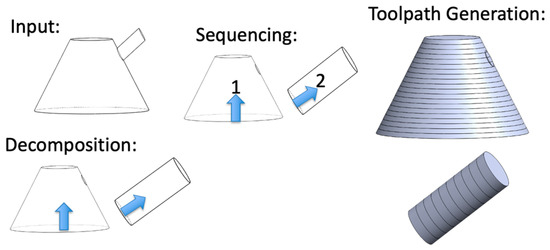
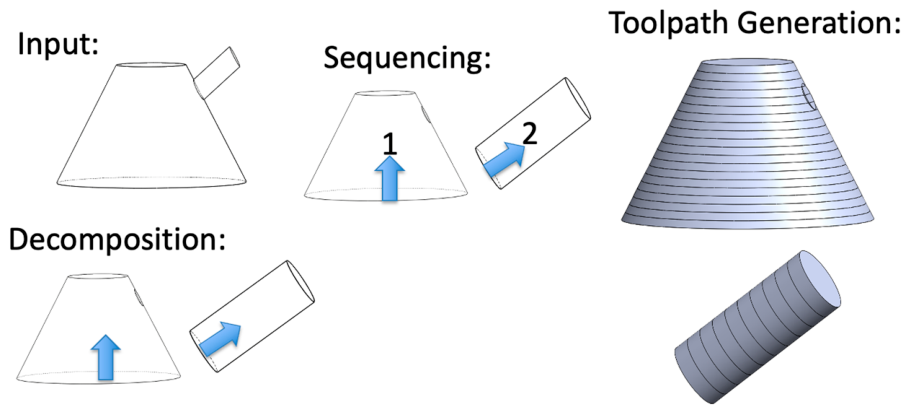
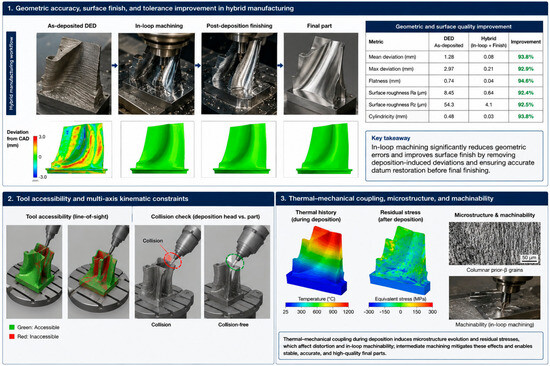
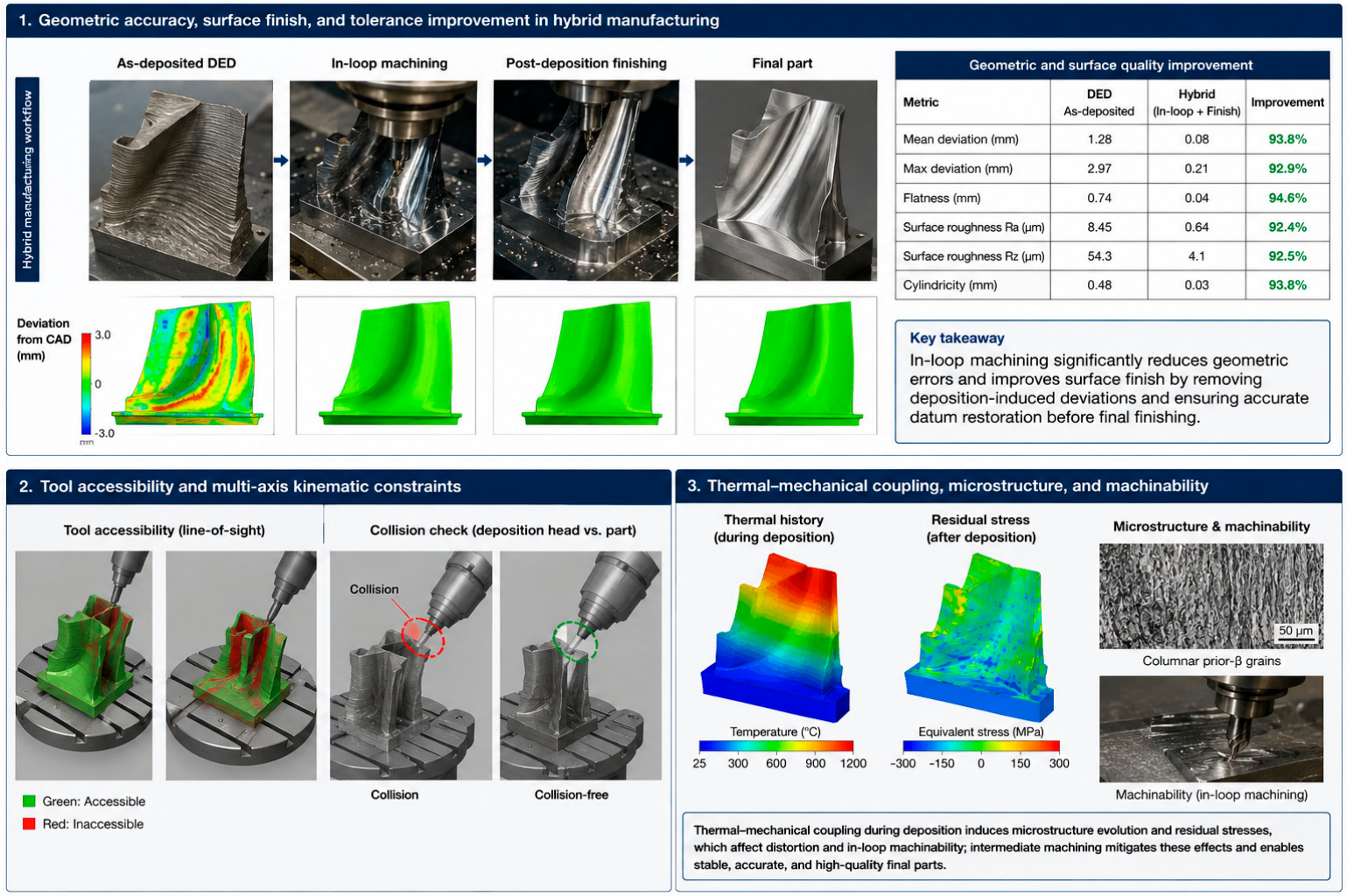
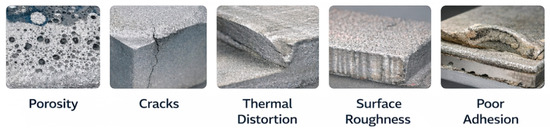
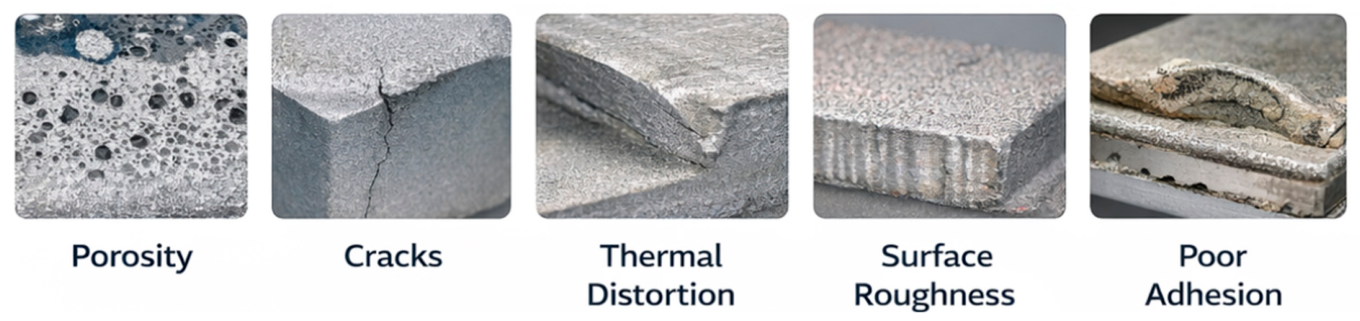
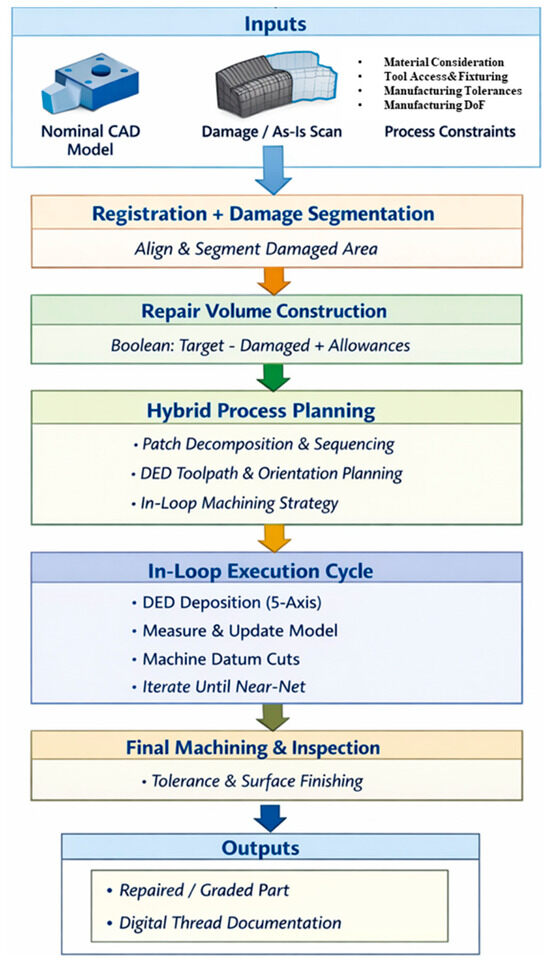
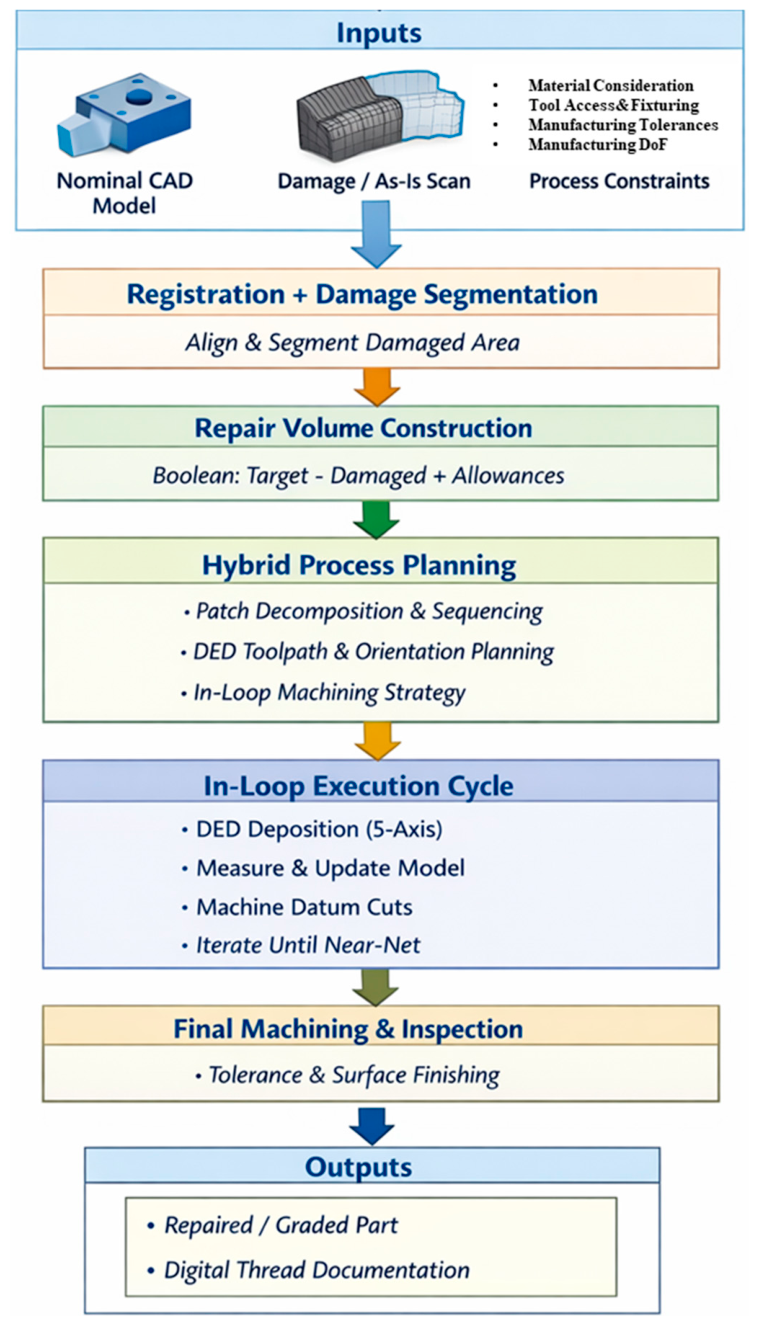
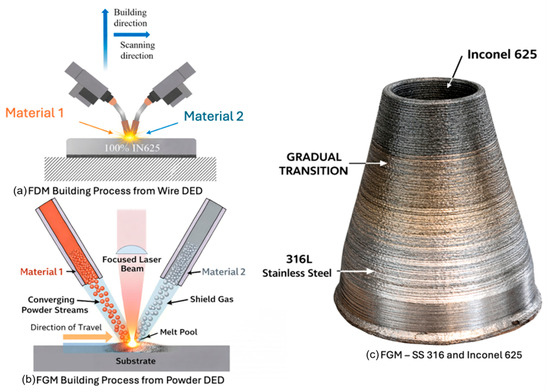
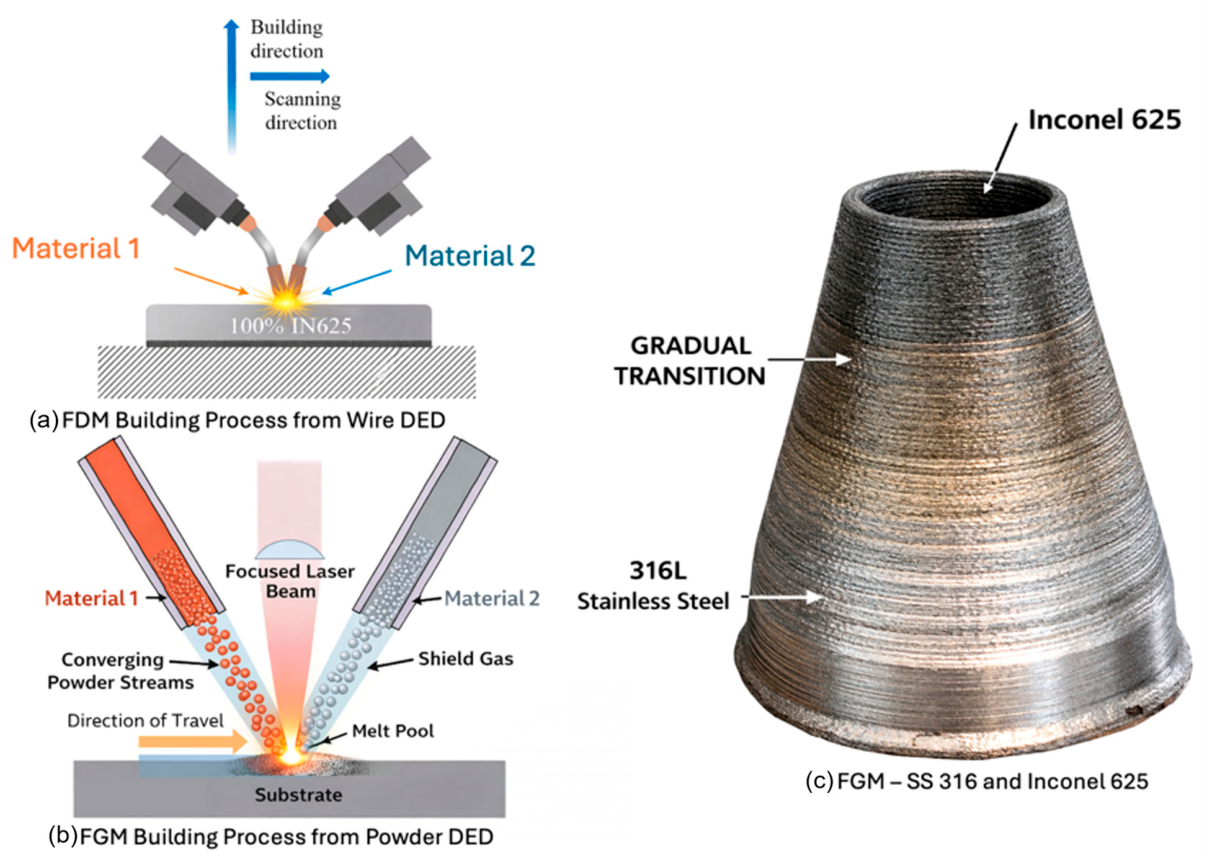
Disclaimer/Publisher’s Note: The statements, opinions and data contained in all publications are solely those of the individual author(s) and contributor(s) and not of MDPI and/or the editor(s). MDPI and/or the editor(s) disclaim responsibility for any injury to people or property resulting from any ideas, methods, instructions or products referred to in the content. |
© 2026 by the authors. Licensee MDPI, Basel, Switzerland. This article is an open access article distributed under the terms and conditions of the Creative Commons Attribution (CC BY) license.