1. Introduction
Deep internally profiled cylindrical components manufactured via Electrochemical Rifling (ECR) operate under severe thermo-mechanical loading conditions where surface degradation governs functional lifespan. The ECR process enables high-precision generation of deep bores with controlled geometry and surface integrity [
1,
2]. Typical substrate materials include aluminium alloy EN AW-7075 and high-strength steel 30CrNiMo8, selected for their favourable strength-to-weight ratio and fatigue resistance.
The investigated aluminium-based systems are intended for low-pressure, low-velocity applications, where reduced mass and sufficient structural performance represent the primary engineering requirements.
Following the rifling process, the internal surfaces are commonly subjected to anodising or hard chromium electrodeposition in order to enhance hardness, wear resistance, and frictional performance [
3,
4]. These surface treatments significantly influence the mechanical response and tribological behaviour of deep bore components operating under cyclic loading.
Previous studies indicate that anodic aluminium oxide and chromium coatings exhibit distinct hardness, frictional, and wear characteristics [
5,
6]. Hard anodised aluminium oxide provides improved wear resistance with moderate hardness levels, while chromium coatings demonstrate substantially higher hardness and lower friction coefficients [
7,
8]. Several investigations have reported correlations between substrate material, surface roughness, microhardness, and wear evolution under sliding contact conditions [
9,
10]. These findings establish the experimental basis for comparative assessment of coatings applied to ECR-manufactured deep bores [
11].
The objective of the present study is to provide a mechanically consistent tribological characterization of anodised and chromium-coated deep bores manufactured via ECR. The novelty lies not only in the systematic comparison of coating–substrate systems under controlled laboratory conditions [
12,
13,
14], but also in the integration of the experimental results into a contact-based analytical wear framework.
The analytical interpretation of tribological degradation in sliding contacts relies on classical contact mechanics and wear theory. The stress distribution in an elastic sphere–flat contact configuration is rigorously described by the Hertzian contact theory, originally formulated for elastic bodies under normal loading conditions [
15,
16]. This theory provides closed-form expressions for contact radius and maximum pressure and remains the fundamental basis for stress estimation in tribological modelling.
In sliding systems where asperity interaction governs load transfer, the transition from nominal Hertzian contact area to real contact area is controlled by hardness-dominated plastic deformation mechanisms. The proportionality between applied load and real contact area, expressed through hardness-based formulations, originates from classical tribological theory [
17,
18] and is widely adopted in contact–wear modelling frameworks.
Material removal under steady sliding conditions is most commonly described by Archard’s wear law [
19], which establishes a proportional relationship between wear volume, applied normal load, sliding distance, and material hardness. Archard’s formulation continues to serve as the reference model in contemporary analytical and numerical tribology, including recent computational wear prediction studies [
20,
21,
22,
23,
24].
Inverse parameter identification and statistical estimation techniques are increasingly employed to extract effective wear coefficients from experimental data rather than assuming empirical constants [
25,
26]. Parameter estimation methods grounded in least-squares minimization and uncertainty quantification provide statistical consistency and improve reproducibility of tribological modelling results [
27,
28,
29].
A contemporary formulation of the problem is presented in [
30,
31,
32,
33,
34], where the necessity of integrating analytical contact mechanics with numerical wear simulations and parameter identification approaches is further emphasized. Research in tribology and surface engineering highlights the importance of linking experimentally measured hardness and friction coefficients with mechanically derived contact parameters in order to construct predictive wear models [
35,
36,
37,
38].
Despite the availability of these classical and modern methodologies, their systematic application to coated deep bores manufactured via ECR, combined with explicit inverse identification and reliability-oriented life estimation, remains limited. The present work therefore applies established mechanical formulations—the Hertzian contact theory, hardness-controlled real contact transition, Archard wear kinetics, and inverse least-squares parameter identification—to experimentally measured tribological data, providing a coherent analytical framework consistent with contemporary tribological modelling standards.
2. Materials and Methods
2.1. Electro-Chemical Rifling (ECR) Process Parameters
The rifling of the components was carried out using the ECR process. The process parameters were as follows: electric current (I) ≈ 950 A, processing time (t) ≈ 176 s, electrolyte pressure (P) ≈ 22 bar, and voltage (U) ≈ 7 V.
The quality of the machined internal surfaces was assessed through surface roughness measurements, yielding an average arithmetic roughness of Ra ≈ 0.8 μm.
The selection and optimisation of the governing process parameters, including current density, electrolyte composition, and processing time, are comprehensively discussed in our previous studies [
13], while detailed investigations on the microstructural characteristics and phase composition of anodic and chromium-based coatings are presented in our recent work [
14].
2.2. Tested Materials and Coating Processes
The investigated components were manufactured from two substrate materials commonly used for deep bores: aluminium alloy EN AW-7075 (EN 573-3, EN 485-2), a high-strength Al-Zn-Mg-Cu alloy known for its favourable strength-to-weight ratio and suitability for lightweight structural applications; and steel grade 30CrNiMo8 (EN 10083-3, ISO 683-2), a quenched and tempered alloy steel with high fatigue strength and dimensional stability under cyclic loading.
Following the Electro-Chemical Rifling (ECR) process, two different surface finishing methods were applied:
- -
Hard anodising, used for the aluminium components, producing a compact aluminium oxide (Al2O3) layer formed through electrolytic oxidation. This coating improves hardness, corrosion resistance, and wear performance.
- -
Hard chrome plating, applied to the steel components via electrodeposition from a chromic acid electrolyte. The resulting chromium layer is characterised by high hardness, low friction coefficients, and excellent resistance to abrasive and adhesive wear, making it suitable for components subjected to extreme thermodynamic and mechanical loads.
These materials and coating technologies form the basis for the comparative mechanical and tribological evaluation conducted in this study.
2.3. Microhardness Measurement
Microhardness was measured using the classical Vickers method [
15,
16]. A Shimadzu Micro Vickers hardness tester (HMV-G31-FA series) was employed, applying a load of 0.03 N, with a load application time of 10 s and a dwell time of 10s. The obtained hardness values were recorded in Vickers hardness units (HV) and subsequently converted to megapascals (MPa) using the standard correlation 1 HV ≈ 9.807 MPa, in order to facilitate comparison with other mechanical properties [
17].
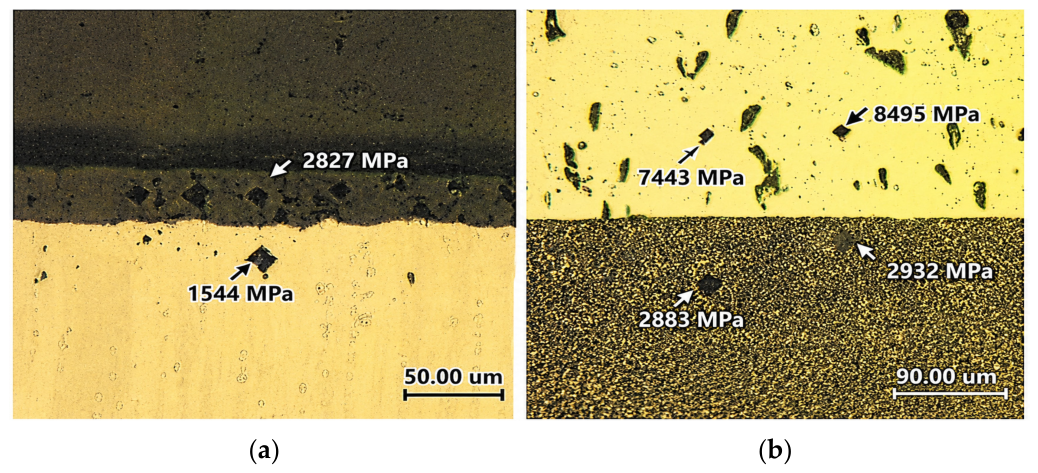
The microstructures of the individual Vickers indentations for both types of samples are shown in
Figure 1.
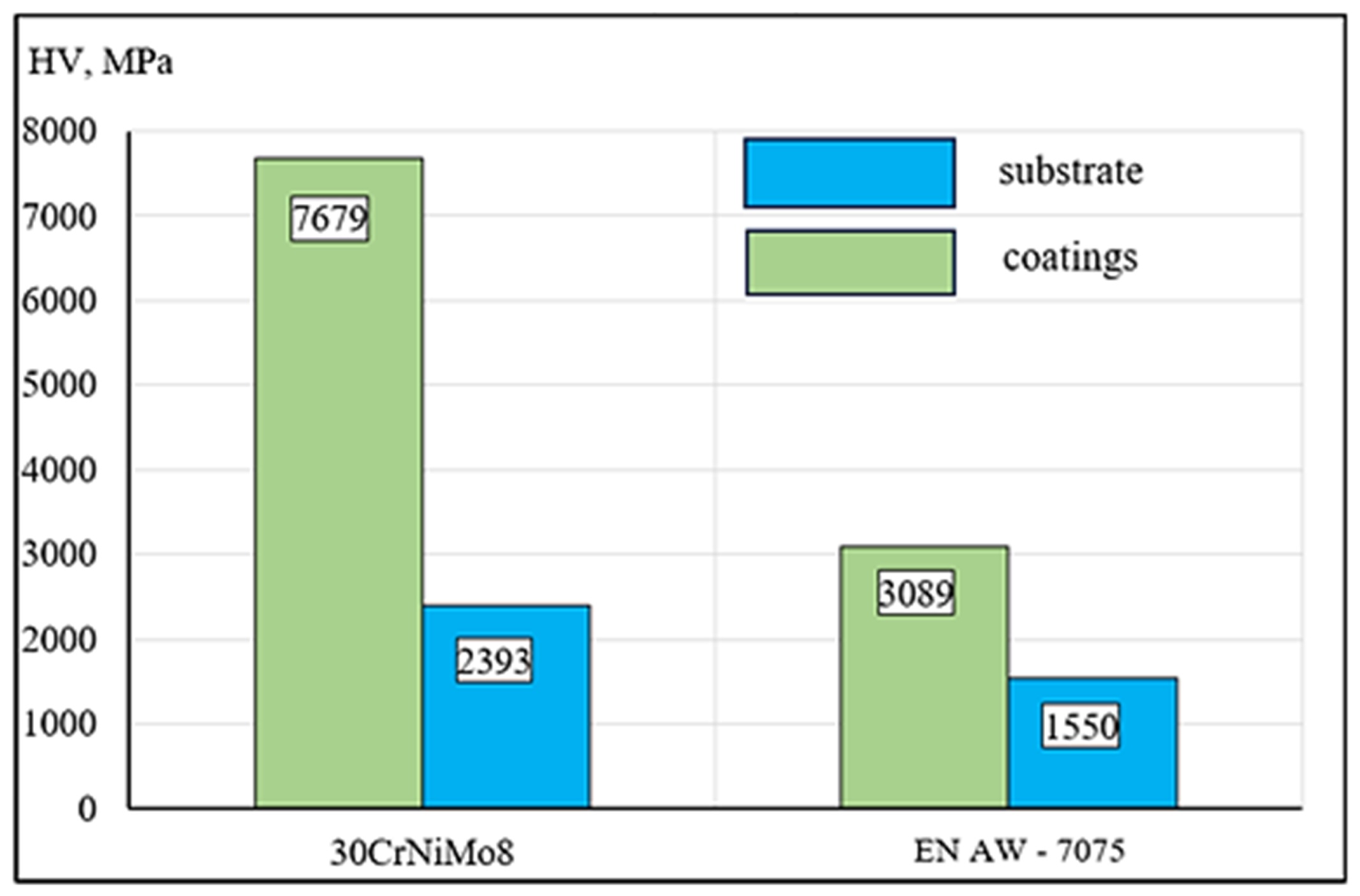
The arithmetic mean values of microhardness for the investigated coatings and substrates are presented in
Figure 2. The results demonstrate a significant enhancement in mechanical performance, with the chromium coating exhibiting microhardness values approximately 2.5 times higher than those of the anodised aluminium oxide coating, reaching 7679 MPa compared to 3089 MPa, respectively. Both coatings show substantially higher hardness compared to their corresponding substrate materials.
For each coating and substrate, the reported values represent averaged results obtained from three independent experimental series, each consisting of five indentations (n = 15 in total), with the corresponding standard deviation, ensuring statistical reliability of the measurements.
This pronounced difference is attributed to the inherently higher hardness and dense crystalline structure of chromium-based coatings, which contribute to their superior load-bearing capacity and wear resistance.
For the substrate materials, this ratio is approximately 1.5:1, with the steel samples reaching 2393 MPa in contrast to 1550 MPa for the aluminium alloy.
In general, higher microhardness is a key indicator of improved wear resistance, which in turn suggests a significantly longer service life for the chromium-coated components.
2.4. Tribological Test Method
The coefficient of friction and wear behaviour of the coatings under dry sliding conditions were determined using the Pin-on-Disc method. Tribological tests were performed through three independent experimental series for each material system under identical conditions, each series consisting of five repeated measurements. The reported values represent averaged results based on these measurements.
The tribological tests were conducted using a DUCOM TR-20 Pin/Ball-on-Disc tribometer (Ducom Instruments (USA) Inc., Bohemia, NY, USA) equipped with TR-Bio 281 TriboAcquire software (Ducom Instruments (USA) Inc., Bohemia, NY, USA;
https://www.ducom.com; accessed on 6 May 2026). The counter-body was a hardened tool steel disc
(EN 100Cr6/DIN 1.3505/AISI 52100) with a hardness of approximately 62 HRC, while the pin had a hemispherical geometry with a diameter of 6 mm.
The experimental parameters were as follows:
Sliding distance: Lfr = 503 m.
Sliding speed: 0.1 m/s.
Normal load: F = 1 N.
Pin geometry: hemispherical pin with a diameter of 6 mm.
Counter-body material: hardened steel disc;
Wear measurement: Linear wear was measured using a digital caliper with 0.01 mm resolution, and mass loss was measured using an analytical balance with 0.1 mg precision.
Wear was determined by measuring experimental linear wear depth (Gl) and experimental mass loss (Gm) after each test cycle. A combined approach was adopted, correlating laboratory pin-on-disc results with in-field observations from operational components. This methodology allowed validation of wear trends observed under controlled conditions and their direct comparison with actual components behaviour in service, linking laboratory tribological data to real operational performance.
Coefficient of friction (μ): Recorded continuously during the tests by the tribometer.
The average values were reported with the corresponding standard deviations. These parameters ensured reproducible conditions for assessing the friction and wear behaviour of both anodised aluminium and chromium-coated steel components.
In the context of the conducted experimental study, the maximum allowable number of cycles for a component can be determined using the following relation:
where
- -
—the maximum allowable experimental number of cycles;
- -
Lfr—the total sliding distance in the test;
- -
L—length of the part (0.25 m);
- -
freduction—reduction factor accounting for operational conditions.
A reduction factor is introduced as an engineering correction to account for the discrepancy between idealized model assumptions and real operating conditions. Its value is selected based on experimental observations, established engineering practice, and internal guidelines derived from both internal and external studies, including those related to process dynamics and operational performance.
In the present study, a constant value is adopted for all material systems to ensure consistency and enable direct comparative analysis.
This methodology provides a reproducible framework for assessing the friction and wear behaviour of both anodised aluminium and chromium-coated steel samples under controlled laboratory conditions.
It should be noted that the applied Pin-on-Disc configuration represents a simplified tribological system. The use of a hardened steel counter-body does not fully reproduce the real contact conditions inside the bore, where a softer driving band of a moving element interacts with the surface, the present approach is intended for comparative evaluation of coating performance rather than exact simulation of in-service conditions.
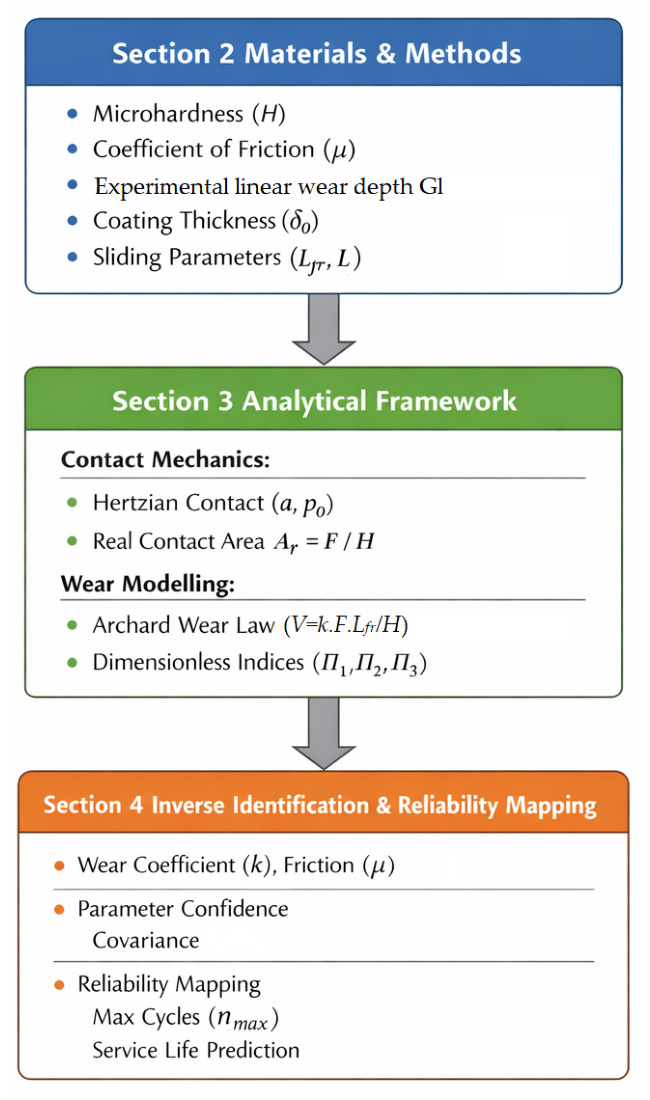
To clearly illustrate the connection between the experimental procedures and the subsequent analytical framework,
Figure 3 presents a flowchart of the integration process. The flowchart highlights how raw experimental data from
Section 2—including microhardness (
H), coefficient of friction (
μ), analytical linear wear (
h), coating thickness (
δ0), and sliding parameters (
Lfr,
L,
freduction)—are systematically used in the analytical modeling framework of
Section 3. This framework applies Hertzian contact mechanics, real contact area estimation, Archard wear law, and dimensionless severity indices to translate laboratory measurements into mechanically consistent contact and wear parameters. Subsequently,
Section 4 utilizes inverse parameter identification and reliability mapping to extract effective wear coefficients, quantify statistical uncertainty, and predict service life.
5. Determination of the Coefficient of Friction, Wear Tests of Coatings
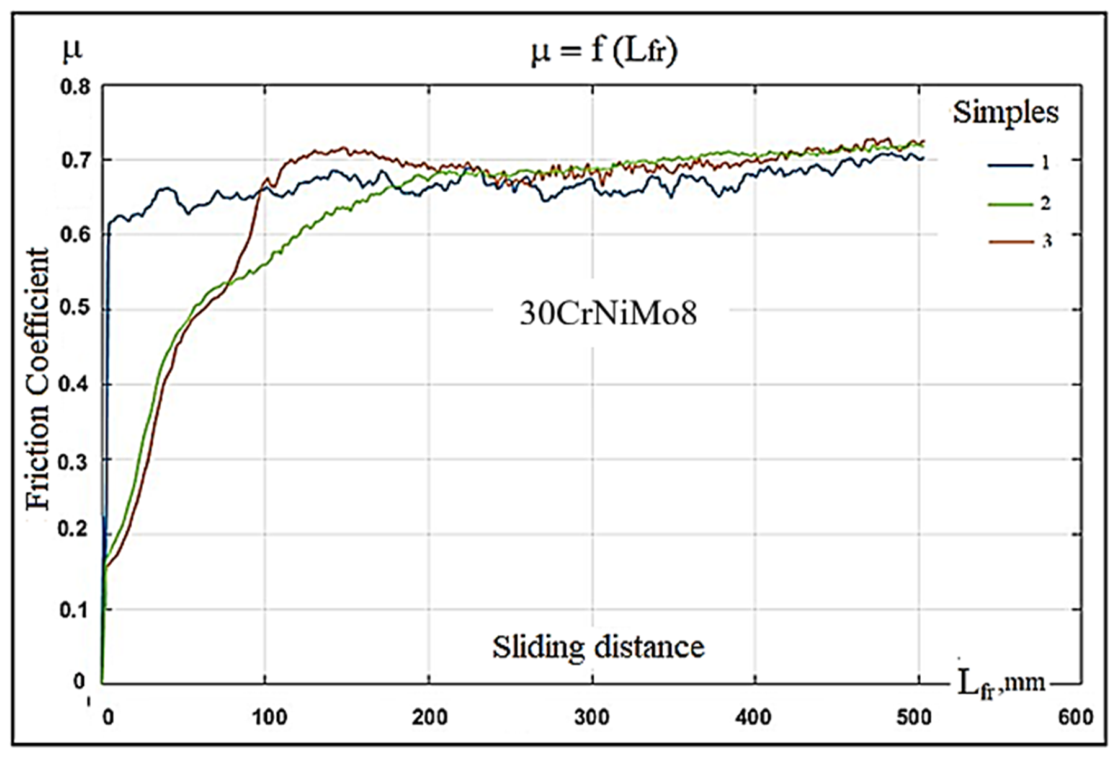
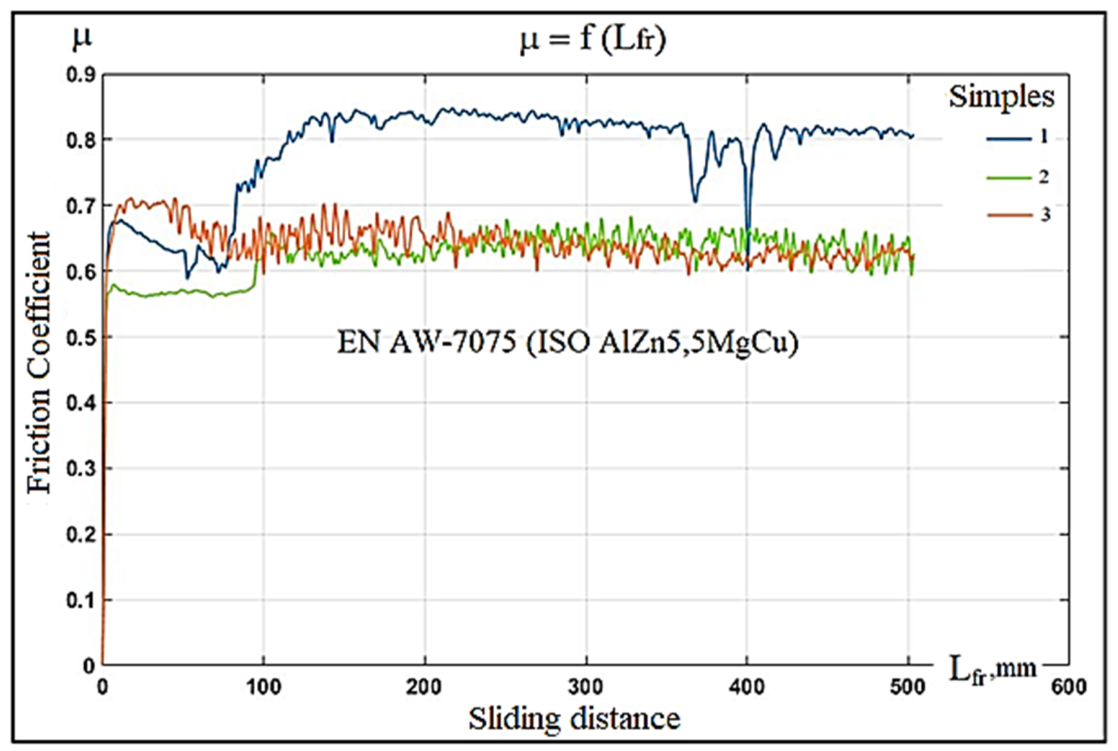
The results, primarily focusing on the coefficient of friction as a function of the sliding distance
Lfr = 503 m (the distance travelled by the pin in contact with the sample placed on the disc), are presented both in tabular form (
Table 1) and graphically (
Figure 4 and
Figure 5) for each sample group. The reported values represent averaged results obtained from three independent experimental series, each consisting of five measurements for each material system.
A clear trend was observed: the friction coefficient for steel samples was consistently lower than that for aluminium samples under the tested conditions [
47,
48]. This difference can primarily be attributed to the significantly lower surface roughness of the steel samples, which was between 2.5 and 8 times smaller than that of the aluminium samples.
Surface roughness is also expected to significantly influence the real contact conditions, asperity interaction, and frictional response. In the present study, this effect is addressed qualitatively, while the analytical model remains primarily hardness-driven due to its direct linkage with Archard-type wear formulation. A quantitative integration of roughness parameters into the contact–wear model is beyond the scope of the current work and is identified as a direction for future refinement.
The friction curves indicate not only lower average friction values for the chromium-coated system, but also a more stable tribological response over the sliding distance. In contrast, the anodized aluminium system exhibits higher friction levels and increased fluctuations, reflecting unstable contact conditions and a more pronounced influence of surface roughness and material softness.
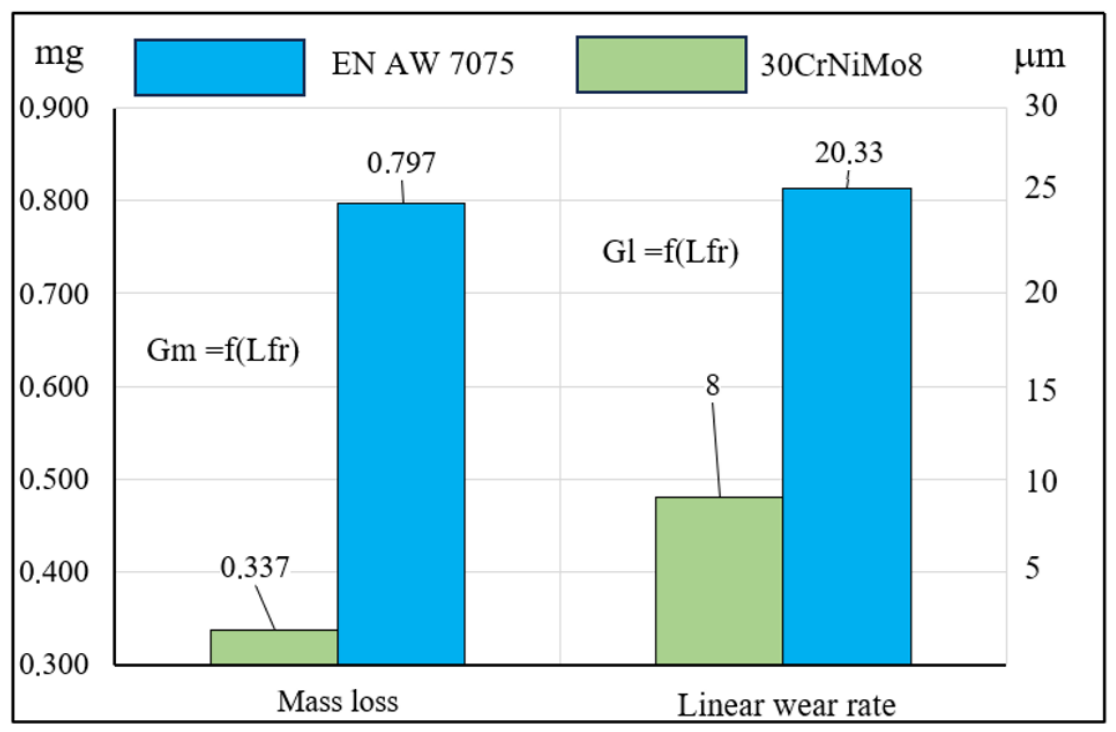
The experimental linear wear depth
Gl [μm] and experimental mass loss
Gm [mg], determined as functions of the sliding distance
Lfr = 503 m, are summarised in
Supplementary Table S1. These values were obtained using high-precision instrumentation for mass and dimensional measurements, namely an analytical balance (Boeco BAS32 Plus analytical balance, BOECO, Hamburg, Germany) and a digital caliper (Microtech MICRONFORCE IP67, Microtech, Brescia, Italy).
The corresponding graphical dependencies derived from these measurements are presented in
Figure 6.
The graphical representations clearly highlight a trend of more intensive wear for the aluminium samples compared to the steel ones under identical processing conditions. In addition to surface roughness effects, the superior tribological performance of the steel samples is primarily attributed to their higher hardness, resulting from both the chromium coating and the steel substrate. While the coating thickness affects the total service life before substrate exposure, it does not directly influence the intrinsic wear resistance of the material system.
The aluminium components exhibit a 58% higher linear wear rate and a 61% greater mass loss compared to the steel ones. The wear curves further demonstrate the cumulative effect of these differences, showing significantly higher wear progression for the aluminium-based coating, whereas the chromium-coated system maintains a lower and more gradual wear development under identical test conditions. This behaviour is consistent with the observed differences in hardness and friction response and confirms the superior wear resistance of the chromium-coated system.
Given the measured wear values, it can be inferred that the wear difference between aluminium and steel parts is significant. Therefore, subsequent analyses will focus on the linear wear rate.
The experimentally measured linear wear Gl is directly comparable to the analytical wear depth h used in the model.
For the anodized aluminium part:
Assuming the part reaches its maximum technical lifespan at a linear wear rate of 20 μm (comparable to the oxide coating thickness
δ = 28.33 μm), the ideal number of experimental cycles in accordance with dependency (1):
Considering the harsher actual operational conditions within the coated deep bores, a reduction factor of 50%
freduction = 0.5 is applied:
For the chromium-plated steel part, the average linear wear rate is 8 μm, about 36 times less than the chrome coating thickness (δ = 288.98 μm). Considering crack formation, the minimum thickness is halved to δ = 144.49 μm, with the linear wear rate 18 times lower than this reduced thickness.
The ideal number of cycles is:
Applying a reduction of 50% to account for operational conditions, along with an additional 33% technological correction factor, yields:
This demonstrates that aluminium parts reach their wear threshold after approximately twelve times fewer operating cycles compared to steel parts, due to the intrinsic hardness difference and operational performance of the coatings. The thickness of the coating affects the total lifespan but does not influence the intrinsic wear resistance of the material.
The model validation is therefore based on physical consistency and agreement with observed operational behaviour, rather than on independent dataset splitting.
6. Dimensional Changes at the End of Service Life upon Attainment of Wear Criterion
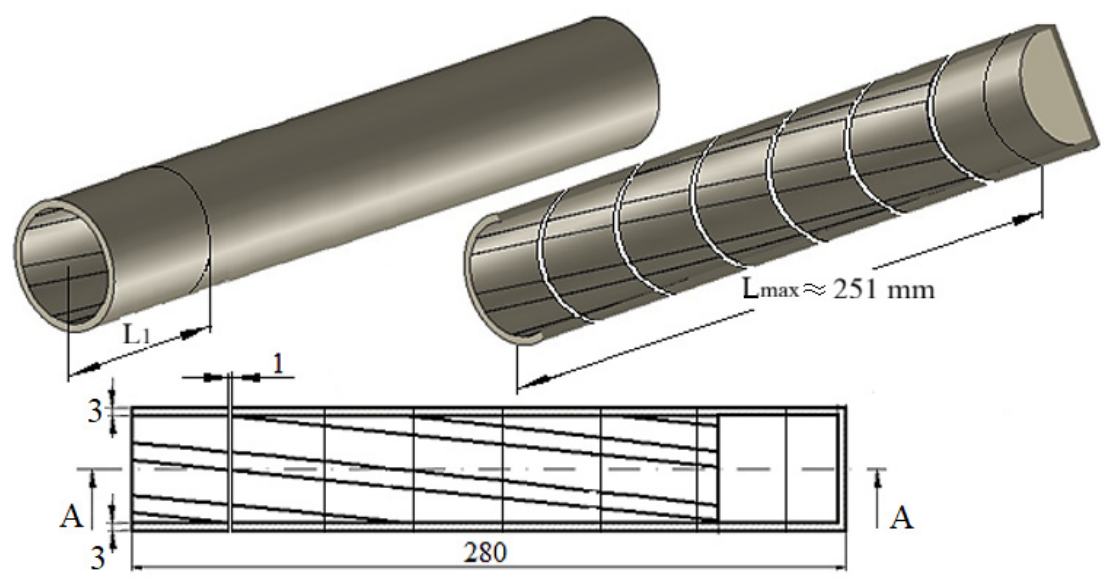
Dimensional measurements of components with oxide and chromium coatings at the end of their service life, upon reaching the technical wear criterion, were conducted using a Mauser KMZ 201210 (ZEISS, Oberkochen, Germany) coordinate measuring machine, which provides spatial data with a precision of ±1 µm. Measurements were performed along the internal surface of the component after each erosion segment was removed by wire EDM, at predefined non-uniform axial intervals to capture local variations in wear with greater precision.
The measurement cycle was repeated iteratively until a groove-free zone was attained, requiring approximately 15 iterations. The cutting wire employed had a width of 1 mm
Figure 7.
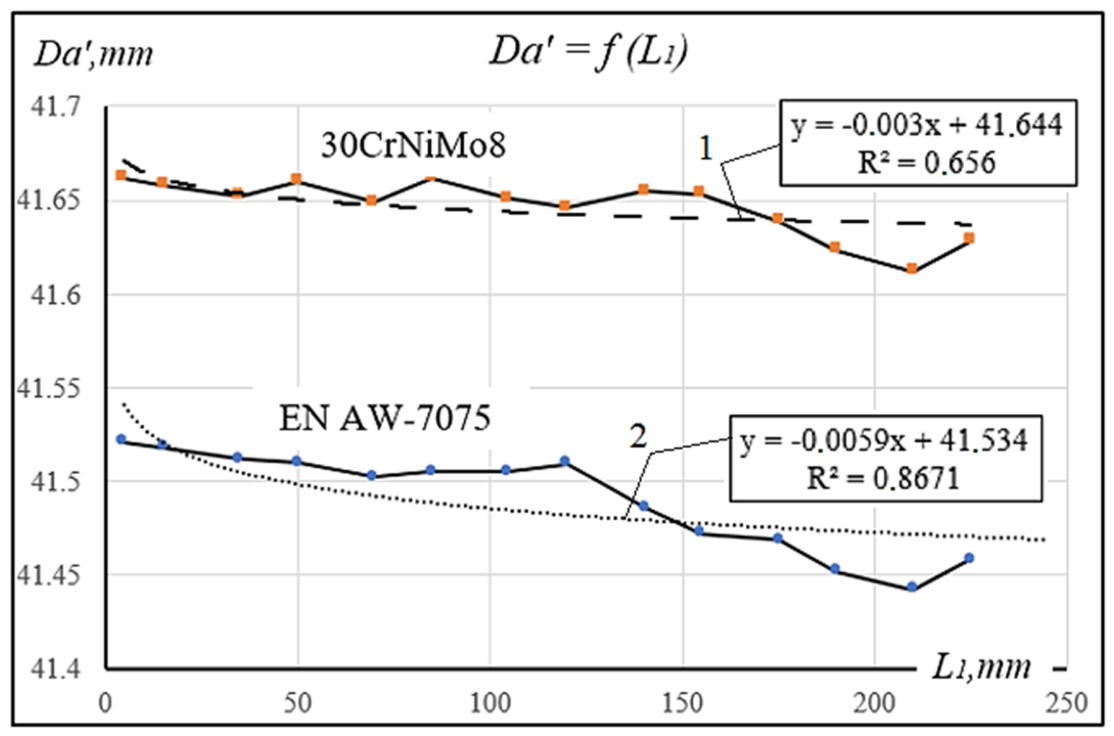
The resulting dimensional changes, illustrated in
Figure 8 as the
L1–
Da′ relationship, exhibit trends consistent with those observed in analyses of linear wear rate and mass loss under dry friction conditions. Here,
Da′ denotes the bore diameter. The results derived from the dimensional measurements are summarized in
Supplementary Table S2.
It should be noted that the zones of maximum wear (210–225 mm from the bore front) do not coincide exactly with all peak parameters. The distribution of wear is governed by a combined effect of local pressure, frictional interaction, thermal loading, and dynamic conditions along the bore. Therefore, angular velocity alone cannot be considered a controlling parameter. The observed wear distribution reflects the coupled thermo-mechanical conditions and the specific geometry of the investigated coated deep bores.
In these areas, extreme temperature increases occur, creating conditions conducive to abrasive wear caused by brittle failure accompanied by crack formation, which is especially characteristic of chromium coatings.
The results reflect the maximum measured wear values recorded in the transitional areas between ridges and grooves. This is expected, as these regions, due to their small surface area and volume, act as stress concentrators.
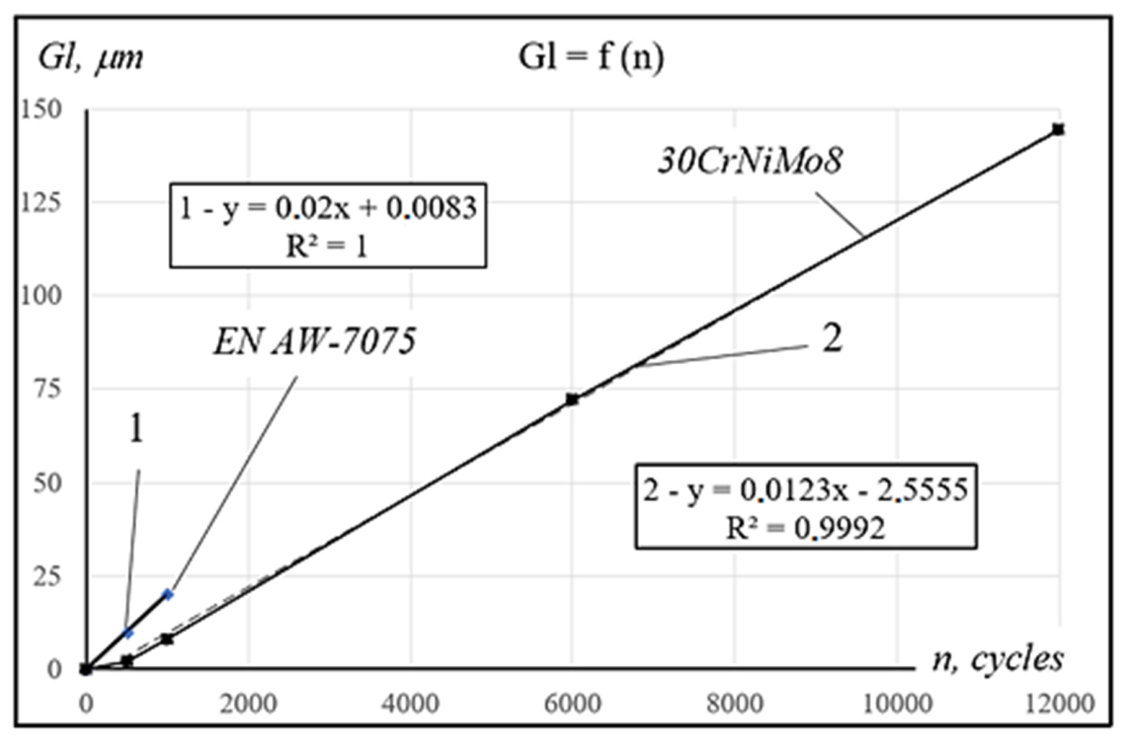
The wear behaviour, illustrated in
Figure 9 and detailed in
Supplementary Table S3, is expressed through linear regression functions (fitted by least-squares approximation), which provide a more accurate representation of the steady-state abrasive wear behaviour observed in both materials. Although an exponential approximation was initially considered, it was replaced with a linear model to reflect the consistent wear progression beyond the transient running-in phase. The correlation coefficient obtained for the linear fit was notably higher, confirming the suitability of this model.
The wear rate, derived from the slope of the linear regression functions is significantly lower for chromium-coated steel components—by a factor of approximately 12.6—compared to anodised aluminium components, as indicated by the ratio of the regression coefficients (0.0076/0.0006).
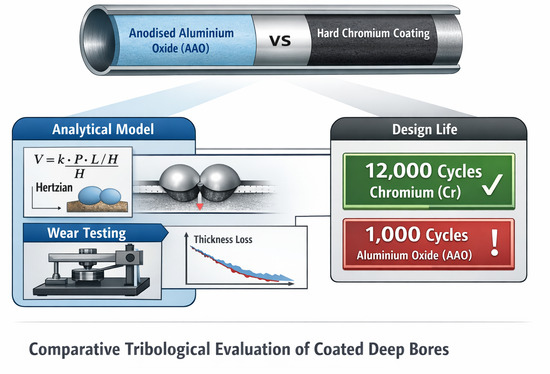
This confirms that the maximum permissible number of cyclic loads before reaching the end of the technical lifespan is approximately = 12,000 cycles for steel components, compared to = 1000 cycles for aluminium components.
7. Analytical Wear Evaluation and Operational Life Estimation
7.1. Input Parameters
The tribological performance of the ECR-processed deep bores was analyzed using the experimental data from
Section 3 in combination with the analytical framework defined in
Section 4. The approach allows for direct correlation between measured linear wear, friction coefficients, coating properties, and predicted operational life under controlled and reduced operational conditions, providing a mechanically consistent and physically interpretable model.
7.2. Contact Radius (Hertzian)
All variables required for the analytical calculations are summarized in
Table 2. These values are taken from experimental measurements (
Section 2) and provide the foundation for Hertzian contact calculations, Archard wear predictions, and service life estimation.
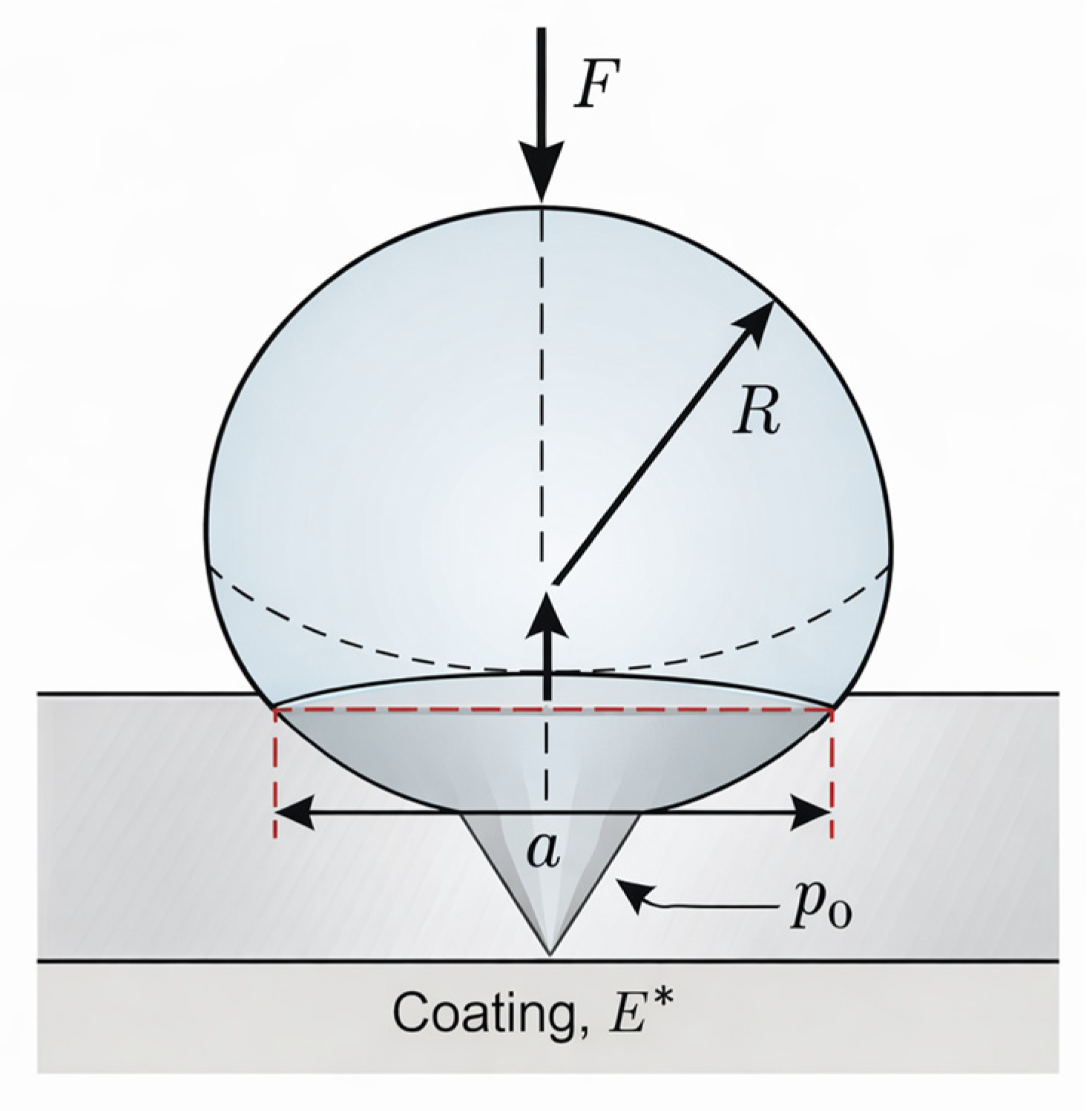
The contact radius
a was evaluated using the analytical framework defined by Equations (2) and (3), based on the input parameters summarized in
Table 2. These include the applied normal load (
F), pin radius (
R), Young’s moduli (
E1,
E2), and Poisson ratios (
ν1,
ν2).
The calculated values of the contact radius are summarized in
Table 3 and visualized in
Figure 10.
7.3. Maximum Contact Pressure
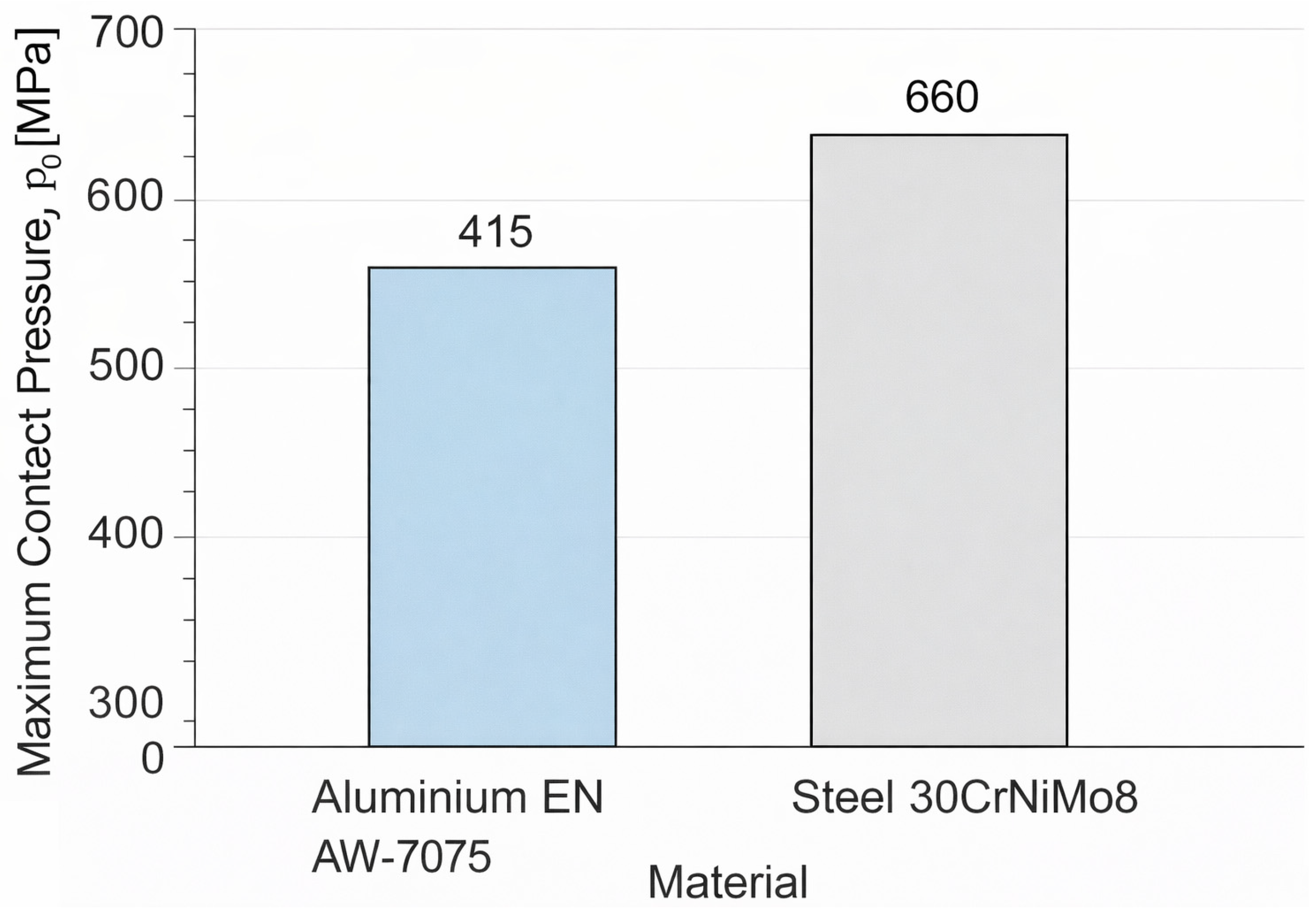
The maximum Hertzian contact pressure
p0 is calculated according to Equation (4). The resulting values are presented in
Figure 11.
7.4. Real Contact Area
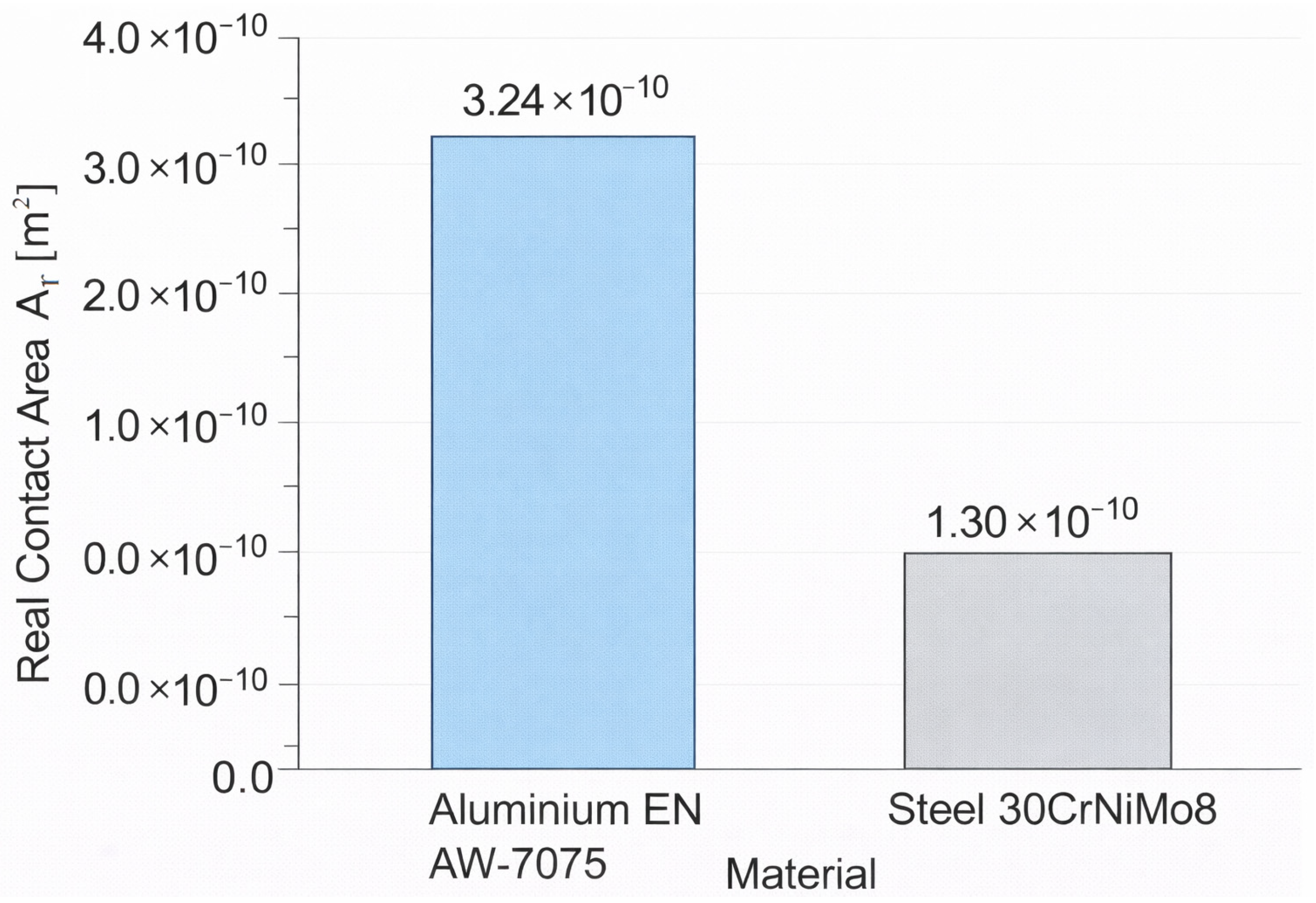
Considering surface roughness and asperity interactions, the real contact area Ar is approximated according to Equations (5) and (6), based on the applied load and coating hardness. This establishes a direct relationship between microhardness and the mean contact pressure at asperity junctions, linking material properties to wear resistance.
The calculated values are graphically illustrated in
Figure 12.
7.5. Wear Depth Prediction
Linear wear depth h is predicted using Archard’s wear model, based on the relationships defined in Equations (7) and (8). These equations relate wear to the contact pressure, sliding distance, material hardness, and the wear coefficient k, enabling a physically consistent quantification of material removal under the given sliding conditions. Dependencies: p, H, k, .
To avoid ambiguity between independent prediction and calibrated reconstruction, two analytical scenarios were considered. In Case I, k was obtained in inverse form from Equation (8) using the experimental wear depth, and the resulting value was used for calibrated analytical estimation. In Case II, the wear coefficient k was selected from literature-reported mild-wear ranges and used for forward prediction of wear depth and service life. This dual approach enables comparison between a literature-based prediction and a system-specific inverse-calibrated estimate.
According to tribological literature, the Archard wear coefficient is not a material constant but a system-dependent empirical parameter, strongly influenced by contact conditions, surface roughness, and operating regime [
39,
49,
50,
51]. Reported values span several orders of magnitude, typically ranging from approximately 10
−2 for severe wear down to 10
−6–10
−8 for mild and ultra-mild wear conditions.
The influence of surface roughness is not treated as an independent variable in the present model but is implicitly incorporated through the experimentally identified wear coefficient and friction behaviour.
Within this broad literature-reported range, representative values were selected for the present study. For anodized aluminium, k = 5 × 10⁻⁷ was adopted as a lower mild-wear value. For chromium-coated steel, a reduced value k = 2 × 10⁻⁷, was selected, consistent with its higher wear resistance and the experimentally observed lower wear intensity. The ratio between the selected wear coefficients reflects the experimentally observed difference in linear wear, with the chromium-coated steel exhibiting approximately 2.5 times lower wear depth compared to anodized aluminium.
For anodized aluminium:
kIAl = 2.72 × 10⁻⁷—analytical estimation using inverse-identified k;
kIIAl = 5 × 10⁻⁷—analytical prediction using representative literature values of k.
For chromium-coated steel:
kIFe = 1.83 × 10⁻⁷—analytical estimation using inverse-identified k;
kIIFe = 2 × 10⁻⁷—analytical prediction using representative literature values of k.
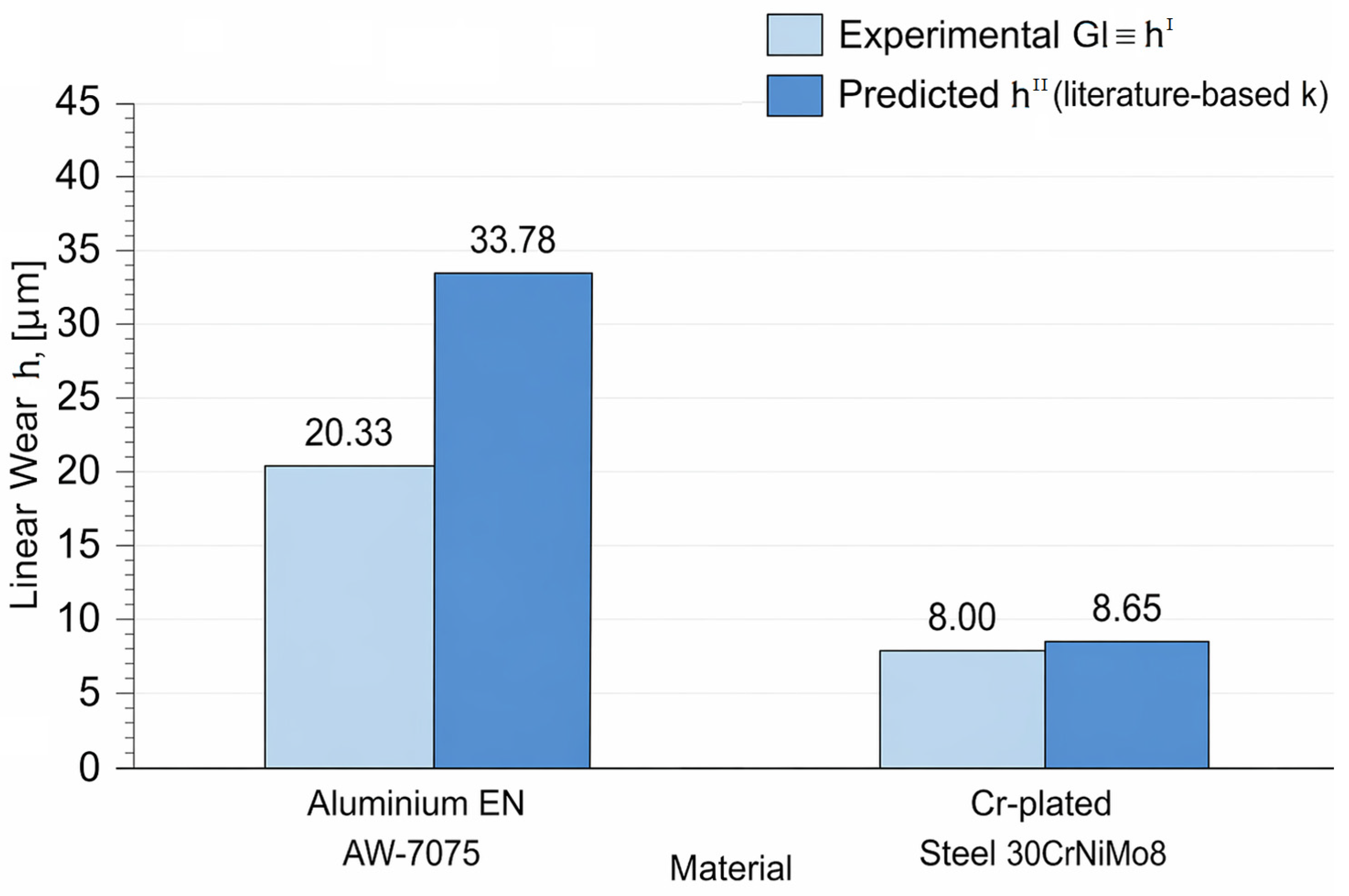
Linear wear rate is expressed in this study as experimental Gl [μm], which is equivalent to the analytical wear depth h. The comparison between predicted and experimental linear wear values shown in
Figure 13 demonstrates good agreement for the chromium-coated steel, while a larger deviation is observed for aluminium. The relative deviation between the predicted and experimental values is approximately 66% for aluminium and 8% for the chromium-coated steel.
The inverse-based estimate coincides with the experimental wear by construction, as the coefficient k is obtained directly from the measured data, and therefore the predicted wear depth h coincides with the experimental linear wear Gl.
This level of deviation indicates that the proposed framework provides a physically consistent engineering approximation of the wear process under the investigated conditions and supports the practical validity of the model.
7.6. Maximum Allowable Cycles
The maximum number of operational cycles is analytically predicted according to Equation (14), based on the coating thickness δ0, hardness H, wear coefficient k, contact pressure p0, and characteristic boeres length L. This represents a theoretical, model-based estimation of coating durability, which is further adjusted using operational and technological reduction factors to approximate realistic service conditions.
Although hardness is a dominant parameter in the present analysis, service life is also influenced by coating thickness, local damage accumulation, crack initiation, and other degradation mechanisms. Therefore, the relationship between hardness and lifetime should be interpreted as important but not exclusive. In this context, higher hardness remains one of the main factors contributing to improved wear resistance and extended service life.
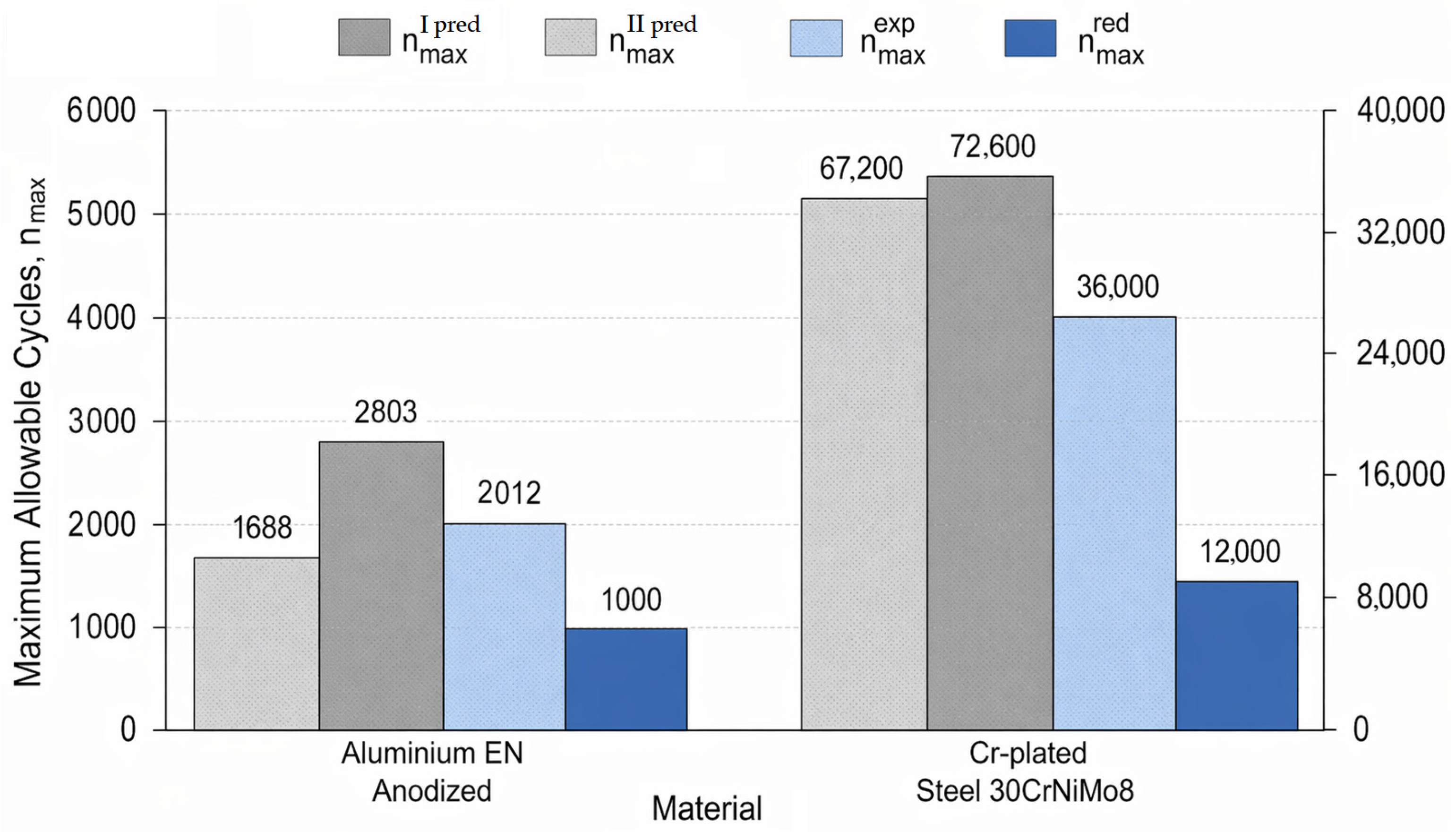
The graphical representation in
Figure 14 highlights a pronounced difference between the predicted maximum allowable cycles for the two material systems, with chromium-coated steel significantly outperforming anodized aluminium under identical loading conditions. This trend is fully consistent with the experimentally observed wear behaviour (
Section 5), where aluminium exhibited higher linear wear rates
Gl and mass loss
Gm.
Using the literature-based wear coefficients kII, the predicted maximum number of cycles is approximately = 1688 cycles for anodized aluminium and = 67,200 cycles for chromium-coated steel.
The inverse-based estimation (kI), derived from the experimentally measured wear depth, yields approximately ≈ 2803 cycles and ≈ 72,600. This increase reflects the lower effective wear depth used in the inverse identification. It should be noted that the inverse-based estimate is not an independent prediction but a calibrated reconstruction, as the wear coefficient k is identified directly from the experimental data.
The experimentally based estimation is in an acceptable engineering agreement with the analytical prediction. The Archard-based model provides an upper-bound estimate of coating durability, while the experimentally scaled values reflect real operating conditions. After applying operational and technological reduction factors, both approaches converge toward practical service life values, with chromium-coated steel reaching approximately = 12,000 cycles and anodized aluminium approximately = 1000 cycles.
The difference between the analytically predicted and experimentally estimated number of cycles should be interpreted in light of the simplifying assumptions of the model. The analytical framework relies on idealized contact conditions, constant material parameters, and averaged tribological behaviour, while real systems exhibit surface evolution, roughness effects, local coating defects, and operational variability. These factors are not explicitly resolved in the present formulation and may contribute to the observed deviation. Therefore, the obtained correspondence should be interpreted as acceptable from an engineering perspective, providing a physically consistent order-of-magnitude estimation rather than an exact prediction.
The close consistency between the predicted and experimentally derived trends confirms both the validity of the applied wear model and the reliability of the experimental methodology. The results demonstrate that the superior performance of chromium-coated steel is primarily governed by its higher hardness, which directly reduces wear intensity and significantly extends the operational lifespan.
7.7. Severity Index
The proposed methodology follows a consistent analytical framework linking contact mechanics, material properties, wear evolution, and service life prediction.
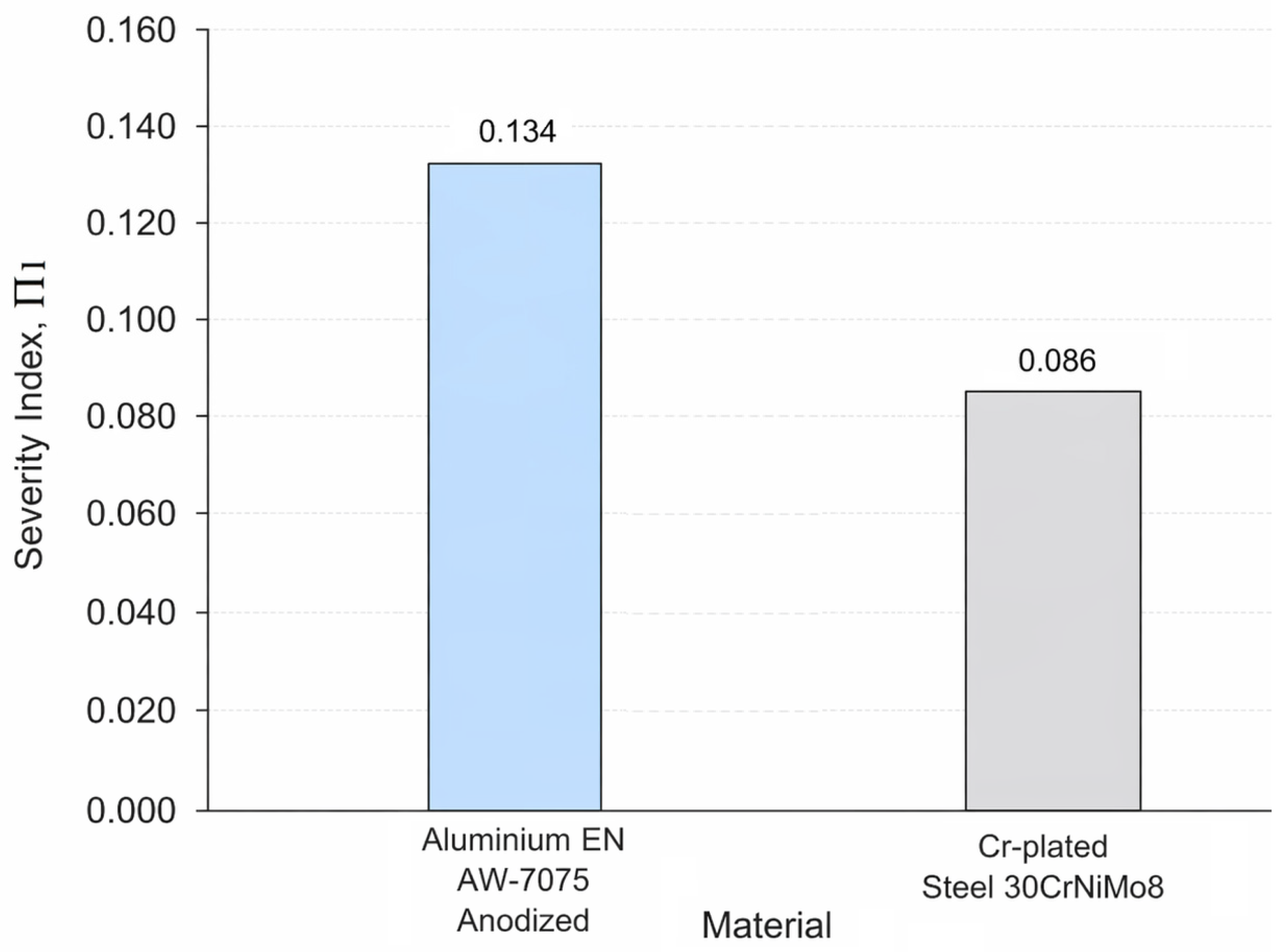
The wear process is described using the Archard-type formulation Equation (8), which establishes the relationship between contact pressure, sliding distance, and material hardness. To enable comparison between different material systems, dimensionless severity indices are introduced in Equation (9), with the contact severity index Π1 serving as a key parameter for classifying wear regimes.
The calculated values of
Π1 for the investigated material systems are presented in
Figure 15.
These results indicate that both materials operate below the critical threshold Π1 = 1, which is consistent with non-severe wear conditions. However, a clear quantitative difference is observed between the two systems.
As shown in
Figure 15, the anodized aluminium exhibits a higher severity index (
Π1 ≈ 0.134) compared to the chromium-coated steel (
Π1 ≈ 0.086). This corresponds to an approximately 56% higher severity level for aluminium, indicating a higher ratio between applied contact stress and material resistance.
From a physical standpoint, Π1 represents the relative loading of the contact with respect to the material hardness. Therefore, higher values of Π1 imply more severe local contact conditions, leading to increased wear intensity.
This interpretation is in direct agreement with the experimental observations (
Section 5), where aluminium demonstrates higher linear wear rates (
Gl) and greater material loss compared to steel. Consequently, the higher
Π1 value for aluminium directly explains its reduced service life relative to the chromium-coated steel.
Within the proposed framework, Π1 serves as a bridging parameter linking contact mechanics Equation (8) to lifetime prediction Equation (14). Specifically, an increase in Π1 corresponds to an increase in wear intensity and a corresponding decrease in the maximum allowable number of operational cycles.
The consistency between the analytical severity index, experimental wear measurements, and predicted service life confirms the internal coherence of the proposed methodology. It demonstrates that the model provides a physically meaningful and quantitatively reliable description of wear behavior across different material systems.
From an engineering design perspective, the severity index Π1 can be used as a practical selection and optimization criterion for material-coating systems. Lower values of Π1 indicate a more favorable balance between contact loading and material resistance, leading to reduced wear intensity and extended service life.
Consequently, the chromium-coated steel system, characterized by a significantly lower Π1 value, is more suitable for applications involving cyclic loading and high contact stresses. In contrast, the higher Π1 value of anodized aluminium suggests that its application should be limited to lower-load conditions or improved through coating optimization and surface engineering strategies.
7.8. Numerical Implementation of Inverse Identification
The inverse identification framework is applied directly to the experimentally obtained averaged values of the coefficient of friction and linear wear for the investigated coating systems. In this way, the parameter identification is implemented as a practical fitting procedure, linking the measured tribological response to the analytical model.
The proposed methodology follows a consistent analytical framework that links contact mechanics, material properties, wear evolution, and service life prediction.
The inverse identification procedure defined in
Section 4.1 was applied to determine the parameter vector
θ = (
k,
μ) based on experimental measurements of friction coefficient and linear wear.
The inverse identification was based on averaged values obtained from three independent experimental series, each consisting of five measurements for each material system:
For anodized aluminium: μ = {0.876, 0.763, 0.643} = 0.761
For chromium-coated steel: μ = {0.664, 0.641, 0.630} = 0.645
The experimentally measured linear wear is: GlAl = 20 μm; GlFe = 8 μm.
The identification procedure is based on minimizing the discrepancy between experimentally measured linear wear and analytically predicted wear depth. Thus, the obtained values of the wear coefficient k are directly derived from the experimental dataset used in the present study and are subsequently employed in the analytical wear and life estimation procedure.
In the inverse identification framework, the experimentally measured linear wear is directly used to determine the wear coefficient k, rather than predicting wear independently from the model. Accordingly, Equation (8) is applied in inverse form, ensuring consistency between the experimental data and the analytical formulation. The modeled wear is calculated using Equation (8):
After substituting into (11), the objective function values are computed using:
The non-zero values of the objective function indicate that the identification is governed primarily by the friction component, while the wear component exhibits negligible deviation due to the direct use of experimental wear values.
The results indicate that the objective function is primarily dominated by the friction component, while the contribution of wear remains negligible due to the close agreement between experimental and modeled values.
The lower value of J(θ) for the chromium-coated steel indicates better agreement between model and experiment and reflects the more stable tribological performance of the system.
The higher value of J(θ) for anodized aluminium reflects the larger scatter in the experimentally measured friction coefficient, rather than a deficiency of the analytical model.
The identified parameters (
k,
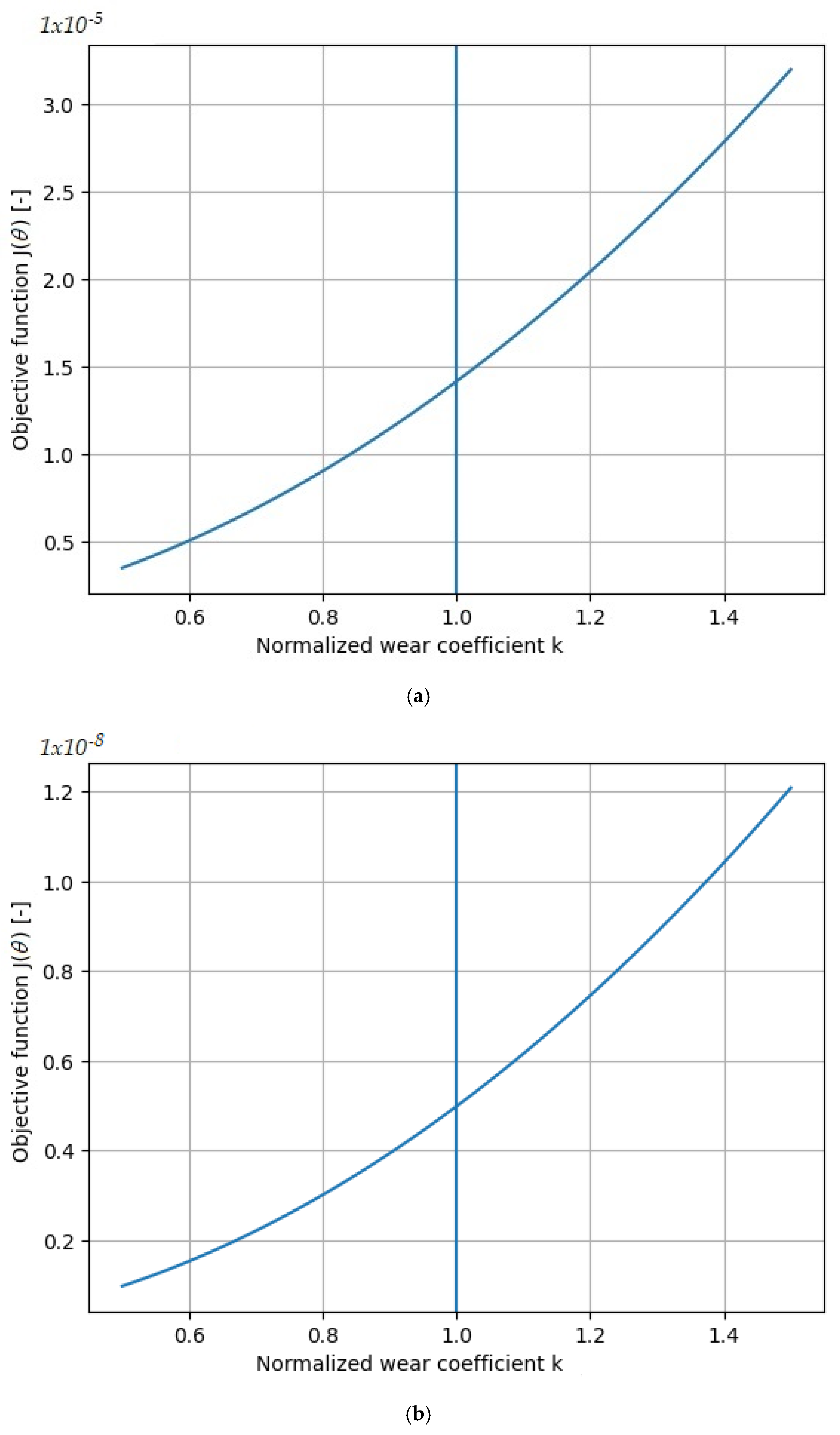
μ) were subsequently used in the analytical wear model and in the service life estimation, ensuring consistency between experimental data and predictive modeling. The sensitivity of the objective function with respect to the normalized wear coefficient is illustrated in
Figure 16.
Deviation from the optimal value leads to a monotonic increase in the objective function, with a steeper response for anodized aluminium, indicating higher sensitivity of the model to variations in k.
It should be noted that the use of substrate elastic properties instead of coating-specific values introduces a modelling simplification, which may affect the quantitative accuracy but does not alter the comparative trends observed between the analysed material systems.
7.9. Reliability-Based Service Life for Components with Deep Holes
The probabilistic service life of components with deep holes was estimated using the Weibull distribution. In the revised formulation, the reliability analysis is consistently applied to the analytically predicted service life, considering two distinct scenarios: Case I (inverse-calibrated estimation) and Case II (literature-based prediction). These two cases represent, respectively, an independent predictive approach and a system-specific calibrated response.
The Weibull scale parameter η is therefore taken as the analytically predicted maximum number of cycles for each case, avoiding the direct use of experimentally derived or reduced values in the probabilistic formulation.
Assuming a Weibull shape parameter β = 1.5, corresponding to a wear-dominated failure regime, the 95% reliability life is calculated as Equation (16):
Case I—Inverse-Calibrated Estimation
For anodized aluminium:
cycles
For chromium-coated steel:
cycles
Case II—Literature-Based Prediction
For anodized aluminium:
cycles
For chromium-coated steel:
cycles
These results represent probabilistic estimates of service life corresponding to a 95% reliability level, based on analytically derived wear behaviour.
In order to assess their engineering relevance, the obtained Weibull-based life values are compared with the experimentally derived and reduced service lives. It is observed that the reduced life values remain lower than the corresponding Weibull estimates, confirming that the reduction procedure introduces an additional level of conservatism.
This is physically consistent, as the reduced life accounts for operational, technological, and safety-related factors that are not explicitly included in the analytical or probabilistic formulations.
From an engineering perspective, this leads to an important conclusion: the reduced life, when interpreted in conjunction with Weibull-based reliability, represents a conservative yet highly reliable design criterion.
In systems requiring a high degree of operational reliability, such as components with deep internal geometries subjected to cyclic loading, the combined use of reduction factors and probabilistic assessment ensures robust and safe performance predictions.
Although the reduced life represents the most conservative estimate, it effectively guarantees that the component operates within a reliability level exceeding 95%, thereby providing a practical and safety-oriented engineering limit.
The comparative analysis confirms that the chromium-coated steel system maintains a significantly higher reliability-based service life than anodized aluminium under all considered scenarios. This behaviour is directly attributed to its higher hardness, lower contact severity, and reduced wear coefficient, which collectively limit damage accumulation and improve statistical stability.
A comparison with the experimentally estimated and reduced service lives provides additional insight into the practical relevance of the probabilistic predictions. The Weibull-based life estimates obtained from both Case I and Case II remain higher than the reduced service life, while being of the same order of magnitude as the experimentally observed cycles.
For anodized aluminium, the experimentally estimated life (~2012 cycles) is significantly higher than the Weibull-based values (233–387 cycles), whereas the reduced life (~1000 cycles) remains closer to the probabilistic estimate, confirming its conservative nature.
For chromium-coated steel, the experimentally estimated life (~36,000 cycles) exceeds the Weibull-based predictions (9276–10,025 cycles), while the reduced life (~12,000 cycles) shows good agreement with the probabilistic results, indicating that it represents a practically realistic and reliability-consistent engineering limit.
These comparisons demonstrate that the Weibull-based approach provides a probabilistic lower-bound estimate of service life, while the reduced life can be interpreted as a conservative design value that ensures safe operation under real conditions with a high level of reliability.
8. Results and Discussion
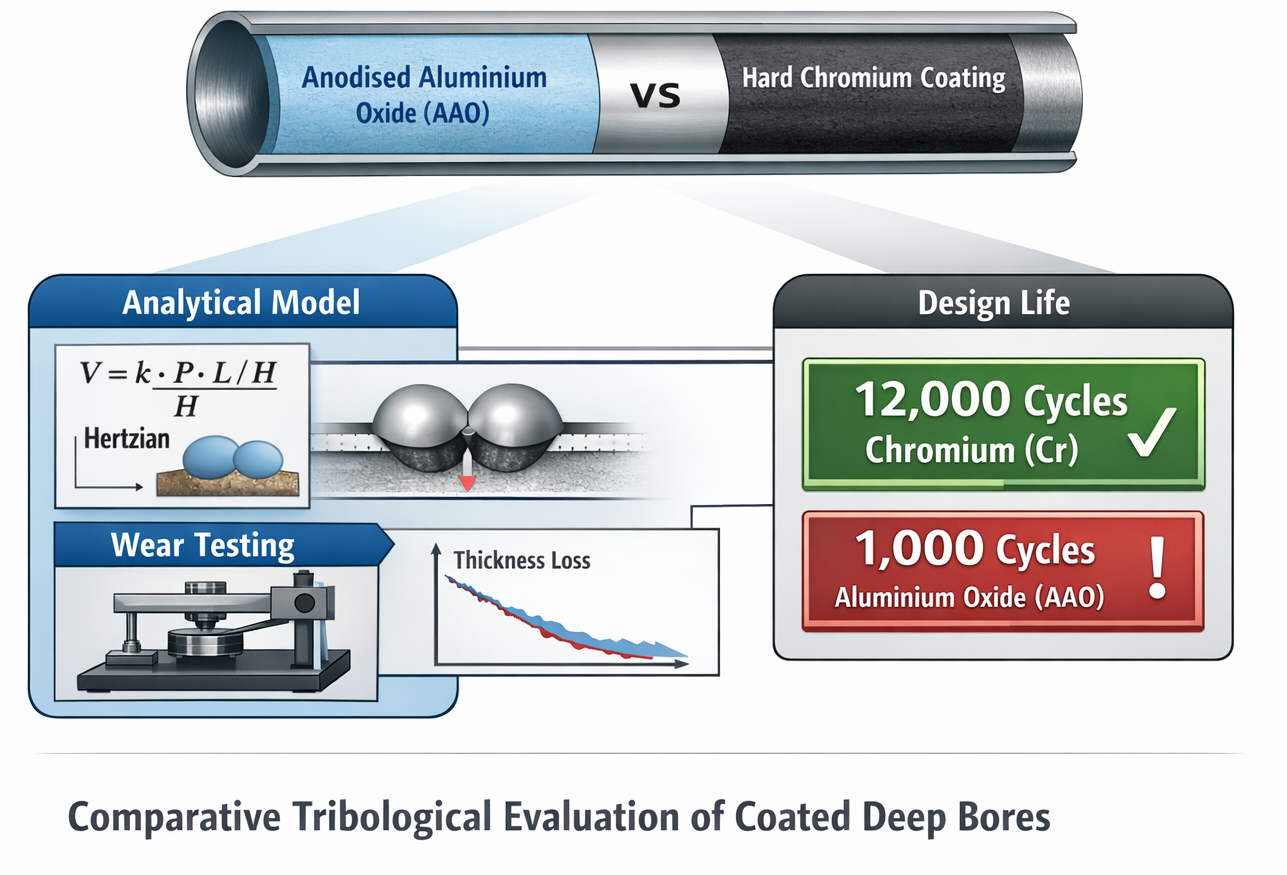
The present study compares the tribological behaviour of two widely used coating systems applied to deep internally profiled cylindrical components manufactured by ECR: hard anodised aluminium oxide (AAO) and hard chromium deposited on alloy steel. Additionally, the comparative analysis includes quantified tribological parameters derived from experimental testing and analytical modelling, allowing direct correlation between mechanical properties, frictional behaviour and wear performance.
8.1. Mechanical Resistance and Contact Response
The measured microhardness of the chromium coating (7679 MPa) significantly exceeds that of the anodised aluminium oxide (3089 MPa), corresponding to an increase by a factor of approximately 2.5. This hardness difference directly affects load transfer at the contact interface. In agreement with the hardness-controlled asperity contact theory, the higher hardness results in a reduced real contact area under identical loading conditions. Consequently, the chromium coating exhibits lower plastic deformation, improved resistance to surface damage, and enhanced load-carrying capacity, leading to superior tribological performance.
The calculated severity index Π1 is consistently lower for the chromium system compared to anodised aluminium (Π1 ≈ 0.086 vs. Π1 ≈ 0.134), confirming operation within a milder wear regime.
Quantitatively, this reduction in Π1 reflects a lower ratio between applied contact stress and material resistance, indicating less severe local contact conditions. This trend directly correlates with the experimentally observed decrease in wear intensity and the improved surface durability of the chromium coating.
8.2. Frictional Behaviour
The coefficient of friction was evaluated for the coating systems themselves. The chromium-coated surfaces demonstrate an average friction coefficient approximately 15% lower than the anodised aluminium surfaces (μ ≈ 0.645 vs. μ ≈ 0.761).
This reduction is attributed to:
Lower friction contributes to reduced tangential stresses and lower frictional heat generation, further supporting improved tribological stability.
The reduction in friction coefficient leads to a proportional decrease in tangential force (Ft = μF) and contact energy dissipation during sliding, resulting in a more stable sliding regime and delayed onset of wear mechanisms such as adhesive and abrasive degradation.
8.3. Wear Kinetics and Life Estimation
The wear behaviour of both systems was evaluated using experimental measurements and analytical modelling.
Two independent wear-controlled lifetime estimates were obtained for the chromium-coated system:
Analytical contact–wear prediction: ≈ 67,200 cycles (literature-based)
Analytical contact–wear prediction: ≈ 72,600 cycles (inverse-calibrated)
Experimental thickness-scaled estimation: ≈ 36,000 cycles
For the anodised aluminium system, the experimentally estimated lifetime is significantly lower, with ≈ 2012 cycles, and a reduced design estimate of approximately ≈ 1000 cycles. Analytical predictions yield values of ≈ 1688 cycles and ≈ 2803 cycles, reflecting a wider deviation compared to the chromium-coated system.
The analytical predictions exceed the experimentally estimated lifetime, reflecting the upper-bound nature of the Archard-based formulation and the simplifying assumptions of Hertzian contact mechanics and steady-state wear conditions.
This agreement validates the internal consistency of the integrated analytical framework developed in
Section 3 and
Section 4.
Importantly, both analytical values represent thickness-controlled upper bounds. In practice, chromium coatings may experience crack initiation and integrity-related degradation prior to full thickness consumption.
In contrast, the aluminium-based system exhibits significantly faster wear progression and lower durability, which is consistent with its lower hardness and higher contact severity.
For this reason, a conservative integrity-based design criterion is introduced, resulting in a reliability-oriented service estimate of approximately = 12,000 cycles.
For aluminium, the corresponding reduced value = 1000 cycles confirms the substantially lower service life under identical conditions.
The distinction between wear-controlled upper bounds and integrity-controlled design life ensures realistic engineering interpretation rather than optimistic extrapolation.
The comparison between analytical and experimental results demonstrates consistency in trend and order of magnitude, confirming that the proposed wear model provides a physically meaningful upper-bound prediction, while the reduced values represent a conservative and practically applicable engineering estimate.
The reliability-based reduction of the lifetime highlights the influence of structural integrity and stochastic failure mechanisms on the actual service life of the coating system.
8.4. Spatial Wear Distribution
Wear measurements along the axial direction indicate maximum degradation in regions characterized by elevated local contact pressure and dynamic loading intensity.
The spatial distribution confirms that wear is primarily pressure-driven rather than governed by kinematic parameters alone. This observation supports the stress-based modeling approach adopted in the analytical framework.
This behaviour is consistent with the theoretical Hertzian contact stress distribution, where maximum subsurface and near-surface stresses occur in the contact zone, leading to accelerated material removal in these regions and supporting the validity of the adopted contact mechanics assumptions.
It should be noted that the experimentally observed wear maxima (210–225 mm from the bore front) reflect the combined influence of local pressure, frictional interaction, thermal loading, and dynamic effects, rather than a purely kinematic dependency.
8.5. Comparative Wear Resistance
The slope of the steady-state wear regression functions indicates that the chromium-coated system exhibits a wear rate approximately 12.6 times lower than the anodised aluminium system.
This ratio correlates closely with the hardness advantage and reduced friction coefficient, confirming the mechanical coherence of the analytical interpretation. The significantly lower wear rate of the chromium coating demonstrates a strong dependence on both hardness and frictional characteristics, confirming that material selection plays a critical role in determining tribological performance under identical loading conditions.
8.6. Tribological Performance, Modelling Consistency and Reliability Assessment
The severity index Π1 confirms that both systems operate within a mild wear regime (Π1 ≈ 0.134 for anodised aluminium and Π1 ≈ 0.086 for chromium-coated steel), while the chromium system exhibits a lower contact severity, directly correlating with the experimentally observed reduction in wear intensity.
The inverse identification results demonstrate strong model–experiment agreement, with a significantly lower objective function for the chromium system (J = 0.00060 vs. 0.0271) and a reduced friction coefficient (μ = 0.645 vs. 0.761), confirming higher stability and predictive accuracy of the proposed model.
The reliability analysis has been recalculated using the corrected Weibull formulation and consistent parameter definition, leading to lower and physically consistent values of N0.95 compared to the initially reported results. The updated results confirm that the chromium-coated system maintains a significantly higher reliability-based service life compared to anodised aluminium, while preserving the same order-of-magnitude difference between the two material systems.
Overall, the results demonstrate that tribological performance, model consistency, and reliability are governed by the combined effect of material hardness, frictional behaviour, and contact severity, with the chromium-coated system providing superior and more stable performance under cyclic loading conditions.