1. Introduction
The reliability of engines in transport fleets used in aluminum smelters is stressed by the requirement of continuous production flow, with minimal operating expenses, while maintaining safety at an appropriate level during operation Ciancio et al. [
1]. According to Majid et al. [
2], the harsh environment where the maintenance activity is carried out is harmful especially for the mechanical and electrical systems of complex units due to heat generated by high ambient temperature, dust, and mainly electromagnetic interference in the aluminum smelter Schmitz [
3]. Although several studies have applied reliability analysis methods to mining and construction fleets Deulgaonkar et al. [
4], their application to aluminum smelter vehicle systems remains limited.
The reliability of this equipment is assessed by statistical metrics that capture the failure phenomena and system availability as a function of time. In the case of heavy-duty vehicles, these indicators are related to maintenance performance, since breakdowns and recovery times significantly influence fleet availability and production flow Wang et al. [
5] and Daya [
6]. There is an urgent need for systematic, data-driven approaches to identify critical failure modes and their root causes based on real operational data Hu et al. [
7], to prevent delays in molten metal transport operations and reduce associated safety risks and productivity losses Odeyar et al. [
8].
Recent studies have also explored machine learning-based approaches for engine failure assessment, leveraging data-driven models to predict faults and remaining useful life. For example, Wang et al. [
9] applied advanced learning techniques for anomaly detection and predictive maintenance in rotating machinery. While these approaches enhance prediction capabilities, they often lack integration with structured risk prioritization frameworks such as FMEA. Therefore, combining economic risk assessment with data-driven insights remains a critical research gap addressed in this study.
Gong et al. [
10] applied the Failure Modes, Effects, and Criticality Analysis (FMECA) model to evaluate and analyze vehicle failure behavior. This methodology allows for systematic identification, evaluation, and ranking of vehicle failure modes in terms of their risk exposure, supporting focused maintenance planning and enhanced reliability under harsh industrial scenarios Filz et al. [
11] and Grabill et al. [
12].
The Risk Priority Number (RPN) is a widely used metric for prioritizing failure modes based on their associated risk. According to Hwang et al. [
13], it is calculated as the product of Severity (S), Occurrence (O), and Detection (D):
Higher RPN values indicate more critical failure modes that need to be fixed immediately. But this simple product of scores has come under close examination. It is the result of a combination of subjective and ordinal scales that can lead to equivalent or deceptive ranks Liu et al. [
14] and Liu et al. [
15]. However, the conventional RPN fails to account for significant factors, including economic expense or downtime due to failure. A low-cost common failure could have the same RPN as a high-cost rare failure and lead to suboptimal maintenance decisions. In practice, a low-cost frequent failure with many correction methods can have similar risk priority numbers (RPN) to those of high-cost rare failures.
This limitation is particularly critical in heavy industrial environments. For example, a minor issue such as a flat tire may occur frequently (high O) and remain undetected (high D), resulting in a high RPN. In contrast, a catastrophic engine failure may occur infrequently (low O), but with severe consequences, leading to a lower RPN.
This ranking contradicts practical operational expectations, where engine failures are considered critical events due to their significant economic and operational impact. For instance, Rhee and Ishii [
16] identified major limitations of RPN and proposed an LCC-based FMEA approach that prioritizes failures based on economic consequences. Their approach overcame several shortcomings of the traditional FMEA by trading severity for money and considering failure probabilities. This made it easier to sort out risks by how much they would impact on the business. The objective of this study is to enhance the classical FMEA approach by introducing an Economic Risk Priority Number (ERPN), which considers how the failures will impact the economy. The proposed ERPN approach is used to compare the traditional RPN with a set of maintenance data from industrial vehicles in an aluminum smelter. The new ERPN more accurately sorts the failure modes based on the importance ratings of components and their relative cost influences, ensuring that more reliable and data-driven maintenance decisions can be achieved. This research extends the early work in engine failures, recalibrates risk priorities under ERPN, and assesses which improvement may be expected for the ranking of critical components.
A data-driven FMEA can use operational and historical information to dynamically rank component specific probabilities of failure, which will lead to increased accuracy in maintenance scheduling and decision-making Filz et al. [
11], Jin et al. [
17], and Ma et al. [
18]. Furthermore, this technique is an advanced approach over the traditional preventive maintenance strategy maneuvered in practice, which is often inefficient in complex industrial environments and can be used to design optimized reliability-based maintenance strategies Tripathi and Prasad [
19] and Yuan et al. [
20]. The purpose of this study is to integrate conventional FMEA with modern predictive approaches for heavy vehicle failures in aluminum smelters, thereby enabling the development of a generic and data-driven framework for evaluating engine failure risks Payette et al. [
21].
To address this limitation, this study proposes an enhanced prioritization framework based on the Economic Risk Priority Number (ERPN). Unlike conventional RPN and existing cost-based extensions, the proposed ERPN integrates a data-driven economic cost factor (Cf) derived from real operational data, including maintenance cost, manpower cost, and production loss. This integration enables a more realistic and application-oriented prioritization by aligning failure criticality with its economic consequences rather than relying solely on qualitative scoring. Consequently, the ERPN framework shifts the focus from frequency-based risk assessment to economic impact-driven decision-making, thereby providing improved support for maintenance strategy optimization.
Several extensions of traditional FMEA have been proposed to overcome the limitations of the conventional RPN approach. For instance, fuzzy FMEA has been widely used to address uncertainty in expert judgment, while AHP-based FMEA introduces structured weighting of risk factors. Additionally, cost-based FMEA methods attempt to incorporate economic considerations into risk prioritization. However, many of these approaches rely heavily on subjective inputs or lack a consistent data-driven normalization framework. In contrast, the proposed ERPN method integrates real operational cost data through a normalized cost factor (C
f), enabling a more objective and economically meaningful prioritization of failure modes.
Table 1 presents a comparative summary of different FMEA-based risk prioritization approaches.
The main contributions of this study are summarized as follows:
Development of a novel Economic Risk Priority Number (ERPN) framework that integrates economic cost factors into traditional FMEA.
Introduction of a data-driven normalization approach for the cost factor to enhance objectivity and comparability.
Application of the ERPN model to real industrial data from heavy-duty vehicles operating in aluminum smelter environments.
Comparative analysis between conventional RPN and ERPN, demonstrating improved prioritization of economically critical failures.
Identification of critical subsystems whose economic impact is underestimated by traditional RPN, demonstrating the practical value of ERPN for industrial decision-making.
2. Methodology
2.1. Maintenance Data Collection
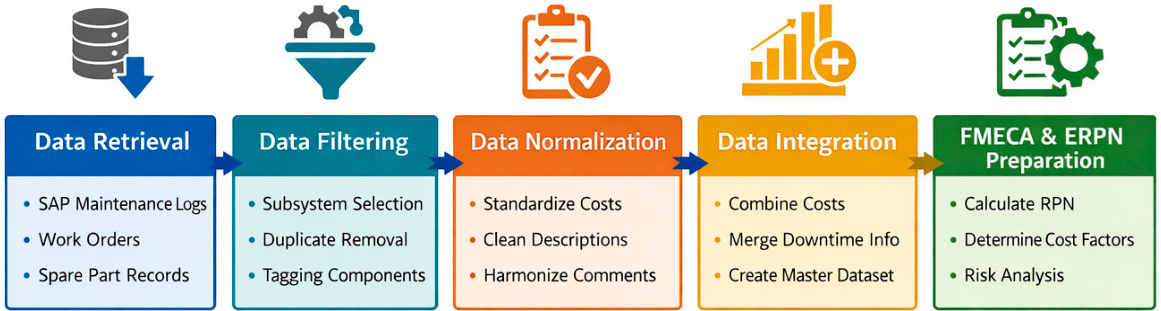
An extensive set of maintenance records was extracted from the SAP enterprise asset management system to assess the reliability of aluminum smelter transport fleets. The dataset was collected over a five-year period (2019–2024) and includes 2303 corrective maintenance work orders recorded for 58 heavy equipment units. The data collection and processing flow is shown in
Figure 1.
Filtering and Tagging: Work orders were filtered by functional location, equipment hierarchy codes, and corresponding assemblies of Metal Transport Vehicles (MTVs), Anode Pallet Transport Vehicles (APTVs), Bath Tapping Vehicles (BTVs), and other specialized fleets. This allowed the data to be organized by subsystem (engine, hydraulic, electrical, etc.) for subsequent analysis.
Normalization: Failure descriptions, cost entries, and maintenance comments were standardized to eliminate duplicates caused by inconsistent naming conventions or technician shortcuts.
Data Integration: Cost, frequency, and downtime fields from the maintenance modules were merged into a single reliability dataset for statistical analysis.
After data cleaning and integration, a master dataset was developed containing failure events, with fields for (a) affected component (subsystem), (b) failure mode description, (c) maintenance cost in parts & materials, and (d) labor costs incurred. Production loss due to downtime was calculated using known production loss rates for each vehicle type. To maintain uniformity, costs were converted to US dollars. In addition, each failure event was assigned RPN scores for severity (S), occurrence (O), and detection (D), based on expert judgment and data analysis.
2.2. Risk Prioritization Using RPN
FMEA was then applied to the integrated database to rank vehicle-related failure modes using the traditional Risk Priority Number (RPN). RPN was calculated as the product of severity (S), occurrence (O), and detection (D):
where S represents the severity of the failure effect, O represents the occurrence frequency of the failure mode, and D represents the detectability of the failure before occurrence. Each parameter was evaluated using a rating scale derived from maintenance history and expert assessment.
2.3. Severity, Occurrence, and Detection Rating Scales
To ensure consistency and reproducibility in the risk assessment process, standardized rating scales were used to assign Severity (S), Occurrence (O), and Detection (D) scores. These scales were developed based on expert judgment, historical maintenance data, and established industry practices. Each parameter was evaluated on a scale from 1 to 10, where higher values indicate greater risk, frequency, or difficulty of detection.
Severity (S) represents the impact of a failure on system performance, safety, and operational continuity. Occurrence (O) reflects the likelihood or frequency of a failure event based on historical data. Detection (D) indicates the probability of detecting failure before it results in significant operational consequences. The rating criteria used for each parameter are summarized in
Table 2,
Table 3 and
Table 4.
These standardized rating criteria ensure that the assignment of S, O, and D scores is consistent, transparent, and reproducible across different failure modes. The use of structured scales, supported by both expert judgment and historical data, enhances the reliability of the risk prioritization process.
2.4. Expert Panel and Scoring Process
The assignment of Severity (S), Occurrence (O), and Detection (D) scores was conducted through a structured expert evaluation process. An expert panel consisting of experienced maintenance engineers, reliability specialists, and operations personnel was formed to ensure accurate and context-specific assessment of failure modes.
The panel included 5 experts with an average of 15 years of experience in heavy industrial vehicle maintenance within aluminum smelting operations. The experts were selected based on their technical expertise, familiarity with equipment behavior, and involvement in maintenance decision-making processes.
A consensus-based approach was adopted for scoring, where each failure mode was evaluated collaboratively. In cases of disagreement, discussions were conducted until agreement was reached to ensure consistency and reliability of the assigned scores. The scoring process was supported by historical maintenance records and operational data to minimize subjectivity and enhance data-driven decision-making. This structured expert-driven evaluation ensures that the derived RPN and ERPN values reflect both practical operational experience and quantitative maintenance data.
2.5. Economic Risk Priority Number (ERPN) Formulation
2.5.1. Economic Cost Modeling and Normalization
To incorporate economic impact into failure prioritization, three cost components were considered: maintenance cost (C
1), manpower cost (C
2), and production loss (C
3). The total cost associated with each failure mode was calculated as
where the following definitions are used:
C1 represents the direct maintenance cost, including spare parts and repair expenses;
C2 represents manpower cost based on labor hours and workforce allocation;
C3 represents production loss resulting from equipment downtime.
Given that cost components vary significantly in magnitude, a normalization process was applied to ensure comparability across failure modes. The cost factor (C
f) was calculated by scaling the total cost relative to the maximum observed cost in the dataset, as follows:
where C
i represents the total cost associated with a given failure mode, and C
max represents the maximum total cost observed among all failure modes.
This normalization expresses the economic impact of each failure mode as a percentage of the most costly failure event, thereby preserving proportional differences between failure modes while avoiding distortion caused by absolute cost magnitudes. Unlike subjective weighting approaches, this data-driven normalization ensures consistency, transparency, and reproducibility in the integration of economic impact into the risk assessment process.
Furthermore, this scaling approach allows for seamless integration with the RPN formulation, enabling the development of the proposed Economic Risk Priority Number (ERPN) as a combined technical–economic risk indicator. This approach differs from traditional cost-based FMEA methods that rely on predefined or subjective weighting schemes, as it utilizes actual operational data to dynamically scale economic impact. Additionally, this normalization ensures that the cost factor remains bounded and comparable across different datasets and operational contexts
2.5.2. ERPN Formulation
To overcome the limitations of conventional RPN, the Economic Risk Priority Number (ERPN) is defined by integrating the normalized cost factor (C
f) with the traditional RPN formulation:
where RPN = S × O × D and C
f represents the normalized economic impact associated with each failure mode.
This formulation enables the prioritization process to incorporate both technical risk (severity, occurrence, detection) and economic consequences, providing a more comprehensive and realistic assessment of failure criticality. The multiplicative integration of RPN and Cf was selected to preserve the interaction between technical risk factors and economic impact.
Unlike additive models, which may dilute the influence of either dimension, the multiplicative structure emphasizes failure modes that exhibit both high technical severity and high economic impact. This ensures that critical events are amplified in the prioritization process, making the approach particularly suitable for industrial decision-making contexts where both reliability and cost are key considerations.
Furthermore, this formulation maintains compatibility with the traditional RPN framework while enhancing its practical relevance through the integration of data-driven economic factors.
To ensure transparency and reproducibility, a comprehensive FMEA
Table 5 was developed. The table includes all identified failure modes, their associated subsystems, Severity (S), Occurrence (O), and Detection (D) scores, as well as the calculated Risk Priority Number (RPN). In addition, economic cost components including maintenance cost (C
1), manpower cost (C
2), and production loss cost (C
3) were incorporated to compute the total cost (C
i) for each failure mode. A normalized cost factor (C
f) was then derived to eliminate scale differences and enable objective comparison across failure modes. Finally, ERPN values were calculated to reflect both technical risk and economic impact.
The results demonstrate that several failure modes with moderate RPN values become highly critical when economic impact is considered, highlighting the importance of integrating cost factors into failure prioritization.
2.5.3. Sensitivity Analysis of Cost Factor (Cf)
To evaluate the robustness of the proposed ERPN formulation, a sensitivity analysis was conducted on the cost factor (Cf). Since the ERPN model integrates economic impact through a multiplicative relationship with RPN, it is important to assess how variations in cost normalization influence the prioritization results.
The analysis showed that although absolute ERPN values varied under different scaling approaches, the relative ranking of critical failure modes remained consistent. This indicates that the prioritization outcome is not sensitive to the specific normalization method used, provided that proportional economic relationships between failure modes are preserved.
These findings demonstrate that the proposed ERPN framework is robust with respect to cost factor normalization and provides stable prioritization results. Furthermore, the multiplicative integration of RPN and Cf ensures that both technical risk and economic impact are jointly considered, offering a more comprehensive and reliable decision-making tool compared to conventional RPN-based approaches.
3. Results
3.1. RPN-Based Risk Analysis
The traditional Risk Priority Number (RPN) approach was first applied to evaluate and rank failure modes across the different subsystems of heavy industrial vehicles. This analysis provides a baseline understanding of failure behavior based on severity, occurrence, and detection.
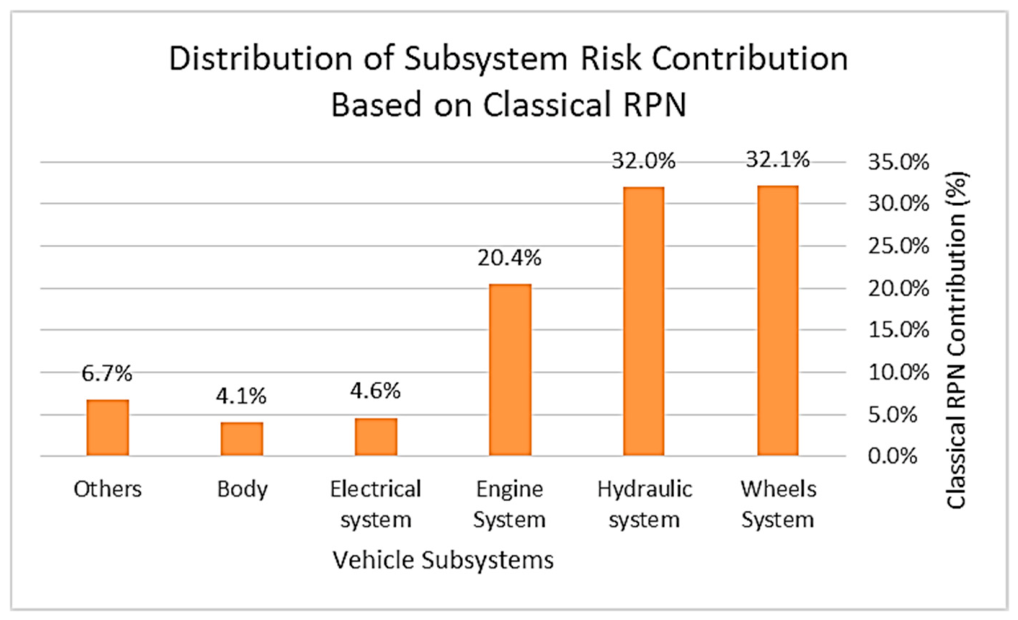
Figure 2 presents the cumulative subsystem-level RPN distribution across the vehicle systems.
The RPN analysis indicates that the wheel and hydraulic subsystems exhibit the highest cumulative risk contributions. This is primarily attributed to the high frequency of moderate-severity failures, such as tire punctures and hydraulic line leaks. These frequent failure events lead to elevated occurrence scores, resulting in higher RPN values.
In contrast, the engine subsystem, despite its critical operational role, exhibits a relatively lower RPN ranking. This is because engine failures occur less frequently, even though they are associated with high severity. As a result, the traditional RPN framework tends to prioritize frequent failures over less frequent but more severe events.
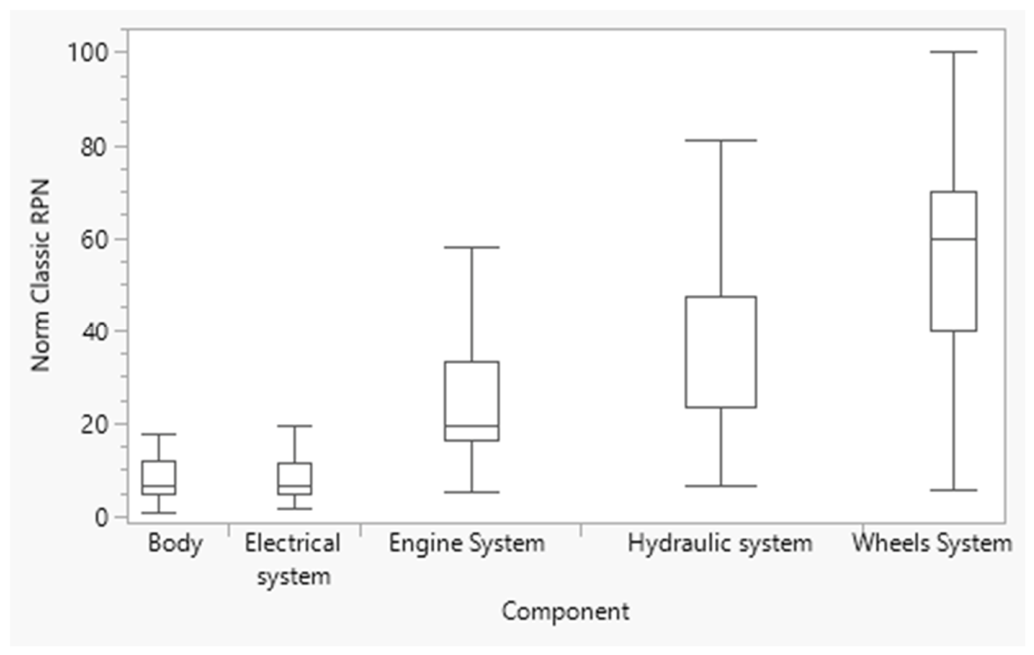
To further examine the distributional behavior of subsystem risks under the classical RPN method, a box plot representation was constructed, as shown in
Figure 3.
Figure 3 illustrates the dispersion of and median differences in normalized classical RPN values across subsystems. These results show that the wheel and hydraulic systems have the highest median values and variability, reflecting their frequency driven dominance in the traditional FMEA framework.
Since the normalized RPN values were found to be non-normally distributed and positively skewed, the Kruskal–Wallis nonparametric test was applied to assess statistical differences among subsystems. The results indicate a significant difference between groups (χ2 = 846.07, df = 4, p < 0.0001). The relatively high chi-square value is attributed to the large sample size and the variability of failure distributions across subsystems. Given that the dataset consists of 2303 failure events, even moderate differences between subsystem distributions can result in amplified test statistics. Therefore, the high χ2 value reflects strong statistical separation rather than an anomaly.
3.2. ERPN-Based Risk Analysis
The Economic Risk Priority Number (ERPN) integrates both technical risk and economic impact into a unified prioritization framework. By combining the traditional RPN with the normalized cost factor (Cf), the ERPN emphasizes failure modes that are not only frequent and severe but also economically significant.
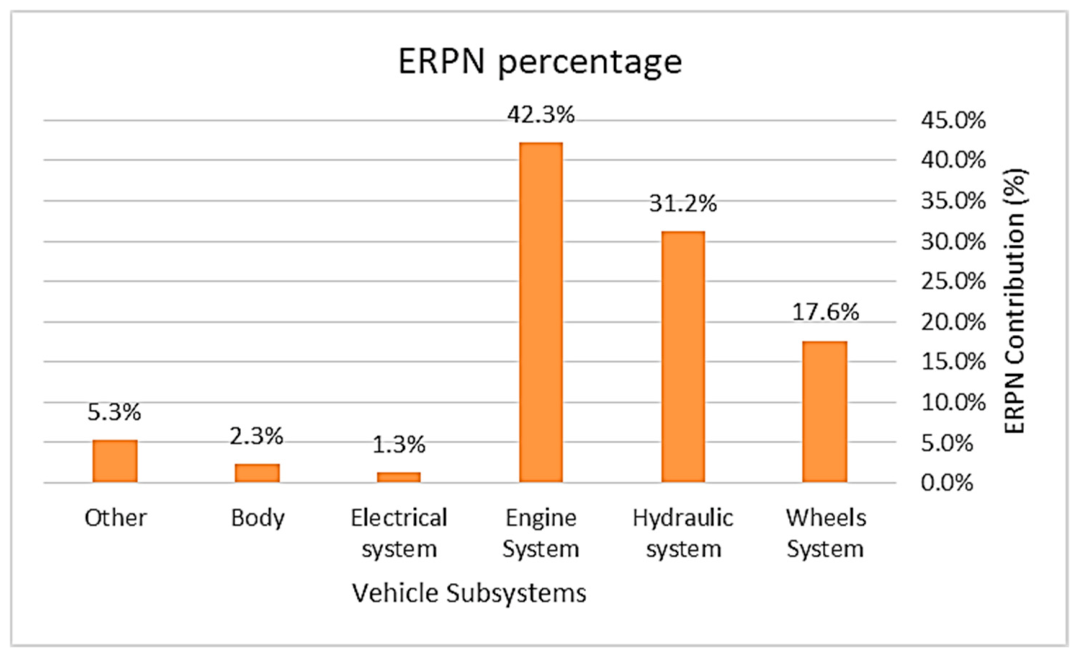
The results in
Figure 4 reveal a significant shift in subsystem prioritization compared to the classical RPN analysis. While the RPN approach identified the wheel and hydraulic subsystems as the most critical primarily due to their high frequency of moderate severity failures the ERPN results highlight the dominant importance of the engine subsystem.
Under the ERPN framework, the engine subsystem exhibits the highest cumulative risk (≈ 2028), followed by the hydraulic subsystem (≈ 1498) and the wheel subsystem (≈ 846). This shift occurs because engine failures, although less frequent, are associated with substantial economic consequences, including extended downtime and significant production losses.
In contrast, wheel-related failures such as tire puncturing occur more frequently but incur relatively lower costs per event. As a result, their overall contribution to risk decreases when economic impact is considered. This demonstrates that frequency-based prioritization alone may overestimate the importance of frequent but low-impact failures, while underestimating rare but high-consequence events.
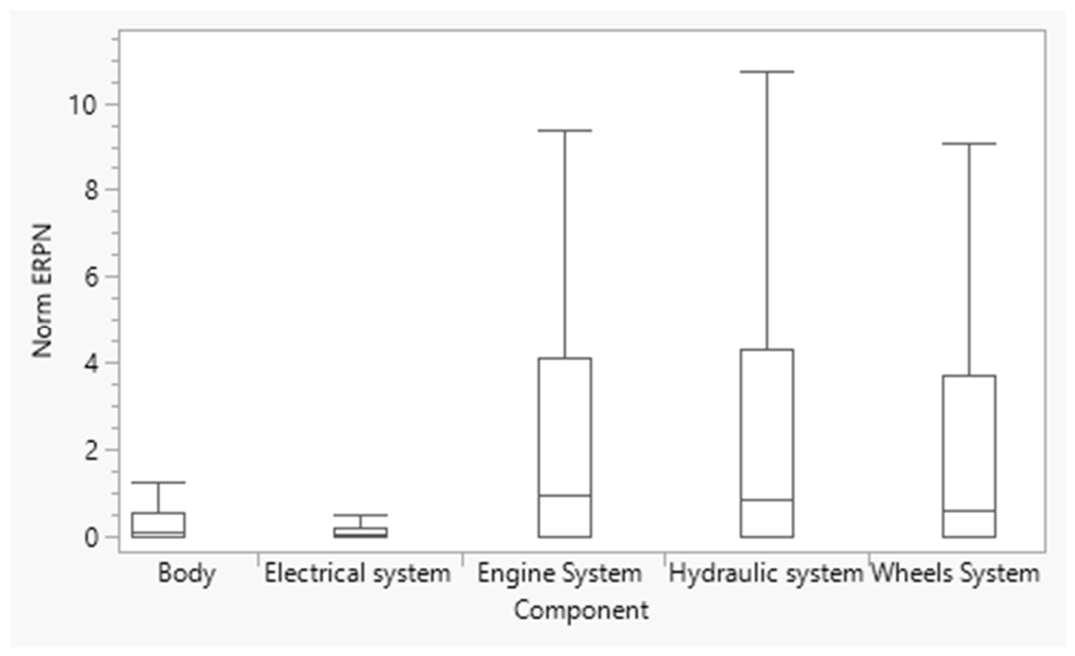
A direct comparison between RPN and ERPN results confirms that several failure modes with moderate RPN values become highly critical when economic factors are incorporated. This finding highlights the limitations of the classical RPN approach and underscores the importance of integrating cost-based metrics into failure prioritization frameworks. To further analyze the distribution of ERPN values across subsystems, a box plot representation is shown in
Figure 5.
Figure 5 demonstrates that the engine subsystem exhibits higher dispersion and upper quartile values compared to the classical RPN results, reflecting the influence of economic weighting on subsystem risk prioritization. The Kruskal–Wallis test confirmed statistically significant differences in ERPN distributions across subsystems (χ
2 = 131.69, df = 4,
p < 0.0001).
Preliminary analysis indicated that both normalized RPN and ERPN values exhibit non-normal distributions with positive skewness. Therefore, the Kruskal–Wallis nonparametric test was selected to evaluate subsystem-level differences.
Table 6 presents the top critical failure modes ranked based on ERPN. The results clearly indicate that economically driven prioritization leads to a different risk hierarchy compared to traditional RPN-based methods.
From an engineering perspective, the findings suggest that maintenance strategies should prioritize failure modes with high economic consequences rather than focusing solely on frequently occurring issues. This is particularly important in capital-intensive industrial environments, where downtime-related losses significantly exceed direct repair costs.
The integration of the normalized cost factor (Cf) within the ERPN formulation enables a balanced evaluation of both technical risk and economic impact, thereby enhancing the practical applicability of FMEA in industrial maintenance planning.
Overall, the ERPN-based analysis provides a more realistic and decision-oriented representation of subsystem criticality by aligning technical risk assessment with economic impact. This enables more effective prioritization of maintenance actions, particularly in industrial environments where downtime costs are substantial.
Table 6 presents a comparison of subsystem rankings based on the classical RPN and the proposed ERPN approaches where ↓ means the ranking reduced while ↑ means the ranking increased. A clear shift in prioritization is observed. Under the traditional RPN method, the wheel and hydraulic subsystems are ranked as the most critical due to their higher failure frequency. However, when economic impact is incorporated through ERPN, the engine subsystem becomes the highest priority, reflecting its substantial cost consequences despite lower failure frequency.
This re-ranking demonstrates that ERPN provides a more realistic prioritization by aligning risk assessment with economic impact, thereby enabling more effective maintenance decision-making. It further highlights that frequency-based prioritization alone may underestimate economically critical failures, which are more accurately captured using the ERPN framework.
3.3. Engine Failure Analysis
Following the data collection stage, a detailed technical investigation of engine failures was conducted for vehicles operating in aluminum smelter environments. The objective was to identify the dominant engine failure modes contributing to unplanned downtime and to investigate their root causes using maintenance records, inspection reports, and physical failure evidence:
1. SAP Maintenance Logs: This indicated when an engine was overhauled, what parts were replaced, and how long it was down.
2. OEM Site Inspection Reports (Cummins/UES): This provided technical source feedback, diagnostic trouble codes (DTCs), and service comments for each vehicle
3. Evidence of Field Failure: Disassembly and examination of field-failed engines documented damage to parts based on photographs and metallurgical sections.
To ensure that the data was traceable and accurate, every failure report was cross-checked with the engine serial number and number of hours accumulated. The analysis concentrated on the Cummins QSB6.7 and QSB5.6 engine models utilized in Anode Pallet Transport Vehicles (APTV) and Bath Tapping Vehicles (BTV), the two fleets exhibiting the highest incidence of engine related failures.
3.3.1. Engine Block Failures
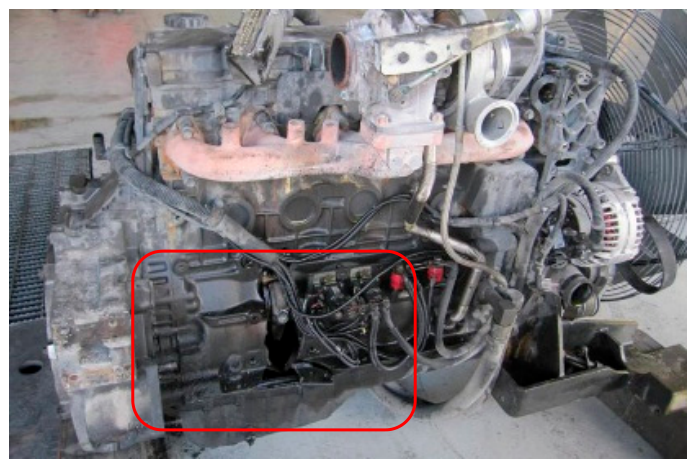
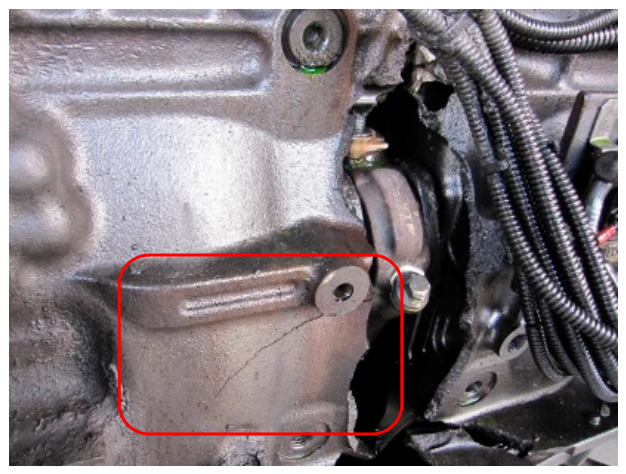
Several vehicles had cracks and breaks in the engine block, especially near the crankcase (
Figure 6 and
Figure 7) as shown in red rectangle. There was visual evidence that mechanical damage was thus severe, it would cause abrupt failure of internal components. Root cause tracing revealed that these failures were triggered by the loss and overheating of coolant, which resulted in a decrease in strength for the cylinder block structure and gradual deterioration of the material structure weaker and caused the material to wear out over time.
3.3.2. Deformation of the Push Rod and Valve Train
Several cases showed bent push rods and valve train parts (
Figure 8) as shown in red rectangle. The problems were caused by valves that were not set up right, hydraulic lifters that did not work, and overheating that made the valves expand and hit the pistons. The bending messed up the timing of the valves, which led to a bad misfire and low compression.
3.3.3. Breakage of the Piston and Connecting Rod
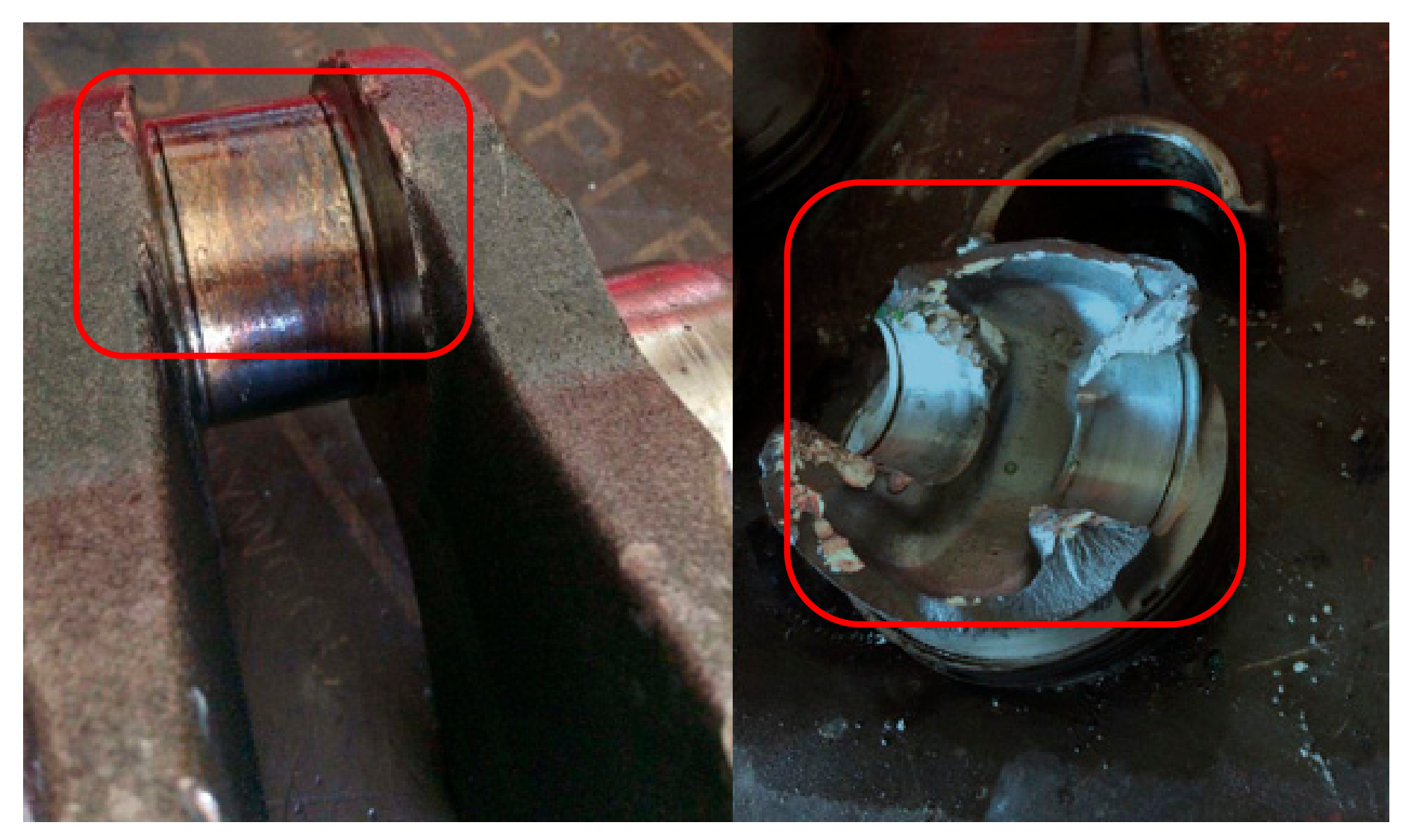
Engine tear examinations (
Figure 9) as shown in red rectangle confirmed that the pistons and connecting rods were broken. A metallurgical analysis indicated that oil starvation and thermal shock were the primary causes. In most cases when lubrication was lost, the crankshaft continued to rotate for a short time, during which fatigue cracks developed and propagated until one rod broke.
3.3.4. Oil Leaking and Seals Breaking Down
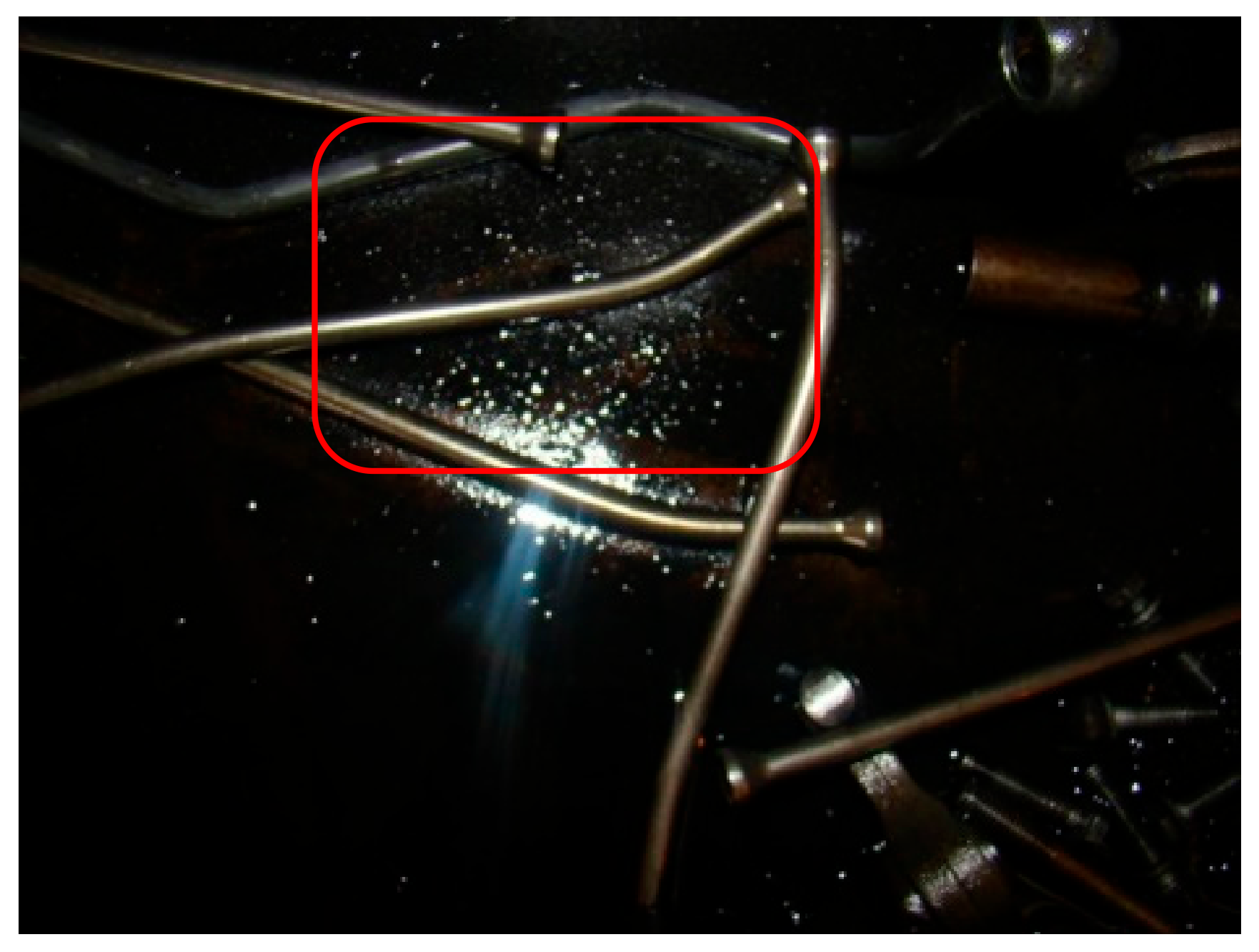
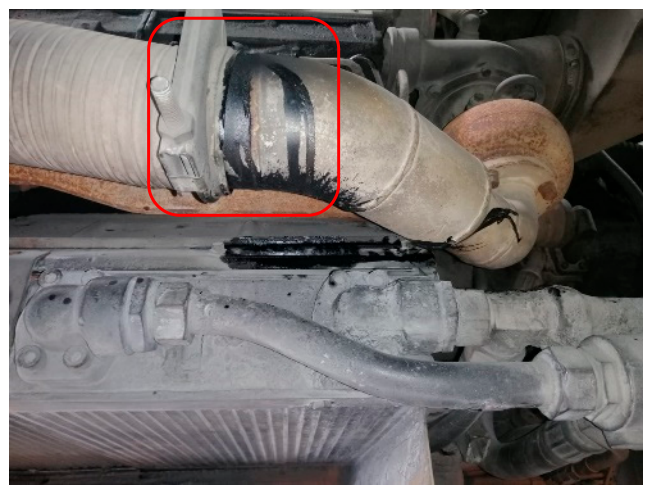
The patterns of oil leaking also appeared around turbo return lines and crankcase vents, as shown below (
Figure 10) as shown in red rectangle. The leaks increased because it had been exposed to high temperatures and conductive dust for an extended period, which lead the seals to harden and the pressure in the container to decrease. The oil did not stop leaking, thus low oil pressure fault codes and engine history were logged in the ECM.
3.3.5. Electronic Diagnostic Evidence
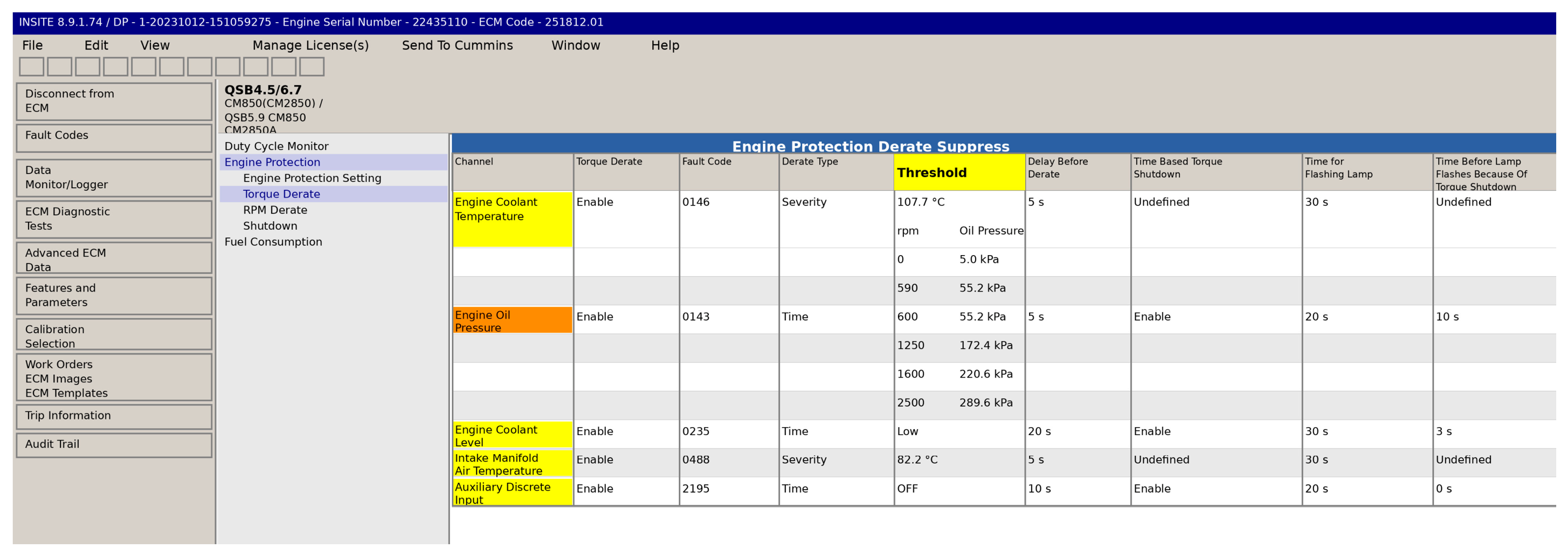
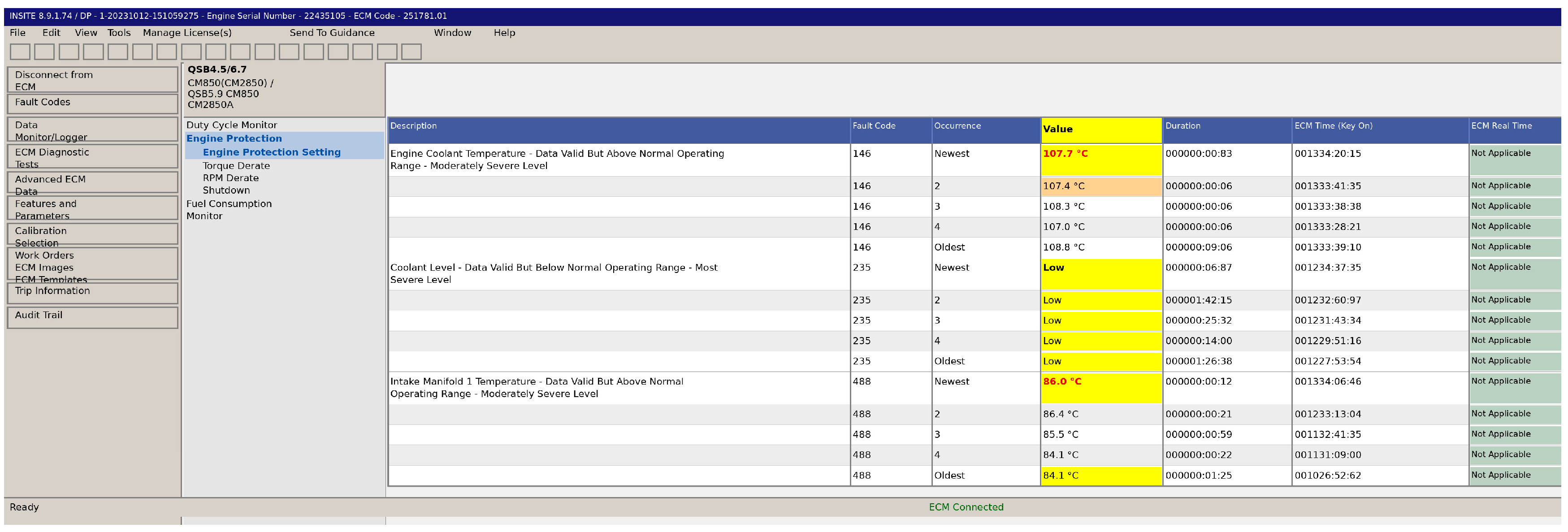
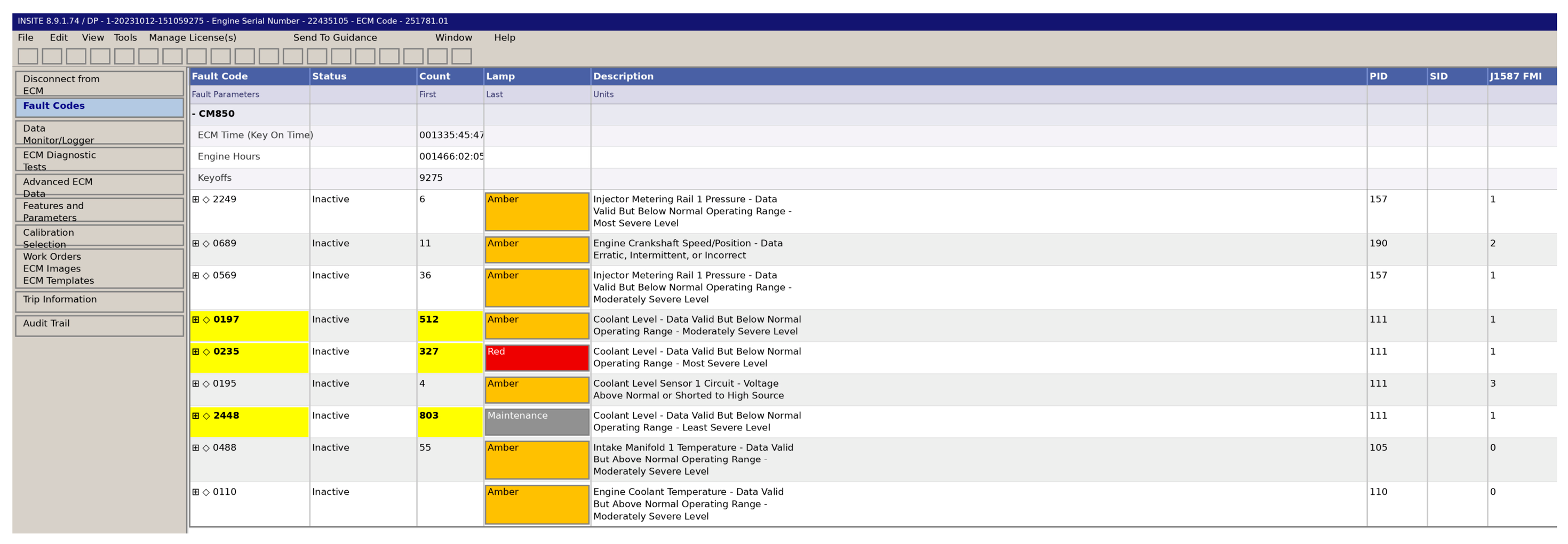
The ECM logs (
Figure 11,
Figure 12 and
Figure 13) validated what was identified by the physical inspection. Several data inputs displayed high coolant temperature (107.7 °C) and low coolant level alarms, which occurred multiple times during several operating cycles prior to system failure. Inactive fault histories demonstrated that early warnings were issued but not heeded appropriately, indicating a problem with condition monitoring. For low coolant level, there are multiple dormant faults (512–803 counts), which strongly indicates that a systemic issue with the cooling system is leading to the mechanical failures observed.
4. Discussion
The results obtained from both RPN and ERPN analyses provide important insights into subsystem risk prioritization in aluminum smelter fleets. By integrating historical maintenance data, diagnostic information, and structured risk ranking, the study highlights key limitations of the classical FMEA approach in harsh industrial environments.
Under the traditional RPN framework, the wheel and hydraulic subsystems were identified as the most critical contributors to risk due to their high failure frequency. However, this frequency-driven prioritization does not reflect the practical and economic realities of aluminum smelter operations. In such environments, frequent failures often result in limited downtime, whereas rare engine failures can lead to complete operational stoppages and significant production losses.
The ERPN approach fundamentally alters subsystem prioritization by incorporating a normalized economic cost factor into the risk evaluation process. As a result, the engine subsystem emerges as the most critical, despite its lower failure frequency, due to its substantial economic impact. This finding demonstrates that financial and operational consequences must be considered alongside technical risk when defining maintenance priorities in capital-intensive industries. While the hydraulic subsystem remains a significant contributor due to its combined frequency and cost, the wheel subsystem is appropriately deprioritized when economic impact is considered.
The diagnostic analysis further supports these findings, identifying overheating and lubrication-related issues as the primary causes of catastrophic engine failures. Repeated low coolant level and low oil pressure warnings were observed in engine control module (ECM) logs prior to failure events, indicating that early warning signals were available but not effectively utilized. This highlights the importance of integrating condition monitoring with proactive maintenance strategies to prevent high-impact failures.
The statistical analysis confirms that failure risks are not uniformly distributed across subsystems. The significant differences observed using the Kruskal–Wallis test support the need for a differentiated prioritization framework such as ERPN. From an industrial perspective, the findings emphasize that prioritizing failures based solely on frequency may lead to inefficient resource allocation. The ERPN approach enables maintenance teams to focus on high-cost, high-impact failures, thereby improving operational availability and reducing financial losses.
Compared to conventional and advanced FMEA approaches, the proposed ERPN framework provides a practical and data-driven prioritization mechanism. Unlike traditional RPN, which assigns equal importance to severity, occurrence, and detection, ERPN integrates actual economic consequences, aligning risk prioritization with business impact. While fuzzy FMEA and AHP-based models improve decision-making under uncertainty, they often introduce additional complexity and rely on subjective weighting schemes. In contrast, ERPN maintains computational simplicity while enhancing realism through the integration of operational cost data.
Future research may extend this work by benchmarking the ERPN framework against fuzzy FMEA- and AHP-based approaches to quantify performance differences under conditions of uncertainty. In addition, integrating ERPN with predictive maintenance and machine learning techniques could further enhance its capability for real-time risk assessment and decision support.
5. Conclusions
This study presented an enhanced failure prioritization framework based on the Economic Risk Priority Number (ERPN), integrating economic impact into the traditional FMEA approach. By incorporating maintenance cost, manpower cost, and production loss into a normalized cost factor, the proposed method enables a more realistic assessment of failure criticality in industrial environments.
The results demonstrated that while conventional RPN tends to prioritize failures based on frequency and detectability, the ERPN framework shifts the focus toward economically critical failure modes. Engine-related failures were identified as the most significant contributors to operational risk due to their substantial downtime and production loss impact. This highlights the limitations of traditional RPN and underscores the importance of integrating economic considerations into maintenance decision-making.
Overall, the proposed ERPN framework provides a practical, data-driven tool for improving maintenance prioritization and resource allocation in heavy industrial vehicle operations.
Despite the promising results, this study has several limitations. First, the analysis is based on data from a single industrial site, which may limit the generalizability of the findings to other operational environments. Second, the assignment of Severity, Occurrence, and Detection scores relies partly on expert judgment, which may introduce a degree of subjectivity despite efforts to standardize the scoring process. Third, the ERPN model depends on the accuracy and availability of cost data, which may vary across organizations. Finally, the sensitivity of the cost factor to extreme values may influence prioritization in cases with highly skewed cost distributions.
Future work can extend the proposed ERPN framework by integrating real-time condition monitoring and machine learning techniques for predictive maintenance. The incorporation of IoT-based data acquisition systems can enable the dynamic updating of risk priorities based on actual operating conditions.
Author Contributions
Conceptualization, A.A.S., R.R., A.S. and S.C.V.; Methodology, A.A.S., R.R., A.S. and S.C.V.; Software, A.A.S., R.R., A.S. and S.C.V.; Validation, A.A.S., R.R., A.S. and S.C.V.; Formal analysis, A.A.S., R.R., A.S. and S.C.V.; Investigation, A.A.S., R.R., A.S. and S.C.V.; Resources, A.A.S., R.R., A.S. and S.C.V.; Data curation, A.A.S., R.R., A.S. and S.C.V.; Writing—original draft, A.A.S.; Writing—review & editing, A.A.S., R.R., A.S. and S.C.V.; Visualization, A.A.S., R.R., A.S. and S.C.V.; Supervision, R.R., A.S. and S.C.V.; Project administration, A.A.S., R.R., A.S. and S.C.V.; Funding acquisition, A.A.S. All authors have read and agreed to the published version of the manuscript.
Funding
This research received no external funding.
Data Availability Statement
The raw data supporting the conclusions of this article will be made available by the authors on request.
Conflicts of Interest
The authors declare no conflict of interest.
References
- Ciancio, V.; Homri, L.; Dantan, J.-Y.; Siadat, A. Towards prediction of machine failures: Overview and first attempt on specific automotive industry application. IFAC-PapersOnLine 2020, 53, 289–294. [Google Scholar] [CrossRef]
- Majid, N.A.A.A.; Taylor, M.P.; Chen, J.J.J.; Young, B.R. Aluminium process fault detection and diagnosis. Adv. Mater. Sci. Eng. 2015, 2015, 682786. [Google Scholar] [CrossRef]
- Schmitz, C. Handbook of Aluminium Recycling; Vulkan: Essen, Germany, 2007. [Google Scholar]
- Deulgaonkar, V.R.; Ingolikar, N.; Borkar, A.; Ghute, S.; Awate, N. Failure analysis of diesel engine piston in transport utility vehicles. Eng. Fail. Anal. 2021, 120, 105008. [Google Scholar] [CrossRef]
- Wang, S.; Liu, Y.; Di Cairano-Gilfedder, C.; Titmus, S.; Naim, M.M.; Syntetos, A.A. Reliability analysis for automobile engines: Conditional inference trees. Procedia CIRP 2018, 72, 1392–1397. [Google Scholar] [CrossRef]
- Daya, A.A.; Lazakis, I. Systems reliability and data-driven analysis for marine machinery maintenance planning and decision making. Machines 2024, 12, 294. [Google Scholar] [CrossRef]
- Hu, L.; Tan, L.; Meng, X.; Zeng, J.; Luo, P.; Yang, Y. A framework for anomaly detection and evaluation of rotating machinery based on data-accumulation-aware generative adversarial networks and similarity estimation. Machines 2026, 14, 61. [Google Scholar] [CrossRef]
- Odeyar, P.; Apel, D.B.; Hall, R.; Zon, B.; Skrzypkowski, K. A review of reliability and fault analysis methods for heavy equipment and their components used in mining. Energies 2022, 15, 6263. [Google Scholar] [CrossRef]
- Wang, Q.; Huang, R.; Xiong, J.; Yang, J.; Dong, X.; Wu, Y.; Wu, Y.; Lu, T. A survey on fault diagnosis of rotating machinery based on machine learning. Meas. Sci. Technol. 2024, 35, 102001. [Google Scholar] [CrossRef]
- Gong, J.; Luo, Y.; Qiu, Z.; Wang, X. Determination of key components in automobile braking systems based on ABC classification and FMECA. J. Traffic Transp. Eng. (Engl. Ed.) 2020, 9, 69–77. [Google Scholar] [CrossRef]
- Filz, M.-A.; Langner, J.E.B.; Herrmann, C.; Thiede, S. Data-driven failure mode and effect analysis (FMEA) to enhance maintenance planning. Comput. Ind. 2021, 129, 103451. [Google Scholar] [CrossRef]
- Grabill, N.; Wang, S.; Olayinka, H.A.; De Alwis, T.P.; Khalil, Y.F.; Zou, J. AI-augmented failure modes, effects, and criticality analysis (AI-FMECA) for industrial applications. Reliab. Eng. Syst. Saf. 2024, 250, 110308. [Google Scholar] [CrossRef]
- Hwang, S.K.; Kim, D.-H.; Kim, S.-C. Analysis of risk priority number of FMEA and surprise index for components of 7 kW electric vehicle charger. J. Loss Prev. Process Ind. 2024, 91, 105375. [Google Scholar] [CrossRef]
- Liu, P.; Shen, M.; Geng, Y. Risk assessment based on failure mode and effects analysis (FMEA) and WASPAS methods under probabilistic double hierarchy linguistic term sets. Comput. Ind. Eng. 2023, 186, 109758. [Google Scholar] [CrossRef]
- Liu, H.-C.; Liu, L.; Liu, N. Risk evaluation approaches in failure mode and effects analysis: A literature review. Expert Syst. Appl. 2013, 40, 828–838. [Google Scholar] [CrossRef]
- Rhee, S.J.; Ishii, K. Using cost-based FMEA to enhance reliability and serviceability. Adv. Eng. Inform. 2003, 17, 179–188. [Google Scholar] [CrossRef]
- Jin, Z.; Chen, C.; Syntetos, A.; Liu, Y. Noise-conditioned denoising autoencoder with temporal attention for bearing remaining useful life prediction. Machines 2026, 14, 75. [Google Scholar] [CrossRef]
- Ma, Q.; Li, H.; Thorstenson, A. A big data-driven root cause analysis system: Application of machine learning in quality problem solving. Comput. Ind. Eng. 2021, 160, 107580. [Google Scholar] [CrossRef]
- Tripathi, A.; Prasad, M.H. RCM-based optimization of maintenance strategies for marine diesel engine using genetic algorithms. Int. J. Syst. Assur. Eng. Manag. 2024, 15, 3757–3775. [Google Scholar] [CrossRef]
- Yuan, L.; Du, Z.; Gao, X.; Zhang, Y.; Yang, L.; Wang, Y.; Lin, J. A novel online real-time prediction method for copper particle content in the oil of mining equipment based on neural networks. Machines 2026, 14, 76. [Google Scholar] [CrossRef]
- Payette, M.; Abdul-Nour, G.; Meango, T.J.-M.; Diago, M.; Cote, A. Leveraging failure modes and effect analysis for technical language processing. Mach. Learn. Knowl. Extr. 2025, 7, 42. [Google Scholar] [CrossRef]
| Disclaimer/Publisher’s Note: The statements, opinions and data contained in all publications are solely those of the individual author(s) and contributor(s) and not of MDPI and/or the editor(s). MDPI and/or the editor(s) disclaim responsibility for any injury to people or property resulting from any ideas, methods, instructions or products referred to in the content. |