
Article

On the Effect of Powder Particles on Tool Wear and Surface Roughness in Hybrid Additive Manufacturing of Inconel 718

1
Applied Laser and Photonics Group, University of Applied Sciences Aschaffenburg, Wuerzburger Str. 45, 63743 Aschaffenburg, Germany
2
Applied Laser Technologies, Ruhr University Bochum, Universitaetsstr. 150, 44801 Bochum, Germany
*
Author to whom correspondence should be addressed.
Machines 2026, 14(5), 466; https://doi.org/10.3390/machines14050466
Submission received: 19 February 2026 / Revised: 16 April 2026 / Accepted: 21 April 2026 / Published: 22 April 2026

Abstract

We report on tool wear and surface roughness for hybrid additive manufacturing of Inconel 718 components. The hybrid additive manufacturing comprises laser powder bed fusion (PBF-LB/M) and an in situ high-speed milling process, i.e., milling is performed within the powderbed, which deteriorates the surface quality by additionally occurring wear mechanisms. Therefore, in this comparative study milling path suction is used to improve tool wear characteristics and thus enhance surface quality. As a result, we quantify the improvement of the maximum tool life according to the flank wear, which is granted by the milling path suction. Additionally, the dominant wear mechanisms are investigated, revealing adherence and abrasion as the main contributing factors to wear. Furthermore, surface analysis shows an improvement of surface quality by the use of the milling path suction. Specifically, a reduction in surface roughness of hybrid manufactured Inconel 718 components down to a minimum of R a = 0.55 μm is highlighted.

1. Introduction

Metal additive manufacturing is increasingly gaining attention in industrial application [1,2]. In particular, laser powder bed fusion of metals (PBF-LB/M) is used for prototyping and small series components, fabricating high-strength components with high freedoms of design and complexity [3,4]. Nevertheless, the surface roughness and the geometrical accuracy are inferior to conventionally built components, limiting the reproducibility and reliable application in different fields of industry [5].
As a consequence, adequate post machining processes are necessary for an improvement of the surface quality [6,7]. For instance, hybrid combinations with changeable processing heads for robot systems combine direct energy deposition (DED-LB/M) with conventional milling [8]. Directly integrated milling with DED-LB/M is realised with the Lasertec 65 (DMG Mori, Pfronten, Germany), providing flexible and reliable process management [9]. However, the DED-LB/M yields significant geometrical deviations, leading to time-consuming post-processing [10].
A further hybrid approach combines PBF-LB/M and in situ high-speed milling. For this promising in situ additive/subtractive combination, superior and complex structures with inlaying features and high aspect ratios have been demonstrated [11,12]. Yet, the direct milling within the powderbed excludes the use of a cooling lubricant, in turn, promoting wear of the milling tools and negatively influencing the surface condition of the printed components by a higher thermal impact and the surrounding powder particles [13].
The milling of Ni-based superalloys is, in general, challenging and necessitates optimized parameters. For high-speed milling of Inconel 718, a particular difficult-to-machine alloy, several extended parameter studies have been published [14,15,16]. Specifically, the optimisation of the surface roughness resulting upon dry milling of IN718 with respect to the used feed per tooth is discussed, generating a surface roughness of R a = 0.35 μm − 0.81 μm at a very low feed per tooth of 3 μm/tooth [17,18]. While the main wear mechanisms are abrasion, adhesion and diffusion, the separate effects on the wear are yet difficult to identify [19]. Generally, a continuous wear of the milling cutter is not preventable, the aim of suitable process parameters is rather to avoid outbreaks and an irregular removal of the coating [20,21].
With respect to the novel approach of the hybrid additive manufacturing, the optimisation of the surface quality has been previously investigated by the authors and others, determining an optimal combination of process parameters [22]. Furthermore, the impact of the surface quality of hybrid manufactured components on the mechanical properties has been evaluated and revealed a significant increase of tensile and fatigue properties [23]. Studies on tool wear and milling time, however, have only been performed for machining maraging steel and only for milling within the powderbed without milling path suction [24].
In contrast, in this study, we report on the in situ high-speed milling of IN718 and the effect of powder particles on tool wear and surface analysis. For this, the effect of a milling path suction is evaluated, evacuating the powder particles ahead of the milling process along the milling track, allowing a comparison of the milling process with and without milling path suction. Additionally, fabricated surface qualities are analysed, the flank wear is investigated, and wear mechanisms are evaluated. Finally, the maximum tool life of the milling cutter, as well as the optimal surface quality is determined.

2. Materials and Methods

Hybrid additive manufacturing is performed, using a Lumex Avance-25 (Matsuura, Fukui, Japan). The high-speed milling process is directly integrated into the PBF-LB/M process, as a milling spindle and a tool magazine are included in the process chamber, as depicted in Figure 1.
For the PBF-LB/M of Inconel 718, a laser power of P L = 320 W, a scan speed of v s = 700 mm/s, a hatch distance of d h = 140 μm, and a layer height of h l = 50 μm are used. Within the PBF-LB/M process, a total material allowance of a t = 250 μm is added onto the constructed geometry, getting removed gradually during the milling process.
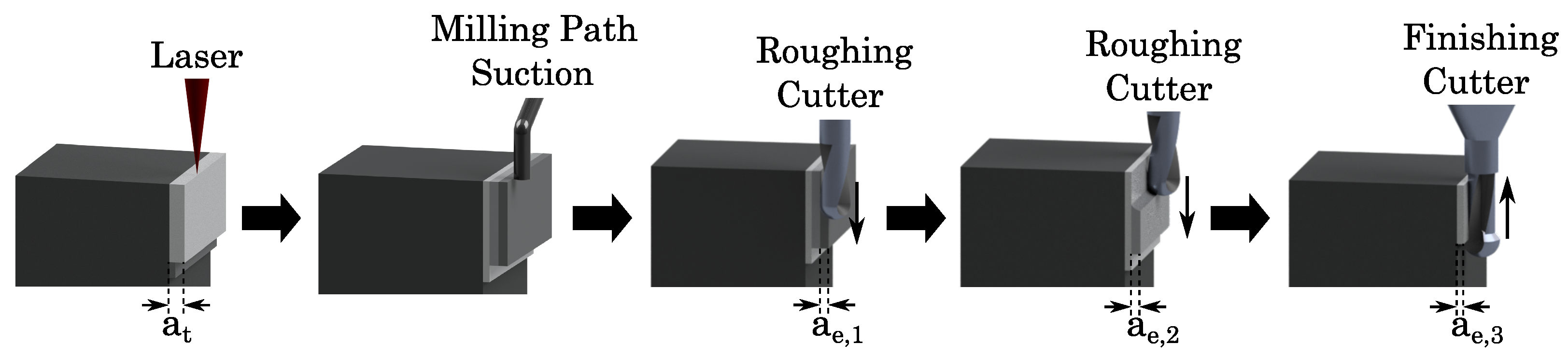
For the hybrid manufacturing, the PBF-LB/M process is interrupted every ten layers, 50 μm each. After this, the surface contours, built up to this point, are machined. For this, a milling path suction and a three-step milling process are conducted to ensure optimal surface conditions (Figure 2). In the first step, the powder is removed by the suction nozzle, evacuating particles in the pathway of the milling process. For this, a vacuum nozzle is mounted next to the milling spindle. The operation of the vacuum device starts without an inserted milling cutter, retracing the contour of the component with an offset in regard to the milling spindle. The vacuum device induces a complete removal of the powder particles at a depth of about 2 mm, ensuring a milling without powder particles.
Next, the milling process itself starts, as the roughing process detaches the PBF-LB/M surface, ensuring a removal of surface irregularities. Following, the semi-finishing and finishing process are used to generate the optimal surface quality by removing the remaining material allowance. Additionally, the finishing process is working from the lower part of the component to the top as well as the last built layers are spared to avoid thermal distortion. After the milling process finishes the next ten layers, 500 μm are built by the PBF-LB/M process.
For the milling processes, a spindle speed of n = 9600 1/min and a feed rate of v f = 240 mm/min is used, defining a feed per tooth of f z = 12.5 μm/tooth for the usage of a milling cutter with two cutting edges. Furthermore, z-pitches of a p , 1 = 150 μm (roughing), a p , 2 = 100 μm (semi-finishing) and a p , 3 = 80 μm (finishing) are employed. The z-pitch represents the distance of each milling path to the next in build direction, determining the axial cutting width, as the 3-axis system uses constant milling paths with a varying height. The radial milling width of the different processes is set to a e , 1 = 120 μm (roughing), a e , 2 = 120 μm (semi-finishing) and a e , 3 = 10 μm (finishing), removing the material allowance gradually, as depicted in Figure 2. Furthermore, for the evaluation of the impact of the powder particles on tool wear and surface roughness, components are manufactured with and without using the milling path suction.
In general, ball end milling cutters, made of WC, with a cutting radius of 1 mm are utilised. A coating, consisting of (Ti,Al)N, is added to the backing material to reduce tool wear and enhance milling performance.
The surface analysis as well as the flank wear measurement are conducted with a laser scanning microscope VK-X3200 (Keyence, Osaka, Japan). For the surface analysis, a length of 4800 μm is measured, using a 20×-magnification, a cut-off of λ c = 0.8 μm and a short-wave profile filter of λ s = 2.5 mm. A multiple line roughness measurement is executed for the four sides of the cubic specimens for three specimens for each experiment, evaluating the average surface roughness R a , additionally providing the peak-to-valley height R z .
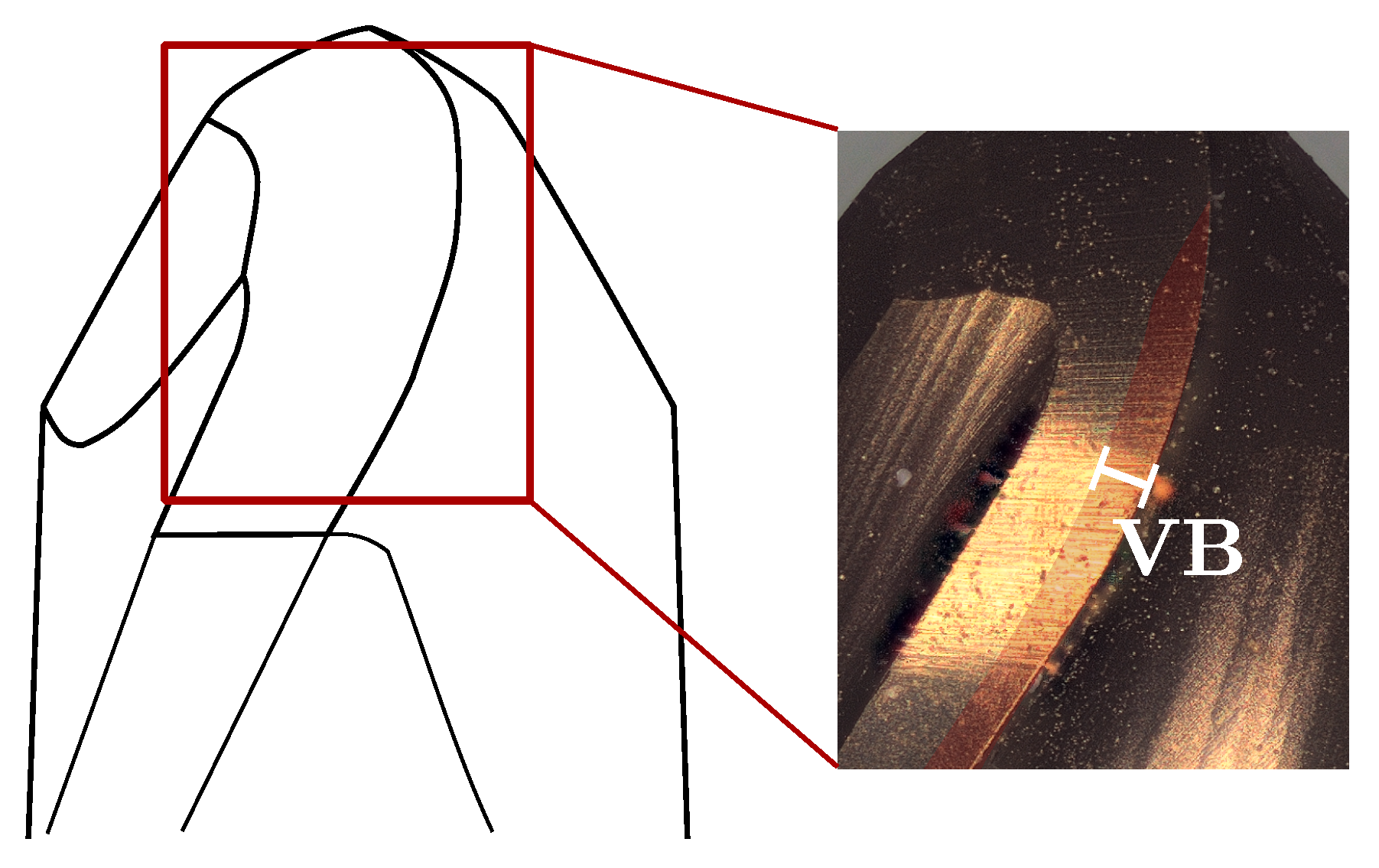
The flank wear is inspected with a 10×-magnification, measuring the abrasion of the coating of the flank. A series of 20 measurements is conducted perpendicularly to the flank to average the abrasive wear of the milling cutters, as depicted in Figure 3. Exemplifying images of one test series of milling cutters are shown for reasons of a clear arrangement.
Additionally, the wear mechanisms are classified by an energy dispersive X-ray spectroscopy (EDX), using a scanning electron microscope (REM) Maia-3 (Tescan, Brno, Czech Republic) and a VK-4 detector for EDX-analysis (Oxford instruments, Abingdon, UK) with a SEM-voltage of 10 kV and a working distance of 4 mm.
The maximum tool life is determined through experimental means with repeated measurements of the flank wear conducted on contingent basis in relation to the milling time. Furthermore, the impact of the milling within powderbed and with the usage of the milling path suction is evaluated by these measurements, revealing the differences between the test series.

3. Results and Discussion

In this section, the results of the flank wear analysis and the surface analysis are presented, comparing the usage of the milling path suction to the sole milling process. At first, the flank wear for both process chains is evaluated as well as a maximum tool life is experimentally ascertained. Next, tool wear mechanisms and characteristics are determined by means of an element analysis. Finally, the highest achievable surface quality for the hybrid manufacturing is investigated by a surface analysis.

3.1. Flank Wear Analysis

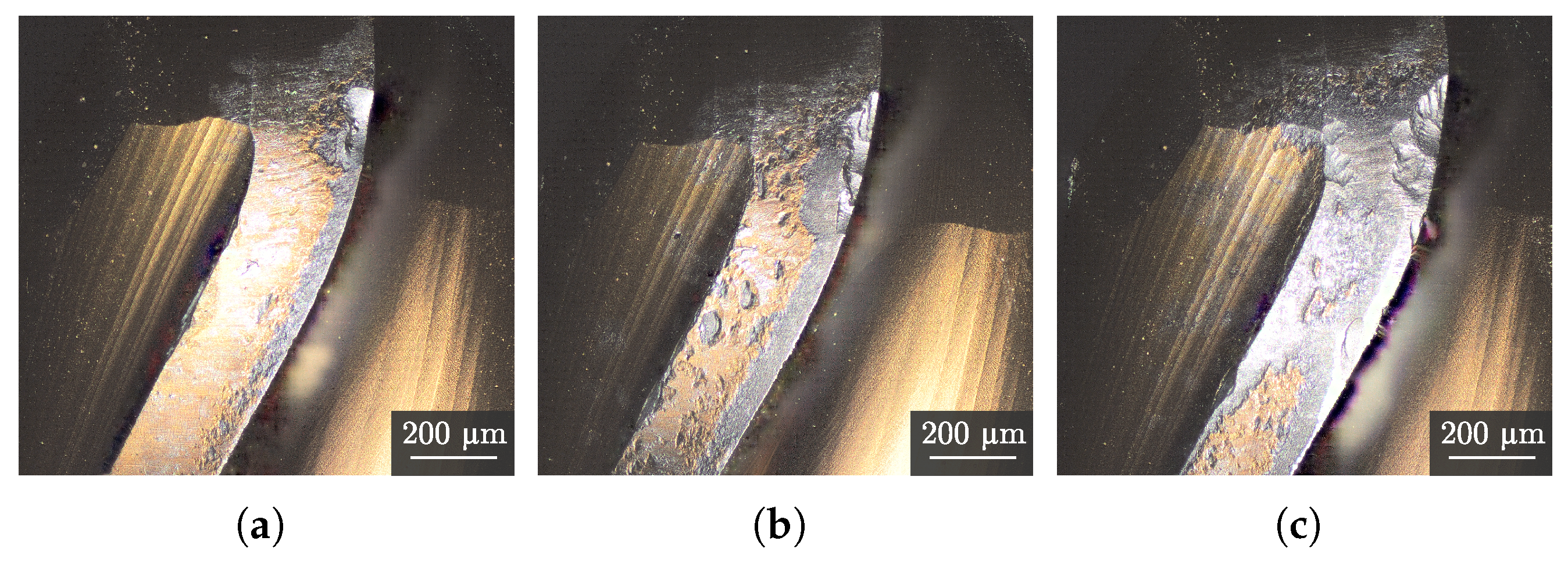
The flank wear analysis reveals the detachment of the flank of the milling cutter for the roughing process, as the coating is dissipated and the backing material of the tool is affected at the cutting edge. For the milling without the milling path suction, Figure 4 shows the development over milling time. At first, the abrasion of the coating is visible, as the flank of the milling cutter gets gradually detached. For the milling time of t 3 = 525 min, the backing material gets detached as well, showing irregular breakages. At this point, a usage of the milling cutter is not possible any longer for a sufficient resulting surface quality.
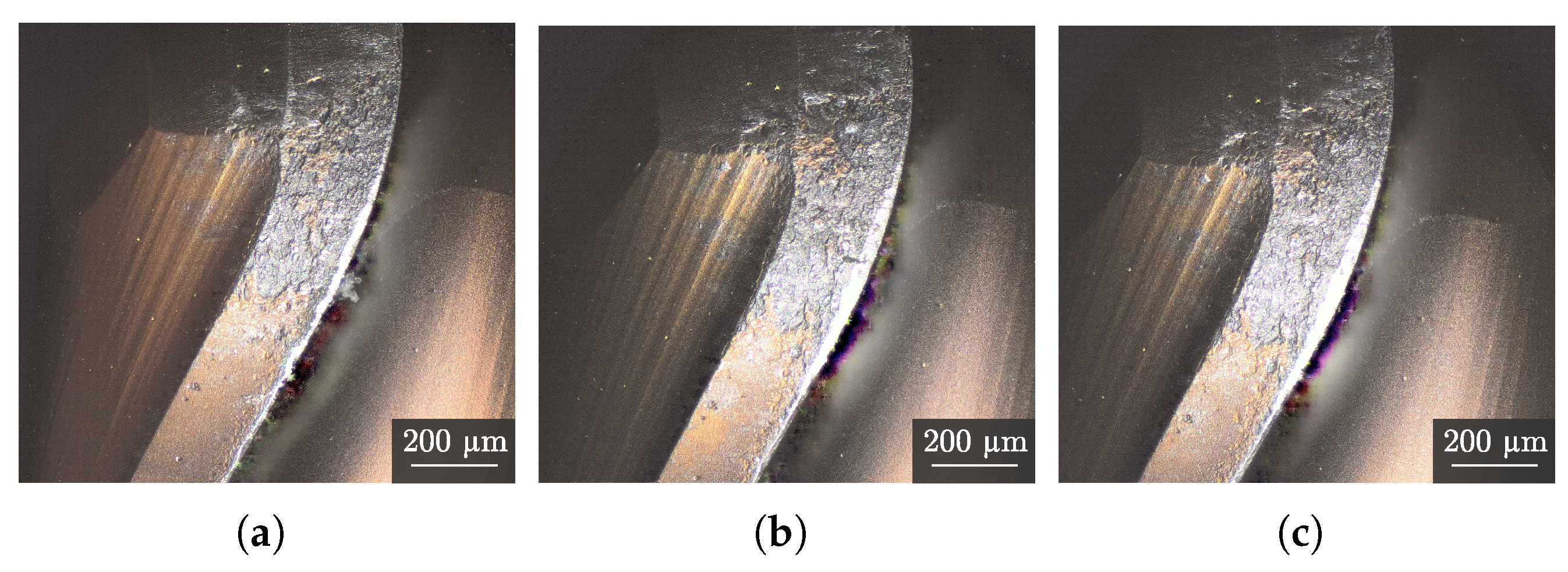
For the milling with the milling path suction, a significant reduction of flank wear is observed, as shown in Figure 5. The flank wear reveals a very constant abrasion, located directly at the point of machining, as the coating is not dissipated at other points of the milling cutter. Small breakages of the flank are observed after a performed milling time of t 3 = 820 min, as depicted in Figure 5c.
Here, the maximum tool life for the roughing process is defined by a flank wear of V B = 200 μm without the occurrence of breakages. Based on this, the maximum tool life is found with t = 505 min for the milling in the powderbed, while employing the milling path suction extends the maximum tool life to t = 810 min.
Analogue to this, the maximum tool life of the semi-finishing process is increased as well, as listed in Table 1. The flank wear is significantly retarded, leading to a maximum tool life of t = 1064 min for the evacuated milling process. In comparison to the milling in the powderbed, an improvement of about 500 min is found. Additionally, it is evident that the PBF-LB/M built surface leads to higher tool wear in comparison to the afore milled surface, prepared by the roughing process. Due to this, the improvement is superior for the semi-finishing process, even though, this milling process faces a hardening of the material surface of the previous performed process with an increase in hardness of about 10%.
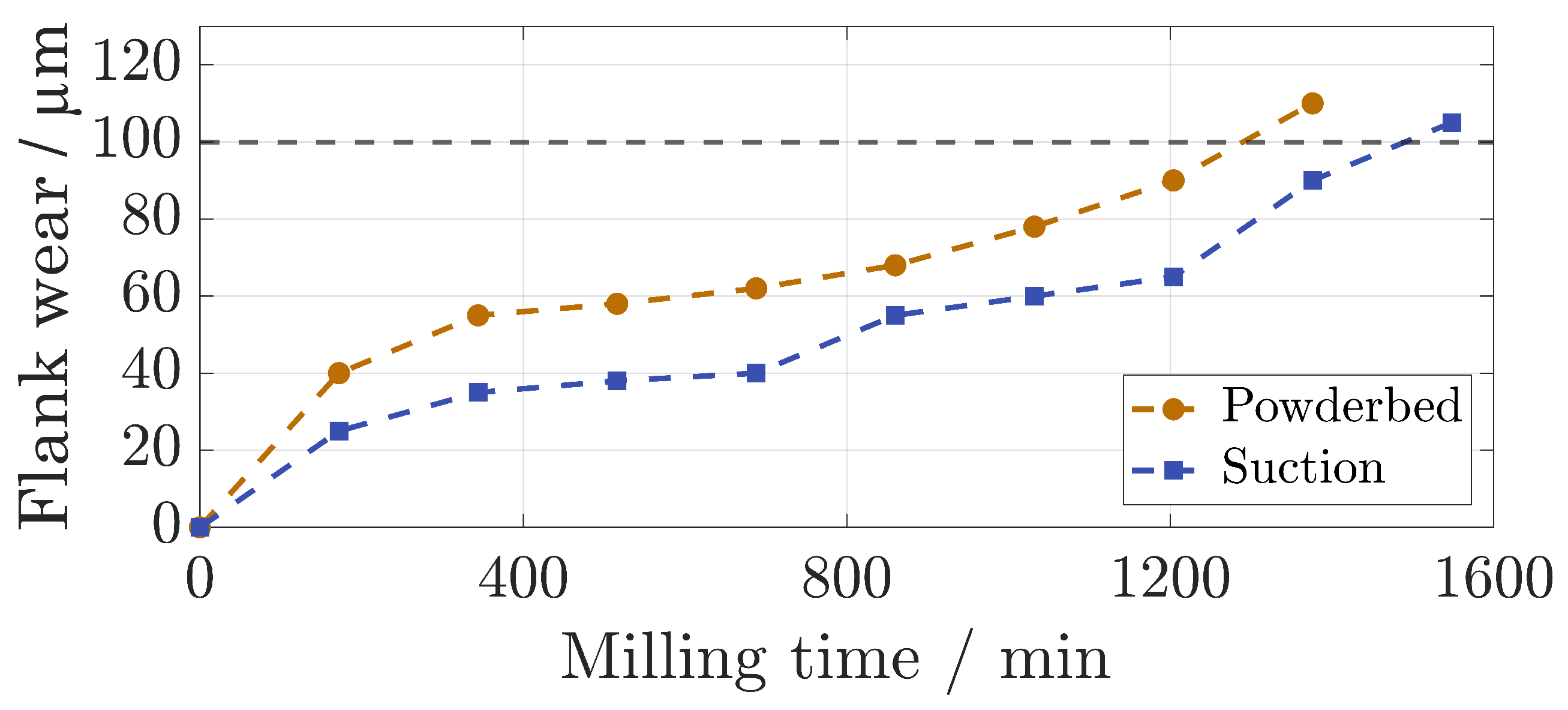
For the finishing process, the tool wear is, in general, decreased significantly by the lower milling width of a e , 3 = 10 μm, as depicted in Figure 6. For both process chains, the characteristic s-shaped development of the flank wear is observed [25]. At first, the break-in period is shown with a rapid initial increase. For the milling in the powderbed, this period is found up to t = 180 min with a flank wear of about V B = 40 μm, respectively, V B = 25 μm for the usage of the milling path suction. Next, the steady wear region is reached with the sharpness of the milling cutter, showing a long period of uniform wear rate (t = 1200 min, resp. t = 1380 min). Finally, the accelerated wear zone is accomplished with an increase in wear up to the final breakage of the flank. For the finishing cutter, the maximum flank wear for an optimal surface quality is defined with V B = 100 μm, as frequently used as a threshold value for ball end mills [26].
Hence, the maximum tool life is found at t max = 1292 min for milling in the powderbed and t max = 1511 min for the evacuated milling process. An increase of the milling tool life of about 220 min , respectively 17%, is made by the milling path suction.
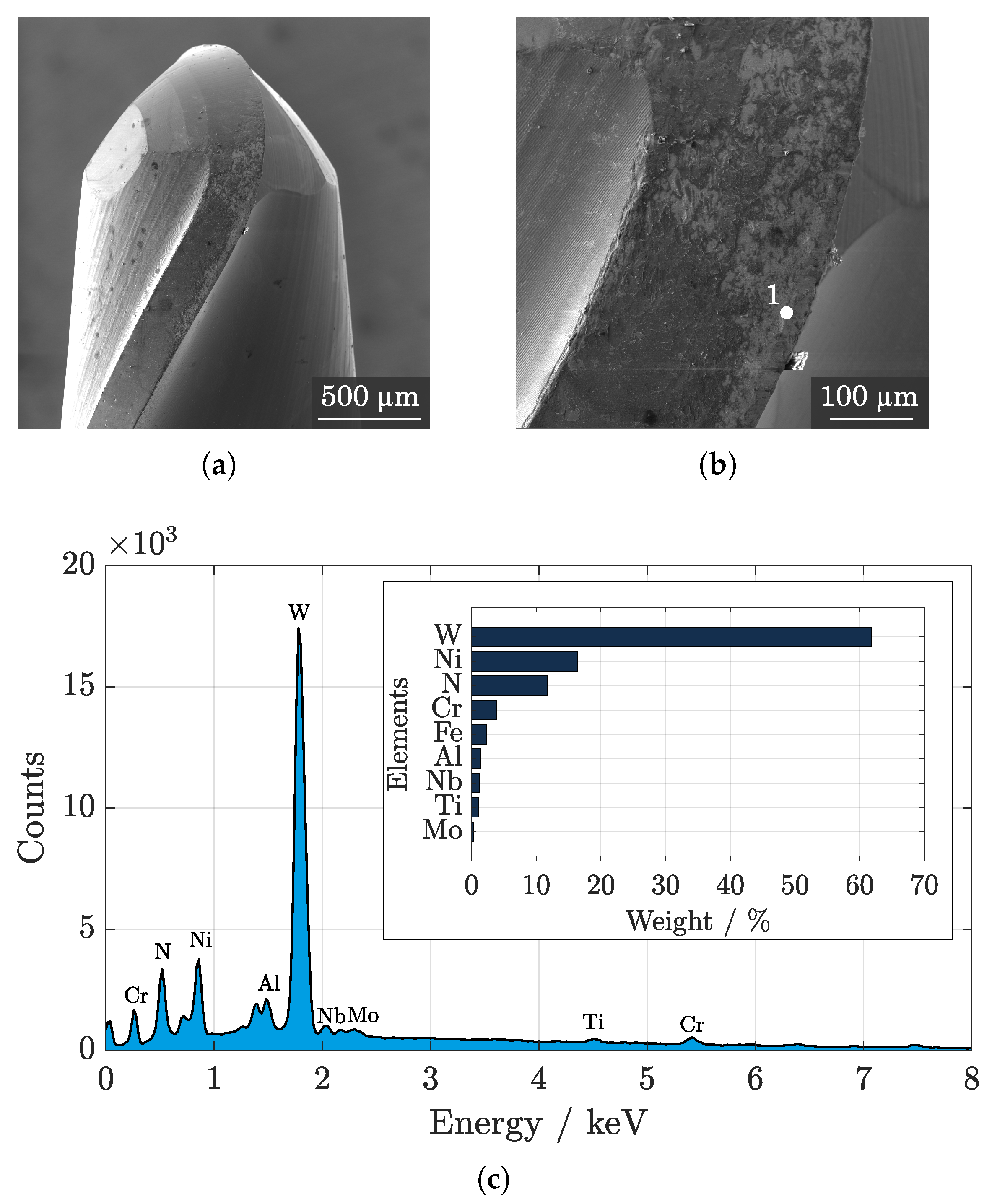
The flank wear of the components is used for the measurement of the tool wear in general, as the different wear mechanisms interfere with each other. A direct identification is very difficult, especially, as the abrasive, adhesive and diffusion mechanisms result in the tool wear, respectively strengthen the wear [27]. For a closer analysis, an element analysis of a roughing cutter with a t = 336 min milling time is shown in Figure 7.
At first, the detachment of the coating of the milling cutter is shown, starting from the point, the cutter enters the material. Next, the cutting edge reveals an adhesive wear, as the main alloying elements are shown. The base materials Nickel and Chromium are observed, accumulating on the milling cutter. Furthermore, abrasive wear is shown, as the coating is detached perpendicularly to the cutting edge and the cutting direction. The backing material of the milling cutter, Tungsten, is shown in the element analysis. Furthermore, the elements of the coating (Ti, Al) are only shown in traces. The main wear characteristics are identified as abrasion and adhesion, in combination leading to a removal of the coating of the milling cutter. In turn, the increase in tool life is likely attributable to a reduction in friction and resulting lower temperatures, as suggested by the experimental results and the comparison of milling within the powderbed and with the usage of the milling path suction. Similarly, the improvement in surface quality may be attributed to the enhanced tool performance upon these reasons, although this interpretation is based on observed trends during the experimental investigation.

3.2. Surface Analysis

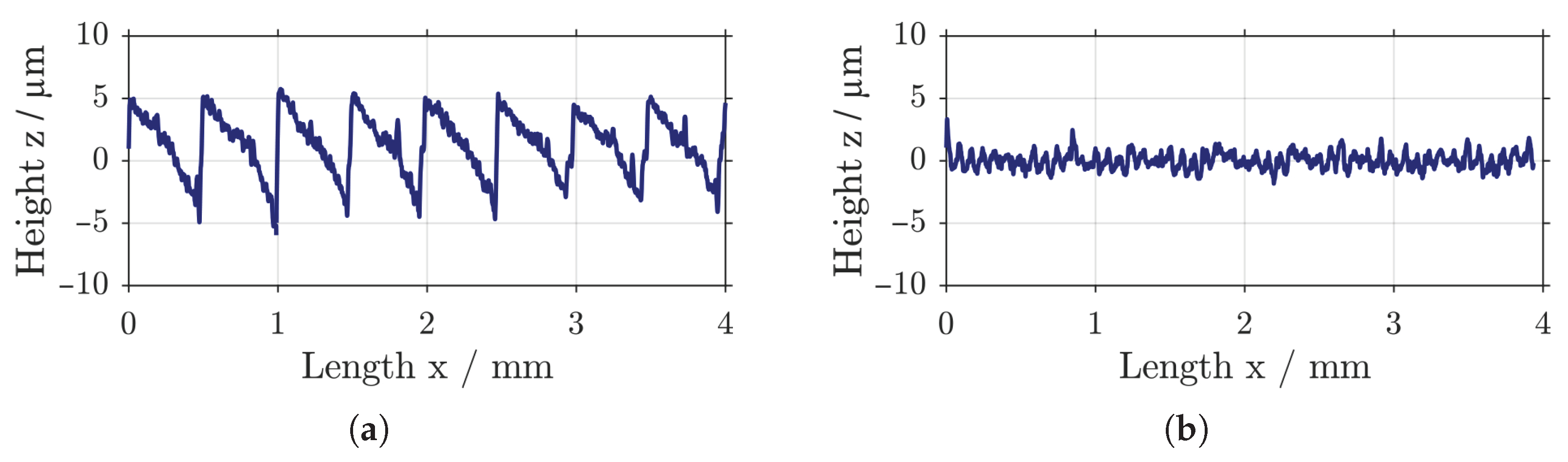
The different milling processes exhibit a gradually improved surface quality with every performed milling step. At first, the roughing process shows a surface improvement in comparison to the sole PBF-LB/M process. The sole PBF-LB/M process shows a surface roughness of R a = 14.6 μm with an irregular surface profile and adhered powder particles. As listed in Table 2, the surface quality is increased to an average surface roughness of R a = 5.38 μm for the milling within the powderbed. For the usage of the milling path suction, a roughness of R a = 4.15 μm is achieved, improving the surface quality for the first milling step by about 1.2 μm. The surface profile in Figure 8a shows a periodic surface, revealing a high valley-to-peak height. Due to the thermal gradient, developing from the top of the component downwards, a distortion develops, causing a geometrical deviation. As the roughing process is working from the top of the component downwards, the thermal distortion is reinforced. Due to this, an elevated peak-to-valley height arises, as shown in Figure 8a. In conformity with the lower tool wear of the semi-finishing process, the surface quality is increased in comparison to the roughing process. For the milling in the powderbed, a surface quality of R a = 3.43 μm is achieved, while the milling path suction enables a surface quality of R a = 3.12 μm. This surface roughness is ensured for the maximum milling time of 1026 min , preparing the surface of the components for the final machining. The final part geometry as well as optimal surface conditions are prepared by the finishing process. The surface roughness is minimized with R a = 0.875 μm for the dry milling within the powder bed. The usage of the milling path suction, again, improves the surface quality, as a superior average roughness of R a = 0.55 μm is achieved within a milling time of 1511 min .
In comparison to the roughing process, a significantly reduced peak-to-valley height is found (Figure 8b). The finishing process, working upwards and additionally sparing the last built layers, avoids the thermal distortion and the consequential geometrical deviation. Additionally, the reduced milling width and the precursory performed milling processes lead to a significant increase in surface quality. In comparison to the high-speed milling of conventionally manufactured IN718 ( R a = 0.35 μm − 0.81 μm [17,18]), the achieved surface roughness is in the same range, even though, a much higher feed per tooth is used. Furthermore, the PBF-LB/M material exhibits enhanced hardness, thereby impeding the machining process once more. It has thus been experimentally demonstrated that the utilisation of suction during milling operations has a clearly positive impact on both the efficiency of the process and the resultant surface roughness.

4. Conclusions

In this study, the tool wear and surface conditions in hybrid additive manufacturing are investigated with respect to the dry milling within the powderbed and the use of a milling path suction. For the analysis of the tool wear, the maximum tool life of the different milling cutters is determined experimentally. Based on a flank wear measurement, a maximum wear rate of V B = 200 μm for the roughing and V B = 100 μm for the finishing process is examined, defining the maximum tool life to ensure a sufficient surface quality. The effect of the powder particles on the wear mechanisms is evaluated, as a comparison of the milling process with the milling path suction and without an evacuation is made. Due to a reduction of tool wear, the maximum tool life is exceeded significantly within the experimental study with a minimum of 60% (roughing cutter), respectively 17% (finishing cutter). The wear mechanisms are evaluated by an element analysis of the cutting edge, revealing an adherence of powder particles and abrasive flank wear. Furthermore, the use of the milling path suction leads to an enhancement of the resulting surface quality, with the surface quality being improved by 37.5% to an average surface roughness of R a = 0.55 μm over a milling time of 1511 min for the finishing process. Following studies may be designed for the purpose of analysing the phase formation of IN718 during the milling process, and the subsequent cold work hardening effect, in addition to the tool wear of the milling cutter. Furthermore, a temperature analysis of the milling process is of basic interest, revealing the difference of dry milling in the powderbed in contrast to the usage of the milling path suction.

Author Contributions

Conceptualization, D.S. and R.H.; methodology, D.S.; validation, D.S.; formal analysis, D.S.; investigation, D.S. and A.S.; data curation, D.S. and A.S.; writing—original draft preparation, D.S.; writing—review and editing, D.S., C.E. and R.H.; visualization, D.S.; supervision, R.H.; project administration, R.H.; funding acquisition, R.H. All authors have read and agreed to the published version of the manuscript.

Funding

This research received no external funding.

Institutional Review Board Statement

Not applicable.

Informed Consent Statement

Not applicable.

Data Availability Statement

The original contributions presented in this study are included in the article. Further inquiries can be directed to the corresponding author.

Conflicts of Interest

The authors declare no conflicts of interest.

References

  1. Zhou, L.; Miller, J.; Vezza, J.; Mayster, M.; Raffay, M.; Justice, Q.; Al Tamimi, Z.; Hansotte, G.; Sunkara, L.D.; Bernat, J. Additive Manufacturing: A Comprehensive Review. Sensors 2024, 24, 2668. [Google Scholar] [CrossRef]
  2. Singh, N.; Siddiqui, H.; Koyalada, B.S.R.; Mandal, A.; Chauhan, V.; Natarajan, S.; Kumar, S.; Goswami, M.; Kumar, S. Recent Advancements in Additive Manufacturing (AM) Techniques: A Forward-Looking Review. Met. Mater. Int. 2023, 29, 2119–2136. [Google Scholar] [CrossRef]
  3. Wang, Y.; Chen, Y.; Wen, C.; Huang, K.; Chen, Z.; Han, B.; Zhang, Q. The process planning for additive and subtractive hybrid manufacturing of powder bed fusion (PBF) process. Mater. Des. 2023, 227, 111732. [Google Scholar] [CrossRef]
  4. Ceccanti, F.; Giorgetti, A.; Arcidiacono, G.; Citti, P. Laser Powder Bed Fusion: A Review on the Design Constraints. Iop Conf. Ser. Mater. Sci. Eng. 2021, 1038, 012065. [Google Scholar] [CrossRef]
  5. Freitas, B.; Richhariya, V.; Silva, M.; Vaz, A.; Lopes, S.F.; Carvalho, Ó. A Review of Hybrid Manufacturing: Integrating Subtractive and Additive Manufacturing. Materials 2025, 18, 4249. [Google Scholar] [CrossRef]
  6. Abeni, A.; Quarto, M.; Ginestra, P.S. Post-processing of powder bed fused stainless steel: Micro-machining and micro-electrical discharge machining. J. Intell. Manuf. 2025, 36, 897–908. [Google Scholar] [CrossRef]
  7. Careri, F.; Imbrogno, S.; Umbrello, D.; Attallah, M.M.; Outeiro, J.; Batista, A.C. Machining and heat treatment as post-processing strategies for Ni-superalloys structures fabricated using direct energy deposition. J. Manuf. Processes 2021, 61, 236–244. [Google Scholar] [CrossRef]
  8. Li, L.; Haghighi, A.; Yang, Y. A novel 6-axis hybrid additive-subtractive manufacturing process: Design and case studies. J. Manuf. Processes 2018, 33, 150–160. [Google Scholar] [CrossRef]
  9. Tapoglou, N.; Clulow, J. Investigation of hybrid manufacturing of stainless steel 316L components using direct energy deposition. Proc. Inst. Mech. Eng. Part B J. Eng. Manuf. 2021, 235, 1633–1643. [Google Scholar] [CrossRef]
  10. Cortina, M.; Arrizubieta, J.I.; Ruiz, J.E.; Ukar, E.; Lamikiz, A. Latest Developments in Industrial Hybrid Machine Tools that Combine Additive and Subtractive Operations. Materials 2018, 11, 2583. [Google Scholar] [CrossRef] [PubMed]
  11. Wanjara, P.; Atabay, S.; Sarafan, S.; Gholipour, J.; Soost, J.; Brochu, M. Overview: Additive/Subtractive Hybrid Manufacturing of Heat Resisting Materials. Key Eng. Mater. 2023, 964, 27–32. [Google Scholar] [CrossRef]
  12. Sommer, D.; Hornung, S.; Esen, C.; Hellmann, R. Design Guide for Hybrid-Additive Manufacturing of Inconel 718 Combining PBF-LB/M and In Situ High-Speed Milling. J. Manuf. Mater. Process. 2025, 9, 88. [Google Scholar] [CrossRef]
  13. Riensche, A.; Carriere, P.; Smoqi, Z.; Menendez, A.; Frigola, P.; Kutsaev, S.; Araujo, A.; Matavalam, N.G.; Rao, P. Application of hybrid laser powder bed fusion additive manufacturing to microwave radio frequency quarter wave cavity resonators. Int. J. Adv. Manuf. Technol. 2023, 124, 619–632. [Google Scholar] [CrossRef]
  14. Tian, X.; Zhao, J.; Zhao, J.; Gong, Z.; Dong, Y. Effect of cutting speed on cutting forces and wear mechanisms in high-speed face milling of Inconel 718 with Sialon ceramic tools. Int. J. Adv. Manuf. Technol. 2013, 69, 2669–2678. [Google Scholar] [CrossRef]
  15. Skordaris, G.; Bouzakis, K.D.; Charalampous, P.; Kotsanis, T.; Bouzakis, E.; Lemmer, O. Effect of structure and residual stresses of diamond coated cemented carbide tools on the film adhesion and developed wear mechanisms in milling. Cirp Ann. 2016, 65, 101–104. [Google Scholar] [CrossRef]
  16. Agarwal, A.; Potthoff, N.; Shah, A.M.; Mears, L.; Wiederkehr, P. Analyzing the evolution of tool wear area in trochoidal milling of Inconel 718 using image processing methodology. Manuf. Lett. 2022, 33, 373–379. [Google Scholar] [CrossRef]
  17. Aslantas, K.; Hasçelik, A.; Erçetin, A.; Danish, M.; Alatrushi, L.K.; Rubaiee, S.; Bin Mahfouz, A. Effect of cutting conditions on tool wear and wear mechanism in micro-milling of additively manufactured titanium alloy. Tribol. Int. 2024, 193, 109340. [Google Scholar] [CrossRef]
  18. Mamedov, A.; Dinc, A.; Guler, M.A.; Demiral, M.; Otkur, M. Tool wear in micromilling: A review. Int. J. Adv. Manuf. Technol. 2025, 137, 47–65. [Google Scholar] [CrossRef]
  19. Xu, L.; Huang, C.; Li, C.; Wang, J.; Liu, H.; Wang, X. Estimation of tool wear and optimization of cutting parameters based on novel ANFIS-PSO method toward intelligent machining. J. Intell. Manuf. 2021, 32, 77–90. [Google Scholar] [CrossRef]
  20. Sugihara, T.; Enomoto, T. Crater and flank wear resistance of cutting tools having micro textured surfaces. Precis. Eng. 2013, 37, 888–896. [Google Scholar] [CrossRef]
  21. Hakami, F.; Pramanik, A.; Basak, A.K. Tool wear and surface quality of metal matrix composites due to machining: A review. Proc. Inst. Mech. Eng. Part B J. Eng. Manuf. 2017, 231, 739–752. [Google Scholar] [CrossRef]
  22. Sommer, D.; Hornung, S.; Esen, C.; Hellmann, R. Surface roughness optimization of hybrid PBF-LB/M-built Inconel 718 using in situ high-speed milling. Int. J. Adv. Manuf. Technol. 2024, 132, 1741–1751. [Google Scholar] [CrossRef]
  23. Sommer, D.; Hornung, S.; Esen, C.; Hellmann, R. In situ high-speed milling and thermal post-processing for the optimization of fatigue behaviour of additive-manufactured IN718 components. J. Mater. Res. 2025, 40, 2388–2401. [Google Scholar] [CrossRef]
  24. Sommer, D.; Pape, D.; Esen, C.; Hellmann, R. Tool Wear and Milling Characteristics for Hybrid Additive Manufacturing Combining Laser Powder Bed Fusion and In Situ High-Speed Milling. Materials 2022, 15, 1236. [Google Scholar] [CrossRef]
  25. Groover, M.P. Fundamental of modern Manufacturing: Materials, Processes, and Systems; John Wiley & Sons: Hoboken, NJ, USA, 2020. [Google Scholar]
  26. Ahmed, Z.; Prickett, P.; Grosvenor, R. Assessing uneven milling cutting tool wear using component measurement. In Proceedings of the 30th International Conference on Condition Monitoring and Diagnostic Engineering Management, Preston, UK, 10–13 July 2017. [Google Scholar]
  27. Klauer-Dobrowolski, K.; Eifler, M.; Kirsch, B.; Seewig, J.; Aurich, J.C. Ball-end micro-milling of material measures: Wear behavior in field use. Int. J. Adv. Manuf. Technol. 2023, 128, 611–623. [Google Scholar] [CrossRef]
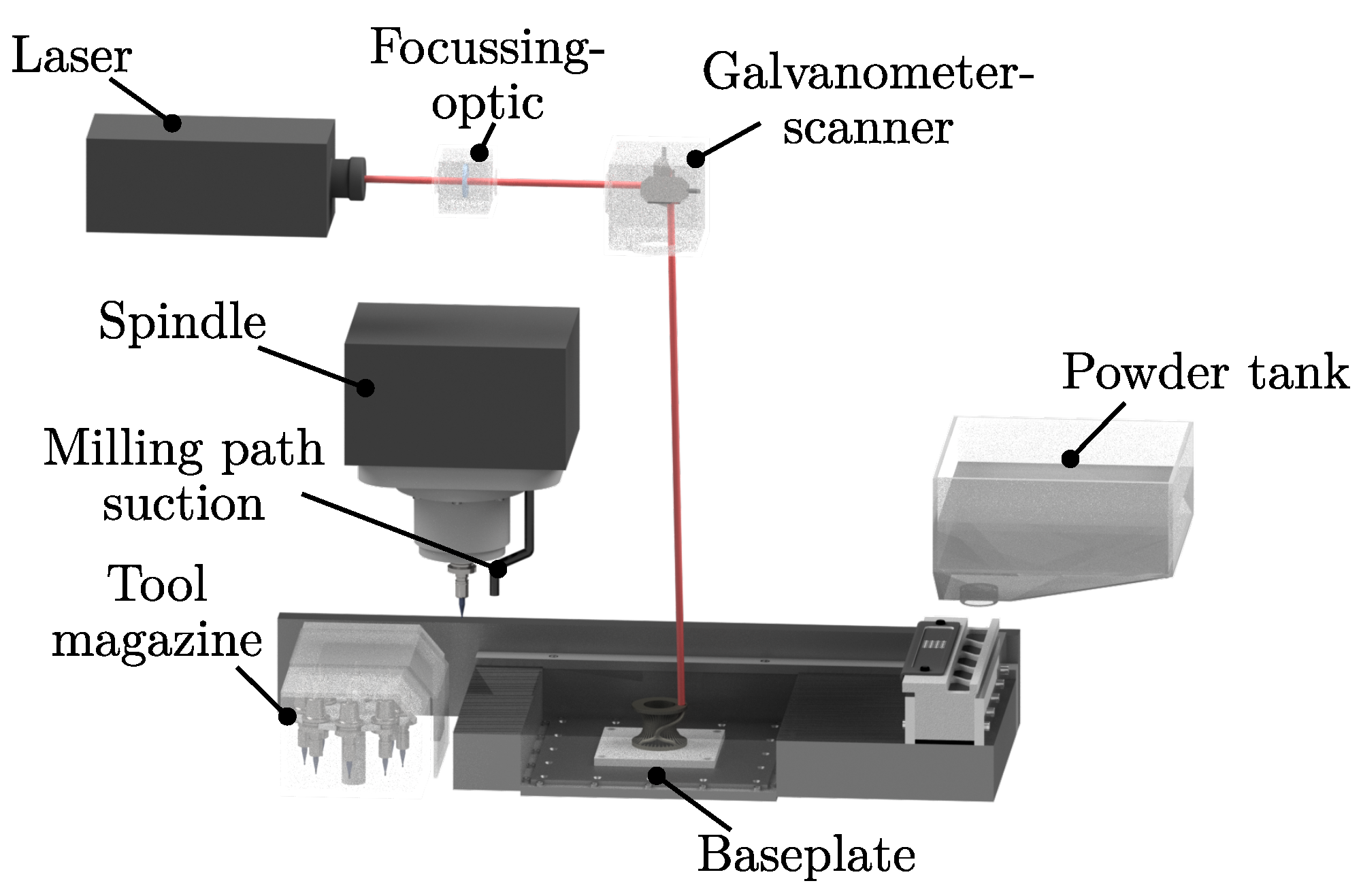
Figure 1. Schematic illustration of the hybrid manufacturing unit, combining PBF-LB/M and high-speed milling.
Machines 14 00466 g001
Figure 2. Three-step milling process, interrupting the PBF-LB/M and optionally including the milling path suction.
Machines 14 00466 g002
Figure 3. Flank wear ( V B ) measurement, perpendicularly to the cutting edge, evaluating the flank wear with a minimum of 20 measurements per cutting edge.
Machines 14 00466 g003
Figure 4. Flank wear development for the machining without milling path suction for the milling times (a) 88 min, (b) 263 min, and (c) 525 min.
Machines 14 00466 g004
Figure 5. Flank wear development for the machining with milling path suction for the milling times (a) 205 min, (b) 615 min, and (c) 820 min.
Machines 14 00466 g005
Figure 6. Flank wear development in accordance to the milling time for the milling within the powderbed and with the usage of the milling path suction.
Machines 14 00466 g006
Figure 7. Evaluation of flank wear mechanisms, showing (a) the milling cutter with a milling time of t = 336 min , (b) the flank wear, and (c) Element analysis of the cutting edge (point 1).
Machines 14 00466 g007
Figure 8. Profile measurements for the (a) roughing process and (b) finishing process, performed with the milling path suction, revealing the significant increase in surface roughness. Length x depicts the build direction of the components, while the height z shows the surface profile.
Machines 14 00466 g008
Table 1. Experimentally defined maximum milling time for the different milling steps, improving the maximum milling time for the machining with the usage of the milling path suction.
Powderbed
tmax/min
Suction
tmax/min
Improvement
Δtmax/min
Roughing505 ± 12810 ± 19305
Semi-finishing560 ± 181064 ± 10504
Finishing1292 ± 891511 ± 42219
Table 2. Surface roughness for the different milling steps, improving the surface quality constantly, using the milling path suction.
Powderbed
Ra/μm
Suction
Ra/μm
Improvement
ΔRa/μm
Roughing5.38 ± 0.894.15 ± 0.621.23
Semi-finishing3.43 ± 0.323.12 ± 0.220.21
Finishing0.88 ± 0.240.55 ± 0.110.33
Disclaimer/Publisher’s Note: The statements, opinions and data contained in all publications are solely those of the individual author(s) and contributor(s) and not of MDPI and/or the editor(s). MDPI and/or the editor(s) disclaim responsibility for any injury to people or property resulting from any ideas, methods, instructions or products referred to in the content.