


Abstract
The increasing demand for energy, rising electricity costs, and the growing need to reduce carbon emissions have driven industries toward the adoption of Renewable Energy Sources (RES) and Energy Storage Systems (ESS). However, selecting the most suitable ESS for industrial peak-shaving applications remains a complex decision involving technical, economic, and operational considerations. This paper proposes a practical and structured methodology for ESS selection that integrates conventional performance criteria with Industry 5.0 (I5.0) requirements, emphasizing sustainability, resilience, and human-centric industrial operation. Unlike existing multi-criteria decision-making approaches, the proposed framework reduces reliance on expert-based weighting, improving transparency and reproducibility. The methodology is implemented in two stages: initial KPI-based shortlisting of technologies, followed by detailed comparative performance analysis. A case study conducted in a European tire manufacturing plant compares lithium-ion batteries and flywheel energy storage systems under different peak-shaving strategies. Lithium-ion batteries demonstrated superior performance, covering approximately 80% of demand peaks compared with the 73% achieved by the flywheel system, confirming the effectiveness of the proposed methodology for practical industrial ESS selection.
1. Introduction
The rise in energy demand has led to increased consumption of coal, oil, and natural gas, the continuous extraction of which has severely reduced fossil fuel reserves, undermining the financial and environmental sustainability of current energy systems [1]. As a result, energy costs are continuously rising, accompanied by instabilities in fossil fuel supply, which negatively impact production costs and industrial competitiveness, simultaneously threatening reliable energy access [2,3]. Additionally, heavy reliance on fossil fuels presents resilience and sustainability issues, including increased CO2 emissions, thereby accelerating climate change [1,2]. As such, the development of sustainable energy systems is crucial for the mitigation of climate change and ensuring reliable access to energy. At the same time, the performance, efficiency, and adaptability of manufacturing systems play a decisive role in shaping both production costs and environmental impact [4]. Efficient energy management has therefore become a critical component of modern manufacturing systems, directly influencing production stability, operational costs, and the competitiveness of industrial processes.
To address these issues, the utilization of Renewable Energy Sources (RES) has become a priority for the industrial sector, to reduce carbon emissions, comply with sustainability-related legislation, and decrease energy costs [1]. In parallel, regulatory frameworks and governmental initiatives at the European level play a crucial role in accelerating the deployment of RES and Energy Storage Systems (ESS). The European Green Deal [5] sets the objective of climate neutrality by 2050, supported by the Fit for 55 package [6], which targets a 55% reduction in greenhouse gas emissions by 2030. The EU Electricity Directive [7] enables energy storage participation in electricity markets, while initiatives such as REPowerEU [8] and RED III [9] accelerate renewable and storage deployment. Additionally, the EU Batteries Regulation [10] establishes lifecycle requirements for battery systems, ensuring safety and sustainability. These regulatory initiatives create strong incentives for the adoption of renewable energy and ESS in industrial environments, increasing the need for structured methodologies to support technology selection and system integration under evolving operational and economic conditions. However, in industrial energy systems, demand often spikes during peak load periods when large amounts of power are needed. These fluctuations significantly affect energy costs, as power charges form the largest portion of industrial electricity bills [11]. Additionally, RES availability is neither constant over time nor aligned with industrial peak loads. To mitigate this, the use of industrial ESS is steadily increasing, supporting sustainable industrial operation while enabling the integration of renewable sources and lowering carbon emissions [12,13].
More specifically, the use of ESS allows industries to store energy during off-peak hours and use it during peak demand, thus reducing demand charges and improving load stability. Additionally, the use of ESS can help avoid oversizing of energy systems and enable cost savings through time-of-use pricing, further enhancing operational efficiency, sustainability, and energy resilience [11,13]. Moreover, traditional peak-shaving strategies, such as shifting production schedules, are difficult to implement in manufacturing environments where process interruptions are undesirable. ESS can provide an effective alternative by discharging stored energy during high-demand periods, reducing peak loads, lowering energy costs, and decreasing reliance on thermal power plants [14].
As the use of ESS expands and the commercialization of new technologies provides more solutions for different energy applications, the strategic decision of selecting an appropriate storage system has become increasingly complex, involving various parameters, as well as high investment costs. The selection and implementation of a specific storage technology should result in an optimal solution that meets several criteria related to system operation, technical specifications, and desired outcomes.
With the transition to Industry 5.0 (I5.0), modern industrial systems require ESS that are not only technically efficient but can also enhance resilience and crisis response, to be compatible with human-centered operations, enabling technologies, and real-time monitoring systems. Incorporating these requirements into the selection process ensures operational reliability, enhances workforce safety, and supports rapid recovery from disruptions, while also enabling seamless integration with smart industrial environments. To address this need, a comprehensive yet practical methodology integrating technical performance and I5.0 requirements is proposed. The proposed framework is designed to support the shortlisting and identification of the most suitable ESS for a given application. The shortlisting is conducted based on specific operational needs, technical specifications, desired outcomes, and Industry 5.0 compliance, while minimizing subjective biases that often arise from expert-weighted decision matrices.
There are a number of existing approaches addressing this complex problem, reflecting a clear industrial need. Existing literature presents methodologies aimed at evaluating and identifying the ESS that best fits the specific operational and technical requirements of different applications. Most of the studies focus on multi-criteria decision-making (MCDM) approaches, which systematically combine multiple performance indicators into structured evaluation frameworks [15,16,17,18]. These methodologies often rely on expert input and weighted decision matrices to prioritize and score alternatives according to their relative importance. While such approaches provide a quantitative basis for selection, they are inherently influenced by subjective judgments, which may introduce bias or limit the reproducibility of results across different contexts. Other methodologies adopt a more holistic or integrative perspective, incorporating critical technical, economic, and socio-environmental factors to identify the ESS option with the highest overall suitability score [18,19,20,21,22]. These approaches expand the evaluation beyond purely technical performance, considering aspects such as economic feasibility, system reliability, and potential operational constraints. The key differences between this study and notable existing ones are summarized in Table 1.
Table 1.
Comparison of Existing ESS Selection Methodologies and Gaps.
To address this challenge, this study proposes a structured and practical methodology for ESS selection that avoids subjective weighting and expert bias, while integrating technical and economic performance indicators with I5.0 requirements in a quantitative manner. The novelty of the proposed framework lies in the elimination of subjective criteria, such as expert-based weighting factors, and the introduction of a fully KPI-driven evaluation process. Unlike existing multi-criteria decision-making approaches, the proposed framework reduces reliance on expert-based weighting, improving transparency and reproducibility. It consists of a two-stage process (Figure 1), including an initial KPI-based screening stage for shortlisting the ESS that meet the requirements of the given case, followed by a simulation-based analysis, utilizing a newly implemented simulation module developed by the authors within a commercial energy management platform. More specifically, in Stage 1, the key technical characteristics of ESS are identified and grouped. These criteria form the basis for defining selection key performance indicators (KPIs), reflecting conventional operational priorities as well as those I5.0–relevant dimensions that can be expressed in measurable terms. Where applicable, ESS technologies are evaluated using absolute performance values and clearly defined qualitative classifications, enabling a transparent and structured comparison. This process results in an initial shortlist of technically and operationally compatible systems for further contextual assessment. In Stage 2, an in-depth analysis and comparison of the shortlisted ESS is conducted, tailored to the specific industrial context.
Figure 1.
Framework description.
The applicability of the proposed framework is demonstrated through an industrial case study for the selection of an ESS that meets the requirements of a European tire manufacturing plant, including peak-shaving under two different operational strategies. Two ESS technologies are selected following Stage 1 of the proposed approach, which are evaluated through simulation using the developed software tool (Stage 2). Specifically, Li-ion batteries and flywheel energy storage systems (FES) are selected as the most suitable candidates after completion of the filtering stage, and their effectiveness for peak-shaving in an industrial environment is quantitatively evaluated through simulation (Stage 2). By combining KPI-driven evaluation, structured shortlisting, and I5.0-compliant analysis, the proposed framework offers a simplified yet comprehensive procedure for industrial ESS selection that addresses the growing need for technologies compatible with human-centric, resilient, and digitally integrated industrial environments. Additionally, the introduced framework contributes to improving the monitoring, optimization, and operational efficiency of energy infrastructure in manufacturing facilities.
The contribution of this work lies in the development of a structured, application-oriented framework for ESS selection that reduces reliance on subjective, expert-driven weighting and instead follows a KPI-based screening and evaluation process. In contrast to conventional multi-criteria decision-making approaches, which often depend on predefined weighting schemes, the proposed methodology prioritizes the use of measurable performance indicators and transparent decision rules. In addition, the framework extends beyond purely technical and economic criteria by systematically incorporating I5.0-related dimensions, including reliability, resilience, and workforce integration, through measurable indicators where applicable and structured evaluation criteria. The methodology is further supported by a simulation-based evaluation (Stage 2), utilizing a newly developed software module. This enables the comparative assessment of shortlisted technologies under realistic operational conditions using high-resolution industrial data, through a practical industrial case study demonstrating peak-shaving performance of Li-ion and FES.
This study is organized as follows: In Section 2, the different types of ESS are briefly presented, including strengths and weaknesses of each type. They are categorized and classified based on technical, time-related, and economic characteristics. The methodology of the framework is presented in Section 3, and in Section 4, the developed digital tool is analyzed. The description of the case study is presented in Section 5, followed by the results and discussion in Section 6 and Section 7, respectively. Finally, the conclusions are presented in Section 8.
2. Types of Energy Storage Systems
ESS can be classified into five main categories based on the form of energy they use: (1) mechanical, (2) electrochemical, (3) electrostatic and magnetic, (4) thermal, and (5) chemical. The classification is illustrated in Figure 2.
Figure 2.
Energy storage systems classification [17,18,19,20,21,22,23,24,25,26,27,28,29,30,31,32,33,34].
Electrochemical Storage Systems: Lead–acid batteries use lead-based electrodes and sulfuric acid electrolyte. They are one of the most widely used energy storage systems, due to important advantages: they offer moderate efficiency (70–80%) and fast response times, good charge retention, robustness, a wide operational temperature range, long service life (up to 10–15 years), along with relatively low capital costs. Li-ion batteries typically use a lithium metal oxide cathode with organic electrolyte solutions containing lithium salts. They provide high energy density, efficiency, and long lifespan, with fast response times. Their main limitations are the high initial cost, sensitivity to depth of discharge, and risks associated with the thermal stability of electrolytes, which can degrade into toxic byproducts. They are widely used in portable electronics, electric vehicles, renewable energy integration, and microgrid systems. Lithium–sulfur batteries (using a lithium metal anode and a sulfur–carbon composite cathode, with a liquid electrolyte containing lithium salts) offer very high energy density and low material cost, but are still limited by low cycle life, stability challenges, and reduced efficiency compared to Li-ion systems. They are being developed for applications requiring lightweight, high-capacity storage, such as electric vehicles and renewable energy backup. Nickel-based batteries (e.g., NiCd, NiZn) provide reliability and tolerance to harsh conditions but have lower energy density and environmental or lifecycle limitations. NiCd batteries are used in backup power systems, aviation, and railways, where reliability is prioritized over energy density. NiZn batteries have higher energy density than NiCd, are free from toxic cadmium, and have lower environmental impacts; they are still being explored for electric vehicles, renewable integration, and other high-energy applications, but they suffer from a limited life cycle and issues with zinc electrode stability. Sodium–sulfur battery energy storage systems (NaS BES) operate at high temperatures and offer high energy density and long life, but require complex thermal management and present safety concerns. Flow batteries offer long cycle life and scalable capacity, but have lower energy density, high upfront capital costs, and the electrolytes can be highly corrosive compared to conventional batteries. They are suited for large-scale renewable integration, peak shaving, and applications requiring long-duration energy storage in microgrids [23,24,25,35].
Electrostatic and Magnetic Storage Systems: Supercapacitors provide very high power density, fast charge–discharge, and long cycle life, but exhibit high self-discharge and low energy density. They are suited for applications requiring short bursts of high power, such as hybrid vehicle engine cranking, microgrid power leveling, frequency support, and backup during voltage sags. Superconducting Magnetic Energy Storage (SMES) systems store energy in superconducting coils and offer very high efficiency and near-instant response, but are limited by high cost and complex cooling requirements [23,24].
Mechanical Storage Systems: Flywheel Energy Storage (FES) stores energy as rotational kinetic energy, offering high power density, fast response, and long cycle life, but with high self-discharge and limited energy capacity. They are most suitable for applications such as frequency regulation, power quality improvement, bridging power during short outages, and integration in microgrids for fast dynamic support. Pumped Hydro Energy Storage (PHES) provides large-scale and long-duration storage with high efficiency and long lifetime, but requires significant infrastructure and suitable geography. PHES is mainly used for load balancing, renewable integration, and providing reserve capacity in large-scale grids. Compressed Air Energy Storage (CAES) enables large-scale storage with relatively low cost, though it is highly site-dependent and less flexible. Applications include grid support, renewable integration, and long-duration backup power [23,24,25].
Thermal Energy Storage Systems (TESS) store energy as heat using sensible, latent, or thermochemical processes. They offer scalability and low cost but suffer from thermal losses and lower round-trip efficiency. TESS are applied in solar thermal power plants, building heating and cooling, district heating, and industrial processes [23,24].
Chemical Storage Systems: Fuel cells convert chemical energy into electricity with high efficiency and modular operation, but are limited by cost and fuel infrastructure requirements. Common types include proton exchange membrane fuel cells (PEMFCs), solid oxide fuel cells (SOFCs), and molten carbonate fuel cells (MCFCs), each with different temperature ranges and efficiencies. They are used in stationary power generation, microgrids, electric vehicles, and portable applications. Hydrogen storage enables large-scale and long-duration energy storage, though it exhibits low round-trip efficiency and requires complex infrastructure [17,18,19]. Their applications range from seasonal grid balancing to transport and industry. ESS Technical and Economic Characteristics
ESS technologies exhibit significant variability in technical characteristics, including power capacity, energy density, efficiency, and lifetime. As summarized in Table 2, Li-ion batteries combine high efficiency and energy density, while flow batteries offer longer lifetimes and scalability. These characteristics make Li-ion batteries suitable for both grid-scale and distributed applications [25,26,27]. Pb-acid BES are characterized by low specific energy and limited cycle life, which restricts their applicability in high-cycling scenarios despite their technological maturity [25,26]. PSB Flow, VRB Flow, and ZnBr Flow BES provide lower specific power but higher lifetime, indicating their suitability for long-term energy management and renewable integration [26]. Technologies such as supercapacitors and SMES provide extremely high power density and rapid response but lower energy capacity, making them ideal for short-duration, high-power applications like frequency regulation and transient stability support [28]. PHES and CAES are suitable for large-scale, long-duration applications due to their very high energy storage capacity, though they feature lower power density, slower response times, and site-specific constraints, reflecting the trade-off between capacity and operational flexibility in energy storage system design [29].
The operational behavior of ESS is further defined by charge/discharge duration and response time (Table 3). Fast-response technologies such as Li-ion, FES, and SMES are suitable for dynamic applications [25,26,27,28,29,30], while flow batteries, PHES, and CAES, even though they offer enormous storage capacity, operate with slower response times and longer discharge durations, highlighting their use for long-term energy management, seasonal storage, and backup applications [26,31,32].
Table 2.
ESS technical characteristics [23,24,25,26,27,33,34].
Table 3.
ESS time-related characteristics [25,26,27].
ESS technologies are associated with relatively high initial investment costs; however, these costs are decreasing with technological maturity [36]. As shown in Figure 3, Li-ion batteries exhibit relatively high capital cost but strong performance, while PHES and CAES offer lower cost per kW at a large scale but require significant infrastructure. High-power technologies such as SMES and supercapacitors remain cost-intensive and are typically used in specialized applications.
Figure 3.
ESS capital cost range [25,37,38].
3. Methodology
3.1. Framework for Selecting the Most Suitable Energy Storage System
The selection of a suitable ESS for manufacturing facilities requires a structured approach, based on several criteria. In this section, a framework to facilitate such a selection is presented, including different technical, operational, economic, and environmental criteria. The proposed framework provides easy-to-follow steps for identifying, evaluating, and ranking ESS technologies. It can be used for different types of applications, each with specific goals, contributing to a systematization of the selection procedure. The process is based on the characteristics of the systems as well as the specifications of different applications that can be met in different industrial settings. For the selection of the most suitable ESS, the proposed framework consists of two stages and eight steps, for the selection of the most suitable ESS for different industrial applications. The first stage (Stage 1) of this process is the elimination of the ESS solutions that are clearly unsuitable. The remaining systems are further examined in the second stage (Stage 2), through simple simulations, maintaining the simplicity and industrial appeal of the proposed approach. Figure 4 illustrates the proposed decision-making framework for selecting the most suitable ESS technology based on technical, operational, and economic criteria. The process follows a structured, yet simple approach composed of eight main steps, allowing systematic evaluation and comparison of potential ESS technologies.
Figure 4.
Decision-making framework for selecting Energy Storage System (ESS) technology.
As shown in Figure 4, the proposed framework consists of two stages and eight steps. The first stage (Stage 1) aims to identify and shortlist the technologies applicable to the examined case, producing a set of feasible candidates, while the second stage (Stage 2) focuses on the final selection through an in-depth analysis and comparison of the shortlisted technologies. To achieve this, the following steps, depicted in Figure 4, are followed. The process begins with the definition of the problem (Step 1), followed by the selection of criteria to eliminate non-applicable technologies (Step 2). Subsequently, available technologies are identified (Step 3), and their compliance with the defined criteria is assessed (Step 4). This assessment is repeated for all available technologies (Step 5), leading to the shortlisting of the most suitable candidates (Step 6), which completes the first stage. In Stage 2, simulations and detailed analyses are conducted for all shortlisted technologies (Step 7). The results are then compared, and the most suitable option is validated based on the objectives of the ESS implementation (Step 8). If the selected technology meets the defined requirements, it is adopted; otherwise, the requirements or the scope of the ESS implementation should be redefined.
In Stage 1, the identification and shortlisting of the most suitable technologies are performed by following Steps 1 to 6, as described in detail below. The first Step involves the identification of the problem, the desired outcome of the implementation of an ESS, and the main strategy to be followed.
In Step 2, the functional purpose of the ESS within the power system, such as frequency regulation, peak shaving, renewable integration, or resilience enhancement, is defined. Defining the application context allows the specification of operational parameters, including required power capacity, energy rating, discharge duration, and response time. Once the target application is established, the operational requirements are specified, including parameters such as power capacity, discharge duration, response time, and desired reliability levels [20,22]. Depending on the defined requirements and constraints, the filtering may result in a varying number of candidate technologies, ranging from a single option to multiple feasible alternatives. The operational requirements of the ESS are defined, and the corresponding evaluation criteria are selected. The process begins by specifying the system’s technical and functional needs, such as rated power, required energy capacity, discharge duration, response time, and lifetime expectations. These requirements establish the performance boundaries that the ESS must satisfy within the target application. Based on these requirements, appropriate selection criteria are identified to ensure that the evaluation framework reflects the system’s actual operational needs, allowing only technologies capable of meeting these specifications to progress to subsequent analysis phases. The goal is to match the technical profile of each technology with the operational requirements of the target application. Studies highlight the importance of this alignment to ensure both functional adequacy and system reliability [39].
In Figure 5, a comprehensive outline of the criteria for selecting an ESS and the corresponding KPIs is provided, categorized into technical, economic, and environmental aspects. Figure 5 serves as a foundational tool for evaluating and comparing different ESS technologies based on a comprehensive set of KPIs, created to capture the different dimensions of system performance, including cost, I5.0 alignment, impact on sustainability, resilience, and human-centricity. By systematically assessing each KPI, stakeholders can make informed decisions tailored to specific application needs and constraints [15,16,17,18]. It should be noted that the proposed framework is inherently modular and adaptable, allowing the inclusion of additional criteria depending on the specific characteristics of the application. These may include site-dependent factors such as transportation costs, land preparation requirements, proximity to grid connection points, availability of local technical support, and regulatory or policy-driven constraints.
Figure 5.
Key criteria and KPIs for selecting an ESS [15,16,17,18].
The technical characteristics of an ESS are commonly expressed through several KPIs, which are critical for technology selection and system design. Storage Capacity refers to the total amount of energy that an ESS can store and subsequently deliver under specified operating conditions. It is a fundamental measure for determining whether the system can satisfy the required energy supply duration in a given application [23]. Energy density quantifies the amount of energy stored per unit mass (Wh/kg) or volume (Wh/L). High energy density is essential for minimizing system footprint and enabling compact installations, particularly in space-constrained industrial environments. This KPI serves as a key differentiator among ESS technologies, with chemical-based batteries generally offering higher energy density than mechanical or thermal storage systems [37].
Round-trip efficiency (ηrt) defines the proportion of stored energy that can be recovered relative to the energy initially stored. It is expressed as:
High round-trip efficiency reduces energy losses during charge–discharge cycles and improves the overall delivered energy, thereby impacting operational costs and sustainability [26]. Response time characterizes the speed at which an ESS can deliver its rated power. Fast response is particularly critical for applications such as peak shaving, frequency regulation, and grid stabilization, where supply must rapidly match transient demand or generation fluctuations [25]. Self-discharge rate measures the proportion of stored energy lost over time when the system is idle. Systems with lower self-discharge rates maintain higher standby readiness and ensure better utilization of stored energy, which is especially important for backup and resilience-oriented applications [37].
Capital Expenditure (CapEx) represents the initial investment required to acquire and install an energy storage system, typically expressed per unit of storage capacity (€/kWh or €/kW). CapEx is a critical KPI for evaluating the economic feasibility of ESS technologies and is often used in combination with operational costs and levelized cost metrics to guide investment decisions [26]. Operation and maintenance (O&M) cost quantifies the recurring annual expenses associated with operating, maintaining, and servicing the ESS over its operational lifetime. It can be expressed per unit of power (€/kW/year) or per unit of energy capacity (€/kWh/year). O&M costs capture the long-term economic impact of ESS operation, including maintenance labor, parts replacement, system monitoring, and ancillary support services [26].
Levelized cost of storage (LCOS) quantifies the total cost of delivering one unit of energy from an energy storage system over its entire operational lifetime. It accounts for both the CapEx and the ongoing O&M costs, discounted over time to reflect the time value of money. Mathematically, it is expressed as:
where is the upfront capital cost, is the operational cost in year t, is the energy delivered in year t, r is the discount rate, and n is the system lifetime. The Levelized cost of storage () is a crucial KPI because it enables economic comparison between different ESS technologies, taking into account variations in efficiency, lifetime, and maintenance requirements. It is particularly valuable in strategic decision-making for industrial and grid-scale energy storage projects, guiding investment and technology selection [40].
Lifetime/Cycle life refers to the duration over which an ESS can reliably store and deliver energy, either expressed as operational years or the number of full charge/discharge cycles until the system’s capacity falls below a predefined threshold. Longer lifetimes reduce replacement costs while improving economic viability, making this KPI crucial for both grid-scale and industrial applications [26,31].
Environmental KPIs address the ecological and sustainability aspects of ESS technologies. Environmental impact can describe the overall footprint throughout the system’s lifecycle, from cradle to grave, including raw material extraction, manufacturing, operation, and end-of-life management [41]. Common LCA indicators include global warming potential, acidification, and resource depletion [23,25]. CO2 Intensity quantifies the greenhouse gas emissions (kg CO2 equivalent) per unit of delivered energy across the system’s lifecycle. It is particularly relevant in low-carbon industrial applications and when assessing compliance with carbon reduction targets [42]. Recycling/End-of-Life Recoverability () measures the proportion of system materials that can be recovered and reused at end-of-life:
High recoverability supports circular economy objectives and reduces the environmental footprint, enhancing sustainability in industrial deployment [12,43]. Land Use describes the physical footprint required by the ESS, expressed per unit of energy or power (m2/MWh or m2/MW). This KPI can influence technology choice between compact battery systems and larger mechanical or thermal storage solutions [33,37].
In the context of the industrial transition and I5.0, ESS selection needs to extend beyond strict technical or economic characteristics to encompass additional criteria. The new criteria that should be taken into consideration must ensure human-centricity and resilience across all of the industry’s operations. I5.0-related dimensions are incorporated into the framework through measurable indicators where applicable, complemented by structured evaluation criteria for aspects that are inherently context-dependent. To formalize the decision-making process and improve methodological transparency, key performance indicators and Industry 5.0-related criteria are expressed through Equations (4)–(9), which enable consistent and quantifiable comparison between the different ESS technologies. Safety/Risk evaluates the likelihood and severity of hazardous events. Risk assessment models often combine probability and impact metrics to quantify system safety. In line with risk-based engineering approaches, risk can be expressed as [44]:
where represents the risk level, the probability of occurrence of a hazardous event, and the consequence or severity, such as economic loss, downtime, or safety impact. This formulation is widely used in process industries and energy systems to evaluate hazardous scenarios and guide technology selection. This KPI is particularly important for battery-based systems, where operational hazards can have severe consequences [45].
Reliability refers to the ability of an ESS to perform without failures over time. Reliability can be measured by calculating the mean time between failures (MTBF), the mean time needed for repair, the system availability, or failure rates as described below. High reliability is essential in industrial processes requiring continuous and uninterrupted operation. Core reliability indicators can be derived from operational data [46,47]. More specifically, the Mean Time Between Failures (MTBF) is defined as [47]:
where represents the total operating time and the number of failures observed. MTBF provides an estimate of the average time interval between consecutive failures. The Mean Time to Repair (MTTR) is defined as [47]:
where denotes the total downtime required for corrective maintenance and the number of failures. MTTR is the mean time between failures and reflects the maintainability of the system and the efficiency of repair processes. For systems characterized by a constant failure rate, the reliability function is expressed as [47]:
where is the probability of failure-free operation up to time and is the failure rate. The relationship between failure rate and MTBF is given by , assuming an exponential failure distribution. In addition, system availability is defined as [46]:
where denotes the steady state availability of the system, and is the mean time needed for repair. These formulations collectively describe the reliability, maintainability, and availability characteristics of the ESS and are widely used in power system reliability analysis.
Workforce integration evaluates how well an ESS supports human-centric operations, aligning with the principles of Industry 5.0. This includes the human–machine interfaces, transparency of system operations, operator training requirements, and the overall ease of collaboration between operators and the ESS. High workforce integration ensures that operators can interact with the system safely and efficiently. In practice, workforce integration can be quantified using measurable performance indicators such as task completion time and training effort. Task completion time reflects how quickly operators can perform essential functions, both operational actions (e.g., system start/stop, mode changes) and maintenance tasks (e.g., routine inspections, component swaps). Shorter task times are indicative of intuitive interfaces and efficient procedures, reducing cognitive and physical workload, which is consistent with the objectives of human-centric design in industrial systems [46,48]. Similarly, training hours required for achieving and maintaining competence in ESS operation and maintenance can be used as a proxy for usability and workforce integration. Lower training time indicates clearer system logic, better documentation, and more accessible interaction paradigms, all of which support safe and efficient collaboration between operators and ESS technologies [47,49]. Assessment can be carried out using structured qualitative evaluations, such as operator surveys, expert assessments, and standardized human factors metrics, combined with semi-quantitative scoring of sub-elements like interface clarity, automation support, and training adequacy [50,51].
Outage recovery capacity evaluates how effectively an ESS contributes to the overall resilience of an industrial facility, specifically its ability to maintain or restore operations following unexpected disruptions. This KPI emphasizes the role of the storage system not just as a backup source of power, but as an enabler of operational continuity, ensuring that production lines, critical equipment, and control systems can resume normal functioning quickly after events such as power outages, grid disturbances, or equipment failures. Different ESS technologies offer varying levels of resilience. Evaluating this KPI, therefore, requires a holistic perspective that considers not only the inherent reliability and operational flexibility of the ESS itself, but also the degree to which it supports rapid recovery of the broader industrial process. Following Ma et al. (2025) [52], resilience can be quantified by incorporating two key dimensions: robustness and adaptive capacity. System resilience (Re) is defined as the ratio of system strength to the applied load, expressed mathematically as [52]:
where represents the time when the event occurs, denotes the time of failure, and indicates the recovery time. corresponds to the duration of the failure, while represents the recovery duration. The factors and stand for robustness and redundancy, respectively. This formulation is particularly comprehensive for ESS evaluation because it integrates both system reliability and sustained recovery strategies. By introducing and , the metric captures the balance between robustness and redundancy as well as the adaptive capacity of the system relative to recovery speed. Assessment of outage recovery capacity can be performed using scenario-based simulations of disruptions and historical reliability data. By incorporating these considerations, this KPI ensures that ESS selection is aligned with the facility’s resilience objectives. This approach allows ESS technologies to be evaluated not only based on their inherent reliability but also on their ability to support operational continuity and resilience objectives across the broader industrial process [49,52,53].
Adaptability/Compatibility (digital interoperability) measures the capacity of an ESS to integrate seamlessly with I5.0-enabling technologies, including digital twins, Internet of Things (IoT) platforms, collaborative robotics, and advanced control systems. This KPI ensures that the ESS can evolve alongside emerging digital infrastructure, support predictive analytics, and facilitate human–machine collaboration in a connected factory or microgrid environment. In practical industrial environments, interoperability is strongly linked to the ability of the ESS to communicate and exchange data with existing energy management systems, supervisory control and data acquisition systems, and factory automation platforms. Therefore, this KPI can be evaluated based on whether the system supports industrial communication protocols such as Modbus Transmission Control Protocol (TCP), enables secure and platform-independent data exchange through OPC UA, and provides application programming interfaces that facilitate integration with digital platforms and energy management systems. Furthermore, compatibility with supervisory control and energy management architectures ensures that the ESS can operate as an integrated component of the broader cyber-physical system, enabling real-time monitoring, control, and optimization of energy flows. These capabilities are essential for I5.0 environments, where energy systems must operate within interconnected, data-driven industrial ecosystems. Assessment typically involves evaluating technical documentation, integration tests, and expert assessments to determine the readiness of the system to operate in digitally connected industrial environments [54].
In the present case study, I5.0-related dimensions influenced the shortlisting phase primarily through safety constraints associated with industrial processes and requirements linked to the facility’s energy management infrastructure.
Step 3 involves the identification of the available technologies. The technologies can be categorized by specifying whether they are commercially available, available at a pilot stage, or tailor-made solutions. Also, the parameters related to the place of the installation or the local markets can have a significant role, depending on the case examined.
At Steps 4 and 5, the framework includes an initial assessment based on the selected criteria and requirements of the previous step and an evaluation loop, allowing for the consideration of additional candidate ESS technologies, in order to narrow down the available technologies.
During Step 6, the technologies that satisfy the defined criteria are shortlisted based on their previous results. Subsequently, for Step 7, a techno-economic analysis is conducted to simulate system performance and assess the financial feasibility across the shortlisted technologies [18,22]. Following the simulation phase, the selected storage technologies are compared in terms of both technical and economic performance indicators. The results are then validated during Step 8 and verified to ensure the suitability of the proposed ESS for the intended application.
Finally, the process concludes with the final selection of the optimal ESS technology, representing the most suitable solution considering efficiency, cost, scalability, and operational compatibility. This framework provides a comprehensive and adaptable methodology for the systematic evaluation and selection of energy storage technologies in both grid-connected and isolated applications.
3.2. Simulation Modeling
To formalize a simulation framework for the in-depth comparison of the shortlisted technologies, the core mathematical relationships and constraints underlying the energy system are defined. The system is simulated in discrete time steps, with a fixed temporal resolution, representing the evolution of supply, demand, and storage states over time. The simulation module utilized in this study has been developed by the authors within a commercial energy management platform (UPKIP [55]) and is currently not available as a standalone published software tool. Therefore, the methodological description provided in this section focuses on the underlying modeling approach and simulation logic rather than on a specific software implementation.
The energy produced by a renewable energy system () of a given installed capacity is typically expressed as [56]:
The parameters are defined as follows: represents the total power consumed, measured in either kW or MW. denotes the time period in hours, such as 8760 h for a full year. stands for the capacity factor, expressed as a decimal between 0 and 1. indicates technical availability, represented as a decimal reflecting the percentage uptime. The sizing of the energy storage system installations () is given by the following formula [13]:
The parameters are defined as follows: represents the energy required per hour, measured in MWh. indicates the desired hours of autonomy, and denotes the total round-trip efficiency of the energy system. stands for the Depth of Discharge.
The energy system is simulated in discrete time steps, with a fixed temporal resolution representing the evolution of supply, demand, and storage states over time. At each time step (), the fundamental energy balance equation ensures that the sum of all energy inputs equals the total demand [57]:
Here, is the grid power supplied, is the photovoltaic generation, is the power exchanged by the -th storage unit, is the total number of the different energy storage systems used, and is the system load at time step . This generalized energy balance forms the basis of time-series energy system modeling. For each energy storage unit, the state of charge (SoC) evolves according to the net charging and discharging flows, taking into account efficiency (round-trip or one-way, based on the borders of the system considered) [58]:
The is the state of charge of the -th energy storage system used and is bound by minimum and maximum operational limits, and is the time step duration in seconds. Charging/discharging powers are constrained by the rated capabilities of the storage technology:
where ηi is the round-trip efficiency, is the capacity of the storage unit, and j is the time step. These storage dynamics and constraints are representative of common approaches to modeling storage in electrical energy systems. Together, these equations provide a structured mathematical foundation for the simulation framework, linking physical energy balances, storage behavior, system constraints, and optimization goals within a unified time-series modeling context.
In order to ensure the credibility of the simulation results, the consistency of the implemented model was validated utilizing using recorded telemetry data of the baseline system. The simulated energy flows, demand profiles, and system responses were verified to follow the same trends and operational constraints observed in the real system. As such, the model can be used to provide a reliable comparative assessment of alternative configurations under consistent and realistic operating conditions.
4. Software Tool Development
Although storage systems may vary, and selecting and configuring them for optimal performance is challenging, the tool created by Upkip provides a comprehensive, theoretically grounded simulation tool that enables enterprises to assess system behavior and determine the most suitable technology and configuration for their specific scenarios. To support Stage 2 of the proposed ESS selection methodology, a dedicated simulation tool developed by Upkip was employed. Following the initial screening phase, during which clearly unsuitable ESS technologies are eliminated based on fundamental technical and operational constraints, the remaining candidate systems are further examined through simplified, yet representative, simulation-based analysis. The selected tool provides a practical and industrially oriented means of evaluating shortlisted ESS technologies under realistic operating conditions, enabling comparative assessment of their technical performance, operational suitability, and economic implications.
The Upkip IIoT Energy Management Module (version 1.9), developed by Upkip AS (Norway), is a cloud-based simulation and optimization framework designed to model, analyze, and enhance energy flows within a virtual factory environment. The primary objective of the module is to replicate real-world patterns of energy consumption and production under a wide range of operational scenarios, thereby enabling a systematic evaluation of economic performance, energy efficiency, and sustainability strategies. By providing a digital representation of industrial energy systems, the platform supports informed decision-making prior to physical system deployment through analytical and easy-to-use dashboards (Figure 6).
Figure 6.
Example of the developed tool’s dashboard overview.
Through scenario-based simulation, incorporating variations in electricity tariffs, renewable generation profiles, and storage capacities, the platform facilitates the identification of cost-optimal system configurations while supporting compliance with regulatory requirements and sustainability objectives. In addition, control strategies such as peak shaving thresholds and energy distribution priorities can be systematically tuned to maximize operational performance. Functionally, the platform supports energy flow simulation, peak demand analysis, and cost optimization across integrated energy systems. It enables dynamic scheduling of charging and discharging cycles for storage units and evaluates the impact of renewable energy integration on grid dependency and operating costs. Multiple energy sources can be combined with factory load profiles to assess performance across realistic operational configurations.
At the computational level, the simulation engine operates on a comprehensive set of input parameters that characterize both technical and economic aspects of the system. These include load profiles derived from machine telemetry and production schedules, renewable generation data based on irradiance, panel efficiency, and weather forecasts, as well as detailed energy storage parameters such as capacity, charge and discharge limits, and round-trip efficiency.
4.1. Cloud Execution
The execution environment is implemented on Microsoft Azure Cloud services (Standard tier version, accessed 2025), providing a governed and scalable pipeline for data ingestion, simulation, and optimization. Telemetry ingress is handled via Azure IoT Hub (Standard tier, API version 2023-06), while time-series data are persisted in InfluxDB (v3.x, latest stable release, accessed 2025) deployed on Azure infrastructure. Deterministic, time-stepped simulations are executed using Azure App Service WebJobs (pp Service runtime, .NET 6), and optimization experiments, including agent-based decision support and evaluation, are conducted within Microsoft Foundry (cloud-based AI orchestration platform, accessed 2025).
Simulation tasks responsible for computing inverter states, storage state-of-charge trajectories, and energy routing logic are executed as background WebJobs, which are well-suited for continuous or scheduled processing without requiring dedicated infrastructure. WebJobs support both continuous execution and timer-based triggers, while the associated Software Development Kit (SDK) enables event-driven patterns, such as reactions to telemetry ingestion or alarm conditions, within the same application service environment.
Operational telemetry signals, including machine-level power measurements, inverter output, and solar generation estimates, are transmitted via Azure IoT Hub, which provides reliable, high-throughput device-to-cloud communication. From IoT Hub, both real-time and replayed telemetry data are stored in InfluxDB, enabling efficient time-series analysis and simulation playback.
For the optimization layer, encompassing cost minimization, peak shaving policy selection, and rule evaluation, Microsoft Foundry serves as a unified environment for model orchestration, experimentation, and lifecycle governance. The platform integrates generative AI tooling used by the Upkip Platform Copilot Agent (version 1.9) to assist users in configuring simulation scenarios and fully leveraging the system’s analytical capabilities. Continuous evaluation features support systematic comparison of optimization strategies across tariff periods and load scenarios.
4.2. Simulation Engine
The simulation engine is implemented as a time-series optimization framework designed to reproduce real-world energy dynamics with high fidelity. It combines historical telemetry replay, which captures realistic load patterns from production equipment, with configurable control rules governing energy flows among grid supply, renewable generation, and storage systems. A key characteristic of the methodology is that it is data-driven, relying on high-resolution telemetry measurements from the physical system rather than purely synthetic inputs. These data streams include load demand, photovoltaic (PV) production, grid interaction, and storage system behavior, enabling accurate reconstruction of the dynamic interaction between energy sources, loads, and storage units over time. The energy produced by the PV system, grid consumption, and load demand used in the simulation were obtained from real telemetry measurements. The ESS size was calculated according to Equation (5), and, based on the requirements of the case, the energy balance at each time step is ensured by Equation (6), the state-of-charge dynamics of each storage unit follow Equation (7), and operational constraints on SoC and charging/discharging powers are enforced according to Equation (8). By replaying these measurements, the simulation captures realistic operational responses, including how storage systems charge and discharge in response to variations in demand, renewable generation, and grid supply. This dual-layer structure ensures that simulations reflect both actual operational behavior and strategic energy management logic.
The optimization process is driven by algorithmic strategies aimed at cost minimization and peak demand reduction. These strategies incorporate dynamic energy distribution modes, such as Grid First and Storage First, which determine the priority of energy sources under varying conditions. The optimization is implemented as a deterministic, rule-based sequential process, where energy allocation decisions are made at each time step based on predefined priorities, thresholds, and operational constraints, rather than through a global optimization solver. The system continuously records dynamic characteristics to capture the operational state and behavior of the energy storage system and the smart inverter. These characteristics provide a detailed representation of the energy management system with a temporal resolution of 10 seconds.
For the energy storage system, the monitored parameters include charge and discharge power, output voltage, output current, temperature, state of charge (SoC), and remaining cycle life. These variables describe the operational condition of the storage unit. For the smart inverter, the recorded parameters comprise input and output power, voltage levels, output current, consumer load power, delivered energy, distribution mode, phase-specific voltage and energy values, PV power and energy input, as well as power and energy exchanged with the storage system. Additionally, operational control parameters, such as peak-shaving thresholds, grid-input time windows, load-output time windows, and time-window interval settings, are incorporated into the analysis.
At the center of the simulation is the smart inverter, which acts as the unified control and measurement point for the entire energy management system. The inverter manages all AC/DC conversions, routes energy between solar panels, storage systems, and production loads, and enforces operational constraints such as inverter capacity, storage power limits, and state-of-charge boundaries. In addition, it functions as the central decision-making unit of the simulation, evaluating system conditions at each time step and ensuring that all energy flows remain physically consistent. It also serves as the central data acquisition and coordination unit, ensuring consistent monitoring and physically feasible energy flow control across all system components. Direct connections between the inverter, individual storage units, and consuming departments allow the simulation to resolve energy flows across the full system with high temporal resolution. By continuously monitoring these flows, the inverter enables accurate attribution of consumption to grid power, renewable generation, or stored energy, supporting detailed load analysis and optimization.
Within the simulation workflow, the inverter operates sequentially at each time step by first assessing the instantaneous energy demand, then comparing it with available PV generation, and evaluating the operational limits of the storage system. Based on this assessment and the selected control strategy (Grid First or Storage First), it determines whether the demand should be met by PV production, supported by grid supply, or balanced through charging or discharging of the storage system.
As can be seen in Figure 7, the inverter also determines the simulation priorities, as it measures the energy demand and dynamically allocates energy sources accordingly, deciding whether the system should rely on PV generation, draw energy from the grid, or utilize the energy storage system either for charging (energy storage) or discharging (peak demand reduction). This stepwise decision process enables the simulation to realistically reproduce system behavior under varying operating conditions, including peak shaving, off-peak charging, and adaptive use of renewable energy.
Figure 7.
Visualization of energy management and smart inverter energy flow—near real-time or historical, depending on the selected time interval.
Beyond telemetry-based replay, the framework provides the capability to model and parameterize alternative storage system configurations. Users can define key characteristics such as storage capacity, charge and discharge limits, efficiency values, and state-of-charge-dependent charging behavior, as well as technology-specific properties corresponding to different storage technologies. This enables the simulation of systems that differ from the originally measured configuration and supports the evaluation of alternative design choices. Additionally, the tool supports weight-based prioritization for multiple storage units, enabling proportional energy allocation based on capacity or strategic importance. This feature is particularly valuable in hybrid systems where different storage technologies exhibit distinct performance characteristics. To enhance realism, energy distribution rules and peak load thresholds can be configured as time-dependent parameters, reflecting operational constraints such as tariff windows, production schedules, and renewable generation variability. An example of the rules applied for simulation can be seen in Figure 8. This temporal modeling enables the simulation of complex scenarios, including off-peak charging, peak shaving during high-tariff periods, and adaptive utilization of renewable resources under changing weather conditions. Furthermore, the framework supports comparative scenario analysis, allowing different system configurations and control strategies to be evaluated against baseline operation. Performance is assessed through indicators such as reduction in grid energy consumption, peak demand mitigation, and overall operational efficiency.
Figure 8.
Example of control strategy configuration.
The simulation framework is subject to certain assumptions and limitations that should be considered when interpreting the results. While the present configuration reflects the characteristics of an examined facility, the simulation tool itself is not restricted to this use case. The Upkip tool is built to automatically ingest and structure telemetry streams from any industrial environment, including load demand, renewable generation, and operational constraints. After an initial monitoring phase, these data populate the simulation parameters, allowing users to reproduce the modeling workflow and explore arbitrary “what-if” scenarios for different system configurations or locations. Additionally, some system characteristics, particularly for energy storage technologies, are based on generalized parameters derived from literature and manufacturer specifications, such as efficiency values and charge/discharge behavior, rather than fully empirical measurements for each technology. It should be noted that the simulation framework is not intended to represent a high-fidelity physical model of each storage technology, but rather to provide a consistent and comparative evaluation environment for different system configurations under realistic operating conditions. Nevertheless, the framework is fully parameter-driven, and all input data and system characteristics can be modified within the tool, enabling adaptation to different use cases, locations, and system configurations, thereby supporting reproducibility and broader applicability.
5. Case Study Description
To demonstrate the effectiveness of the proposed framework for selecting the most suitable ESS, a specific case study is analyzed. The case study focuses on a tire manufacturing factory located in the EU. The use of energy storage to cover the entirety of the factory’s energy needs is not feasible, as flexibility in energy management and storage is limited due to the continuous round-the-clock operation of the facilities. Moreover, most of the electricity consumed by the factory comes from the local grid. The factory also produces energy only through photovoltaics (PVs) installed on the rooftops and the carports, with a total installed power capacity of 5000 kW. External tools calculate potential generation by combining panel specifications (efficiency, tilt angle, orientation) with location-based irradiance data. Table 4 presents the technical characteristics of the modeled solar installation can be found.
Table 4.
Solar system technical characteristics.
Nevertheless, it is crucial for the industry to reduce both the cost of energy and its dependence on external energy sources. More specifically, the energy cost (€/MWh) increases with higher consumption levels, as determined by the local energy agency and the energy provider. For this case, the cost of energy is determined by the highest level of energy consumption, which sets the €/MWh rate for all the energy used. Therefore, as described in Step 1 of the methodology, the effectiveness of implementing an ESS for peak shaving of energy consumption will be examined, with the goal of achieving better pricing and reducing overall operational costs. Based on the consumption profile and the safety, operational, and spatial constraints of the factory, the energy storage system must meet the following specifications based on Step 2 of the methodology:
- (i)
- The storage system should have a short response time to activate quickly and reduce energy demand before high pricing thresholds are reached.
- (ii)
- The system should be relatively small in size, compact, and require minimal auxiliary installations to ensure ease of deployment.
- (iii)
- The energy storage system should be capable of operating for a duration between 15 and 45 min.
- (iv)
- Given that the system may remain unused for extended periods, it must exhibit a low self-discharge rate to maintain efficiency. Alternatively, the system can exhibit very short charging periods in order to be ready for use at any time.
- (v)
- To effectively mitigate peak loads and align energy consumption with average demand levels, the system should have a storage capacity of at least 1500 kWh.
Table 5 shows the shortlisting process followed based on the above specifications, which led to the most suitable technologies to be analyzed and compared in Stage 2 of the selection methodology.
Table 5.
Shortlisting process [23,24,25,26,27,32,33,37,59,60,61,62].
Following the application of Stage 1 of the proposed framework (Steps 1–6), only two technologies (Li-ion batteries and flywheel energy storage systems) satisfied the defined technical, operational, and economic requirements of the examined case. All other candidate technologies were systematically excluded based on the established KPI thresholds and constraints, as detailed in Table 5. As a result, only Li-ion batteries and Flywheel Energy Storage (FES) satisfied the full set of criteria. Li-ion systems fulfill the energy-related requirements. Firstly, the Li-ion energy storage system represents one of the most widely adopted technologies for industrial and grid applications due to its high energy density, efficiency, operational flexibility, and sufficiently fast response time within milliseconds for the defined discharge duration [23,27,37]. The Li-ion system was identified as the most suitable among the available battery technologies, as it combines fast response time, high efficiency, and market maturity compared to the other options. Secondly, FES was also selected, as it combines high-power output, which is suitable for peak-shaving, since it typically requires rapid discharge of high power over short intervals to reduce grid demand during tariff-sensitive periods, fast response, and continuous cycling without degradation [32,59,60,61,62,63,64].
Therefore, these two technologies represent the only solutions that simultaneously meet the combined power, energy, operational, and safety constraints of the case study, and were consequently selected in Stage 1 for further detailed analysis in Stage 2 of the methodology. This outcome reflects the filtering capability of the proposed methodology, which is designed to reduce the solution space to only the most suitable alternatives for a given application. It should be noted that the framework itself is not limited to a fixed number of technologies; rather, the number of shortlisted options depends on the specific requirements and constraints of each case. The two shortlisted ESS technologies are evaluated through two distinct operational scenarios using the simulation tool developed by Upkip. These scenarios are further compared, as described in Steps 7 and 8 of the framework, and analyzed in terms of their effectiveness in peak-shaving applications based on two different operational strategies. The first strategy prioritizes the mitigation of all demand peaks exceeding a predefined threshold by charging the ESS from the grid during periods of low electricity prices. The second strategy focuses on assessing the autonomy and sustainability potential of the facility by restricting the charging of the storage systems exclusively to energy generated from on-site solar photovoltaic installations.
5.1. Li-Ion Energy Storage Scenario
In the first scenario, the system under consideration offers a total capacity of 1600 kWh with a maximum charge and discharge power of 1000 kW, enabling both energy shifting and peak shaving for medium- to large-scale facilities. The configured state-of-charge (SoC) range of 15% to 95% ensures battery health while delivering consistent performance across an estimated 6000-cycle lifetime [23,24,25,26,27].
Efficiency is a key advantage, with 95% charge and discharge efficiency, minimizing conversion losses and improving cost-effectiveness. The system’s rated voltage of 800 V supports integration with high-power inverters, while its low self-discharge rate (5% for 30 days) [25,26,27] ensures minimal energy loss during idle periods and allows energy consumption shifting across days. These characteristics make Li-ion storage ideal for applications requiring fast response, high power output, and reliable long-duration energy support. The characteristics of the model examined, as well as the characteristics of the configurations used for the scenarios examined, can be found in Table 6.
Table 6.
Li-ion battery technical characteristics.
5.2. Flywheel Energy Storage System Scenario
Each unit is capable of delivering up to 480 kW for five minutes, thereby meeting the short-duration, high-power requirements associated with tariff-driven peak demand reduction. The system configuration consists of 10 modules, each comprising four flywheel units. The flywheels are operated sequentially, releasing energy to the system as required to maintain the desired power output and optimize peak load management. The technology exhibits very high dynamic responsiveness, with ramp rates exceeding 1000 MW/min, enabling rapid mitigation of transient demand peaks. Flywheel storage supports frequent and deep charge–discharge cycling with minimal performance degradation, making it appropriate for daily peak shaving operation. The modular design allows multiple units to operate in parallel, providing scalable capacity and redundancy. Configurations with two units supply approximately 600 kW, while four-unit systems scale to about 1.2 MW [65]. The flywheel system was dimensioned to provide an equivalent nominal energy capacity (1600 kWh) to ensure a fair comparison with the Li-ion configuration. The characteristics of the evaluated models and configurations are summarized in Table 7.
Table 7.
Flywheel energy storage system technical characteristics.
5.3. Scenario Parameters
For the examined scenarios, the off-grid operation of the inverter was used, as it prioritizes on-site renewables and storage without exporting energy. Bidirectional operation allows grid import for charging storage and optional export, and hybrid operation dynamically combines grid, solar, and storage contributions to meet demand. Within this mode, algorithmic strategies govern energy distribution in pursuit of cost minimization and peak demand reduction. Peak shaving is embedded as a dominant control objective across all scenarios. The inverter continuously evaluates grid demand against a predefined threshold derived from the aggregation logic of the facility’s energy meter, typically based on a rolling 15 min window. When projected grid consumption threatens to exceed this limit, the inverter automatically supplements demand with renewable generation and stored energy to keep average grid draw within bounds. The peak shaving algorithm includes relaxation mechanisms that allow limited short-term exceedances within sub-intervals of the window, ensuring efficient utilization of storage resources without compromising peak reduction goals. Operational decisions are computed as time-resolved setpoints that translate high-level objectives, such as reducing grid dependency during high tariff periods, maximizing renewable self-consumption, or preserving storage capacity for peak events.
The simulation prioritizes spot price optimization for a single one-hour interval, selected to coincide with the highest tariff period, as a demonstrative case of load shifting through energy storage discharge. Broader dynamic spot price optimization was not implemented, as it would require daily rescheduling and greater contractual flexibility. The selected simulation window corresponds to a December period characterized by low solar irradiation, resulting in limited photovoltaic generation and highlighting the dominant role of grid supply and storage in peak shaving performance. Differences in solar energy utilization across scenarios arise from operational constraints, as no photovoltaic energy is injected when consumption is absent or storage capacity is unavailable. Due to the grid-first prioritization strategy adopted for peak shaving, storage systems are maintained at relatively high states of charge, which constrains full exploitation of available solar generation. Annualized cost savings reported include the impact of reduced power prime costs, whereas short-term savings over the seven-day simulation horizon exclude demand charge reductions, consistent with real-world billing practices based on annual peak demand.
In the second operational strategy, the focus shifts from tariff-driven optimization to the enhancement of facility autonomy and long-term sustainability. In this strategy, the charging of the ESS is supplied exclusively by solar generation, while all load demand below the threshold continues to be met directly from the grid. Solar energy is therefore not used to offset current consumption but is instead dedicated solely to replenishing the storage systems in order to maximize the amount of energy available for subsequent peak-shaving events. This approach enables the evaluation of how effectively each ESS technology can support demand reduction when operating independently of grid-based charging. For all examined scenarios, a common peak-shaving threshold was defined to ensure a consistent basis for comparison. Specifically, any facility demand exceeding 550 kW is targeted for reduction through ESS discharge. This predefined limit forms the central reference for the inverter control logic and determines when stored energy is deployed to maintain grid draw below the established boundary. In Strategy 2, once the predefined peak threshold is exceeded, the inverter prioritizes storage discharge over grid draw, effectively operating in a storage-first mode during peak events. This ensures that available stored energy is deployed before additional grid power is utilized. In order to make the final selection of the most suitable of the two examined technologies, the grid consumption will be the main criterion for selection in the first strategy, and the percentage of peak load shaved will be the criterion for the second strategy, where the storage systems are charging only through the energy generated from the PVs. The main characteristics, control objectives, and evaluation criteria of both strategies are summarized in Table 8.
Table 8.
Operational Strategies.
5.4. Smart Inverter
In Upkip’s model, the smart inverter has a crucial role in the Energy Management System by controlling energy flows, AC/DC conversion, and interactions with storage and production assets. Charging and discharging respect the capacity of the inverter, storage limits, and SoC bounds, ensuring safe, feasible energy routing throughout operations. By translating high-level goals, such as limiting grid use, prioritizing storage during peaks, or charging during slack, into minute-by-minute set points, the inverter turns a heterogeneous hybrid system into a controllable, testable, and explainable energy asset, tunable for cost, reliability, and sustainability outcomes. Table 9 presents the characteristics of the smart inverter can be seen.
Table 9.
Smart Inverter Characteristics.
6. Results
For the comparison and assessment of the different scenarios and strategies, the results of the tool’s simulations were exported and further analyzed. The evaluation of the technologies with respect to their effectiveness in peak shaving of the energy consumption was carried out in pairs, comparing the two different scenarios for each applied strategy.
6.1. Grid Charging
First, the results of the strategy prioritizing charging from the grid were analyzed and presented in order to identify similarities and differences in the behavior of the two technologies. The grid consumption for both systems was compared, as well as the charging–discharging profiles and the energy produced by the PVs.
As shown in Figure 9, both technologies examined can cover the entirety of the demand peaks, since both are charged through the grid and their capacities are sufficient to manage the spikes in the demand profile. The grid consumption for Li-ion batteries follows the profile of the total factory consumption with only small deviations resulting from system losses, while in the case of the flywheel, a more flattened and steady consumption profile can be observed. This behavior is attributed to the operational strategy of the flywheel system, which maintains a high SoC to ensure immediate availability for peak shaving and fast response. To achieve this, the flywheel recharges from the grid during periods of low demand. As a result, instead of strictly mirroring the factory load profile, the system introduces additional charging activity during off-peak periods. Over the seven-day simulation window, total grid import amounted to 5862.72 kWh for the Li-ion configuration and 11,891.68 kWh for the flywheel system. The higher grid import observed in the flywheel case is primarily attributed to SoC maintenance requirements and increased self-discharge losses. Correspondingly, total storage-related losses were estimated at 795.74 kWh for Li-ion and 1881.64 kWh for FES, representing approximately a twofold increase in grid energy consumption in the flywheel case under identical peak-shaving constraints.
Figure 9.
Total Consumption and grid consumption profiles for each ESS.
Figure 10 illustrates the demand profile for the scenario using FES for peak shaving, along with the charge–discharge profiles of the system, where charging is depicted as positive columns and discharging as negative columns, as well as the energy production from the PVs. As can be clearly seen, the more flattened grid consumption profile, as well as the differences in the areas with low consumption in this scenario, are directly connected to the charging behavior of the flywheels.
Figure 10.
Peak shaving and charging—discharging profile of FES—grid charging.
For the Li-ion battery scenario, the grid consumption profile follows the total consumption of the facility more directly, as can be seen in Figure 11, where the grid consumption and the peak-shaving areas reflect the total consumption profile. It can also be observed that the discharges in both scenarios are almost identical, with only minor differences caused by system losses and the specific operational characteristics of each technology.
Figure 11.
Peak shaving and charging—discharging profile of Li-ion—grid charging.
6.2. Solar Only Charging
In the comparison of the two technologies under the second strategy, where the ESS is charged exclusively by energy produced from the PVs, the grid consumption was limited to 550 kW for the entire time series of the examined timeframe. Solar energy is not used to reduce total energy consumption directly, but only through the storage system for peak shaving. Since these scenarios do not consume additional energy from the grid to charge the ESS, the comparison between the two technologies is not based on their impact on grid consumption, but rather on their availability to shave peaks throughout the entire period.
In the case of the flywheel system, Figure 12 shows that the system covers the majority of the peaks, although its inability to cover all demand peaks is also visible. More specifically, the FES was able to cover 73% of the energy required to keep grid consumption under 550 kW.
Figure 12.
Peak shaving with FES—solar charging.
Figure 13 makes it clear that the system fails to respond adequately due to long periods of low solar production. One factor that supports better system performance is that the need for peak shaving is largely correlated with periods of solar production.
Figure 13.
SoC vs. solar production and peak demand for FES.
Regarding the performance of the Li-ion batteries, as shown in Figure 14, the system behavior follows the same general pattern as the FES. The Li-ion system manages to cover the majority of the peaks but is not able to remain available for the entire peak demand period. The performance of the Li-ion battery is noticeably better than that of the FES, achieving coverage of 80% of the peaks during the examined timeframe. Similar to the FES, as can be seen in Figure 15, the inability to cover all peak demand is mainly due to extended periods of low solar production. Li-ion batteries demonstrate better performance in preserving stored energy, based on the SoC progression of the two technologies, as they exhibit a slower rate of self-discharge.
Figure 14.
Peak shaving with Li-ion batteries—solar charging.
Figure 15.
SoC vs. solar production and peak demand for Li-ion batteries.
7. Discussion
The results of this study demonstrate the effectiveness of the proposed ESS selection methodology and provide important insights into the comparative performance of Li-ion batteries and FES for industrial peak-shaving applications.
7.1. ESS Selection Methodology
The proposed methodology successfully achieved its primary objective of shortlisting the available energy storage technologies and identifying the most suitable option for the examined industrial case. By integrating technical, operational, and sustainability-related aspects into the decision-making process, the methodology enabled a structured and transparent evaluation of ESS solutions. A key contribution of this work lies in the explicit incorporation of I5.0 criteria into the selection process, ensuring that human-centric, resilience, and sustainability considerations are systematically evaluated alongside conventional technical and economic indicators. This allows the proposed framework to better reflect the evolving requirements of modern industrial systems.
Compared with methodologies proposed in existing literature, the present approach offers several advantages. Previous studies [15,16,17,18] often rely on complex mathematical models, multi-criteria decision-making tools, and the use of weighted factors, which can be both time-consuming and prone to subjective bias. In contrast, the methodology developed in this work is based on clearly defined technical and operational criteria. By incorporating these criteria, the methodology emphasizes transparency and adaptability by combining KPI-based screening with simulation-driven evaluation. This allows the decision-making process to be both traceable and directly linked to system performance under realistic operating conditions, which is particularly important in industrial environments where variability and operational constraints play a critical role. Additionally, it enables a direct and transparent evaluation process, minimizing the need for subjective weighting. This significantly reduces ambiguity in the decision-making process and improves the reproducibility of results across different applications. This simplification proved to be sufficient for effective technology screening while maintaining reliability in the final decision.
The findings of this study therefore support the argument that simpler and more user-friendly methodologies can be equally effective for ESS shortlisting and selection, in agreement with other recent contributions in the literature [19,20,21]. Such approaches are particularly valuable for industrial stakeholders, who often require practical and easily applicable tools rather than highly theoretical models. The methodology proposed here can thus serve as a useful decision-support instrument for engineers and energy managers seeking to evaluate ESS options in real-world applications.
7.2. Comparison of Peak-Shaving Technologies and Strategies
The results clearly indicate that Li-ion batteries represent the most suitable technology for peak shaving in the examined industrial scenario. Across all evaluated strategies, Li-ion batteries consistently demonstrated superior overall performance compared with flywheel systems. This outcome is in line with existing literature and practical applications, where Li-ion technology is recognized as an effective and reliable solution for industrial energy management and demand peak reduction [66,67,68].
Under the first strategy, in which the ESS is charged directly from the grid, significant differences were observed between the two technologies. The FES system exhibited a strong dependence on grid charging, resulting in increased electricity consumption even during periods of low demand. This behavior effectively transformed the facility load profile into a more energy-intensive pattern. In contrast, the Li-ion batteries followed the original demand profile much more closely, with only minor deviations due to system losses.
In the second strategy, where the ESS was charged exclusively from solar energy, both technologies achieved satisfactory peak-shaving performance despite the relatively low solar production during the examined period. The results suggest that with larger system sizing, both Li-ion and FES technologies could potentially achieve full autonomy and enable a more sustainable and environmentally friendly operation. Nevertheless, the Li-ion system again outperformed the flywheel, covering approximately 80% of the demand peaks compared with 73% achieved by the FES.
Economic considerations further strengthen the case for Li-ion batteries as the preferred solution. Due to their technological maturity, widespread commercialization, and relatively simple installation requirements, Li-ion systems present significantly lower implementation costs than flywheels [18,29]. Moreover, in both examined strategies, the FES incurred additional operational expenses. In the grid-charging strategy, the heavier reliance on grid electricity resulted in higher energy costs, while in the PV-charging strategy, the higher self-discharge rates of flywheels would require larger system capacities to achieve comparable performance [24,25,26,65]. These factors make FES a less financially attractive option for the specific industrial application considered.
Although flywheel systems offer certain technical advantages, such as very fast response times and high-power density, these benefits were not sufficient to outweigh their disadvantages in this specific case. The response time and discharge capabilities of Li-ion batteries were found to be fully adequate for the required peak-shaving operation, while their overall performance, efficiency, and economic feasibility were clearly superior.
7.3. Limitations
Certain limitations of the study should be acknowledged. The proposed framework was applied to a specific industrial case study, and the results are inherently dependent on the defined operational requirements, such as discharge duration, response time, and spatial constraints. Different industrial applications, load profiles, or regulatory environments may lead to different shortlisting outcomes. Furthermore, some parameters were not explicitly considered in the current analysis, including detailed lifecycle degradation effects, dynamic market pricing variations, supply chain constraints, and uncertainties related to future technological advancements. Additionally, for some cases, the KPIs examined may be difficult to quantify due to limited data availability in the existing literature.
Regarding the comparison between FES and Li-ion systems, the results are influenced by the specific operational needs of the case study; therefore, changes in system requirements could affect the comparative outcome. Moreover, the analysis was based on a limited set of time-series data, as well as relatively low energy generation from the PV system during the examined period, which may influence the observed performance of the storage systems. Finally, additional factors such as site-specific infrastructure constraints, regulatory frameworks, and economic conditions may influence the selection outcome and should be considered when applying the framework to different industrial contexts.
8. Conclusions
This study investigated the selection of Energy Storage Systems (ESS) through the development and application of a structured, practical selection methodology. Two storage technologies, Li-ion batteries and FES, were evaluated under different operational strategies and charging scenarios in order to assess their technical and economic suitability.
The proposed ESS selection methodology proved to be an effective decision-support tool. It successfully enabled the shortlisting of available technologies and the identification of the most appropriate solution for the specific industrial case examined. A key contribution of the methodology is the integration of I5.0 principles, ensuring that technological selection aligns not only with technical and economic criteria but also with sustainability and green transition objectives. The methodology presents a simpler and more user-friendly framework that can still provide reliable and unbiased results. Finally, the proposed framework is inherently modular and adaptable, allowing the inclusion of additional criteria depending on the specific characteristics of the application.
Regarding the comparative performance of the two examined technologies, which took place after the application of Stage 1 of the methodology (screening involving the systematic exclusion of ESS technologies that did not satisfy the defined requirements of the examined case), Li-ion batteries were identified as the most suitable option for peak-shaving applications in all evaluated scenarios. When the ESS was charged directly from the grid, the flywheel system exhibited a strong dependency on the grid for charging, leading to increased energy consumption even during low-demand periods. This behavior resulted in a less efficient and more energy-intensive load profile. Conversely, Li-ion batteries closely followed the original demand profile with only minor deviations, providing more effective and predictable peak-shaving performance. In terms of autonomy, both technologies achieved satisfactory results despite the limited solar production during the examined timeframe. However, Li-ion batteries again demonstrated superior performance as they exhibit lower self-discharge rates. The results suggest that with larger system sizing, both technologies could potentially achieve full autonomy and support a more sustainable operational profile, although Li-ion batteries would require comparatively lower capacity to reach this objective.
Economic analysis further reinforced the preference for Li-ion technology. Due to their technological maturity, lower capital costs, and higher energy efficiency, Li-ion batteries represent a significantly more financially viable solution. Although FES offers advantages such as rapid response time and high-power capability, these benefits were not sufficient to offset its technical and economic disadvantages in the context of the examined industrial application.
Overall, the findings of this work confirm that Li-ion batteries constitute the most appropriate ESS technology for industrial peak shaving in the specific case studied. The research also demonstrates that effective ESS selection does not necessarily require complex decision-making tools or methodologies. Practical and transparent frameworks can provide equally reliable outcomes while remaining accessible to industrial stakeholders. The outcomes of this study highlight the importance of selecting ESS technologies based not only on technical specifications but also on operational behavior, economic factors, and sustainability considerations. The proposed methodology proved capable of guiding this process in a practical and efficient manner, supporting informed decision-making without unnecessary complexity.
Future research could extend the analysis by examining additional industrial cases, different demand profiles, and longer operational timeframes. Furthermore, hybrid solutions combining multiple storage technologies or the integration of advanced control strategies could be explored. Future work could also focus on extending the analysis to include a detailed financial comparison of the selected technologies, as well as the integration of forecasting algorithms to improve energy management strategies. Additionally, further investigation could explore not only energy storage but also the potential for energy trading, enabling the system to participate in electricity markets and enhance overall economic performance.
Author Contributions
Conceptualization, P.S. and P.F.; methodology, G.G. and P.F.; software, I.A. and M.G.; validation, G.G., I.A. and M.G.; formal analysis, G.G. and I.A.; investigation, G.G. and P.F.; resources, P.S. and I.A.; data curation, I.A. and M.G.; writing—original draft preparation, G.G., P.F.; writing—review and editing, P.S. and I.A.; visualization, G.G., I.A. and M.G.; supervision, P.S.; project administration, P.F.; funding acquisition, P.S. and I.A. All authors have read and agreed to the published version of the manuscript.
Funding
This research was partially supported by the EIT Manufacturing Project “Energy Management, Storage and Cost Optimization Platform—Energy4.0”, ID: 300000087, CFP ID: 25062.
Data Availability Statement
The original contributions presented in this study are included in the article. Further inquiries can be directed to the corresponding author.
Acknowledgments
All content presented in the submitted manuscript is original and has been developed by the authors. AI tools were used solely for language editing purposes and did not contribute to the scientific content. The methodology, analysis, figures, tables, and conclusions were entirely developed by the authors, who take full responsibility for the content of this publication.
Conflicts of Interest
Authors Ivelin Andreev and Marian Graurov were employed by the company Upkip AS. The remaining authors declare that the research was conducted in the absence of any commercial or financial relationships that could be construed as a potential conflict of interest.
Abbreviations
The following abbreviations are used in this manuscript:
| BES | Battery Energy Storage |
| CAES | Compressed Air Energy Storage |
| CapEx | Capital Expenditure |
| DoD | Depth of Discharge |
| ESS | Energy Storage Systems |
| FAHP | Fuzzy Analytic Hierarchy Process |
| FES | Flywheel Energy Storage |
| I5.0 | Industry 5.0 |
| IoT | Internet of Things |
| KPI | Key Performance Indicator |
| LCC | Life-Cycle Cost |
| LCOS | Levelized Cost of Storage |
| MCDM | Multi-Criteria Decision-Making |
| MCFCs | Molten Carbonate Fuel Cells |
| MTBF | Mean Time Between Failures |
| MTTR | Mean Time to Repair |
| O&M | Operation and Maintenance |
| PEMFCs | Proton Exchange Membrane Fuel Cells |
| PHES | Pumped Hydro Energy Storage |
| PSB | Polysulfide Bromide |
| PV | Photovoltaic |
| RES | Renewable Energy Sources |
| SCs | Supercapacitors |
| SDK | Software Development Kit |
| SMES | Superconducting Magnetic Energy Storage |
| SOFCs | Solid Oxide Fuel Cells |
| TCP | Transmission Control Protocol |
| TESS | Thermal Energy Storage Systems |
| UPS | Uninterruptible Power Supply |
| VRB | Vanadium Redox Battery |
| WASPAS | Weighted Aggregated Sum-Product Assessment |
References
- Zhang, L.; Fu, S.; Tian, J.; Peng, J. A Review of Energy Industry Chain and Energy Supply Chain. Energies 2022, 15, 9246. [Google Scholar] [CrossRef] [Scilit]
- Mayer, A. Fossil Fuel Dependence and Energy Insecurity. Energy Sustain. Soc. 2022, 12, 27. [Google Scholar] [CrossRef] [Scilit]
- Navia Simon, D.; Diaz Anadon, L. Power Price Stability and the Insurance Value of Renewable Technologies. Nat. Energy 2025, 10, 329–341. [Google Scholar] [CrossRef] [Scilit]
- Stavropoulos, P.; Papacharalampopoulos, A.; Tzimanis, K.; Petrides, D.; Chryssolouris, G. On the Relationship between Circular and Innovation Approach to Economy. Sustainability 2021, 13, 11829. [Google Scholar] [CrossRef] [Scilit]
- European Commission. The European Green Deal; European Commission: Brussels, Belgium, 2019; Available online: https://eur-lex.europa.eu/legal-content/EN/TXT/?uri=CELEX:52019DC0640 (accessed on 27 March 2026).
- European Commission. Fit for 55: Delivering the EU’s 2030 Climate Target on the Way to Climate Neutrality; European Commission: Brussels, Belgium, 2021; Available online: https://eur-lex.europa.eu/legal-content/EN/TXT/?uri=CELEX:52021DC0550 (accessed on 27 March 2026).
- European Parliament and Council. Directive (EU) 2019/944 on common rules for the internal market for electricity. Off. J. Eur. Union 2019, L158, 125–199. Available online: https://eur-lex.europa.eu/eli/dir/2019/944/oj (accessed on 27 March 2026).
- European Commission. REPowerEU Plan; European Commission: Brussels, Belgium, 2022; Available online: https://eur-lex.europa.eu/legal-content/EN/TXT/?uri=CELEX:52022DC0230 (accessed on 27 March 2026).
- European Parliament and Council. Directive (EU) 2023/2413 amending Directive (EU) 2018/2001 on the promotion of the use of energy from renewable sources (RED III). Off. J. Eur. Union 2023, 1–77. Available online: https://eur-lex.europa.eu/eli/dir/2023/2413/oj (accessed on 27 March 2026).
- European Parliament and Council. Regulation (EU) 2023/1542 concerning batteries and waste batteries. Off. J. Eur. Union 2023, L191, 1–117. Available online: https://eur-lex.europa.eu/eli/reg/2023/1542/oj (accessed on 27 March 2026).
- Martins, R.; Hesse, H.C.; Jungbauer, J.; Vorbuchner, T.; Musilek, P. Optimal Component Sizing for Peak Shaving in Battery Energy Storage Systems for Industrial Applications. Energies 2018, 11, 2048. [Google Scholar] [CrossRef] [Scilit]
- Qin, Z.; Ma, J.; Zhu, M.; Khan, T. Advancements in Energy Storage Technologies: Implications for Sustainable Energy Strategy and Electricity Supply Towards Sustainable Development Goals. Energy Strategy Rev. 2025, 59, 101710. [Google Scholar] [CrossRef] [Scilit]
- Panagiotopoulou, V.C.; Gkoumas, G.; Stavropoulos, P. Hybrid Renewable Energies for CO2 Reduction: A Steel Industry Paradigm. IFAC-PapersOnLine 2025, 59, 572–577. [Google Scholar] [CrossRef] [Scilit]
- Zimmermann, F.; Sauer, A. Sizing Electric Storage Systems for Industrial Peak Shaving Applications. Procedia CIRP 2020, 90, 666–671. [Google Scholar] [CrossRef] [Scilit]
- Zubiria, A.; Menéndez, Á.; Grande, H.-J.; Meneses, P.; Fernández, G. Multi-Criteria Decision-Making Problem for Energy Storage Technology Selection for Different Grid Applications. Energies 2022, 15, 7612. [Google Scholar] [CrossRef] [Scilit]
- Qie, X.; Zhang, R.; Hu, Y.; Sun, X.; Chen, X. A Multi-Criteria Decision-Making Approach for Energy Storage Technology Selection Based on Demand. Energies 2021, 14, 6592. [Google Scholar] [CrossRef] [Scilit]
- Al-Abri, Z.M.; Alawasa, K.M.; Al-Abri, R.S.; Al-Hinai, A.S.; Awad, A.S.A. Multi-Criteria Decision-Making Approach for Optimal Energy Storage System Selection and Applications in Oman. Energies 2024, 17, 5197. [Google Scholar] [CrossRef] [Scilit]
- Alawasa, K.; Allahham, A.; Al-Halhouli, A.; Al-Mahmodi, M.; Hamdan, M.; Khawaja, Y.; Muhsen, H.; Alja’afreh, S.; Al-Odienat, A.; Al-Dmour, A.; et al. Techno-Socio-Economic Framework for Energy Storage System Selection in Jordan. Energies 2025, 18, 3099. [Google Scholar] [CrossRef] [Scilit]
- Li, Q.; Zhou, Y.; Zhang, Y.; Fu, Y. Selection Method for Hybrid Energy Storage Schemes for Supply Reliability Improvement in Distribution Networks. Energy Inform. 2025, 8, 36. [Google Scholar] [CrossRef] [Scilit]
- Manente, G.; Ding, Y.; Sciacovelli, A. A Structured Procedure for the Selection of Thermal Energy Storage Options for Utilization and Conversion of Industrial Waste Heat. J. Energy Storage 2022, 51, 104411. [Google Scholar] [CrossRef] [Scilit]
- Adeyemo, A.A.; Alves, E.; Marra, F.; Brandao, D.; Tedeschi, E. Suitability Assessment of High-Power Energy Storage Technologies for Offshore Oil and Gas Platforms: A Life Cycle Cost Perspective. J. Energy Storage 2023, 61, 106643. [Google Scholar] [CrossRef] [Scilit]
- Pavlov, N.; Ðurdjević, D.; Andrejić, M. A Novel Two-Stage Methodological Approach for Storage Technology Selection: An Engineering–FAHP–WASPAS Approach. Sustainability 2023, 15, 13037. [Google Scholar] [CrossRef] [Scilit]
- Elalfy, D.A.; Gouda, E.; Kotb, M.F.; Bureš, V.; Sedhom, B.E. Comprehensive Review of Energy Storage Systems Technologies, Objectives, Challenges, and Future Trends. Energy Strategy Rev. 2024, 54, 101482. [Google Scholar] [CrossRef] [Scilit]
- Choudhury, S. Review of Energy Storage System Technologies Integration to Microgrid: Types, Control Strategies, Issues, and Future Prospects. J. Energy Storage 2022, 48, 103966. [Google Scholar] [CrossRef] [Scilit]
- Dehghani-Sanij, A.R.; Tharumalingam, E.; Dusseault, M.B.; Fraser, R. Study of Energy Storage Systems and Environmental Challenges of Batteries. Renew. Sustain. Energy Rev. 2019, 104, 192–208. [Google Scholar] [CrossRef] [Scilit]
- Elio, J.; Phelan, P.; Villalobos, R.; Milcarek, R.J. A Review of Energy Storage Technologies for Demand-Side Management in Industrial Facilities. J. Clean. Prod. 2021, 307, 127322. [Google Scholar] [CrossRef] [Scilit]
- Georgious, R.; Refaat, R.; Garcia, J.; Daoud, A.A. Review on Energy Storage Systems in Microgrids. Electronics 2021, 10, 2134. [Google Scholar] [CrossRef] [Scilit]
- Aghmadi, A.; Mohammed, O.A. Energy Storage Systems: Technologies and High-Power Applications. Batteries 2024, 10, 141. [Google Scholar] [CrossRef] [Scilit]
- Wang, H.; Wang, L.; Wang, X.; Yao, E. A Novel Pumped Hydro Combined with Compressed Air Energy Storage System. Energies 2013, 6, 1554–1567. [Google Scholar] [CrossRef] [Scilit]
- Ngoy, K.R.; Lukong, V.T.; Yoro, K.O.; Makambo, J.B.; Chukwuati, N.C.; Ibegbulam, C.; Eterigho-Ikelegbe, O.; Ukoba, K.; Jen, T.-C. Lithium-Ion Batteries and the Future of Sustainable Energy: A Comprehensive Review. Renew. Sustain. Energy Rev. 2025, 223, 115971. [Google Scholar] [CrossRef] [Scilit]
- Kebede, A.A.; Kalogiannis, T.; Van Mierlo, J.; Berecibar, M. A Comprehensive Review of Stationary Energy Storage Devices for Large Scale Renewable Energy Sources Grid Integration. Renew. Sustain. Energy Rev. 2022, 159, 112213. [Google Scholar] [CrossRef] [Scilit]
- Li, X.; Palazzolo, A. A Review of Flywheel Energy Storage Systems: State of the Art and Opportunities. J. Energy Storage 2022, 46, 103576. [Google Scholar] [CrossRef] [Scilit]
- Fotopoulou, M.; Pediaditis, P.; Skopetou, N.; Rakopoulos, D.; Christopoulos, S.; Kartalidis, A. A Review of the Energy Storage Systems of Non-Interconnected European Islands. Sustainability 2024, 16, 1572. [Google Scholar] [CrossRef] [Scilit]
- Chakraborty, M.R.; Dawn, S.; Saha, P.K.; Basu, J.B.; Ustun, T.S. A Comparative Review on Energy Storage Systems and Their Application in Deregulated Systems. Batteries 2022, 8, 124. [Google Scholar] [CrossRef] [Scilit]
- Issa, T.B.; Van Yken, J.; Singh, P.; Nikoloski, A.N. Advancements and Applications of Redox Flow Batteries in Australia. Batteries 2025, 11, 78. [Google Scholar] [CrossRef] [Scilit]
- Cole, W.; Karmakar, A. Cost Projections for Utility-Scale Battery Storage: 2023 Update; National Renewable Energy Laboratory: Golden, CO, USA, 2023; NREL/TP-6A40-85332. Available online: https://www.nrel.gov/docs/fy23osti/85332.pdf (accessed on 15 January 2026).
- Behabtu, H.A.; Messagie, M.; Coosemans, T.; Berecibar, M.; Fante, K.A.; Kebede, A.A.; Van Mierlo, J. A Review of Energy Storage Technologies’ Application Potentials in Renewable Energy Sources Grid Integration. Sustainability 2020, 12, 10511. [Google Scholar] [CrossRef] [Scilit]
- Uddin, R.; Raza Khan, H.; Arfeen, A.; Shirazi, M.A.; Rashid, A.; Shahbaz Khan, U. Energy Storage for Energy Security and Reliability through Renewable Energy Technologies: A New Paradigm for Energy Policies in Turkey and Pakistan. Sustainability 2021, 13, 2823. [Google Scholar] [CrossRef] [Scilit]
- Symeonidou, M.; Papadopoulos, A.M. Selection and Dimensioning of Energy Storage Systems for Standalone Communities: A Review. Energies 2022, 15, 8631. [Google Scholar] [CrossRef] [Scilit]
- Belderbos, A.; Delarue, E.; Kessels, K.; D’haeseleer, W. Levelized Cost of Storage—Introducing Novel Metrics. Energy Econ. 2017, 67, 287–299. [Google Scholar] [CrossRef] [Scilit]
- Kaynak, E.; Piri, I.S.; Das, O. Revisiting the Basics of Life Cycle Assessment and Lifecycle Thinking. Sustainability 2025, 17, 7444. [Google Scholar] [CrossRef] [Scilit]
- Chen, Z.; Wu, Z.; Wei, L.; Yang, L.; Yuan, B.; Zhou, M. Understanding the Synergy of Energy Storage and Renewables in Decarbonization via Random Forest-Based Explainable AI. Appl. Energy 2025, 390, 125891. [Google Scholar] [CrossRef] [Scilit]
- Talpalaru, A.E.; Gavrilescu, D.; Teodosiu, C. End of Life Management Sustainability of Waste Electrical and Electronic Equipment Generated in Romania. Sustainability 2025, 17, 4105. [Google Scholar] [CrossRef] [Scilit]
- Ahmed, Q.; Khan, F.; Ahmed, S. Improving safety and availability of complex systems using a risk-based failure assessment approach. J. Loss Prev. Process Ind. 2014, 32, 218–229. [Google Scholar] [CrossRef] [Scilit]
- Close, J.; Barnard, J.E.; Chew, Y.M.J.; Perera, S. A Holistic Approach to Improving Safety for Battery Energy Storage Systems. J. Energy Chem. 2024, 92, 422–439. [Google Scholar] [CrossRef] [Scilit]
- Ghiasi, M.; Ghadimi, N.; Ahmadinia, E. An analytical methodology for reliability assessment and failure analysis in distributed power system. SN Appl. Sci. 2019, 1, 44. [Google Scholar] [CrossRef] [Scilit]
- Ben, J.S. Implementation of Autonomous Maintenance and its Effect on MTBF, MTTR, and Reliability of a Critical Machine in a Beer Processing Plant. Int. J. Prog. Sci. Technol. 2022, 31, 57–66. [Google Scholar]
- ISO 9241-11:2018; Ergonomics of Human-System Interaction—Usability: Definitions and Concepts. International Organization for Standardization: Geneva, Switzerland, 2018.
- Sonar, H.; Ghag, N.; Sharma, I. Reshaping Industry 5.0: Unveiling supply chain resilience for a carbon-neutral future. Sustain. Futures 2025, 9, 100513. [Google Scholar] [CrossRef] [Scilit]
- Papacharalampopoulos, A.; Karagianni, O.M.; Fedeli, M.; Lackner, P.; Aleksandraviciene, G.; Ippolito, M.; Elorza, U.; Schröder, A.J.; Stavropoulos, P. Training for Industry 5.0: Evaluating Effectiveness and Mapping Emerging Competences. Machines 2025, 13, 825. [Google Scholar] [CrossRef] [Scilit]
- Saniuk, S.; Grabowska, S. Knowledge and Skills Development for Implementing the Industry 5.0 Concept. In Proceedings of the 24th European Conference on Knowledge Management (ECKM 2023), Porto, Portugal, 6–7 September 2023. [Google Scholar]
- Ma, C.; Zhang, L.; You, L.; Tian, W. A Review of Supply Chain Resilience: A Network Modeling Perspective. Appl. Sci. 2025, 15, 265. [Google Scholar] [CrossRef] [Scilit]
- Aslam, M.U.; Miah, M.S.; Amin, B.M.R.; Shah, R.; Amjady, N. Application of Energy Storage Systems to Enhance Power System Resilience: A Critical Review. Energies 2025, 18, 3883. [Google Scholar] [CrossRef] [Scilit]
- Hu, J.-L.; Li, Y.; Chew, J.-C. Industry 5.0 and Human-Centered Energy System: A Comprehensive Review with Socio-Economic Viewpoints. Energies 2025, 18, 2345. [Google Scholar] [CrossRef] [Scilit]
- Upkip Platform. Available online: https://upkip.cloud/features/ (accessed on 27 March 2026).
- Guisández Hernández, A.; Santos, S.P. Modelling and experimental validation of aging factors of photovoltaic solar cells. IEEE Lat. Am. Trans. 2021, 9, 1270–1277. [Google Scholar] [CrossRef] [Scilit]
- Mundu, M.M.; Nnamchi, S.N.; Sempewo, J.I.; Uti, D.E. Simulation modeling for energy systems analysis: A critical review. Energy Inform. 2024, 7, 75. [Google Scholar] [CrossRef] [Scilit]
- Oloyede, M.O.; Akpakwu, G.A.; Myburgh, H.C.; De Freitas, A.; Kunatsa, T. A Review on State-of-Charge Estimation Methods, Energy Storage Technologies and State-of-the-Art Simulators: Recent Developments and Challenges. World Electr. Veh. J. 2024, 15, 381. [Google Scholar] [CrossRef] [Scilit]
- Hossain, E.; Faruque, H.M.R.; Sunny, M.S.H.; Mohammad, N.; Nawar, N. A Comprehensive Review on Energy Storage Systems: Types, Comparison, Current Scenario, Applications, Barriers, and Potential Solutions, Policies, and Future Prospects. Energies 2020, 13, 3651. [Google Scholar] [CrossRef] [Scilit]
- Olabi, A.G.; Wilberforce, T.; Abdelkareem, M.A.; Ramadan, M. Critical Review of Flywheel Energy Storage System. Energies 2021, 14, 2159. [Google Scholar] [CrossRef] [Scilit]
- Luo, X.; Wang, J.; Dooner, M.; Clark, J. Overview of Current Development in Electrical Energy Storage Technologies and the Application Potential in Power System Operation. Appl. Energy 2015, 137, 511–536. [Google Scholar] [CrossRef] [Scilit]
- Zakeri, B.; Syri, S. Electrical Energy Storage Systems: A Comparative Life Cycle Cost Analysis. Renew. Sustain. Energy Rev. 2015, 42, 569–596. [Google Scholar] [CrossRef] [Scilit]
- Bekiroglu, E.; Esmer, S. Peak Shaving Control of EV Charge Station with a Flywheel Energy Storage System in Micro Grid. In Proceedings of the 11th IEEE International Conference on Smart Grid, Paris, France, 4–7 June 2024. [Google Scholar]
- Tziovani, L.; Hadjidemetriou, L.; Charalampous, C.; Tziakouri, M.; Timotheou, S.; Kyriakides, E. Energy Management and Control of a Flywheel Storage System for Peak Shaving Applications. IEEE Trans. Smart Grid 2021, 12, 4195–4207. [Google Scholar] [CrossRef] [Scilit]
- Beacon Power, LLC. Performance Specifications and Operational Details for the Beacon Power Model 400-300 Flywheel Kinetic Energy Storage System, Including Design Life, Electrical Output, Response Time, Efficiency, Environmental Ratings, Con-trol Interfaces, and Installation Dimensions. In Model 400-300 Data Sheet; Beacon Power: Tyngsboro, MA, USA, 2020; or Latest Revision; Available online: https://beaconpower.com/wp-content/uploads/2020/02/Beacon-Power-Model-400-300-Data-Sheet-Rev4.pdf (accessed on 6 February 2026).
- Inaolaji, A.; Wu, X.; Roychowdhury, R.; Smith, R. Optimal Allocation of Battery Energy Storage Systems for Peak Shaving and Reliability Enhancement in Distribution Systems. J. Energy Storage 2024, 95, 112305. [Google Scholar] [CrossRef] [Scilit]
- Li, L.; Starosta, A.S.; Schwarz, B.; Hiller, M. Optimal Design of Energy Storage System for Peak-Shaving in Industrial Production. In Proceedings of the NEIS 2023—Conference on Sustainable Energy Supply and Energy Storage Systems, Hamburg, Germany, 4–5 September 2023. [Google Scholar]
- Rocha, A.V.; Maia, T.A.C.; Filho, B.J.C. Improving the Battery Energy Storage System Performance in Peak Load Shaving Applications. Energies 2023, 16, 382. [Google Scholar] [CrossRef] [Scilit]
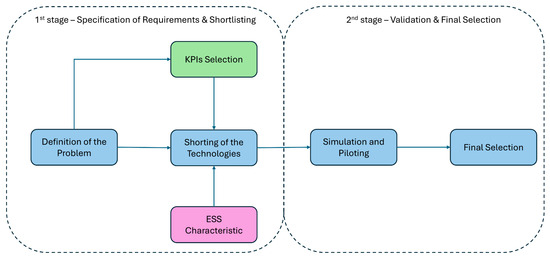
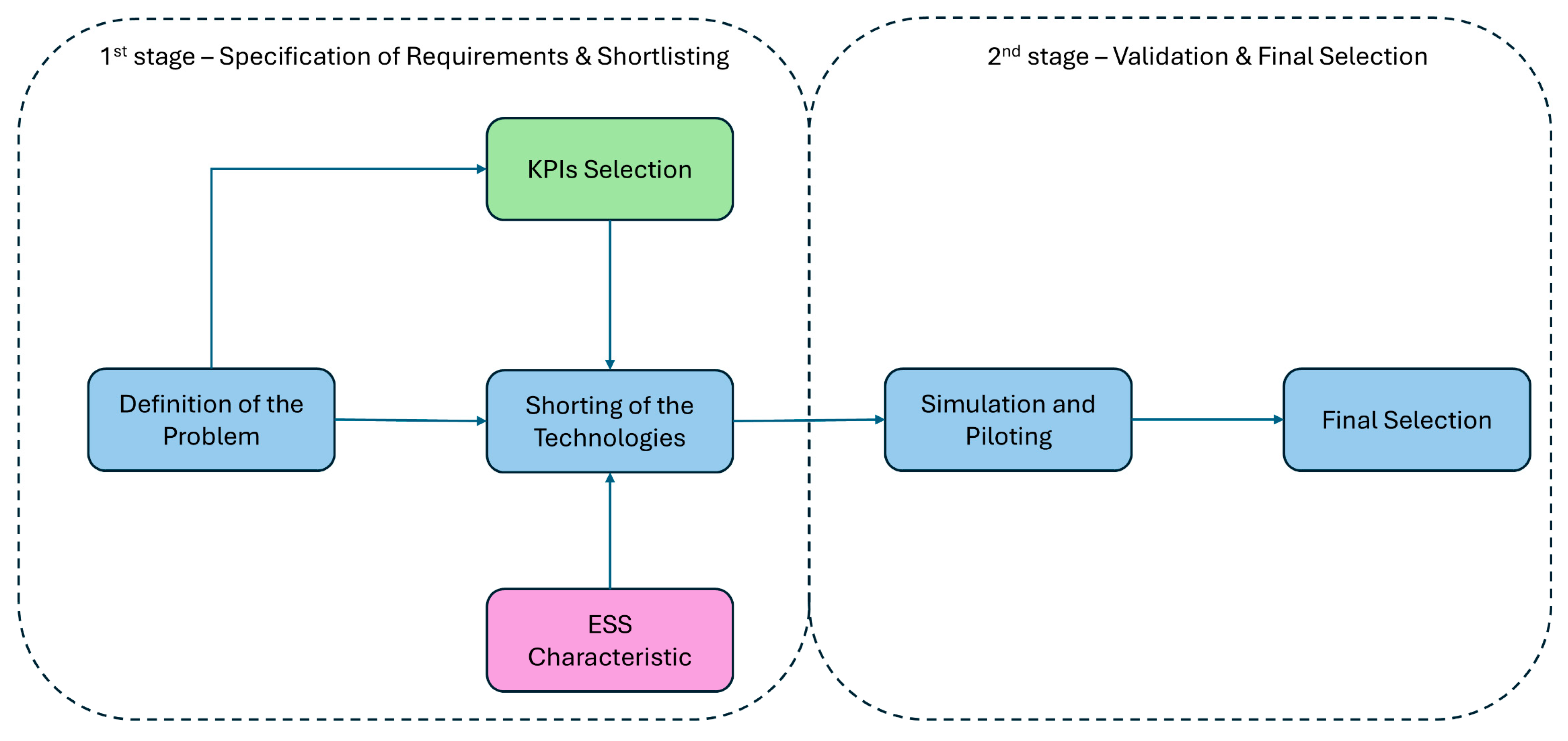


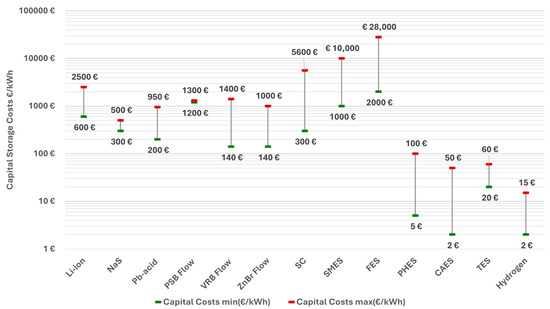
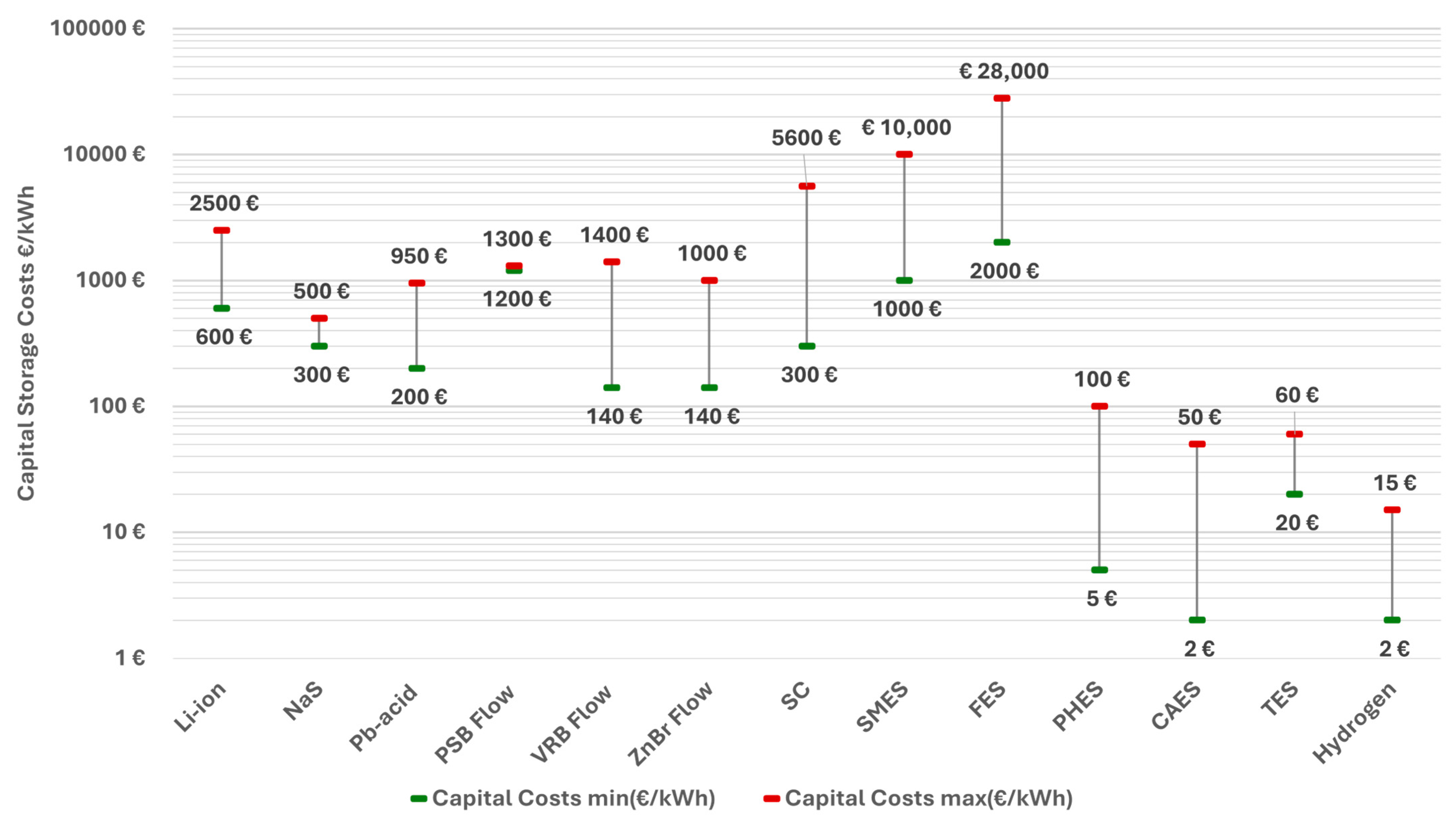
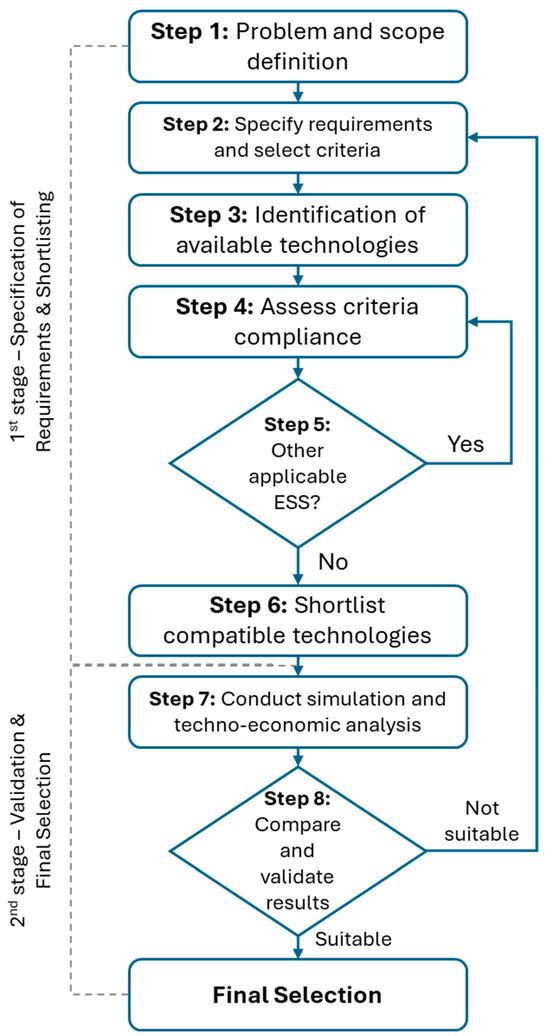
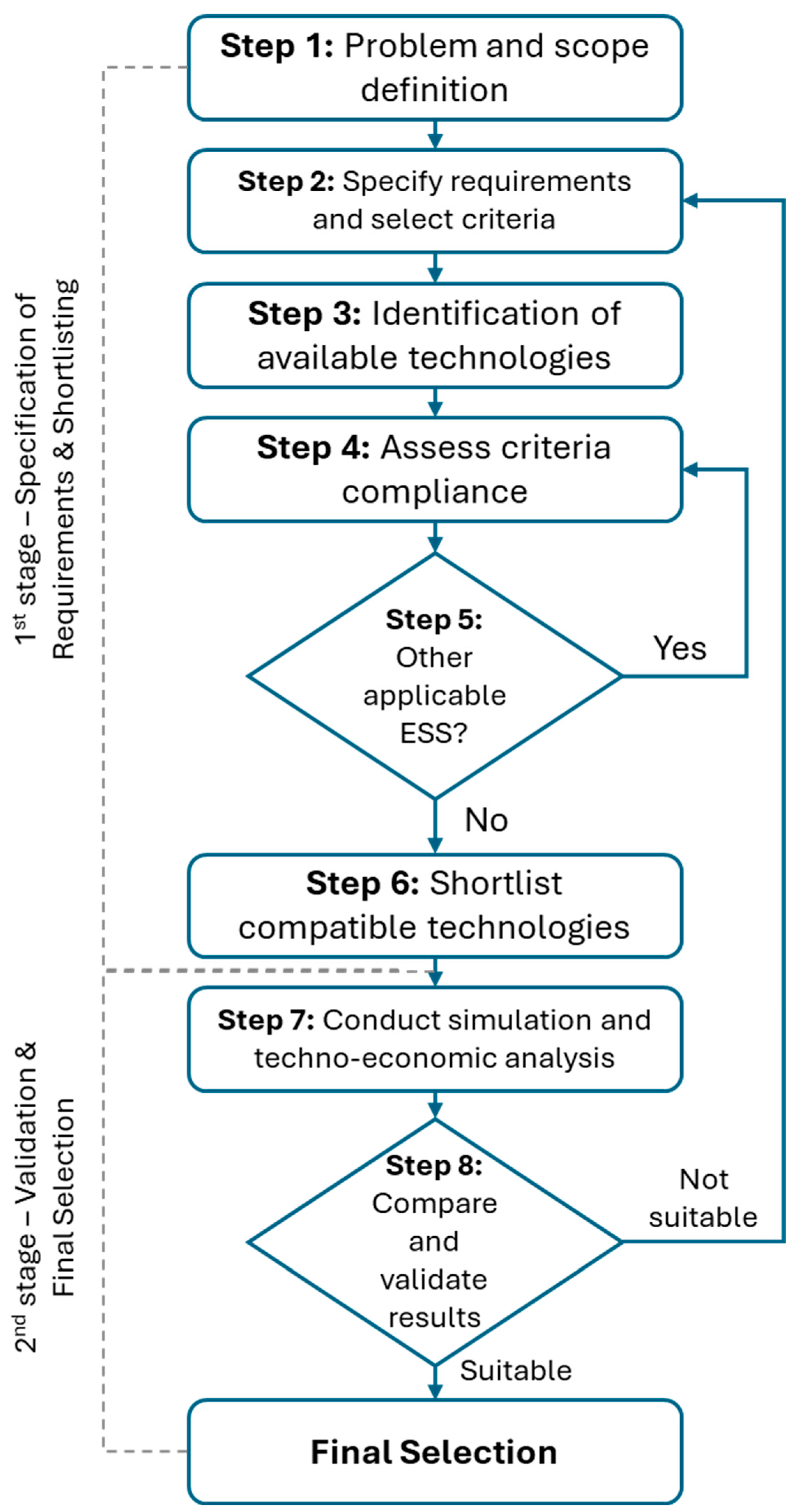
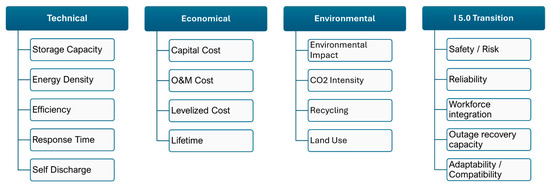
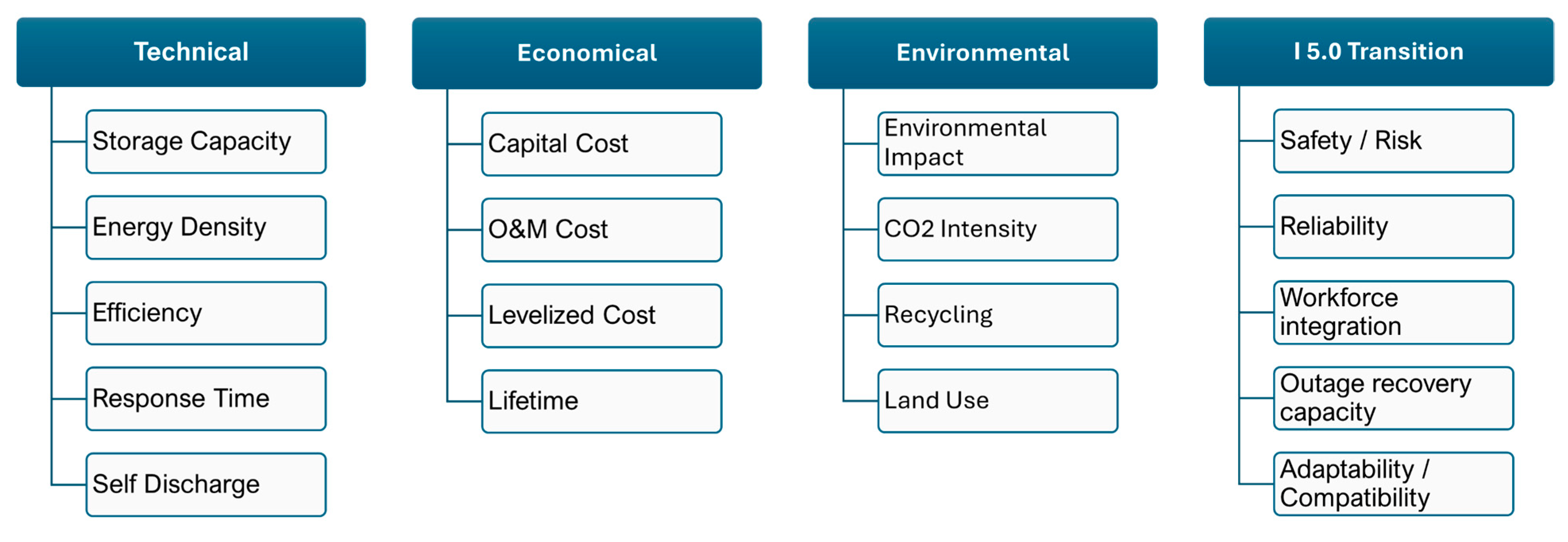


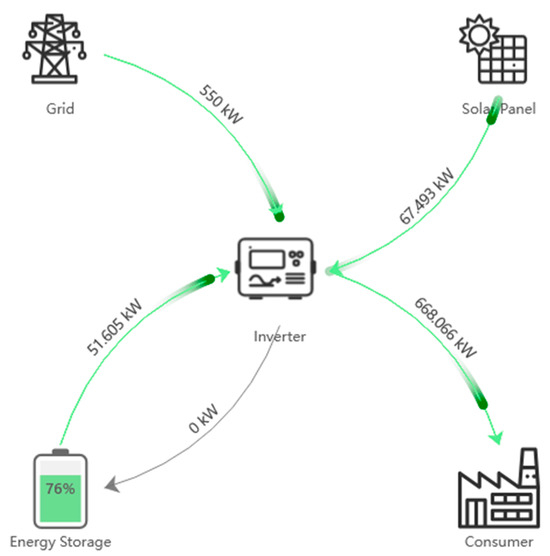
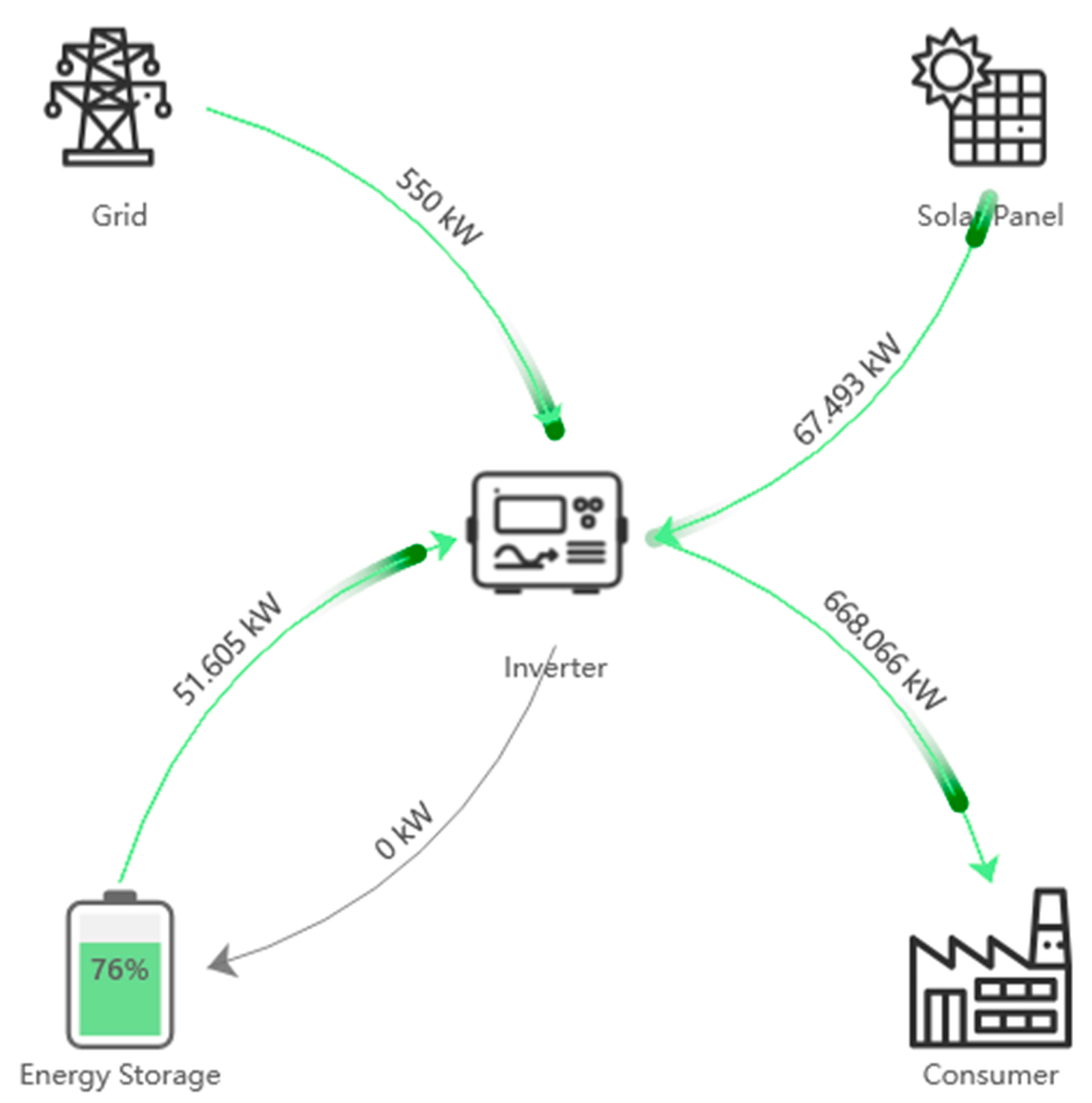
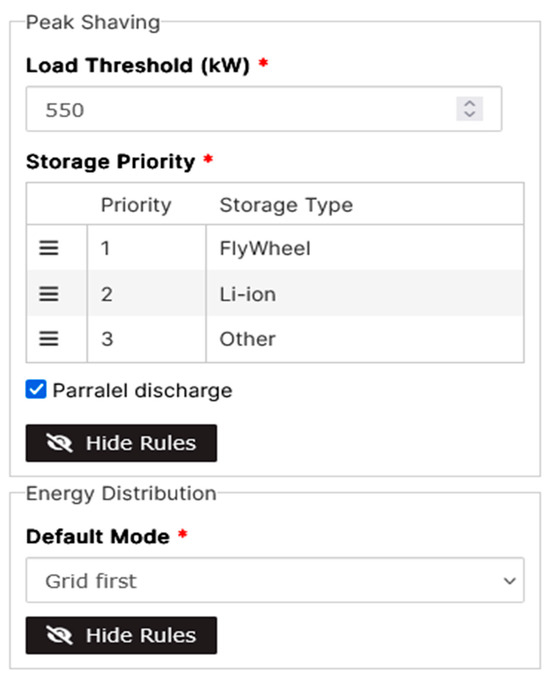
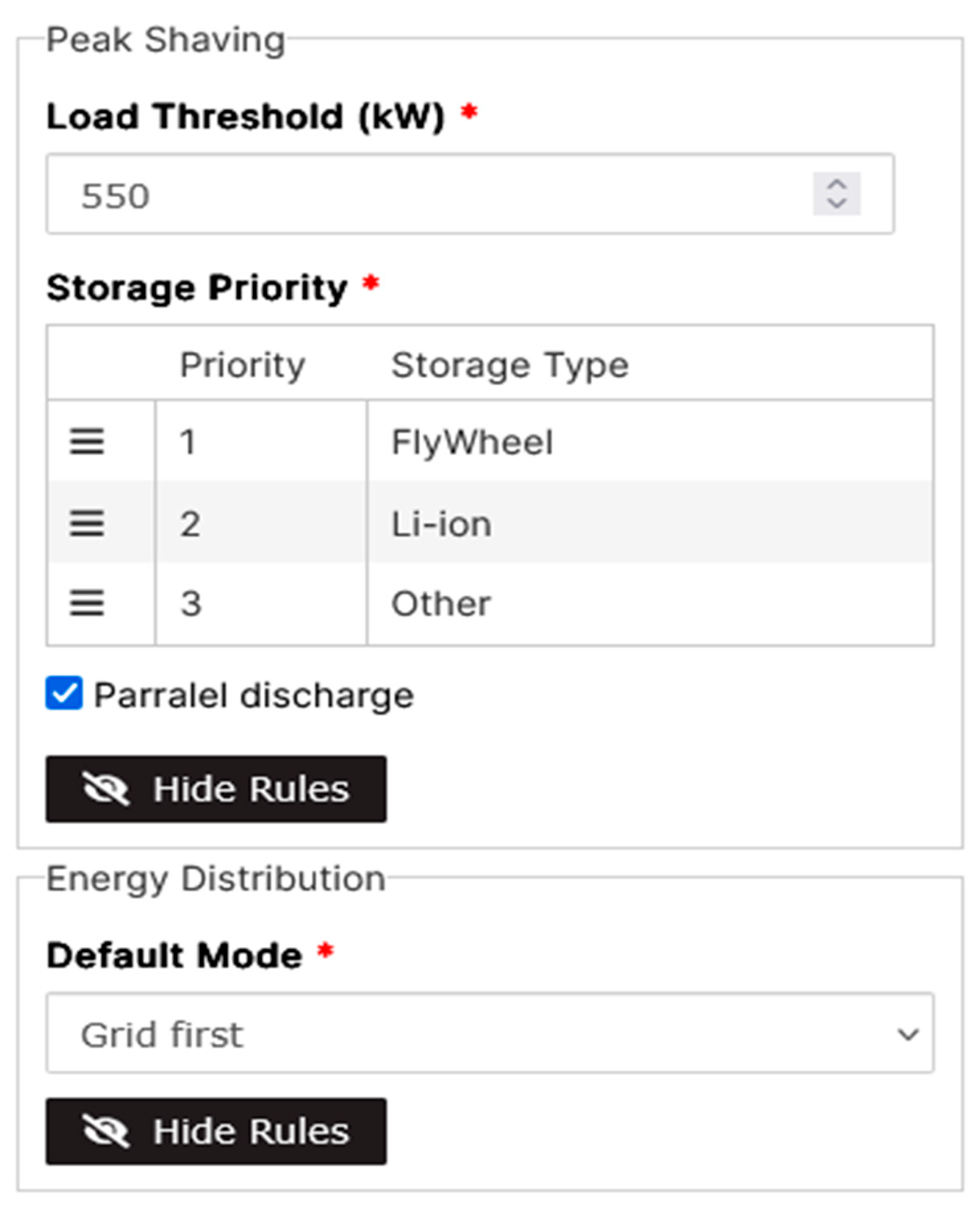
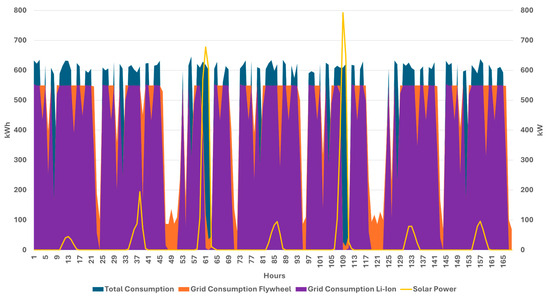
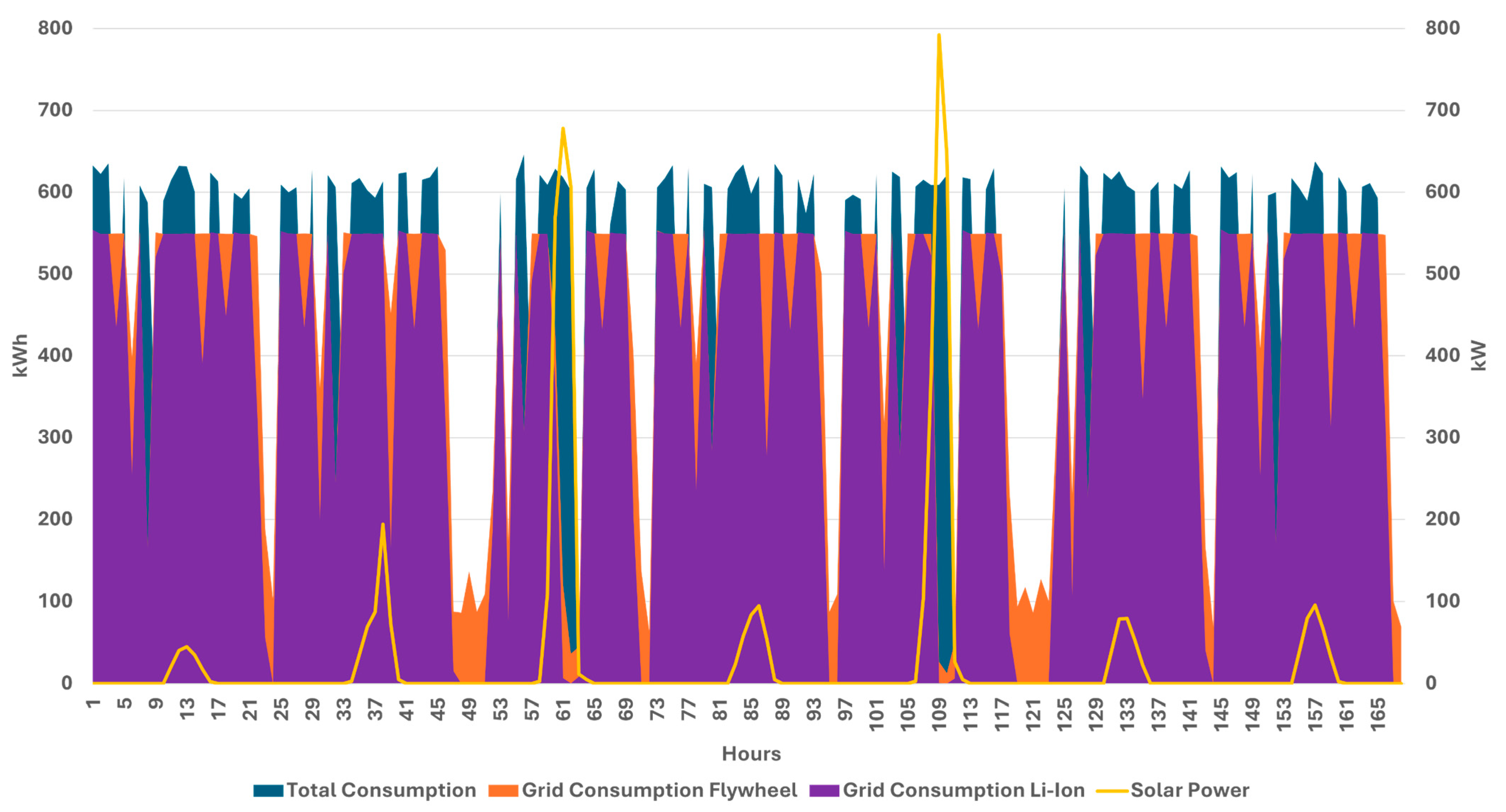
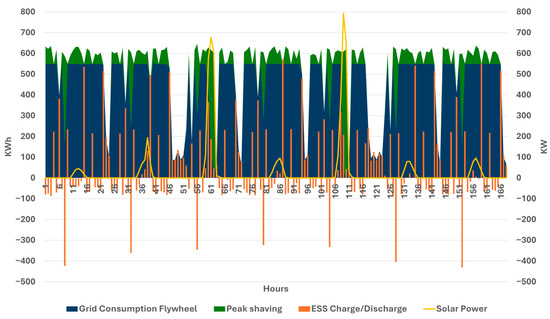
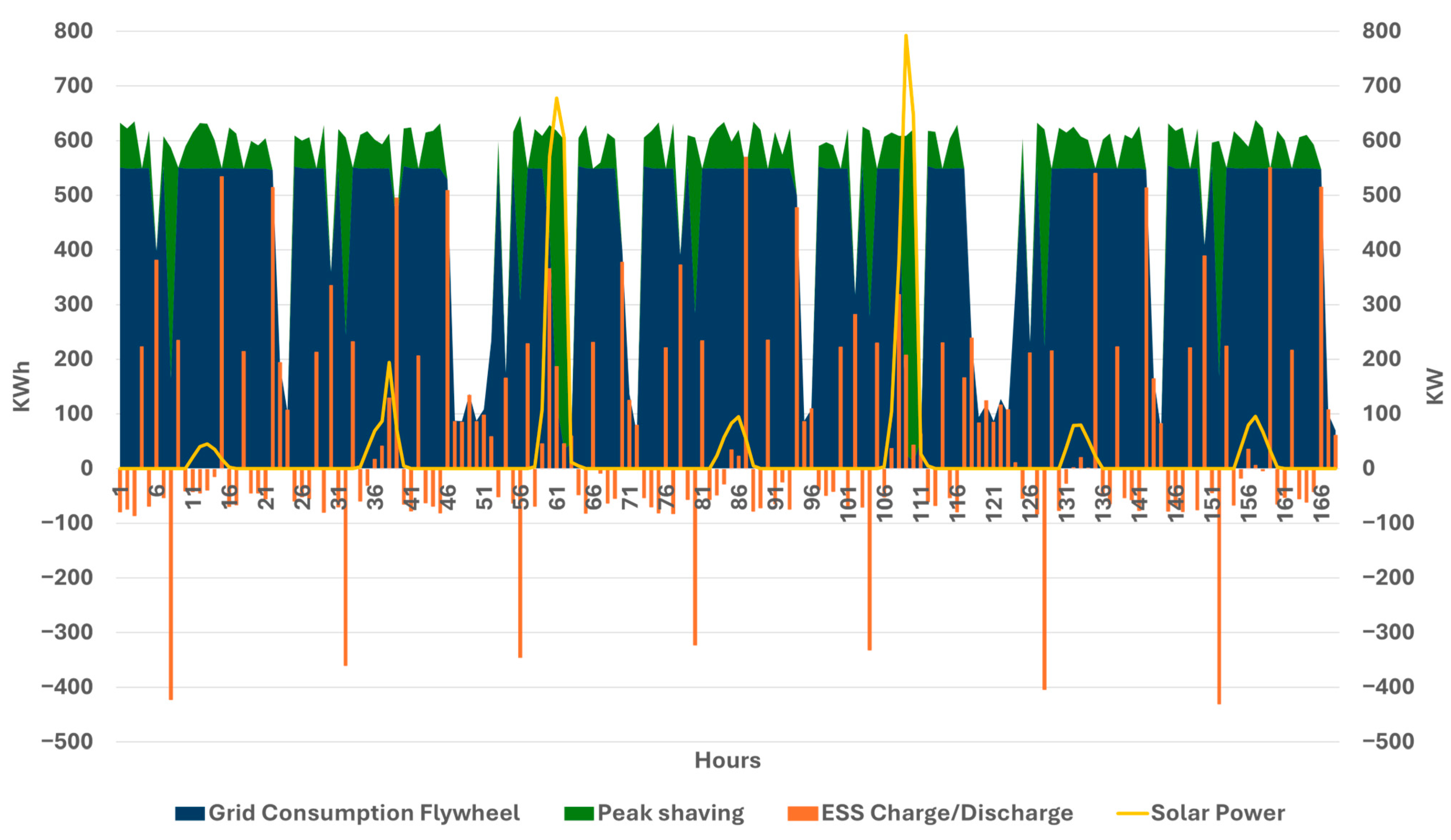
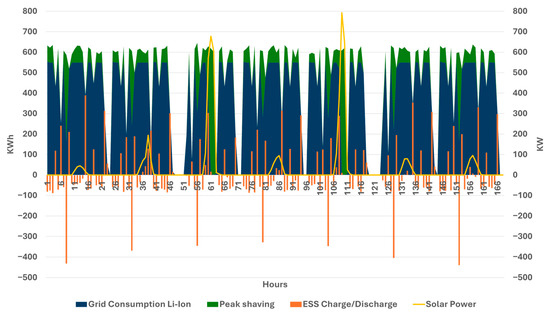
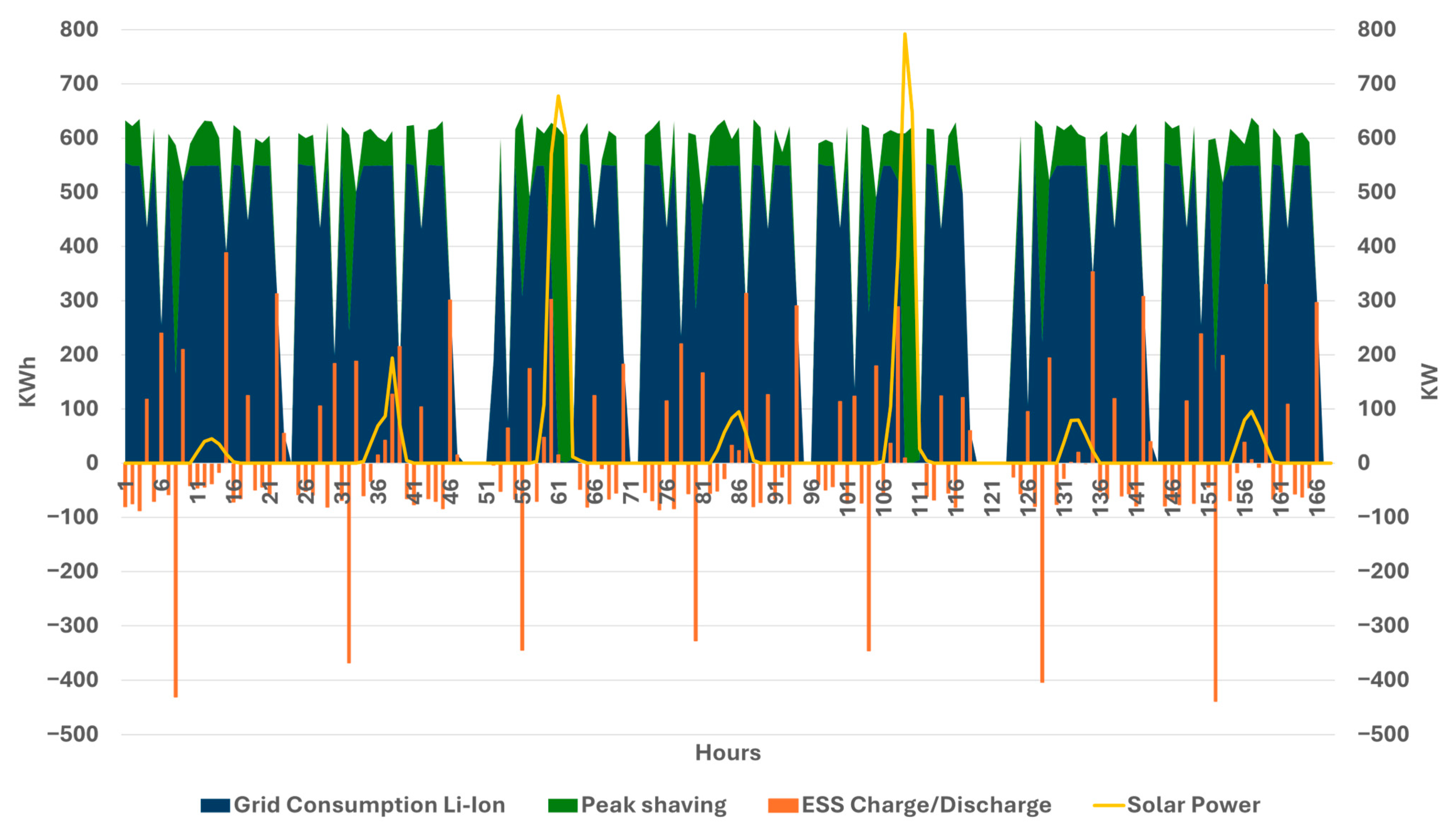
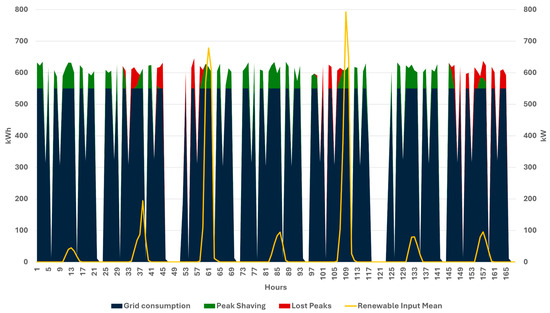
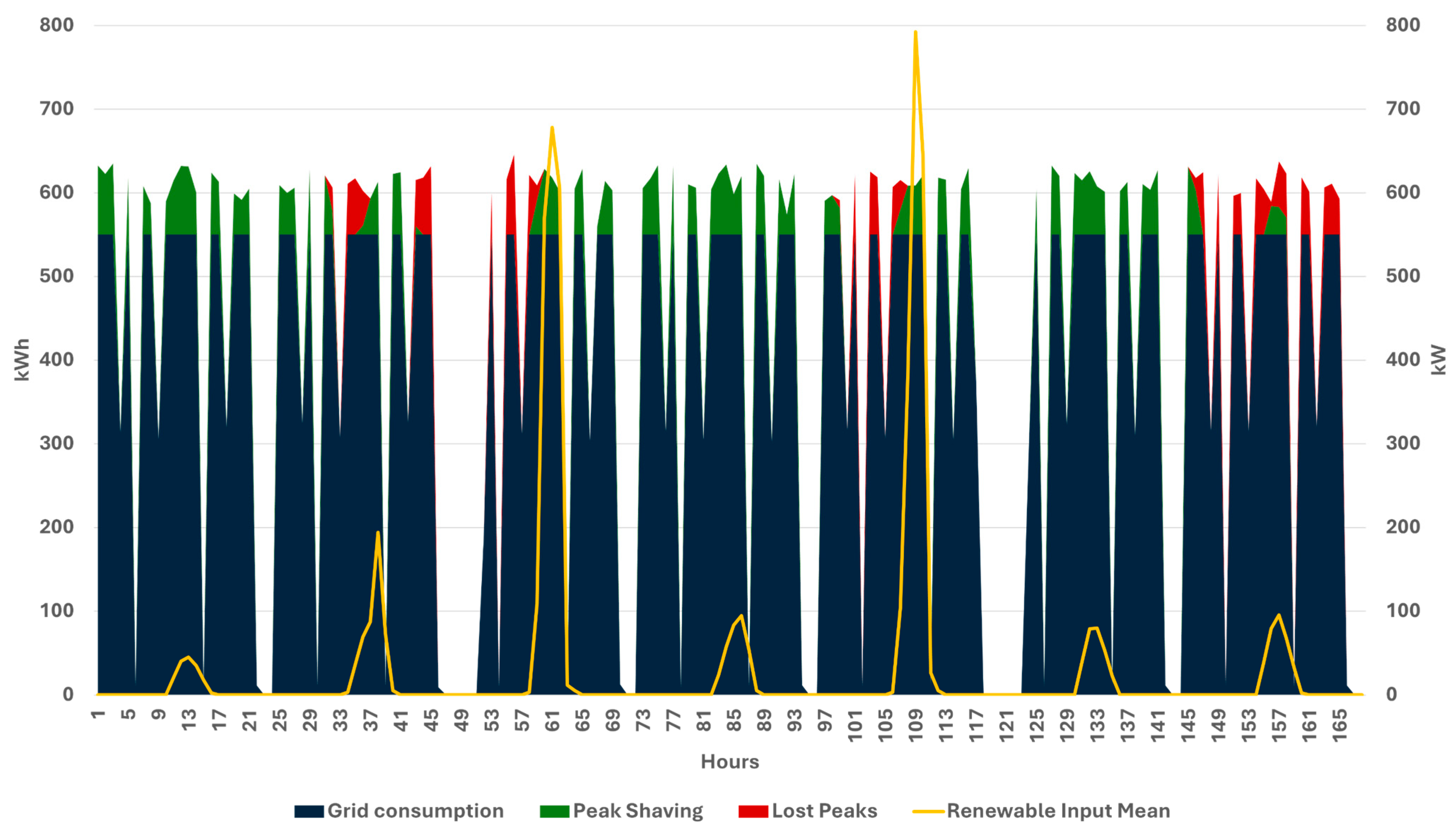
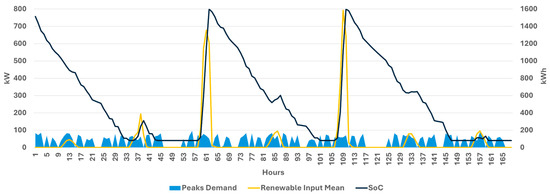
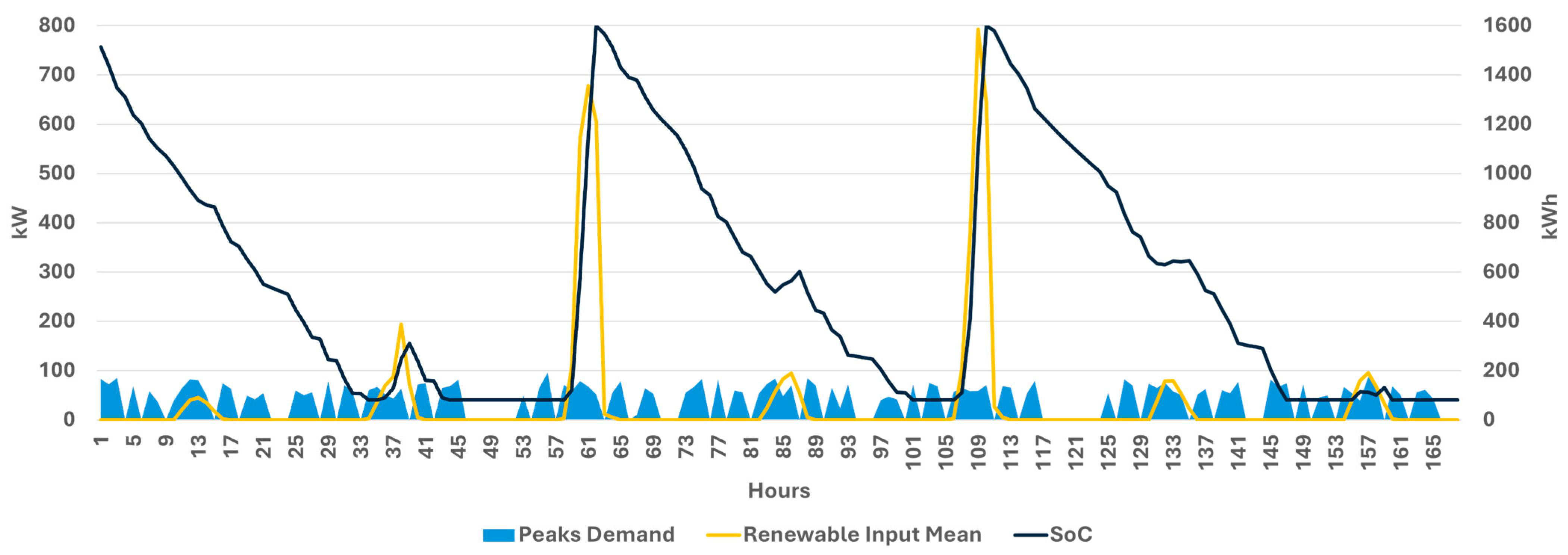
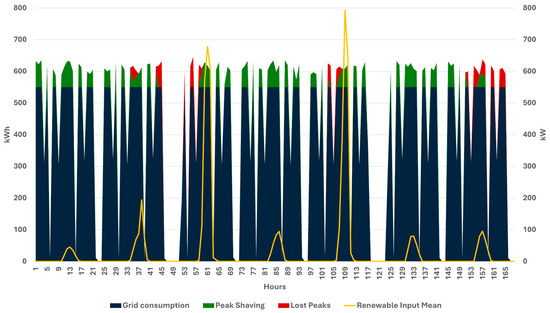
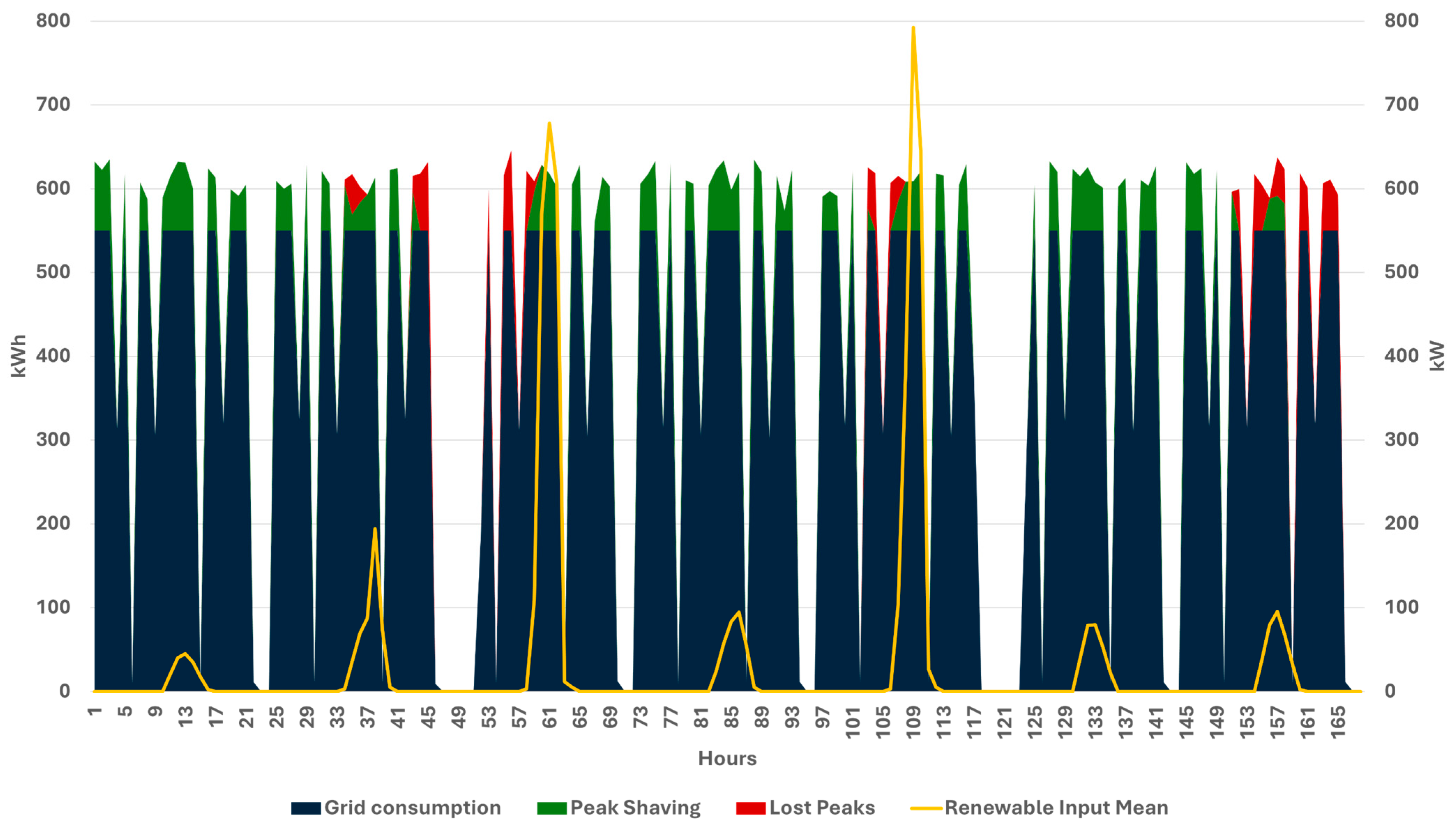
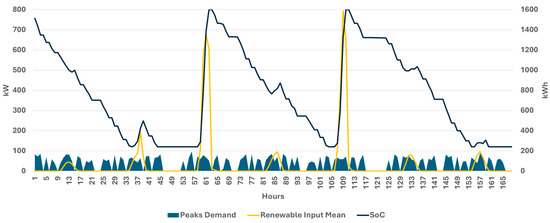
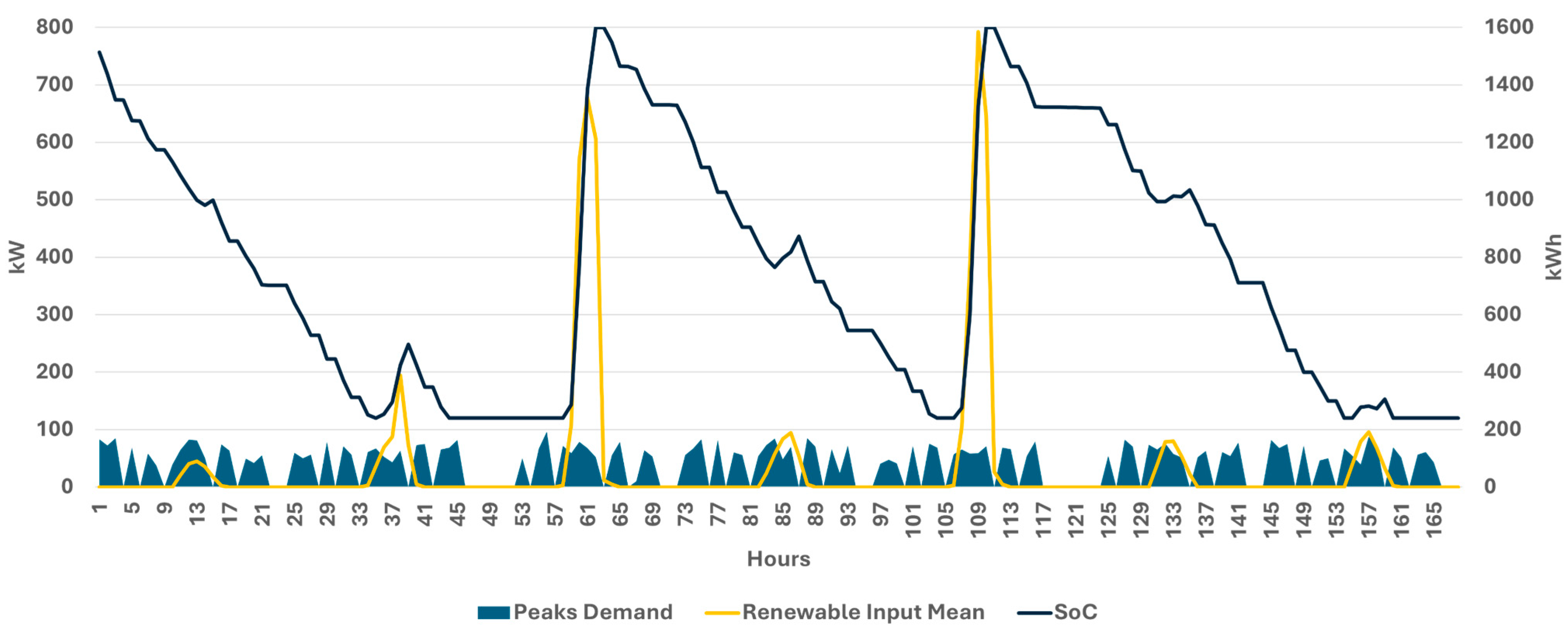

Disclaimer/Publisher’s Note: The statements, opinions and data contained in all publications are solely those of the individual author(s) and contributor(s) and not of MDPI and/or the editor(s). MDPI and/or the editor(s) disclaim responsibility for any injury to people or property resulting from any ideas, methods, instructions or products referred to in the content. |
© 2026 by the authors. Licensee MDPI, Basel, Switzerland. This article is an open access article distributed under the terms and conditions of the Creative Commons Attribution (CC BY) license.