Article

Cyclic Torsional Behavior of 3D-Printed ABS: Role of Infill Density and Raster Orientation

1
College of Innovation and Technology, Mechanical Engineering, University of Michigan, Flint, MI 48502, USA
2
Michigan Institute for Computational Discovery and Engineering, University of Michigan, Ann Arbor, MI 48109, USA
*
Author to whom correspondence should be addressed.
Machines 2026, 14(3), 328; https://doi.org/10.3390/machines14030328
Submission received: 23 January 2026 / Revised: 10 March 2026 / Accepted: 11 March 2026 / Published: 13 March 2026
(This article belongs to the Section Advanced Manufacturing)

Abstract

This study investigates the fatigue behavior of 3D-printed ABS subjected to cyclic torsional loads, with a focus on the effects of infill density and raster angle on torsional fatigue performance. A total of 50 test specimens representing 25 unique combinations of infill density (20%, 40%, 60%, 80%, 100%) and raster angle (25°/−65°, 45°/−45°, 75°/−15°, 0°/90°) were fabricated and tested using the cyclic torsion system. Fatigue failure was defined as a 75% reduction in torsional strength, recorded through cycle-by-cycle torque monitoring. The twist angle was cyclically varied between ±10° at a frequency of 5 Hz until failure occurred. The results indicate that increasing infill density significantly improves fatigue life by reducing internal porosity and enhancing load transfer, with the greatest gains observed at high infill levels (≥80%). Raster angle has a minimal effect at low infill densities but becomes critical at higher densities, where optimized filament orientations substantially extend fatigue life. Intermediate raster angles, particularly 25° and 75°, outperform orthogonal layouts by enabling better stress redistribution and inter-layer load sharing, while a 90° orientation leads to premature failure due to stress concentration and inter-layer debonding. When normalized by mass, specimens with 100% infill and intermediate raster angles achieve the highest fatigue endurance, highlighting the synergistic role of infill density and raster orientation in optimizing the durability and mass efficiency of 3D-printed components under cyclic torsional loading.

1. Introduction

Additive manufacturing (AM) is increasingly being utilized to produce components across industries such as automotive, aerospace, biomedical devices, and consumer products [1,2,3,4]. As this transition continues, understanding the mechanical performance and long-term durability of additively manufactured components has become essential for ensuring safe and reliable engineering design [5,6,7,8]. Among the various AM techniques, Fused Deposition Modeling (FDM) remains one of the most widely used due to its accessibility, material versatility, and relatively low production cost. Acrylonitrile Butadiene Styrene (ABS) is a commonly used thermoplastic in FDM because of its favorable balance of strength, toughness, and thermal stability, making it the popular choice for engineering applications. However, unlike conventionally manufactured polymers, FDM-printed ABS exhibits strongly anisotropic mechanical behavior due to its layer-by-layer fabrication process [9]. Researchers are increasingly investigating ways to improve the mechanical performance of 3D-printed components by systematically examining the influence of key processing parameters. These parameters include printing speed, layer thickness, nozzle temperature, raster orientation, infill pattern, and infill density, all of which play a critical role in determining the structural integrity and mechanical response of additively manufactured parts [10,11,12,13]. For example, Agarwal et al. [14] reported that variations in printing speed and layer thickness have a significant influence on the tensile properties of ABS specimens. Brackett et al. [15] showed that increasing the infill density from 20% to 100% leads to higher elastic modulus and ultimate tensile strength. In addition, the orientation of the raster angle (0°, 30°, 45°, 60°, or 90°) has been reported to significantly influence the mechanical properties of the printed specimens [2,11,12]. Bhuiyan and Khanafer [2] reported that the infill pattern with a 0° raster angle exhibit larger yield and ultimate tensile strengths as infill density increases. In addition, several finite element models were developed to model the ABS 3D printing process and support informed selection of printing parameters [2].
Fatigue failure is a critical concern for polymer components subjected to cyclic loading, as progressive damage can accumulate even when stresses remain well below the static strength of the material. In many practical engineering applications, machine elements such as shafts, couplings, axles, and rotating fixtures are exposed to cyclic torsional or rotating bending loads, where failure is often governed by shear-dominated stress states and load reversals. Despite the growing use of FDM-printed polymers in such applications, fatigue behavior under torsional loading has received comparatively less attention than tensile, compressive, or flexural fatigue conditions. Existing research has demonstrated that FDM printing parameters, including infill density, raster angle, build orientation, layer thickness, and infill pattern, play a decisive role in determining stiffness, strength, crack initiation/propagation, and fatigue life of printed components. Infill density directly influences the effective load-bearing cross-section and internal porosity, while raster angle controls filament alignment relative to applied stresses.
Letcher and Waytashek [16] found that rectangular cross-sectional specimens with a 45° raster orientation achieved the highest ultimate tensile strength (64 MPa), followed by 0° (58 MPa) and 90° (54 MPa). Moreover, fatigue results did not identify a single optimal orientation; however, the 90° raster consistently exhibited the poorest fatigue performance, while the 0° and 45° orientations showed similar fatigue lives. Afrose et al. [17] studied the impact of print orientation on the tensile fatigue behavior of PLA and reported that rectangular cross-sectional specimens printed at a 45° orientation exhibited longer fatigue lives, greater cyclic softening, and higher toughness modulus compared to those printed in the X and Y directions. Based on tension–tension fatigue testing of FDM-fabricated ABS specimens with rectangular cross-sections, Ziemian et al. [18] found that the ±45° print orientation exhibited the highest fatigue life and storage modulus. This was followed, under the same applied loading conditions, by the 0°, 45°, and 90° orientations. Jap et al. [19] investigated rectangular cross-section ABS specimens under sinusoidal tension–tension fatigue loading at a frequency of 5 Hz and stress levels corresponding to 40%, 60%, 80%, and 90% of the mean UTS for the −45°/45° and 0°/90° raster orientations. Their findings showed that specimens printed with the −45°/45° raster orientation exhibited a markedly longer fatigue life, with up to a 63.5% increase in cycles to failure. Recently, Bhuiyan and Khanafer [20] studied the effects of infill orientation and infill density on the cyclic tension-tension fatigue behavior of FDM-printed ABS samples. Various raster angles and infill densities were examined under multiple stress levels and loading frequencies. Statistical analyses (ANOVA and Tukey’s HSD) revealed that infill orientation and density significantly influence mechanical performance, with the 30°/−60° orientation yielding the best tensile strength and the ±45° orientation providing superior fatigue life. Fatigue life was found to increase with loading frequency, particularly between 0.25 and 5 Hz. El-Deeb et al. [21] investigated the effects of part-build direction (upright, on-edge, and flat) and build orientation angle on the tension-tension fatigue performance of FFF-fabricated ABS specimens with 50% infill density. Their results showed that the on-edge build direction provided significantly superior fatigue life under cyclic loading, reaching 1592 cycles at orientation angles between 15° and 75°, compared to only 290 cycles for the flat orientation and 39 cycles for the upright orientation under the same conditions.
Polymers used in practical engineering applications are frequently subjected to a wide range of torsional loading conditions, as seen in components such as polymeric gears, couplings, shafts, and biomedical scaffolds. At the same time, additive manufacturing has enabled the fabrication of complex, customized geometries tailored to specific functional requirements, leading to its rapidly growing adoption in the production of polymer components. Despite this expansion, the existing literature remains limited with respect to the mechanical behavior of additively manufactured polymers under cyclic torsional loading, highlighting a clear gap in current research. For example, a comprehensive investigation was conducted by Sadaghian et al. [22] to evaluate the monotonic torsional performance of various printed polymers. Fifteen different polymer materials were fabricated using FDM in a flat build orientation. For each material, two raster configurations—±45° and 0°/90°—were examined. Circular samples with a diameter of 10 mm were tested under torsional loading at a displacement rate of 0.2 mm/min. The findings demonstrated that specimens printed with a ±45° raster orientation consistently exhibited superior torsional performance compared to those printed with a 0°/90° raster orientation. In a recent study, Sadaghian et al. [23] investigated the mechanical behavior of PLA, PLA Premium, and PLA Tough under monotonic, cyclic, and reversed cyclic torsional loading. Specimens were fabricated using an extrusion-based 3D printing process with a 0° build orientation and two infill orientations (±45° and 0°/90°). The samples were tested under monotonic, cyclic, and reversed cyclic torsion until failure. The results showed that monotonic loading led to ductile fracture, while cyclic and reversed cyclic loading resulted in brittle failure. Across all materials, specimens printed with a ±45° infill orientation consistently outperformed those with a 0°/90° orientation, with PLA Premium demonstrating the best overall performance compared to PLA and PLA Tough. Ferreira et al. [24] analyzed the characterization of ABS solid samples under static and cyclic torsional loadings. An initial experimental phase examined specimens with one to three external walls and two infill patterns (concentric and zigzag). Monotonic torsion tests were used to identify the optimal configuration, which was then selected for a second phase involving fully reversed, load-controlled fatigue testing (R = −1) at 5 Hz. From torsion fatigue tests it was noticed that the fatigue mechanism between layers controlled the failure mechanism of specimens.
From the preceding literature review, it is evident that only a limited number of studies have examined the effects of cyclic torsional loading on additively manufactured polymers, revealing a clear gap in the existing body of knowledge. In particular, the combined influence of key printing parameters under torsional fatigue conditions remains insufficiently explored. Therefore, the objective of this study is to investigate the effects of varying infill density and raster orientation on the fatigue life of FDM-fabricated ABS specimens subjected to cyclic torsional loading, with the goal of providing deeper insight into their torsional fatigue behavior and informing improved design guidelines for additively manufactured polymer components.

2. Materials and Methods

This section describes the fabrication process and specifications of the tested 3D-printed ABS-M30 specimens (Stratasys, MN, USA), including the experimental methods, printing parameters, and cyclic loading test conditions.

2.1. Specimen Construction

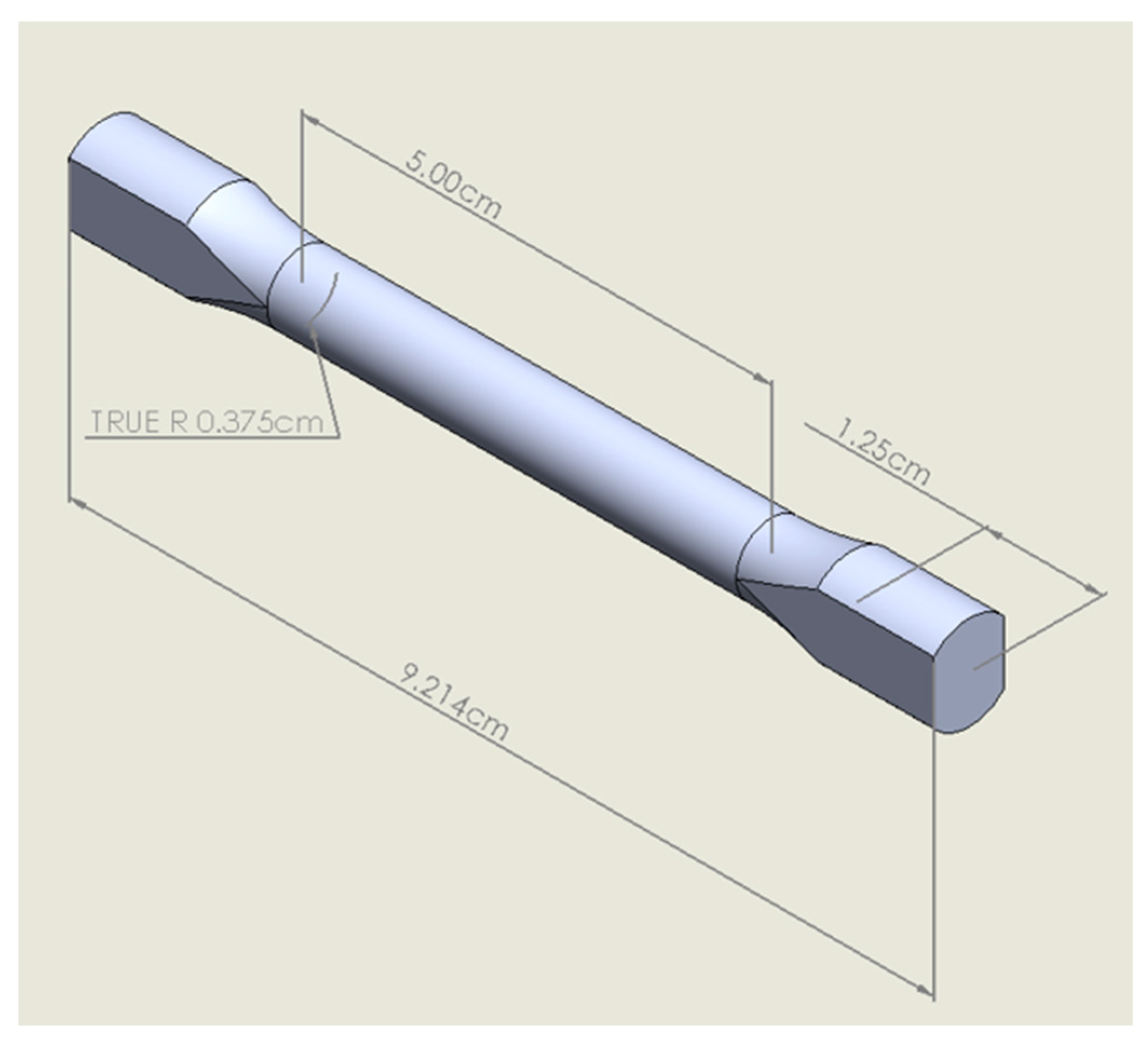
In the absence of a specific standard for additive-manufactured polymeric cylindrical components under monotonic and cyclic torsion, the test method was developed based on the guidelines of ISO 1143-2021 (ISO Standards). A 3D model of the specimen was developed using SolidWorks 2025, and a detailed representation of the geometry is shown in Figure 1.
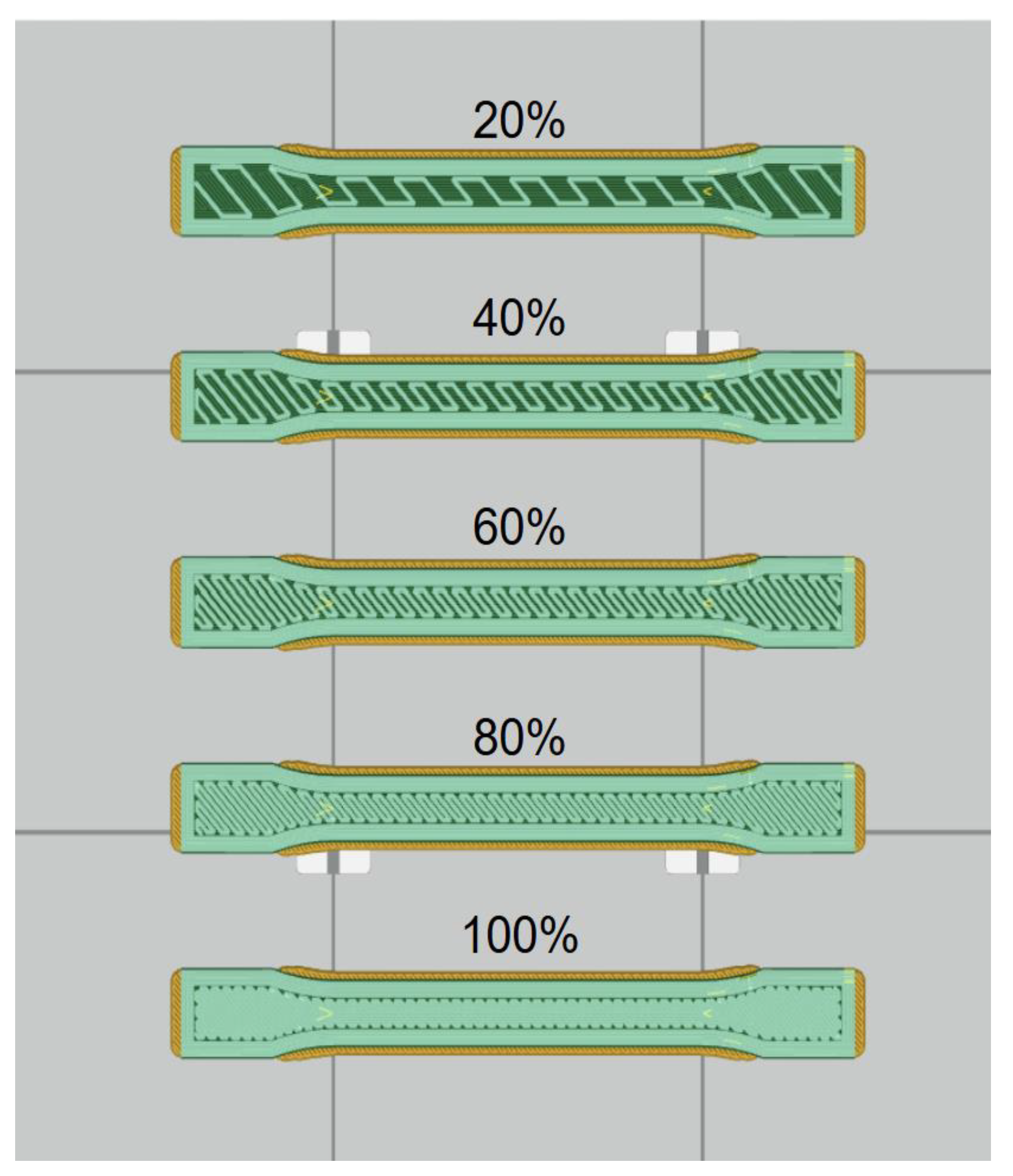
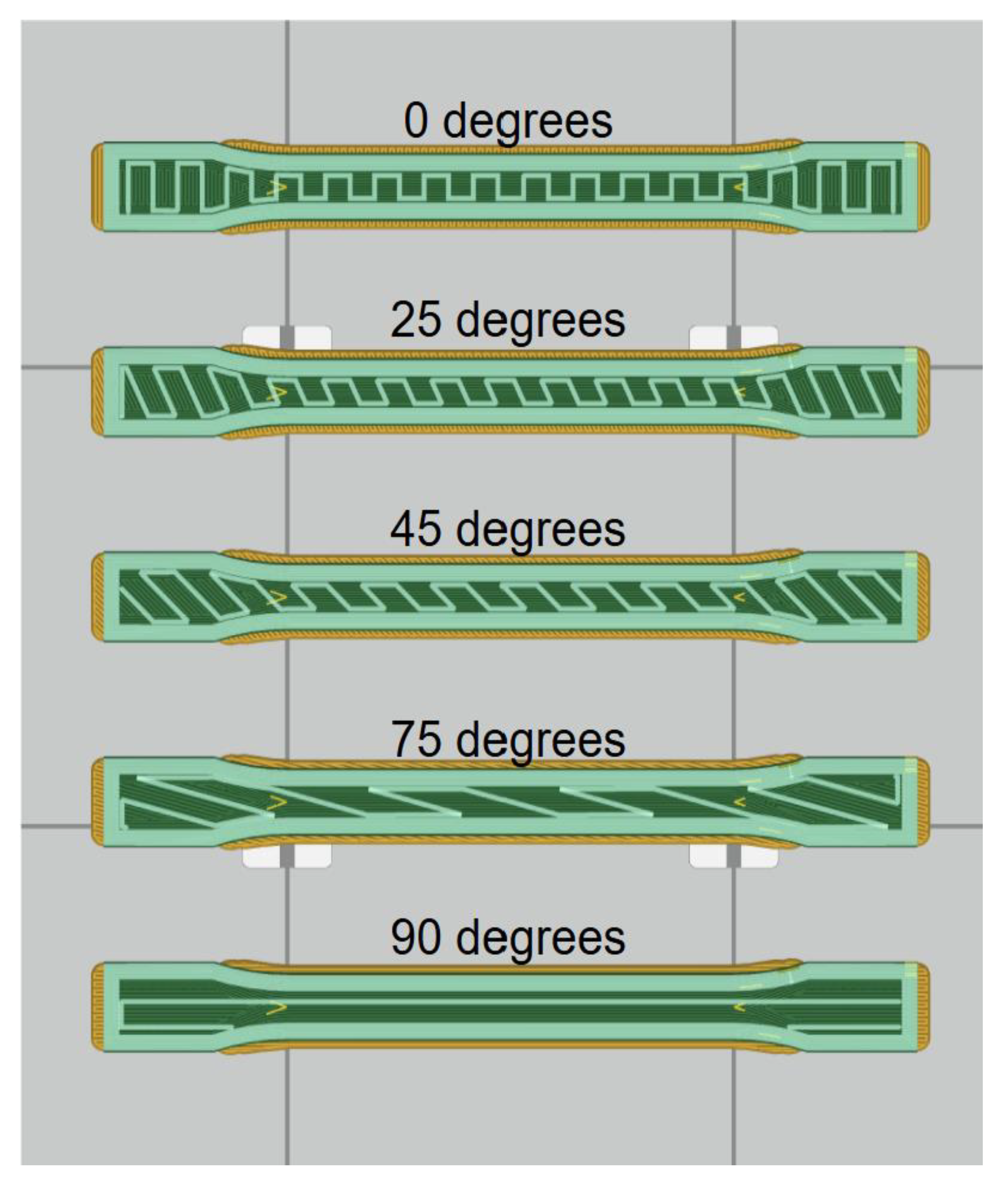
As can be seen in Figure 1, the effective length for these tests is a cylinder 5 cm in length and 1 cm in diameter with a flat portion on either end for mounting into the testing instrument. The designed geometry was converted into an STL file and imported into GrabCAD (1.11-2026), a 3D printing software. In GrabCAD, the default infill pattern is a grid; however, both infill orientation and infill density can be customized. Using the grid infill, raster orientations of 0°/90°, 25°/−65°, ±45°, and 75°/−15° were selected for printing at infill densities of 20%, 40%, 60%, 80%, and 100% for each orientation. These configurations are illustrated in Figure 2 and Figure 3. The term raster angle refers to the orientation of the infill lines relative to the lateral axis of the build plate, as shown in Figure 3, which presents the five selected raster angles. As illustrated in Figure 4, when the specimens are subjected to torsional loading, a raster angle of 90° is aligned parallel to the axis of rotation, whereas a raster angle of 0° is tangent to the axis of rotation. The chosen raster angles span from highly anisotropic configurations (0°/90°) to quasi-isotropic layouts (±45°), with intermediate orientations (25°/−65° and 75°/−15°) incorporated to capture off-axis behavior and stress redistribution effects.
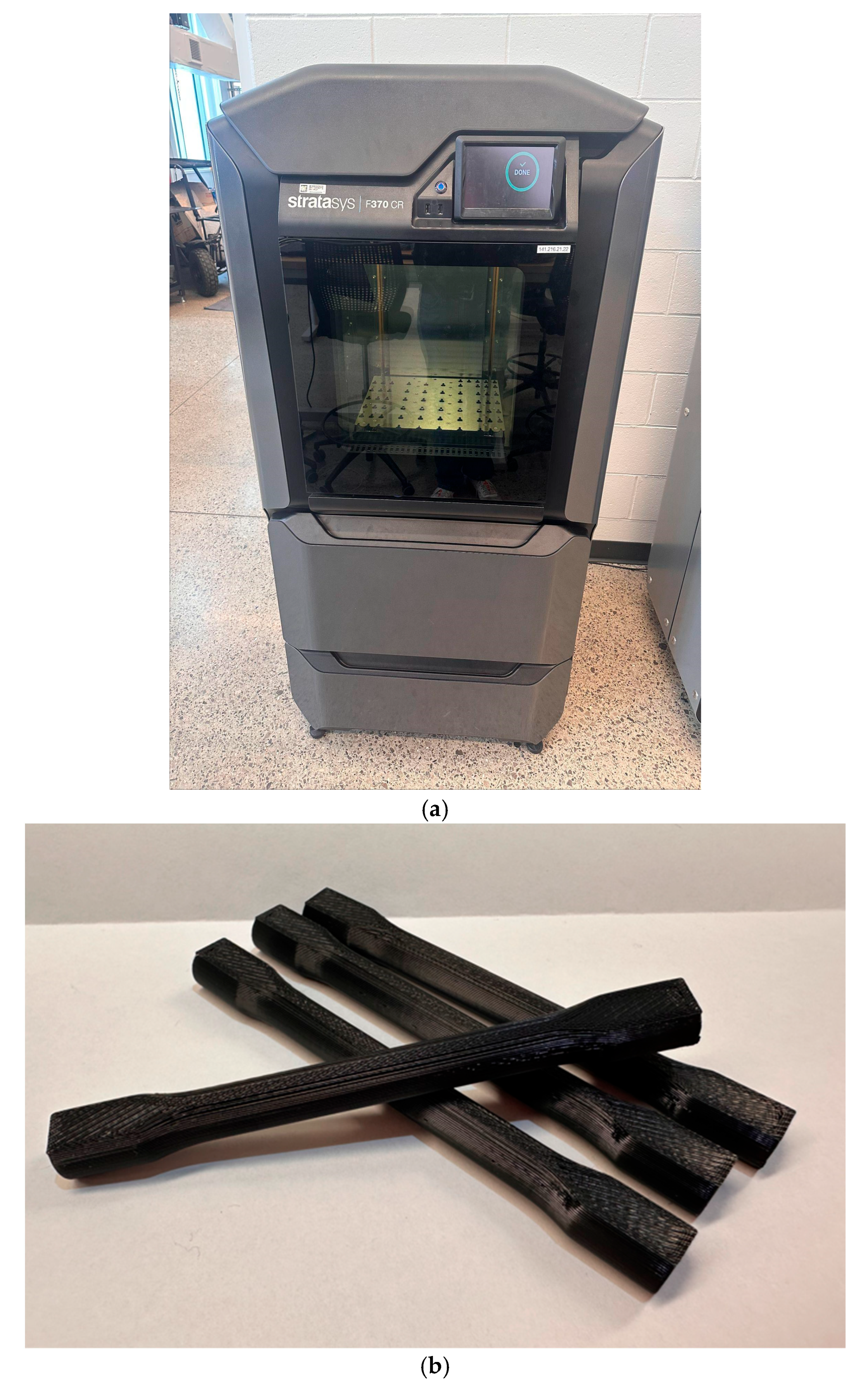
As shown in Figure 4, the specimens were fabricated using a Stratasys F370 CR printer (Eden Prairie, MN, USA), an FDM-based 3D printing system. All test bars were printed using the same filament spool of Stratasys ABS Black material (SN: 762870576, Stratasys, MN, USA) to ensure material consistency. The 3D printing and manufacturing parameters employed in this study are summarized in Table 1.

2.2. Cyclic Torsion Fatigue Testing

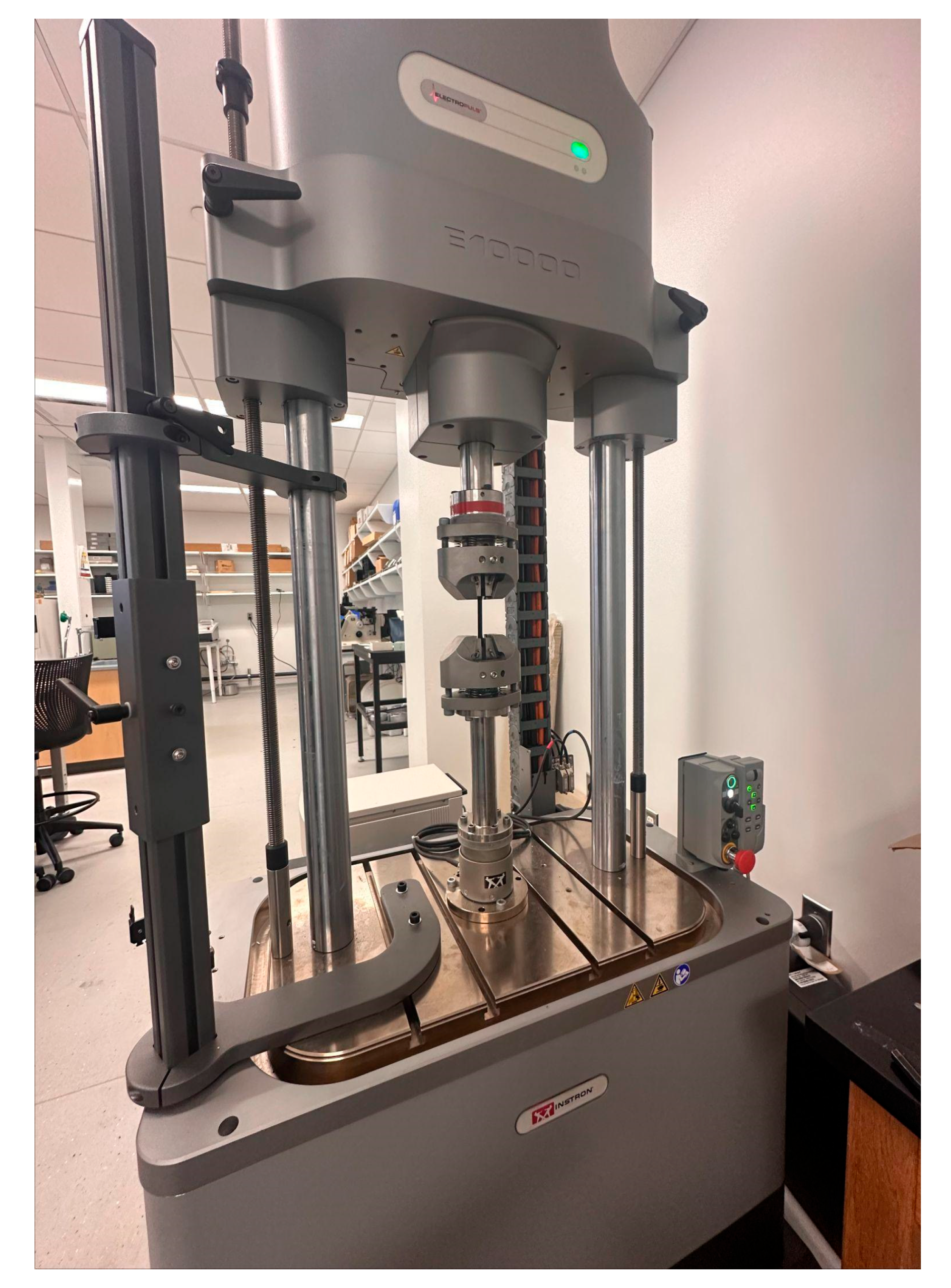
In this study, a minimum of four replicates were tested for each combination of factors to ensure statistical reliability. Cyclic torsional fatigue tests were conducted on specimens with varying infill densities and raster orientations using an Instron E10000 series fatigue testing machine (Instron, MA, USA), as illustrated in Figure 5. The specifications of the machine are: ±10 kN dynamic linear load capacity and ±100 Nm dynamic torque capacity. For the tests, the machine was programmed to apply a sinusoidal cyclic twist, with each cycle consisting of a ±10° angular variation at a frequency of 5 Hz. This testing protocol allowed for a controlled evaluation of the effects of print parameters on the torsional fatigue behavior of the 3D-printed specimens.
In these experiments, the failure criterion was defined as a 75% reduction in torsional strength, representing a significant loss in the test bar’s capacity due to repeated rotational loading. To monitor this during testing, a procedure was implemented that allowed the torque response of the specimen to be plotted in real time. For each test bar, the following procedure was followed: first, the machine was zeroed for both rotation and force. The specimen was then mounted in the machine, with only the flat portion clamped to ensure proper alignment. Once secured, the programmed testing sequence was initiated, consisting of three stages. In the first stage, the rotation angle was “normalized,” with the machine automatically moving the specimen to zero degrees. In the second stage, the specimen was subjected to cyclic rotational loading. During each cycle, the maximum torque generated as the specimen resisted the applied rotation was recorded, representing its instantaneous torsional strength. The operator manually marked this maximum torque at the start of the test to establish the reference for 75% strength loss. In the third stage, the program was set to automatically pause the test once the specimen’s torsional strength decreased to 75% of its initial maximum. At this point, the operator could record the necessary data and proceed to the next specimen. This method ensured consistent measurement of torsional fatigue failure across all test bars.

3. Results and Discussion

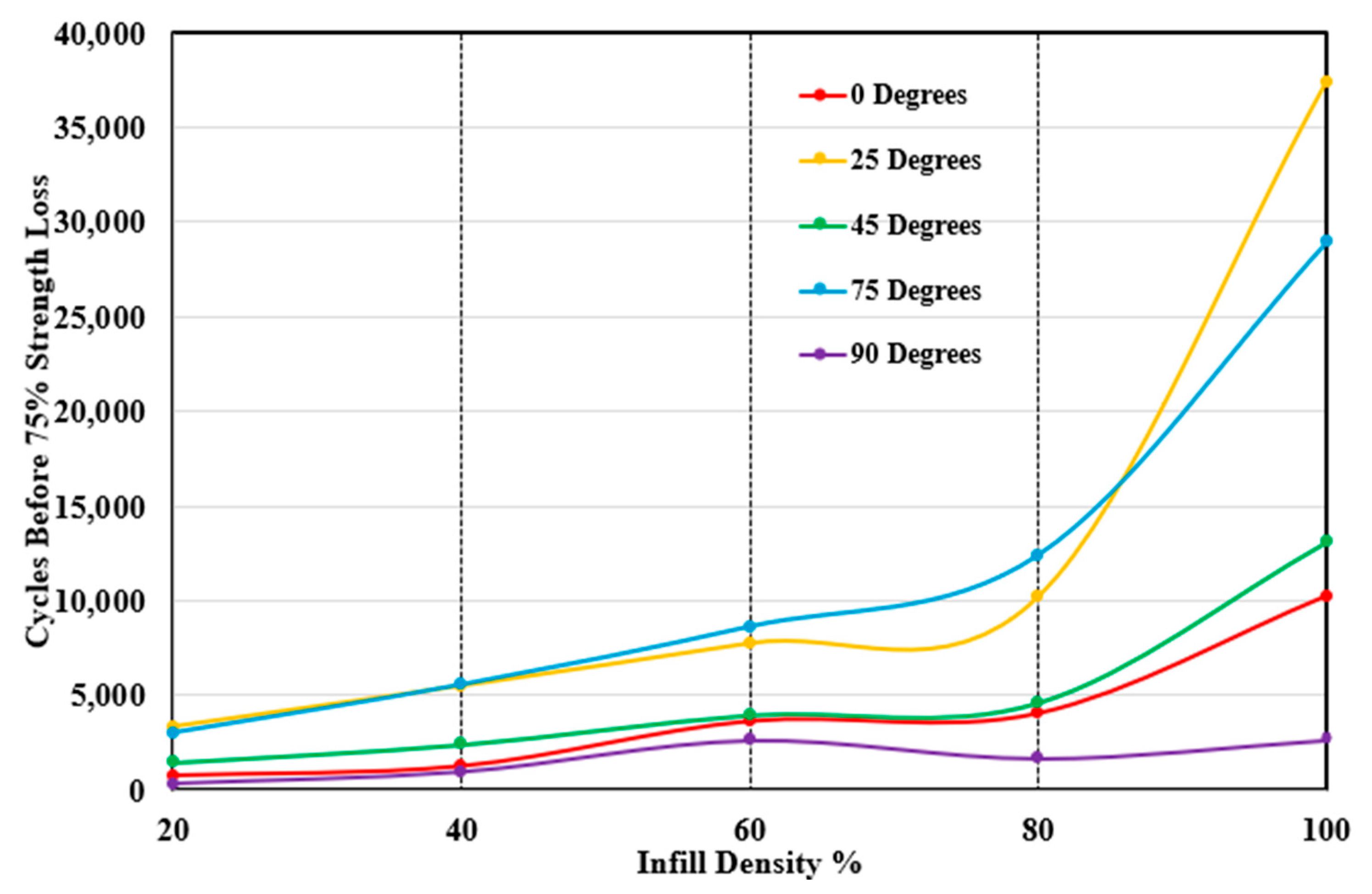
The effect of varying infill density and raster angle on the fatigue behavior is discussed in this section. Figure 6 illustrates the influence of infill density and raster angle on the torsional fatigue life of 3D-printed ABS specimens, measured as the number of rotation cycles before a 75% loss in strength. It is evident that both factors strongly affect the fatigue performance. As expected, increasing the infill density generally improves fatigue life for all raster angles. At low densities (20–40%), the differences between raster angles are minimal, likely due to insufficient material to sustain high shear loads. However, at higher infill densities (80–100%), the effect of raster orientation becomes more pronounced, with some angles showing a dramatic increase in cycles to failure. For instance, the 25° and 75° raster orientations exhibit the highest fatigue life at 100% infill, reaching up to 37,000 and 29,000 cycles, respectively, while the 0°/90° and 45° orientations show moderate improvements, and the 90° orientation consistently results in the lowest fatigue life across all densities. Figure 5 indicates that the 25°/−65° raster angle achieved a 29.6% increase in fatigue life (number of cycles) compared to the 75°/−15° raster angle at infill density of 100%. The raster angle plays a critical role in redistributing torsional stresses. Orientations closer to ±45° (quasi-isotropic) or intermediate angles like 25°/−65° and 75°/−15° allow for more effective load sharing between layers and filaments, resulting in higher fatigue resistance. In contrast, the 90° orientation, where filament lines are aligned parallel to the rotation axis, concentrates shear stress along layer interfaces, leading to early failure. Therefore, high infill densities combined with optimally oriented raster angles significantly enhance torsional fatigue life. The results highlight that careful selection of raster angle is as important as infill density for improving the durability of 3D-printed components under cyclic torsional loads.
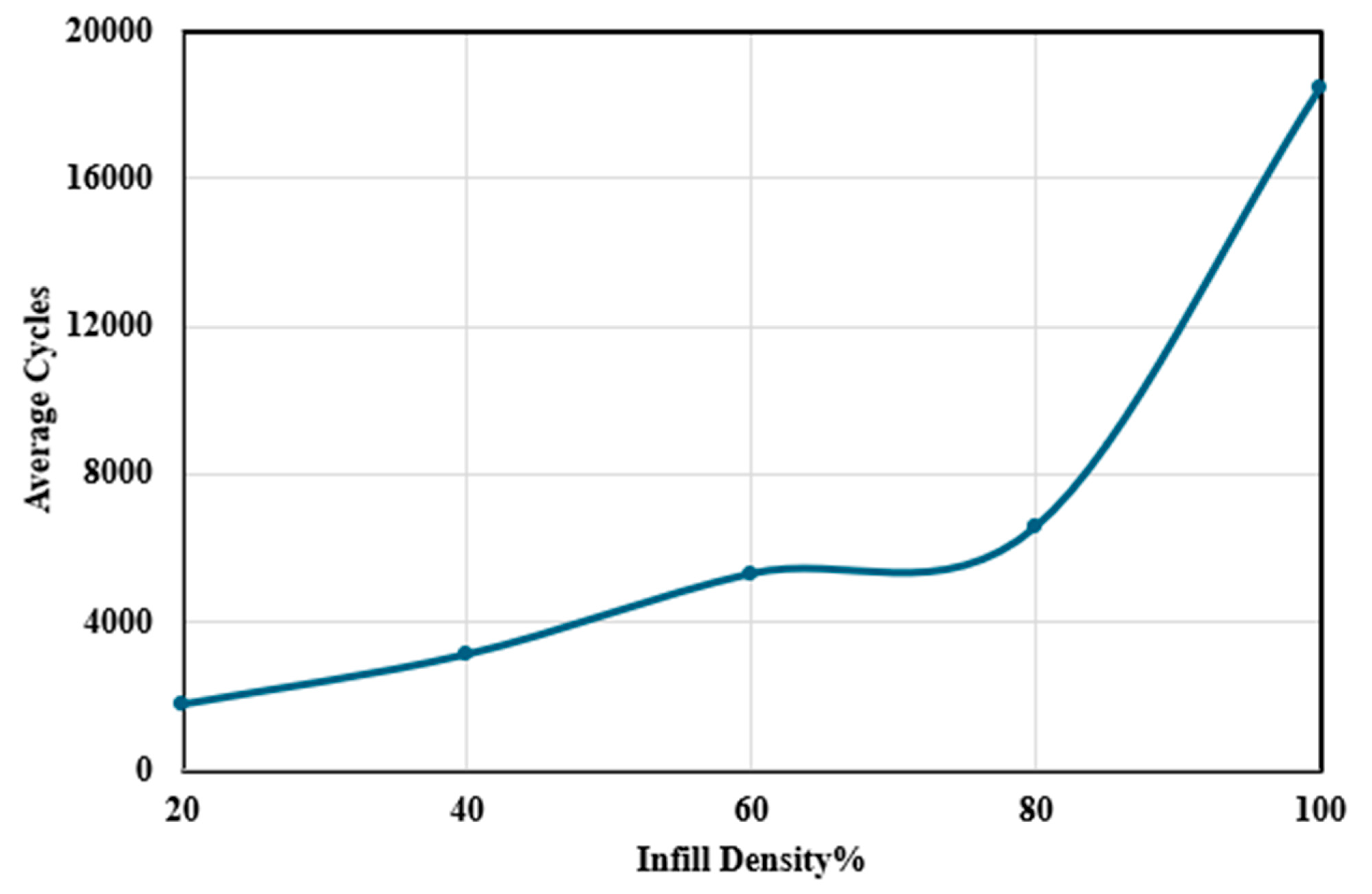
Figure 7 shows that the average fatigue life increases with infill density when results are averaged over all raster angles, indicating that infill density is a dominant factor in cyclic durability. At low infill densities (20–40%), fatigue life is relatively low and increases gradually. As the infill density increases to moderate levels (around 40–60%), a more pronounced improvement in fatigue life is observed, reflecting better load transfer and improved structural integrity as internal porosity is reduced. A slight plateau is observed around 60–70% infill as shown in Figure 7. Beyond 80% infill, fatigue life rises sharply (181% increases from 80% infill density), reaching a maximum at 100% infill, where near-solid structures minimize voids and crack initiation sites, leading to significantly enhanced fatigue resistance. Overall, the trend indicates that while raster angle effects are averaged out, infill density plays a primary role in governing fatigue performance, with the greatest gains achieved at high infill densities.
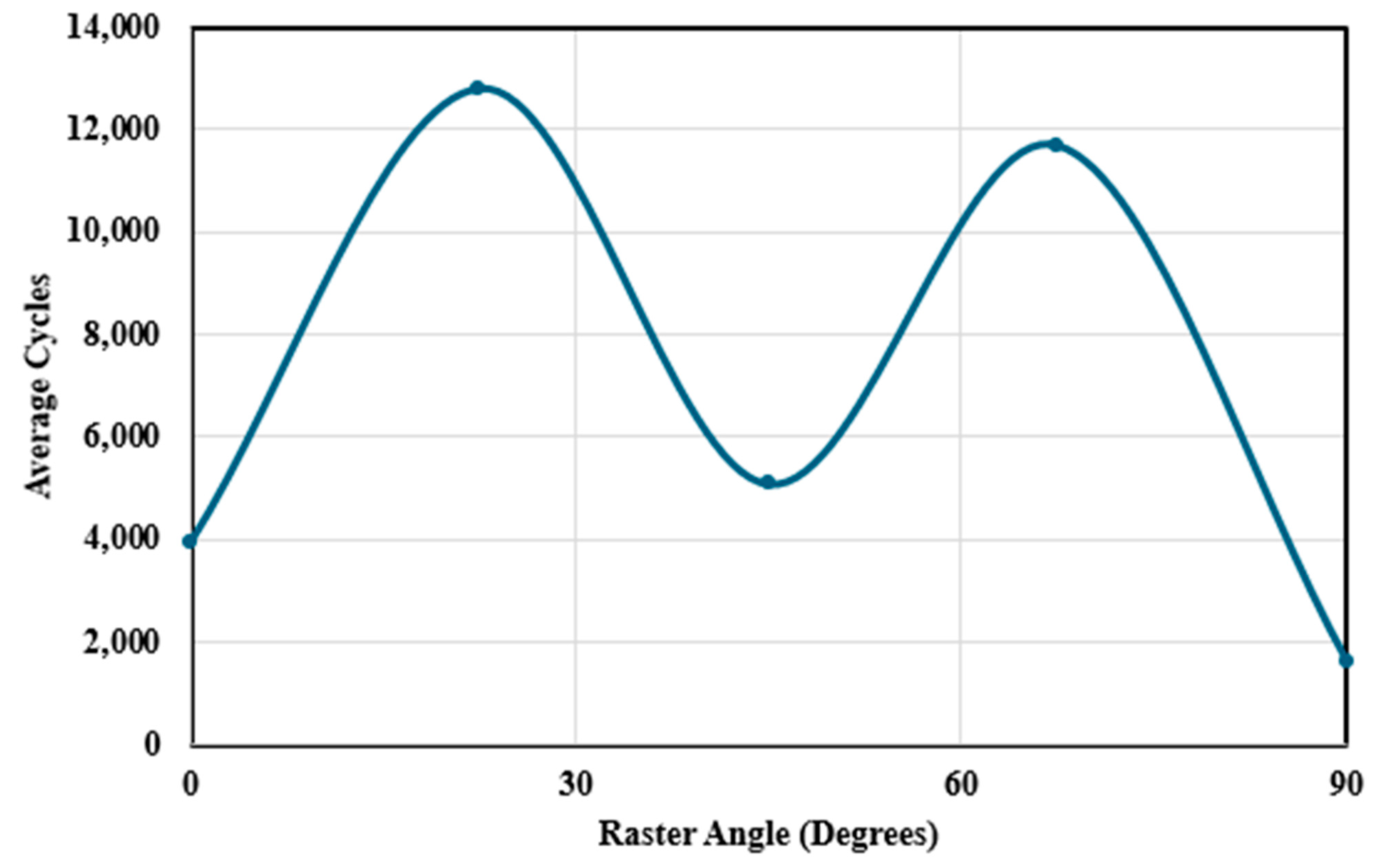
Figure 8 illustrates the effect of raster angle on the average fatigue life when results are averaged over all infill densities, highlighting a strong dependence of fatigue performance on filament orientation. Fatigue life increases markedly from 0° to around 30°, where the maximum average number of cycles is observed, indicating that raster orientations closer to the loading direction provide more efficient load transfer and delay crack initiation. As the raster angle increases toward 45°, the fatigue life drops significantly, suggesting increased shear-dominated loading at inter-raster interfaces and weaker bonding effects that promote earlier damage accumulation. A secondary increase in fatigue life is evident around 60–70°, which may be associated with a more balanced stress distribution and improved crack deflection mechanisms compared to the 45° orientation. However, fatigue life decreases sharply at 90°, where filaments are oriented perpendicular to the loading direction, leading to poor load-bearing efficiency, dominant inter-layer debonding, and the lowest fatigue resistance. Overall, the figure demonstrates that raster angle plays a critical role in governing fatigue behavior, with intermediate angles—particularly around 25° and 75°—offering optimal fatigue performance when averaged across all infill densities.
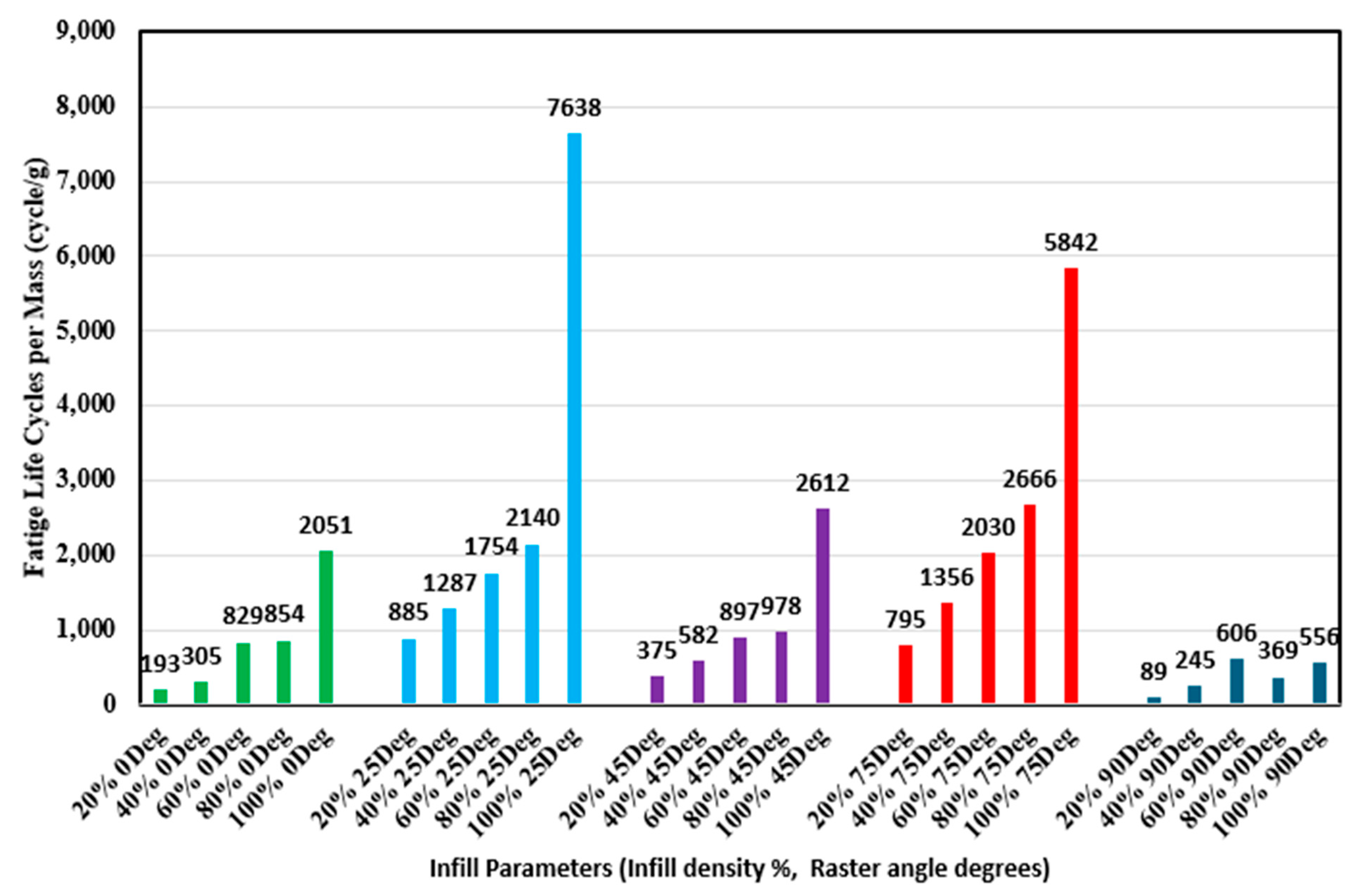
Varying the raster angle and infill density has a pronounced effect on the effective number of cycles per unit mass in 3D-printed materials, as observed in Figure 9. Generally, samples printed with 100% infill density exhibit the highest number of fatigue cycles per unit mass at most raster angles, with especially prominent results at 25° (7638 cycles/g) and 75° (5848 cycles/g), indicating superior durability and structural resilience when maximum material fill is used. In contrast, lower infill densities (such as 20% and 40%) generally result in fewer fatigue cycles per unit mass, emphasizing the trade-off between material savings and part endurance. The effect of raster angle is also significant: intermediate angles like 25°, 45°, and 75° consistently outperform the more traditional 0° and 90° raster angles, likely due to enhanced internal load distribution and reduced stress concentrations. This synergy between high infill density and select raster angles maximizes fatigue resistance relative to mass. Therefore, for applications where extended service life under cyclic loading is vital, opting for a higher infill density and carefully choosing raster angles (particularly 25° or 75°) is the optimal strategy for creating durable, efficient printed components.

4. Conclusions

This study demonstrates that both infill density and raster angle play decisive and interdependent roles in governing the torsional fatigue behavior of 3D-printed ABS components. Increasing infill density generally enhances fatigue life by reducing internal voids and improving load transfer, with the most substantial gains observed at high infill levels (≥80%), where near-solid structures significantly delay crack initiation and propagation. However, the benefits of higher infill density are strongly modulated by raster orientation. While raster angle effects are limited at low infill densities due to insufficient material continuity, they become increasingly pronounced at higher densities, where optimized filament orientations can markedly extend fatigue life. Raster angles near intermediate or quasi-isotropic configurations—particularly around 25° and 75°—provide superior fatigue resistance by promoting effective stress redistribution and load sharing between filaments and layers, whereas the 90° orientation consistently exhibits the poorest performance due to stress concentration and inter-layer debonding. When performance is considered on a mass-normalized basis, a different design trade-off emerges. The results confirm that specimens fabricated with 100% infill consistently achieve the highest fatigue endurance relative to mass, particularly at intermediate raster angles such as 25° and 75°, which exhibit markedly superior performance. These findings highlight the structural benefits of dense internal architectures combined with filament orientations that promote efficient load transfer and minimize stress concentrations. In contrast, lower infill densities, while advantageous for material savings, generally compromise fatigue efficiency, underscoring the inherent trade-off between lightweight design and long-term durability. Overall, the synergy between high infill density and optimally selected raster angles emerges as a key design strategy for enhancing fatigue resistance. For applications demanding extended service life under cyclic loading, the results clearly indicate that prioritizing higher infill levels alongside non-orthogonal raster orientations—particularly 25° or 75°—offers the most effective balance between structural integrity and mass efficiency.

Author Contributions

Conceptualization, K.K. and G.L.; methodology, G.L., K.K. and J.S.; investigation, G.L. and K.K.; data curation, G.L.; writing—original draft preparation, G.L.; writing—review and editing, G.L., K.K. and J.S. Project supervision, K.K. All authors have read and agreed to the published version of the manuscript.

Funding

The authors would like to thank the RCA fund (RCA#U095301) and the Undergraduate Research Opportunity Program (UROP) fund received from the Office of Research—University of Michigan-Flint.

Data Availability Statement

The original contributions presented in this study are included in the article. Further inquiries can be directed to the corresponding author.

Acknowledgments

We would like to express our gratitude to David Weaver and Jahid Hasan for their valuable assistance in programming the E10000 Instron testing system.

Conflicts of Interest

The authors declare no conflicts of interest.

References

  1. Ngo, T.D.; Kashani, A.; Imbalzano, G.; Nguyen, K.T.Q.; Hui, D. Additive manufacturing (3D printing): A review of materials, methods, applications and challenges. Compos. Part B Eng. 2018, 143, 172–196. [Google Scholar] [CrossRef] [Scilit]
  2. Chohan, J.S.; Singh, R.; Boparai, K.S.; Penna, R.; Fraternali, F. Dimensional accuracy analysis of coupled fused deposition modeling and vapour smoothing operations for biomedical applications. Compos. Part B Eng. 2017, 117, 138–149. [Google Scholar] [CrossRef] [Scilit]
  3. Blakey-Milner, B.; Gradl, P.; Snedden, G.; Brooks, M.; Pitot, J.; Lopez, E.; Leary, M.; Berto, F.; Plessis, A.D. Metal additive manufacturing in aerospace: A review. Mater. Des. 2021, 209, 110008. [Google Scholar] [CrossRef] [Scilit]
  4. Hasan, J.; Khanafer, K. Computational Design and Additive Manufacturing of 3D-Printed Prosthetics for Enhanced Mobility and Performance. J. Manuf. Mater. Process. 2025, 9, 312. [Google Scholar] [CrossRef] [Scilit]
  5. Golubovic, Z.; Bojovic, B.; Petrov, L.; Sedmak, A.; Milovanović, A.; Mišković, Ž.; Milošević, M. Comparative analysis of ABS materials mechanical properties. Procedia Struct. Integr. 2024, 56, 153–159. [Google Scholar] [CrossRef] [Scilit]
  6. Khan, I.; Kumar, N. Fused deposition modelling process parameters influence on the mechanical properties of ABS: A review. Mater. Today Proc. 2021, 44, 4004–4008. [Google Scholar] [CrossRef] [Scilit]
  7. Khanafer, K.; Park, J.S.; Eltaggaz, A.; Aboelkassem, Y. Investigation of the Mechanical Characteristics of Metal 3D Printing at Different Build Orientation and Directions. J. Eng. Mater. Technol. 2023, 146, 031001. [Google Scholar] [CrossRef] [Scilit]
  8. Bakhtiari, H. Effect of 3D Printing Parameters on the Fatigue Properties of Parts Manufactured by Fused Filament Fabrication: A Review. Appl. Sci. 2023, 13, 904. [Google Scholar] [CrossRef] [Scilit]
  9. Arunprasath, K.; Vijayakumar, M.; Ramarao, M.; Arul, T.G.; Pauldoss, S.P.; Selwin, M.; Radhakrishnan, B.; Manikandan, V. Dynamic mechanical analysis performance of pure 3D printed polylactic acid (PLA) and acrylonitrile butadiene styrene (ABS). Mater. Today Proc. 2021, 50, 1559–1562. [Google Scholar] [CrossRef] [Scilit]
  10. Rezaeian, P.; Ayatollahi, M.R.; Nabavi-Kivi, A.; Razavi, N. Effect of printing speed on tensile and fracture behavior of ABS specimens produced by fused deposition modeling. Eng. Fract. Mech. 2022, 266, 108393. [Google Scholar] [CrossRef] [Scilit]
  11. Grant, A.; Regez, B.; Kocak, S.; Huber, J.D.; Mooers, A. Anisotropic properties of 3-D printed Poly Lactic Acid (PLA) and Acrylonitrile Butadiene Styrene (ABS) plastics. Results Mater. 2021, 12, 100227. [Google Scholar] [CrossRef] [Scilit]
  12. Al-Ghamdi, K.A. Sustainable FDM additive manufacturing of ABS components with emphasis on energy minimized and time efficient lightweight construction. Int. J. Lightweight Mater. Manuf. 2019, 2, 338–345. [Google Scholar] [CrossRef] [Scilit]
  13. He, F.; Alshammari, Y.L.A.; Khan, M. The Effect of Printing Parameters on Crack Growth Rate of FDM ABS Cantilever Beam under Thermo-mechanical Loads. Procedia Struct. Integr. 2021, 34, 59–64. [Google Scholar] [CrossRef] [Scilit]
  14. Agarwal, K.M.; Shubham, P.; Bhatia, D.; Sharma, P.; Vaid, H.; Vajpeyi, R. Analyzing the Impact of Print Parameters on Dimensional Variation of ABS specimens printed using Fused Deposition Modelling (FDM). Sens. Int. 2021, 3, 100149. [Google Scholar] [CrossRef] [Scilit]
  15. Brackett, J.; Cauthen, D.; Condon, J.; Smith, T.; Gallego, N.; Kunc, V.; Duty, C. The impact of infill percentage and layer height in small-scale material extrusion on porosity and tensile properties. Addit. Manuf. 2022, 58, 103063. [Google Scholar] [CrossRef] [Scilit]
  16. Letcher, T.; Waytashek, M. Material property testing of 3D-Printed specimens in PLA on an Entry-Level 3D printer. Volume 2A: Advanced Manufacturing. In Proceedings of the ASME 2014 International Mechanical Engineering Congress and Exposition, Quebec, QC, Canada, 14–20 November 2014. [Google Scholar] [CrossRef] [Scilit]
  17. Afrose, M.F.; Masood, S.H.; Iovenitti, P.; Nikzad, M.; Sbarski, I. Effects of part build orientations on fatigue behavior of FDM-processed PLA material. Prog. Addit. Manuf. 2015, 1, 21–28. [Google Scholar] [CrossRef] [Scilit]
  18. Ziemian, S.; Okwara, M.; Ziemian, C.W. Tensile and fatigue behavior of layered acrylonitrile butadiene styrene. Rapid Prototyp. J. 2015, 21, 270–278. [Google Scholar] [CrossRef] [Scilit]
  19. Jap, N.S.F.; Pearce, G.M.; Hellier, A.K.; Russell, N.; Parr, W.C.; Walsh, W.R. The effect of raster orientation on the static and fatigue properties of filament deposited ABS polymer. Int. J. Fatigue 2019, 124, 328–337. [Google Scholar] [CrossRef] [Scilit]
  20. Bhuiyan, M.; Khanafer, K. Static tensile and cyclic tension-tension fatigue testing investigation of 3D printed ABS materials: A comparative study of different infill orientation and infill density with statistical analysis. Prog. Addit. Manuf. 2025, 11, 1705–1732. [Google Scholar] [CrossRef] [Scilit]
  21. El-Deeb, I.S.; Grabowik, C.; Esmael, E.; Nabhan, A.; Rashad, M.; Ebied, S. Investigation of Effect of Part-Build Directions and Build Orientations on Tension–Tension Mode Fatigue Behavior of Acrylonitrile Butadiene Styrene Material Printed Using Fused Filament Fabrication Technology. Materials 2024, 17, 5133. [Google Scholar] [CrossRef] [Scilit] [PubMed]
  22. Sadaghian, H.; Khalilzadehtabrizi, S.; Farzam, M.; Dehghan, S. Behavior of 3D-printed polymers under monotonic torsion—A database of 15 different materials. Addit. Manuf. 2022, 60, 103251. [Google Scholar] [CrossRef] [Scilit]
  23. Sadaghian, H.; Khodadoost, S.; Seifiasl, A.; Buswell, R.A. Preliminary Insight into Torsion of Additively-Manufactured Polylactic Acid (PLA)-Based Polymers. Exp. Mech. 2024, 64, 1443–1464. [Google Scholar] [CrossRef] [Scilit]
  24. Ferreira, C.M.; Vicente, C.M.S.; Sardinha, M.; Leite, M.; Reis, L. Characterization of 3D printed ABS specimens under static and cyclic torsional loadings. Procedia Struct. Integr. 2021, 34, 205–210. [Google Scholar] [CrossRef] [Scilit]
Figure 1. Blueprint showing dimensions of the 3D-Printed ABS test bar created in SOLIDWORKS CAD system (All dimensions are in cm).
Machines 14 00328 g001
Figure 2. Test bars of different infill parameters showing difference in infill density with 20% infill (top) to 100% infill (bottom) all set to raster angle of 45° for viewing purposes.
Machines 14 00328 g002
Figure 3. Test bars of different parameters showing difference in raster angles, showing 0° (top) to 90° (bottom) all set to 20% infill for viewing purposes.
Machines 14 00328 g003
Figure 4. (a) Stratasys F370CR FDM 3D printer (University of Michigan-Flint, Flint, MI, USA), (b) 3D printed ABS-M30 samples.
Machines 14 00328 g004
Figure 5. ELECTROPULS® E10000 Instron Machine.
Machines 14 00328 g005
Figure 6. Effect of varying infill density and raster angle on the fatigue life cycle.
Machines 14 00328 g006
Figure 7. Effect of infill density on average fatigue life considering all raster angles.
Machines 14 00328 g007
Figure 8. Effect of raster angle on average fatigue life (averaged over all infill densities).
Machines 14 00328 g008
Figure 9. Effect of Infill Density and Raster Angle on Fatigue Life Cycles per Unit Mass in 3D-Printed Parts.
Machines 14 00328 g009
Table 1. 3D printing parameters used for fabricating dog-bone specimens.
3D Printing ParameterValue
Nozzle diameter0.4 mm
Layer thickness0.254 mm
Infill patternGrid
Extruder temperature300 °C
Bed temperature110 °C
Printing volumetric flow rate4.56 mm3/s
Printing speed36.3 mm/s
Disclaimer/Publisher’s Note: The statements, opinions and data contained in all publications are solely those of the individual author(s) and contributor(s) and not of MDPI and/or the editor(s). MDPI and/or the editor(s) disclaim responsibility for any injury to people or property resulting from any ideas, methods, instructions or products referred to in the content.