1. Introduction
Electro-hydraulic servo systems (EHSS) are extensively utilized in motion control, robotics, automation, and flight actuator applications due to their high power-to-weight ratio, high load-handling capability, rapid response, efficiency and self-cooling properties. However, beyond their inherent nonlinearities, EHSS are influenced by substantial parameter uncertainties, including fluid compressibility, which is difficult to determine precisely.
Researchers should develop nonlinear position and force control algorithms based on various parameters such as air compression and/or temperature changes during hydraulic system operation. The work of Hsieh and Lai addresses force monitoring controllers that manage the effects of external disturbances such as noise, which arise due to the nature of pressure measurements [
1]. Therefore, a model including nonlinear force monitoring and the pressure derivative in the servo-valve system was developed.
In addition, limitations exist in the electro-hydraulic servo system because of its nonlinear dynamic characteristics, such as those posed by the relationship between the pressure and flow of the driving hydraulic oil. To manage these nonlinear dynamics, the focus has been on the application of backstepping [
2], feedback linearization [
3] and sliding mode control [
4,
5]. Because oscillations often occur in sliding mode control, different strategies have been developed to reduce this limitation [
6]. Backstepping enables adaptive parameter tuning for better dynamic response, whereas feedback linearization transforms the nonlinear dynamics into a closed-loop linear model. Xiao et al. [
7] employed disturbance rejection methods for hydraulic system tracking control. Nonetheless, this strategy relies on measuring the disturbance force and its derivative, which is often impractical in real-world applications. Wang et al. [
8] proposed an adaptive control approach that employs an iterative method to update the control parameters in response to disturbance information.
In physical system models, it is common to have some parameters that increase the order of the dynamic model, such as time constants, moments of inertia and Reynolds numbers. To simplify the model, these parameters are often ignored to reduce the model order. Suppression of parameters distorts or reduces the size or order of the system [
9].
Position control is an important application area in automation and robotic systems. While traditional electric motors offer high precision and fast response times, hydraulic systems stand out with their high torque capacities and power densities. For this reason, realistic modeling of hydraulic systems and controller design issues remains up-to-date. Although many modern control techniques exist, the PID control method remains one of the oldest and most widely applied approaches in feedback control systems. PID controllers are preferred due to their simple structures, durable performance and ease of understanding and adjustment. This research evaluates the dynamic performance of a PID-controlled electro-hydraulic servo system, particularly in terms of steady-state error, settling time, and overshoot. It also assesses the performance characteristics of key system components, including servo valves, hydraulic motors and pumps, with the objective of achieving precise position control. In this study, angular position control was implemented for a servo valve-controlled hydraulic system, for which a corresponding simulation model was developed. The sinusoidal reference input was applied to the hydraulic system equipped with a cylindrical mass, and closed-loop responses were obtained. As a result, the angular position of the hydraulic system was controlled using a PID algorithm implemented in the LabVIEW (2015) environment (National Instruments, Austin, TX, USA), and the performance outcomes were analyzed and evaluated.
Hou et al. [
10] investigated the control of angular position in a hydraulic-assisted system. A mathematical model for the hydraulic-assisted system was established in their work, and its dynamic behavior was expressed through state-space equations. Subsequently, an iterative learning controller was implemented to infer the system’s unmeasured parameters in the angular position control task. Additionally, a Simulink-based simulation model was constructed for the multi-cylinder traction hydraulic assist system. Findings show that this iterative learning control strategy achieves precise position regulation in electro-hydraulic valve applications. Both experimental and simulation findings confirm that the proposed control strategy delivers high positional accuracy in electro-hydraulic valve systems.
Jensen et al. [
11] proposed a novel approach to point-to-point trajectory control in hydraulically assisted cranes. The control algorithm is configured to maintain linear system behavior via its parameter settings. For any given start and end point, the actuator’s movement is minimized. This prevents any jolts from affecting the movement, thus greatly reducing energy consumption. The proposed approach was evaluated on a physical setup, showing precise setpoint tracking with minimal oscillatory behavior.
Mononen et al. [
12] state that mobile work machines are being developed towards more intelligent, autonomous and energy-efficient field robotic systems. This approach can provide significant advantages, particularly in fields where precise path following is essential. For instance, a mobile robot must accurately follow desired parameters to remain on a predefined path, provided that its location offers the necessary position feedback. Hydraulic work machines have nonlinear system dynamics that make precise motion control difficult. These nonlinear sources can be internal dynamics of the system or environmental effects. This work investigates how hydraulic actuators perform in path-tracking control applications. Following this, simulation outcomes are presented for vehicle trajectory tracking around obstacles with varying curvatures, employing a closed-loop hydraulic steering system model.
Shen et al. [
13] developed a method to enhance force tracking in an electro-hydraulic servo system by combining a feedback controller with an adaptive controller, both utilizing PI control. In this study, the system’s closed-loop transfer function was derived using a system identification algorithm. Experimental results indicate that the proposed controller achieves high-accuracy force tracking and significantly boosts overall system performance.
Li and Hu [
14] developed and simulated an electro-hydraulic servo loading system using AMESim, carefully choosing and configuring the hydraulic components. The system was employed to simulate dynamic loading on the material in the aircraft shell design and to analyze its behavior under varying strength conditions, with PID control applied to optimize system performance. Additionally, the influence of different PID parameters on the system under varying conditions was analyzed, and their effect on pressure variations within the hydraulic cylinder was examined. The optimum control parameters were determined.
Gao et al. [
15] introduced a strategy for controlling the position of electro-hydraulic servo systems. Feedforward compensation was used to address time delay, ensuring accurate tracking of the given signal. Precise position control was achieved by estimating internal parameter uncertainties, to prevent system disturbances.
Feng and Yan [
16] studied a hydraulic servo system by designing an electro-hydraulic servo drive that utilizes a nonlinear feedback control strategy. In their model, the bulk modulus is considered constant regardless of supply pressure variations. The experimental system was assembled in the laboratory with a rotary hydro-motor and servo-valve components. It is modeled based on the actual system. Additionally, the main objective is to apply PID theory to the rotary servo-hydraulic system and introduce improvements. This approach could serve as a procedure for other rotary servo-hydraulic systems with similar characteristics, aiding in the development of the desired control law for such systems.
Similar studies published in this field also support these developments. For instance, Çakan et al. [
17] obtained notable outcomes by applying the Bee Algorithm to model electro-hydraulic servo valve systems. Yaman [
18] developed a low-cost active force sensor with servo control and validated it experimentally. In a separate study, Kocakaya and Altinkaya [
19] evaluated the PID control performance across different PLC series in hydraulic proportional valve systems. These investigations highlight modern approaches to hydraulic system control and modeling, while underlining the significance of this research area.
The main contribution of this research lies in demonstrating that an FPGA-based PID-controlled servo-hydraulic system can achieve precise and responsive angular positioning, comparable to traditional electric drives, while offering the robustness and force density advantages of hydraulic actuation. The presented approach provides a cost-effective and modular solution for real-time motion control in nonlinear systems.
2. System Dynamics
To understand the inherent nonlinearities of the servo-hydraulic system, the governing physical equations are theoretically analyzed. The dynamics of the rotary actuator are described by the valve flow equation, hydraulic continuity, and torque balance equation. First, the linearized flow equation for the servo valve is given by:
Here QL is the load flow, Kq is the flow gain, xv is the valve spool position, KC is the flow-pressure coefficient, and PL is the load pressure difference.
Second, considering the fluid compressibility, the continuity equation for the hydraulic motor chambers is described as:
Here Dm is the volumetric displacement of the motor, θ is the angular position, Vt is the total compressed volume, βe is the effective bulk modulus of the fluid, and Ctm is the total leakage coefficient.
Finally, the motion of the actuator is governed by Newton’s second law (torque balance):
Here J is moment of inertia, B is the viscous damping coefficient, TL is the external load torque, and Tf represents the nonlinear friction torque.
As seen in these equations, the system dynamics are heavily influenced by the effective bulk modulus (βe), which varies with pressure and entrained air, and the nonlinear friction torque (Tf), which exhibits stick-slip behavior at low velocities. Due to the difficulty in accurately measuring these time-varying physical parameters in real time, a ‘System Identification’ approach (black-box modeling) was adopted in this study for controller tuning, rather than relying on an analytical model-based design. However, the physical model presented above serves to explain the source of the phase lag and tracking errors observed in the experimental results.
To control this nonlinear plant, a classical PID strategy is employed using the error signal defined as follows:
The input signal
u(
t) for the controller is computed using the equation below:
Here Kp denotes the proportional gain, Ki the integral gain and Kd the derivative gain. The PID controller’s proportional term corrects instantaneous error, the integral term integrates past errors, and the derivative term anticipates future errors according to the current error trend. Together, these three terms allow the PID controller to maintain accurate and smooth position control.
Position control in systems faces several difficulties due to inherent nonlinearities. One key challenge is that systems often exhibit nonlinear behavior caused by dynamic factors such as friction. These nonlinear behaviours can lead to oscillations and instability if not properly managed. Variations in system parameters, such as changes in load or temperature, can impact overall system performance. Effective handling of these uncertainties requires the use of robust control approaches. External disturbances, including vibrations or changes in load, can impact the system’s ability to precisely track the desired position.
The PID control law generates a control signal that minimizes the error between the reference position and the measured position. To implement the continuous-time PID control law on the FPGA-based digital processor, the equation must be discretized. The continuous PID equation is given by (4). Using the Backward Euler method for numerical approximation, the integral and derivative terms are discretized with a sampling time of
Ts = 0.001 s (1 kHz). The integral term is approximated as a running sum:
The derivative term is approximated using the backward difference:
Substituting these into the control equation, the discrete-time control signal
u[
k] at step
k is calculated as:
This can be implemented recursively. The integral component
uI[
k] and derivative component
uD[
k] are computed as:
Finally, the total control output sent to the DAC is:
This recursive form is computationally efficient and minimizes memory usage on the FPGA logic gates.
Here, coefficient transformations are performed as follows, taking into account the sampling time (
Ts):
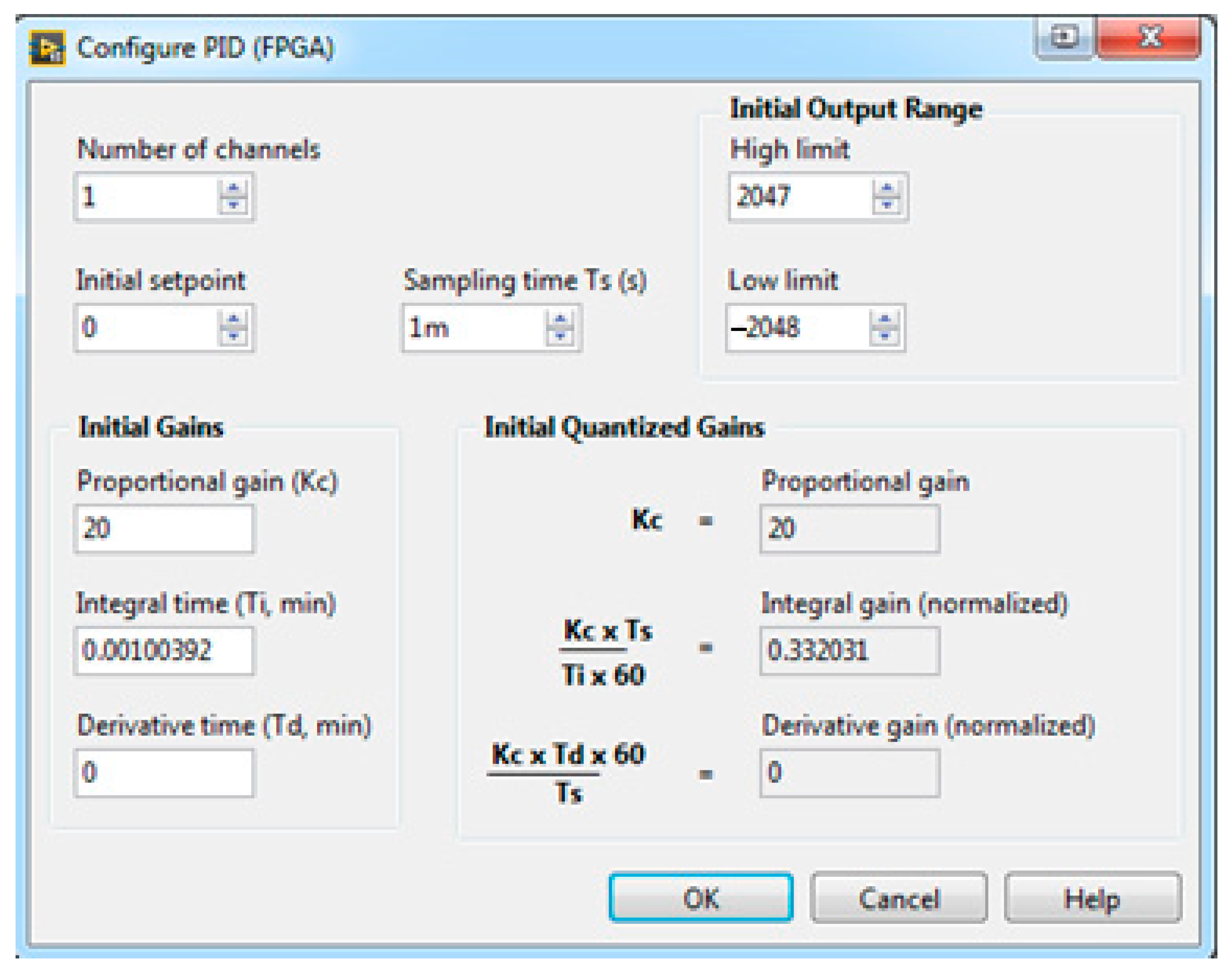
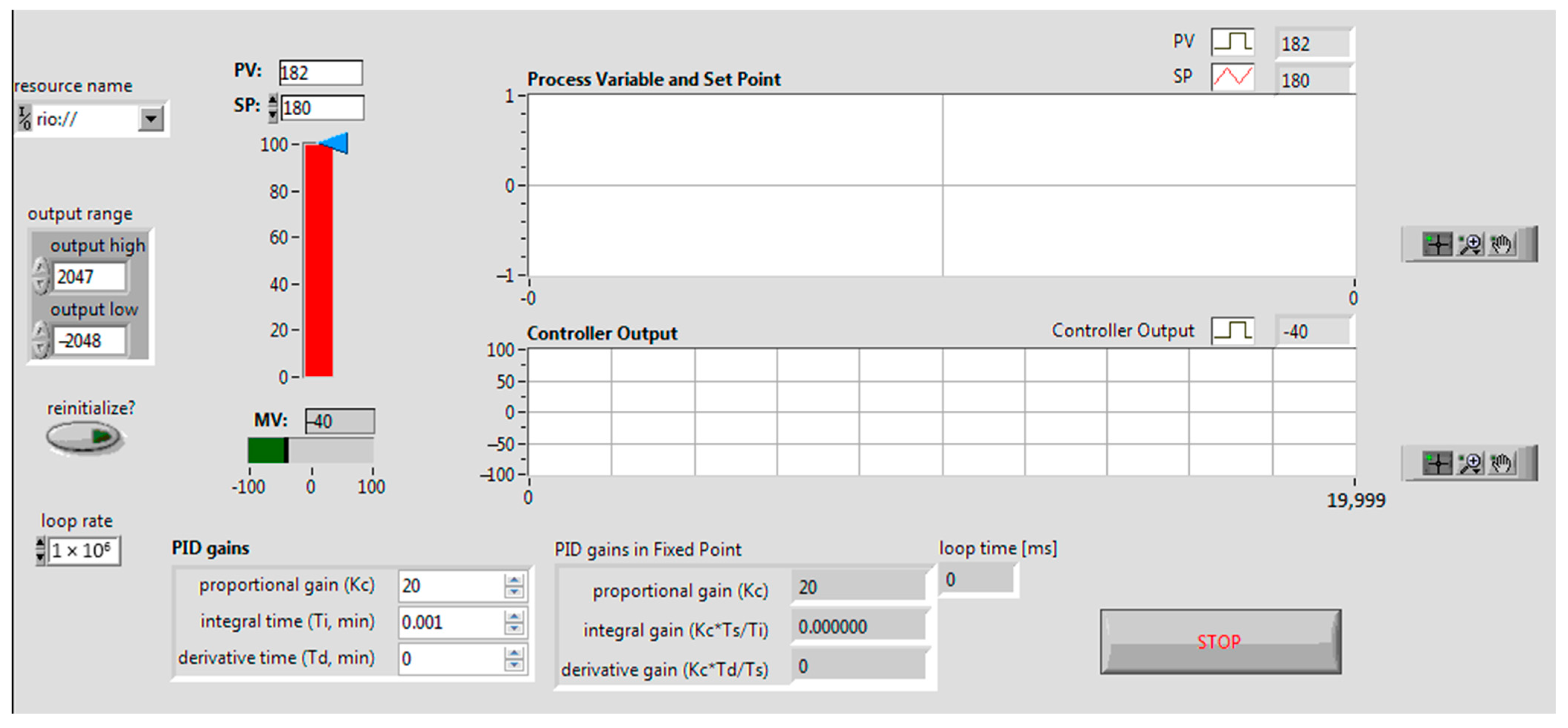
These discretized coefficient transformations and initial gain settings are configured within the hardware-level logic, as shown in
Figure 1.
Although classical PID controllers are fundamentally designed for linear time-invariant (LTI) systems, they can be highly effective in controlling nonlinear electro-hydraulic servo systems (EHSS) when implemented on high-speed hardware architectures. The inherent nonlinearities of hydraulic systems—such as fluid compressibility, pressure-dependent flow gains, and stick-slip friction—can be mathematically treated as bounded external disturbances acting on a nominal linear plant. By leveraging the true parallel processing capability of the Field Programmable Gate Array (FPGA), the proposed control loop operates at a deterministic and high-frequency sampling rate of 1 kHz. This near-zero latency execution provides a continuous high-gain robust control effect, allowing the simple PID algorithm to detect and suppress nonlinear dynamic variations almost instantaneously before they manifest as significant position errors. Consequently, the rapid corrective action of the hardware-level PID effectively compensates for the local nonlinearities along the operating trajectory, circumventing the need for computationally heavy nonlinear control laws.
3. Materials and Methods
3.1. System Architecture
An electro-mechanical servo-hydraulic actuator forms the core of the system, where the angular position is controlled by a ±10 V analog signal applied to the servo valve. The setup comprises a hydraulic pump, a two-stage proportional servo valve, a hydraulic motor, a rotary encoder and a reconfigurable FPGA-based control unit. A classical PID controller is deployed on the FPGA hardware, ensuring high-speed real-time computation independent of host systems.
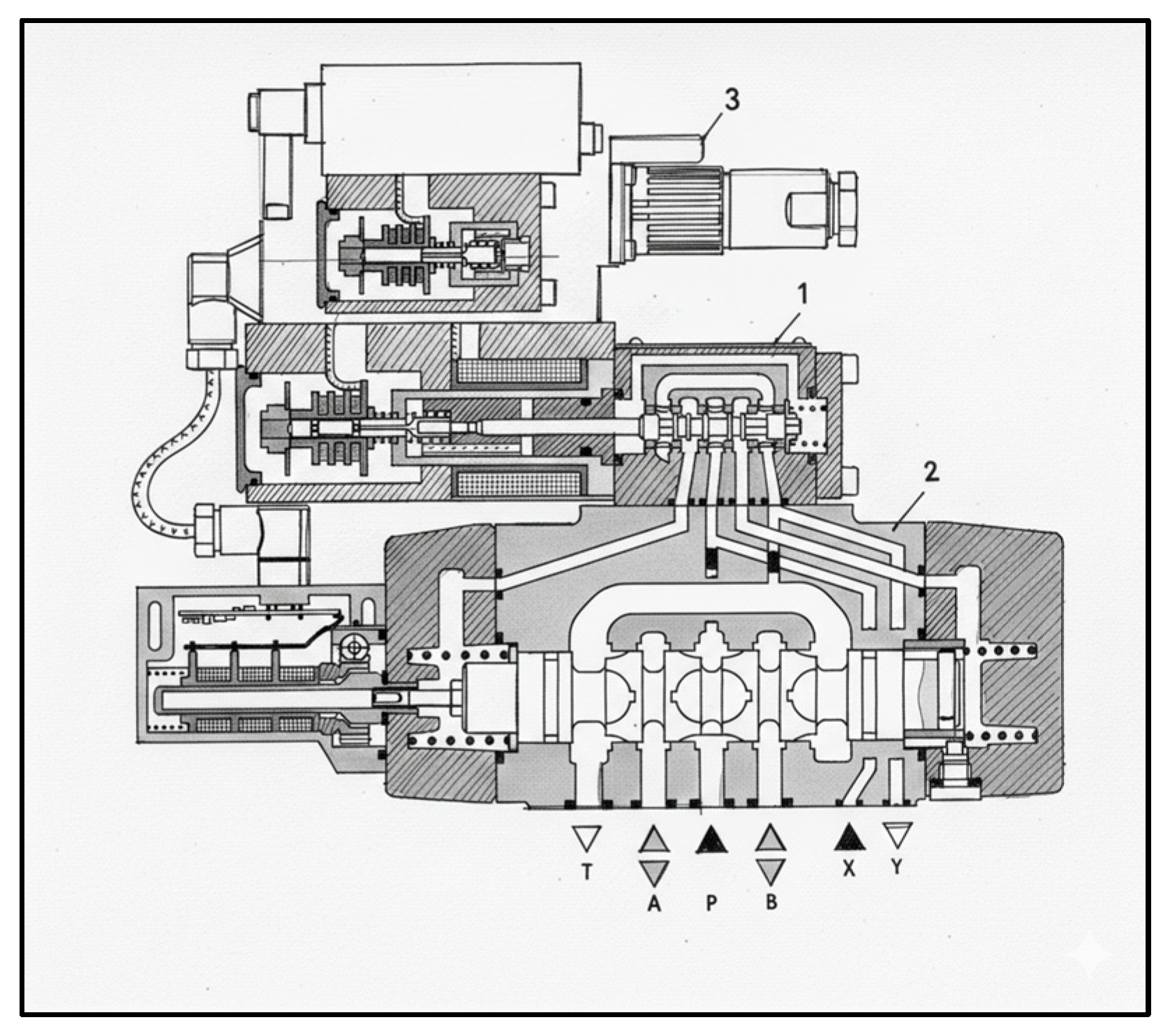
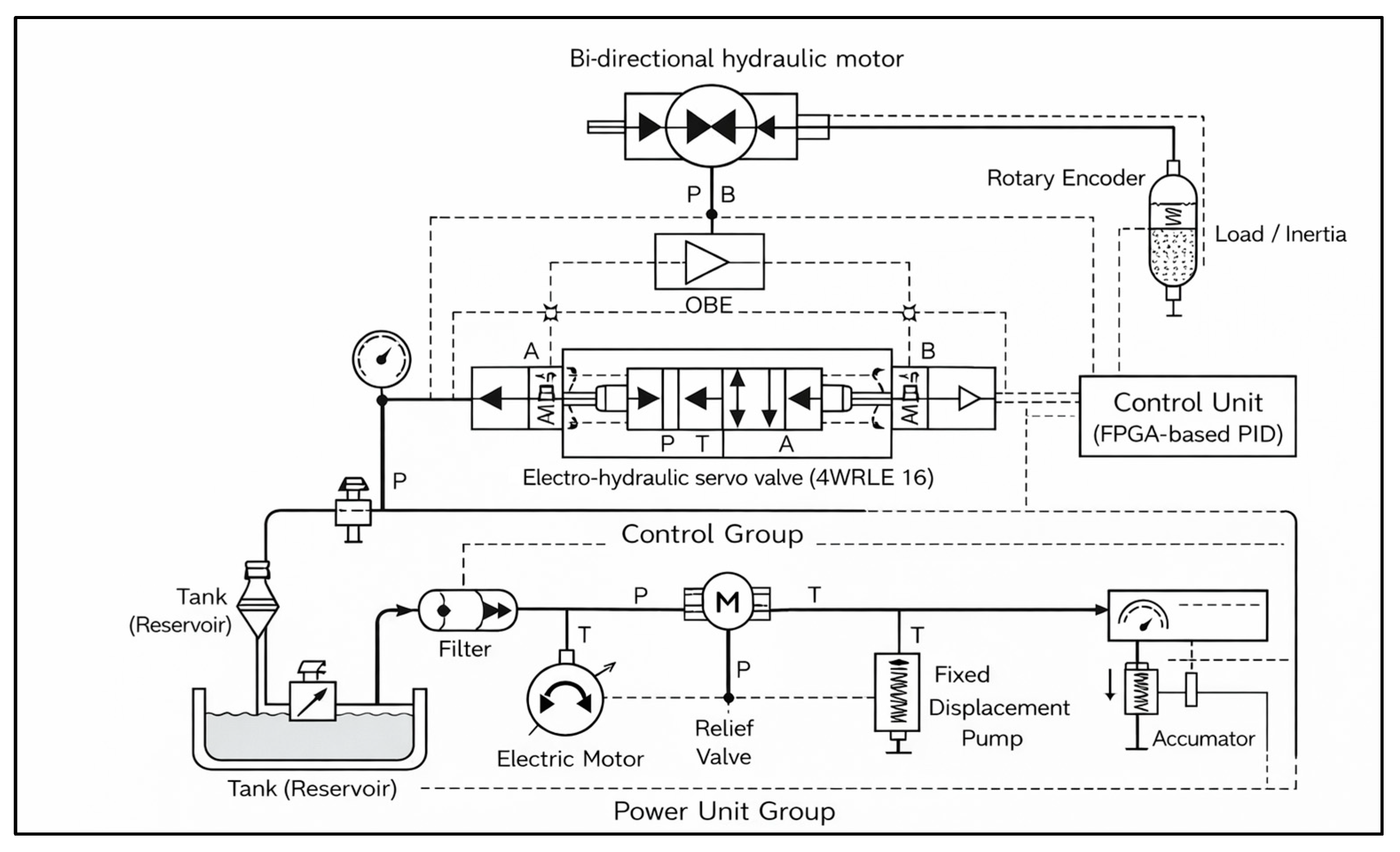
Figure 2 presents the structure of the two-stage servo valve (Rexroth 4WRLE 16) (Bosch Rexroth AG, Lohr am Main, Germany), showing the pilot valve, main valve body, and on-board electronics responsible for controlling fluid flow.
The servo valve controls the flow to the hydraulic motor, thereby adjusting its angular displacement. The output shaft of the motor is mechanically coupled to a high-resolution optical encoder for real-time position measurement.
3.2. Experimental Setup
The experimental test bench is designed to validate the proposed control architecture. The hydraulic pump (Hema 1PN-060) (Hema Endüstri A.Ş., Tekirdağ, Türkiye) provides up to 8.7 lt/min flow rate and is driven by a 1405 rpm electric motor. The servo valve (Rexroth 4WRLE 16) is mounted in line with the rotary hydraulic motor. The encoder (Autonics E40) (Autonics Corp., Busan, South Korea) is directly coupled to the motor shaft using a toothed pulley mechanism.
The entire setup is assembled on a parallel guide rail structure and interfaced with a National Instruments myRIO-1900 (National Instruments, Austin, TX, USA) embedded platform, featuring both real-time and FPGA modules.
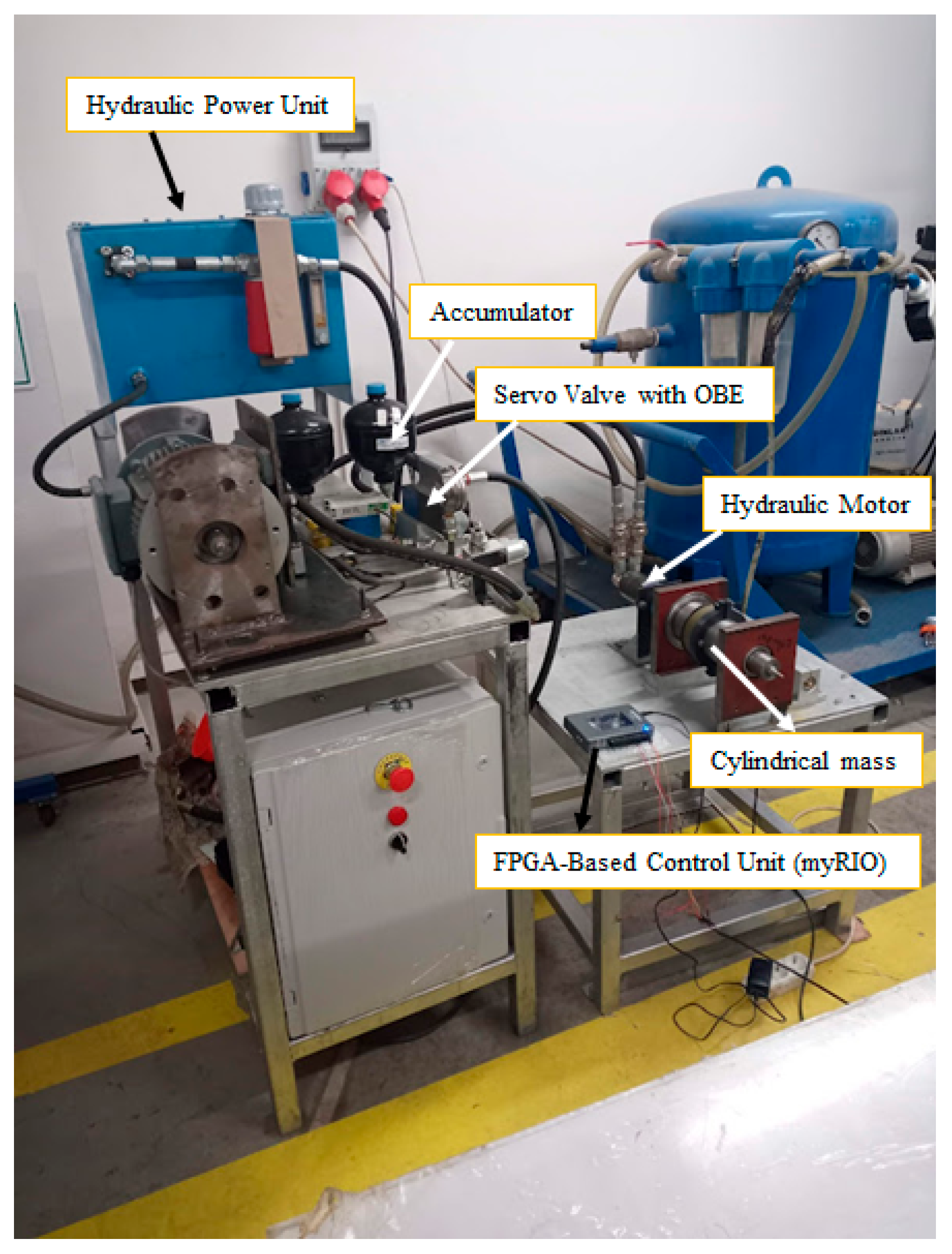
Figure 3 shows the full experimental setup, including the control electronics, hydraulic elements, and mechanical platform.
As shown in
Table 1, the ±10 V analog input and output range on the MSP (Mini System Port) connector of myRIO is particularly important for interfacing directly with industrial servo valves. Additionally, the 500 kS/s (500,000 samples per second) analog input rate and the parallel structure of the FPGA enable sensor data (pressure and position) to be processed with virtually zero latency. The A and B phase signals from the encoder are read via digital input lines (DIO) on the FPGA and processed by a hardware-based quadrature decoder block to enable high-speed position tracking.
In all experiments, the hydraulic motor drives a fixed load represented by a cylindrical mass (5 kg), simulating the dynamic resistance of a typical rotary actuator application.
3.3. Instrumentation and Data Acquisition
The encoder has a resolution of 360 pulses per revolution and operates at 5 V input. The encoder’s A and B channels are connected to the FPGA’s digital input ports for quadrature decoding. The system also monitors hydraulic pressure and pump speed using analog sensors. Data acquisition and control logic are implemented entirely within the FPGA and real-time cores of the myRIO module, enabling autonomous control without host PC dependency.
Sensor and actuator parameters are listed in
Table 2. Position feedback is continuously sampled and processed to compute the control error, which is then used to update the servo valve input in real time.
A classical PID controller is employed for angular position control. The gains (
Kp,
Ki,
Kd) are implemented in fixed-point format within the FPGA environment using LabVIEW Express VI configuration. The control loop operates at a high sampling rate to ensure minimum delay between feedback and actuation. A host interface enables real-time gain tuning through communication with the FPGA logic. As illustrated in
Figure 4, the embedded system employs the control block diagram presented. The rotary encoder provides position feedback, which is compared to the reference signal. The PID controller processes this error to generate the appropriate analog control voltage for the servo valve.
3.4. System Identification and Modeling
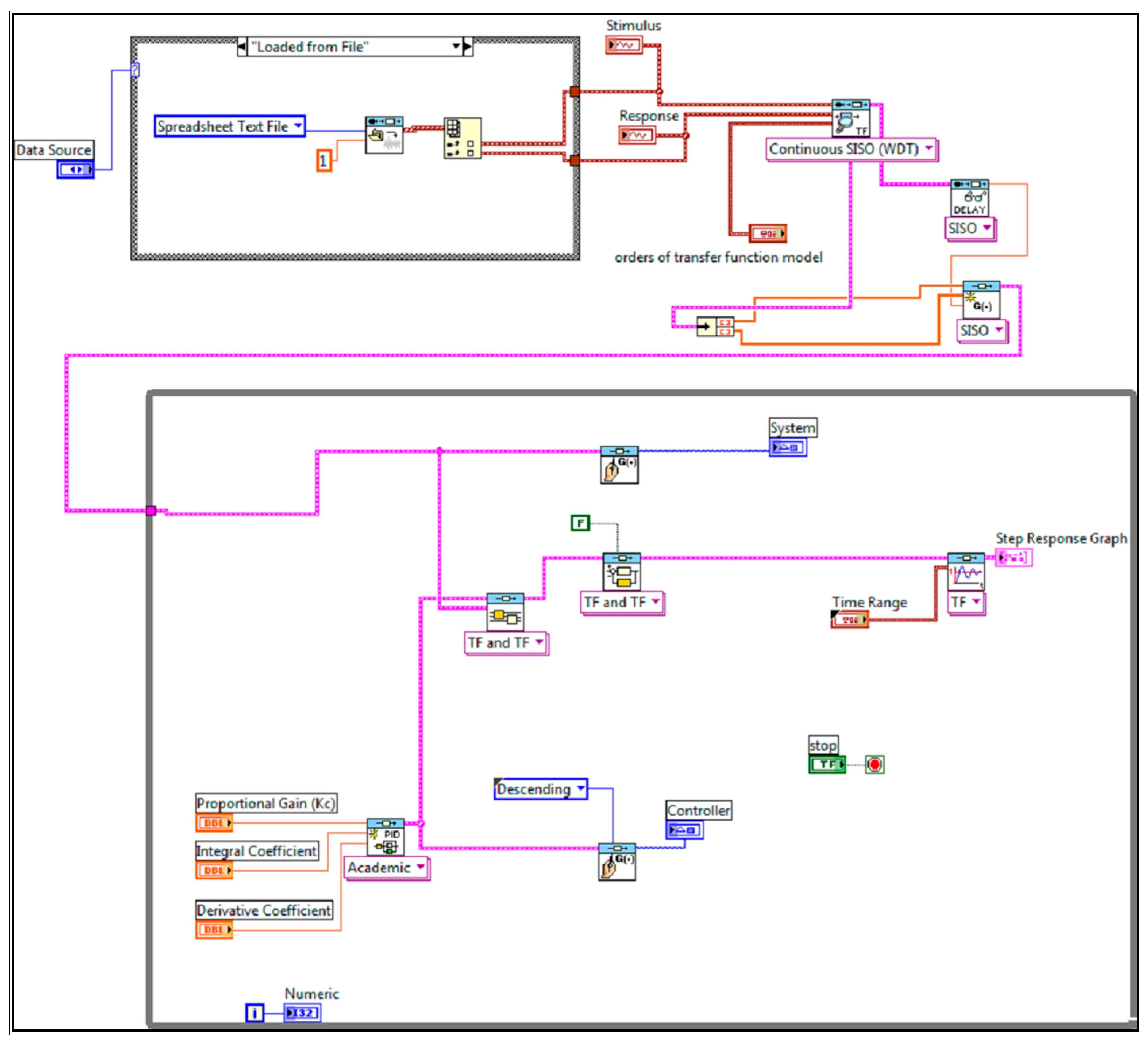
System identification techniques are used to derive a mathematical model of the actuator dynamics. A sinusoidal input ranging from −180° to +180° is applied, and the response is collected from the encoder output. This data is fed into LabVIEW’s system identification toolkit in
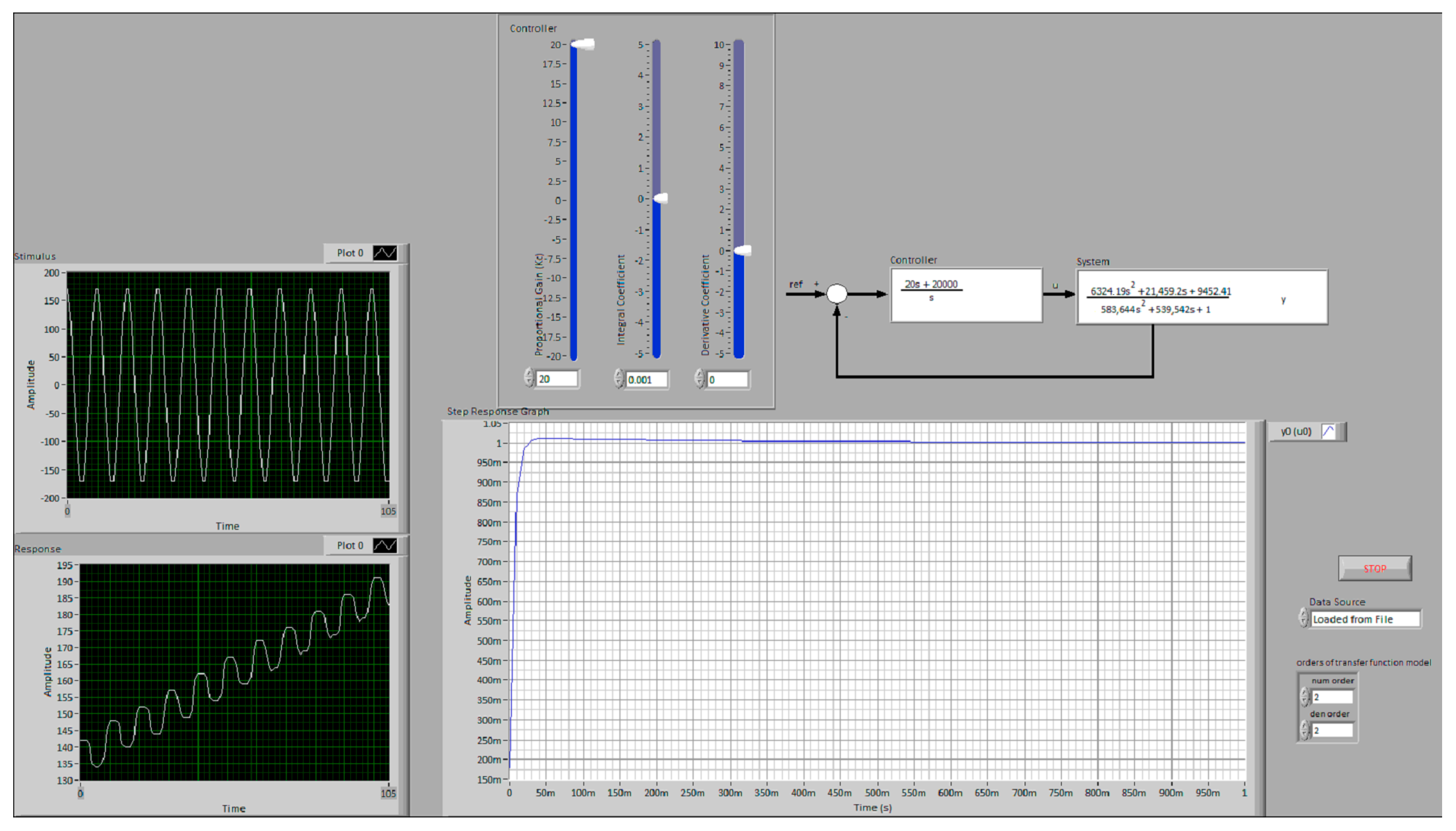
Figure 5 to estimate a transfer function of the system. This block diagram directly transfers the obtained transfer function to the PID Tuning stage.
The LabVIEW Control and Simulation Module takes the model object output from the SI Estimate Transfer Function Model block and calculates the optimal
Kp,
Ki,
Kd values using the CD Create PID Model block. The user defines the system using the interface shown in
Figure 5, then performs simulations on this virtual model to determine the control coefficients, and finally loads these coefficients into the FPGA-based PID loop. This integrated structure eliminates the risks associated with trial-and-error methods. This is because trials conducted with incorrect PID coefficients in hydraulic systems can cause oscillations and mechanical damage in the system. The process minimizes this risk in a virtual environment.
The stimulus-response dataset is shown in
Figure 6, which demonstrates the input/output signals and the model fitting interface. This interface is a practical application. Converting the physical system into a digital model (Transfer Function) and developing the controller on this model reduces commissioning times. This transfer function is then used to tune PID gains offline and validate them via simulation. The LabVIEW System Identification Toolkit enables the use of control techniques in this process.
Using the developed model, the controller can be tuned efficiently, achieving favorable outcomes including minimal rise time, reduced overshoot, and accurate steady-state behavior. Real-time experiments demonstrate that the tuned controller reliably handles small, medium, and large input signals with high precision.
Although the initial model-based tuning suggested a non-zero derivative term, the derivative time (Td) was experimentally set to zero during real-time implementation. This decision was made to prevent the amplification of high-frequency quantization noise originating from the incremental encoder, which would otherwise lead to undesirable control signal chattering and mechanical vibration. The experimental results confirmed that the proportional–integral configuration provided sufficient damping and stability without the need for derivative action.
3.5. Control Algorithm and Implementation
The ±10 V analog output from the controller activates the servo valve, enabling the hydraulic motor to reach the target angular position. The closed-loop configuration provides stable and responsive control under varying conditions. To further simplify the controller configuration, normalized PID gains are calculated using the LabVIEW Express VI module. This approach prevents repeated calculations throughout the operating period. A detailed block diagram of the PID control logic implemented in the LabVIEW (2015) environment is shown in
Figure 7. This represents the software interface layer before the PID is transferred to the FPGA hardware. This layer acts as a bridge, ensuring that model parameters from the system identification phase are transferred correctly and optimally to the logic gates at the hardware level. The success of the developed system is directly related to the modeling accuracy shown in
Figure 5 and the speed of the FPGA implementation. Additionally, the host computer interface for real-time parameter adjustment is shown in
Figure 8.
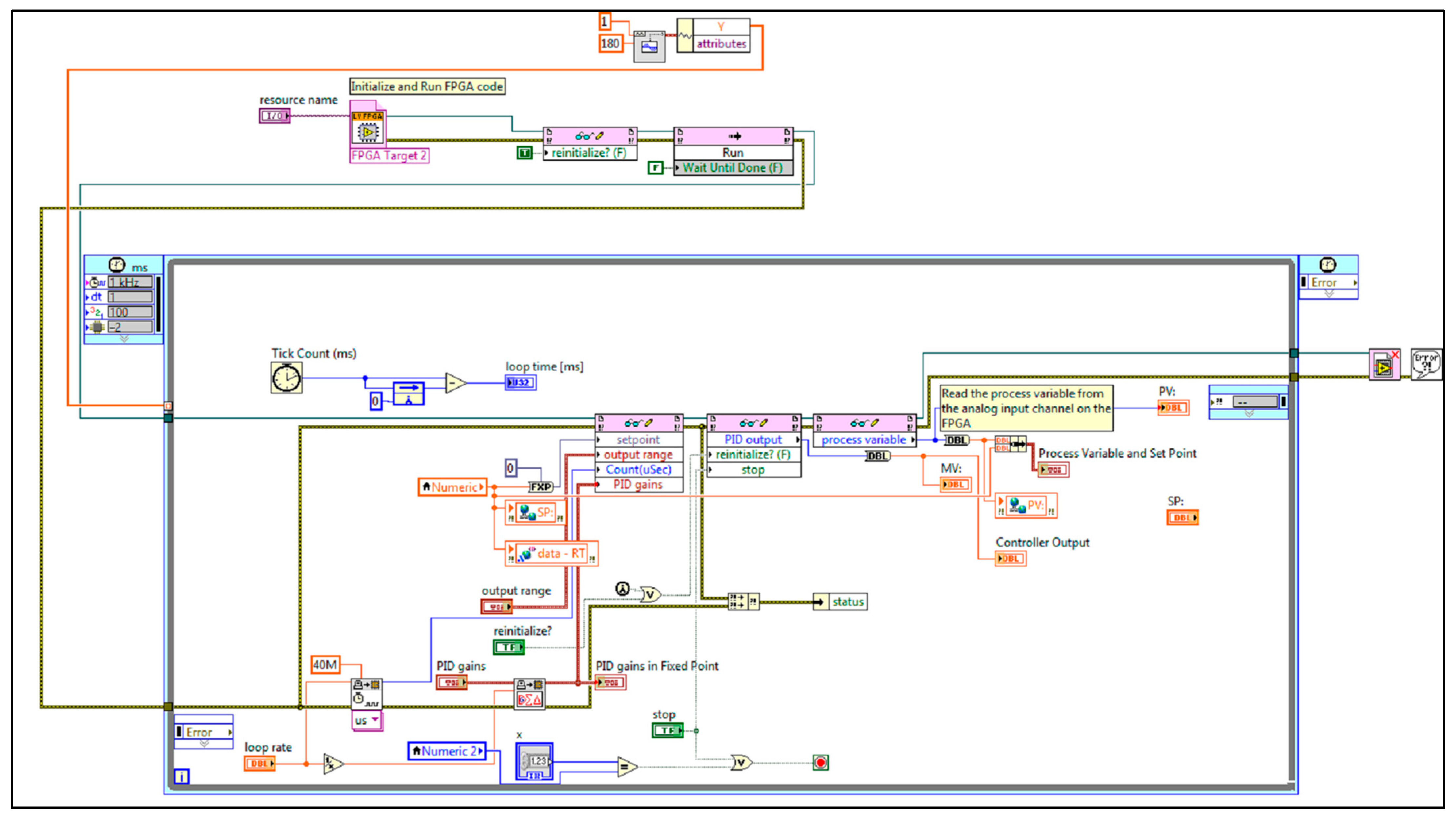
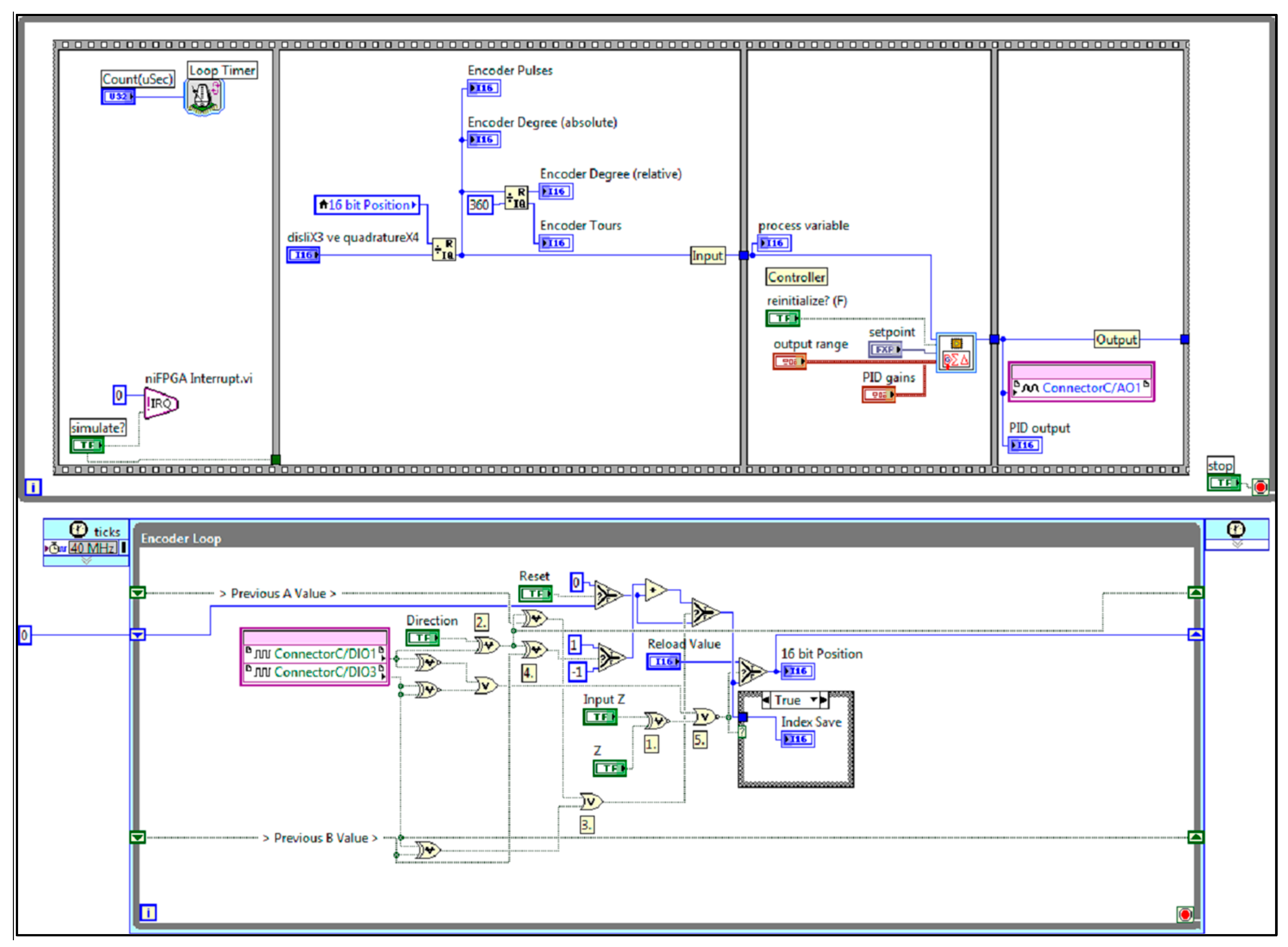
Figure 9 shows the block diagram of the PID control loop developed in the LabVIEW (2015) environment and running on the FPGA. This diagram is not just a flowchart but also serves as a circuit diagram for the FPGA synthesizer (compiler). Based on the mathematical model obtained during the system identification phase, an industry-standard PID controller for angular position control has been designed as shown here. The PID controller was selected for its robustness against model uncertainties and low latency when implemented on the FPGA.
In the FPGA module, this graphical code is converted into VHDL (Very High-Speed Integrated Circuit Hardware Description Language) code and compiled into a bitstream (.lvbitx) file using the Xilinx Vivado compiler, (version 2014.4) which is then loaded onto the FPGA. Thus, each icon in
Figure 9 corresponds to a physical logic block on the FPGA. This is optimized for minimum resource consumption in the FPGA’s arithmetic processing units (slices). The FPGA architecture completes the control loop in microseconds by simultaneously performing encoder reading, error calculation, and PID output generation thanks to its parallel processing capability. This speed is higher than the frequency of the hydraulic system, maximizing control quality.
4. Results
This section reports the experimental findings from implementing PID control on the electro-mechanical servo-hydraulic system for angular positioning. The closed-loop system’s performance was assessed using step inputs of different amplitudes. The behavior of the system under small, medium, and large input amplitudes was analyzed based on rise time, overshoot, settling time and steady-state error.
The system exhibited fast and accurate tracking of the reference signal for small step changes, such as from 170° to 180°. As shown in
Figure 10, the response closely follows the setpoint with negligible lag. A rise time of 0.06 s and a settling time of around 0.086 s were observed. Steady-state error was negligible, and the system exhibited a small overshoot of 1.11%.
In the case of medium step inputs (e.g., −120° to −180°), the system continued to demonstrate reliable performance with slightly increased transient response characteristics.
Figure 11 shows the system’s setpoint tracking performance with minimal overshoot. Performance evaluation showed a rise time of 0.122 s, settling time of 0.182 s, steady-state error within ±1°, and peak overshoot of 0.81%. However, minor spikes can be observed in the process variable. These spikes occur at the zero-velocity crossing due to the “stick-slip” phenomenon (stiction). As the motor reverses, pressure builds up to break static friction, causing a momentary acceleration jump.
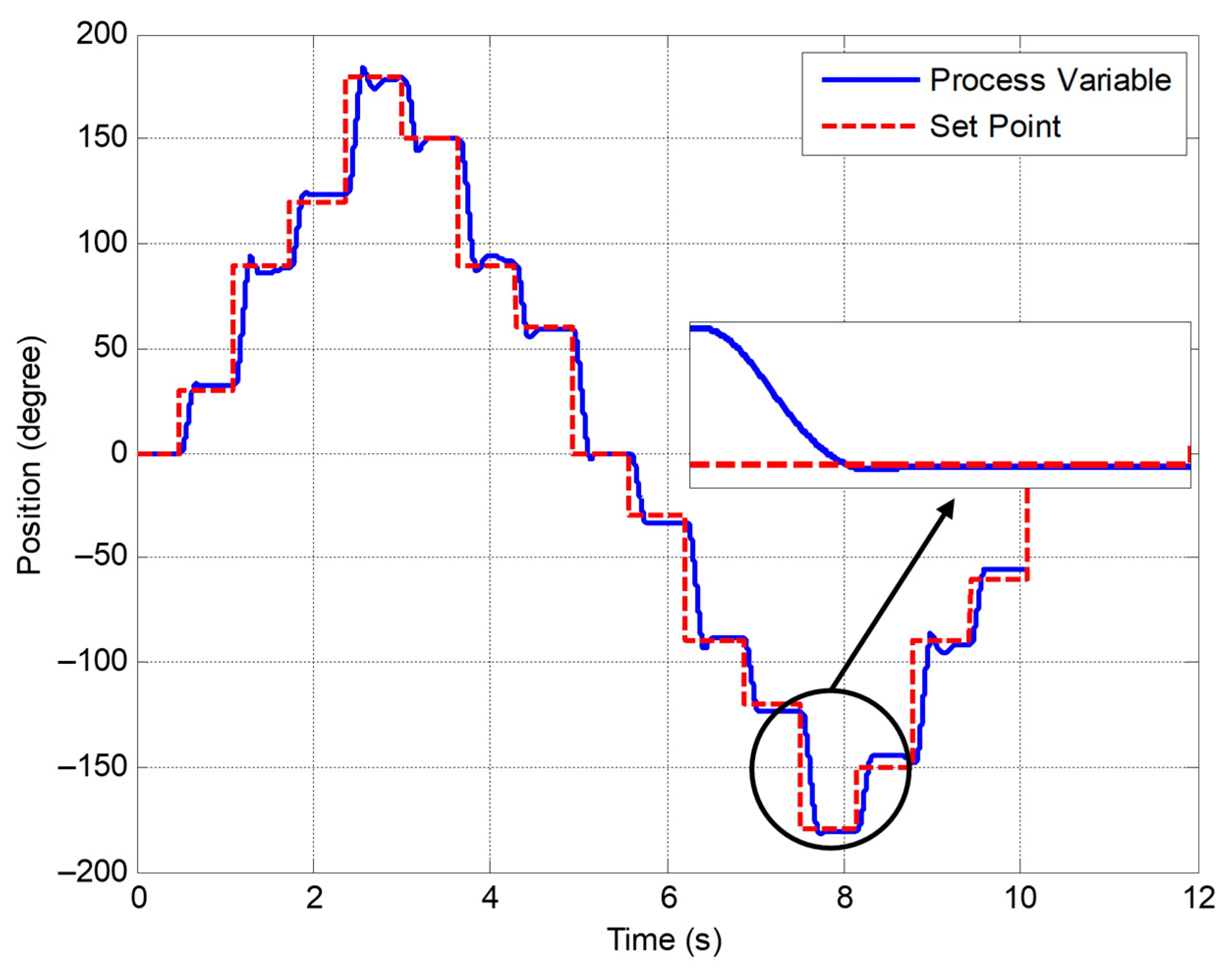
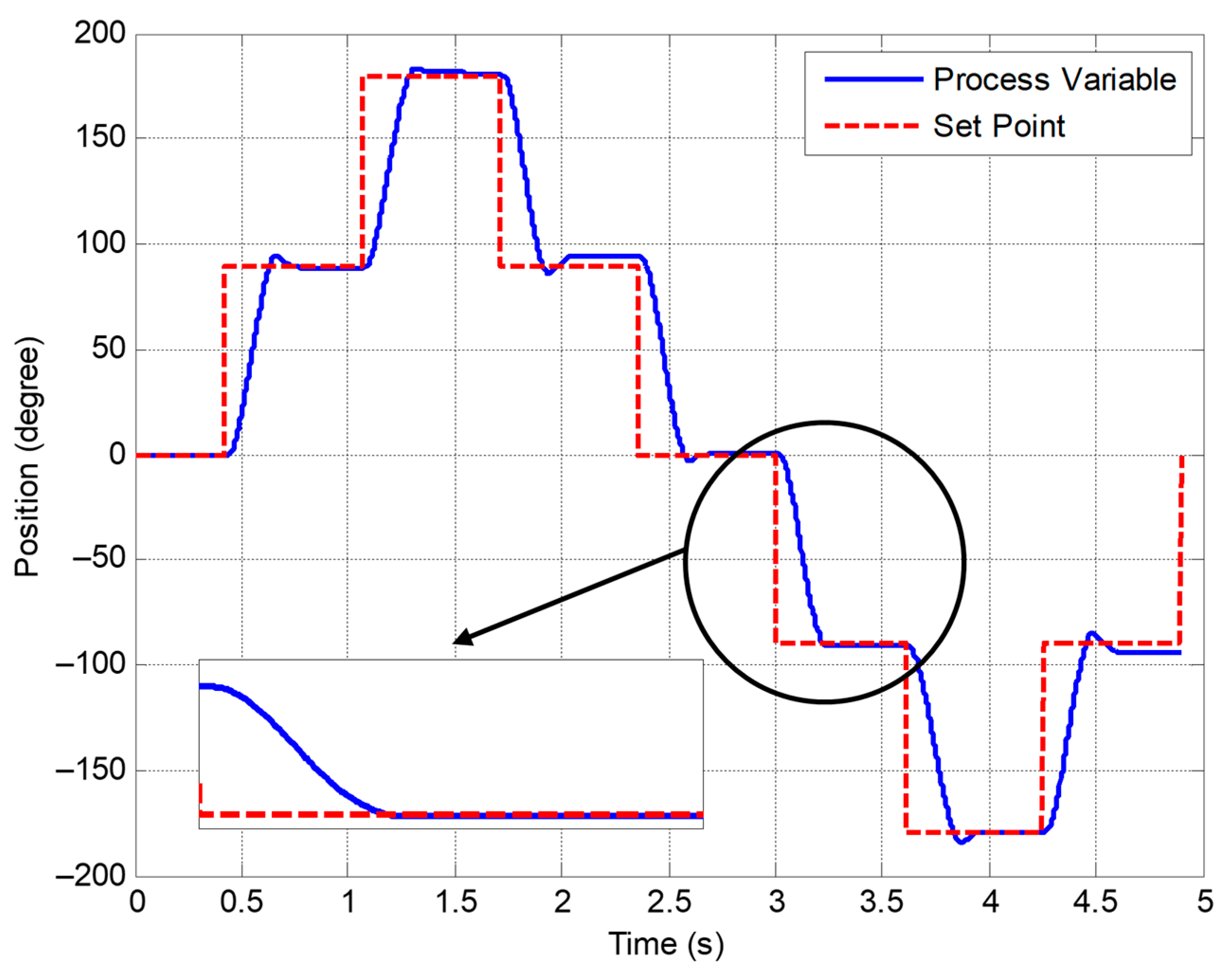
For larger input transitions (e.g., 0° to −90°), the control system maintained stability, although the transient performance showed longer response times and minor oscillations.
Figure 12 shows that the system closely followed the desired position, achieving a rise time of 0.136 s, settling time of 0.22 s, overshoot of 0.67%, and steady-state error within ±1°.
A quantitative summary of the system’s performance under different step input magnitudes is provided in
Table 3. The system consistently achieved low rise and settling times across all cases, with overshoot values remaining below 1.2% and steady-state error within ±1° for all conditions tested.
The PID algorithm was implemented on an FPGA-based platform with real-time processing. The step responses obtained from the physical system validate the fidelity of the identified model and the effectiveness of the control gains. The controller successfully minimized tracking error and maintained system stability across the tested range of operation.
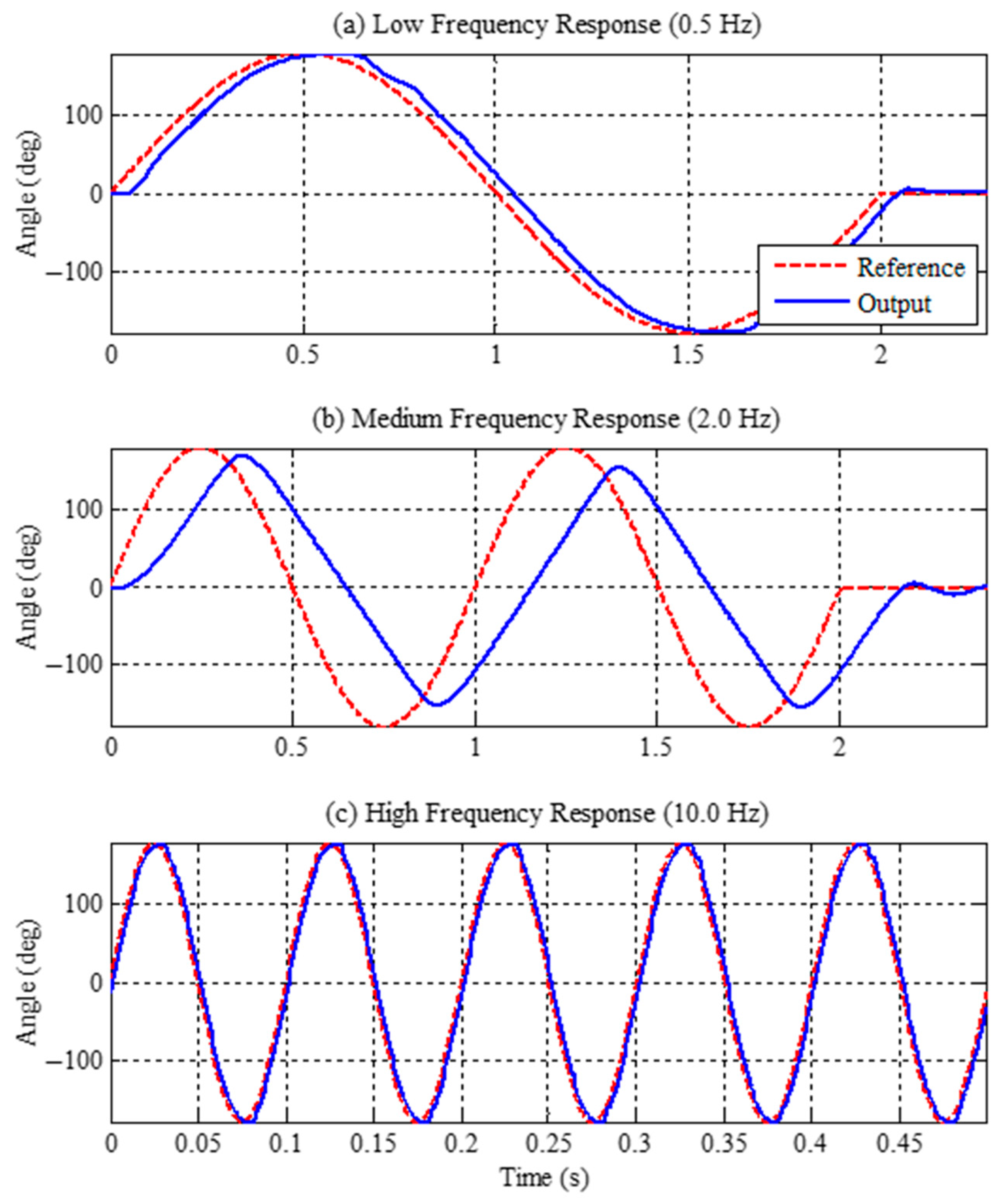
Following the transient response analysis, the steady-state performance and frequency characteristics of the system were evaluated using sinusoidal tracking tests and Bode diagram analysis. Experimental results reveal a nonlinear frequency response characteristic determined by the interaction between hydraulic dynamics and friction forces.
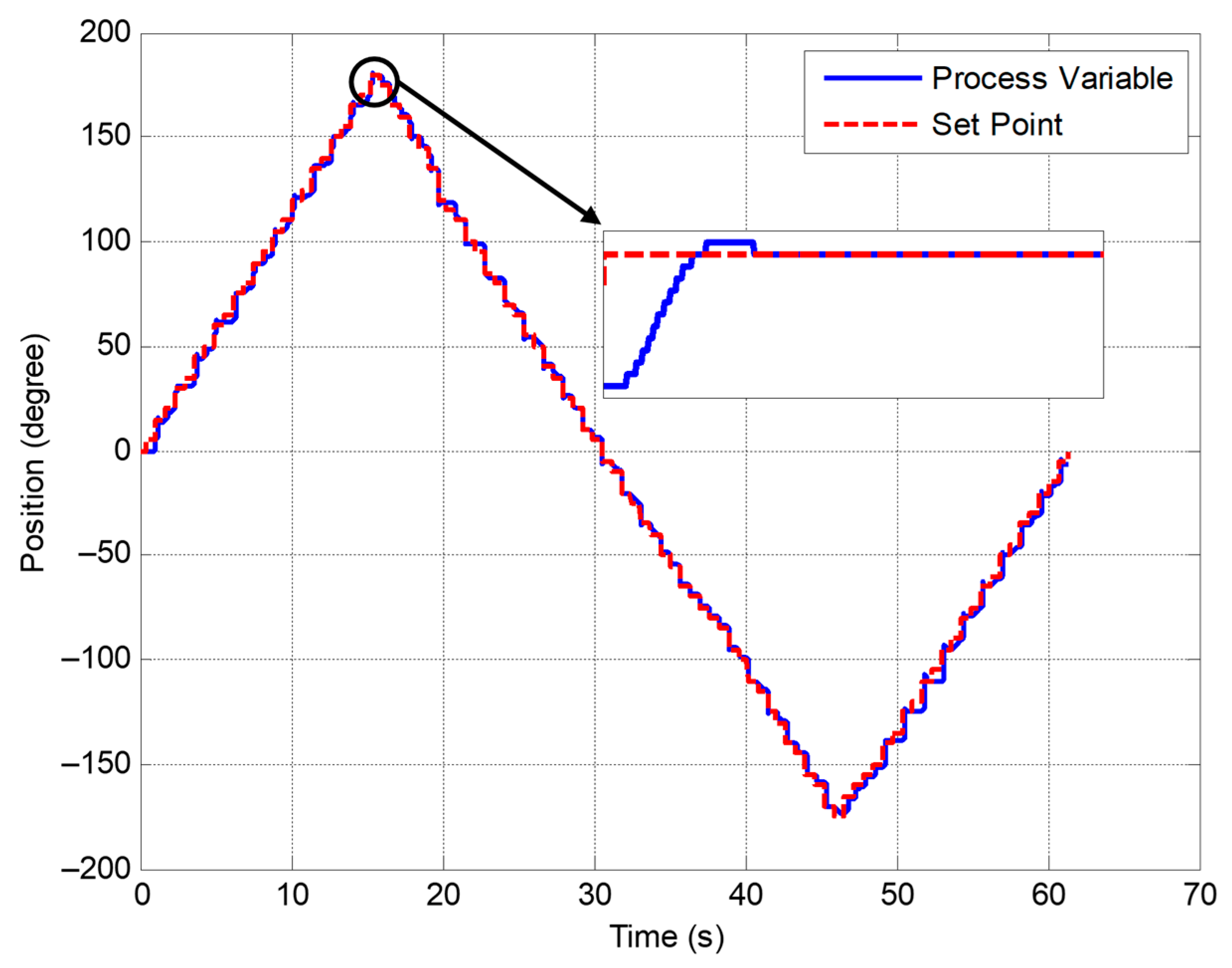
Figure 13a shows the time-domain response of the system to a 0.5 Hz sinusoidal reference. At low speeds, the system’s position (PV) follows the reference signal (SP) with high accuracy. However, slight flattening and delays caused by static friction (stiction) of the rotary actuator were observed at the beginning of the movement and at the zero-velocity crossing points. This confirms that the system operates friction-dominantly in the low-frequency region.
When the frequency is increased to 2 Hz (
Figure 13b), the phase lag becomes more pronounced due to the influence of hydraulic flow limits and valve dynamics. The time difference between the reference signal and the output signal increases, but the system maintains its stability.
Figure 13c shows the system’s performance at a frequency of 10 Hz. Contrary to expectations, in this motion requiring high acceleration, the system quickly overcame friction effects (breakaway force) and followed the reference signal with almost zero phase difference (in-phase). The FPGA-based controller’s cycle speed enabled the processing of this high-frequency signal without data loss and the instantaneous operation of the valves. This graph confirms the bandwidth result in the Bode diagram.
The physical impact of the phase lag observed between the setpoint and the process variable in
Figure 12 and
Figure 13 is a delayed mechanical response in the actuator. In real-world industrial applications, such as synchronized lifting or robotic locomotion, this lag can lead to trajectory tracking errors, poor synchronization between multiple actuators, and a reduction in the overall dynamic stiffness of the system.
Furthermore, it is observed from the results that this phase lag is more pronounced at lower frequencies (e.g., 0.5 Hz or 1 Hz) compared to higher frequencies. The primary physical reason for this phenomenon is the nonlinear friction behavior of the rotary actuator. At very low frequencies, the actuator moves at low velocities and frequently operates near the zero-velocity crossing region. In this region, static friction (stiction) is highly dominant. The controller must build up sufficient fluid pressure to continuously overcome this high breakaway friction, leading to a “stick-slip” effect and a consequent phase lag. Conversely, at higher frequencies, the actuator operates continuously at higher velocities, entering the viscous friction regime. In this high-acceleration state, inertial forces dominate, the stick-slip effect significantly diminishes, and the high-speed FPGA-PID loop can continuously minimize the error without being hindered by static friction dead-zones, resulting in a relatively smaller phase lag.
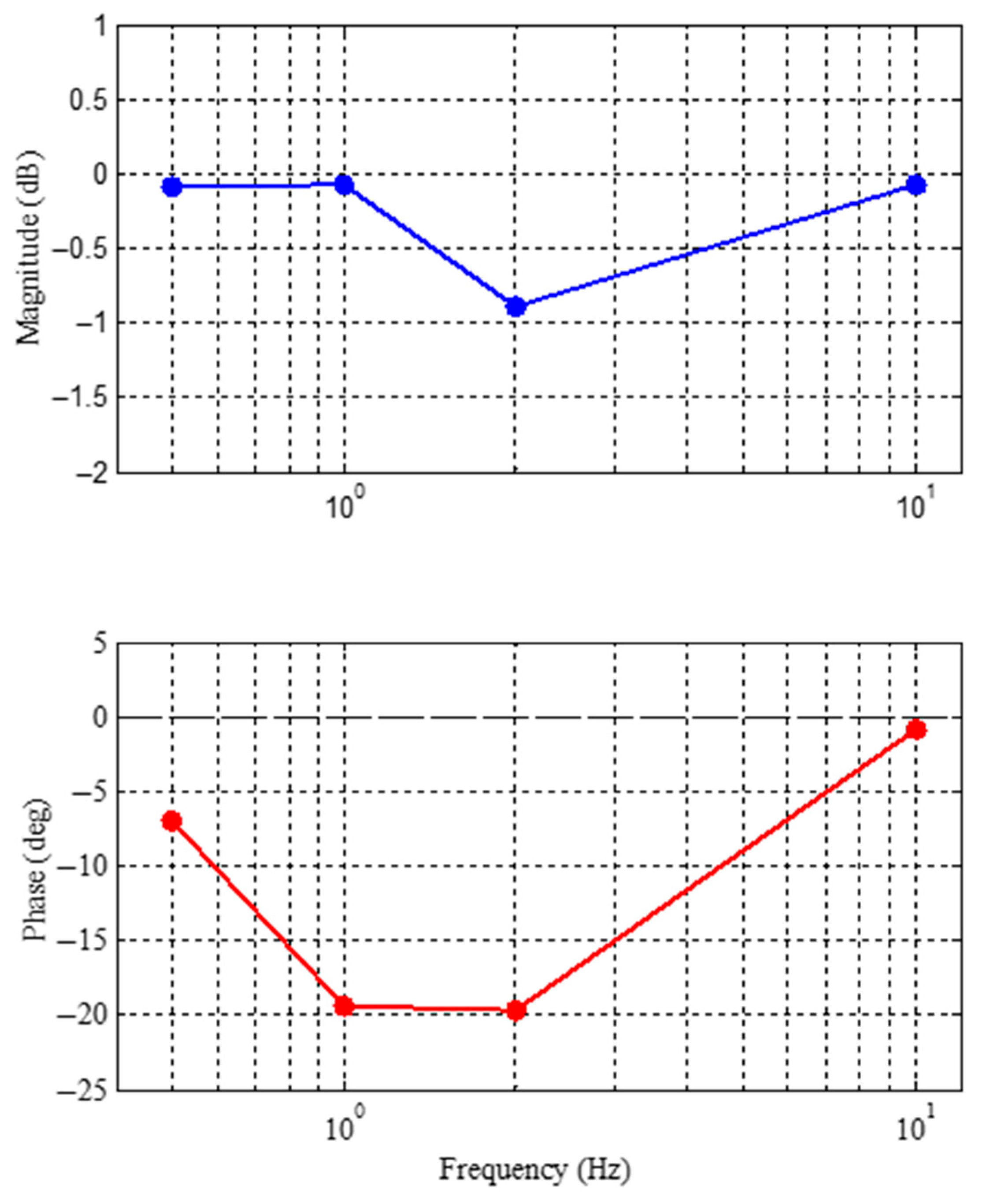
Examining the frequency response data presented in
Figure 14 and
Table 4, it can be seen that the dynamic behavior of the system varies depending on the frequency. The system follows the reference with high amplitude accuracy (−0.10 dB) even in the low frequency (0.5 Hz) region where static friction (stiction) is dominant. The phase delay (−6.97°) indicates friction-induced initial delays. At mid-frequency ranges (1.0–2.0 Hz), the effects of hydraulic valve dynamics and flow limits become more pronounced, resulting in a phase delay of approximately −19°. However, the amplitude gain (−0.89 dB) remains within acceptable limits, maintaining system stability. The system’s high-frequency performance was observed at 10 Hz excitation. Thanks to the high acceleration, the effect of friction forces (breakaway force) was quickly overcome, and the system was locked to the reference signal through inertia dominance. Due to the FPGA controller’s high sampling rate (1 kHz), the phase delay was reduced to a negligible level of −0.71°, and no amplitude loss occurred. This result proves the suitability of the designed controller for applications requiring high bandwidth.
5. Discussion
The experimental findings show that the FPGA-based PID controller provides accurate and fast angular positioning for the electro-mechanical servo-hydraulic actuator. Across all tested input amplitudes, the system exhibited consistent tracking accuracy, minimal overshoot, and short settling times, with steady-state errors remaining within ±1°. These outcomes validate the effectiveness of the classical PID control strategy when deployed on a real-time embedded platform.
Step response analysis validated the system’s fast transient behavior, while frequency domain analysis provided deeper insights into the nonlinear dynamics of the hydraulic actuator. Bode diagram analysis revealed that the system is friction-dominant at low frequencies (0.5 Hz), with static friction (sticking) causing slight flattening and phase delays at zero-speed transitions. However, in contrast to typical hydraulic system behavior where performance degrades at higher frequencies due to flow constraints, the proposed system exhibited exceptional tracking capabilities at 10 Hz excitation. This high-frequency performance, characterized by negligible phase delay (−0.71°), directly validates the advantage of the FPGA-based architecture. The FPGA’s high sampling rate and parallel processing capability enabled the controller to quickly overcome breakout force and maintain synchronization with the reference signal; this would be a compelling achievement for standard microcontroller-based loops with higher latency.
The FPGA-PID controller used in this study delivered performance comparable to other advanced control strategies and benchmark methods reported in the literature—including Active Disturbance Rejection Control (ADRC) [
15], Particle Swarm Optimization (PSO)-Tuned PI [
22] and multisine model-based control [
23], Radial Basis Function (RBF) neural network-based ADRC (RBF-ADRC) [
24], Fuzzy-PID [
25], RBF neural network-based adaptive observer Sliding Mode Controller (RBF-SMC) [
26] and multi-objective optimization strategies [
27] implementations—without introducing algorithmic complexity or implementation difficulties. Similar comparisons can be found in the literature where PID-based control achieved effective results under dynamic load conditions [
28], or even outperformed more complex adaptive controllers in terms of computational efficiency [
29,
30].
As shown in the table, complex nonlinear algorithms like Adaptive Robust Control provide excellent tracking under heavy load conditions. While advanced identification-based methods for electro-hydrostatic actuators can achieve a rise time of 0.10 s with 3.2% overshoot, and Active Disturbance Rejection Control (ADRC) strategies for valve-controlled cylinders focus on minimizing overshoot (approx. 1.53%) but exhibit slower transient responses (such as a 0.23 s rise time and a 1.34 s settling time), the proposed method outperforms them in speed. However, these methods typically require either extensive offline computational iterations or high-end processors (such as dSPACE or Industrial PCs) to execute their heavy mathematical models, which inherently introduces execution latency.
It is worth noting that while the comparison studies listed in
Table 5 [
15,
22,
23,
24,
25,
26,
27] primarily utilize linear hydraulic cylinders—which inherently possess different inertial characteristics and fluid volumes compared to the rotary motor used in this study—the proposed FPGA-PID controller achieves a highly competitive rise time of 0.060 s. This demonstrates that despite the mechanical differences, the high-speed FPGA architecture effectively compensates for the common nonlinearities of hydraulic systems, bridging the gap between hydraulic power density and servo precision. This performance is not only superior to other hydraulic control methods shown in
Table 5 but is also comparable to, and in some cases faster than, conventional DC motor PID implementations reported in the literature [
31]. This suggests that the high-speed parallel processing of the FPGA effectively compensates for the inherent hydraulic latencies, bridging the gap between hydraulic power density and electrical servo precision. It is important to note that the variations in rise time across these studies (ranging from 0.060 s to 2.240 s) are not solely dependent on the control algorithm but are also significantly influenced by the hardware specifications, such as the hydraulic supply pressure, valve bandwidth, and the inertia of the actuated load. The superiority of our proposed approach lies in the hardware platform itself. By evaluating the PID control loop at 1 kHz entirely on the true parallel architecture of the FPGA, the system achieves an exceptionally fast rise time of exactly 0.060 s. This near-zero latency execution enables a low-complexity classical algorithm to instantly counteract hydraulic stiction and nonlinearities, providing a highly competitive transient response and a steady-state precision of 1° without the computational overhead of modern nonlinear methods.
Recent research also underlines the importance of hardware choices in controller fidelity, particularly in applications involving sensing delay and actuator response [
31,
32]. Our results are consistent with these studies and confirm that embedded FPGA platforms provide suitable execution for motion control. The use of system identification methods to estimate a representative transfer function proved effective for tuning the PID parameters. The identified model closely matched the real system behavior, allowing efficient offline simulation and online implementation. Similar model-based approaches have been used in previous research to enhance control accuracy in nonlinear systems [
33,
34].
One of the notable benefits of the proposed system is its real-time behavior achieved through FPGA. The control algorithm runs independently of host processing, ensuring minimal latency and stable loop execution. This architecture enhances the suitability of the system for applications where timing predictability and responsiveness are critical, such as in robotics and aerospace. However, it should be noted that this study focuses on a uniaxial rotary actuator. As observed in low-frequency sinusoidal tests, the classical PID controller was unable to fully compensate for static friction (sticking) effects around the zero-speed region, leading to small phase delays. Future developments could explore hybrid control schemes or friction compensation algorithms to address these nonlinear effects more effectively. Additionally, environmental factors such as fluid temperature and supply pressure variations were not actively compensated, although they can influence hydraulic dynamics over time.
Several studies have also investigated intelligent tuning methods, including fuzzy logic and neural network integration, to address complex path-tracking challenges in aerial vehicles [
35]. Despite these limitations, the results indicate that a carefully tuned PID controller implemented on a low-cost embedded FPGA platform can serve as a reliable and effective solution for precise angular position control in nonlinear actuator systems.
6. Conclusions
This study presents the design, implementation and experimental evaluation of a real-time PID control system for angular position control in an electro-mechanical servo-hydraulic actuator. The controller is deployed on an FPGA-based embedded platform, enabling high-speed execution and eliminating host dependency. The integration of sensing, computation, and actuation within a unified architecture demonstrates the feasibility of compact and responsive control systems for nonlinear actuators.
Experimental results under varying step input magnitudes confirmed that the PID controller achieved fast rise times (as low as 0.06 s), low overshoot (≤1.11%), and negligible steady-state error (≤±1°). These results indicate that classical PID control, when appropriately tuned through system identification methods, can achieve robust and precise angular positioning despite system nonlinearities and uncertainties. In similar research, embedded control systems have also been used to drive compact actuators such as shape memory alloy-based bidirectional rotating mechanisms [
36]. The simplicity and computational efficiency of PID control continue to make it a practical alternative to more sophisticated nonlinear strategies in industrial applications [
23,
28,
31,
37].
In addition to transient analysis, frequency domain tests (Bode diagram and sine tracking) validated the system’s dynamic bandwidth and stability. While static friction effects were observed at low frequencies (0.5 Hz), the system maintained robust tracking performance. Notably, at high-frequency excitation (10 Hz), the FPGA-based controller’s high sampling rate minimized phase lag to negligible levels (−0.71°), allowing the actuator to overcome breakaway forces through inertia dominance. These findings confirm that the proposed embedded architecture is well-suited for dynamic applications requiring high bandwidth, beyond simple point-to-point positioning.
The approach contributes to the field of measurement and control by offering a cost-effective and reliable alternative to more complex nonlinear control schemes. The use of FPGA-based hardware underscores its potential in time-sensitive applications like robotics, automation, and electro-hydraulic actuation. In future work, the proposed system may be expanded to multi-axis setups and incorporate friction compensation algorithms to address the static friction nonlinearities observed in low-frequency tracking. In addition, environmental effects such as temperature-induced fluid property variations and long-term system wear can be incorporated into the control model to improve long-term reliability and accuracy. Although the proposed FPGA-PID controller demonstrated robust performance under fixed load, the stick-slip phenomenon at very low velocities remains a challenge. Future work will focus on integrating a model-based friction compensation module to further enhance low-speed tracking. Additionally, experiments under time-varying external load disturbances will be conducted to evaluate the system’s adaptability to changing operating conditions.