
An Explainable Time-Series Knowledge Graph Framework with Dynamic Temporal Segmentation for Industrial Spindle Health Monitoring


Abstract
1. Introduction
1.1. Motivation and Problem Statement
1.2. Literature Review
1.2.1. Signal-Processing-Based and Physical Feature Methods
1.2.2. Data-Driven and Deep Learning Approaches
1.2.3. Knowledge Graphs and Explainable AI
1.3. Research Objectives
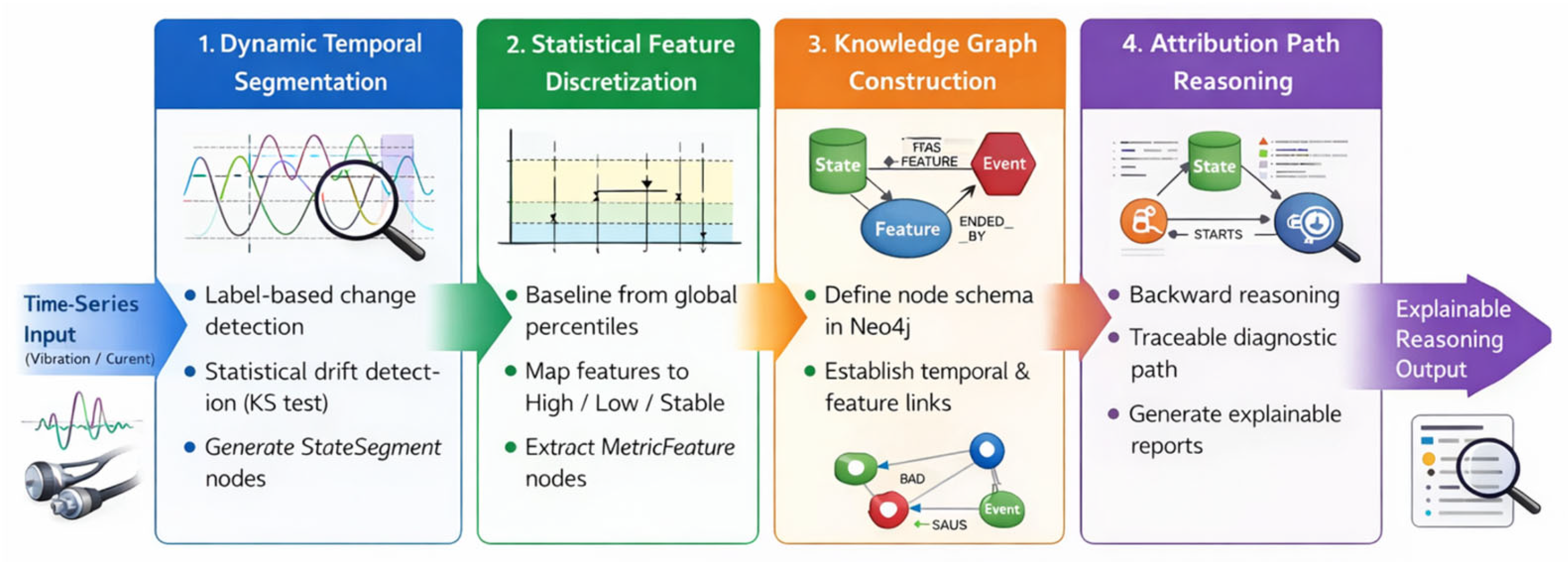
- To establish a rigorous two-level dynamic temporal segmentation mechanism (output: StateSegment): By integrating supervised label change detection with unsupervised statistical drift analysis, continuous time-series data are functionally transformed into semantically meaningful state segments characterized by explicit temporal boundaries.
- To formulate a robust, distribution-aware feature semanticization rule (output: MetricFeature): Global percentiles () derived from normal operation baselines are used to discretize continuous statistical features into semantic categories (high/low/stable), reducing sensitivity to noise and minor drifts while preserving engineering interpretability.
- To define a semantically formalized state–event–feature knowledge graph schema (output: KG Schema): A structured schema comprising StateSegment, TransitionEvent, and MetricFeature nodes and their relations (e.g., HAS_FEATURE, ENDED_BY) is designed to enable scalable and automated graph construction from time-series data.
- To enable quantifiable and traceable diagnostic attribution (output: reasoning path): The system implements backward reasoning to generate structured explanation paths that link abnormal events to their salient precursor features, providing auditable and decision-oriented diagnostics to address the “black-box” limitations of existing models.
2. Materials and Methods
2.1. Materials and Experimental Setup
2.1.1. Experimental Scenario and Target Equipment
2.1.2. Data Acquisition Architecture
2.1.3. Dataset Description
2.2. Proposed Methodology
- Dynamic temporal segmentation;
- Statistical feature discretization;
- Knowledge graph construction;
- Explainable attribution reasoning stage.
2.2.1. Dynamic Temporal Segmentation
2.2.2. Statistical Feature Discretization
- Stable range:
2.2.3. Knowledge Graph Construction
- StateSegment: Operational segment node representing a time interval with a stable state.
- TransitionEvent: Event node indicating state switching (e.g., failure, repair) with
- MetricFeature: Discretized semantic feature node produced by Section 2.2.2.
- Temporal lifecycle links:
- Feature association links:
- Feature co-occurrence links:
2.2.4. Attribution Path Reasoning
- 5.
- Select a target failure event node
- 6.
- Trace back to the predecessor segment , satisfying:
- 7.
- Retrieve all features connected to :
- 8.
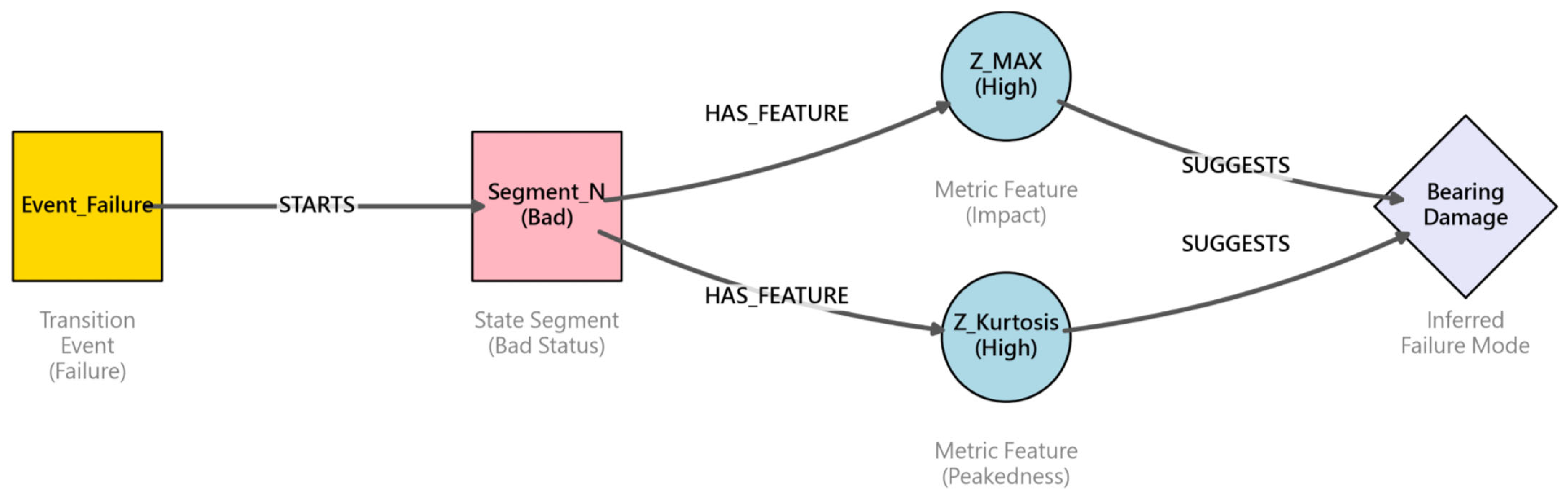
- Map feature set F to a failure mode M using an external expert rule base or domain ontology.
3. Results
3.1. Temporal Dynamics and State Transition Analysis
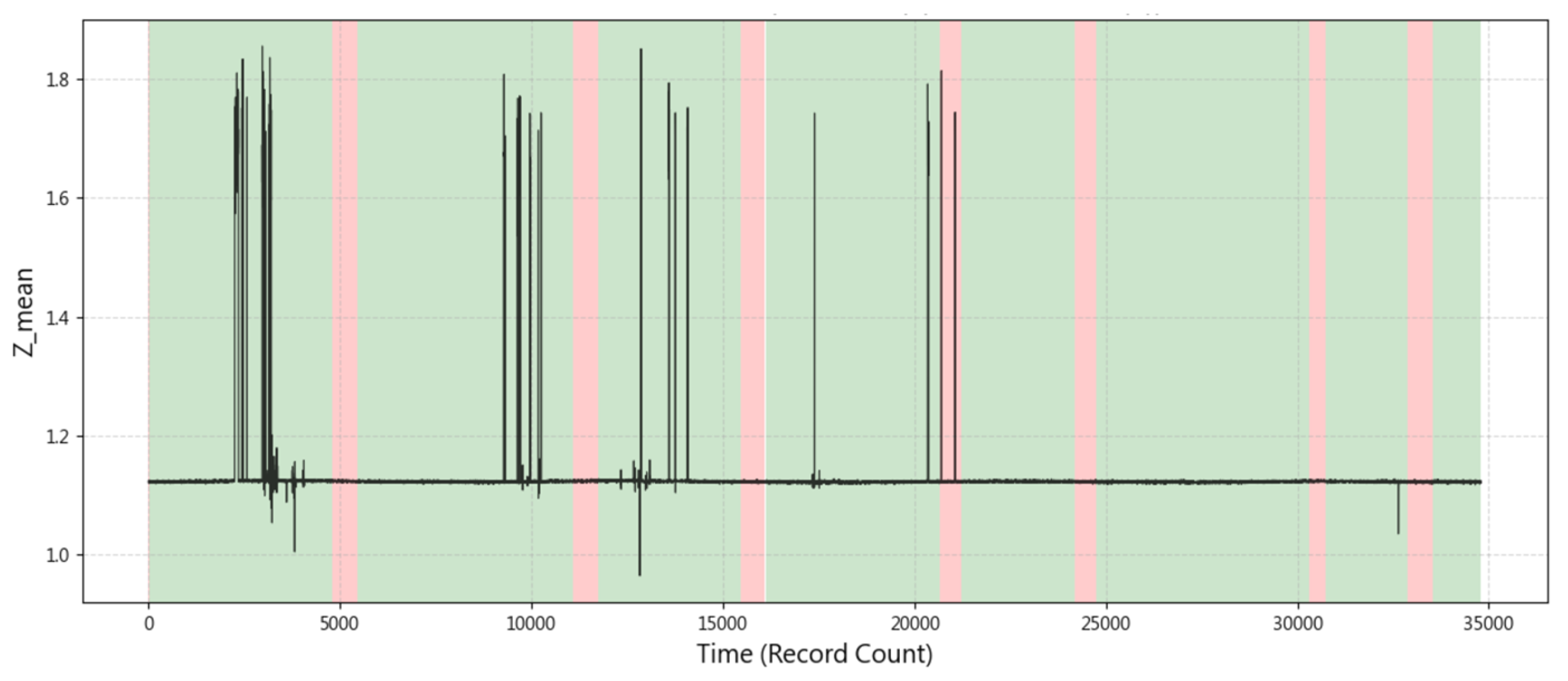
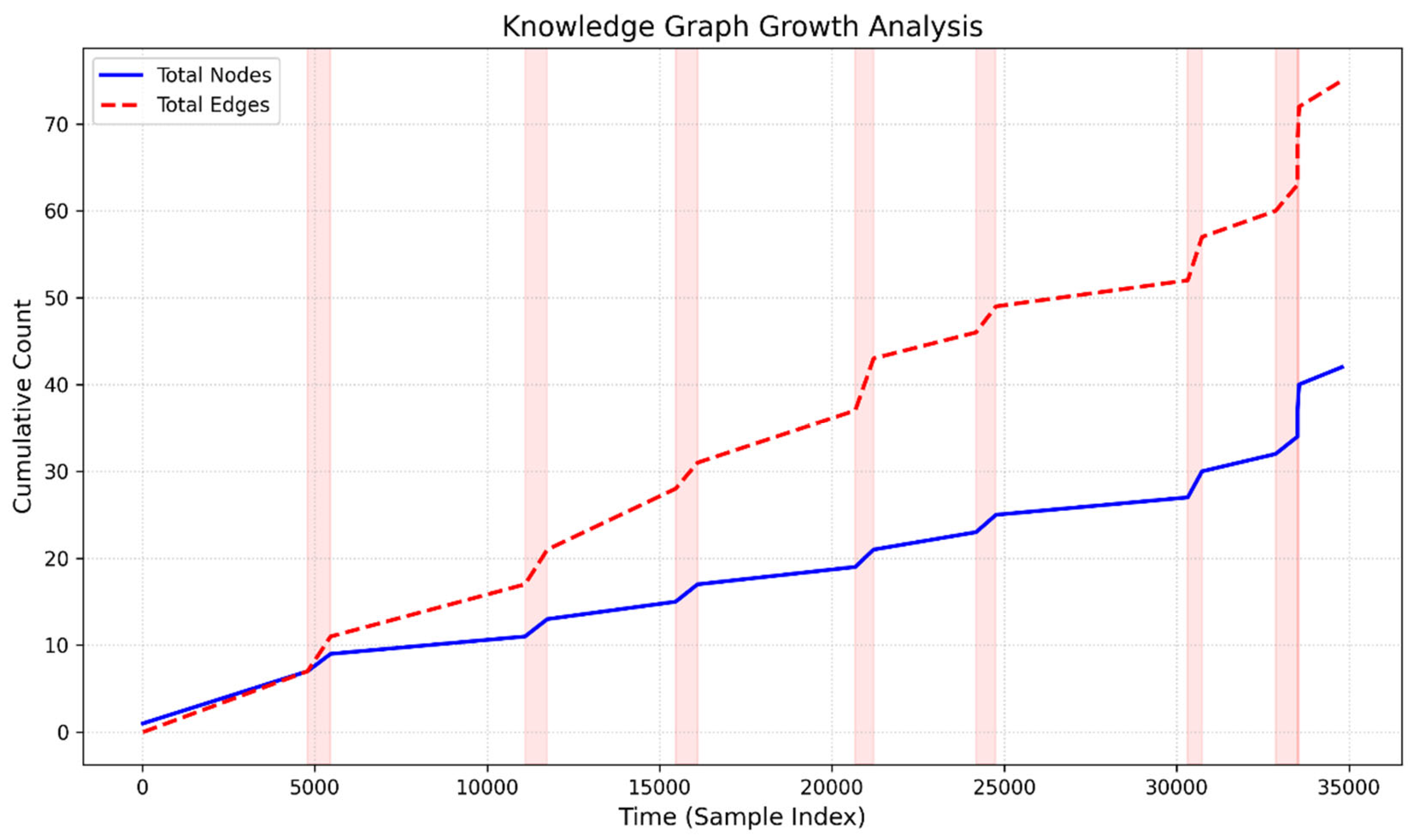
3.1.1. Global Trend Observation
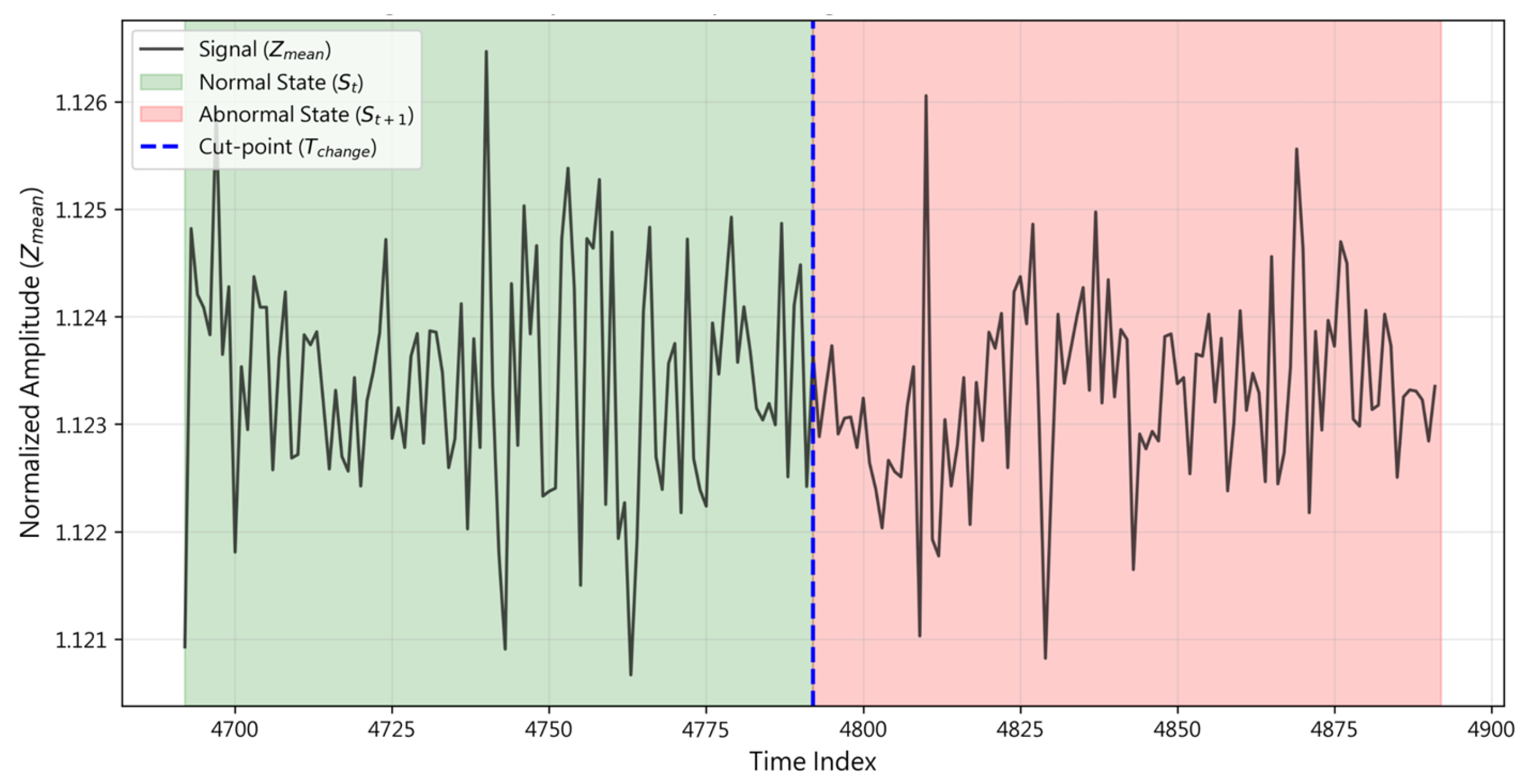
3.1.2. Micro-Level Zoom-In of Transition Dynamics
- Segmentation performance: Within the 0.5 s window preceding the transition, shows a slight rise but remains within short-term fluctuation. A new segment boundary is only inserted when the signal exhibits persistent distributional drift, indicating that the method avoids reacting to transient noise and instead captures the true onset of failure-relevant instability.
3.2. Statistical Feature Distribution and Correlation Analysis
3.2.1. Boxplot-Based Distribution Comparison
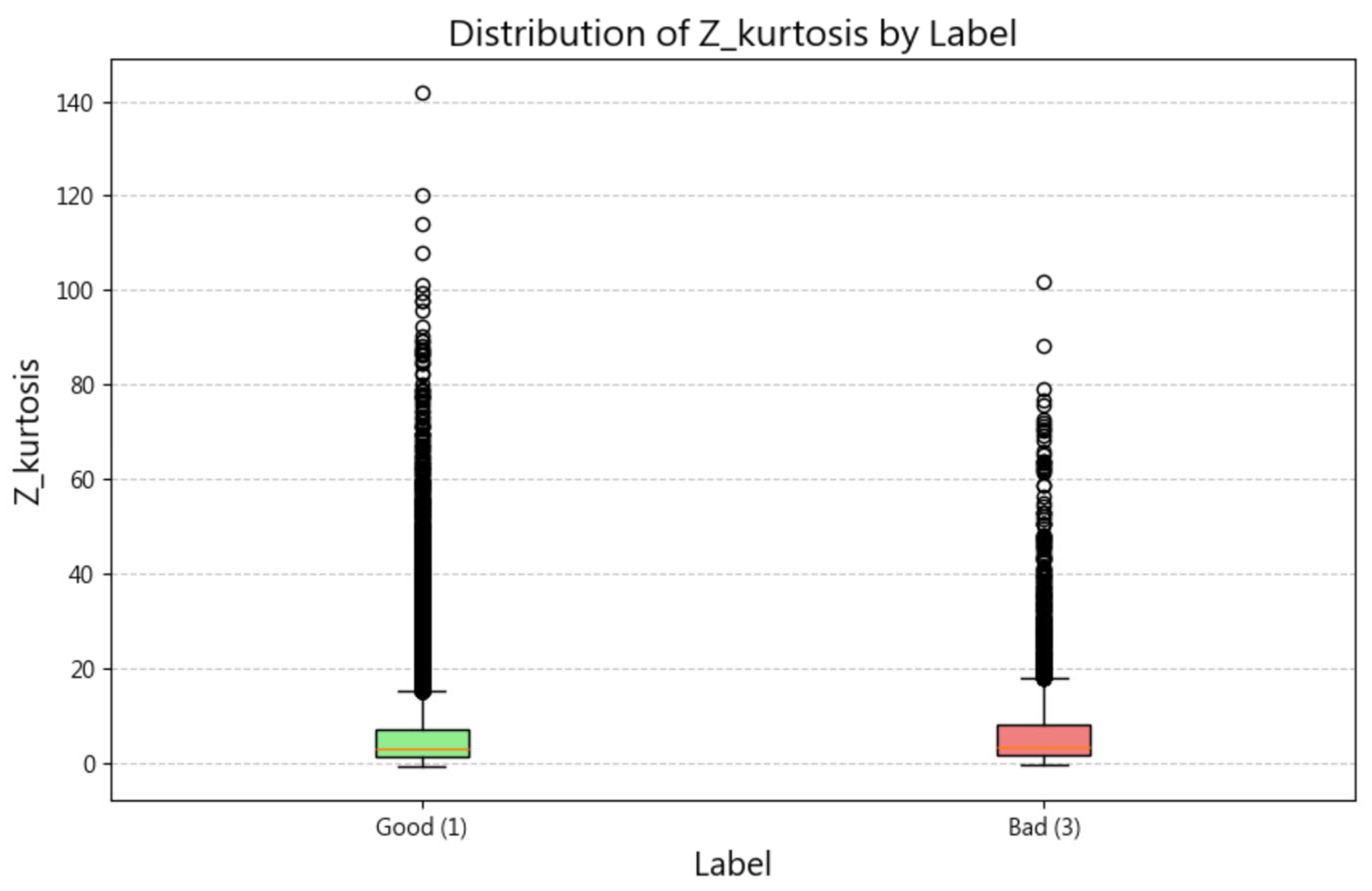
- Kurtosis indicator ():
- Observation: The abnormal group exhibits a substantially higher median and a pronounced long-tail distribution (Figure 5).
- Physical interpretation: Kurtosis reflects the degree of impulsiveness. Rolling-element bearing defects (e.g., spalling) often generate periodic impulse-like components, leading to a rapid increase in kurtosis. This result indicates that is among the most discriminative indicators in the considered scenario.
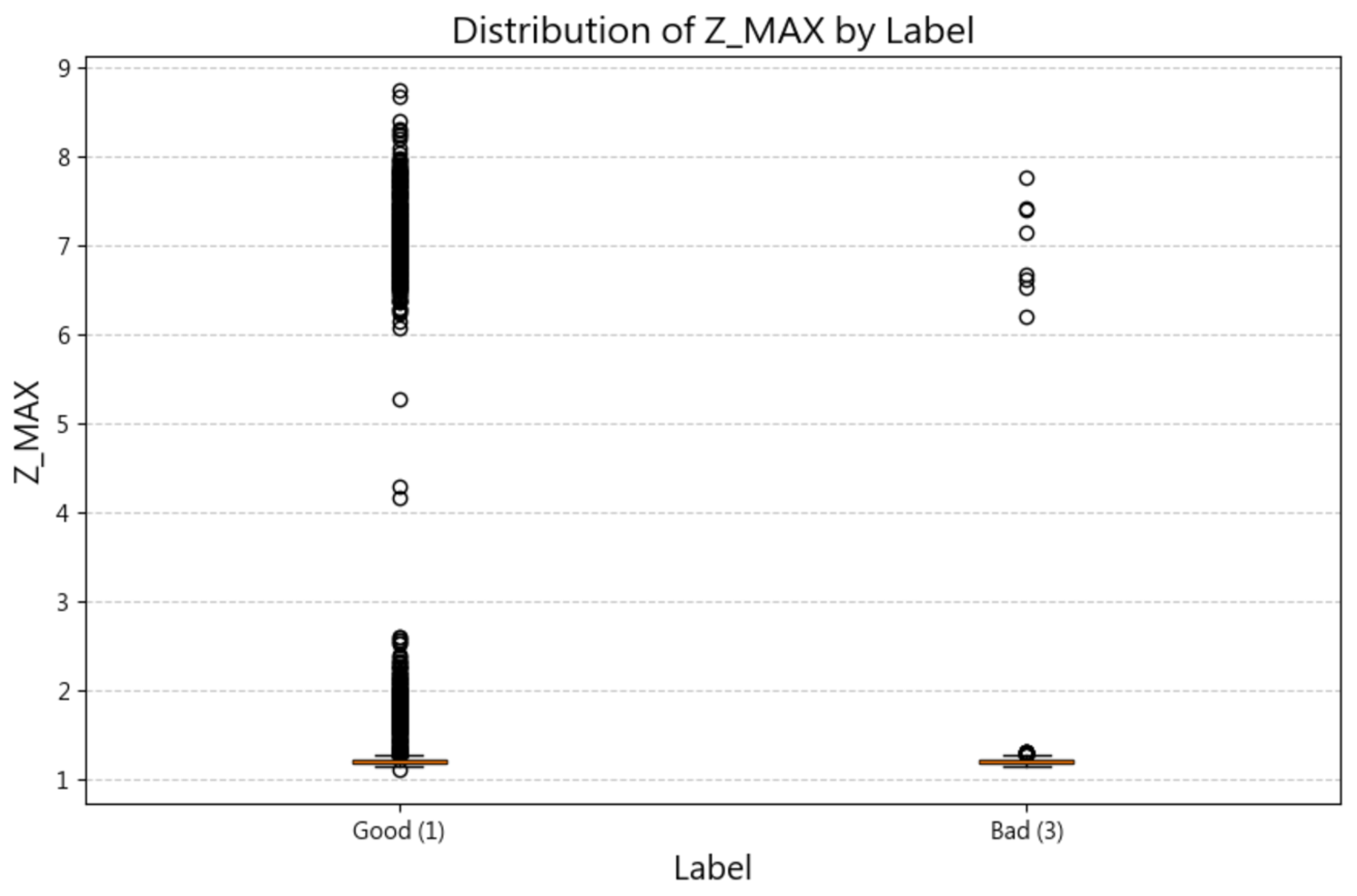
- Peak/impact indicator ():
- Observation: also shows a clear separation between normal and abnormal regimes (Figure 6), suggesting the presence of instantaneous high-energy releases during abnormal operation.
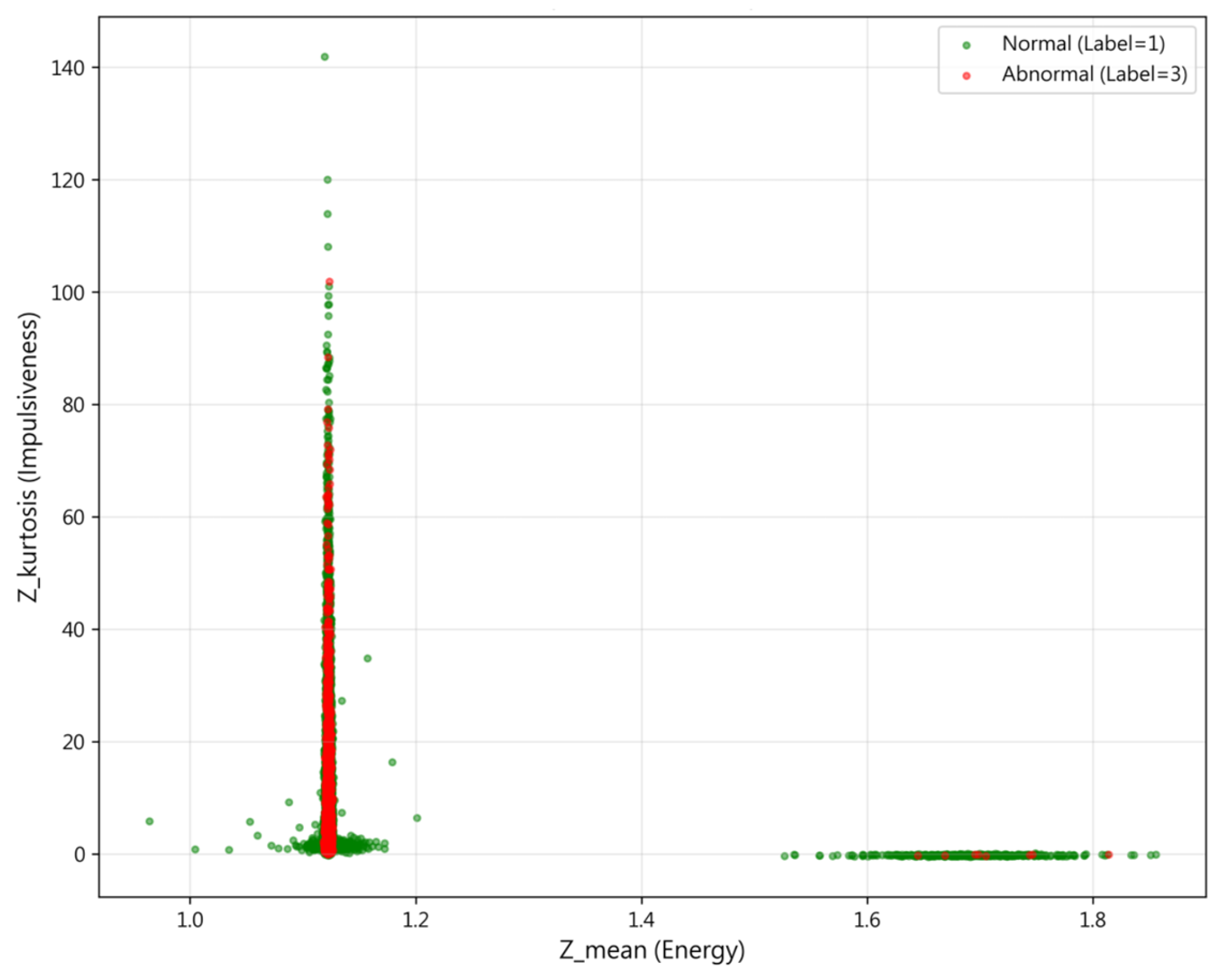
3.2.2. Feature Clustering Scatter Analysis
- Normal cluster (green points): Normal samples are concentrated around ( ≈ 0, ≈ 0), indicating high consistency under healthy operation.
- Abnormal dispersion (red points): Abnormal samples spread across multiple regions, revealing heterogeneous failure mechanisms, including:
- Type A: High with low (lower right). This pattern is consistent with unbalance, which increases the vibration energy but does not necessarily produce impulsive shocks.
- Type B: High with low (upper left). This pattern matches early bearing damage, where impulsive shocks appear before the total energy level increases.
3.3. Results of Explainable Knowledge Graph Construction
3.3.1. Graph Statistics
- Total nodes: 43 (including operational state segments and extracted semantic feature nodes).
- Total edges: 76 (including temporal relations and feature association relations).
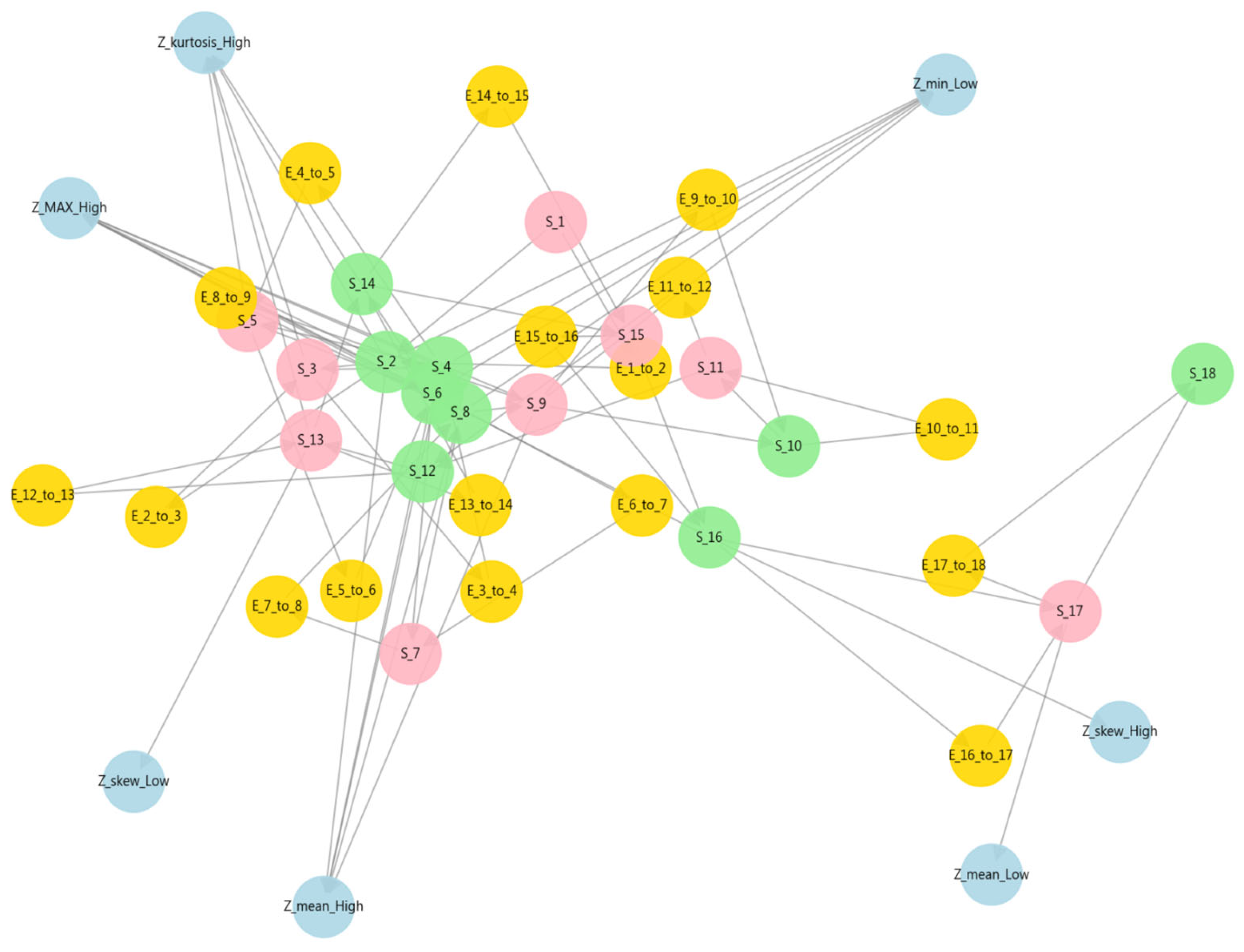
3.3.2. Representative Nodes and Relations
3.3.3. Graph Visualization
3.4. Automated Attribution Case Studies
3.4.1. Case 1: Failure Attribution
3.4.2. Case 2: Explainable Variability Within Normal Operation
- The proposed segmentation accurately localizes transition onsets while suppressing transient noise.
- Discriminative statistics such as and capture physically meaningful fault signatures.
- The knowledge graph provides structured, quarriable, and human-interpretable attribution paths beyond binary classification, supporting actionable diagnostics and maintenance recommendations.
4. Discussion and Conclusions
4.1. Discussion
- Semantic structuring of continuous time series:
- From classification outputs to explainable attribution paths:
- Flexibility and maintainability via a two-layer design:
4.2. Conclusions
- The proposed temporal segmentation effectively transforms continuous sensor streams into discrete state segments with meaningful boundaries, enabling the graph-based modeling of machine lifecycle transitions.
- Percentile-based discretization successfully converts statistical indicators into interpretable semantic features, retaining diagnostically salient deviations while suppressing non-informative fluctuations.
- The constructed knowledge graph supports explainable attribution through reasoning paths, allowing the system to provide diagnostic evidence and maintenance-oriented recommendations beyond conventional classifiers.
- The two-layer (data/knowledge) architecture offers practical extensibility and maintainability, supporting updates to domain knowledge without requiring re-training of the entire pipeline.
4.3. Limitations
- Static thresholds: The current discretization relies on global percentiles, which may become suboptimal under aging drift, potentially increasing false alarms over long-term operation.
- Single-modality sensing: The present evaluation primarily uses vibration-derived statistics; performance may be limited for electrical or thermal faults that are weakly reflected in vibration features.
- Knowledge base coverage: The current inference relies on predefined rules (e.g., high kurtosis implies bearing damage). For unseen composite failure modes, explanations may be incomplete or misleading.
4.4. Future Perspectives
- Multi-modal data fusion: Extend the graph to incorporate current signatures, acoustic emission, and CNC controller context variables (e.g., spindle load, feed override) to distinguish operating condition changes from genuine faults and to improve coverage across fault categories.
- Adaptive learning and dynamic thresholds: Introduce online learning or adaptive filtering to update baseline bands over time, enabling the dynamic adjustment of and under aging drift. Unsupervised discovery (e.g., DBSCAN) can further identify emerging patterns beyond predefined statistics.
- LLM-assisted knowledge acquisition: Use large language models to extract entities and relations from maintenance manuals, technical reports, and historical work orders, enabling semi-automatic expansion of the knowledge layer and supporting self-evolving machine health management.
Author Contributions
Funding
Data Availability Statement
Conflicts of Interest
References
- Kagermann, H.; Wahlster, W.; Helbig, J. Recommendations for Implementing the Strategic Initiative INDUSTRIE 4.0: Securing the Future of German Manufacturing Industry; Final Report of the Industrie 4.0 Working Group; acatech—National Academy of Science and Engineering: Munich, Germany, 2013; pp. 1–84. [Google Scholar]
- Lee, J.; Bagheri, B.; Kao, H.-A. A Cyber-Physical Systems Architecture for Industry 4.0-Based Manufacturing Systems. Manuf. Lett. 2015, 3, 18–23. [Google Scholar] [CrossRef]
- Jardine, A.K.S.; Lin, D.; Banjevic, D. A Review on Machinery Diagnostics and Prognostics Implementing Condition-Based Maintenance. Mech. Syst. Signal Process. 2006, 20, 1483–1510. [Google Scholar] [CrossRef]
- Lee, J.; Wu, F.; Zhao, W.; Ghaffari, M.; Liao, L.; Siegel, D. Prognostics and Health Management Design for Rotary Machinery Systems—Reviews, Methodology and Applications. Mech. Syst. Signal Process. 2014, 42, 314–334. [Google Scholar] [CrossRef]
- Randall, R.B.; Antoni, J. Rolling Element Bearing Diagnostics—A Tutorial. Mech. Syst. Signal Process. 2011, 25, 485–520. [Google Scholar] [CrossRef]
- Lei, Y.; Yang, B.; Jiang, X.; Jia, F.; Li, N.; Nandi, A.K. Applications of Machine Learning to Machine Fault Diagnosis: A Review and Roadmap. Mech. Syst. Signal Process. 2020, 138, 106587. [Google Scholar] [CrossRef]
- Mobley, R.K. An Introduction to Predictive Maintenance; Butterworth-Heinemann: Oxford, UK, 2002. [Google Scholar]
- Li, W.; Huang, R.; Li, J.; Liao, Y.; Chen, Z.; He, G.; Yan, R.; Gryllias, K. A Perspective Survey on Deep Transfer Learning for Fault Diagnosis in Industrial Scenarios: Theories, Applications and Challenges. Mech. Syst. Signal Process. 2022, 167, 108487. [Google Scholar] [CrossRef]
- LeCun, Y.; Bengio, Y.; Hinton, G. Deep Learning. Nature 2015, 521, 436–444. [Google Scholar] [CrossRef]
- Jia, F.; Lei, Y.; Lin, J.; Zhou, X.; Lu, N. Deep Neural Networks: A Promising Tool for Fault Characteristic Mining and Intelligent Diagnosis of Rotating Machinery with Massive Data. Mech. Syst. Signal Process. 2016, 72–73, 303–315. [Google Scholar] [CrossRef]
- Lei, Y.; Lin, J.; He, Z.; Zuo, M.J. A Review on Empirical Mode Decomposition in Fault Diagnosis of Rotating Machinery. Mech. Syst. Signal Process. 2013, 35, 108–126. [Google Scholar] [CrossRef]
- Zhao, R.; Yan, R.; Chen, Z.; Mao, K.; Wang, P.; Gao, R.X. Deep Learning and Its Applications to Machine Health Monitoring: A Survey. Mech. Syst. Signal Process. 2019, 115, 213–237. [Google Scholar] [CrossRef]
- Samek, W.; Wiegand, T.; Müller, K.-R. Explainable Artificial Intelligence: Understanding, Visualizing and Interpreting Deep Learning Models. ITU J. ICT Discov. 2017, 1, 39–48. [Google Scholar]
- Adadi, A.; Berrada, M. Peeking Inside the Black-Box: A Survey on Explainable Artificial Intelligence (XAI). IEEE Access 2018, 6, 52138–52160. [Google Scholar] [CrossRef]
- Lipton, Z.C. The Mythos of Model Interpretability. Queue 2018, 16, 31–57. [Google Scholar] [CrossRef]
- Rudin, C. Stop Explaining Black Box Machine Learning Models for High Stakes Decisions and Use Interpretable Models Instead. Nat. Mach. Intell. 2019, 1, 206–215. [Google Scholar] [CrossRef]
- Ehrlinger, L.; Wöß, W. Towards a Definition of Knowledge Graphs. In Proceedings of the SEMANTiCS (Posters, Demos, SuCCESS); RWTH Aachen University: Aachen, Germany, 2016; pp. 1–4. [Google Scholar]
- Paulheim, H. Knowledge Graph Refinement: A Survey of Approaches and Evaluation Methods. Semant. Web 2017, 8, 489–508. [Google Scholar] [CrossRef]
- Ji, S.; Pan, S.; Cambria, E.; Marttinen, P.; Yu, P.S. A Survey on Knowledge Graphs: Representation, Acquisition, and Applications. IEEE Trans. Neural Netw. Learn. Syst. 2022, 33, 494–514. [Google Scholar] [CrossRef]
- Widodo, A.; Yang, B.-S. Support Vector Machine in Machine Condition Monitoring and Fault Diagnosis. Mech. Syst. Signal Process. 2007, 21, 2560–2574. [Google Scholar] [CrossRef]
- Si, X.-S.; Wang, W.; Hu, C.-H.; Zhou, D.-H. Remaining Useful Life Estimation—A Review on the Statistical Data Driven Approaches. Eur. J. Oper. Res. 2011, 213, 1–14. [Google Scholar] [CrossRef]
- Wang, Q.; Mao, Z.; Wang, B.; Guo, L. Knowledge Graph Embedding: A Survey of Approaches and Applications. IEEE Trans. Knowl. Data Eng. 2017, 29, 2724–2743. [Google Scholar] [CrossRef]
- Noy, N.F.; Gao, Y.; Jain, A.; Narayanan, A.; Patterson, A.; Taylor, J. Industry-Scale Knowledge Graphs: Lessons and Challenges. Commun. ACM 2019, 62, 36–43. [Google Scholar] [CrossRef]
- Zhang, Y.; Xiong, R.; He, H.; Pecht, M.G. Long Short-Term Memory Recurrent Neural Network for Remaining Useful Life Prediction of Lithium-Ion Batteries. IEEE Trans. Veh. Technol. 2018, 67, 5695–5705. [Google Scholar] [CrossRef]
- Li, X.; Zhang, W.; Ding, Q.; Sun, J.-Q. Multi-Layer Domain Adaptation Method for Rolling Bearing Fault Diagnosis. Signal Process. 2019, 157, 180–197. [Google Scholar] [CrossRef]
- Arrieta, A.B.; Díaz-Rodríguez, N.; Del Ser, J.; Bennetot, A.; Tabik, S.; Barbado, A.; Garcia, S.; Gil-Lopez, S.; Molina, D.; Benjamins, R.; et al. Explainable Artificial Intelligence (XAI): Concepts, Taxonomies, Opportunities and Challenges toward Responsible AI. Inf. Fusion 2020, 58, 82–115. [Google Scholar] [CrossRef]
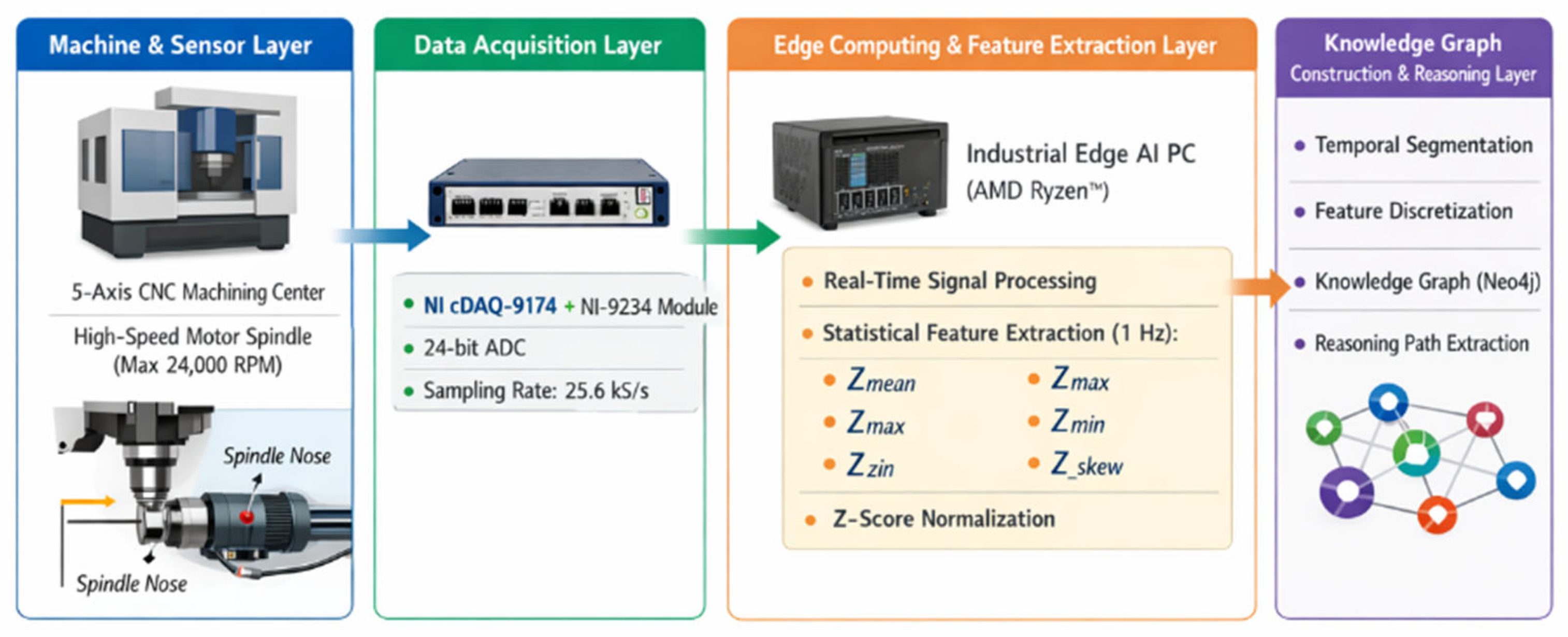



| Layer | Component | Model Platform | Key Specifications |
|---|---|---|---|
| Sensor Layer | IEPE accelerometers (tri-axial) | PCB Piezotronics 356A15 | Sensitivity: 100 mV/g; frequency response: 0.5–5 kHz |
| Hall-effect current sensors | (Hall-effect, non-contact) | Non-contact measurement; three-phase load monitoring | |
| Data Acquisition Layer | DAQ chassis | NI cDAQ-9174 | Modular chassis for multi-channel acquisition |
| Vibration acquisition module | NI-9234 | ADC: 24-bit; sampling rate: 25.6 kS/s per channel | |
| Edge Computing Layer | Industrial edge AI PC | AMD Ryzen™-based | Real-time computation; 0.5 s window with 50% overlap |
| Name | Symbol | Data Type | Physical Meaning |
|---|---|---|---|
| Timestamp | Time | Time series | Index of data sampling time |
| State Label | Label/HRC | Categorical | Label = 1 (normal), Label = 3 (abnormal) |
| Mean Energy | Numerical | Overall vibration energy level | |
| Maximum Peak | Numerical | Instantaneous impact intensity | |
| Minimum Value | Numerical | Lower bound of waveform amplitude | |
| Skewness | Numerical | Asymmetry of signal distribution | |
| Kurtosis | Numerical | Impulsiveness and shock severity |
| Metric | Value | Description |
|---|---|---|
| Fault Detection Accuracy | 84.97% | Correctly identified normal/abnormal states |
| False Alarm Rate (FAR) | 3.43% | Low rate of false positives in stable regions |
| Segmentation Accuracy | >95% | Boundaries aligned with labeled transitions |
| Avg. Detection Delay | ~0.5s | Processing within 12,800 sample window |
| ID | Node Type | Key Attributes | Semantic Interpretation |
|---|---|---|---|
| StateSegment | Label = 1, Mean = 0.2 | Stable operation segment | |
| StateSegment | Label = 3, Mean = 2.5 | Severe abnormal segment | |
| Feat_K_Hi | MetricFeature | Metric = Kurtosis, Level = High | High-impulse feature node |
| Evt_Fail | TransitionEvent | EventType = Breakdown | Failure (shutdown) event |
| ID | Node Type | Key Attributes | Semantic Interpretation |
|---|---|---|---|
| ENDED_BY | Evt_Fail | Normal segment terminates at failure | |
| HAS_FEATURE | Feat_K_Hi | Segment exhibits high kurtosis evidence |
| Feature | Traditional Thresholding | Deep Learning (CNN/RNN) | Proposed Explainable KG |
|---|---|---|---|
| Interpretability | Medium (Simple Logic) | Low (Black-box) | High (Semantic Graph Paths) |
| Adaptability | Low (Fixed Limits) | Medium (Retraining Needed) | High (Dynamic Drift Detection) |
| Context Awareness | None | Implicit | Explicit (State–Event–Evidence) |
| False Alarm Rate | High (Sensitive to Noise) | Low | Low (3.43%) |
Disclaimer/Publisher’s Note: The statements, opinions and data contained in all publications are solely those of the individual author(s) and contributor(s) and not of MDPI and/or the editor(s). MDPI and/or the editor(s) disclaim responsibility for any injury to people or property resulting from any ideas, methods, instructions or products referred to in the content. |
© 2026 by the authors. Licensee MDPI, Basel, Switzerland. This article is an open access article distributed under the terms and conditions of the Creative Commons Attribution (CC BY) license.
Share and Cite
Cheng, C.-S.; Peng, G.-J. An Explainable Time-Series Knowledge Graph Framework with Dynamic Temporal Segmentation for Industrial Spindle Health Monitoring. Machines 2026, 14, 291. https://doi.org/10.3390/machines14030291
Cheng C-S, Peng G-J. An Explainable Time-Series Knowledge Graph Framework with Dynamic Temporal Segmentation for Industrial Spindle Health Monitoring. Machines. 2026; 14(3):291. https://doi.org/10.3390/machines14030291
Chicago/Turabian StyleCheng, Chun-Shih, and Guan-Ju Peng. 2026. "An Explainable Time-Series Knowledge Graph Framework with Dynamic Temporal Segmentation for Industrial Spindle Health Monitoring" Machines 14, no. 3: 291. https://doi.org/10.3390/machines14030291
APA StyleCheng, C.-S., & Peng, G.-J. (2026). An Explainable Time-Series Knowledge Graph Framework with Dynamic Temporal Segmentation for Industrial Spindle Health Monitoring. Machines, 14(3), 291. https://doi.org/10.3390/machines14030291