


Study on the Influence of the Aerodynamic Performance of Electric Field Manipulator: Experimental and Modelling Research
 , ,
, ,  and
and
Abstract
1. Introduction
Theoretical Foundation
2. Materials and Methods
2.1. Experimental Setup
2.2. Mathematical Model: Governing Equations
2.3. Numerical Setup
3. Results
3.1. Experimental Case Study
3.2. Numerical Modelling Case Study
4. Discussion
5. Conclusions
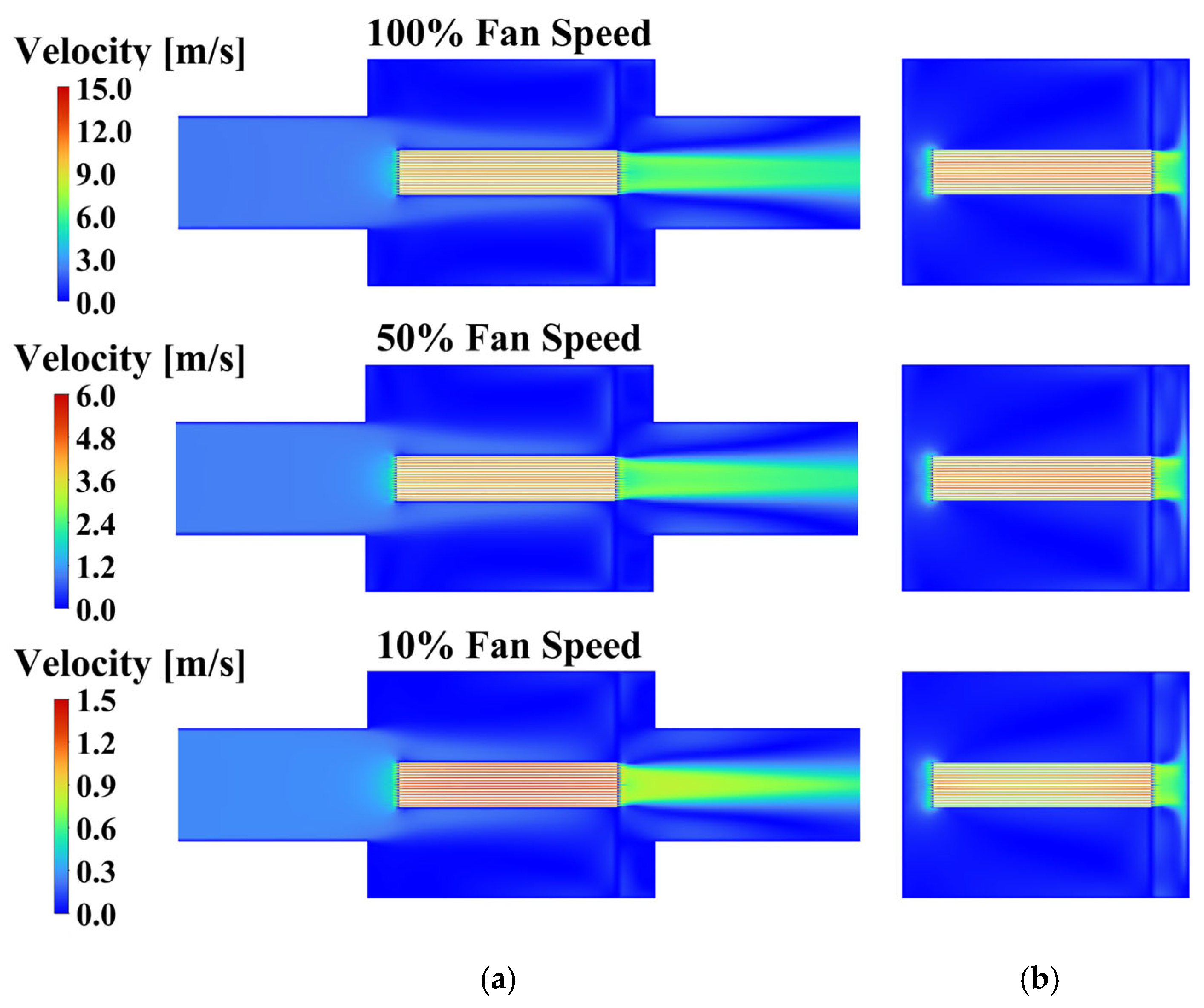
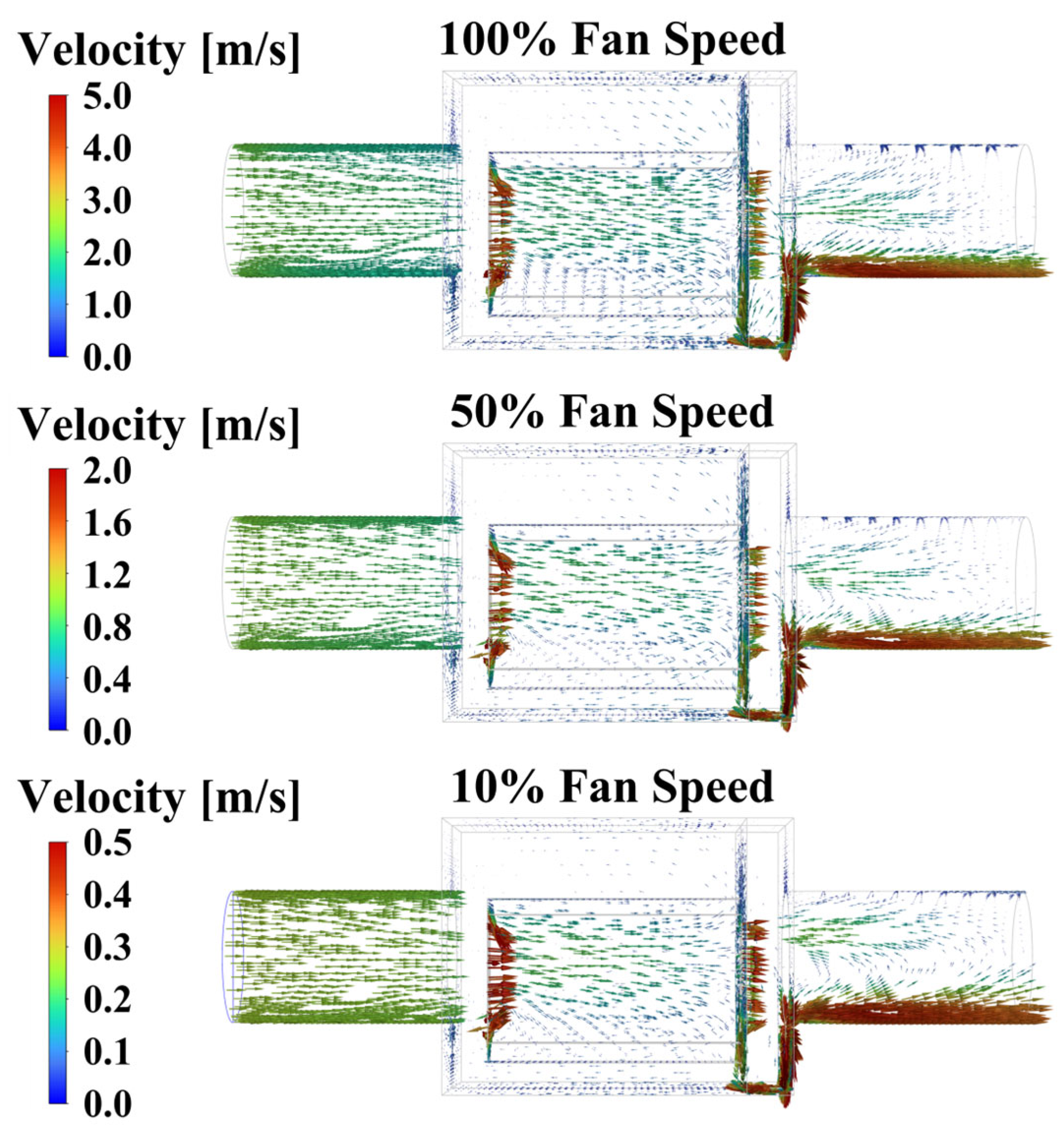
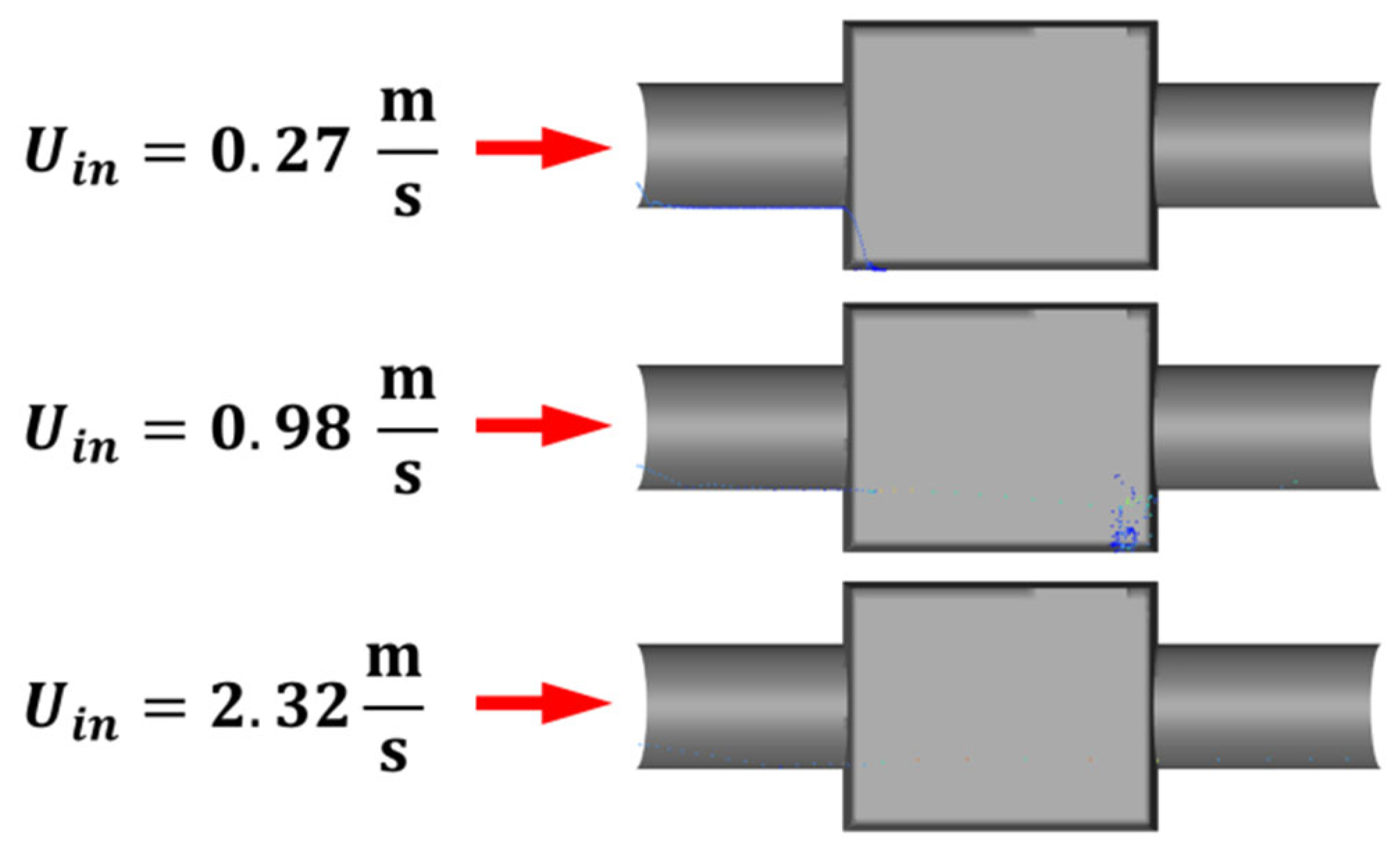
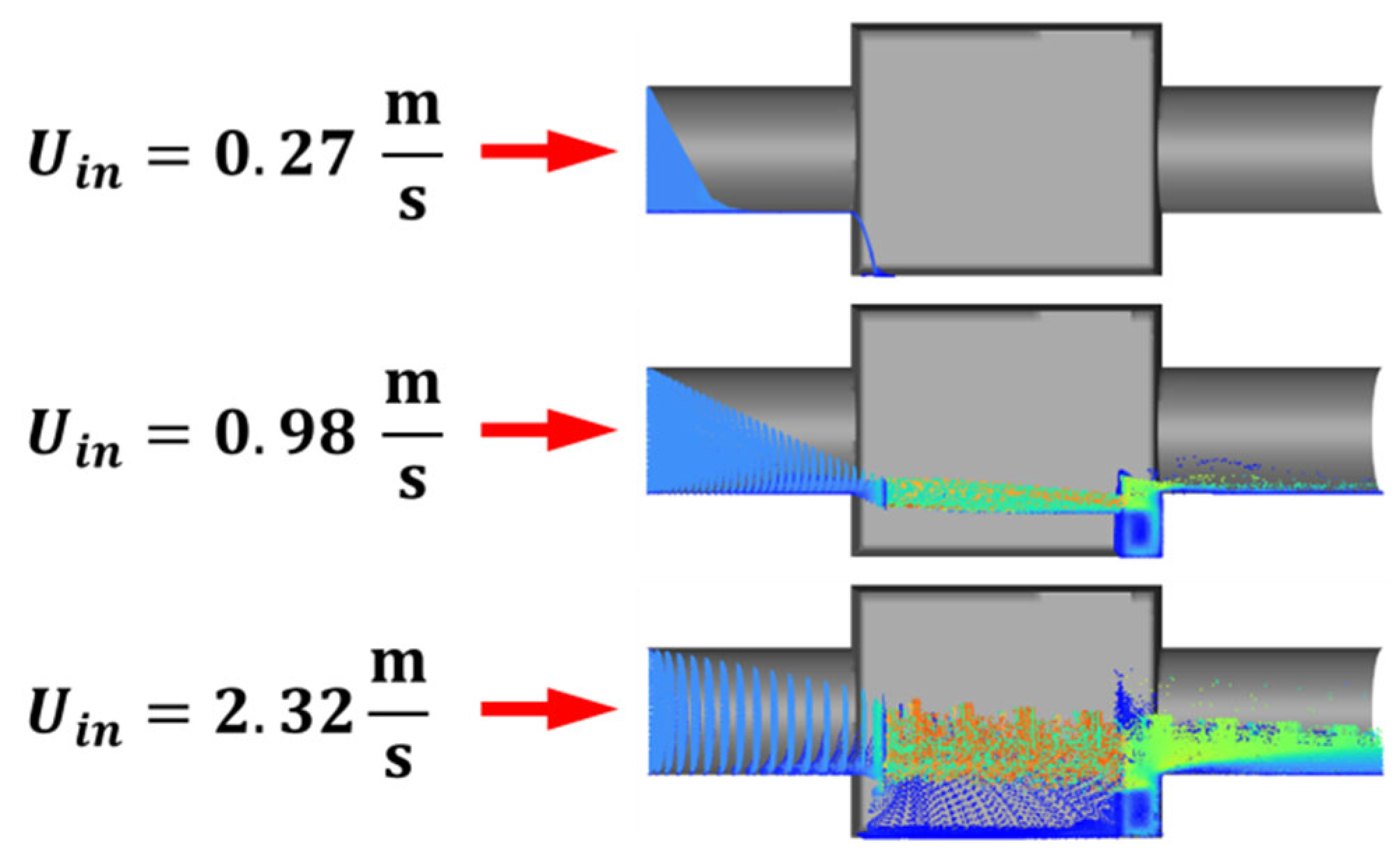
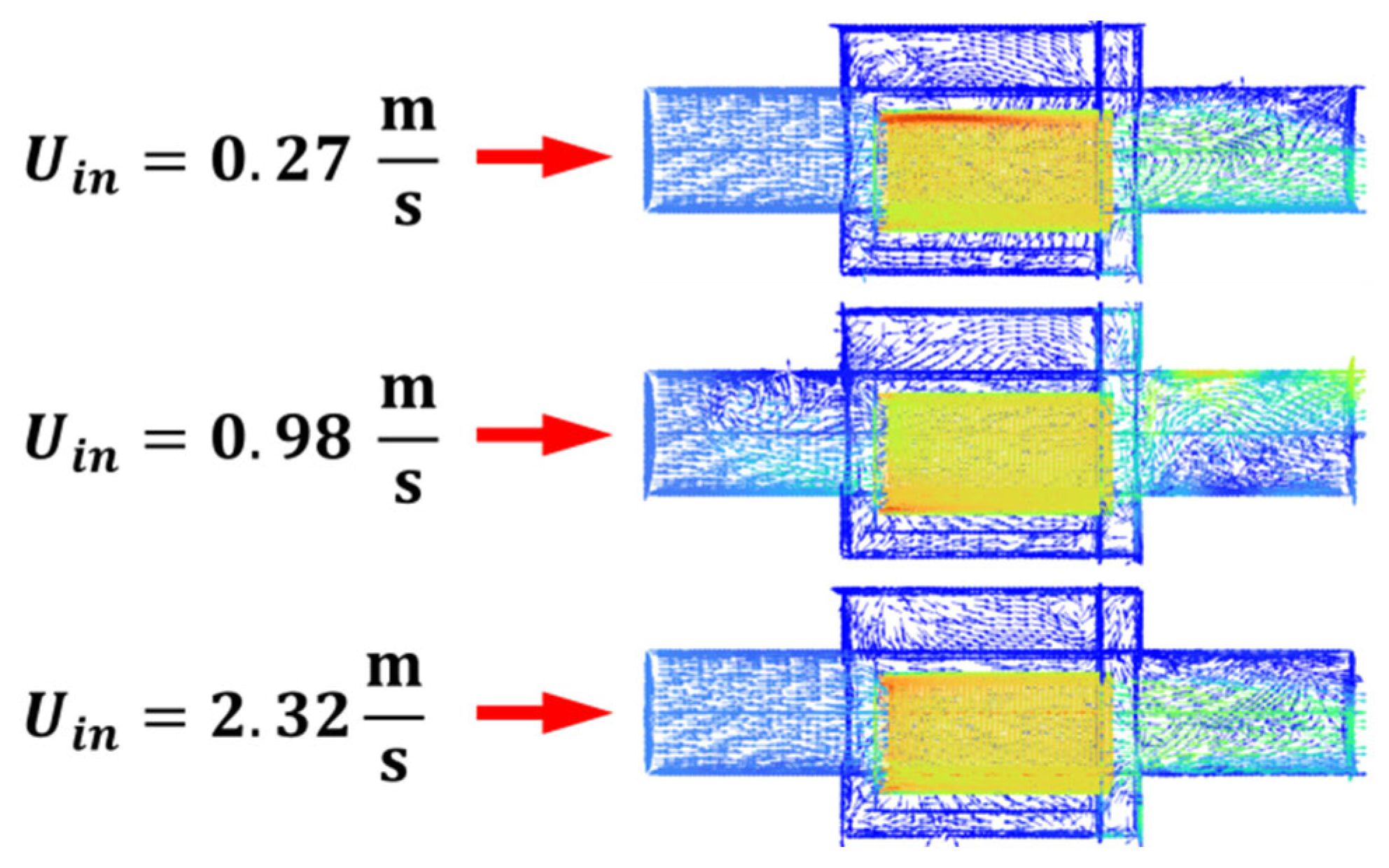
- The experimentally assessed inlet volumetric flow rates were 12.4/85.5/174.3 m3/h at 10/50/100%, whereas the outlet values were 14.5/115.4/226.9 m3/h, respectively. CFD matched experiments well at low gas flow rates, but deviations increased at high gas flow rates due to turbulence and geometric sensitivity; the internal plate structure stabilized and guided the flow, with the largest static-pressure and velocity-field differences at 100%.
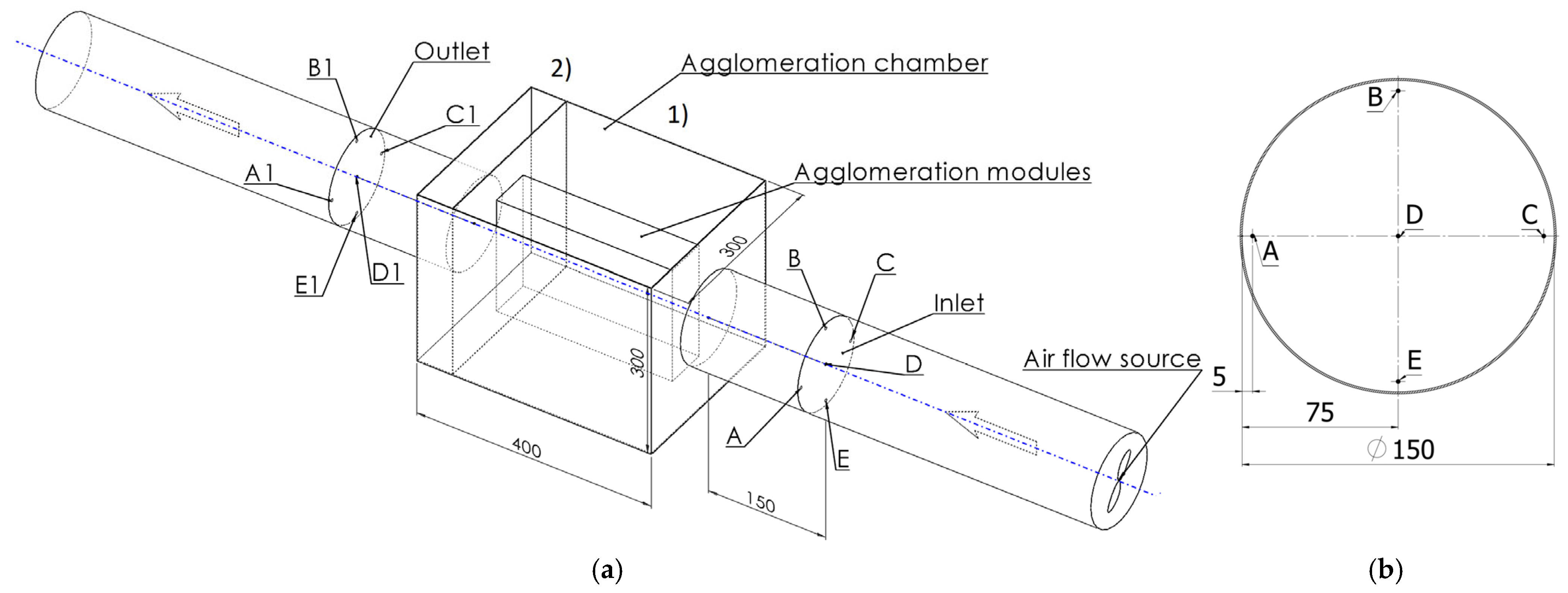
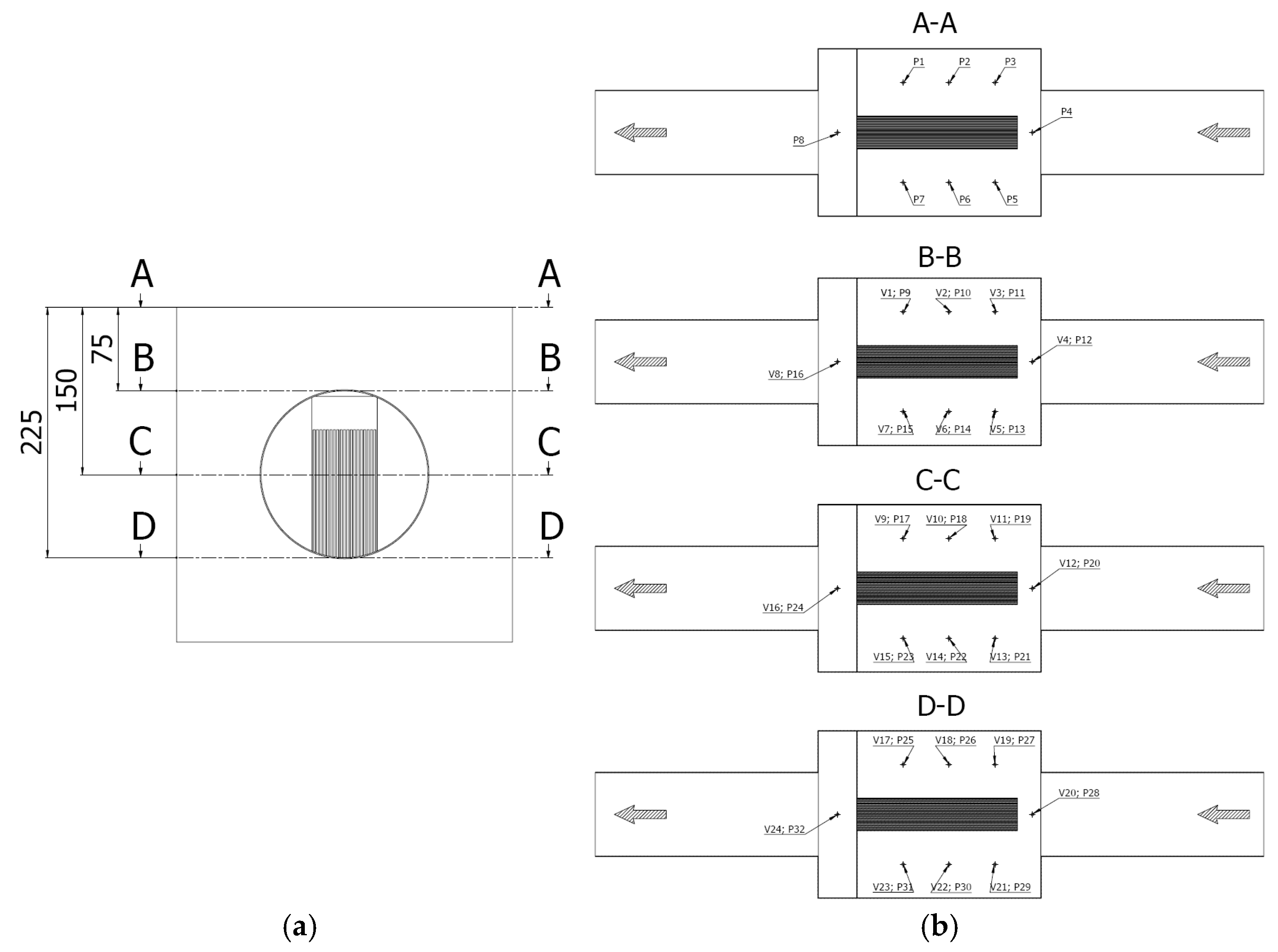
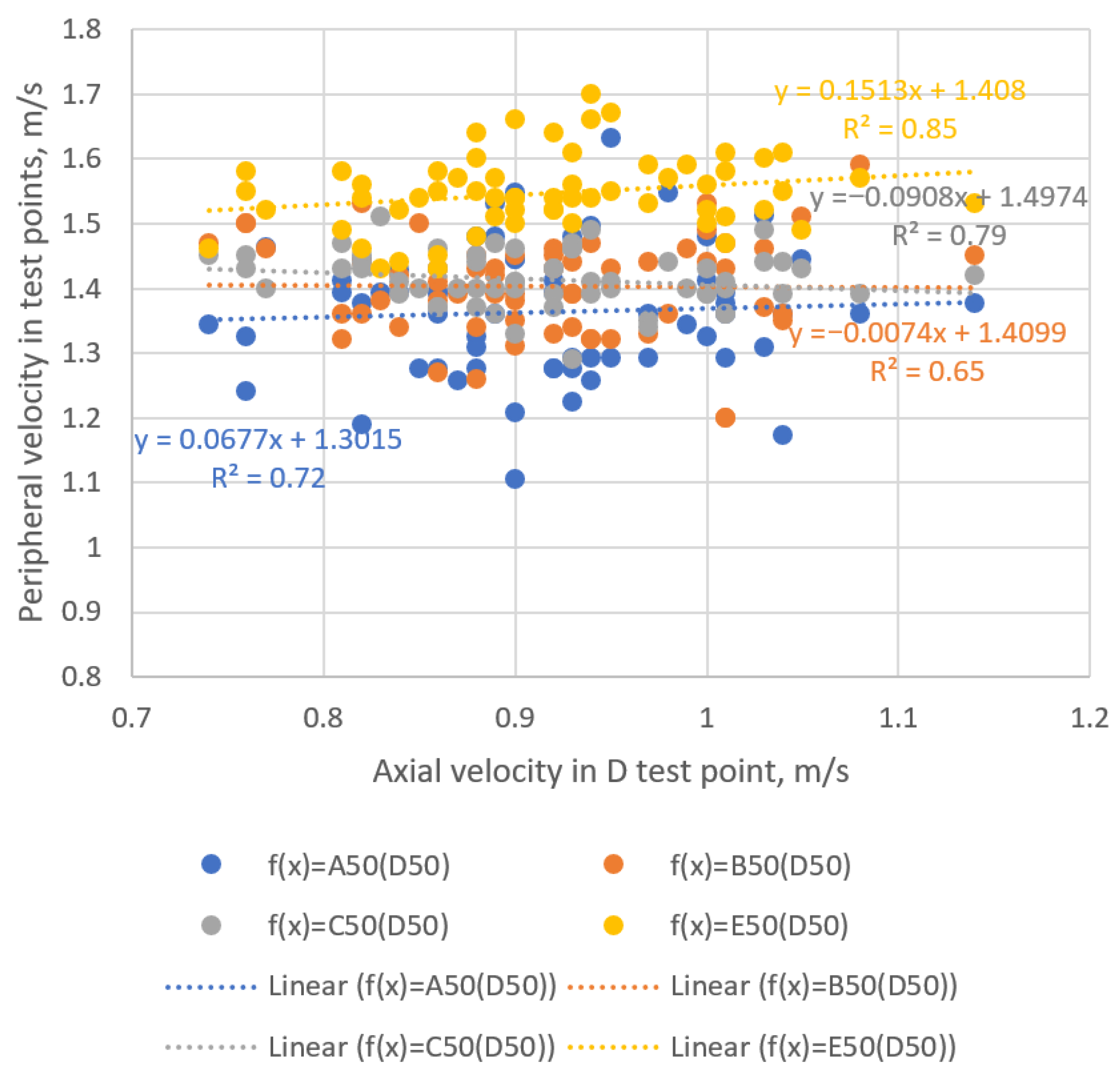
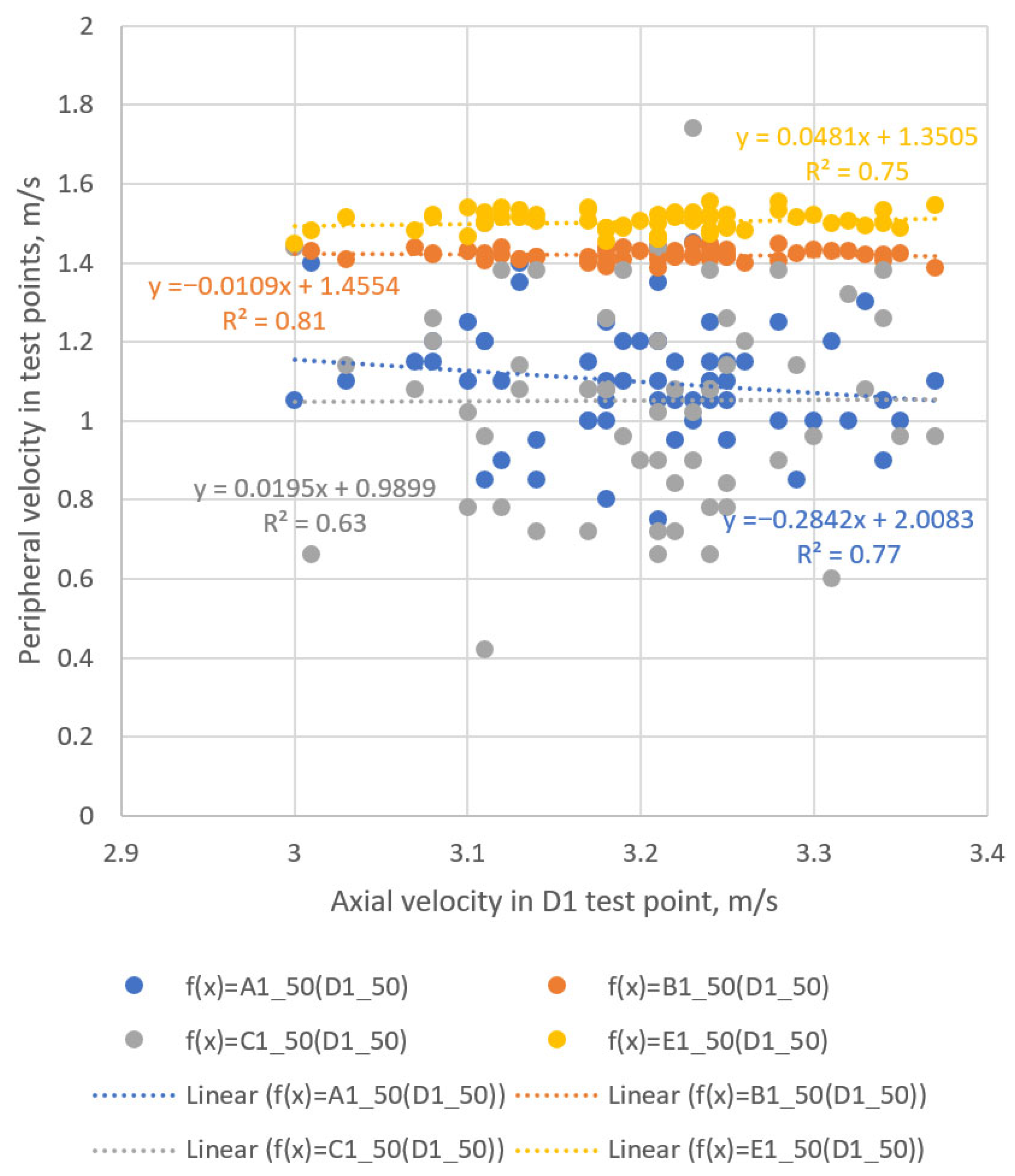
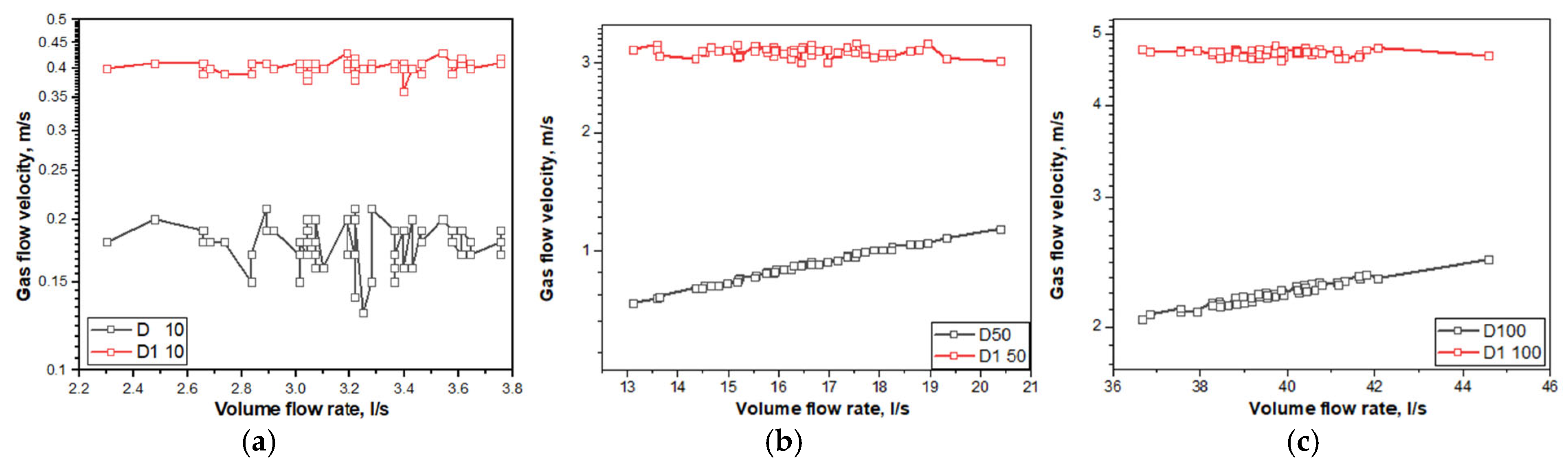
- The experimentally determined average flow velocities at points A–E and A1–E1 were equal to 0.2 m/s and 0.234 m/s at the minimal gas flow rate of 10%. From 10% to 50%, the average velocity increased by approximately 7–8 times. From 50% to 100%, the increase was approximately 2 times. The total increase in velocity comparing the gas flow rates of 10% and 100% reached about 14–16 times, depending on the point group. Points A1–E1 exhibited higher mean velocities and slightly higher growth ratios than points A–E. The measurements demonstrated a systematic vertical pathway acceleration (A1–E1 > A–E), consistent with the development of preferential high-velocity pathways induced by the cassette’s vertically arranged channel geometry.
- Aerodynamic resistance was researched experimentally, increasing the gas flow rate from 10% to 50% increased the aerodynamic resistance 8.5 times, from 8 Pa to 68 Pa, and from 50% to 100%, the aerodynamic resistance increased 2.6 times, from 68 Pa to 175 Pa.
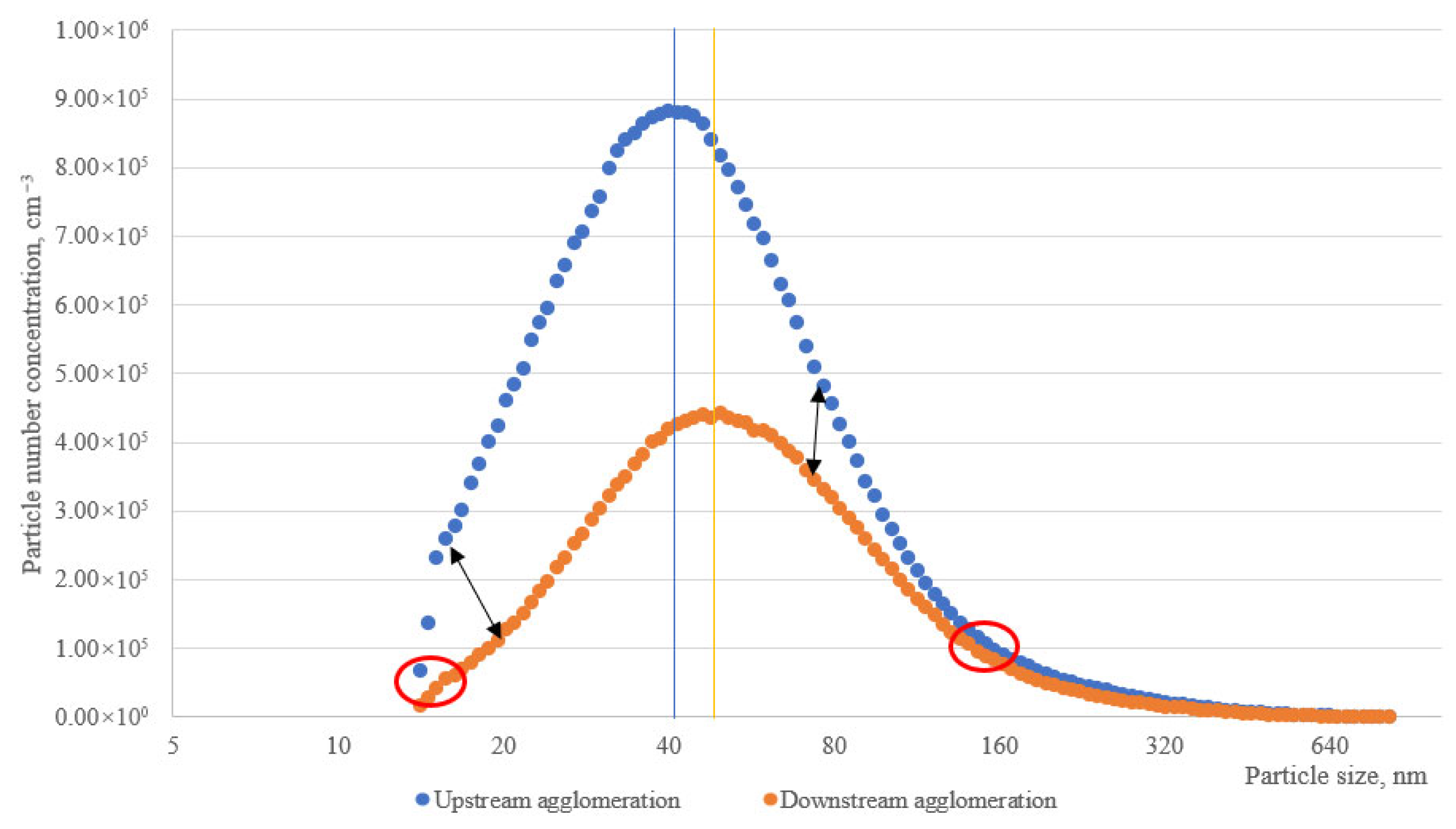
- The change in PN concentration in the experiments showed a pronounced size dependence, with the strongest decrease observed for nano PM up to 51.4 nm, followed by a progressive recovery up to approximately 310 nm, after which the concentration change increased, indicating the onset of agglomeration. Using the main average values, the magnitude of the concentration reduction decreased from 45.4% at 51.4 nm to 24.3% at 310.6 nm, which corresponded to a 46.5% reduction in the loss magnitude. A similar trend was observed in the individual tests: in Test 1, the magnitude decreased from 32.8% to 12.1%, indicating a 63.1% reduction; in Test 2, it decreased from 46.7% to 24.2%, corresponding to a 48.2% reduction; and in Test 3, it decreased from 48.2% to 24.5%, yielding a 49.2% reduction. The results establish a characteristic transition size of ~300 nm, beyond which agglomeration becomes dominant.
Author Contributions
Funding
Data Availability Statement
Acknowledgments
Conflicts of Interest
References
- Brunetti, A.; Macedonio, F.; Cui, Z.; Drioli, E. Membrane Condenser as Efficient Pre-Treatment Unit for the Abatement of Particulate Contained in Waste Gaseous Streams. J. Environ. Chem. Eng. 2020, 8, 104353. [Google Scholar] [CrossRef]
- Aslam, A.; Ibrahim, M.; Mahmood, A.; Mubashir, M.; Sipra, H.F.K.; Shahid, I.; Ramzan, S.; Latif, M.T.; Tahir, M.Y.; Show, P.L. Mitigation of Particulate Matters and Integrated Approach for Carbon Monoxide Remediation in an Urban Environment. J. Environ. Chem. Eng. 2021, 9, 105546. [Google Scholar] [CrossRef]
- Tan, Z. Nanofiber Filter Technologies for Filtration of Submicron Aerosols and Nanoaerosols Wallace Woon-Fong Leung Elsevier 2021, 570 Pages, ISBN 9780128244685. Can. J. Chem. Eng. 2022, 101, 1722–1723. [Google Scholar] [CrossRef]
- De Oliveira, A.E.; Guerra, V.G. Electrostatic precipitation of nanoparticles and submicron particles: Review of technological strategies. Process Saf. Environ. Prot. 2021, 153, 422–438. [Google Scholar] [CrossRef]
- European Parliament and Council. Regulation (EU) 2024/1257 of the European Parliament and of the Council of 24 April 2024 on Type-Approval of Motor Vehicles and Engines and of Systems, Components and Separate Technical Units Intended for Such Vehicles, with Respect to Their Emissions and Battery Durability (Euro 7), Amending Regulation (EU) 2018/858 and Repealing Regulations (EC) No 715/2007 and (EC) No 595/2009, Commission Regulation (EU) No 582/2011, Commission Regulation (EU) 2017/1151, Commission Regulation (EU) 2017/2400 and Commission Implementing Regulation (EU) 2022/1362 (Text with EEA Relevance); Publications Office of the European Union: Luxembourg, 2024; Available online: https://eur-lex.europa.eu/eli/reg/2024/1257/oj (accessed on 10 February 2026).
- Cai, J.; Yu, S.; Pei, Y.; Peng, C.; Liao, Y.; Liu, N.; Ji, J.; Cheng, J. Association between Airborne Fine Particulate Matter and Residents’ Cardiovascular Diseases, Ischemic Heart Disease and Cerebral Vascular Disease Mortality in Areas with Lighter Air Pollution in China. Int. J. Environ. Res. Public Health 2018, 15, 1918. [Google Scholar] [CrossRef]
- Sun, Z.; Yang, L.; Shen, A.; Zhou, L.; Wu, H. Combined Effect of Chemical and Turbulent Agglomeration on Improving the Removal of Fine Particles by Different Coupling Mode. Powder Technol. 2019, 344, 242–250. [Google Scholar] [CrossRef]
- US EPA. Particulate Matter (PM) Basics. Available online: https://www.epa.gov/pm-pollution/particulate-matter-pm-basics (accessed on 13 October 2024).
- Jia, Y.; Yang, Z.; Bu, S.; Xu, W. Experimental Investigation on the Agglomeration Performance of Pre-Charged Micro-Nano Particles in Uniform Magnetic Field. Chem. Eng. Res. Des. 2024, 201, 523–533. [Google Scholar] [CrossRef]
- He, M.; Luo, Z.; Wang, H.; Fang, M. The Influences of Acoustic and Pulsed Corona Discharge Coupling Field on Agglomeration of Monodisperse Fine Particles. Appl. Sci. 2020, 10, 1045. [Google Scholar] [CrossRef]
- Riera, E.; González-Gomez, I.; Rodríguez, G.; Gallego-Juárez, J.A. 34-Ultrasonic Agglomeration and Preconditioning of Aerosol Particles for Environmental and Other Applications. In Power Ultrasonics; Gallego-Juárez, J.A., Graff, K.F., Eds.; Woodhead Publishing: Oxford, UK, 2015; pp. 1023–1058. ISBN 978-1-78242-028-6. [Google Scholar] [CrossRef]
- Zheng, Q.J.; Yang, R.Y.; Zeng, Q.H.; Zhu, H.P.; Dong, K.J.; Yu, A.B. Interparticle Forces and Their Effects in Particulate Systems. Powder Technol. 2024, 436, 119445. [Google Scholar] [CrossRef]
- Don Green, W.; Robert, H. Perry Principles of Size Enlargement. In Perry’s Chemical Engineers’ Handbook, 8th ed.; McGraw-Hill Education: New York, NY, USA, 2008; ISBN 978-0-07-142294-9. [Google Scholar]
- Li, H.; Zhang, J.; Zhao, Y.; Zhang, L.; Zheng, C. Integrated Control of Submicron Particles and Toxic Trace Elements by ESPs Combined with Chemical Agglomeration. In Proceedings of the Electrostatic Precipitation 11th International Conference on Electrostatic Precipitation, Hangzhou, China, 27–29 May 2009; Yan, K., Ed.; Springer: Berlin/Heidelberg, Germany, 2009; pp. 238–241. [Google Scholar]
- Wei, F.; Zhang, J.; Zheng, C. Agglomeration Rate and Action Forces between Atomized Particles of Agglomerator and Inhaled-Particles from Coal Combustion. J. Environ. Sci. 2005, 17, 335–339. [Google Scholar]
- Rivera-Tobar, D.; Pérez-Won, M.; Jara-Quijada, E.; González-Cavieres, L.; Tabilo-Munizaga, G.; Lemus-Mondaca, R. Principles of Ultrasonic Agglomeration and Its Effect on Physicochemical and Macro- and Microstructural Properties of Foods. Food Chem. 2025, 463, 141309. [Google Scholar] [CrossRef]
- Zhou, C.-T.; Yao, Z.-Z.; Chen, D.-L.; Luo, K.; Wu, J.; Yi, H.-L. Numerical Prediction of Transient Electrohydrodynamic Instabilities under an Alternating Current Electric Field and Unipolar Injection. Heliyon 2023, 9, e12812. [Google Scholar] [CrossRef] [PubMed]
- Christen, T.; Seeger, M. Simulation of Unipolar Space Charge Controlled Electric Fields. J. Electrost. 2007, 65, 11–20. [Google Scholar] [CrossRef]
- Jaworek, A.; Marchewicz, A.; Sobczyk, A.T.; Krupa, A.; Czech, T. Two-Stage Electrostatic Precipitators for the Reduction of PM2.5 Particle Emission. Prog. Energy Combust. Sci. 2018, 67, 206–233. [Google Scholar] [CrossRef]
- Kanazawa, S.; Ohkubo, T.; Nomoto, Y.; Adachi, T. Submicron Particle Agglomeration and Precipitation by Using a Bipolar Charging Method. J. Electrost. 1993, 29, 193–209. [Google Scholar] [CrossRef]
- Hautanen, J.; Kilpeläinen, M.; Kauppinen, E.I.; Lehtinen, K.; Jokiniemi, J. Electrical Agglomeration of Aerosol Particles in an Alternating Electric Field. Aerosol Sci. Technol. 1995, 22, 181–189. [Google Scholar] [CrossRef]
- Zhang, X.-R.; Wang, L.-Z. Effects of an external electric field on the collision and agglomeration between bipolarly charged particles. Beijing Ligong Daxue Xuebao 2012, 32, 91–94. [Google Scholar]
- Grosshans, H. Modulation of Particle Dynamics in Dilute Duct Flows by Electrostatic Charges. Phys. Fluids 2018, 30, 083303. [Google Scholar] [CrossRef]
- Fuchs, N.A. On the Stationary Charge Distribution on Aerosol Particles in a Bipolar Ionic Atmosphere. Geofis. Pura E Appl. 1963, 56, 185–193. [Google Scholar] [CrossRef]
- Liu, B.Y.H.; Yeh, H. On the Theory of Charging of Aerosol Particles in an Electric Field. J. Appl. Phys. 1968, 39, 1396–1402. [Google Scholar] [CrossRef]
- Wang, J.; Zhu, T.; Cai, Y.; Zhang, J.; Wang, J. Review on the Recent Development of Corona Wind and Its Application in Heat Transfer Enhancement. Int. J. Heat Mass Transf. 2020, 152, 119545. [Google Scholar] [CrossRef]
- Thonglek, V.; Kiatsiriroat, T. Agglomeration of Sub-Micron Particles by a Non-Thermal Plasma Electrostatic Precipitator. J. Electrost. 2014, 72, 33–38. [Google Scholar] [CrossRef]
- NG, B.F.; Xiong, J.; Wan, M.-P. Application of Acoustic Agglomeration to Enhance Air Filtration Efficiency in Air-Conditioning and Mechanical Ventilation (ACMV) Systems. PLoS ONE 2017, 12, e0178851. [Google Scholar] [CrossRef]
- Leung, W.W.-F. (Ed.) Chapter Thirteen—Applications of Nanofiber Filters. In Nanofiber Filter Technologies for Filtration of Submicron Aerosols and Nanoaerosols; Elsevier: Amsterdam, The Netherlands, 2022; pp. 445–496. ISBN 978-0-12-824468-5. [Google Scholar] [CrossRef]
- Chlebnikovas, A.; Kilikevičius, A. Daugiasluoksnė Plokštelinė Modulinė Kasetė Dujose Esančias Kietąsias Daleles Aglomeruoti Ir Nusodinti. 2025, pp. 1–20. Available online: https://gs.elaba.lt/object/elaba:239567755/ (accessed on 10 February 2026).
- Chlebnikovas, A.; Kilikevičius, A. Multilayer Plate Modular Cartridge for Agglomeration and Deposition of Particulate Matter in Gas. European patent application, 2026; pp. 1–20, unpublished. [Google Scholar]
- Kerner, M.; Schmidt, K.; Schumacher, S.; Asbach, C.; Antonyuk, S. Ageing of Electret Filter Media Due to Deposition of Submicron Particles—Experimental and Numerical Investigations. Sep. Purif. Technol. 2020, 251, 117299. [Google Scholar] [CrossRef]
- Panton, R.L. Incompressible Flow; John Wiley & Sons: Hoboken, NJ, USA, 2024; ISBN 978-1-119-98439-9. [Google Scholar]
- Shih, T.-H.; Liou, W.W.; Shabbir, A.; Yang, Z.; Zhu, J. A New k-ϵ Eddy Viscosity Model for High Reynolds Number Turbulent Flows. Comput. Fluids 1995, 24, 227–238. [Google Scholar] [CrossRef]
- Vaddi, R.S.; Guan, Y.; Novosselov, I. Behavior of Ultrafine Particles in Electro-Hydrodynamic Flow Induced by Corona Discharge. J. Aerosol Sci. 2020, 148, 105587. [Google Scholar] [CrossRef]
- Vallero, D.A. Chapter 11—Sampling and Analysis. In Air Pollution Calculations, 2nd ed.; Vallero, D.A., Ed.; Elsevier: Amsterdam, The Netherlands, 2024; pp. 321–396. ISBN 978-0-443-13987-1. [Google Scholar] [CrossRef]
- Anderson, J.P.; Mortimer, L.F.; Hunter, T.N.; Peakall, J.; Fairweather, M. Numerical Simulation of the Agglomeration Behaviour of Spheroidal Particle Pairs in Chaotic Flows. Flow Turbul. Combust. 2025, 114, 941–965. [Google Scholar] [CrossRef]
- Alguacil, F.J.; Alonso, M. The Motion of Brownian Particles Suspended in a Non-Uniform Fluid Flow. J. Aerosol Sci. 2024, 179, 106382. [Google Scholar] [CrossRef]



| Measuring Point in the Inlet Duct | Part of Nominal Gas Flow (Flow Rate)—Median Gas Inlet Velocity (m/s) | ||
|---|---|---|---|
| 10% (3.1 L/s) | 50% (22.5 L/s) | 100% (47.1 L/s) | |
| A | 0.27 | 1.65 | 2.79 |
| B | 0.05 | 1.15 | 2.49 |
| C | 0.17 | 1.60 | 3.25 |
| D 1 | 0.27 | 0.98 | 2.32 |
| E | 0.12 | 0.99 | 2.47 |
| Gas Flow Rate, L/s (%) | Aerodynamic Resistance, Pa | Static Pressure in Inlet Duct, Pa | Static Pressure in Outlet Duct, Pa |
|---|---|---|---|
| 4.65 (10) | 8–9 | 8 | 3 |
| 9.29 (20) | 16 | 16 | 3 |
| 13.94 (30) | 33 | 33 | 3 |
| 18.58 (40) | 49–50 | 50 | 3 |
| 23.23 (50) | 68 | 68 | 3–4 |
| 27.87 (60) | 88 | 88–89 | 4 |
| 32.52 (70) | 109 | 110 | 4–5 |
| 37.16 (80) | 133 | 135–136 | 5 |
| 41.81 (90) | 162 | 165 | 5 |
| 46.45 (100) | 174–175 | 178 | 4–8 |
| PM Size, nm | Change in PN Concentration from Upstream to Downstream | |||
|---|---|---|---|---|
| Average of Test 1 | Average of Test 2 | Average of Test 3 | Main Average | |
| 15.1 | −65.5 | −79.9 | −82.0 | −81.7 |
| 20.2 | −61.7 | −73.7 | −73.8 | −72.4 |
| 51.4 | −32.8 | −46.7 | −48.2 | −45.4 |
| 101.8 | −11.3 | −15.0 | −25.4 | −21.3 |
| 151.2 | −12.3 | −6.8 | −17.0 | −16.1 |
| 201.7 | −17.8 | −14.9 | −20.2 | −21.4 |
| 310.6 | −12.1 | −24.2 | −24.5 | −24.3 |
| 399.5 | −18.3 | −29.1 | −24.1 | −25.6 |
| 495.8 | −30.9 | −26.7 | −26.4 | −30.5 |
| 615.3 | −47.3 | −32.2 | −31.8 | −39.8 |
| 710.5 | −34.9 | −29.5 | −28.2 | −32.1 |
| 820.5 | 5.8 | −35.3 | −29.8 | −24.6 |
| Static Pressure (Pa) | ||||||
|---|---|---|---|---|---|---|
| Part of Nominal Gas Flow (Flow Rate), % | V23 | V26 | V27 | V28 | V31 | |
| Experiment | 10 | 7 | 7 | 7 | 7 | 0 |
| Simulation | 6.41 | 6.53 | 6.53 | 6.53 | 3.05 | |
| Experiment | 50 | 65 | 67 | 67 | 67 | −1 |
| Simulation | 65.4 | 66.94 | 66.93 | 66.93 | 14 | |
| Experiment | 100 | 167 | 177 | 176 | 176 | −7 |
| Simulation | 222.71 | 231.4 | 231.28 | 231.22 | −76.42 | |
| Static Pressure (Pa) | ||||||
|---|---|---|---|---|---|---|
| A Part of Nominal Gas Flow (Flow Rate), % | V38 | V41 | V42 | V43 | V46 | |
| Experiment | 10% | 9 | 9 | 9 | 10 | 2 |
| Simulation | 6.43 | 6.53 | 6.53 | 6.53 | 3.07 | |
| Experiment | 50% | 69 | 69 | 70 | 70 | 1 |
| Simulation | 65.52 | 66.93 | 66.93 | 66.93 | 14.36 | |
| Experiment | 100% | 177 | 179 | 179 | 178 | −3 |
| Simulation | 223.22 | 231.27 | 231.26 | 231.22 | −74.56 | |
Disclaimer/Publisher’s Note: The statements, opinions and data contained in all publications are solely those of the individual author(s) and contributor(s) and not of MDPI and/or the editor(s). MDPI and/or the editor(s) disclaim responsibility for any injury to people or property resulting from any ideas, methods, instructions or products referred to in the content. |
© 2026 by the authors. Licensee MDPI, Basel, Switzerland. This article is an open access article distributed under the terms and conditions of the Creative Commons Attribution (CC BY) license.
Share and Cite
Chlebnikovas, A.; Zdanevičius, S.; Gutheil, J.H.; Cheng, W.L. Study on the Influence of the Aerodynamic Performance of Electric Field Manipulator: Experimental and Modelling Research. Machines 2026, 14, 269. https://doi.org/10.3390/machines14030269
Chlebnikovas A, Zdanevičius S, Gutheil JH, Cheng WL. Study on the Influence of the Aerodynamic Performance of Electric Field Manipulator: Experimental and Modelling Research. Machines. 2026; 14(3):269. https://doi.org/10.3390/machines14030269
Chicago/Turabian StyleChlebnikovas, Aleksandras, Stanislovas Zdanevičius, Johannes Hieronymus Gutheil, and Way Lee Cheng. 2026. "Study on the Influence of the Aerodynamic Performance of Electric Field Manipulator: Experimental and Modelling Research" Machines 14, no. 3: 269. https://doi.org/10.3390/machines14030269
APA StyleChlebnikovas, A., Zdanevičius, S., Gutheil, J. H., & Cheng, W. L. (2026). Study on the Influence of the Aerodynamic Performance of Electric Field Manipulator: Experimental and Modelling Research. Machines, 14(3), 269. https://doi.org/10.3390/machines14030269