Article

Application of an Ultrasonic Vibration-Assisted Drawing Process to a Submersible Linear Motor Core

1
College of Mechanical and Automotive Engineering, Ningbo University of Technology, Ningbo 315211, China
2
College of Mechanical Engineering, Yanshan University, Qinhuangdao 066004, China
3
Nickel Smelting Plant of Jinchuan Group Nickel and Cobalt Co., Ltd., Jinchang 737100, China
*
Author to whom correspondence should be addressed.
Machines 2026, 14(3), 259; https://doi.org/10.3390/machines14030259
Submission received: 21 January 2026 / Revised: 12 February 2026 / Accepted: 23 February 2026 / Published: 25 February 2026
(This article belongs to the Section Advanced Manufacturing)

Abstract

The cylindrical submerged linear motor with the primary core used in traditional welded stacked 50ww470 non-silicon steel sheets faces many shortcomings. These include its structure being complex and difficult to manufacture, the process requiring stages such as steel sheet blanking, stacking, and welding, and the iron core exhibiting large magnetic resistance and generating a lot of heat when the motor is working, reducing the motor efficiency. Therefore, an ultrasonic vibration-assisted (UVA) deep drawing process for multilayer sheets was proposed to replace the traditional process. The finite element analysis was carried out on single-layer sheet drawing. Using Abaqus software, we verified that UVA could improve the uniformity of the wall thickness of formed parts, and reduce wall thickness thinning and rebound; the core forming height is so low that there will be a larger rebound after forming. The “split ring” method was used to verify that ultrasonic vibration can suppress the rebound of the formed part. As the bottom of the core was made of six layers of silicon steel sheets, laminated and welded, the feasibility of different solutions was investigated by setting up a UVA deep drawing experimental platform to study single-, double-, three- and six-layer-sheets, and the forming quality and forming forces were analyzed. The final forming process was determined to require two deep-drawing three-layer sheets, and the forming part was successfully manufactured.

1. Introduction

Deep well and ultra-deep well recovery achieve successful crude oil production, but traditional mechanical oil recovery methods for deep well recovery have certain limitations and inefficiencies [1]. The submersible oil liner motor (SOLM) is a new type of motor that can directly output linear motion with any intermediate transmission mechanism conversion. Compared with the traditional linear motion mechanism, it has a simple mechanism, high transmission efficiency, strong detection capability, and other characteristics which enable it to solve the traditional mechanical oil recovery device problems such as bias grinding. In recent years, the use of a linear motor for medical, industrial, military and other industry applications has become more and more common. Advantages include high thrust, high transmission stiffness and unrestricted stroke, and the ability to directly convert electrical energy into reciprocating linear motion, reducing the mechanical conversion link and improving transmission efficiency [2,3,4].
The original process was produced by stamping the sheets and welding them together: the iron core of the motor is welded to the bottom of the core, resulting in a large magnetic resistance, which makes the submerged oil linear motor hotter and more difficult to run for long periods of time, affecting the efficiency of the work [5]. Therefore, the question of how to form the core in one piece has become the focus of this paper.
The technique of deep drawing parts of multilayer sheet metals is widely used in aerospace, automobile and chemical industries due to its excellent comprehensive mechanical properties. Traditionally, multilayer metal sheets are known as composite sheets, and have good interface bonding obtained by cold rolling, pressure welding, hot rolling and bonding of two or more dissimilar metal sheets. In recent years, many studies have been carried out on the deep drawability and wrinkle behavior of multilayer sheets [6,7]. Takuda et al. [8] studied the deep-drawing-forming performance of various aluminum alloys compared to mild steel sheets and the order of combination of aluminum alloy and mild steel stacking, and thereby obtained the optimal stacking order. Karajibani et al. [9] used a combination of numerical simulations and experiments to investigate the influence of the stacking order of the group elements, the size of the concave die fillet and the friction coefficient between the sheet and the convex die on the ultimate drawing ratio during the deep drawing of multilayer sheets. Molaei et al. [10] studied deep drawing of two tapered-part layers of Al3003-IF steel, and revealed the friction coefficient and the thickness ratio of the two-layer sheet, among other parameters. The experimental results show that when the Al3003-IF steel layer is the outmost layer, the ultimate drawing ratio can be improved. Therefore, in this paper, the non-oriented silicon steel sheet is mechanically stacked deeply by using the composite sheet-forming method. Due to the motor core having a relatively small drawing depth, there will be a rebound phenomenon after drawing.
To solve the rebound phenomenon, an ultrasonic vibration-assisted (UVA) method is introduced into the deep drawing and forming of stacked sheets. Many researchers have found many advantages, such as reducing the forming force [11,12,13], reducing the friction coefficient between the tool/mold cavity and the sample [14,15], reducing the forming rebound angle of the sheet material [16], and improving the surface quality of the formed part [17], etc. It is widely applied in forming processes such as tension [18,19], compression [20,21], extrusion [22,23], and deep drawing [24,25]. Using a material model, Zhou [26] found that ultrasonic vibration can reduce flow stress during the ultrasonic-assisted compression process for both aluminum and titanium; an ultrasonic softening effect was observed. It was explained that, due to this softening effect, the ultrasonic vibration can reduce forming forces and improve forming limits. From the simulation, Hayashi et al. [27] used the finite element method (FEM) to obtain the processing mechanism of UVA drawing, and the drawing force and stress–strain distributions in drawn wires were analyzed. They clarified the mechanism of improved drawing characteristics, such as decreased drawing force; Siddiq [28] modified a fully variational porous plasticity model, which included ultrasonic softening effects, the UVA sheet metal forming, UVA upsetting and UVA wire drawing, which are all simulated using this model, and the critical role ultra-sonic energy plays in reducing the friction and forming forces during deformation is demonstrated. And from the experiment, Wen et al. [29] studied the deep drawing process of an AZ31 magnesium alloy sheet under UVA, finding that the total forming load decreased significantly as soon as the vibration was superimposed; Asadi et al. [30] found that the application of ultrasonic vibration generally improved bending parameters. Ultrasonic vibration reduced the required bending force and rebound angle; Kim et al. [31] present experimental and numerical investigations on the effect of ultrasonic vibration on cylindrical cup drawing processes of a cold-rolled steel sheet, showing that the application of ultrasonic vibration improved LDR by reducing the friction between the tools and the material; Jimma et al. [32] found that the application of the ultrasonic vibration increases limiting drawing ratio (LDR) through the deep drawing process of 304 stainless steel sheets under the ultrasonic vibration.
This paper takes the SOLM core as the research object, and looks at the UVA multilayer cold-rolled non-oriented silicon steel sheet drawing. Due to its six-layer sheet structure, four kinds of multilayer sheet drawing process schemes are developed. Firstly, the effects of different amplitudes on the forming force and rebound of the single-layer sheet under ultrasonic vibration are investigated by experiment and simulation. On this basis, the first step of the process was carried out—the vibration deep drawing experiment—to determine the final process and process parameters.

2. Introduction of the Motor Core Forming Process

2.1. Analysis of the Structure Characteristics of the Motor Iron Core

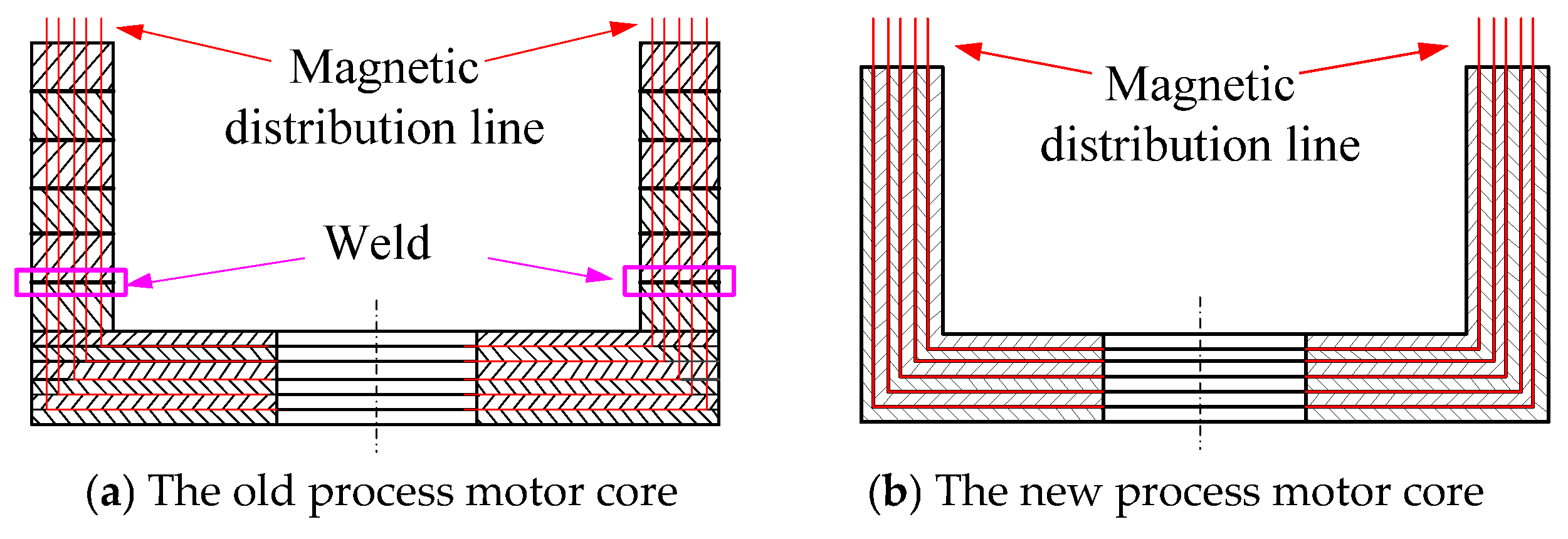
The distribution of magnetic field lines is shown in Figure 1. It can be seen that the traditional motor core manufacturing process involves pressing sheet materials and welding them together (as shown in Figure 1a), and the materials between each layer are discontinuous (as shown in Figure 1b) [33], resulting in losses along the effective magnetic field lines. However, the process proposed in this paper is to form the entire sheet by deep drawing, with gaps existing between the straight walls of multiple layers after forming. The formed sheet in the effective transmission direction of the magnetic field lines is continuous and there are no losses. Therefore, the new process enhances the transmission of the magnetic field. However, since the forming diameter and height of the forming piece of the motor core are 95 mm and 10.5 mm, respectively, the height is relatively small and it is therefore considered shallow deep drawing, so the rebound phenomenon is relatively severe. This will affect the size and quality of the forming piece and cause difficulties in the subsequent production of multi-layer laminations. Therefore, on this basis, the UVA forming process is introduced, which can effectively reduce the rebound caused by shallow deep drawing and reduce the forming force required.

2.2. Design of the Motor Core Forming Process Scheme

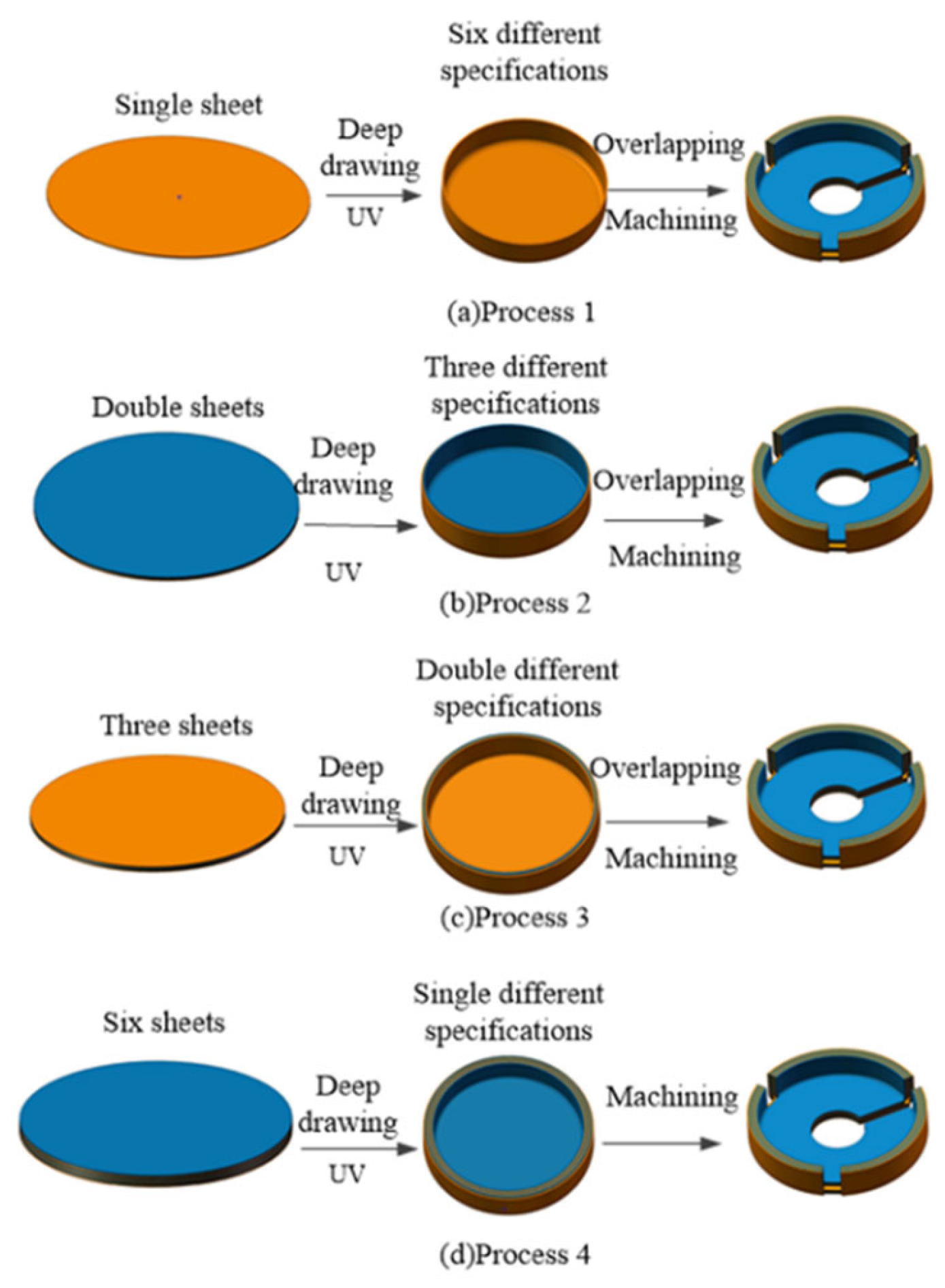
According to Section 2.1, four process technology routes were designed for the deep drawing process of this motor core, as shown in Figure 2. Firstly, UVA deep drawing was carried out using different layers of sheets to form some deep drawing parts of single or multilayer sheets, and then the different sized forming parts were stacked. Finally, the preparation of the motor core was achieved through machining.

3. CS Material Model and Determination of Material Parameters

CS Material Model

Under the UVA, the strain rate is changed upon deformation of metallic material [34], which is implemented using a constitutive model, including strain rate; the Cowper–Symonds (CS) constitutive model was selected [35], which includes true stress (quasi-static stress σ y s , dynamic flow stress σ y d , equivalent plastic strain ε, and strain rate ε ˙ quarter:
σ y ( ε , ε ) = σ y s ( ε ) 1 + ε C 1 P
where C and P are parameters describing the sensitivity of the material to strain rate, and quasi-static stress σ y s can be expressed as a combination of Equations (2) and (3).
σ y s ε = K ε + ε ˙ n
ε 0 = E K 1 n 1
Simultaneous Equations (1)–(3) can be obtained:
σ y = ε , δ = K ε + E K 1 n 1 n 1 + ε C 1 P
where E is the elastic modulus (MPa), K is the strength coefficient/(MPa), and n is the hardening index.
The CS model considers the effect of strain rate on material formation. Based on the uniaxial tensile test, a CS finite element material model of 50WW470 silicon steel sheet was established. The stress–strain data for different strain rates at room temperature were selected, and the least square fitting tool in Matlab2017a was used to fit Equation (4). The parameters C and P obtained from different strain rate data were averaged. The CS material model of a non-oriented silicon steel sheet was obtained by Matlab; the parameter values are C = 385.58, P = 4.02. Therefore, the CS material constitutive relation of the 50ww470 non-oriented silicon steel sheet at room temperature can be expressed as in Formula (5).
σ = 821.04 ε + 183.5 821.04 1 0.675 0.325 ε + ε ˙ 385.58 1 4.02 0.325
The material parameters of the non-oriented silicon steel sheet CS model are shown in Table 1.

4. Simulation of Motor Core Forming

4.1. Finite Element Model of Motor Core Forming Is Established

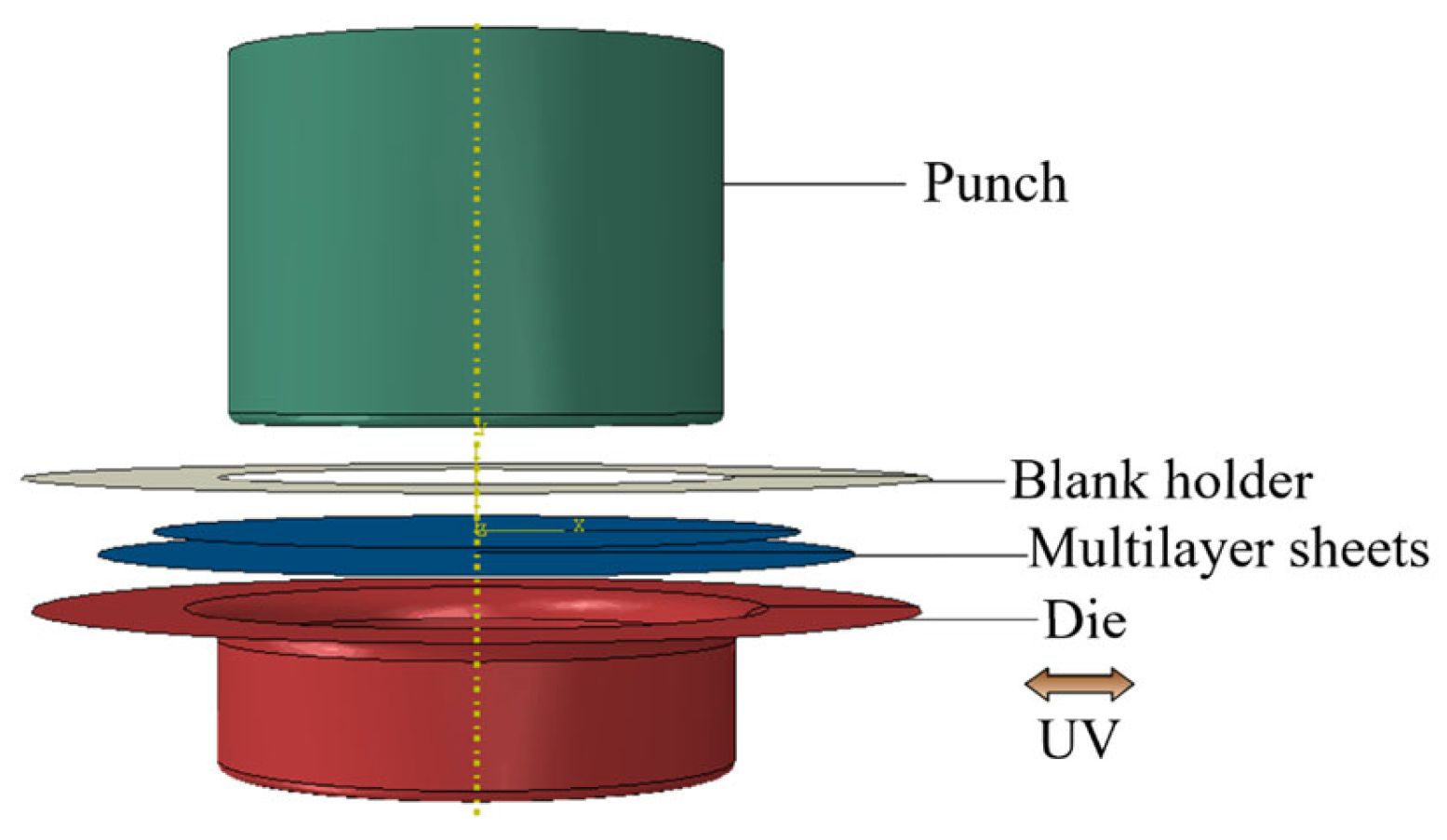
The sheet drawing process experiences deformation and frictional contact problems, which are non-linear contact problems, so the commercial finite element software Abaqus2019 is used to simulate and study the sheet drawing process by displaying the non-linear dynamics analysis method. The die is set as an analytic rigid body, and the sheet material is an elasto-plastic deformation body with shell element, in which the body element is S4R; its material properties are shown in Table 1. Set the size of the sheet mesh to 1, and the number of thickness integration points to 7; the crimp gap is 1.1t (with t as the thickness of sheet material [36]), and the mold dimensions are the same as those of the test die. The friction coefficient was set to the default value of 0.125 (steel against steel), and the adaptive meshing function was also enabled.
On this basis the concave die is subjected to ultrasonic vibration using a displacement in the radial direction of the die in the form of sinusoidal y = Asin(wz), where y is the displacement, A is the amplitude, the circular frequency is w = 2πf, and the vibration frequency is f, f = 20 kHz. The different levels correspond to amplitudes, as shown in Table 2. Set both the blank holder and the drawing die in a stationary state simultaneously. The movement speed of the punch was set to 30 mm/s. The simulation model is shown in Figure 3.

4.2. Simulation Results and Analysis

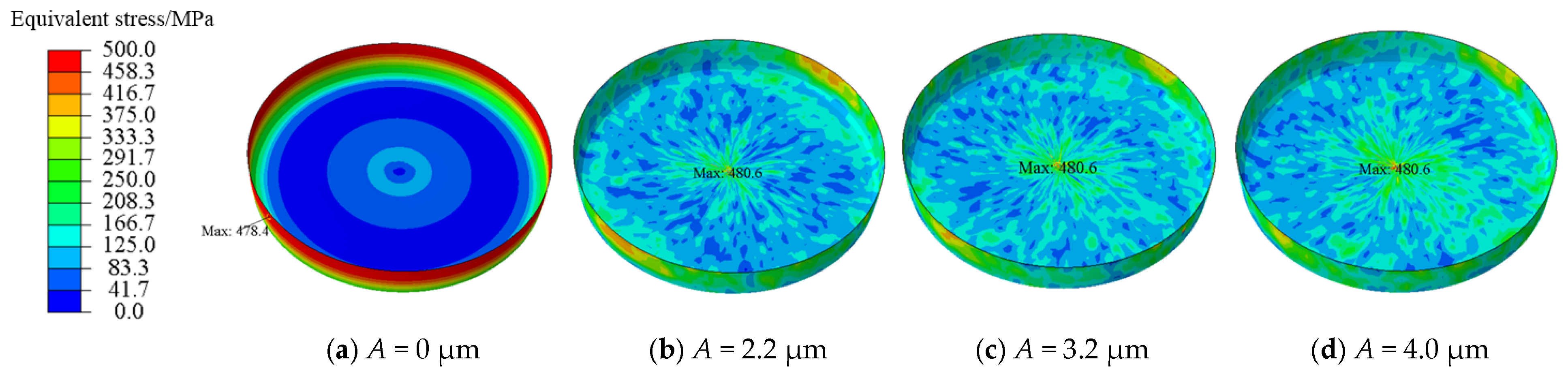
By deep drawing a single-layer sheet under ultrasonic vibration, the cloud map of equivalent plastic stress could be obtained, as shown in Figure 4. The equivalent plastic stress gradually decreases from the straight wall to the center of the sheet (Figure 4a); when ultrasonic vibration is introduced, there are no clear boundaries in the distribution of the equivalent stress, and the equivalent stress is more uniform, revealing that the material deformation is more uniform (Figure 4b–d).
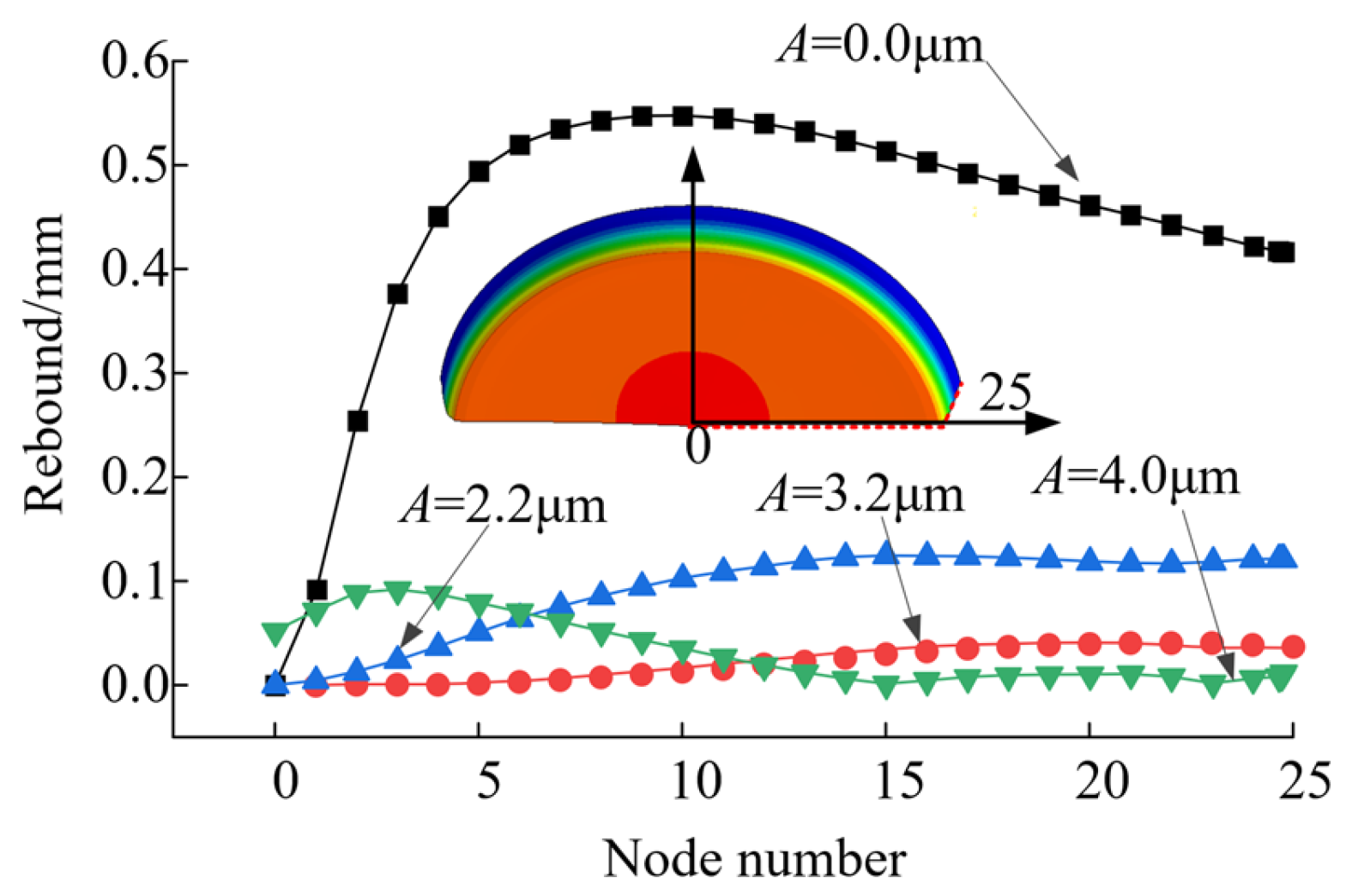
The 50ww470 non-oriented silicon steel sheet was selected. The material was hard and the depth of drawing was shallow, and there was a large rebound after drawing, so the rebound analysis was performed on the formed part after simulated forming. The restart command was set in the analysis step of the Abaqus/Explicit dynamic display algorithm, the result file was obtained from the simulation, and then the rebound analysis step was established. The node coordinates of the nodes on the path were extracted on the constructed paths, and the rebound amount at different node positions was calculated by using the distance formula of two points in space. The rebound amount of the forming parts on the selected path was obtained as shown in Figure 5.
After applying UVA, the rebound value on the selected path of the forming part was calculated. The rebound amount of the forming part was the lowest when amplitude A = 2.7 μm. Compared with Figure 4 and Figure 5, it can be seen that the material deformation is more uniform in the process of deep drawing when ultrasonic vibration is applied. The distribution of equivalent plastic stress in UVA forming is more uniform than without ultrasonic vibration. Therefore, after applying UVA, the rebound of the forming parts is effectively reduced.

5. Experiment Research

Through the simulation study of the single-layer sheet, the UVA can effectively reduce the rebound and increase the uniformity of the material in the process of deep drawing. Therefore, drawing test analysis of the first working procedure was set up to determine a reasonable scheme.

5.1. Establishment of UVA Deep Drawing Technology for Motor Core

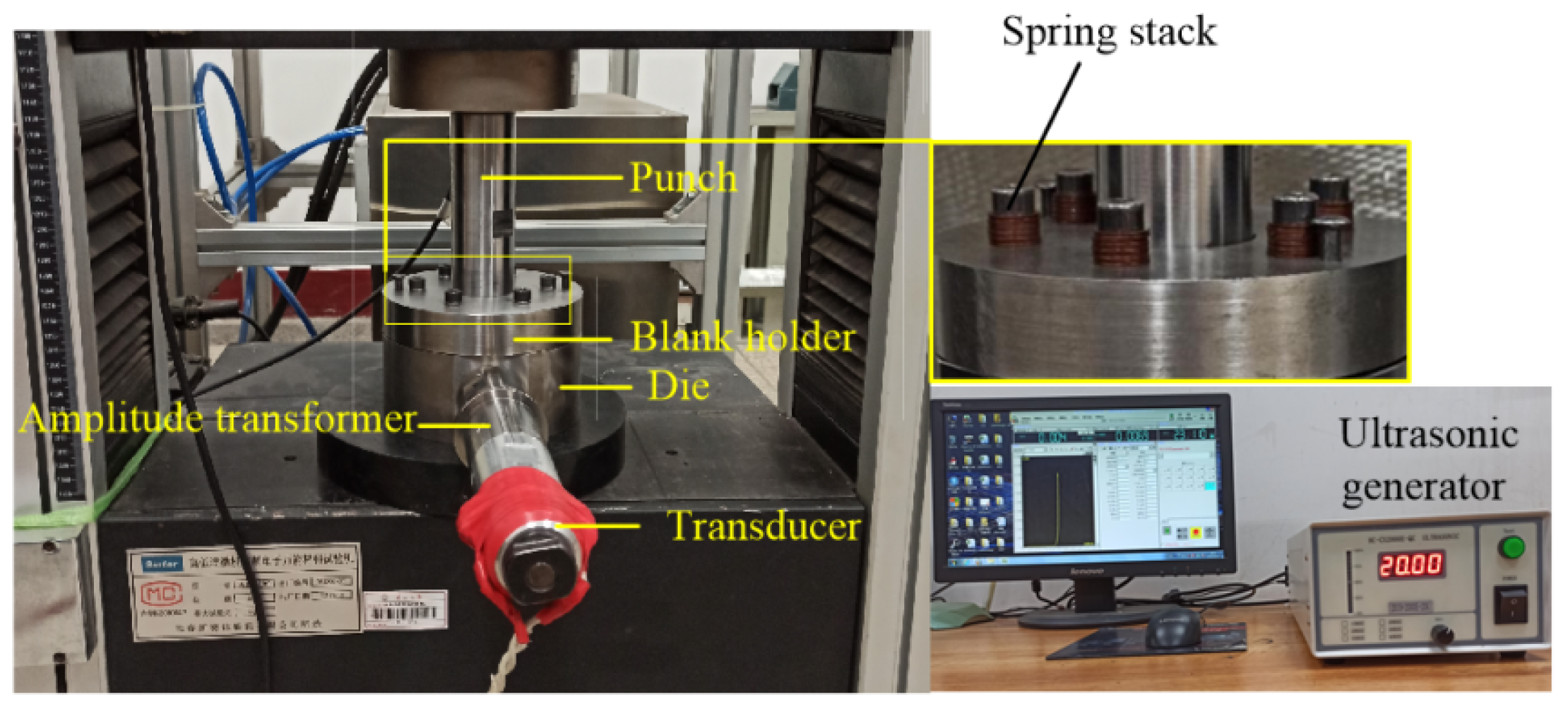
The deep drawing test was carried out on a WDW-100kN high- and low-temperature microcomputer (Shandong Liangong Testing Machine Co., Ltd., Dezhou, China)-controlled universal material testing machine (Figure 6). The punch movement speed was set at 30 mm/s and the blank holder clearance was set at 1.1t. In order to investigate the forming quality of the formed parts under different ultrasonic vibration levels, a process test was established to apply ultrasonic vibration on the deep drawing die to explore the feasibility of different process schemes. The ultrasonic generator model selected was HC-2000E-QC (Weihai Huate Automation Equipment Co., Ltd, Weihai, China)with an energy of 3000 W. It connects with the ultrasonic transducer to convert electrical energy into mechanical energy. Meanwhile, the transducer is connected to the punch, and the size design is carried out according to the literature [32]. The resonance frequency is set at 20 kHz. The amplitude can be controlled by adjusting the power output. The amplitudes corresponding to axial direction when vibration is applied to the deep drawing die are shown in Table 3; the amplitude measurements were determined using a SOPTOP-LV-S01 Digital Laser Doppler Vibrometer (Shanghai Sunny Hengping Scientific Instrument Co., Ltd., Shanghai, China).

5.2. Rebound Verification of a Single-Layer Sheet Under Ultrasonic Vibration

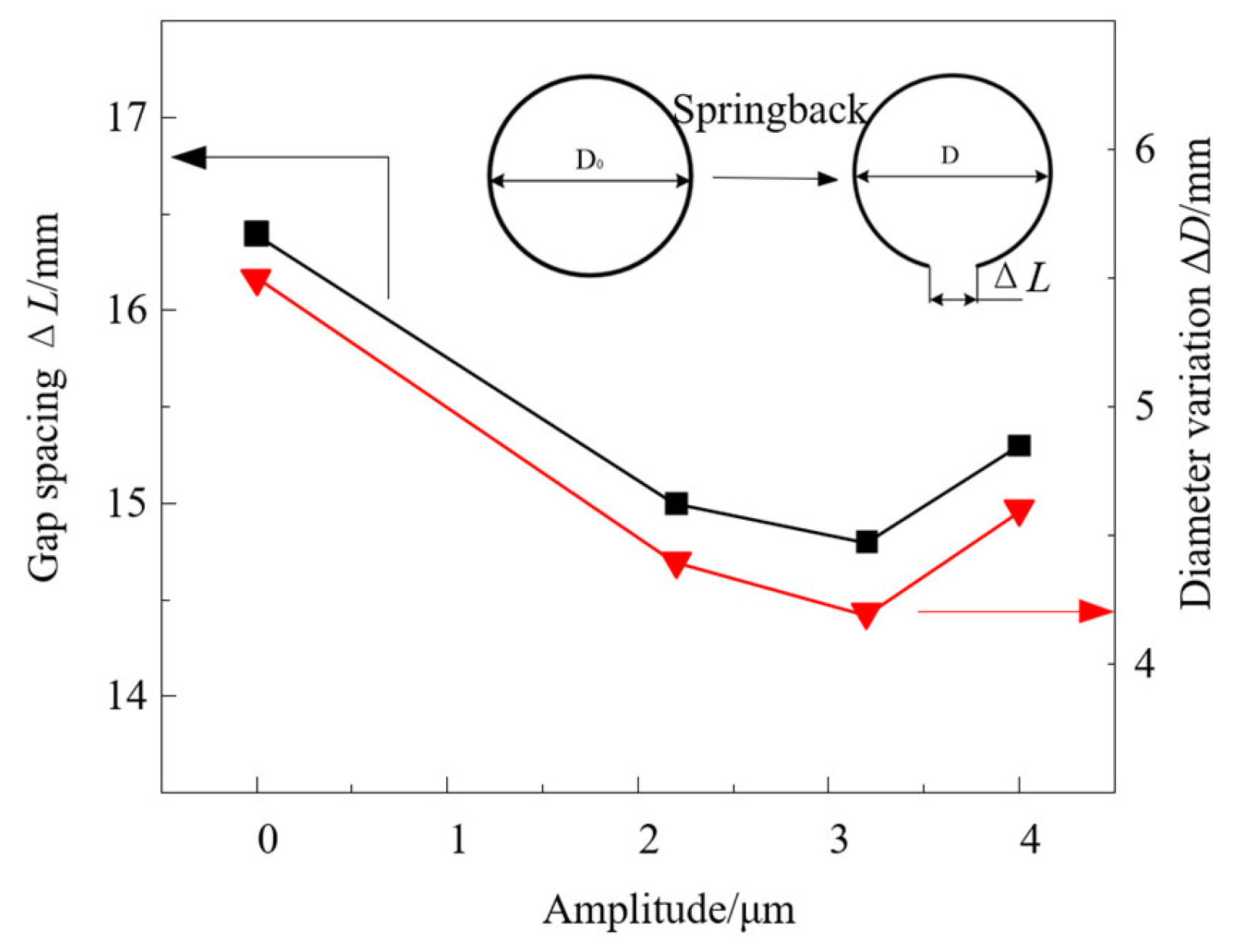
Demeri et al. [37] proposed a method for expressing deep drawing rebound—the “split ring” method—which is easy to implement and has good operability. After deep drawing, the formed part experiences residual stresses, and will spring back after the removal of the dice, and the remaining residual stresses will exist in the formed part, which will be released by the “split ring” method, as shown in Figure 7. The rebound value of the forming parts under different amplitudes is explored by measuring the rebound value of the forming parts under different conditions, as shown in Figure 7. A part of the straight wall section of the deep-drawn formed part is cut into a ring, and then the cut ring is subsequently cut again to allow the test piece to undergo residual stress relief. In this paper, the change in diameter of the ring and gap spacing are defined as ΔD and ΔL, which represent the rebound of the deep drawing formed parts.
Based on the “split ring” method, the rebound measurement of the UVA deep drawing specimen was carried out. The Wire-EDM was used to cut the part at a distance of 4 mm from the mouth to the bottom of the deep drawing part, as the annular part of the subsequent “split ring” method test. After the “split ring” had been in place for 20 min, a subsequent rebound measurement was carried out after the residual stress of the ring part of the formed part was released.
As can be seen from Figure 7, ultrasonic vibration is accompanied by a different degree of reduction in the rebound of the deep drawing part compared to that with no ultrasonic vibration. With the increase in the amplitude, the whole trend of reducing the rebound value can be categorized as “decreasing and then increasing”, and when the amplitude is 3.2 μm, the rebound value of the deep drawing parts with ultrasonic vibration to the deep drawing die is the smallest.

5.3. Experimental Investigation of Different Process Options

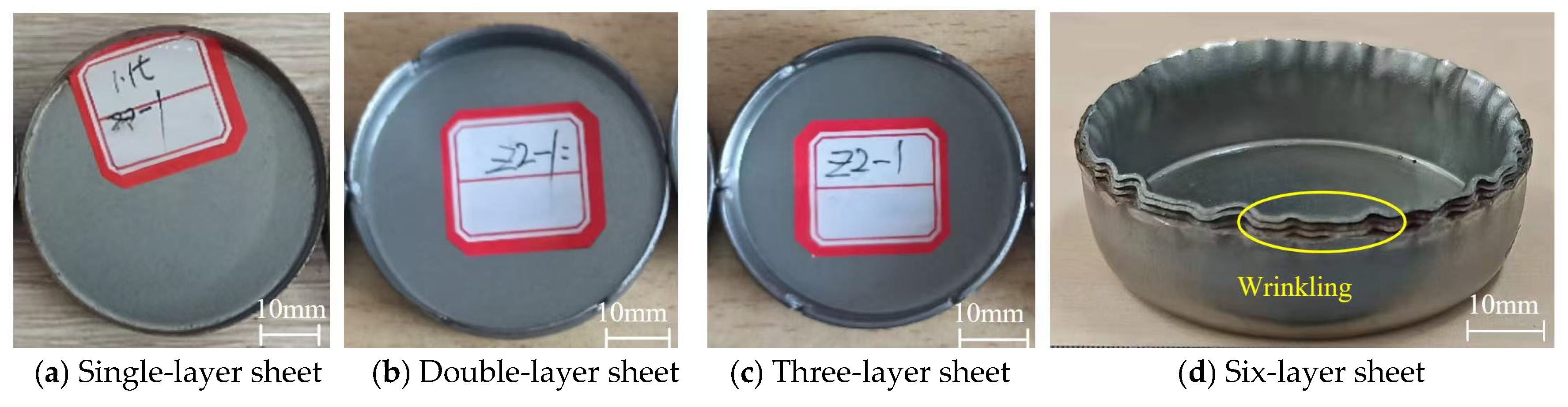
The technical routes provided for single-, two-, three-, and six-layer-sheet deep drawing processes were carried out according to Figure 2, and for the deep drawing of sheets with more than double layers, sheets of different sizes were glued before deep drawing, as for composite board deep drawing. Then a UVA deep drawing forming test was carried out, in which the blank holder force was controlled by the butterfly spring to suppress wrinkling in the deep drawing process [38], as shown in Figure 8.
As shown in Figure 8, deep drawing parts are formed in the first process of the four schemes. It can be seen from Figure 8a–c that there are no obvious defects in single-layer, double-layer and three-layer sheets after forming. In the process of drawing the six-layer sheet, on one occasion, the number of layers of the sheet left at its flange decreased as the drawing progressed, at which point the blank-holder gap remained constant, resulting in varying degrees of wrinkling of the six-layer sheet during the forming process (as shown in Figure 8d). Therefore, option four was excluded.
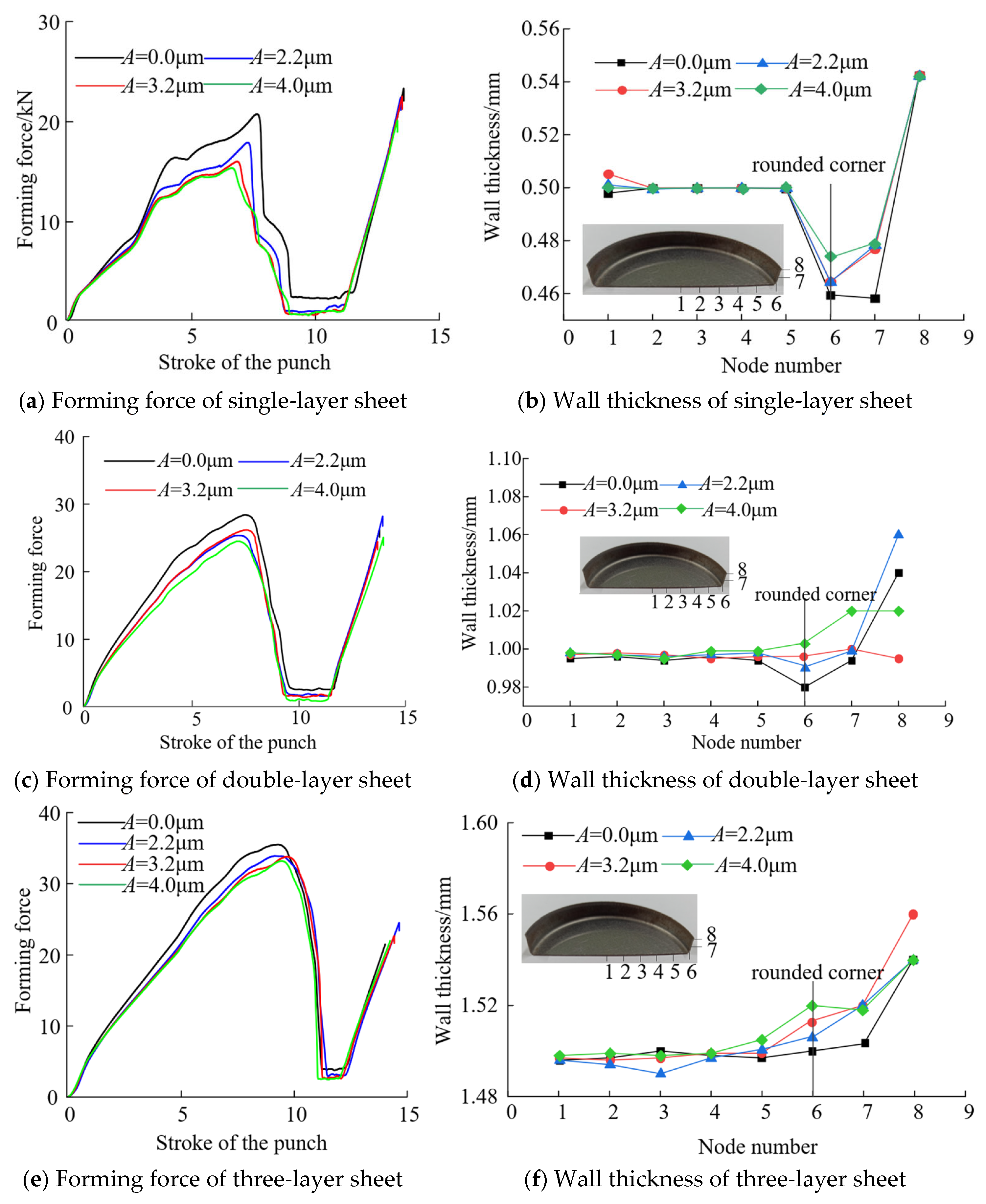
As shown in Figure 9, the required forming force and wall thickness of the forming parts with different layers were analyzed to investigate the feasibility of options 1, 2 and 3. According to Figure 9a,c,e, the greater the number of sheet layers, the higher the required forming force, and the forming force generally trends in a “firstly increase, then decrease, finally increase” pattern. Once the flange part of the sheet has completely entered the die, it becomes a straight wall part of the forming part and covers the punch part completely. The deformation resistance mainly consists of the material deformation resistance and the friction between the forming part and the die, and thus the forming force decreases. When the flange part of the sheet enters the die completely, it becomes a straight wall part of the forming part and covers the punch part completely, and the deformation resistance mainly consists of the material deformation resistance and the friction between the forming part and the die, and thus the forming force decreases. Subsequently, the punch continues to move downwards, and when the bottom of the forming part touches the bottom of the die, the die and the forming part have rigid contact. The forming force gradually rises to form the corner of the bottom, and finally the bottom of the corner is formed and the forming process finished. Therefore, the shaping force presents a “firstly increase, then decrease, finally increase” pattern.
The wall thickness of the deep drawing part shown in Figure 9b,d,f was measured at eight different locations along the diameter section, from the bottom center to the straight wall section, to analyze the wall thickness distribution of the formed part under different forming conditions. The difference in the wall thickness changes was small because of the small deformation of the shallow deep drawing forming parts, but the wall thickness of the rounded corner area (measurement point 6) at the bottom decreased significantly (as shown in Figure 9b). After ultrasonic vibration was applied, the wall thickness reduction in the rounded area was suppressed. The fluidity of the material increased, and the uniformity of material deformation was improved as a result of the ultrasonic vibration. In summary, the application of ultrasonic vibration improves the uniformity of the deformation, resulting in a more homogeneous material deformation and a more uniform wall thickness distribution.
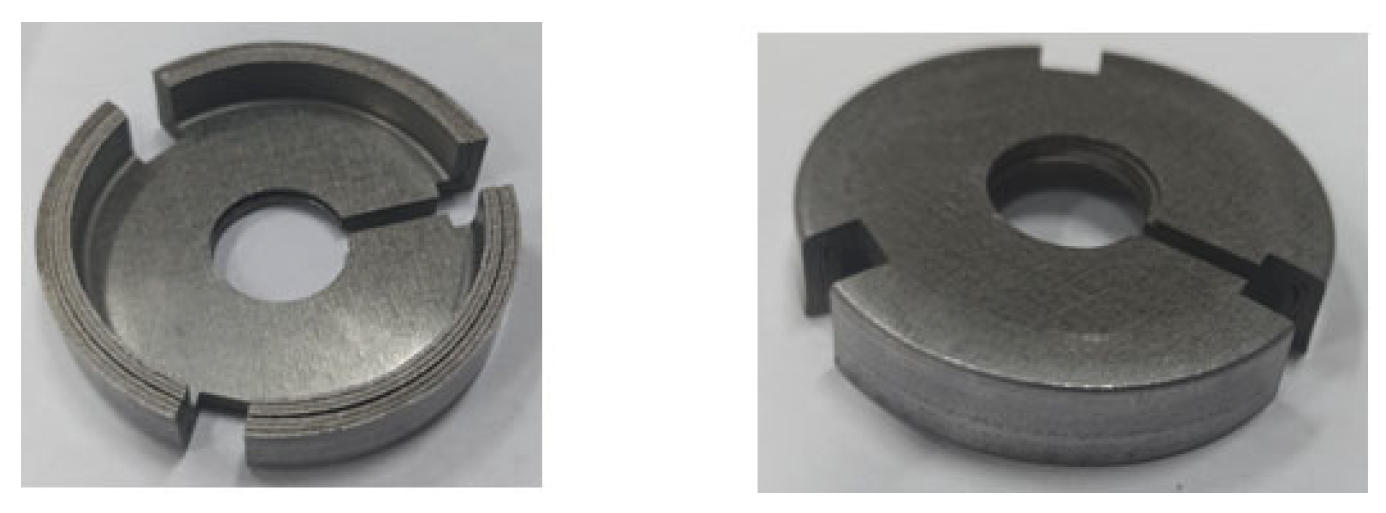
In conclusion, the forming quality of single-layer sheets was good, but this option requires the assembly of a single part of different sizes to obtain the whole part, and the individual part of the single layer is required for high precision, so the multiple sets of the die are needed for accuracy. In addition, after deep drawing, due to the constraints of the rebound of the formed parts and other factors, the difficulty of the stacking process increases; while the two-layer sheet and three-layer sheet forming conditions are similar, two-layer sheet deep drawing requires the design of an additional set of dies than the design of a three-layer sheet, so the comprehensive consideration is option 3, that is, a three-layer sheet as the original blank for ultrasonic vibration deep drawing test based on the amplitude A = 3.2 μm. The final formed specimen is shown in Figure 10.

6. Results

To address a certain type of SOLM core structure problems, starting from the motor core forming process, an ultrasonic vibration-assisted deep drawing process is proposed, based on finite element and test methods, a reasonable forming scheme and process parameters are explored, and the following conclusions are obtained.
  • The CS material model parameters of unoriented silicon steel were obtained based on unidirectional tensile tests at different rates. On this basis, the influence of amplitude on the drawing process of a single-layer sheet was simulated by using Abaqus finite element software. From the three aspects of wall thickness, equivalent plastic stress state, and rebound, it was determined that ultrasonic vibration can improve the forming quality and enhance the uniformity of sheet metal, and inhibit the rebound of the single-layer sheet. Based on the “split ring” method, the rebound value of sheet metal was analyzed to further verify that ultrasonic vibration can inhibit the rebound of sheet metal forming parts.
  • According to different forming schemes, deep drawing tests with different layers of sheets were carried out at different amplitudes. It was found that the forming quality of the single-layer sheet, double-layer sheet and three-layer sheet was better after deep drawing, according to macroscopic observation of the forming parts. By comparing the forming forces and wall thicknesses and analyzing the number of tools required to draw different layers of sheets, the final forming option was determined to be a three-layer drawing process in two stages, followed by a superimposed machining process to obtain the final qualified formed part.
However, this paper still has many areas that need to be addressed, including magnetic property tests on the formed motor core samples and the deformation mechanism of sheet metal deep drawing under UV. Future work may extend this approach to complex and difficult-to-form components with intricate structures, as well as to new materials with poor plasticity.

Author Contributions

Writing—original draft preparation, review and editing, visualization, supervision, methodology M.C. and H.H.; writing—visualization, validation, software, H.H. and L.W.; supervision, investigation, formal analysis P.S. and X.H. All authors have read and agreed to the published version of the manuscript.

Funding

This research was funded by National Natural Science Foundation of China, grant number (51775480, 51605420), and the Natural Science Foundation of Hebei province, China, grant number (E2018203143).

Data Availability Statement

The data presented in this study are available on request from the corresponding author. Further inquiries can be directed to the corresponding author.

Conflicts of Interest

Author Xubin Han was employed by the company Nickel Smelting Plant of Jinchuan Group Nickel and Cobalt Co., Ltd. The remaining authors declare that the research was conducted in the absence of any commercial or financial relationships that could be construed as a potential conflict of interest.

References

  1. Rajesh, V.R.; Kuzhiveli, B.T. Comparative Analysis of Linear Motor Geometries for Stirling Coolers. IOP Conf. Ser. Mater. Sci. Eng. 2017, 278, 012042. [Google Scholar] [CrossRef]
  2. Chirkov, D.A.; Timashev, E.O. Efficiency of A Submersible Plunger Pump Linear Motor. E3S Web Conf. 2019, 140, 02012. [Google Scholar] [CrossRef]
  3. Cui, J.G.; Xiao, W.S.; Zhang, X.J.; Zhang, X. Electric Submersible Progressing Cavity Pump Driven by Low-Speed Permanent Magnet Synchronous Motor. In Proceedings of the SPE Middle East Artificial Lift Conference and Exhibition, Manama, Bahrain, 30 November–1 December 2016; Society of Petroleum Engineers: Richardson, TX, USA, 2016. [Google Scholar] [CrossRef]
  4. Zhang, X.; Xiao, W.S.; Wang, Q.B.; Wang, S.H. Structural Parameters Optimization of Permanent Magnet Linear Motor Based on DFSS and RMS. Mach. Des. Manuf. 2020, 4, 3–7. (In Chinese) [Google Scholar]
  5. Moskvina, E.Y.; Piven, V.V. Calculation of winding temperature of a submersible motor. Oil Gas Stud. 2020, 5, 64–73. [Google Scholar] [CrossRef]
  6. Zhou, B.J.; Xu, Y.C.; Zhang, Z.C.; Hu, L. Research Development for Deep Drawing of Multilayer sheet Metals. Mater. Rep. 2020, 34, 169–174. (In Chinese) [Google Scholar]
  7. Zafar, R.; Lang, L.; Zhang, R. Experimental and Numerical Evaluation of Multilayer Sheet Forming Process Parameters for Light Weight Structures Using Innovative Methodology. Int. J. Mater. Form. 2016, 9, 35–47. [Google Scholar] [CrossRef]
  8. Takuda, H.; Mori, K.; Fujimoto, H.; Hatta, N. Prediction of Forming Limit in Deep Drawing of Fe /Al Laminated Composite Sheets Using Ductile Fracture Criterion. J. Mater. Process. Technol. 1996, 60, 291–296. [Google Scholar] [CrossRef]
  9. Karajibani, E.; Fazli, A.; Hashemi, R. Numerical and Experimental Study of Formability in Deep Drawing of Two-Layer Metallic Sheets. Int. J. Adv. Manuf. Technol. 2015, 80, 113–121. [Google Scholar] [CrossRef]
  10. Molaei, M.; Deilami Azodi, H.; Safari, M. Experimental and Numerical Study on Effects of Process Parameters on Working Zone in Hydro-mechanical Deep Drawing of Two-layer Conical Parts. Modares Mech. Eng. 2017, 17, 72–78. (In Persian) [Google Scholar]
  11. Xu, J.; Wang, X.W.; Wang, C.J.; Yuan, L.; Chen, W.J.; Bao, J.X.; Su, Q.; Xu, Z.; Wang, C.J.; Wang, Z.; et al. A Review on Micro/nanoforming to Fabricate 3D Metallic Structures. Adv. Mater. 2021, 33, 202000893. [Google Scholar] [CrossRef]
  12. Amini, S.; Hosseinpour Gollo, A.; Paktinat, H. An Iinvestigation of Conventional and Ultrasonic-assisted Incremental Forming of Annealed AA1050 Sheet. Int. J. Adv. Manuf. Technol. 2017, 90, 1569–1578. [Google Scholar] [CrossRef]
  13. Li, M.Y.; Zhang, Q.; Han, B.; Song, L.X.; Li, J.L.; Yang, J. Investigation on Microstructure and Properties of AlxCoCrFeMnNi High Entropy Alloys by Ultrasonic Impact Treatment. J. Alloys Compd. 2020, 816, 152626. [Google Scholar] [CrossRef]
  14. Lin, J.; Li, J.; Liu, T.; Zhu, L.H.; Chu, X.R.; Zhao, G.Q.; Guan, Y.J. Evaluation of Friction Reduction and Frictionless Stress in Ultrasonic Vibration Forming Process. J. Mater. Process. Technol. 2021, 288, 116881. [Google Scholar] [CrossRef]
  15. Zhai, J.Q.; Guan, Y.J.; Li, Y.; Liu, Y.; Lin, J. The Surface Effect of Ultrasonic Vibration in Double Cup Extrusion Test. J. Mater. Process. Technol. 2022, 299, 117344. [Google Scholar] [CrossRef]
  16. Gao, M.; Wen, D.X.; Li, J.J.; Huang, L. Reduction of Springback of Ti6Al4V Alloy in Ultrasonic Vibration Assisted Deformation: Numerical Simulation and Experimental Study. Mater. Res. Proc. 2024, 44, 297–304. [Google Scholar] [CrossRef]
  17. Shao, G.; Li, H.; Zhan, M. A Review on Ultrasonic- assisted Forming: Mechanism, Model, and Process. Chin. J. Mech. Eng. 2021, 34, 99. [Google Scholar] [CrossRef]
  18. Wang, C.; Zhang, W.; Cheng, L.; Zhu, C.; Wang, X.; Han, H.; He, H.; Hua, R. Investigation on Microsheet Metal Deformation Behaviors in Ultrasonic-vibration-assisted Uniaxial Tension with Aluminum Alloy 5052. Materials 2020, 13, 637. [Google Scholar] [CrossRef]
  19. Wang, X.W.; Wang, C.J.; Liu, Y.; Liu, C.; Wang, Z.L.; Guo, B.; Shan, D.B. An Energy Based Modeling for the Acoustic Softening Effect on the Hall-Petch Behavior of Pure Titanium in Ultrasonic Vibration Assisted Micro-tension. Int. J. Plast. 2021, 136, 102879. [Google Scholar] [CrossRef]
  20. Meng, D.; Ma, J.; Zhao, X.; Guo, Y.L.; Zhu, C.C.; Yu, M. Mechanical Behavior and Material Property of Low-Carbon Steel Undergoing Low-Frequency Vibration-Assisted Upsetting. J. Mater. Res. Technol. 2022, 16, 1846–1855. [Google Scholar] [CrossRef]
  21. Wang, X.; Qi, Z.; Chen, W. Investigation of Ti–45Nb Alloy’s Mechanical and Microscopic Behaviors under Transverse Ultrasonic Vibration-Assisted Compression. Mater. Sci. Eng. A 2022, 832, 142401. [Google Scholar] [CrossRef]
  22. Lou, Y.; He, J.S.; Chen, H.; Long, M. Effects of Vibration Amplitude and Relative Grain Size on the Rheological Behavior of Copper During Ultrasonic-Assisted Microextrusion. Int. J. Adv. Manuf. Technol. 2017, 89, 2421–2433. [Google Scholar] [CrossRef]
  23. Han, G.C.; Wan, W.Q.; Zhang, Z.C.; Zhang, Z.C.; Xu, L.H.; Liu, F.C.; Zhang, H.O. Experimental Investigation into Effects of Different Ultrasonic Vibration Modes in Micro-Extrusion Process. J. Manuf. Process. 2021, 67, 427–437. [Google Scholar] [CrossRef]
  24. Malekipour, E.; Sharifi, E.; Majd, N.S.; Heidary, H. Observation on the Behavior of Ultrasonic Micro-hammer and its Effects on the Deep Drawing Process: Numerical Simulation and Experimental Study. Ultrasonics 2022, 119, 106566. [Google Scholar] [CrossRef]
  25. Zhao, J.W.; Wang, T.; Jia, F.H.; Zhou, C.L.; Huang, Q.X.; Jiang, Z.Y. Experimental Investigation on Micro Deep Drawing of Stainless Steel Foils with Different Microstructural Characteristics. Chin. J. Mech. Eng. 2021, 34, 40. [Google Scholar] [CrossRef]
  26. Zhou, H.Y.; Cui, H.Z.; Qin, Q.H. Influence of Ultrasonic Vibration on the Plasticity of Metals During Compression Process. J. Mater. Process. Technol. 2018, 251, 146–159. [Google Scholar] [CrossRef]
  27. Hayashi, M.; Jin, M.; Thipprakmas, S.; Murakawa, M.; Hung, J.C.; Tsa, Y.C.; Hung, C.H. Simulation of Ultrasonic-vibration Drawing Using the Finite Element Method (FEM). J. Mater. Process. Technol. 2003, 140, 30–35. [Google Scholar] [CrossRef]
  28. Siddiq, A.; Sayed, T.E. Ultrasonic-assisted Manufacturing Processes: Variational Model and Numerical Simulations. Ultrasonics 2012, 52, 521–529. [Google Scholar] [CrossRef]
  29. Wen, T.; Gao, R.; Chen, X. Influence of High Frequency Vibration on Deep Drawing Process of AZ31 Sheet at Room Temperature. J. Shanghai Jiaotong Univ. (Sci.) 2012, 17, 456–460. [Google Scholar] [CrossRef]
  30. Asadi, F.; Ashtiani, H.; Pak, A. Experimental and Simulation Investigation on the Ultrasonic-Assisted Bending of Annealed and Aged AA6061 Aluminum Alloy Sheets. Trans. Indian Inst. Met. 2020, 73, 2851–2859. [Google Scholar] [CrossRef]
  31. Kim, S.W.; Lee, Y.S. Investigations on the Effect of Ultrasonic Vibration in Cylindrical Cup Drawing Processes. Key Eng. Mater. 2014, 622–623, 1152–1157. [Google Scholar] [CrossRef]
  32. Jimma, T.; Kasuga, Y.; Iwaki, N.; Miyazawa, O.; Mori, E.; Katsuhiko, I.; Hatano, H. An Application of Ultrasonic Vibration to the Deep Drawing Process. J. Mater. Process. Technol. 1998, 80–81, 406–412. [Google Scholar] [CrossRef]
  33. Fu, X.F.; Wei, M.G.; Hai, Y.K.; Gao, Y.H.; Muramatsu, K. Investigation on Power and Loss Densities of Scaled-Down Laminated Cores. In Proceedings of the 2015 IEEE International Conference on Applied Superconductivity and Electromagnetic Devices (ASEMD), Shanghai, China, 20–23 November 2015. [Google Scholar] [CrossRef]
  34. Sedaghat, H.; Xu, W.X.; Zang, L.C. Ultrasonic Vibration-assisted Metal Forming: Constitutive Modelling of Acoustoplasticity and Applications. J. Mater. Process. Technol. 2019, 265, 122–129. [Google Scholar] [CrossRef]
  35. Mahalle, G.; Kotkunde, N.; Gupta, A.K.; Singh, K.S. Cowper-Symonds Strain Hardening Model for Flow Behaviour of Inconel 718 Alloy. Mater. Today Proc. 2019, 18, 2796–2801. [Google Scholar] [CrossRef]
  36. Cao, M.Y.; Hu, H.; Tian, S.J.; Du, B.; Zhao, C.C. FEM-DEM Coupling Analysis and Experimental Research on Soft Forming of Parabolic Shell. Chin. J. Mech. Eng. 2020, 56, 38–46. (In Chinese) [Google Scholar]
  37. Demeri, M.Y.; Lou, M.; Saran, M.J. A Benchmark Test for Spring-back Simulation in sheet Metal Forming. Autotive Eng. 2000, 01, 2655–2657. [Google Scholar] [CrossRef]
  38. Zhang, H.S.; Qin, S.J.; Cao, L.Q. Investigation of The Effect of Blank Holder Force Distribution on Deep Drawing Using Developed Blank Holder Divided into Double Rings. J. Braz. Soc. Mech. Sci. Eng. 2021, 43, 284. [Google Scholar] [CrossRef]
Figure 1. Schematic diagram of the distribution of the magnetic line in the cut-out position of the motor core for old and new processes.
Machines 14 00259 g001
Figure 2. The drawing process scheme of the liner motor core.
Machines 14 00259 g002
Figure 3. The finite element model of deep drawing.
Machines 14 00259 g003
Figure 4. Equivalent stress distribution of single deep drawing parts.
Machines 14 00259 g004
Figure 5. Rebound value of formed part.
Machines 14 00259 g005
Figure 6. The deep drawing test device under ultrasonic vibration.
Machines 14 00259 g006
Figure 7. The rebound value after using the “split ring” method.
Machines 14 00259 g007
Figure 8. The formed parts of multilayer sheets.
Machines 14 00259 g008
Figure 9. Force–displacement curves of different deep drawings of sheets under different conditions.
Machines 14 00259 g009
Figure 10. Sample of the forming part.
Machines 14 00259 g010
Table 1. The CS material model parameters of 50ww470.
Material ParametersValues
Density ρ/(kg/m3)7.7 × 103
Modulus of elasticity E/(MPa)183,500
Poisson’s ratio μ0.28
Strength coefficient K/(MPa)821.04
Hardening index n0.325
C385.58
P4.02
Table 2. Amplitude of different levels in transverse vibration of concave die.
Level0134
Amplitude A/μm02.23.24.0
Table 3. Amplitude at different levels for ultrasonic vibration of the concave die.
Level0135
Amplitude A/μm02.23.24.0
Disclaimer/Publisher’s Note: The statements, opinions and data contained in all publications are solely those of the individual author(s) and contributor(s) and not of MDPI and/or the editor(s). MDPI and/or the editor(s) disclaim responsibility for any injury to people or property resulting from any ideas, methods, instructions or products referred to in the content.