Article

Magnetic Field-Assisted Linearizes Solidification Front to Suppress Edge Cracking in AZ31 Alloy Cast-Rolling

1
School of Mechanical Engineering, Taiyuan University of Science and Technology, Taiyuan 030024, China
2
The State Key Laboratory of Precision Manufacturing for Extreme Service Performance, Central South University, Changsha 410083, China
*
Authors to whom correspondence should be addressed.
Machines 2026, 14(2), 245; https://doi.org/10.3390/machines14020245
Submission received: 21 January 2026 / Revised: 12 February 2026 / Accepted: 18 February 2026 / Published: 22 February 2026
(This article belongs to the Special Issue Design and Manufacturing for Lightweight Components and Structures)

Abstract

Aiming to solve the persistent problem of edge cracking in magnesium alloy cast-rolling, this numerical simulation study introduces an innovative magnetic field-assisted approach. Utilizing Lorentz force, the process dynamically transforms the solidification front morphology from an arc-shaped (“Ɔ”) to a linear (“1”) configuration. Simulation results reveal that, while magnetic field-induced thermal effects minimally impact the solidification front, the Lorentz force fundamentally alters the flow field dynamics. This modification yields a more uniform temperature distribution and reduces velocity gradients between the symmetric center and edge regions, thereby promoting the transition to a linear solidification front essential for synchronous solidification and deformation across the entire plate width. Furthermore, variations in magnetic field intensity and frequency critically influence vortex flow position and density within the cast-rolling zone. The optimization goal was to maximize the angle α between the side surface and solidification front, which characterizes the linearity of the front. With optimized parameters of 0.49 T magnetic field intensity and 8 Hz frequency, angle α reaches 65°. This marks a 62.5% increase compared to the conventional (non-magnetic) cast-rolling scenario and achieves a near-linear (“1”) solidification profile.

1. Introduction

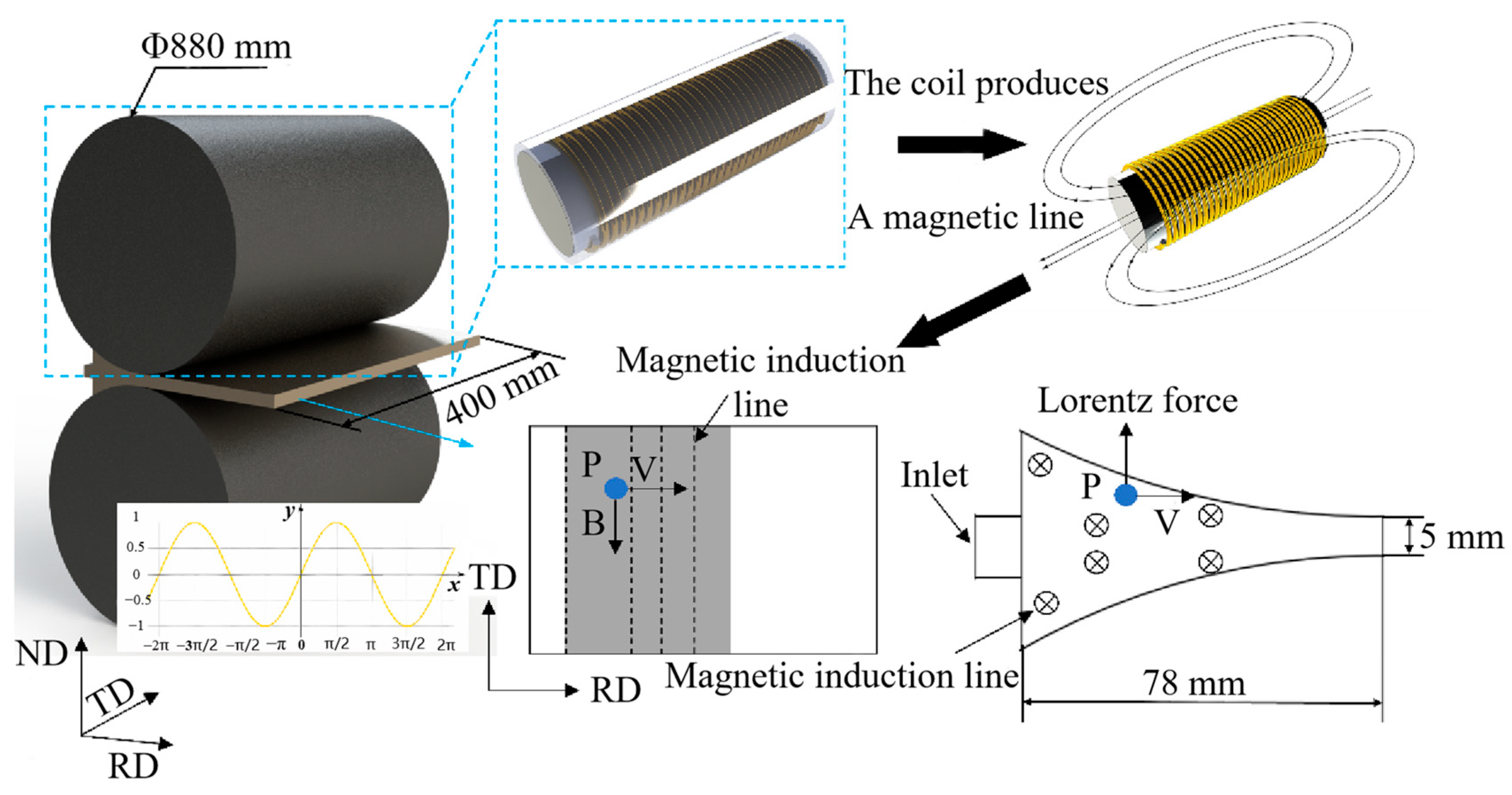
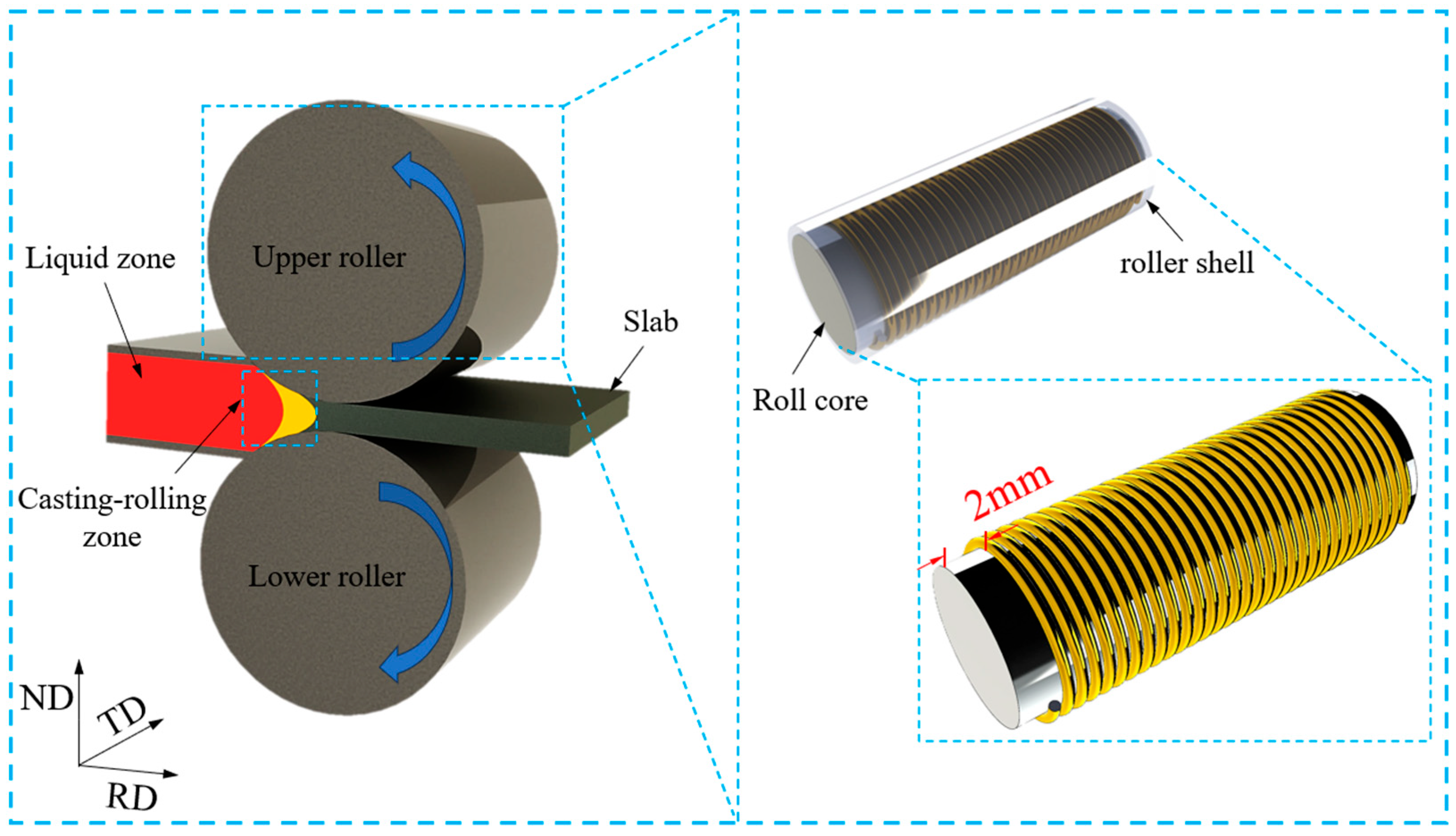
Magnesium alloys are heralded as the green engineering materials of the 21st century due to their lightweight properties, high stiffness, strength, excellent thermal conductivity, and recyclability [1,2,3,4]. Twin-roll casting–rolling is an optimal method for producing magnesium alloy sheets, offering advantages such as a streamlined process, high efficiency, low cost, reduced energy consumption, and high yield [5,6,7]. Nonetheless, traditional casting–rolling processes are plagued by issues related to uneven cooling rates. Specifically, as shown in Figure 1, the formation of a “tongue”-shaped solidified shell in the normal direction (ND) and a “Ɔ”-shaped solidification welding line in the transverse direction (TD), which extends unevenly along the roll gap, leads to edge cracking during subsequent rolling stages [8,9,10]. When the solidification welding line approaches the “1”-shape, it is beneficial for improving the yield of casting-rolling magnesium alloy.
Research has identified that the uneven distribution of the melt velocity and temperature fields within the casting–rolling zone is a primary factor affecting slab yield [11,12]. In order to solve the above problems, the casting–rolling process parameters were optimized. Some researchers [10,11,13] have demonstrated that while reasonable adjustments in these parameters can somewhat mitigate segregation issues, they do not resolve the edge crack problem. BJ P et al. [14] attempted to reduce segregation by applying intense stirring to the melt before casting–rolling. They found that vigorous melt shear could decrease segregation at the slab’s centerline. However, this approach poses safety risks due to the tendency of high-temperature melt to splash during stirring and rotation.
In recent years, energy field-assisted metal solidification technology has attracted much attention [15,16,17]. Jinxian H et al. [18] adopted ultrasonic melting treatment for aluminum alloy and found that the sound flow and microjet brought by ultrasound stimulated the melt flow, redistributed the solute, and reduced the phenomenon of edge cracking and segregation. Some studies have pointed out that the electromagnetic stirring effect can also be achieved in the melt after the application of an electromagnetic oscillation field [19], which not only improves the segregation of the plate but also improves its mechanical properties. LI Y Z et al. [20] added a rotating magnetic field (RMF) to Al-7wt.% silicon alloy during the solidification process under microgravity, and found that RMF caused forced melt flow at a low growth rate, which made Si element distribution more balanced.
Previous studies [12] have found that improving the position and shape of the solidification welding line of magnesium alloy casting–rolling by controlling the velocity of the melt flow field is an effective method to control edge cracking. Huang et al. [10] have improved the casting–rolling process by applying a current in the casting–rolling zone to alter the flow of the melt, thereby regulating the position and shape of the solidified weld line in magnesium alloy casting–rolling. However, due to the relatively small disturbance of the applied current on the flow of the melt, there are certain limitations to the improvement effect on casting–rolling magnesium alloys. Directly introducing a magnetic field into the casting–rolling process can enhance the disturbance to the melt, which is expected to further improve the distribution of velocity and temperature fields in the casting–rolling zone. G. Zimmermann et al. [21] found that the forced melt flow generated under the action of a rotating magnetic field can effectively refine the grains and improve their formability. However, there is currently a lack of research on the influence of electromagnetic process parameters on the flow field, temperature field, etc., during the casting–rolling process of magnesium alloys, making it difficult to effectively regulate the flow behavior of magnesium alloy mel.
Therefore, this study defined the influence patterns of magnetic field parameters (intensity 0–0.49 T, frequency 1–20 Hz) on the morphology of the solidification front in magnesium alloy cast-rolling products. Systematically studying the effects of different magnetic field parameters on the temperature field, solidification welding line shape, and flow field in the casting–rolling zone, provides valuable references for the optimization of magnesium alloy casting–rolling process.

2. Physical Model and Boundary Conditions

2.1. Model Parameters and Conditional Assumptions

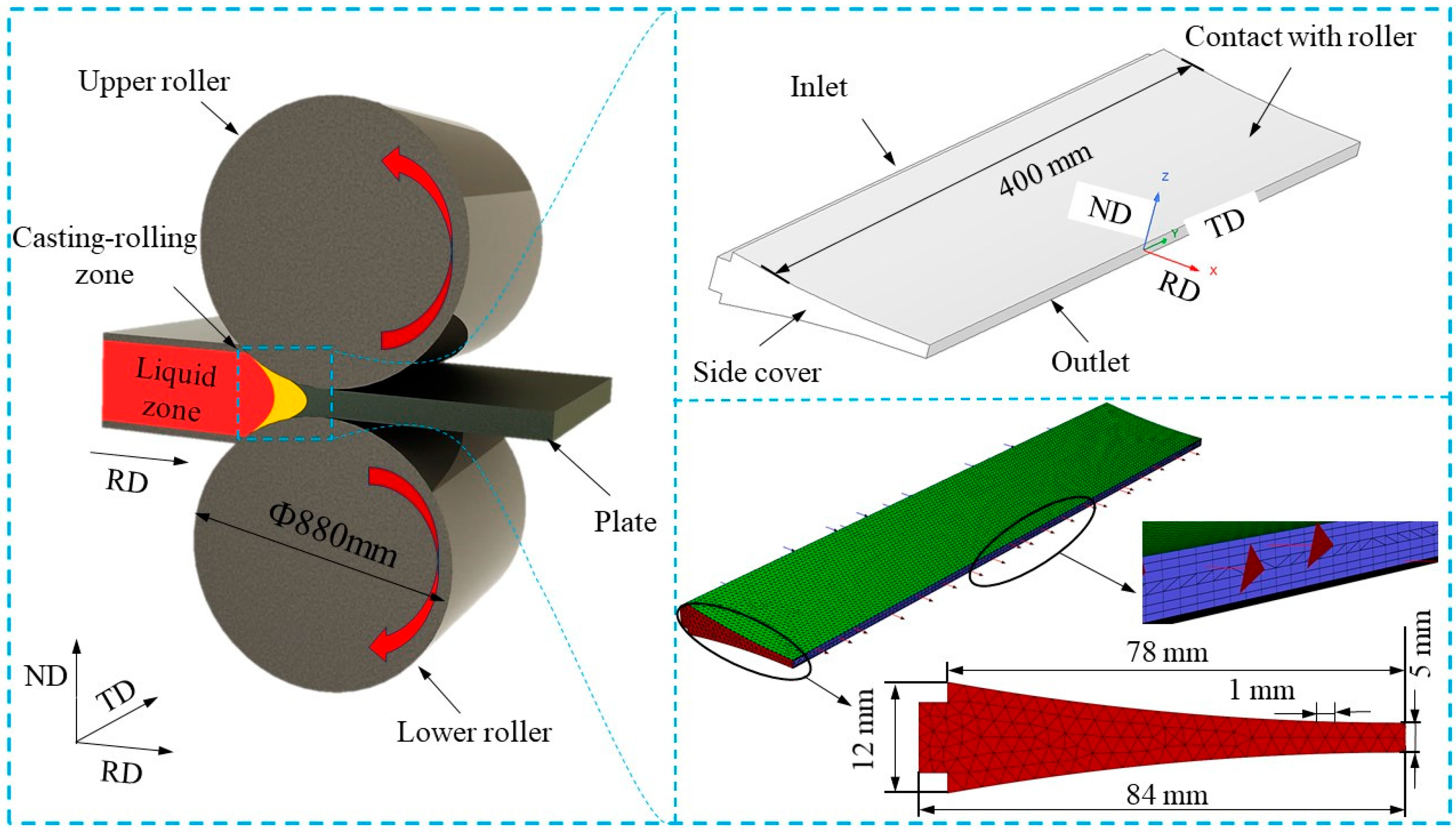
The coil arrangement is illustrated in Figure 2, while the finite element simulation model of the casting–rolling zone of AZ31 magnesium alloy is depicted in Figure 3. The origin of coordinates is positioned at the center point of the exit of the geometric model. The Z-axis represents the normal direction (ND), the X-axis indicates the casting–rolling direction (RD), and the Y-axis signifies the plate width direction (TD). The model loads a magnetic field by embedding a coil in the cast roll sleeve, and the coil is evenly wound along the roll in multiple turns. The cast role model is 4 mm more wide than the coil along the plate width (TD). The casting–rolling simulation involved multi-field coupling analysis, and its motion was complicated. To enhance computational efficiency and focus on the primary mechanisms governing the magnetic field’s influence on the convection/temperature field, the simulation is based on the following assumptions, which are commonly employed in metal solidification flow field simulations:
(1)
Casting–rolling can be divided into liquid phase, paste phase, and solid phase. The process of casting–rolling is complicated, so a wide range of fluids are used to express the flow process in the three-phase region [22].
(2)
The magnesium alloy melt is treated as an incompressible Newtonian fluid.
(3)
Gravity effects are neglected during the casting–rolling process [10].
(4)
The temperature at the inlet of the casting–rolling zone is assumed to be equal to the pouring temperature throughout the process.
(5)
Heat dissipation through radiation from the magnesium alloy volume is not taken into account.
(6)
The side sealing plate is considered to be made of an ideal insulating material.
(7)
It is assumed that there is no relative motion between the roll and the solidified shell.
(8)
The effect of casting roll rotation on the magnetic field is disregarded [23].
(9)
Variations in permeability caused by temperature changes are not considered.
(10)
The influence of roll core and sleeve on magnetic field is ignored.

2.2. Casting–Rolling Simulation Parameters and Magnetic Field Parameters

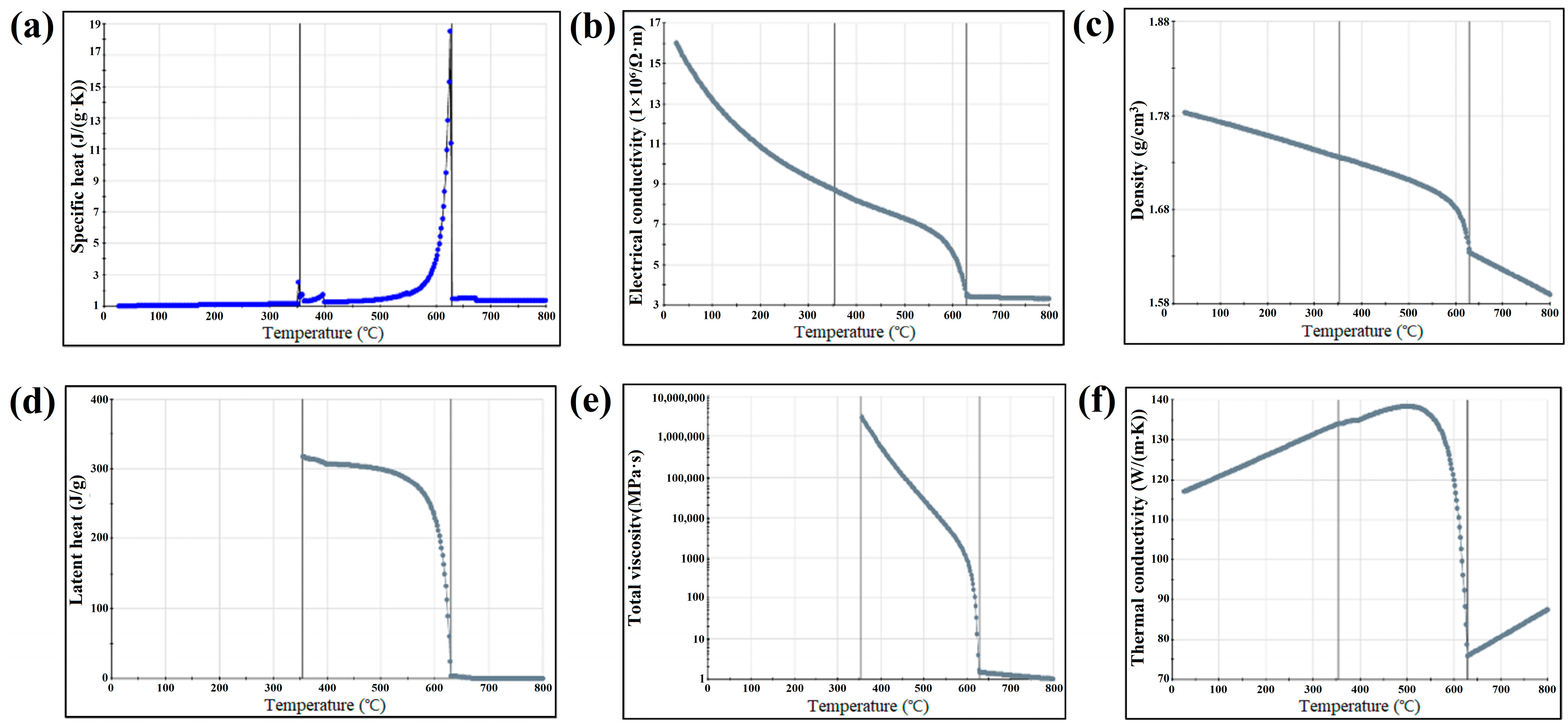
This study investigates the flow field distribution in the casting zone of AZ31 magnesium alloy under magnetic field coupling conditions, using a φ 880 mm × 400 mm horizontal twin-roll casting machine as the research subject. The casting process simulation parameters are listed in Table 1, while the magnetic field simulation parameters are detailed in Table 2. The material parameters of the simulated magnesium alloy are shown in Figure 4.

2.3. Boundary Conditions

First, perform magnetic field simulation. Select Ansys Workbench 2020 software, import the Maxwell module, and set the type to eddy current. Wind 100 turns of coil uniformly around the roller. The coil type is twisted coil. The current amplitude is 200 A, and the current frequency is 8 Hz. After completing the magnetic field calculation, import the data into the Fluent MHD module for coupled magnetic field-fluid simulation. Electromagnetic–fluid coupling employs unidirectional coupling. Initialization began from zero velocity along the X, Y, and Z axes, with a time step size of 0.01 and 1000-time count steps. The default choice for convergence criteria is that convergence is achieved when residuals stabilize. The magnetic field strength can be adjusted within the MHD module, with the magnetic field frequency set as equal to the current frequency [24].
Fluid simulation selects velocity inlet and outflow boundaries. Ignoring the influence of density change on the flow field, the inlet velocity can be obtained from the outlet velocity, according to the law of conservation of mass. The turbulent intensity and turbulent viscosity ratio at the inlet remain default, assuming that the inlet temperature is the casting temperature and the temperature is constant.
(1) The inlet boundary [25]
V i n = C · V o u t
C = h o u t h i n
V i n is the inlet velocity;
V o u t = V is the outlet velocity equal to the rolling speed;
C is a constant given by the ratio of the height of the exit to the height of the entrance;
h o u t is the height of the roll gap;
h i n is the entrance height.
(2) Contact boundary between magnesium alloy melt and roll surface
ω = V R
R is the radius of the roll;
ω is the angular speed of the roll.
(3) The outlet boundary
The outlet speed is the casting–rolling speed, and the outlet boundary is outflow and remains the default.
(4) Stationary adiabatic boundary [26]
The casting nozzle and side sealing plate are regarded as ideal insulation materials. Except for the above boundaries, the rest are set as stationary adiabatic boundaries.
V = 0 h w = 0
V is velocity;
h w is the wall heat transfer coefficient.

2.4. Viscous Models

The standard k-ε model is a two-equation model with stability and high computational accuracy. Compared to the standard k-ε model, this study employs the RNG model (renormalization group model), which incorporates an effective viscosity differential term on top of the standard k-ε model. This term can be solved near the wall surface. The wall function, as a semi-empirical formula, is used to calculate the viscous region between near-wall and complete turbulence. In the simulation, the enhanced wall function is selected, which is less affected by the error of mesh thickness at the wall.

3. Results and Discussion

3.1. Effect of Magnetic Field Strength on Casting–Rolling of Magnesium Alloy

3.1.1. Multi-Field Analysis of Casting–Rolling Zone

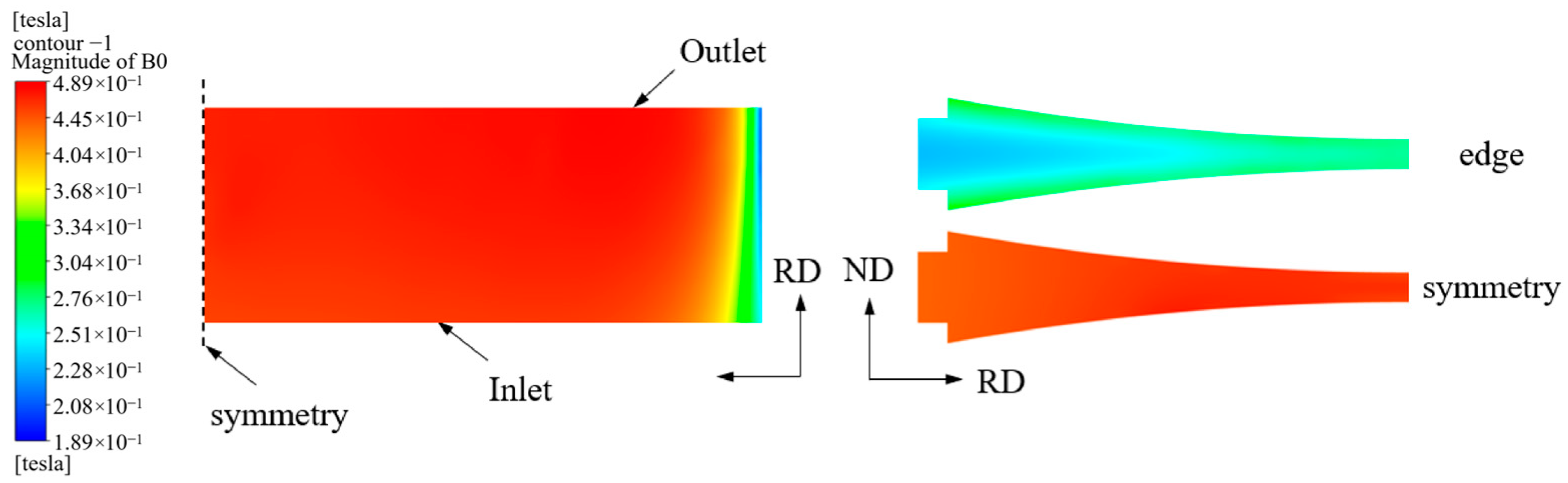
Figure 5 shows the magnetic field distribution within the casting zone after importing data from Maxwell into Fluent. At this stage, no magnetohydrodynamic coupling simulation has been performed. It can be seen from the cross-section that the magnetic field intensity near the cast roll surface is greater. The magnetic field intensity of the edge is smaller than the symmetric surface. At the same time, the magnetic field distribution is almost unaffected by the variation in magnetic field intensity.
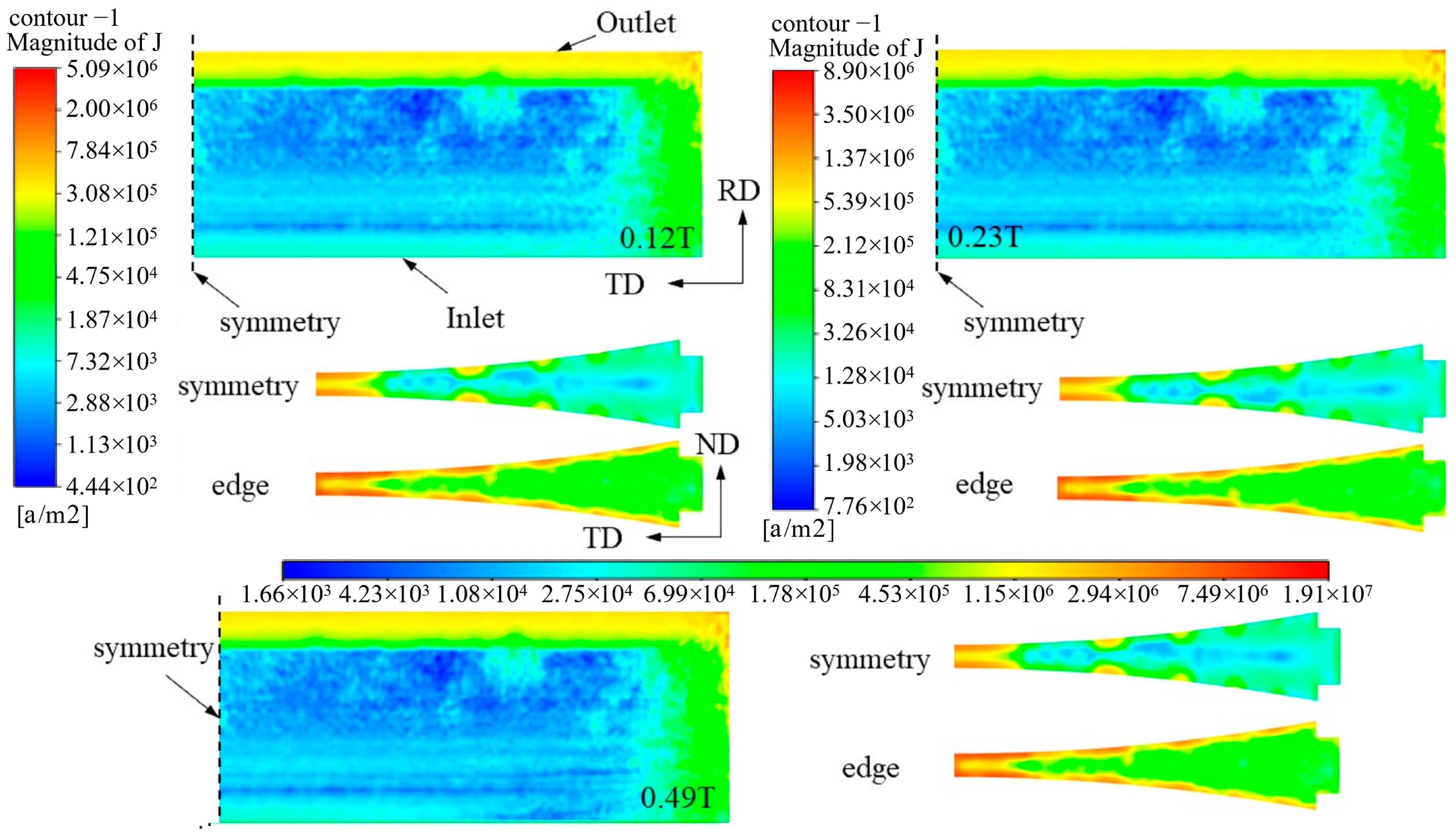
Conducting fluid moving in a magnetic field will generate an induced current; the current density distribution is shown in Figure 6. The current density value gradually increases with the increase in magnetic field intensity, and the current density distribution is almost unchanged. The current density is mainly distributed at the outlet and edge of the casting–rolling zone. It can be seen from the section diagram that the current density is concentrated in a cambered surface which is in contact with the cast roll. This is because the conductivity decreases with the increase in temperature, and there is heat exchange on the roll surface in the casting–rolling zone, where the temperature decreases, but the conductivity increases and the current density increases, accordingly [27,28].
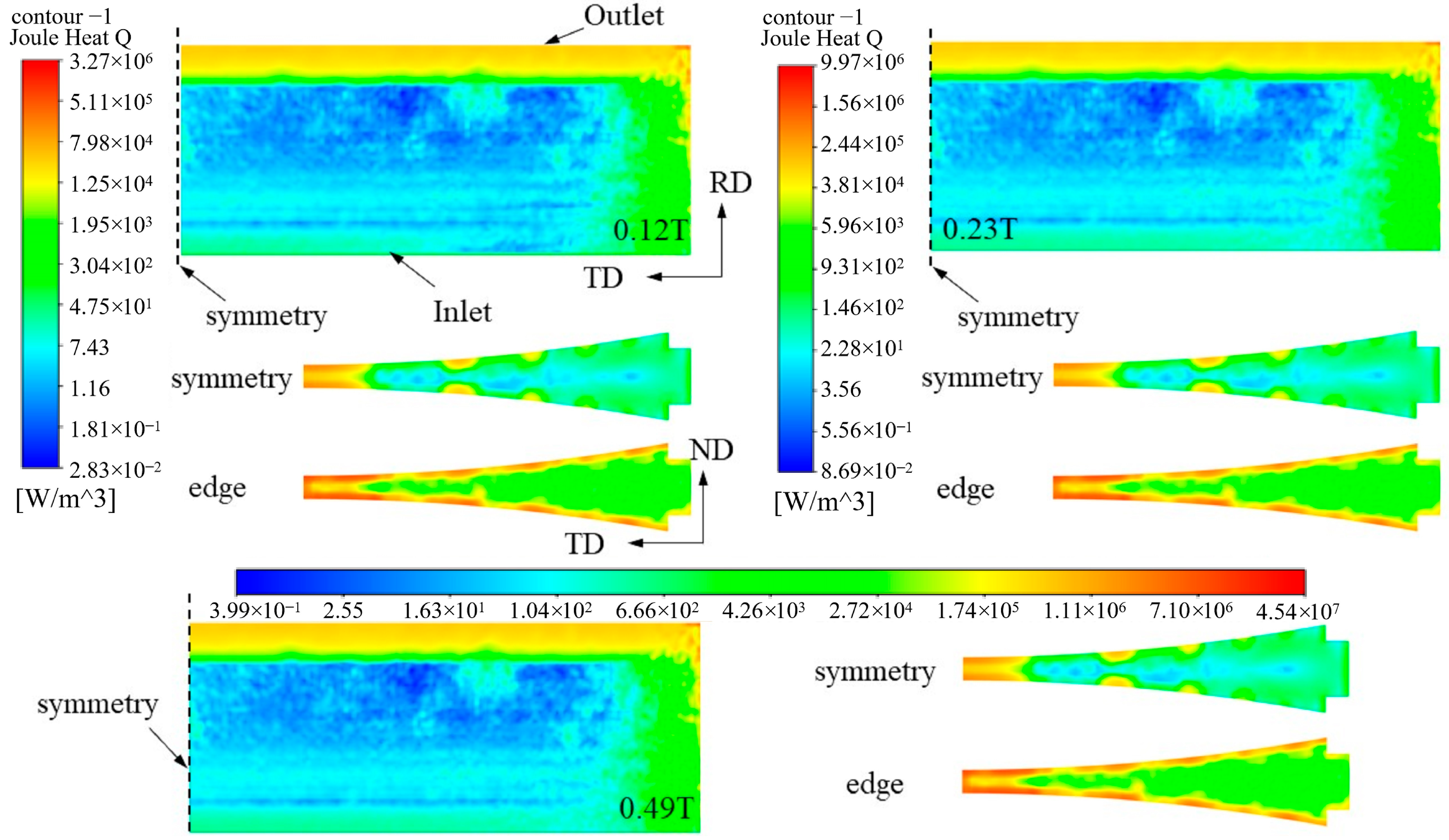
Figure 7 shows the distribution cloud of joule heat within the casting–rolling zone. The joule heat distribution resembles the current density distribution, exhibiting a concentrated distribution at the outlet and on the surface areas in contact with the casting roll. Due to the influence of heat exchange with the casting roll, joule heat has a negligible effect on the temperature field within the casting–rolling zone. As is evident from Figure 7, the joule heat fails to elevate the temperature in the casting–rolling zone, thus ruling out its influence on the magnesium alloy casting-rolling process.

3.1.2. Effect of Magnetic Field Strength on Flow Field

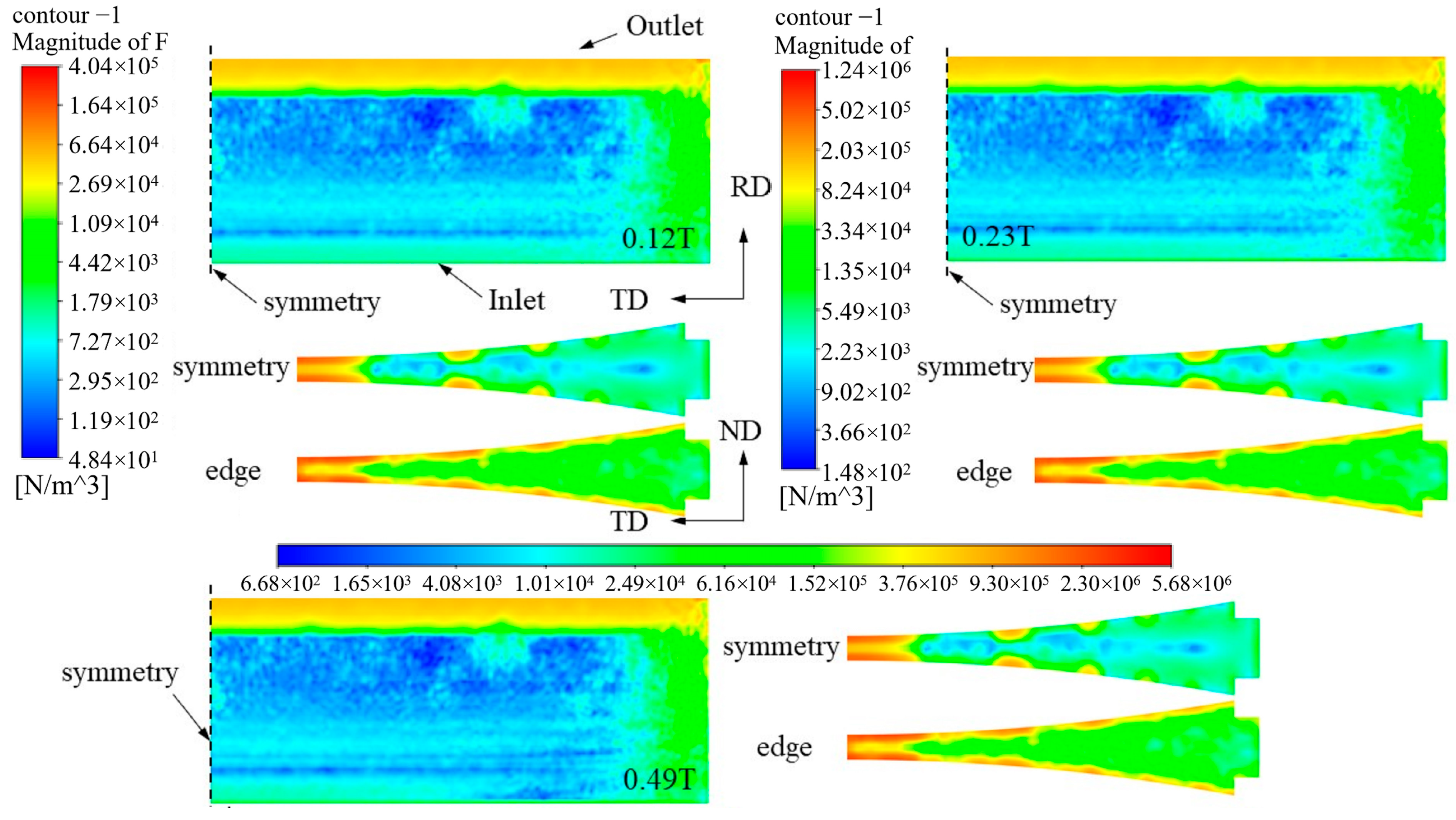
The movement of an energized conductor in a magnetic field generates joule heat and the Lorentz force. It can be seen from the above that the thermal effect of the magnetic field has little influence on magnesium alloy casting–rolling. Therefore, the Lorentz force is the reason for the change in the temperature field distribution in the casting–rolling zone of magnesium alloy. The Lorentz force increases as the magnetic field strength increases, as shown in Figure 8. The Lorentz force distribution is similar to the current density distribution above.
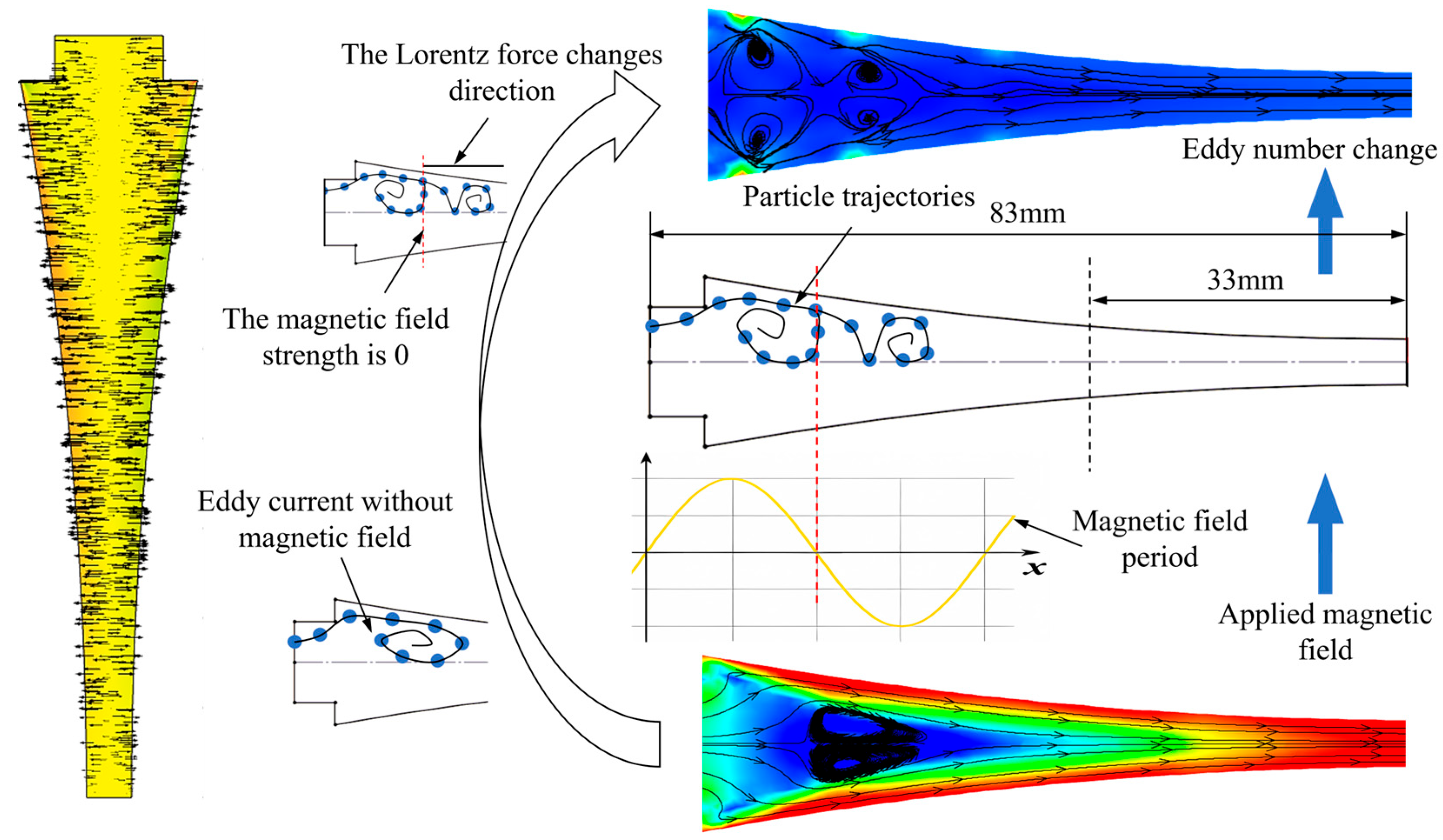
The magnetic inductance line changes within one cycle of the current, and the fluid in the casting–rolling zone is affected by the magnetic field to produce the Lorentz force, as shown in Figure 9. It can be seen from the magnetic field distribution diagram of the TD center surface that the fluid particle P moves towards the casting–rolling direction (RD) at the same time it is affected by the magnetic strength B, so the charged fluid particle P will generate the Lorentz force in the direction of TD (the Lorentz force is perpendicular to the direction of the magnetic field and the direction of the object’s motion). The Lorentz force changes the direction of P (the direction of the Lorentz force changes up and down), so the direction of the eddy motion changes. The stronger the magnetic field, the greater the effect of the Lorentz force on convection.
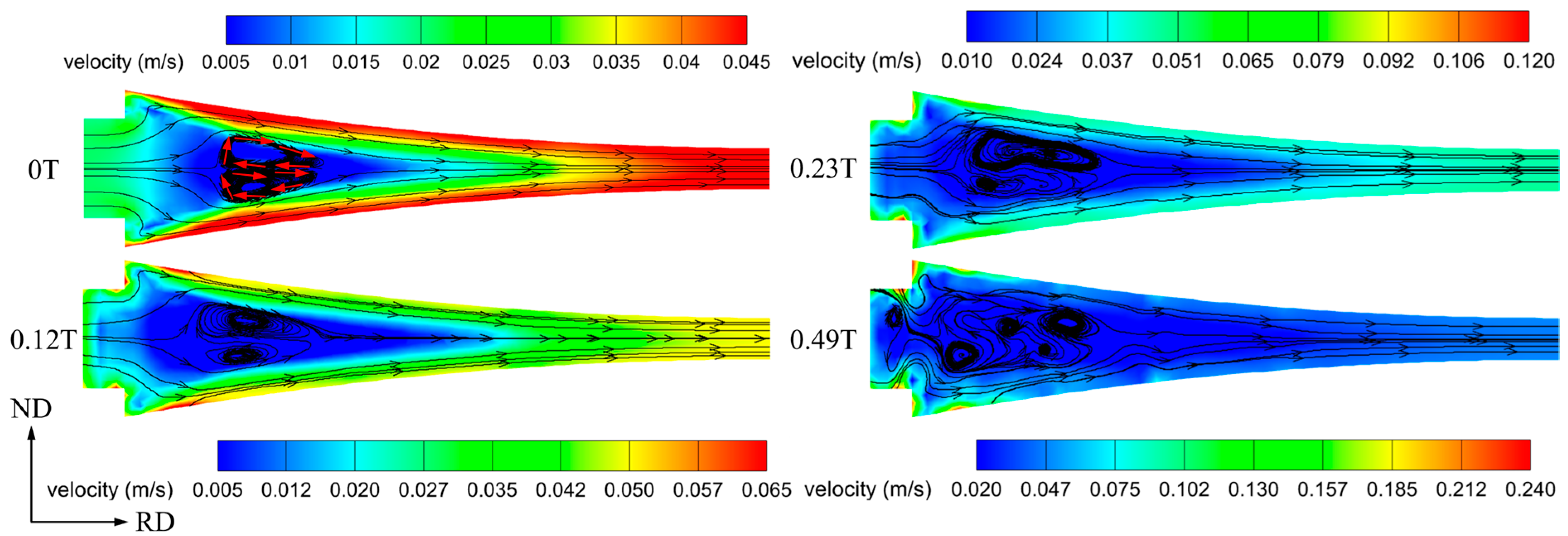
The flow field motion state changes under different magnetic field intensity. As shown in Figure 10, the velocity of the flow field gradually increases with the increase in the magnetic field strength. The eddy current region in the casting–rolling zone is disturbed by the magnetic field. As the strength of the magnetic field increases, the Lorentz force will increase, and the disturbance caused by the Lorentz force will also increase. When the magnetic field is not applied, there are two symmetrical eddies in the casting–rolling zone. When the magnetic field intensity reaches 0.12 T, the eddy is no longer symmetrical, and the eddy above gradually becomes lager. At 0.23 T, the eddy in the casting–rolling zone gradually forms into a large one, which has a tendency to split into two small eddies, while the eddy underneath becomes even smaller. When the magnetic field intensity reaches 0.49 T, five eddies are formed in the casting–rolling zone, and their positions are distributed in front- and back mode. But, no matter how the magnetic field strength changes, the eddy always exists. This is due to the Lorentz force’s influence on the flow field eddy. The greater Lorentz force forces the larger eddy to split into more, smaller eddies [29].
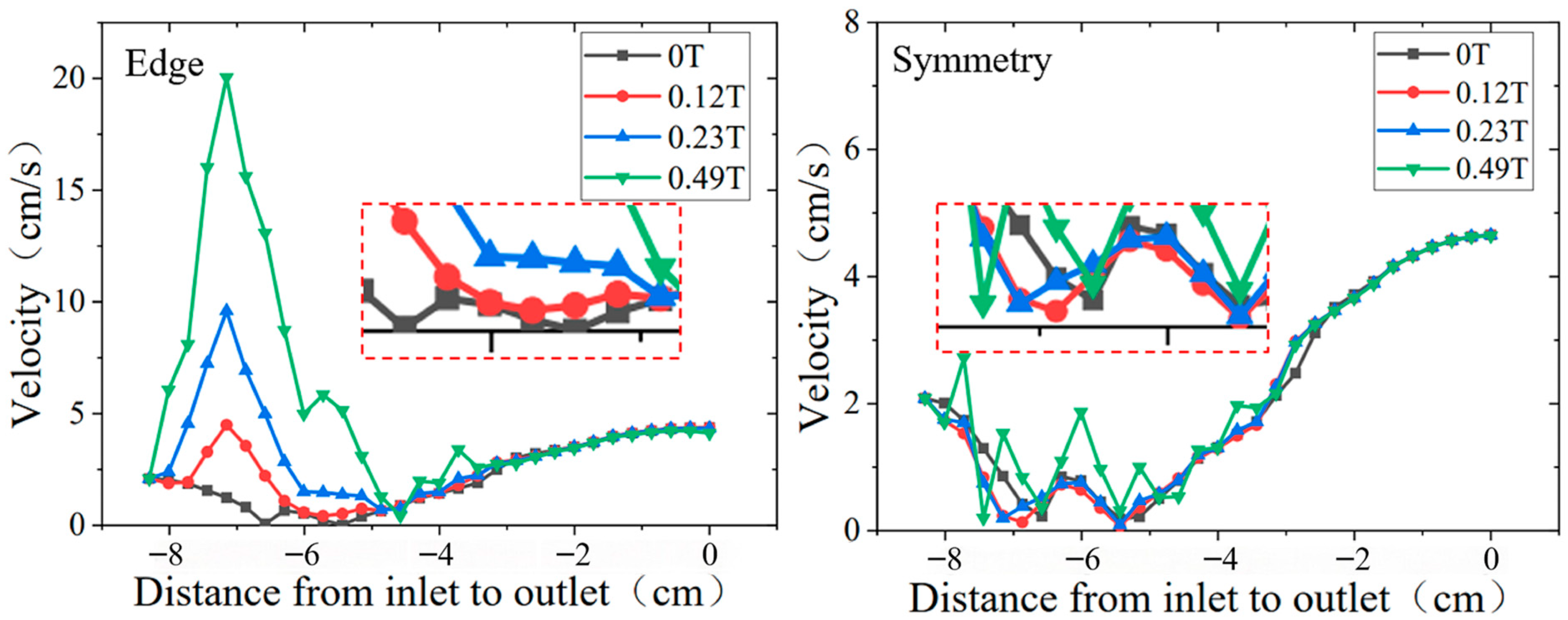
Figure 11 shows the temperature change curve of the center line of the section; it can be seen from Figure 11 when no magnetic field is applied, there is a point near the wall where the velocity is nearly 0, but the velocity of the central plane is not 0. So the velocity near the wall is “hysteresis” relative to the velocity of the central plane. The further development of this “hysteresis” phenomenon results in the formation of the “Ɔ” shaped solidified welding line. With the increase in magnetic field intensity, the near-wall velocity gradually increases, and the “hysteresis” phenomenon is eliminated, causing the solidification welding line to tend to be a “1” shape.
Figure 12 compares the velocity vector diagram of the normal (ND) center surface in the casting–rolling zone under different magnetic field intensities. The liquid phase is influenced by the magnetic field to generate transverse direction (TD) velocity. As can be seen from the enlarged figure, after the magnetic field is applied, it is blocked by the side sealing plate, and velocity is concentrated on the side surface, forming an eddy in the area near the wall. The flow velocity in the casting–rolling zone increases significantly, and the flow velocity continues to increase with the increase in magnetic field strength. This will reduce the velocity difference between the edge and symmetric surface melt, causing the solidification welding line to form a “1” shape. At the outlet, the locally enlarged image shows that the difference between the near-wall velocity and the middle velocity decreases with the increase in magnetic field intensity.

3.1.3. Effect of Magnetic Field Strength on Solidified Welded Line

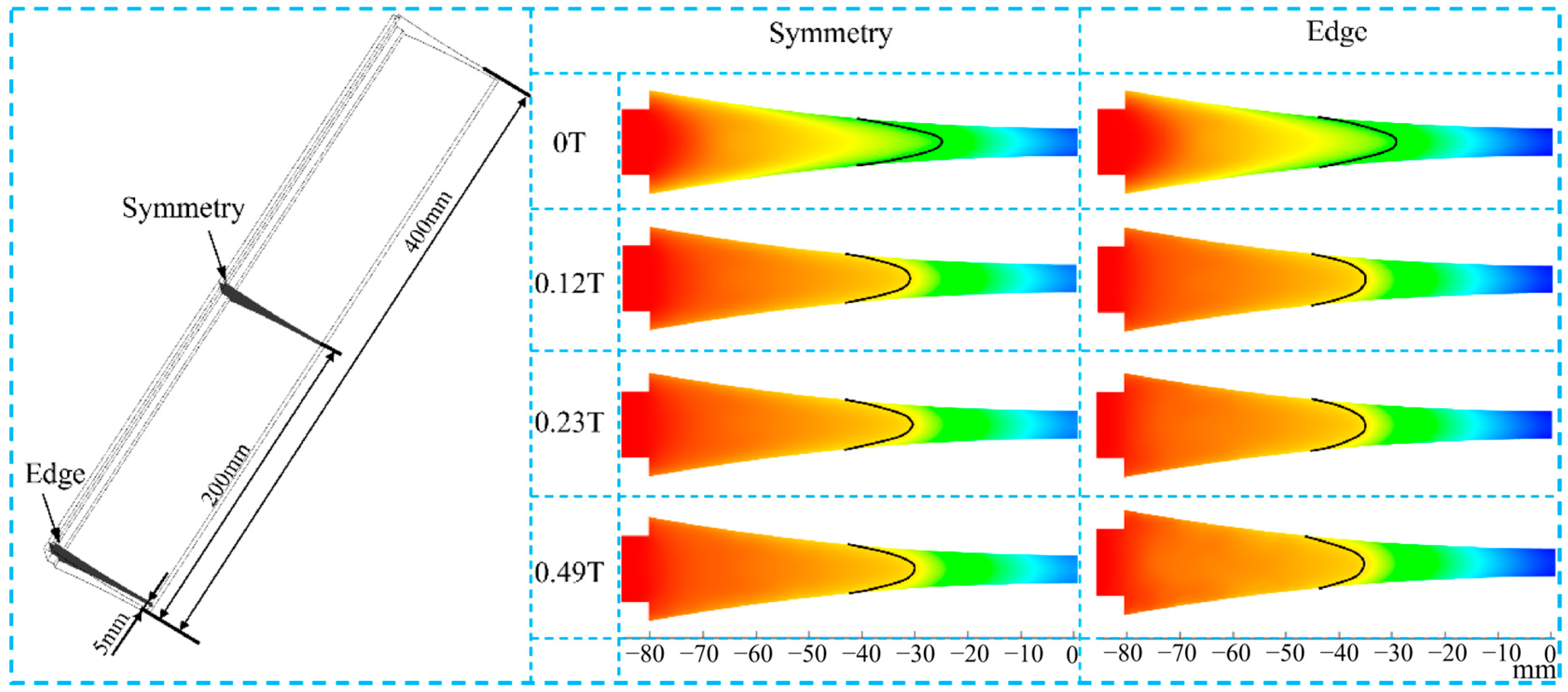
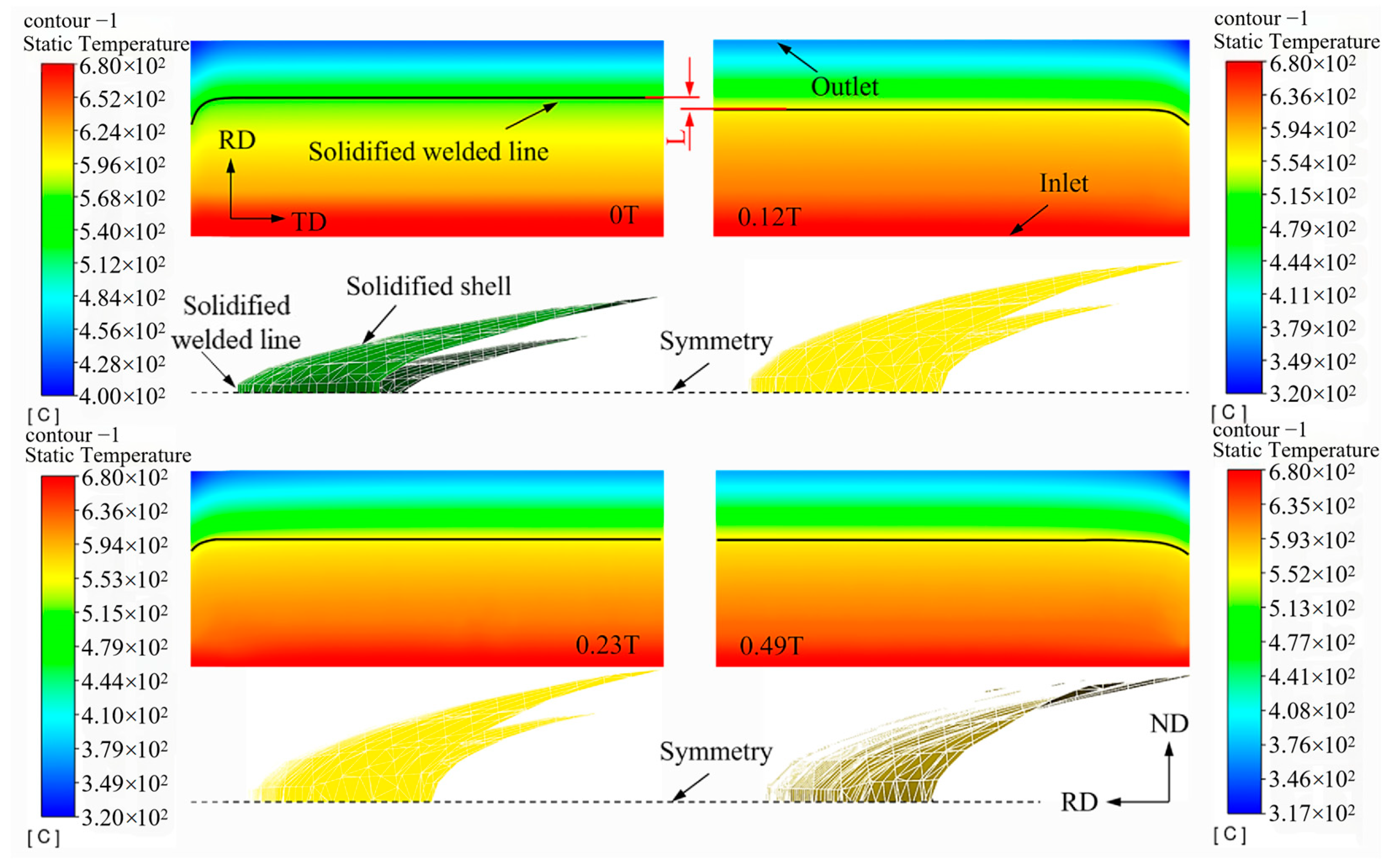
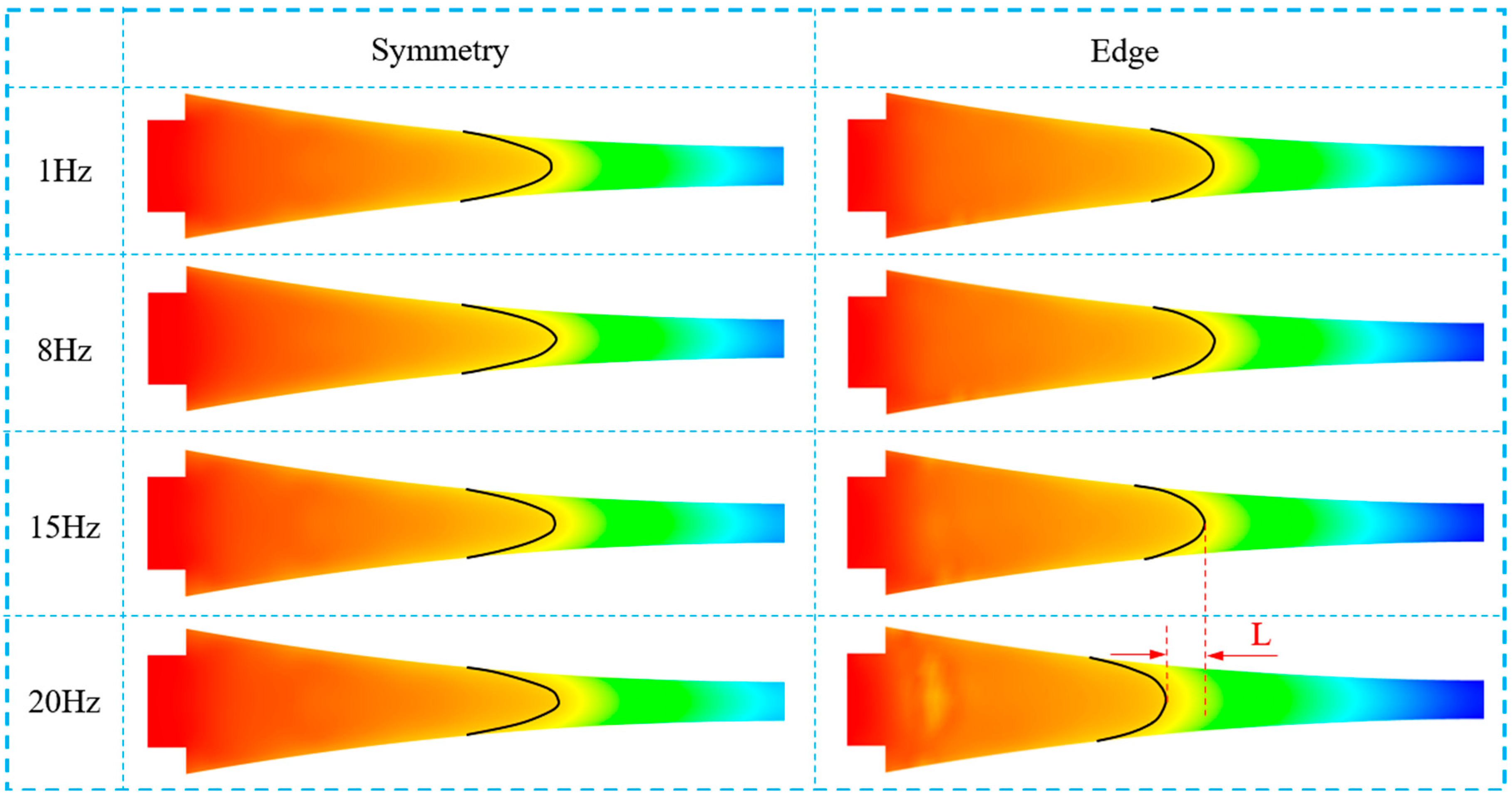
Figure 13 shows the cloud image of the symmetric surface and edge surface section. It can be seen from the figure that the casting–rolling temperature gradually decreases from the inlet to the outlet. The cross-section presents an obvious temperature gradient. The curve in the figure represent the solidification welding line. After the magnetic field is applied, the curve moves toward the inlet.
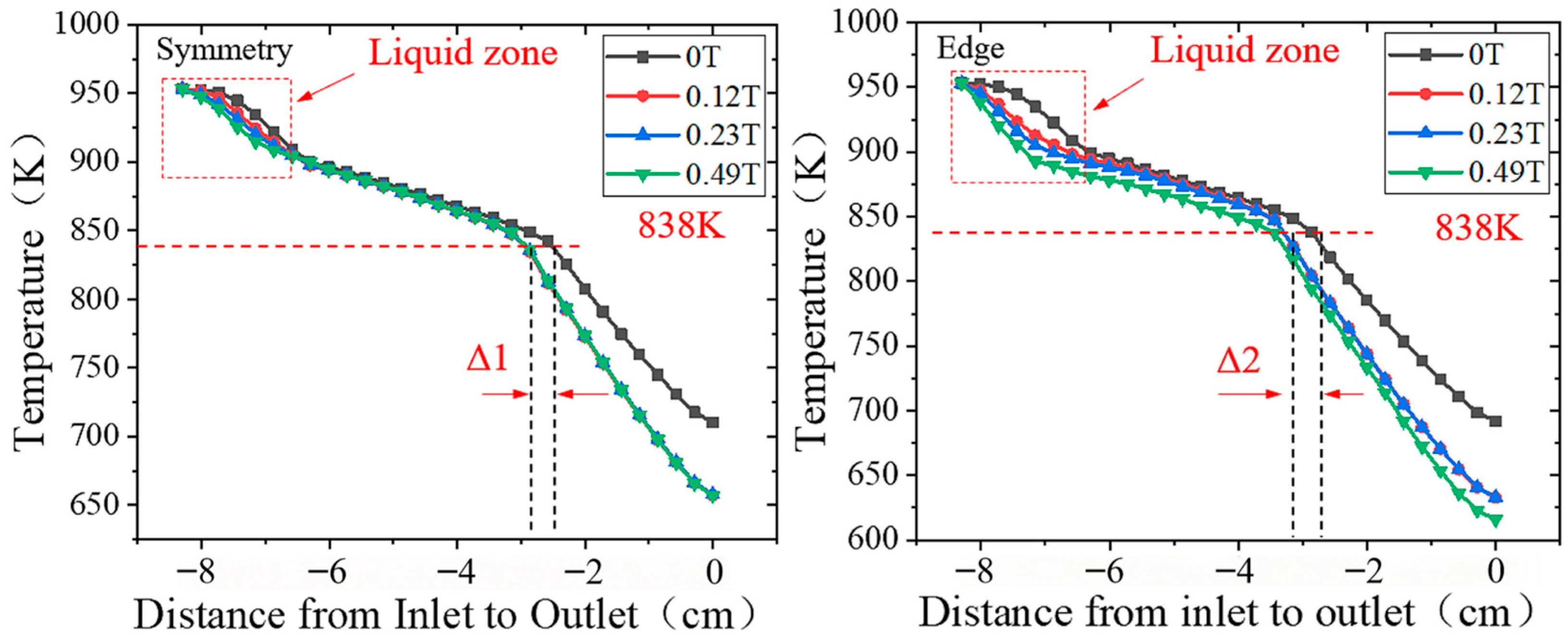
Figure 14 shows the temperature change curve of the center line of the symmetric surface and edge surface. In the figure, 838 K is the temperature of the solidified welding line. The overall temperature curve shows a downward trend. The slope in the middle of the curve is a little flat because there are two eddies. Eddy currents bring the low temperature melt to the inlet and the high temperature melt to the solidified welded line, which causes the temperature to drop slowly. The minimum temperature of the curve on the symmetric surface is reduced from 712.5 K to 662.4 K. The minimum temperature of the curve on the edge surface is reduced from 687.5 K to 612.5 K.
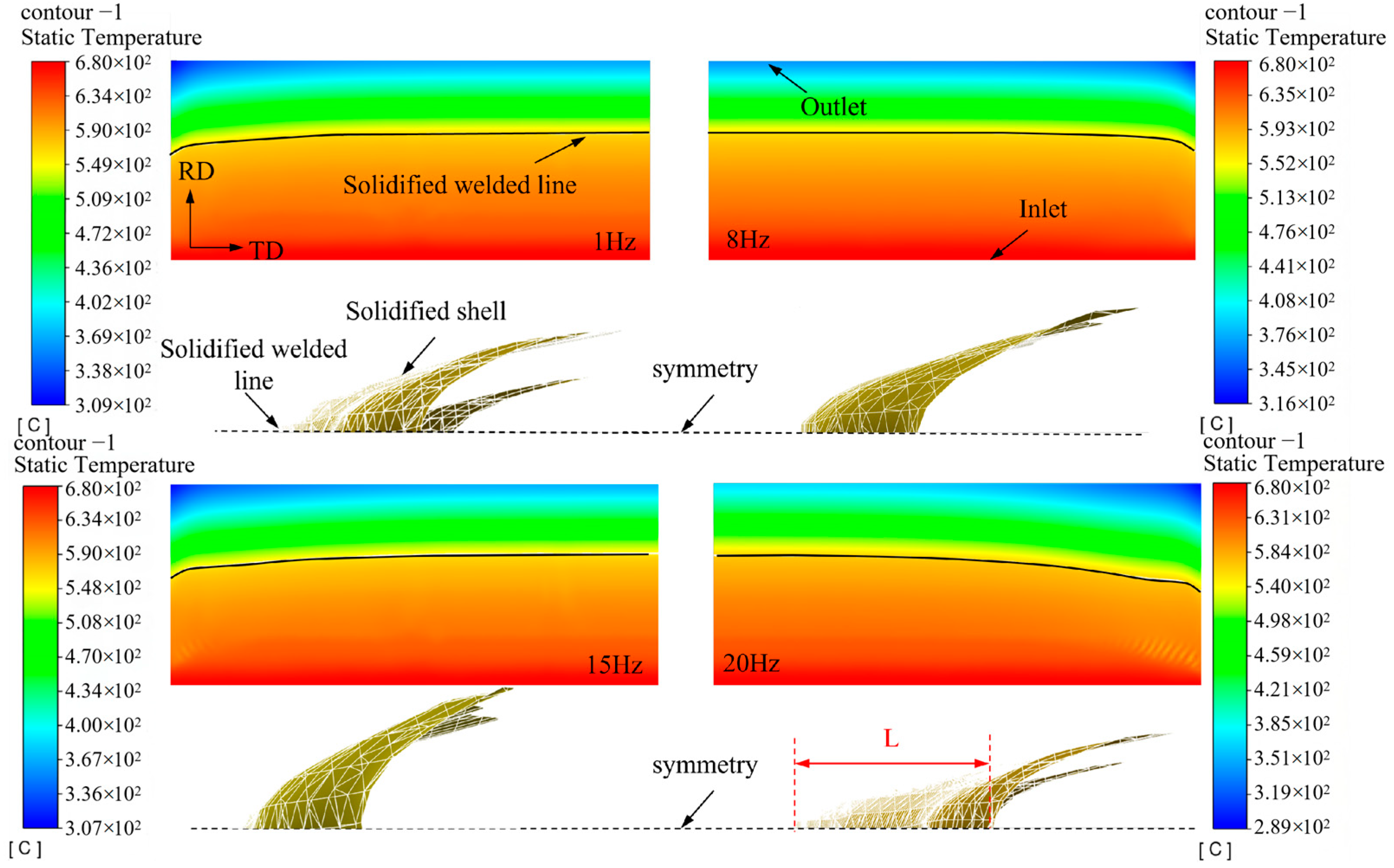
Take half of the ND (normal) center plane to draw a diagram, where the solid line represents the solidification welding line. The solidification welding line moves towards the inlet, and the distance is L = 4.5 mm. It can be seen from Figure 15 that the maximum value of the legend is 680 °C, indicating that joule heat cannot heat up the casting–rolling zone. It can be seen from Figure 7 that joule heat is distributed in the arc region which is in contact with the casting roll. Heat is removed by the heat exchange by the casting roll. So, joule heat has little effect on the temperature field. In addition, after applying the magnetic field, the temperature gradient in the high temperature region of the casting–rolling zone (the area between the inlet and the solidification welding line) is alleviated, and the temperature field distribution is more uniform. The solidified surface is a three-dimensional surface which consists of two solidified shells. Its front end presents a curved shape, and this curve is called the solidification welding line. The solidified welding line is clearly shown in Figure 15.
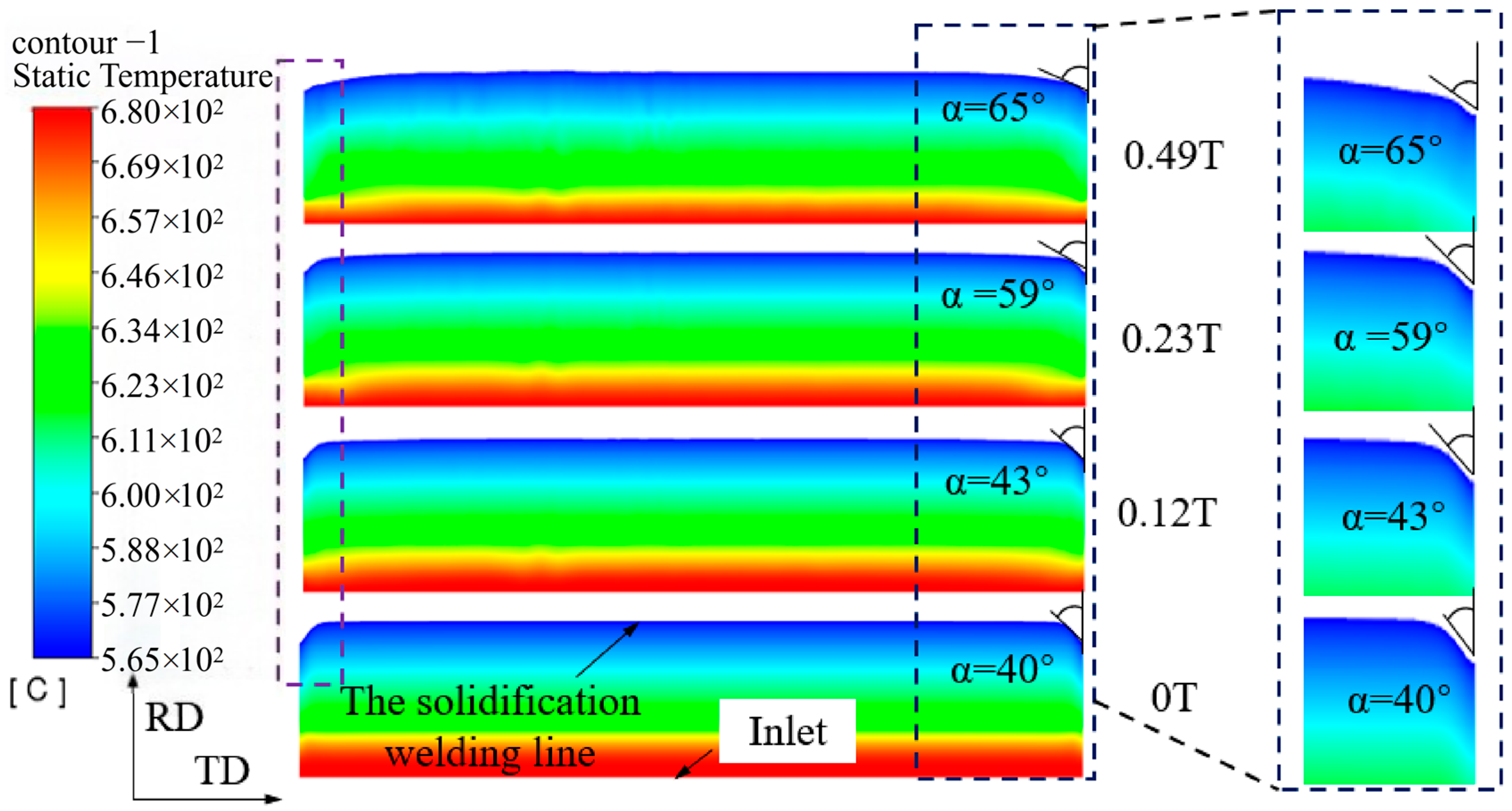
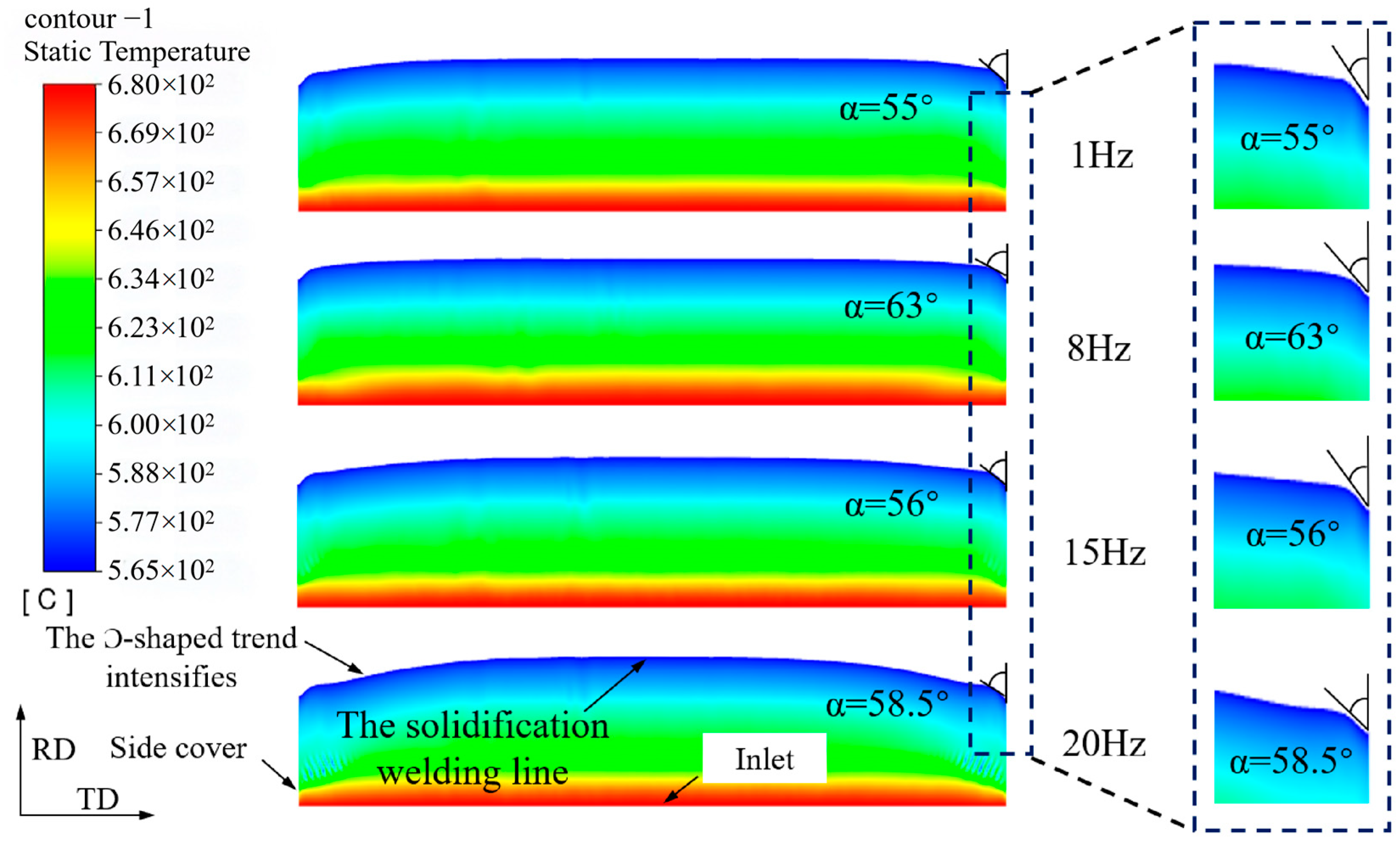
The α angle is the angle between the solidification welding line and the side sealing plate, which reflects the distribution of the solidification zone and the paste zone. The greater the α angle, the smaller the stress generated by the relative motion between the mushy zone and the side sealing plate, and the more uniform the solidified shell becomes. When α is 90°, the solidification welding line tends toward “1”, which proves most advantageous for the casting–rolling process. As shown in Figure 16, the full plate width temperature field cloud image of the ND center surface in the casting–rolling zone. The minimum temperature of the legend is 565 °C (838 K), which is also the temperature of the solidified welded line. The α angle increases with the increase in the magnetic field strength. When the magnetic field strength is 0.49 T, the α angle reaches 65°. Compared with previous studies [24] on current assisted casting–rolling, the α angle has been effectively increased, which means that the temperature field distribution is more uniform after applying a magnetic field, and the solidification welding line tends to be “1”, reducing the possibility of side damage. It is more beneficial to magnesium alloy casting–rolling.

3.2. Effect of Magnetic Field Frequency on Casting–Rolling of Magnesium Alloy

3.2.1. Effect of Magnetic Field Frequency on Flow Field

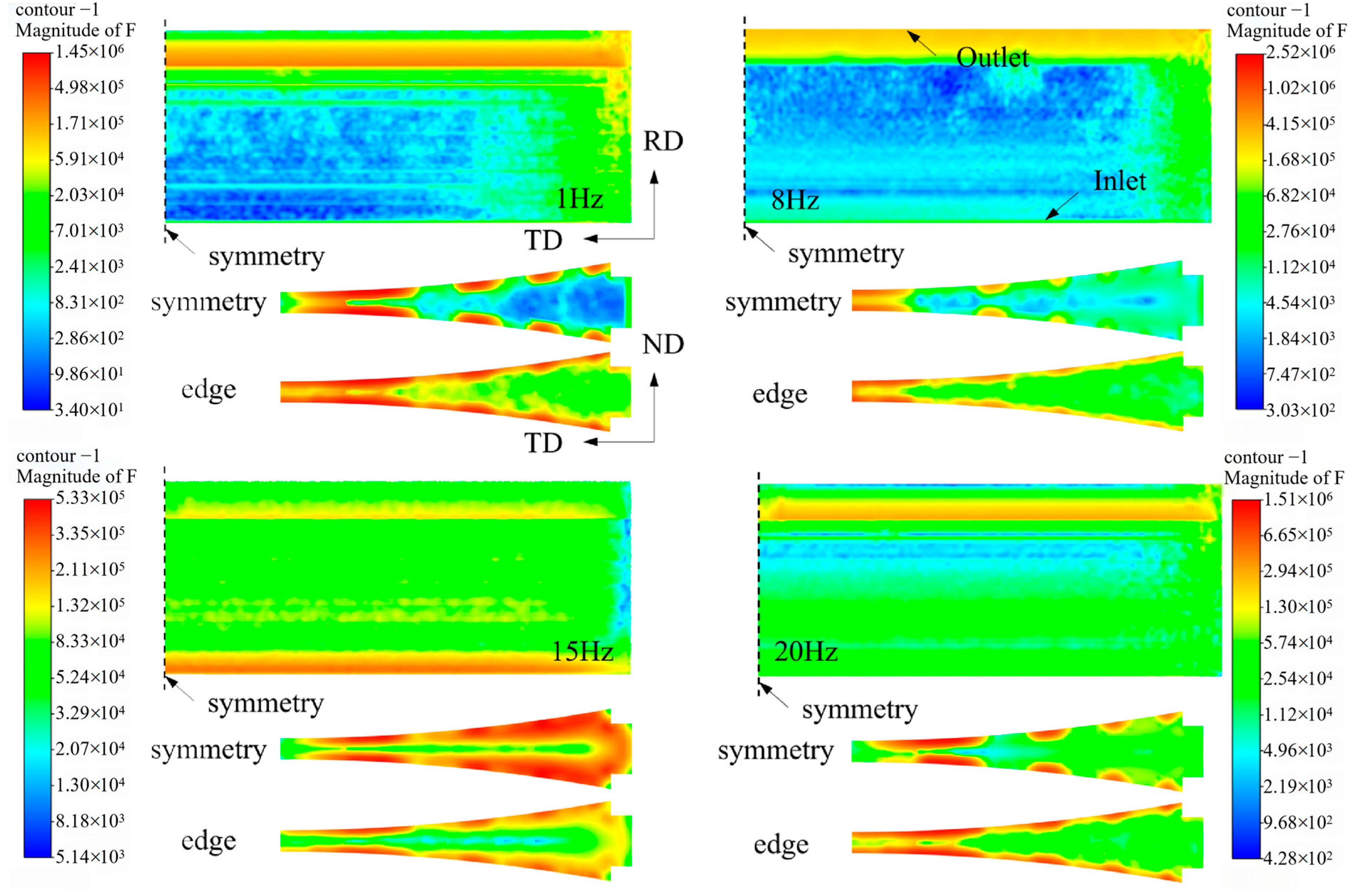
It can be seen from the above analysis that the Lorentz force is the main reason for the change in the temperature field and flow field in the casting–rolling zone. Figure 17 shows the cloud map of the Lorentz force distribution in the casting–rolling zone at different frequencies. It can be seen from the figure that when the magnetic field frequency is 1~8 Hz, the Lorentz force is concentrated in the outlet and edge of the casting–rolling zone, and the Lorentz force of the symmetric surface is small.
It is worth noting that at 15 Hz, the Lorentz force of the symmetric surface is almost throughout the entire section. Combined with the flow field, the eddy on the symmetric surface basically disappears at this time. The eddy current will bring the cryogenic melt near the solidified weld line to the inlet to heat up. The disappearance of the eddy current means that the cryogenic melt near the solidification welding line can no longer heat up, the surface temperature in contact with the casting roll decreases, the conductivity increases, and the current density penetrates into the interior of the casting–rolling zone. The Lorentz force can be obtained from the current density, so the Lorentz force distribution at 15 Hz is shown in the figure.
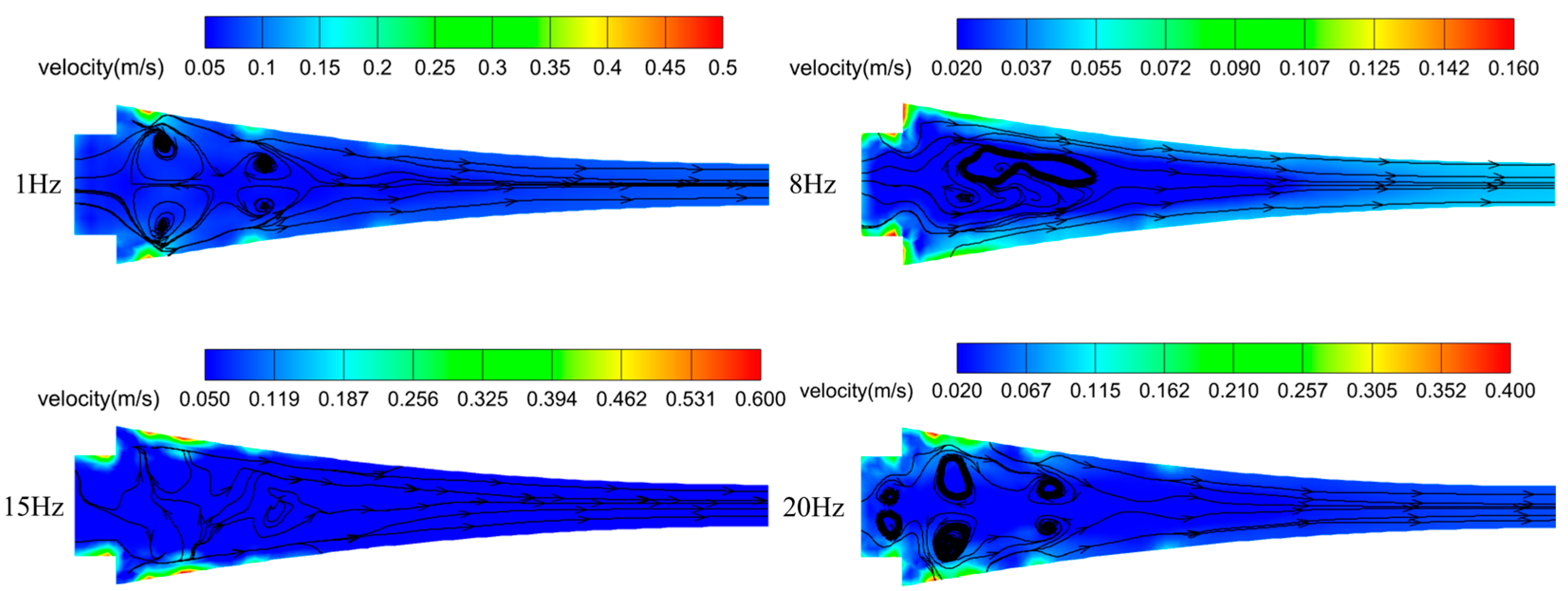
The following Figure 18 shows the flow field in the symmetrical section at different magnetic field frequencies in the casting and rolling zone. It can be seen from the figure that the influence of frequency on the casting–rolling zone is mainly concentrated on the number of eddies, but has little effect on the position of it. At 1 Hz, the cross-section shows two pairs of horizontally symmetrical eddies, while at 8 Hz, only one pair of horizontal symmetric eddies remains. The upper eddy becomes larger, and the lower one becomes smaller. When the magnetic field frequency is 15 Hz, the eddy of the symmetric surface flow field basically disappears. However, at 20 Hz, three pairs of horizontally symmetric eddies appear.
It can be seen from the above that the Lorentz force will change the motion state of the flow field. Taking 1 Hz as an example, the direction of the Lorentz force changes once in one cycle. As shown in Figure 19, the Lorentz force distribution is on the left and the eddy change principle is on the right. The total length of the model in the casting–rolling zone is 83 mm, the rolling speed is 3 m/min, and the fluid particle moves 50 mm in 1s time. The fluid point of the upper eddy moves 25 mm during the half cycle. When the Lorentz force is zero for half a period, the magnetic field reverses and the Lorentz force reverses. The particle’s downward velocity slows down to zero and then accelerates. At the same time, the particle is moving towards the outlet. The final velocity is blocked by the solidified shell, and a small eddy is formed again near the solidified welded line. The eddy below is the opposite. Therefore, at 1 Hz, the flow field forms two pairs of symmetric eddies [29,30]. The higher the frequency, the more times the Lorentz force changes in a period (the Lorentz force goes up and down), the greater the influence on the flow field.
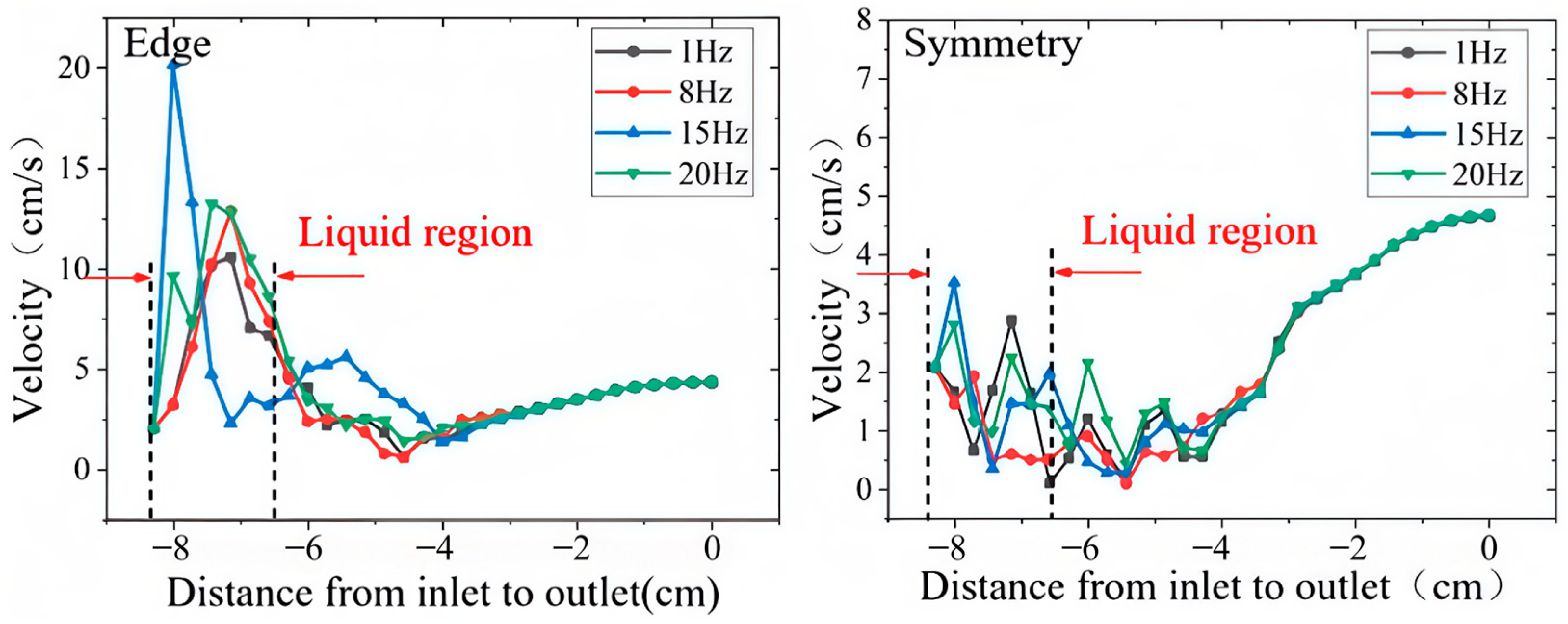
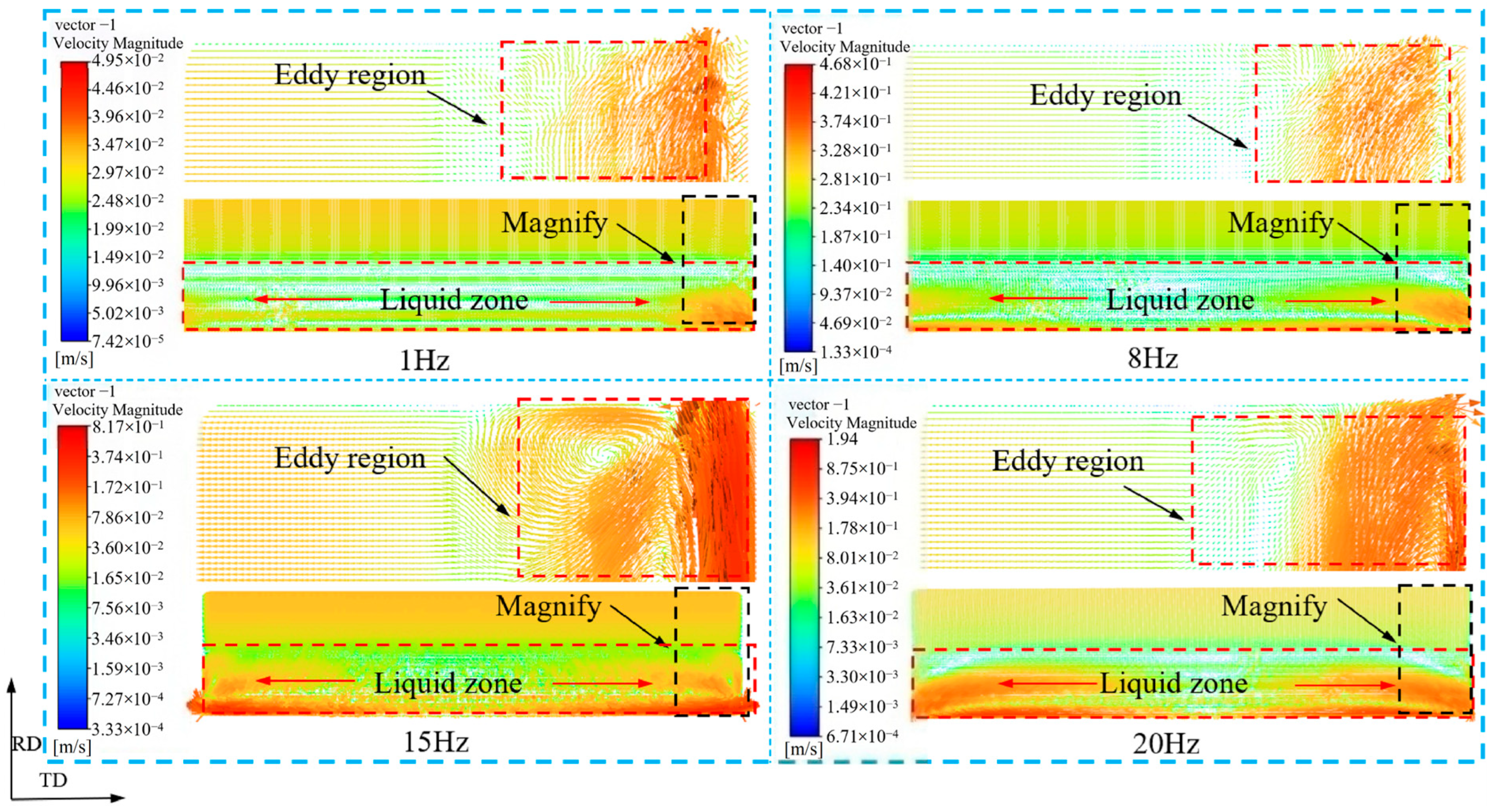
Figure 20 shows the velocity change curve on the center line of the symmetric surface and the edge. It can be seen from the figure that the influence of the magnetic field on the cast-rolling zone is concentrated in the liquid zone. When the magnetic field frequency is 15 Hz, it has the greatest influence on the casting–rolling zone, and the maximum speed reaches 0.202 m/s. Combined with Figure 21, it can be seen that eddy current forms in the center surface of ND at 15 Hz. On the symmetric plane, the frequency change causes the velocity to fluctuate back and forth.
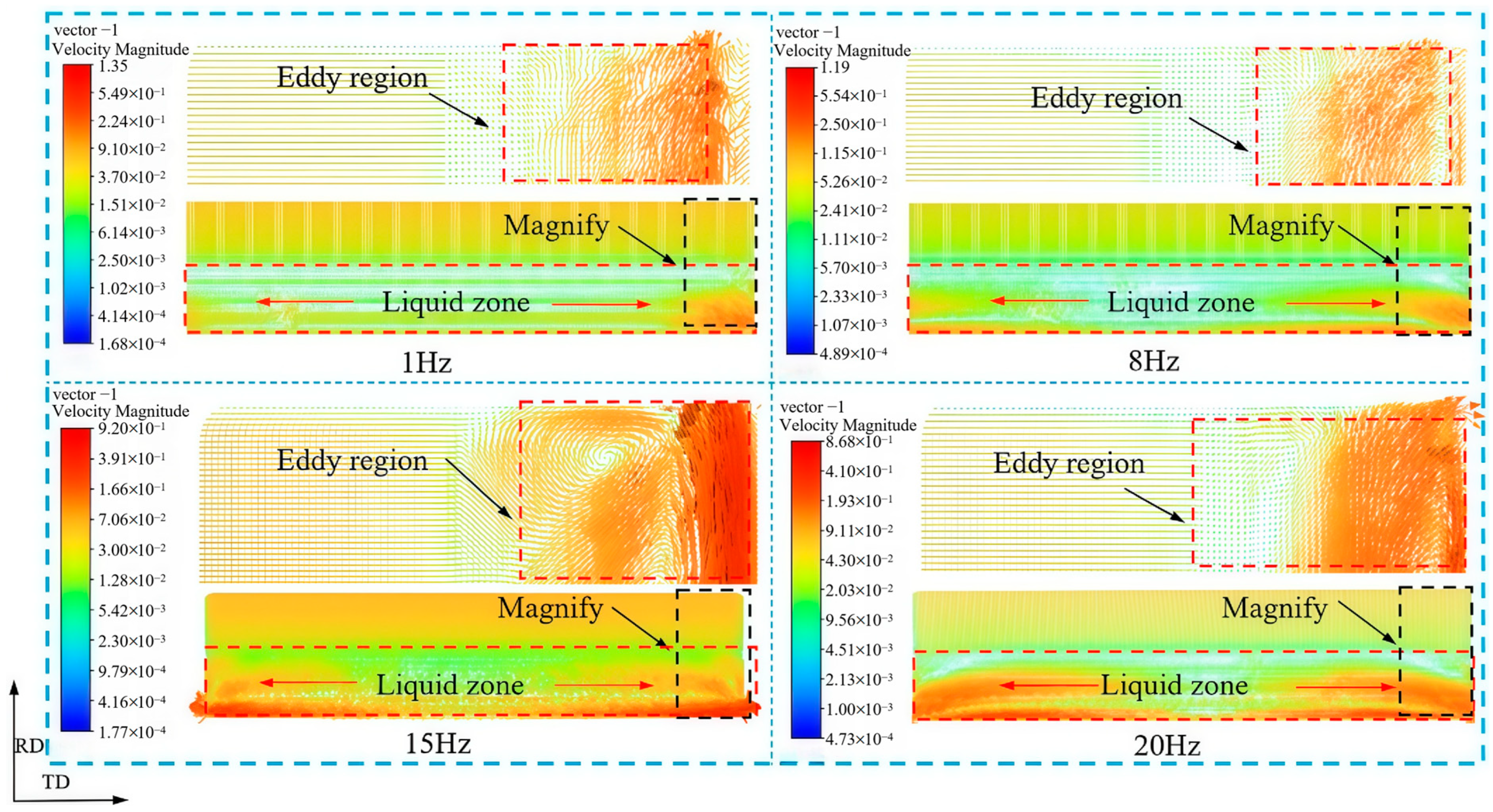
Figure 21 shows the velocity vector diagram of the ND central plane at different frequencies. With the increase in the magnetic field frequency from 1 Hz to 20 Hz, the maximum velocity of ND center surface flow field decreases from 1.35 m/s to 0.868 m/s. The melt at the entrance of the casting–rolling zone is most affected by the magnetic field, and eddy currents are generated near the wall. An eddy current will promote the edge melt flow, so that the solidification welding line tends to be “1”. It can be seen from the 20 Hz local magnification diagram in Figure 21 that the magnesium alloy melt near the wall is subjected to the Lorentz force to produce countercurrent phenomenon. At this time, the melt will produce reflux under the influence of the magnetic field, which will aggravate the trend of the shape of the solidified welding wire “Ɔ”.

3.2.2. Effect of Magnetic Field Frequency on Solidified Welded Line

Figure 22 shows the temperature field cloud image of symmetric surface and side surface at different magnetic field frequencies. It can be seen from the figure that when the magnetic field frequency is 20 Hz, the solidified shell on the edge surface moves towards the inlet. The distance is Δ3 = L = 6.5 mm. This will lead to the solidification welding line “Ɔ” trend intensified, the edge damage probability increased.
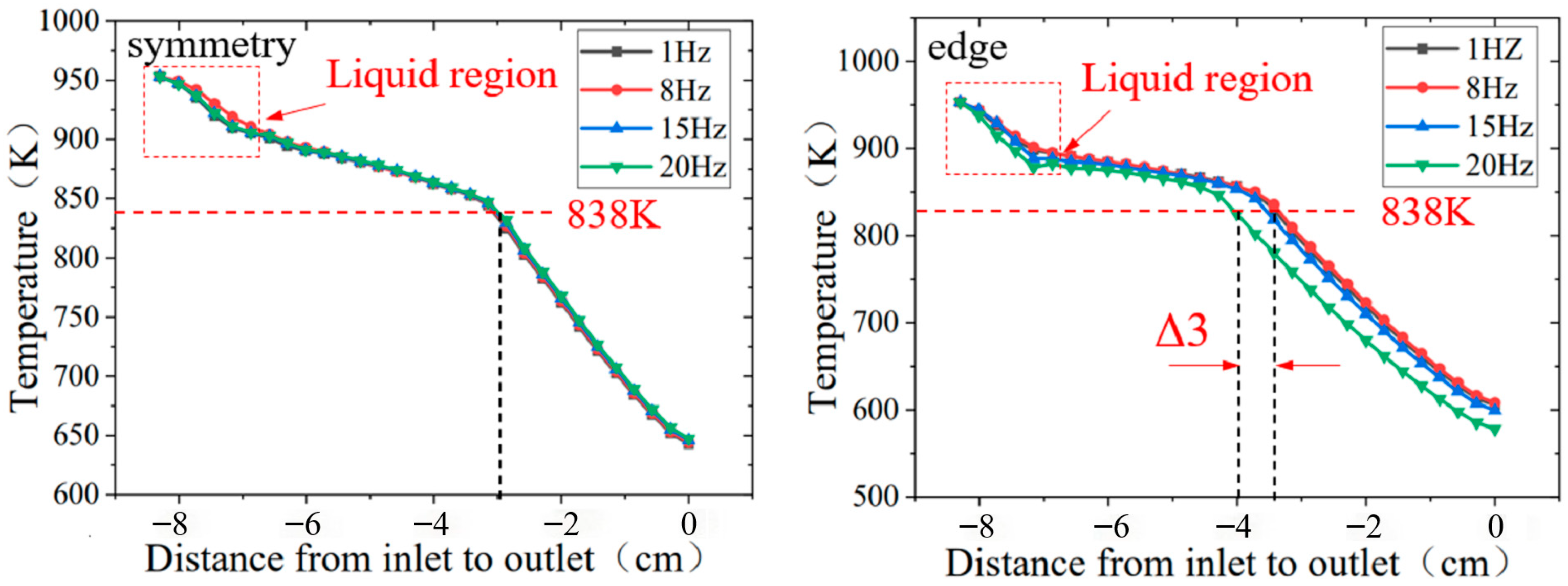
Figure 23 compares the temperature variation trend at different frequencies, and 838 K is the solid-phase line temperature. The temperature of the liquid region decreased slightly under the influence of the magnetic field. The temperature on the line generally maintains a downward trend under the influence of the heat transfer of the roller. According to the cloud image of 22, when the magnetic field frequency is 20 Hz, the solidification welding line moves towards the inlet of the casting–rolling zone under the influence of the magnetic field. At this time, the minimum temperature of the edge surface decreases from 608 K to 580 K. But the temperature curve of the symmetric surface remains basically unchanged.
The temperature field distribution of the ND center surface in the casting–rolling area is shown in Figure 24. When the magnetic field frequency is 8 Hz, the solidified welded line is straighter. The temperature field is more evenly distributed. When the magnetic field frequency is 20 Hz, the solidification welding line is no longer a straight line, in particular, the edge “Ɔ” shape trend is more obvious. This results in an uneven distribution of the temperature field in the casting and rolling zone. At this time, the probability of edge damage is increased, and it is not conducive to the casting–rolling of magnesium alloy. At 20 Hz, the vertical distance L between the symmetric surface and the edge surface of the solidified welding surface reaches the maximum.
Figure 25 shows the variation trend of the solidification welding line at different frequencies. When the frequency increases from 1 Hz to 20 Hz, α first increases and then decreases. When the magnetic field frequency is 8 Hz, α reaches a maximum value of 63°. At this time, the temperature field distribution is more uniform, which is conducive to inhibiting the edge damage. Therefore, the frequency selection range is between 1 and 8 Hz.
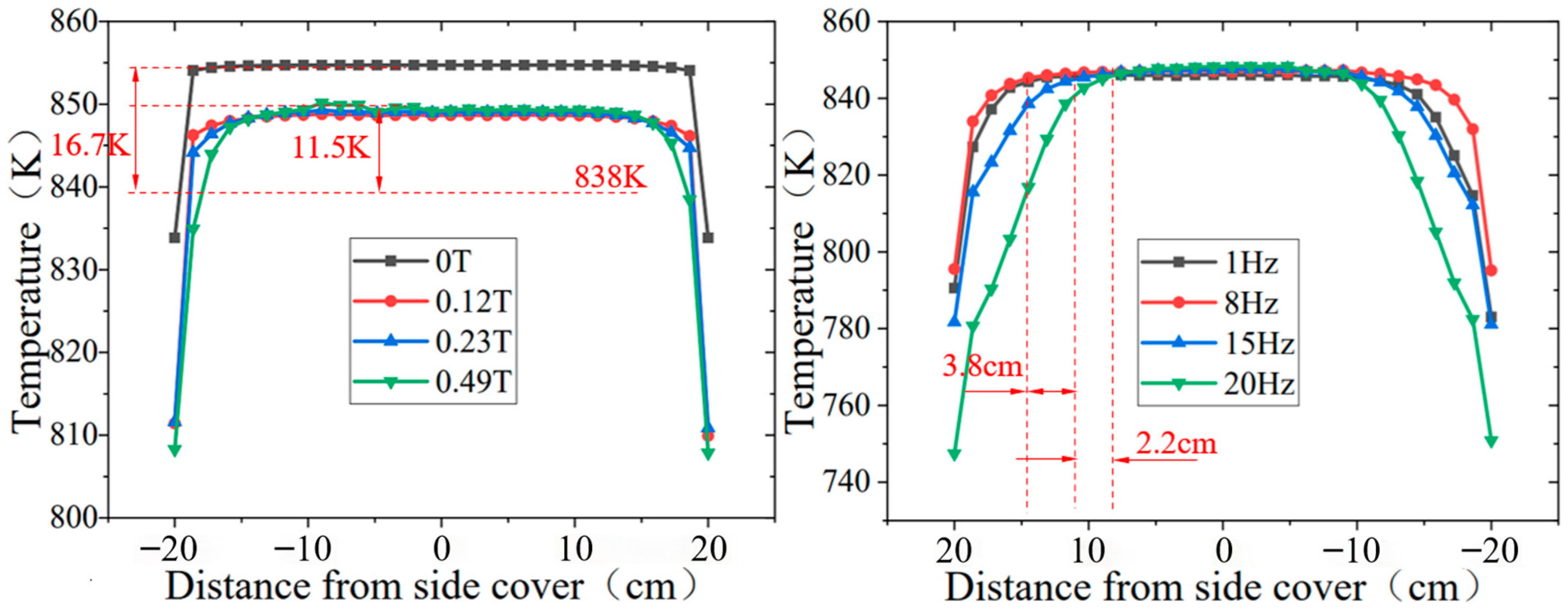
Make the temperature change curve of the whole plate width of the ND center surface at 38 mm away from the outlet. As shown in Figure 26, after applying the magnetic field, the online temperature decreases by 5.2 K. Changing the magnetic field intensity has little effect on the temperature drop, while changing the magnetic field frequency has great effect on the temperature drop. Compared with the temperature curve at 1 Hz, the melt temperature in the area near the wall at 20 Hz is significantly reduced under the influence of the magnetic field. The corresponding position of the same temperature point is moved inward by 6 cm. It can also be seen that with the increase in the magnetic field frequency, the temperature drop near the wall increases, and the trend of “Ɔ” is intensified.

4. Conclusions

In this paper, a magnetic field is used to improve the temperature and flow field of magnesium alloy casting–rolling. After applying a magnetic field, the temperature field distribution in the casting–rolling zone is improved; that is, the shape of the solidification welding line changes. This paper draws the following conclusions:
(1)
After the magnetic field is applied, the solidified welding line moves towards the inlet, and the moving distance is 4.5 mm. The high temperature area (between the inlet and the solidified welding line) is more evenly distributed and affected by the magnetic field. The joule heat generated by a magnetic field cannot heat up the cast-rolling zone, so the Lorentz force is the main reason for the change in the flow field and temperature field.
(2)
Changes in the strength of the magnetic field will change the position and number of eddies. This is due to the Lorentz force’s influence on the flow field eddy. The greater the Lorentz force forces the larger eddy to split into more, smaller eddies. With the increase in the magnetic field intensity from 0 T to 0.49 T, α gradually increases to 65°. This makes the solidification welding line tend to be a “1” shape. While the change in the magnetic field frequency will cause the change in the eddy current number. When the magnetic field frequency increases, α firstly increases and then decreases, and when the frequency is 20 Hz, the “Ɔ” shape trend of the solidification welding line becomes more and more serious.
(3)
According to this study, the reasonable range of process parameters is a magnetic field strength of 0.49 T, and magnetic field frequency should be between 1 Hz and 8Hz.

Author Contributions

Z.H. and S.W. Project administration, Resources, Writing—review and editing; X.G. Conceptualization, Data curation, Formal analysis, Investigation, Methodology, Writing—original draft; R.H., H.L., Y.H. and J.Z. Investigation, Writing—review and editing. All authors have read and agreed to the published version of the manuscript.

Funding

This work was supported by the Shanxi Province Key Research and Development Plan (202302050201013); The Open Research Fund of State Key Laboratory of Precision Manufacturing for Extreme Service Performance, Central South University (Kfkt2024-11); National Natural Science Foundation of China (52404408, 52204396); Shanxi Excellent Graduate Tutor Team Construction Project (No. 2024TD31); Excellent Doctor Award Fund for working in Shanxi (20232064).

Data Availability Statement

The processed data needed to reproduce these findings cannot be shared at this time, as they also form part of an ongoing study, in accordance with the funder’s data retention policy.

Conflicts of Interest

The authors declare that they have no known competing financial interests or personal relationships that could have appeared to influence the work reported in this paper.

References

  1. Yeganeh, M.; Mohammadi, N. Superhydrophobic surface of Mg alloys: A review. J. Magnes. Alloys 2018, 6, 59–70. [Google Scholar] [CrossRef]
  2. Song, J.; She, J.; Chen, D.; Pan, F. Latest research advances on magnesium and magnesium alloys worldwide. J. Magnes. Alloys 2020, 8, 1–41. [Google Scholar] [CrossRef]
  3. Tariq, H.M.R.; Kang, H.; Chaudry, U.M.; Khan, M.K.; Jun, T. Impact of Surface Roughness on the Yield Drop of Hot-Rolled AZX311 Mg Alloy. Adv. Eng. Mater. 2024, 27, 2401689. [Google Scholar] [CrossRef]
  4. Chen, B.; Lv, W.; Chen, S.; Dou, Z.; Cheng, Y.; Xu, J. Interfacial Coupling through In-situ Fabrication of 3D Carbon Fiber/Cu Composites. J. Alloys Compd. 2025, 1046, 184903. [Google Scholar] [CrossRef]
  5. Yang, X.; Patel, J.B.; Huang, Y.; Mendis, C.L.; Fan, Z. Towards directly formable thin gauge AZ31 Mg alloy sheet production by melt conditioned twin roll casting. Mater. Des. 2019, 179, 107887. [Google Scholar] [CrossRef]
  6. Kwon, Y.; Hwang, J.H.; Choi, H.C.; Trang, T.T.T.; Kim, B.; Zargaran, A.; Kim, N.J. Microstructure and Tensile Properties of Ferritic Lightweight Steel Produced by Twin-Roll Casting. Met. Mater. Int. 2020, 26, 75–82. [Google Scholar] [CrossRef]
  7. Kainer, K.U.; Kurz, G.; Pakulat, S.; Letzig, D. Influence of Microstructure Evolution During Twin-Roll Casting on the Properties of Magnesium Sheets. In TMS 2019 148th Annual Meeting & Exhibition Supplemental Proceedings; Springer: Cham, Switzerland, 2019; pp. 1677–1686. [Google Scholar] [CrossRef]
  8. Minárik, P.; Zimina, M.; Čížek, J.; Stráska, J.; Krajňák, T.; Cieslar, M.; Vlasák, T.; Bohlen, J.; Kurz, G.; Letzig, D. Increased structural stability in twin-roll cast AZ31 magnesium alloy processed by equal channel angular pressing. Mater. Charact. 2019, 153, 199–207. [Google Scholar] [CrossRef]
  9. Zhu, T.; Fu, P.; Peng, L.; Hu, X.; Zhu, S.; Ding, W. Effects of Mn addition on the microstructure and mechanical properties of cast Mg-9Al-2Sn(wt.%)alloy. J. Magnes. Alloys 2014, 2, 27–35. [Google Scholar] [CrossRef]
  10. Huang, Z.; Lai, H.-Y.; Zhou, H.-B.; Guo, H. Effect of Casting and rolling Process Parameters On Solidification Welding Line of Magnesium Alloy. J. Min. Metall. B Metall. 2022, 58, 1–10. [Google Scholar] [CrossRef]
  11. Neuser, M.; Kappe, F.; Ostermeier, J.; Krüger, J.T.; Bobbert, M.; Meschut, G.; Schaper, M.; Grydin, O. Mechanical Properties and Joinability of AlSi9 Alloy Manufactured by Twin-Roll Casting. Adv. Eng. Mater. 2022, 24, 2200874. [Google Scholar] [CrossRef]
  12. Huang, Z.; Zhao, Z.; Gao, X.; Zhang, T. Effect of the rolling speed on the flow field and solidification welding line of the roll casting for AZ31 magnesium alloy. Int. J. Adv. Manuf. Technol. 2023, 127, 1199–1208. [Google Scholar] [CrossRef]
  13. Victoria-Hernández, J.; Kurz, G.; Bohlen, J.; Yi, S.; Letzig, D. Influence of Twin-Roll Casting Speed on Microstructural Homogeneity, Centerline Segregation, and Surface Quality of Three Different Mg Alloys. JOM 2021, 73, 1460–1470. [Google Scholar] [CrossRef]
  14. Patel, J.B.; Yang, X.; Mendis, C.L.; Fan, Z. Melt Conditioning of Light Metals by Application of High Shear for Improved Microstructure and Defect Control. JOM 2017, 69, 1071–1076. [Google Scholar] [CrossRef]
  15. Zhang, L.; Guo, X.; Gao, J.; Deng, A.; Wang, E. Effect of electromagnetic stirring on microstructure and mechanical properties of TiB2 particle-reinforced steel. Acta. Metall. Sin. 2020, 56, 1239–1246. [Google Scholar] [CrossRef]
  16. Diao, M.; Guo, C.; Wang, S.; Li, L.; Dong, T.; Xin, S.; Sun, Z.; Chen, Z.; Konovalov, S.; Jiang, F. Influence of Laser Power on Grain Refinement of Ti5321G Alloy Fabricated by Laser Powder Direct Energy Deposition Assisted with Ultrasonic Energy Field. Adv. Eng. Mater. 2025, 27, 2403002. [Google Scholar] [CrossRef]
  17. Wu, C.; Li, D.; Zhu, X.; Shi, H.; Liu, X.; Zhao, L.; Lei, H.; Wang, Q. Experimental Study of Macrostructure and Segregation by a Novel Electromagnetic Nozzle Swirling Flow Combined with Electromagnetic Stirring in Continuous Casting. Metall. Mater. Trans. B 2021, 52, 1207–1212. [Google Scholar] [CrossRef]
  18. Huang, J.; Li, J.; Li, C.; Huang, C.; Friedrich, B. Elimination of edge cracks and centerline segregation of twin-roll cast aluminum strip by ultrasonic melt treatment. J. Mater. Res. Technol. 2020, 9, 5034–5044. [Google Scholar] [CrossRef]
  19. Li, S.; Jiang, T.; Wang, J.; Chen, L.; Wei, B.; Li, Y.; Xu, G.; Wang, Z. Effects of different external fields on the microstructure and mechanical properties of novel AlCuLi alloy during twin-roll casting. Mater. Sci. Eng. A 2019, 757, 14–22. [Google Scholar] [CrossRef]
  20. Li, Y.; Mangelinck-Noël, N.; Zimmermann, G.; Sturz, L.; Nguyen-Thi, H. Modification of the microstructure by rotating magnetic field during the solidification of Al-7 wt.% Si alloy under microgravity. J. Alloys Compd. 2020, 836, 155458. [Google Scholar] [CrossRef]
  21. Zimmermann, G.; Pickmann, C.; Schaberger-Zimmermann, E.; Galindo, V.; Eckert, K.; Eckert, S. Do rotating magnetic fields unconditionally lead to grain refinement? A case study for directionally solidified Al-10wt%Cu alloys. Materialia 2018, 3, 326–337. [Google Scholar] [CrossRef]
  22. Tozuka, H.; Seki, K.; Watari, H.; Haga, T. Casting of High Aluminum Content AM Series Magnesium Alloys by Using a Horizontal Twin Roll Caster. Key Eng. Mater. 2020, 4874, 340–345. [Google Scholar] [CrossRef]
  23. Guo, C.; Guo, D.; Li, H.; Ji, C.; Yan, M.; Huang, H. Numerical and Physical Simulation of Aluminum Alloy Electromagnetically Twin-Roll Casting Process. Metall. Mater. Trans. B 2025, 56, 4775–4791. [Google Scholar] [CrossRef]
  24. Liang, H.; Cai, G.; Huang, Z.; He, R.; Gao, X.; Zou, J.; Zhao, Z. The mechanism of electric field control in the solidification of welding lines in magnesium alloy casting-rolling. Mater. Today Commun. 2024, 41, 110850. [Google Scholar] [CrossRef]
  25. Lu, J.; Wang, W.; Dou, K. Numerical Simulation of Fluid Flow, Heat Transfer, and Solidification in AISI 304 Stainless Steel Twin-Roll Strip Casting. Metals 2025, 15, 749. [Google Scholar] [CrossRef]
  26. Guo, C.; Xue, Y.; Yan, F.; Hu, X. Numerical simulation on flow and heat transfer in twin roll strip casting and rolling molten pool with side dams vibrating. Int. J. Adv. Manuf. Technol. 2023, 125, 4497–4512. [Google Scholar] [CrossRef]
  27. Wang, Y.; Li, Z.; Liu, H.; Teng, Z.; Xia, Y.; Li, Y. Effect of the external magnetic field on microstructure and mechanical properties in resistance spot welding of microstructurally inhomogeneous high-pressure die casting aluminum alloy. J. Mater. Process. Technol. 2025, 344, 119034. [Google Scholar] [CrossRef]
  28. Zhu, R.; Wang, J.; Zhang, Y.; Tian, Z.; Miao, X.; Zhai, Q. Flow and Solidification Microstructure in Metal Melts Driven by a Combined Magnetic Field. Acta Met. Sin 2022, 60, 231–246. [Google Scholar] [CrossRef]
  29. Yang, Y.; Chen, Y.; Zhang, H.; Yin, Z.; Liu, H.; Li, R.; Li, L.; Xu, Z.; Zhong, H.; Zhai, Q. Optimization of Process Parameters for 40Cr Steel Continuous Casting Round Bloom with Pulsed Magneto-Oscillation Treatment. Steel Res. Int. 2024, 95, 2300660. [Google Scholar] [CrossRef]
  30. Liu, S.-Y.; Zhou, Y.; Miao, X.-C.; Zhao, J.-Y.; Ai, X.-G.; Li, S.-L. Synergistic mechanism of forced convection and Joule heating on microstructural evolution and mechanical properties improvement of Al-7 wt% Si casting alloy. J. Alloys Compd. 2025, 1014, 178731. [Google Scholar] [CrossRef]
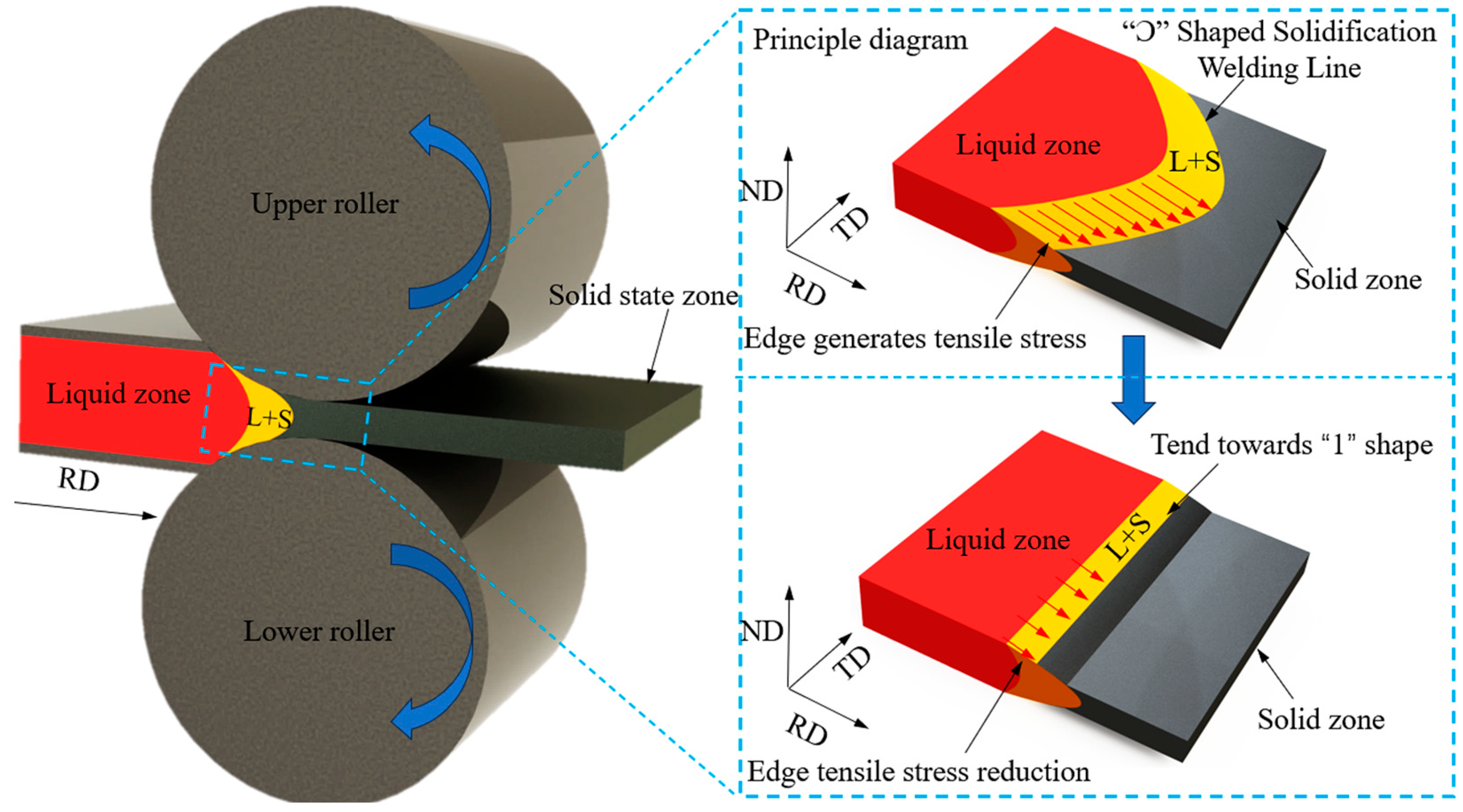
Figure 1. Solidification weld line tends to “1”.
Machines 14 00245 g001
Figure 2. Coil arrangement in roller.
Machines 14 00245 g002
Figure 3. Coil arrangement in roller; model parameters of the casting–rolling zone.
Machines 14 00245 g003
Figure 4. The material parameters of the simulated magnesium alloy: (a) Specific heat capacity; (b) electrical conductivity; (c) density; (d) latent heat; (e) total viscosity; (f) thermal conductivity.
Machines 14 00245 g004
Figure 5. Magnetic field distribution in casting–rolling zone.
Machines 14 00245 g005
Figure 6. Current density distribution in casting–rolling zone.
Machines 14 00245 g006
Figure 7. Joule heat distribution in casting–rolling zone.
Machines 14 00245 g007
Figure 8. Lorentz force distribution under different magnetic field intensity.
Machines 14 00245 g008
Figure 9. Lorentz force distribution of fluid under magnetic field.
Machines 14 00245 g009
Figure 10. Symmetrical cross-section flow field.
Machines 14 00245 g010
Figure 11. Velocity curve on center line under different magnetic field strengths.
Machines 14 00245 g011
Figure 12. ND center surface flow field corresponding to different magnetic field intensity.
Machines 14 00245 g012
Figure 13. Temperature fields of symmetry and edge.
Machines 14 00245 g013
Figure 14. Temperature curve under different magnetic field intensity.
Machines 14 00245 g014
Figure 15. ND central plane temperature field cloud image and solidified shell under different magnetic field strengths.
Machines 14 00245 g015
Figure 16. Temperature field and α variation across plate width.
Machines 14 00245 g016
Figure 17. Lorentz force distribution under different magnetic field frequencies.
Machines 14 00245 g017
Figure 18. Flow field in casting–rolling zone under different magnetic field frequencies.
Machines 14 00245 g018
Figure 19. Lorentz force distribution and principle of eddy change.
Machines 14 00245 g019
Figure 20. Velocity curve on center line under different magnetic field frequencies.
Machines 14 00245 g020
Figure 21. Changes in flow field of ND center surface in casting–rolling zone under different magnetic field frequencies.
Machines 14 00245 g021
Figure 22. Temperature field in casting–rolling zone under different frequencies.
Machines 14 00245 g022
Figure 23. Temperature curve on the line under different magnetic field frequencies.
Machines 14 00245 g023
Figure 24. ND central plane temperature field cloud image and solidified shell.
Machines 14 00245 g024
Figure 25. Changes in the solidification welding line and α under different magnetic field frequencies.
Machines 14 00245 g025
Figure 26. Temperature curves at different magnetic field intensities and frequencies.
Machines 14 00245 g026
Table 1. Casting–rolling process parameters.
ParameterValueParameterValue
Roller diameter/mm880Roller length/mm400
Roller gap height/mm5Convection temperature/°C80
rolling speed/(m/min)3Coefficient of heat transfer/(W/(m2·K))5500
pouring temperature/°C680Model total length/mm84
Table 2. Magnetic field parameters.
ParameterMagnetic Field Intensity/TField Frequency/Hz
Value00
0.128
0.238
0.498
0.331
0.338
0.3315
0.3320
Disclaimer/Publisher’s Note: The statements, opinions and data contained in all publications are solely those of the individual author(s) and contributor(s) and not of MDPI and/or the editor(s). MDPI and/or the editor(s) disclaim responsibility for any injury to people or property resulting from any ideas, methods, instructions or products referred to in the content.