


Abstract
Parameter estimation plays an important role in improving the accuracy, control, and diagnostic performance of mechanisms, particularly in parallel mechanisms such as the Stewart platform, which are increasingly used in high-precision automation, advanced manufacturing, and machine-centric applications. This paper presents a multibody–based framework for generalized dynamic modeling and inertial parameter estimation of parallel robotic manipulators, demonstrated on the DeltaLab-SMT EX800 Stewart platform. A systematic constrained multibody dynamic formulation is developed using an iterative kinematic–dynamic coupling scheme to compute generalized coordinates and their time derivatives under prescribed motion trajectories. The proposed identification manifold is experimentally validated on the physical test rig, in which the platform motion is executed via the control/DAQ system, while inertial measurements are acquired using an external 6-axis motion sensor to obtain direct acceleration data from the moving platform. Platform acceleration measurements are mapped through the inverse dynamics of the multibody model to derive the corresponding generalized forces, providing a practical and cost-effective alternative to direct force measurement with transducers. A Kalman filter is subsequently employed to combine the measured and the model-predicted data, yielding optimally filtered estimates of the inertial coordinates for accurate parameter identification. Inertial parameters are estimated using particle swarm optimization and bench marked against a gradient-based Levenberg–Marquardt approach, with comparison in terms of convergence behavior, robustness, and estimation accuracy. The results support the proposed framework as a measurement-informed benchmark methodology for parameter estimation of parallel manipulators.
1. Introduction
The optimal design of Stewart platforms has attracted considerable attention because of the strong coupling between geometric parameters and dynamic performance. In multibody dynamics (MBD) formulations, the platform dynamics is described by a set of nonlinear kinematic constraints and differential algebraic equations (DAEs), which enable accurate prediction of actuator forces, velocities, and power requirements under prescribed motion trajectories. Optimization techniques integrated with multibody models provide a systematic framework for tuning design parameters, such as geometric and inertial parameters, to improve dynamic performance while satisfying workspace and motion constraints. By formulating objective functions directly in terms of multibody derived quantities, allows the to explicitly account for inertial effects, constraint reactions, and mechanical coupling that are often neglected in kinematic or quasi static analyses.
The analysis and optimization of multibody systems (MBS) [1], was handled in several studies from different perspectives. Petra [2] reformulated the multibody dynamics integration step as a quadratic programming problem using an optimization-based approach which allowed the use of efficient convex optimization solvers to compute the next state of the system. A review study conducted by Gufler [3], introduced an organized gradient-based optimization research of dynamic mechanical systems, concluded that gradient-based methods combined with analytical sensitivity analysis offer a more efficient alternative. The adjoint variables method also is a gradient-based optimization technique [4], the key difference in this method being that it studies an equivalent system of equations to the original system that could be implemented to reduce the computational complexity present in large system models. Such studies could be found in [5,6,7,8], and the later approach [8] developed an optimization methodology based on discrete adjoint variables for dynamic flexible MBS, applied to multiple numerical examples of MBS consisting of flexible and rigid bodies. To demonstrate the ability to compute accurate sensitivities with a reduced computational cost while maintaining accuracy and enabling practical optimization over large design spaces. The work presented in Ghandriz [9] defined a methodology for structural topology optimization within flexible MBD with respect to design variables based on density-based topology optimization. The sensitivities of the dynamic performance measures in this study were computed using analytical gradient-based methods, allowing the structural design to be optimized directly under realistic dynamic load. Another topological optimization of the Stewart platform that employed the density-based topology optimization method presented by Zhu et. al. [10]. Another optimization study focusing on the structural characteristics and force parameters of a Stewart platform is presented in [11]. Applications that utilize the Stewart platform, and parallel mechanisms to perform specific tasks should incorporate an optimization study to satisfy application-specific performance requirements, such as vibration control [12,13] and trajectory control [14].
The literature also presents studies that have applied optimization techniques to multibody dynamics (MBD) models primarily in rigid-body case studies. Shehata [15] proposed a systematic parameter estimation procedure for the MBD model of the D3S-800 Delta robot. The approach employed the parameter estimation module in MATLAB Simscape to identify unknown dynamic parameters. The resulting MBD model was implemented and verified within the Simscape environment, demonstrating consistency with the measured behavior of the physical system. Shahbazi [16] employed the PSO algorithm to optimize the dynamic design of a Stewart UPS-type platform by minimizing the maximum actuator velocity and the maximum actuator force, both of which are directly associated with the power consumption of the actuator and mechanical load. The study formulated detailed kinematic and dynamic models using a minimal coordinate representation derived from the loop-closure approach. Motion performance requirements were explicitly defined in terms of workspace boundaries, prescribed velocities, and acceleration profiles, enabling the evaluation of actuator demands along representative trajectories. Tao [17] presented a comparative study employing a genetic algorithm and a neural-network-based approach to achieve trade-offs between the defined optimization objectives. Kong [18] and Zhu [19] employed machine learning algorithms to model the kinematics and trajectory tracking of the Stewart platform. This paper proposes a generalized MBD framework intended as a benchmark for optimization problems in multibody systems. The framework is demonstrated on a six-axis Stewart platform using the DeltaLab EX800 [20] as a physically realistic and experimentally relevant case study. Other studies dealt with the optimization problem of the Stewart platform in its minimal coordinate representation for optimum control, maximization of the workspace, and tracking of the following objectives [14,21,22,23].
The Aim of this work is to formulate a derivative-free optimization strategy, such as particle swarm optimization (PSO), as an alternative to the gradient-based methods within the same DAEs for machine design procedures using multibody dynamics (MBD) formulations. The application of PSO in MBD-based optimizations is motivated by the limitations of gradient-based methods in large-scale and highly nonlinear MBS, where analytical sensitivity is difficult or computationally unobtainable. In such cases, metaheuristic methods such as PSO offer a viable and robust alternative by eliminating the need for explicit gradient computation.
2. Constrained Multibody Dynamics
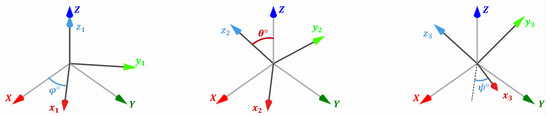
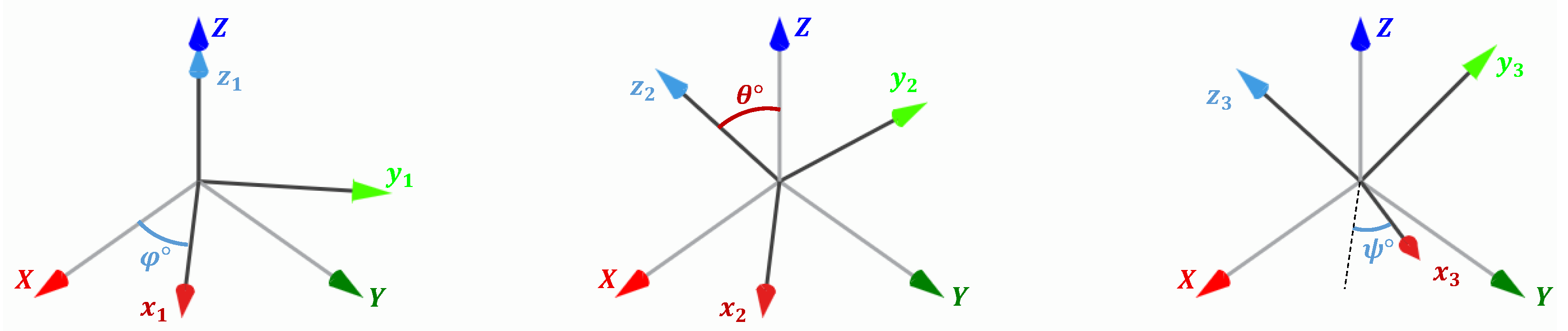
The analysis of constrained MBS involves modeling assemblies of bodies interconnected by kinematic constraints that limit their relative motion. These constraints, which include joints and prescribed motions, define the system’s independent degrees of freedom (DoFs) and enforce specific geometric relationships of bodies. Formulating the equations of motion (EoM) under these constraints provides a systematic framework for studying the system’s kinematic and dynamic behavior. Defining a generalized coordinate vector of the rigid body Equation (1) in spatial mechanics, using the redundant formulation method, the constraints of the system could be written as in Equation (2), such that , and correspond to translational and rotational coordinates, respectively. In this framework, the vector of rotational coordinates is formulated using Euler angles orientational parameters, such that represents the rotational sequence about the current ZXZ axes, as illustrated in Figure 1.
Figure 1.
The ZXZ Euler-Angles rotation convention.
A constrained MBS is characterized by a set of constraint equations, with the size of the constraints denoted by , and a total of generalized coordinates . In general, ; however, when specified trajectories are imposed on the system, the remaining DoFs become fully defined. Under such conditions, the kinematic problem of the multibody system can be solved explicitly, allowing the generalized coordinates and their higher-order derivatives to be computed using the following equations [24]:
Such that is the Jacobian matrix Equation (4) of the constraints vector Equation (2) with respect to the system’s coordinates. The case of a kinematically driven system could be solved iteratively in Equation (5) by introducing Newtonian finite differences to lie within an acceptable tolerance , typically on the order of , and simultaneously satisfy the system constraints given in Equation (2).
The dynamics of the multibody system following this approach are obtained from the EoM of multibody dynamics, which are derived using the Euler–Lagrange formulation based on the system Lagrangian, defined as the difference between kinetic and potential energies. Kinematic constraints are incorporated through appropriate constraint enforcement techniques, such as Lagrange multipliers [25,26]. Once the coordinates and their derivatives are computed as in Equation (6), the MBD model reduces to an algebraic problem to solve for as illustrated in Equation (7), such that all other dependencies, including the mass and Jacobian matrices, become fully defined.
The calculated Lagrange multipliers correspond to the constraint reaction forces associated with the enforced kinematic constraints [27,28]. The generalized forces associated with the coordinates of the system are obtained using the following relation:
The Lagrange multipliers represent numerical values corresponding to the reaction forces associated with the imposed kinematic constraints. These constraint forces play an essential role in the dynamic analysis of MBS, as they ensure constraint satisfaction throughout the motion. Although the multipliers are defined in constraint space, their contribution to the system dynamics can be mapped to the generalized force space through the transpose of the constraint Jacobian. Consequently, the constraint reaction forces are not prescribed or computed independently but are obtained as part of the solution of the constrained EoMs.
3. Multibody Model of Stewart Platform
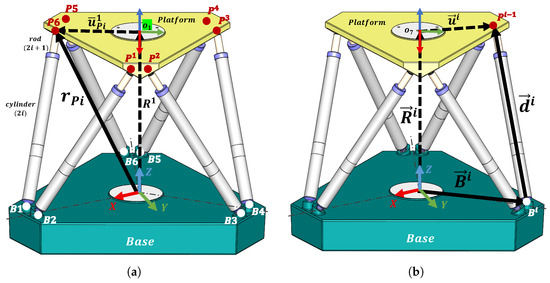
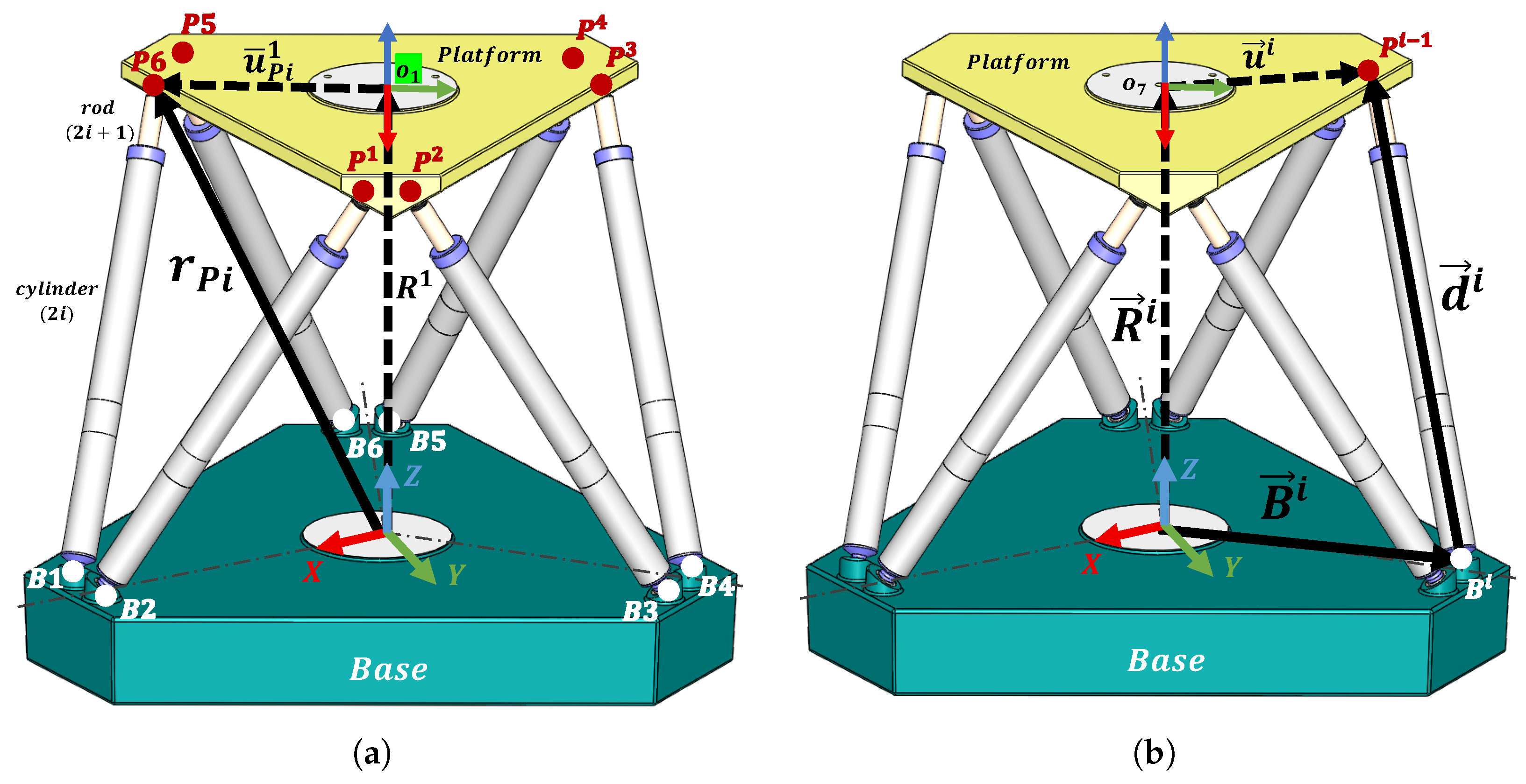
Figure 2a illustrates the MBD formulation of the Stewart platform, which results in a redundant generalized coordinate representation of the system. This formulation is conceptually distinct from the loop-closure approach shown in Figure 2b. While the majority of Stewart platform optimization studies employ the widely used loop-closure methods [29], the multibody dynamics (MBD) formulation provides a more versatile framework by explicitly preserving all system coordinates. This redundancy facilitates the optimization of a wider range of system parameters and enables seamless integration with optimization algorithms.
Figure 2.
Stewart’s mathematical models. (a) Stewart multibody formulation. (b) Stewart loop-closure kinematics.
The Stewart platform, modeled as a multibody system (MBS), consists of six identical kinematic chains comprising a total of thirteen rigid bodies, with generalized coordinates excluding the fixed base in the Euler angles representation. Each chain i includes a cylinder () and rod (), connected by a prismatic joint imposing five constraint equations. The chain i is also connected to the fixed base via a universal joint and to the moving platform via a spherical joint, resulting in a total of twelve constraint equations per chain. Consequently, the entire system has constraint equations, leaving six independent degrees of freedom corresponding to the motion of the platform. To solve the system kinematically, the motion of these six free degrees of freedom must be defined. In this formulation, the Stewart platform corresponds to a universal-prismatic-spherical (UPS-type) configuration.
By the attachment of a local frame to the moving platform allocated in its CG, the moving platform initially allocated at height m, and initial rotation angle along and about the Z-axis direction the global frame which is attached to the CG of the fixed base, respectively. Both of base and platform placement points , and follows a symmetry procedure about virtual axes, equally form the angle to each other with an initial axis coincide with the x-axis of each body. The parametric equations that allocate these points are indicated below, such that , and m, are the base and platforms circle radii which enclose each of the six points. Angles , and are the half angle between each two adjacent close points of base and platform respectively, forming parametric points as shown below:
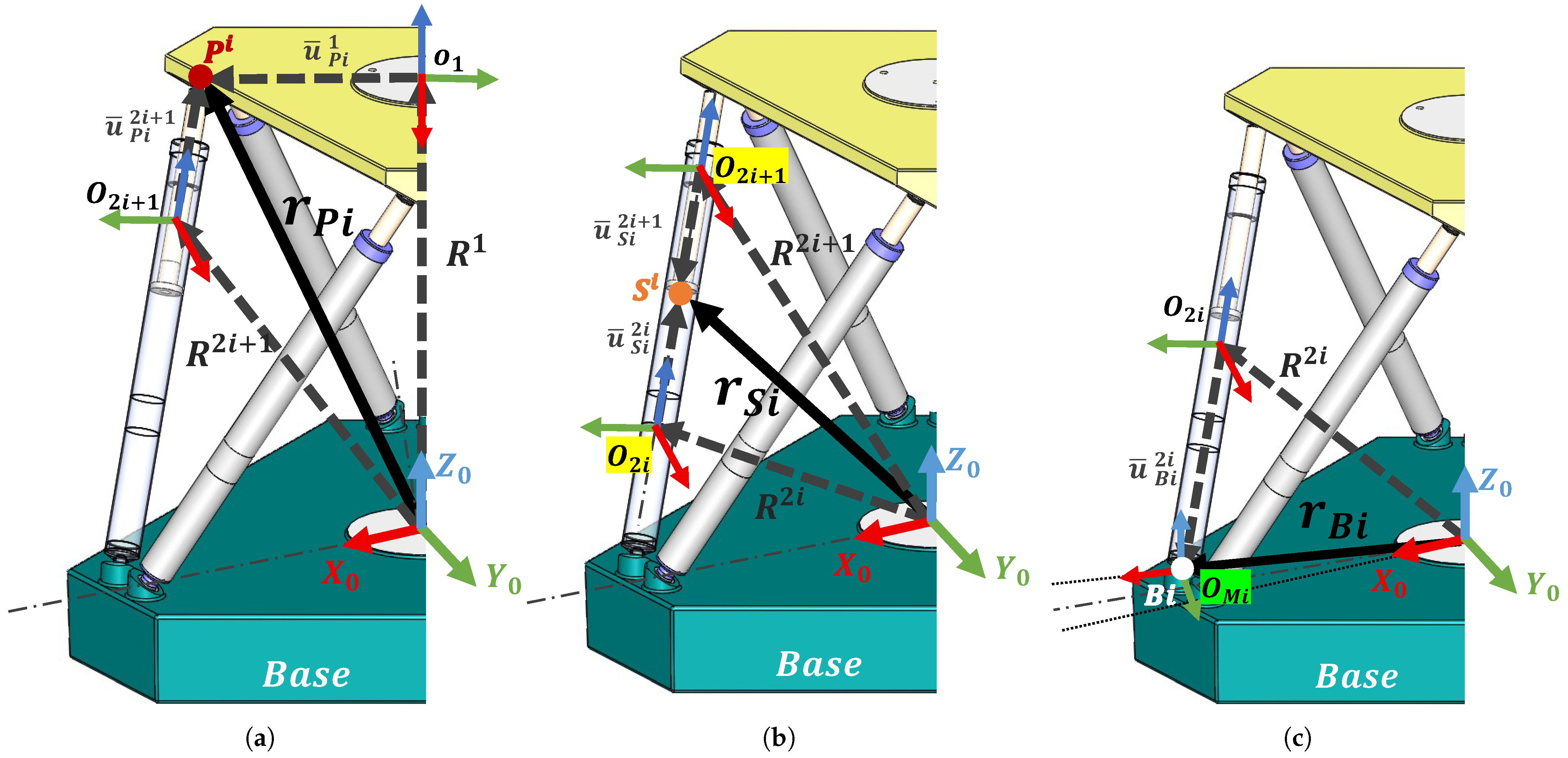
An arbitrary point P, indicated in Figure 2a, can be described in the multibody system (MBS) formulation as shown in Equation (11). Here, , and represent the global and local coordinates of point P, respectively, while denotes the transformation matrix of the corresponding body, defined using the ZXZ Euler angle convention described above. Using this annotation, the different joints in the system can be mathematically modeled, with the symbols , , and representing universal, prismatic, and spherical joints, respectively.
Figure 3a presents the formulation of a spherical joint Equation (12) which could simply be modeled as follows.
Figure 3.
Kinematic constraints formulation. (a) Spherical joint. (b) Prismatic joint. (c) Universal joint.  x-axis,
  y-axis,
  z-axis.
x-axis, y-axis, z-axis.
The formulation of a prismatic joint Equation (13), presented in Figure 3b, could be derived as follows, provided that the rotation matrices of the two bodies are identical with local frames attached to the CG of each body.
Such that;
A similar approach to that used to calculate the orthogonal triad in [24], was followed to produce , and vectors, not to formulate redundant constraint equations.
The formulation of a universal joint Equation (15) is accomplished by attaching a marker/frame to the base at point , so that its x-axis coincides with the axis passing through the point out from the origin of the global frame system, which implies a rotation Equation (9) about the global Z-axis, see Figure 3c. The other marker was attached to the CG of such that its local z-axis aligned with the instantaneous axis of the prismatic constraint of , a procedure explained below Equation (16).
The following procedure uses the inverse kinematics of the loop-closure method Figure 2b to determine the instantaneous direction of the actuation axis of the prismatic joint, this direction is assigned as the local z-axis for both , and . The cross product of this axis with the local x-axis of the frame system results a common perpendicular axis for both of them. Its remarkable to note here that all the local axis produced are represented in the global frame for the algebraic consistency. This transformation of vectors from local to global frames uses the relation , so that the global representation of vectors uses capitalized letters.
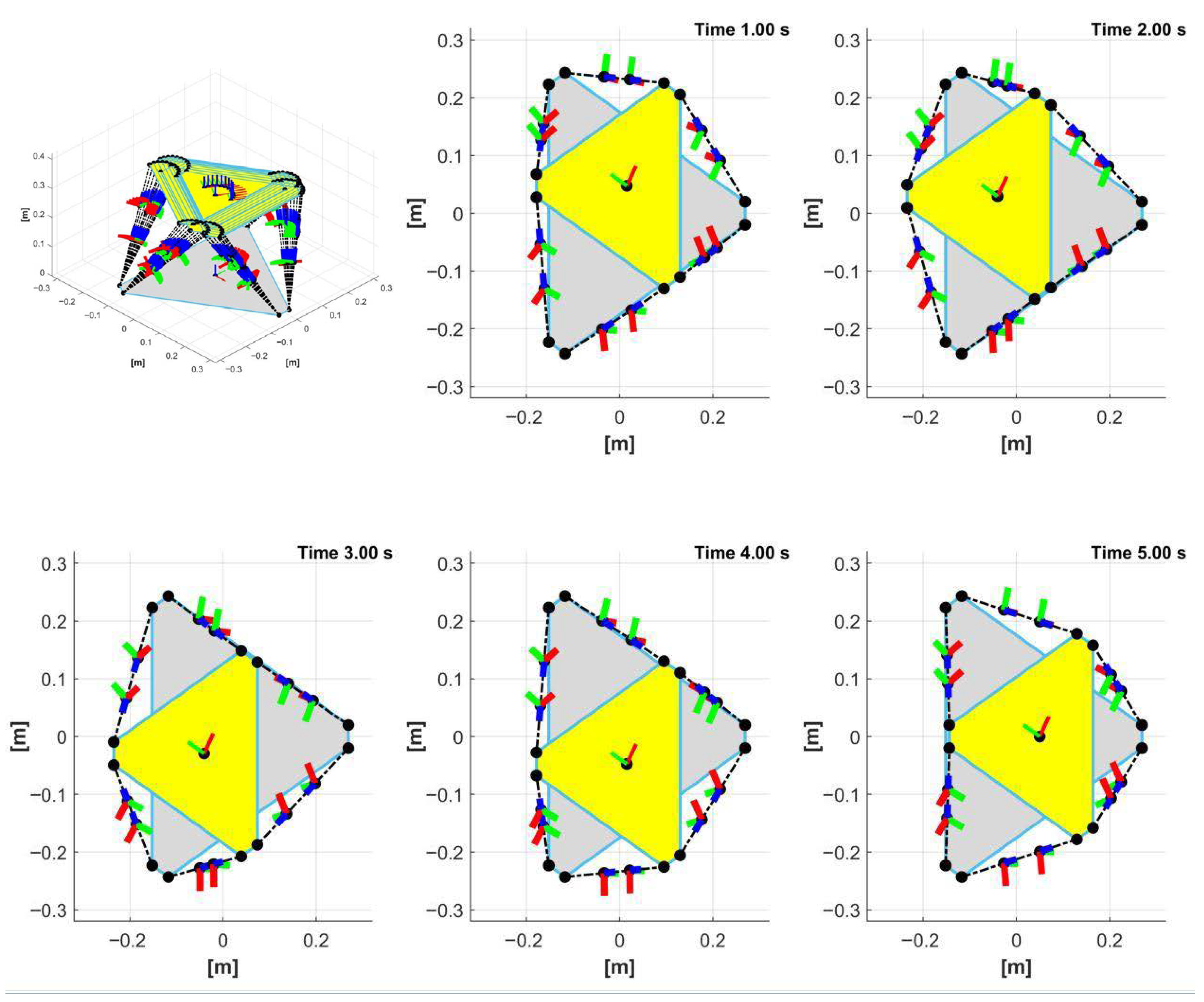
Figure 4 illustrates the simulation of the kinematically driven system, in which the prescribed motion of the platform follows a circular trajectory with the specifications defined below Equation (17). The verification of the model implementation is presented in subsequent sections, where the numerical results show excellent agreement with the experimental data. Constraint violations remain negligible throughout the simulation and do not exceed .
Figure 4.
Simulated Stewart dynamics x-axis, y-axis, z-axis.
x-axis, y-axis, z-axis.
4. Experimental Setup of DeltaLab-SMT EX800 Platform
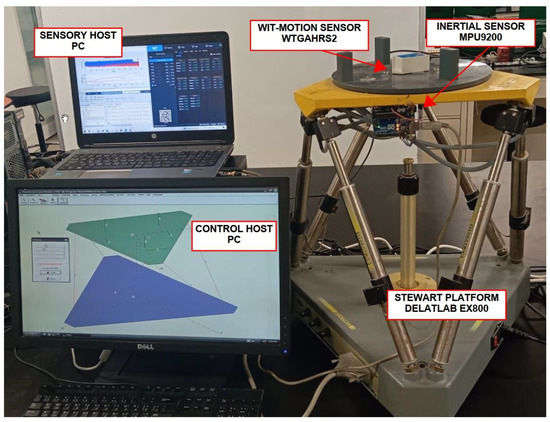
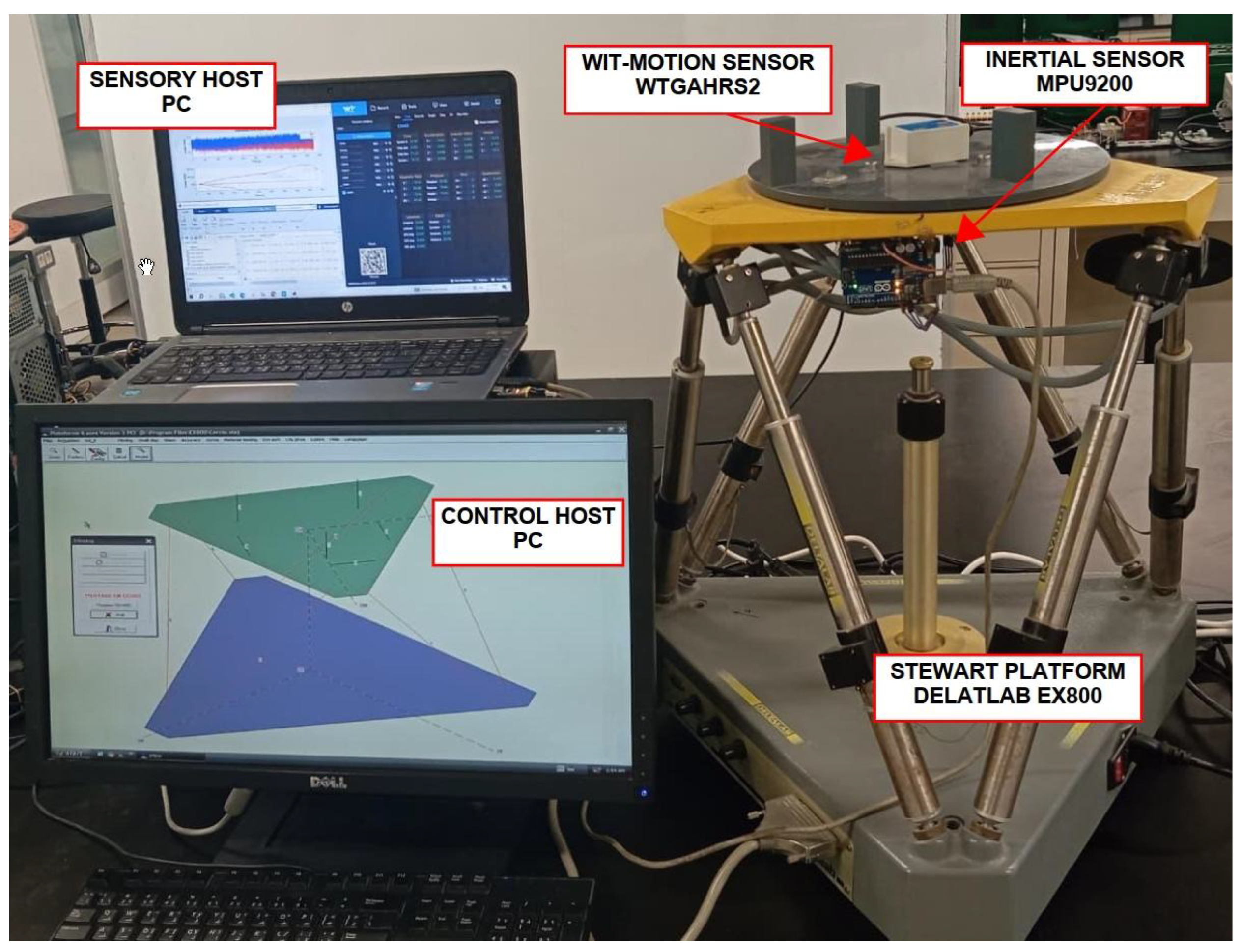
This section presents the experimental setup of the Stewart platform. As illustrated in Figure 5, the DeltaLab EX800 system is connected to a host PC through a PCI3120 data acquisition with a manufacturer provided interface installed on the host PC to control and perform the desired motion trajectories. In addition to the encoders included that measure the distance traveled by each actuator, we provided an external 6-axis motion sensor of type Wit-Motion WTGAHRS2 [30] for direct Stewart output measurement purposes. The Wit-Motion sensor interface is controlled via another PC to obtain and record the desired measurement cycles.
Figure 5.
Experimental setup of DeltaLab-SMT EX800 6-axis platform.
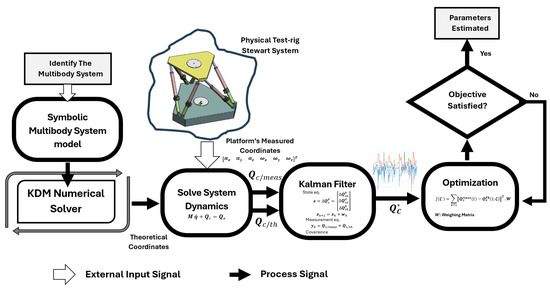
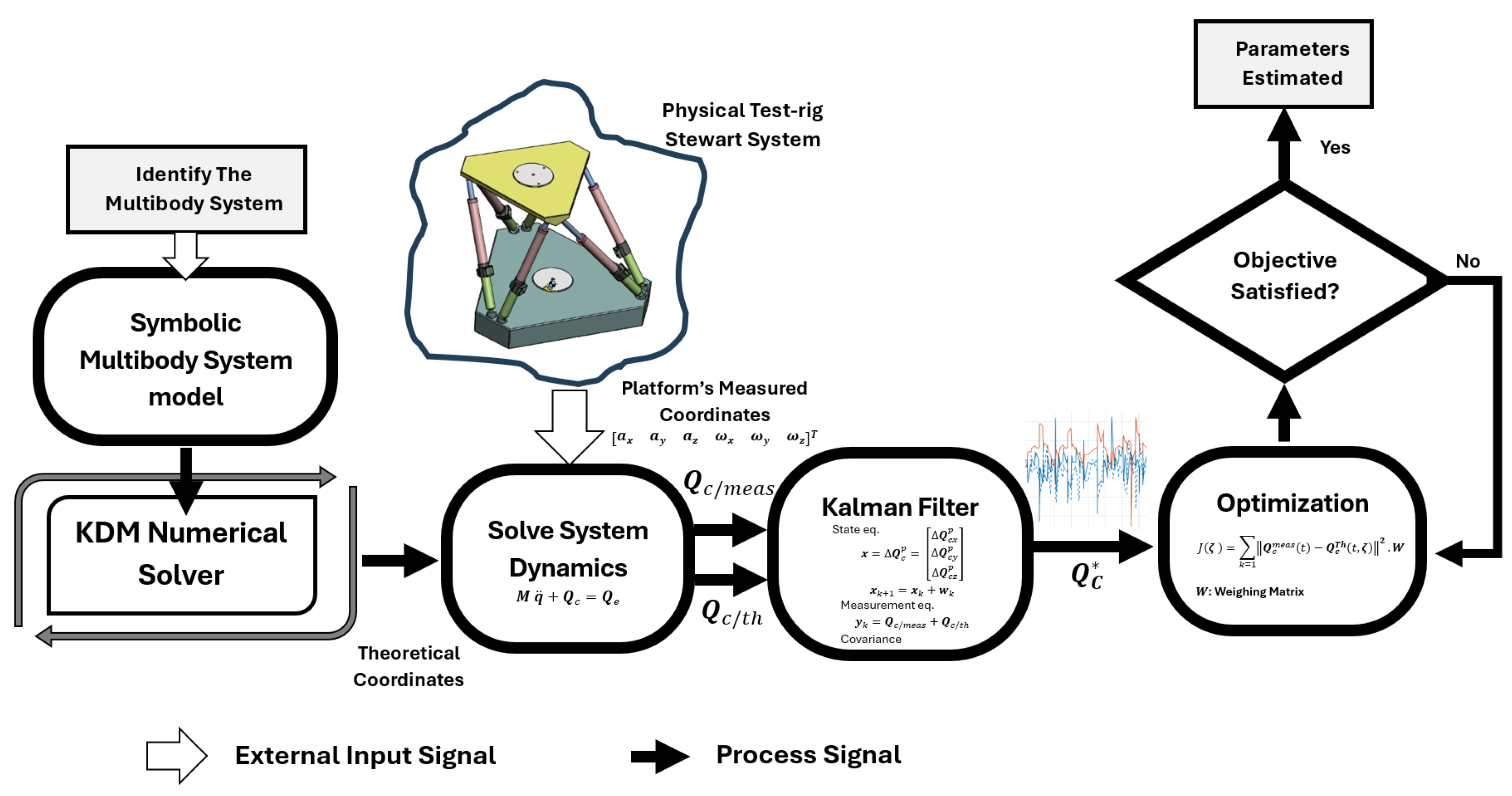
The rest of this paper would go through the procedure illustrated in Figure 6. In this chart, once the MATLAB R2024a implementation presented in Section 2 and Section 3 is verified, the inverse dynamics–based estimation procedure Equations (7) and (8) was employed to compute the assumed measured and theoretical generalized forces of the Stewart platform, denoted by , and , respectively. The procedure uses the measured platform acceleration and the corresponding theoretical acceleration . This approach was adopted as a practical alternative to direct force measurement because of the inaccessibility of force transducers. Subsequently, a Kalman filter is employed as a sensor fusion algorithm to obtain optimal estimates of the platform’s inertial coordinates. These estimates are then used to compute the corresponding generalized forces, denoted by , which considered as the output performance for the parameter optimization procedure.
Figure 6.
Multibody-based parameters optimization.
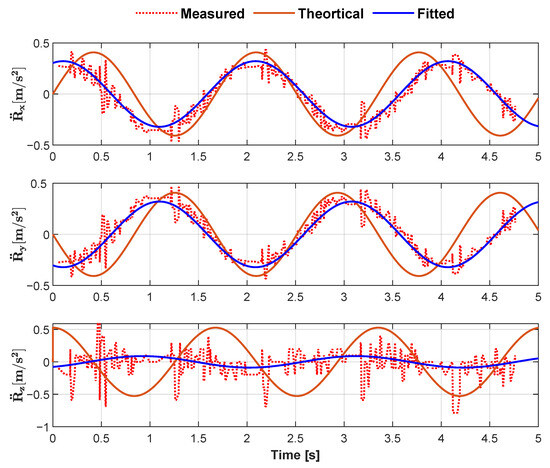
Figure 7 illustrates the verification step of the Platform’s acceleration that exhibits an acceptable agreement between the measured and theoretical accelerations. This correspondence was evaluated over a 5-s simulation of the specified platform ocean wave trajectory, with a frequency [rad/s] described in Equation (18), The figure shows that closely follows the measured data and aligns well with the sine waves fitted to the measurements.
Figure 7.
MBD model verification.
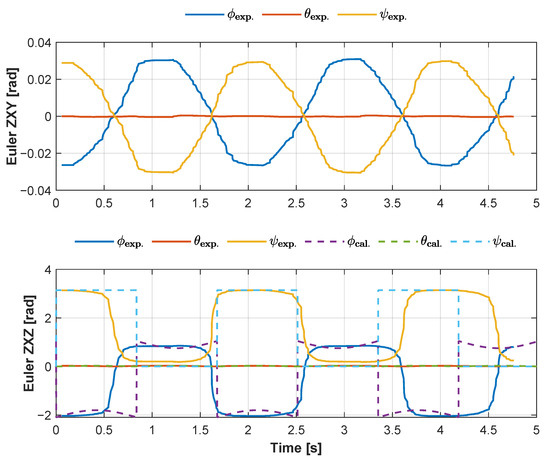
As a practical consideration, the PC interface of the DeltaLab EX800 Stewart platform represents the orientation of the prescribed trajectory in Equation (18) using ZXY Euler angles about the local axes. Therefore, a spatial transformation of the trajectory is necessary to ensure consistency with the ZXZ Euler angles convention adopted in this framework. The transformed trajectory showed good agreement with the angular measurements obtained from the employed inertial sensor. Figure 8 compares the experimentally measured ZXY Euler angles with the transformed ZXZ angles and verifies their agreement with the theoretically calculated values.
Figure 8.
Verified transformation from ZXY to ZXZ Euler conventions.
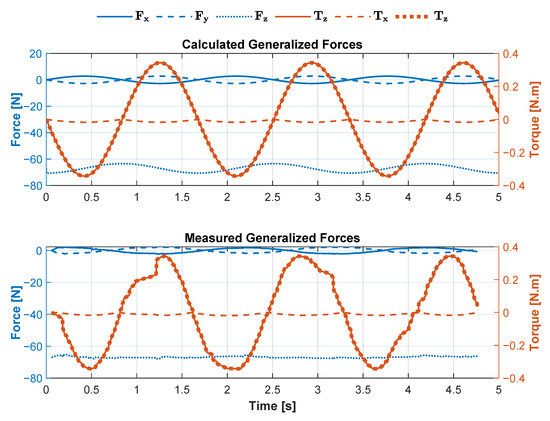
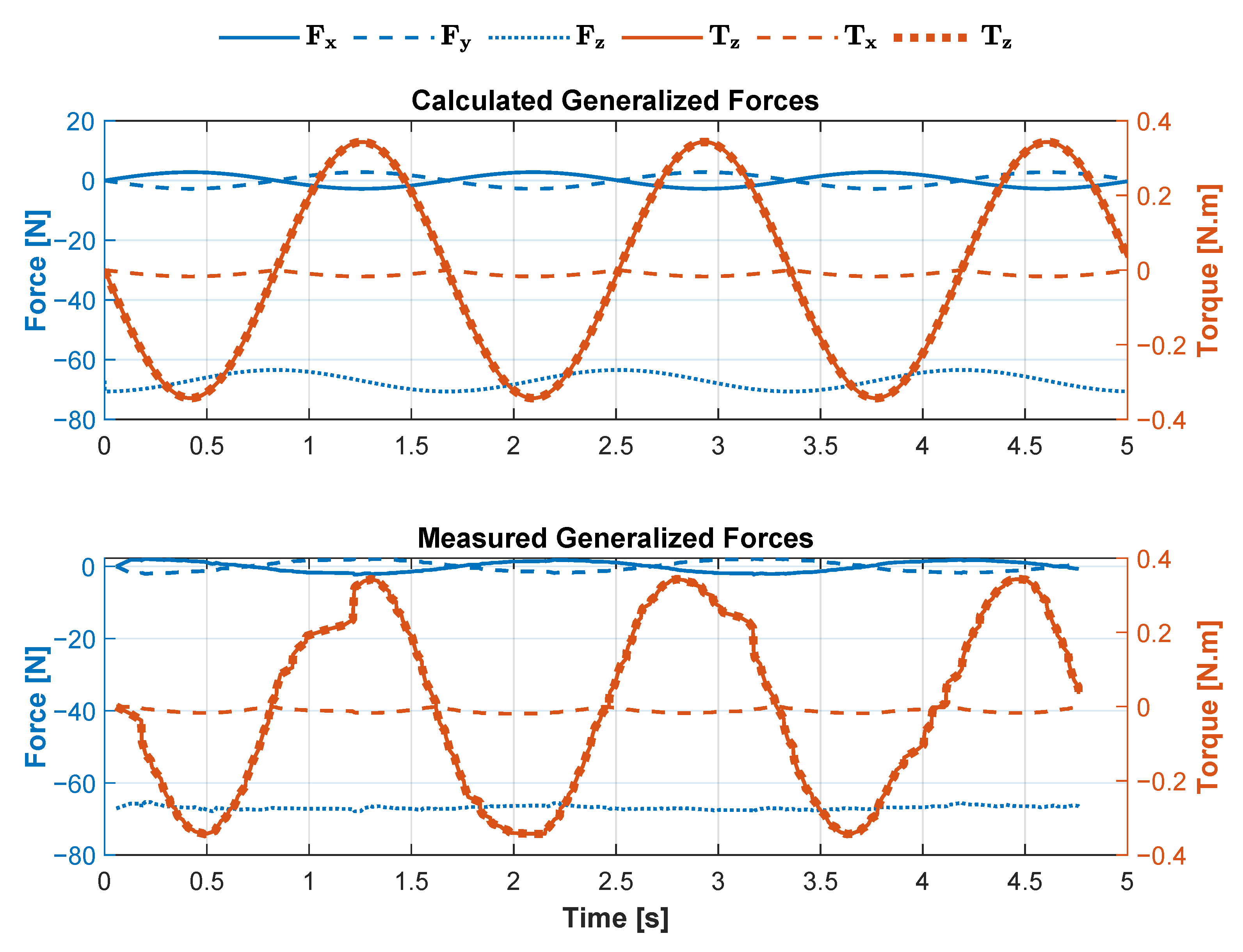
A Kalman filter [31] is utilized to fuse the measured and theoretical acceleration data to obtain the best estimate of the generalized forces. As the Kalman filter uses prediction and update calculations, the adapted form which could be applied to the generalized forces algebraic equations is indicated below Equation (19). Such that the state vector of the filter in this case is the vector of the generalized Cartesian forces of the platform. The process and measurement covariance matrices that are denoted , and , are initially assumed to be identity matrices of multiplied by factors and , respectively. The estimated resulting forces, which would be used in the subsequent optimization sections, is then obtained and shown in Figure 9.
Figure 9.
Calculated and measured platform’s generalized forces.
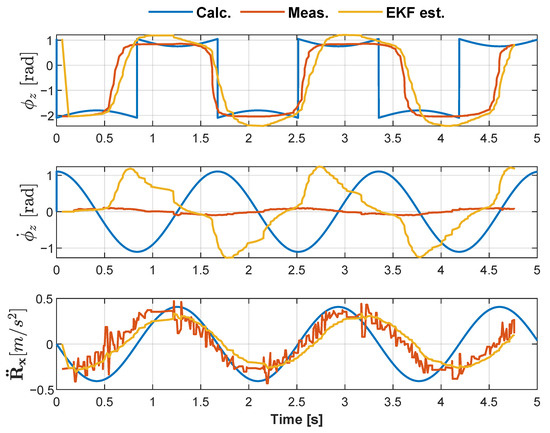
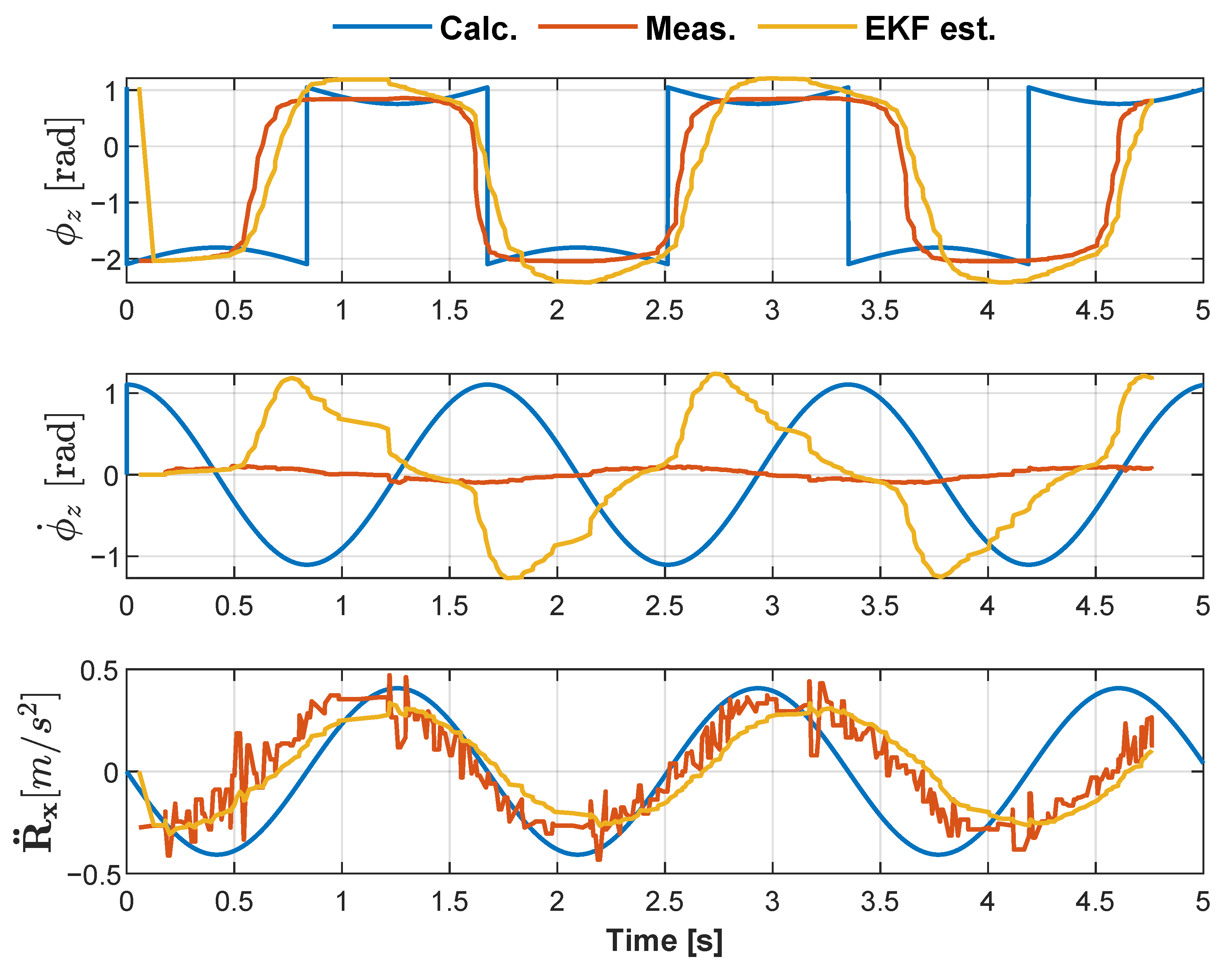
Figure 9 presents the measured and model-predicted generalized forces corresponding to the specified accelerations. Figure 10 shows the optimally estimated coordinate values obtained through extended Kalman filter–based data fusion. These estimated coordinates are subsequently used to compute the generalized forces reported in Figure 9.
Figure 10.
Coordinate measurements fused using an Extended Kalman Filter (EKF).
5. Sensitivity-Based Optimization Algorithm
The performance of constrained systems under specified motion conditions can be evaluated from the behavior of the coordinates and their higher-order derivatives, enabling the estimation of design parameters required to satisfy prescribed performance criteria. Forward sensitivity analysis incorporates the direct differentiation of the coordinate of interest with respect to the required design parameters. A key advantage of sensitivity analysis in MBS, particularly in redundant formulations, is that it provides explicit mathematical expressions for all system coordinates, allowing the sensitivities of any number of coordinates with respect to any set of parameters to be assessed as needed.
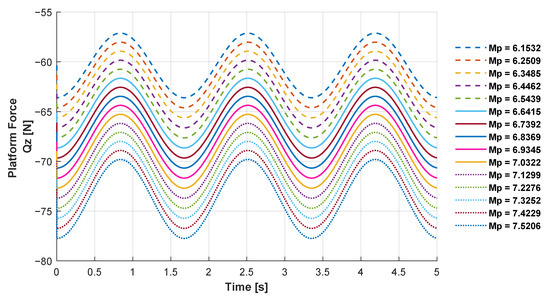
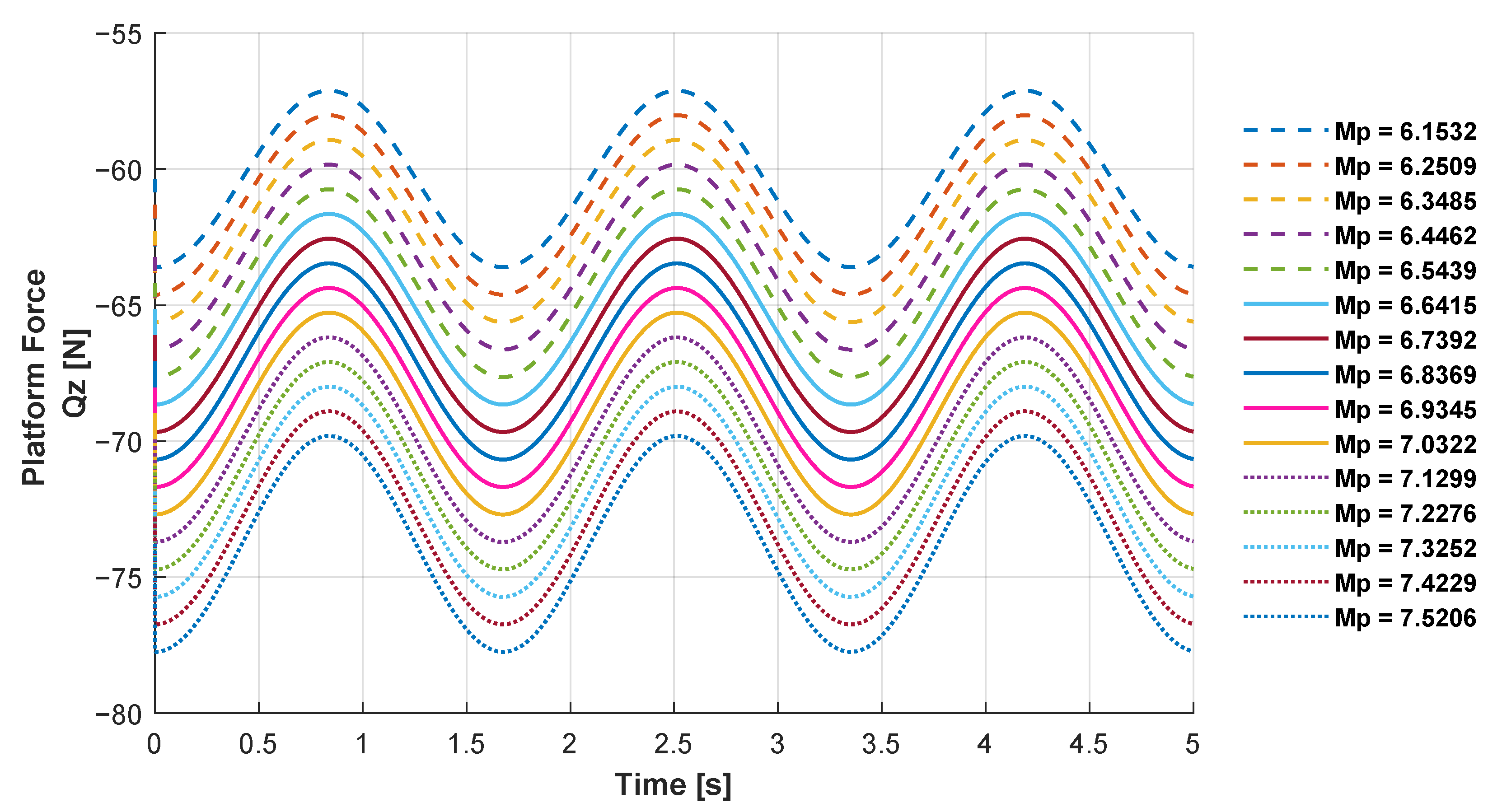
Figure 11 illustrates the finite-difference–based sensitivity spectrum Equation (21) of the Cartesian vertical force acting on the Stewart platform, where , the sensitivity parameter (SP) in this case, is the mass of the moving platform assigned below and above the true reported value in Table A1. This method provides smooth estimates of the underlying continuous direct sensitivities, which makes them suitable for use in gradient-based optimization methods. Figure 11 also, illustrates the effect of varying the parameter of interest () on the performance measurement output, specifically the generalized force in the Z-direction of the platform. This illustrates the mechanism of the gradient-based optimization which iteratively adjusts the parameter values to minimize the residuals between the model-predicted outputs and the measured output performance. The application of this procedure [32] to the generalized force vector leads to the following algorithm.
Figure 11.
Platform’s sensitivity to the mass parameter .
The time differential of the generalized force vector Equation (20) leads to the following system of differential algebraic equations. Such that is the sensitivity matrix, which is the Jacobian of Equation (20) relative to of SPs.
The numerical solution of the augmented system Equation (26) enables the simultaneous computation of both the generalized forces and their corresponding sensitivities. This formulation allows gradient-based optimization methods to satisfy the measurement performance/objective function , which quantifies the effectiveness with which a selected set of parameters reproduces the desired system behavior [6]. The performance index is employed here as a weighted multi-dimensional least squares method as given in Equations (27) and (28), such that .
The Levenberg–Marquardt method [33,34], was used as the optimization framework based on the gradient formulation Equation (29) to estimate the best-fit parameters. By introducing the residual vector and the gradient of the objective function , the optimization algorithm could be expressed in the following form.
where, denotes the Jacobian of the residual vector , and is a dynamic convergence factor that should be reduced when a step successfully decreases the cost function, balancing convergence speed with stability.
The implementation of this method on the Stewart platform is performed using MATLAB using an initial guess of the SPs , which corresponds to . We used equally weighed parameters such that , and a convergence rate .
6. Particle Swarm Optimization Algorithm
Particle Swarm Optimization (PSO) is a population-based stochastic optimization technique inspired by the collective behavior of groups of birds or fish [35]. In PSO, a set of candidate particles explores the search space which in our case represents the initial guess of the parameters . This stochastic process iteratively updates their positions based on individual experience and collective knowledge. In this algorithm, an initialized swarm of particles with random positions and velocities and , respectively. Suppose that k denotes the iteration and i represents an individual particle in that iteration. The exploration is aimed by the minimal objective function calculated from the entire population present in the current iteration; therefore, the other poisons and particles’ velocities would be updated in this direction according to the following procedure [36,37].
The best global position is determined as the position that achieves the minimum residual error Equation (27) within the predefined search space.
The algorithm updates the particles on the basis of a comparison with their objective function values from the previous iteration as follows.
The advantage of employing PSO in multibody dynamics applications is due to its ability to handle nonlinear, high-dimensional, and non-convex optimization problems without requiring gradient information. In MBD, system behavior is often governed by complex coupled equations, discontinuities, and constraints, making traditional gradient-based methods difficult or computationally expensive. The Population-based, stochastic search method similar to PSO allows simultaneous exploration of multiple regions of the solution space, providing robustness against local minima and flexibility in incorporating constraints. In addition, its straightforward implementation and natural parallelism make it suitable for parameter identification, trajectory optimization, and model calibration in complex mechanical systems.
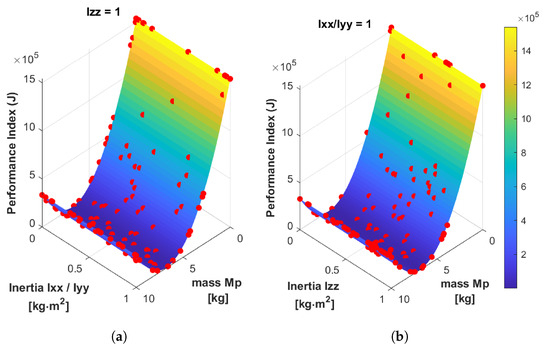
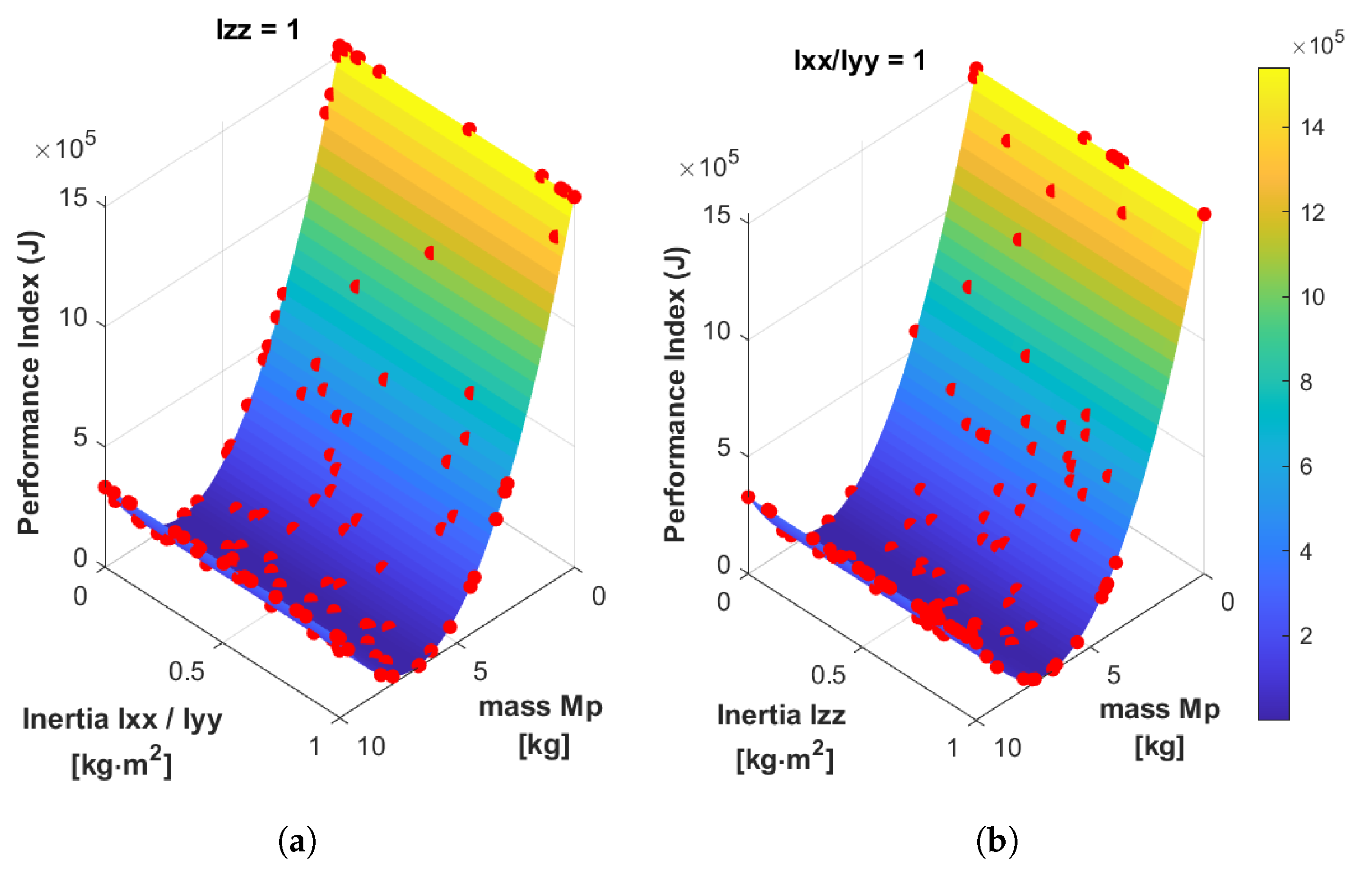
Figure 12 shows a population of thirty particles to optimize the inertial parameters of the Stewart platform, the optimization used the same motion criteria described in Equation (18). To implement this algorithm, we used the built-in MATLAB Optimization Toolbox subroutine particle swarm, such that lower and upper bounds defined as , and respectively correspond to the inertial parameters . The least squares method defined in Equations (20) and (27) is used as the cost function in this implementation. The SP vector included the inertia component , which is equal to the corresponding component due to geometric symmetry and the selection of the principal axes as the body reference coordinate system. The optimization employs , which implies that visualizing the objective function requires a four-dimensional space that accounts for the three design variables and the corresponding objective function value. As direct visualization of the optimization landscape is restricted to three-dimensional space, accordingly, the presented figure illustrates a two-dimensional sliced surface of the performance index at a constant in Figure 12a, and a two-dimensional sliced surface of the performance index at a constant in Figure 12b as follows.
Figure 12.
Simulation of PSO algorithm. (a) is constant. (b) is constant.
7. Results and Discussion
Based on the optimization methodologies described in Section 5 and Section 6, the inertial parameters of the DeltaLab-SMT EX800 Stewart platform were identified using two distinct optimization approaches.
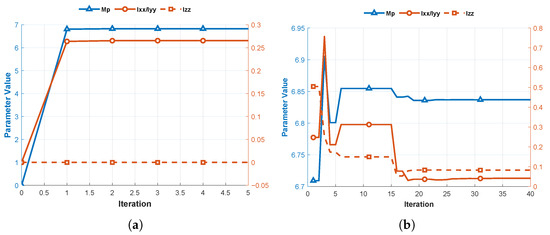
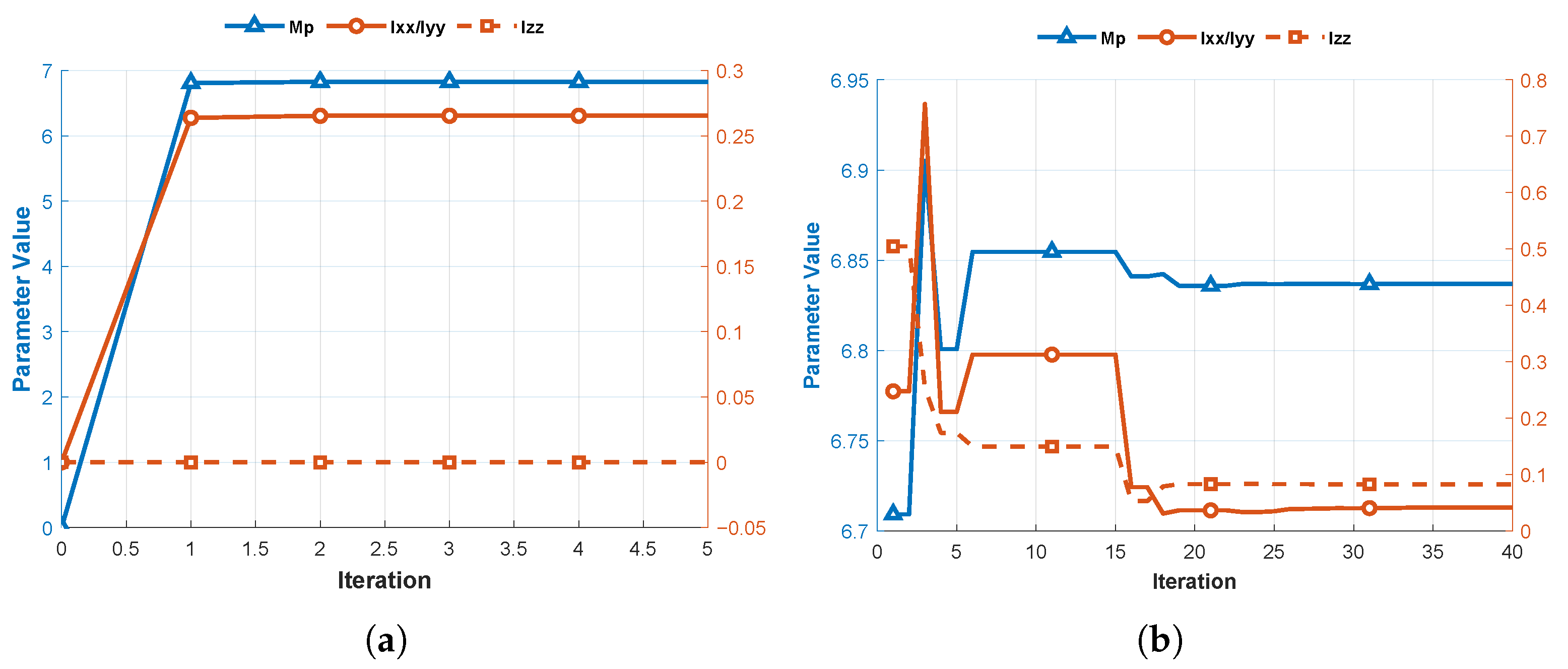
Figure 13 presents a comparison between the two optimization techniques employed. The Levenberg–Marquardt method, illustrated in Figure 13a, demonstrates convergence toward the optimal estimate of the platform mass parameter . However, it was not able to accurately identify the inertial parameters , , and . Based on multiple optimization runs, the algorithm was observed to approach the optimum gradually, which is consistent with the iterative, gradient-based nature of the Levenberg–Marquardt search procedure. On the other hand, the PSO results shown in Figure 13b, exhibit severe and irregular fluctuations in the parameter values, reflecting the stochastic nature of the algorithm. Although PSO required approximately 35 more iterations than the gradient-based method, it ultimately produced parameter estimates that were in closer agreement with the manufacturer specifications summarized in Table A1.
Figure 13.
Iterative optimization. (a) Levenberg–Marquardt method. (b) PSO method.
Starting from the initial values defined for each method, the best parameter estimates were obtained as using the Levenberg-Marquardt method and using the PSO method. For reference, the true parameter values provided in Table A1 are . Those findings are summarized in Table 1 below.
Table 1.
Optimization summary.
These findings highlight an important advantage of using PSO method. Even when there is intentional ambiguity in the measurement of the inertial components of the generalized force vector , the gradient-based Levenberg-Marquardt method failed to move significantly from the initial guess of the ambiguous parameters. In contrast, the stochastic-based PSO exhibited robust performance, effectively exploring the search space and achieving near-optimal values for all parameters included in the objective function.
8. Conclusions
This paper presents an extensive parametric multibody model of the Stewart platform. The model employs the UPS kinematic chain configuration, resulting in free degrees of freedom that satisfy the driving motion criteria for both forward and inverse analyses. The MBD model uses a redundant formulation to determine all system coordinates, higher-order derivatives, associated forces, and constraint reaction forces. The multibody problem is solved iteratively using kinematically driven formulas, followed by the calculation of forces using the general MBD formulation. A simulation is provided to illustrate the accuracy of the motion with respect to the specified driving criteria.
For experimental validation, a DeltaLab-SMT 6-axis Stewart platform was used along with a 6-axis Wit-Motion WTGAHRS2 motion sensor, to obtain direct inertial measurements from the moving platform. These measurements were used to verify the MATLAB implementation of the model, which utilized the Symbolic Toolbox to generate symbolic functions for the presented system. The measured data were also employed to compute the generalized forces associated with the moving platform, providing an economical alternative to force transducers. The resulting measured generalized forces were then fused with theoretical values using a Kalman filter to obtain the best estimates of the generalized forces, which were subsequently used in the optimization methodologies.
Comparative optimization was conducted using two different categories of optimization techniques. Measured forces were employed to estimate the inertial parameters of the moving platform using the Levenberg-Marquardt gradient-based method, including a sensitivity analysis of the generalized forces with respect to variations in mass of the platform. In addition, the inertial parameters were estimated using the stochastic method based on PSO. In both cases, the objective function was defined using a weighted least squares approach. The results showed that both methods produced similar estimates for the mass of the moving platform; however, PSO demonstrated greater applicability in situations where real measurements are not available. Future research is expected to incorporate sensory data from all other bodies and extend the experiment by using all measured coordinates rather than relying solely on measurements from a single body.
Supplementary Materials
The following supporting information can be downloaded at: https://www.mdpi.com/article/10.3390/machines14020218/s1, File S1: readMatData.m; File S2: waves_meter_ range45_omega3.75.mat.
Author Contributions
Conceptualization, methodology, and programming, M.M.E. and A.N.; Data analysis, and experimental validation, M.M.E.; writing—review & Editing, A.N. and M.M.E.; Analysis, and supervision, H.E.-H., H.I. and A.N. All authors have read and agreed to the published version of the manuscript.
Funding
This research received no external funding.
Data Availability Statement
A part of this data was measured by the stated sensor, the files “readMatData.m”, and “waves_meter_range45_omega3.75.mat” are the Supplementary Materials for this data, the files attached are the output data from the inertial sensors used in our study. The other part is the theoretical data presented were generated within the execution of our own developed MATLAB subroutines, which should be executed to obtain this data part.
Acknowledgments
The first author gratefully acknowledges the Ph.D. grant provided by the Egyptian Ministry of Higher Education (MoHE). The author also extends thanks to E-JUST for providing an authentic MATLAB R2024a software package (license number 40586201), which was used for programming the proposed methodologies and simulations. The authors further acknowledge E-JUST for providing access to the DeltaLab Stewart platform system within the Mechatronics Laboratory facilities. During the preparation of this work, the authors used chatGPT 4.0 to enhance the clarity and quality of the academic writing. All content was subsequently reviewed and edited by the authors, who take full responsibility for the final content of the publication.
Conflicts of Interest
The authors declare no conflicts of interest.
Abbreviations
The following abbreviations are used in this manuscript:
| PSO | Particle Swarm Optimization |
| MBS | Multibody Systems |
| MBD | Multibody Dynamics |
| DAEs | Differential Algebraic Equations |
| DoFs | Degrees of Freedom |
| EoM | Equation of Motion |
| SP | Sensitivity Parameter |
Appendix A. Latin & Symbols Vocabulary
| Half-angle between two adjacent base points. | |
| Half-angle between two adjacent platform points. | |
| A sensitivity parameter i. | |
| Vector of sensitivity parameters. | |
| Vector of generalized rational coordinates. | |
| Convergence rate, Levenberg-Marquardt algorithm. | |
| Vector of Lagrange multipliers. | |
| A point local orientation angle. | |
| A point local/global orientation angle. | |
| Initial orientation angle of the platform. | |
| Process covariance matrix. | |
| Measurement covariance matrix. | |
| The objective function. | |
| Gradient of the objective function. |
Appendix B. Inertial Properties of the DeltaLab-SMT EX800 Stewart Platform
Table A1.
Inertial properties of the DeltaLab-SMT EX800 Stewart platform.
References
- Pappalardo, C.M. Dynamic Analysis of Multibody Mechanical Systems. Machines 2024, 12, 626. [Google Scholar] [CrossRef]
- Petra, C.; Gavrea, B.; Anitescu, M.; Potra, F. A computational study of the use of an optimization-based method for simulating large multibody systems. Optim. Methods Softw. 2009, 24, 871–894. [Google Scholar] [CrossRef]
- Gufler, V.; Wehrle, E.; Zwölfer, A. A review of flexible multibody dynamics for gradient-based design optimization. Multibody Syst. Dyn. 2021, 53, 379–409. [Google Scholar] [CrossRef]
- Zhu, Y. Sensitivity Analysis and Optimization of Multibody Systems. Ph.D. Thesis, Faculty of the Virginia Polytechnic Institute and State University, Blacksburg, VA, USA, 2014. [Google Scholar]
- Lauß, T. Optimal Control of Multibody Systems: Using the Adjoint Variable Approach. Ph.D. Thesis, Institut für Mechanik und Mechatronik, TU Wien, Wien, Austria, 2019. [Google Scholar]
- Oberpeilsteiner, S. Parameter Identification in Multibody System Dynamics Using the Adjoint Sensitivity Analysis. Ph.D. Thesis, Institut für Mechanik und Mechatronik, Wien, Austria, 2018. [Google Scholar] [CrossRef]
- Nada, A.A. Simplified Procedure of Sensitivity-Based Parameter Estimation of Multibody Systems with Experimental Validation. IFAC-PapersOnLine 2021, 54, 84–89. [Google Scholar] [CrossRef]
- Ebrahimi, M.; Butscher, A.; Cheong, H.; Iorio, F. Design optimization of dynamic flexible multibody systems using the discrete adjoint variable method. Comput. Struct. 2019, 213, 82–99. [Google Scholar] [CrossRef]
- Ghandriz, T.; Führer, C.; Elmqvist, H. Structural topology optimization of multibody systems. Multibody Syst. Dyn. 2017, 39, 135–148. [Google Scholar] [CrossRef]
- Zhu, D.; Zhan, W. Topology optimization of a 6-DOF spatial compliant mechanism based on Stewart propotype platform. Acta Mech. Sin. 2019, 35, 1044–1059. [Google Scholar] [CrossRef]
- Duyun, T.; Duyun, I.; Kabalyants, P.; Rybak, L. Optimization of a 6-DOF Platform for Simulators Based on an Automotive Driving Simulator Model. Machines 2023, 11, 814. [Google Scholar] [CrossRef]
- Zhang, T.; Gong, X.; Zhang, L.; Yu, Y. A New Modeling Approach for Parameter Design of Stewart Vibration Isolation System Integrated into Complex Systems. Machines 2022, 10, 1005. [Google Scholar] [CrossRef]
- Tătaru, M.; Rus, A.; Vesselényi, T.; Raţiu, M.; Ţarcă, I. Synthesis and Functional Optimization of a Vibratory Machine with a Parallel Mechanism Structure. Appl. Sci. 2025, 15, 4910. [Google Scholar] [CrossRef]
- Silva, D.; Garrido, J.; Riveiro, E. Stewart Platform Motion Control Automation with Industrial Resources to Perform Cycloidal and Oceanic Wave Trajectories. Machines 2022, 10, 711. [Google Scholar] [CrossRef]
- Shehata, M.; Elshami, M.; Bai, Q.; Zhao, X. Parameter Estimation for Multibody System Dynamic Model of Delta Robot From Experimental Data. IFAC-PapersOnLine 2021, 54, 72–77. [Google Scholar] [CrossRef]
- Shahbazi, M.; Heidari, M.; Ahmadzadeh, M. Optimization of dynamic parameter design of Stewart platform with Particle Swarm Optimization (PSO) algorithm. Adv. Mech. Eng. 2024, 16, 16878132241263940. [Google Scholar] [CrossRef]
- Tao, J.; Xu, Y.; Chen, Y.; Cheng, P.; Zhang, H.; Wang, J.; Zhou, H. Multi-Objective Structural Parameter Optimization for Stewart Platform via NSGA-III and Kolmogorov–Arnold Network. Machines 2025, 13, 887. [Google Scholar] [CrossRef]
- Kong, Y.; Wang, Y.; Wang, Y.; Zhu, S.; Zhang, R.; Wang, L. Deep Reinforcement Learning Trajectory Tracking Control for a Six-Degree-of-Freedom Electro-Hydraulic Stewart Parallel Mechanism. Eng 2025, 6, 212. [Google Scholar] [CrossRef]
- Zhu, H.; Xu, W.; Yu, B. A Novel Hybrid Algorithm for the Forward Kinematics Problem of 6 DOF Based on Neural Networks. Sensors 2022, 22, 5318. [Google Scholar] [CrossRef] [PubMed]
- DeltaLab-SMT. Commande de la Plateforme de Stewart DeltaLab EX800. 2025. Available online: https://3sigma.fr/Systemes_didactiques-Commande_de_la_plateforme_de_Stewart_Deltalab.html (accessed on 29 December 2025).
- Liu, Z.; Tang, X.; Shao, Z.; Wang, L. Dimensional optimization of the Stewart platform based on inertia decoupling characteristic. Robotica 2016, 34, 1151–1167. [Google Scholar] [CrossRef]
- Rui, Y.; Wenbai, Z.; Qingge, Y. Dimension Optimization Design of the Stewart Platform in FAST. Adv. Mater. Res. 2011, 308–310, 2110–2114. [Google Scholar] [CrossRef]
- Silva-Muñiz, D.; Campos, J.G.; Fernández, E.R.; Rivera-Andrade, J.R. Generación de movimientos oceánicos para pruebas sistemáticas con Plataforma Stewart. Jornadas Automática 2024, 45. [Google Scholar] [CrossRef]
- Shabana, A.A. Computational Dynamics, 3rd ed.; John Wiley & Sons: Hoboken, NJ, USA, 2010. [Google Scholar]
- Shabana, A.A. Dynamics of Multibody Systems, 4th ed.; Cambridge University Press: Cambridge, UK, 2013. [Google Scholar]
- Goldstein, H.; Poole, C.; Safko, J. Classical Mechanics, 3rd ed. Am. J. Phys. 2002, 70, 782–783. [Google Scholar] [CrossRef]
- Nada, A.A.; Bishiri, A.H. Multibody system design based on reference dynamic characteristics: Gyroscopic system paradigm. Mech. Based Des. Struct. Mach. 2023, 51, 3372–3394. [Google Scholar] [CrossRef]
- Saleh, M.; Nada, A.A.A.; El-Betar, A.; El-Assal, A. Computational Design Scheme for Wind Turbine Drive-Train Based on Lagrange Multipliers. J. Energy 2017, 2017, 4027834. [Google Scholar] [CrossRef]
- Yin, Z.; Qin, R.; Liu, Y. A New Solving Method Based on Simulated Annealing Particle Swarm Optimization for the Forward Kinematic Problem of the Stewart–Gough Platform. Appl. Sci. 2022, 12, 7657. [Google Scholar] [CrossRef]
- WitMotion Shenzhen Co., Ltd. Ten-Axis Inertial Navigation Sensor. 2025. Available online: https://drive.google.com/drive/folders/1Tqqxx8V3osKS7BZmlT19PxZO--N42KZY (accessed on 29 December 2025).
- Kalman, R.E. A New Approach to Linear Filtering and Prediction Problems. Trans. ASME–J. Basic Eng. 1960, 82, 35–45. [Google Scholar] [CrossRef]
- Haug, E.J.; Choi, K.K.; Komkov, V. Design Sensitivity Analysis of Structural Systems; Academic Press: Orlando, FL, USA, 1986. [Google Scholar] [CrossRef]
- Moré, J.J. The Levenberg-Marquardt algorithm: Implementation and theory. In Numerical Analysis, Proceedings of the Numerical Analysis; Watson, G.A., Ed.; Springer: Berlin/Heidelberg, Germany, 1978; pp. 105–116. [Google Scholar]
- Levenberg, K. A Method for the Solution of Certain Non-Linear Problems in Least Squares. Q. Appl. Math. 1944, 2, 164–168. [Google Scholar] [CrossRef]
- Clerc, M. Particle Swarm Optimization; ISTE: Arlington, VA, USA, 2006. [Google Scholar]
- Kennedy, J.; Eberhart, R. Particle Swarm Optimization. In Proceedings of the IEEE International Conference on Neural Networks, Perth, Australia, 27 November–1 December 1995; pp. 1942–1948. [Google Scholar]
- Kennedy, J.; Eberhart, R.; Shi, Y. Swarm Intelligence; Morgan Kaufmann: San Francisco, CA, USA, 2001. [Google Scholar]

Disclaimer/Publisher’s Note: The statements, opinions and data contained in all publications are solely those of the individual author(s) and contributor(s) and not of MDPI and/or the editor(s). MDPI and/or the editor(s) disclaim responsibility for any injury to people or property resulting from any ideas, methods, instructions or products referred to in the content. |
© 2026 by the authors. Licensee MDPI, Basel, Switzerland. This article is an open access article distributed under the terms and conditions of the Creative Commons Attribution (CC BY) license.