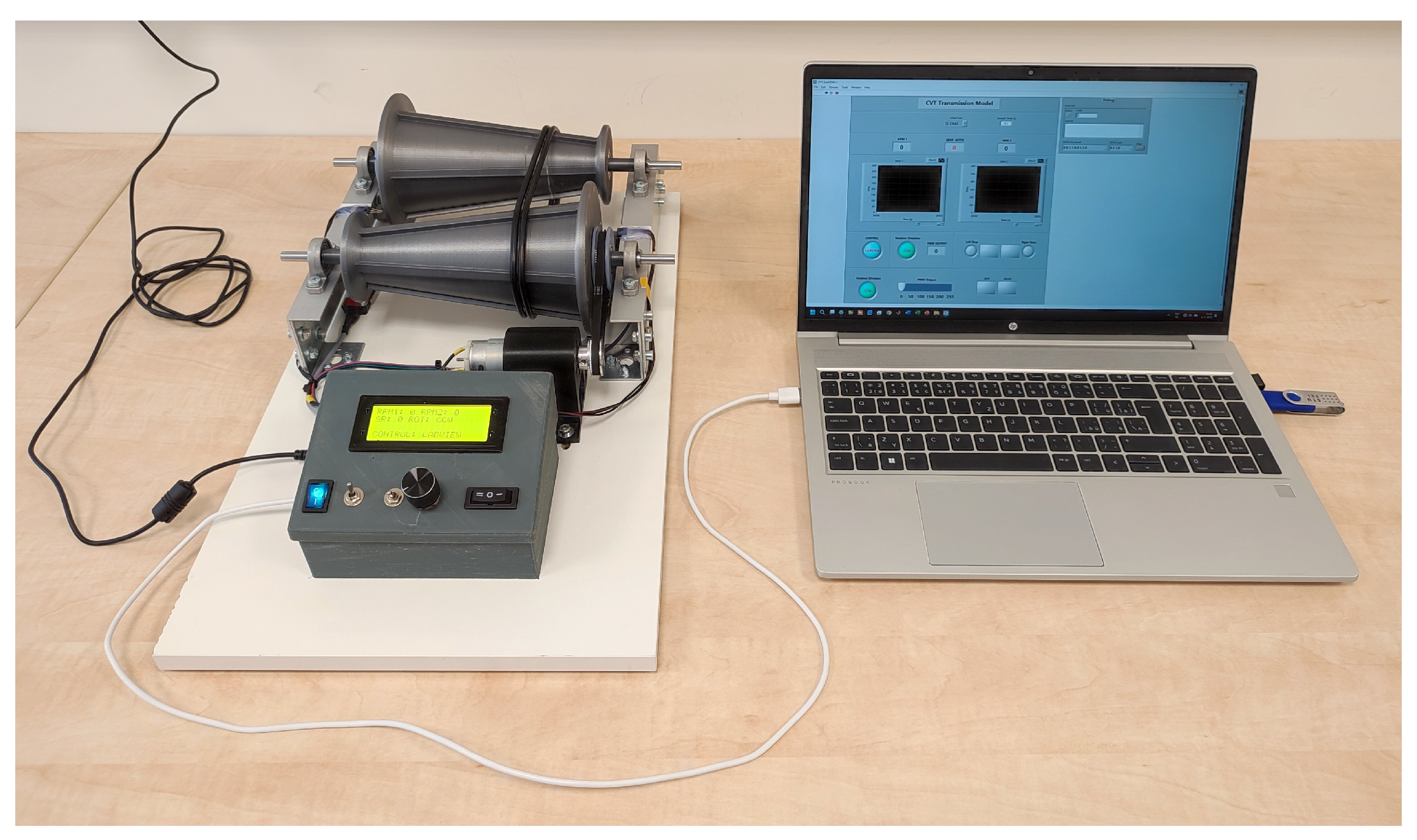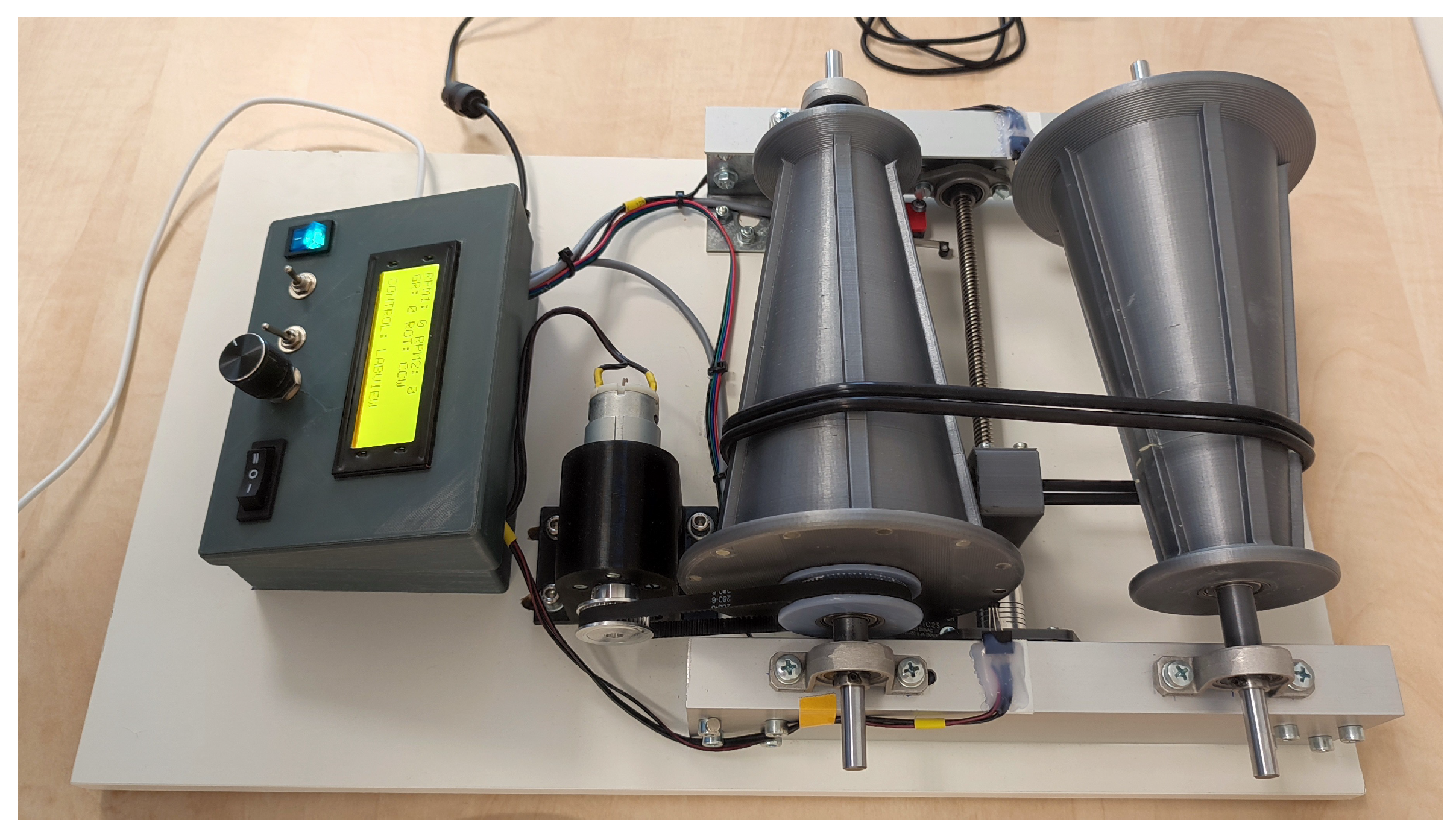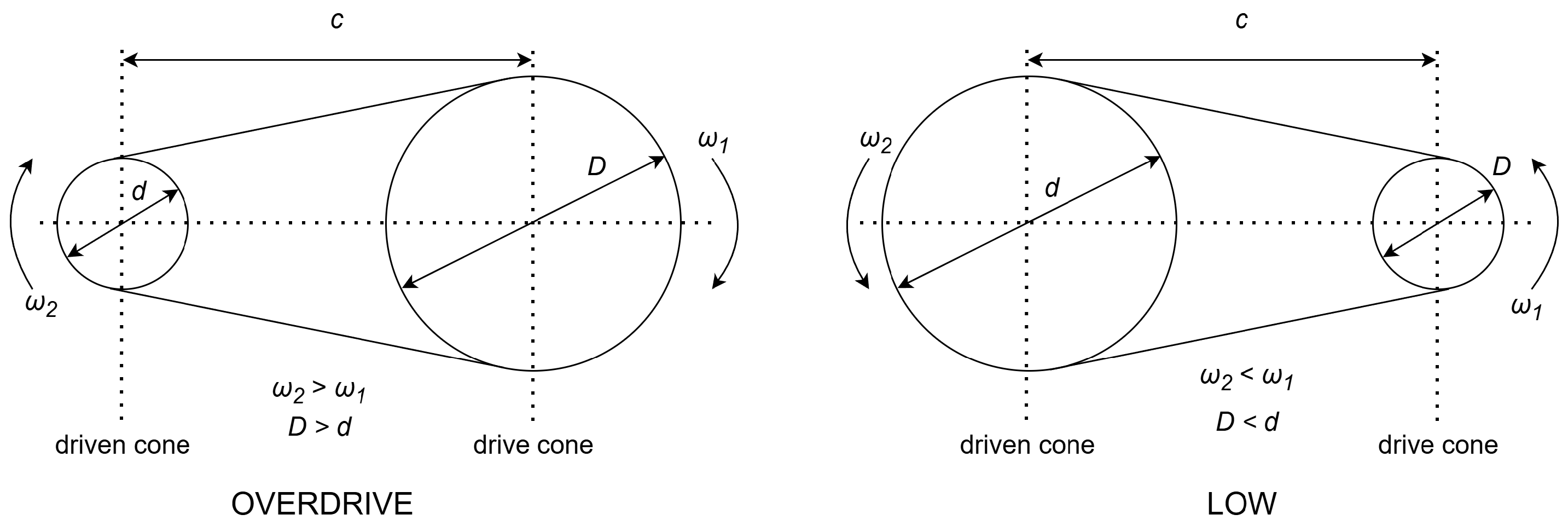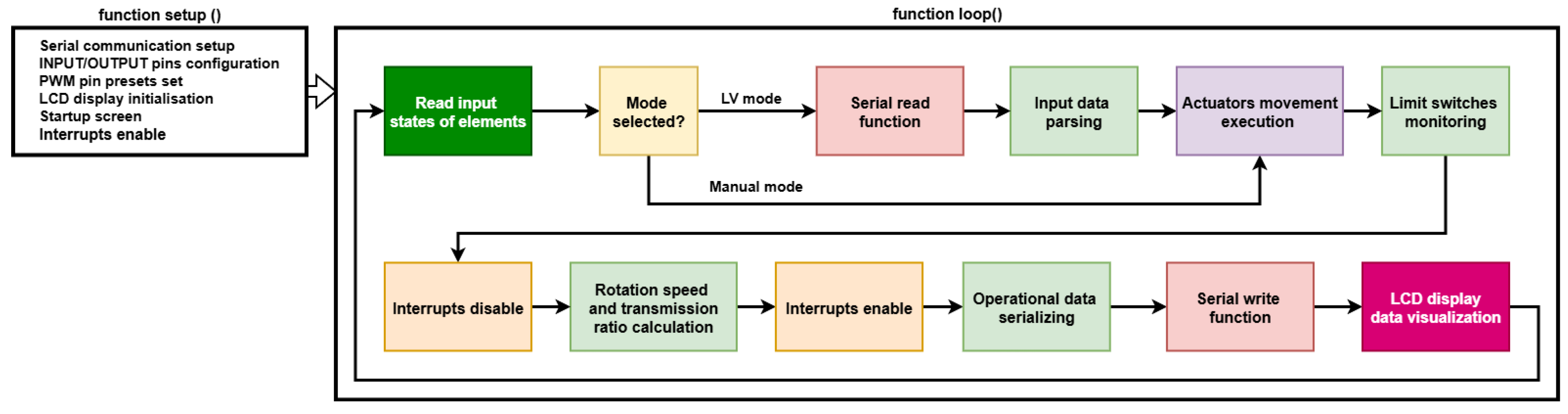


Dual Cone Continuously Variable Transmission Model Controlled by LabVIEW


Abstract
Share and Cite
Berta, Š.; Goga, V.; Ondrejička, K.; Kučera, E.; Kutiš, V. Dual Cone Continuously Variable Transmission Model Controlled by LabVIEW. Machines 2026, 14, 141. https://doi.org/10.3390/machines14020141
Berta Š, Goga V, Ondrejička K, Kučera E, Kutiš V. Dual Cone Continuously Variable Transmission Model Controlled by LabVIEW. Machines. 2026; 14(2):141. https://doi.org/10.3390/machines14020141
Chicago/Turabian StyleBerta, Šimon, Vladimír Goga, Kristián Ondrejička, Erik Kučera, and Vladimír Kutiš. 2026. "Dual Cone Continuously Variable Transmission Model Controlled by LabVIEW" Machines 14, no. 2: 141. https://doi.org/10.3390/machines14020141
APA StyleBerta, Š., Goga, V., Ondrejička, K., Kučera, E., & Kutiš, V. (2026). Dual Cone Continuously Variable Transmission Model Controlled by LabVIEW. Machines, 14(2), 141. https://doi.org/10.3390/machines14020141