
Research on the Nonlinear Stiffness Characteristics of Spline Coupling Under Multiple Contact Surfaces

Abstract
1. Introduction
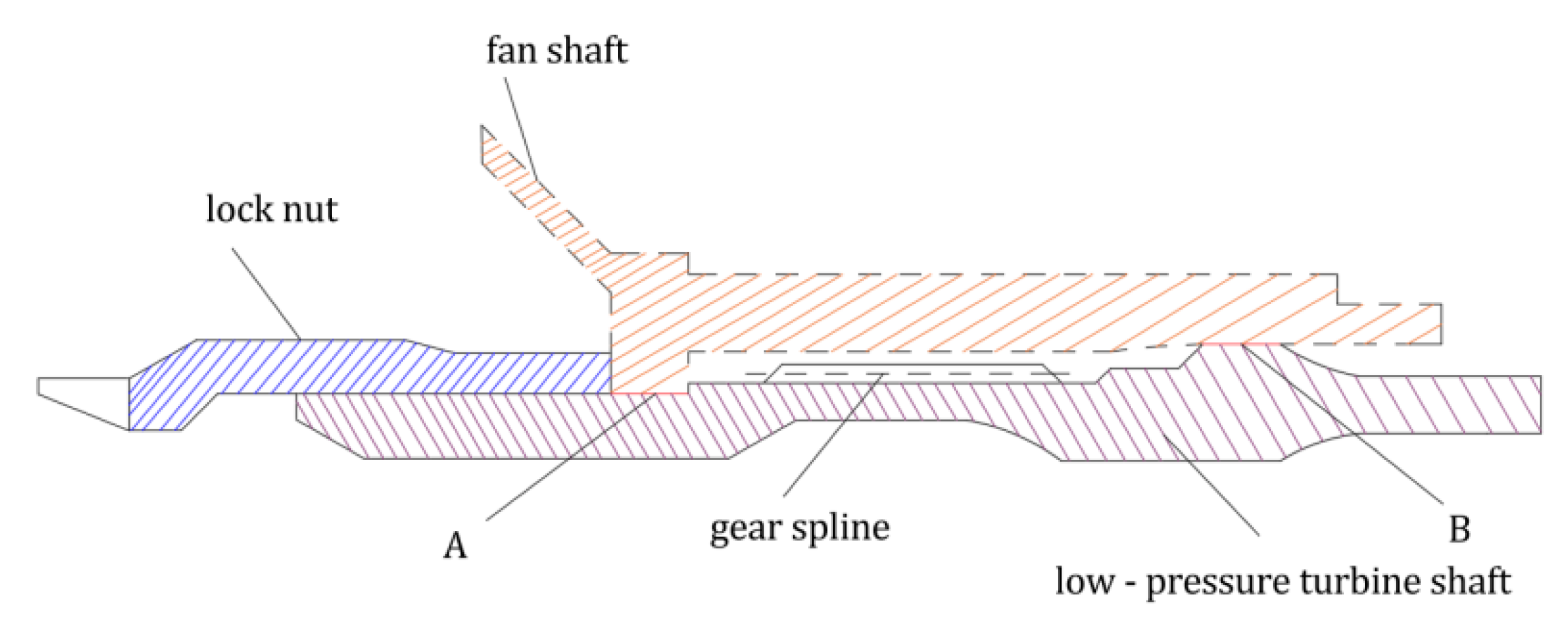
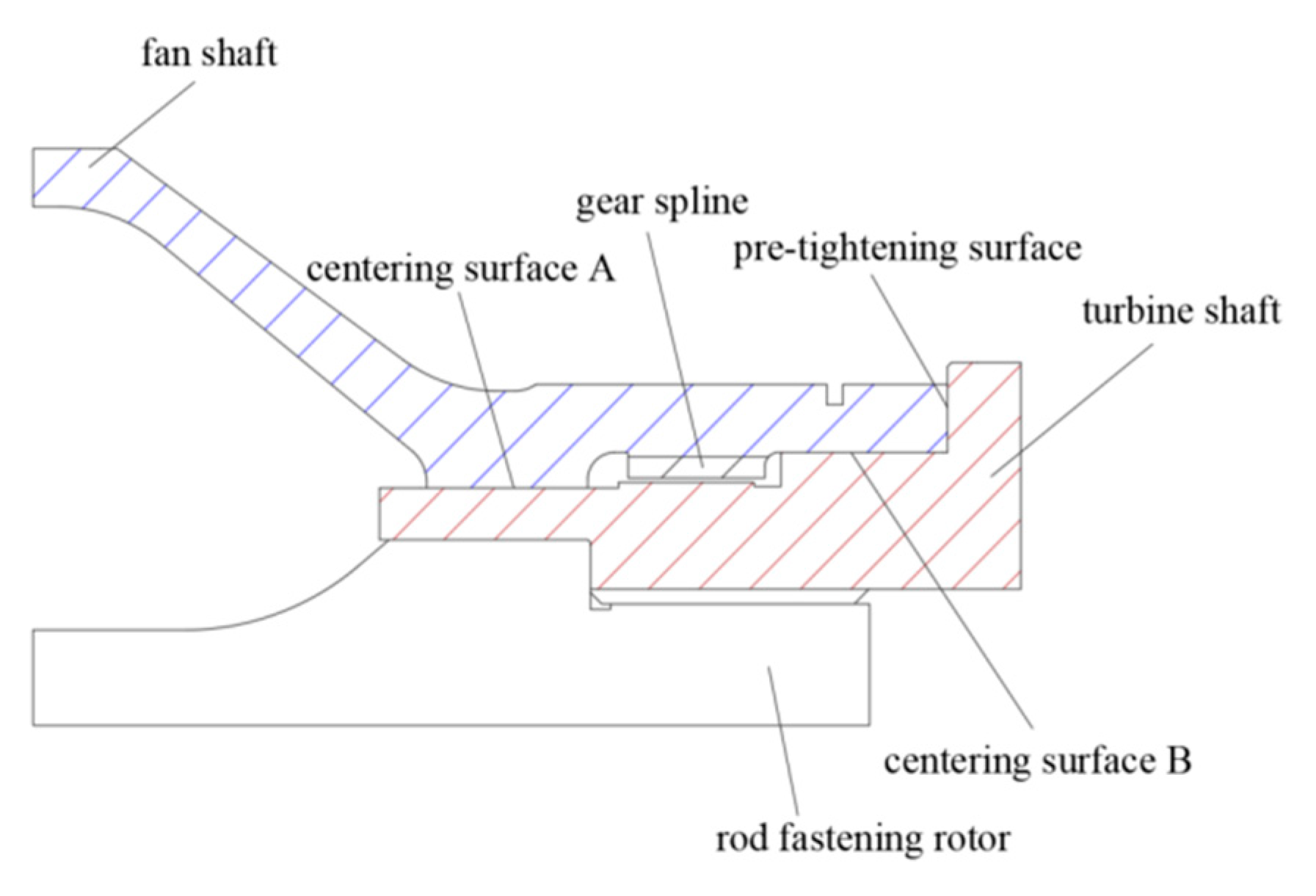
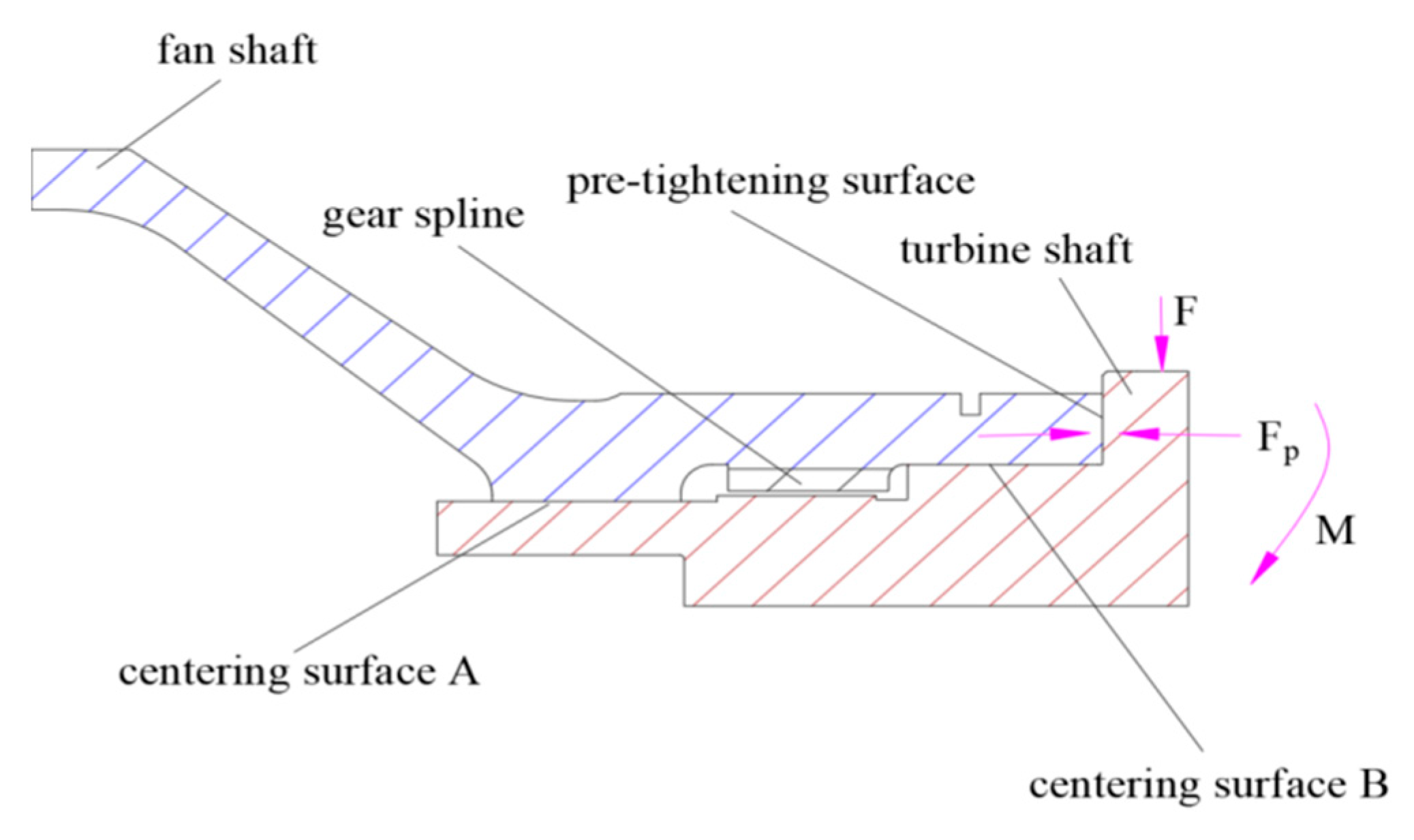
2. Stiffness Calculations of the Spline Coupling
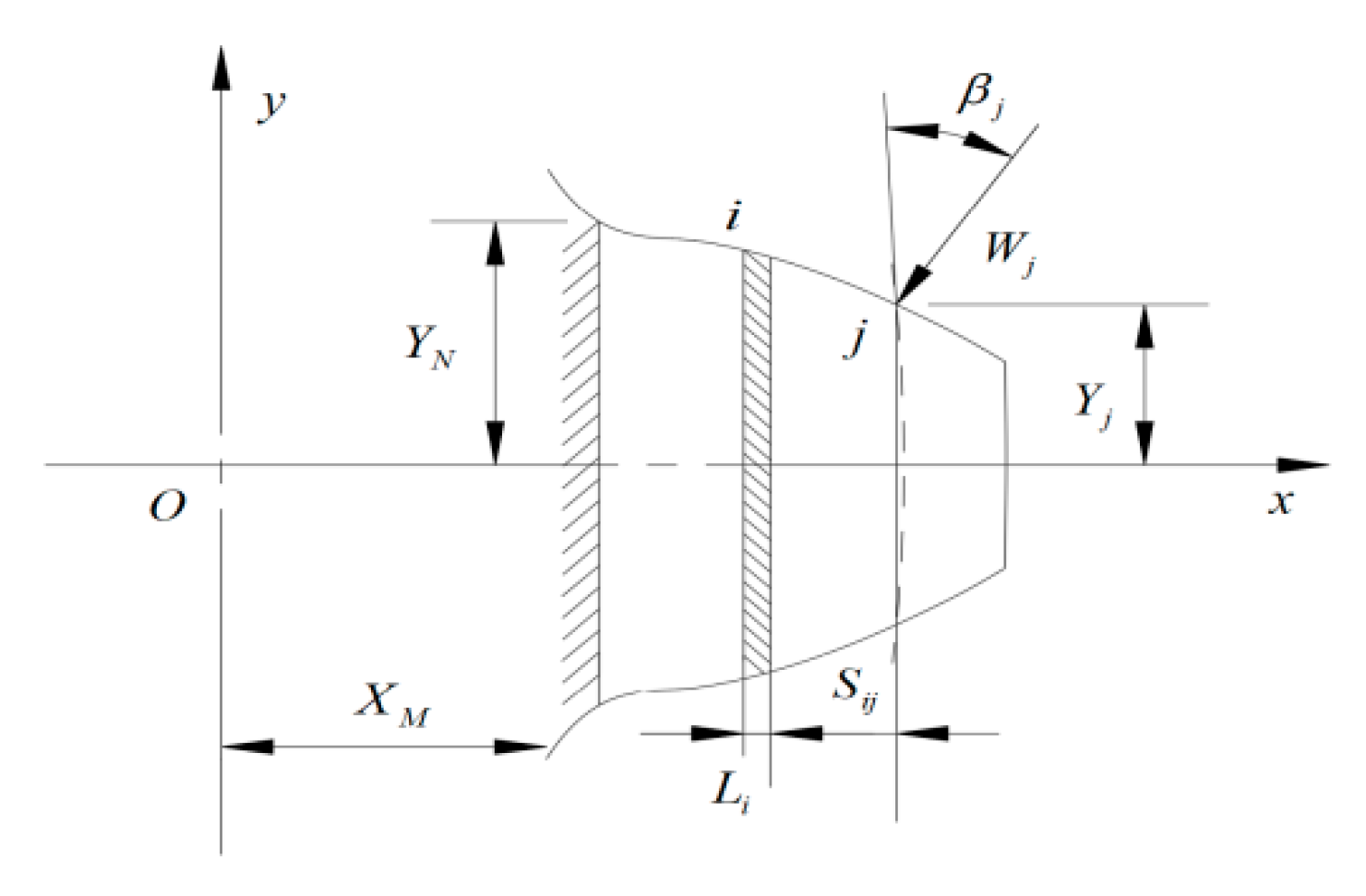
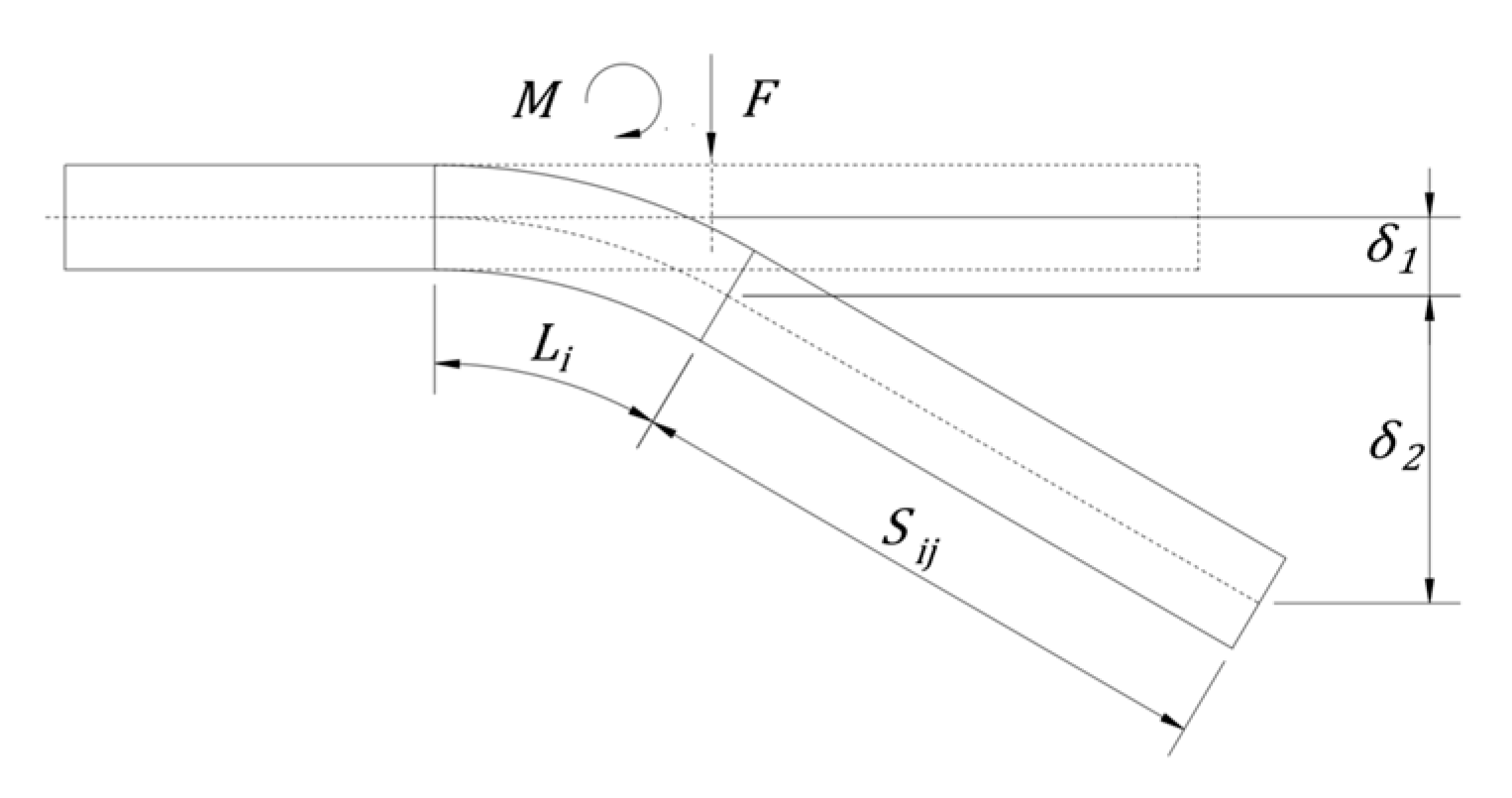
2.1. Shaft Stiffness
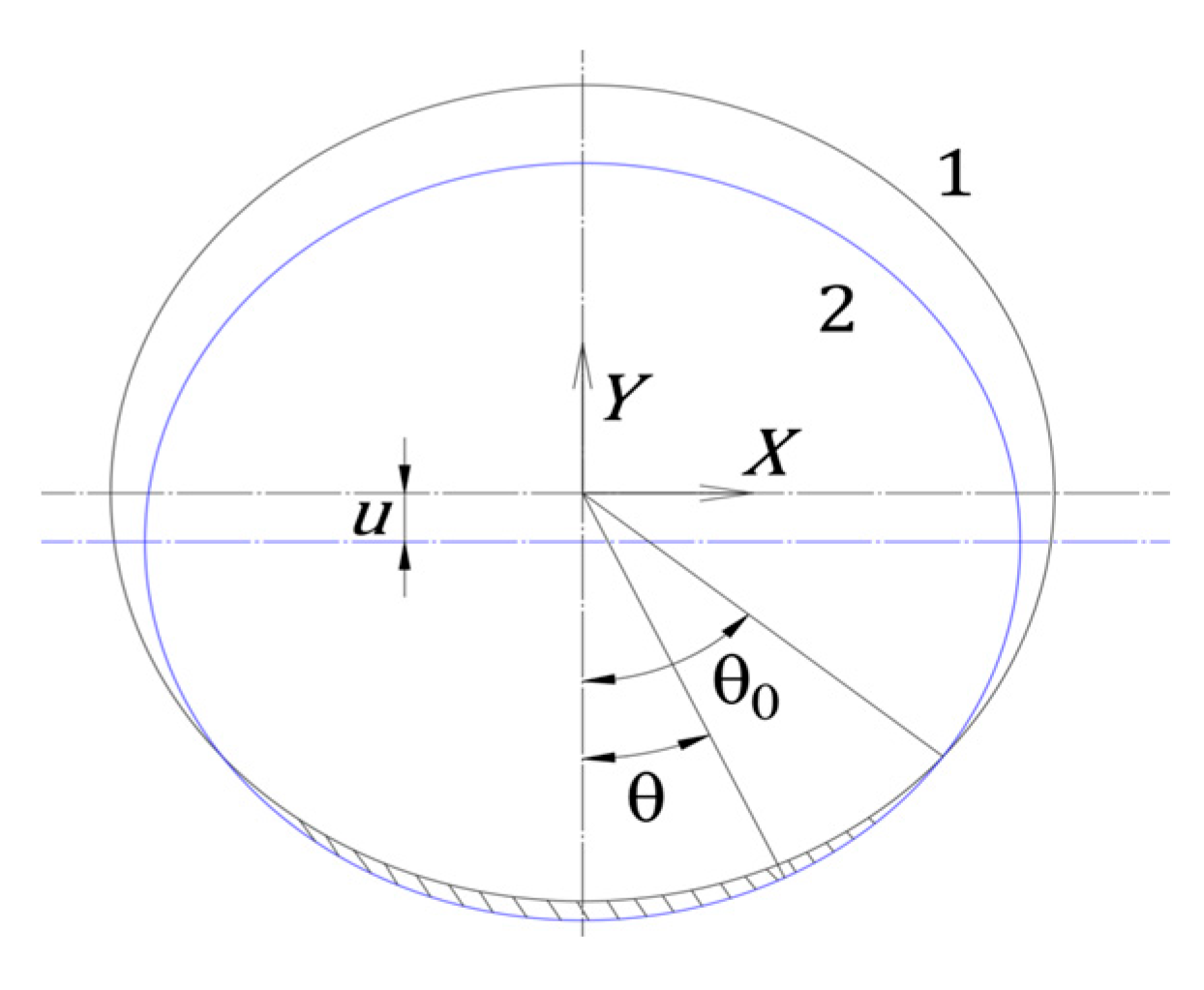
2.2. Cylindrical Surface Contact Stiffness
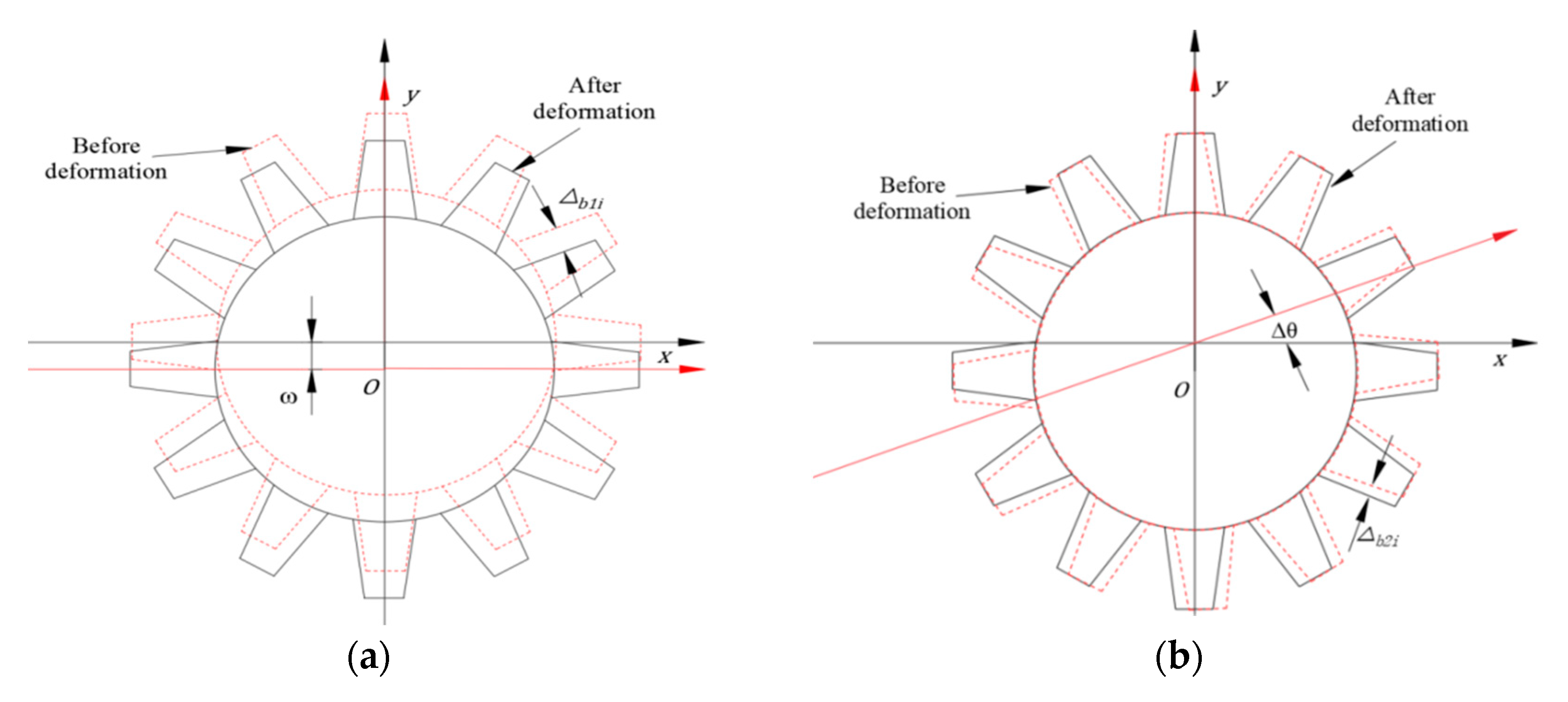
2.3. Tooth Stiffness
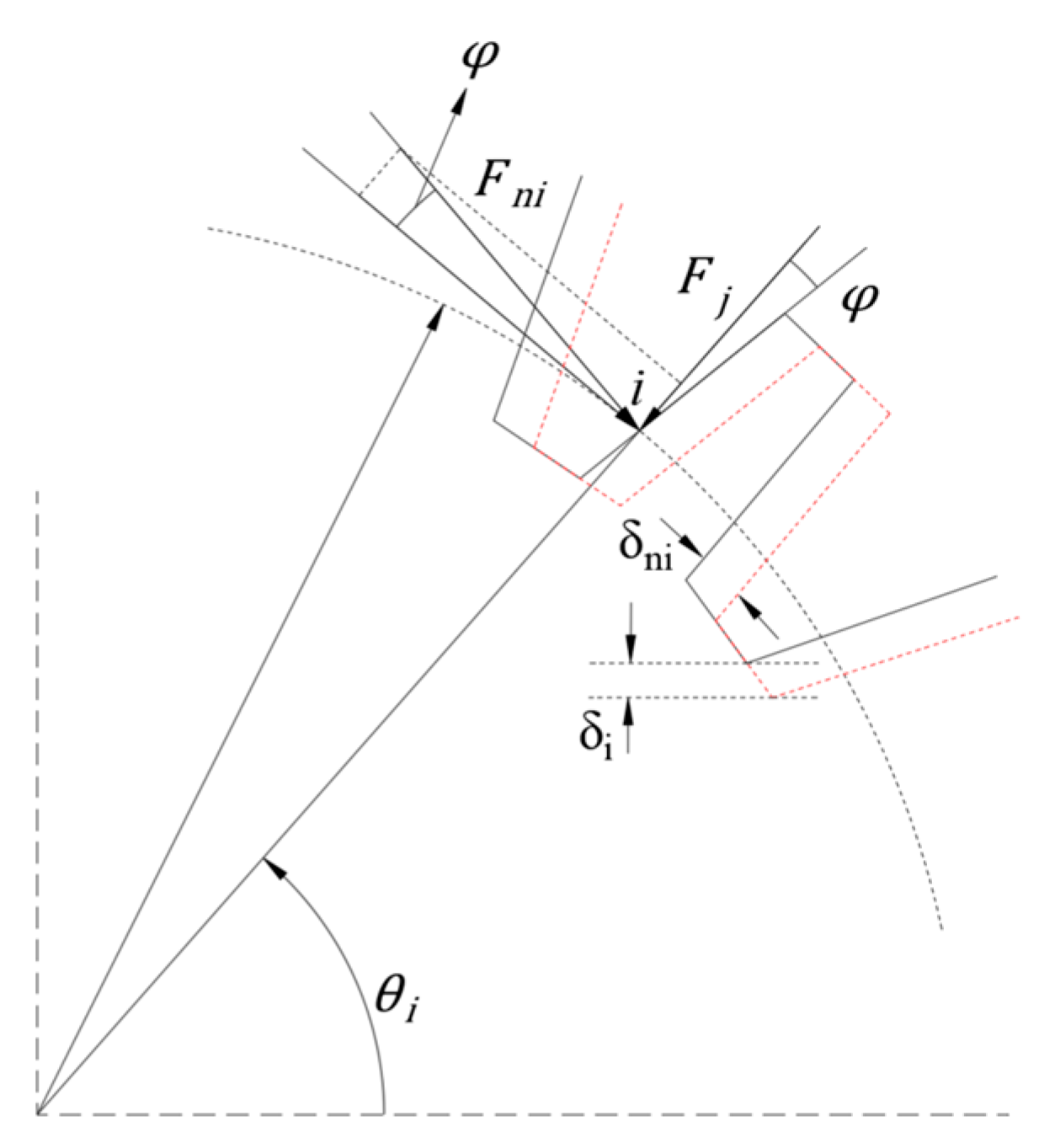
2.3.1. Elastic Deformation of Tooth Surfaces
2.3.2. Shear Deformation of the Tooth Surface
3. Results and Discussions
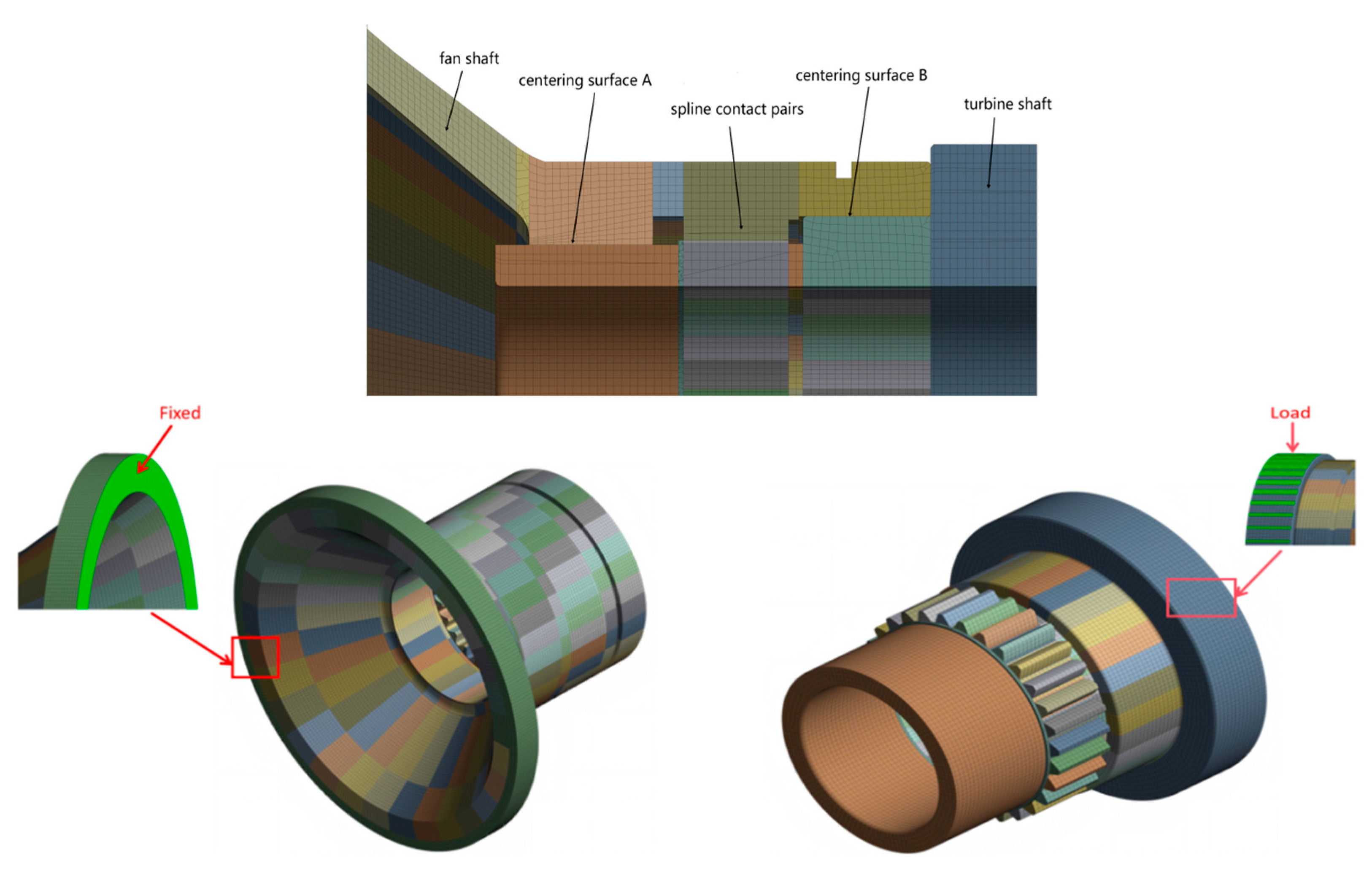
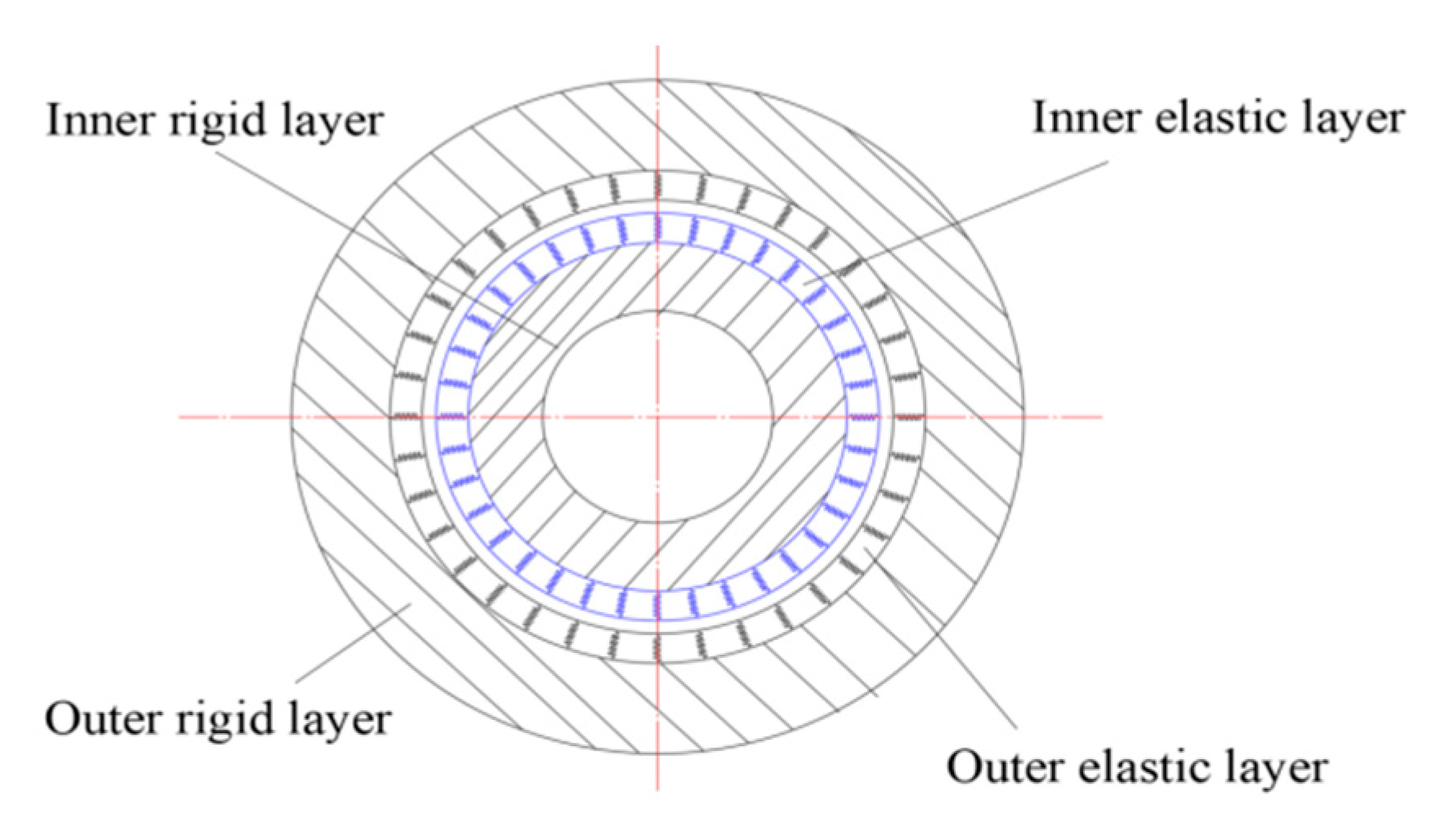
3.1. Finite Element Model
3.2. Stiffness Nonlinear Characteristics
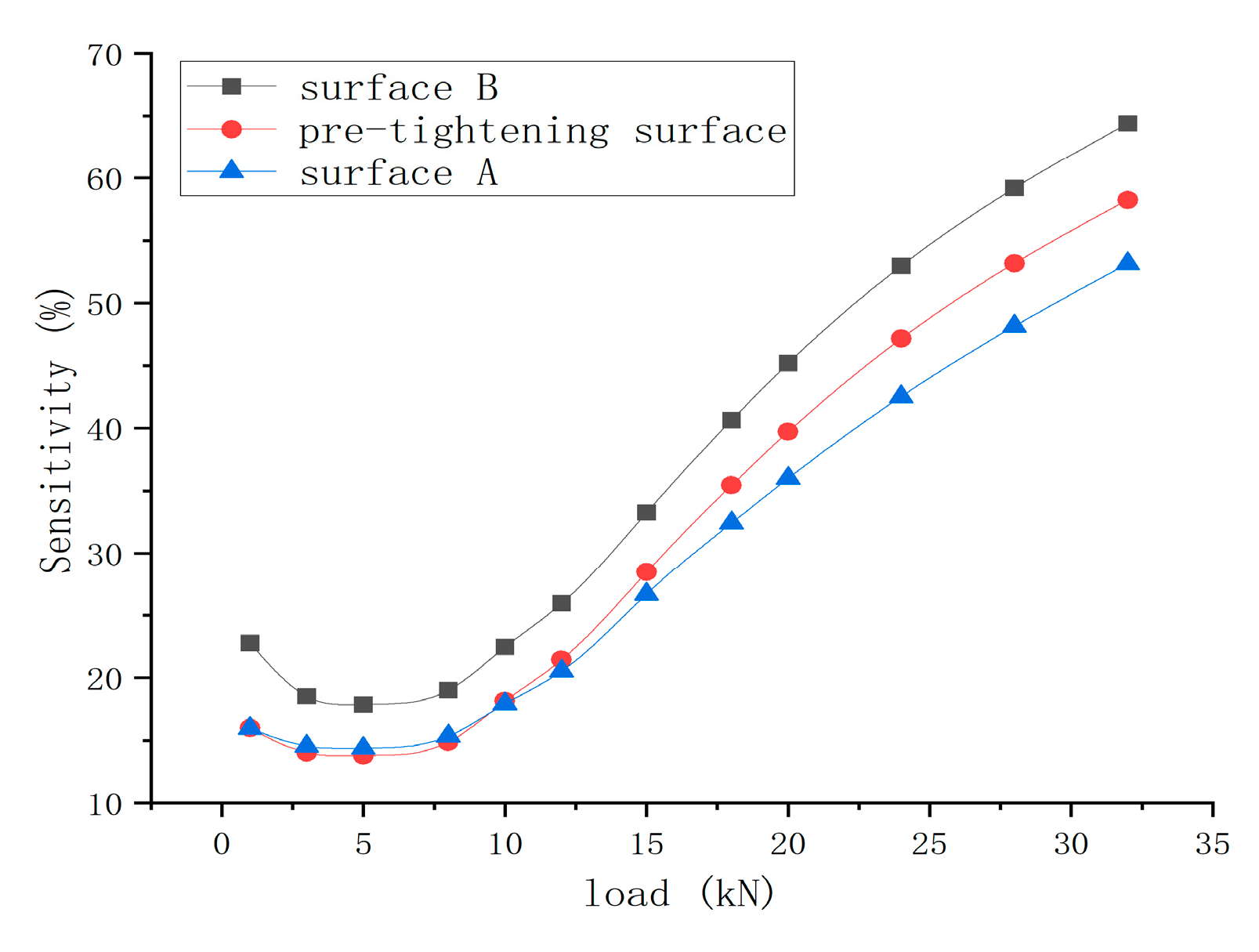
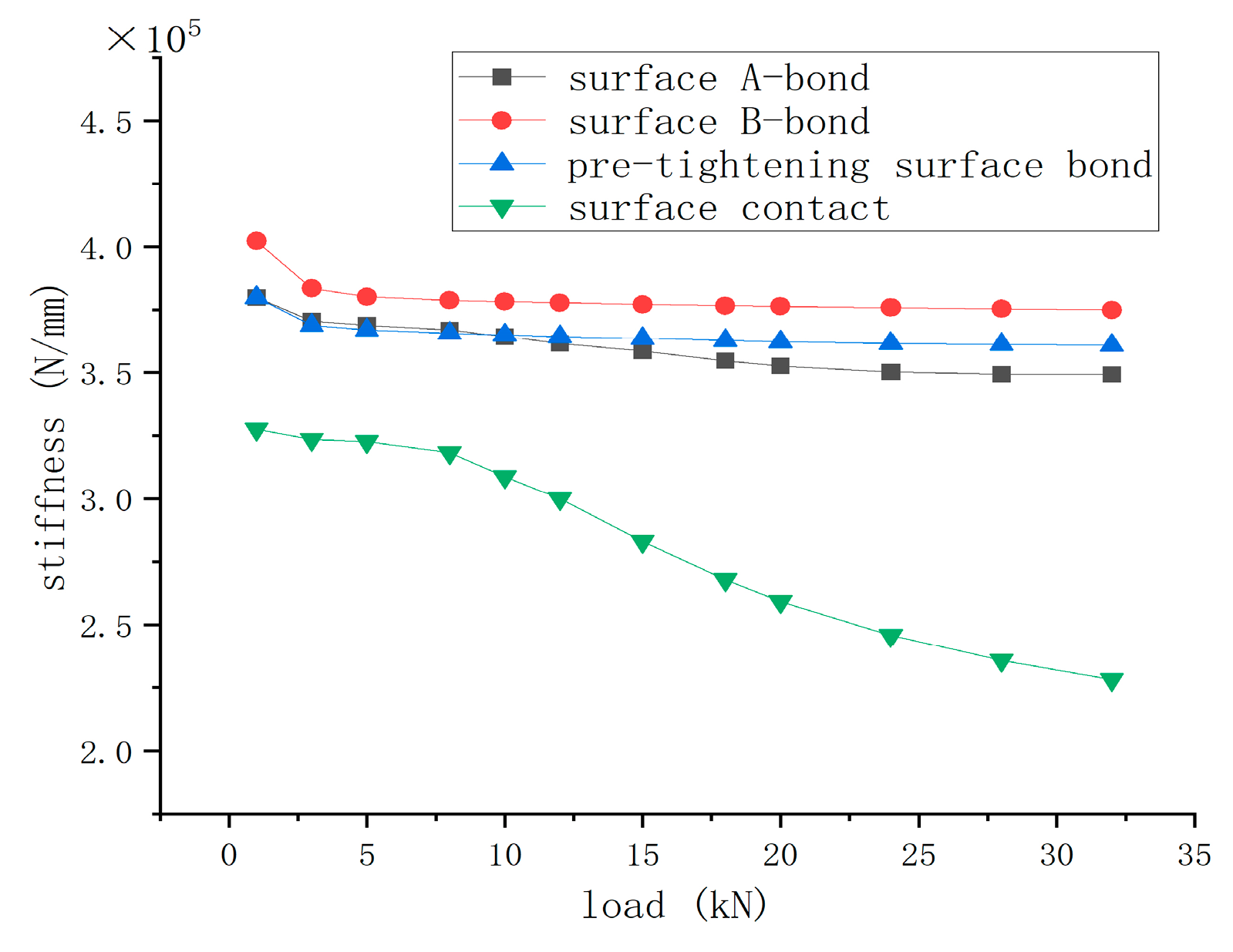
3.2.1. Sensitivity of Stiffness to Contact Surface
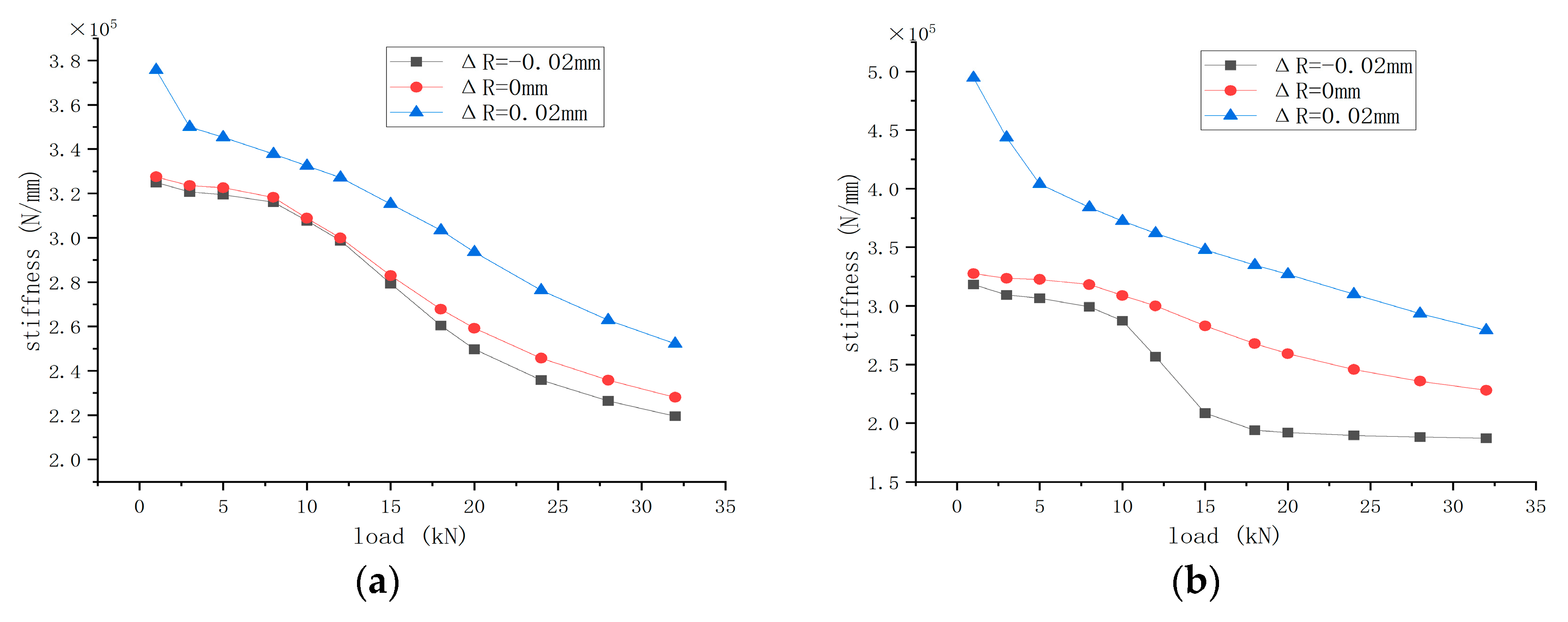
3.2.2. Nonlinear Influence of Contact Distance on Stiffness
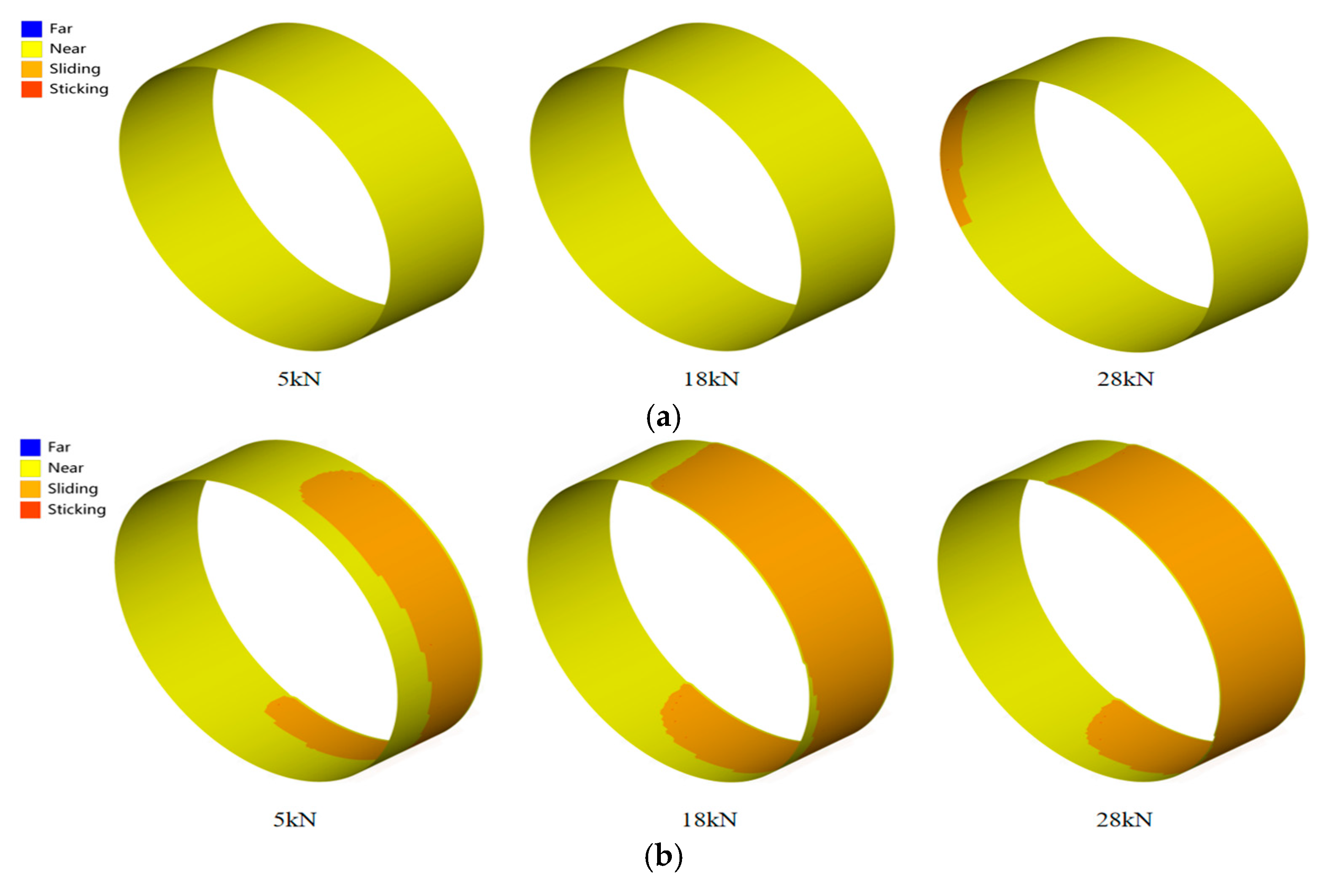
3.3. Change in Contact State at Contact Surfaces
4. Effects of Parameters
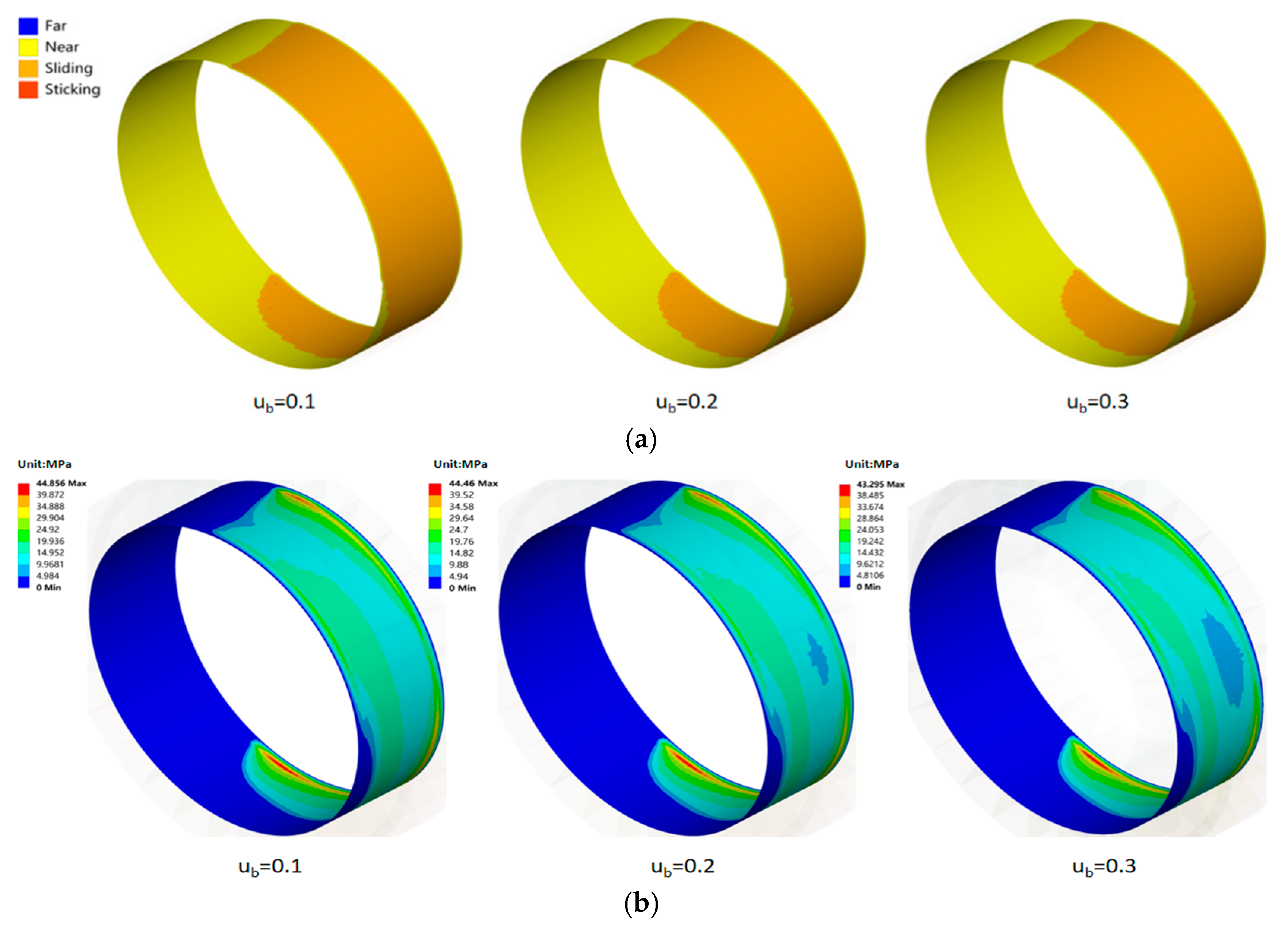
4.1. Effect of Friction Coefficient
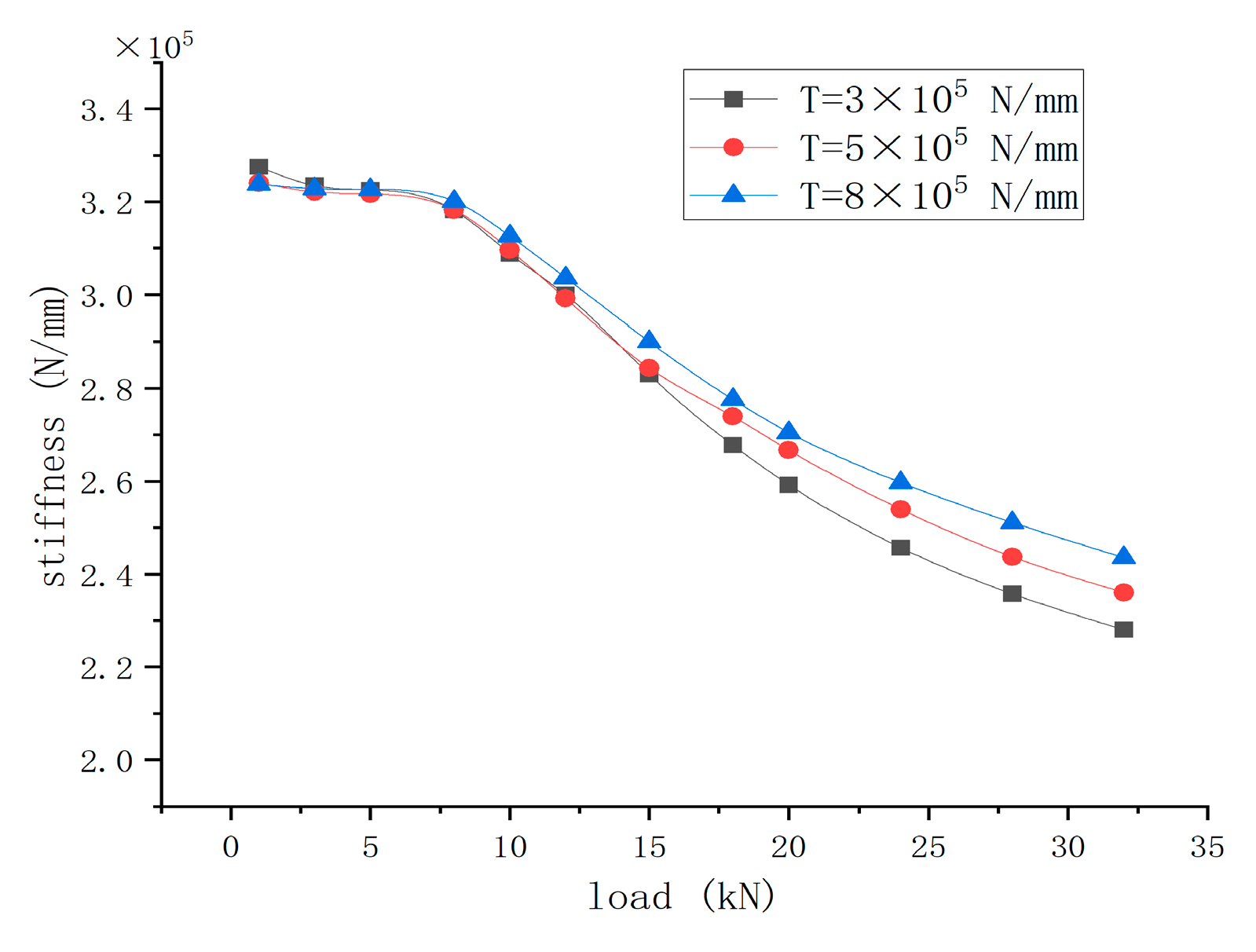
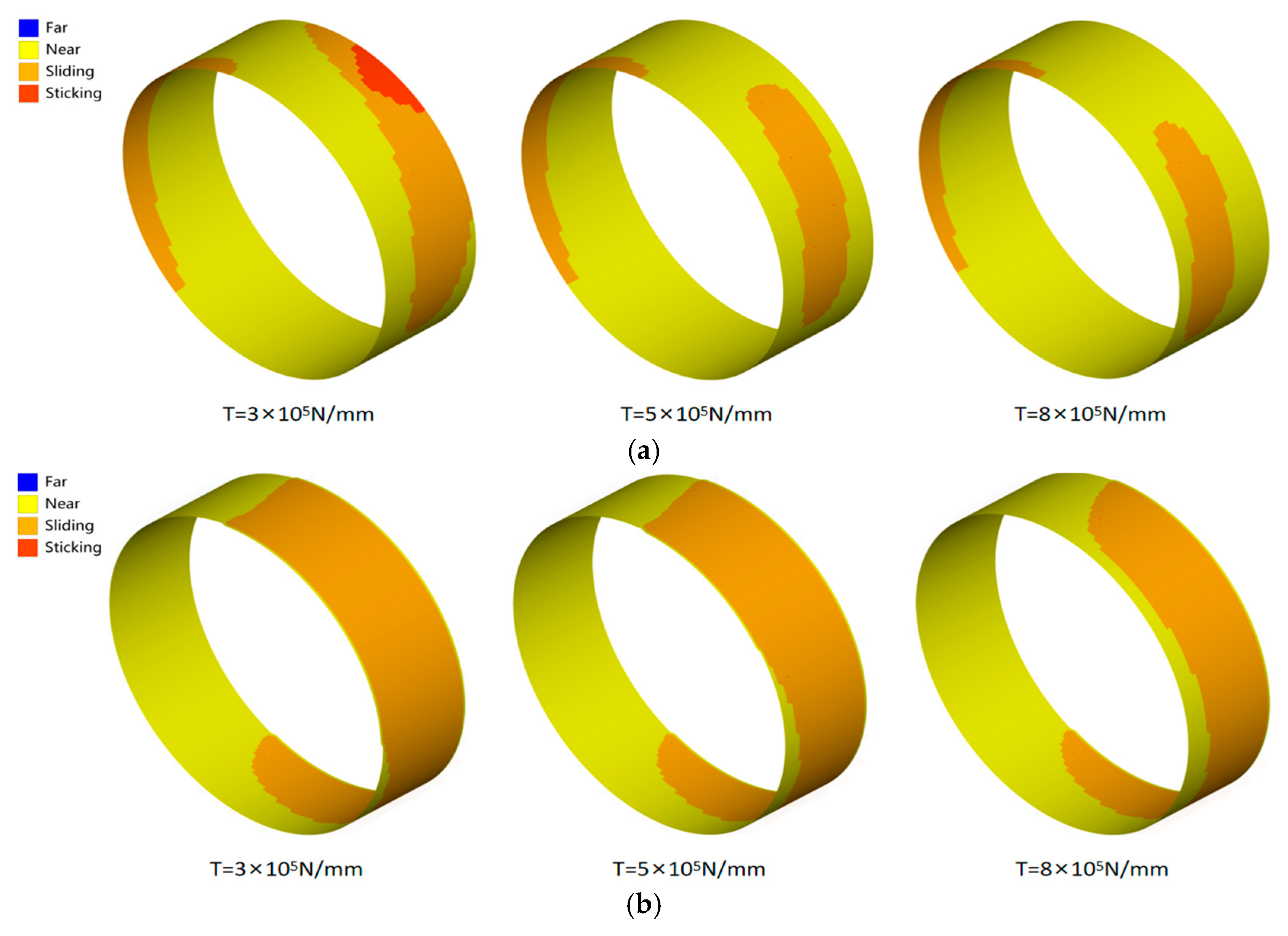
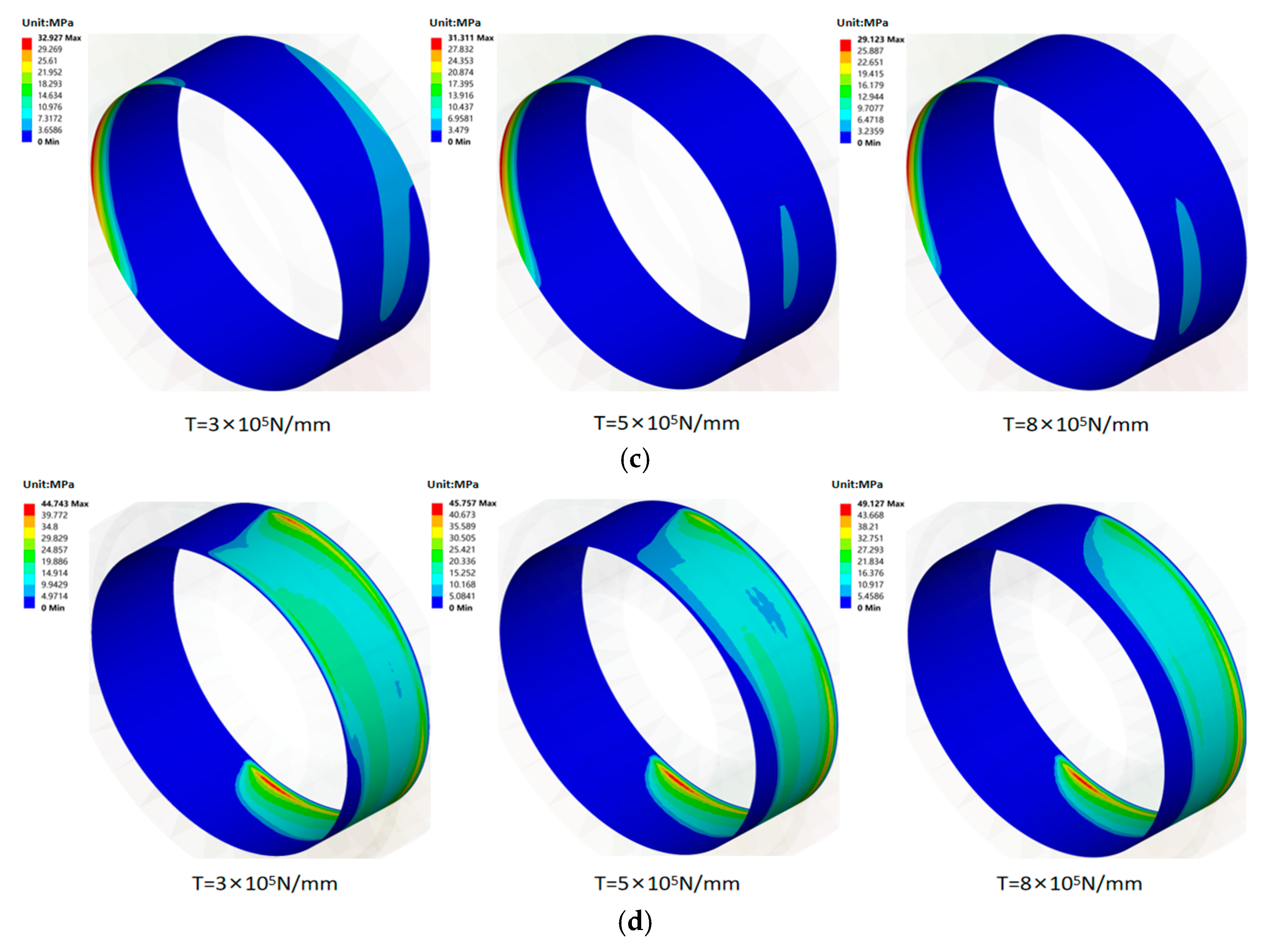
4.2. Effect of Torque
5. Conclusions
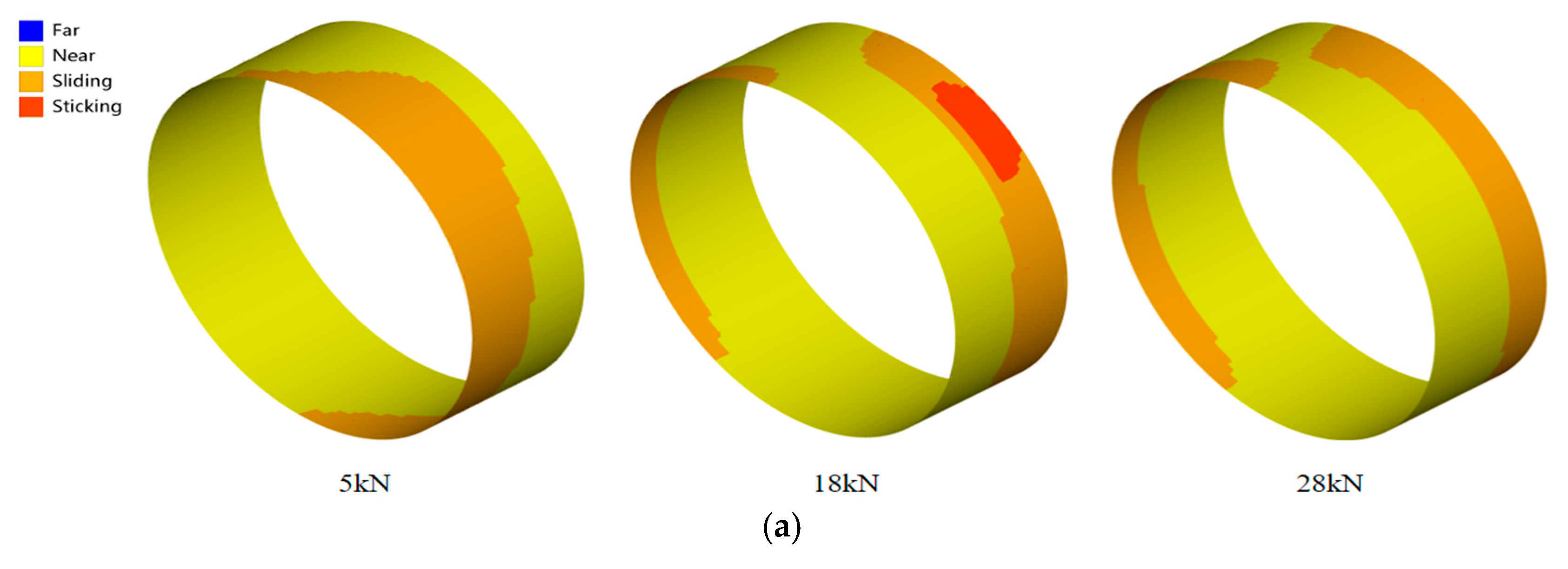
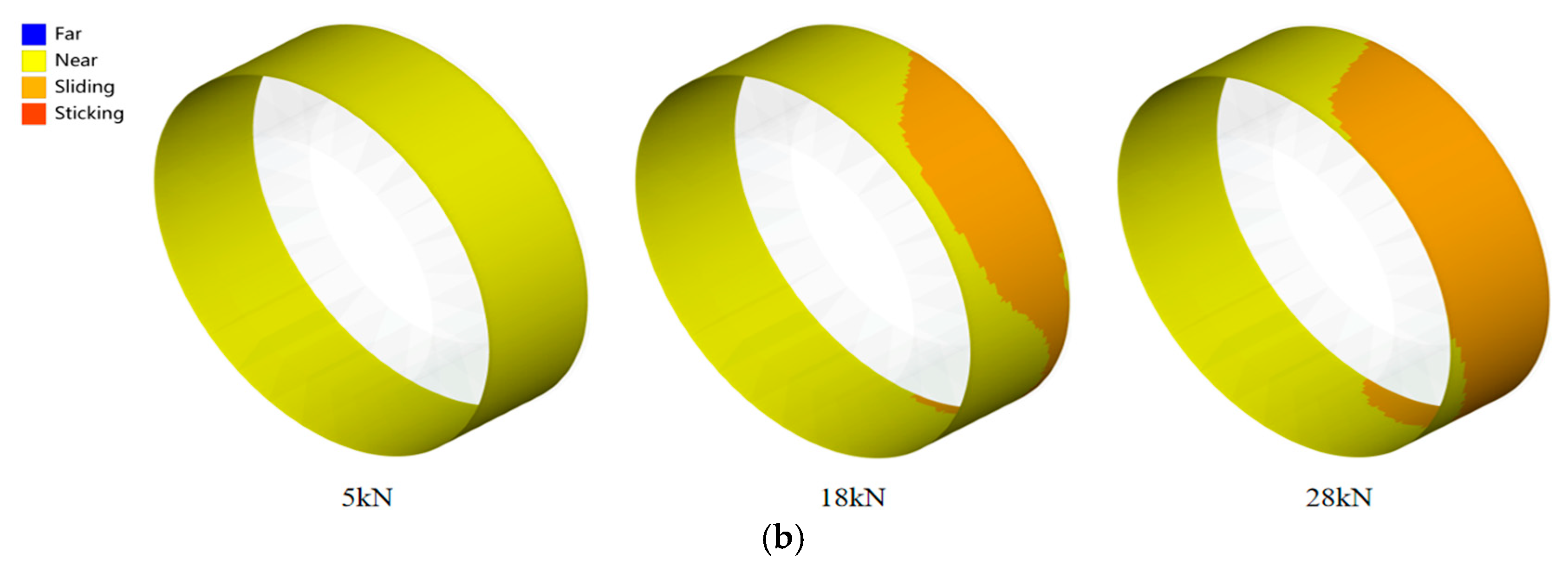
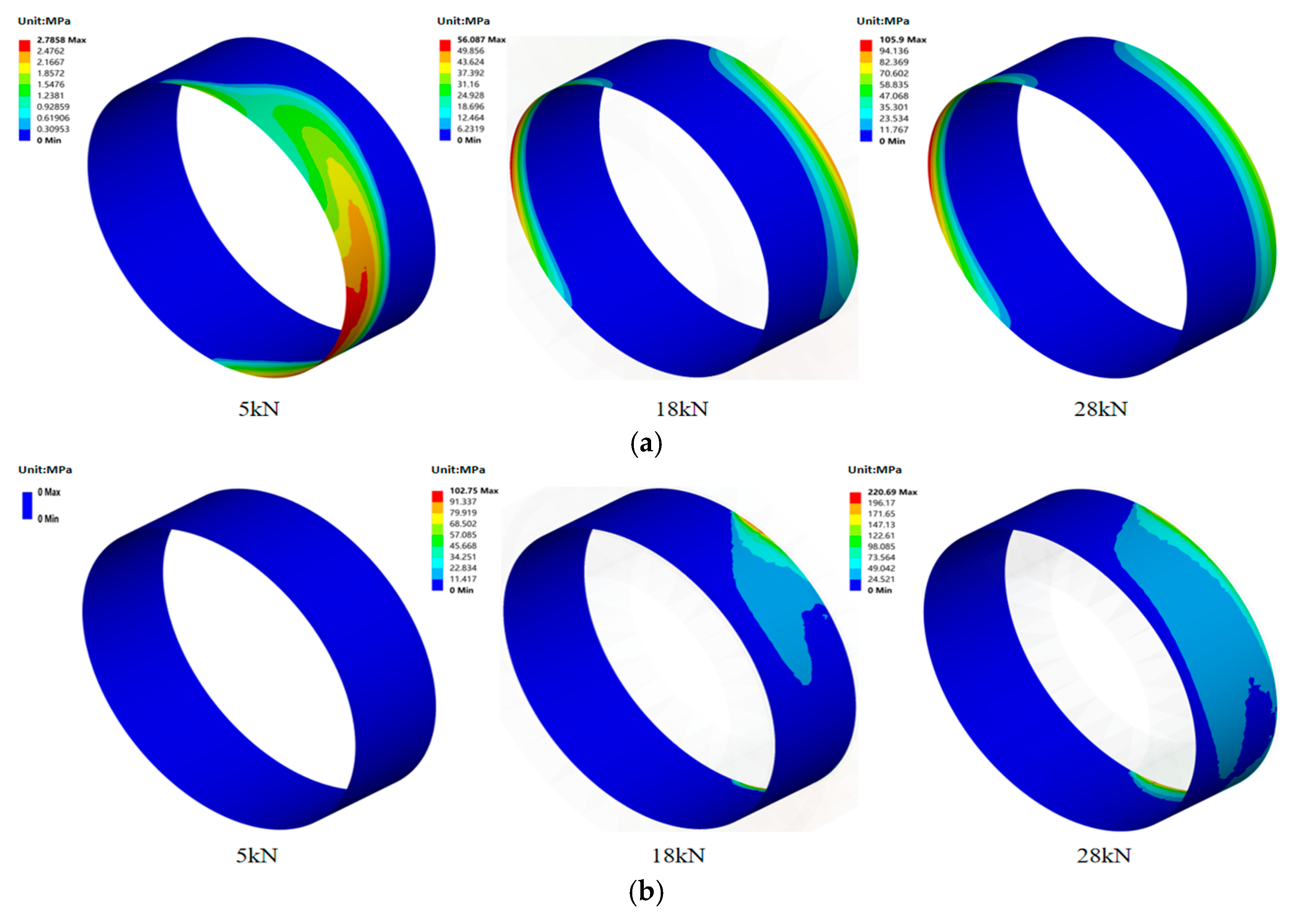
- The fundamental characteristic causing nonlinear stiffness in spline couplings is the changing contact state of each contact surface under external loads. When all contact surfaces are bonded, the stiffness remains nearly linear and exhibits no significant nonlinear variation with increasing load. In contrast, when interfacial contact is considered, stiffness decreases nonlinearly with increasing load until it asymptotically approaches a near-constant value. As the centering surfaces transition from clearance to interference fit, their contact state gradually shifts from separation to sliding and sticking, accompanied by a continuous increase in contact pressure. So the continuous variation in contact area between centering surfaces is another significant cause of nonlinear stiffness changes.
- Considering the factors affecting stiffness variation across different contact surfaces under conditions of varying sensitivity to contact surfaces in spline couplings, it was established that stiffness exhibits the greatest sensitivity to alterations in the contact state of centering surface B. Analyzing the influence of both centering surfaces on stiffness under varying contact conditions reveals that reducing the clearance fit for both surfaces effectively enhances the spline couplings stiffness. Consequently, decreasing the clearance fit of centering surface B yields the most pronounced stiffness improvement. Furthermore, variations in the contact state of centering surface B exert a significant nonlinear effect on stiffness.
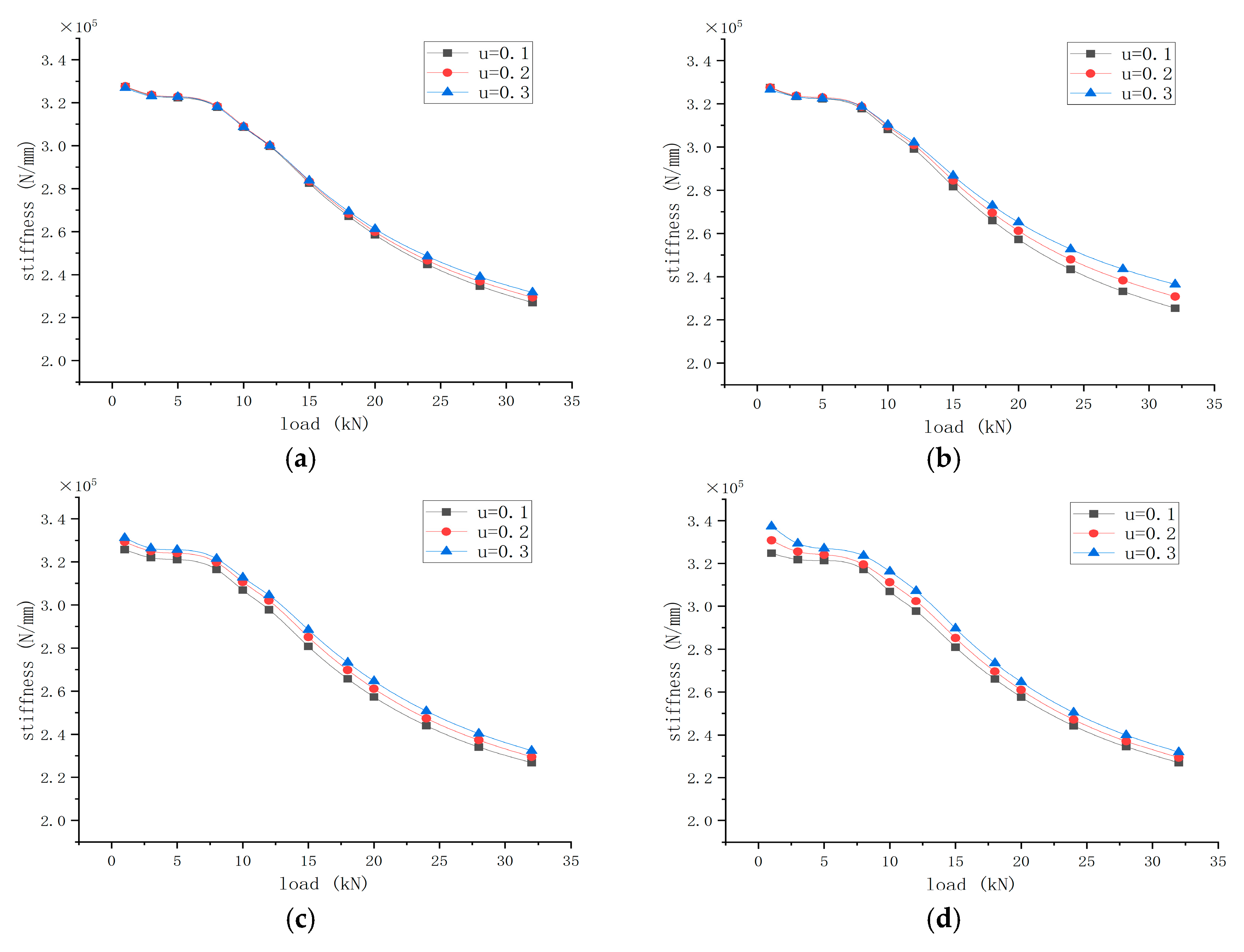
- Based on finite element modeling, the influence of varying friction coefficients and torque on the stiffness of spline couplings was analyzed. Under varying friction coefficients at the contact surfaces, both the contact state and contact pressure remained largely unaffected. The variation in the friction coefficient had a minor effect on stiffness and did not alter the fundamental trend of stiffness variation with respect to load. In contrast, under different torque conditions, the contact state at the surfaces changed significantly. At high loads, the effect of torque on stiffness became particularly significant. Torque demonstrated a more pronounced impact on the stiffness response of the spline coupling, making it a primary factor affecting its stiffness.
Author Contributions
Funding
Data Availability Statement
Conflicts of Interest
References
- Zhao, G.; Zhao, X.; Qian, L.; Yuan, Y.; Ma, S.; Guo, M. A Review of Aviation Spline Research. Lubricants 2023, 11, 6. [Google Scholar] [CrossRef]
- Liu, S.; Wang, J.; Hong, J.; Zhang, D. Dynamics Design of the Aero-Engine Rotor Joint Structures Based on Experimental and Numerical Study. In Proceedings of the ASME Turbo Expo 2010: Power for Land, Sea, and Air, Glasgow, UK, 14–18 June 2010; Volume 6: Structures and Dynamics, Parts A and B, pp. 49–60. [Google Scholar]
- Wu, F.; Liang, Z.; Ma, Y.; Zhang, D. Bending Stiffness and Dynamic Characteristics of a Rotor With Spline Joints. In Proceedings of the ASME 2013 International Mechanical Engineering Congress and Exposition, San Diego, CA, USA, 15–21 November 2013; Volume 4A: Dynamics, Vibration and Control. [Google Scholar]
- Zhu, B.; Yang, C.; Liu, Y.; Zhang, D. Mechanical Modeling for the Spline Joint and the Influence Factors Investigation for Its Stiffness. Mach. Des. Manuf. 2019, S1, 86–90+94. [Google Scholar]
- Li, L.; Chen, G.; Yang, M. Simulation Analysis and Experimental Study of Stiffness Characteristics of Aeroengine Spline Couplings. China Mech. Eng. 2022, 33, 2249–2256. [Google Scholar]
- Zhao, G.; Su, J.; Han, Q.; Wang, M. Modelling and Simulation of Cylindrical Surface Contact Stiffness. J. Huazhong Univ. Sci. Technol. 2015, 43, 21–26. [Google Scholar]
- Hong, J.; Talbot, D.; Kahraman, A. A semi-analytical load distribution model for side-fit involute splines. Mech. Mach. Theory 2014, 76, 39–55. [Google Scholar] [CrossRef]
- Hong, J.; Talbot, D.; Kahraman, A. Load distribution analysis of clearance-fit spline joints using finite elements. Mech. Mach. Theory 2014, 74, 42–57. [Google Scholar] [CrossRef]
- Hong, J.; Talbot, D.; Kahraman, A. A generalized semi-analytical load distribution model for clearance-fit, major-fit, minor-fit, and mismatched splines. Proc. Inst. Mech. Eng. Part C J. Mech. Eng. Sci. 2016, 230, 1126–1138. [Google Scholar] [CrossRef]
- Curà, F.; Mura, A. Experimental procedure for the evaluation of tooth stiffness in spline coupling including angular misalignment. Mech. Syst. Signal Process. 2013, 40, 545–555. [Google Scholar] [CrossRef]
- Curà, F.; Mura, A. Experimental and theoretical investigation about reaction moments in misaligned splined couplings. Mech. Syst. Signal Process. 2014, 45, 504–512. [Google Scholar] [CrossRef]
- Curà, F.; Mura, A. Evaluation of the fretting wear damage on crowned splined couplings. Procedia Struct. Integr. Procedia 2017, 5, 1393–1400. [Google Scholar] [CrossRef]
- Curà, F.; Mura, A.; Gravina, M. Load distribution in spline coupling teeth with parallel offset misalignment. Proc. Inst. Mech. Eng. Part C J. Mech. Eng. Sci. 2013, 227, 2195–2205. [Google Scholar] [CrossRef]
- Curà, F.; Mura, A.; Adamo, F. Fatigue damage in spline couplings: Numerical simulations and experimental validation. Procedia Struct. Integr. Procedia 2017, 5, 1326–1333. [Google Scholar] [CrossRef]
- Hong, J.; Talbot, D.; Kahraman, A. A Stiffness Formulation for Spline Joints. J. Mech. Des. 2016, 138, 043301. [Google Scholar] [CrossRef]
- Marmol, R.; Smalley, A.; Tecza, J. Spline Coupling Induced Nonsynchronous Rotor Vibrations. J. Mech. Des. 1980, 102, 168–176. [Google Scholar] [CrossRef]
- Zhao, G.; Su, J.; Zhai, J.; Han, Q.; Shi, Y. Study on Nonlinear Meshing Stiffness of Spline. Mech. Mach. Sci. 2015, 21, 1315–1321. [Google Scholar]
- Yu, P.; Wang, C.; Liu, Y.; Chen, G. Analytical modeling of the lateral stiffness of a spline coupling considering teeth engagement and influence on rotor dynamics. Eur. J. Mech. A Solids 2022, 92, 104468. [Google Scholar] [CrossRef]
- Jiang, K.; Yu, P.; Yan, X.; Zheng, H.; Jiang, Z.; Tao, X. Numerical modelling and nonlinear mechanism analysis of the stiffness of flexible spline joint structures considering contact surface friction. China Mech. Eng. 2025, 12, 1–12. [Google Scholar]
- Huang, W.; Tian, H.; Ma, H.; Wang, P.; Yang, Y.; Han, Q. An improved method for calculating the lateral and angular stiffness of spline couplings considering parallel misalignment. Mech. Mach. Theory 2023, 189, 94–104. [Google Scholar] [CrossRef]
- Xie, C.; Shu, X. A new mesh stiffness model for modified spur gears with coupling tooth and body flexibility effects. Appl. Math. Model. 2021, 91, 1194–1210. [Google Scholar] [CrossRef]
- Wang, Q.; Xu, K.; Huai, T.; Ma, H.; Wang, K. A mesh stiffness method using slice coupling for spur gear pairs with misalignment and lead crown relief. Appl. Math. Model. 2021, 90, 845–861. [Google Scholar] [CrossRef]
- Wang, S.; Zhu, R. An improved mesh stiffness model of helical gear pair considering axial mesh force and friction force influenced by surface roughness under EHL condition. Appl. Math. Model. 2022, 102, 453–471. [Google Scholar] [CrossRef]
- Zhang, Q.; Li, W.; Liang, Z.; Hong, J. Study on the Stiffness Loss and its Affecting Factors of the Spline Joint Used in Rotor System. In Proceedings of the ASME Turbo Expo 2014: Turbine Technical Conference and Exposition, Düsseldorf, Germany, 16–20 June 2014; Volume 7A: Structures and Dynamics. [Google Scholar]
- Johnson, K. Contact Mechanics, 1st ed.; Cambridge University Press: Cambridge, UK, 1985. [Google Scholar]
- Harris, T.; Kotzalas, M. Rolling Bearing Analysis, 5th ed.; CRC Press: Boca Raton, FL, USA, 2007. [Google Scholar]
- Li, W. Experimental Study on the Dynamic Characteristics of Typical Spline Connection Structures of Aeroengines. Ph.D. Thesis, Beihang University, Beijing, China, 2013. [Google Scholar]







| Parameters | Fan Shaft | Turbine Shaft |
|---|---|---|
| Normal module (mm) | 1.25 | 1.25 |
| Tooth number | 30 | 30 |
| Pressure angle (°) | 30 | 30 |
| Length (mm) | 45 | 52.6 |
| Young’s modulus (GPa) | 200 | 200 |
| Poisson’s ratio | 0.3 | 0.3 |
Disclaimer/Publisher’s Note: The statements, opinions and data contained in all publications are solely those of the individual author(s) and contributor(s) and not of MDPI and/or the editor(s). MDPI and/or the editor(s) disclaim responsibility for any injury to people or property resulting from any ideas, methods, instructions or products referred to in the content. |
© 2025 by the authors. Licensee MDPI, Basel, Switzerland. This article is an open access article distributed under the terms and conditions of the Creative Commons Attribution (CC BY) license.
Share and Cite
Huang, C.; Feng, Y. Research on the Nonlinear Stiffness Characteristics of Spline Coupling Under Multiple Contact Surfaces. Machines 2026, 14, 30. https://doi.org/10.3390/machines14010030
Huang C, Feng Y. Research on the Nonlinear Stiffness Characteristics of Spline Coupling Under Multiple Contact Surfaces. Machines. 2026; 14(1):30. https://doi.org/10.3390/machines14010030
Chicago/Turabian StyleHuang, Chongbei, and Yinli Feng. 2026. "Research on the Nonlinear Stiffness Characteristics of Spline Coupling Under Multiple Contact Surfaces" Machines 14, no. 1: 30. https://doi.org/10.3390/machines14010030
APA StyleHuang, C., & Feng, Y. (2026). Research on the Nonlinear Stiffness Characteristics of Spline Coupling Under Multiple Contact Surfaces. Machines, 14(1), 30. https://doi.org/10.3390/machines14010030