


Abstract
Ultrasonic vibration superimposed turning represents a highly efficient method for surface microstructuring, which enables a combination with finish machining. However, there are almost no industrial applications of this process due to the special kinematics. Furthermore, the effects of the varying cutting conditions combined with the tool geometry on the resulting surfaces and process stability are not yet fully understood. In experimental investigations, specimens consisting of bronze (CuSn7Pb15-C) are machined by ultrasonic vibration superimposed turning. The influence of the geometry of the MCD-tipped indexable inserts on the surface microstructure is analyzed. Indexable inserts with different rake angles (0°, −10°, and −20°) and artificially generated flank wear lands (widths 50 µm and 100 µm) are used. Moreover, the influences of the cutting speed (120 m/min, 480 m/min) and the feed (0.05 mm, 0.1 mm) are analyzed. While machining, the strain of the sonotrode is detected by an integrated fiber Bragg grating. Subsequent to machining, geometrical surface properties are determined by SEM and 3D surface analysis using focus variation. Furthermore, kinematic simulations are realized, enabling the comparison with the generated surfaces. Generally, there is a high concordance between the simulated and the generated surfaces. However, in particular when the tool flank face gets in contact with the specimen, deviations are visible, especially the formation of burr. Summarized, the research improves the understanding of the mechanisms in ultrasonic vibration superimposed turning and the formation of the surface microstructures.
1. Introduction
The combination of machining processes, such as turning, milling, or drilling with ultrasonic assistance, enables an enhancement of the process performance. Advantages of these hybrid processes are, for instance, reduced surface roughness, decreased burr formation, better chip breakage, less material adherence, and reduced temperature, tool stresses, and wear. Moreover, the range of machinable materials is enhanced. For instance, brittle materials become better machinable [1,2,3,4,5,6,7].
Another field of application, which is less used until now, is surface microstructuring. For this, the ultrasonic movement of the tool occurs in the direction of the workpiece surface [8,9,10,11]. Such microstructures, characterized by dimples, have different advantages depending on their geometrical properties. For instance, better heat distribution can be obtained due to the surface enlargement. Other possible fields of application are surface modifications using the effect of increased surface roughness. Hence, an enhanced connection strength of applied coatings or higher friction coefficients, for example, in clamping systems, become possible. Another interesting capability is the generation of a defined fluid retention volume in hydrostatic or hydrodynamic sliding systems. A possible field of application is the microstructuring of the internal surfaces of the bearing bushings of sliding contact bearings. For these parts, bronze is a common material since it is softer than the shafts. Generally, the internal contour of these parts has to be machined to reach sufficient dimensional tolerances and surface properties to achieve suitable tribological properties. Ultrasonic vibration superimposed machining (UVSM) combines this finishing and the microstructuring step. Hence, no additional machining equipment and time compared to the subsequent application of other microstructuring processes, like laser beam ablation, are needed. However, the inner surfaces of sliding contact bearings are subjected to continuous wear. Hence, the positive effects of the microstructures also change continuously. Moreover, the height of the microstructure, which corresponds to the ultrasonic amplitude, defines the maximum wear of the bearing surface until there is no more effect of the surface microstructure on the tribological properties. Regarding this, an increase in microstructure height and ultrasonic amplitude could be beneficial to enhance the friction behavior as well as the lifetime of sliding contact bearings. Common amplitudes in ultrasonic vibration superimposed machining are lower than 10 µm [6,12].
Turning of bronze has received little attention to date. Papers regarding this topic are mostly older than 15 years [13,14]. For the ultrasonic vibration superimposed machining of bronze, no results are published.
A challenge in ultrasonic vibration superimposed machining is the tool wear. Due to continuously changing cutting conditions, the tool load is intermittently very high. Hence, tool breakages are possible [15]. However, suitable tool design and process parameters enable control of this. Continuous tool wear, especially flank wear, can be reduced but not completely prevented in machining processes. For an industrial application of this process, the influence of the tool wear on the surface properties has to be analyzed. Considering this knowledge allows for adjustments in machining parameters depending on the tool wear state to reach desired surface properties. Moreover, in an additional step, the identification of useful in situ measurements, for instance, strain, acceleration, temperature, and forces, enables determining the tool conditions while machining and gives the possibility to control the process by these values. The influence of the ultrasonic frequency on tool wear in ultrasonic vibration superimposed machining is already regarded as state of the art [16]. However, the influence of the tool wear on the resulting surface properties, especially for higher flank wear land widths (>50 µm) in ultrasonic vibration superimposed machining, is not regarded. Generally, the influence of tool geometry is only incompletely analyzed. For instance, in [17], tools with different clearance angles are compared since this value has a significant influence on the contact between the clearance surface and the machined surface. Results for the influence of the tool rake angle on the surface properties in ultrasonic superimposed turning are currently not published.
In this research, an ultrasonic turning system enabling an amplitude of 20 µm is used. To analyze the influence on the surface properties, the cutting speed (120 m/min, 480 m/min) and the feed (0.05 mm, 0.1 mm) are varied in a wide range. The focus of the research is the influence of the tool geometry on the surface microstructure. For this, indexable inserts with defined flank wear land widths (0 µm, 50 µm, 100 µm) and rake angles (0°, −10°, −20°) are used. The findings should enhance the limits of ultrasonic vibration superimposed machining and stimulate the industrial use of this process.
2. Materials and Methods
The experimental investigations were carried out on a precision lathe, SPINNER type PD 32 (Sauerlauch, Germany). In the tests, cylindrical, tubular specimens of the bronze CuSn7Pb15-C with a hardness of about 76 HB were used. These were characterized by an outer diameter of about 31 mm, a length of 20 mm, and a cylindrical through hole with a diameter of 20 mm. This was necessary for clamping the specimens in the cutting tests using an expanding mandrel. Furthermore, the specimen geometry enables to machine the complete lateral area.
Before realizing the finishing experiments, pre-machining by turning was performed in several steps. For this, CVD-diamond-tipped indexable inserts of the type CCGW 09T304 were used. After turning with a constant cutting speed (200 m/min) and feed (0.025 mm), the final diameter of 30.2 mm was reached before performing the experiments for ultrasonic vibration superimposed turning.
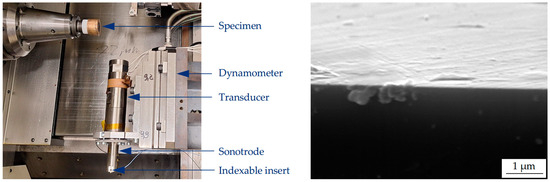
In the experimental investigations, the tool motion was superimposed by an ultrasonic vibration perpendicular to the specimen surface, which means in the radial direction of the specimen. For this, a self-developed ultrasonic transducer was used. It consists of two active piezoelectric disks and one additional passive disk to generate a feedback signal. The transducer was connected to a sonotrode. This enables a decrease in the diameter from 38 mm to 19 mm to achieve a quadruple amplification of the amplitude at the tool corner. For process analysis, a fiber Bragg grating was integrated in the sonotrode. This allows for determining the strain at two different points and the temperature. To reach a maximized amplitude, the operation frequency of the system needs to correspond to the resonance frequency. This was determined in advance with 22.8 kHz. Based on measurements using a laser vibrometer Polytec type CLV-2534 (Waldbronn, Germany) and previous experimental investigations, an amplitude of about 20 µm was determined. Due to load and temperature changes while machining, a shift in the resonance frequency was anticipated. To keep the amplitude stable, the resonance frequency was controlled in situ. However, this only resulted in small changes. The operating frequency in all experimental investigations was in the range of ±10 Hz. The whole system was mounted on a dynamometer, Kistler type 9257A (Winterthur, Switzerland). This enables the determination of the components of the resultant force while turning. The sampling rate was 1 kHz. An overview of the experimental setup is shown in Figure 1.
Figure 1.
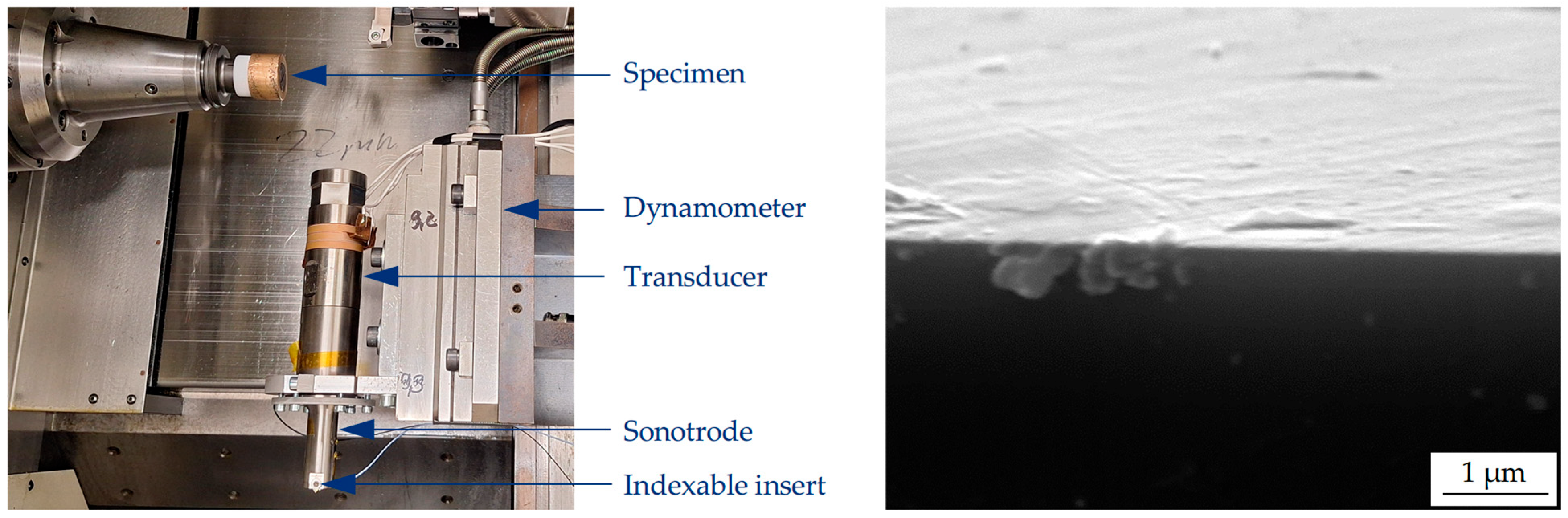
Experimental setup (left) and SEM micrograph of the indexable insert’s cutting edge (right).
For ultrasonic experiments on the front end of the sonotrode, special indexable inserts of the type CCGW 060202 were mounted. They were characterized by tips consisting of monocrystalline diamond (MCD). The cutting-edge angle of the major and the minor cutting edge was 50°, respectively. Moreover, the cutting edge is sharp with a radius smaller than 0.2 µm (see Figure 1).
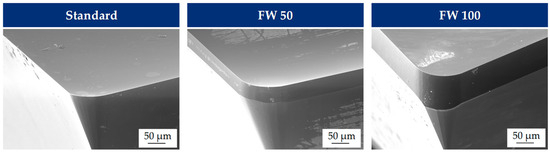
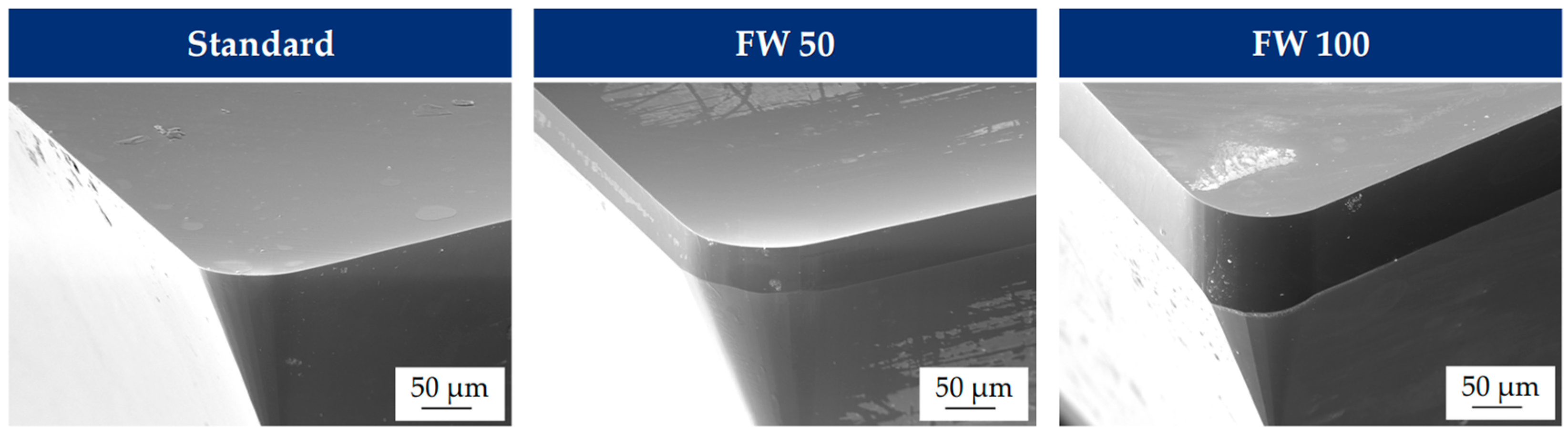
In the experimental investigations, the influence of the tool geometry was analyzed. For this, different indexable inserts were used. The standard tools (“Standard”) were characterized by a nominal rake angle of 0°, a corner radius of 90 µm, and a clearance angle of 25°. In addition, tools with artificially generated flank wear lands were utilized. They differ concerning their flank wear land width, with about 50 µm (“FW 50”) and about 100 µm (“FW 100”). Compared to the other indexable inserts and due to the production process, the tools with the artificially generated flank wear lands had a slightly larger corner radius of about 100 µm. The standard tool and the indexable inserts with defined flank wear land width (FW 50, FW 100) are shown in Figure 2. The flank wear land was achieved by grinding and subsequent polishing. The nominal flank wear land width represents a mean value. However, in the area where the indexable insert and the specimen are in contact while machining, only small differences in the flank wear land width were measured.
Figure 2.
Indexable inserts used in the experimental investigations.
Furthermore, indexable inserts with a chamfered cutting edge and therefore a negative nominal rake angle of −10° (“RA 10”) and −20° (“RA 20”) were utilized in the experimental investigations. Their corner radius (90 µm) and clearance angle (25°) correspond to the standard tools.
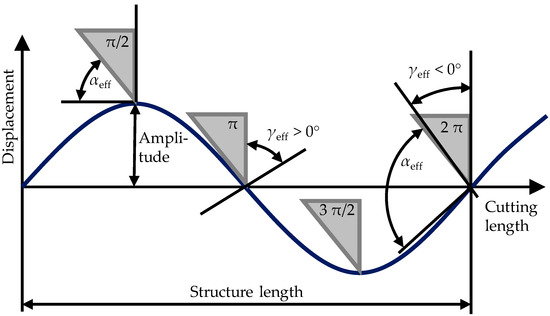
In addition to the tool geometry, cutting speed (120 m/min, 480 m/min) and feed (0.05 mm, 0.1 mm) were changed in two stages. Exceptions to this were the experimental investigations regarding the influence of the nominal rake angle. In these cases, only one cutting speed (480 m/min) and feed (0.1 mm) were applied. Regarding the expected ultrasonic frequency (22.8 kHz) and amplitude (20 µm) for the standard tools, the chosen cutting speeds resulted in different cutting conditions. For the lower cutting speed (120 m/min), the flank face got in contact with the machined surface, whereas there was no contact for the higher cutting speed (480 m/min). The geometrical conditions and limitations are visualized in Figure 3.
Figure 3.
Schematic representation of the ultrasonic oscillation and the change in rake and clearance angle.
The most critical point for the tool design is π, since the effective clearance angle (αeff) becomes minimal. For the parameters chosen in the experiments, a minimum clearance angle of 20° (vc = 480 m/min) and 55° (vc = 120 m/min) would be necessary to avoid contact between the flank face and machined surface. Since the clearance angle is 25°, negative effective clearance angles occur for the lower cutting speed analyzed, resulting in the mentioned contact. The nominal rake angle of the tools only occurs at the points π/2 and 3 π/2. For the example shown, characterized by a nominal rake angle of 0°, in the part with a decreasing displacement (π/2 to 3 π/2), positive rake angles arise, reaching their maximum at the inflection point (π). In the parts of the oscillation with an increasing displacement (0 to π/2, 3 π/2 to 2 π), negative rake angles occur, reaching the highest absolute value at the inflection point (2 π).
The combination of cutting speed and ultrasonic frequency resulted in expected structure lengths at the machined surfaces of 88 µm (120 m/min) and 351 µm (480 m/min). Moreover, for comparison, additional experimental investigations without ultrasonic superimposition were realized. In all experimental investigations, a constant depth of cut of 0.1 mm was chosen, resulting in a final diameter of the specimens of 30 mm. Generally, the tests were performed dry without the use of a cooling lubricant. Every combination of machining parameters and tool geometry was realized at least twice.
For surface analysis, an optical coordinate measuring machine, Bruker alicona type µCMM, was used. After measuring, the shape of the surface was removed by a second-degree polynomial filter. Subsequently, the surface was aligned by applying the method of least squares. The size of the analyzed area was 2 mm × 2 mm. Surface parameters were determined according to current standards (DIN EN ISO 25178) [18]. For detailed characterization of the surface and the surface structures, SEM micrographs were utilized. For this, a SEM Zeiss type EVO 25 was used.
In addition, for the comparison between the expected and the resulting surfaces after machining, a kinematic simulation was realized using Matlab (version 2021b), which is further described in [19]. The model treats the workpiece and the tool as Dexel objects represented by discrete points. The kinematical simulation is performed by gradually intersecting the tool with the workpiece along its tool trajectory and subtracting the chip volume from the workpiece surface. The general approach is referred to as kinematic simulation, as no effects such as burr and chip formation, cutting forces, or process temperatures are considered. The number of discrete time steps per structure length was 97 (vc = 120 m/min) and 387 (vc = 480 m/min), respectively. The spatial resolution of the tool trajectory was about 0.9 µm. For the simulations, a constant frequency (22.8 kHz) and amplitude (20 µm) were assumed.
3. Results and Discussion
3.1. Influence of the Cutting Speed and the Feed
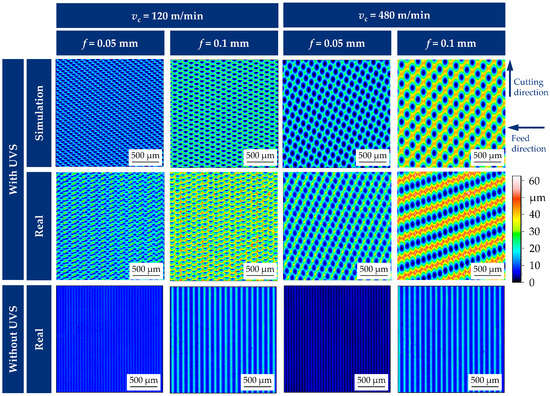
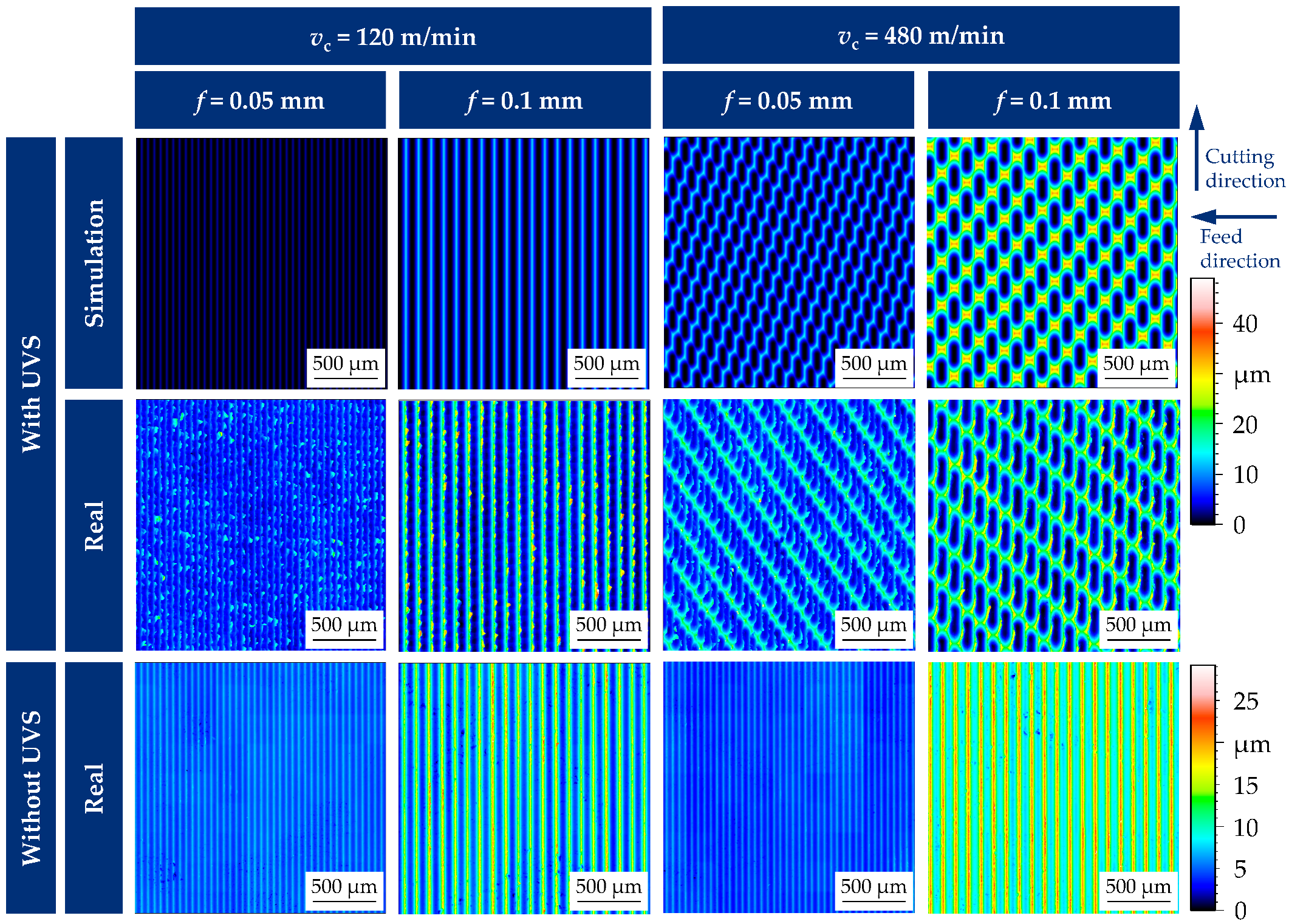
Generally, all specimens machined exhibit the expected basic geometry of the surface microstructure. This involves a peak-valley profile in the cutting direction, which is influenced by the cutting speed and therefore the structure length, and also the kinematic roughness profile in the perpendicular direction/feed direction, which changes mainly with the feed.
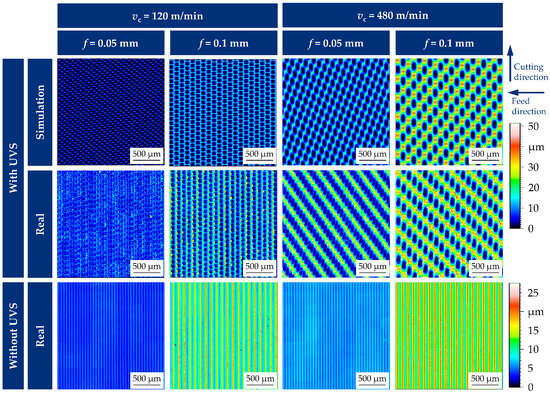
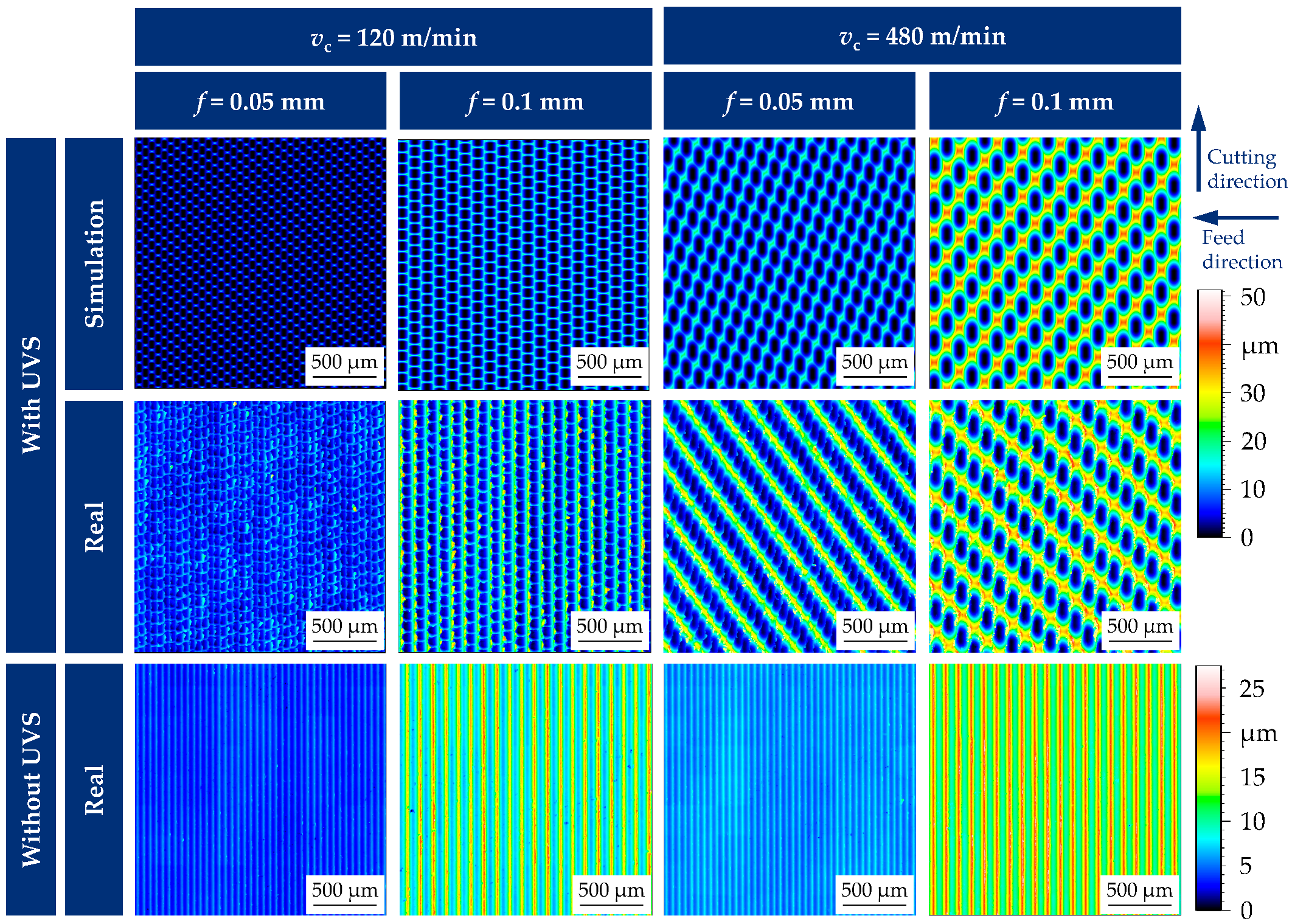
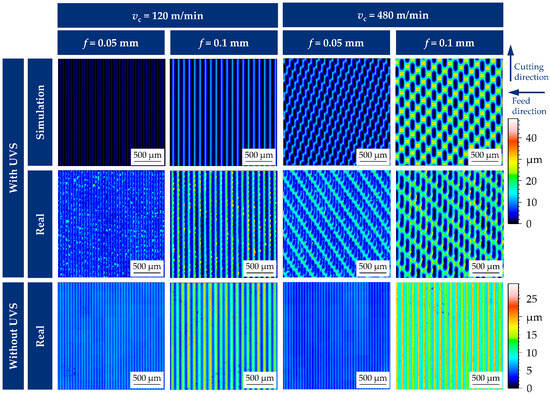
In Figure 4, the influences of the cutting speed and the feed on the surface properties are shown. To enhance understanding of the mechanisms in the UVSM process, the results of the simulations are represented for comparison. Moreover, results from experiments realized without additional ultrasonic vibration superimposition (UVS) are visible.
Figure 4.
Influence of the cutting speed and the feed on the geometrical surface properties: comparison of the simulation (top), the experimental results with (middle) and without ultrasonic vibration superimposition (bottom).
Generally, there is a high degree of concordance between the simulated and the machined surfaces and microstructures. However, roughness values after UVSM are higher than the calculated values, shown in Table 1. The arithmetical mean height Sa was chosen, since the parameter is typical for the surface characterization. The reduced peak height Spk is sensitive to profile peaks and consequently to burrs, which were characteristic for the machined surfaces.
Table 1.
Influence of the cutting speed and the feed on the arithmetic mean height Sa and the reduced peak height Spk: comparison of the simulations (Sim) and the experimental results (Real).
This is a result of differences in amplitudes, material deformation, and the formation of burr between simulations and experimental results. The biggest difference in Spk values between simulated and machined surfaces occurs for the highest cutting speed (480 m/min) and feed (0.1 mm) analyzed. This can be explained by the calculation method of the surface parameter. The surface geometry results in a very strong increase in the Abbott curve. Due to the material distribution, a high part of the material fraction of the profile peaks belongs to the core roughness. Hence, small Spk values are explained. Due to burr formation in machining, the increase in the Abbott curve is less strong. Hence, significantly higher values for Spk are determined.
For machining without UVS, a similar trend occurs. Values for Sa and Spk are generally higher after machining than in the simulation, with the exception of the Spk value for machining with the higher cutting speed (480 m/min) and feed (0.1 mm). However, the differences between the values determined for the simulated and machined surfaces are generally lower than for UVSM. Sa values are lower for machining without UVS compared to UVSM, since there is no additional peak-valley profile at the surface in the cutting direction. For Spk, this relationship depends on the feed. For the lower feed, Spk values are lower for the machining without UVS. For the higher feed analyzed, the values for Spk are higher after machining without UVS. This is explained by the missing interruption of the feed marks, which are more dominant when machining with the higher feed.
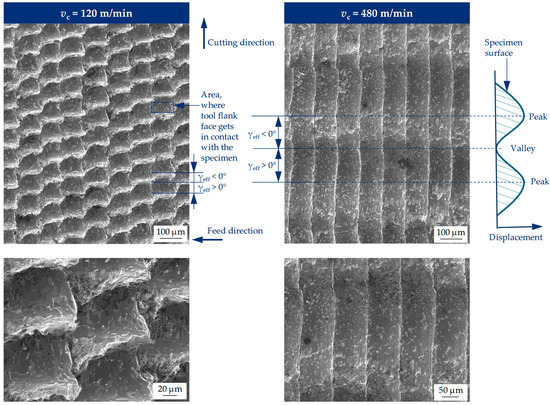
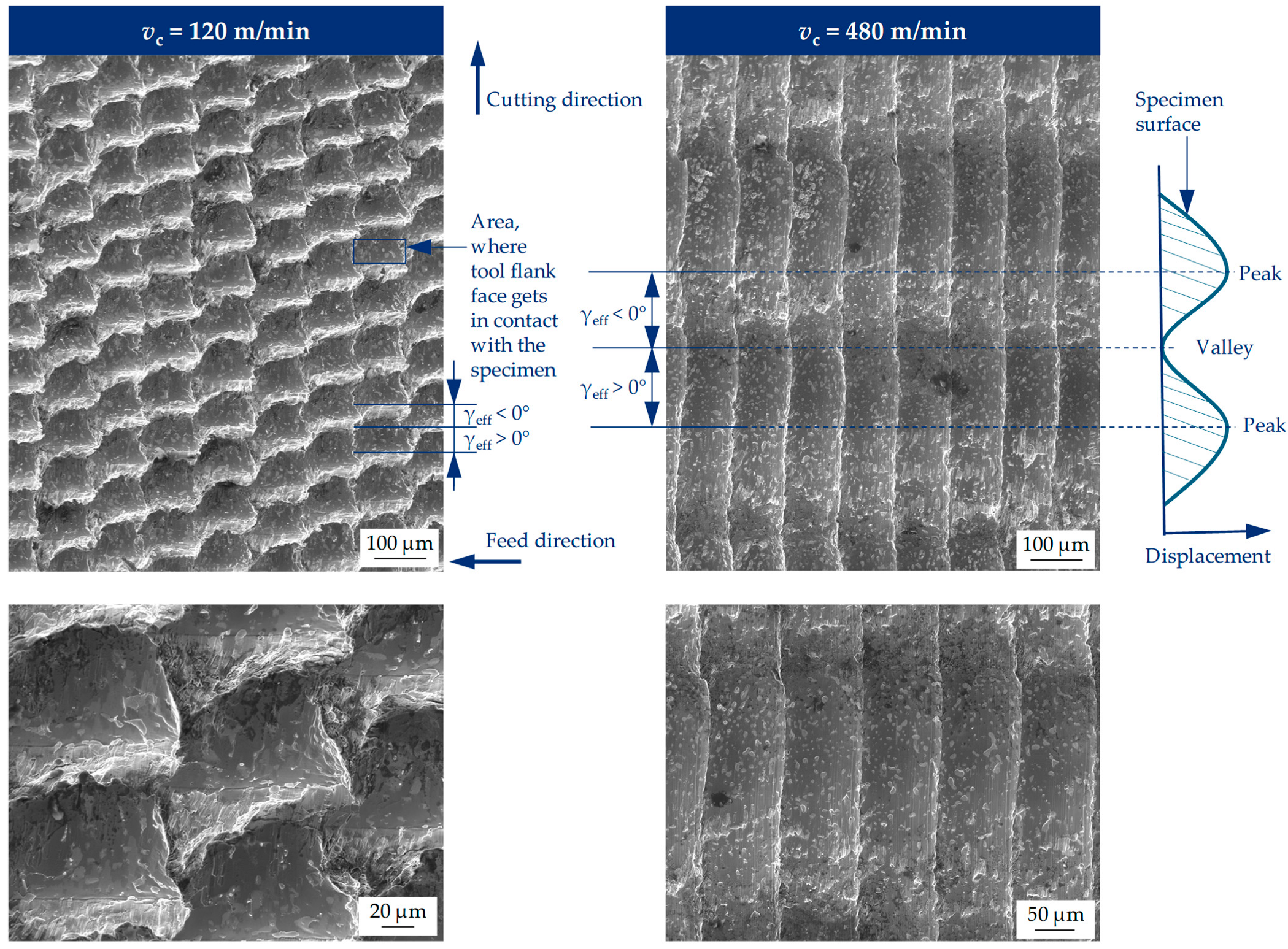
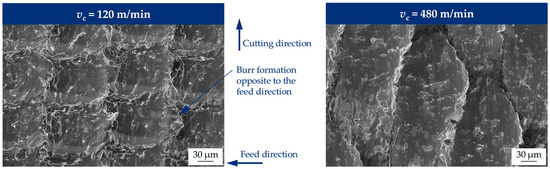
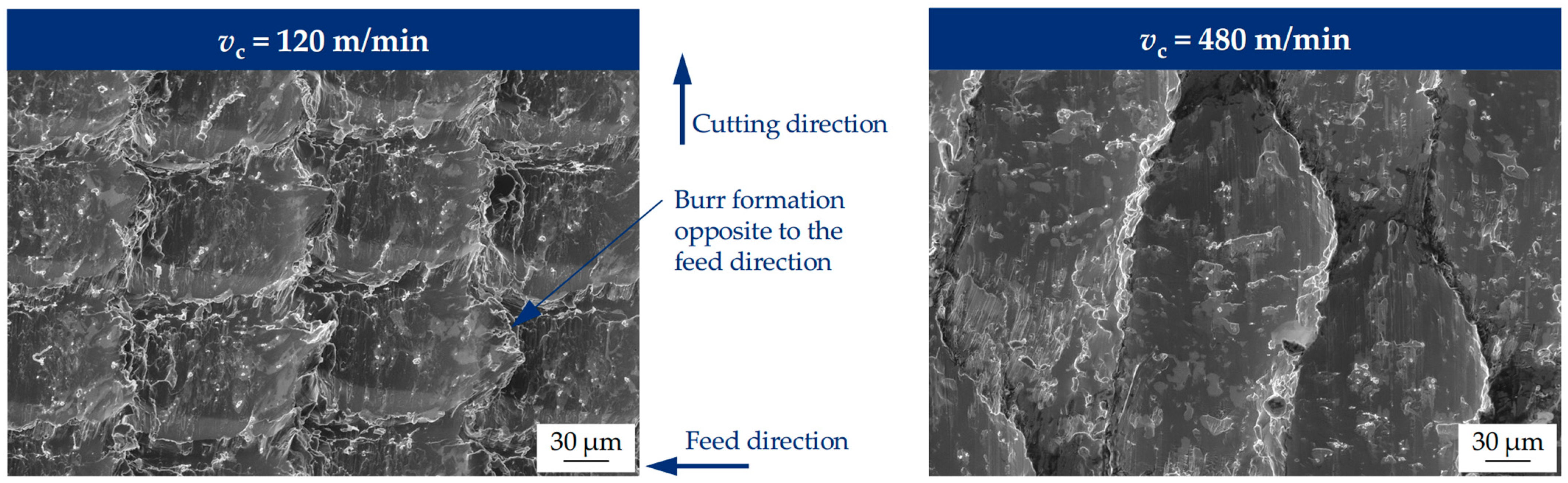
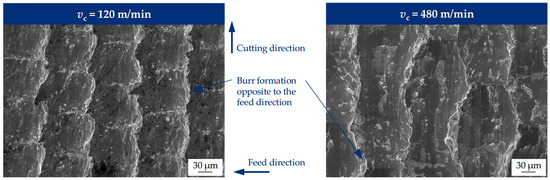
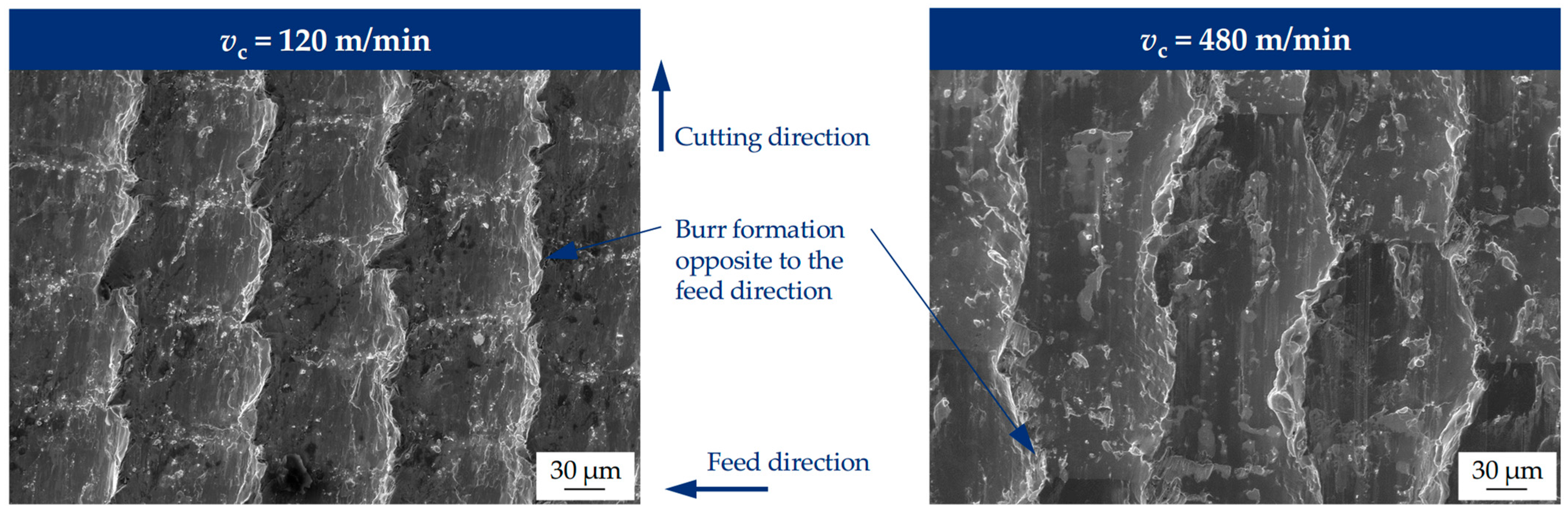
The surfaces after UVSM are generally characterized by the feed marks, which represent the highest points of the profile, except for the case of machining with the lowest cutting speed (120 m/min) and feed (0.05 mm). The feed marks are interrupted due to the superimposed ultrasonic vibration movement of the tool. Furthermore, as a result of the decreased kinematic roughness, these feed marks are less distinct after turning with the lower feed. Especially in the case of machining with the lower cutting speed, involving a contact of the tool flank face and the machined surface, burr formation at the highest points of the peak-valley profile in the cutting direction occurs. When the flank face gets in contact with the specimen surface, material is deformed in the opposite direction to the cutting direction. For the feed of 0.05 mm, this results in higher roughness peaks than at the feed marks. Detailed analyses are based on SEM micrographs, shown in Figure 5.
Figure 5.
SEM micrographs of the surfaces after machining with a cutting speed of 120 m/min (left) and 480 m/min (right), overview (top), and detailed surface analysis (bottom) (f = 0.1 mm).
The analysis is only shown for the higher feed. For the lower cutting speed, two areas of the structures are clearly visible. Changes in the effective rake angle (+55° to −55°) are bigger compared to the higher cutting speed regarded (+20° to −20°). Moreover, the flank face gets in contact with the specimen surface. However, this contact occurs in the part where the rake angle is positive. With these rake angles, the material is better machinable. This results in lower surface roughness values, because in the turning of bronze, positive rake angles are more suitable to reach surface roughness values close to the theoretical values. In this part, a further smoothing effect occurs due to the contact. At the increasing part of the ultrasonic oscillation, rougher surfaces are visible. This is explained by the negative effective rake angle and, therefore, higher plastic deformation resulting in strong material bulging. For the higher cutting speed analyzed, different characteristic zones in the cutting direction, depending on the effective rake angle, are present. Material bulging is again visible in the zones where the effective rake angle is strongly negative, while smoother surfaces occur when the rake angle is positive. However, the differences are not as distinct as for the lower cutting speed. This is explained by the decreased absolute values of the rake angle for machining with a cutting speed of 480 m/min compared to 120 m/min.
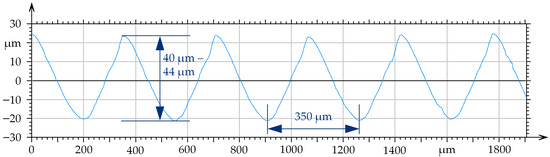
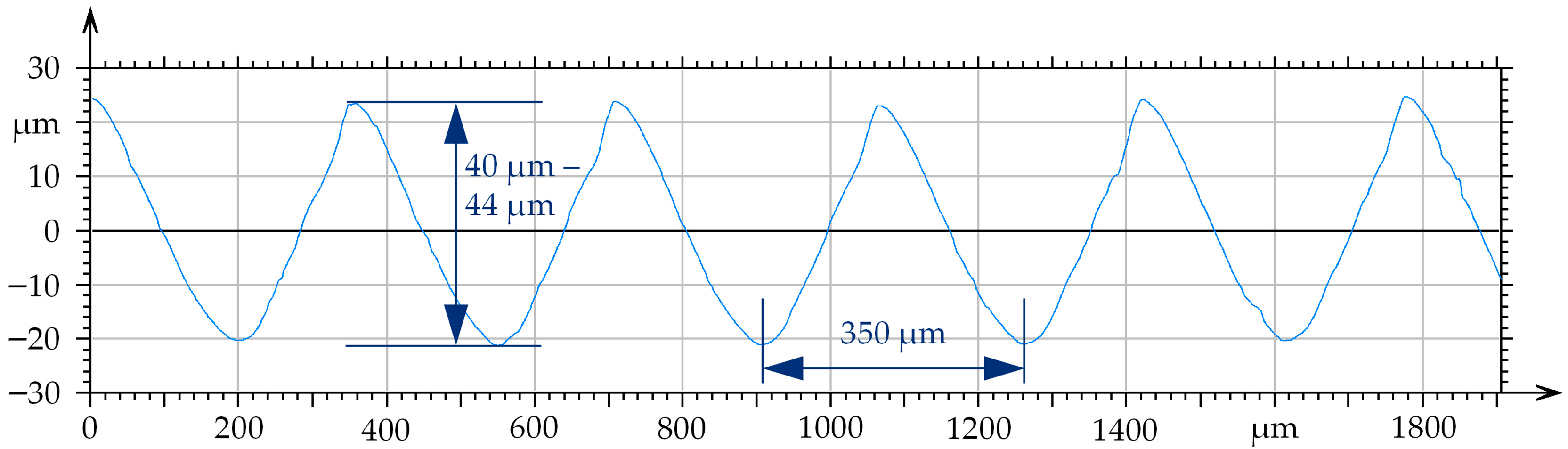
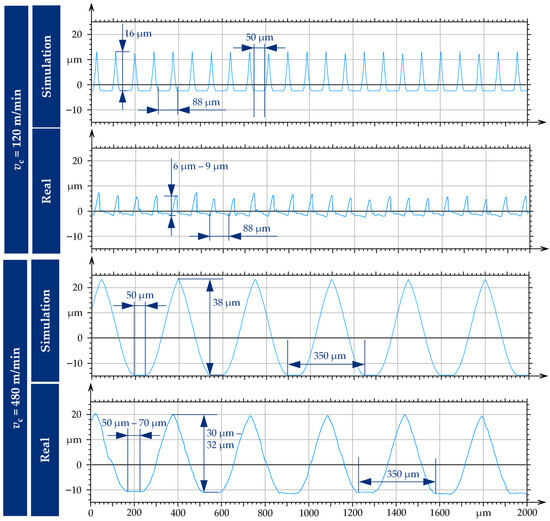
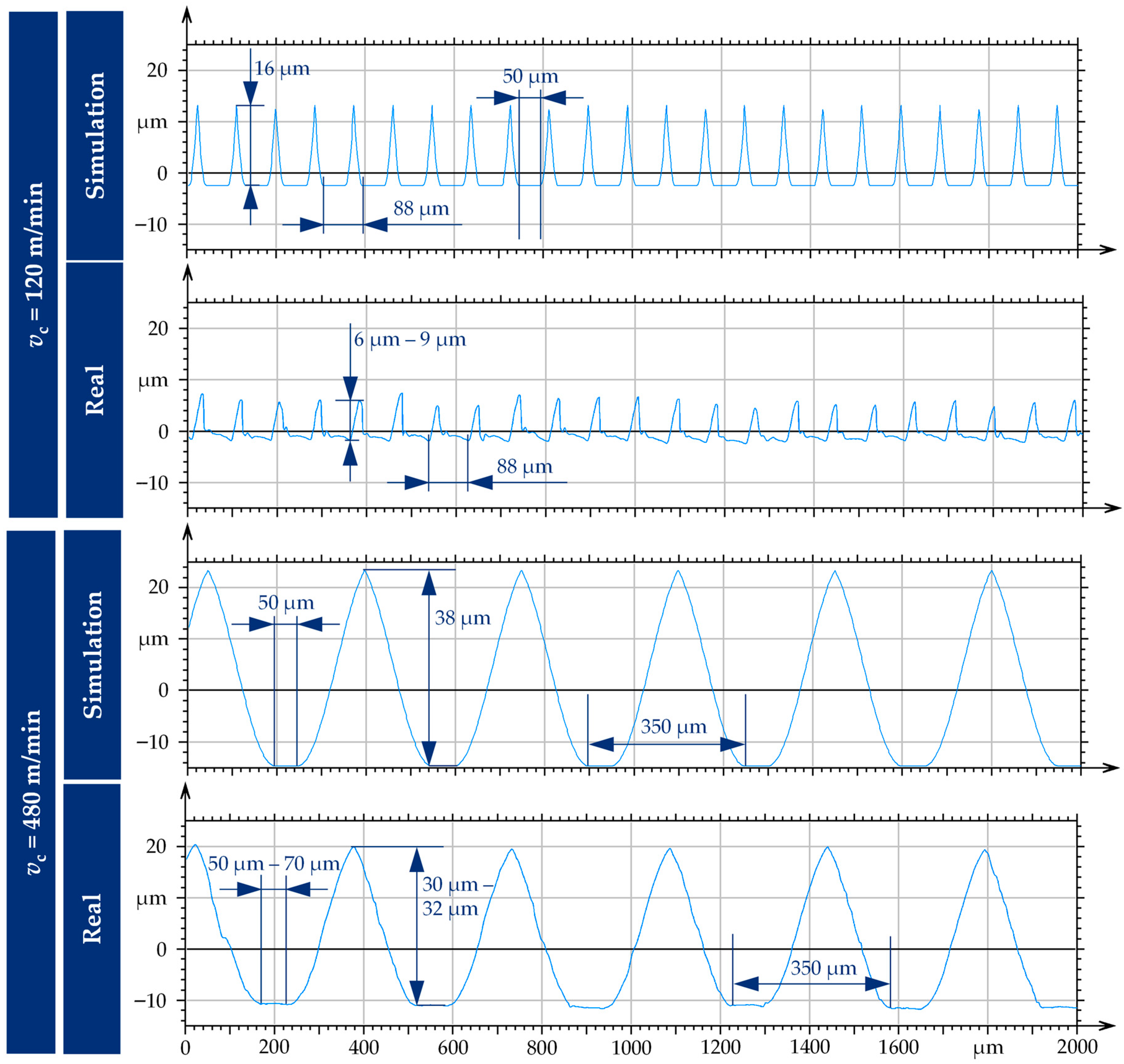
The ultrasonic oscillation of the tool is also visible at the machined surface, characterized by the structure length and the structure height (vertical distance between the highest and lowest point). In Figure 6, a surface profile extracted in the cutting direction is shown. This is realized for the higher cutting speed and feed. In this case, the tool flank face does not get in contact with the machined surface. Hence, the determination of the structure height is easier due to reduced burr formation. Moreover, the distance between the feed marks is higher, so profiles are easier to extract and less influenced by the feed marks.
Figure 6.
Surface profile extracted in the cutting direction (vc = 480 m/min, f = 0.1 mm).
Analyzing the profile shows that the measured structure length corresponds to the calculated value. However, due to the resonance control of the generator, small differences in frequency occurred. The measured structure heights at the surface are in the range between 40 µm and 44 µm.
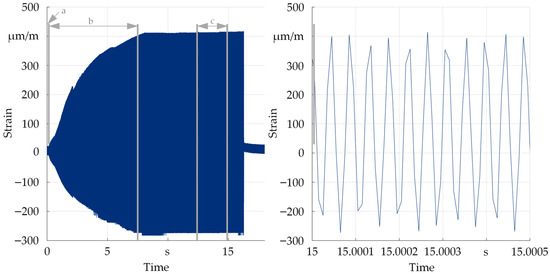
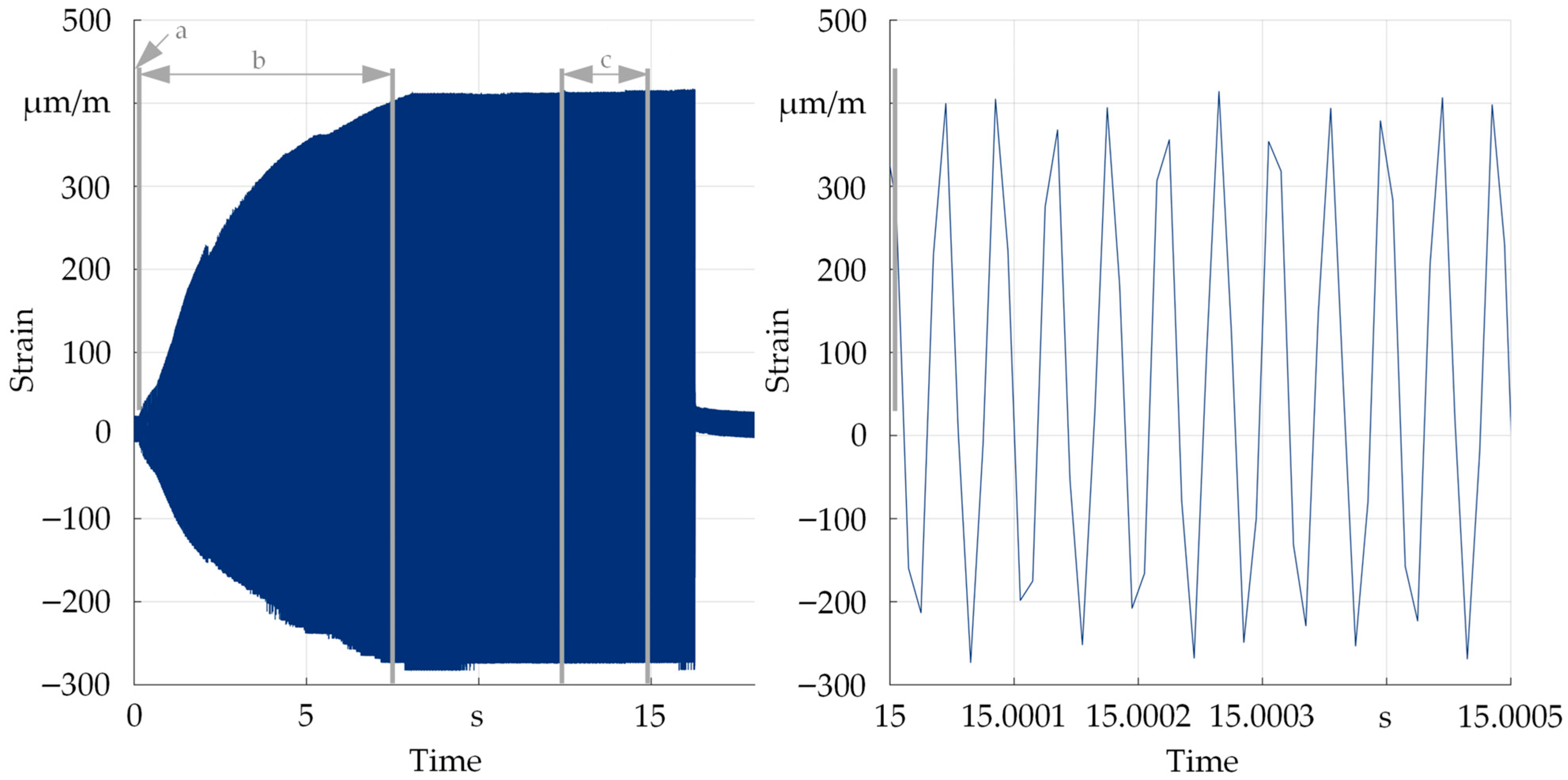
Figure 7 (left) shows the collected data of the strain measurement using the fiber Bragg grating. During the beginning of the measurement, there is a short time frame where only noise is measured, and the occurring strain is 0 µm/m (a). When the voltage supply of the generator is activated, the strain increases with an increasing supply voltage, which can be seen from 0.2 s to 7.5 s (b). The embedded control system of the generator adjusts the operating frequency of the system automatically. The turning process (c) started at 12.4 s, which cannot be detected with the setup in the time domain, as the compressive stresses resulting from the passive force during the turning process are small. A close-up view of the collected data, see Figure 7 (right), shows the behavior during the turning process. It can be seen that the sampling frequency of 100 kHz is enough to reliably measure the occurring vibrations. Additionally, it can be seen that the positive strain reaches approx. 400 µm/m.
Figure 7.
Strain measurement during the turning process: whole measurement with defined time intervals: (a) ultrasonic system is off, (b) increasing strain with increasing supply voltage, (c) turning process when tool and specimen are in contact (left); close-up view during the turning process (right) (vc = 480 m/min, f = 0.1 mm).
3.2. Influence of the Flank Wear Land Width
In general, machining involves tool wear. To expand the industrial use of ultrasonic vibration superimposed turning, the influence of tool wear on the surface properties and the in situ signals has to be determined. In prospective steps, adaptation of the machining parameters depending on the tool wear state and in situ signals can be realized. Flank wear is the common continuous tool wear type due to abrasion, which occurs for nearly every combination of tool and workpiece in the turning process. Hence, the two defined flank wear land widths (50 µm, 100 µm) are used, and their influence is analyzed. Due to the importance, next to the indexable inserts, cutting speed and feed were changed in identical steps, like for the standard tools. Moreover, experiments without ultrasonic vibration superimposition (UVS) were realized to determine the general influence of the flank wear compared to the unworn tools. The influence of the tool geometry on the surface properties for the lower flank wear land width (FW 50) is shown in Figure 8.
Figure 8.
Influence of the cutting speed and the feed on the geometrical surface properties when using tools with a flank wear land width of 50 µm (FW 50): comparison of the simulation (top) and the experimental results with (middle) and without ultrasonic vibration superimposition (bottom).
In general, a high qualitative concordance between the simulated and the machined surfaces is again visible. Moreover, compared to the use of the standard tools, the highest points of the profile occur in all cases at the feed marks. This is a result of the burr formation, which especially arises at these feed marks when machining with the lower cutting speed. This burr formation leads to the largest difference between the simulations and the resulting surface, because burr formation is not regarded in the kinematic simulations. As a result of the artificially generated flank wear land, for both cutting speeds, the flank face gets in contact with the specimen surface. However, as a consequence of the reduced structure length, distances between these contact points amount to only 25% for the lower cutting speed compared to the higher one. Furthermore, since the structure length is smaller for machining with the lower cutting speed and amplitudes remain constant, the absolute values of the angles of the decreasing and increasing flank of the surface profile also increase. Due to this, more material is deformed when the flank face gets in contact with the surface. Hence, the burr, which is oriented at the feed marks in the direction opposite to the feed direction, is more distinct for these cases. This is also visible in the SEM micrographs shown in Figure 9.
Figure 9.
SEM micrographs of specimens machined with a cutting speed of 120 m/min (left) and 480 m/min (right) using tools with a defined flank wear land width of 50 µm (f = 0.1 mm).
The use of the tools with defined flank wear land width also significantly influences the surface profile in the cutting direction. Therefore, the profiles are extracted for the higher feed regarded (0.1 mm), shown in Figure 10.
Figure 10.
Surface profiles extracted in the cutting direction using tools with a flank wear land width of 50 µm for both cutting speeds analyzed: comparison of the simulations and the experimental results for UVSM (f = 0.1 mm).
The structure length determined nearly agrees with the calculated values. Moreover, the flank wear land width is visible as a valley plateau between the peaks of the profile. Since the structure length is higher than the flank wear land width, periodic profile peaks occur, showing the structure length as the distance between. However, differences between simulated and machined surfaces also depend on the cutting speed.
For both cutting speeds analyzed, the structure height is larger in the simulation than after the experimental investigations. This is partly explained by the small deviations of the flank wear land width from the nominal value. Furthermore, material adherence at the flank face, which was partly visible, could also lead to changes in the contact conditions. Furthermore, adaptations in ultrasonic frequency while turning due to resonance control slightly change the properties of the surface profile. Nevertheless, the main reason for the differences between simulation and machined surfaces is that the kinematic simulation does not consider the deformation behavior of the material. Especially when using the tools with artificially generated flank wear land, this results in large differences compared to the simulated surface. In the simulations, the contact between the flank face of the tool and the generated surface only results in a removal and not in a deformation of the specimen material. The continuous movement of the tool in the direction of the specimen surface results in a strong local deformation. This engages a flattening of the surface. The lowest points of the profile are lifted by plastically deforming the material in this direction. Moreover, the spring-back effect has to be considered.
Next to the indexable inserts with a flank wear land width of 50 µm, tools with a doubled flank wear land width of about 100 µm were used. The generated surfaces of the simulations and the surfaces after machining with and without ultrasonic vibration superimposition are shown in Figure 11.
Figure 11.
Influence of the cutting speed and the feed on the geometrical surface properties when using tools with a flank wear land width of 100 µm (FW 100): comparison of the simulations (top) and the experimental results with (middle) and without ultrasonic vibration superimposition (bottom).
Overall, there is a high degree of concordance between the simulations and the results of the experimental investigations. However, similar to machining with the FW 50 tools, there are also distinct differences in the surface microstructure, which are analyzed and explained more in detail.
For the lower cutting speed analyzed, the flank wear land width is larger than the structure length. This involves continuous contact between the flank face and the resulting surface while machining. For the higher cutting speed regarded, the structure length is higher than the flank wear land width. Hence, due to the ultrasonic oscillation, there is an interrupted contact between the flank face and the machined surface. The biggest difference between the simulated and the machined surfaces is again the burr formation, which especially occurs in the feed direction. Due to the kinematics, the burr is deformed opposite to the feed direction. This is visualized more in detail by SEM micrographs shown in Figure 12.
Figure 12.
SEM micrographs of specimens machined with a cutting speed of 120 m/min (left) and 480 m/min (right) using tools with a defined flank wear land width of 100 µm (f = 0.1 mm).
Next to the burr formation in the feed direction, differences between simulations and machined surfaces in the cutting direction are also visible. For a detailed analysis, profiles are shown in Figure 13.
Figure 13.
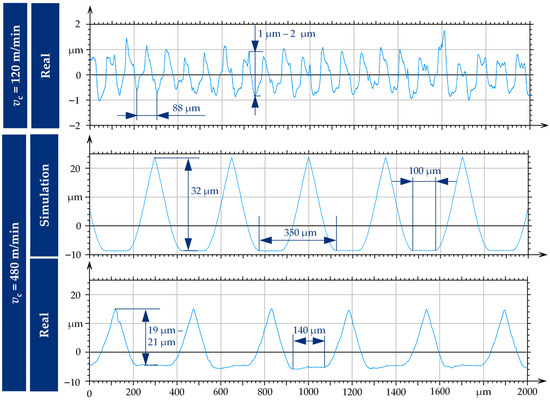
Surface profiles extracted in the cutting direction using tools with a flank wear land width of 100 µm for both cutting speeds analyzed and compared to the results of the simulation (f = 0.1 mm).
Generally, using the tools with a flank wear land width of 100 µm leads to reduced surface roughness values compared to machining with indexable inserts characterized by a flank wear land width of 50 µm. This is explained by the smoothing effect of the artificially generated flank wear land.
For the lower cutting speed analyzed (120 m/min) in the idealized simulation, this profile in cutting direction is only a horizontal line. However, after machining, a periodic surface profile is visible. The distance between two adjacent highest or lowest profile points corresponds to the calculated structure length (88 µm). The height differences between these highest and lowest profile points are between 1 µm and 2 µm. These small peaks are a result of deformation effects. When the cutting edge reaches the deepest point of the ultrasonic oscillation, the flank face with the flank wear land is in contact with the machined surface. This results in a deformation of the material, and due to the process kinematics, the material is deformed in the opposite direction to the cutting direction.
For the higher cutting speed regarded (480 m/min), analogous to the tools with a flank wear land width of 50 µm, the maximum amplitudes of the surface profile are higher in the simulations than after machining. Reasons for this are similar to machining with the tools with a 50 µm flank wear land width. However, the distance between the highest points remains unchanged (350 µm). The profile plateau at the deepest point of the surface profile doubles (140 µm). Hence, the surface peaks are less distinct.
For a better and more universal characterization of the surfaces, selected 3D surface parameters are regarded, as shown in Table 2. Generally, the values for the machined and the simulated surfaces are lower than in the case of using the standard tools. This is explained by the smoothing effect of the flank wear land and the resulting reduced height between peak and valley at the machined surface. Moreover, values for Sa and Spk after UVSM are generally higher than in the simulations except for machining with the higher cutting speed (480 m/min) and feed (0.1 mm), and for the Spk value in the case of machining with the lower cutting speed (120 m/min) and feed (0.05 mm) when using the FW 50 tool. The higher values in machining are a result of the already mentioned additional plastic deformation and burr formation. However, the values for Sa decrease with increasing flank wear land width due to the raising smoothing effect. Otherwise, the Spk values increase for the higher flank wear land width. This corresponds to the fact that these values are more significantly influenced by profile peaks, which especially occur due to burr formation. The qualitative difference between roughness values for the simulated and machined surfaces (higher values for the simulations), when machining with the highest cutting speed (480 m/min) and feed (0.1 mm), compared to the other combinations, is explained by the reduced influence of the burr on the roughness values. The distance between the areas where burr occurs (feed marks and the highest profile points in the cutting direction) is the highest in the experiments. Moreover, the flank wear land width is slightly higher, and the ultrasonic vibration frequency is a little bit lower than in the simulations. This results in less distinct ridges in the cutting direction and hence lower roughness values.
Table 2.
Influence of the cutting speed, the feed, and the flank wear land width on the arithmetic mean height Sa and the reduced peak height Spk; comparison of the simulations and the experimental results.
For machining without UVS, there is only a small difference between Sa and Spk values determined for the simulated and machined surfaces. For the machined surfaces, all determined values are higher in the case of UVSM compared to machining without UVS, which is explained by the additional peak-valley profile in the cutting direction, depending on the machining parameters, and the formation of burr.
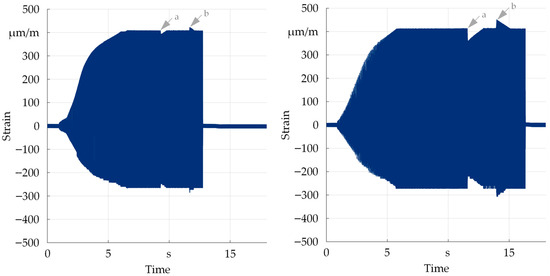
The artificially generated flank wear land has an influence on the data gathered using the fiber Bragg gratings. For a flank wear land width of 50 µm, it can be seen in Figure 14 (left) that the measured strain drops off from approx. 405 µm to 390 µm (point a), resulting from the higher forces when using the indexable inserts with artificially generated flank wear land compared to the standard tools. The embedded control system of the generator adjusted for this by increasing the supplied voltage and by increasing the operating frequency by 20 Hz. A higher flank wear land width (FW 100) increases this effect and causes a drop-off of the measured strain of 12%, from 410 µm to 360 µm; see Figure 14 (right). This is also compensated for by the control system by increasing the supplied voltage. When the tool is out of contact at a time of 14 s (Figure 14 (right) (point b)), strain increases accordingly, and the supplied voltage is reduced again to enable a stable operation of the system. The measurements show that the fiber Bragg gratings can be used to determine the occurring flank wear of the tool, shown by an increasing drop-off of the measured strain in the sonotrode.
Figure 14.
Strain measurement of tools with flank wear land width of 50 µm (left) and 100 µm (right) with the characteristic points (a) tool and specimen get in contact and (b) end of the contact between tool and specimen.
While machining, components of the resultant force were detected. Ultrasonic vibration superimposed turning involves a high variance of the values. Due to the lower sampling rate of the force measurement system, analysis of a single ultrasonic oscillation is not possible. Changes in the force components due to adaptation of machining parameters in the considered range are much smaller than the general variance of the values in ultrasonic vibration superimposed turning. Consequently, the mean values shown in Table 3 are only determined for turning without ultrasonic vibration superimposition.
Table 3.
Components of the resultant force (cutting force Fc, passive force Fp, and feed force Ff) in machining without ultrasonic vibration superimposition using different tools.
Generally, it becomes visible that increasing the feed leads to a higher resultant force, especially to higher cutting forces. This is explained by the increasing undeformed chip thickness. Furthermore, cutting speed has no marked influence on the components of the resultant force. Higher cutting speeds involve increased shear zone temperatures and slight material softening. However, for the analyzed combination of tool and specimen and the used parameters, the effect on the forces is negligible. Using the tool with artificially generated flank wear land leads to an increase in the components of the resultant force. Moreover, the resultant force increases with raising flank wear land width. This is explained by the increased contact area between the tool and the specimen and therefore the friction between the flank face and the machined surface. It has to be considered that in these tests without ultrasonic vibration superimposition, only the described effect of the friction between the tool and the workpiece could be analyzed. In experimental investigations with ultrasonic vibration superimposition, a deformation or hammering effect in the direction of the workpiece surface due to the tool movement is expected. This should result in higher values for the components of the resultant force, especially the passive forces.
3.3. Influence of the Rake Angle
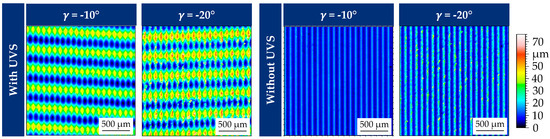
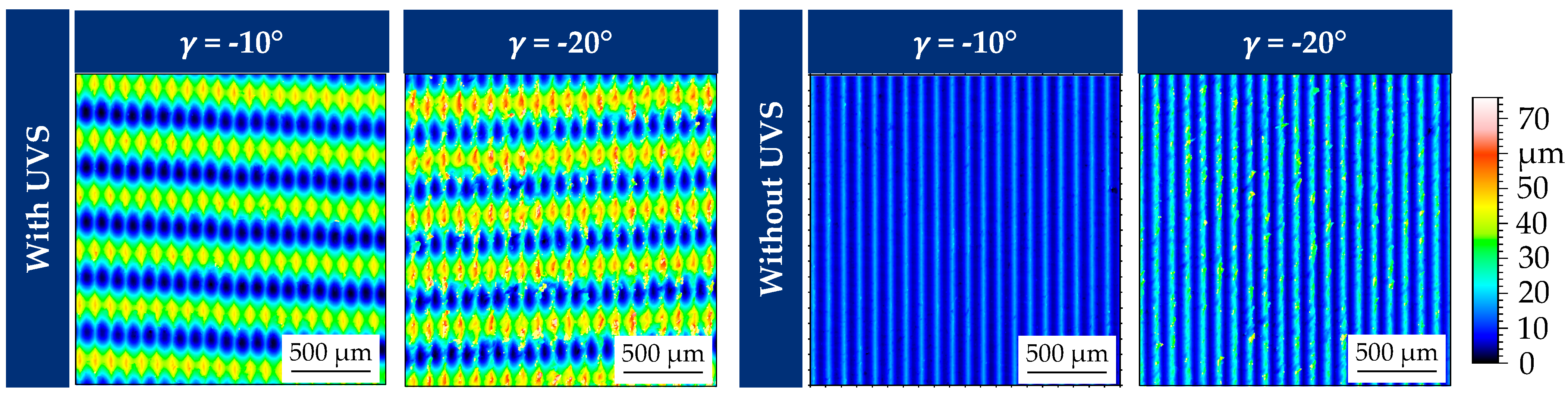
Generally, machining of soft materials like bronze requires positive rake angles to reach surface profiles similar to the kinematic roughness profile. Otherwise, negative rake angles offer better tool stability, and moreover, due to higher passive forces and increased plastic deformation in the shear zone, effects like grain refinement or the introduction of near-surface compressive residual stresses are possible. Next to this, negative effective rake angles are nearly unavoidable in ultrasonic vibration superimposed machining, and due to the high tool stresses, more stable tools may be necessary for industrial applications. In Figure 15, the influence of the tool rake angle on the geometrical surface properties of the machined surfaces is shown.
Figure 15.
Influence of the tool rake angle on the geometrical surface properties when machining with (left) and without ultrasonic vibration superimposition (right) (vc = 480 m/min, f = 0.1 mm).
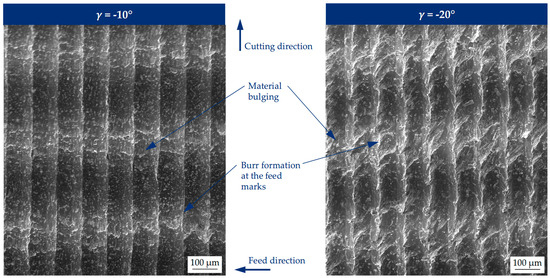
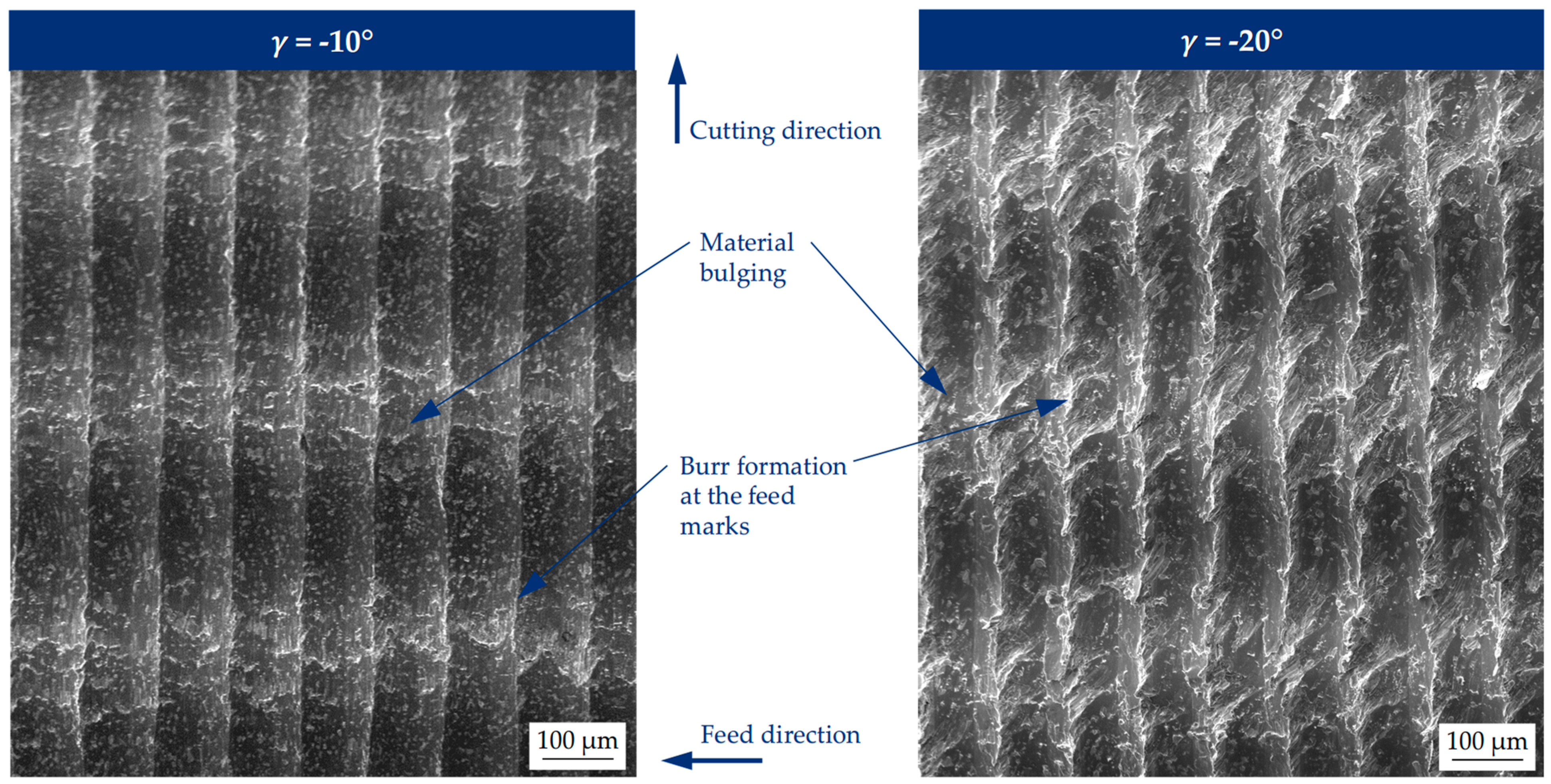
A distinct influence of the rake angle on the surface properties is visible. When machining with ultrasonic vibration superimposition, slightly more dominant feed marks compared to machining with the standard tools (rake angle: 0°) occurred. In the case of using the tools with the nominal rake angle of −10°, the feed marks are only a little bit more distinct than when machining using the standard tools. The decrease in the nominal rake angle results in lower effective rake angles at every point of the oscillation. The changing stresses lead to higher plastic deformation of the material while machining, and due to the side flow of this deformed material, the mentioned feed marks with increased height occur. In the case of using the indexable inserts with the rake angle of −20°, the effects become much more dominant. This is visible in the form of even more pronounced feed marks and the formation of higher burrs, as well as increased roughness values. The mentioned effects of increased stresses and plastic material deformation become further dominant when decreasing the rake angle from −10° to −20°. For a better analysis of the generation of the microstructures, machining using these tools (RA 10, RA 20) without ultrasonic vibration superimposition is also realized. For the tools with the rake angle of −10°, surfaces with distinct feed marks, which are similar to the surfaces machined with the standard tools, are visible. The use of the tools with the rake angle of −20° results in a significant increase in the surface roughness values. Feed marks become much higher, and the burr formation increases. This effect is also visible in ultrasonic vibration superimposed turning experiments, where the effective rake angle is intermittently smaller than −20°. For a more detailed analysis of the surface generation depending on the effective rake angle, the SEM micrographs shown in Figure 16 are analyzed.
Figure 16.
SEM micrographs of surfaces machined with tools characterized by a nominal rake angle of −10° (left) and −20° (right) (vc = 480 m/min, f = 0.1 mm).
For comparison, the components of the resultant force are analyzed for experimental investigations without ultrasonic vibration superimposition, shown in Table 4. It becomes visible that all three components increase with decreasing rake angle, which corresponds to cutting theory [20,21,22]. The changing forces and resulting changing stresses explain the mentioned variations in the surface properties depending on the nominal and effective rake angle.
Table 4.
Components of the resultant force in machining without ultrasonic vibration superimposition using different tools.
For both negative rake angles analyzed (RA 10 and RA 20), the results of the strain measurements are similar to the standard tool. The quantitative changes in the trends, as shown for the FW 50 and FW 100 tools, are not visible. Cutting force reaches higher values for the use of the RA 20 tools compared to machining with the indexable insert with flank wear land widths of 50 µm and 100 µm. However, the passive and feed forces are lower when using RA 10 and RA 20 compared to the tools with flank wear land. Especially the passive force, which is acting in the direction of the ultrasonic oscillation, is expected to have a dominant influence on the strain measurements. Moreover, it should be considered that in ultrasonic vibration superimposed machining, a hammering effect toward the specimen occurs. Using tools with artificially generated flank wear land results in a higher contact area between the tool and the specimen. Hence, passive force further increases, which is not detected in the test without ultrasonic vibration superimposition.
4. Conclusions
The findings of the experimental investigations indicate that in ultrasonic vibration superimposed machining, the use of worn tools still enables the generation of surfaces with reproducible and defined geometrical surface properties. However, limitations and changes in surface microstructure when utilizing indexable inserts with defined flank wear lands are also shown. This is achieved for different cutting speeds and feeds. Their combination results in different predefined surface profiles, which are visualized using a kinematic simulation. Comparison of simulation and experimental results indicates a high concordance. Moreover, it is shown that even indexable inserts with negative nominal rake angles enable the achievement of suitable surface properties in ultrasonic vibration superimposed machining of bronze. However, an increase in the surface roughness values with decreasing rake angle is determined. Furthermore, generating the surfaces with a comparatively high ultrasonic vibration amplitude of 20 µm was possible. Moreover, strain measurement of the sonotrode strain by an integrated fiber Bragg grating shows the potential for in situ detection of tool conditions and for process control.
Further investigations should analyze the influence of additional machining parameters, e.g., the depth of cut, and properties of the indexable inserts, like corner radius, cutting edge radius, and tool material. Moreover, ultrasonic vibration characteristics should be changed; for instance, the amplitude or the ultrasonic frequency in a range close to the resonance frequency. This should establish a more complete understanding of the possibilities to generate geometrically defined surfaces in UVSM. Furthermore, additional workpiece materials should be considered to enhance the field of application of this process. Another aspect is the extension of the in situ measurements to realize process control. Finally, the smoothing effect shown should be used purposefully, for instance, to generate surfaces with defined microstructures or with localized, adapted properties like strong compressive stresses due to the smoothing effect.
The results of the research enhance the possible field of application of UVSM since it is shown that worn tools are also usable, how this influences the resulting surface microstructure, and that in situ measurements are appropriate to detect the tool condition in the process.
Author Contributions
Conceptualization, H.L. and J.M.W.; methodology, H.L. and J.M.W.; software, H.L. and J.M.W.; validation, H.L., J.M.W. and A.N.; formal analysis, J.M.W. and A.N.; investigation, H.L. and J.M.W.; resources, H.L., J.M.W., A.N., W.-G.D. and A.S.; data curation, H.L. and J.M.W.; writing—original draft preparation, H.L.; writing—review and editing, J.M.W., A.N., W.-G.D. and A.S.; visualization, H.L.; supervision, W.-G.D. and A.S.; project administration, W.-G.D. and A.S.; funding acquisition, W.-G.D. and A.S. All authors have read and agreed to the published version of the manuscript.
Funding
This research was funded by the Deutsche Forschungsgemeinschaft (DFG, German Research Foundation)—grant number 510749881.
Data Availability Statement
The original contributions presented in this study are included in the article. Further inquiries can be directed to the corresponding authors.
Conflicts of Interest
The authors declare no conflicts of interest.
Abbreviations
The following abbreviations are used in this manuscript:
| MCD | Monocrystalline diamond |
| UVS | Ultrasonic vibration superimposition |
| UVSM | Ultrasonic vibration superimposed machining |
References
- Zheng, W.C.; Huo, D. Review of vibration devices for vibration-assisted machining. Int. J. Adv. Manuf. Technol. 2020, 108, 1631–1651. [Google Scholar] [CrossRef] [Scilit]
- Feucht, F.; Ketelaer, J.; Wolff, A.; Mori, M.; Fujishima, M. Latest Machining Technologies of Hard-to-cut Materials by Ultrasonic Machine Tool. Procedia CIRP 2014, 14, 148–152. [Google Scholar] [CrossRef] [Scilit]
- Chang, S.S.F.; Bone, G.M. Burr size reduction in drilling by ultrasonic assistance. Robot. Comput -Integr. Manuf. 2005, 21, 442–450. [Google Scholar] [CrossRef] [Scilit]
- Halim, N.F.H.A.; Ascroft, H.; Barnes, S. Analysis of Tool Wear, Cutting Force, Surface Roughness and Machining Temperature During Finishing Operation of Ultrasonic Assisted Milling (UAM) of Carbon Fibre Reinforced Plastic (CFRP). Procedia Eng. 2017, 184, 185–191. [Google Scholar] [CrossRef] [Scilit]
- Maurotto, A.; Muhammad, R.; Roy, A.; Babitsky, V.; Silberschmidt, V. Comparing machinability of Ti-15-3-3-3 and Ni-625 alloys in UAT. Procedia CIRP 2012, 1, 330–335. [Google Scholar] [CrossRef] [Scilit]
- Yang, Z.; Zhu, L.; Zhang, G.; Ni, C.; Lin, B. Review of ultrasonic vibration-assisted machining in advanced material. Int. J. Mach. Tools Manuf. 2020, 156, 103594. [Google Scholar] [CrossRef] [Scilit]
- Brehl, D.E.; Dow, T.A. Review of vibration-assisted machining. Precis. Eng. 2008, 32, 153–172. [Google Scholar] [CrossRef] [Scilit]
- Zhang, R.; Steinert, P.; Schubert, A. Microstructuring of Surface by Two-stage vibration-assisted Turning. Procedia CIRP 2014, 14, 136–141. [Google Scholar] [CrossRef] [Scilit]
- Nestler, A.; Schubert, A. Surface Properties in Ultrasonic Vibration Assisted Turning of Particle Reinforced Aluminium Matrix Composites. Procedia CIRP 2014, 12, 125–130. [Google Scholar] [CrossRef] [Scilit]
- Xu, S.; Kuriyagawa, T.; Shimada, K.; Mizutani, M. Recent advances in ultrasonic-assisted machining for the fabrication of micro/nano-textured surfaces. Front. Mech. Eng. 2017, 12, 33–45. [Google Scholar] [CrossRef] [Scilit]
- Zhang, J.; Suzuki, N.; Wang, Y.; Shamoto, E. Ultra-Precision nano-structure fabrication by amplitude control sculpturing method in elliptical vibration cutting. Precis. Eng. 2015, 39, 86–99. [Google Scholar] [CrossRef] [Scilit]
- Ding, P.; Feng, P.; Wu, K.; Liu, J.; Li, Q.; Zhang, J.; Wang, Y.; Wang, J. Review of vibration texturing. J. Mater. Process. Technol. 2025, 340, 118851. [Google Scholar] [CrossRef] [Scilit]
- Sadat, A.B. The chip formation process of an annealed leaded bearing bronze. Int. J. Mach. Tools Manuf. 1990, 30, 33–45. [Google Scholar] [CrossRef] [Scilit]
- Sornakumar, T.; Senthil Kumar, A. Machinability of bronze-alumina composite with tungsten carbide cutting tool insert. J. Mater. Process. Technol. 2008, 202, 402–405. [Google Scholar] [CrossRef] [Scilit]
- Börner, R.; Landgraf, P.; Kimme, S.; Titsch, C.; Lampke, T.; Schubert, A. Fundamental Investigations in Tool Wear and Characteristics of Surface Microstructure for Ultrasonic Vibration Superimposed Machining of Heat-Treated X46Cr13 Steel Using Different Cutting Materials. J. Manuf. Mater. Process. 2021, 5, 27. [Google Scholar] [CrossRef] [Scilit]
- Maurotto, A.; Wickramarachchi, C.T. Experimental investigations on effects of frequency in ultrasonically-assisted end-milling of AISI 316L: A feasibility study. Ultrasonics 2016, 65, 113–120. [Google Scholar] [CrossRef] [Scilit] [PubMed]
- Liu, X.; Zhang, J.; Hu, X.; Wu, D. Influence of tool material and geometry on micro-textured surface in radial ultrasonic vibration-assisted turning. Int. J. Mech. Sci. 2019, 152, 545–557. [Google Scholar] [CrossRef] [Scilit]
- DIN EN ISO 25178; Geometrische Produktspezifikationen (GPS)—Oberflächenbeschaffenheit: Flächenhaft. Beuth Verlag GmbH: Berlin, Germany, 2012–2016.
- Börner, R.; Penzel, M.; Junge, T.; Schubert, A. Design of Deterministic Microstructures as Substrate Pre-Treatment for CVD Diamond Coating. Surfaces 2019, 2, 497–519. [Google Scholar] [CrossRef] [Scilit]
- Qian, L.; Hossan, M.R. Effect on cutting force in turning hardened tool steels with cubic boron nitride inserts. J. Mater. Process. Technol. 2007, 191, 274–278. [Google Scholar] [CrossRef] [Scilit]
- Liborius, H.; Lindner, T.; Nestler, A.; Uhlig, T.; Lampke, T.; Wagner, G.; Schubert, A. Surface hardening in finishing of sintered and thermal sprayed X120Mn12. Procedia CIRP 2022, 108, 126–221. [Google Scholar] [CrossRef] [Scilit]
- Saglam, H.; Unsacar, F.; Yaldiz, S. Investigations of the effect of rake angle and approaching angle on main cutting force and tool tip temperature. Int. J. Mach. Tools Manuf. 2006, 46, 132–141. [Google Scholar] [CrossRef] [Scilit]

Disclaimer/Publisher’s Note: The statements, opinions and data contained in all publications are solely those of the individual author(s) and contributor(s) and not of MDPI and/or the editor(s). MDPI and/or the editor(s) disclaim responsibility for any injury to people or property resulting from any ideas, methods, instructions or products referred to in the content. |
© 2025 by the authors. Licensee MDPI, Basel, Switzerland. This article is an open access article distributed under the terms and conditions of the Creative Commons Attribution (CC BY) license (https://creativecommons.org/licenses/by/4.0/).