1. Introduction
The safe and reliable operation of high-speed trains relies on the health monitoring of key components. Among these, the bogie bearing, as a core component, withstands complex alternating loads and vibration impacts. In practical applications, heavy load conditions can impose additional requirements on signal acquisition devices to capture weak fault features, thereby increasing diagnostic costs. At the same time, the rise in vibration intensity may also reduce the signal-to-noise ratio of fault characteristic frequencies, making it more challenging to accurately identify fault information. According to statistics, bearing failures are one of the leading causes of unexpected incidents in railway operations. Existing research has predominantly focused on vibration signal-based fault diagnosis methods, yet most treat bearing clearance as a fixed parameter, overlooking its dynamic variations caused by factors such as wear, installation errors, or thermal expansion during actual operation. Variations in clearance alter the contact stiffness and dynamic response between rolling elements and raceways, thereby significantly impacting the extraction of characteristic frequencies. Therefore, in-depth research on methods for calculating the characteristic frequency of rolling bearings that consider the clearance effect holds significant theoretical importance and engineering value. Moreover, as a core component of the train’s running gear, the performance of high-speed train bogie bearings directly impacts operational safety and reliability. Under complex operating conditions involving high speeds, heavy loads, and long-term operation, bearings are subjected to multiple factors such as alternating loads and impact vibrations, making them prone to various failures. According to statistics, bearing failure is one of the primary causes of train derailment accidents [
1,
2,
3,
4,
5].
As a core rotating component in mechanical equipment, the operating condition of rolling bearings directly affects the equipment’s operational efficiency, reliability, and service life. However, due to factors such as long-term exposure to complex alternating loads, high-speed operation, and harsh environments, bearings are inevitably prone to various failures [
6]. If these faults are not detected and addressed promptly, they can lead to increased equipment vibration and noise, reduced precision in mild cases, or cause sudden equipment shutdown and even serious safety incidents in severe cases. Therefore, gaining a deep understanding of the types, causes, and characteristic manifestations of rolling bearing faults is crucial for equipment maintenance and fault diagnosis [
7]. Here is an expanded version with the same meaning, clearer structure, and stronger academic tone: In recent years, AI-based diagnostic methods have attracted increasing attention in the field of bearing fault analysis. Various deep learning architectures, including convolutional neural networks (CNNs), recurrent neural networks (RNNs), and transformer variants, have been introduced into nonlinear bearing stiffness modeling, allowing automatic extraction of clearance-induced modulation features from large volumes of vibration data. In addition, reinforcement learning and graph neural networks have been explored to predict nonlinear stiffness fields and dynamic contact states under complex operating conditions. These studies collectively demonstrate that AI techniques offer new perspectives and powerful computational tools for characterizing nonlinear vibration mechanisms. However, despite their effectiveness, most AI methods still lack explicit physical interpretation, particularly regarding the stiffness variations associated with bearing clearance. The present study addresses this gap by establishing a clear link between physical modeling and experimentally measurable frequency-domain features, thereby enhancing both interpretability and engineering applicability.
The main types of rolling bearing failures can be categorized into fatigue failure, wear failure, plastic deformation, lubrication failure, installation and fit issues, cage failure, electrical erosion, as well as material defects and manufacturing problems. From fatigue failure and wear faults to plastic deformation and lubrication failure, various types of rolling bearing malfunctions manifest through characteristics such as vibration patterns, temperature variations, or abnormal lubrication conditions. Furthermore, issues such as improper installation fits, cage failures, electrical erosion, and material defects further exacerbate fault complexity. Therefore, accurately identifying their typical manifestation characteristics plays a crucial role in achieving early fault warning and informed maintenance decision-making [
8,
9,
10,
11,
12].
Conventional diagnostic methods primarily rely on vibration signal analysis, achieving fault classification through time-domain and frequency-domain feature extraction combined with pattern recognition. However, existing studies generally overlook the dynamic influence of bearing clearance variations on vibration characteristics [
13].
In the field of bearing fault diagnosis, numerous scholars have conducted in-depth research. Zhao [
14] et al. (2024) proposed an early fault diagnosis method for rolling bearings based on an improved EMD–Kurtogram approach, which effectively enhances fault characteristics through signal reconstruction and fast spectral kurtosis analysis.
Antoni [
15] (2023) applied the fast spectral kurtosis algorithm to aero-engine bearing fault diagnosis, which can accurately determine filter parameters for resonance demodulation technology and successfully identify different types of bearing faults. Haiyu Guo [
16] et al. (2024) developed a rotating machinery bearing fault diagnosis method based on a multi-source wavelet transform neural network, which integrates the real and imaginary parts of wavelet coefficients to extract comprehensive time-frequency features. Li [
17] et al. (2023) enhanced the accuracy and efficiency of fault diagnosis by integrating wavelet packet transform with improved optimization algorithms. Wang [
18] et al. (2024) proposed a method for rotating machinery fault diagnosis that effectively performs feature selection on high-dimensional fault data, screening out low-dimensional fault features with high discriminative power. Wang [
18] et al. (2024) proposed a method for rotating machinery fault diagnosis that effectively performs feature selection on high-dimensional fault data, screening out low-dimensional fault features with high discriminative power. Zhang [
19] et al. (2024) conducted a performance degradation assessment of wind turbine main shaft bearings, achieving precise identification from the initial operation stage to complete failure. However, most of these studies focus on optimizing signal processing and feature extraction methods, generally treating bearing clearance as a fixed parameter. They overlook the modulation effect of dynamic changes in clearance-caused by long-term wear or assembly errors-on fault characteristics, particularly under high-speed and heavy-load conditions where increased clearance significantly alters vibration response characteristics, leading to misjudgments or missed detections in traditional methods.
Existing research typically simplifies bearing clearance as a constant geometric parameter, without accounting for its time-varying nature caused by load fluctuations, thermal expansion, lubrication conditions, and structural deformation during operation.
The underlying mechanism through which enlarged radial clearance leads to attenuation of characteristic frequency amplitudes has not been thoroughly investigated, leaving the relationship between clearance growth and vibration energy reduction inadequately explained.
Only a limited number of dynamic models integrate bearing clearance, localized defect excitation, and nonlinear contact stiffness into a single comprehensive framework, resulting in incomplete representation of the actual multi-factor coupled vibration behavior.
The quantitative evolution of modulation sidebands generated by clearance-induced stiffness fluctuations remains largely unexamined, and current studies lack precise descriptions of how sideband spacing and amplitude vary with clearance changes.
There is a significant shortage of experimental studies conducted on large-scale high-speed train bearings under realistic loading and operational conditions, limiting the verification and engineering applicability of existing theoretical models.
The first objective is to establish a comprehensive five-degree-of-freedom nonlinear dynamic model that explicitly integrates bearing clearance and localized defect excitation, enabling accurate representation of the coupled mechanical interactions occurring within the bearing system.
The second objective is to investigate in detail the mechanisms by which radial clearance affects characteristic frequency amplitudes, alters the evolution of sideband structures, and induces distinct modulation patterns within the vibration response.
The third objective is to quantitatively determine the functional relationship between clearance magnitude and corresponding characteristic frequencies by combining analytical derivation with controlled experimental measurements.
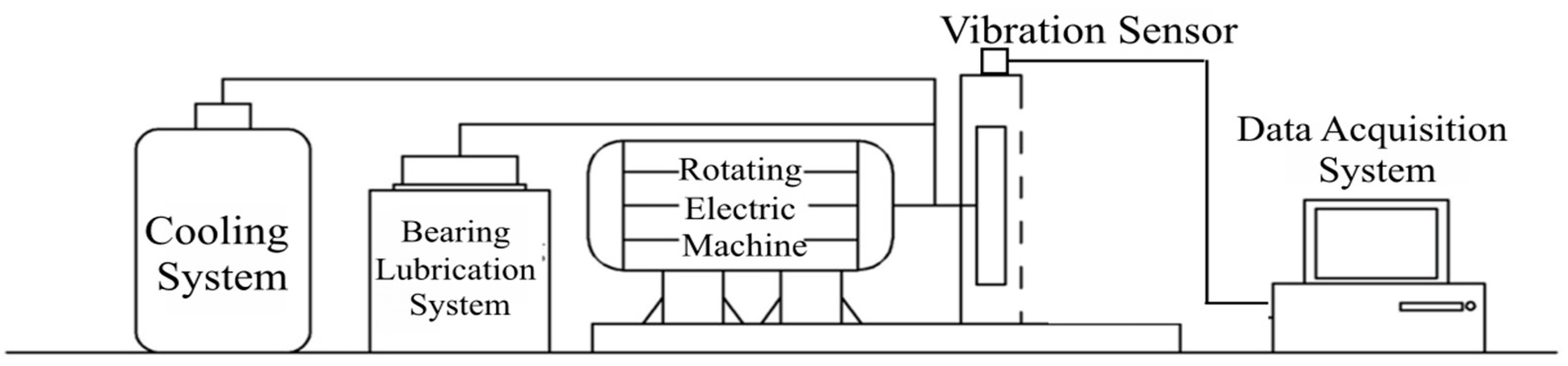
The fourth objective is to verify the accuracy and applicability of the proposed dynamic model through comprehensive tests conducted on a specially designed high-load test platform for high-speed train bearings.
The final objective is to develop a practical diagnostic framework capable of accounting for and compensating the influence of clearance variations, thereby improving the reliability and robustness of bearing condition monitoring.
This paper systematically investigates the influence mechanism of radial clearance increment on fault characteristics by establishing a five-degree-of-freedom nonlinear dynamic model of rolling bearings. The model simultaneously considers local defects and clearance variations, revealing the evolution patterns of bearing dynamic responses under different fault states. Numerical analysis indicates that as clearance increases, the vibration response at the fault characteristic frequency shows significant deviations from conventional understanding. Particularly in the case of inner raceway faults, increased clearance leads to abnormal attenuation of characteristic amplitudes, potentially causing misjudgment of fault severity. This discovery breaks through the limitation of traditional diagnostic methods that treat clearance as a fixed parameter, providing a new basis for accurately assessing bearing health status.
Furthermore, through theoretical modeling and experimental analysis, the strong correlation between clearance variation and fault characteristics has been confirmed. When bearing wear or assembly errors lead to an increase in radial clearance, the nonlinear characteristics of the contact stiffness between the raceway and rolling elements intensify, triggering a modulation effect in the vibration signals. Experimental data show that even with a small clearance increase, the characteristic amplitude of inner ring faults can decrease by up to 40%. This attenuation effect may mask the actual severity of the fault. By incorporating clearance parameters into the diagnostic feature system, fault identification accuracy can be effectively improved, avoiding the risk of missed fault detection due to clearance effects. The study emphasizes the necessity of establishing a mapping relationship between clearance parameters and vibration characteristics in fault diagnosis, and developing diagnostic algorithms with clearance compensation capabilities. This holds significant engineering value for achieving precise quantitative fault assessment. The research findings provide new theoretical support for the condition monitoring of high-speed train bearings and offer technical assurance for the safety operations and maintenance of rail transit systems.
2. Analysis of Structural Natural Vibration Characteristics
The dynamic characteristics of rolling bearings are closely related to their internal defects and clearance variations. The evolution of specific frequency components in the vibration signals can directly reflect the health status of the bearings. The core of damage analysis lies in identifying the characteristic frequencies excited by defects and their modulation phenomena. When localized defects occur on bearing raceways or rolling elements, periodic impacts will excite characteristic frequencies related to the bearing’s geometric parameters, such as Ball Pass Frequency Inner race (BPFI), Ball Pass Frequency Outer race (BPFO), and Ball Spin Frequency (BSF). However, in practical vibration signals, the amplitude and modulation characteristics of these frequency components are not only related to the defect size but are also significantly influenced by variations in bearing clearance [
20]. Although the pitch diameter plays a primary role in determining BPFI, BPFO, and BSF, several additional geometric and operational parameters also exert significant influence. These include the contact angle, the sliding ratio of the rolling elements, the effective curvature radius at the contact interface, and the stiffness variations induced by changes in external load. Under high-speed operating conditions, thermal expansion of bearing components and variations in lubricant film thickness further modify the effective contact geometry. As a result, these coupled factors can produce observable shifts in the characteristic defect frequencies, making accurate prediction more challenging. In terms of dynamic effect modeling, existing research predominantly employs multi-degree-of-freedom nonlinear models to characterize the dynamic behavior of bearings with clearance and defects. Taking a typical deep groove ball bearing as an example, its dynamic model must consider the nonlinear contact relationships among the inner ring, outer ring, rolling elements, and cage. By incorporating Hertzian contact theory to describe the elastic deformation between raceways and rolling elements, along with time-varying stiffness characteristics, coupled dynamic equations encompassing radial, axial, and rotational degrees of freedom can be established. In the model, the clearance value directly affects the nonlinear characteristics of the contact force: when the clearance increases, the contact area between the rolling elements and the raceway decreases [
21], leading to intensified instantaneous stiffness fluctuations. This, in turn, introduces subharmonic components and sideband modulation phenomena in the vibration signals. Regarding the impact of clearance on damage characteristic frequencies, an increase in internal radial clearance significantly alters the dynamic response characteristics of the bearing. In healthy bearings, the presence of clearance causes slight nonlinear vibrations; whereas when localized defects exist on the raceway, increased clearance intensifies the collision impact between rolling elements and the defect edges while reducing effective contact stiffness. This coupling effect leads to nonlinear attenuation of the amplitude at the fault characteristic frequency, which becomes particularly evident under low-speed or variable-load conditions. For example, when the BPFI component induced by an inner ring fault experiences increased clearance, its amplitude may become suppressed [
22]. The sideband spacing, meanwhile, correlates with the ball pass frequency (FTF) and the stiffness modulation frequency caused by clearance variations. Spectrum analysis reveals that once the clearance increment exceeds a threshold, the vibration signal may exhibit complex modulation patterns with multi-order harmonic superposition, leading to misjudgments in traditional diagnostic methods based on the fixed-clearance assumption.
When extracting and validating damage characteristic frequencies, time-frequency analysis methods must be employed to demodulate the impact components within the vibration signals for accurate identification. Experimental research demonstrates that when a bearing simultaneously has localized defects and increased clearance, the amplitude of the characteristic frequency is negatively correlated with the clearance value, while the width of the modulation sidebands expands as the clearance increases. This phenomenon reveals the interference mechanism of clearance variation on fault energy distribution: increased clearance weakens the transmission efficiency of defect impacts while simultaneously enhancing nonlinear resonance effects. Therefore, in damage analysis, it is necessary to establish a quantitative correction model that relates clearance parameters to characteristic frequency amplitudes. By employing dynamic compensation algorithms to eliminate clearance interference, the accuracy of fault severity assessment can be improved [
23].
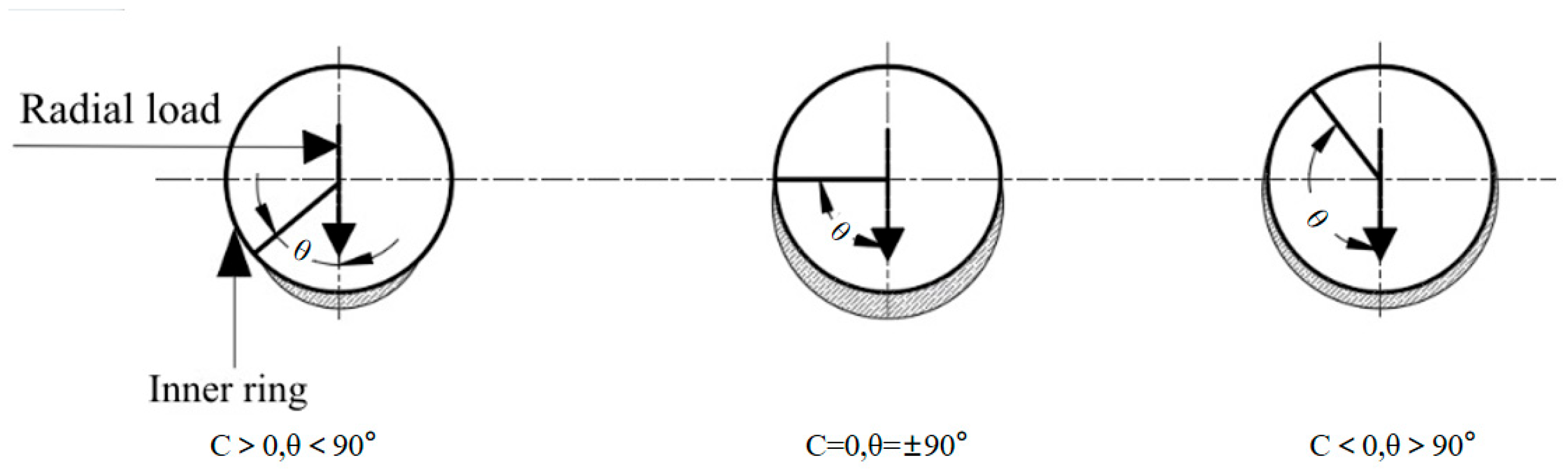
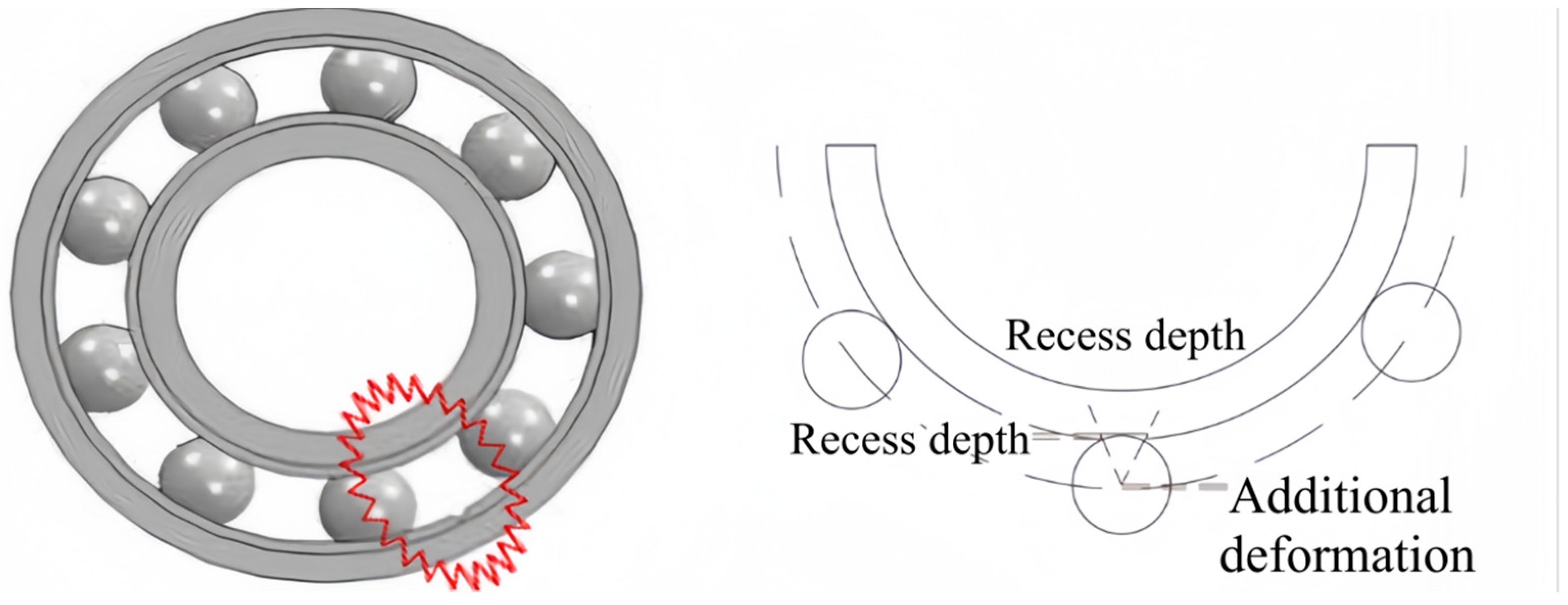
As shown in
Figure 1, variations in the internal clearance of a bearing directly affect the size of the load zone on the rings. In this figure, the parameter C represents the radial clearance of the bearing; the angle θ indicates the distribution range of the load zone on the ring, and the arrows indicate the direction and transmission path of the load acting on the rolling elements. Analysis of the diagram parameters indicates that when clearance decreases or preload increases, the load zone expands, increasing the number of rolling elements participating in load-bearing and thereby distributing the external load collectively. While preload can enhance contact stiffness and reduce micro-slip wear, this study focuses on scenarios where clearance and preload exhibit complex coupling effects. Experimental data shows that under high clearance or low preload conditions, the amplitude of fault characteristic frequencies may decrease, and sideband modulation effects emerge, potentially leading to underestimation of fault severity However, this also leads to a significant increase in the cyclic stress levels borne by individual rolling elements. From a fatigue life perspective, excessive preload can accelerate material fatigue, potentially reducing the overall service life of the bearing.
Possible causes of deformation include several long-term mechanical and thermal factors. Prolonged fatigue wear can gradually generate local flattening or indentation within the raceway contact zones, altering the nominal geometry of the rolling path. Thermal expansion mismatch between the inner and outer rings may introduce additional stresses and distortions, especially under high-speed or heavily loaded conditions. Assembly inaccuracies can lead to uneven radial loading, which in turn promotes asymmetric deformation of the bearing structure. At elevated rotational speeds, collisions between the cage and rollers may occur, contributing to transient impact forces and localized structural damage. Breakdown of the lubricant film can result in direct metal-to-metal contact, accelerating wear and producing irreversible surface deformation. Furthermore, excessive load or sudden shock loading may induce micro-plastic deformation at the Hertzian contact points, permanently modifying the local curvature and stiffness characteristics of the bearing.
To demonstrate the effect of clearance on vibration response, a study was conducted on nonlinear load-deformation behavior and its distribution along the rolling elements based on Hertzian theory. The relationship between the load
and the resulting deformation can be modeled as:
where
is the Hertzian contact elastic deformation or load-deflection coefficient, which depends on the geometry of the contact surfaces and material properties;
is the contact deformation or radial deflection.
is the load-deflection exponent. For ball bearings,
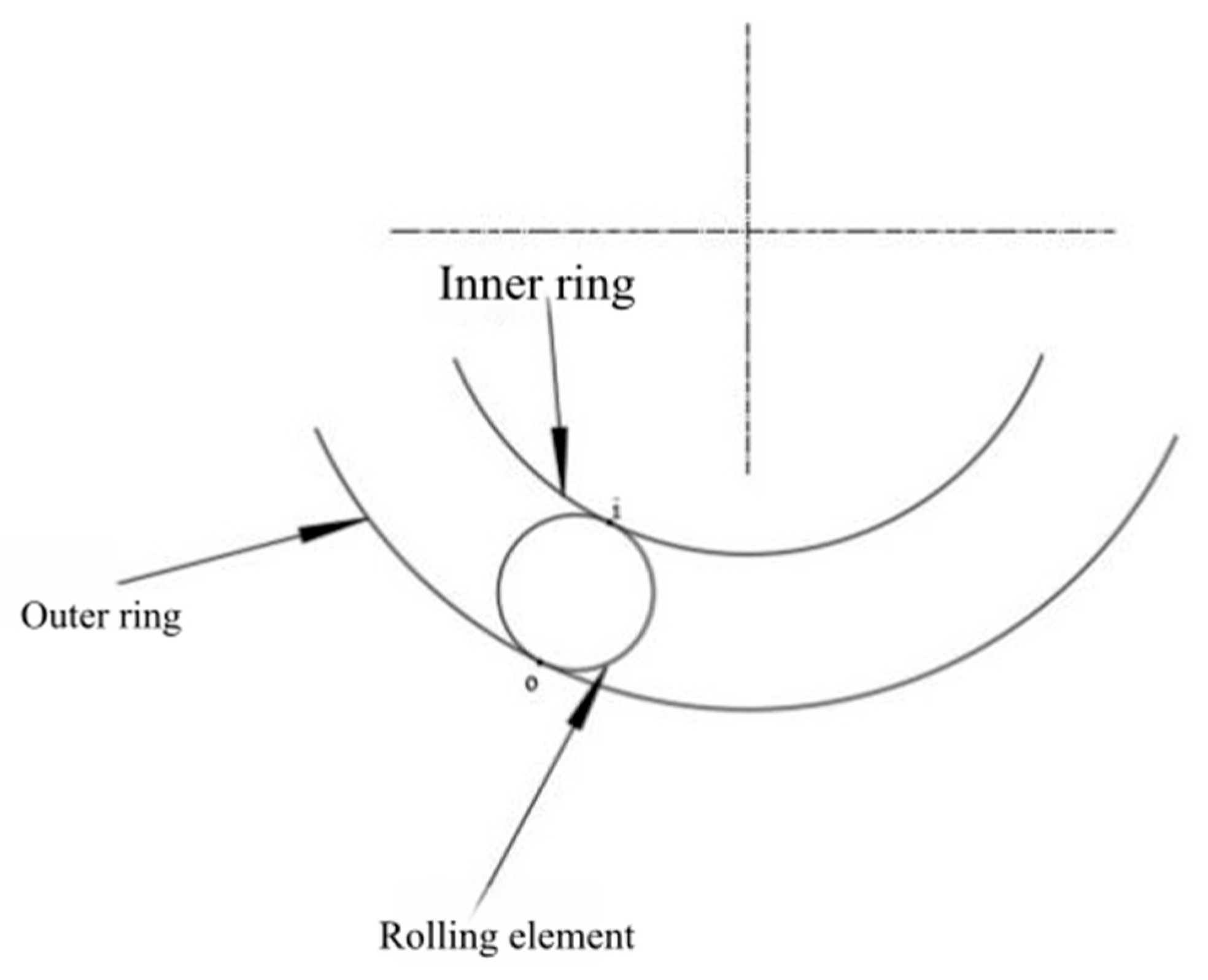
. For rolling element bearings, elastic deformation is not uniformly distributed but rather concentrated at specific contact points between the rolling elements and the inner and outer raceways. The deformation at these contact points serves as the primary source of stiffness during bearing operation. Its variation is directly influenced by clearance, making it key to understanding the nonlinear vibration response of bearings. As shown in
Figure 2.
The contact stiffness coefficient at the contact point formed between the raceway and the
-th ball is evaluated using Equation (2).
where
is the stiffness due to the contact between the ball and the outer race and inner race, respectively;
is the Young’s modulus;
is the Poisson’s ratio;
is the sum of curvatures, calculated based on the radius of curvature in a pair of principal planes passing through the contact point; and
is the dimensionless contact deflection derived from the curvature difference.
The total deflection between the two raceways can be expressed as the sum of the corresponding approaches between the rolling element and each raceway, namely:
where
is the contact stiffness of the inner ring;
is the Outer race contact stiffness.
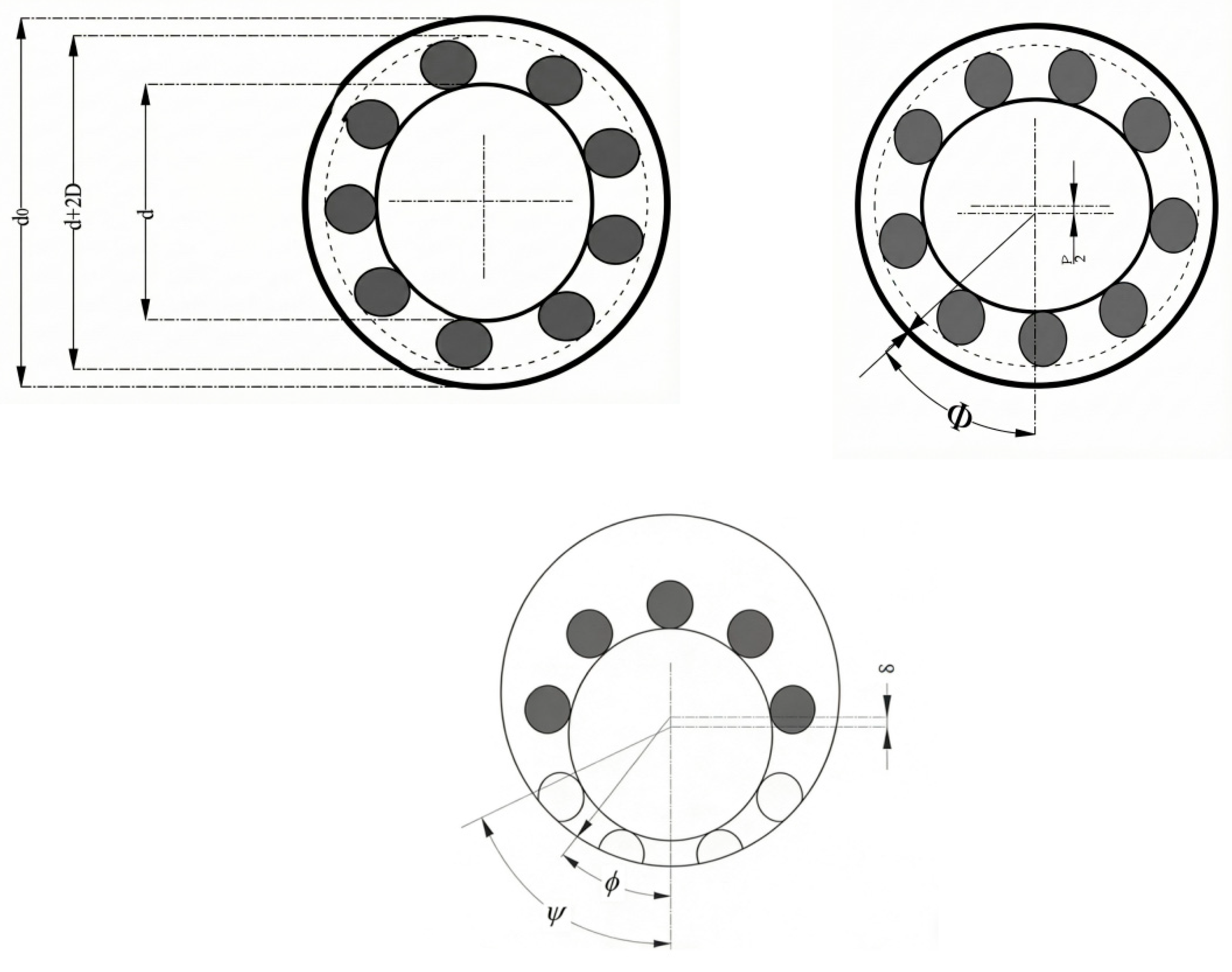
Figure 3 shows a rigidly supported rolling element bearing subjected to a radial load. Evidently, for a concentric arrangement, a uniform radial clearance
between the rolling elements and the raceways can be observed. When a relatively small radial load is applied to the shaft, the inner raceway will displace by a distance
before contact is made between the rolling element located on the load line and the inner and outer raceways. Regardless of the angle, the radial clearance remains. Assuming that
is small relative to the raceway radius, the radial clearance
can be represented with sufficient accuracy using the method mentioned earlier.
On the load line, when , the clearance is zero; whereas when , the clearance retains its initial value .
The application of load causes elastic deformation of the balls. This further reduces the clearance within an arc length range of
. Considering
as the interference or total compression on the load line, the corresponding radial deformation at any rolling element angular position
can be expressed as:
In the equation,
represents the total radial displacement of the inner and outer raceways relative to each other. Considering
, Equation (5) can be simplified to:
The angular position of the rolling element
is given as a function of time increment
, the previous roller position
, and the cage speed
. Assuming no slip phenomenon occurs, the cage speed
can be calculated based on the bearing geometric parameters and the shaft rotational speed. Ultimately, the angular position of the rolling element is determined by the following factors:
The angular velocity of the cage
can be expressed in terms of the angular velocity of the shaft
as:
where
is the shaft frequency. Considering the maximum deformation, the radial deflection at any rolling element angular position can be rederived and expressed as:
Therefore, the contact force at any angular position can be expressed as:
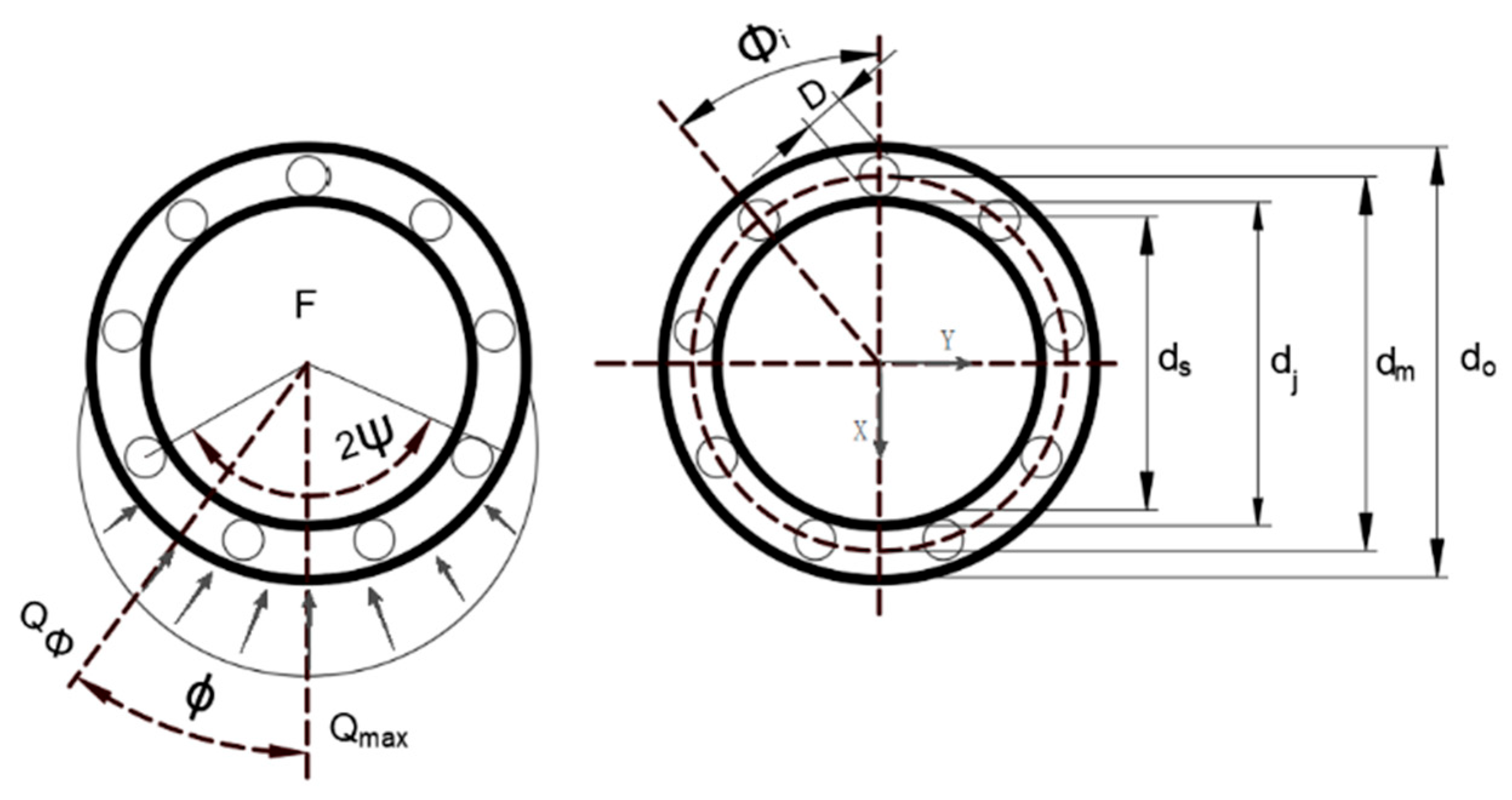
The nonlinear restoring force model of rolling bearings is established based on Hertzian contact theory. As shown in
Figure 4, the total radial load
is equal to the sum of the vertical components of the contact reaction forces caused by the rolling element loads. The mathematical expression is:
In the equation, is the azimuth angle of the rolling element, is the load zone angle, and Qϕ is the load on the rolling element located at azimuth angle ϕ.
To facilitate numerical computation, the total load is often decomposed into a rectangular coordinate system. Therefore, the components of the total restoring force in the
and
directions,
FX and
FY, can be obtained by summing the contributions from all rolling elements:
Here, is the Hertzian contact stiffness coefficient, consistent with the definition of in Equation (15). is the contact deformation of the -th rolling element; ϕi is the azimuth angle.
The total contact deformation (or contact compression) of the
-th ball
can be expressed as a function of the displacement of the shaft relative to the housing in the
and
directions, the ball position
, and the radial clearance
. Its expression is as follows:
Since Hertzian forces are generated only when contact deformation occurs, the spring is required to function solely under compressive conditions. In other words, the corresponding spring force comes into play only when the instantaneous spring length is shorter than its stress-free length, thereby generating exclusively positive values
. Otherwise, separation occurs between the ball and the raceway, reducing the restoring force to zero. Subsequently, the contact force
at any ball position can be defined as follows:
During the operation of a single-row roller bearing, the dynamic contact between the rolling elements and the inner/outer rings induces mechanical impact effects, thereby exciting the natural frequency vibration responses of various components. Among these, the inner and outer rings, due to their relatively regular geometric structures, exhibit significant peaks in the frequency spectrum reflecting their natural vibration characteristics [
17]; whereas the rolling elements, constrained by their volume and mass limitations, show relatively attenuated vibration energy. It is worth noting that although the cage component exhibits relatively prominent natural vibrations due to assembly constraints, its asymmetric hollow structure and the complexity of dynamic contacts make it difficult for traditional analytical methods to accurately characterize its natural frequency characteristics. To address this, the subsequent sections of this paper will employ finite element simulation technology, combined with actual operational parameters of in-service high-speed train wheel-set bearings, to conduct numerical simulation research on the vibration characteristics of the cage.
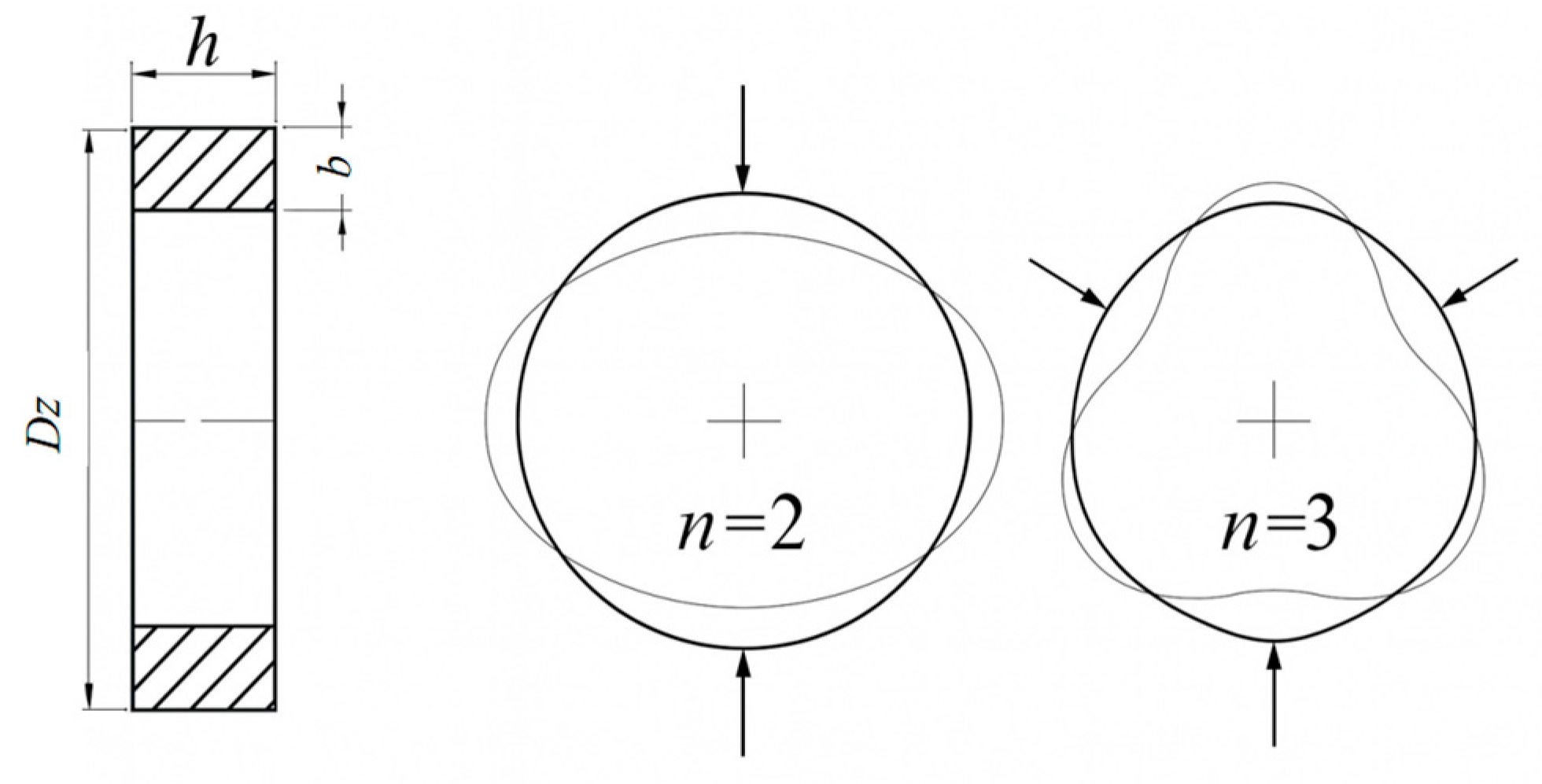
In the natural frequency analysis of bearing systems, the inner and outer rings of the bearing, due to their axisymmetric geometric characteristics, can typically be simplified as annular structures for theoretical modeling, collectively referred to as bearing rings. Under dynamic loads, such annular components excite various free vibration modes, including radial bending, axial extension, and circumferential torsion. Among these, radial bending vibration, due to its energy transfer path aligning with the radial load-bearing direction of the bearing, becomes the dominant vibration mode affecting the dynamic characteristics of the bearing.
The radial bending natural frequency of bearing rings exhibits significant correlations with geometric dimensions (such as wall thickness and radius of curvature), material properties (elastic modulus, density), and boundary constraints (interference fit, preload). The vibration waveform manifests as periodic symmetric deformation of the ring along the radial direction, with a schematic of the mode shape shown in
Figure 5. To facilitate theoretical analysis, engineering practices often simplify the bearing ring cross-section as a thick-walled circular ring model with a uniform cross-section, and establish its vibration differential equation based on elastic theory.
It is worth noting that although the amplitude of axial vibration is generally lower than that of radial modes, under high-speed and heavy-load conditions, differences in axial stiffness between the inner and outer rings may induce coupled vibration effects, which must be comprehensively considered in dynamic analysis. Subsequent research will integrate finite element simulations and experimental modal testing to quantify the mapping relationship between structural parameters of the bearing rings and their natural frequencies, providing theoretical support for the optimization of bearing dynamic characteristics.
The natural frequency of radial bending vibration for a bearing ring in a free state is given by:
where
is the vibration order,
;
is the elastic modulus of the material (for steel,
= 210 GPa);
is the moment of inertia of the bearing ring cross-section,
is the neutral axis diameter of the bearing ring cross-section, unit: m;
is the material density, For steel, it is 7.86 × 10³ kg/m
3;
is the cross-sectional area of the bearing ring,
.
For bearing rings made of steel, substituting the constant values into Equation (16) yields:
In the equation, is the height of the bearing ring, unit: m; is the thickness of the bearing ring, unit: m.
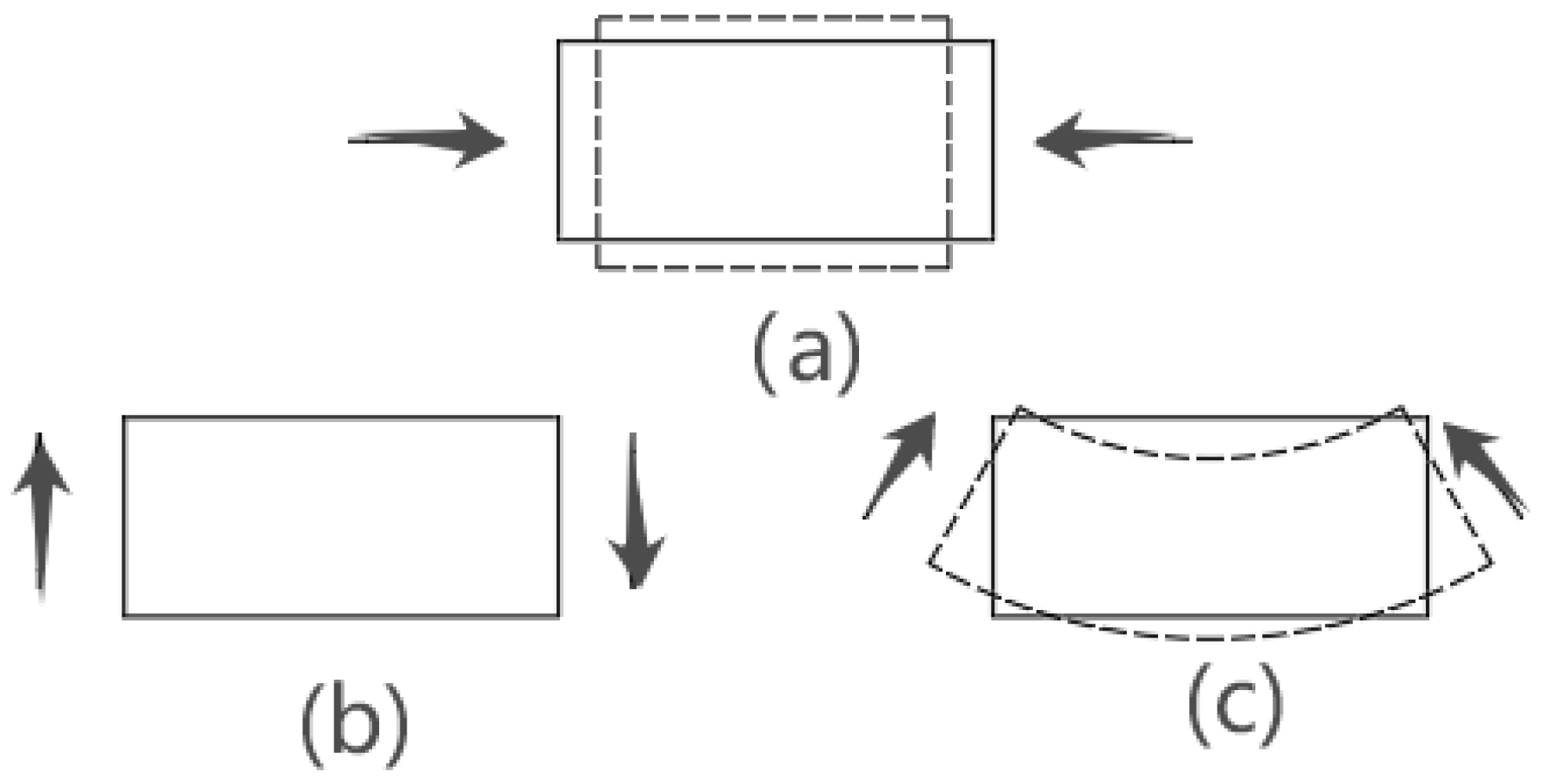
In the study of dynamic characteristics of single-row roller bearings, cylindrical rolling elements serve as the core carriers of energy transfer, and their free vibration characteristics directly affect the dynamic stability of the bearing system. Based on elastic dynamics theory, rolling elements in a free state primarily exhibit three fundamental vibration modes: longitudinal vibration (axial expansion and contraction), torsional vibration (shear deformation rotating about the axis), and bending vibration (radial plane deflection deformation), as illustrated in
Figure 6. For different vibration modes, simplified mechanical models are established in engineering theory: longitudinal vibration can be equated to a one-dimensional wave propagation problem in an elastic rod, where the natural frequency is related to the elastic modulus, density, and effective length of the roller material, and can be solved using the one-dimensional wave equation; Torsional vibration corresponds to the circumferential shear vibration model of a cylindrical shaft, with its frequency characteristics determined by the roller’s cross-sectional polar moment of inertia and shear modulus. Bending vibration, however, requires modeling based on Euler-Bernoulli beam theory, where the roller is treated as a simply supported beam with continuously distributed mass. Its natural frequency is positively correlated with the cross-sectional moment of inertia and inversely proportional to the square root of the material density.
Theoretical analysis indicates that the fundamental frequency of longitudinal vibration in rolling elements typically falls within the high-frequency range (approximately on the order of tens of kHz), primarily influenced by the end-face boundary conditions; the fundamental frequency of bending vibration decreases exponentially with increasing slenderness ratio of the roller; while the torsional vibration frequency, due to coupling effects from the material’s Poisson effect, exhibits partial overlap in its spectral distribution with longitudinal vibration. It is particularly important to note that under actual operating conditions, the assumption of free vibration in rolling elements deviates significantly due to constraints from lubricating media and contact stresses, especially in interference fit regions where localized vibration modes occur. To address this, a contact dynamics correction factor will be introduced, and combined with measured waviness data of the roller surface, a non-free vibration frequency prediction model that accounts for boundary constraints will be established.
The natural frequency of longitudinal vibration for a roller in a free state is given by:
The natural frequency of torsional vibration for a roller in a free state is given by:
The natural frequency of bending vibration for a roller in a free state is given by:
3. Characteristic Frequency Analysis
The five-degree-of-freedom nonlinear dynamic model established in this paper can accurately characterize the dynamic response of the bearing system under the influence of clearance [
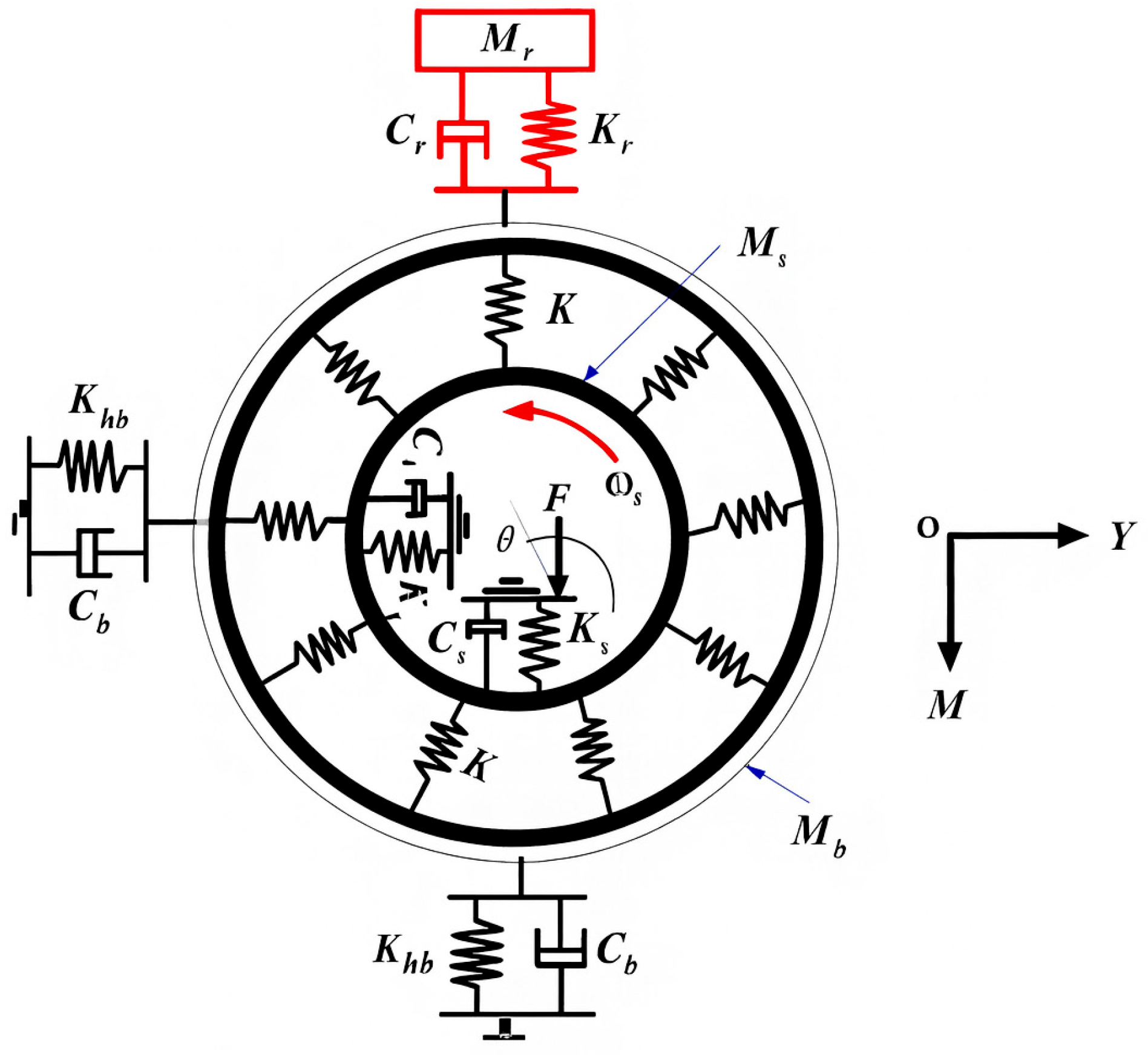
24]. The model accounts for the translational degrees of freedom of the inner ring in the X and Y directions, the translational degrees of freedom of the outer ring in the X and Y directions, and an additional degree of freedom of a unit resonator in the Y direction. The model considers the translational degrees of freedom of the inner ring in the X and Y directions, the translational degrees of freedom of the outer ring in the X and Y directions, and an additional translational degree of freedom of a unit resonator in the Y direction. To simplify the complex multi-body dynamics problem and focus on the nonlinear vibration response primarily induced by the time-varying contact stiffness and clearance effects, the inertia effects of the rolling elements are initially considered secondary. Therefore, the model incorporates the following key assumptions: The model assumes that the mass of the rolling elements is negligible, the damping is linear viscous, and the nonlinear restoring force is described based on Hertzian contact theory. This provides a theoretical foundation for the subsequent analysis of damage characteristic frequencies [
25]. The additional resonator DOF is included to capture high-frequency resonance generated by localized impacts, which cannot be reproduced by the low-frequency translational DOFs. The resonator mass was chosen as 1% of the housing mass, the stiffness selected so that the resonant frequency falls within 8–12 kHz (typical defect impact bands), and damping was set to achieve a quality factor of ~5 based on empirical data.
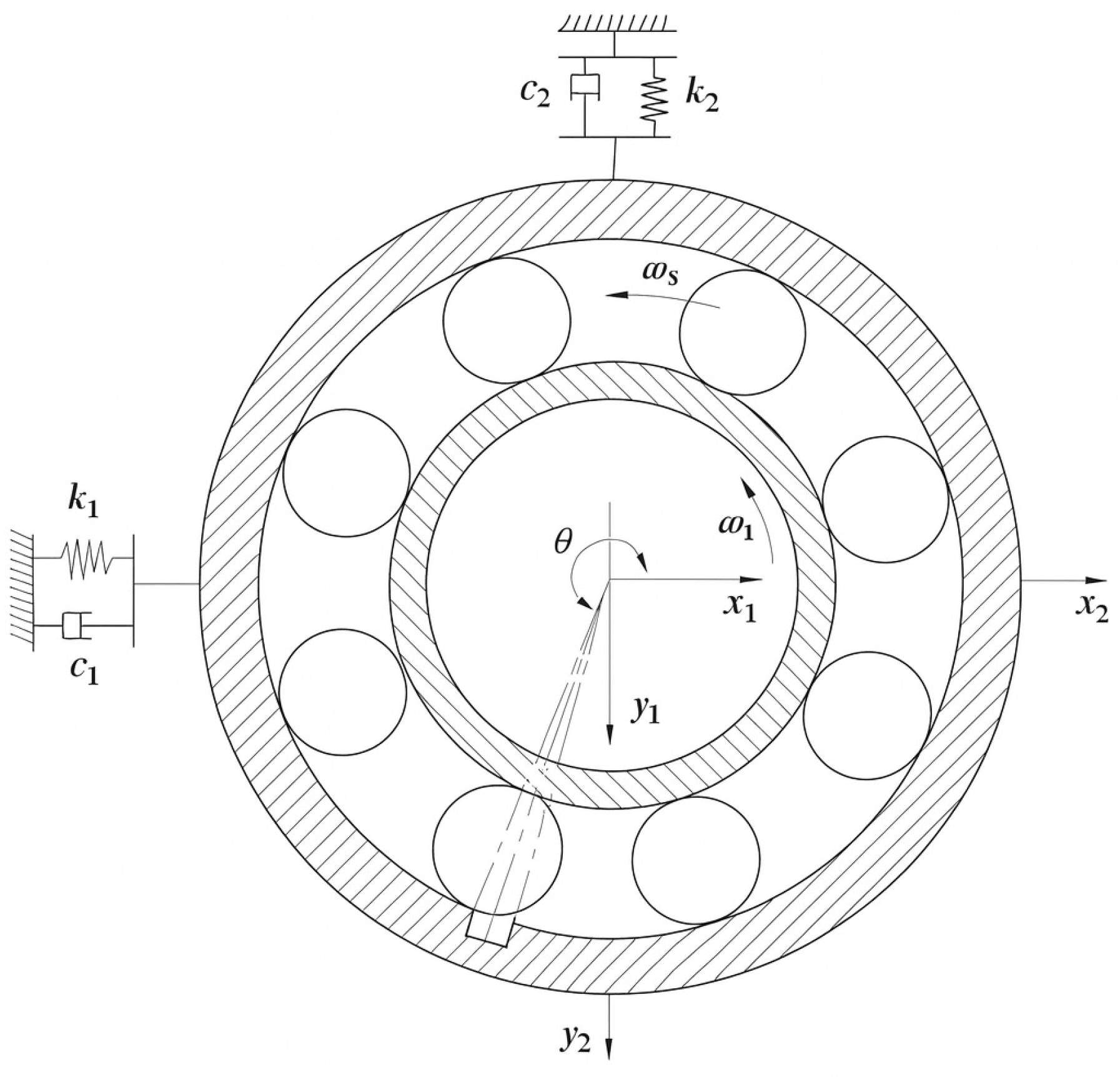
Figure 7 shows a free-body diagram of the bearing system. Assuming a five-degree-of-freedom (DOF) model is adopted, where the fifth degree of freedom represents a unit resonator with small mass, high stiffness, and high damping to simulate high-frequency resonant responses in the vertical direction. The considered shaft-housing system is represented by:
denotes the mass of the shaft, including the mass of the inner ring;
denotes the mass of the housing, including the mass of the outer ring;
denotes the mass of the unit resonator. Due to the negligible mass of the balls compared to other bearing components, their inertia can be disregarded. In rolling bearing dynamics, the mass of rolling elements is typically 1–3% of the total mass of the inner–outer ring–shaft system. A sensitivity analysis performed by reducing the roller mass to zero showed that the shift in natural frequencies remained below 0.8%, and the peak amplitude variation in the simulated vibration response was within 1.2%. Therefore, neglecting the roller mass has negligible influence on the predicted characteristic frequencies and is a widely accepted simplification in nonlinear contact modeling.
It is assumed that the balls are uniformly distributed around the shaft center without mutual contact and experience no slip while rolling along the raceways. All damping is modeled as linear viscous damping, with lubricant-induced damping not considered in this model [
26].
When rolling elements collide with defects, a short-duration pulse is generated, leading to additional deflection. This scenario is represented by the symbol
, resulting in a modified expression of
as shown in Equation (21):
Cracks on the inner and outer raceways are classified as local defects. Studying such defects helps to better understand the influence of different clearances on bearing vibration responses and the diagnostic features of interest. Therefore, the following section aims to mathematically model local bearing defects. A rolling element bearing consists of an outer ring, an inner ring, rolling elements, and a cage, which maintains the relative positions of the rolling elements. Pure rolling contact exists between the rolling elements, outer ring, and inner ring, resulting in zero relative velocity. Surface fatigue in rolling bearings does not originate from immediate surface damage but follows a well-established subsurface crack initiation mechanism. Under Hertzian contact conditions, the maximum orthogonal shear stress is located beneath the raceway surface—typically at a depth of approximately 0.1–0.3 times the half-width of the contact ellipse. When cyclic rolling contact repeatedly loads this region, the accumulated shear stress exceeds the local fatigue limit, promoting the nucleation of microcracks within the subsurface material. As rolling continues, these microcracks progressively propagate toward the surface under alternating compressive–shear fields and may branch or coalesce into larger crack networks. Once the cracks reach the free surface, small fragments of material detach, resulting in observable spalling or pitting. Therefore, pitting should be regarded as the terminal manifestation of a subsurface fatigue evolution process rather than a direct surface event. Furthermore, several factors—including residual stresses induced during heat treatment, degradation of the elastohydrodynamic lubrication (EHL) film, micro-slip generated at the roller–raceway interface, and variations in radial clearance—can accelerate subsurface crack initiation and alter the morphology, progression rate, and severity of fatigue-induced spalling. These coupled effects highlight the importance of considering the full subsurface fatigue mechanism when interpreting damage signatures in vibration-based bearing diagnostics.
If a pitting defect occurs on one of the raceways, it will periodically come into contact with the rolling elements. In this scenario, the fault characteristic manifests as a series of pulses, whose repetition frequency is strongly dependent on the faulty component, geometric dimensions, and rotational speed [
27]. The time intervals between impacts for all bearing components listed in
Figure 7 vary, and these intervals are a function of the bearing. For bearings with a fixed outer ring, the theoretical characteristic fault frequencies can be calculated using Equations (22) to (25).
Cage rotational frequency
Outer race defect frequency
Inner race defect frequency
Rolling element defect frequency
where
is the ball diameter,
is the pitch diameter,
is the contact angle,
is the number of rollers, and
is the rotational frequency of the shaft.
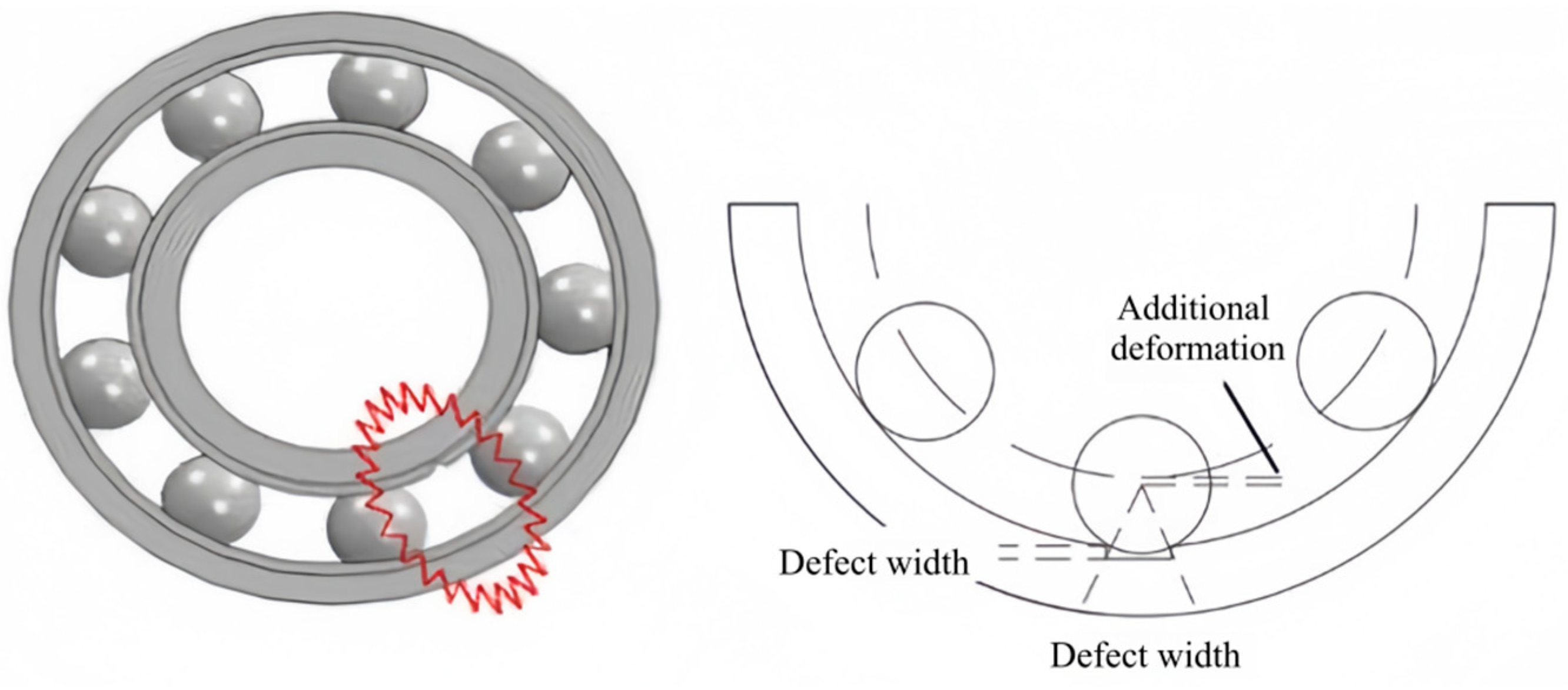
Figure 8 shows a typical example of an inner ring defect. It can be observed that during operation, the inner ring rotates at the angular velocity of the shaft
, meaning the defect position does not remain stationary. Therefore, the defect angle for an inner ring defect
can be calculated using Equation (26).
where
is the defect width and
is the inner ring diameter. The deflection achieved by the
-th rolling element
may vary depending on whether it contacts the defect within the load zone or outside the load zone. When a rolling element passes through a defect, additional deflection
is typically generated. As shown in
Figure 8, this deflection is primarily determined by the defect width and the rolling element radius.
In the equation,
is the defect width-to-ball radius ratio. The position of the
-th ball within the defect zone is mathematically defined by Equation (28).
Figure 9 shows an example of a defect occurring on the outer ring. It can be observed that the defect on the outer ring is located at an angle
relative to the X-axis. Unlike inner ring defects, localized defects on the outer ring typically occur within the loaded zone. Furthermore, since the outer ring is stationary, the defect position generally remains unchanged. Similarly to inner ring defects, each time a ball passes over the defect, it induces an additional amount of deflection
. The angular position of the
-th ball as it passes through the defect zone can be mathematically determined by the following relationship.
Statistical features of vibration signals, such as RMS value, crest factor, kurtosis, and zero-crossing rate, are all correlated with defect size. When a ball or roller impacts the entry edge of a localized defect, a step response is generated; when it impacts the exit edge, an impulse response is produced. Since vibration signals are composed of strong noise from various sources, identifying the entry and exit points in the raw signal is ambiguous. The geometric characteristics of defects, particularly low-energy entry events, may be obscured, leading to difficulties in accurately extracting defect dimensions.
Based on the above considerations, the governing equations of motion describing the displacement of the shaft, housing, and unit resonator masses can be derived. As shown in
Figure 10, the governing equations of motion for the x-axis and y-axis are as follows:
For the unit resonator:
where
,
,
,
,
,
,
,
and
represent inner ring, outer ring, and unit resonator mass, damping, and stiffness. Displacement
,
,
,
and
describe the displacements of the inner ring and outer ring in the horizontal and vertical directions, as well as the vertical displacement of the unit resonator, respectively.
The unbalanced force
caused by mass imbalance can be defined as:
where
is unbalanced mass;
is eccentric distance;
is the shaft rotational speed;
is the shaft angular displacement. For a constant-speed rotor:
equals
. The nonlinear contact forces of the bearing in the horizontal and vertical directions are denoted by
and
, respectively.
Considering the nonlinear Hertzian contact deformation between the balls and the rings, the nonlinear contact force is obtained by summing the restoring forces generated by each individual rolling element in the X and Y directions, as shown in Equations (36) and (37):
where
is the number of rolling elements;
is the Hertzian contact stiffness;
is the contact deformation;
is the angular position of the ball. Based on the above equations, the acceleration generated during bearing operation and the corresponding characteristic frequencies in the presence of defects can be obtained.
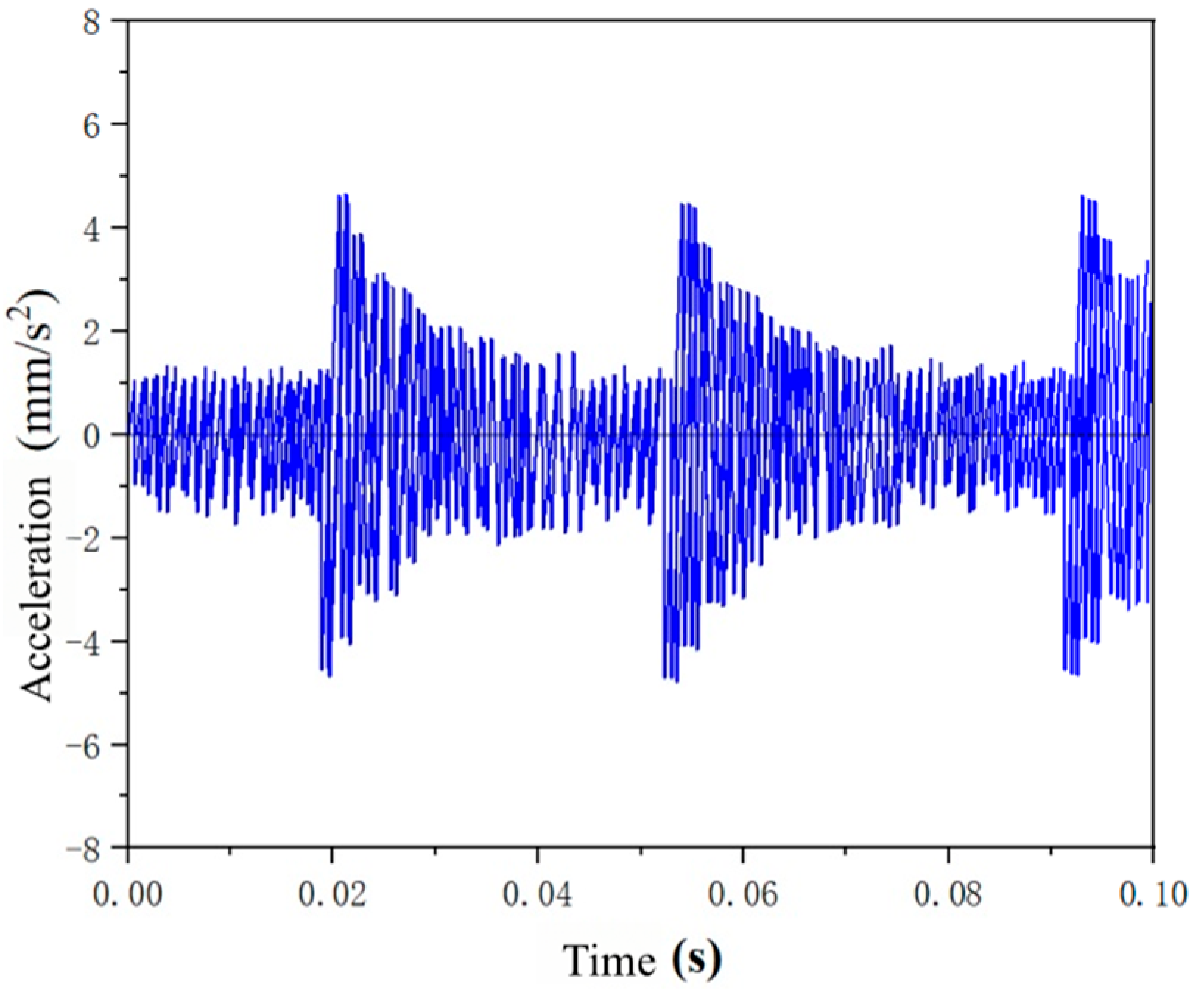
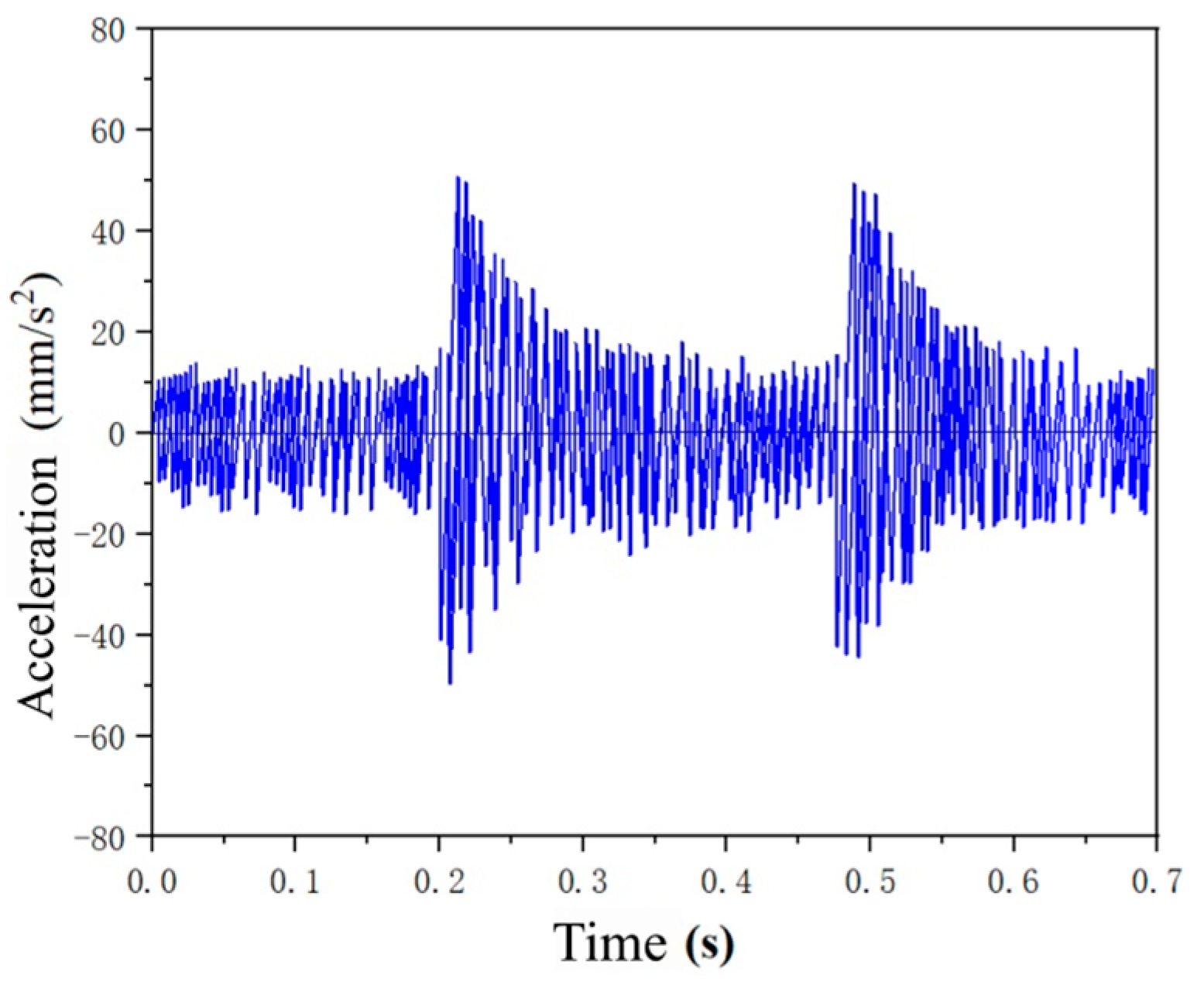
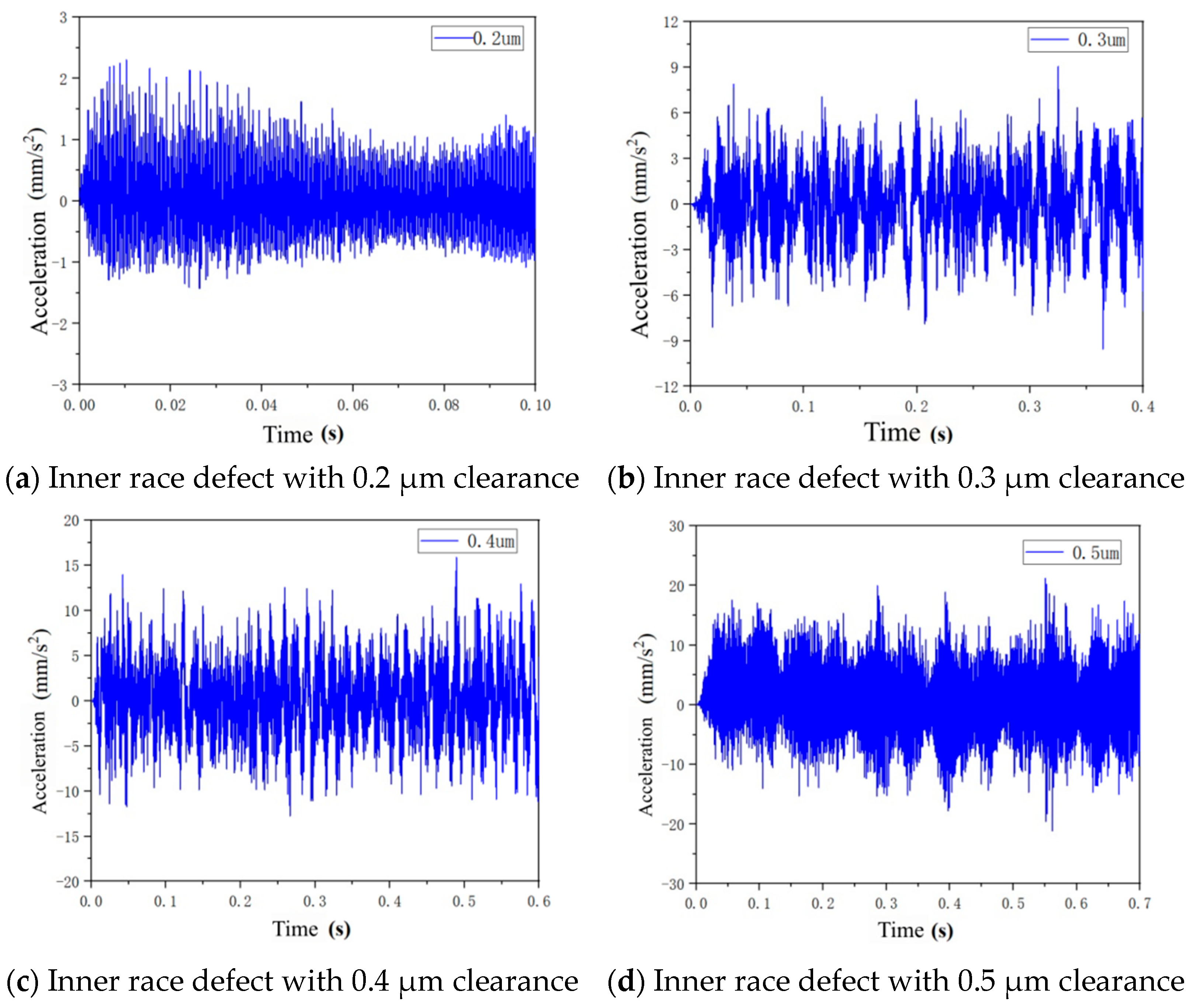
Since the position of the defect in the inner raceway is not stationary, the resulting vibration signal is typically complicated by the rotation of both the defect and the balls. The amplitude of the inner raceway defect is not constant due to variations in the load applied when the balls contact the defect. In contrast, defects on the outer raceway typically occur within the load zone and maintain a constant angular position, meaning the defect location is stationary. This implies that each time a ball passes over the defect, a pulse with consistent amplitude is generated. An outer raceway defect is positioned at 0 degrees, and an inner raceway defect is also positioned at 0 degrees, with a defect width of 0.2 mm. The study was conducted under two incremental clearance conditions: 0.2 µm and 0.5 µm.
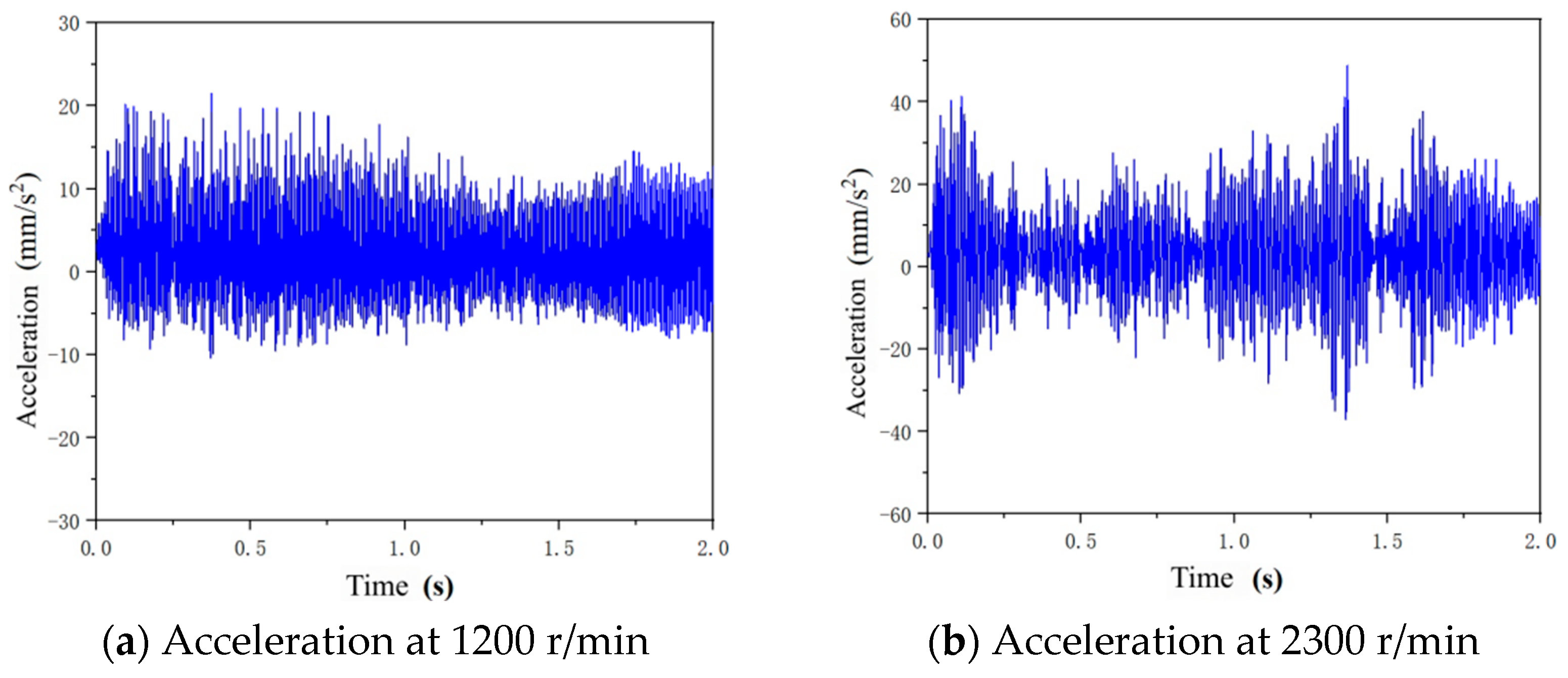
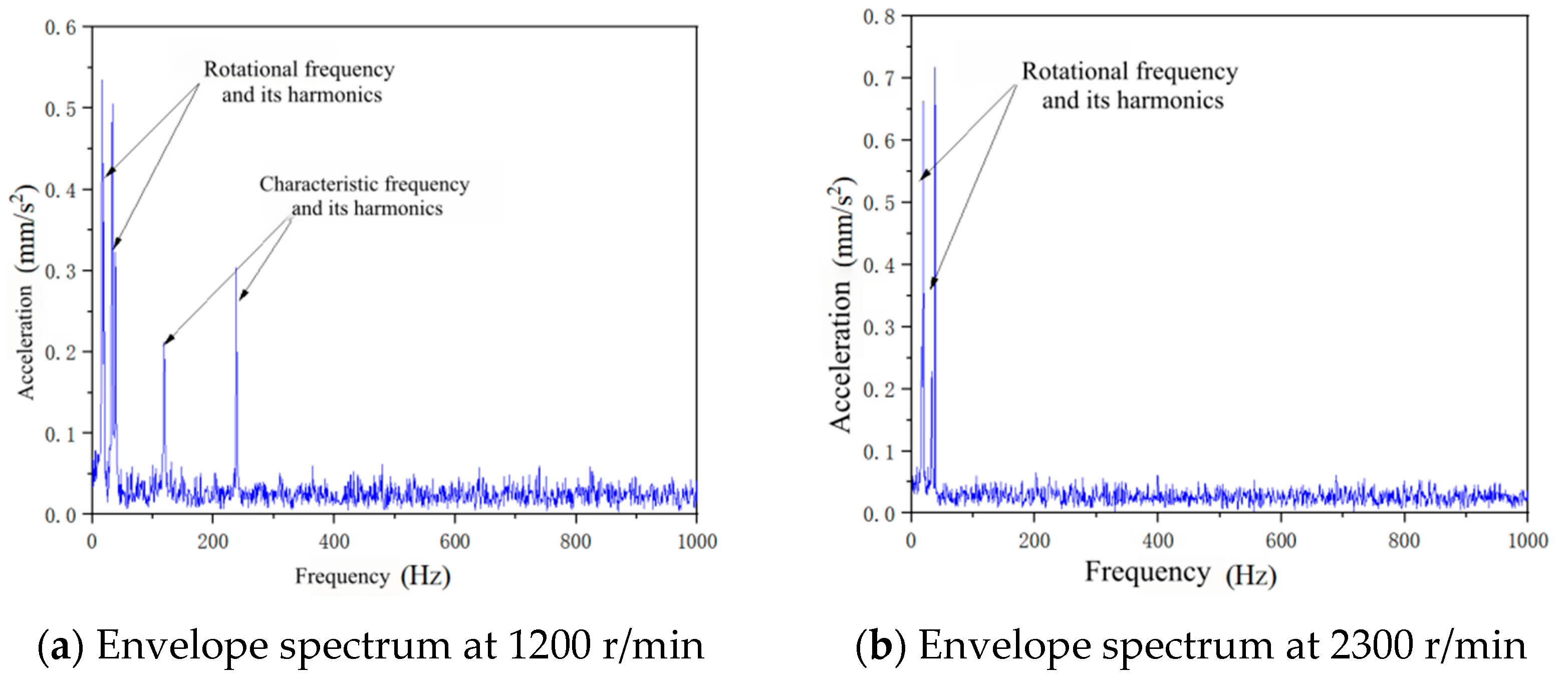
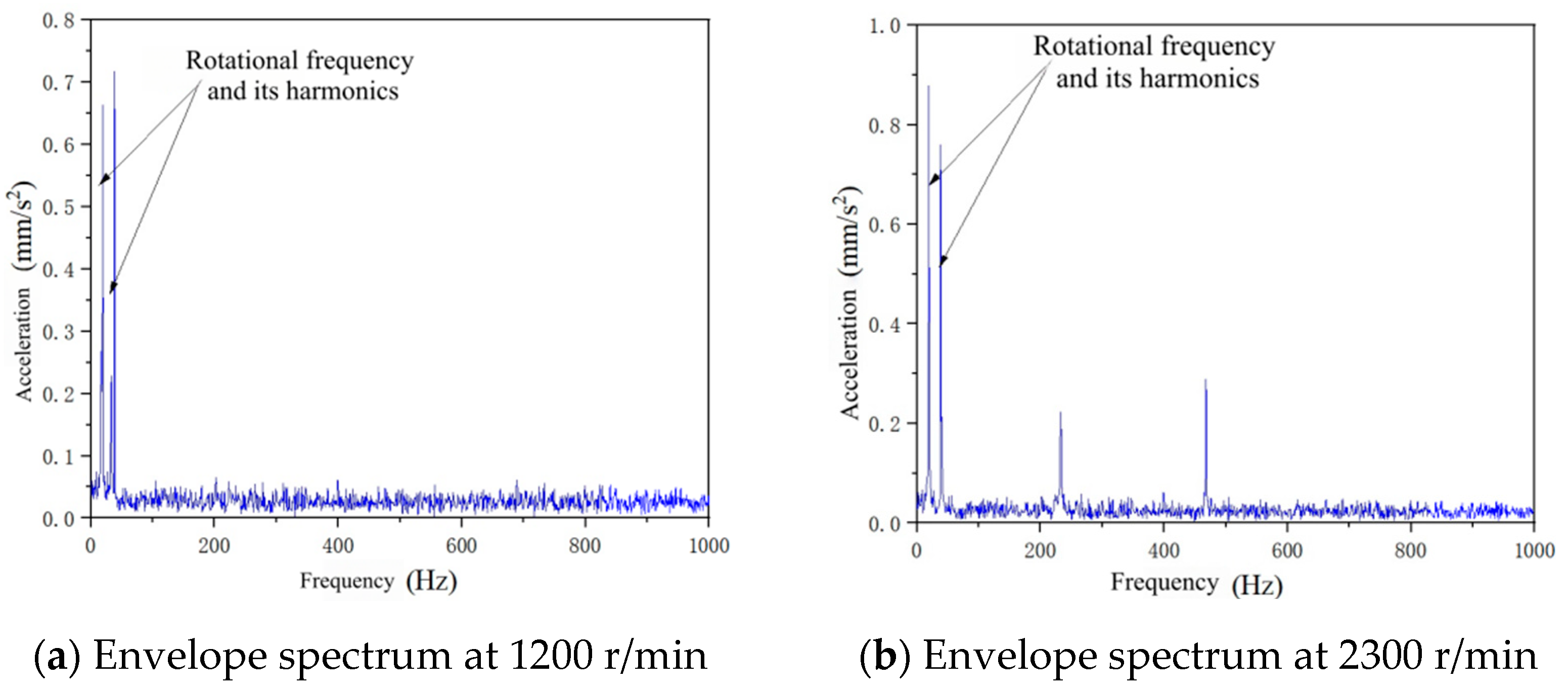
Figure 11 and
Figure 12 display the vibration acceleration measured by the sensor, using a healthy bearing as the baseline. The vibration accelerations for both inner and outer raceway defect scenarios were simulated under clearance values of 0.2 µm and 0.5 µm, respectively. It can be observed that under baseline conditions (where no defects are present on the raceways), the vibration acceleration amplitude increases as the clearance grows. This indicates that the local (Hertzian deformation) amplitude also rises with increasing clearance values. For the inner raceway defect case, significant periodic variations in vibration amplitude can be observed as the rolling ball approaches the defect, regardless of whether it is in the loaded or unloaded zone. For the outer raceway defect case, the pulses generated by the rolling element contacting the defect repeat every 40 degrees. Furthermore, as the defect size increases, both the pulse amplitude and duration also increase.
The simulation results of vibration acceleration for both inner and outer raceway defect scenarios are presented in
Figure 11 and
Figure 12, with a healthy bearing serving as the baseline. These outputs, corresponding to clearance values of 0.2 μm and 0.5 μm, were obtained from the proposed nonlinear dynamic model.