Article

Influence Analysis in the Lognormal Regression Model with Fitted and Quantile Residuals

by
Muhammad Habib
1,*,
Muhammad Amin
1 and
Sadiah M. A. Aljeddani
2
1
Department of Statistics, University of Sargodha, Sargodha 40100, Pakistan
2
Mathematics Department, Al-Lith University College, Umm Al-Qura University, Al-Lith 21961, Saudi Arabia
*
Author to whom correspondence should be addressed.
Axioms 2025, 14(6), 464; https://doi.org/10.3390/axioms14060464

Submission received: 14 April 2025 / Revised: 9 June 2025 / Accepted: 11 June 2025 / Published: 13 June 2025
(This article belongs to the Special Issue Advances in the Theory and Applications of Statistical Distributions)

Abstract

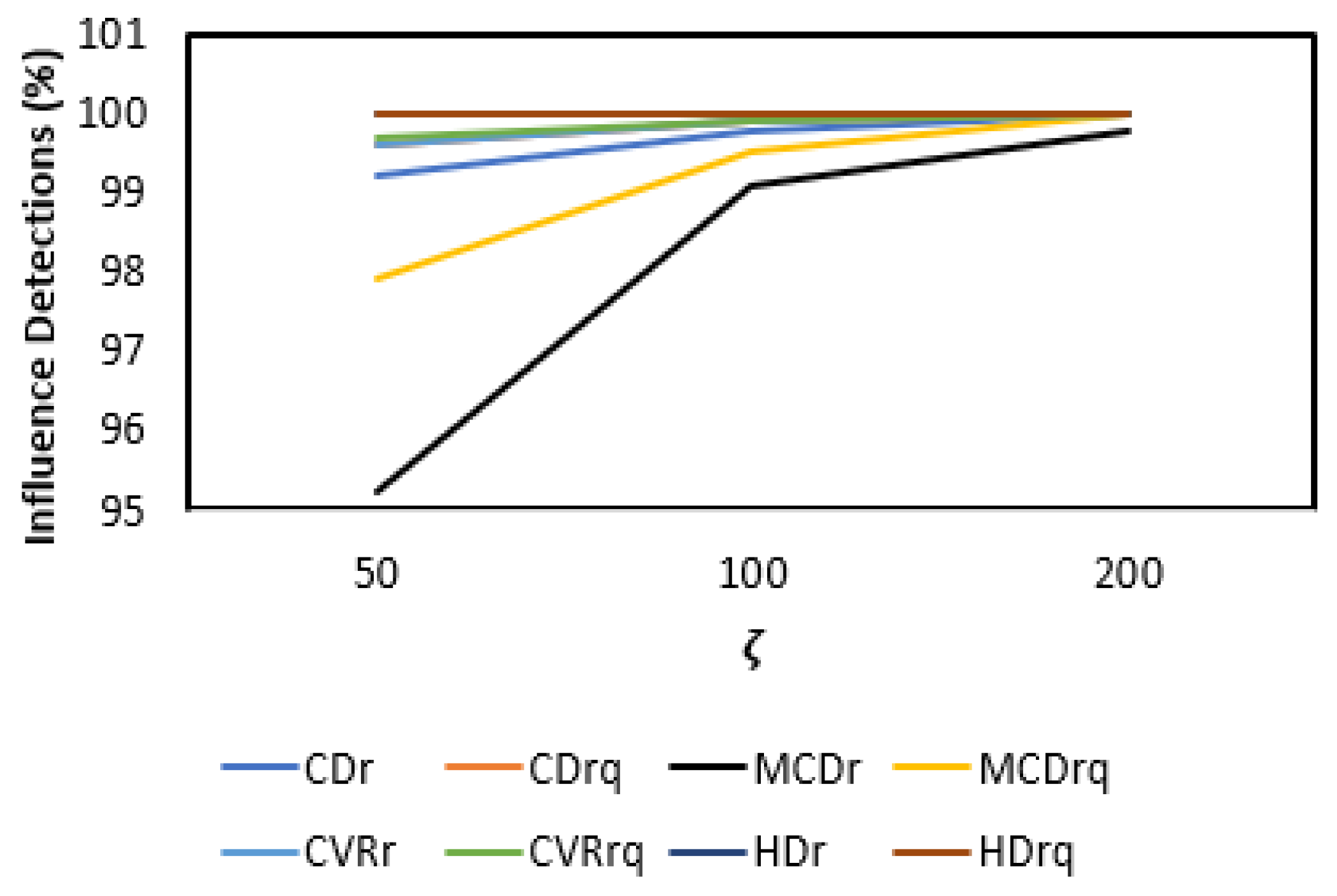
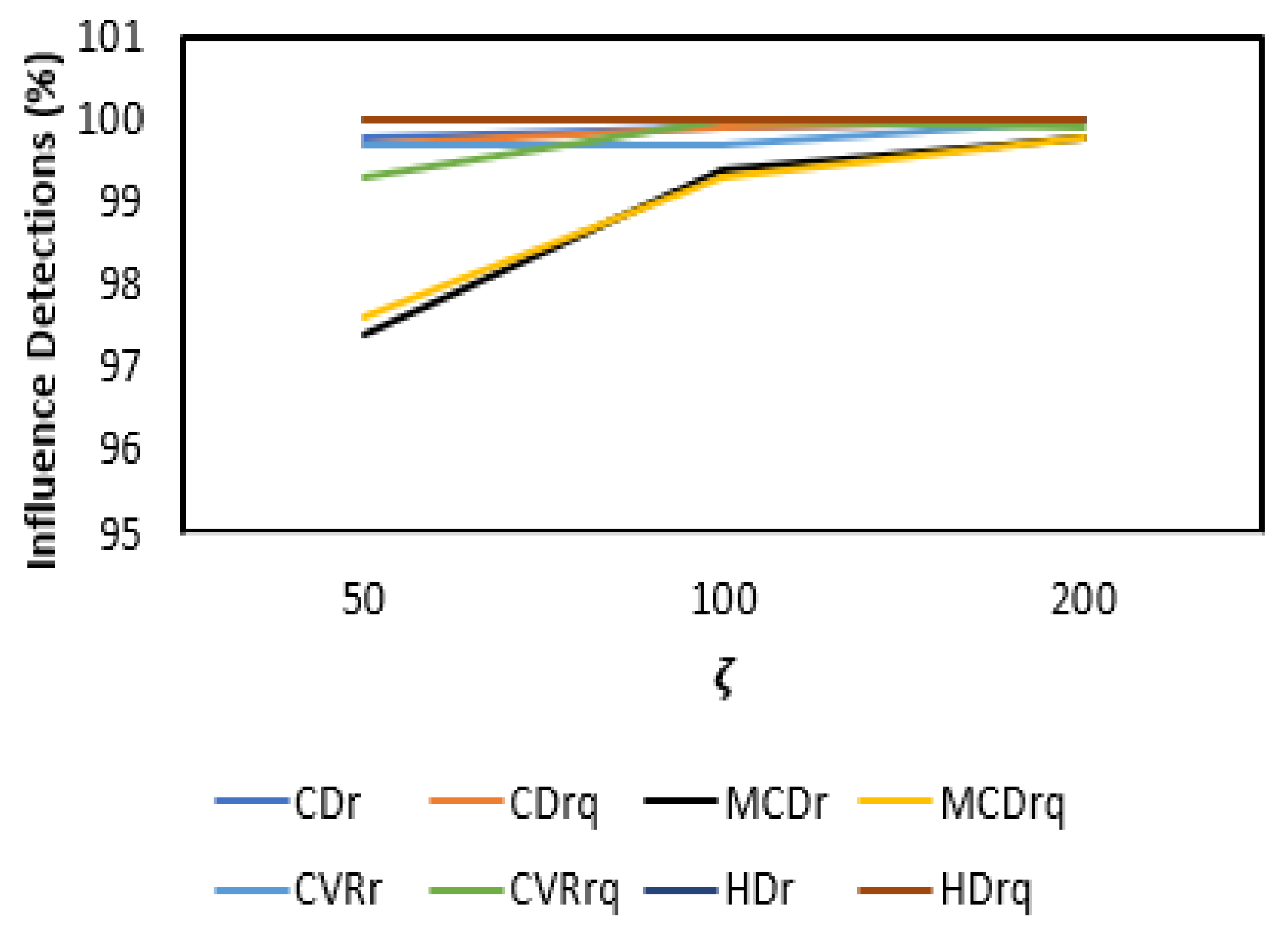
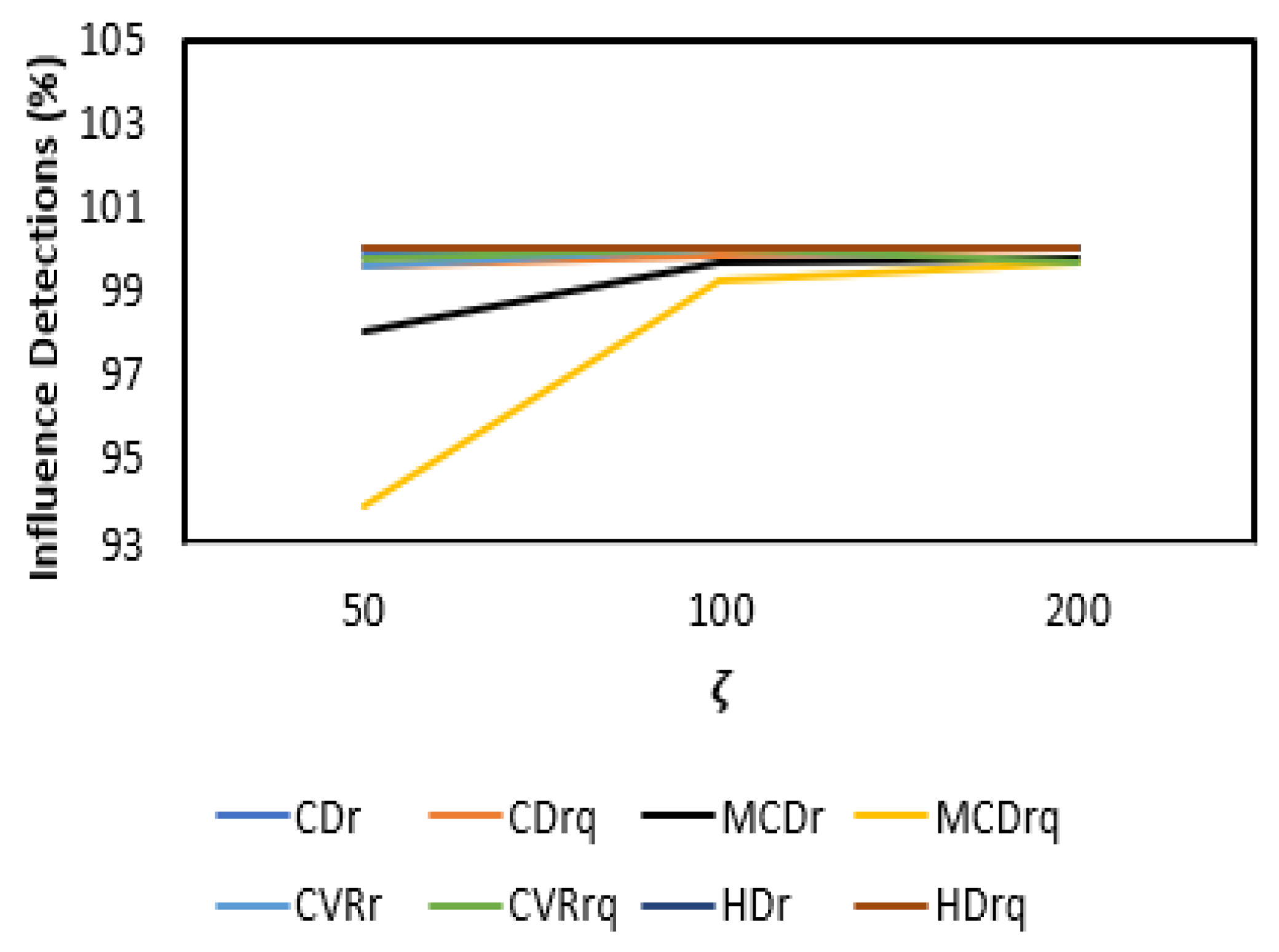
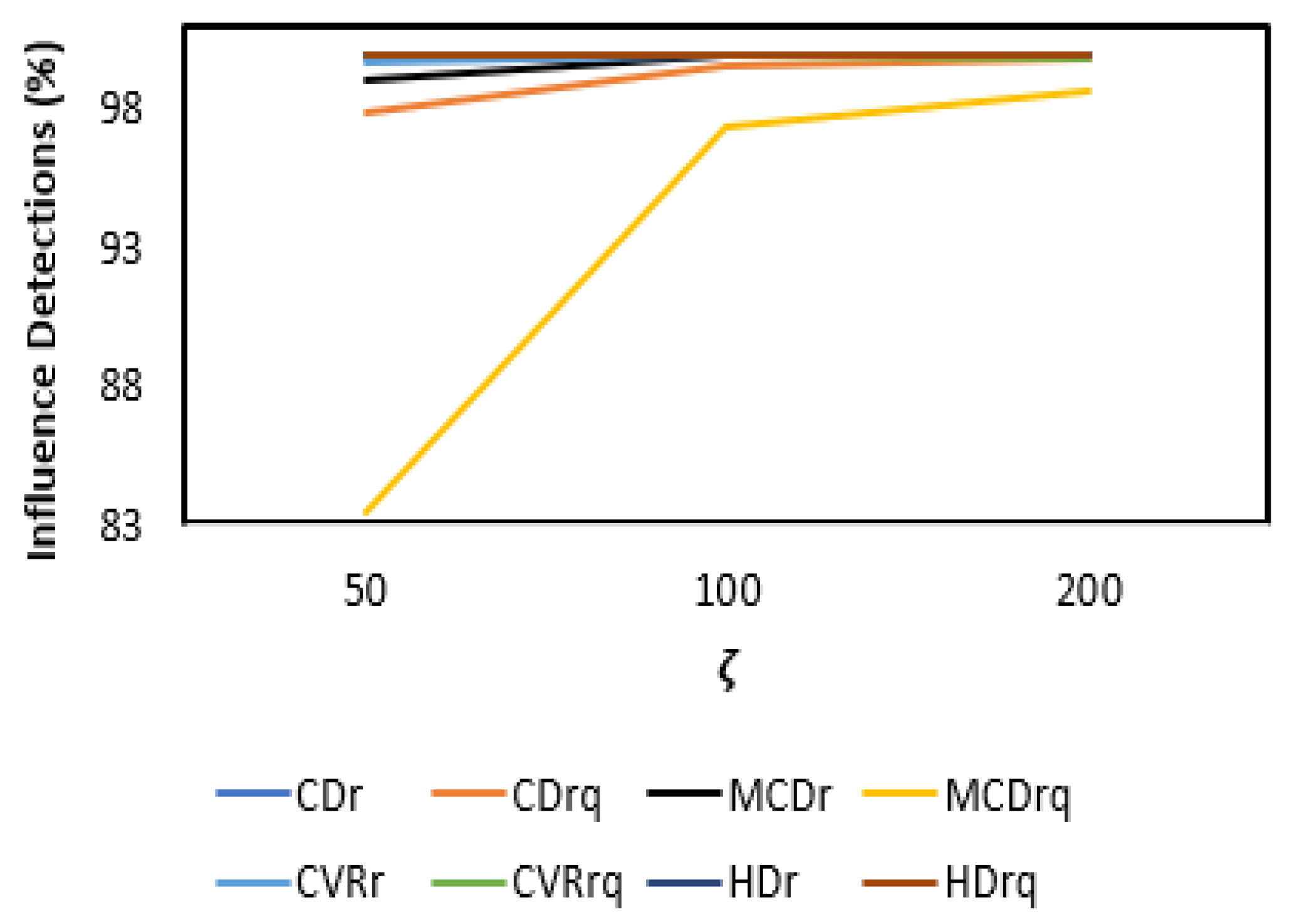
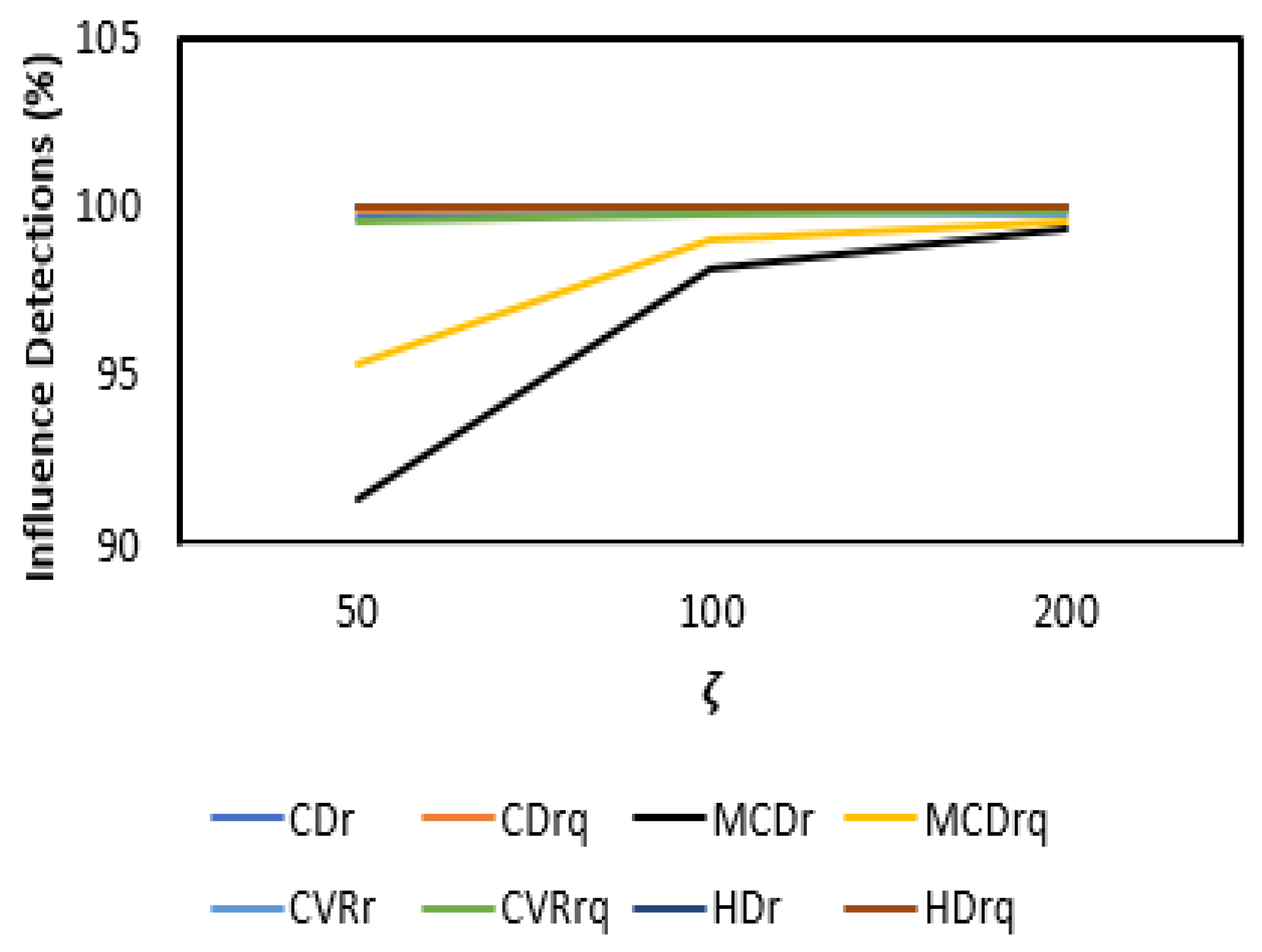
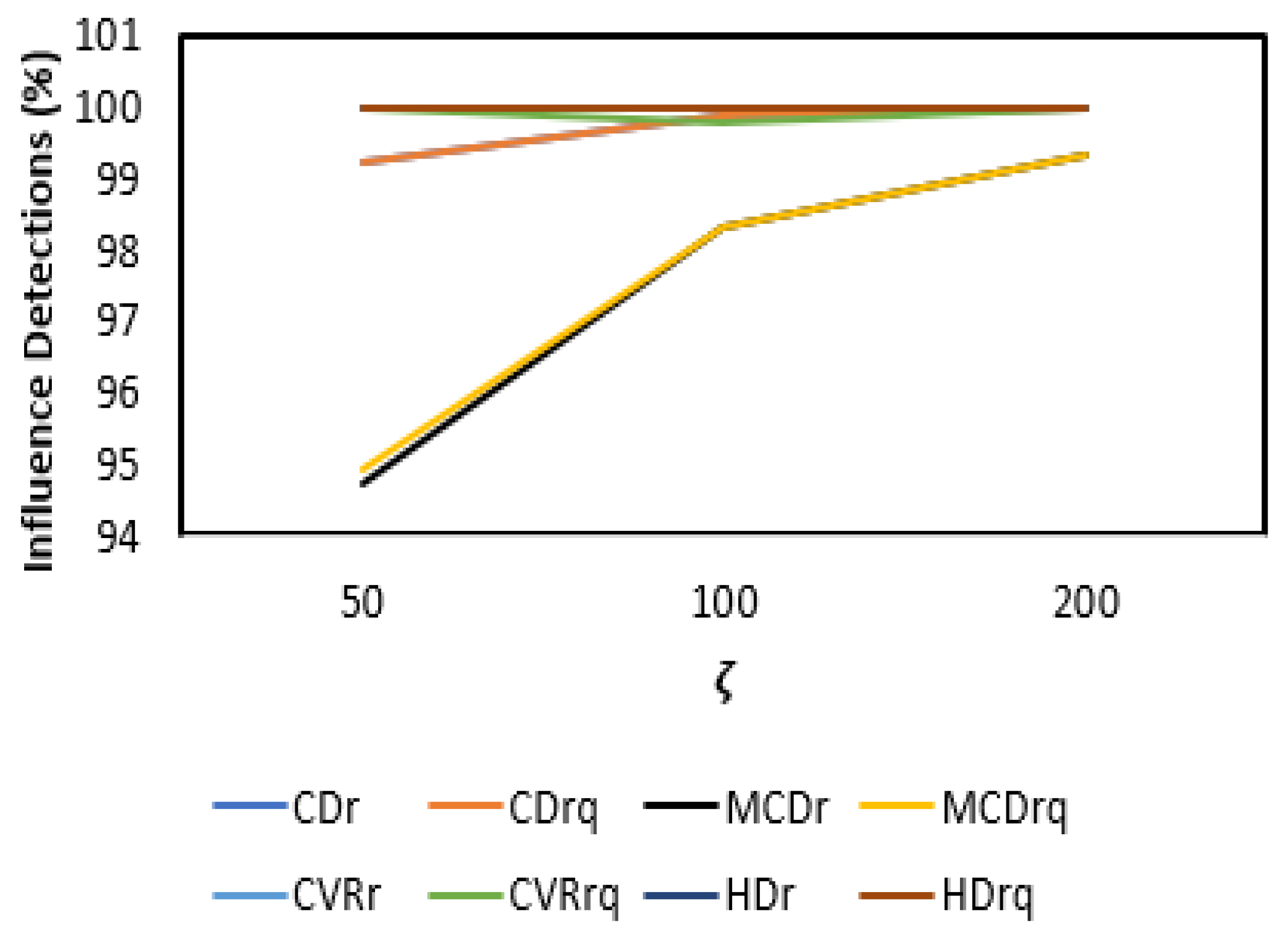
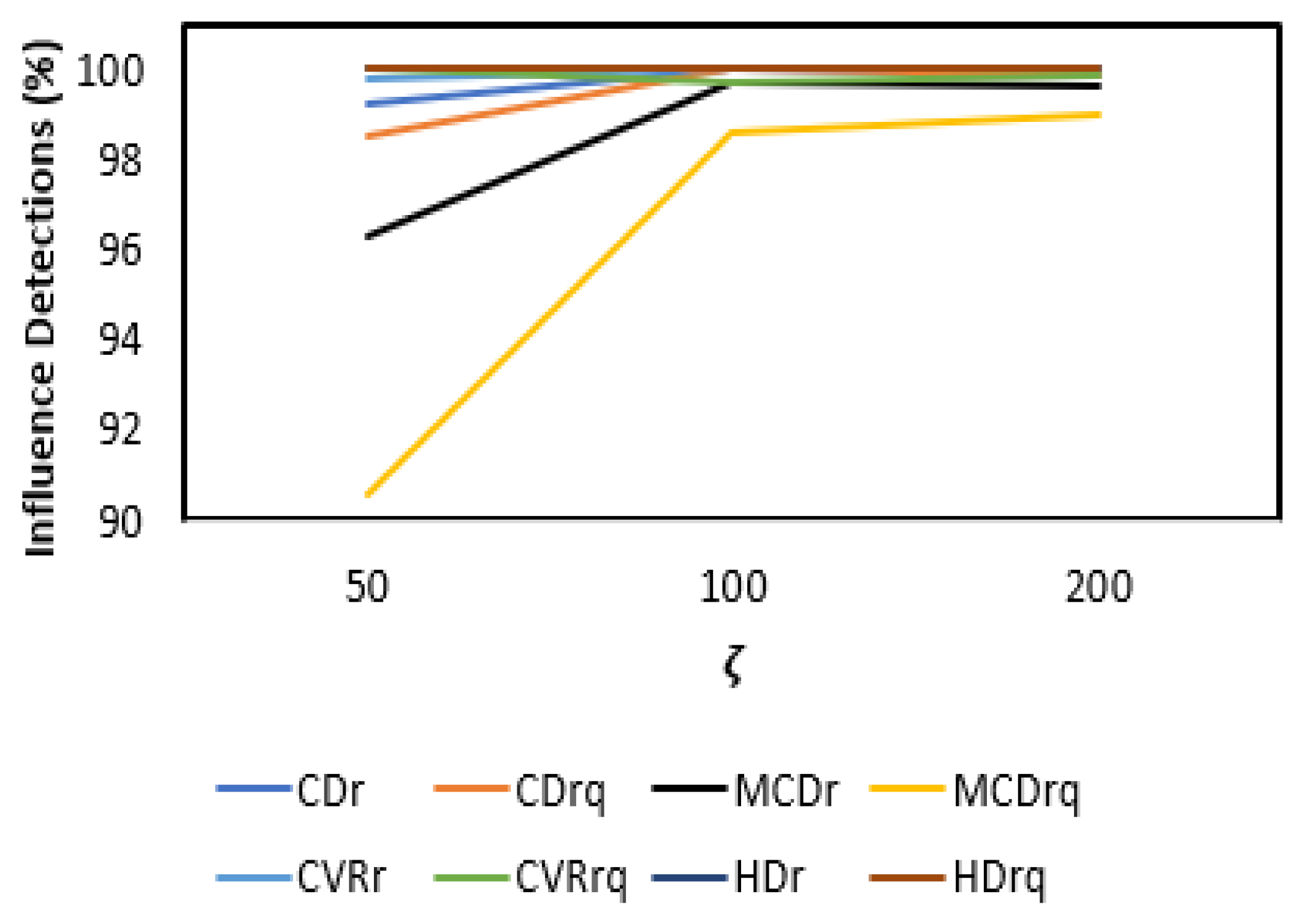
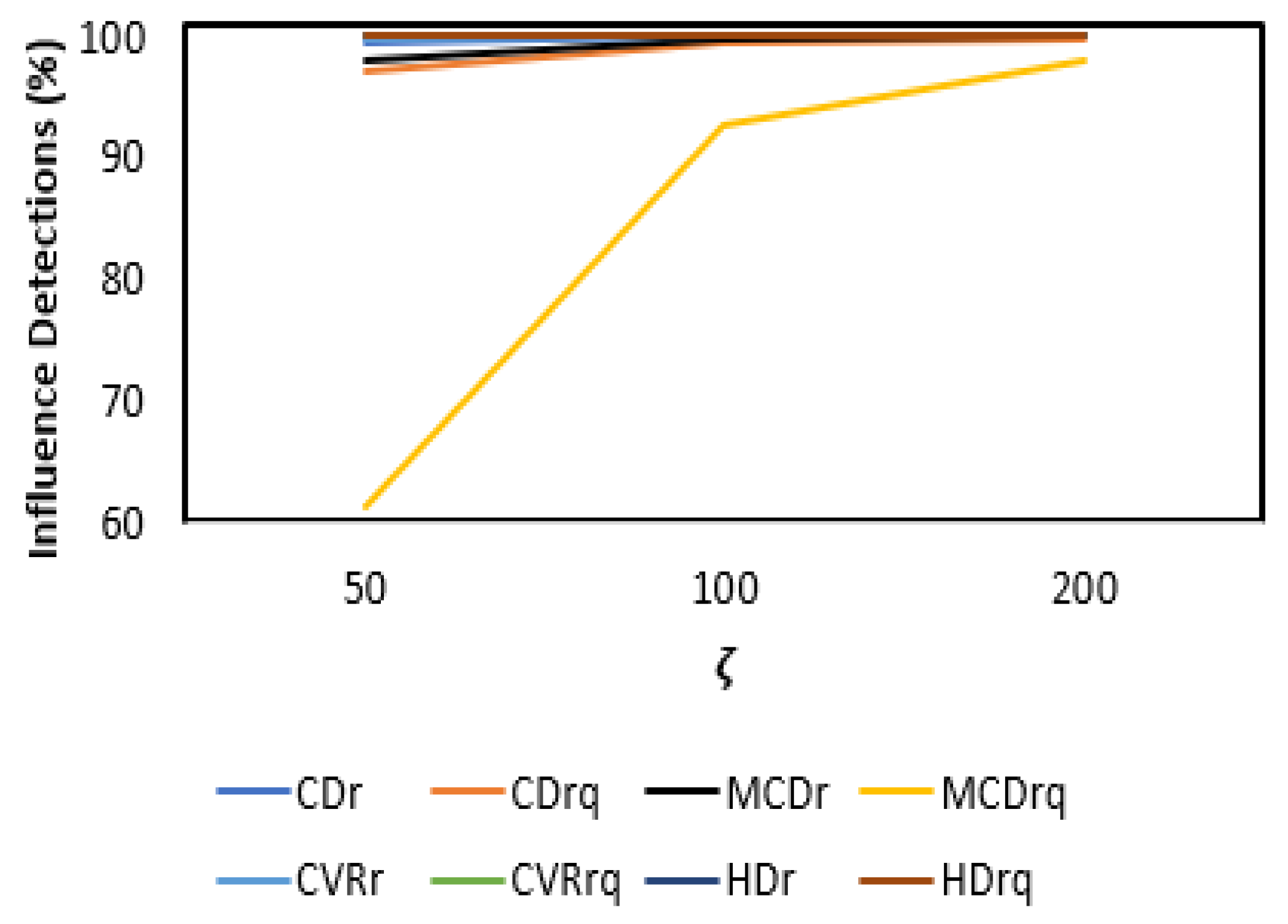
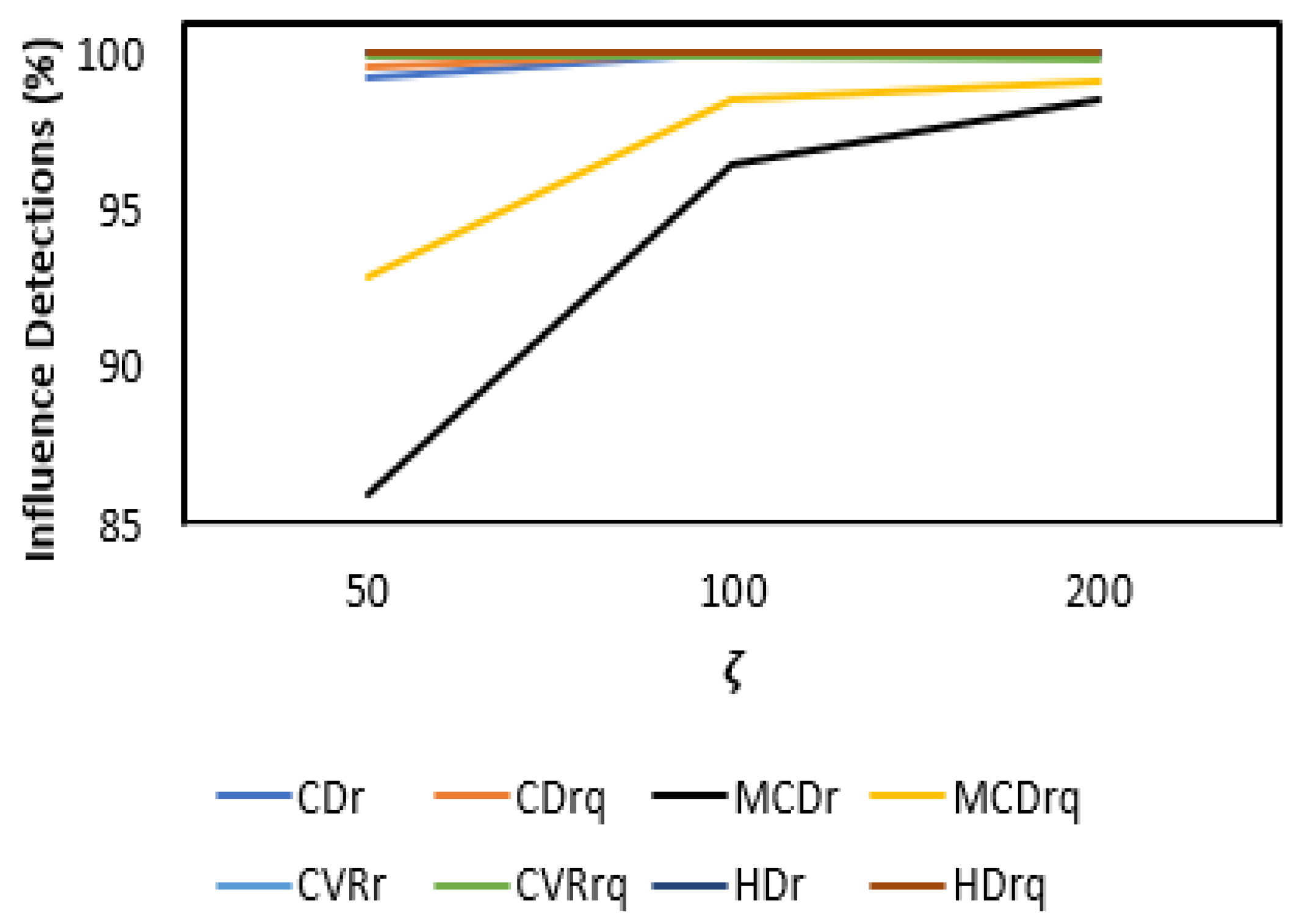
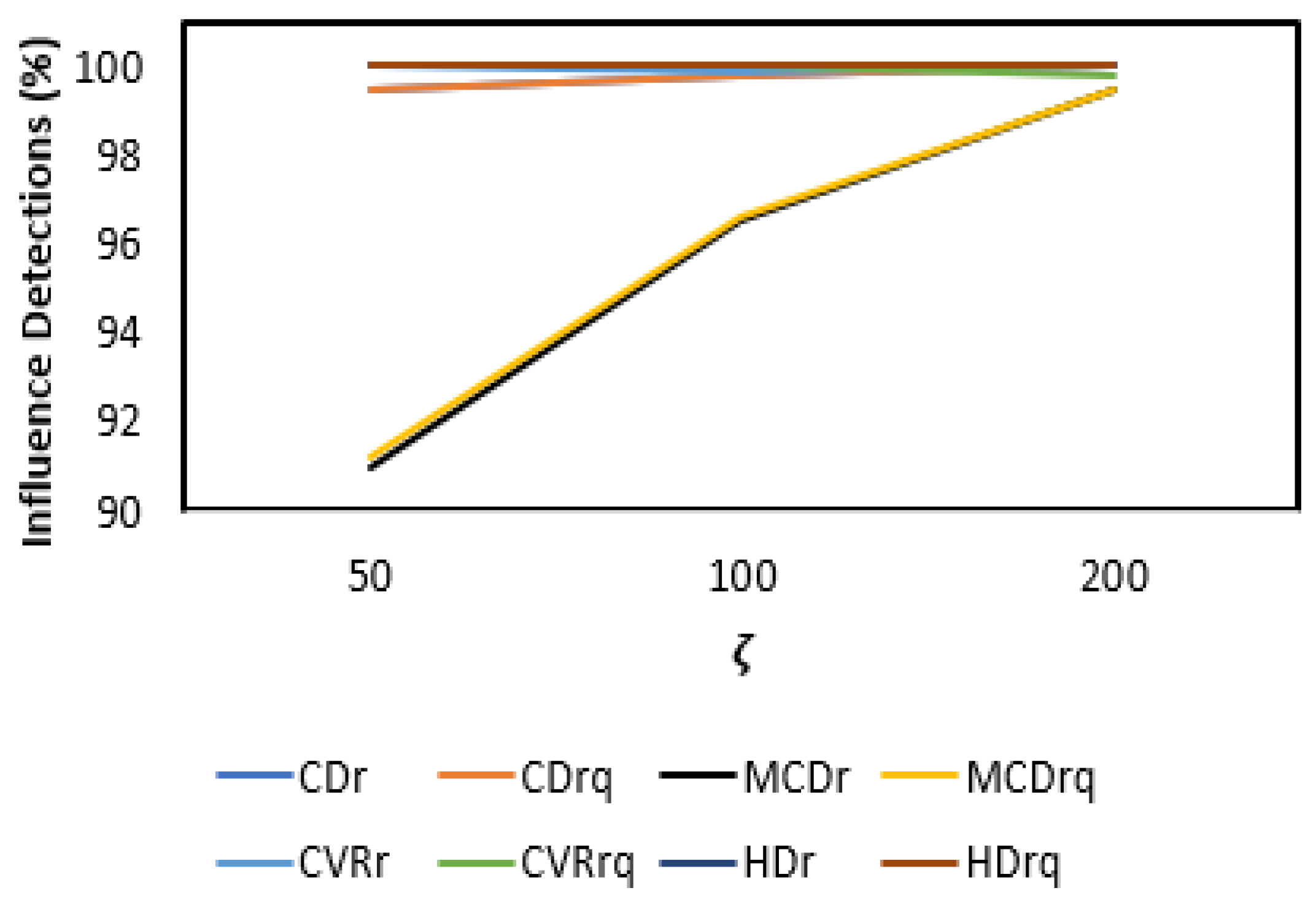
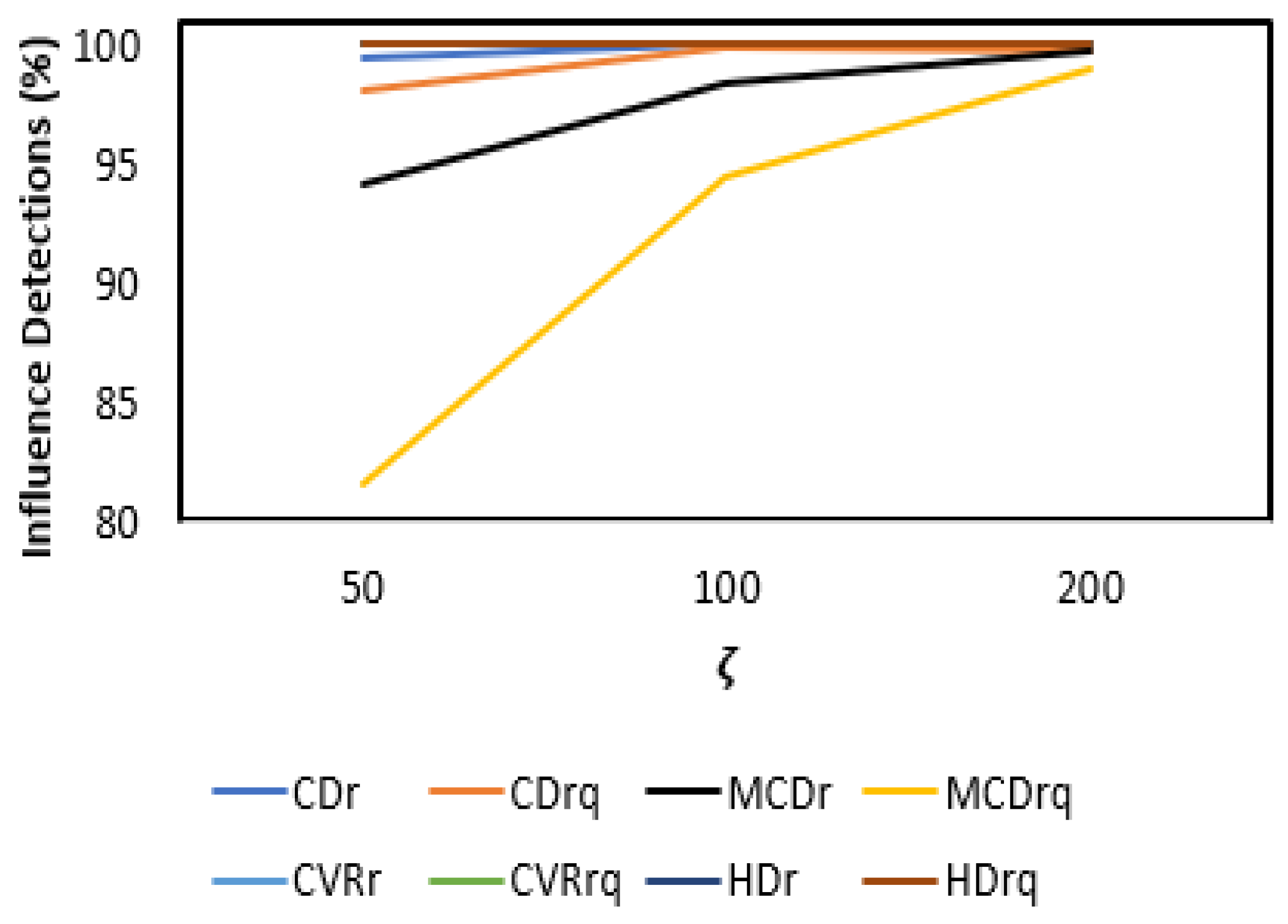
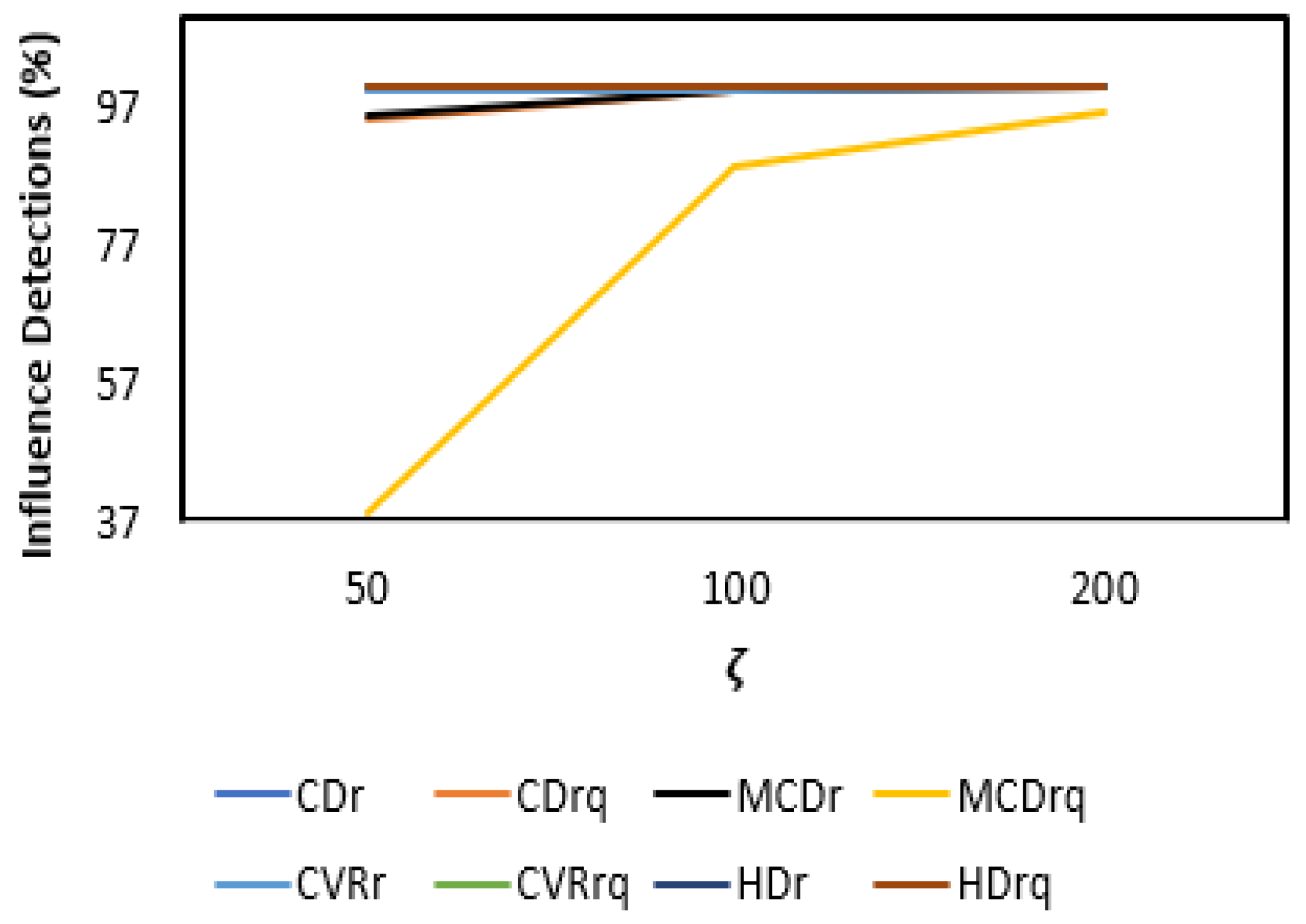
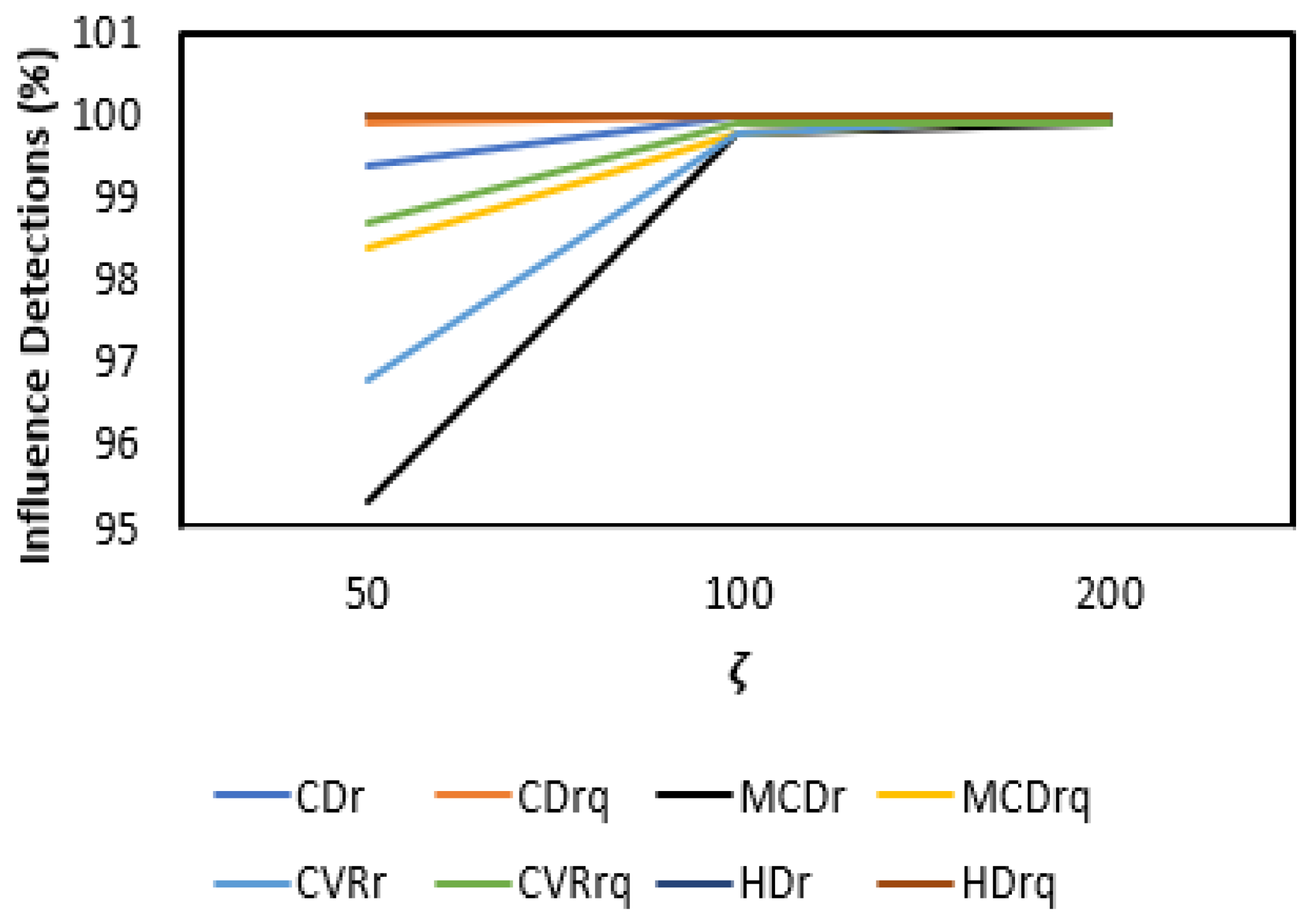
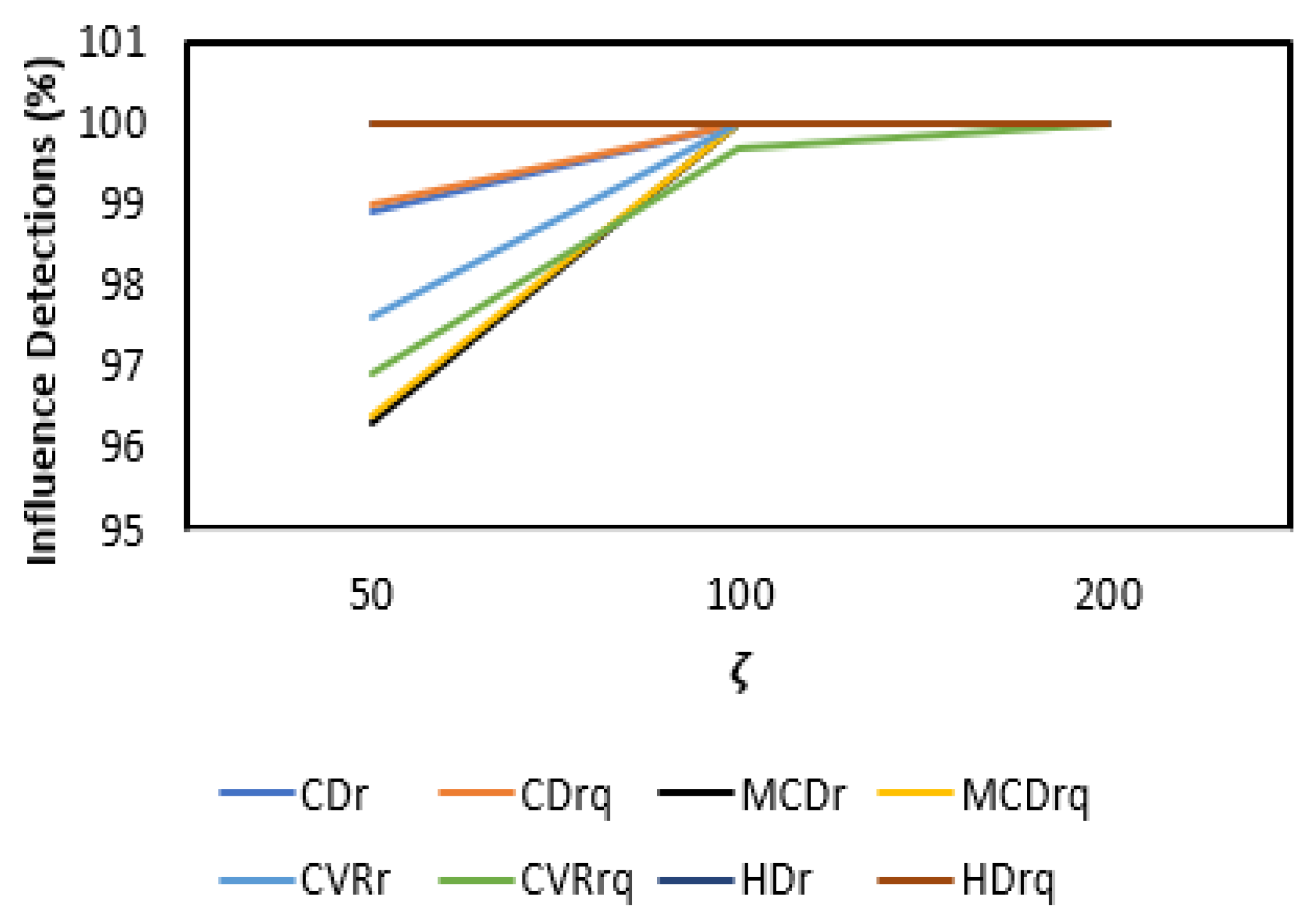
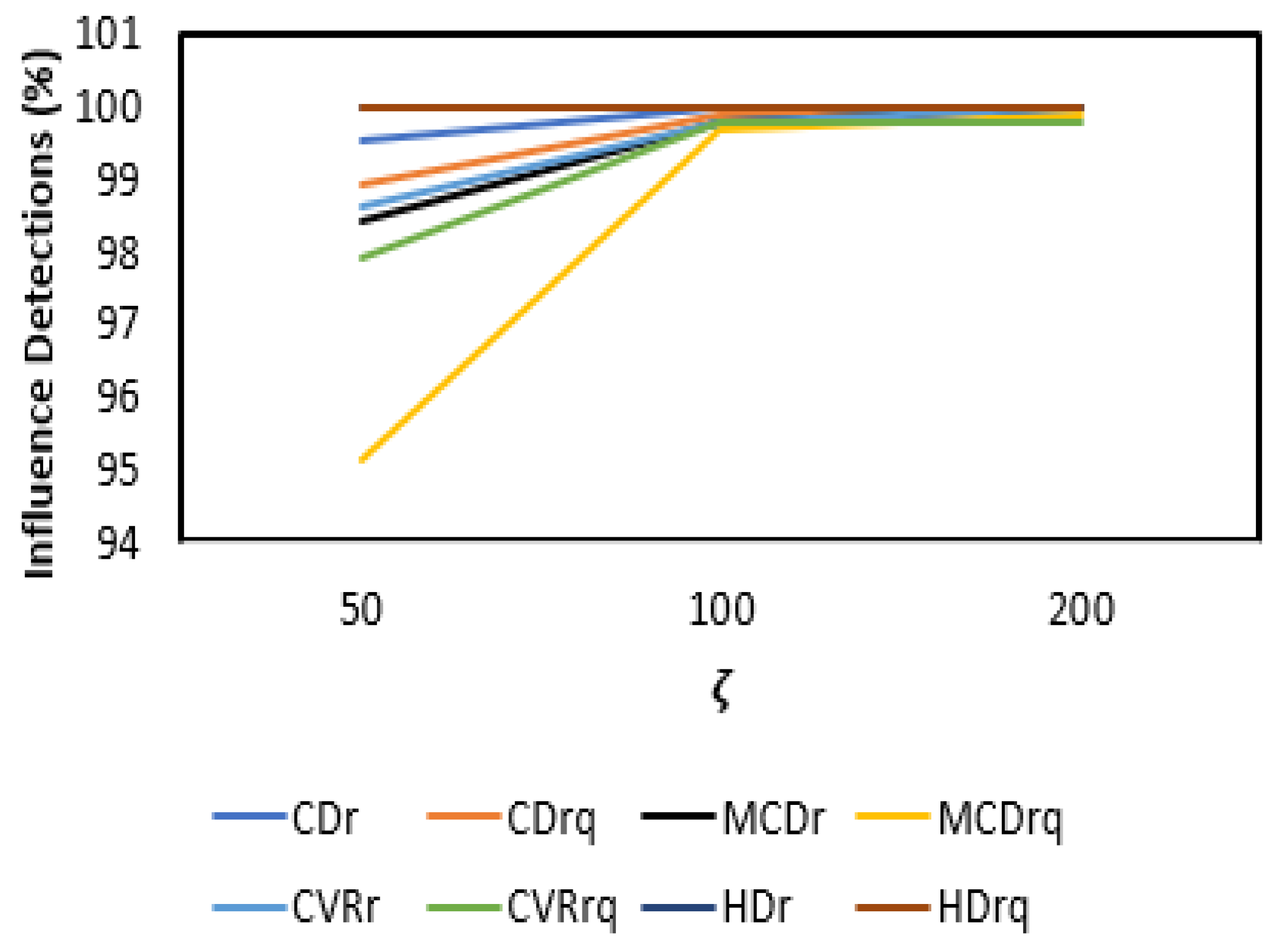
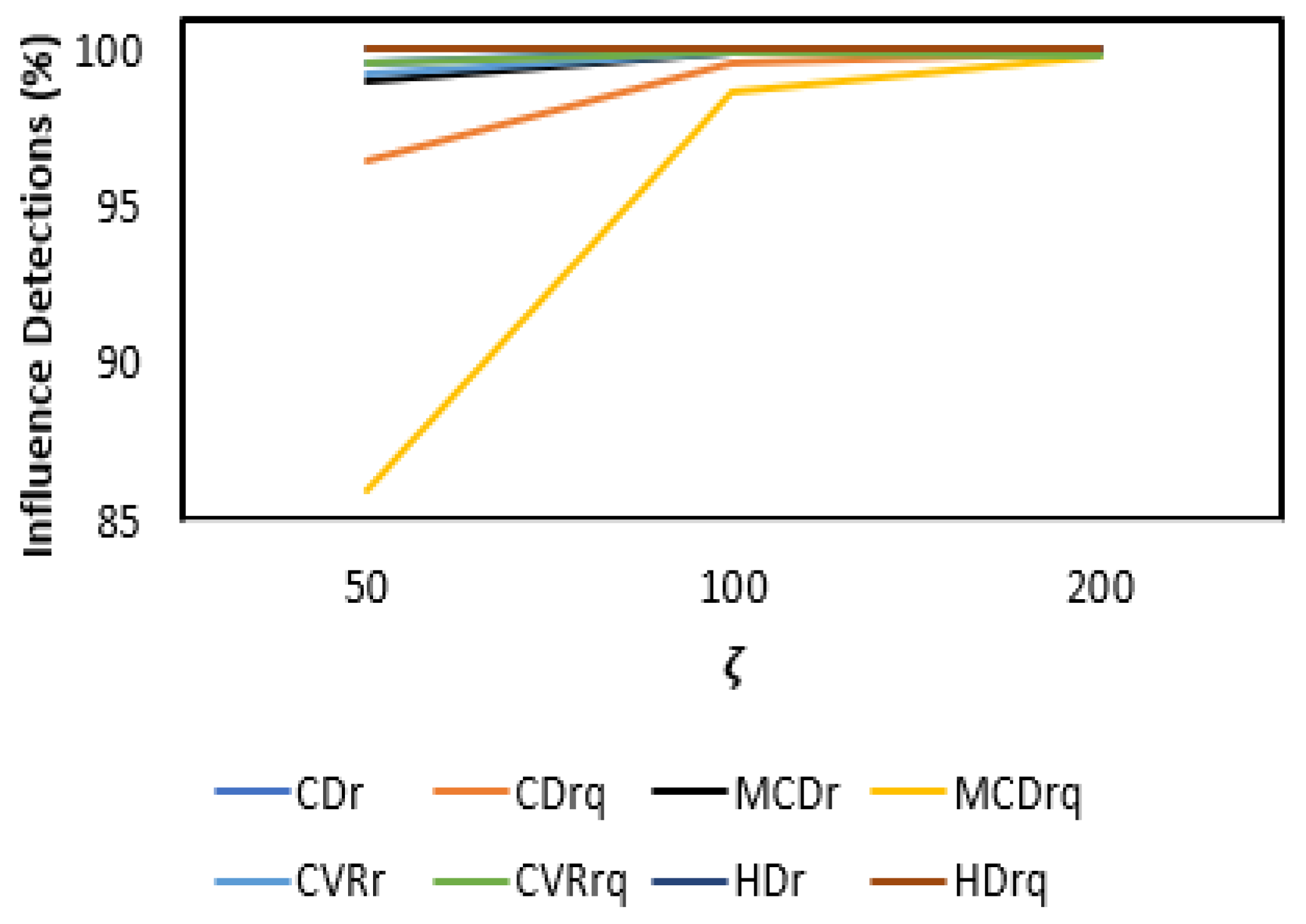
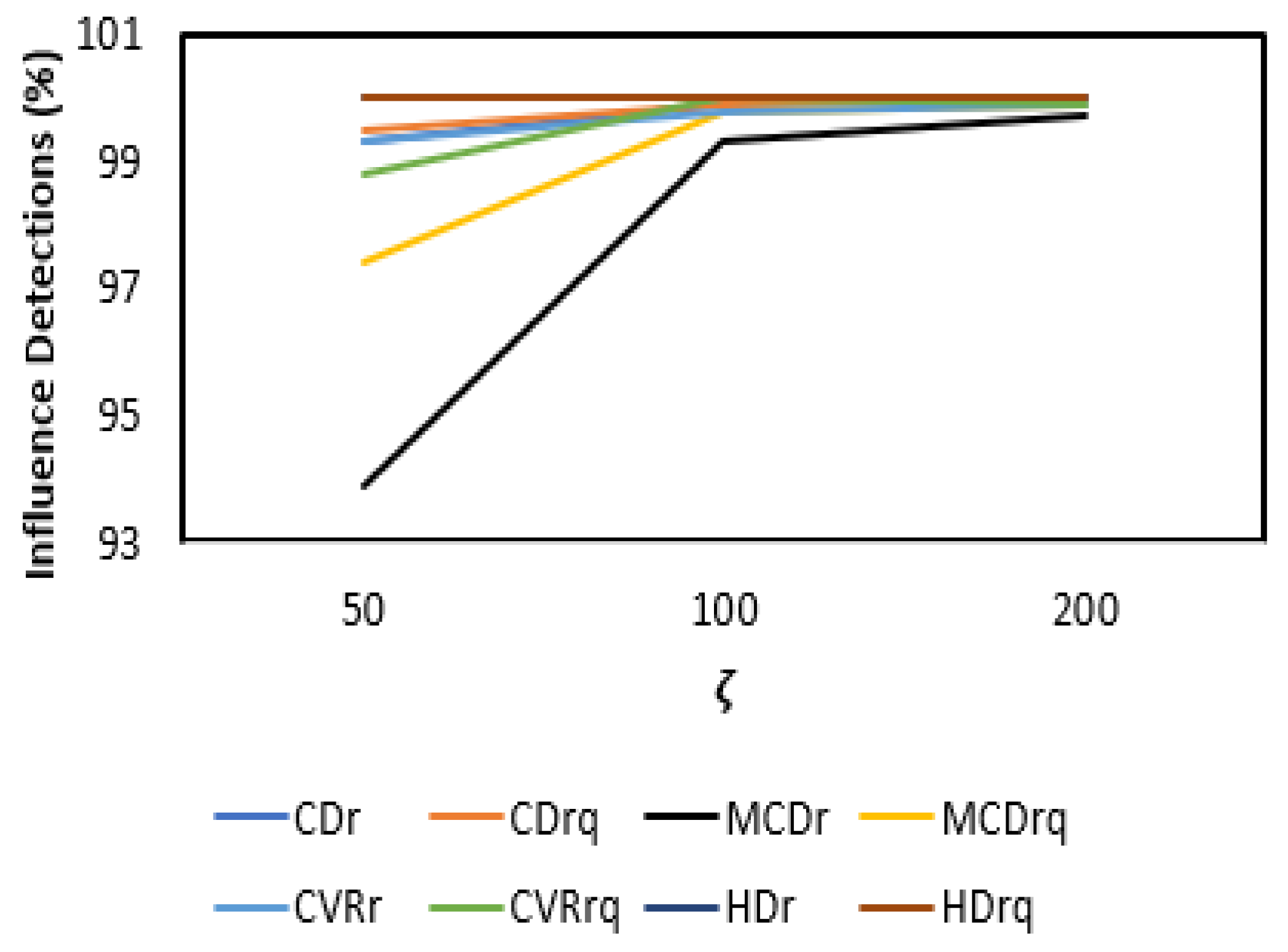
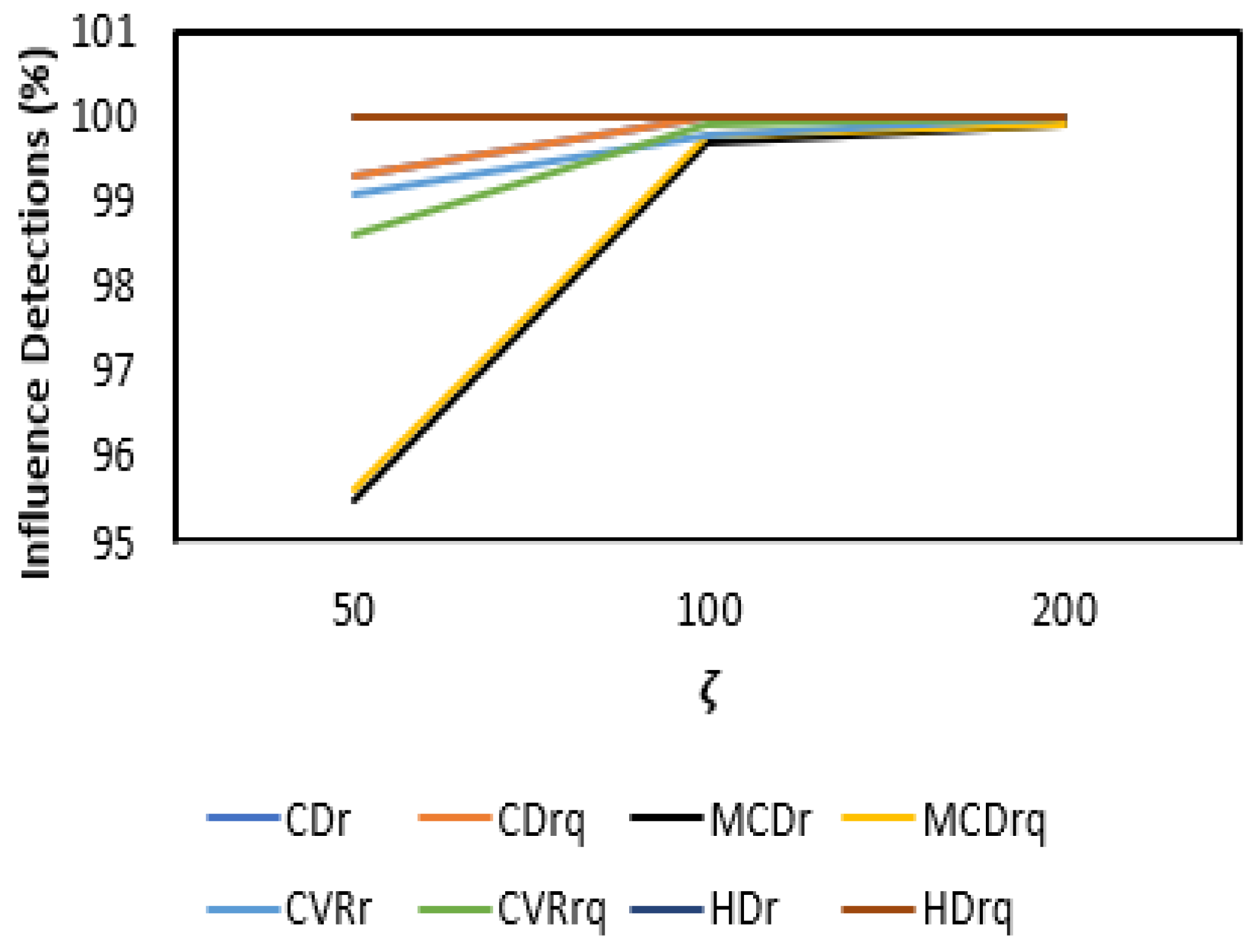
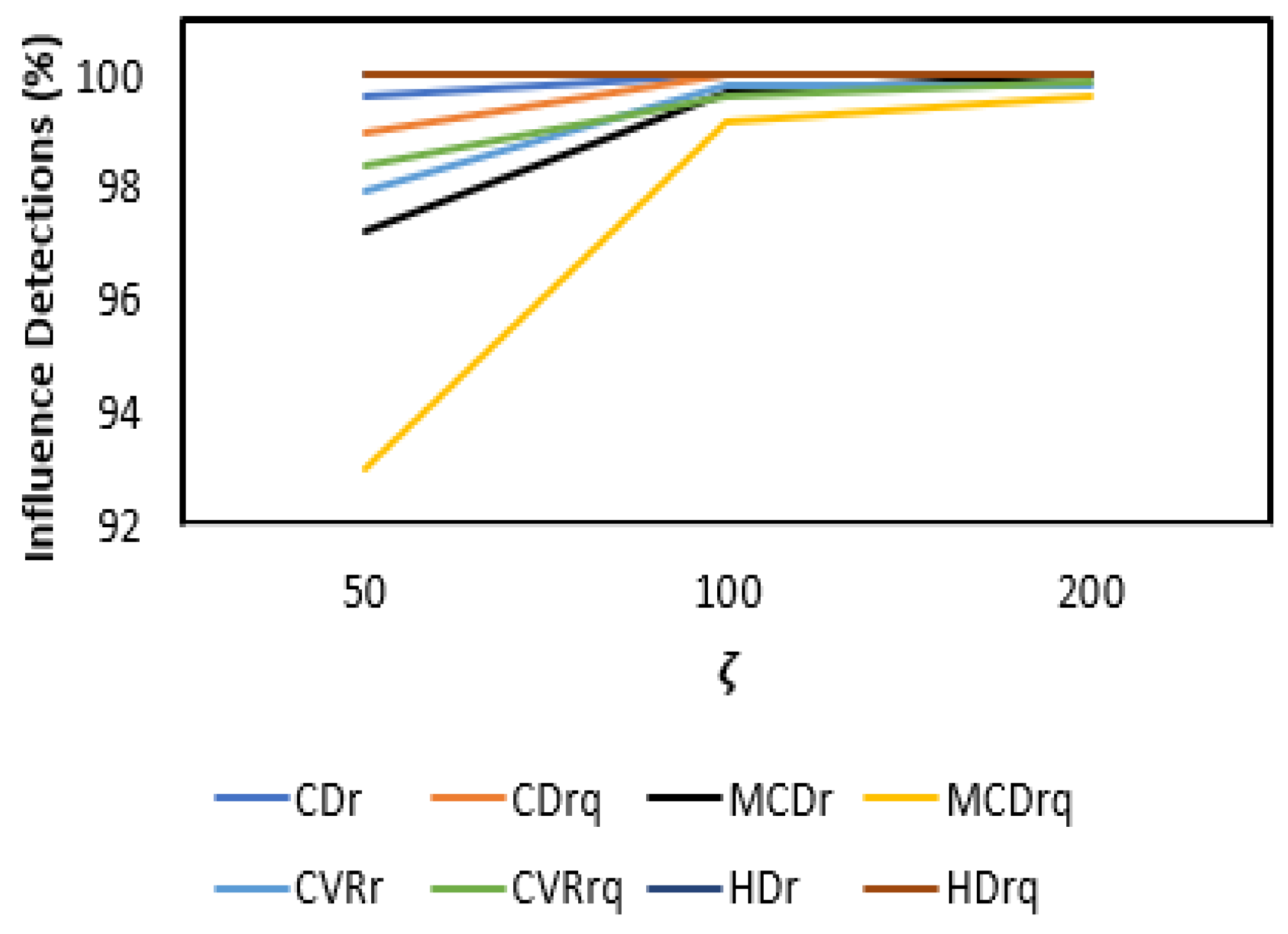
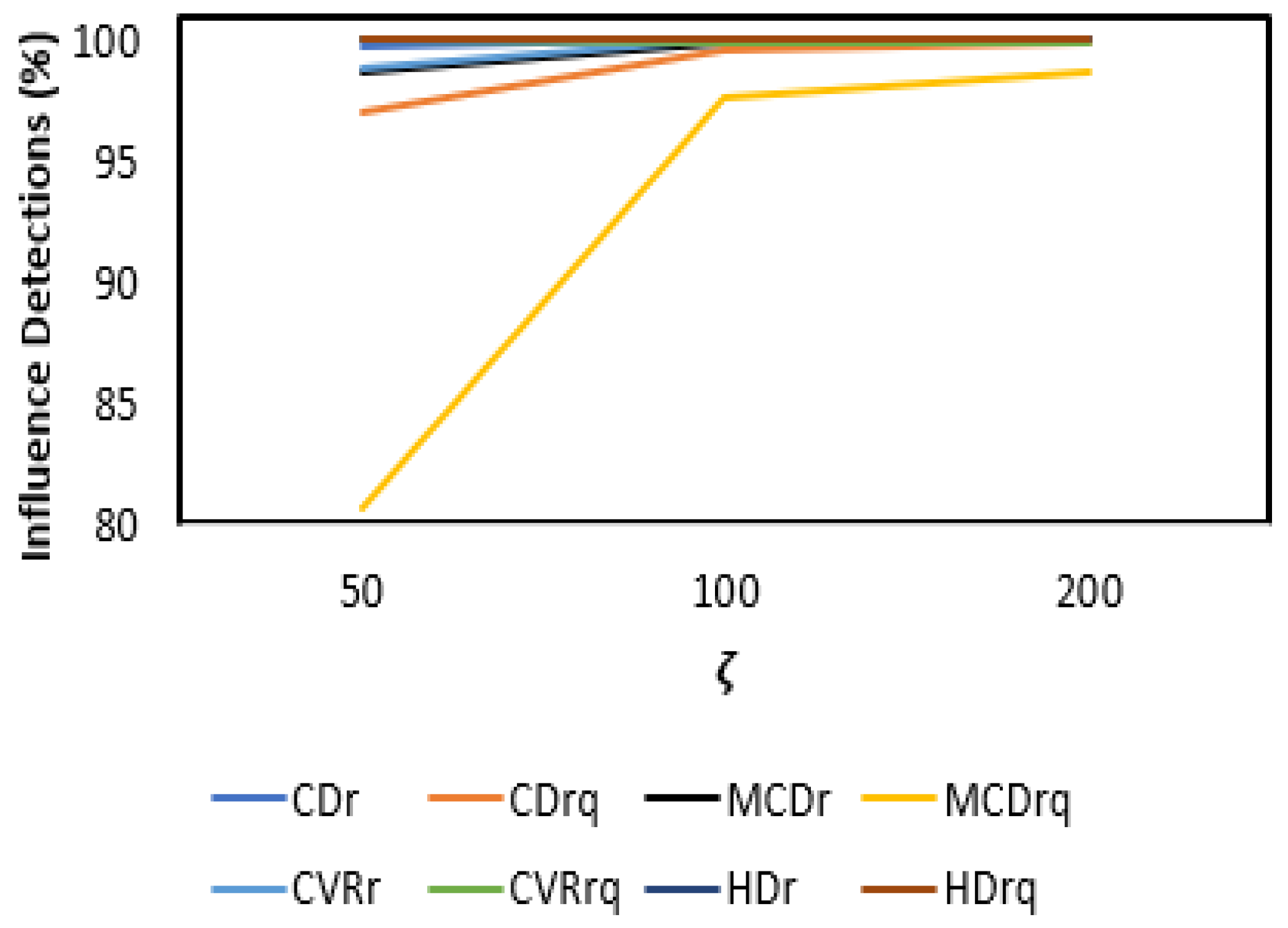
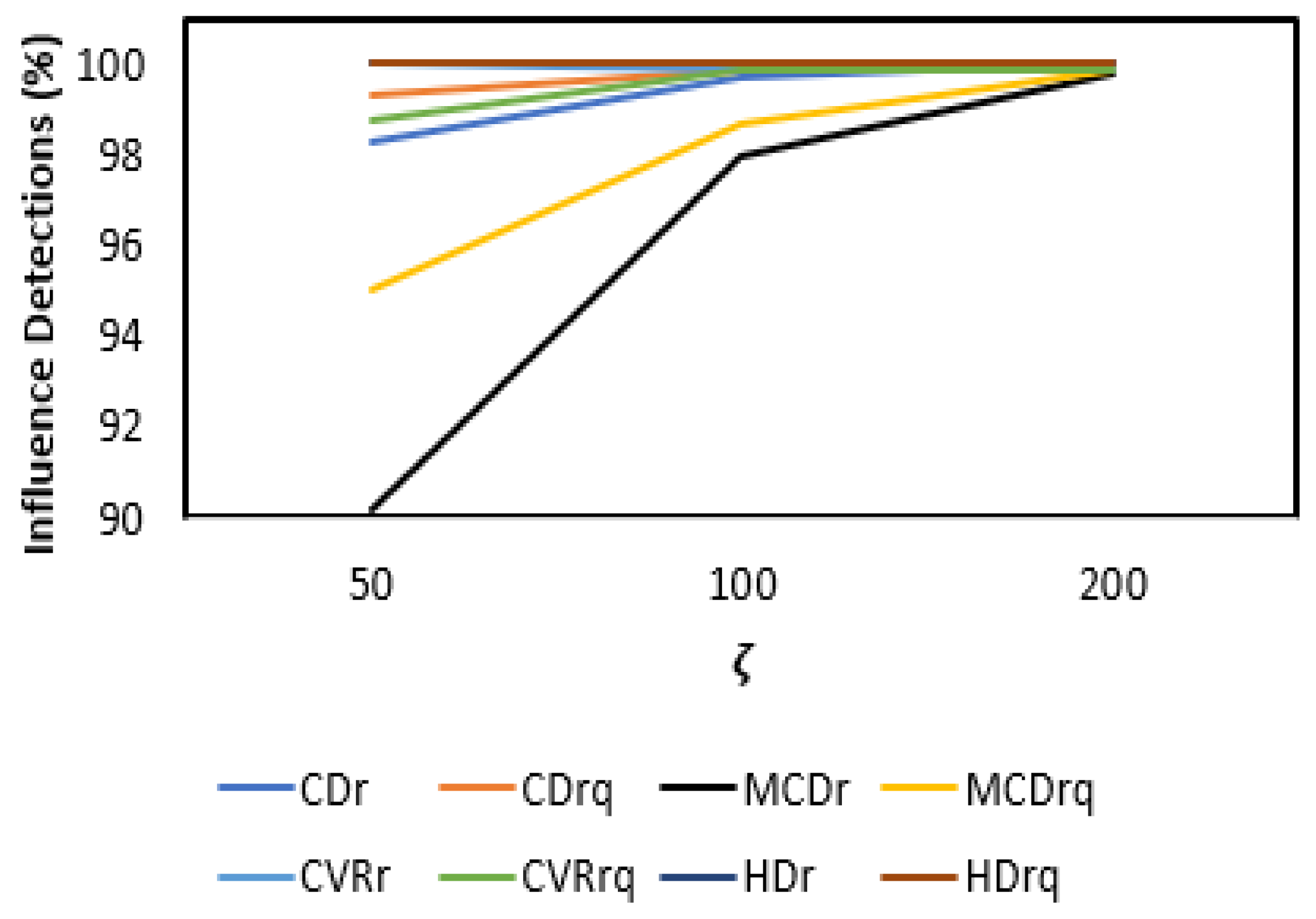
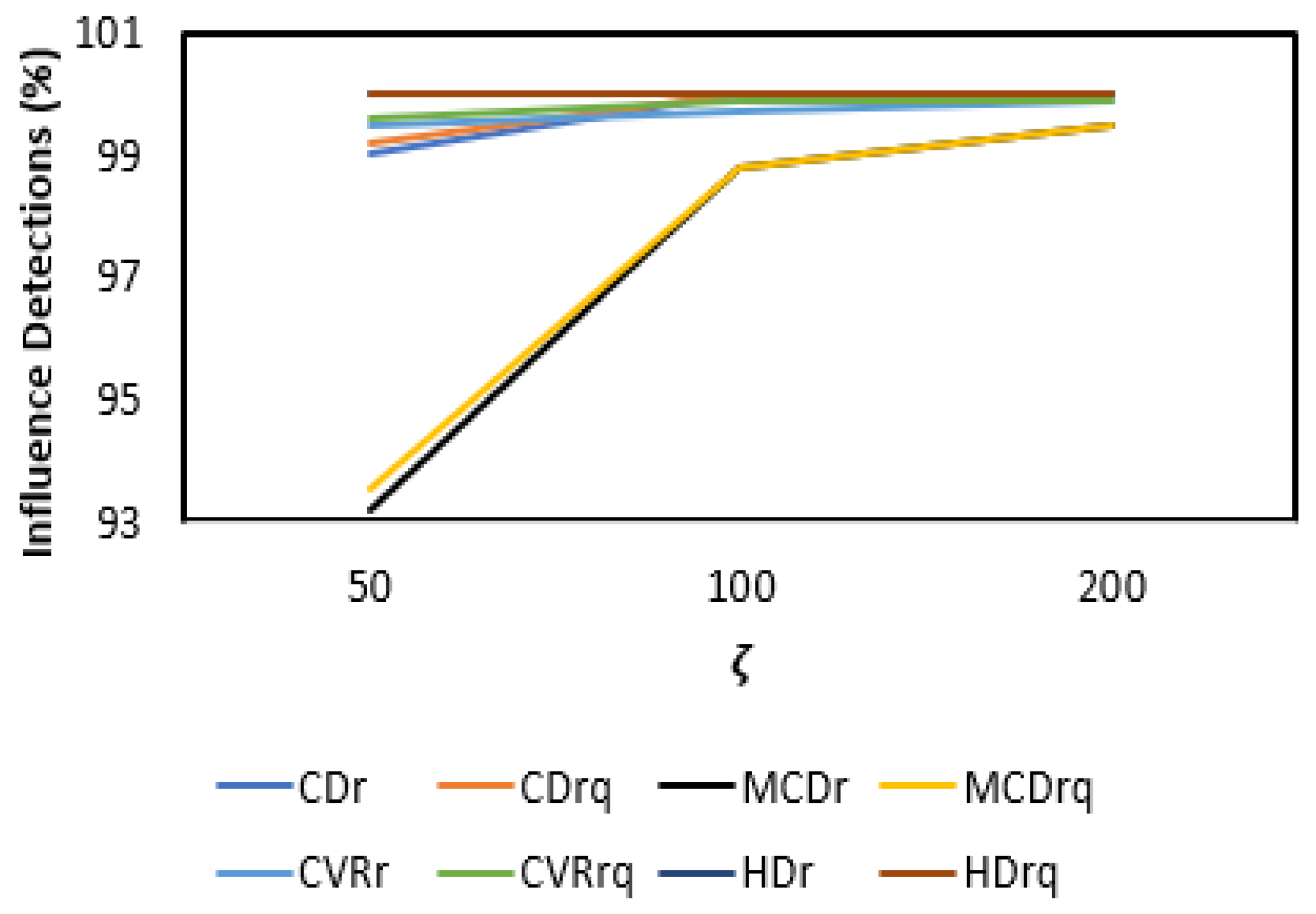
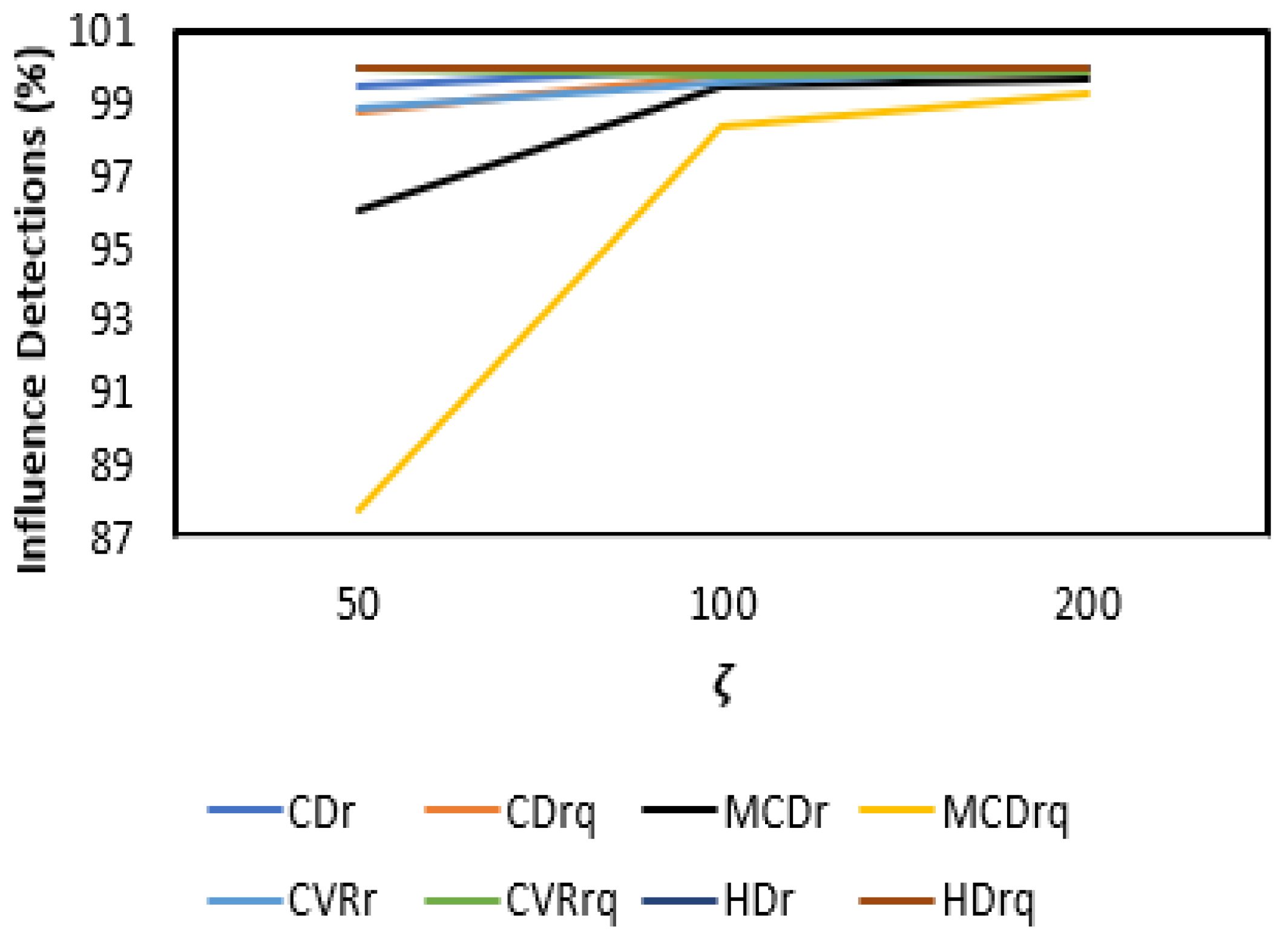
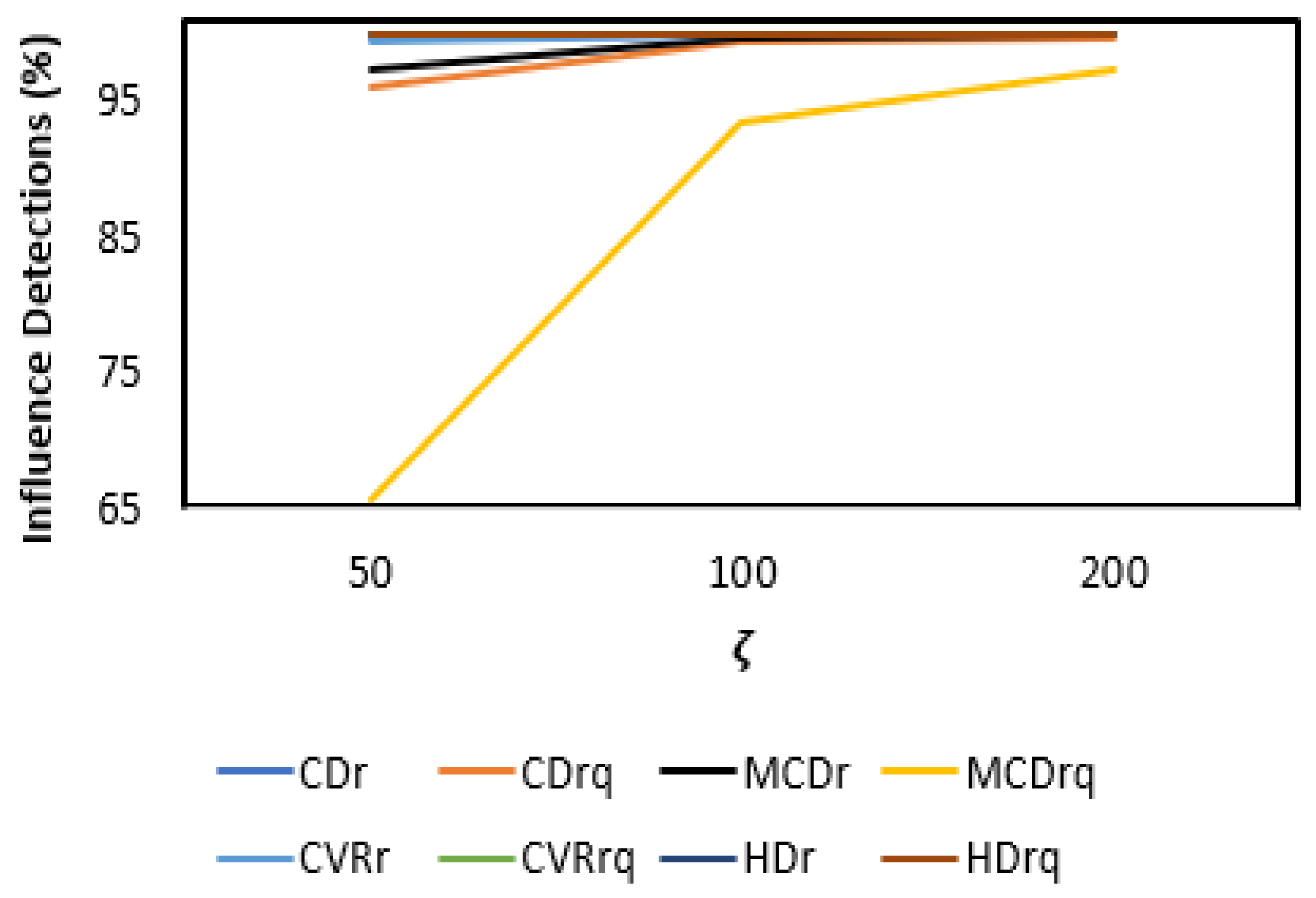
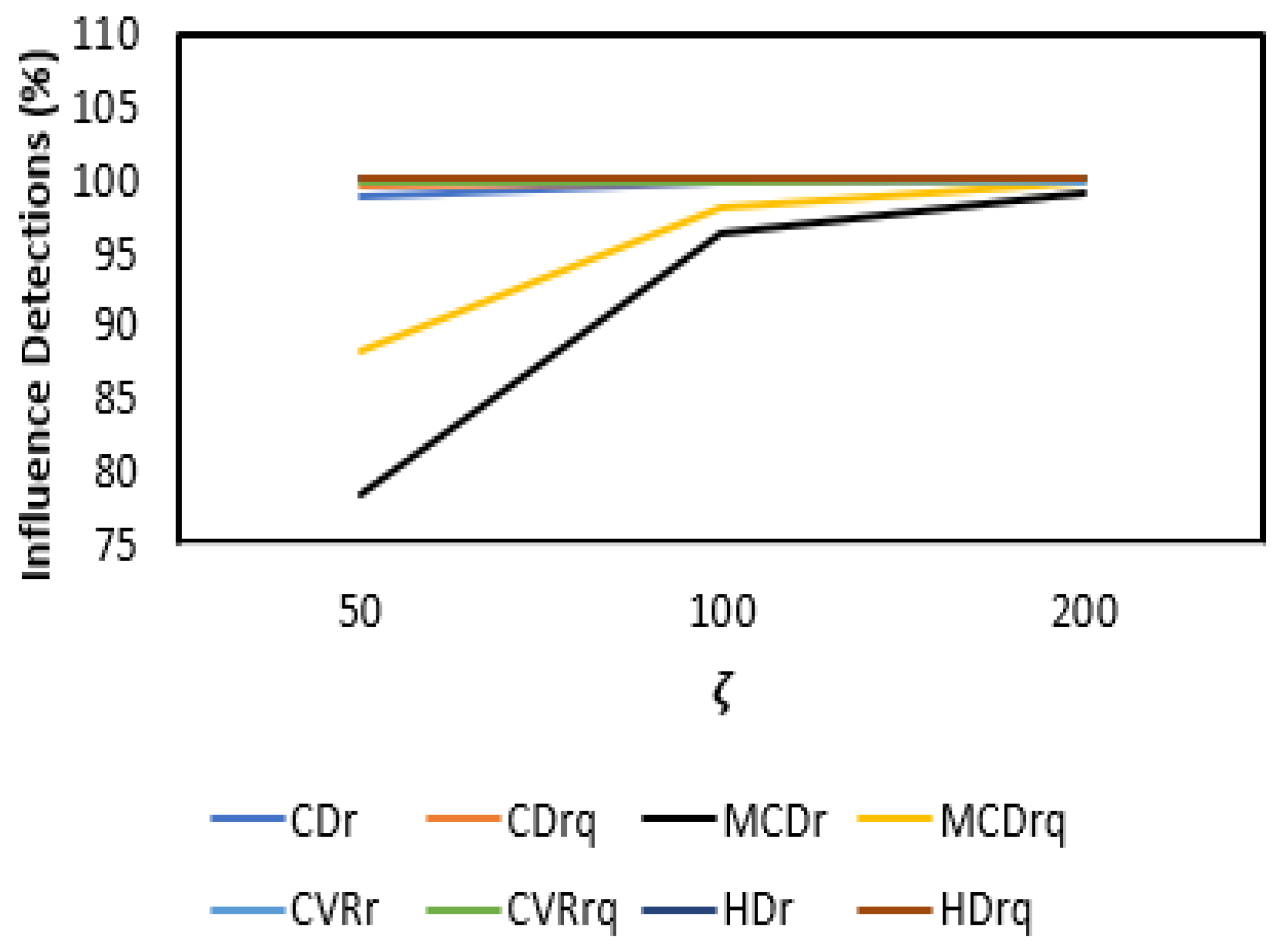
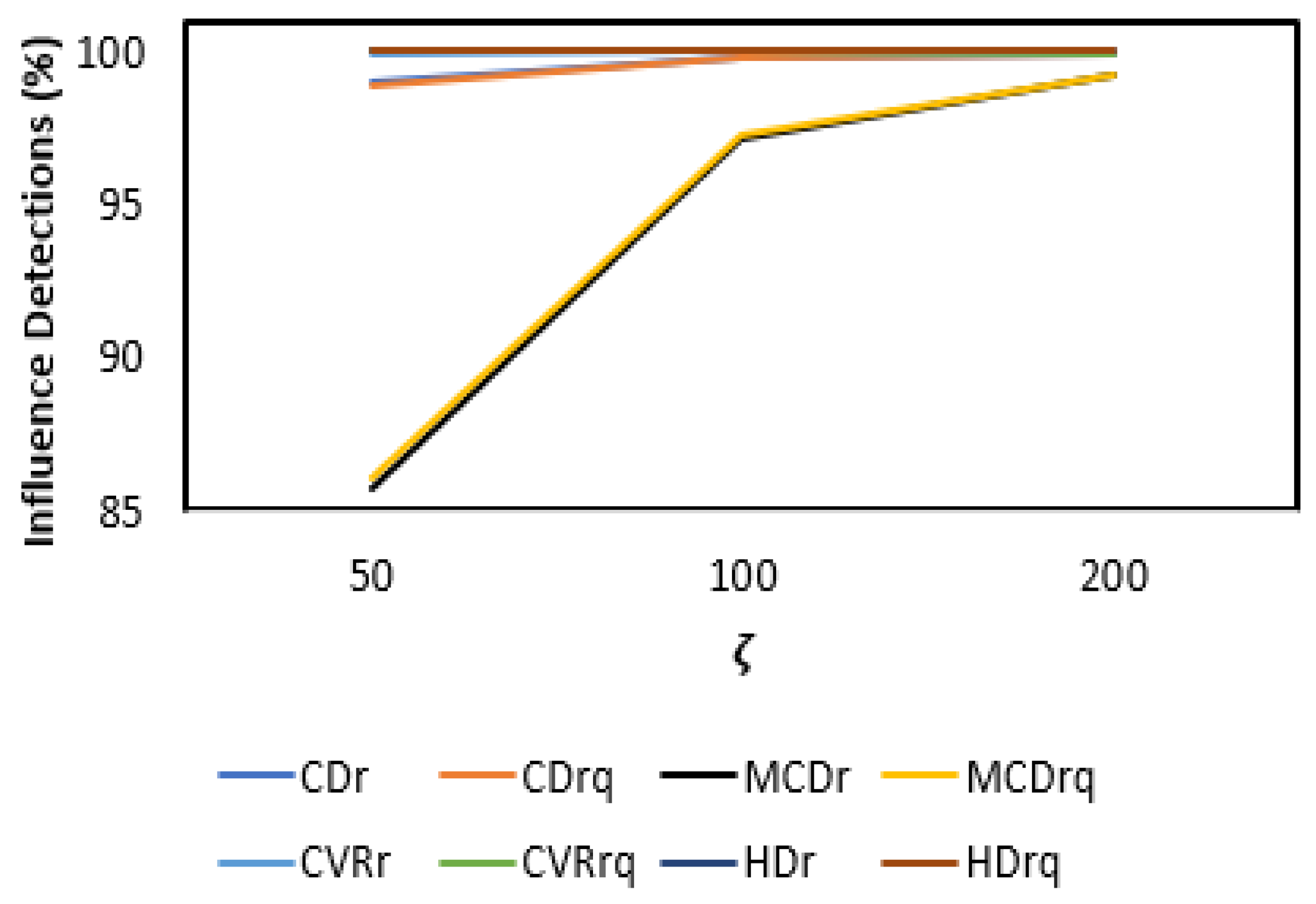
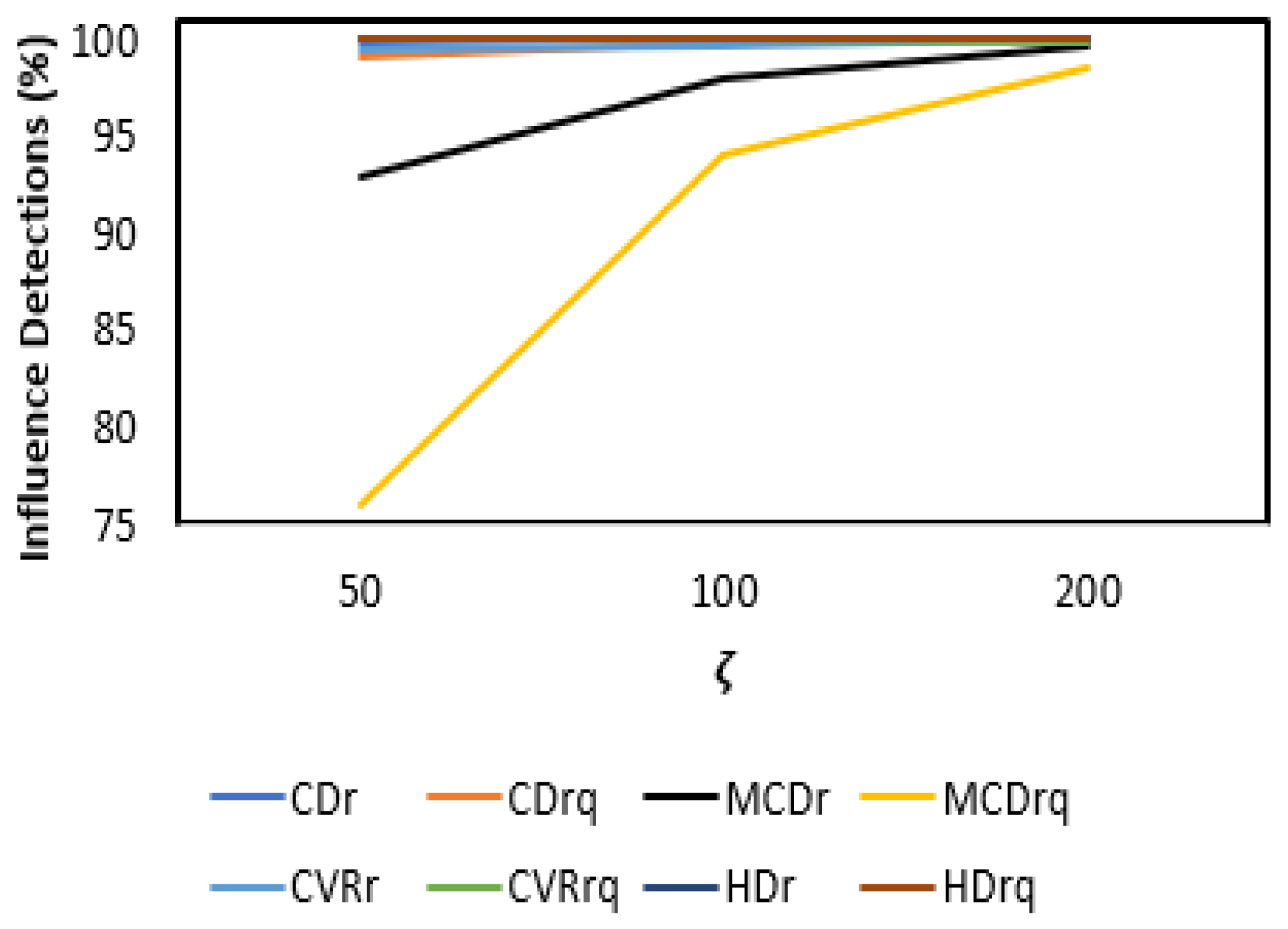
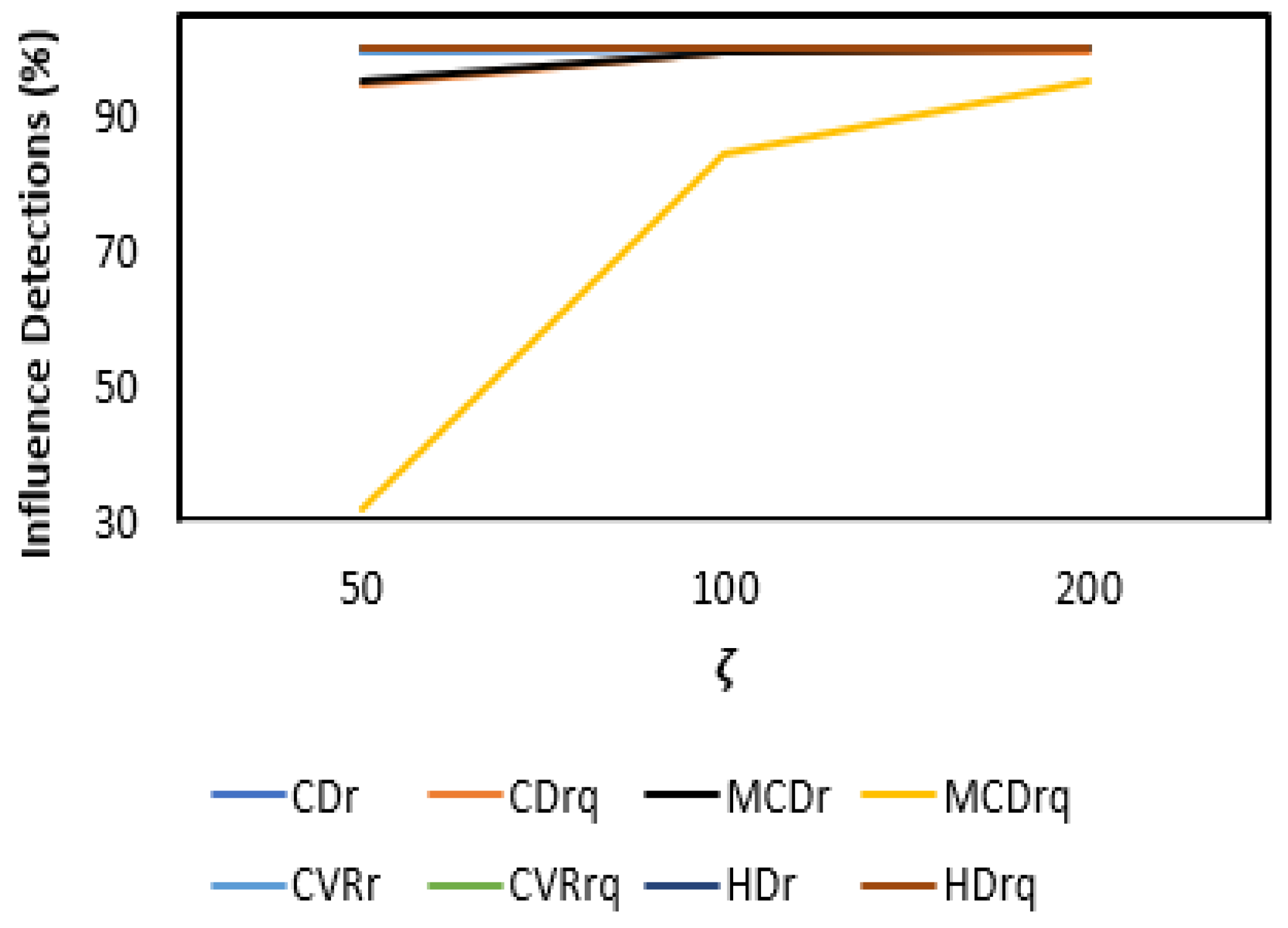
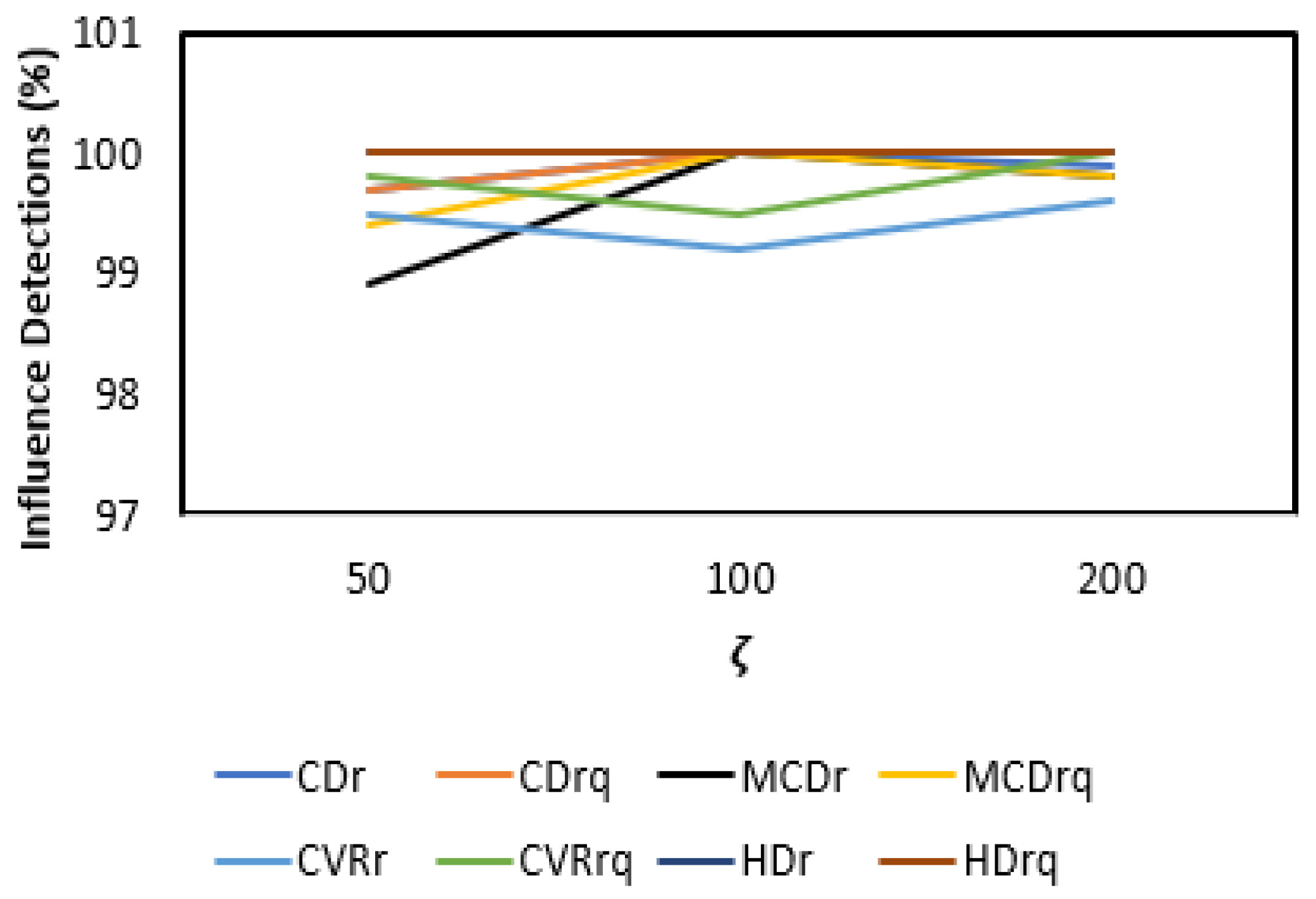
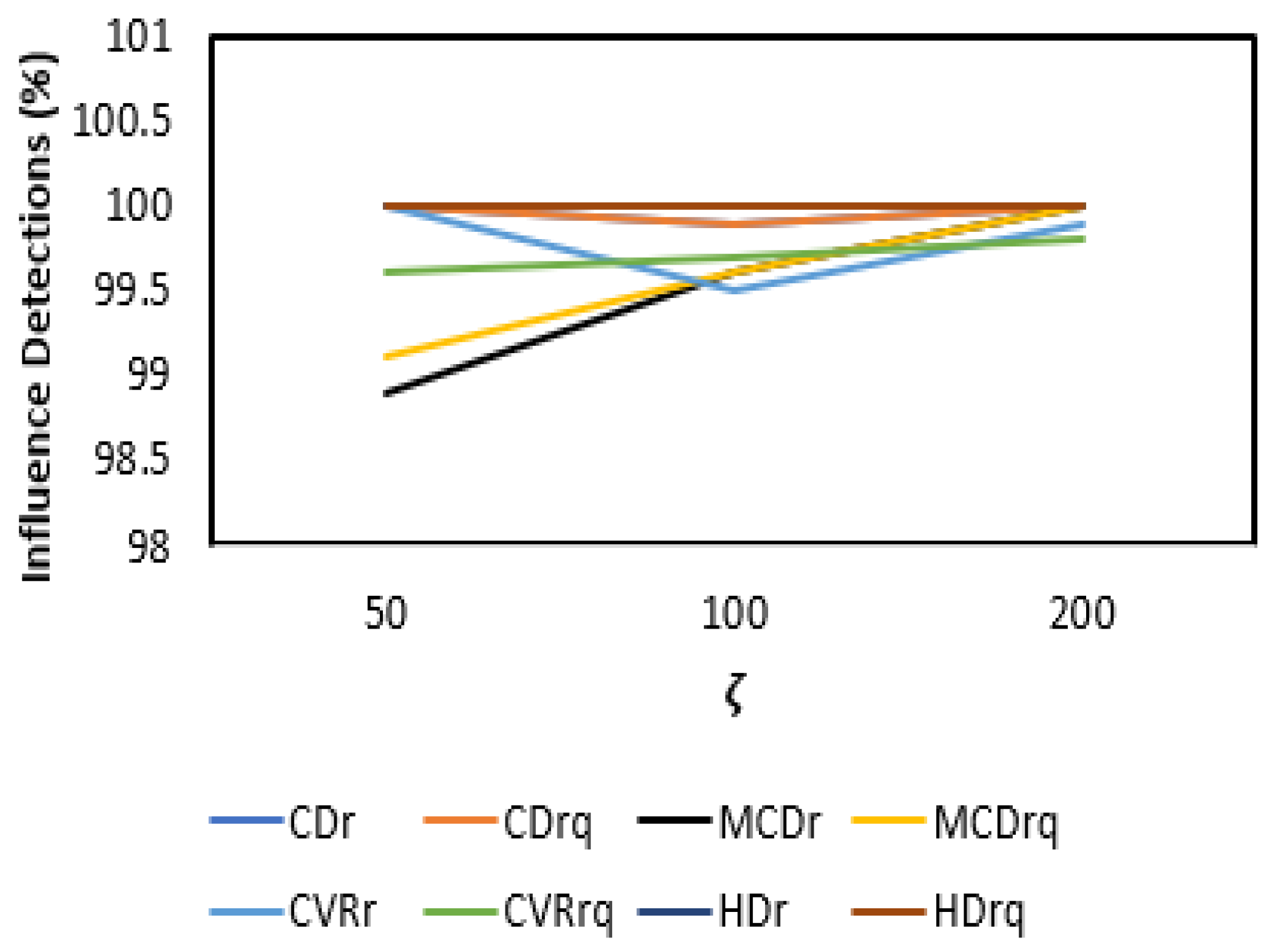
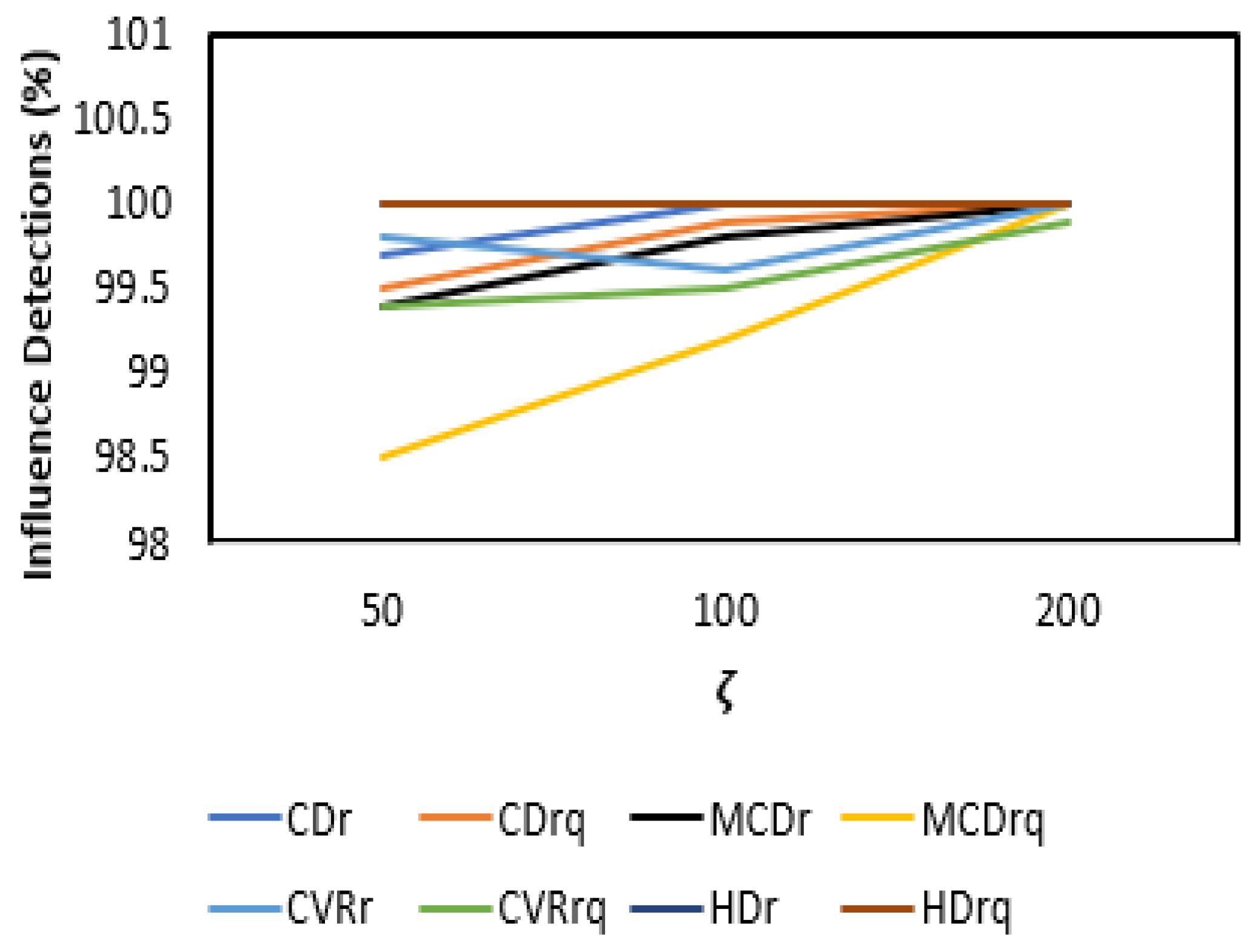
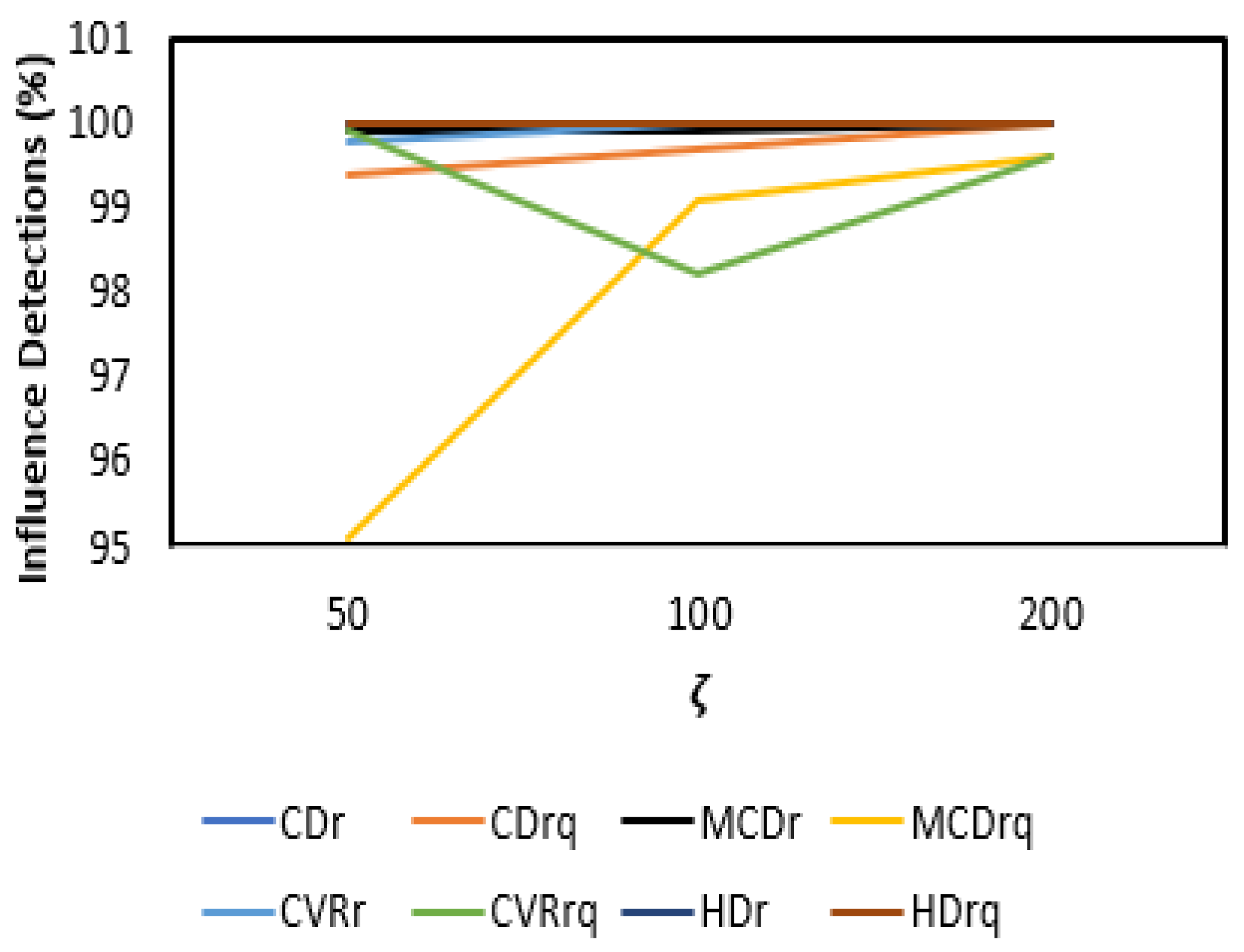
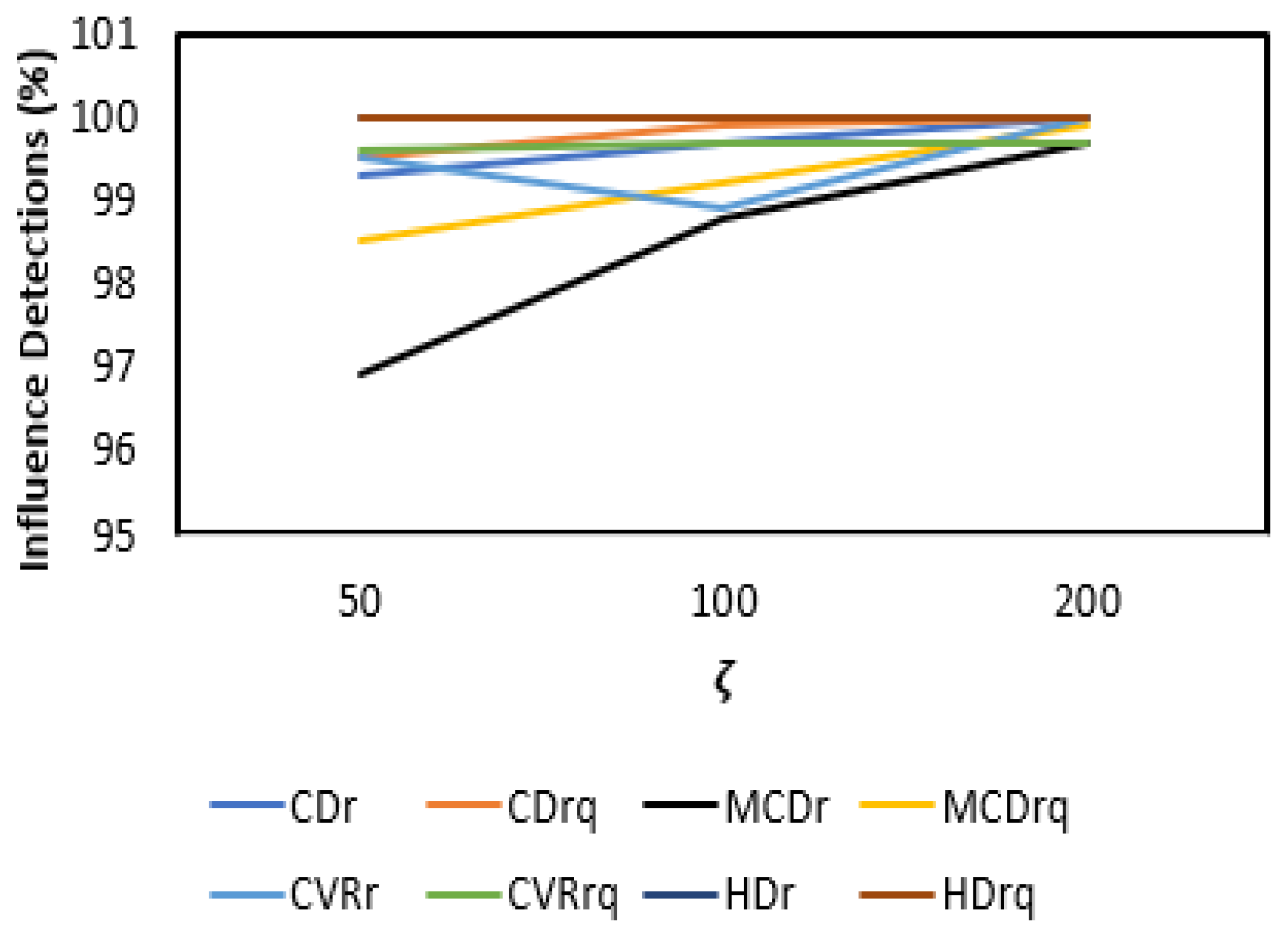
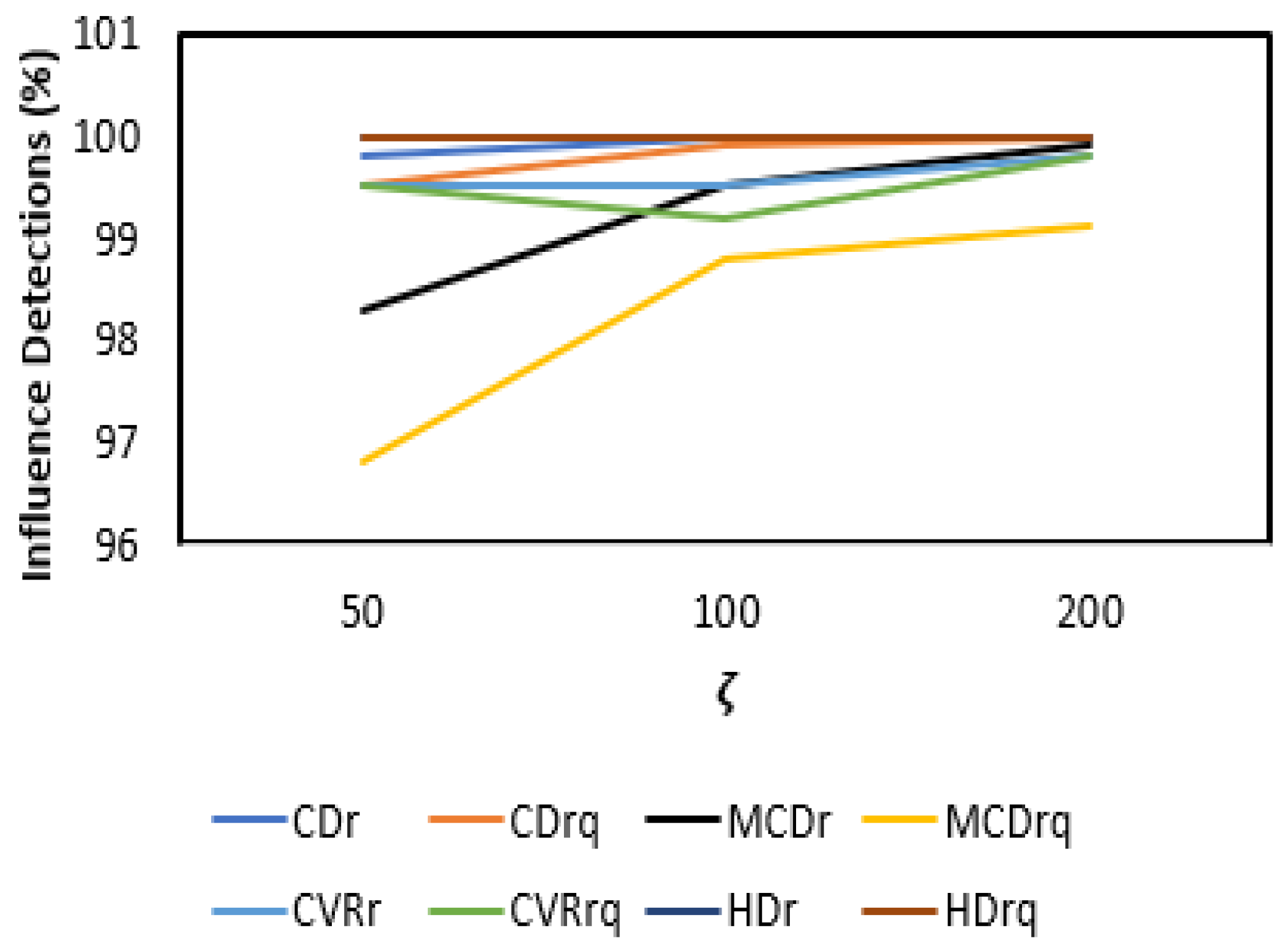
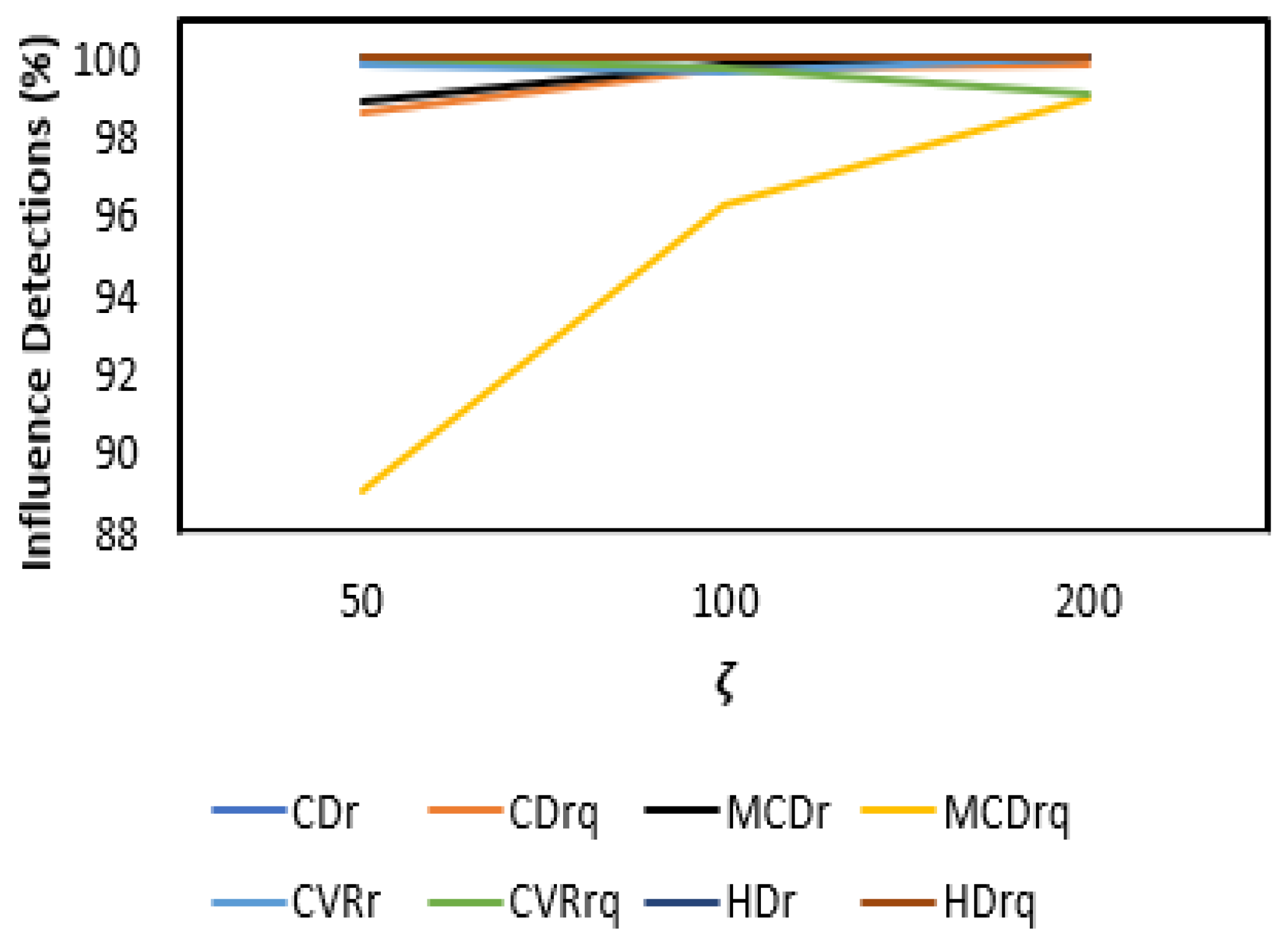
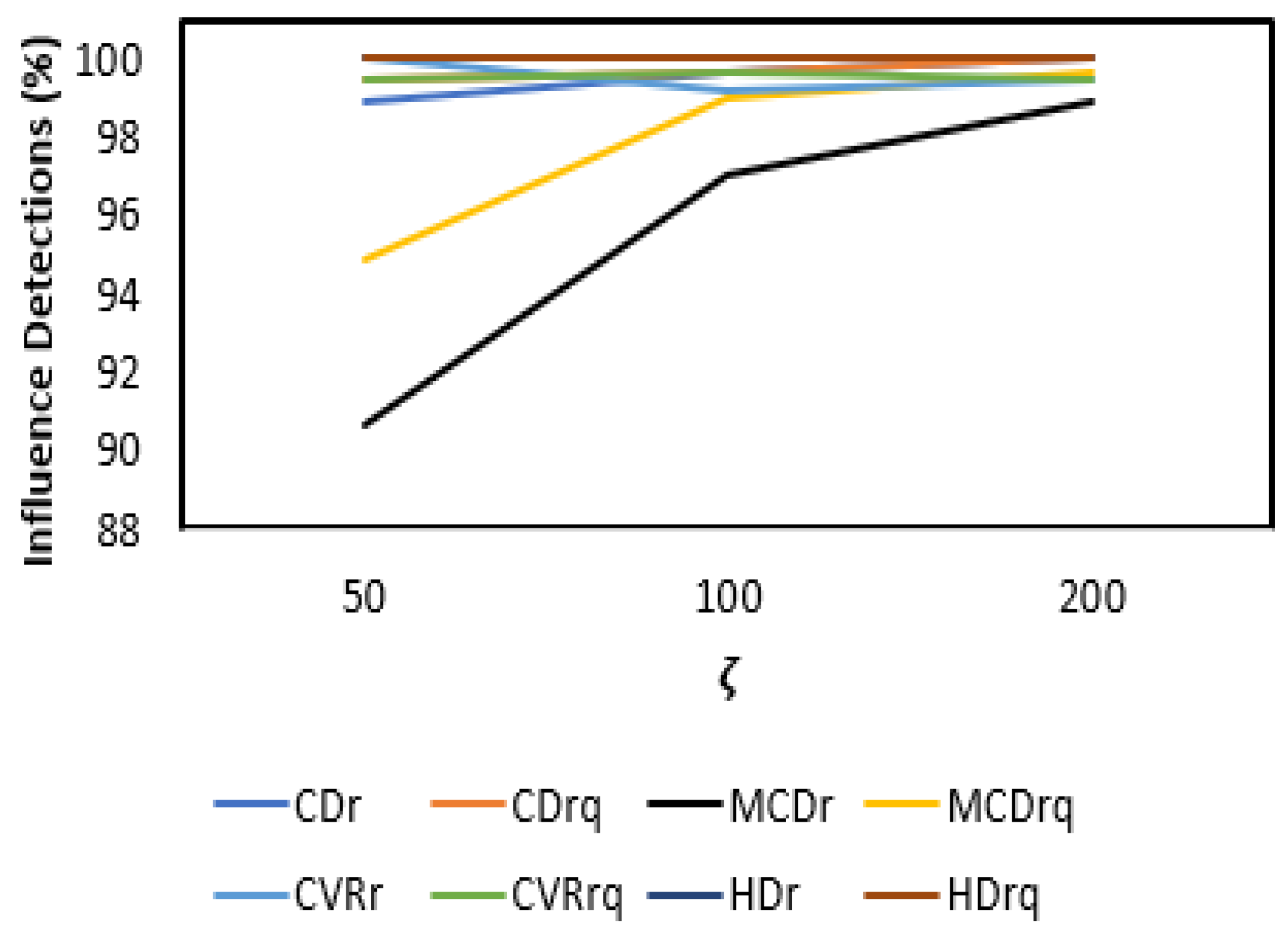
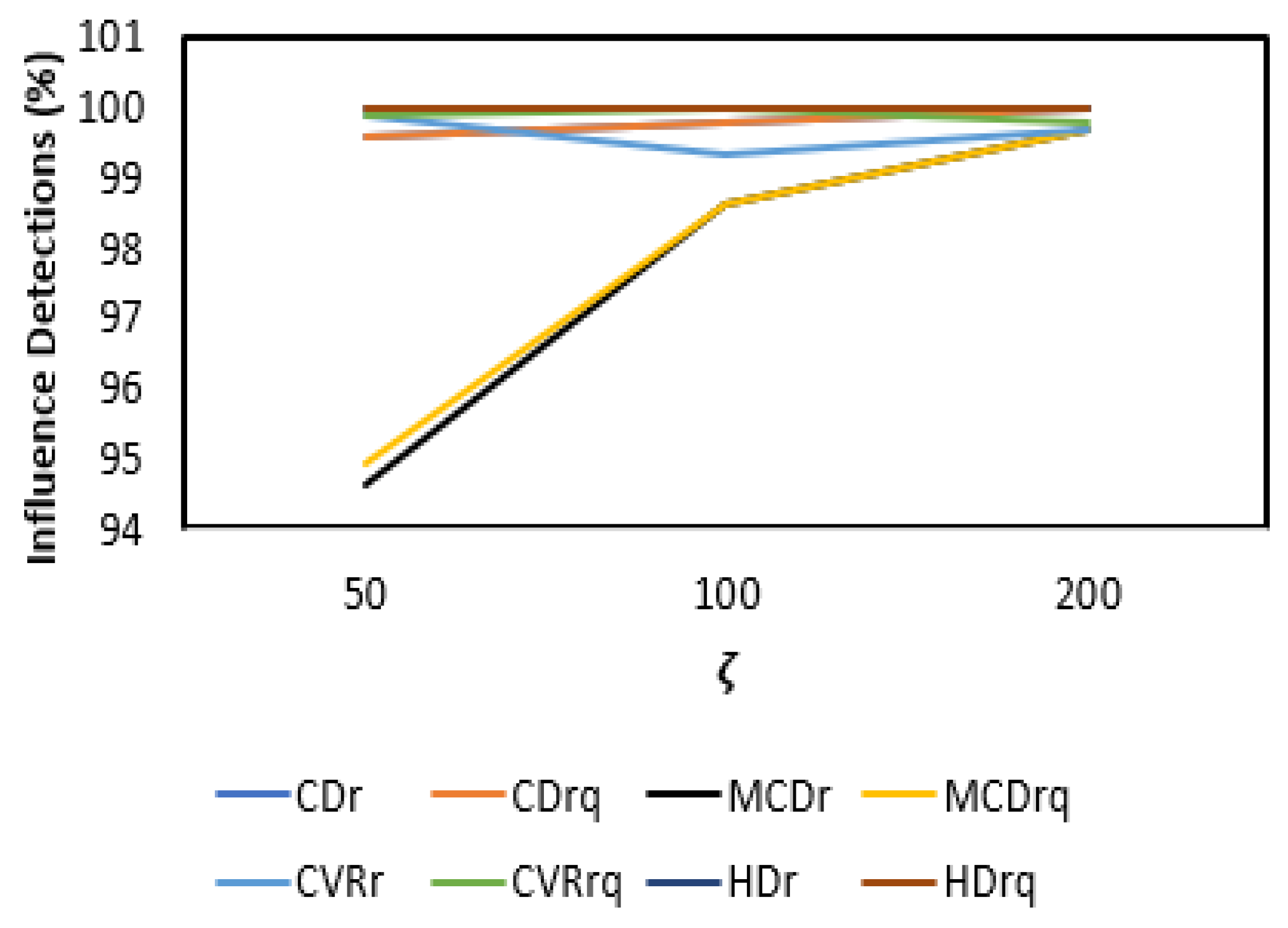
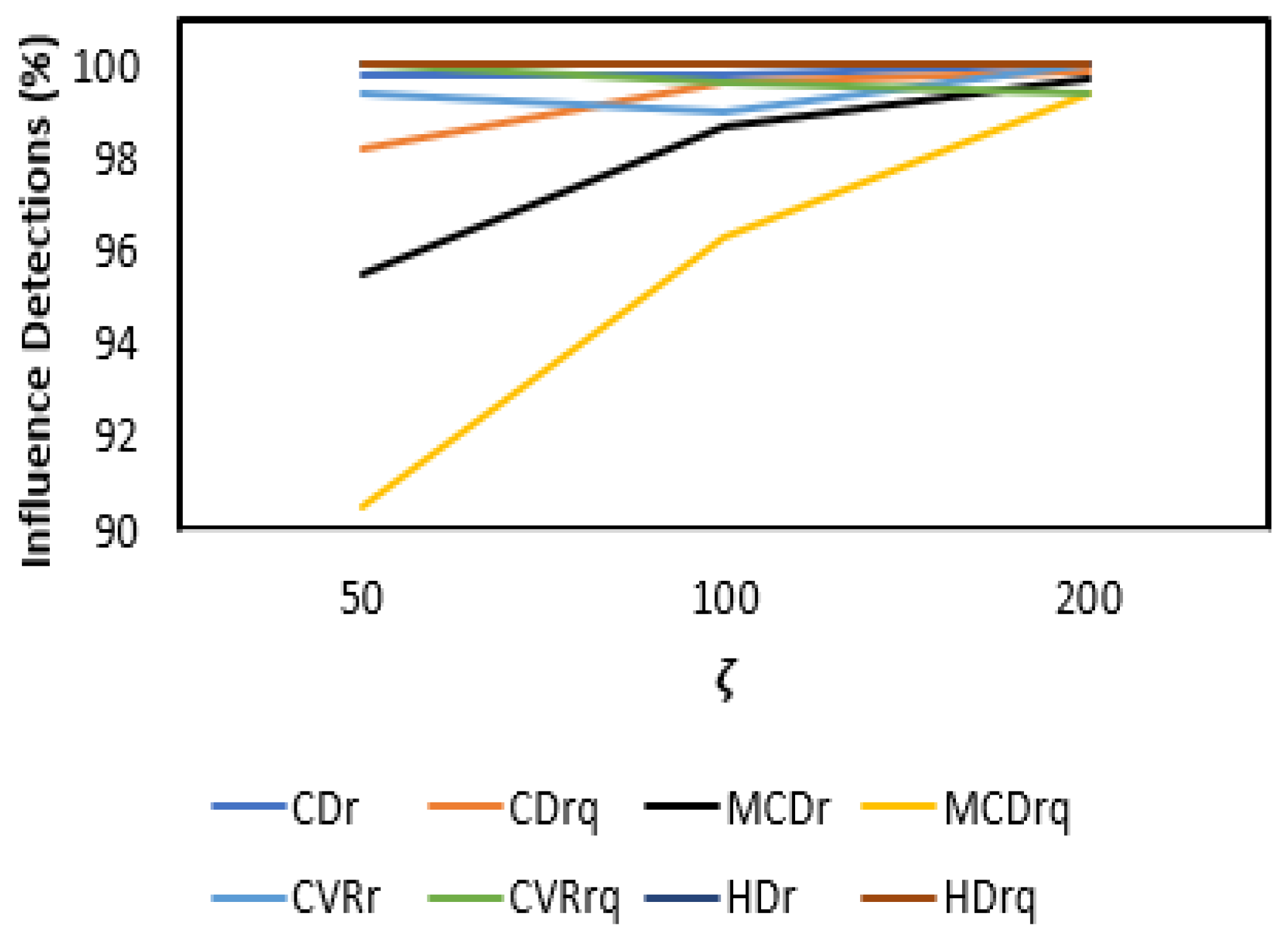
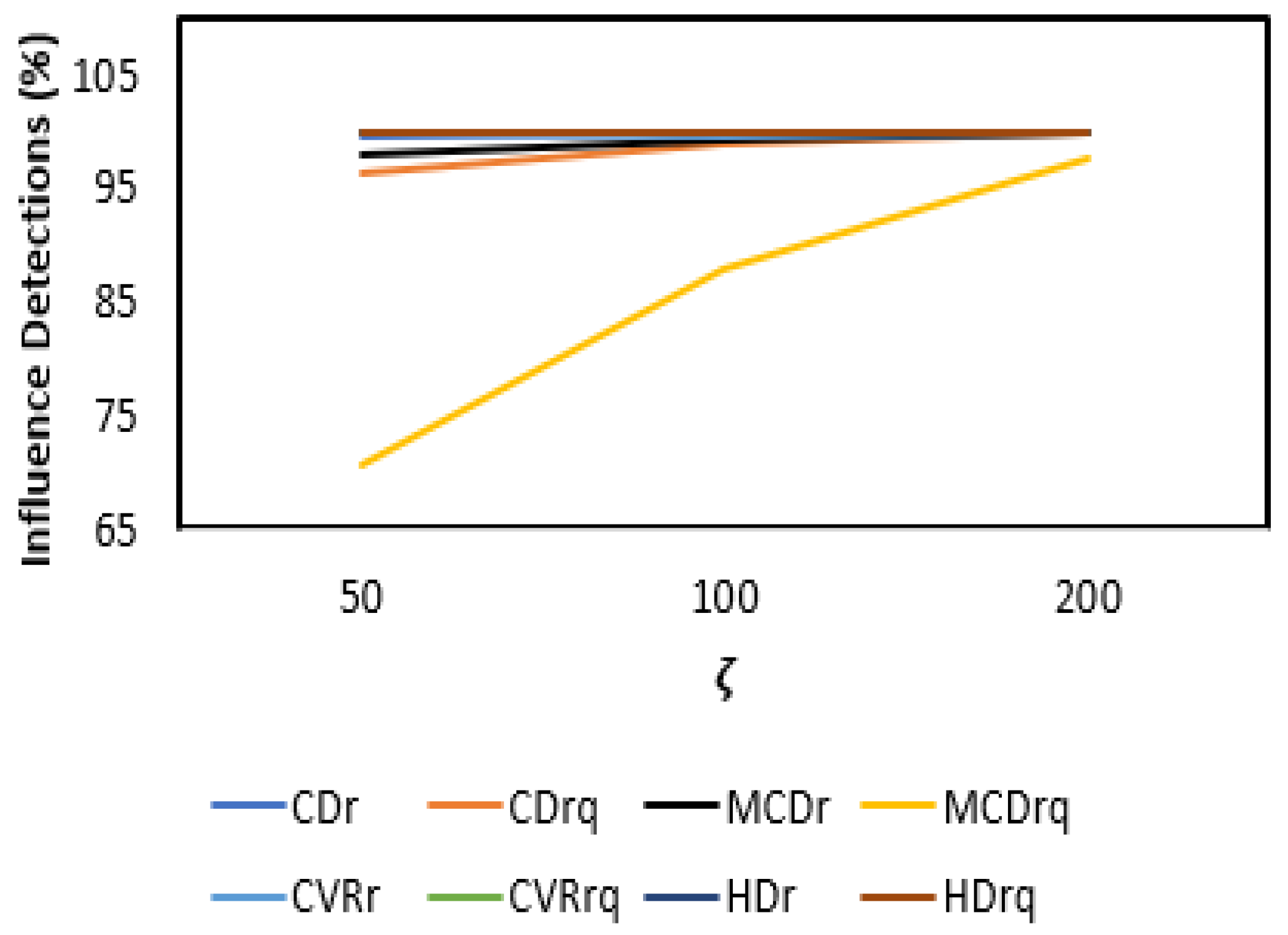
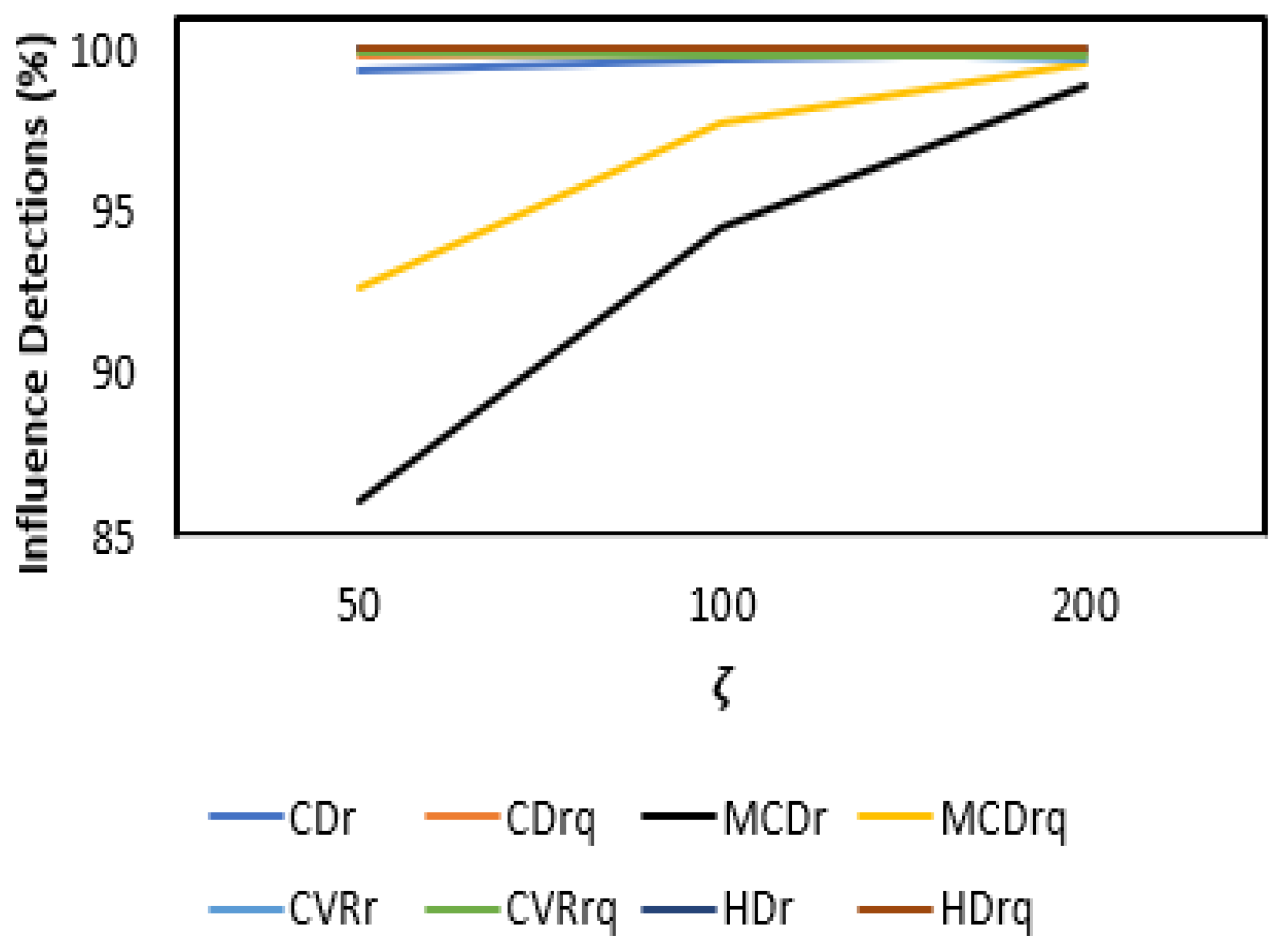
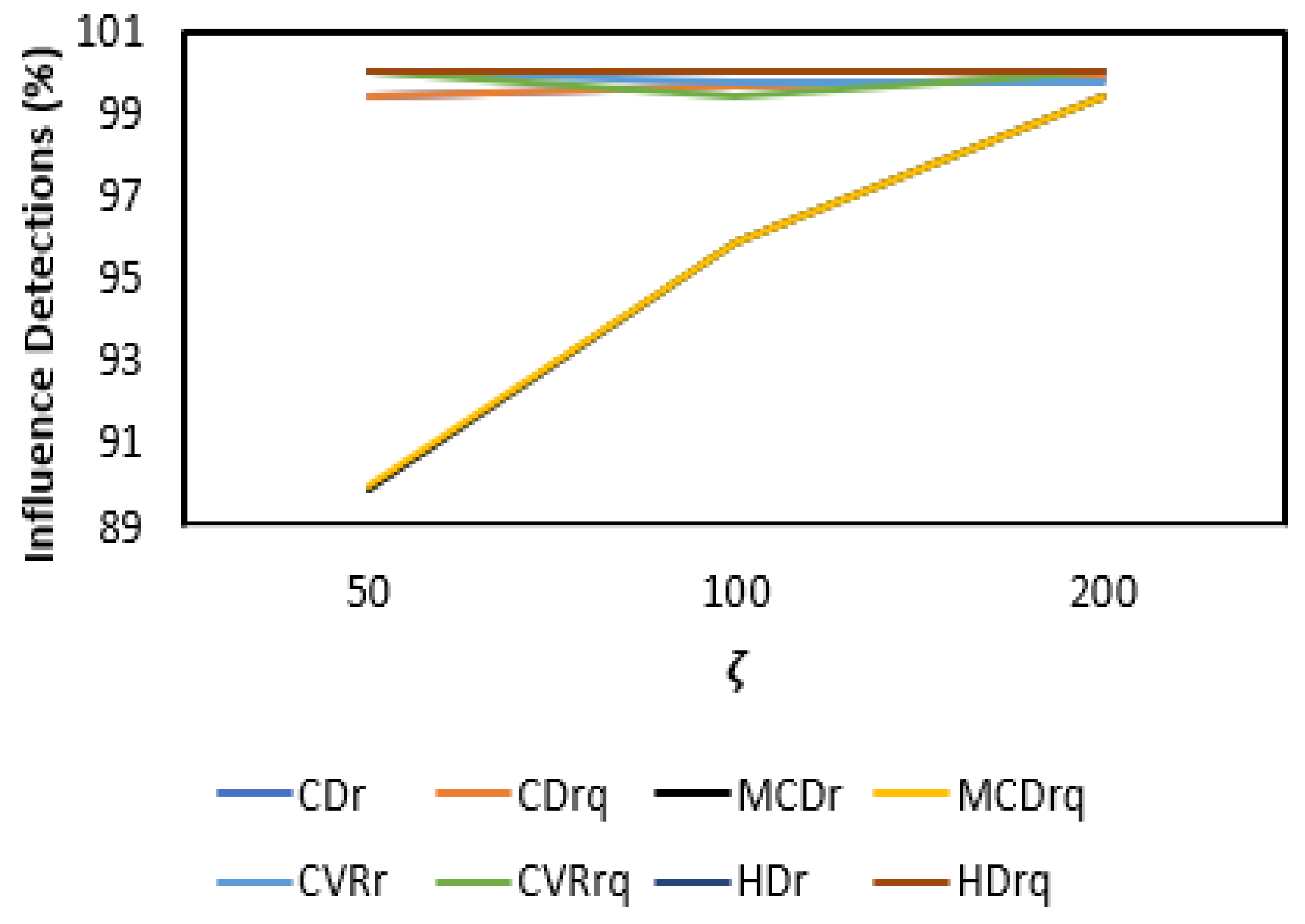
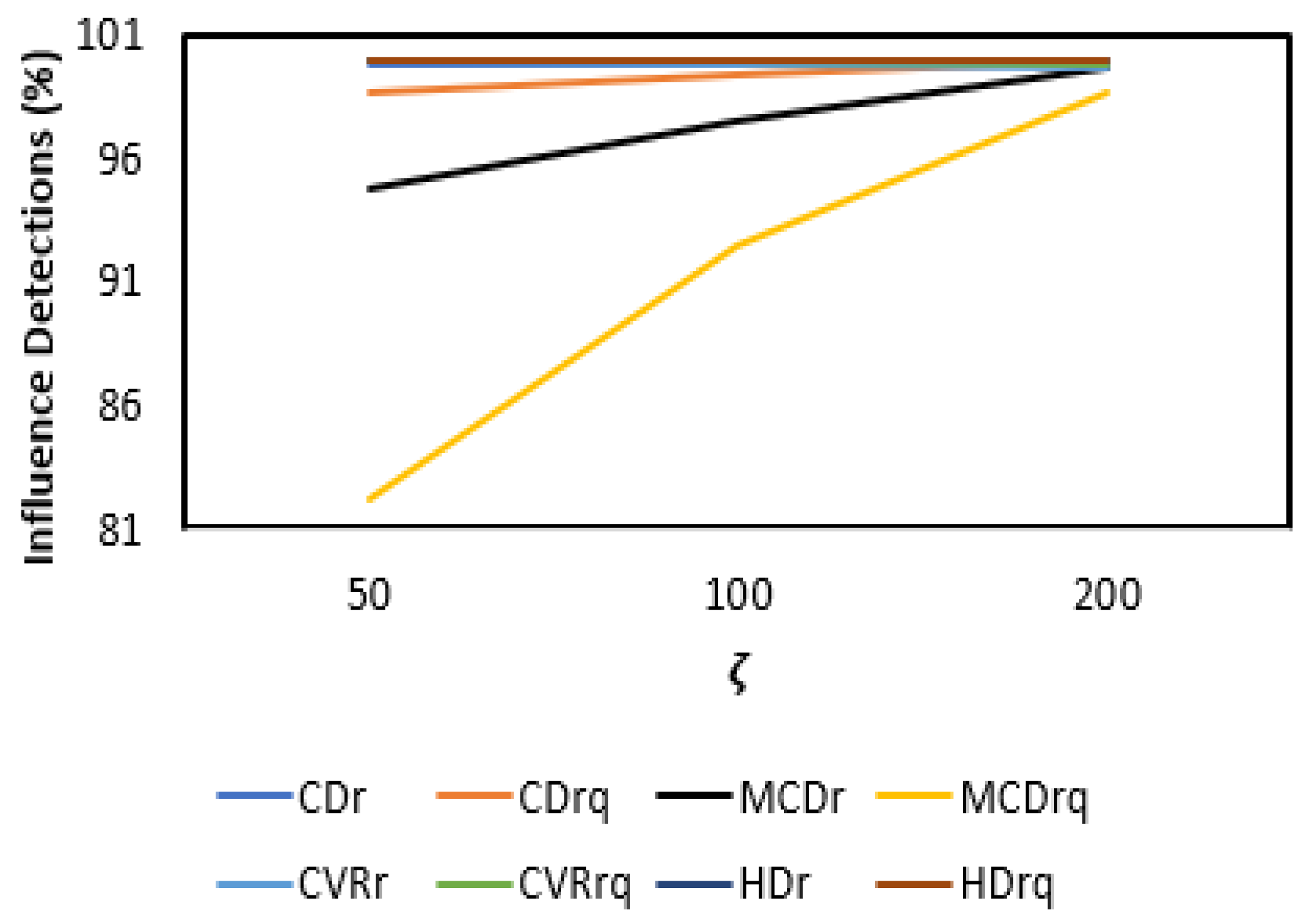
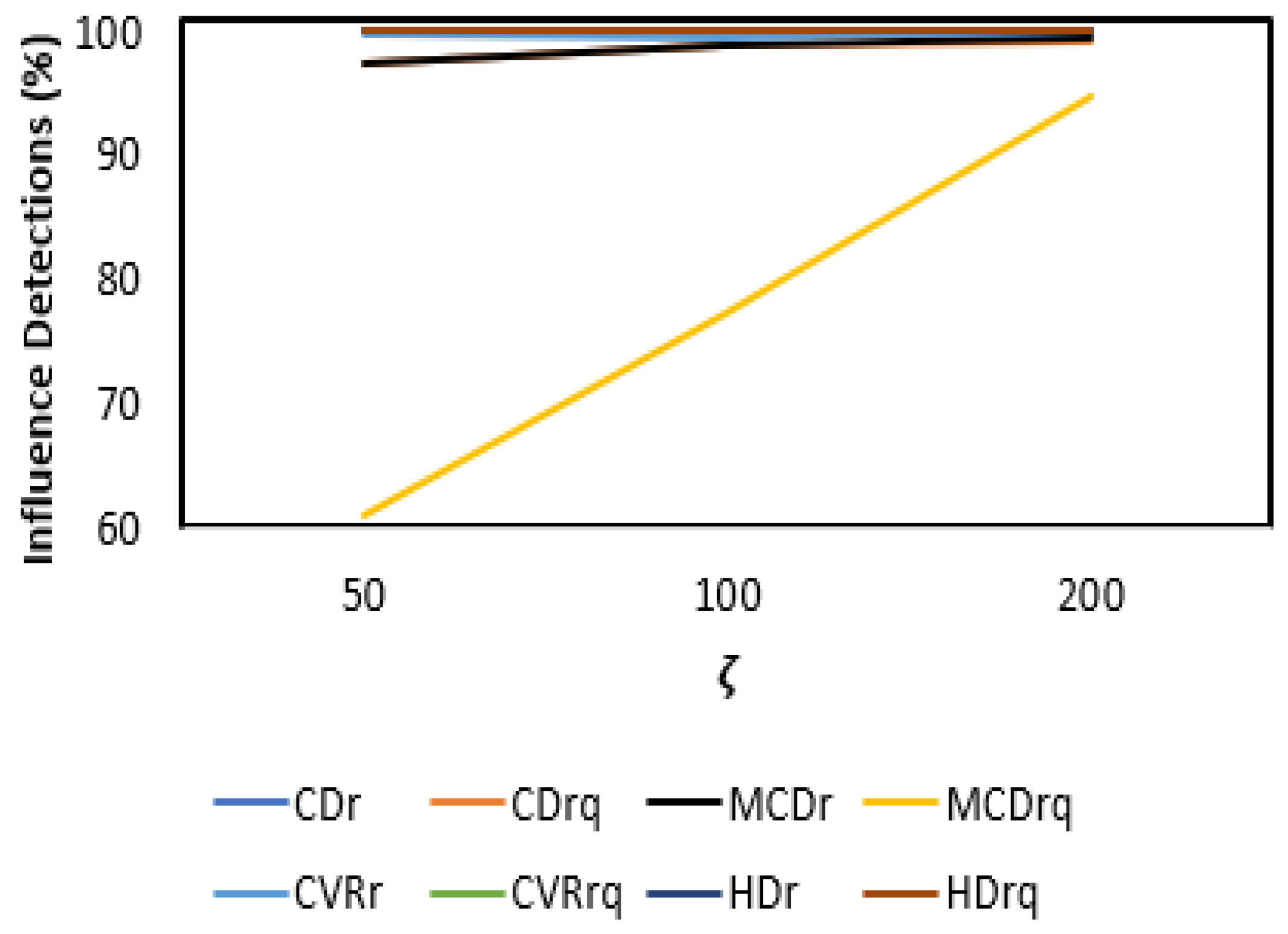
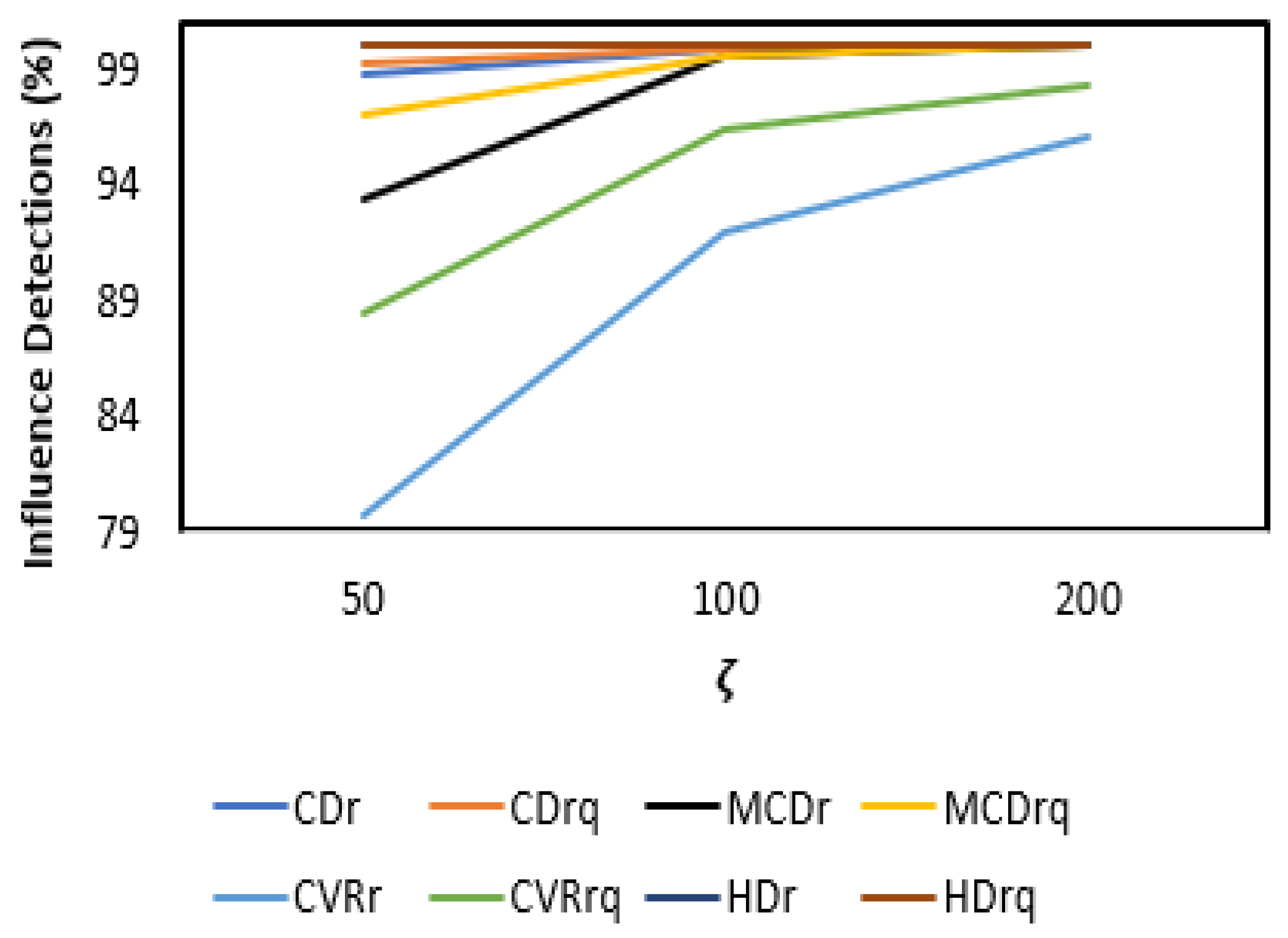
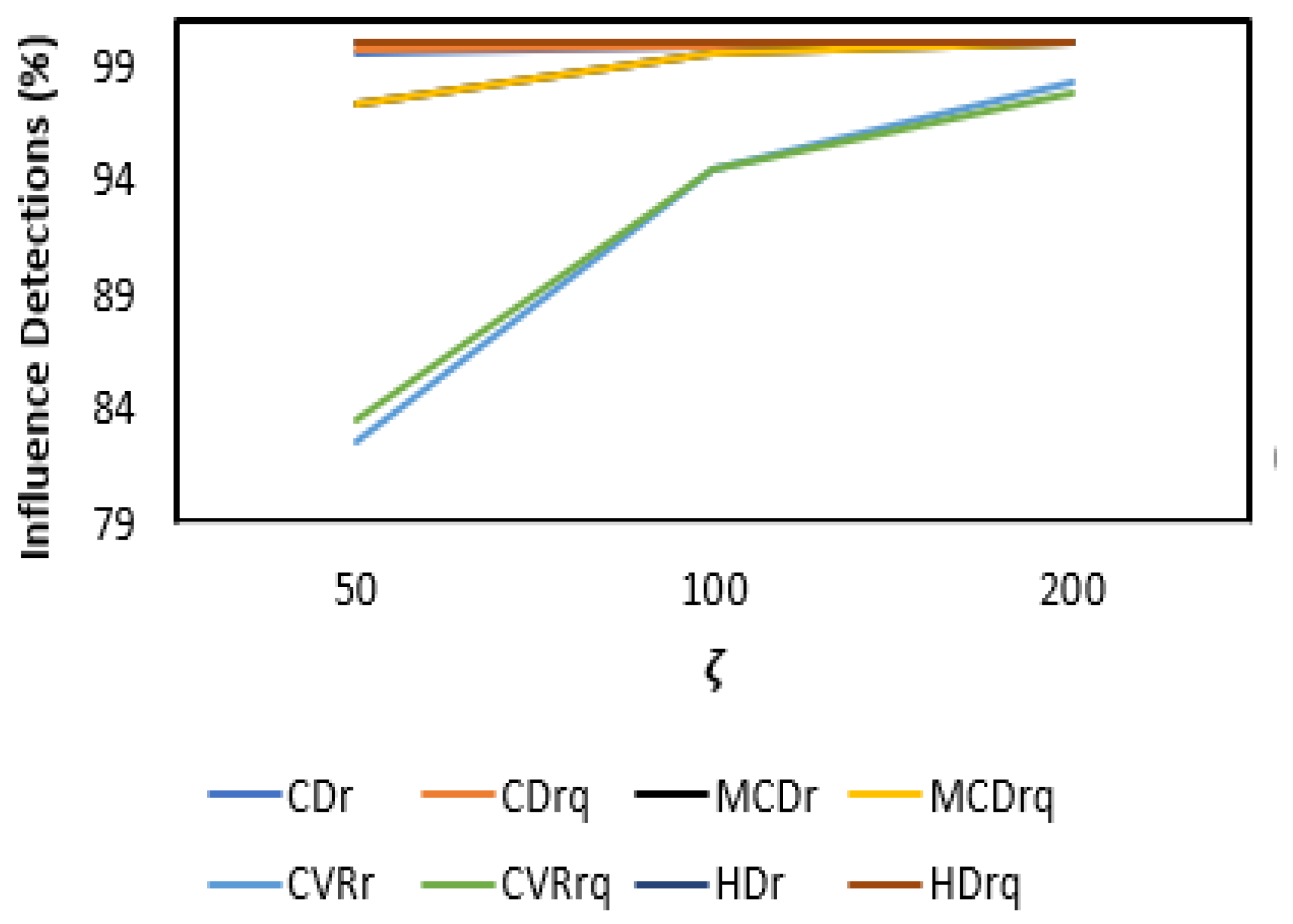
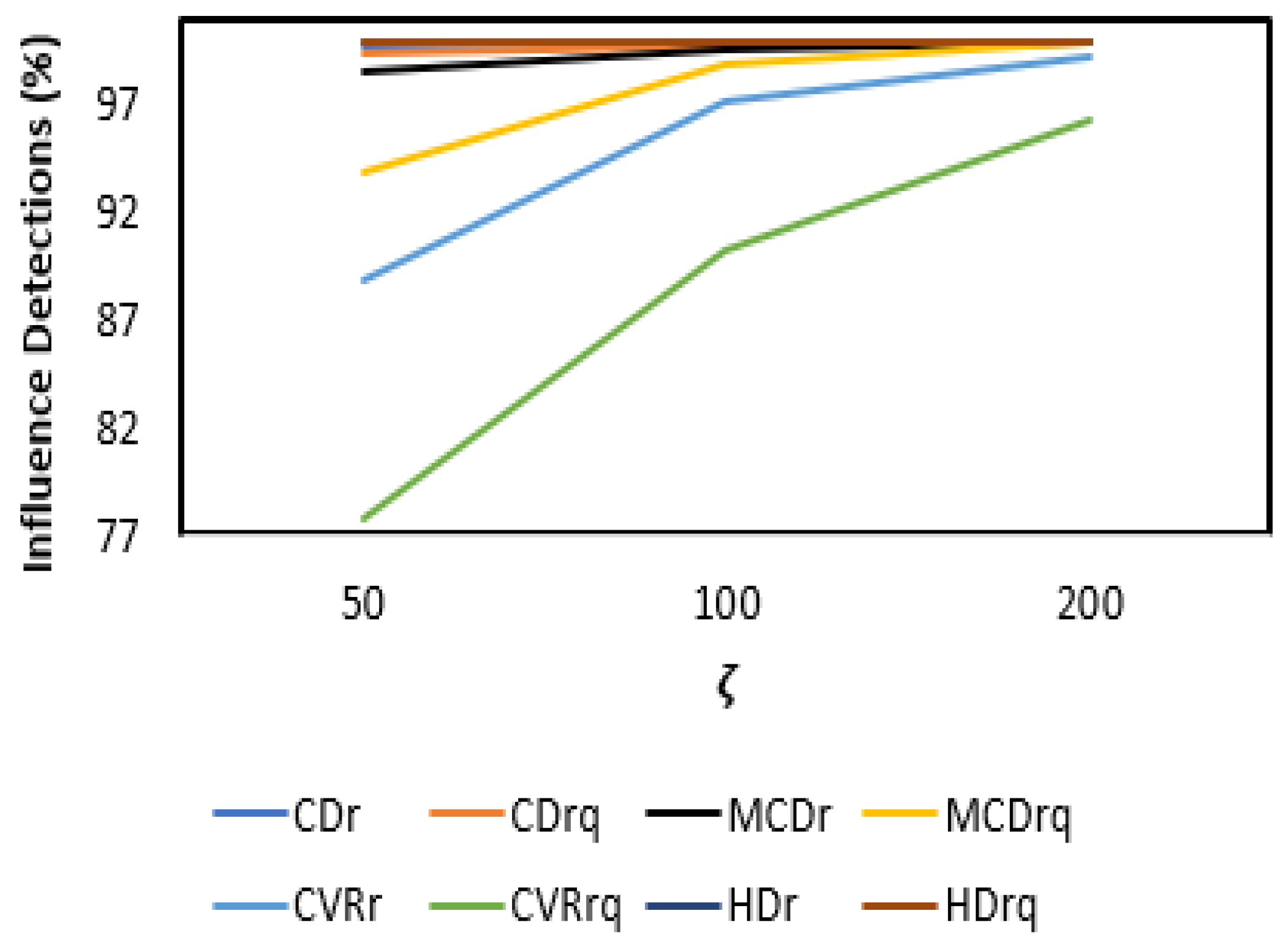
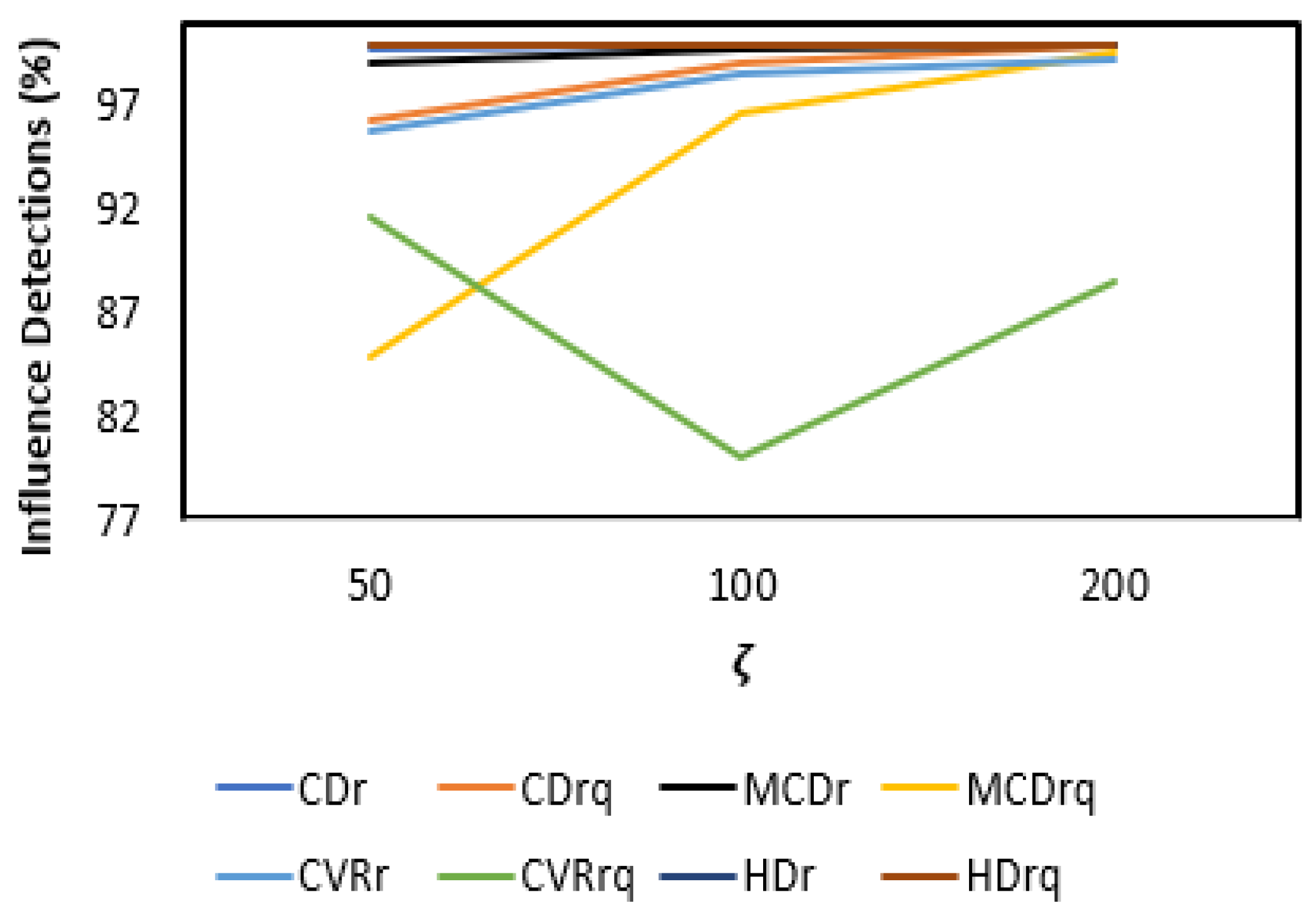
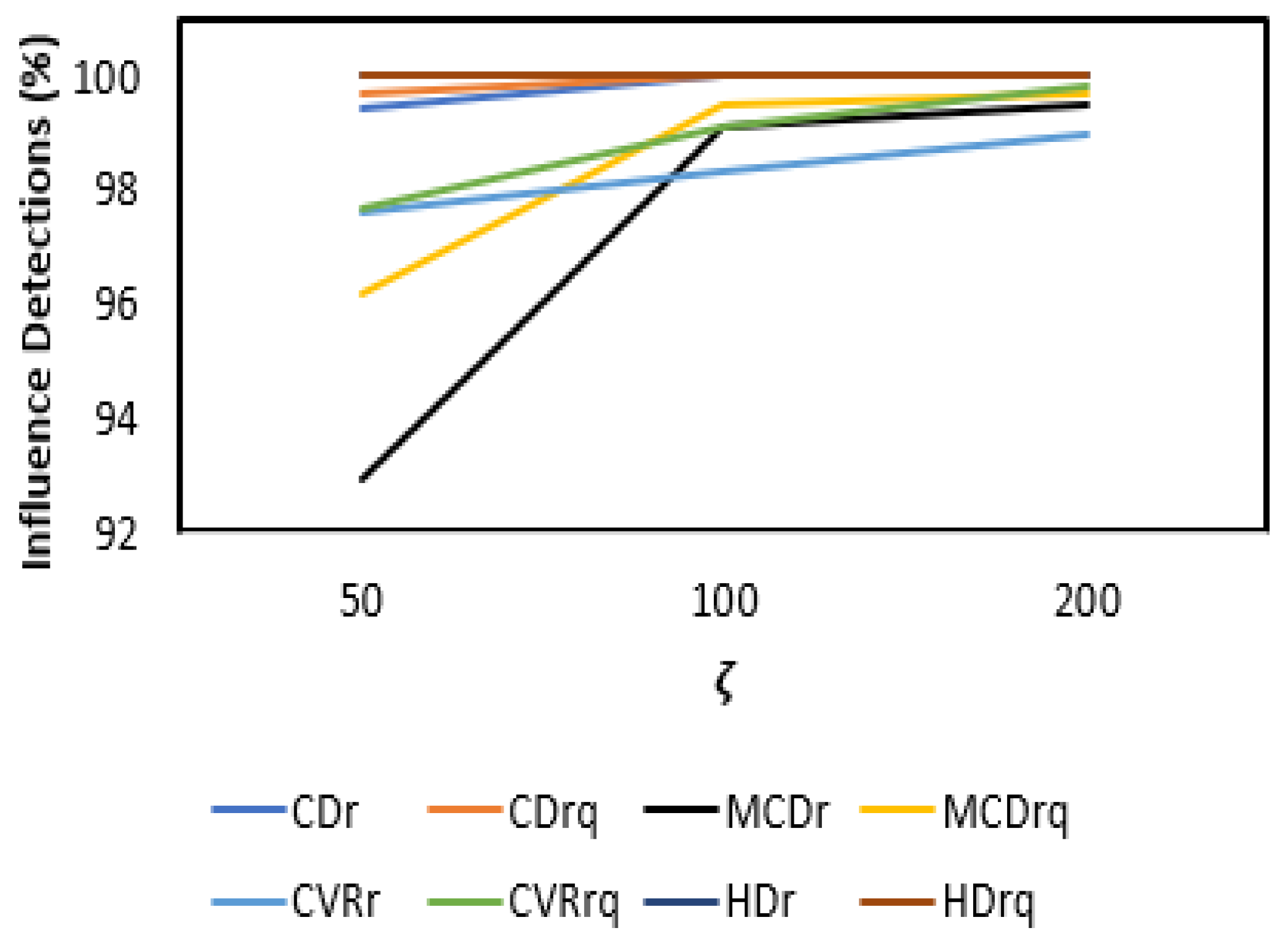
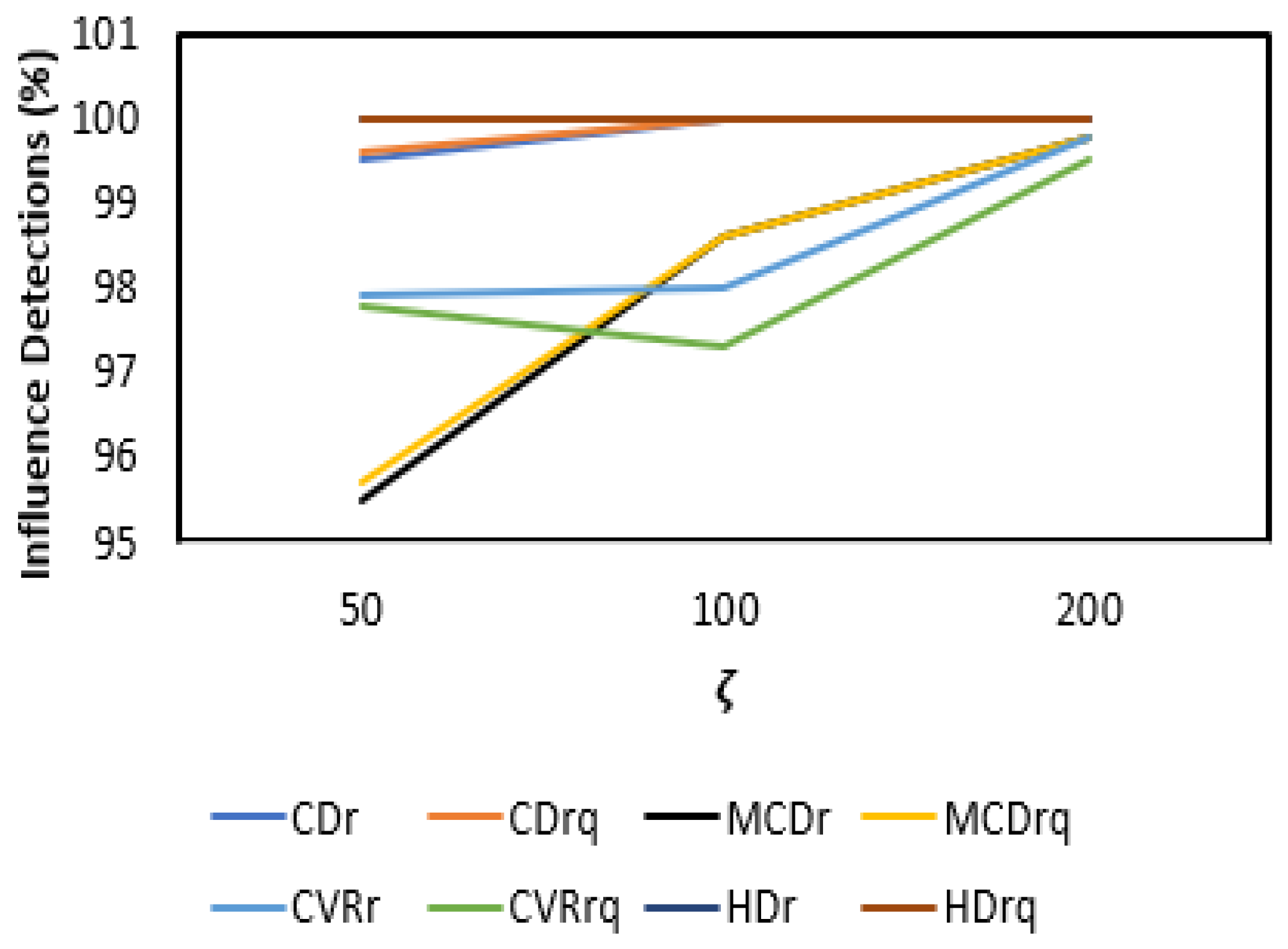
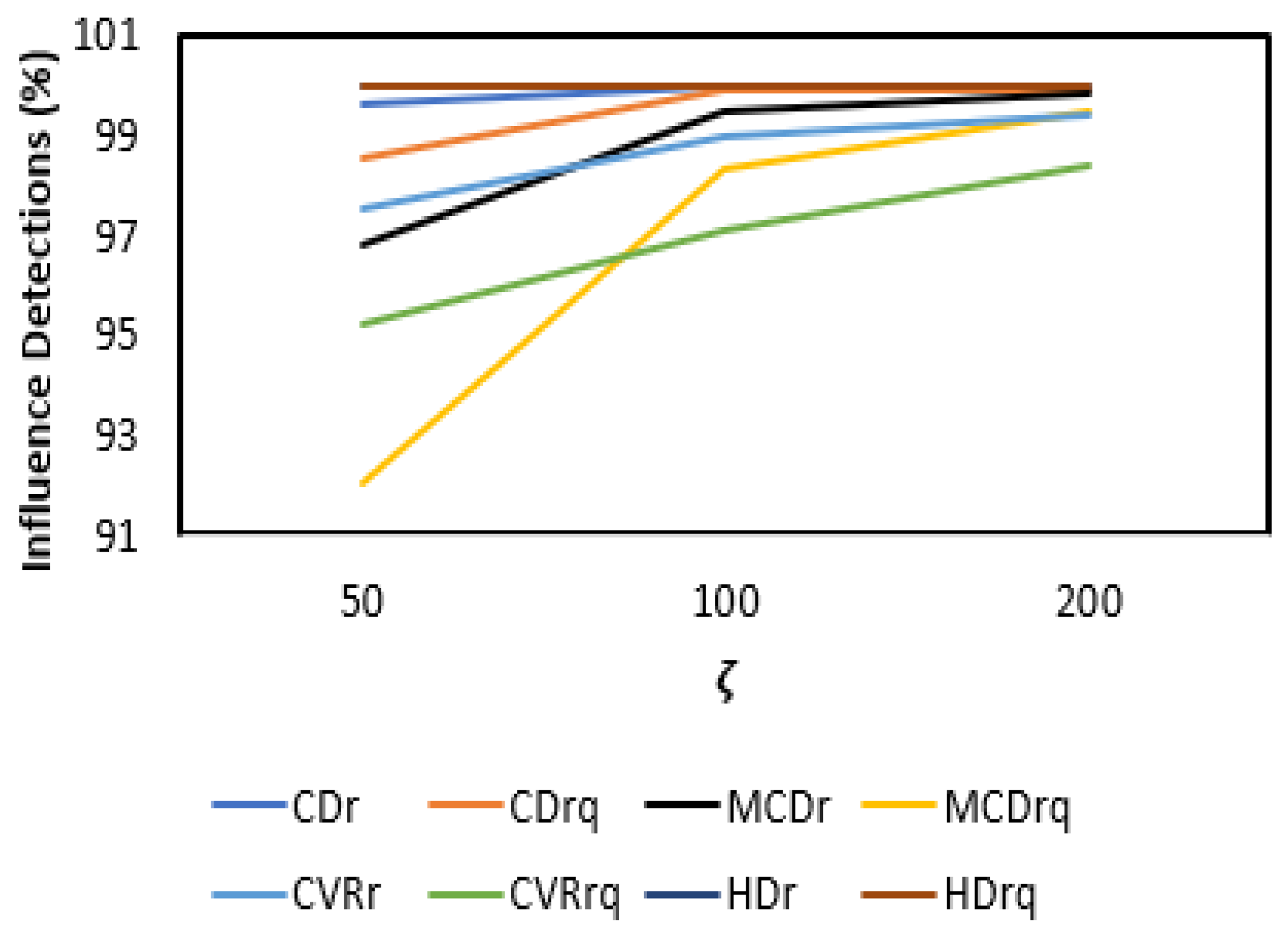
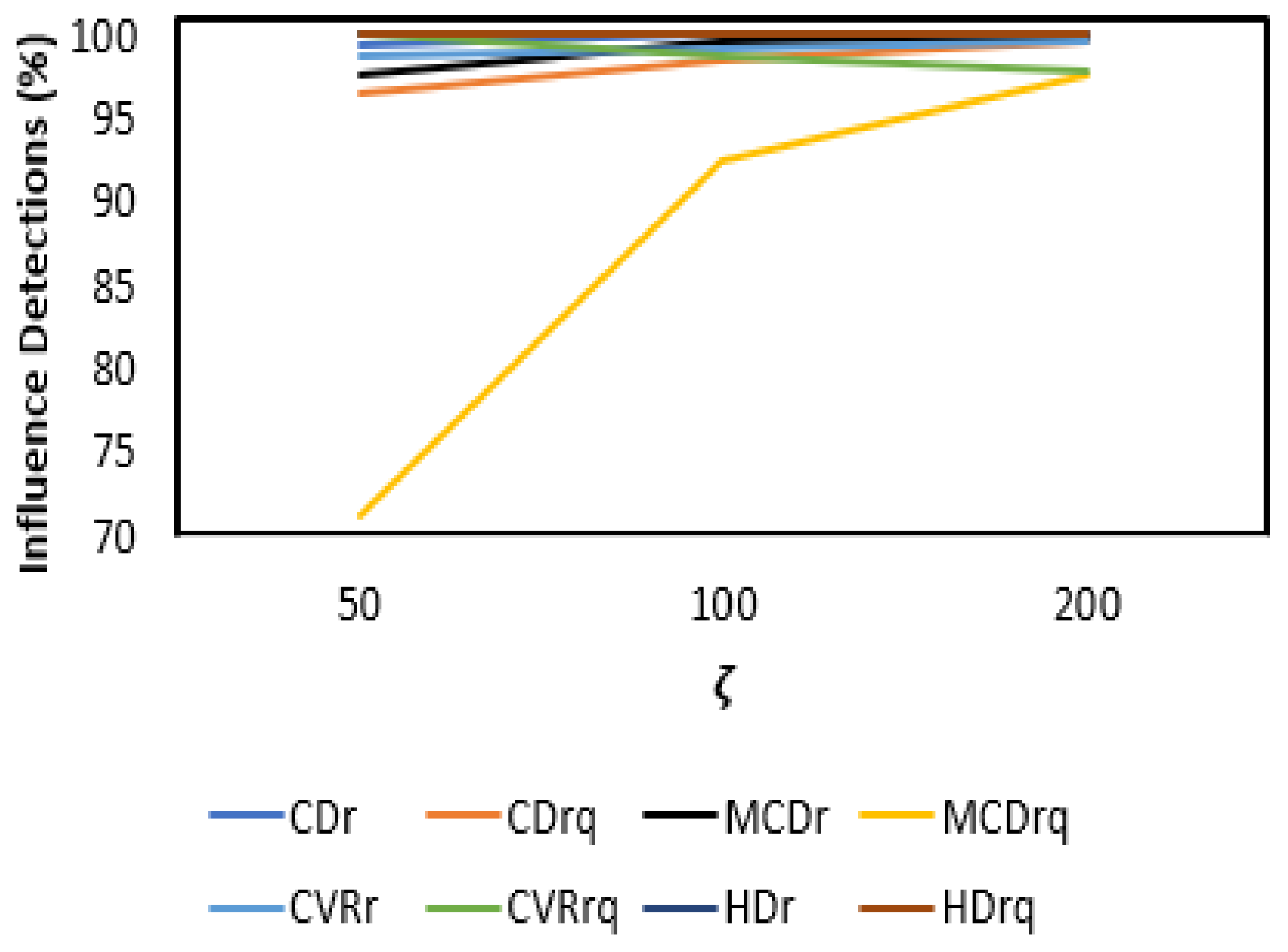
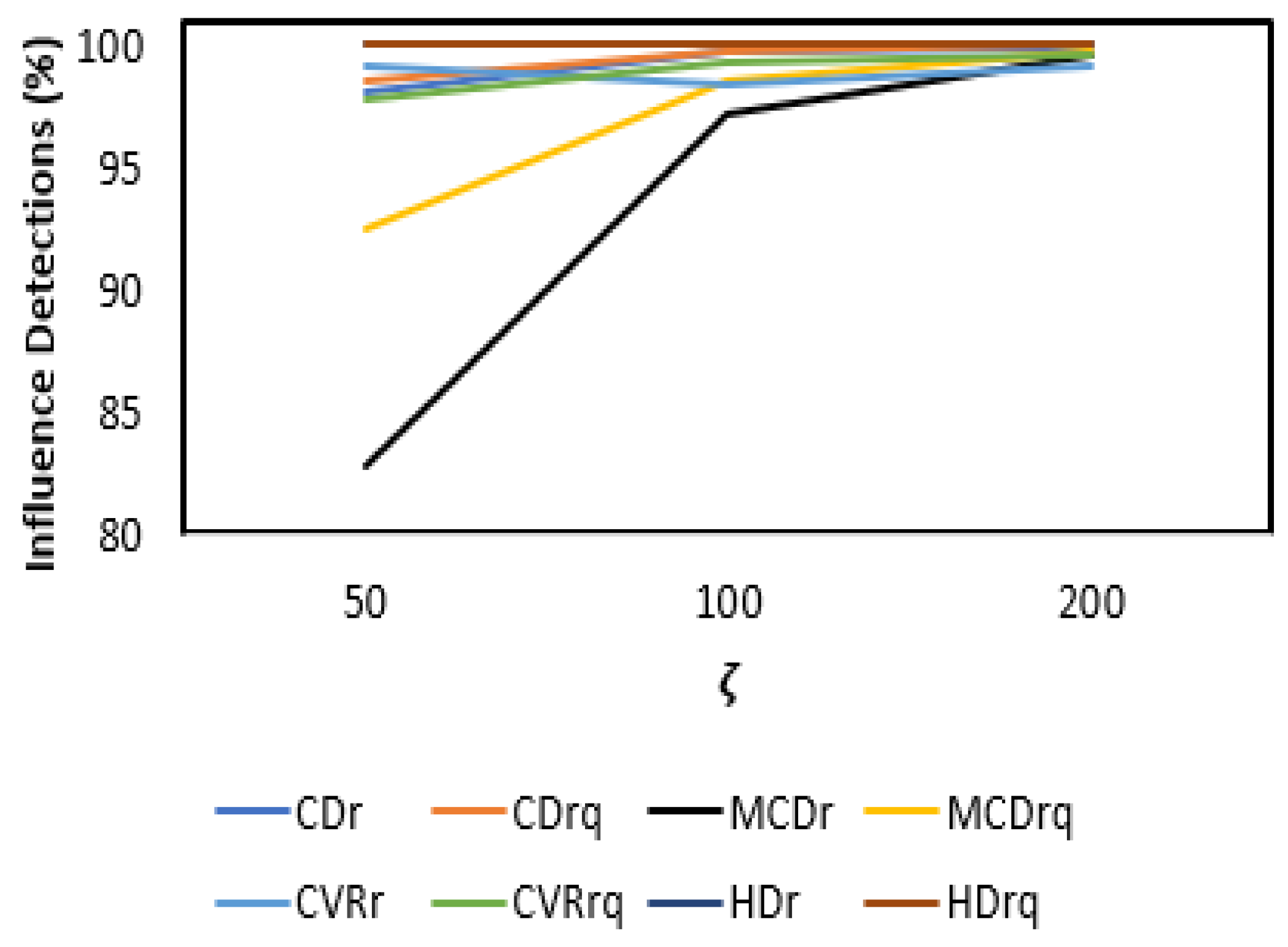
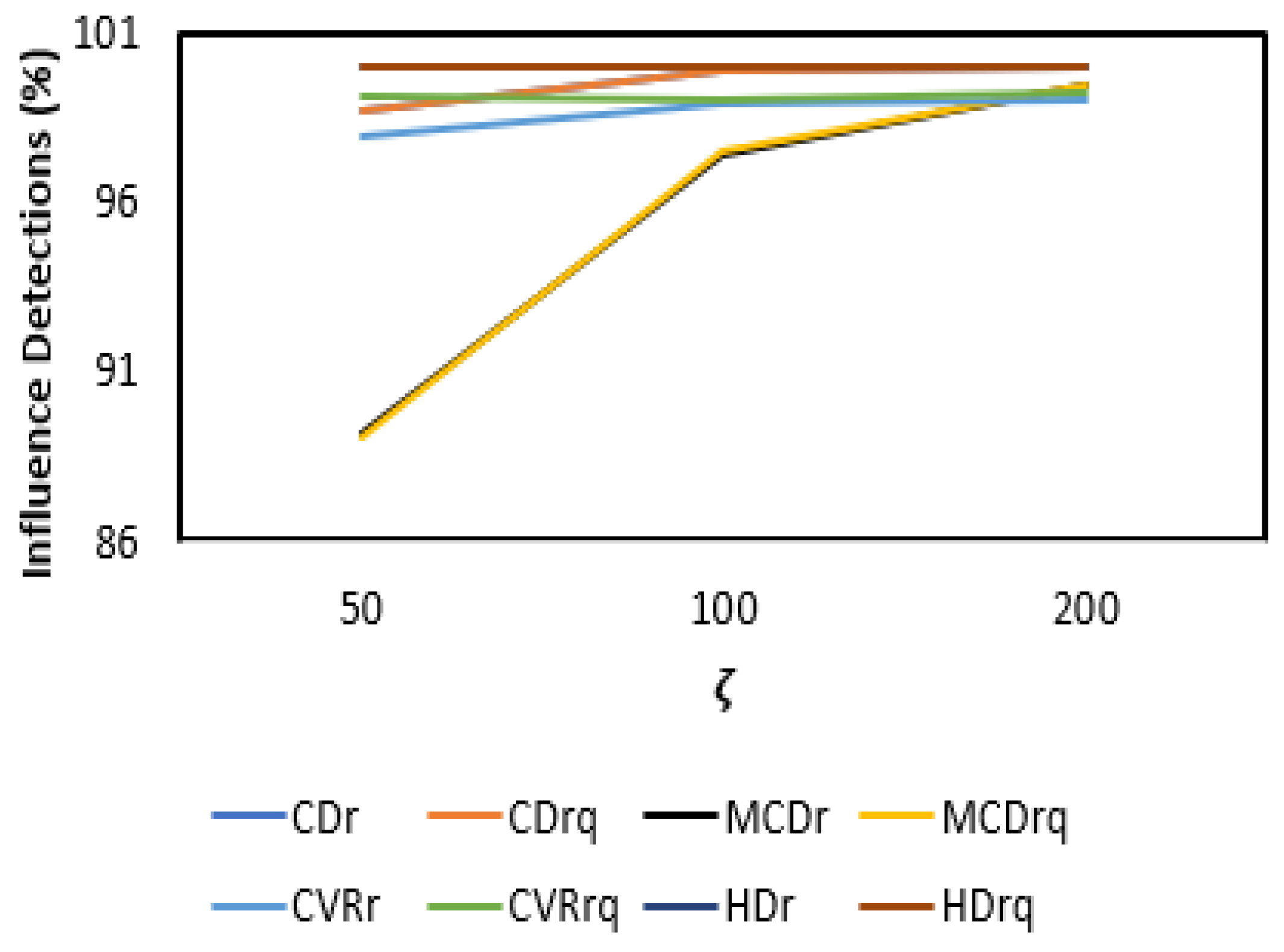
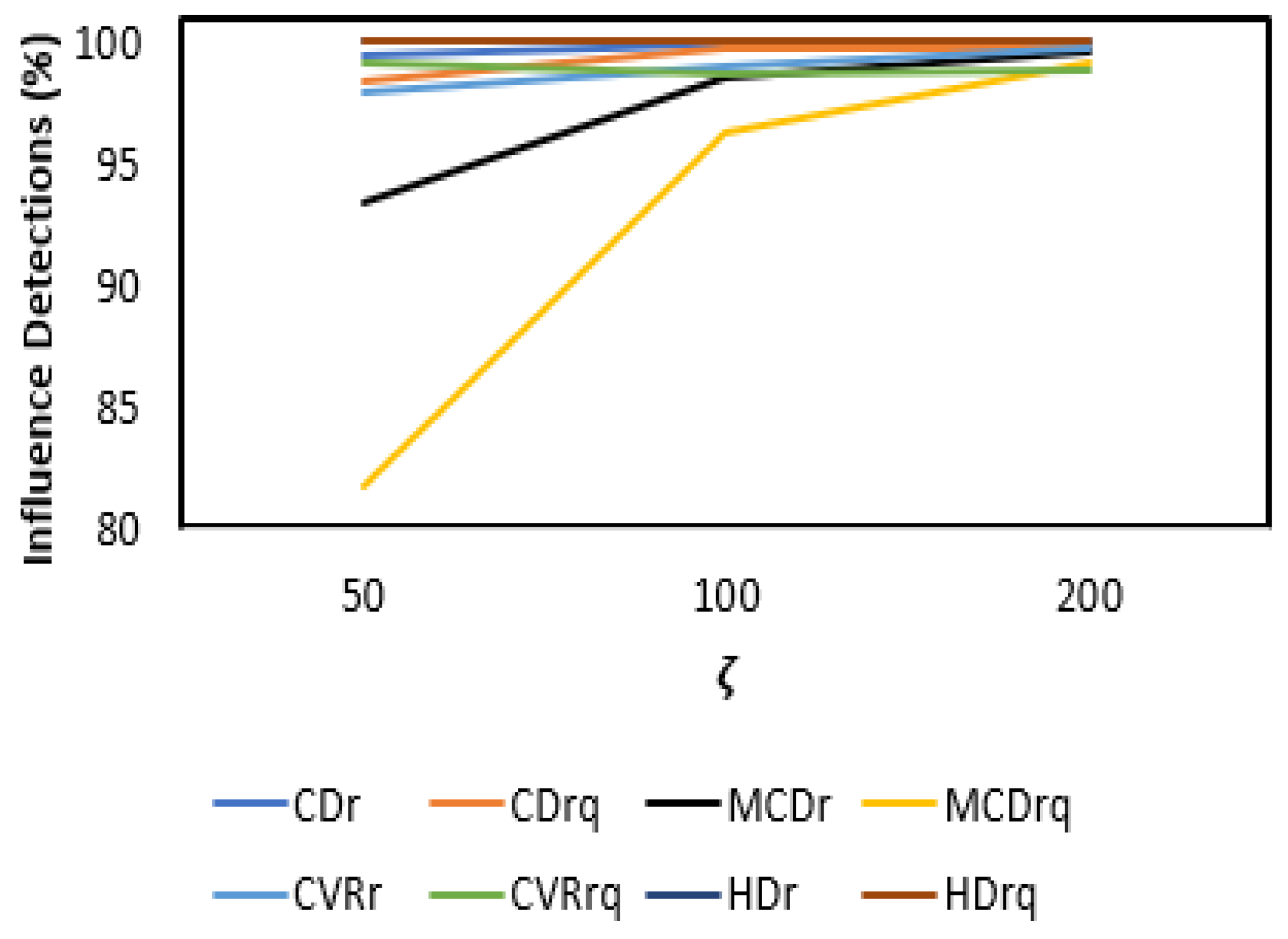
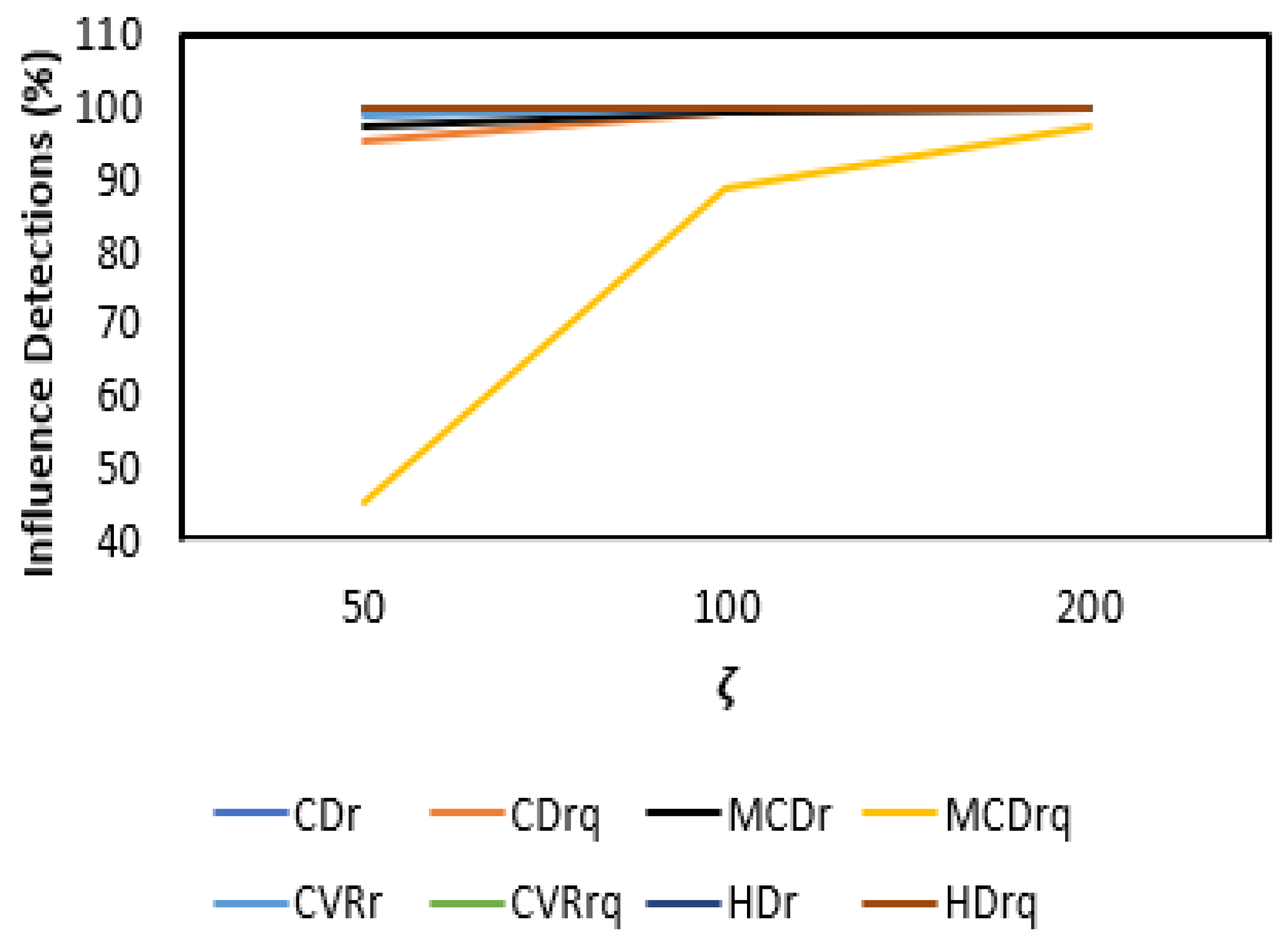
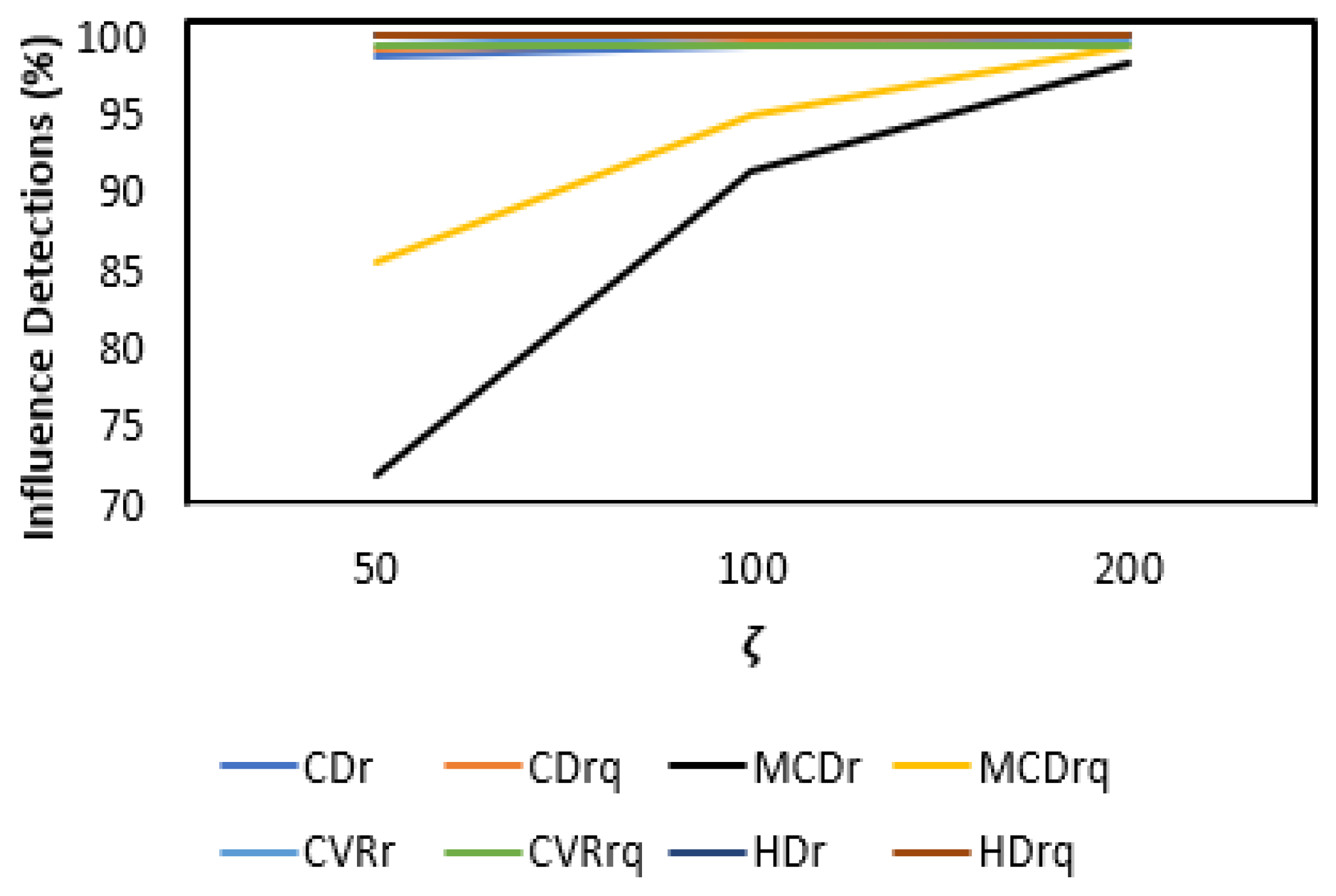
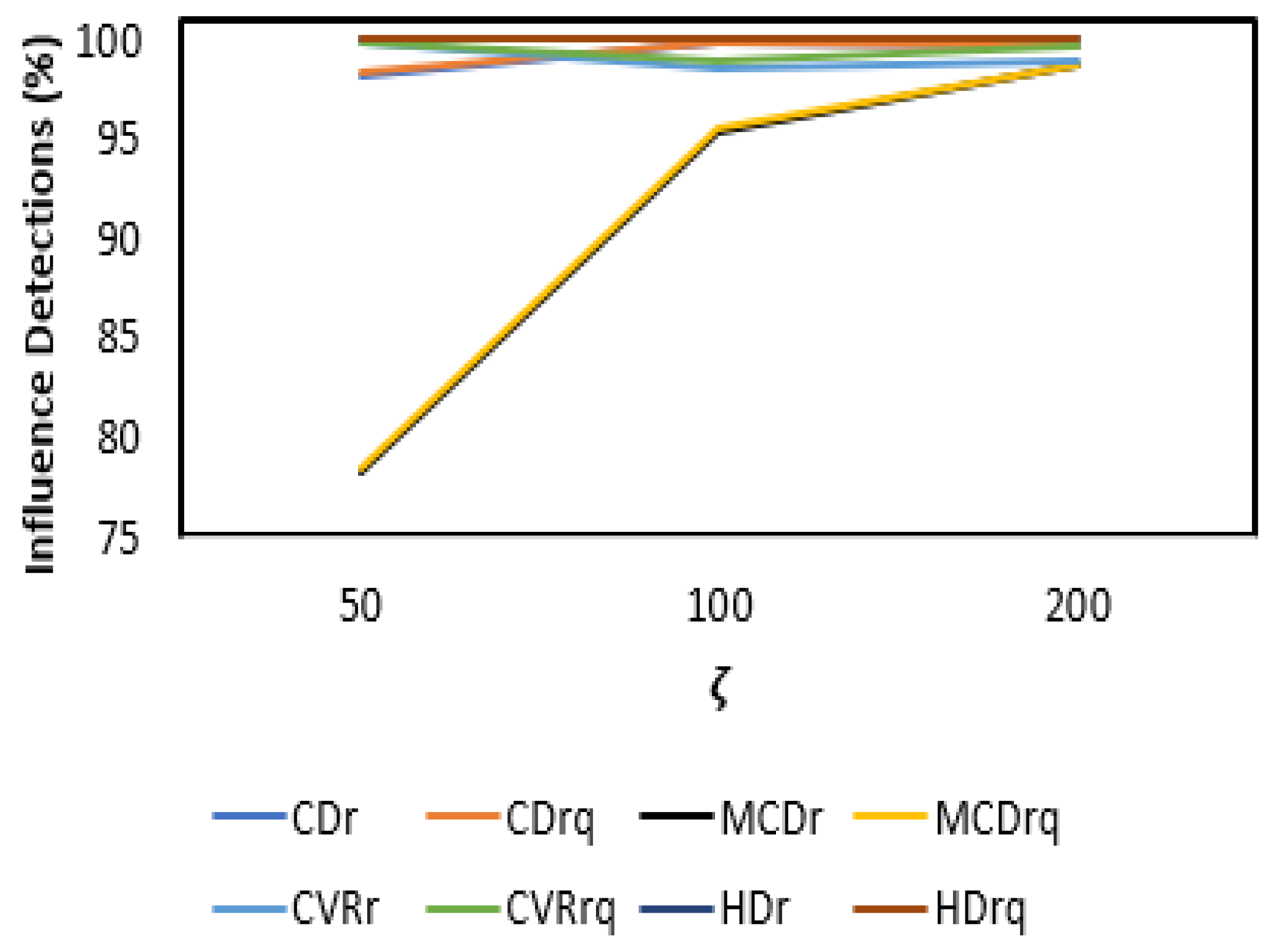
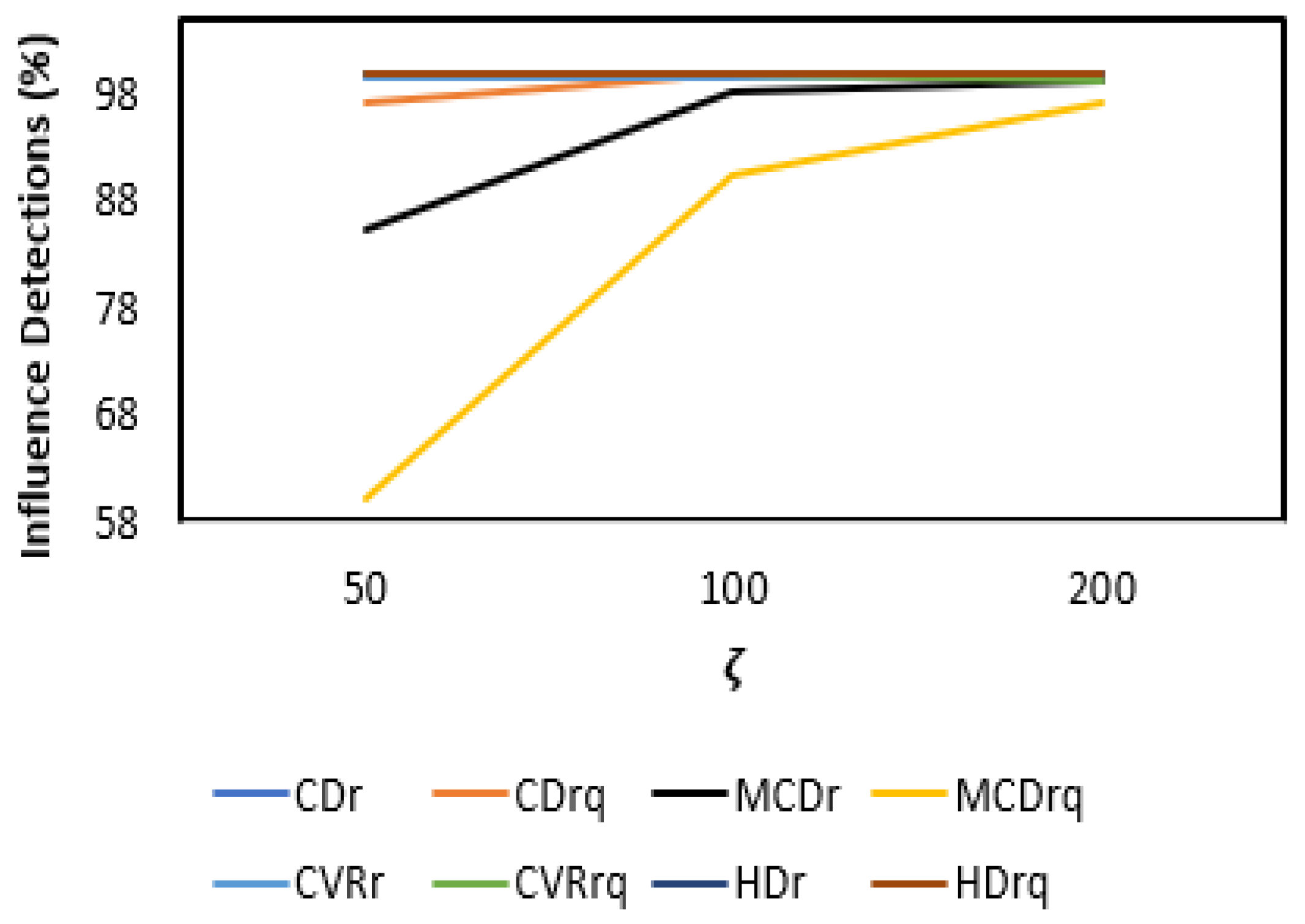
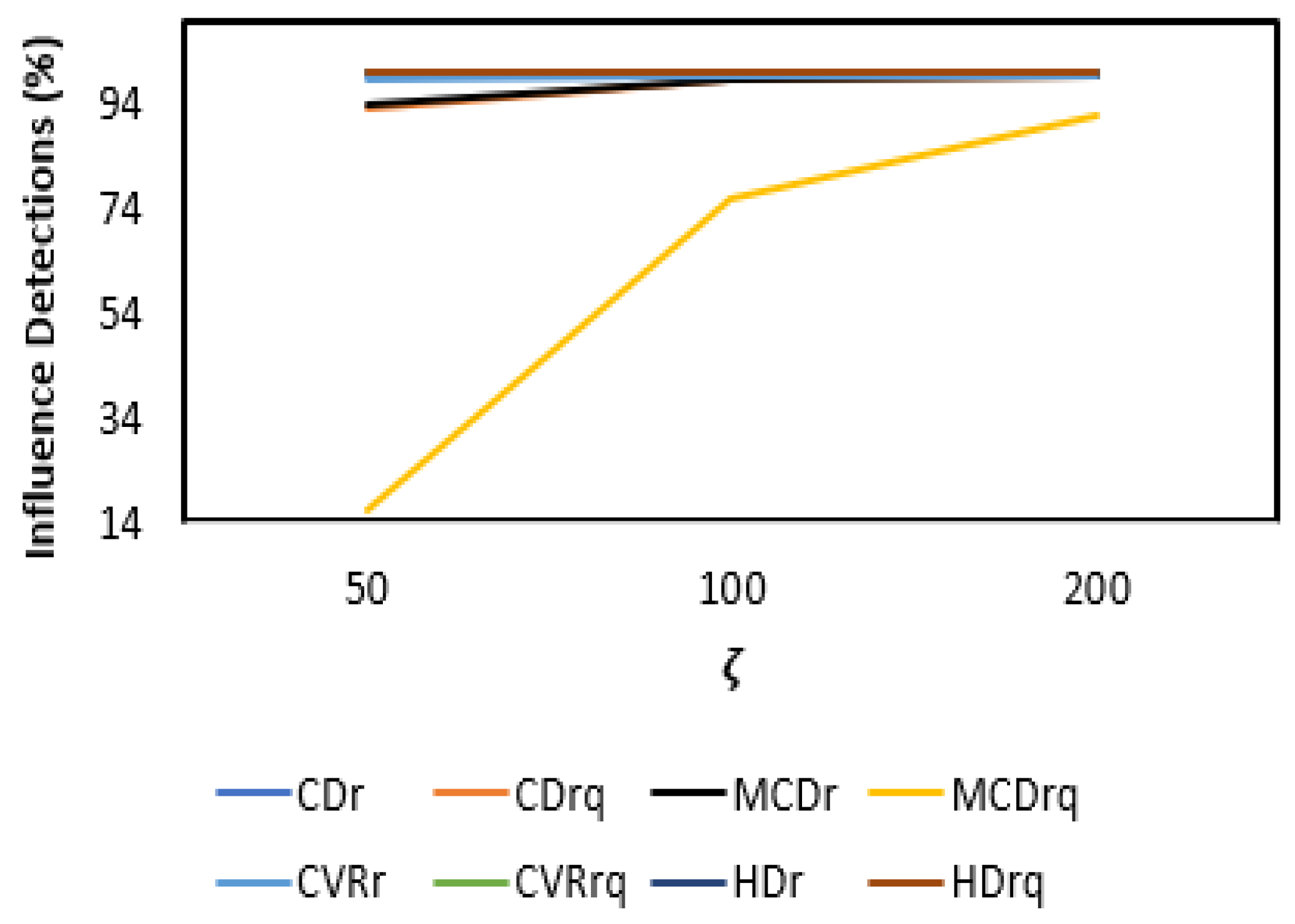
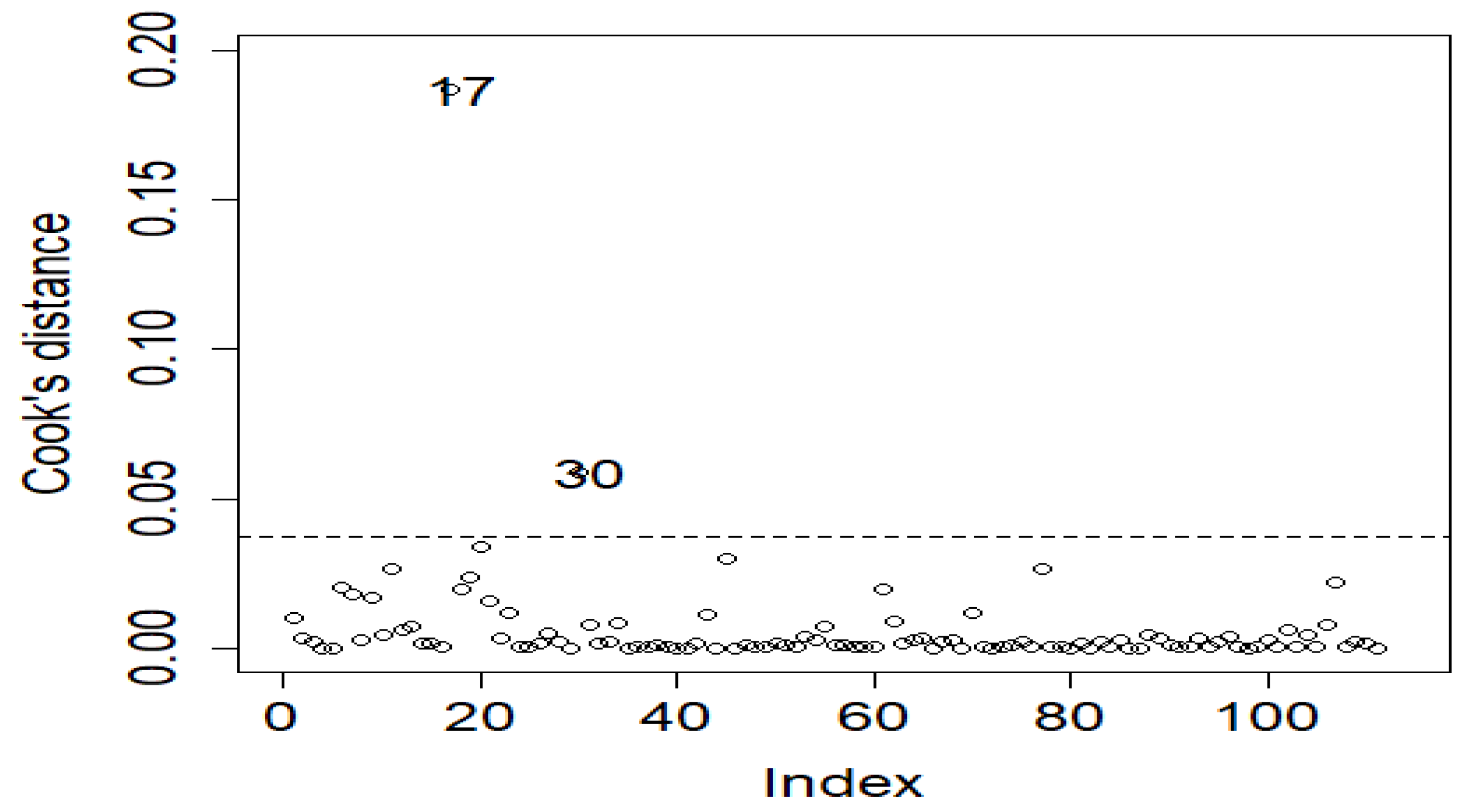
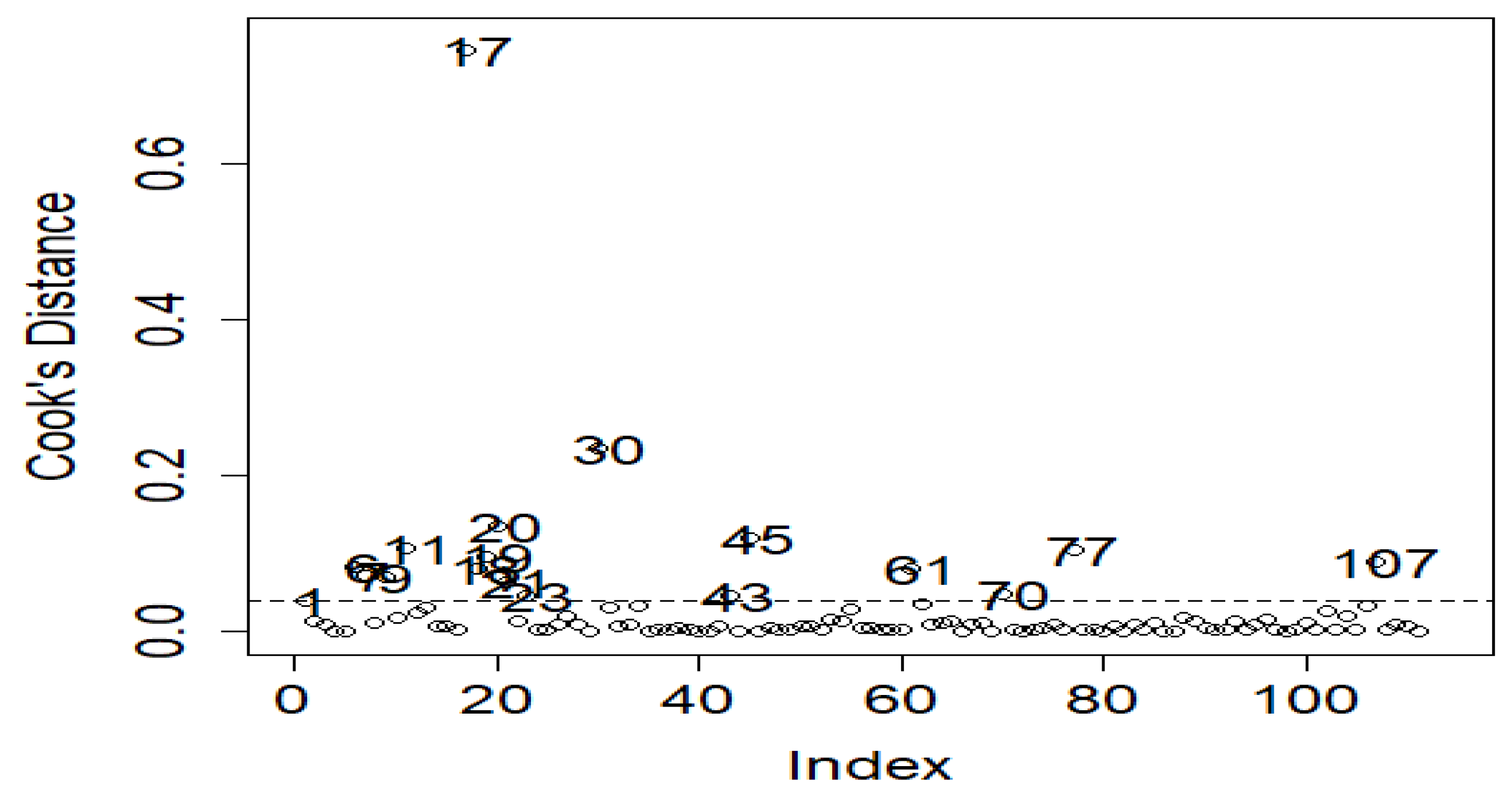
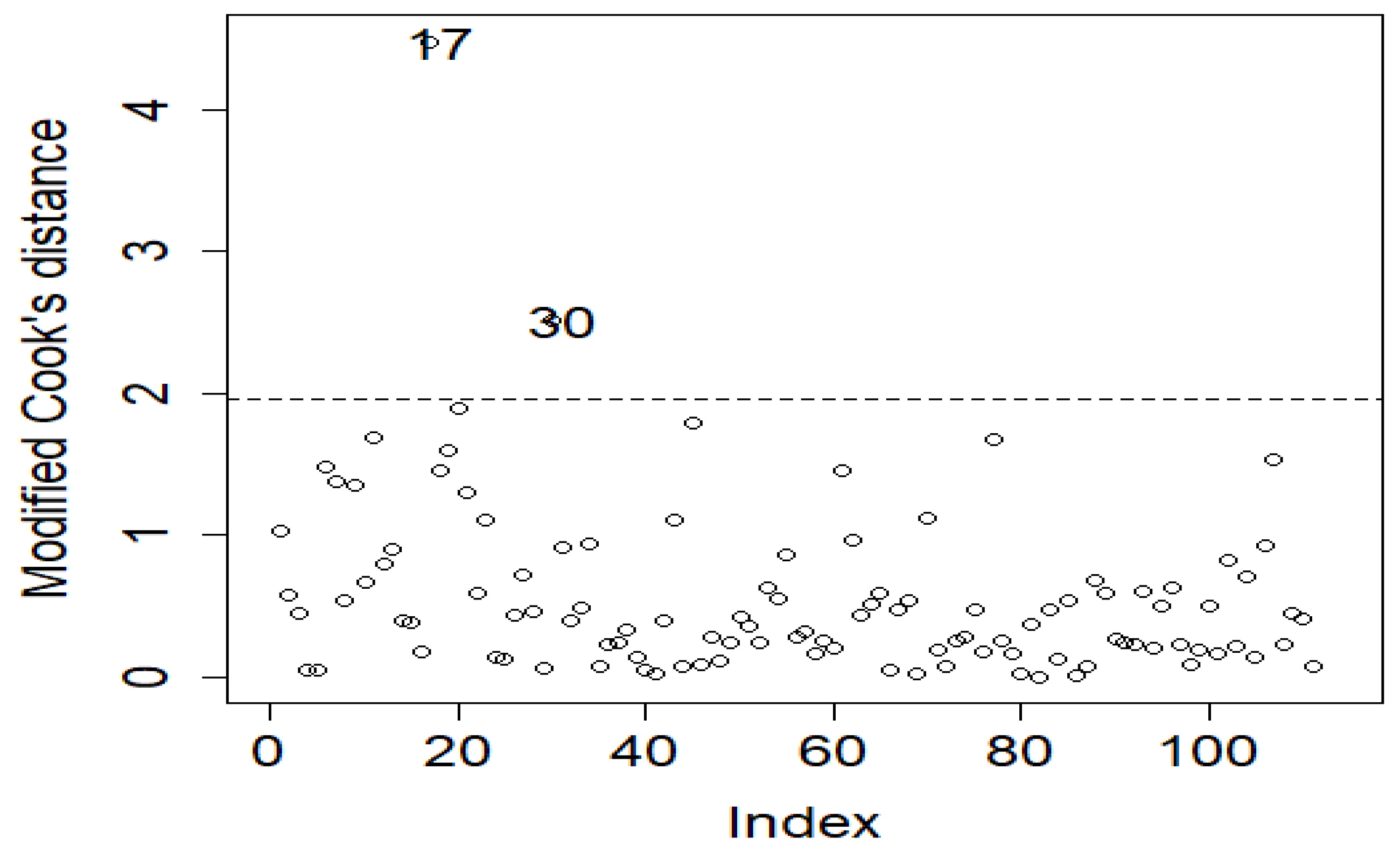
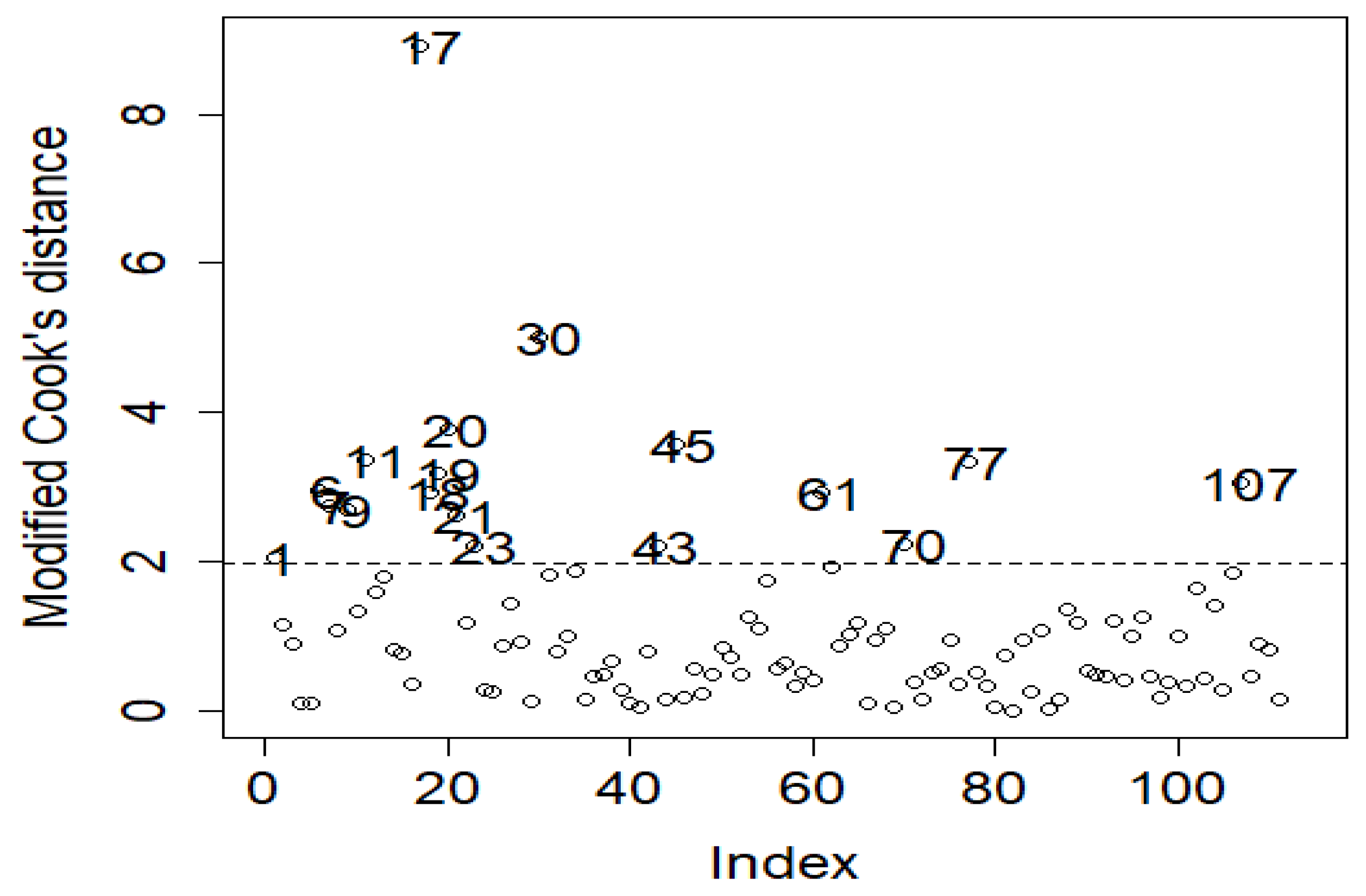
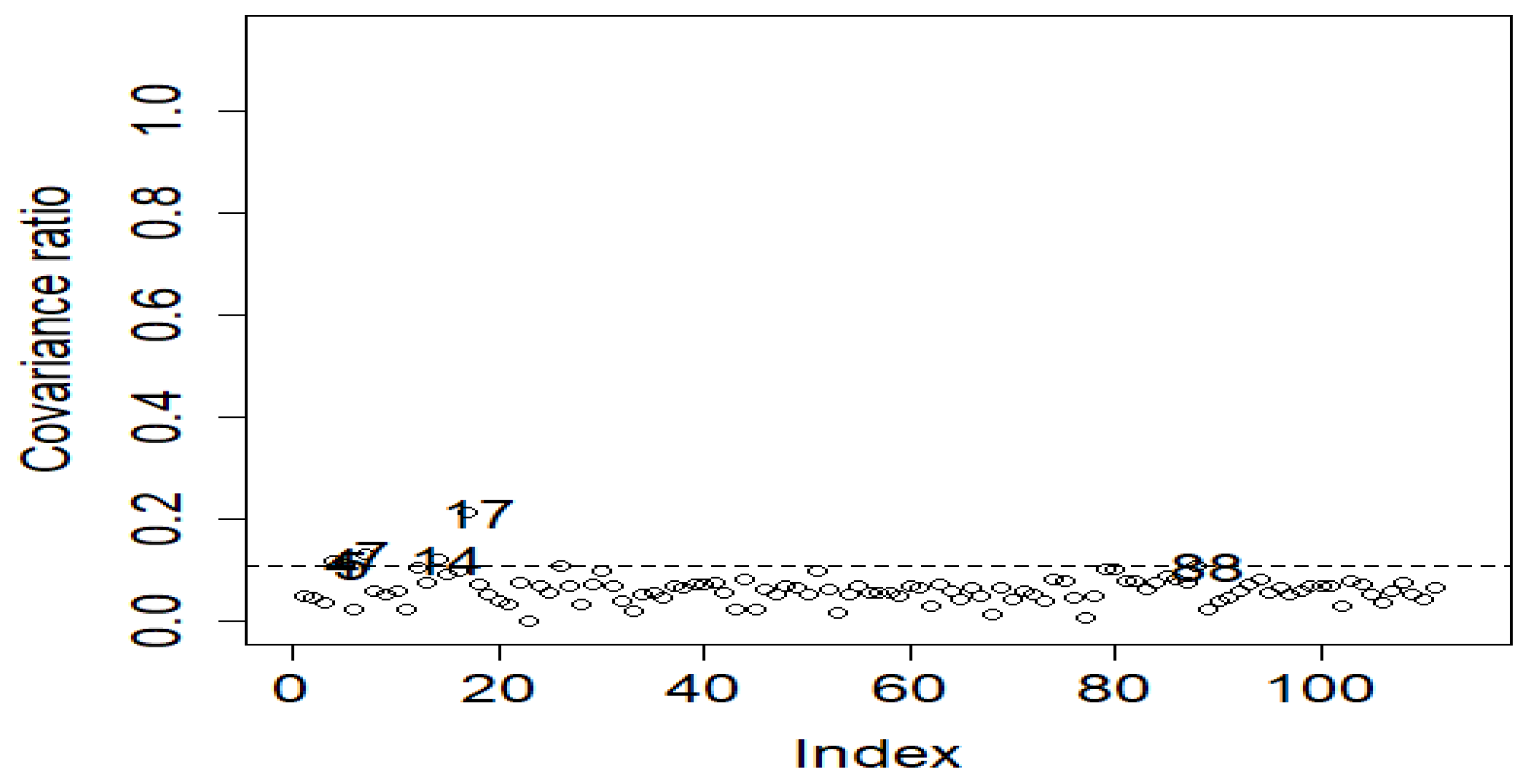
Influence analysis is a critical diagnostic tool in regression modeling to ensure reliable parameter estimates. This study evaluates the effectiveness of diagnostic methods for detecting influential observations in the lognormal regression model using fitted and quantile residuals. We assess Cook’s distance, modified Cook’s distance, covariance ratio, and the Hadi method through a Monte Carlo simulation with varying sample sizes, dispersion parameters, perturbation values, and numbers of explanatory variables, and a real-world application to an atmospheric environmental dataset. Simulation results demonstrate that Cook’s distance and the Hadi method achieve a good performance under all scenarios, with quantile residuals generally outperforming fitted residuals. The sensitivity analysis confirms their robustness, with minimal variation in detection rates. The covariance ratio performs well but shows slight variability in high-dispersion cases, while modified Cook’s distance consistently underperforms, particularly with quantile residuals. The real-world application confirms these findings, with Cook’s distance and the Hadi method effectively identifying influential points affecting ozone concentration estimates. These results highlight the superiority of Cook’s distance and the Hadi method for lognormal regression model diagnostics, with quantile residuals enhancing detection accuracy.
Keywords: influential observation; lognormal regression model; cook’s distance; modified Cook’s distance; covariance ratio; Hadi method; fitted residual; quantile residual influential observation; lognormal regression model; cook’s distance; modified Cook’s distance; covariance ratio; Hadi method; fitted residual; quantile residual