1. Introduction
With the advancement of the global petroleum industry, deep to ultra-deep hydrocarbon resources have attracted growing attention worldwide [
1]. Owing to deep burial depths, elevated formation temperatures and pressures, and complex geological fluids, deep to ultra-deep reservoirs typically undergo intensive diagenetic alteration. Consequently, the identification of relatively high-quality reservoirs represents a critical research challenge in deep oil and gas exploration [
2,
3]. A previous study has systematically summarized five typical formation models for deep high-quality clastic reservoirs: (1) primary porosity-dominated reservoirs controlled by fluid overpressure and hydrocarbon charging at shallow to moderate burial depths; (2) primary porosity-dominated reservoirs controlled by chlorite coatings and hydrocarbon charging at shallow to moderate/deep burial depths; (3) primary porosity-dominated reservoirs controlled by long-term shallow burial followed by rapid deep burial and overpressure development with hydrocarbon charging at moderate to deep burial depths; (4) secondary porosity-dominated reservoirs controlled by surface leaching and hydrocarbon charging at shallow to moderate burial depths; and (5) secondary porosity-dominated reservoirs controlled by multi-genetic dissolution and hydrocarbon charging at moderate to deep burial depths [
4].
The Bashijiqike Formation in the Kelasu structural belt of the Kuqa Depression is one of the primary exploration targets for clastic reservoirs in the Tarim Basin and hosts widely developed effective reservoirs at ultra-deep burial depths. This formation was deposited in a braided river delta front to fan-delta front system [
5]. The Kuqa Depression was fully filled by extensive clastic sediments, indicating that the abundance of sand bodies is not the key constraint on the development of deep–ultra-deep effective reservoirs in this region. The Bashijiqike Formation experienced long-term shallow burial followed by rapid deep burial and overpressure development, providing favorable conditions for the formation of ultra-deep effective reservoirs [
6,
7]. Relatively coarse-grained sandstones of braided river delta, deposited under high-energy hydrodynamic regimes, provide the fundamental material prerequisite for resisting mechanical compaction and preserving primary intergranular pores. The reservoirs underwent varying degrees of multi-stage dissolution modification, including meteoric water, organic acid fluids, and acid–alkali alternating fluids [
8]. As a typical deep clastic reservoir at the margin of a foreland basin, the Bashijiqike Formation experienced intense tectonic compression and associated structural deformation. Although intensified lateral compaction of the reservoirs led to a significant reduction in primary porosity, the formation of interconnected, multi-scale fracture networks significantly enhanced reservoir permeability and fluid migration potential [
9].
Affected by different combinations of the aforementioned factors, the Bashijiqike Formation shows significant differences in reservoir characteristics and development mechanism across different areas. This study selects typical reservoirs from the Bozi and Keshen areas of the Kelasu structural belt as research targets to systematically analyze reservoir petrology, diagenesis, physical properties, and fracture characteristics. The research aims to clarify the effects of tectonic stress and diagenetic fluid system on overall reservoir characteristics in different areas. Combined with comparative analysis of reservoir characteristics at different structural positions within individual anticlines, this study ultimately seeks to elucidate the development mechanisms of typical ultra-deep effective reservoirs in the Bashijiqike Formation of the Kelasu structural belt.
2. Geological Setting
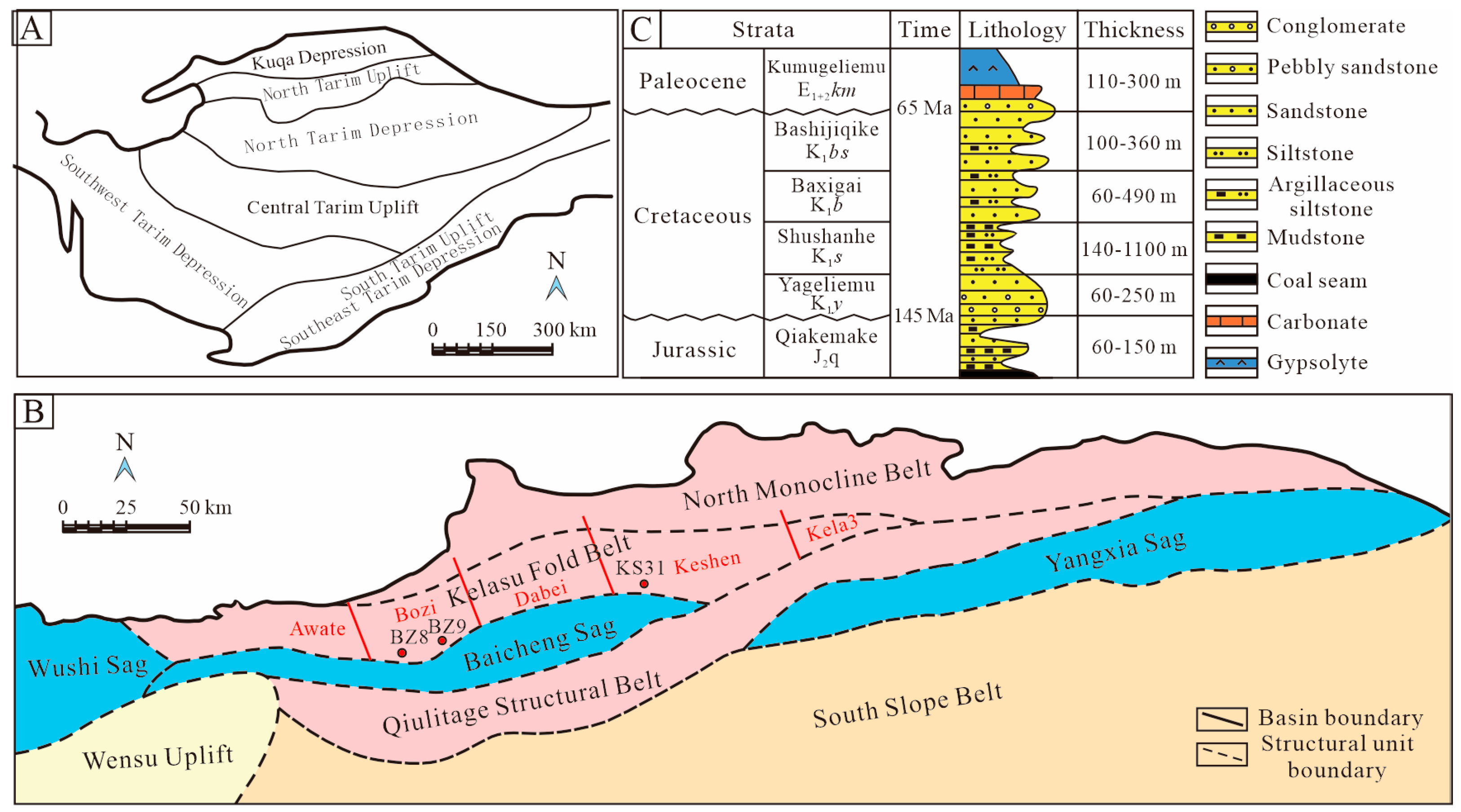
The Tarim Basin, located between the Tianshan, Kunlun, and Altun mountains, is the largest onshore petroleum-bearing sedimentary basin in China (
Figure 1A). It formed through the superimposition of a Paleozoic marine craton basin and a Mesozoic–Cenozoic foreland basin [
10]. The Kuqa Depression is located in the northern Tarim Basin, bounded by the South Tianshan orogenic belt to the north, the Tabei Uplift to the south, the Wushi Sag to the west, and the Yangxia Sag to the east. It extends approximately 470 km in the east–west direction, with a north–south width of 40–90 km, covering a total area of approximately 28,000 km
2 [
11]. The tectonic evolution of the Kuqa Depression was primarily governed by compressional stresses associated with the uplift of the South Tianshan. The depression comprises four structural belts and three sags (
Figure 1B), including the northern monocline belt, Kelasu structural belt, Qiulitage structural belt, and southern slope belt from north to south, as well as the Wushi Sag, Baicheng Sag, and Yangxia Sag from west to east [
12]. Among these tectonic units, the Kelasu thrust-fold belt is the most hydrocarbon-rich region within the Kuqa Depression [
13]. Based on structural characteristics, this belt is subdivided into five segments from west to east, namely the Awate (AW), Bozi (BZ), Dabei (DB), Keshen (KS), and Kela-3 (KL3) sections [
14]. Meanwhile, this belt can be subdivided into three zones from north to south, bounded by the Kelasu and Keshen faults. Vertically, the structural succession is divided into the supra-salt layer, salt layer, sub-salt layer, and basement layer units using the salt rocks of the Kumugeliemu Group (E
1–km) as the key boundary [
13].
The Kuqa Depression comprises multiple stratigraphic units ranging from Permian to Quaternary in age, including Triassic, Jurassic, Cretaceous, Paleogene, Neogene, and Quaternary strata, with cumulative sedimentary thicknesses ranging from 3000 to 10,000 m. These successions record the basin’s transition from marine to continental sedimentation [
11,
15]. The Lower Cretaceous succession consists of, from oldest to youngest, the Yageliemu (K
1y), Shushanhe (K
1s), Baxigai (K
1b), and Bashijiqike (K
1bs) formations (
Figure 1C). During the Late Cretaceous, tectonic uplift and erosion resulted in the absence of the Upper Cretaceous strata, which are separated from the overlying massive gypsum deposits of the E
1–2km by a regional unconformity [
16]. The Bashijiqike Formation represents the most important reservoirs within the Cretaceous of the Kuqa Depression. Sediments were primarily derived from the South Tianshan orogenic belt to the north during a stage of relatively stable lake level. The depositional evolution is characterized by early-stage (Member 1) fan delta front deposits, followed by middle-stage (Member 2) to late-stage (Member 3) braided river delta front deposits.
Figure 1.
(
A) Tectonic units of the Tarim Basin. (
B) Tectonic units of the Kuqa Depression [
17]. (
C) Stratigraphic column of the Lower Cretaceous succession.
Figure 1.
(
A) Tectonic units of the Tarim Basin. (
B) Tectonic units of the Kuqa Depression [
17]. (
C) Stratigraphic column of the Lower Cretaceous succession.
3. Methods
This study focuses on ultra-deep reservoirs (>7000 m) adjacent to the Baicheng Fault Zone within the Kelasu Structural Belt. Specifically, the BZ8 and BZ9 gas reservoirs in the Bozi (BZ) area and the KS31 gas reservoir in the Keshen (KS) area were selected as typical case studies to conduct systematic reservoir characterization and genetic mechanism analysis. These analyses are based on data from 7 wells, including BZ8, BZ9, and BZ901 in the BZ area and KS31-1, KS31-2, KS31-3, and KS31-4 in the KS area.
The lithofacies types and sedimentary structural features of the reservoirs were identified through detailed observation of drilling cores. The reservoirs in the study area are mainly thick superimposed medium-fine sandstones. Therefore, all experimental tests and data analyses in this study are performed on samples collected from the dominant medium-fine sandstone reservoirs, so as to eliminate the interference of lithofacies differences on test results. In total, 105 conventional thin sections and 147 cast thin sections were prepared from rock samples in the Bozi area, while 114 conventional thin sections and 89 cast thin sections were obtained from the Keshen area. Blue epoxy resin was used as the casting material to clearly distinguish pore spaces from rock framework. A Zeiss Axio Scope.A1 polarizing microscope (Oberkochen, Germany) was used to observe rock compositions and pore types and perform quantitative statistics on their contents. Twenty thin sections with representative diagenetic features were further observed via cathodoluminescence microscopy and scanning electron microscopy (SEM). A CITL CL8200 MK5 cathodoluminescence instrument produced in the Hertfordshire, UK and a Zeiss Crossbeam 550 SEM (Oberkochen, Germany) were adopted in this study. For SEM observation, thin sections were first cleaned with anhydrous alcohol to remove surface dust and residual impurities, followed by air-drying at room temperature. Prior to observation, the cleaned samples were coated with a thin gold film using an ion sputtering instrument to enhance electrical conductivity. SEM observations were performed with an accelerating voltage of 15 kV, a working distance of 11–13 mm, and a beam current of 10 μA, coupled with energy-dispersive X-ray spectroscopy (EDS) for elemental composition analysis of authigenic minerals. This was to verify the accuracy of rock component identification under optical microscopes. In addition, 40 rock samples were subjected to X-ray diffraction (XRD) analysis to identify clay mineral types and their relative contents within sandstone reservoirs. Core samples were crushed and ground, and the <2 μm clay fraction was separated by sedimentation and centrifugation. Organic matter and carbonate cements were removed by treatment with hydrogen peroxide and dilute hydrochloric acid, respectively. Oriented clay slides were prepared under air-dried, ethylene glycol-saturated, and heated conditions for clay mineral identification. XRD measurements were performed on an Ultima IV X-ray diffractometer (Rigaku Holdings Corporation, Tokyo, Japan). Porosity and permeability tests were performed to clarify reservoir physical properties, including 78 samples from the Bozi area and 53 samples from the Keshen area.
For macro-fractures, core observation and imaging logging interpretation were used to determine fracture types and their basic characteristics, including fracture orientation, density, and filling degree. Imaging log data were processed, mainly including data loading, depth matching, data splicing, environmental correction, and image enhancement. Then a two-dimensional plane image unfolded from the borehole cylindrical surface was generated, providing an intuitive basis for fracture identification. On the unfolded images, natural fractures appear as continuous sinusoidal dark stripes. Combined with fracture morphology, continuity, extension length, and dip angle characteristics, natural fractures, drilling-induced fractures, and bedding can be effectively distinguished. Natural fractures are characterized by good continuity, large extension length, and sinusoidal distribution. Fracture identification was completed for three wells, followed by attitude measurements to obtain key parameters such as fracture orientation, density, and filling degree.
4. Results
4.1. Reservoir Petrological Characteristics
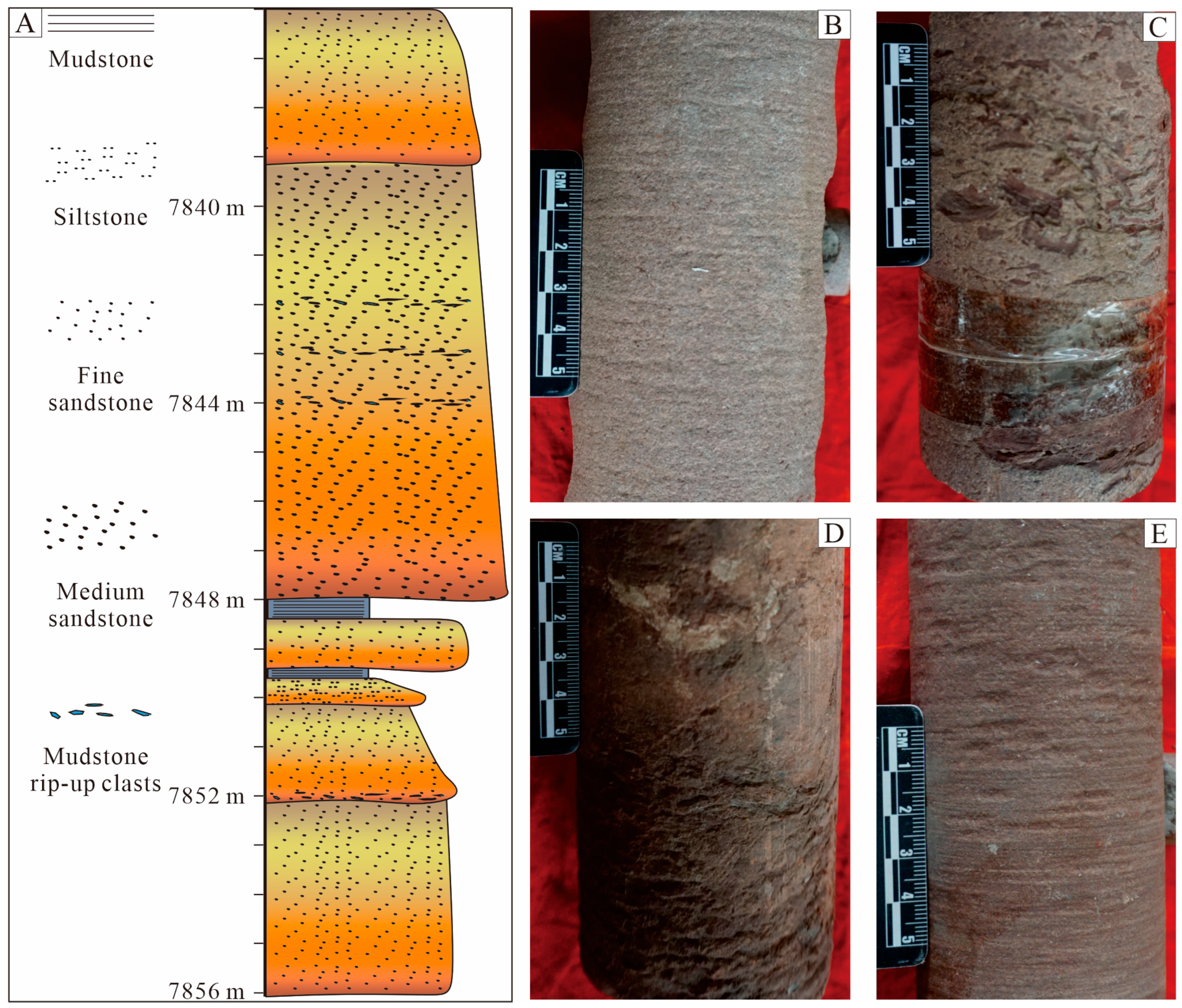
Mud logging data demonstrate that the Bashijiqike Formation is dominated by sandstone reservoirs, with minor siltstone and mudstone interbeds. Core observations reveal that the BZ8, BZ9, and KS31 gas reservoirs share similar sedimentary lithofacies features. Reservoirs are predominantly subaqueous distributary channel sandstones of braided river delta front (
Figure 2A), with minor fine-grained deposits corresponding to subaqueous interdistributary bay facies. They are mainly composed of medium- to fine-grained sandstones (
Figure 2B), which exhibit massive bedding, parallel bedding, and locally cross bedding, accompanied by minor argillaceous conglomeratic sandstones and siltstones (
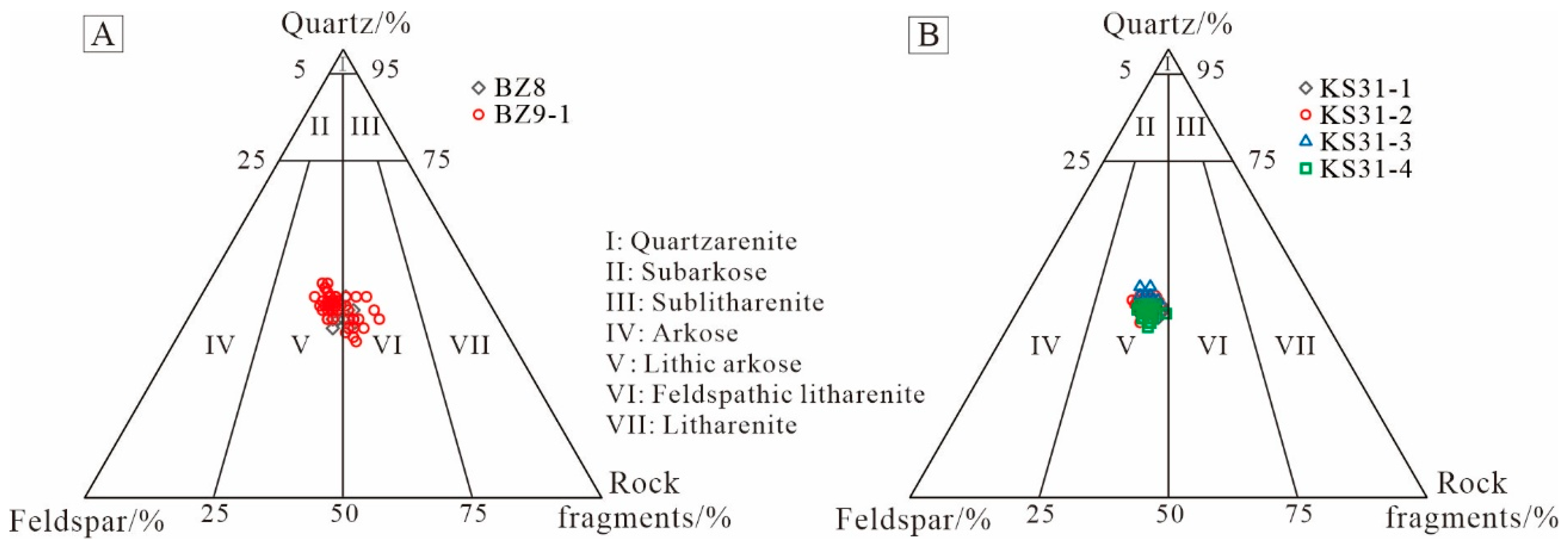
Figure 2C–E). Petrographic analyses of thin sections reveal that the reservoirs have moderate textural maturity, with grain sizes ranging from medium to fine sand grades, moderate to good sorting, and roundness ranging from sub-angular to sub-rounded. The reservoirs exhibit low compositional maturity, being predominantly classified as lithic arkose with subordinate feldspathic litharenite. In the BZ8 and BZ9 gas reservoirs, the contents of quartz, feldspar, and lithic fragments range from 35% to 48% (average value = 42.1%, standard deviation = 2.8), 23% to 33% (average value = 29.4%, standard deviation = 2.1), and 22% to 37% (average value = 28.4%, standard deviation = 3.2), respectively (
Figure 3A). Lithic fragments are dominated by metamorphic rock fragments, followed by minor igneous rock fragments and scarce sedimentary rock fragments. The KS31 gas reservoir has contents of quartz, feldspar, and lithic fragments, ranging from 38% to 47% (average value = 42.6%, standard deviation = 1.6), 30% to 36% (average value = 32.6%, standard deviation = 1.5), and 21% to 29% (average value = 24.8%, standard deviation = 1.6), respectively (
Figure 3B), with lithic fragment compositions comparable to those of the BZ8 and BZ9 reservoirs.
4.2. Reservoir Diagenetic Characteristics
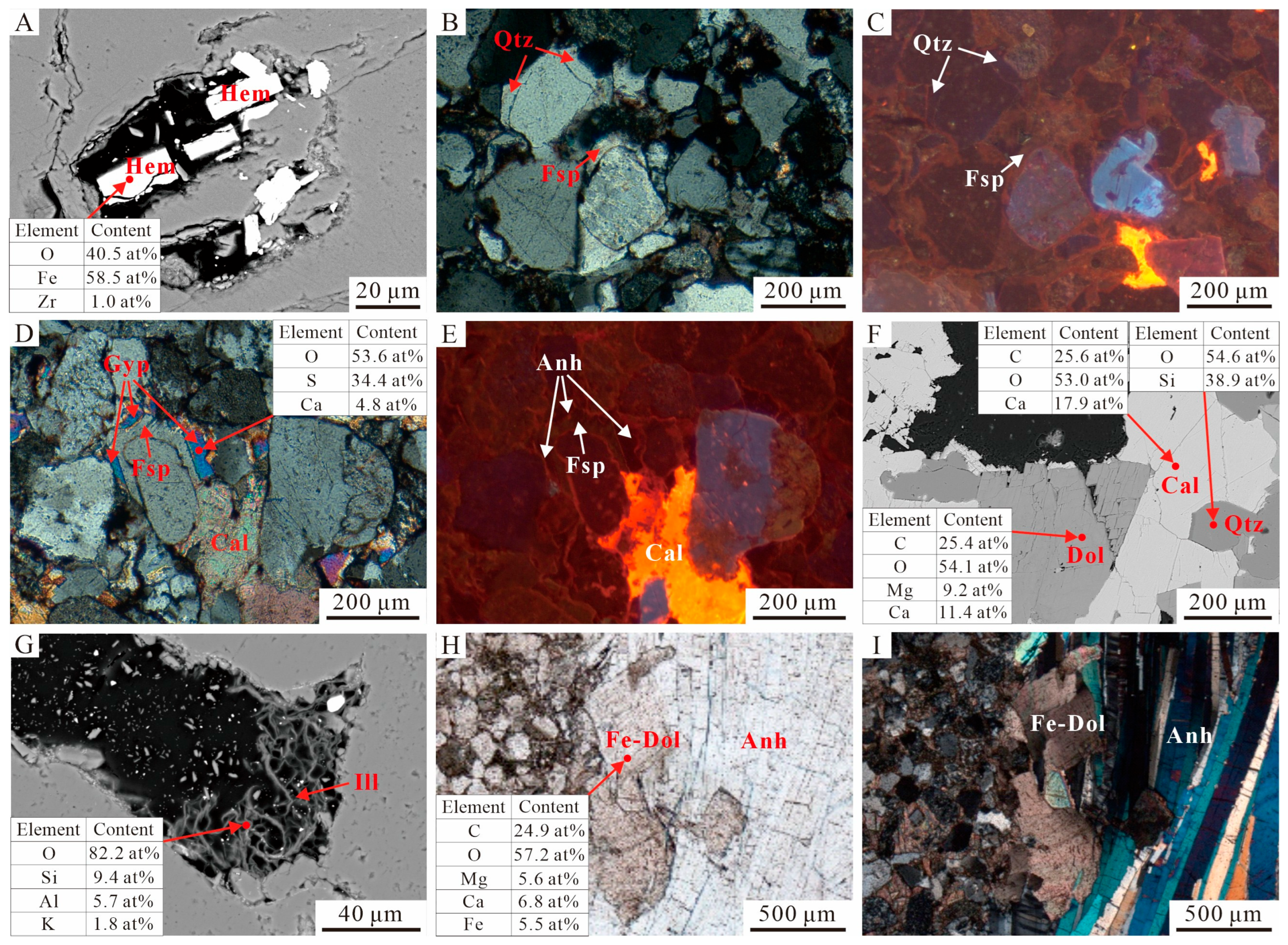
Integrated microscopic observations and energy-dispersive spectroscopy and X-ray diffraction analyses demonstrate that the reservoirs experienced diverse diagenetic processes, including compaction, Fe-Ti cementation, carbonate cementation, silicate cementation, sulfate cementation, and multi-stage dissolution. Based on the paragenetic relationships of authigenic minerals and the burial history of the reservoirs, the BZ8, BZ9, and KS31 reservoirs share similar diagenetic evolutionary sequences: syndepositional leucoxene and hematite cementation (
Figure 4A); feldspar dissolution accompanied by quartz and albite cementation during the tectonic uplift and erosion stage (
Figure 4B,C); dolomite, gypsum, and calcite cementation during shallow burial (
Figure 4D–F); feldspar dissolution coupled with quartz and clay mineral cementation (predominantly kaolinite) during progressive burial; and clay mineral transformation (
Figure 4G), Fe-calcite, Fe-dolomite, and anhydrite cementation during deep burial (
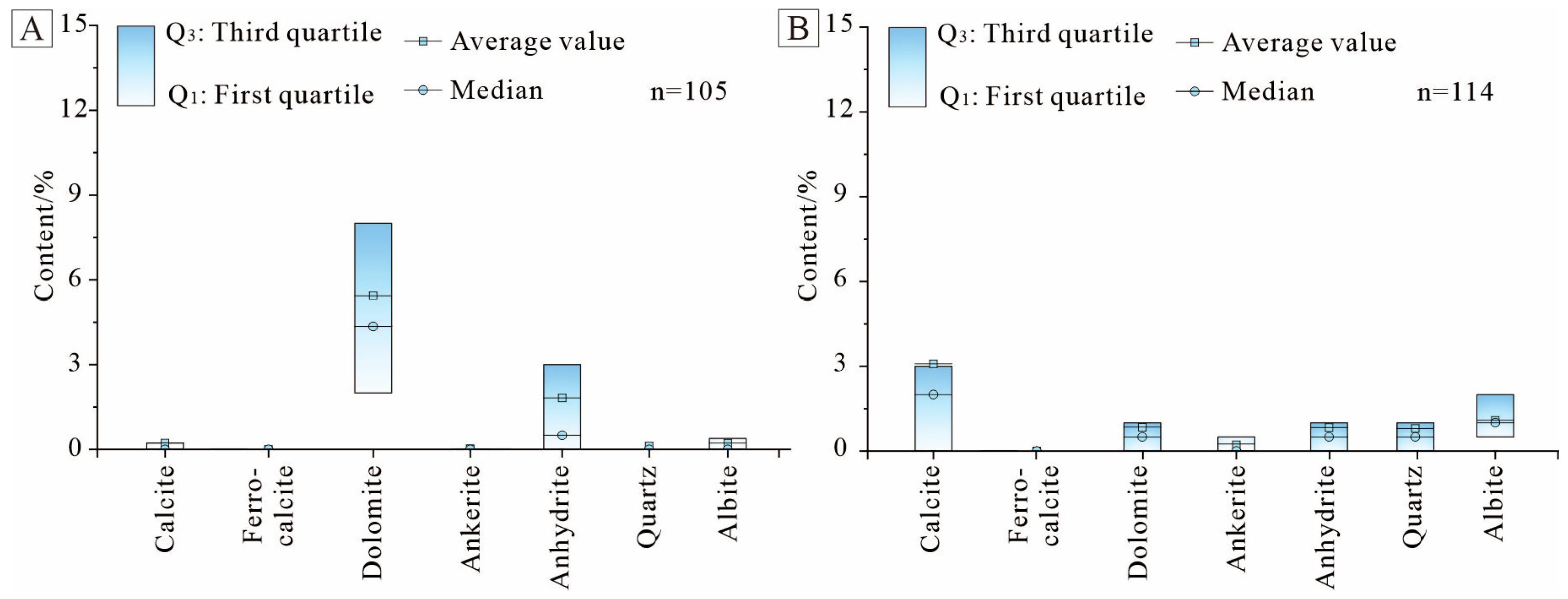
Figure 4H,I). However, quantitative analysis of authigenic mineral abundances via petrographic examination and relative clay mineral proportions reveals significant variations in diagenetic intensity across different areas. In the BZ8 and BZ9 gas reservoirs, the contents of calcite, dolomite, anhydrite, quartz, and albite cements range from 0% to 4% (average value = 0.9%, standard deviation = 3.1), 0% to 28% (average value = 5.3%, standard deviation = 5.1), 0% to 13% (average value = 1.78%, standard deviation = 2.7), 0% to 3% (average value = 0.1%, standard deviation = 0.5), and 0% to 2% (average value = 0.2%, standard deviation = 0.4), respectively (
Figure 5A). These reservoirs are dominated by dolomite and anhydrite cementation, with subordinate calcite cementation. Clay minerals are dominated by illite (53%), followed by illite–smectite mixed layer (41%), with negligible chlorite and kaolinite. In contrast, the cement contents in the KS31 gas reservoir range from 0% to 25% (average value = 3.1%, standard deviation = 4.8) for calcite, 0% to 4% (average value = 0.8%, standard deviation = 1.0) for dolomite, 0% to 5% (average value = 0.8%, standard deviation = 0.9) for anhydrite, 0% to 3% (average value = 0.8%, standard deviation = 0.9) for quartz, and 0% to 4% (average value = 1.1%, standard deviation = 0.8) for albite, respectively (
Figure 5B). Clay minerals are dominated by illite (58%), followed by chlorite (30%), with a lower illite–smectite mixed layer content (12%) and virtually no kaolinite.
4.3. Micropores and Physical Properties
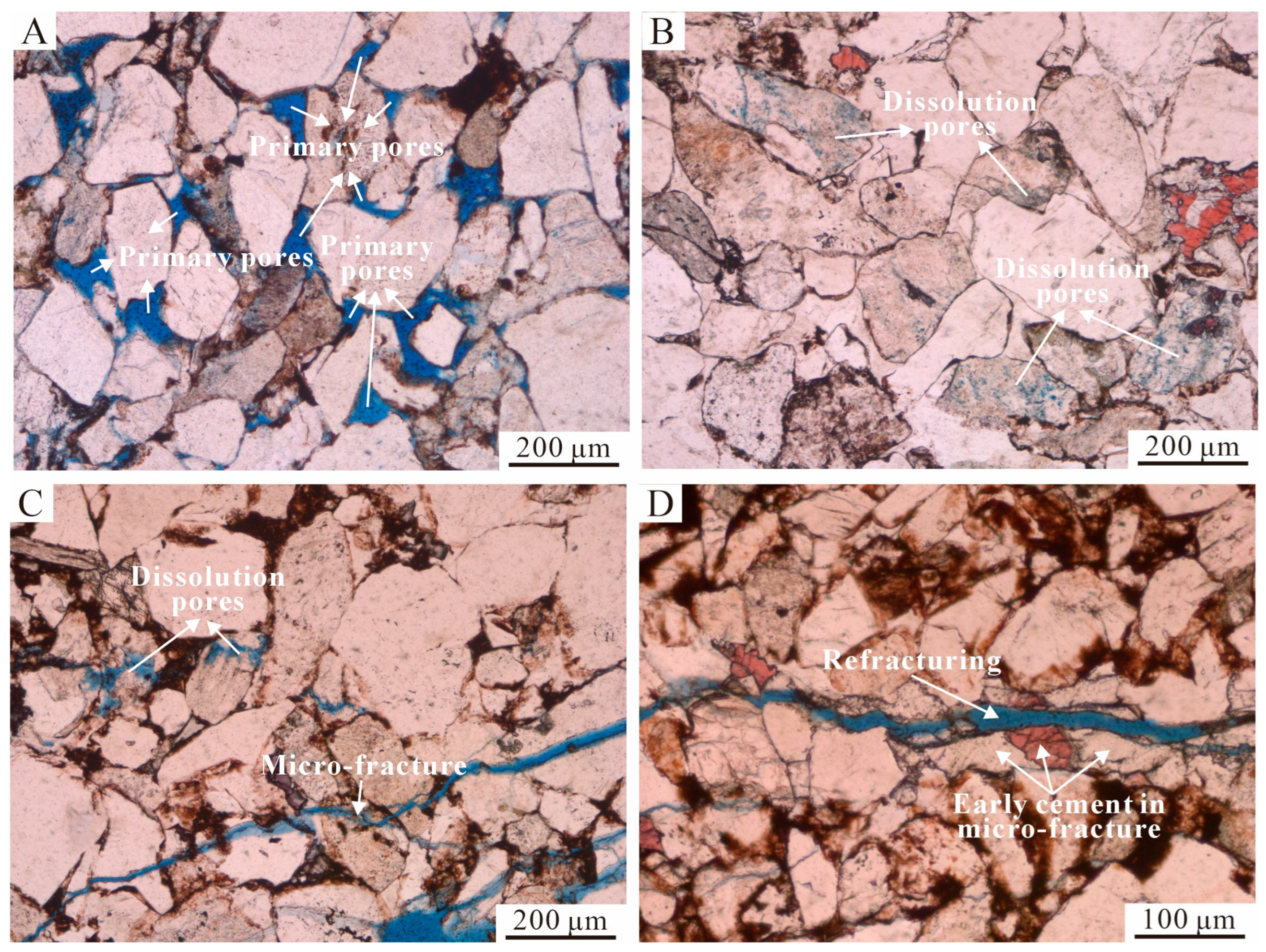
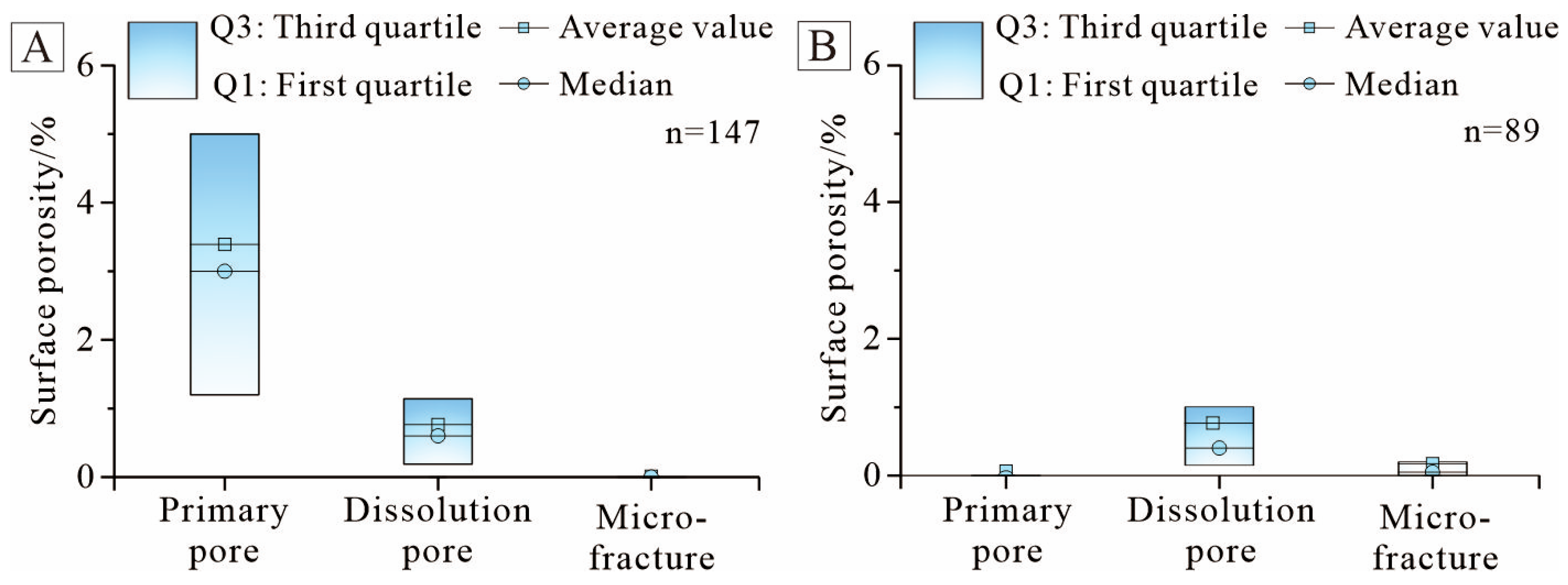
Microscopic observations of cast thin sections reveal that the reservoir storage space consists of primary intergranular pores, secondary dissolution pores, and micro-fractures. The BZ8 and BZ9 gas reservoirs exhibit well-developed pores. The surface porosity ranges from 0% to 14.5% (average value = 4.2%, standard deviation = 2.8). Primary intergranular pores dominate the pore system, with contents varying from 0% to 14% (average value = 3.4%, standard deviation = 2.5), while secondary dissolution pores are less developed, ranging from 0% to 4.1% (average value = 0.8%, standard deviation = 0.64) (
Figure 6A and
Figure 7A). Micro-fractures are sparsely developed, with an average surface porosity of only 0.01%. Among the 147 thin sections examined, only 11 contain micro-fractures, accounting for approximately 7% of the total samples, indicating a limited contribution of micro-fractures to reservoir storage space in these areas. In contrast, the KS31 gas reservoir has poorly developed pores. Its surface porosity ranges from 0% to 4.9% (average value = 0.8%, standard deviation = 1.1). The pore space is almost dominated by secondary dissolution pores, while primary intergranular pores are extremely scarce with the content lower than 0.1% (
Figure 6B and
Figure 7B). Micro-fractures in this area are relatively well-developed (
Figure 6C,D), with an average surface porosity of 0.2%. Of the 89 thin sections examined, 45 contain micro-fractures, suggesting a more notable role of micro-fractures in improving reservoir quality to the BZ8 and BZ9 reservoirs.
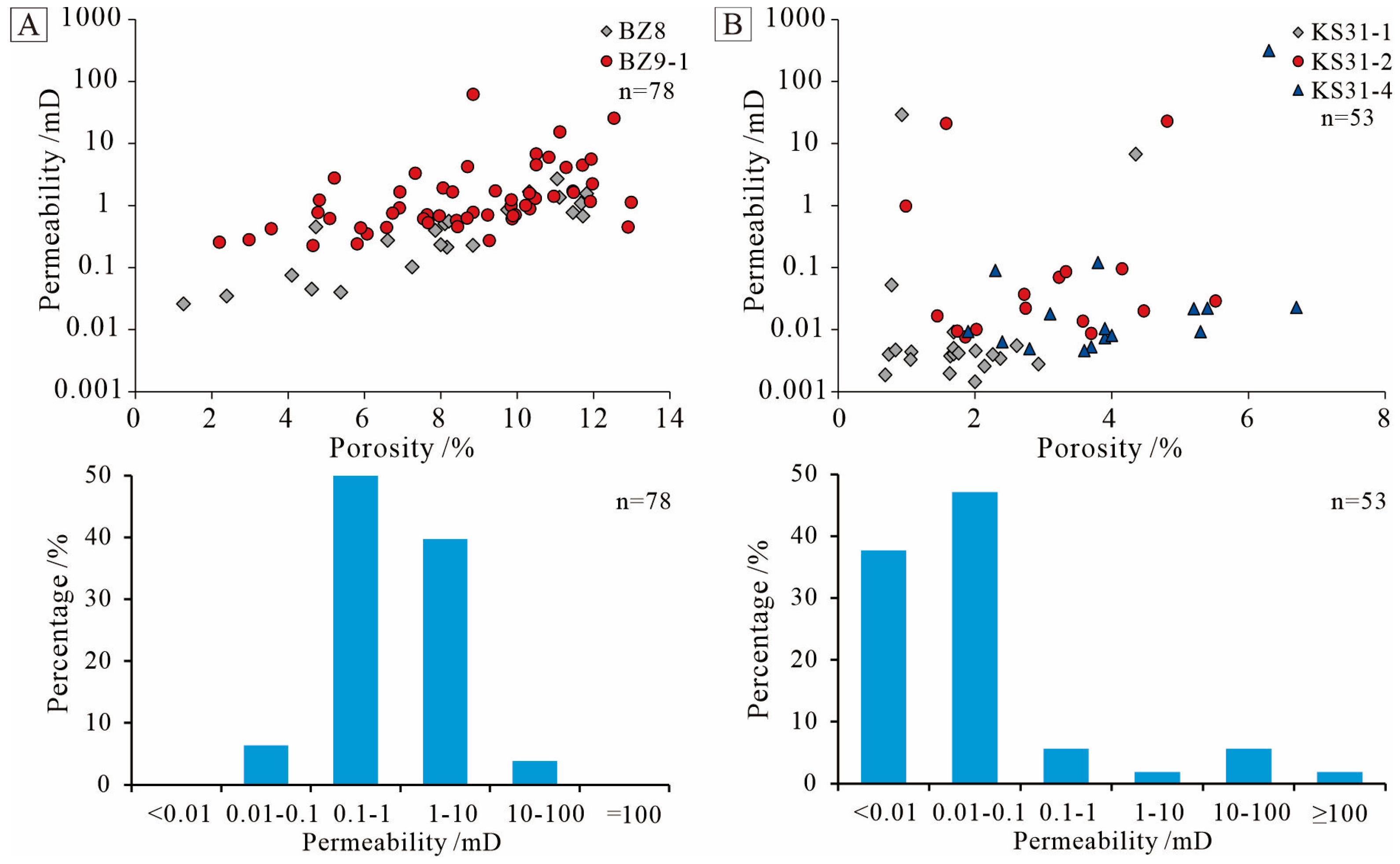
Core plug porosity and permeability tests indicate that the studied reservoirs generally exhibit low porosity, low permeability to ultra-low porosity, and ultra-low permeability characteristics. The BZ9 gas reservoir shows porosity primarily ranging from 5% to 12% (average value = 8.5%, standard deviation = 2.5) and permeability mainly varying from 0.1 to 10 mD (
Figure 8A). In contrast, the KS31 reservoir has overall poorer quality, with porosity predominantly ranging from 0.5% to 6% (average value = 3.1%, standard deviation = 1.5) and permeability mainly below 0.1 mD. Nevertheless, some samples exhibit anomalously high permeability values (1–100 mD) (
Figure 8B), which is closely related to the relatively well-developed macro- and micro-fractures in these samples.
4.4. Macro-Fracture Characteristics
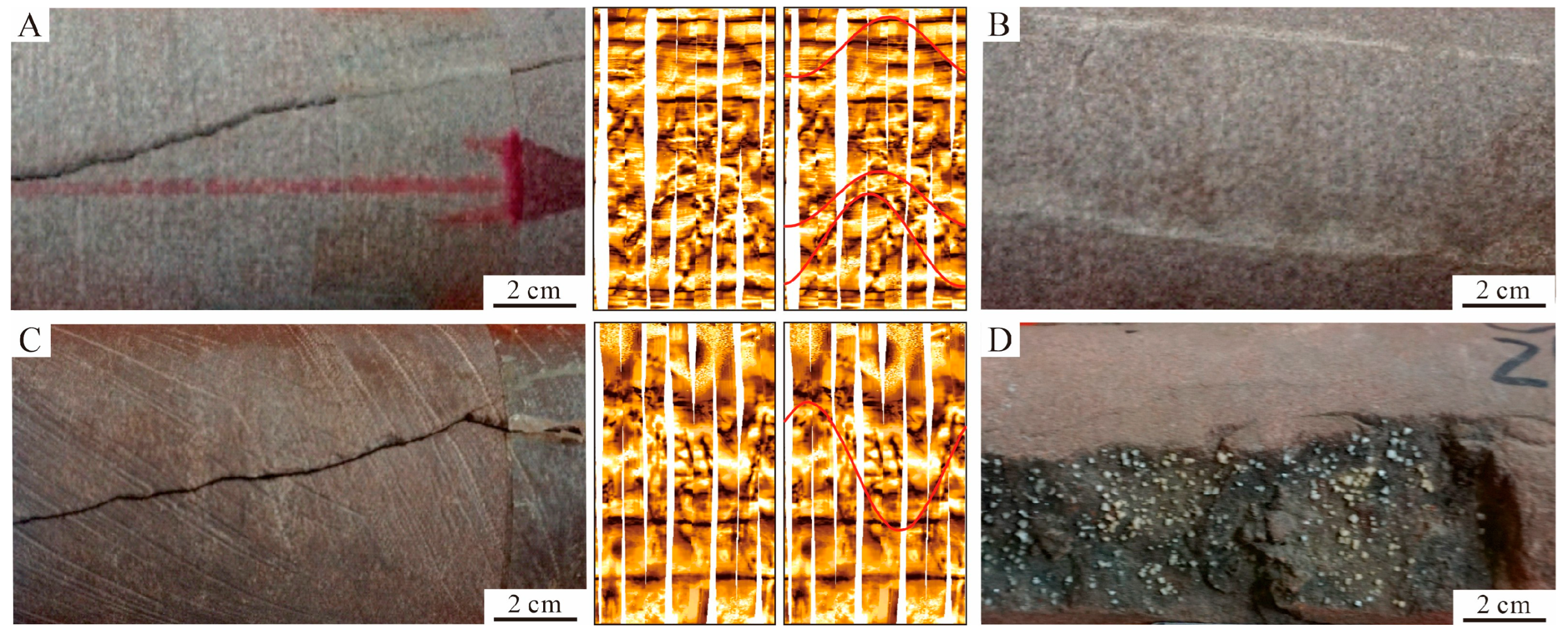
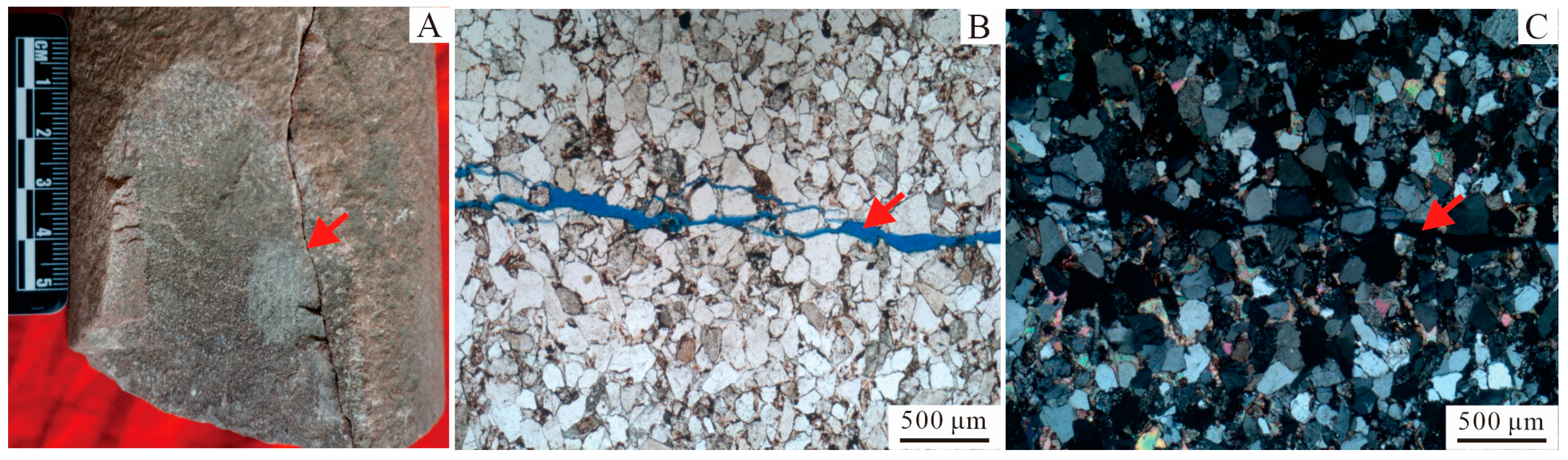
Core observation and image logging interpretation demonstrate that macro-fractures are variably developed across the studied reservoirs. Shear fractures are predominant (
Figure 9A,B), with tension fractures as the secondary type (
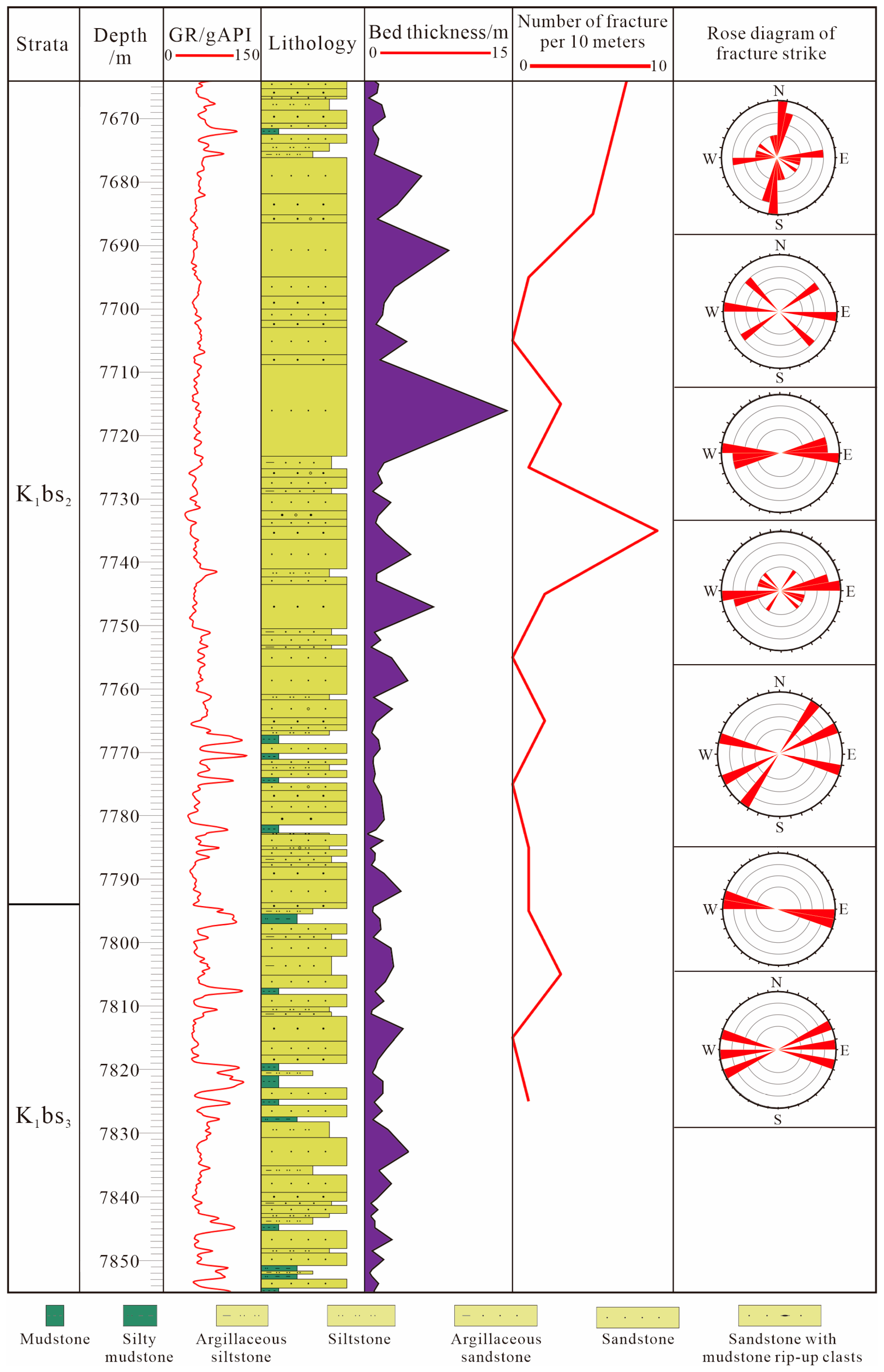
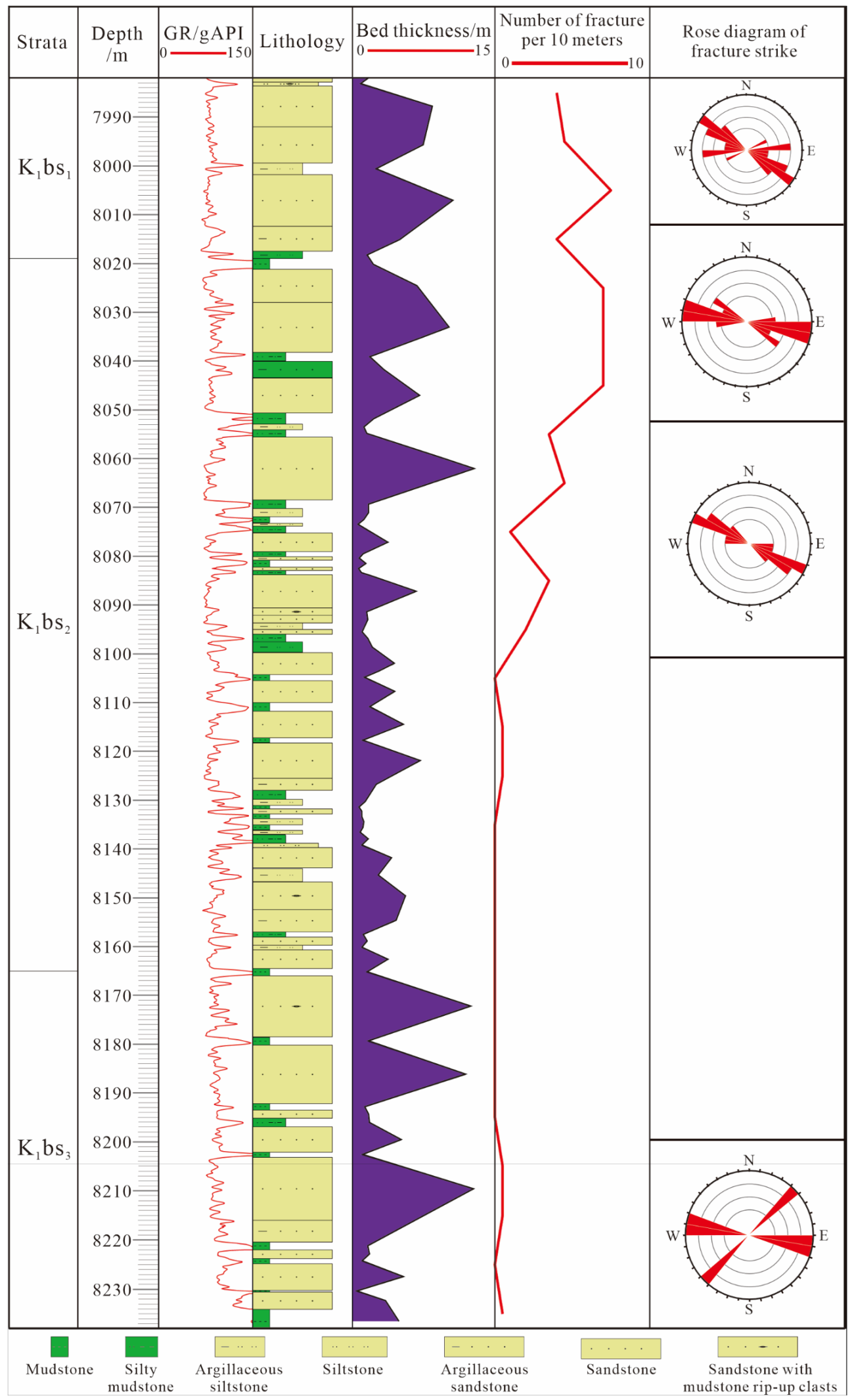
Figure 9C,D). Fracture strikes are mainly east–west, parallel to the hinges of anticlines; subordinate orientations include northeast- and northwest-trending strikes, which are oblique to the anticline hinges, while north–south strikes (perpendicular to the hinges) are relatively rare. The dip angles of fractures relative to the stratigraphic bedding planes are mainly distributed between 50° and 90°. Fracture filling characteristics are diverse, ranging from fully filled and partially filled to unfilled states. The fillings are predominantly composed of calcite, dolomite, anhydrite, and quartz cements. The BZ9 and KS31 gas reservoirs have distinct macro-fracture characteristics. The BZ9 well exhibits notably low fracture density and low filling degree; image logging interpretation shows that the average fracture densities of the Bashijiqike Formation Members 2 and 3 are 3.1 and 0.6 fractures per 10 m, respectively (
Figure 10). In contrast, the KS31-4 well is characterized by high fracture density and high filling degree. The average fracture densities of the Bashijiqike Formation Members 1, 2, and 3 in this well are 10.8, 4.5 and 0.4 fractures per 10 m, respectively (
Figure 11).
5. Discussion
5.1. Effect of Regional Tectonic Stress on Reservoirs
Despite comparable maximum burial depths and burial histories, the BZ8, BZ9, and KS31 gas reservoirs exhibit pronounced differences in reservoir properties. While the abundances of secondary pores are similar among these three reservoirs, the substantial variation in primary pore content constitutes the fundamental control on differences in physical properties. The distribution map of maximum effective paleostress is derived from internal data of Tarim Oilfield. The maximum effective paleostress data are calculated based on the empirical relationship inverted from logging data in the Jurassic-Paleogene of the Kuqa Depression by Li et al. [
18]:
where σ
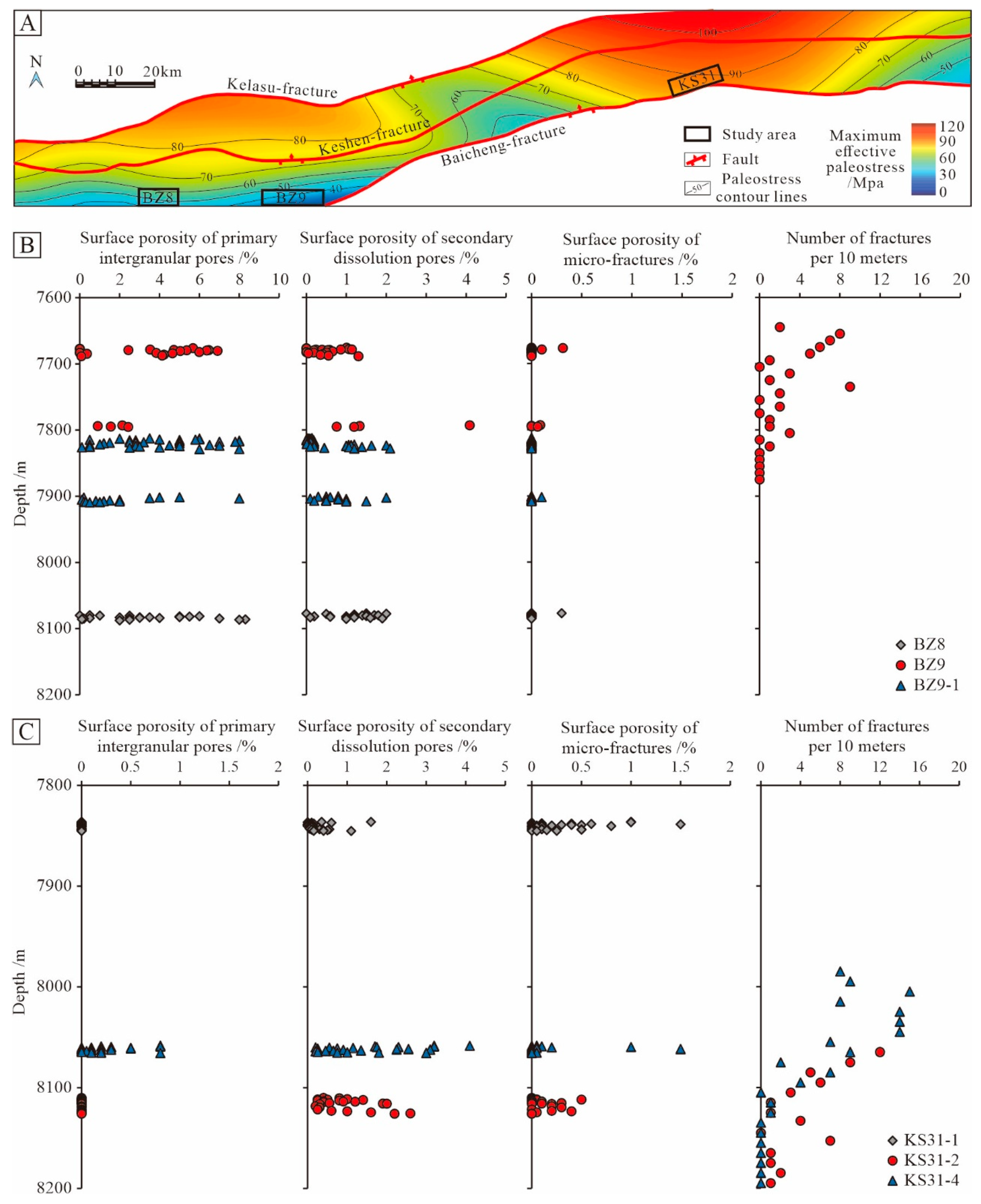
max represents the maximum effective paleostress (MPa) and Δt represents the acoustic interval transit time (μs/m). The BZ8 and BZ9 gas reservoirs experienced relatively weak maximum paleostress of 40–50 MPa (
Figure 12A). The lateral stress compaction associated with intense tectonic compression in the foreland region was weak, allowing the preservation of primary intergranular pores (
Figure 12B). The total surface porosity reached 4.2% and primary intergranular pores accounted for 81% of the total porosity. In contrast, the KS31 gas reservoir was subjected to stronger tectonic paleostress of 80–90 MPa. Intense lateral stress compaction resulted in the almost complete destruction of primary intergranular pores (
Figure 12C). Consequently, the total surface porosity of the KS31 reservoir is only 0.8%, with primary pores contributing merely 9% of the total porosity. Compaction intensity in the Bashijiqike Formation reservoirs of the Kuqa Depression exhibits a positive correlation with lateral tectonic compressive stress, and strong compressive stress accelerates grain rearrangement and plastic deformation of lithic fragments, thereby significantly reducing primary porosity [
19,
20,
21]. Enhanced lateral tectonic compression intensifying reservoir compaction is a common phenomenon in foreland basins. For instance, numerical simulation of the Qigu Formation reservoirs at the southern margin of the Junggar Basin indicates that strong late-stage tectonic compression (e.g., the Himalayan orogeny) can directly reduce reservoir porosity by approximately 0.88% [
22].
The BZ8 and BZ9 anticlines experienced relatively weak tectonic deformation, with insufficient tectonic stress to form large-scale fracture networks, resulting in low densities of both macroscopic and microscopic fractures (
Figure 12B). The KS31 anticline experienced relatively strong deformation degree, with strong tectonic stress providing sufficient power for fracture formation, resulting in well-developed macroscopic and microscopic fractures (
Figure 12C). In addition,
Figure 12B,C reveal that fracture density generally decreases with increasing reservoir depth, which is closely related to the local structural position within the anticline. Relevant discussions will be further elaborated in
Section 5.3. Fracture development can well explain the partial low-porosity and high-permeability phenomenon in the KS31 reservoir. Although fractures hardly increase reservoir porosity, they can significantly improve reservoir permeability by providing effective flow pathways. Previous studies have shown that fracture-type reservoirs in the Bashijiqike Formation of the Keshen area exhibit permeability increases of 1–3 orders of magnitude [
23], which is highly consistent with the data presented in this study. Fracture-type or pore-fracture-type reservoirs are widely developed at the margins of foreland basins globally. For example, the Xujiahe Formation tight sandstone reservoirs in the Sichuan Basin commonly develop tectonic fractures, which are key factors in forming natural gas enrichment and high production [
24]. Similarly, the Puig-reig anticline at the margin of the Ebro Basin in Spain, under conditions of low matrix porosity, commonly develops macroscopic and microscopic fractures that can effectively improve reservoir storage and flow performance [
25].
As the storage space and flow conduits in reservoirs, fractures and pores are genetically linked and mutually influential. Fracture development, for instance, can facilitate fluid connectivity, thereby influencing reservoir diagenesis and pore evolution. Due to the weak tectonic deformation of the BZ8 and BZ9 gas reservoirs, fractures were weakly developed and formed relatively late in the tectonic history. By the time fractures developed, early cementation and dissolution events had already ceased, resulting in minimal fracture filling and limited dissolution in fractures and adjacent host rocks. In contrast, fractures in the KS31 gas reservoir exhibit both high density and multi-stage development. Early- and middle-stage fractures could act as favorable migration pathways for diagenetic fluids. Consequently, certain macro- and micro-fractures and their adjacent host rocks have pronounced cementation or dissolution features. However, the late-formed fractures have not experienced fluid activity (
Figure 13A). Therefore, it can be seen that there is neither dissolution along the fractures nor fracture filling caused by cementing fluids within late-stage fractures (
Figure 13B,C). The relationship between fractures and diagenetic fluids in the Bashijiqike Formation reservoirs of the Kuqa Depression has been interpreted differently in previous studies. For instance, some indicate that fractures may facilitate the invasion of carbonate-rich fluids, resulting in extensive calcite and dolomite cementation [
26], whereas others suggest that fractures may facilitate the invasion of acidic fluids, leading to enhanced dissolution of fracture walls and surrounding matrix [
20]. The influence of fractures on reservoir diagenesis depends on the coupling between fracture development and fluid evolution. For example, in Paleocene sandstone reservoirs of the Central Graben, North Sea, fractures facilitate the invasion of overpressured CO
2-rich fluids, causing dissolution of grains and cements, as well as remobilization and reprecipitation of dissolution products, thereby enhancing reservoir heterogeneity [
27].
5.2. Effect of Diagenetic Fluid System on Reservoirs
Previous studies have demonstrated that Bashijiqike Formation reservoirs successively experienced: syndepositional low-salinity water; meteoric water during tectonic uplift; mixed lagoonal and meteoric waters during shallow burial; organic acids during progressive burial; and clay mineral and gypsum-salt thermal evolution fluids during deep burial [
28,
29]. However, regional variations in authigenic mineral assemblages and abundances reflect differences in diagenetic fluid compositions and their relative intensities.
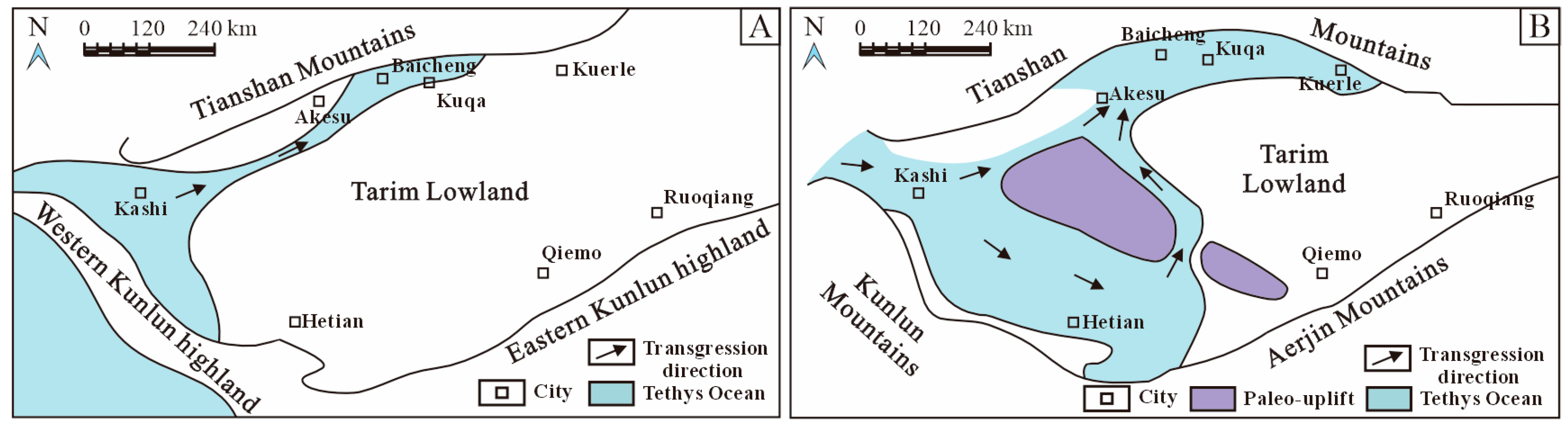
Carbonate and sulfate cements in the study area were derived primarily from mixed lagoonal and meteoric waters. Meteoric water infiltrated downward from the South Tianshan orogenic belt and migrated basinward along the Bashijiqike Formation strata. Lagoonal water originated from downward-percolating brines during deposition of the lagoonal gypsum-salt facies of the overlying Kumugeliemu Group. The mixing proportions of these fluids control cement mineralogy. The meteoric-dominated fluid favored calcite precipitation, whereas magnesium- and sulfate-rich lagoonal fluid promoted dolomite and anhydrite cementation. In the northern area of the Kelasu belt, where meteoric water influence is stronger, abundant calcite cementation developed. In the southern area adjacent to the Baicheng Fault zone, lagoonal water exerted greater influence, with dolomite and anhydrite becoming progressively more abundant. The BZ8 and BZ9 gas reservoirs, situated farther from the piedmont, were predominantly influenced by lagoonal water, resulting in dolomite- and anhydrite-dominated cementation with subordinate calcite. The KS31 gas reservoir, also located near the southern Baicheng Fault zone, is anomalous in being dominated by calcite cementation, with low abundances of both dolomite and anhydrite. The lagoonal deposits of the Kumugeliemu Group overlying the Bashijiqike Formation were deposited during marine transgressions that affected the Tarim Basin during the Cretaceous and Paleogene (
Figure 14). Previous studies indicate that marine transgression proceeded primarily from west to east [
30]. Consequently, the KS31 reservoir in the eastern part of the Kelasu belt may have experienced less lagoonal water influence than the BZ8 and BZ9 reservoirs in the west, accounting for the observed differences in carbonate and sulfate cement types and abundances between these areas.
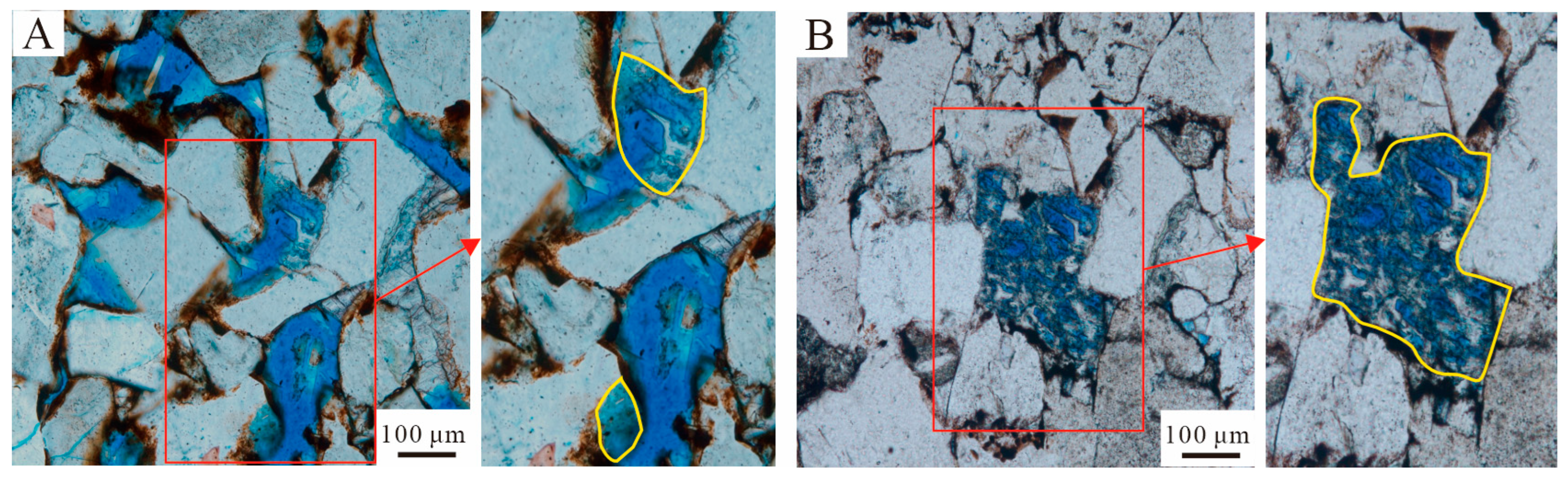
Authigenic silicate minerals in the study areas consist primarily of quartz and albite cements. The BZ8 and BZ9 reservoirs contain minimal quartz and albite cements, whereas the KS31 reservoir exhibits significantly higher silicate cement abundances. Authigenic cements in the studied reservoirs are predominantly sourced from intra-reservoir feldspar dissolution, which occurred in two discrete stages, i.e., meteoric water leaching associated with tectonic uplift, and organic acid dissolution during progressive burial. Although thin section analysis indicates comparable surface porosity of secondary dissolution pores in the two areas, this may not reflect the full intensity of original dissolution events. In the KS31 reservoir, a significant fraction of early-formed dissolution pores could be destroyed during subsequent intense tectonic compaction. In
Figure 15A, mineral grains of BZ8 and BZ9 reservoirs are dominated by point-line contacts, and dissolution pores retain regular geometric shapes with no obvious structural deformation. In comparison, obvious grain rearrangement can be observed in the KS31 reservoir (
Figure 15B), where some mineral grains are squeezed into preformed dissolution pores and remarkably distort original pore outlines. Such morphological variations directly confirm that early dissolution pores have been severely modified and shrunk under intense late tectonic compression in the KS31 area. Therefore, it is inferred that original dissolution in the KS31 reservoir is substantially more extensive than that in the BZ8 and BZ9 reservoirs. The KS31 reservoir developed a complex fracture network at both macro and micro scales, providing effective pathways for diagenetic fluid migration. These fractures facilitated the invasion of meteoric water during the early tectonic uplift stage and organic acid fluids during progressive burial, promoting multi-stage dissolution of feldspars. Extensive dissolution provided pore fluids enriched in silicon, sodium, and aluminum ions, thereby resulting in more precipitation of quartz overgrowths and albite cementation (
Figure 5). Overall, despite higher silicate cement content in the KS31 reservoir, the secondary pores generated by multi-stage intense dissolution can still provide the necessary pore space for effective reservoir development.
5.3. Reservoir Heterogeneity Characteristics at Anticline Scale
In addition to the regional variations in diagenesis, porosity, and physical properties among the BZ8, BZ9, and KS31 reservoirs, reservoirs within an individual structural unit also exhibit pronounced heterogeneity. This variability is closely linked to structural position within anticlines (e.g., core versus limb) and vertical distance to the regional unconformity. These factors exert profound control on ultimate reservoir characteristics by governing local stress field distribution, fracture intensity, and migration pathways of diagenetic fluid.
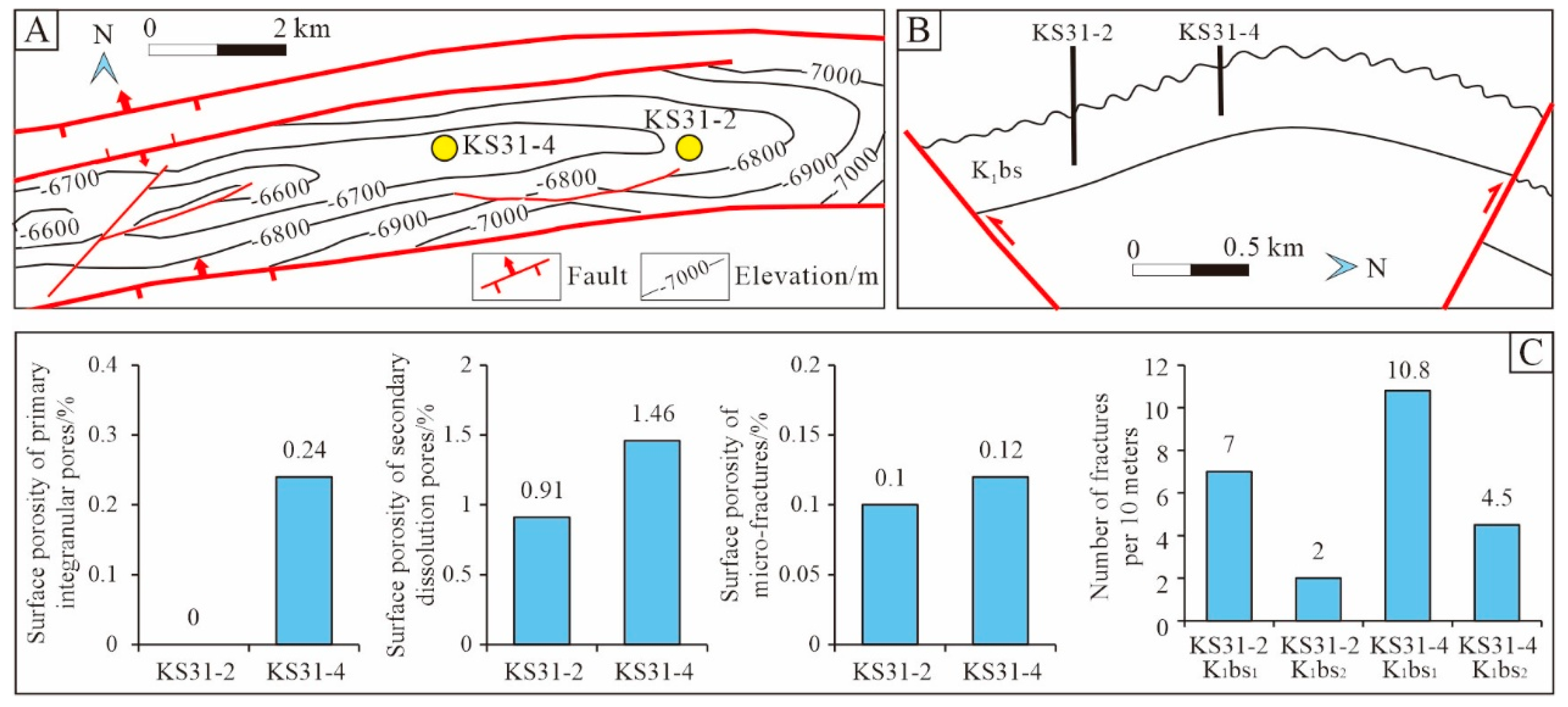
Taking the KS31 anticline as an example, systematic differences in reservoir characteristics are evident between the anticline core (well KS31-4) and limbs (well KS31-2) (
Figure 16A,B). The reservoir in the anticline core is characterized by high-density macro-fractures (10.8 fractures per 10 m of K
1bs
1), moderately developed micro-fractures (0.12%), and abundant secondary dissolution pores (1.46%). Although primary pores (0.24%) are much less than dissolution pores, their abundance is substantially higher than that in the anticline limb (
Figure 16C). In contrast, the reservoir in the anticline limb exhibits low-density macro-fractures (7 fractures per 10 m of K
1bs
1), moderately developed micro-fractures (0.10%), sparse secondary dissolution pores (0.91%), and negligible primary intergranular pores (
Figure 16C). The pronounced fracture development in the anticline core primarily reflects stress concentration during tectonic deformation. The core is the most intensely folded part, experiencing maximum bending stress and differential stress, and is therefore most susceptible to high-density tectonic fracturing. Analogous fracture distributions have been documented in the Bina Bawi Anticline of the Zagros Fold and Thrust Belt [
31], the Sheep Mountain Anticline of the Bighorn Basin [
32], and the Puig-reig Anticline of the Ebro Basin [
33].
The complex fracture network developed in the anticline core provides effective conduits for vertical and lateral fluid migration [
34]. Meteoric water and organic acids migrating along these fracture systems dissolve soluble minerals such as feldspar in fracture walls and adjacent matrix. This generates the higher secondary dissolution porosity observed in the core. Although the overall stress regime is compressional, local tensile stress fields develop in the upper part of the anticline core due to upward flexure of strata [
35]. This transition from compression-dominated to locally extensional stress regimes mitigates lateral tectonic compaction, enabling partial preservation of primary intergranular pores. Similar preservation of primary pores in anticline cores has been documented in deep high-quality reservoirs of the central anticline belt in the Xihu Sag [
36]. In contrast, the anticline limb has relatively weak tectonic deformation and remains under compressive stress, insufficient to generate a large-scale macro-fracture system. Continuous compressive stress superimposed on burial compaction results in almost complete destruction of primary intergranular pores.
Vertically, reservoir characteristics are also strongly controlled by proximity to the regional unconformity, especially fracture density. Although there are apparent numerical deviations between
Figure 12C and
Figure 16C, they are different statistical manifestations of the same measured data. In
Figure 12C, the pore content is the tested value of samples at single depth points, and fracture density refers to the number of fractures within every 10 m of strata. In
Figure 16C, the pore content is the average value of a single well, and fracture density represents the average fracture density of each stratigraphic section in individual wells. These figures all indicate that reservoirs near the regional unconformity surface possess relatively high fracture density, which generally decreases with the increase in burial depth. For the thick sandstone-dominated Bashijiqike Formation, tectonic compression during anticline development generates a neutral surface within the bending strata. The interval above this neutral surface experiences tensile stress, whereas the interval below is subjected to compressive stress [
37]. Tensile stress promotes the initiation and propagation of extension fractures, resulting in enhanced development of macro- and micro-fractures. Concurrently, the tensile stress regime facilitates the preservation of primary intergranular pores. In contrast, strata below the neutral surface lie within a compressive stress domain, which is unfavorable for fracture development and primary pore preservation.
6. Conclusions
This study investigates ultra-deep reservoirs of the Cretaceous Bashijiqike Formation in the Kelasu structural belt, Kuqa Depression, Tarim Basin. Based on the systematic analysis of reservoir petrology, diagenesis, physical property, and fracture characteristics, the development mechanisms and key controlling factors of ultra-deep effective reservoirs are elucidated.
(1) The BZ8 and BZ9 gas reservoirs are characterized by relatively abundant primary intergranular pores and sparse macro- and micro-fractures. Cements are dominated by dolomite and anhydrite. In contrast, the KS31 gas reservoir has negligible primary intergranular pores, with secondary dissolution pores as the dominant pores and high macro- and micro-fracture density.
(2) Differences in the evolutionary history of tectonic stress are a key factor contributing to reservoir heterogeneities. The BZ8 and BZ9 reservoirs experienced relatively weak tectonic compression, resulting in weak compaction and fracturing. The KS31 reservoir was subjected to strong tectonic compression and deformation, leading to more intensive tectonic compaction and fracturing. Differences in diagenetic fluids control cement mineralogy. The BZ8 and BZ9 reservoirs were predominantly influenced by lagoonal water, favoring dolomite and anhydrite cementation. The KS31 reservoir was significantly influenced by meteoric water, resulting in calcite-dominated cementation.
(3) In an individual anticline, the core undergoes intense tectonic deformation and fracturing. The fracture network can act as conduits for the invasion of acidic fluids that promoted feldspar dissolution and secondary pore generation. Furthermore, the outer strata above the neutral surface are in the condition of tensile stress that facilitates preservation of primary intergranular pores. In contrast, the constant compressive stress in the anticline limbs leads to undeveloped fractures, primary pores, and dissolution pores.
Author Contributions
Conceptualization, L.Z., X.S. and J.W.; methodology, L.Z., X.S., H.L., J.W. and Y.L.; formal analysis, L.Z., X.S. and H.L.; writing—original draft preparation, L.Z., X.S. and J.W.; writing—review and editing, Y.W., C.S., X.Z. and L.P.; project administration, L.Z. and J.W.; funding acquisition, L.Z., J.W. and Y.L. All authors have read and agreed to the published version of the manuscript.
Funding
This research was co-funded by the National Science and Technology Major Project for New-type Oil and Gas Exploration and Development (2025ZD140050203, 2025ZD140050205), the Natural Science Foundation of China (Grant No. 42172146), the Taishan Scholars Program of the Shandong Province (Grant No. tsqn202312111), the Formation Conditions and Favorable Zone Evaluation of Large and Medium-Sized Oil and Gas Fields in Ultra-Deep Clastic Rocks (2023ZZ14YJ01), and the Special Project of Fundamental Science Center (26CX05003A) at China University of Petroleum (East China).
Data Availability Statement
Data will be made available on request due to internal policy.
Acknowledgments
We are grateful to PetroChina Tarim Oilfield Company for permission to access their in-house databases.
Conflicts of Interest
The co-authors Lu Zhou, Hong Lou, Yuxin Wang, Chaoqun Shi, Xinyue Zhao and Li Peng were employed by companies PetroChina Tarim Oilfield Company and R&D Center of Ultra-Deep Complex Oil and Gas Reservoir Exploration and Development. The paper reflects the views of the scientists and not the company.
References
- Guo, X.; Hu, D.; Li, Y.; Duan, J.; Zhang, X.; Fan, X.; Duan, H.; Li, W. Theoretical Progress and Key Technologies of Onshore Ultra-Deep Oil/Gas Exploration. Engineering 2019, 5, 458–470. [Google Scholar] [CrossRef]
- He, D.; Ma, Y.; Liu, B.; Cai, X.; Zhang, Y.; Zhang, J. Main Advances and Key Issues for Deep-Seated Exploration in Petroliferous Basins in China. Earth Sci. Front. 2019, 26, 1–12. [Google Scholar] [CrossRef]
- Qi, Y.; Hu, Z.; Wang, J.; Zhang, F.; Wang, X.; Hu, H.; Wang, Q.; Wang, H. The Formation Mechanisms of Ultra-Deep Effective Clastic Reservoir and Oil and Gas Exploration Prospects. Appl. Sci. 2025, 15, 6984. [Google Scholar] [CrossRef]
- Cao, Y.; Yuan, G.; Yang, H.; Wang, Y.; Liu, K.; Zan, N.; Xi, K.; Wang, J. Current Situation of Oil and Gas Exploration and Research Progress of the Origin of High-Quality Reservoirs in Deep-Ultra-Deep Clastic Reservoirs of Petroliferous Basins. Acta Pet. Sin. 2022, 43, 112–140. [Google Scholar]
- Xu, X.; Zeng, L.; Dong, S.; Li, H.; Liu, J.; Ji, C. The Characteristics and Controlling Factors of High-quality Reservoirs of Ultra-Deep Tight Sandstone: A Case Study of the Dabei Gas Field, Tarim Basin, China. Pet. Sci. 2025, 22, 3473–3496. [Google Scholar] [CrossRef]
- Song, W.; Xu, Z.; Xu, H.; Wang, L.; Wang, Y. Integrated Lithofacies, Diagenesis, and Fracture Control on Reservoir Quality in Ultra-Deep Tight Sandstones: A Case from the Bashijiqike Formation, Kuqa Depression. Energies 2025, 18, 5067. [Google Scholar] [CrossRef]
- Hou, X.; Zhou, L.; Shen, L.; Lou, H.; Shi, C.; Cheng, M.; Shen, Y. Characteristics and Controlling Factors for the Ultra-Deep Clastic Reservoirs in Kuqa Depression. Deep Earth Energy Sci. Technol. 2025, 1, 12–24. [Google Scholar]
- Wang, R.; Gang, W.; Huang, Z.; Guo, X.; Pan, Y.; Zhao, L.; Mo, T. The Sources of Diagenetic Fluids and Diagenetic Evolution Model in Deep-to-Ultra-Deep Tight Sandstone Reservoirs: A Case Study From Bashijiqike Formation, Kalesu Belt, Kuqa Depression, Tarim Basin, NW, China. Geol. J. 2025. Online. [Google Scholar] [CrossRef]
- Wang, Z.; Lin, X.; Zhu, S.; Fan, J.; Zheng, Y. Coupling Relationships between Sedimentary Microfacies, Sand Bodies, and Tectonic Fracture Characteristics in Braided River Deltas: A Case Study of the Bashijiqike Formation in the Keshen 2 Area. Minerals 2023, 13, 1020. [Google Scholar] [CrossRef]
- Wang, Q.; Xu, Z.; Zhang, R.; Yang, H.; Yang, X. New Fields, New Types of Hydrocarbon Explorations and Their Resource Potentials in Tarim Basin. Acta Pet. Sin. 2024, 45, 15–32. [Google Scholar] [CrossRef]
- Wang, Q.; Yang, H.; Yang, W. New Progress and Future Exploration Direction in Oil and Gas Geological Research of Ultra-Deep Clastic Rocks in the Kuqa Depression, Tarim Basin, NW China. Pet. Explor. Dev. 2025, 52, 79–94. [Google Scholar] [CrossRef]
- Yu, H.; Qi, J.; Yang, X.; Liu, Q.; Cao, S.; Fan, S.; Sun, T.; Yang, X. The Mesozoic Tectonic Palaeogeographic Analysis in Kuqa Depression of Tarim Basin. Geol. J. China Univ. 2016, 22, 657–669. [Google Scholar] [CrossRef]
- He, Z.; Chen, C.; Wu, C.; Shi, S.; Mo, T.; Liu, M.; Chen, E.; Wang, Y. Quantitative Reconstruction of Phase States and Evolution of Condensate and Gas in the Western Kelasu Thrust Belt, Kuqa Depression, Tarim Basin. Sci. Rep. 2025, 15, 19305. [Google Scholar] [CrossRef]
- Yang, H.; Wang, J.; Mo, T.; Li, Z.; Zhu, W.; Wang, S.; Ding, H.; Ran, Y. Genetic Mechanism of Albite Cements in Bashijiqike Formation Reservoirs of Kelasu Structural Belt, Kuqa Depression. J. China Univ. Pet. (Ed. Nat. Sci.) 2024, 48, 15–24. [Google Scholar] [CrossRef]
- Wang, S.; Wang, J.; Li, Y.; Wang, A.; Chen, M.; Liu, K. Evolution of Petrophysical Properties and Coupled Hydraulic-Mechanical Modelling for Fault-Related Anticline Reservoirs: Example from Cretaceous Reservoirs in the Kelasu Structural Belt, Kuqa Depression. J. Northeast. Pet. Univ. 2025, 49, 30–45. [Google Scholar]
- Xiao, J.; Lin, C.; Liu, J. Depositional Palaeogeography of Cretaceous of Kuqa Depression in NorthernTarim Basin. Geoscience 2005, 19, 253–260. [Google Scholar]
- Zhao, J.; Cheng, X.; Chen, W.; Zhang, P.; Pan, Y.; Chen, L.; Xiao, W.; Fan, K.; Wei, J. Characteristics and Numerical Simulation Analysis of Subsalt Overthrust Belts in the Middle of Kelasu Structural Belt, Kuqa Depression. Earth Sci.-J. China Univ. Geosci. 2026, 51, 317–328. [Google Scholar]
- Li, J.; Zhang, C.; Li, J.; Xiao, C.; Yuan, S. Tectonic Compaction and Its Influence on Reservoirs in the Kuqa Foreland Basin, Tarim. Pet. Explor. Dev. 2011, 38, 47–51. [Google Scholar]
- Wang, C.; Zhong, D.; Mo, T.; Sun, H. A Stress-Controlled Reservoir Formation Model for Ultra-Deep Sandstones in Foreland Thrust Belts: Case Study of the Cretaceous Bashijiqike Formation, Bozi-Dabei Area, Kuqa Depression, Tarim Basin. Sci. Rep. 2026, 16, 11432. [Google Scholar] [CrossRef]
- Lai, J.; Li, D.; Ai, Y.; Liu, H.; Cai, D.; Chen, K.; Xie, Y.; Wang, G. Structural Diagenesis in Ultra-Deep Tight Sandstones in the Kuqa Depression, Tarim Basin, China. Solid Earth 2022, 13, 975–1002. [Google Scholar] [CrossRef]
- Li, Y.; Guo, S.; Wang, X.; Hou, Y.; Neng, Y.; Wang, Z.; Zhou, L.; Yang, W.; Tan, C. Stratification Model of an Ultra-Deep Tight Sandstone Fracture Reservoir under Tectonic Stress: A Case Study of a Cretaceous Reservoir in the Kuqa Foreland Thrust Belt of the Tarim Basin. J. Nat. Gas Sci. Eng. 2017, 45, 53–64. [Google Scholar] [CrossRef]
- Zhang, F.; Gingras, M.; Shan, C.; Lu, X.; Zhuo, Q.; Zhong, H. The Effect of Coupling of Tectonic Compression and Overpressure on Porosity of Deep Reservoirs: A Case Study of Southern Margin of Junggar Basin, Northwest China. Front. Earth Sci. 2023, 11, 1220105. [Google Scholar] [CrossRef]
- Wang, Z.; Lü, X.; Wang, S.; Li, Y.; Zhou, X.; Quan, H.; Li, R. Fracture Systems and Petrophysical Properties of Tight Sandstone Undergoing Regional Folding: A Case Study of the Cretaceous Reservoirs in the Kuqa Foreland Thrust Belt, Tarim Basin. Mar. Pet. Geol. 2020, 112, 104055. [Google Scholar] [CrossRef]
- Yue, D.; Wu, S.; Xu, Z.; Xiong, L.; Chen, D.; Ji, Y.; Zhou, Y. Reservoir Quality, Natural Fractures, and Gas Productivity of Upper Triassic Xujiahe Tight Gas Sandstones in Western Sichuan Basin, China. Mar. Pet. Geol. 2018, 89, 370–386. [Google Scholar] [CrossRef]
- Sun, X.; Alcalde, J.; Gomez-Rivas, E.; Owen, A.; Griera, A.; Martín-Martín, J.D.; Cruset, D.; Travé, A. Fluvial Sedimentation and Its Reservoir Potential at Foreland Basin Margins: A Case Study of the Puig-Reig Anticline (South-Eastern Pyrenees). Sediment. Geol. 2021, 424, 105993. [Google Scholar] [CrossRef]
- Wang, L.; Han, D.; Wang, C.; Yuan, R.; Lin, W.; Zhang, J. Characteristics of Pore-Fracture Filling and Fluid Source of Cretaceous Bashijiqike Formation in Keshen Well Block, Kuqa Depression. Lithol. Reserv. 2022, 34, 49–59. [Google Scholar]
- Conybeare, D.M.; Shaw, H.F. Fracturing, Overpressure Release and Carbonate Cementation in the Everest Complex, North Sea. Clay Miner. 2000, 35, 135–149. [Google Scholar] [CrossRef]
- Wang, S.; Wang, J.; Liu, K.; Li, Y.; Li, Z.; Chen, M. Marine Flooding Induced Basinal Brine Mixing and Carbonate Cementation: An Example from Cretaceous Ultra-Deep Clastic Reservoirs in the Kuqa Depression, Western China. Mar. Pet. Geol. 2025, 182, 107561. [Google Scholar] [CrossRef]
- Li, L.; Tang, H.; Wang, X.; Liao, J.; Qi, B.; Zhao, F.; Zhang, L.; Feng, W.; Tang, H.; Shi, L. Evolution of Diagenetic Fluid of Ultra-Deep Cretaceous Bashijiqike Formation in Kuqa Depression. J. Cent. South Univ. 2018, 25, 2472–2495. [Google Scholar] [CrossRef]
- Guo, X.; Ding, X.; He, X.; Li, H.; Su, X.; Peng, Y. New Progress in the Study of Marine Transgressional Events and Marine Strata of the Meso-Cenozoic in the Tarim Basin. Acta Geol. Sin. 2002, 76, 299–307. [Google Scholar]
- Awdal, A.H.; Braathen, A.; Wennberg, O.P.; Sherwani, G.H. The Characteristics of Fracture Networks in the Shiranish Formation of the Bina Bawi Anticline; Comparison with the Taq Taq Field, Zagros, Kurdistan, NE Iraq. Pet. Geosci. 2013, 19, 139–155. [Google Scholar] [CrossRef]
- Bellahsen, N.; Fiore, P.; Pollard, D.D. From Spatial Variation of Fracture Patterns to Fold Kinematics: A Geomechanical Approach. Geophys. Res. Lett. 2006, 33, L02301. [Google Scholar] [CrossRef]
- Sun, X.; Gomez-Rivas, E.; Alcalde, J.; Martín-Martín, J.D.; Ma, C.; Muñoz-López, D.; Cruset, D.; Cantarero, I.; Griera, A.; Travé, A. Fracture Distribution in a Folded Fluvial Succession: The Puig-Reig Anticline (South-Eastern Pyrenees). Mar. Pet. Geol. 2021, 132, 105169. [Google Scholar] [CrossRef]
- Cruset, D.; Cantarero, I.; Travé, A.; Vergés, J.; John, C.M. Crestal Graben Fluid Evolution during Growth of the Puig-Reig Anticline (South Pyrenean Fold and Thrust Belt). J. Geodyn. 2016, 101, 30–50. [Google Scholar] [CrossRef]
- Carminati, E.; Scrocca, D.; Doglioni, C. Compaction-Induced Stress Variations with Depth in an Active Anticline: Northern Apennines, Italy. J. Geophys. Res. 2010, 115, B02401. [Google Scholar] [CrossRef]
- Zheng, J. Porosity Preservation of Deeply Buried and High-Quality Reservoirs in the North and Middle Part of Central Anticlinal Zone, XihuSag. Geol. Sci. Technol. Inf. 2016, 35, 173–179. [Google Scholar]
- Tohid, S.; Fossen, H. Earth-Science Reviews Fold Geometry and Folding-a Review. Earth-Sci. Rev. 2021, 222, 103812. [Google Scholar] [CrossRef]
Figure 2.
Lithological characteristics of ultra-deep reservoirs in the Bashijiqike Formation: (A) lithofacies association of KS31-1 well; (B) medium sandstone; (C) medium sandstone with mudstone rip-up clasts; (D) mudstone; (E) siltstone.
Figure 2.
Lithological characteristics of ultra-deep reservoirs in the Bashijiqike Formation: (A) lithofacies association of KS31-1 well; (B) medium sandstone; (C) medium sandstone with mudstone rip-up clasts; (D) mudstone; (E) siltstone.
Figure 3.
Rock composition characteristics of ultra-deep reservoirs in the Bashijiqike Formation: (A) BZ8 and BZ9 area; (B) KS31 area.
Figure 3.
Rock composition characteristics of ultra-deep reservoirs in the Bashijiqike Formation: (A) BZ8 and BZ9 area; (B) KS31 area.
Figure 4.
Diagenetic characteristics of ultra-deep reservoirs in the Bashijiqike Formation: (A) hematite cementation in SEM image; (B,C) quartz and feldspar cementation in plane-polarized light and cross-polarized light images, respectively; (D,E) feldspar, calcite and early gypsum cementation (transformation to anhydrite during the subsequent diagenetic processes) in cross-polarized light and cathodoluminescence images, respectively; (F) calcite and dolomite cementation in SEM image; (G) authigenic illite in SEM image; (H,I) Fe-dolomite and late anhydrite cementation in plane-polarized light and cross-polarized light images, respectively.
Figure 4.
Diagenetic characteristics of ultra-deep reservoirs in the Bashijiqike Formation: (A) hematite cementation in SEM image; (B,C) quartz and feldspar cementation in plane-polarized light and cross-polarized light images, respectively; (D,E) feldspar, calcite and early gypsum cementation (transformation to anhydrite during the subsequent diagenetic processes) in cross-polarized light and cathodoluminescence images, respectively; (F) calcite and dolomite cementation in SEM image; (G) authigenic illite in SEM image; (H,I) Fe-dolomite and late anhydrite cementation in plane-polarized light and cross-polarized light images, respectively.
Figure 5.
Cement contents of ultra-deep reservoirs in the Bashijiqike Formation: (A) BZ8 and BZ9 area; (B) KS31 area (n = number of samples).
Figure 5.
Cement contents of ultra-deep reservoirs in the Bashijiqike Formation: (A) BZ8 and BZ9 area; (B) KS31 area (n = number of samples).
Figure 6.
Storage space characteristics of ultra-deep reservoirs in the Bashijiqike Formation: (A) primary intergranular pores of the BZ9 reservoir; (B) secondary dissolution pores of the KS31 reservoir; (C) micro-facture and dissolution pores of the KS31 reservoir; (D) refracturing of early vein of the KS31 reservoir.
Figure 6.
Storage space characteristics of ultra-deep reservoirs in the Bashijiqike Formation: (A) primary intergranular pores of the BZ9 reservoir; (B) secondary dissolution pores of the KS31 reservoir; (C) micro-facture and dissolution pores of the KS31 reservoir; (D) refracturing of early vein of the KS31 reservoir.
Figure 7.
Surface porosity of pores and micro-fractures of ultra-deep reservoirs in the Bashijiqike Formation: (A) BZ8 and BZ9 area; (B) KS31 area (n = number of samples).
Figure 7.
Surface porosity of pores and micro-fractures of ultra-deep reservoirs in the Bashijiqike Formation: (A) BZ8 and BZ9 area; (B) KS31 area (n = number of samples).
Figure 8.
Porosity and permeability correlation and permeability distribution of ultra-deep reservoirs in the Bashijiqike Formation: (A) BZ8 and BZ9 area; (B) KS31 area (n = number of samples).
Figure 8.
Porosity and permeability correlation and permeability distribution of ultra-deep reservoirs in the Bashijiqike Formation: (A) BZ8 and BZ9 area; (B) KS31 area (n = number of samples).
Figure 9.
Macro-fracture characteristics of ultra-deep reservoirs in the Bashijiqike Formation of the KS31-4 well: (A) unfilled shear fracture in core and imaging logging images; (B) fully filled shear fracture; (C) unfilled tension fracture in core and imaging logging images; (D) partially filled tension fracture.
Figure 9.
Macro-fracture characteristics of ultra-deep reservoirs in the Bashijiqike Formation of the KS31-4 well: (A) unfilled shear fracture in core and imaging logging images; (B) fully filled shear fracture; (C) unfilled tension fracture in core and imaging logging images; (D) partially filled tension fracture.
Figure 10.
Fracture interpretation results from image logging of ultra-deep reservoirs in the Bashijiqike Formation of the BZ9 well.
Figure 10.
Fracture interpretation results from image logging of ultra-deep reservoirs in the Bashijiqike Formation of the BZ9 well.
Figure 11.
Fracture interpretation results from image logging of ultra-deep reservoirs in the Bashijiqike Formation of the KS31-4 well.
Figure 11.
Fracture interpretation results from image logging of ultra-deep reservoirs in the Bashijiqike Formation of the KS31-4 well.
Figure 12.
Effect of regional stress on reservoir characteristics: (A) distribution of maximum effective paleo-stress; (B) reservoir pore and fracture characteristics of the BZ8 and BZ9 gas reservoirs; (C) reservoir pore and fracture characteristics of the KS31 gas reservoir.
Figure 12.
Effect of regional stress on reservoir characteristics: (A) distribution of maximum effective paleo-stress; (B) reservoir pore and fracture characteristics of the BZ8 and BZ9 gas reservoirs; (C) reservoir pore and fracture characteristics of the KS31 gas reservoir.
Figure 13.
Late-formed fractures have no significant diagenetic influence on adjacent reservoirs: (A) fracture core image; (B,C) no obvious dissolution and cementation on fracture walls in plane-polarized light and cross-polarized light images.
Figure 13.
Late-formed fractures have no significant diagenetic influence on adjacent reservoirs: (A) fracture core image; (B,C) no obvious dissolution and cementation on fracture walls in plane-polarized light and cross-polarized light images.
Figure 14.
Areas flooded by the Tethys Ocean transgression in the Tarim Basin during the Late Cretaceous (
A) and the Paleocene (
B) [
30].
Figure 14.
Areas flooded by the Tethys Ocean transgression in the Tarim Basin during the Late Cretaceous (
A) and the Paleocene (
B) [
30].
Figure 15.
Differences in dissolution pore morphology in plane-polarized light images: (A) BZ8 and BZ9 area; (B) KS31 area.
Figure 15.
Differences in dissolution pore morphology in plane-polarized light images: (A) BZ8 and BZ9 area; (B) KS31 area.
Figure 16.
Reservoir differences between anticline core and limb in the KS31 gas reservoir: (A,B) planar and profile positions of key wells; (C) reservoir pore and fracture characteristics.
Figure 16.
Reservoir differences between anticline core and limb in the KS31 gas reservoir: (A,B) planar and profile positions of key wells; (C) reservoir pore and fracture characteristics.
| Disclaimer/Publisher’s Note: The statements, opinions and data contained in all publications are solely those of the individual author(s) and contributor(s) and not of MDPI and/or the editor(s). MDPI and/or the editor(s) disclaim responsibility for any injury to people or property resulting from any ideas, methods, instructions or products referred to in the content. |




 and
and