Article

Three-D Mineralogical Mapping of the Kovdor Phoscorite-Carbonatite Complex, NW Russia: II. Sulfides


by
Gregory Yu. Ivanyuk
1,2,*,
Yakov A. Pakhomovsky
1,2,
Taras L. Panikorovskii
1,
Julia A. Mikhailova
1,2,
Andrei O. Kalashnikov
2,
Ayya V. Bazai
1,2,
Victor N. Yakovenchuk
1,2,
Nataly G. Konopleva
1 and
Pavel M. Goryainov
2
1
Nanomaterials Research Centre of Kola Science Centre, Russian Academy of Sciences, 14 Fersman Street, Apatity 184209, Russia
2
Geological Institute of Kola Science Centre, Russian Academy of Sciences, 14 Fersman Street, Apatity 184209, Russia
*
Author to whom correspondence should be addressed.
Minerals 2018, 8(7), 292; https://doi.org/10.3390/min8070292
Submission received: 30 May 2018 / Revised: 4 July 2018 / Accepted: 5 July 2018 / Published: 9 July 2018
(This article belongs to the Special Issue Arctic Mineral Resources: Science and Technology)

Abstract

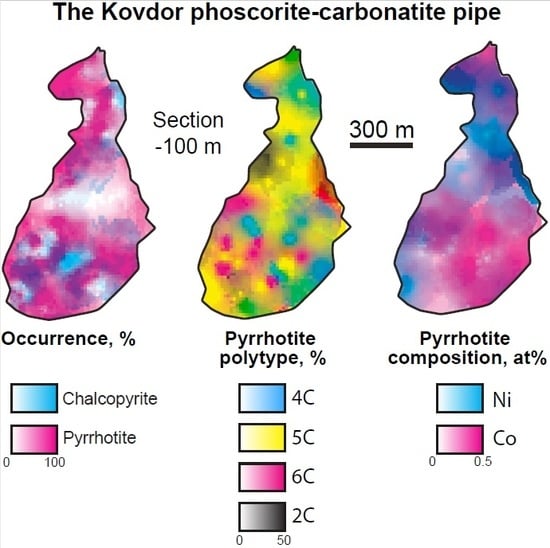
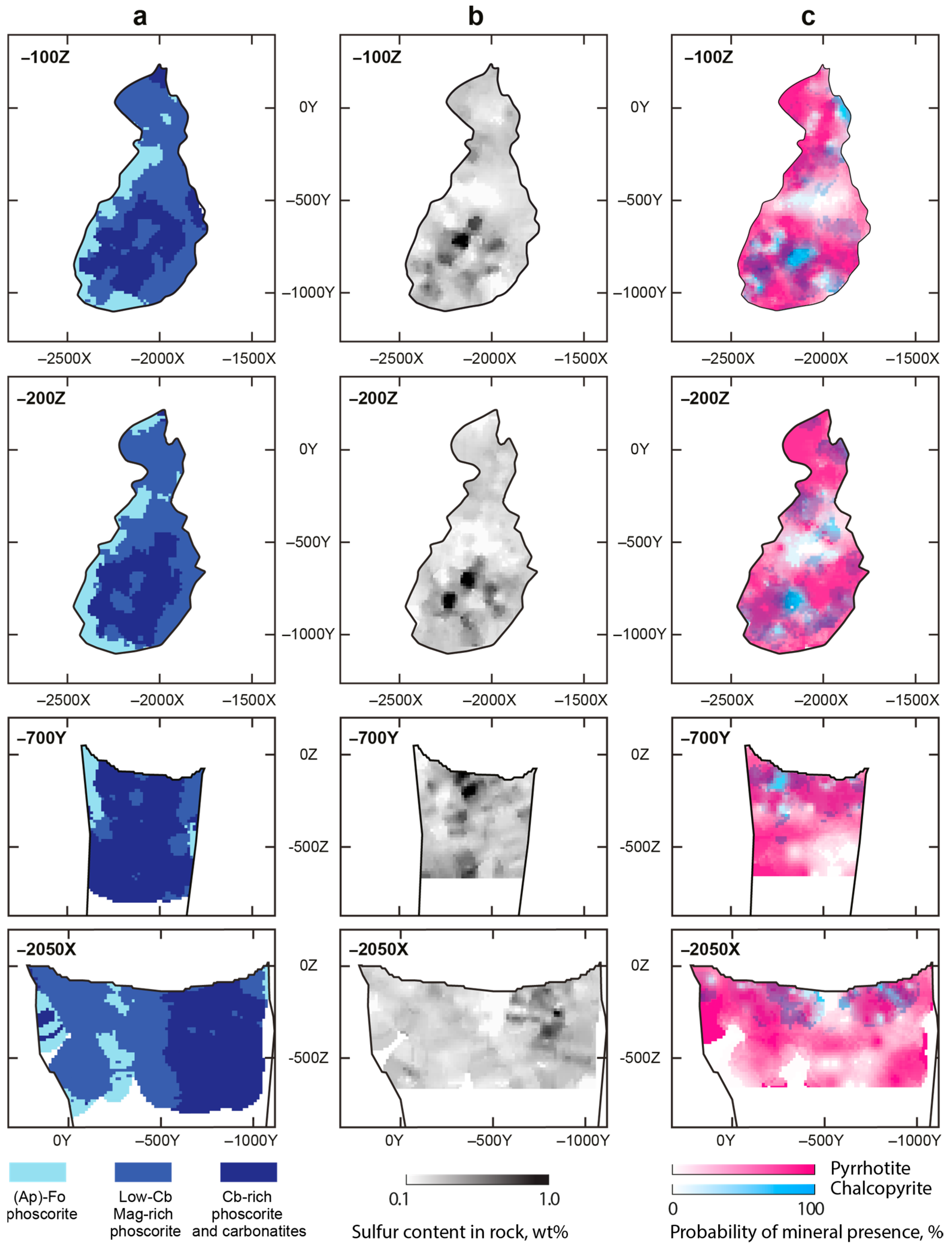
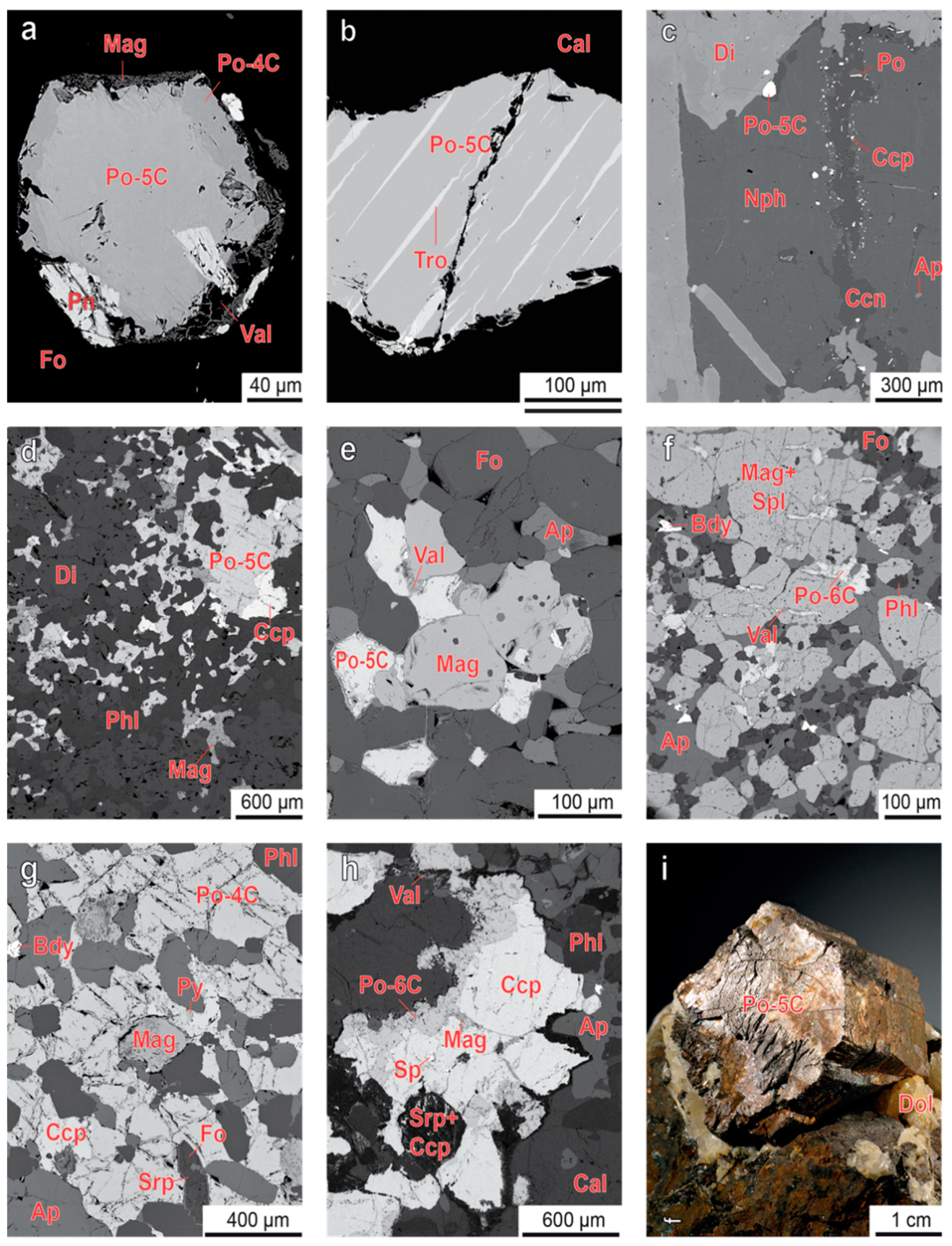
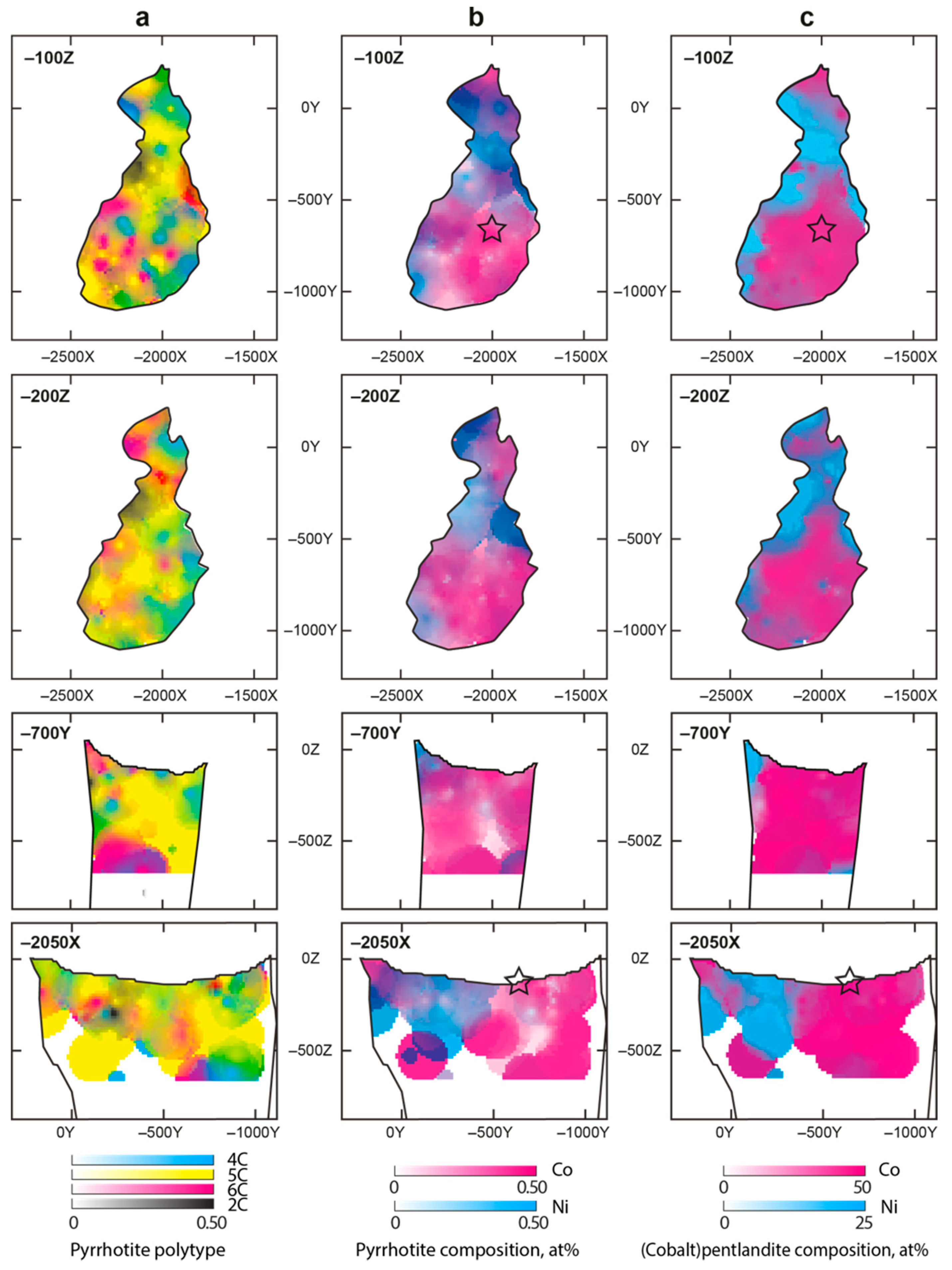
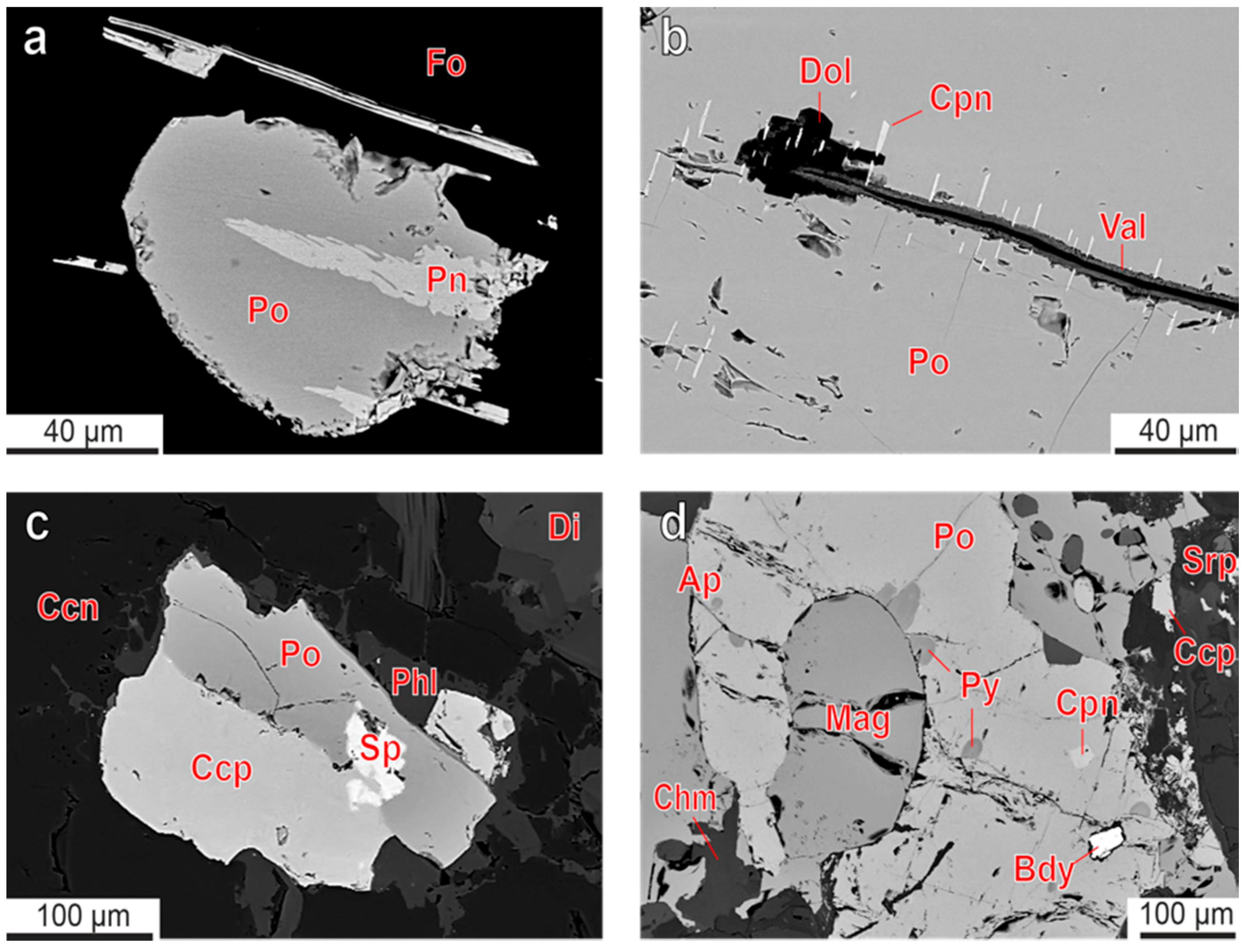
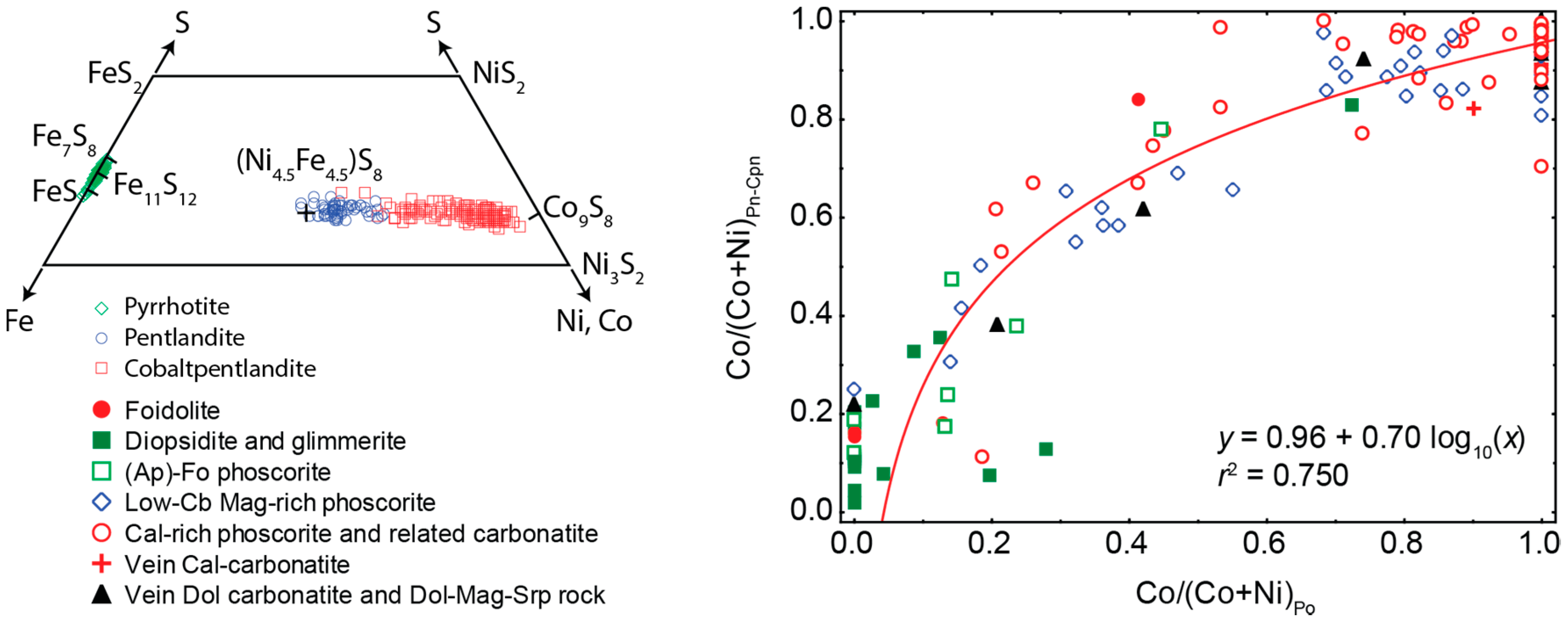
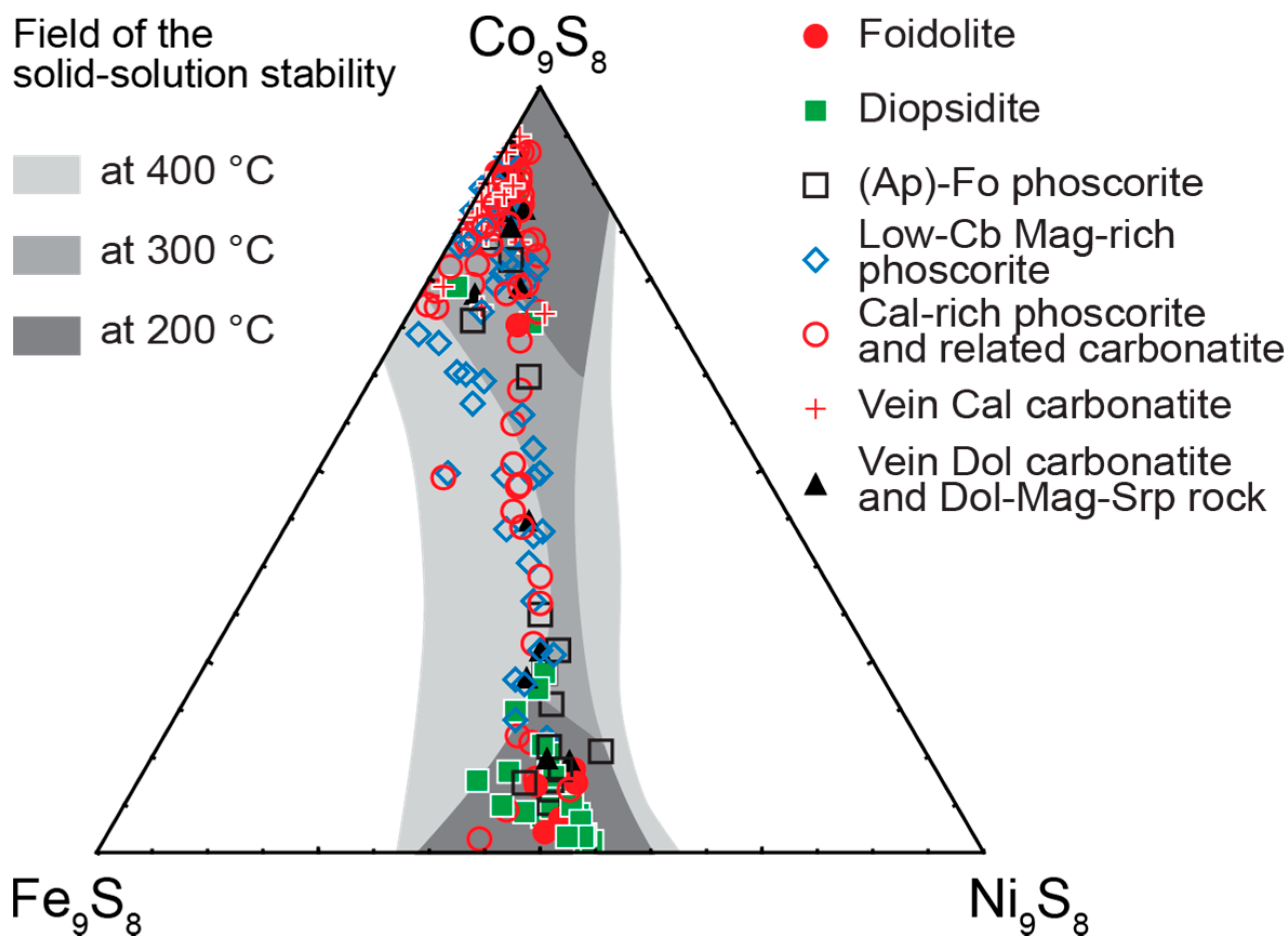
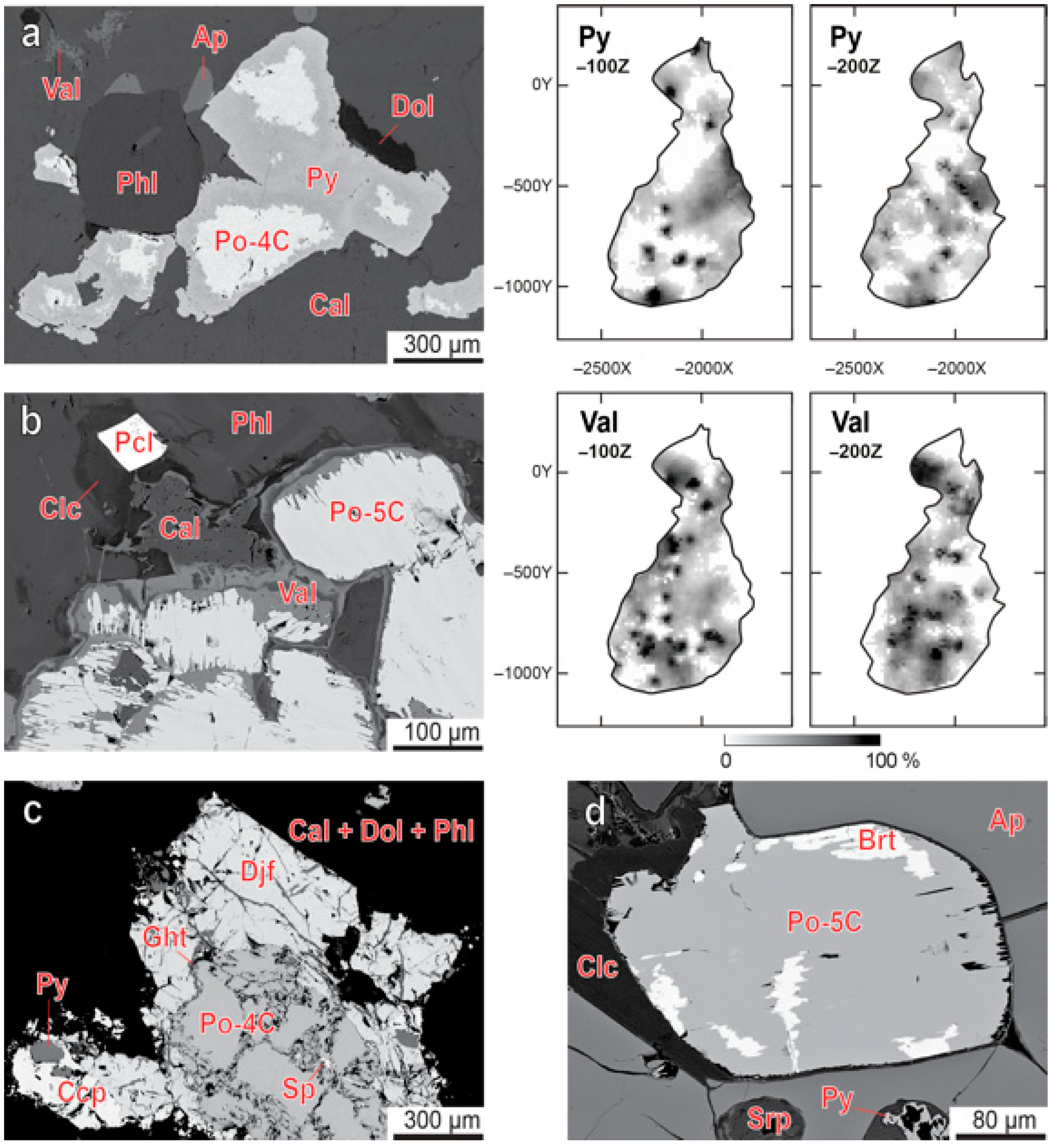
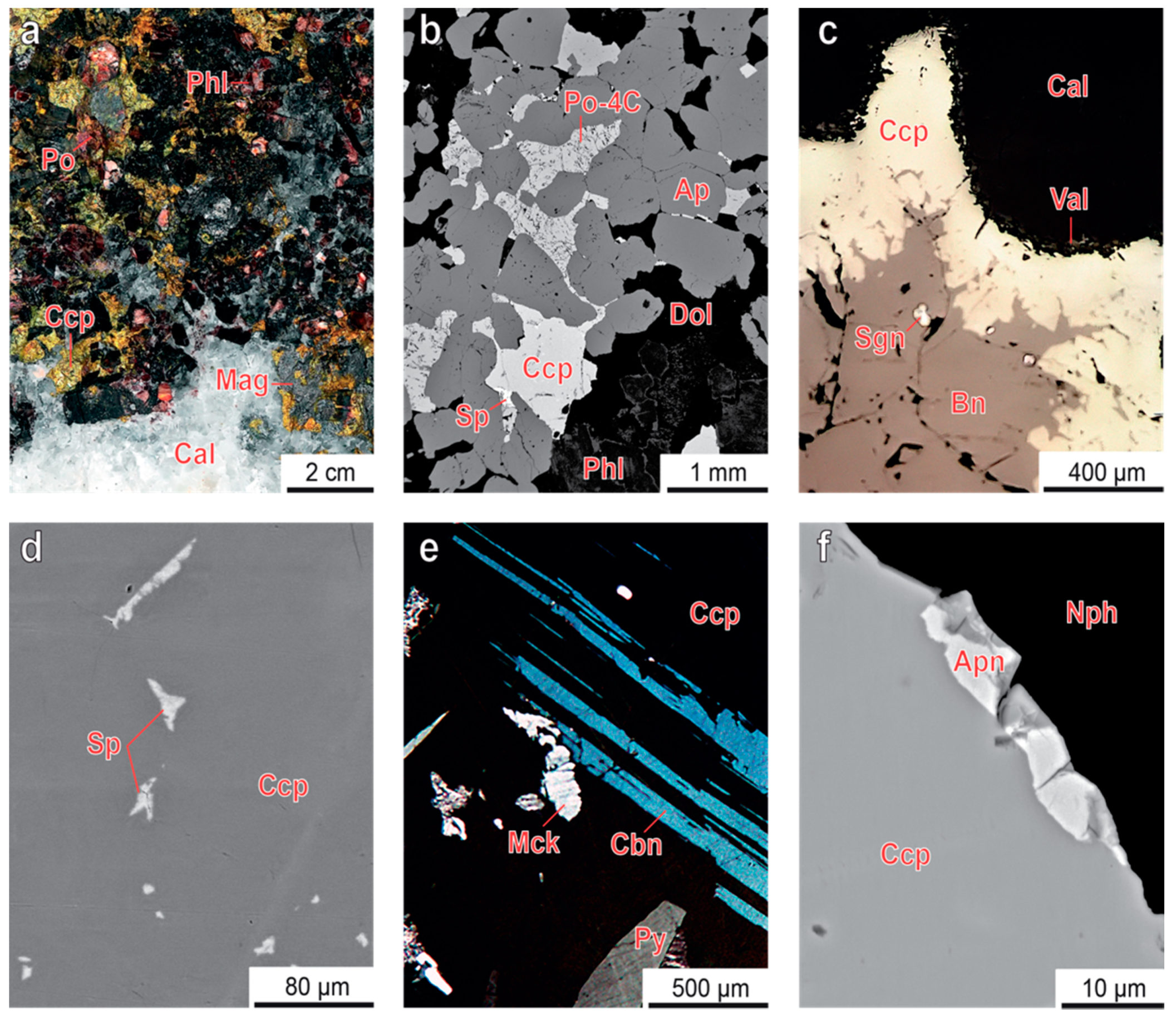
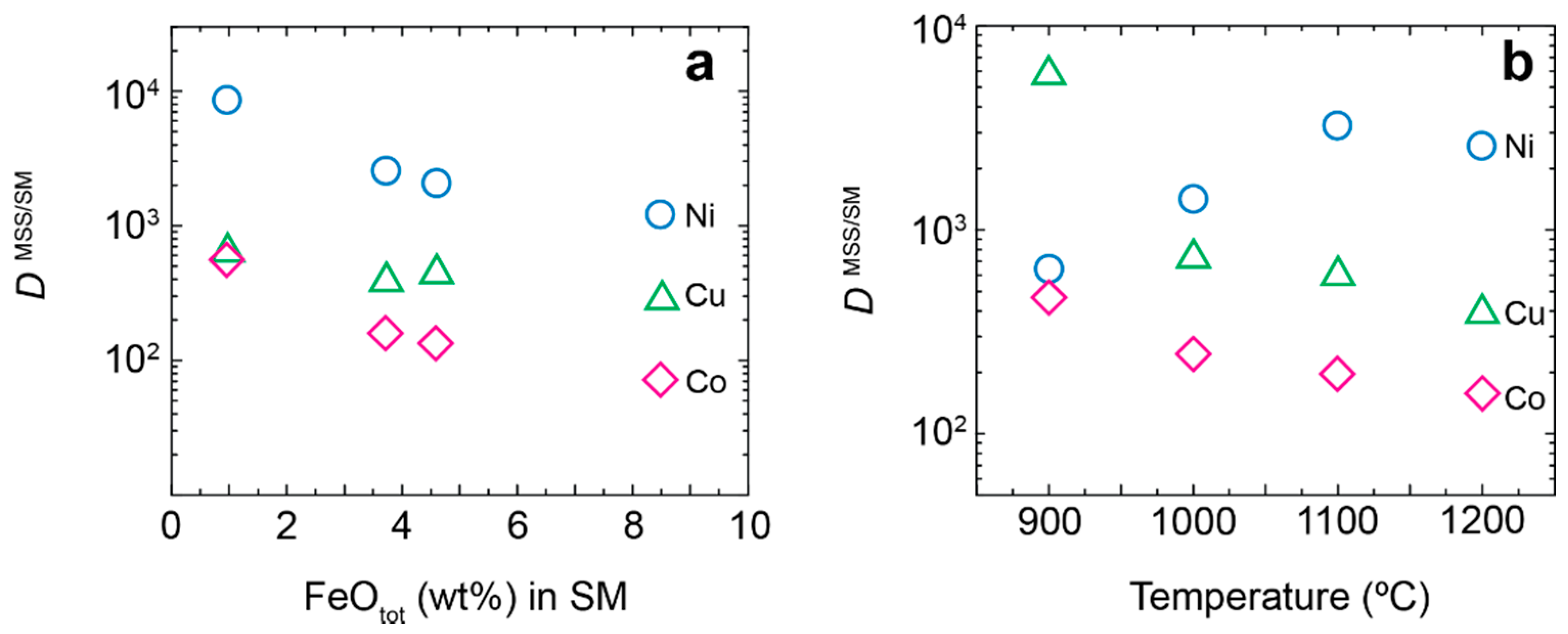
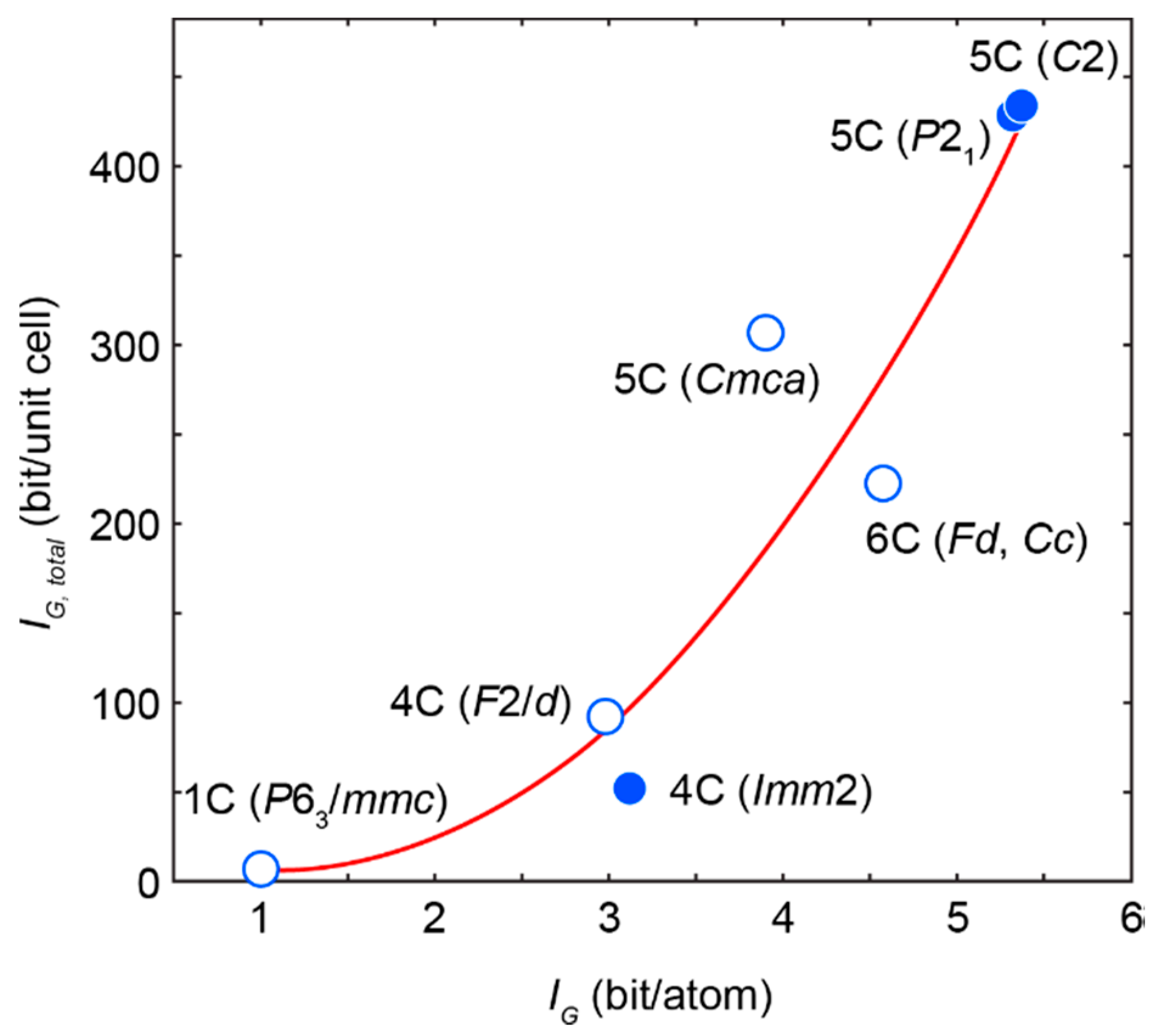
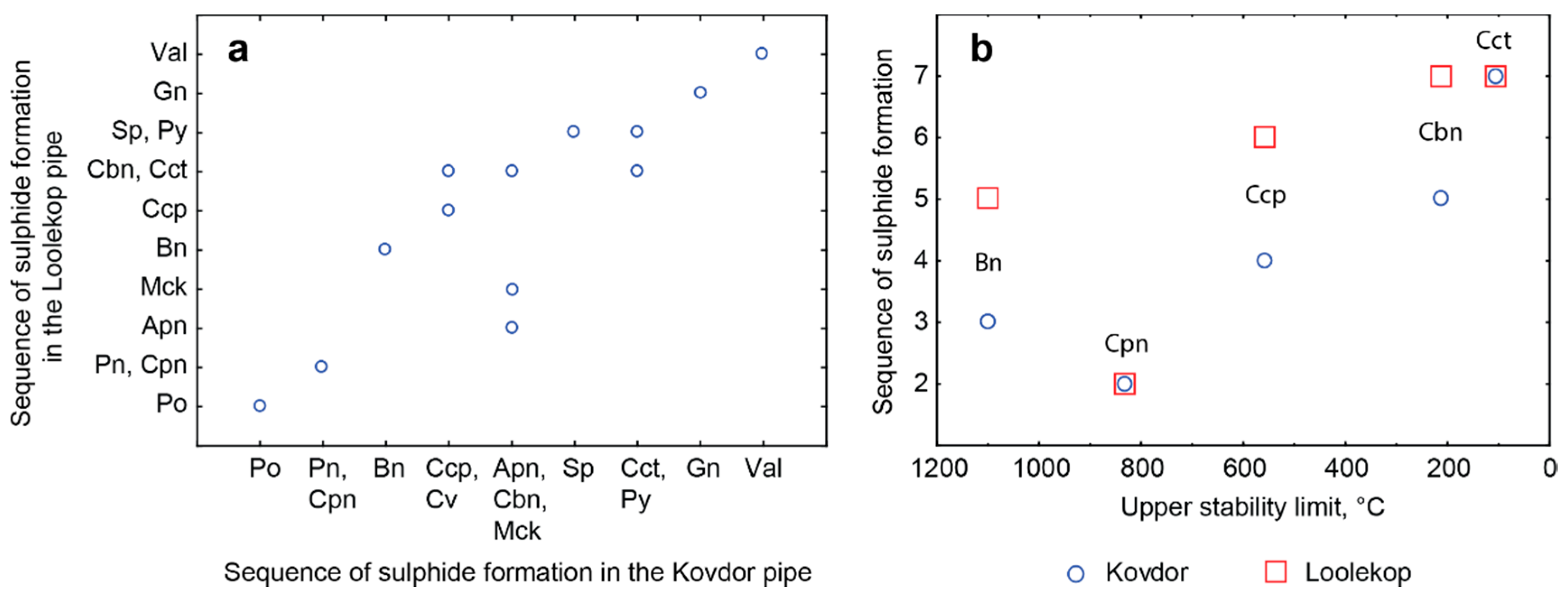
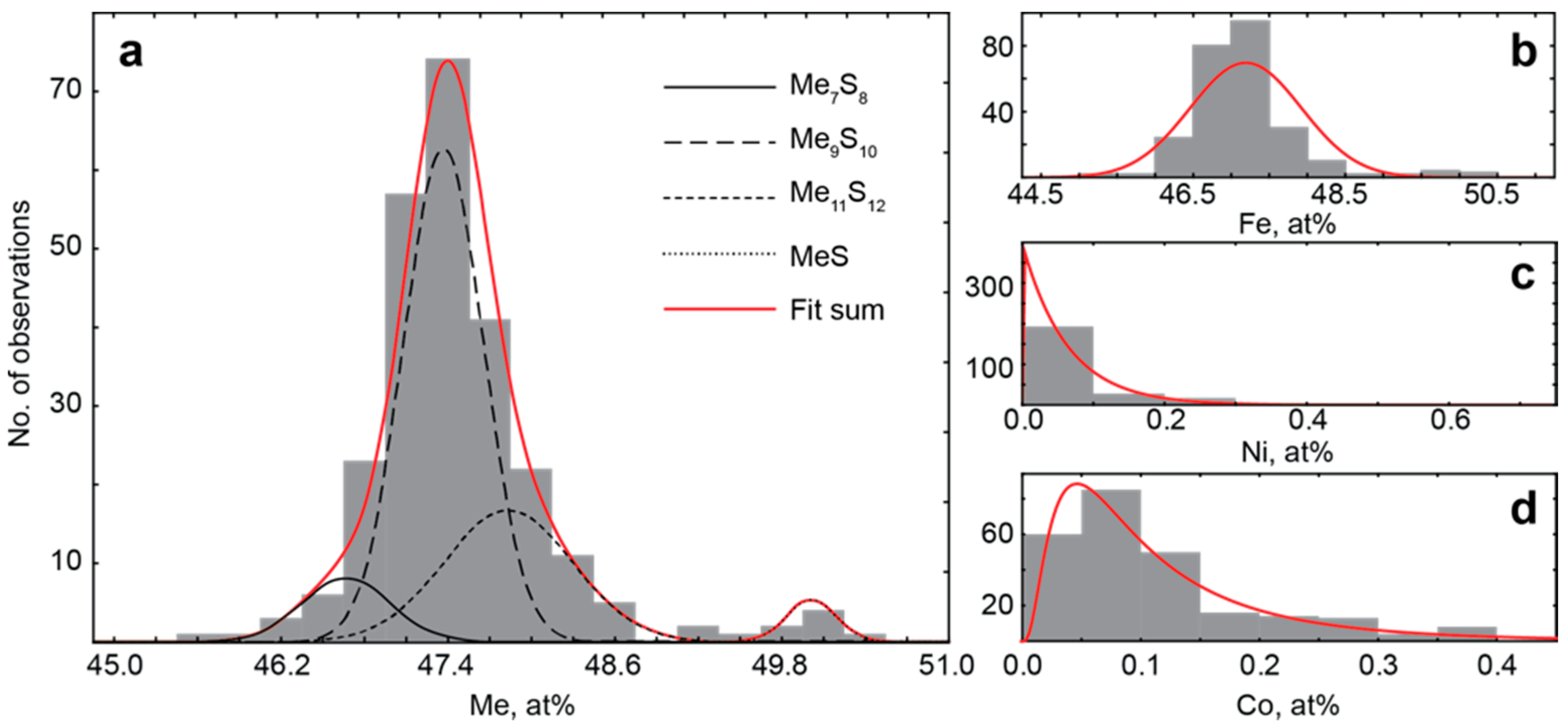
The world largest phoscorite-carbonatite complexes of the Kovdor (Russia) and Palabora (South Africa) alkaline-ultrabasic massifs have comparable composition, structure and metallogenic specialization, and can be considered close relatives. Distribution of rock-forming sulfides within the Kovdor phoscorite-carbonatite complex reflects gradual concentric zonation of the pipe: pyrrhotite with exsolution inclusions of pentlandite in marginal (apatite)-forsterite phoscorite, pyrrhotite with exsolution inclusions of cobaltpentlandite in intermediate low-carbonate magnetite-rich phoscorite and chalcopyrite (±pyrrhotite with exsolution inclusions of cobaltpentlandite) in axial carbonate-rich phoscorite and phoscorite-related carbonatite. Chalcopyrite (with relicts of earlier bornite and exsolution inclusions of cubanite and mackinawite) predominates in the axial carbonate-bearing phoscorite and carbonatite, where it crystallizes around grains of pyrrhotite (with inclusions of pentlandite-cobaltpentlandite and pyrite), and both of these minerals contain exsolution inclusions of sphalerite. In natural sequence of the Kovdor rocks, iron content in pyrrhotite gradually increases from Fe7S8 (pyrrhotite-4C, Imm2) to Fe9S10 (pyrrhotite-5C, C2 and P21) and Fe11S12 (pyrrhotite-6C) due to gradual decrease of crystallization temperature and oxygen fugacity. Low-temperature pyrrhotite 2C (troilite) occurs as lens-like exsolition inclusions in grains of pyrrhotite-4C (in marginal phoscorite) and pyrrhotite-5C (in axial phoscorite-related carbonatite). Within the phoscorite-carbonatite complex, Co content in pyrrhotite gradually increases from host silicate rocks and marginal forsterite-dominant phoscorite to axial carbonate-rich phoscorite and carbonatite at the expense of Ni and Fe. Probably, this dependence reflects a gradually decreasing temperature of the primary monosulfide solid solutions crystallization from the pipe margin toward its axis. The Kovdor and Loolekop phoscorite-carbonatite pipes in the Palabora massif have similar sequences of sulfide formation, and the copper specialization of the Palabora massif can be caused by higher water content in its initial melt allowing it to dissolve much larger amounts of sulfur and, correspondingly, chalcophile metals.
Keywords: pyrrhotite; chalcopyrite; pentlandite; cobaltpentlandite; typochemistry; crystal structure; Kovdor phoscorite-carbonatite complex pyrrhotite; chalcopyrite; pentlandite; cobaltpentlandite; typochemistry; crystal structure; Kovdor phoscorite-carbonatite complex
Graphical Abstract