
Block Sequencing Using Geometallurgical Parameters in Stochastic Short-Term Models
 , and
, and
Abstract
1. Introduction
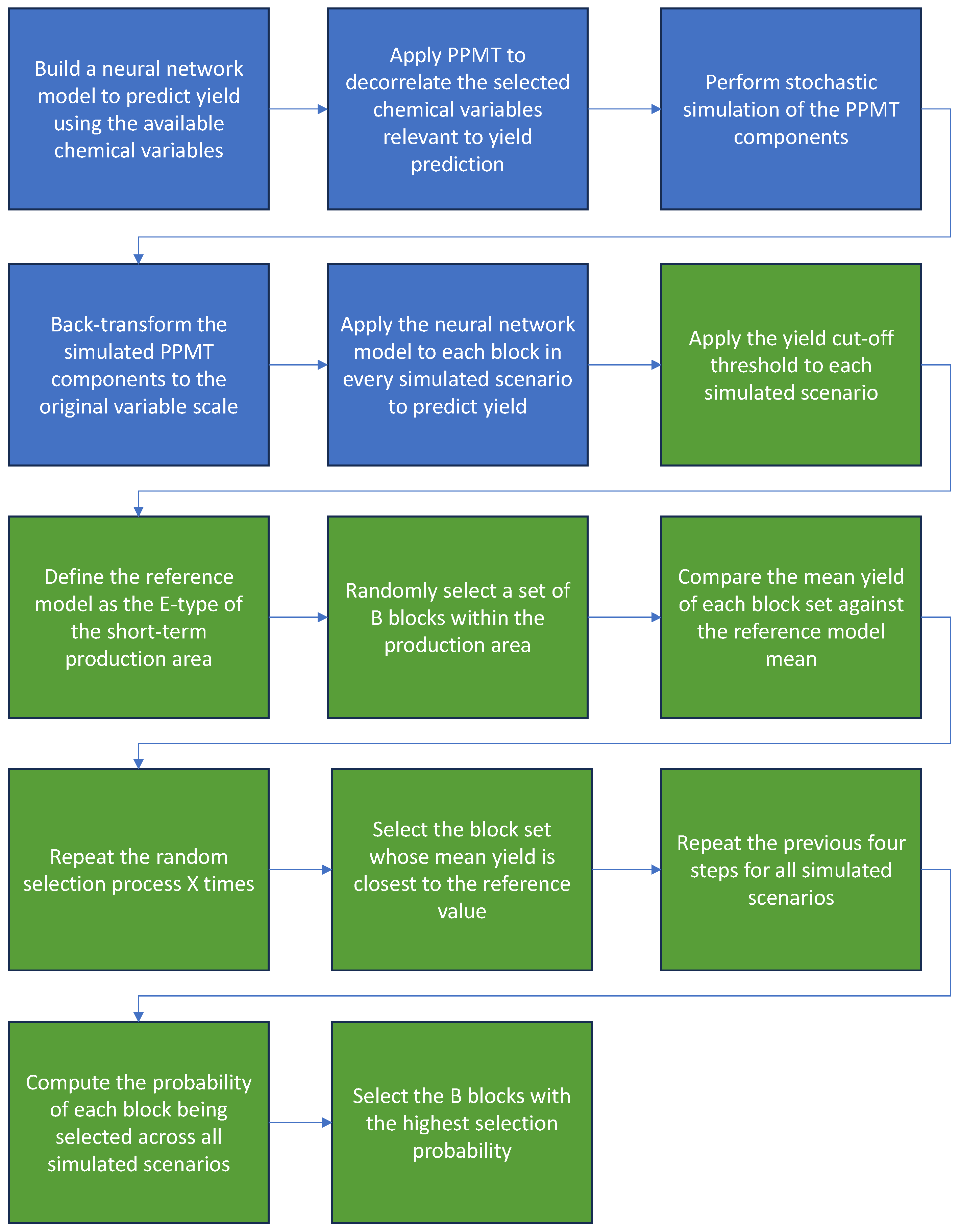
Proposed Workflow
2. Methodology
2.1. Projection Pursuit Multivariate Transform
- (i)
- Transformation to Gaussian space: An additional preprocessing step transforms the data into Gaussian space, minimizing the influence of outliers.
- (ii)
- Data orthogonalization (data sphering): The data is analyzed using a method similar to Principal Component Analysis (PCA). This involves rotations and scaling to remove correlations and standardize variance to unity, optimizing the data for multivariate transformations.
- (iii)
- Projection Pursuit: This process identifies projections that deviate most from normality. Iteratively, these projections are normalized, converting the original data into a multivariate Gaussian distribution. The optimization algorithm guiding this process maximizes projection indices.
- (iv)
- Stopping Criterion: The algorithm stops when the projection index falls below a predefined threshold, indicating that no significant deviations from multivariate normality remain.
- (v)
- Back Transformation: After the transformed data is independently modeled, back transformation restores it to its original space, preserving initial correlations and spatial relationships.
2.2. Turning Bands Simulation
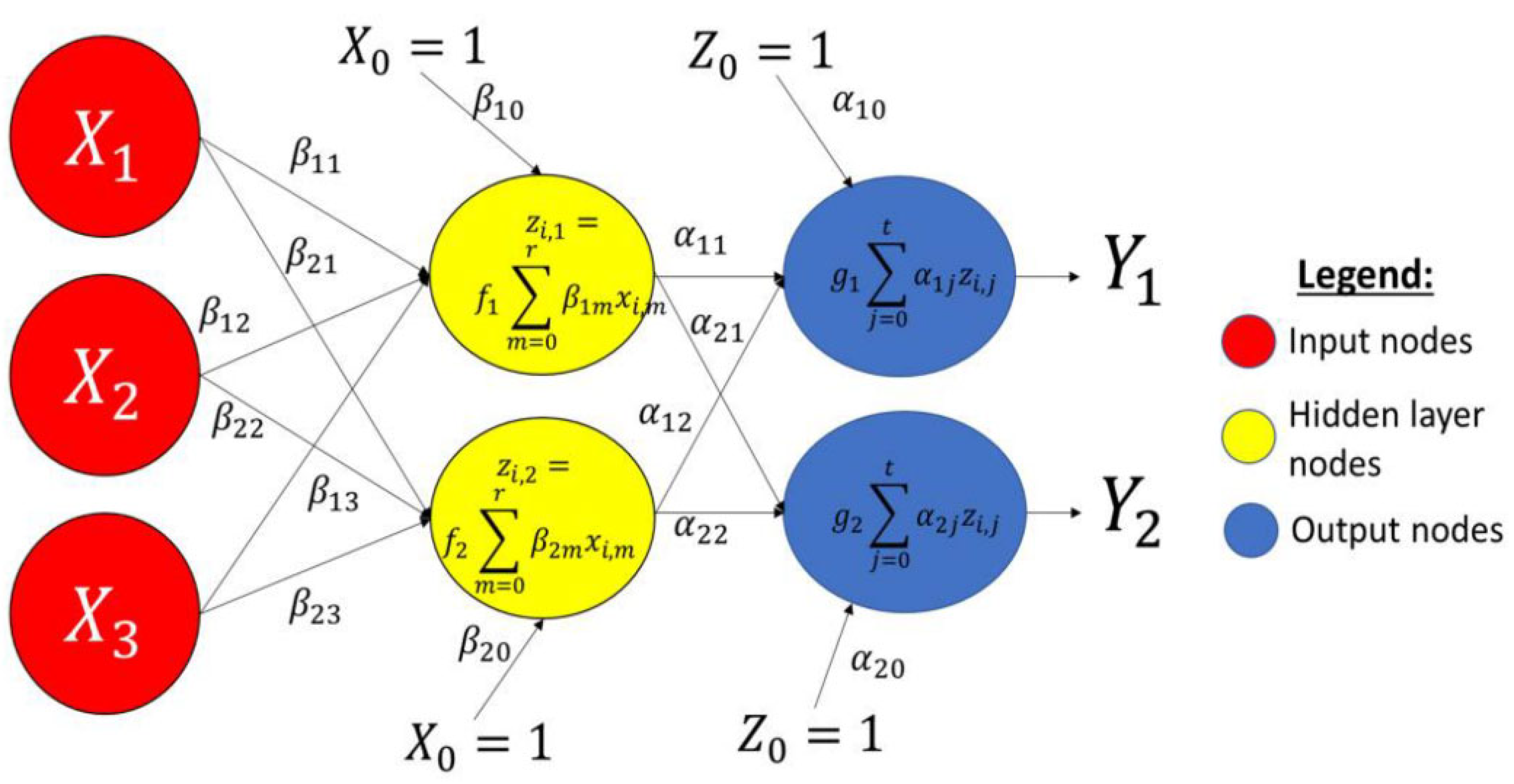
2.3. Geometallurgical Model Using Neural Networks
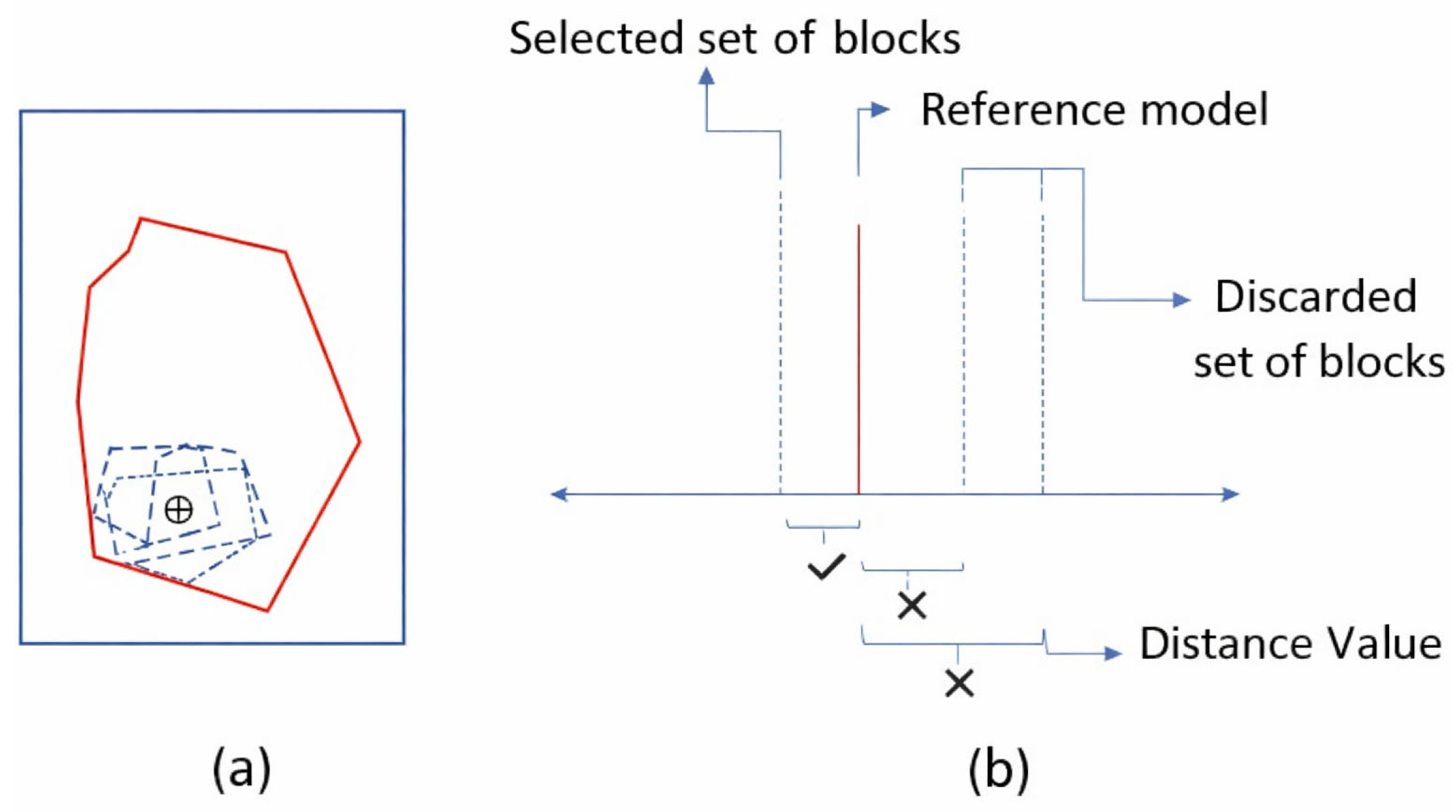
2.4. Short-Term Planning Implementation
- Index of simulation realization.
- : Total number of simulation realizations.
- : Index of period.
- : Total number of periods.
- : Blocks δ or the location/identifier of block δ.
- : Set of all candidate blocks.
- : Set of blocks selected in period .
- : Required number of blocks to be selected in each period.
- : Indicator variable equal to if block is selected in the period under simulation , and otherwise,
- : Probability or relative frequency of a block is selected in the period .
3. Results
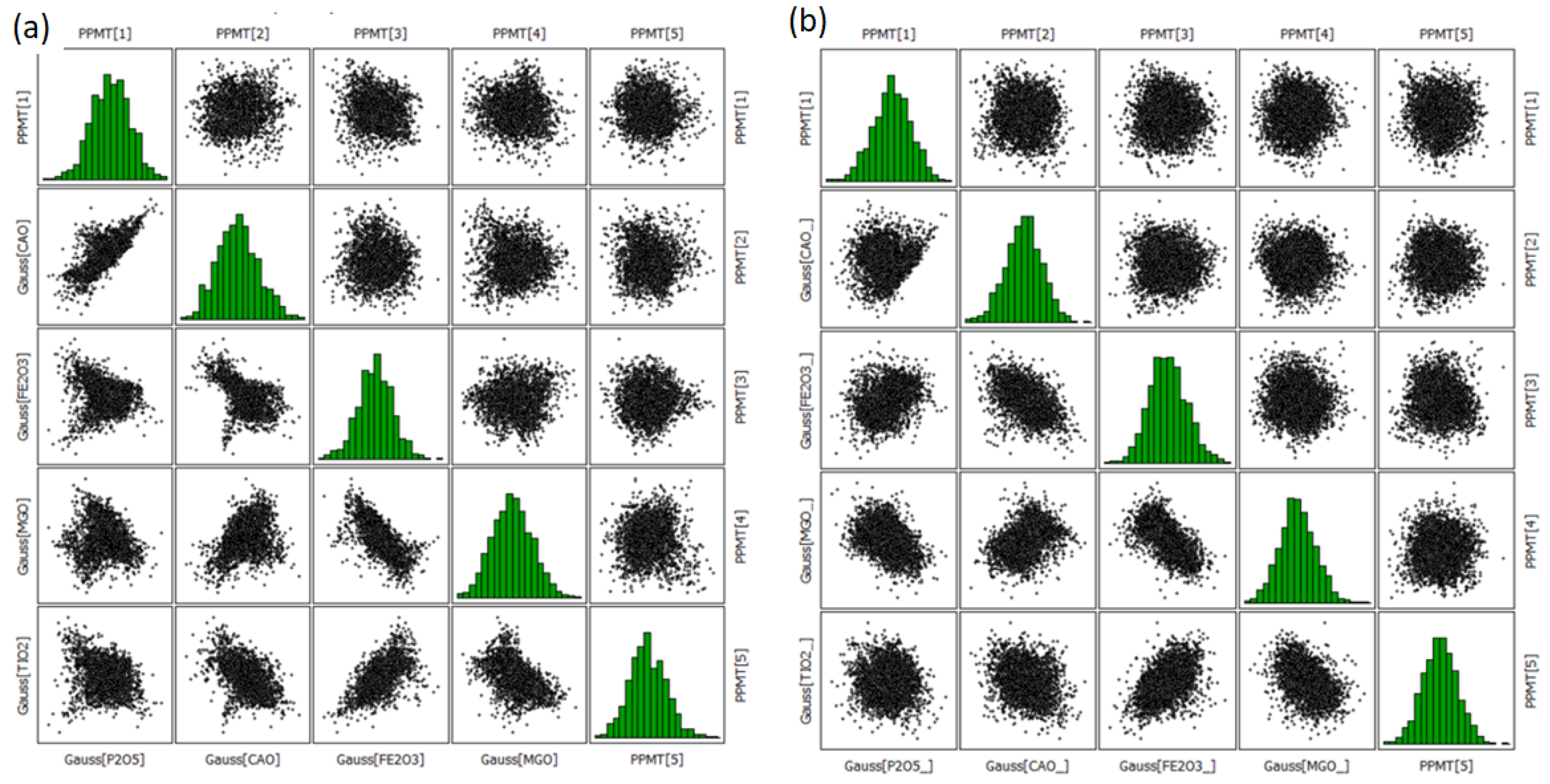
3.1. PPMT
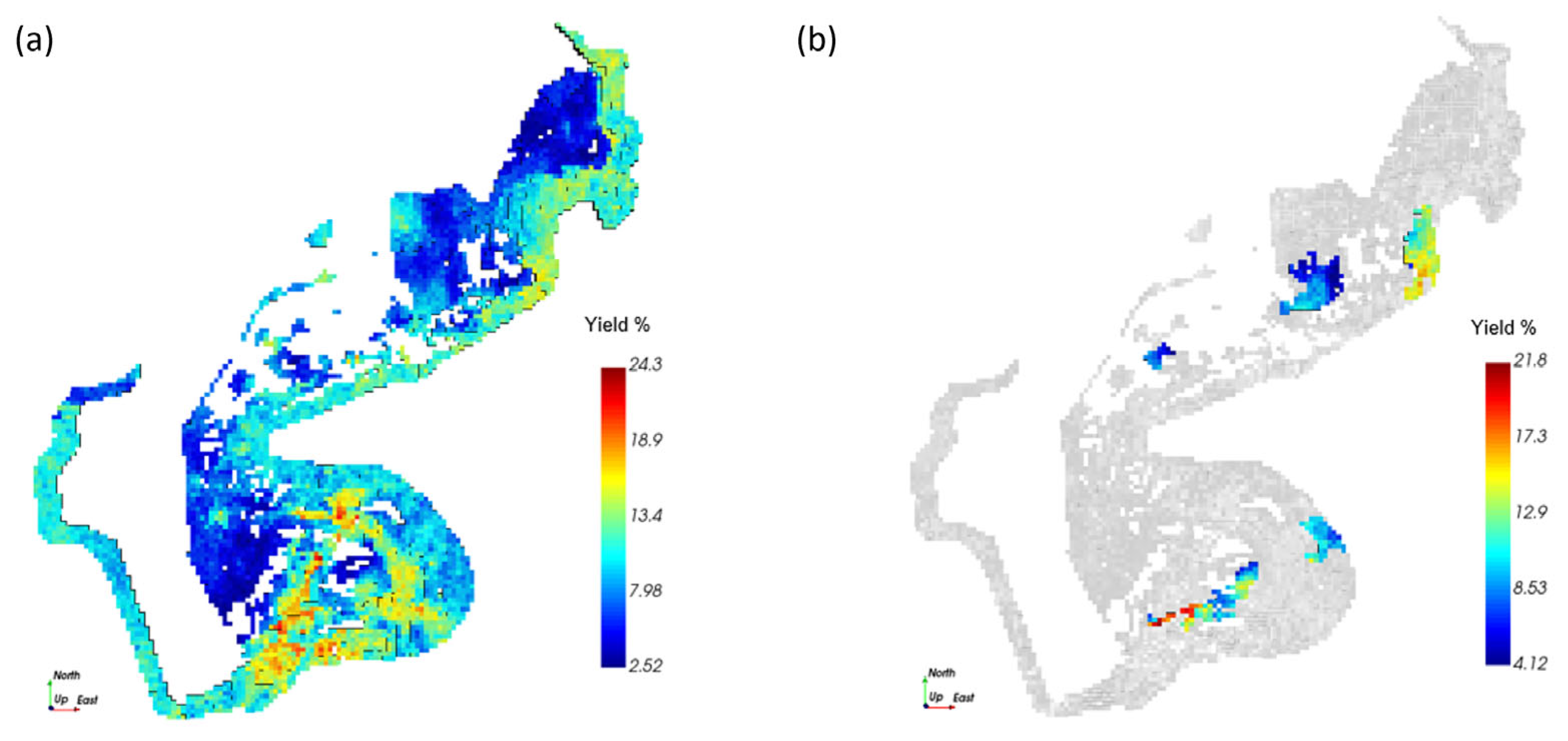
3.2. Geometallurgical Model Creation
3.2.1. Variable Selection
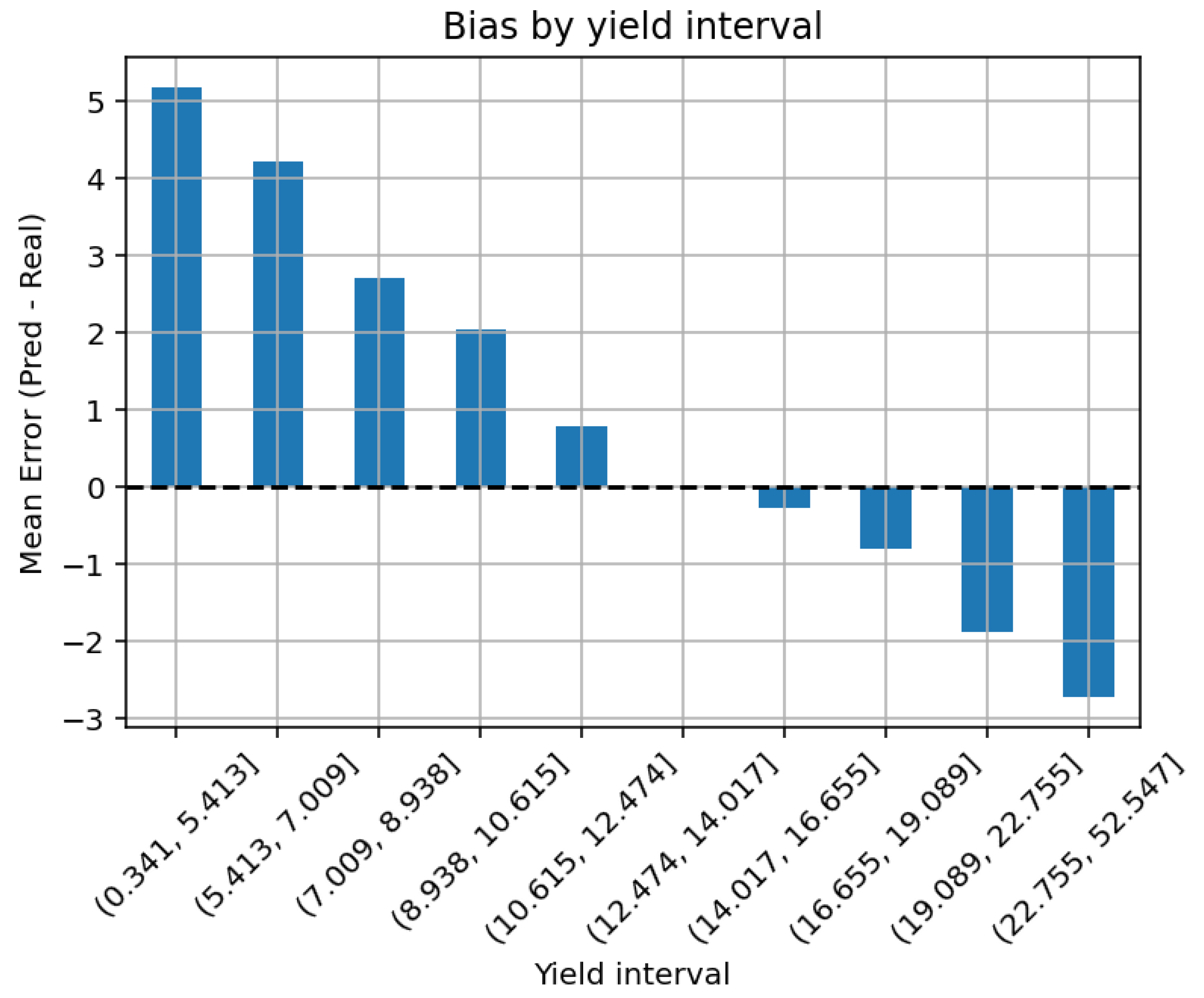
3.2.2. Forecast Technique Evaluation
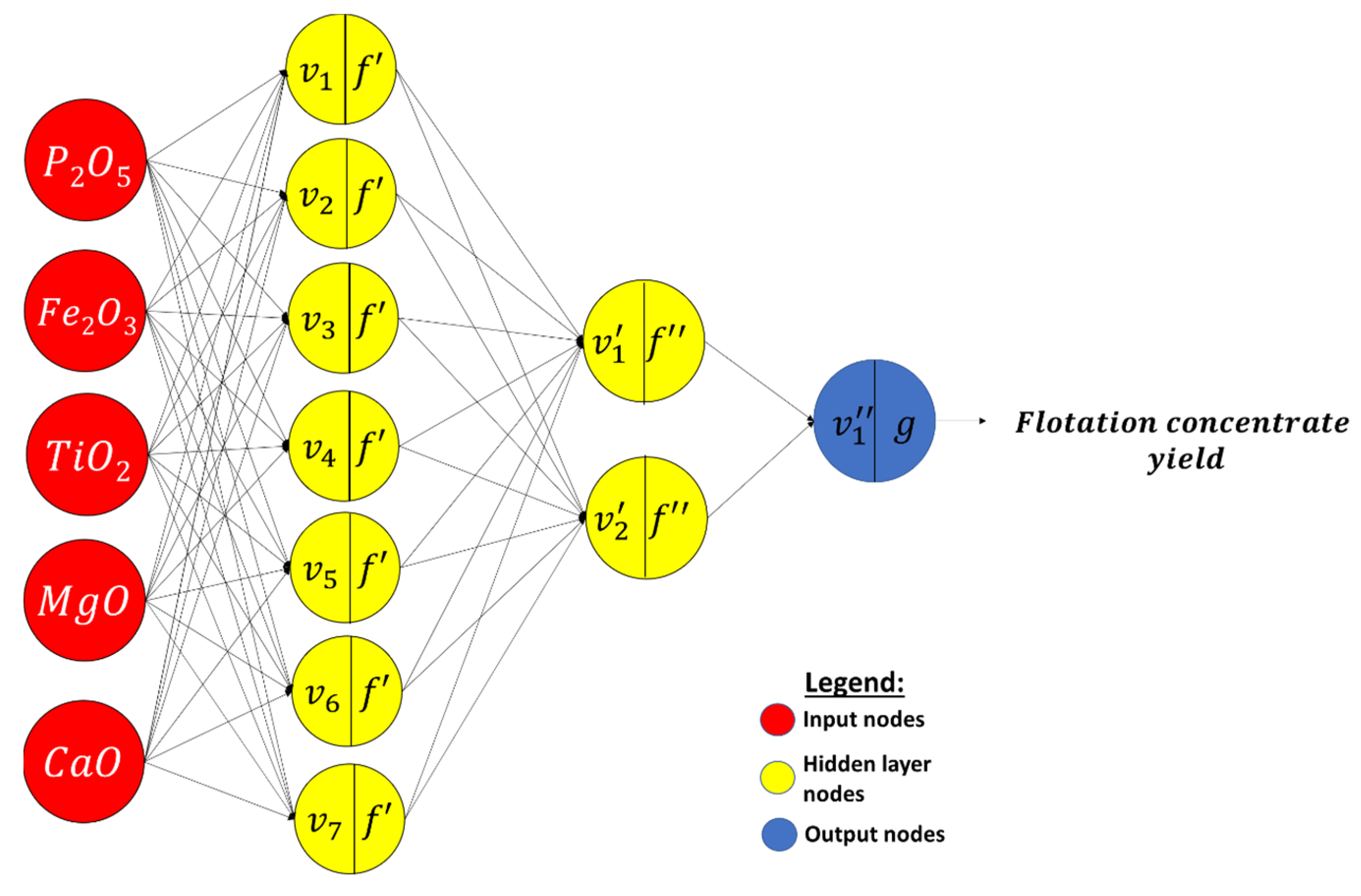
3.2.3. Neural Network
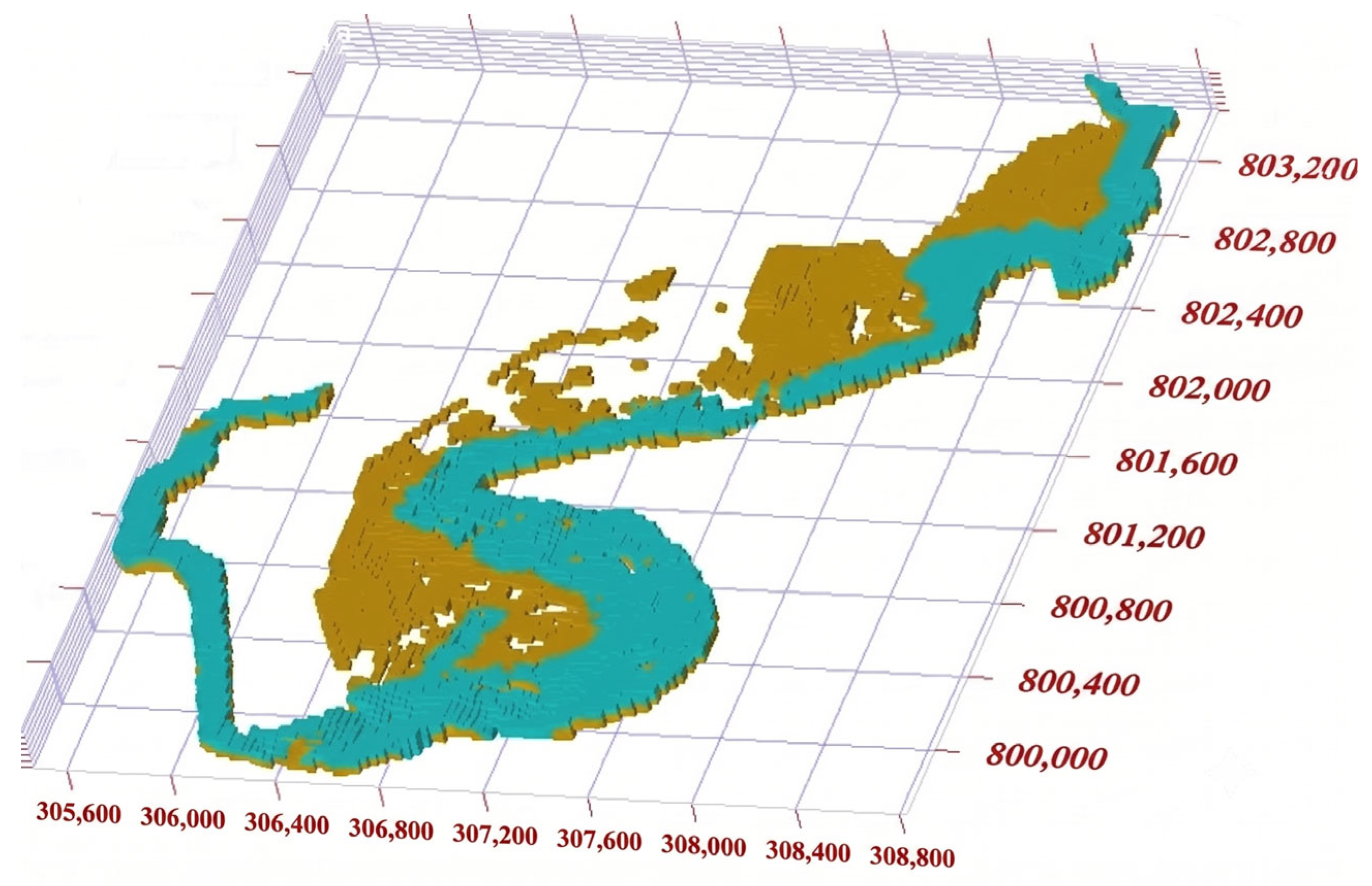
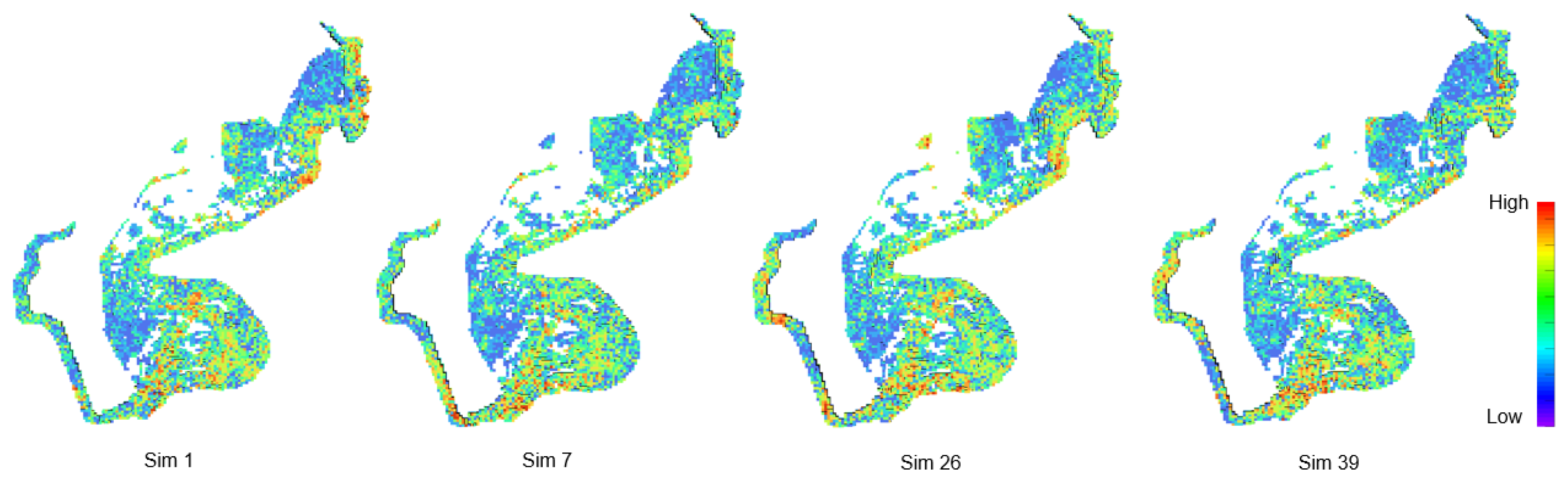
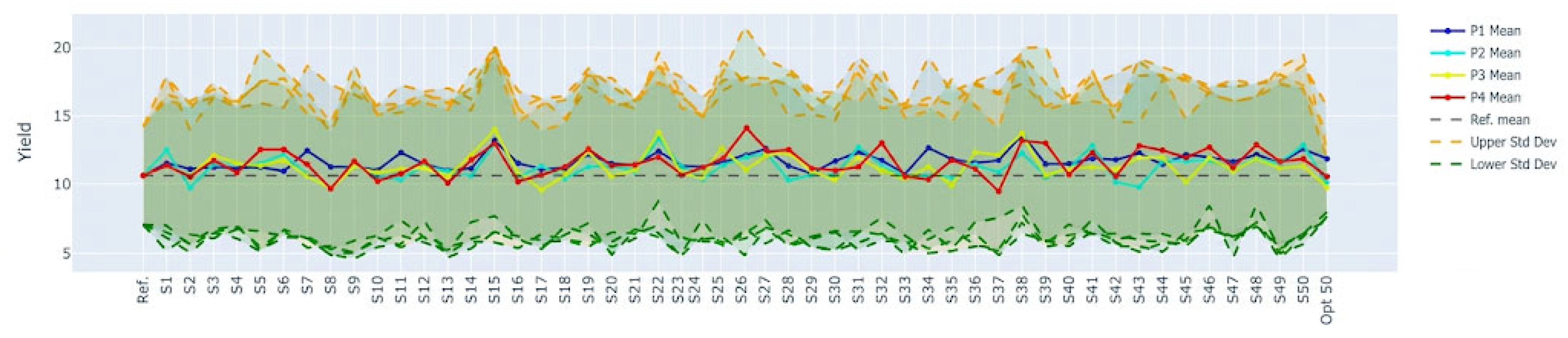
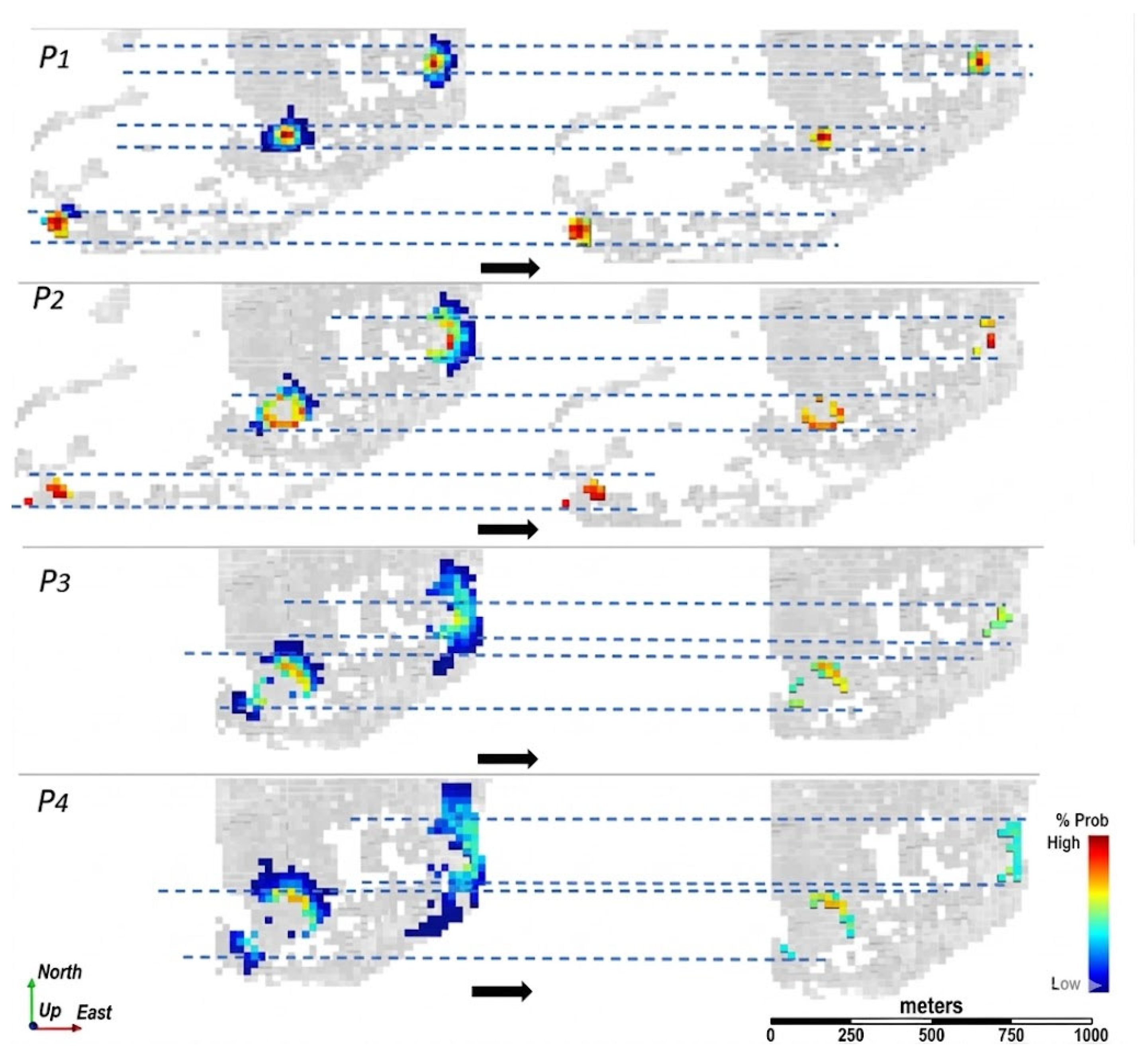
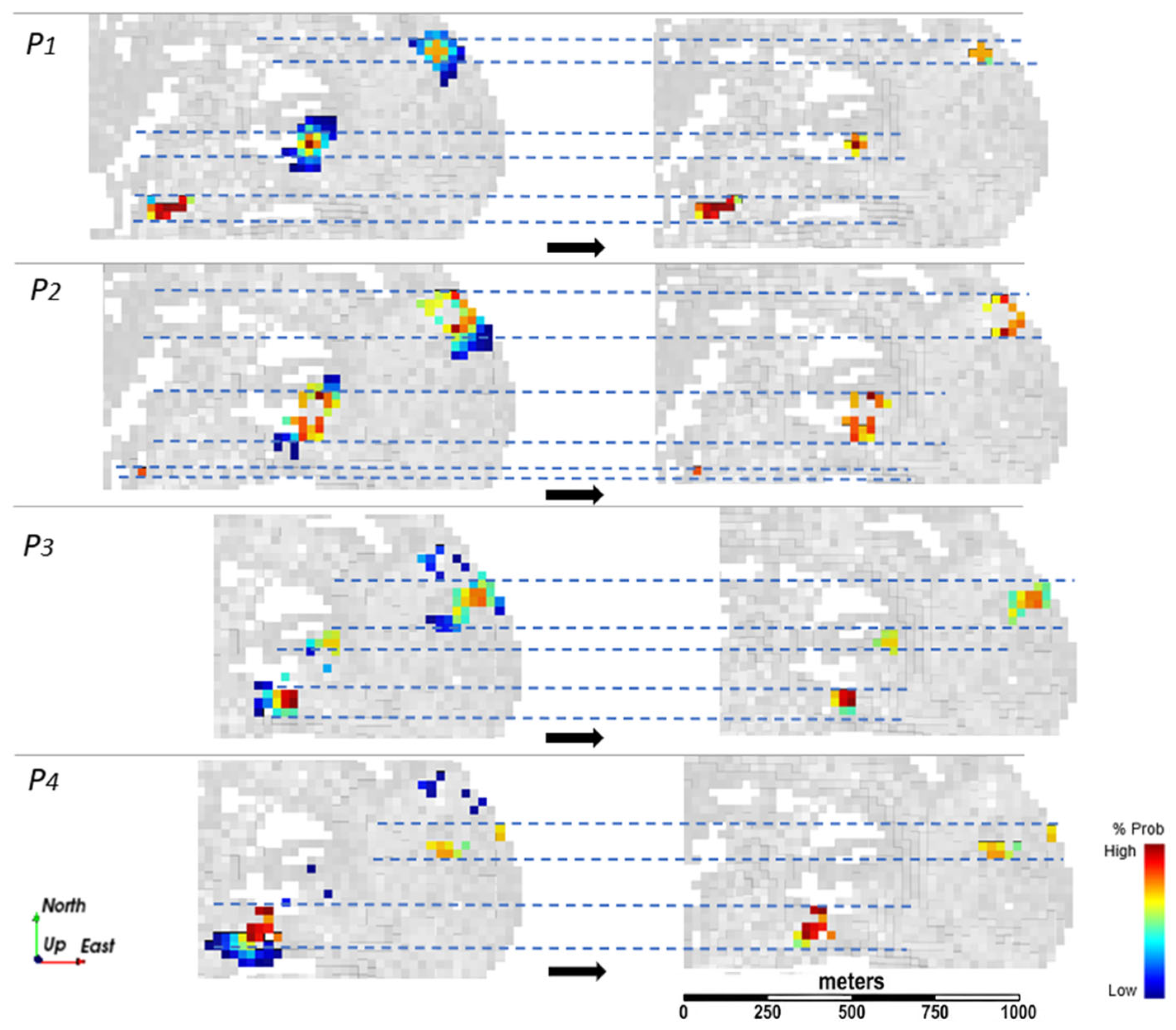
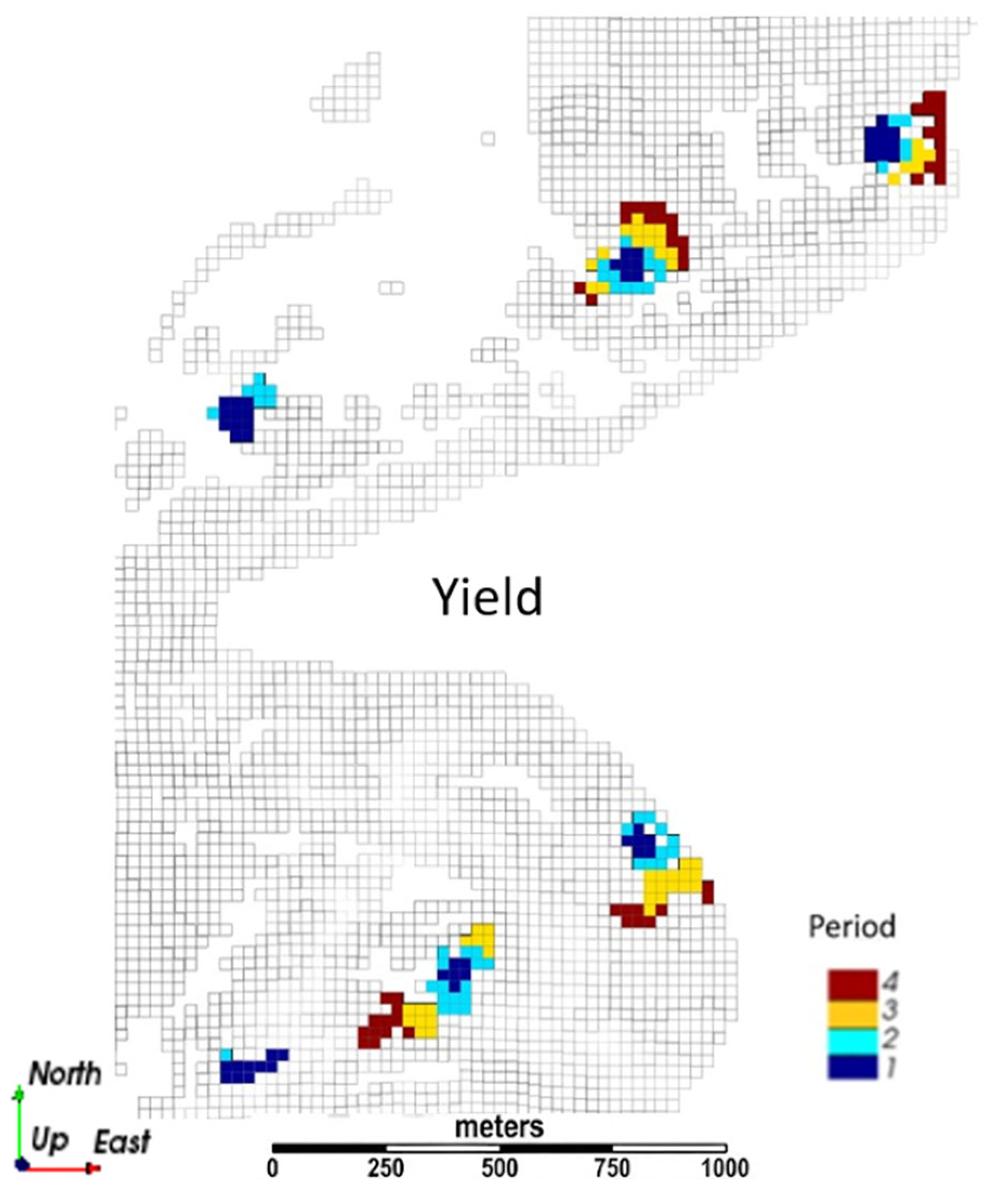
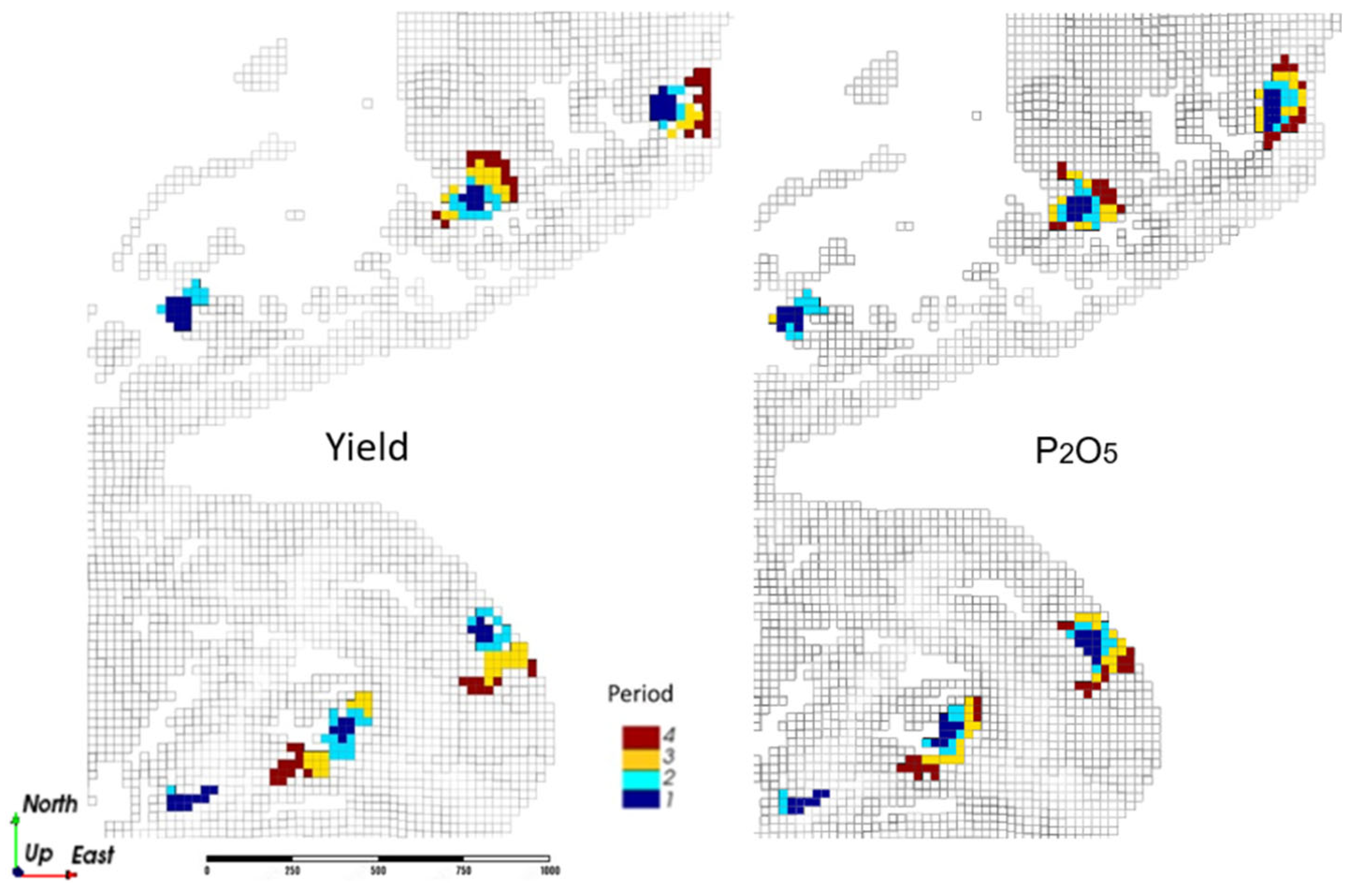
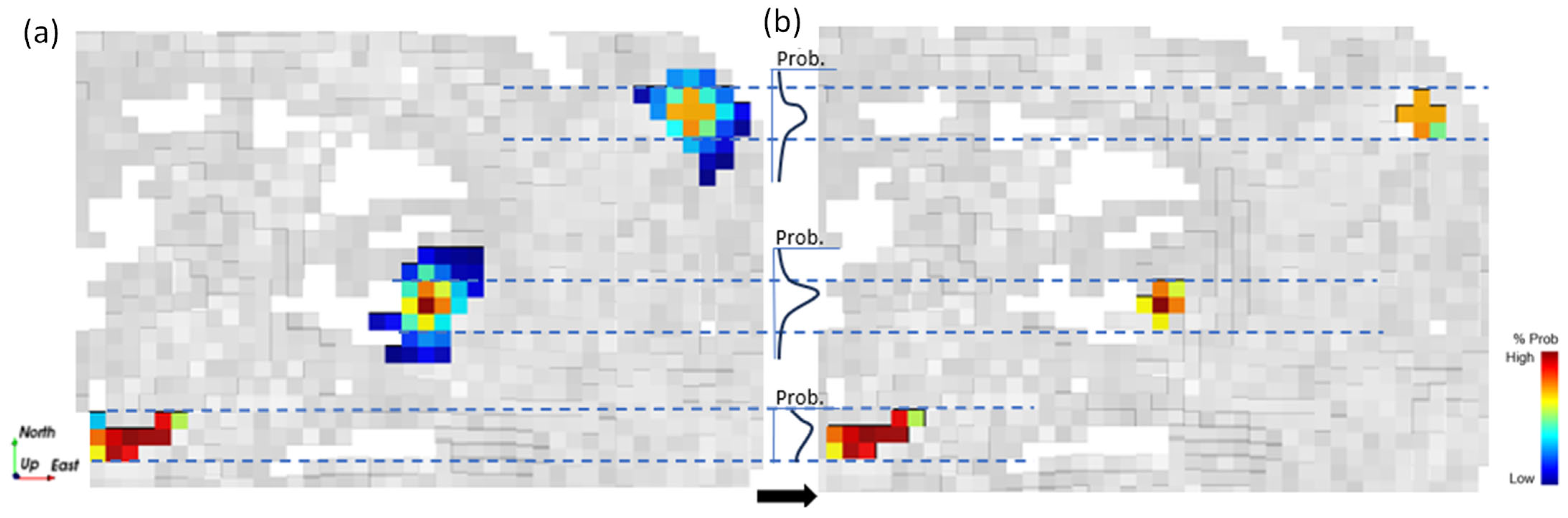
3.3. Short-Term Mine Planning
4. Conclusions
Author Contributions
Funding
Data Availability Statement
Acknowledgments
Conflicts of Interest
References
- Coward, S.; Vann, J.; Dunham, S.; Stewart, M. The primary-response framework for geometallurgical variables. In Seventh International Mining Geology Conference, 2009, Proceedings; Australasian Institute of Mining and Metallurgy: Melbourne, Australia, 2009; pp. 109–114. [Google Scholar]
- Deutsch, C.V. Geostatistical modelling of geometallurgical variables—Problems and solutions. In The Second AusIMM International Geometallurgy Conference, 2013, Proceedings; Australasian Institute of Mining and Metallurgy: Melbourne, Australia, 2013; pp. 7–16. [Google Scholar]
- Newton, M.J.; Graham, J.M. Spatial modelling and optimisation of geometallurgical indices. In The First AusIMM International Geometallurgy Conference, 2011, Proceedings; Australasian Institute of Mining and Metallurgy: Brisbane, Australia, 2011; pp. 247–261. [Google Scholar]
- Boisvert, J.B.; Rossi, M.E.; Ehrig, K.; Deutsch, C.V. Geometallurgical modeling at Olympic Dam mine, South Australia. Math. Geosci. 2013, 45, 901–925. [Google Scholar] [CrossRef]
- Deutsch, J.L.; Palmer, K.; Deutsch, C.V.; Szymanski, J. Spatial modeling of geometallurgical properties: Techniques and a case study. Nat. Resour. Res. 2016, 25, 161–181. [Google Scholar] [CrossRef]
- Carrasco, P.; Chilès, J.P.; Séguret, S. Additivity, metallurgical recovery, and grade. In VIII International Geostatistics Congress, Geostats 2008, Proceedings; Gecamin: Santiago, Chile, 2008; pp. 237–246. [Google Scholar]
- Cornah, A.J. Assessments of the impact of non-additivity in the estimation of iron ore attributes. In Iron Ore Conference, 2013, Proceedings; Australasian Institute of Mining and Metallurgy: Melbourne, Australia, 2013; pp. 129–136. [Google Scholar]
- Montiel, L.; Dimitrakopoulos, R. Simultaneous stochastic. Min. Eng. 2018, 70, 48–56. [Google Scholar] [CrossRef]
- Both, C.; Dimitrakopoulos, R. Applied machine learning for geometallurgical throughput prediction—A case study using production data at the Tropicana Gold Mining Complex. Minerals 2021, 11, 1257. [Google Scholar] [CrossRef]
- Kumar, A.; Dimitrakopoulos, R. Application of simultaneous stochastic optimization with geometallurgical decisions at a copper–gold mining complex. Min. Technol. 2019, 128, 88–105. [Google Scholar] [CrossRef]
- Dominy, S.C.; O’Connor, L.; Parbhakar-Fox, A.; Glass, H.J.; Purevgerel, S. Geometallurgy—A route to more resilient mine operations. Minerals 2018, 8, 560. [Google Scholar] [CrossRef]
- Niquini, F.G.F.; Branches, A.M.B.; Costa, J.F.C.L.; Moreira, G.D.C.; Schneider, C.L.; Araújo, F.C.D.; Capponi, L.N. Recursive feature elimination and neural networks applied to the forecast of mass and metallurgical recoveries in a Brazilian phosphate mine. Minerals 2023, 13, 748. [Google Scholar] [CrossRef]
- Toledo, A.A.T.; Marques, D.M.; Costa, J.F.C.L.; Capponi, L.N. Short-term mine scheduling targeting stationary grades. REM-Int. Eng. J. 2022, 75, 73–82. [Google Scholar] [CrossRef]
- David, M. Tools for planning: Variances and conditional simulations. In Proceedings of the 11th International Symposium on Computer Applications in the Mineral Industries; University of Arizona: Tucson, AZ, USA, 1973; pp. D10–D23. [Google Scholar]
- Journel, A.G. Geostatistics for conditional simulation of ore bodies. Econ. Geol. 1974, 69, 673–687. [Google Scholar] [CrossRef]
- Matheron, G. Forecasting block grade distributions: The transfer functions. In Advanced Geostatistics in the Mining Industry; Springer: Dordrecht, The Netherlands, 1976; pp. 237–251. [Google Scholar] [CrossRef]
- Koch, P.-H.; Rosenkranz, J. Sequential decision-making in mining and processing based on geometallurgical inputs. Miner. Eng. 2020, 149, 106262. [Google Scholar] [CrossRef]
- Barnett, R.M.; Manchuk, J.G.; Deutsch, C.V. Projection pursuit multivariate transform. Math. Geosci. 2014, 46, 337–359. [Google Scholar] [CrossRef]
- Friedman, J.H.; Tukey, J.W. A projection pursuit algorithm for exploratory data analysis. IEEE Trans. Comput. 1974, 100, 881–890. [Google Scholar] [CrossRef]
- Matheron, G. The intrinsic random functions and their applications. Adv. Appl. Probab. 1973, 5, 439–468. [Google Scholar] [CrossRef]
- Rossi, M.E.; Deutsch, C.V. Mineral Resource Estimation; Springer Science & Business Media: Dordrecht, The Netherlands, 2013. [Google Scholar] [CrossRef]
- Niquini, F.G.F.; Costa, J.F.C.L. Mass and metallurgical balance forecast for a zinc processing plant using artificial neural networks. Nat. Resour. Res. 2020, 29, 3569–3580. [Google Scholar] [CrossRef]
- Niquini, F.G.F.; Costa, J.F.C.L. Forecasting mass and metallurgical balance at a gold processing plant using modern multivariate statistics. REM-Int. Eng. J. 2020, 73, 571–578. [Google Scholar] [CrossRef]
- Gholami, A.; Asgari, K.; Khoshdast, H.; Hassanzadeh, A. A hybrid geometallurgical study using coupled Historical Data (HD) and Deep Learning (DL) techniques on a copper ore mine. Physicochem. Probl. Miner. Process. 2022, 58, 147841. [Google Scholar] [CrossRef]
- Jorjani, E.; Bagherieh, A.H.; Mesroghli, S.; Chehreh Chelgani, S.; Jorjani, H. Prediction of yttrium, lanthanum, cerium, and neodymium leaching recovery from apatite concentrate using artificial neural networks. In Proceedings of the MetPlant 2008, Perth, Australia, 18–19 August 2008; pp. 433–446. [Google Scholar]
- Nakhaei, F.; Mosavi, M.R.; Sam, A.; Vaghei, Y. Recovery and grade accurate prediction of pilot plant flotation column concentrate: Neural network and statistical techniques. Int. J. Miner. Process. 2012, 110–111, 140–154. [Google Scholar] [CrossRef]
- Srivastava, V.; Bandopadhyay, S.; Akdogan, G.; Ghosh, T. Dynamic neural network-based model for SAG mill power prediction. In Proceedings of the 38th International Symposium on the Application of Computers and Operations Research in the Mineral Industry, Golden, CO, USA, 2017, Proceedings; Colorado School of Mines: Golden, CO, USA, 2017; Volume 38, pp. 227–233. [Google Scholar]
- Panda, L.; Tripathy, S.K. Performance prediction of gravity concentrator by using artificial neural network—A case study. Int. J. Min. Sci. Technol. 2014, 24, 461–465. [Google Scholar] [CrossRef]
- McCulloch, W.S.; Pitts, W. A logical calculus of the ideas immanent in nervous activity. Bull. Math. Biophys. 1943, 5, 115–133. [Google Scholar] [CrossRef]
- Bishop, C.M. Neural Networks for Pattern Recognition; Clarendon Press: Oxford, UK, 1995. [Google Scholar]
- Haykin, S. Neural Networks: A Comprehensive Foundation, 2nd ed.; Prentice Hall: Upper Saddle River, NJ, USA, 1999. [Google Scholar]
- Lundberg, S.M.; Lee, S.-I. A unified approach to interpreting model predictions. arXiv 2017, arXiv:1705.07874. [Google Scholar] [CrossRef]
- Guyon, I.; Weston, J.; Barnhill, S.; Vapnik, V. Gene Selection for Cancer Classification using Support Vector Machines. Mach. Learn. 2002, 46, 389–422. [Google Scholar] [CrossRef]
- Hastie, T.; Tibshirani, R.; Friedman, J. The Elements of Statistical Learning, 2nd ed.; Springer: New York, NY, USA, 2009. [Google Scholar]
- Izenman, A.J. Modern Multivariate Statistical Techniques: Regression, Classification, and Manifold Learning; Springer: New York, NY, USA, 2008. [Google Scholar] [CrossRef]
- Journel, A.G.; Kyriakidis, P.C. Evaluation of Mineral Reserves: A Simulation Approach; Oxford University Press: New York, NY, USA, 2004. [Google Scholar]
- Toledo, A.A.T.; Costa, J.F.C.L.; Capponi, L.N.; Marques, D.M. Stochastic short-term mine scheduling targeting stationary grades. REM-Int. Eng. J. 2025, 78, e240011. [Google Scholar] [CrossRef]






| Metric | Set | Mean Value |
|---|---|---|
| Correlation | Training | 0.77 |
| Test | 0.76 | |
| Holdout | 0.78 | |
| MAE | Training | 3.25 |
| Test | 3.33 | |
| Holdout | 3.35 | |
| RMSE | Training | 4.47 |
| Test | 4.57 | |
| Holdout | 4.58 | |
| MdAPE | Training | 16.98 |
| Test | 17.18 | |
| Holdout | 18.10 |
| Mean | Std | |
|---|---|---|
| Period 1 | 11.87 | 3.86 |
| Period 2 | 10.07 | 2.55 |
| Period 3 | 9.80 | 2.13 |
| Period 4 | 10.59 | 3.19 |
| Mean | 10.58 | 2.94 |
| Reference Model | 10.65 | 3.55 |
| Yield | ||||
|---|---|---|---|---|
| Yield | P2O5 | |||
| Mean | Std | Mean | Std | |
| Period 1 | 11.87 | 3.87 | 11.22 | 3.72 |
| Period 2 | 10.07 | 2.55 | 9.89 | 2.61 |
| Period 3 | 9.8 | 2.13 | 10.45 | 2.57 |
| Period 4 | 10.59 | 3.19 | 10.27 | 2.68 |
| Mean | 10.58 | 2.94 | 10.46 | 2.90 |
| Parameter | Value |
|---|---|
| N° of blocks | 200 |
| Block size | 25 × 25 × 10 m |
| Density | 2.2 t/m3 |
| Total tonnage | 2,750,000 t |
| Concentrate price | US$102.86/t |
Disclaimer/Publisher’s Note: The statements, opinions and data contained in all publications are solely those of the individual author(s) and contributor(s) and not of MDPI and/or the editor(s). MDPI and/or the editor(s) disclaim responsibility for any injury to people or property resulting from any ideas, methods, instructions or products referred to in the content. |
© 2026 by the authors. Licensee MDPI, Basel, Switzerland. This article is an open access article distributed under the terms and conditions of the Creative Commons Attribution (CC BY) license.
Share and Cite
Toledo, A.A.T.; Niquini, F.G.F.; Costa, J.F.C.L.; Marques, D.M. Block Sequencing Using Geometallurgical Parameters in Stochastic Short-Term Models. Minerals 2026, 16, 618. https://doi.org/10.3390/min16060618
Toledo AAT, Niquini FGF, Costa JFCL, Marques DM. Block Sequencing Using Geometallurgical Parameters in Stochastic Short-Term Models. Minerals. 2026; 16(6):618. https://doi.org/10.3390/min16060618
Chicago/Turabian StyleToledo, Augusto Andres Torres, Fernanda Gontijo Fernandes Niquini, João Felipe Coimbra Leite Costa, and Diego Machado Marques. 2026. "Block Sequencing Using Geometallurgical Parameters in Stochastic Short-Term Models" Minerals 16, no. 6: 618. https://doi.org/10.3390/min16060618
APA StyleToledo, A. A. T., Niquini, F. G. F., Costa, J. F. C. L., & Marques, D. M. (2026). Block Sequencing Using Geometallurgical Parameters in Stochastic Short-Term Models. Minerals, 16(6), 618. https://doi.org/10.3390/min16060618