Article

Microwave-Assisted Composite Alkali Activation of Low-Calcium Fly Ash: Preparation and Analysis
1
College of Materials Science and Engineering, Qingdao University, Qingdao 266071, China
2
Inner Mongolia Research Institute, Key Laboratory of Separation and Processing of Symbiotic-Associated Mineral Resources in Non-Ferrous Metal Industry, Engineering Technology Research Center for Comprehensive Utilization of Rare Earth-Rare Metal-Rare Scattered in Non-Ferrous Metal Industry, School of Chemical & Environmental Engineering, China University of Mining & Technology (Beijing), Beijing 100083, China
3
The Key Laboratory of Mineral Metallurgical Resources Utilization and Pollution Control, Ministry of Ecology and Environment of the People’s Republic of China, Wuhan University of Science and Technology, Wuhan 430205, China
4
Engineering Research Center of Ministry of Education for Geological Carbon Storage and Low Carbon Utilization of Resources, Beijing Key Laboratory of Materials Utilization of Nonmetallic Minerals and Solid Wastes, School of Material Sciences and Technology, China University of Geosciences, Beijing 100083, China
5
Department of Mechanical and Industrial Engineering, University of Toronto, Toronto, ON M5S 3G8, Canada
*
Authors to whom correspondence should be addressed.
Minerals 2026, 16(3), 322; https://doi.org/10.3390/min16030322
Submission received: 24 January 2026 / Revised: 13 March 2026 / Accepted: 16 March 2026 / Published: 19 March 2026

Abstract

To promote the high-value utilization of fly ash (FA) and address the prolonged setting time and limited strength associated with conventional single-alkali activation, this study proposes a synergistic dual-alkali activation strategy using Ca(OH)2 and Na2SiO3 in combination with microwave-assisted curing for low-calcium fly ash. Samples containing varying amounts of Ca(OH)2 were systematically characterized by X-ray diffraction (XRD), Fourier transform infrared spectroscopy (FTIR), scanning electron microscopy (SEM), compressive strength testing, and pore structure analysis. The results show that Ca(OH)2 facilitates the formation of calcium aluminosilicate hydrate (C-A-S-H) gel, while Na2SiO3 sustains the alkaline environment and enhances the dissolution of SiO2 and Al2O3 from FA. The dual-alkali synergistic system, when coupled with microwave treatment, markedly refines the pore structure, increases the degree of polymerization, and improves compressive strength from 0.5 MPa to 1.7 MPa with increasing Ca(OH)2 content. In addition, the prepared fly ash-based geopolymer (FABG) demonstrates pronounced pH-buffering capacity in acidic environments and exhibits antibacterial activity, primarily attributable to its sustained release of alkalinity. This work highlights that integrating dual-alkali activation with microwave curing can simultaneously enhance microstructural development, chemical stability, and functional performance in low-calcium FA systems, thereby offering a viable route for the development of sustainable and multifunctional green building materials derived from industrial solid waste.

1. Introduction

Fly ash (FA), a typical solid waste generated from coal-fired power plants, has an annual global production exceeding 1.2 billion tons, yet its utilization rate remains below 50%. Conventional landfill disposal not only occupies substantial land resources but also poses environmental risks, including heavy metal leaching and fugitive dust emissions. The synthesis of alkali-activated aluminosilicate geopolymers offers a promising pathway for the value-added utilization of fly ash [1].
The geopolymerization process generally involves two key stages. First, the alkaline activator induces the dissolution of aluminosilicate precursors. Under highly alkaline conditions, the Si-O and Al-O bonds in FA are cleaved, releasing reactive silicate (SiO44−) and aluminate (AlO45−) species into solution. Second, these dissolved monomers undergo polycondensation, forming a three-dimensional amorphous network structure characterized by Si-O-Al-O-Si linkages [2]. FA is widely regarded as an ideal precursor for geopolymer production [3,4], owing to its high combined SiO2 and Al2O3 content (typically exceeding 70%), abundant amorphous glassy phases, and favorable dissolution and reorganization behavior under alkaline conditions [5].
Compared to Portland cement, geopolymers exhibit significant advantages in the field of green construction, with their core competitiveness manifesting in three key dimensions: First, geopolymer precursors are widely available, as a variety of industrial solid wastes can be employed as raw materials, including fly ash [6,7], slag [8,9,10], red mud [11], and rice husk ash. Second, geopolymer production generates only about 20% of the CO2 emissions associated with conventional cement manufacturing [12,13,14], largely because it eliminates the high-temperature calcination process required for clinker production. Third, geopolymers exhibit superior mechanical properties [15,16], excellent corrosion resistance, and high chemical stability. These attributes make them promising alternative materials for infrastructure applications. Despite these advantages, achieving efficient alkali activation and forming homogeneous microstructures under conventional curing conditions remain challenging. Therefore, the development of more effective activation and curing strategies is essential to fully realize the performance potential of geopolymer systems.
In the alkali-activation process for geopolymer synthesis, single-alkali systems (e.g., using only sodium hydroxide or sodium silicate) can initiate the polymerization of aluminosilicate precursors; however, they exhibit inherent limitations. These drawbacks are primarily manifested in the following aspects. First, excessive alkali may remain unreacted in alkali-activated materials (AAMs), and soluble alkali species can migrate to the surface through capillary water transport. This process often results in efflorescence, which deteriorates the microstructure and mechanical performance of AAMs while compromising their surface appearance. Second, the rapid setting behavior and high alkalinity of NaOH solutions complicate concrete casting and surface finishing operations, posing potential safety risks to workers during construction. Third, the performance of fly ash-based geopolymers predominantly depends on the formation of N-A-S-H gel. Compared with calcium-rich slag systems, their early-age strength is relatively low due to the limited availability of Ca2+ ions for effective cross-linking within the geopolymeric network. In addition, variations in the chemical composition of fly ash further contribute to fluctuations in mechanical properties. Collectively, these challenges constrain the broader practical application of fly ash-based geopolymers in construction.
To address the aforementioned limitations, this study proposes a dual-alkali synergistic activation strategy employing calcium hydroxide (Ca(OH)2) and sodium silicate (Na2SiO3). The mechanism involves three primary aspects. First, the addition of sodium silicate compensates for the limited alkalinity resulting from the low solubility of calcium hydroxide and increases the pH of the system, thereby establishing a strongly alkaline environment. This promotes the cleavage of Si-O and Al-O bonds, accelerates the formation of soluble monomers ([SiO4]4− and [AlO4]5−), and facilitates the reorganization of the three-dimensional amorphous network into a more ordered structure, enhancing gel development. Second, the incorporation of calcium hydroxide supplements Ca2+ required for cross-linking within the geopolymer network and promotes the formation of calcium aluminosilicate hydrate phases. Finally, the introduced Ca2+ promotes the coexistence of N-A-S-H gel and calcium aluminosilicate hydrate (C-A-S-H) gel, refines the pore structure, and mitigates efflorescence. In addition, calcium hydroxide offers the advantage of low cost.
It is noteworthy that the rapid initial gelation inherent in the dual-alkali system markedly increases slurry viscosity, which may hinder ionic migration and reduce setting controllability. Microwave-assisted alkali activation provides an effective approach to addressing this issue. During the dissolution stage, microwave irradiation promotes the dissolution of silicate precursors into silicate and aluminate monomers under alkaline conditions [5,17]. Meanwhile, water molecules in the alkaline solution absorb microwave energy and undergo dipole rotation, generating internal friction and volumetric heating within the geopolymer paste. This process enhances the dissolution and hydration of the alkaline activators [18], facilitating the formation of C-S-H gel. During the repolymerization stage, microwave irradiation enables continuous reorganization of the developing gel network within a short period, accelerating geopolymer densification [17] and thereby improving compressive strength. In addition, the uniform volumetric heating characteristic of microwave treatment prevents localized overheating, ensuring more homogeneous pore structure development. Therefore, microwave-assisted technology shows strong potential for enhancing the alkali activation of fly ash-based geopolymers (FABGs).
In this study, Class F low-calcium fly ash was alkali-activated by adding varying amounts of calcium hydroxide while keeping the sodium silicate dosage constant. Phase changes at different fly ash incorporation levels were characterized using XRD. FTIR was employed to analyze variations in microscopic bonding at different incorporation levels, while SEM was used to examine the microstructural morphology of the fly ash-based geopolymer. The pore size distribution of the fly ash-based geopolymer was characterized using the BET method. A systematic summary of the gradient relationship among pore size, density, and strength of the fly ash-based geopolymer was provided. Additionally, the pH buffering capacity and antibacterial performance of the fly ash-based geopolymer were evaluated. This study provides theoretical guidance for the application of low-calcium fly ash in green building materials.

2. Materials and Methods

2.1. Materials

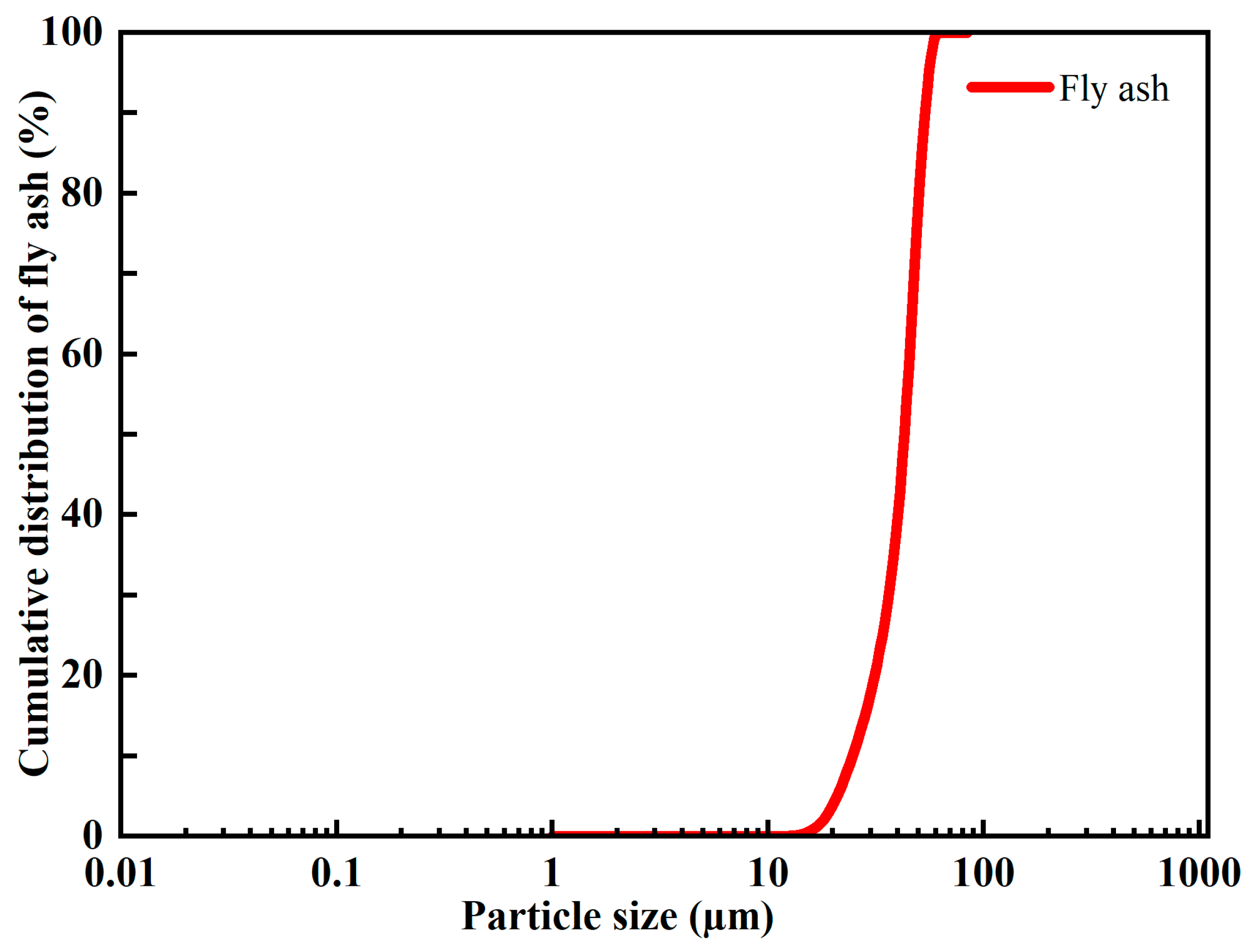
In this study, Class F fly ash (FA; Class C according to ASTM classification) in its as-received dry form, obtained from the Shang’an Power Plant in Shijiazhuang, Hebei Province, China, was used as the sole geopolymer precursor. The particle size distribution, measured by laser diffraction, is shown in Figure 1. The FA particles predominantly ranged from 0.3 to 100 μm, with a median diameter (D50) of 9.677 μm. The chemical composition of the FA, determined by X-ray fluorescence (XRF) analysis, is summarized in Table 1. The main constituents were SiO2 (49.8%) and Al2O3 (23.7%), while other significant oxides included Fe2O3 (10.7%), CaO (5.4%), K2O (3.4%), MgO (2.4%), and TiO2 (1.9%).

2.2. Experimental Process

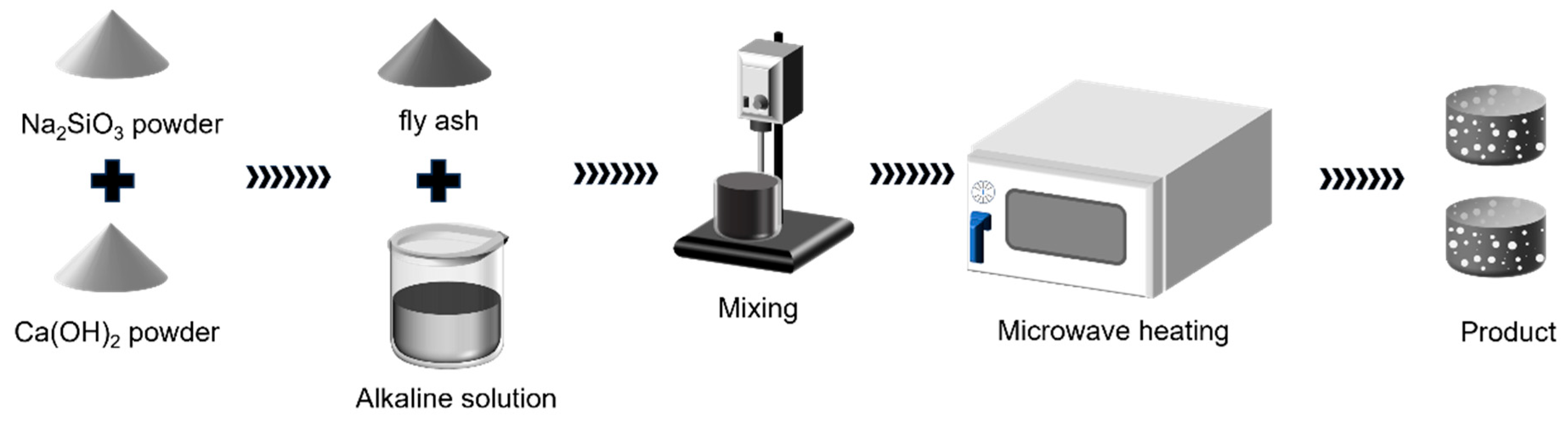
The preparation procedure of the fly ash-based geopolymer (FABG) is illustrated in Figure 2. A mixed solution of Ca(OH)2 and Na2SiO3, with varying mass ratios, was used as the alkaline activator. Because calcium hydroxide reacts with sodium silicate, the Ca(OH)2 dosage was determined according to the reaction extent: S1–S2 represent complete consumption of Ca(OH)2 by Na2SiO3, S3 corresponds to the stoichiometric ratio where Ca(OH)2 is exactly consumed, and S4–S5 indicate an excess of Ca(OH)2 remaining after the reaction. The specific formulations are listed in Table 2. For sample preparation, the activator solution was mixed with fly ash and stirred using a commercial vertical mixer at 800 rpm for 30 min to produce a homogeneous slurry. The slurry was then poured into cylindrical silicone molds (5 cm diameter × 5 cm height) and allowed to stand for 5 min to release entrapped air bubbles. The molds were subsequently placed in a domestic microwave oven (Model: MO, G70F23N1l-SD, Glanson, Foshan, China) and microwaved at medium power (700 W) for 2 min. After microwave treatment, the samples reached initial strength and were immediately demolded, then further cured in an oven at 60 °C for 24 h to ensure complete hardening. This procedure accurately reflects the physical state of the samples after microwave treatment and the rationale for immediate demolding.

2.3. Properties Evaluation

Compressive strength tests were conducted to determine the maximum strength of the FABG specimens using a universal mechanical testing machine at a constant loading rate of 3 mm/min. The peak load recorded before failure was used to calculate the compressive strength of the fly ash-based geopolymer. The final compressive strength values represent the mean of at least six replicates, with the corresponding standard deviation reported to indicate variability.

2.4. Microstructural Characterization

Phase identification and mineralogical analysis were performed using X-ray diffraction (XRD; PANalytical, Almelo, The Netherlands) with Cu Kα radiation (λ = 1.542 Å). Measurements were carried out over a 2θ range of 10–80° with a step size of 0.02°. The resulting diffraction patterns were analyzed using MDI Jade 9 software to identify the present phases.
To further evaluate the microstructural evolution and quantify the degree of geopolymerization, the relative crystallinity of the synthesized samples was determined based on the acquired XRD patterns. Quantitative analysis was conducted using the profile fitting module within the MDI Jade software. The global diffraction profiles were carefully deconvoluted to separate the sharp diffraction peaks, which correspond to the residual crystalline phases (predominantly quartz and mullite), from the broad diffuse halo characteristic of the amorphous geopolymer gel. A baseline correction was applied, and the relative crystallinity (Xc) was subsequently calculated by taking the ratio of the total integrated area of the crystalline peaks (Ac) to the total scattered area of the diffractogram (comprising both crystalline and amorphous regions, Aa), according to the following equation:
X c = A C A C + A a × 100 %
This semi-quantitative approach provides a reliable metric for monitoring the transformation between crystalline phases and the amorphous calcium aluminosilicate hydrate (C-A-S-H) and N-A-S-H gel networks under varying Ca(OH)2 activation conditions.
To examine the effect of alkali dosage on chemical bonding, Fourier Transform Infrared Spectroscopy (FTIR; Thermo Scientific Nicolet 6700, Thermo Fisher Scientific, Waltham, MA, USA) was employed. Samples were prepared using the KBr pellet method, and transmission spectra were collected over the wavenumber range of 500–4000 cm−1 with a resolution of 4 cm−1, averaged over 32 scans. Characteristic absorption bands were assigned using OMNIC 9.2 software.
Microstructural morphology was characterized using Scanning Electron Microscopy (SEM; Zeiss Sigma 360, Zeiss, Oberkochen, Germany). Representative regions were observed at operating voltages of 5 kV with magnifications of 10× and 200×. Samples were prepared by embedding in epoxy resin, followed by mechanical polishing and gold sputtering. The analysis focused primarily on pore structure.
The geometric bulk density (ρ) of the geopolymer samples was calculated as the ratio of the weight of the demolded cubic specimen to its geometric volume [19]. Measurements were taken on at least six specimens, and the mean value was reported.
The specific surface area and pore size distribution were determined using N2 adsorption–desorption isotherms (Quantachrome Autosorb-iQ, Quantachrome Instruments, Boynton Beach, FL, USA). Combined with microstructural analysis, these measurements were used to investigate the influence of calcium hydroxide dosage on the pore structure and mechanical properties of FABG.

2.5. pH Buffering Capacity

The pH buffering capacity is an important indicator of the chemical stability and environmental resilience of geopolymeric materials. Since fly ash-based geopolymers (FABGs) are often exposed to acidic environments, such as acid rain or industrial effluents, in practical engineering applications, it is essential to evaluate their ability to neutralize protons and maintain a stable pH. This buffering performance affects not only the leaching behavior of encapsulated heavy metals but also the long-term durability of the material under aggressive chemical conditions. To quantify the acid-neutralization potential of the synthesized FABG, titration-based batch experiments were conducted.
An acidic solution was prepared by mixing hydrochloric acid (HCl) and glacial acetic acid (CH3COOH) at a 1:100 volume ratio. The initial pH values of the HCl and CH3COOH solutions, measured using a pH meter, were 1.480 and 2.925, respectively. FABG powder was weighed with an analytical balance, and sample masses of 0.5 g, 1.0 g, 1.5 g, and 2.0 g were separately added to 10 mL aliquots of each acidic solution. The pH of each mixture was then measured. All measurements were performed in triplicate, and the mean values were reported.

2.6. Antibacterial Performance Evaluation Method

2.6.1. LB Medium Preparation

In this study, LB medium was used for bacterial resuscitation and antimicrobial testing. To prepare liquid LB medium, 5 g of sodium chloride, 5 g of tryptone, and 2.5 g of yeast extract were accurately weighed and dissolved in 500 mL of deionized water. For solid LB medium, 5 g of sodium chloride, 5 g of tryptone, 2.5 g of yeast extract, and 7.5 g of agar were weighed and added to 500 mL of deionized water. Both liquid and solid media were sterilized in an autoclave at high temperature. The liquid medium was allowed to cool naturally before use, while the solid medium was poured into 60 mm Petri dishes for bacterial growth and colony counting.

2.6.2. Methods

The antibacterial activity of the samples against Escherichia coli (E. coli, ATCC 25922) was assessed using the plate colony counting method. A 200 μL aliquot of bacterial stock solution was inoculated into 20 mL of liquid LB medium and cultured overnight at 37 °C with shaking at 180 rpm. Subsequently, 500 μL of the overnight culture was diluted to 105–106 CFU/mL. A measured amount of powdered sample was dispersed in 10 mL of liquid LB medium, followed by the addition of 500 μL of the diluted bacterial suspension. The mixture was incubated at 37 °C with shaking at 180 rpm for 3 h. After incubation, the bacterial suspension was diluted to an appropriate concentration, plated onto agar, and incubated inverted at 37 °C for 16 h. All tests were performed in triplicate.

2.6.3. Characterization Methods

A 200 μL bacterial smear was stained using the Gram staining method, then dried in an oven at 60 °C for 5 min and observed under an optical microscope using a 40× objective lens.
To assess the antibacterial activity of fly ash-based geopolymer (FABG) powders with varying calcium hydroxide contents, 200 μL of bacterial suspension was mixed with 40 mL of physiological saline and 2 g of sample powder. The mixture was incubated at 37 °C with shaking at 150 rpm for 2 h. After incubation, the suspension was centrifuged at 3200 rpm for 20 min, and the supernatant containing non-adherent bacterial cells was analyzed using a spectrophotometer at 260 nm. Bacterial abundance was determined based on the spectrophotometer readings.

3. Results and Discussion

3.1. Structural Reorganization Effect

3.1.1. XRD Analysis

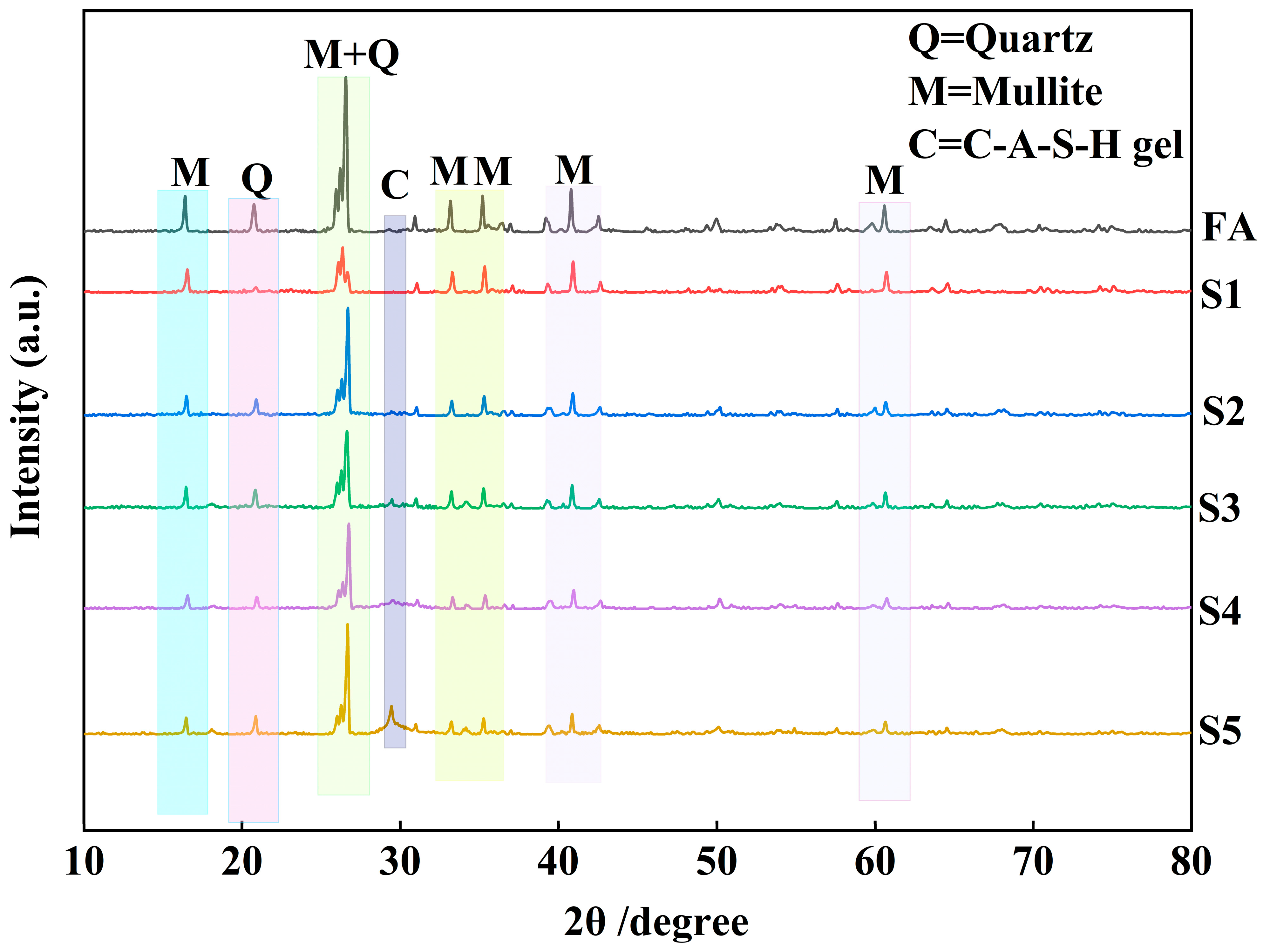
Figure 3 shows the XRD patterns of raw FA and FABG samples with varying Ca(OH)2 contents after microwave treatment. The analysis indicates that the FABG are predominantly amorphous, with minor crystalline phases of mullite and quartz. Overall, increasing the Ca(OH)2 content and applying microwave irradiation did not result in the formation of new crystalline phases [20]. Only slight changes in the diffraction peak intensities of the original crystalline phases (mullite and quartz) were observed, suggesting that these phases underwent minimal dissolution under the highly alkaline conditions. Notably, the diffraction peak intensity at 2θ ≈ 26.5° (the main quartz peak) in sample S1 was markedly lower than in samples S2–S5.
Furthermore, the diffraction peak at 2θ ≈ 20.9°(a characteristic quartz peak) was absent in sample S1, whereas it remained visible in raw FA and in samples S2–S5. A notable reduction or disappearance of diffraction peak intensity generally indicates an increased degree of amorphization, corresponding to reduced crystallinity. The absence of the 20.9° quartz peak in S1 may be analyzed as follows. Although microwave heating can accelerate the alkali activation reaction and promote amorphous phase formation, this effect applies to all microwave-treated samples (S1–S5). Given that the 20.9° peak remained largely unchanged in S2–S5, microwave irradiation alone is unlikely to be the primary cause of the peak disappearance in S1.
A more plausible explanation is that the single-alkali system (Na2SiO3) enhances the alkali activation of FA. In S1, the activator consists solely of highly concentrated sodium silicate, which exhibits a stronger dissolution capacity toward crystalline phases, including the quartz phase at 20.9°. This leads to the disappearance of the corresponding diffraction peak and the formation of a higher proportion of amorphous reaction products. This interpretation aligns with the overall higher amorphous content in S1, as evidenced by the more intense diffuse background and the reduced intensity of the main quartz peak. In contrast, in the dual-alkali system (S2–S5), the presence of Ca2+ and the formation of C-A-S-H gel [21,22] likely modify the system alkalinity and the dissolution kinetics of specific crystalline phases, resulting in the retention of the quartz peak at 20.9°.
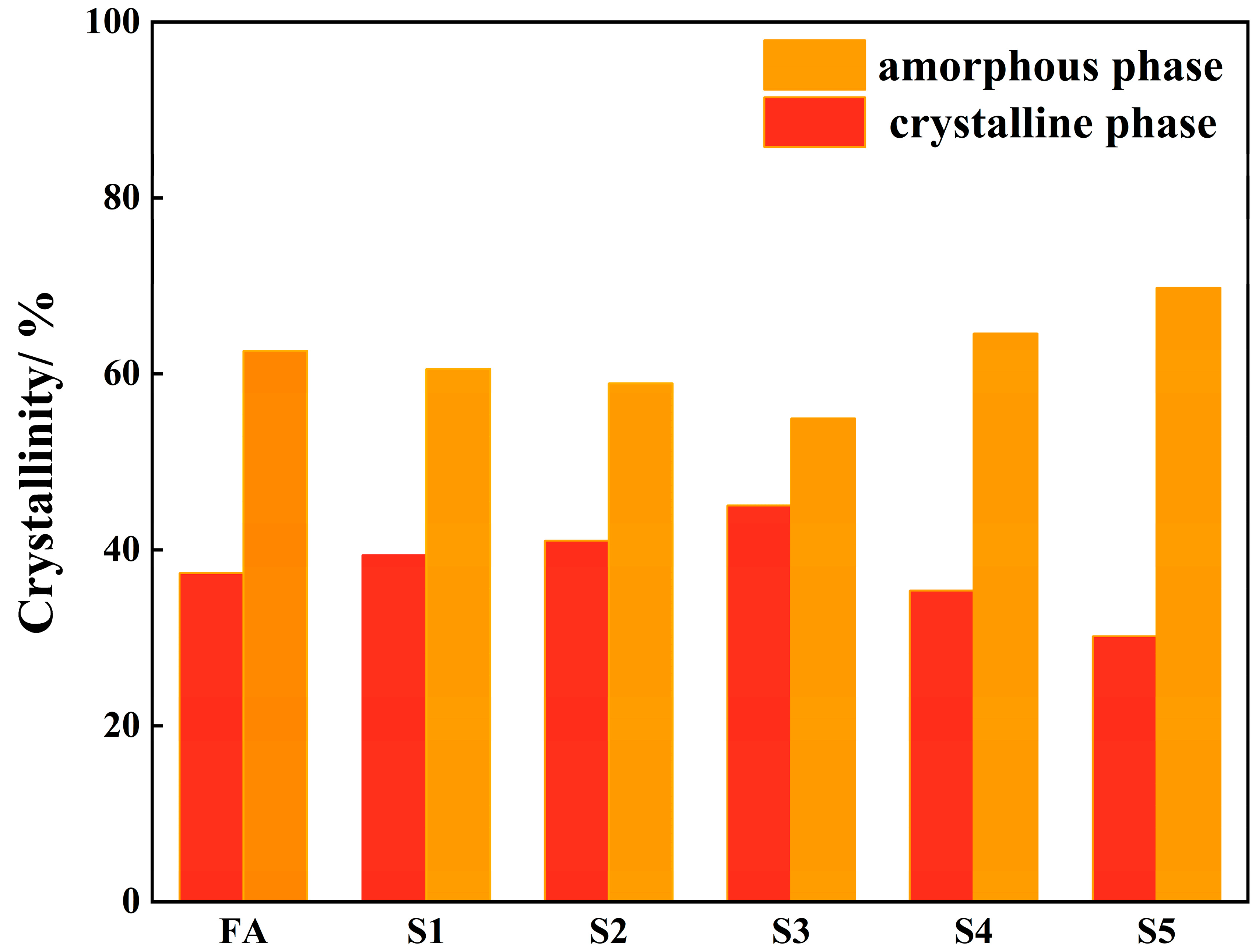
As illustrated in Figure 4, the evolution of crystallinity in the fly ash-based geopolymer (FABG) exhibits a distinct two-stage trend with increasing Ca(OH)2 dosage. Initially, as the Ca(OH)2 dosage increases from S1 to S3, the crystallinity rises from 39.4% to 45.04%. This relative increase is primarily attributed to the early-stage dissolution kinetics within the dual-alkali system (Ca(OH)2 and Na2SiO3), which preferentially consumes the amorphous precursors of the fly ash, thereby temporarily increasing the relative proportion of the unreacted residual crystalline phases. Subsequently, as the Ca(OH)2 dosage further increases from S3 to S5, the crystallinity sharply decreases to 30%. This reduction is driven by the abundant supply of Ca2+ ions, which promotes the massive formation of amorphous calcium aluminosilicate hydrate (C-A-S-H) gel. The proliferation of this amorphous C-A-S-H gel effectively dominates the microstructure, thereby reducing the overall proportion of the crystalline phase within the FABG matrix.

3.1.2. FTIR Analysis

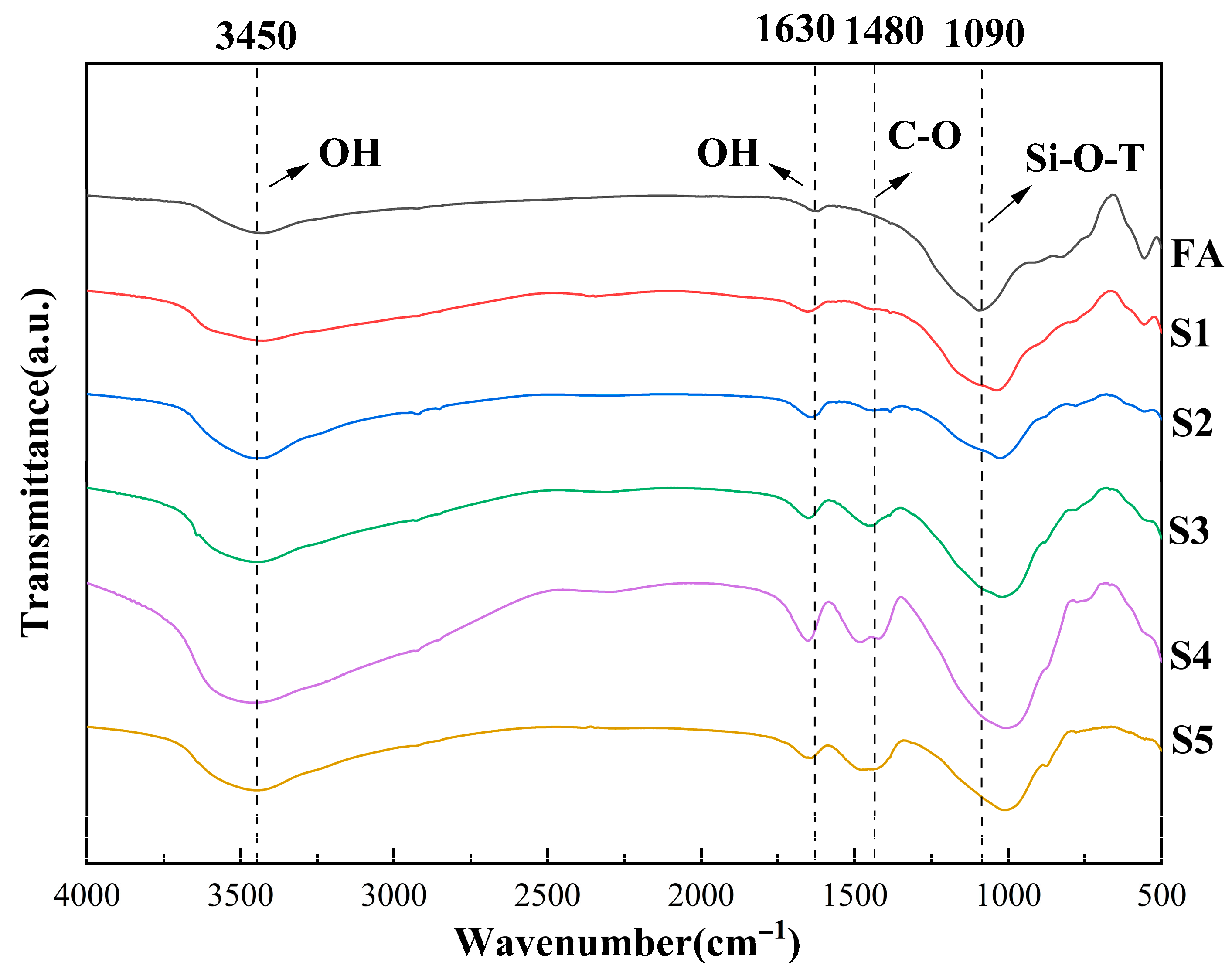
The FTIR spectra of raw FA and alkali-activated fly ash (AAFA) samples with varying Ca(OH)2 contents are shown in Figure 5. Distinct characteristic absorption bands appear at approximately 3450, 1630, 1430, and 1090 cm−1. The band at 1630–1650 cm−1 corresponds to H2O bending vibrations, while the broad absorption band at 3450 cm−1 is attributed to O-H stretching vibrations in the alkaline medium [23,24,25].
FTIR analysis reveals the evolution of the geopolymer gel system under dual-alkali activation. As the Ca(OH)2 content increases, the main Si-O-T (T = Ca/Na) band gradually shifts from 1090 cm−1 to 1010 cm−1 and finally to 1000 cm−1. The first shift (1090 → 1010 cm−1), observed from FA to S3, indicates the depolymerization of fly ash and the formation of N-A-S-H gel. The second shift (1010 → 1000 cm−1), occurring from S3 to S5, reflects the increased participation of Ca2+ in the gel network, promoting the formation of C-A-S-H gels and its hybridization with N-A-S-H gel, resulting in a more calcium-rich (N,C)-A-S-H hybrid gel system. Simultaneously with the second band shift, a broad band appears at ~1350–1595 cm−1, corresponding to the C-O asymmetric stretching vibration of CO32− [26]. Variations in the intensity of this band among the samples indicate carbonation of the hydration products. The occurrence of the second Si-O-T band shift, together with the emergence of the carbonate vibration, demonstrates that the increased addition of calcium hydroxide supplies sufficient Ca2+, facilitating the formation of more calcium-rich (N,C)-A-S-H or C-A-S-H gels and enhancing their interaction with N-A-S-H gel [27,28,29].

3.1.3. Multifaceted Pore Structure Analysis

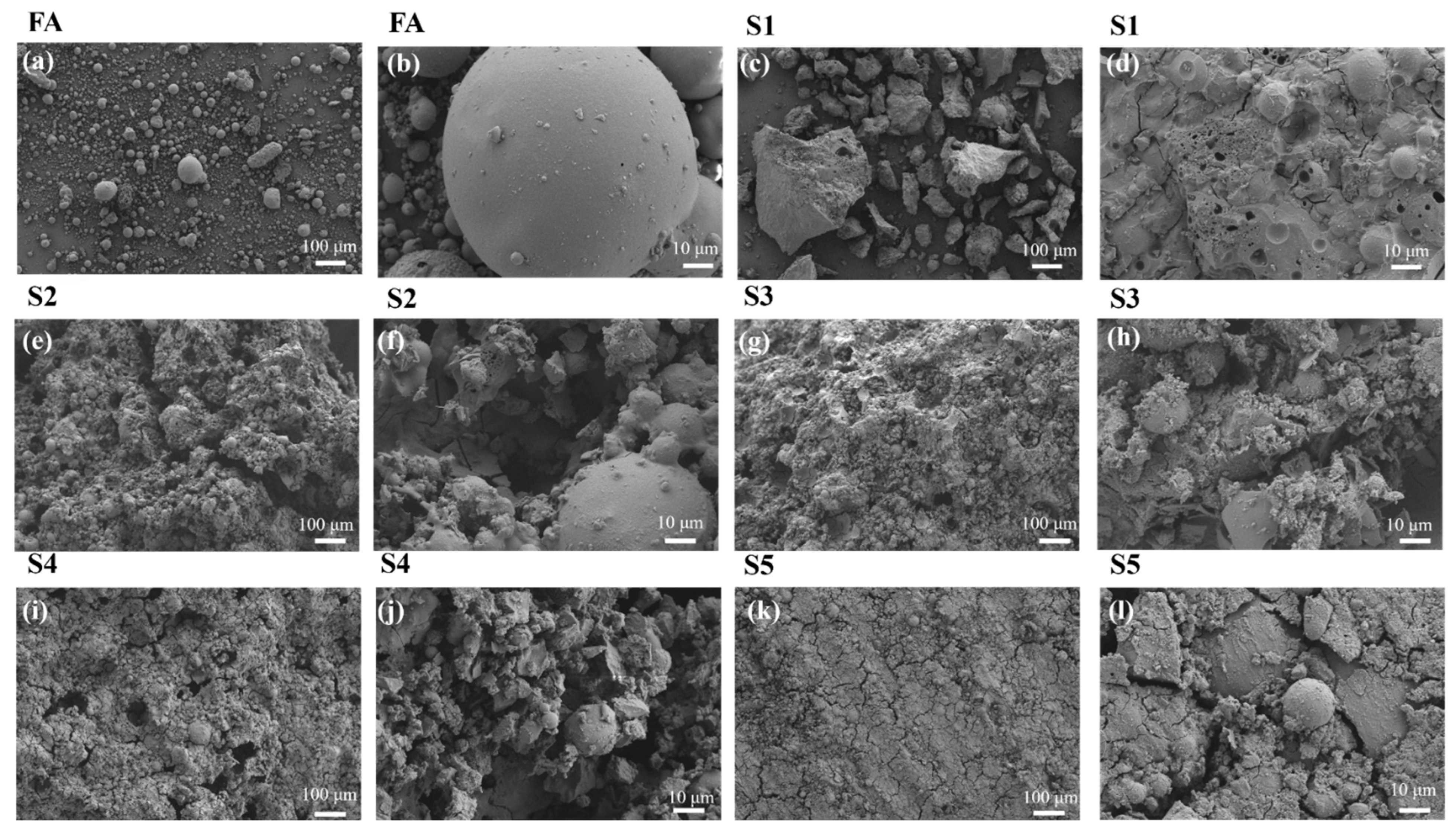
Figure 6 shows scanning electron microscopy (SEM) images of raw FA and FABG samples with varying Ca(OH)2 contents (S1–S5) at scales of 100 μm and 10 μm. Morphology of raw FA (Figure 6a,b): The raw FA mainly consists of spherical particles with irregular shapes and a broad particle size distribution.
Morphology of the single-alkali activated sample S1 (Figure 6c,d): After activation with sodium silicate, the initially dispersed FA particles underwent significant agglomeration, forming large, consolidated masses. This indicates the strong role of sodium silicate in dissolving, restructuring, and polymerizing the FA particles. The surface of S1 displays prominent protrusions and numerous micropores (Figure 6d).
Morphology of dual-alkali activated samples (S2–S5): Sample S2 (Figure 6e,f) shows a higher degree of overall polymerization compared with S1, with no dispersed particle structures as observed in S1 (Figure 6c). However, noticeable macroscopic pores and cracks are still present on the surface (Figure 6f). These defects may arise from two factors: (1) Inadequate control of microwave energy, which could have hindered the full development of the early-stage gel network, leading to structural weaknesses [22]; or (2) Insufficient Ca2+ concentration in S2 (the sample with the lowest Ca(OH)2 content), which may have limited the formation and densification of gel phases such as C-A-S-H, promoting crack formation.
Morphology of samples S3–S5 (Figure 6g–j): With increasing Ca(OH)2 content, the size of macroscopic pores and cracks on the sample surfaces was significantly reduced (Figure 6g–j). At the 10 μm scale (Figure 6h,j), it is evident that micropores are progressively filled by newly formed gel products. This decrease in porosity indicates that (1) microwave treatment does not inhibit the gelation process over time, and (2) an adequate supply of Ca2+ ions is crucial for suppressing macroscopic defects and promoting microstructural densification. As shown in Figure 6f,h, and j (particularly at 10 μm), the amount of C-A-S-H gel increases with higher Ca(OH)2 dosage. These gel phases effectively fill interparticle voids and micropores, reducing overall porosity and enhancing particle bonding. Consequently, the microstructure becomes denser and more homogeneous, which contributes to improved mechanical performance.

3.1.4. Pore Distribution

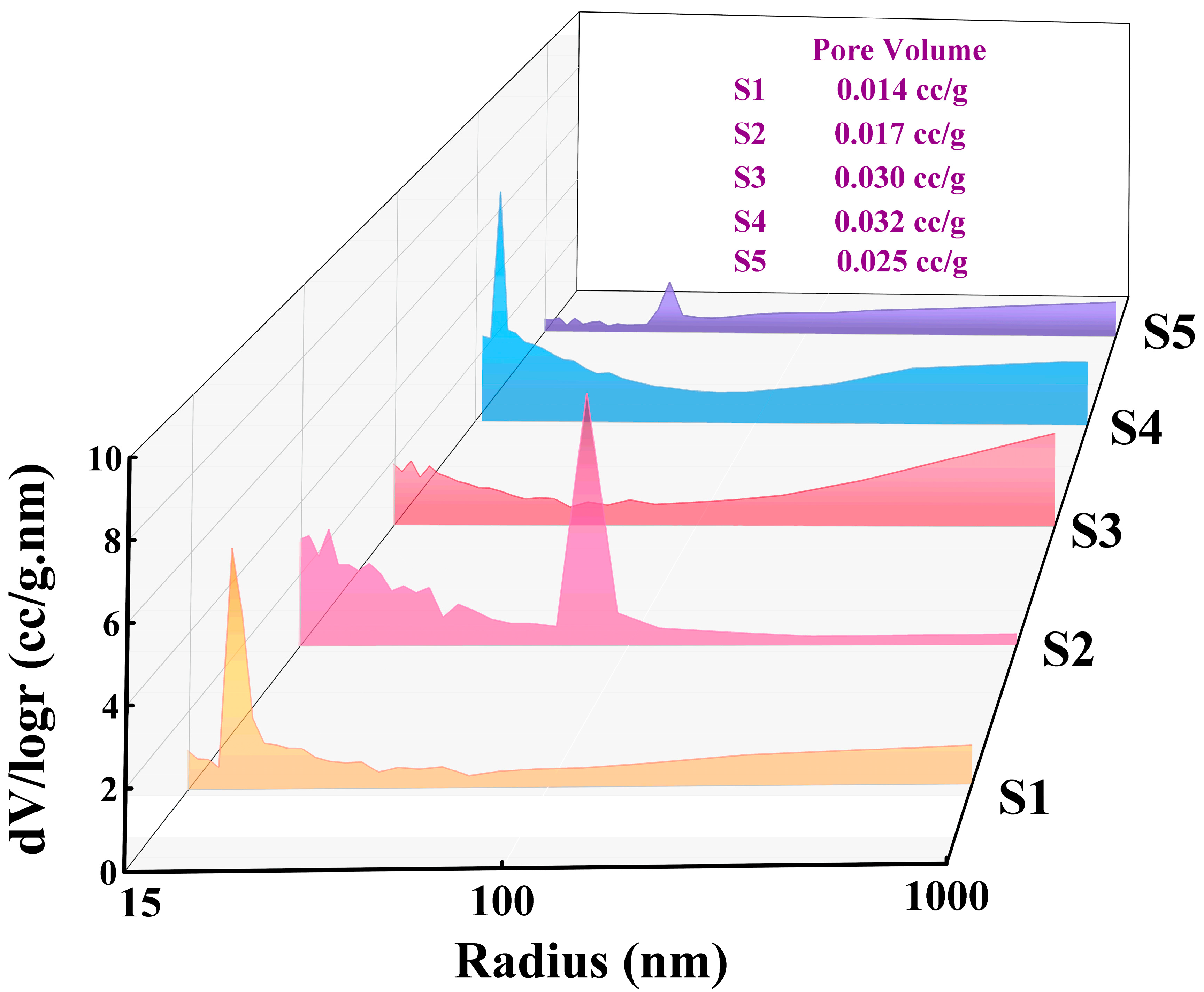
Figure 7 shows that the pore size evolution of fly ash-based geopolymers (FABGs) is synergistically governed by alkali activation intensity and gel filling, exhibiting distinct staged characteristics. In the initial activation stage (S1), the single-alkali system relies on the strong activation of high-concentration sodium silicate to induce rapid depolymerization and reorganization of fly ash. The pore size distribution is primarily concentrated in the micropore range (16–25 nm). However, the absence of Ca2+ ions limits gel network formation, resulting in low initial matrix density and strength. During the transition stage (S2), the introduction of low-dose Ca(OH)2 reacts with sodium silicate to form calcium silicate, which consumes some of the effective activators and reduces the activation of the fly ash vitreous phase. Consequently, the polymerization rate slows, and the pore size distribution shifts toward larger pores, broadening to 20–90 nm. In the synergistic optimization stage (S3–S5), increasing the Ca(OH)2 dosage supplies excess Ca2+, promoting the formation of substantial C-A-S-H gels that effectively fill gel pores and interparticle voids. At S3, the pore size distribution exhibits a bimodal character, ranging from 16 to 40 nm. At S4, the distribution remains bimodal with a similar range. By S5, the overall pore size distribution becomes more uniform, with only a small peak in the 30–40 nm range. Under the combined effect of N-A-S-H and C-A-S-H gels, significant refinement of the pore structure and densification of the matrix are achieved.

3.1.5. Compressive Strength

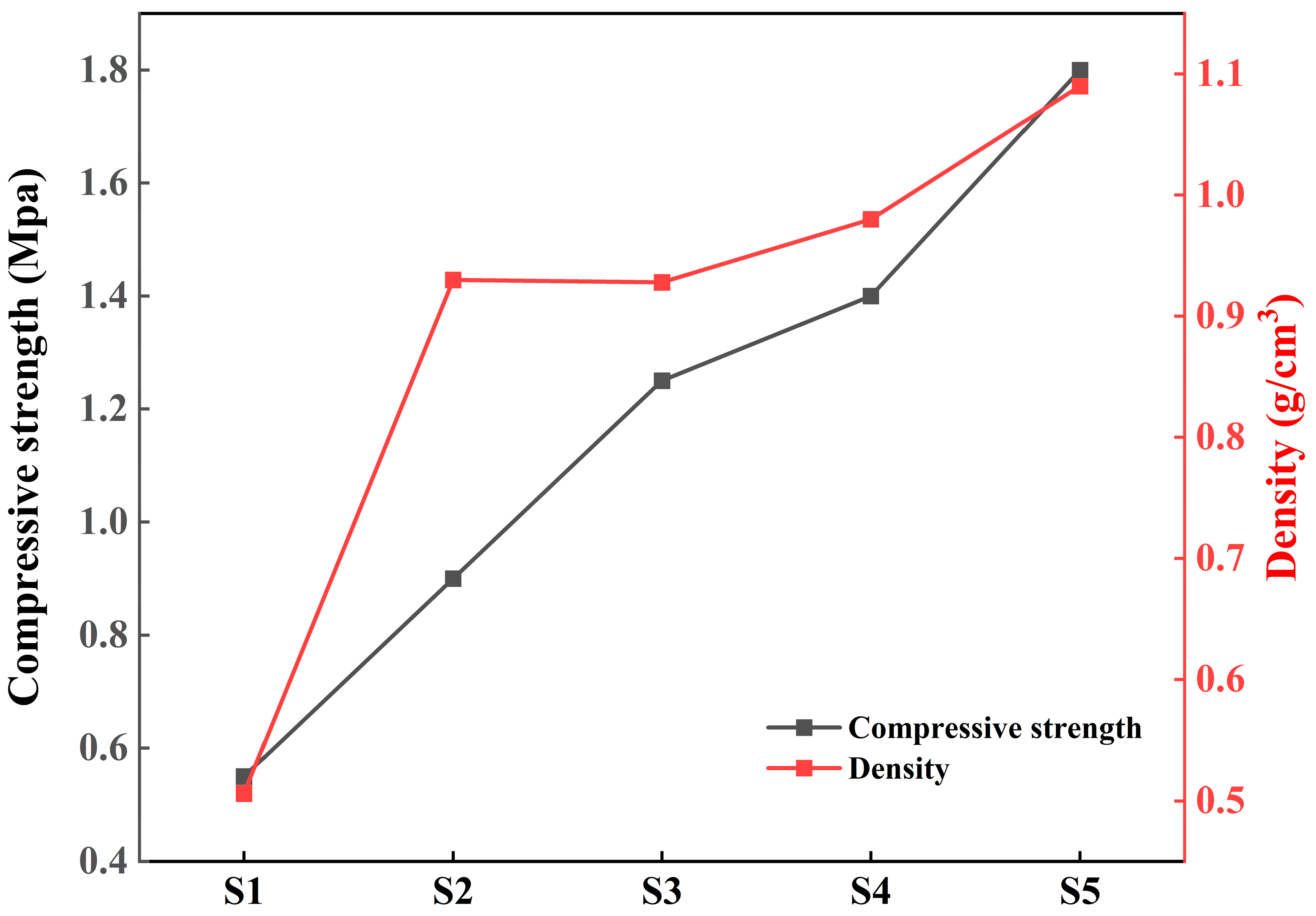
Figure 8 presents the compressive strength and apparent density test results for the FABG samples (S1–S5) with varying Ca(OH)2 additions. When the alkali dosage was S1, the FA underwent polymerization and reorganization under the intense alkali activation of sodium silicate, transforming into an FABG predominantly composed of a small pore size distribution. However, the absence of Ca2+ limited C-A-S-H gel formation, preventing the development of a dense matrix. Consequently, the apparent density and compressive strength at S1 were 0.506 g/cm3 and 0.5 MPa, respectively. With increasing Ca(OH)2 dosage, the introduction of Ca2+ promoted the formation of C-A-S-H gel [30,31], leading to gradual improvements in both density and mechanical strength. Compressive strength increased from 0.5 MPa at S1 to 1.7 MPa at S5, while apparent density correspondingly increased from 0.506 g/cm3 to 1.09 g/cm3.
It should be noted that the compressive strengths obtained in this study (0.5–1.7 MPa) are low compared to conventional geopolymer binders or structural building materials, which typically exceed 20 MPa. This indicates that the FABG produced here is not intended for load-bearing applications. Instead, its low density (0.506–1.09 g/cm3) and porous microstructure make it suitable for non-structural or lightweight uses, such as acidic soil amendment, insulation materials, or environmental remediation matrices, where mechanical strength is not the primary requirement.

3.2. pH Buffering Capacity Against Acidic Solutions of FABG

FABGs exhibit considerable potential for treating acidic solutions, primarily due to their inherent alkalinity and unique three-dimensional network structure. During synthesis, geopolymers are formed using highly alkaline activators, resulting in a final product rich in soluble alkali metal ions and characterized by strong alkalinity. When introduced into an acidic environment, these alkaline components gradually leach from the geopolymer framework, neutralizing H+ ions in the solution. This process effectively and persistently increases the system pH, mitigating acidity and making FABG an efficient alkaline neutralizing agent.
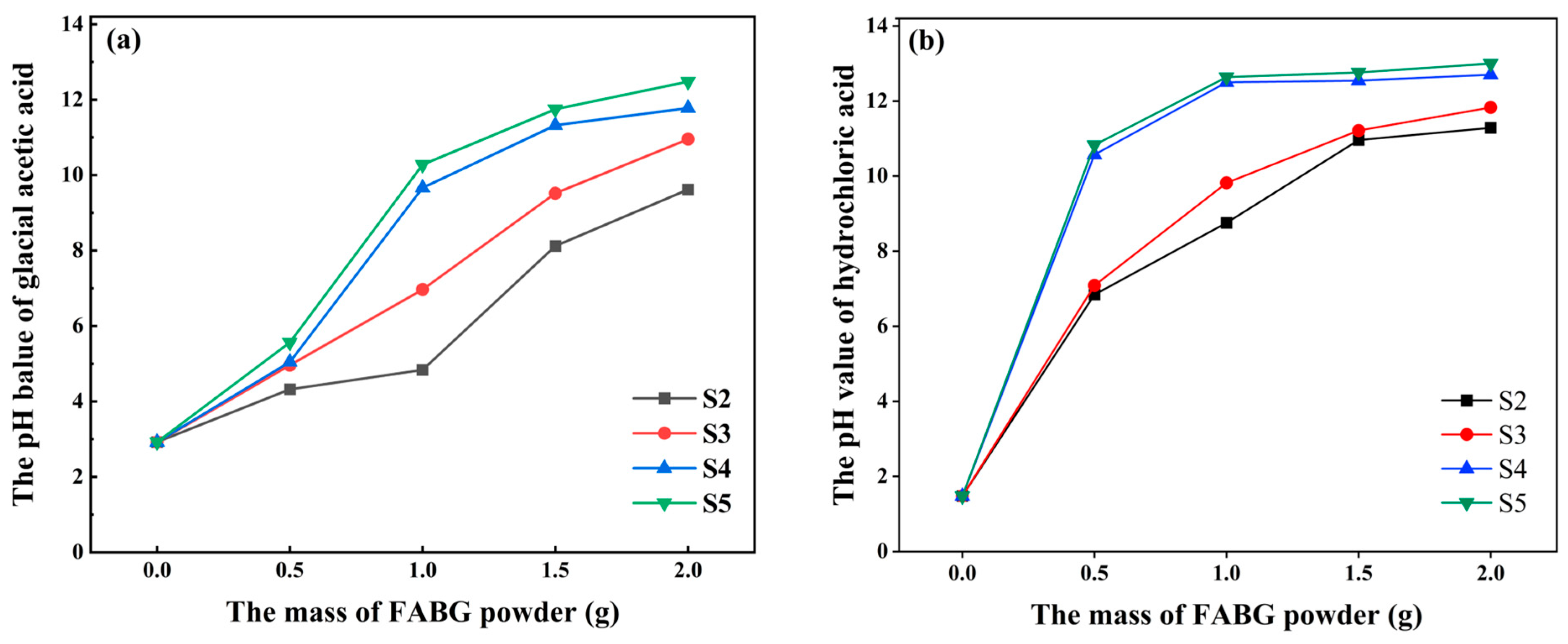
Figure 9 illustrates the neutralization effect of FABG powders with varying Ca(OH)2 contents on the pH of hydrochloric acid (HCl) and glacial acetic acid (CH3COOH) solutions. The key observations are as follows: Effect of powder dosage: At a fixed Ca(OH)2 content, the amount of geopolymer powder significantly affects the final pH of the acidic solutions. A higher powder dosage results in a more pronounced increase in pH. For the glacial acetic acid solution (initial pH ≈ 2.925), the pH can be raised to approximately 12.156, whereas for the hydrochloric acid solution (initial pH ≈ 1.480), the pH can reach about 13.0.
Effect of Ca(OH)2 content: At a fixed powder dosage, FABG powders with higher Ca(OH)2 content exhibit stronger neutralization capacity, leading to a greater increase in the pH of the acidic solutions. Moreover, under identical powder and Ca(OH)2 conditions, the pH increase is more pronounced in the hydrochloric acid solution than in the glacial acetic acid solution.

3.3. Antibacterial Performance Evaluation

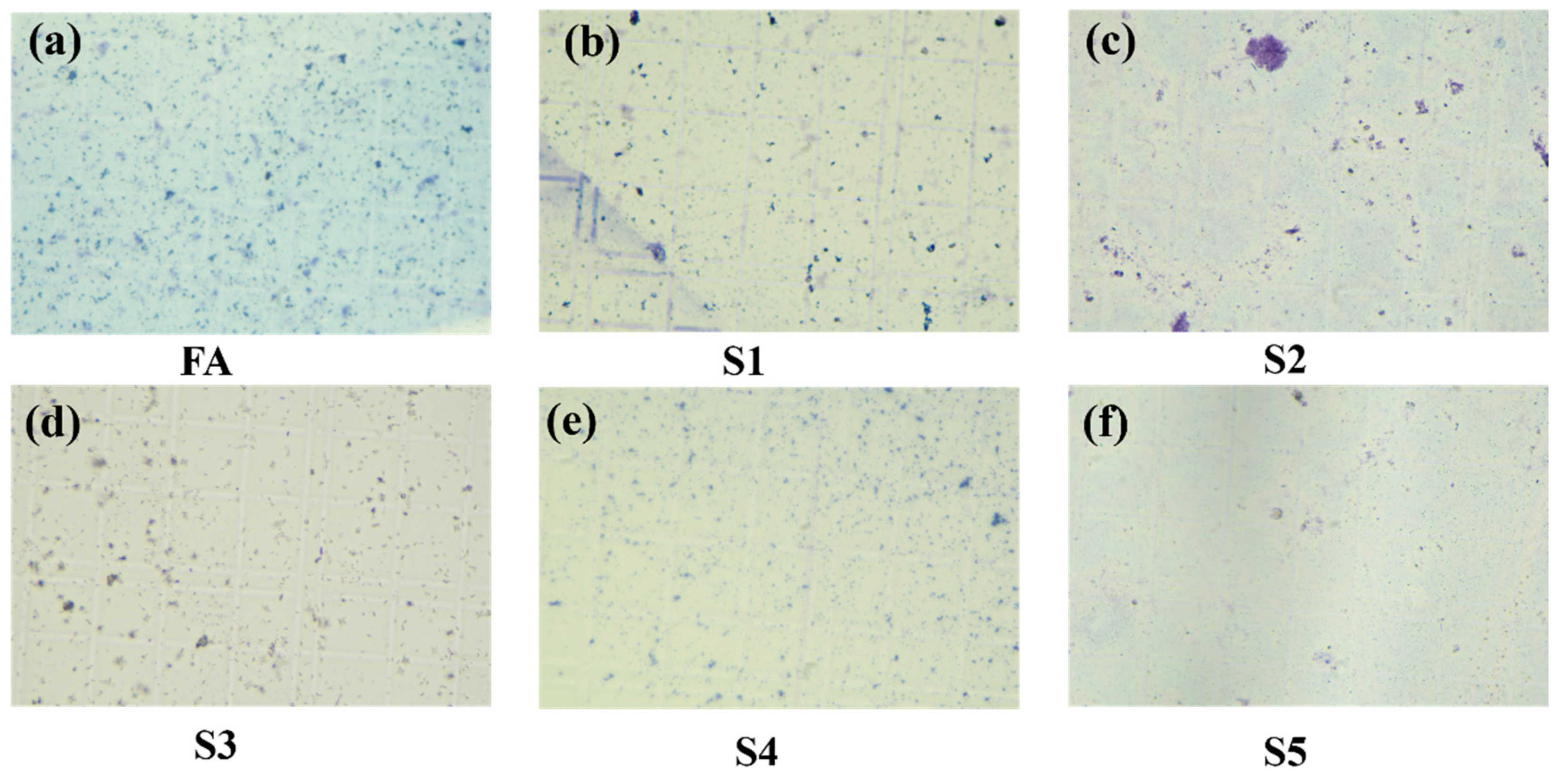
To comprehensively assess the interaction between fly ash-based geopolymers (FABGs) and microorganisms, the survival and population dynamics of E. coli exposed to different FABG samples were evaluated using optical microscopy and UV-Vis spectrophotometry.
The microscopic morphology of bacterial populations in fly ash solutions with varying Ca(OH)2 contents was examined using a 40× optical microscope (Figure 10). As shown in Figure 10a, the control group containing only raw fly ash (FA) without alkali activation exhibited the highest bacterial density, with numerous cells clearly visible across the field of view. Upon introduction of the dual-alkali system, a marked reduction in bacterial abundance was observed. As the Ca(OH)2 dosage increased from S1 to S5 (Figure 10b–f), the number of visible bacterial cells decreased substantially. These observations indicate that FABG synthesized via the synergistic activation of Ca(OH)2 and Na2SiO3 exerts a strong inhibitory effect on bacterial proliferation.
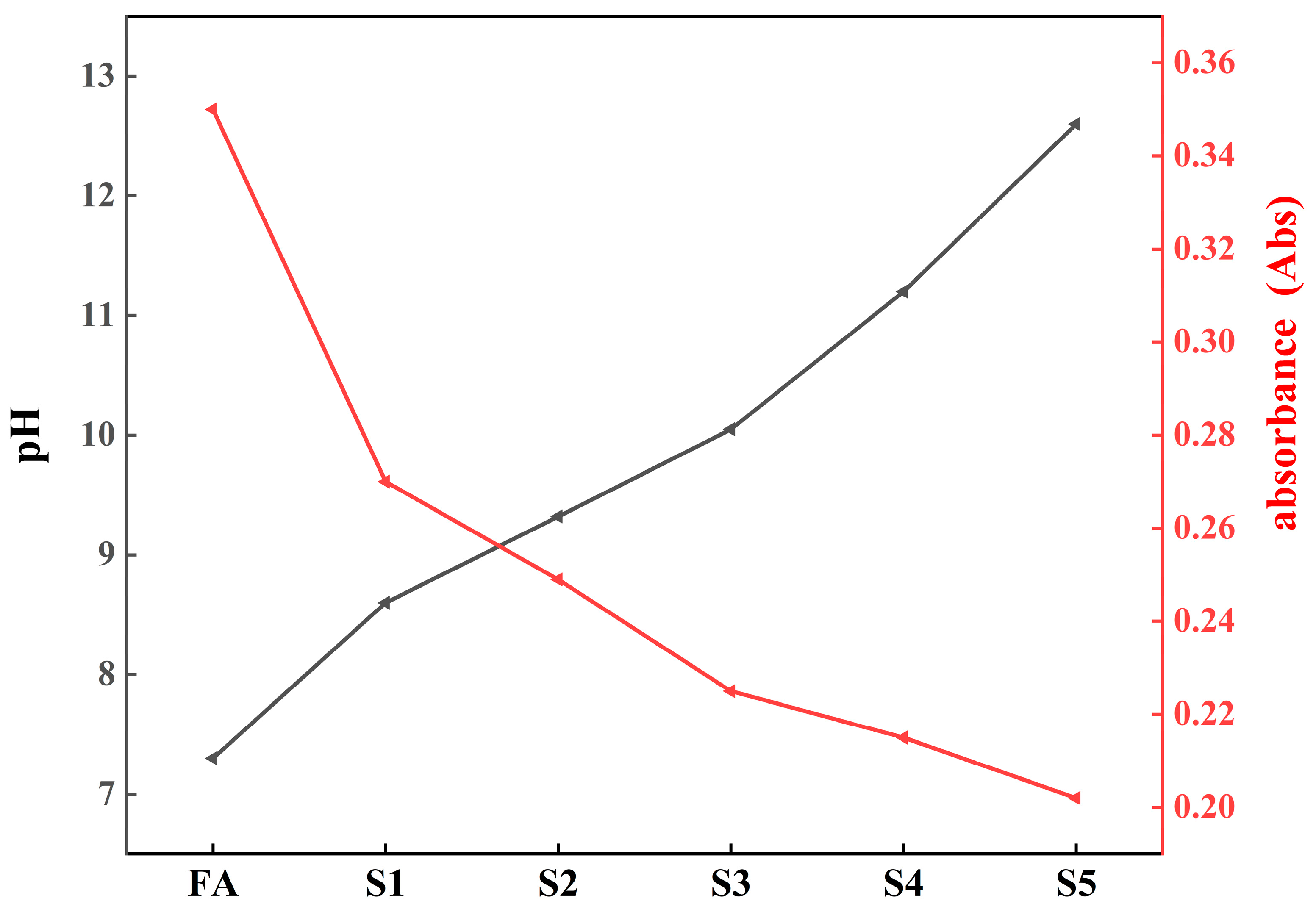
The spectrophotometric and pH results in Figure 11 indicate that there is a significant negative correlation between solution pH and bacterial survival rate, which can be directly attributed to the sustained alkaline stress mechanism generated by the material. With increasing Ca(OH)2 content, the fly ash-based geopolymer (FABG) continuously releases residual OH ions into the solution, resulting in a marked increase in pH. This highly alkaline environment (pH > 9) disrupts bacterial cellular homeostasis, leading to extensive inactivation, as evidenced by the sharp decrease in supernatant absorbance. These results demonstrate that the inherent strong alkalinity of the FABG is a key factor in inhibiting bacterial proliferation, enabling efficient antibacterial performance by maintaining a persistent alkaline stress environment [32,33].

4. Conclusions

This study investigated the synergistic effects of Ca(OH)2-Na2SiO3 dual-alkali activation and microwave-assisted treatment on low-calcium fly ash-based geopolymer (FABG). Microstructural evaluations revealed that the introduction of Ca2+ promoted quartz dissolution without forming new crystalline phases. Quantitative XRD and FTIR analyses confirmed the structural transition from an N-A-S-H gel to a more polymerized, amorphous (N,C)-A-S-H hybrid gel, as evidenced by the Si-O-T absorption band shift from 1090 cm−1 to 1000 cm−1. Concurrently, the microwave treatment accelerated gel densification, while the generated C-A-S-H gel effectively filled micropores. This transformed the pore structure into a more uniform, multi-stage distribution, reducing macrocracks and overall porosity. Consequently, increasing the Ca(OH)2 content to 10% doubled the apparent density (up to 1.09 g/cm3) and enhanced compressive strength (up to 1.7 MPa). It should be noted that such mechanical performance specifically positions the FABG as a promising candidate for lightweight, non-load-bearing building materials rather than structural applications.
In addition to these physical properties, FABG exhibited a robust pH-buffering capacity, capable of neutralizing highly acidic solutions (pH 1.48 to ~13.0). This sustained alkaline stress (pH > 9) was identified as the primary mechanism driving its pronounced antibacterial effect against Escherichia coli, rather than any intrinsic bioactivity of the geopolymer itself.
Despite successfully establishing the feasibility of this microwave-assisted composite activation process for non-structural construction and environmental applications, certain methodological limitations remain. Specifically, the current microwave treatment lacks in situ temperature monitoring, which restricts a full mechanistic elucidation of thermal gradients. Furthermore, while the crystalline phases were quantified, the FTIR evaluation remained primarily qualitative. To overcome these constraints, future work will focus on integrating real-time thermal control during microwave curing and employing FTIR spectral deconvolution to quantitatively evaluate the amorphous gel’s structural evolution. Ultimately, to translate FABG from laboratory synthesis to practical non-load-bearing and environmental applications, establishing its long-term stability, carbonation resistance, and durability under real-world conditions will be imperative.

Author Contributions

Conceptualization, Z.T.; Methodology, Z.T., H.Y. and Y.G. (Yue Gao); Validation, Z.T.; Investigation, X.L. and M.L.; Writing—original draft, H.Y.; Writing—review and editing, J.J. and Y.G.; Supervision, H.Y., X.L., J.J., Y.G. (Yu Gao), M.L. and C.B.P.; Project administration, J.D. All authors have read and agreed to the published version of the manuscript.

Funding

The 2023 Science and Technology Support Project for the Construction of the Hohhot-Baotou-Ordos National Independent Innovation Demonstration Zone (2023XM06), the National Key R&D Program of China (2024YFC2909805), the Beijing Natural Science Foundation (Grant No. IS25097), the Open Fund of the Key Laboratory of Mineral Metallurgical Resources Utilization and Pollution Control, Ministry of Ecology and Environment of the People’s Republic of China (No. HB202401), the Scientific Research Innovation Capability Support Project for Young Faculty (ZYGXONJSKYCXNLZCXM-E3) and the Major Project of Science and Technology Support for the Construction of Ordos National Sustainable Development Agenda Innovation Demonstration Zone (JB20251445) for financial support.

Data Availability Statement

The original contributions presented in this study are included in the article. Further inquiries can be directed to the corresponding author.

Acknowledgments

The authors would like to express their sincere gratitude to Qingdao University and China University of Mining and Technology, Beijing, for their invaluable education and nurturing, which have laid a solid foundation for both personal growth and academic development.

Conflicts of Interest

The authors declare no conflict of interest.

References

  1. Davidovits, J. Geopolymers: Inorganic polymeric new materials. J. Therm. Anal. 1991, 37, 1633–1656. [Google Scholar]
  2. Abdollahnejad, Z.; Pacheco-Torgal, F.; Félix, T.; Tahri, W.; Barroso Aguiar, J. Mix Design, Properties and Cost Analysis of Fly Ash-Based Geopolymer Foam. Constr. Build. Mater. 2015, 80, 18–30. [Google Scholar] [CrossRef]
  3. Tavor, D.; Wolfson, A.; Shamaev, A.; Shvarzman, A. Recycling of Industrial Wastewater by Its Immobilization in Geopolymer Cement. Ind. Eng. Chem. Res. 2007, 46, 6801–6805. [Google Scholar] [CrossRef]
  4. Komnitsas, K.; Zaharaki, D. Geopolymerisation: A Review and Prospects for the Minerals Industry. Miner. Eng. 2007, 20, 1261–1277. [Google Scholar] [CrossRef]
  5. Favier, A.; Habert, G.; Roussel, N.; d’Espinose De Lacaillerie, J.-B. A Multinuclear Static NMR Study of Geopolymerisation. Cem. Concr. Res. 2015, 75, 104–109. [Google Scholar] [CrossRef]
  6. Das, D.; Rout, P.K. Synthesis and Characterization of Fly Ash and GBFS Based Geopolymer Material. Biointerface Res. Appl. Chem. 2021, 11, 14506–14519. [Google Scholar] [CrossRef]
  7. Ryu, G.S.; Lee, Y.B.; Koh, K.T.; Chung, Y.S. The Mechanical Properties of Fly Ash-Based Geopolymer Concrete with Alkaline Activators. Constr. Build. Mater. 2013, 47, 409–418. [Google Scholar] [CrossRef]
  8. Karakoç, M.B.; Türkmen, İ.; Maraş, M.M.; Kantarci, F.; Demirboğa, R.; Uğur Toprak, M. Mechanical Properties and Setting Time of Ferrochrome Slag Based Geopolymer Paste and Mortar. Constr. Build. Mater. 2014, 72, 283–292. [Google Scholar] [CrossRef]
  9. Xing, D.; Liu, M.; Deng, J.; Wang, X.; Yin, H.; Yang, Y.; Xiong, K.; Zhou, L.; Gao, G.; Yang, L.; et al. Production of Ultra-Clean Coal by Low-Temperature Roasting Thermal Activation Pretreatment and Two-Step Acid Leaching. Fuel 2025, 398, 135525. [Google Scholar] [CrossRef]
  10. Wang, T.; Deng, J.; Zhang, H.; Xing, D.; Han, Z.; Sheng, J.; Park, C.B. Utilization of Oxided Tamarind Polysaccharide Gum as Novel Selective Depressant in the Flotation Separation of Copper-Lead-Zinc Sulfide Ore. Process Saf. Environ. Prot. 2025, 201, 107513. [Google Scholar]
  11. Wang, T.; Deng, J.; Cheng, T.; Yin, Q.; Wu, B.; Hu, M.; Sun, R.; Leng, X.; Yang, Y. Selective Depression of Galena by Tamarind Seed Gum during Chalcopyrite Flotation. Miner. Eng. 2025, 232, 109554. [Google Scholar] [CrossRef]
  12. Barbosa, V.F.F.; MacKenzie, K.J.D.; Thaumaturgo, C. Synthesis and Characterisation of Materials Based on Inorganic Polymers of Alumina and Silica: Sodium Polysialate Polymers. Int. J. Inorg. Mater. 2000, 2, 309–317. [Google Scholar] [CrossRef]
  13. Habert, G.; d’Espinose De Lacaillerie, J.B.; Roussel, N. An Environmental Evaluation of Geopolymer Based Concrete Production: Reviewing Current Research Trends. J. Clean. Prod. 2011, 19, 1229–1238. [Google Scholar] [CrossRef]
  14. Van Den Heede, P.; De Belie, N. Environmental Impact and Life Cycle Assessment (LCA) of Traditional and ‘Green’ Concretes: Literature Review and Theoretical Calculations. Cem. Concr. Compos. 2012, 34, 431–442. [Google Scholar] [CrossRef]
  15. Kumar, S.; Kumar, R. Mechanical Activation of Fly Ash: Effect on Reaction, Structure and Properties of Resulting Geopolymer. Ceram. Int. 2011, 37, 533–541. [Google Scholar] [CrossRef]
  16. Klima, K.M.; Koh, C.H.; Brouwers, H.J.H.; Yu, Q. Synergistic Effect of Surfactants in Porous Geopolymer: Tailoring Pore Size and Pore Connectivity. Cem. Concr. Compos. 2022, 134, 104774. [Google Scholar] [CrossRef]
  17. Arpia, A.A.; Chen, W.-H.; Lam, S.S.; Rousset, P.; De Luna, M.D.G. Sustainable Biofuel and Bioenergy Production from Biomass Waste Residues Using Microwave-Assisted Heating: A Comprehensive Review. Chem. Eng. J. 2021, 403, 126233. [Google Scholar] [CrossRef]
  18. Su, P.; Xia, M.; Chen, K.; Wang, H.; Li, X.; Zhou, Z.; Zhang, R.; Zhang, L.; Zhao, S. Study on the Solidification/Stabilization of MSWI Fly Ash by Composite Alkali-Activated Cementitious Materials. ACS Omega 2025, 10, 5659–5667. [Google Scholar] [CrossRef] [PubMed]
  19. Sun, Y.; Zhang, P.; Hu, J.; Liu, B.; Yang, J.; Liang, S.; Xiao, K.; Hou, H. A Review on Microwave Irradiation to the Properties of Geopolymers: Mechanisms and Challenges. Constr. Build. Mater. 2021, 294, 123491. [Google Scholar] [CrossRef]
  20. Li, X.; Zheng, J.; Shao, J.; Loutou, M.; Bai, C.; Qiao, Y.; Miao, Y.; Wang, X.; Zheng, T.; Colombo, P. Evaluation of Porosity, Mechanical and Thermal Properties of Self-Ignition Coal Gangue-Based Foams via Fast Microwave Foaming. J. Build. Eng. 2023, 68, 106062. [Google Scholar]
  21. Inada, M.; Tsujimoto, H.; Eguchi, Y.; Enomoto, N.; Hojo, J. Microwave-Assisted Zeolite Synthesis from Coal Fly Ash in Hydrothermal Process. Fuel 2005, 84, 1482–1486. [Google Scholar] [CrossRef]
  22. Huang, X.; Muhammad, F.; Yu, L.; Jiao, B.; Shiau, Y.; Li, D. Reduction/Immobilization of Chromite Ore Processing Residue Using Composite Materials Based Geopolymer Coupled with Zero-Valent Iron. Ceram. Int. 2018, 44, 3454–3463. [Google Scholar] [CrossRef]
  23. Shi, D.; Ye, J.; Zhang, W. Effects of Activator Content on Properties, Mineralogy, Hydration and Microstructure of Alkali-Activated Materials Synthesized from Calcium Silicate Slag and Ground Granulated Blast Furnace Slag. J. Build. Eng. 2020, 32, 101791. [Google Scholar] [CrossRef]
  24. Yang, L.Y.; Jia, Z.J.; Zhang, Y.M.; Dai, J.G. Effects of Nano-TiO2 on Strength, Shrinkage and Microstructure of Alkali Activated Slag Pastes. Cem. Concr. Compos. 2015, 57, 1–7. [Google Scholar] [CrossRef]
  25. Zheng, D.; Ji, T.; Wang, G. Effect of CaO on the Autogenous Shrinkage of Alkali-activated Slag Mortar. Adv. Mater. Sci. Eng. 2021, 2021, 9918834. [Google Scholar] [CrossRef]
  26. Bernal, S.A. Effect of the Activator Dose on the Compressive Strength and Accelerated Carbonation Resistance of Alkali Silicate-Activated Slag/Metakaolin Blended Materials. Constr. Build. Mater. 2015, 98, 217–226. [Google Scholar] [CrossRef]
  27. Lee, W.K.W.; Van Deventer, J.S.J. Use of Infrared Spectroscopy to Study Geopolymerization of Heterogeneous Amorphous Aluminosilicates. Langmuir 2003, 19, 8726–8734. [Google Scholar] [CrossRef]
  28. Criado, M.; Fernández-Jiménez, A.; Palomo, A. Alkali Activation of Fly Ash: Effect of the SiO2/Na2O Ratio. Microporous Mesoporous Mater. 2007, 106, 180–191. [Google Scholar] [CrossRef]
  29. Fernández-Jiménez, A.; Palomo, A.; Criado, M. Microstructure Development of Alkali-Activated Fly Ash Cement: A Descriptive Model. Cem. Concr. Res. 2005, 35, 1204–1209. [Google Scholar] [CrossRef]
  30. Lee, W.-H.; Wang, J.-H.; Ding, Y.-C.; Cheng, T.-W. A Study on the Characteristics and Microstructures of GGBS/FA Based Geopolymer Paste and Concrete. Constr. Build. Mater. 2019, 211, 807–813. [Google Scholar] [CrossRef]
  31. Aiken, T.A.; Sha, W.; Kwasny, J.; Soutsos, M.N. Resistance of Geopolymer and Portland Cement Based Systems to Silage Effluent Attack. Cem. Concr. Res. 2017, 92, 56–65. [Google Scholar] [CrossRef]
  32. Cunningham, T.M.; Koehl, J.L.; Summers, J.S.; Haydel, S.E. pH-Dependent Metal Ion Toxicity Influences the Antibacterial Activity of Two Natural Mineral Mixtures. PLoS ONE 2010, 5, e9456. [Google Scholar] [CrossRef] [PubMed]
  33. Williams, L.B.; Haydel, S.E. Evaluation of the Medicinal Use of Clay Minerals as Antibacterial Agents. Int. Geol. Rev. 2010, 52, 745–770. [Google Scholar] [CrossRef] [PubMed]
Figure 1. Particle size analysis diagram of Fly Ash.
Minerals 16 00322 g001
Figure 2. Flowchart of the process for preparing FABG using microwave assistance.
Minerals 16 00322 g002
Figure 3. XRD patterns of samples with different calcium hydroxide contents and the raw FA.
Minerals 16 00322 g003
Figure 4. Crystallinity of fly ash-based geopolymers with different calcium hydroxide dosages.
Minerals 16 00322 g004
Figure 5. FTIR spectra of fly ash raw material (FA) and FABG with different calcium hydroxide contents (S1–S5).
Minerals 16 00322 g005
Figure 6. Scanning electron microscopy (SEM) images of fly ash raw material (a,b) and FABG with varying Ca(OH)2 dosages (cl).
Minerals 16 00322 g006
Figure 7. Particle size distribution of FABG with varying Ca(OH)2 dosages.
Minerals 16 00322 g007
Figure 8. Compressive strength and apparent density of FABG with varying Ca(OH)2 dosages.
Minerals 16 00322 g008
Figure 9. Influence of FABG powder on pH values of multiple acidic solutions ((a): glacial acetic acid, (b): hydrochloric acid).
Minerals 16 00322 g009
Figure 10. Different calcium hydroxide dosages and fly ash solutions under 40× optical microscope.
Minerals 16 00322 g010
Figure 11. Changes in pH value and absorbance of fly ash-based geopolymer powder solution under different calcium hydroxide dosages.
Minerals 16 00322 g011
Table 1. Chemical Composition of Fly Ash.
CompoundSiO2Al2O3Fe2O3CaOK2OMgOTiO2Other
Content48.9%23.7%10.7%5.4%3.4%2.4%1.9%3.6%
Table 2. Theoretical oxide molar ratio and mixture formula of fly ash-based alkali-activated samples (S1–S5).
LabelComponentTheoretical Oxide Molar RatiosTreatment
Ca(OH)2 Dosage (wt.%)Na2SiO3(g)FA(g)SiO2/Na2OSiO2/Al2O3
S1033553.102.06700 W-5 min
S2233553.102.06700 W-5 min
S3533553.102.06700 W-5 min
S4833553.102.06700 W-5 min
S51033553.102.06700 W-5 min
The Ca(OH)2 dosage is expressed as a mass percentage relative to the mass of the fly ash.
Disclaimer/Publisher’s Note: The statements, opinions and data contained in all publications are solely those of the individual author(s) and contributor(s) and not of MDPI and/or the editor(s). MDPI and/or the editor(s) disclaim responsibility for any injury to people or property resulting from any ideas, methods, instructions or products referred to in the content.