Impact of Diagenesis on Microbial Carbonate Reservoirs in the Upper Indus Basin, NW Himalayas
 , ,
, ,  , , , , , ,
Abstract
1. Introduction
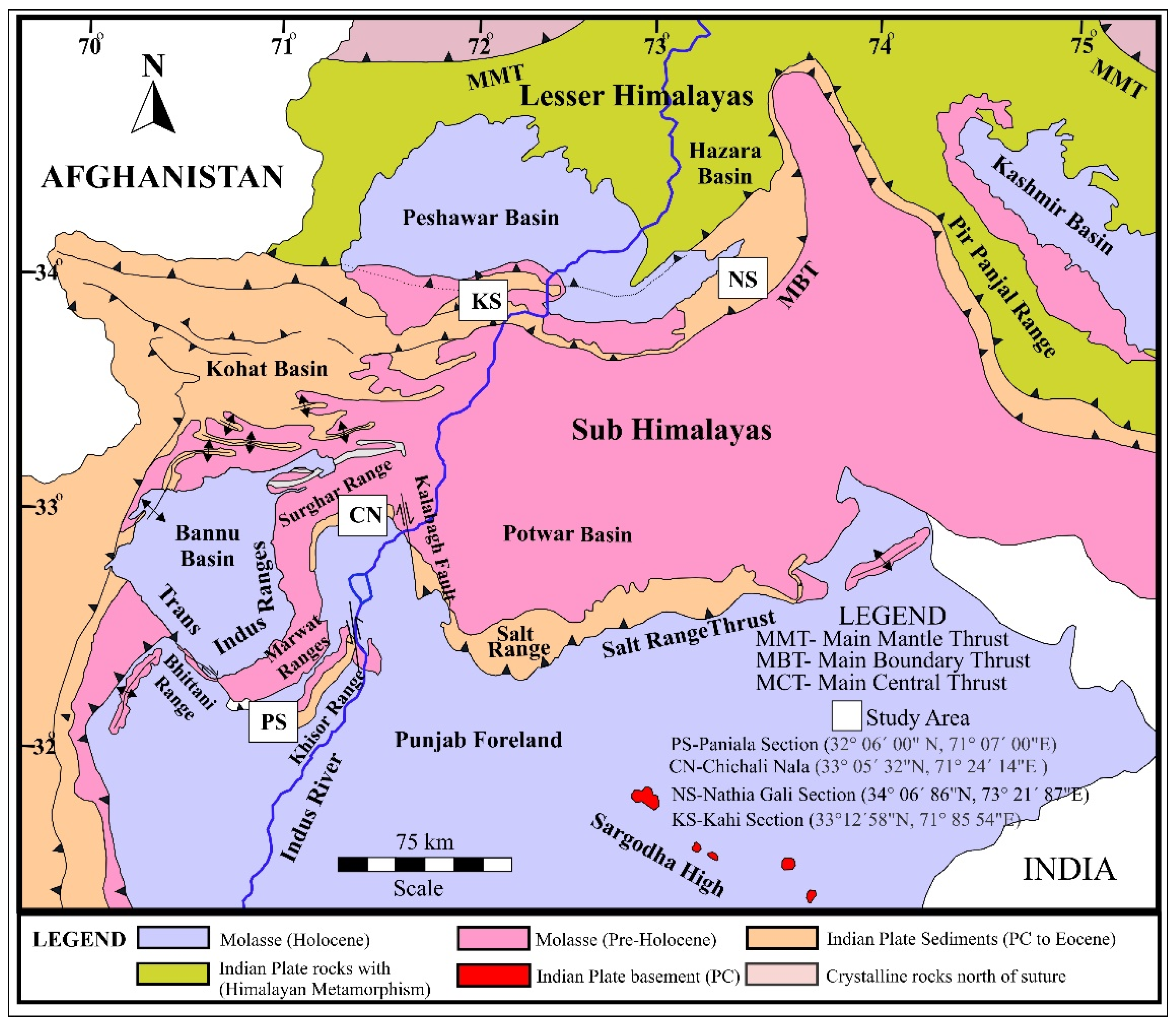
2. Geological Settings
3. Data and Methods
4. Results
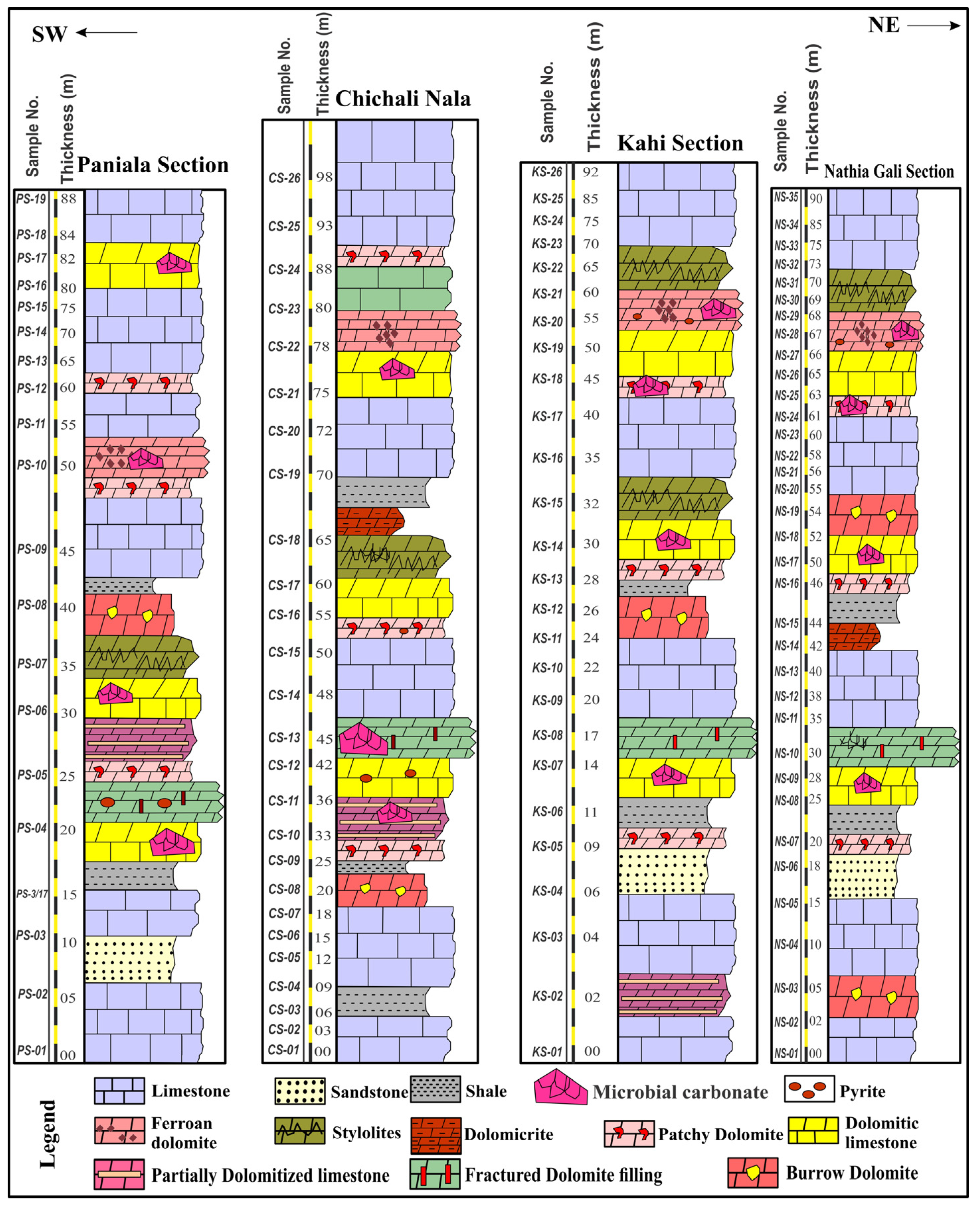
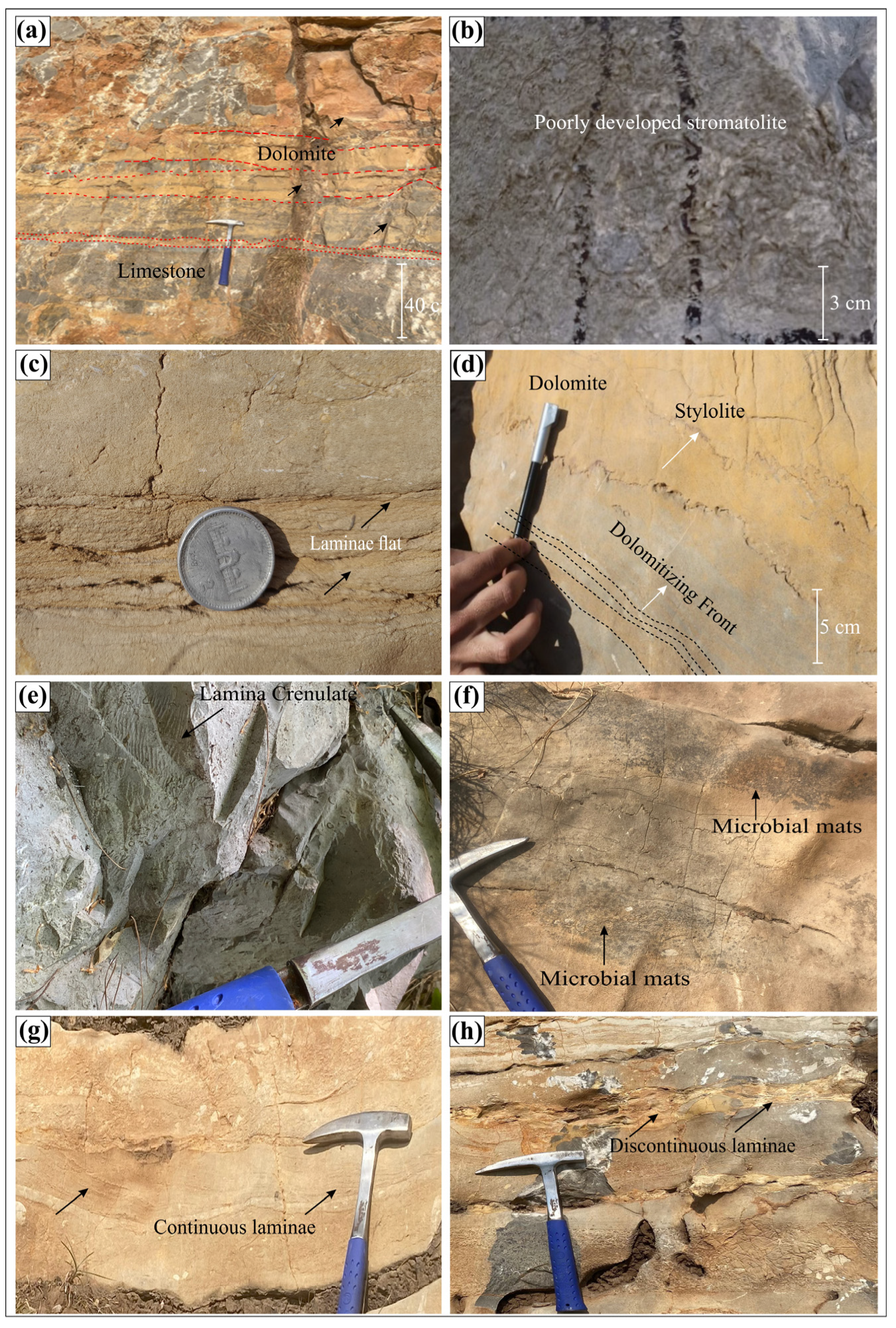
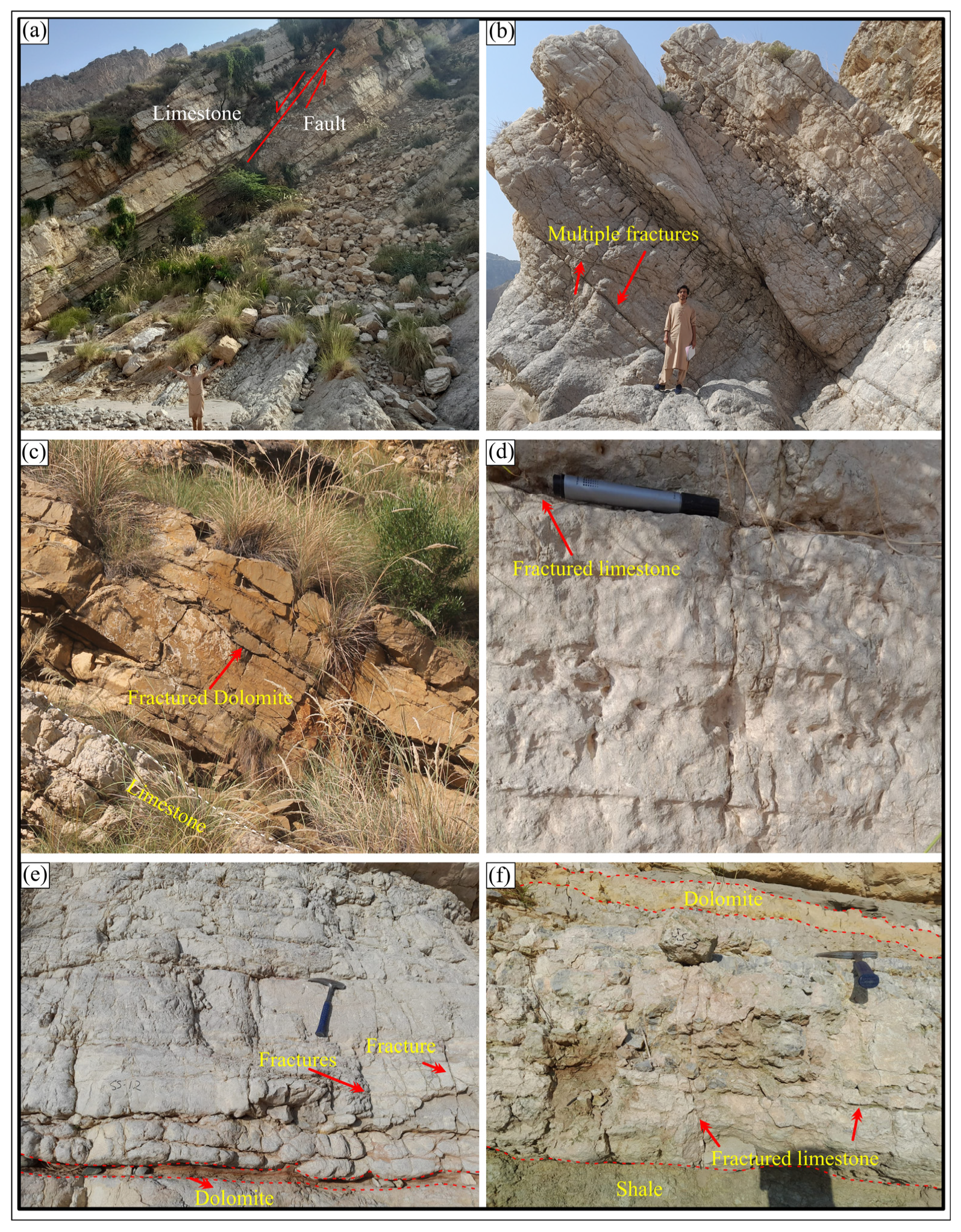
4.1. Lithology and Field Observations
4.1.1. Microbial Carbonates in the Paniala Section
4.1.2. Microbial Carbonates in the Chichali Nala
4.1.3. Microbial Carbonates in the Kahi Section
4.1.4. Microbial Carbonates in the Nathia Gali Section
4.2. Microfacies and Petrography of Microbial Carbonates
4.3. Microbial Features
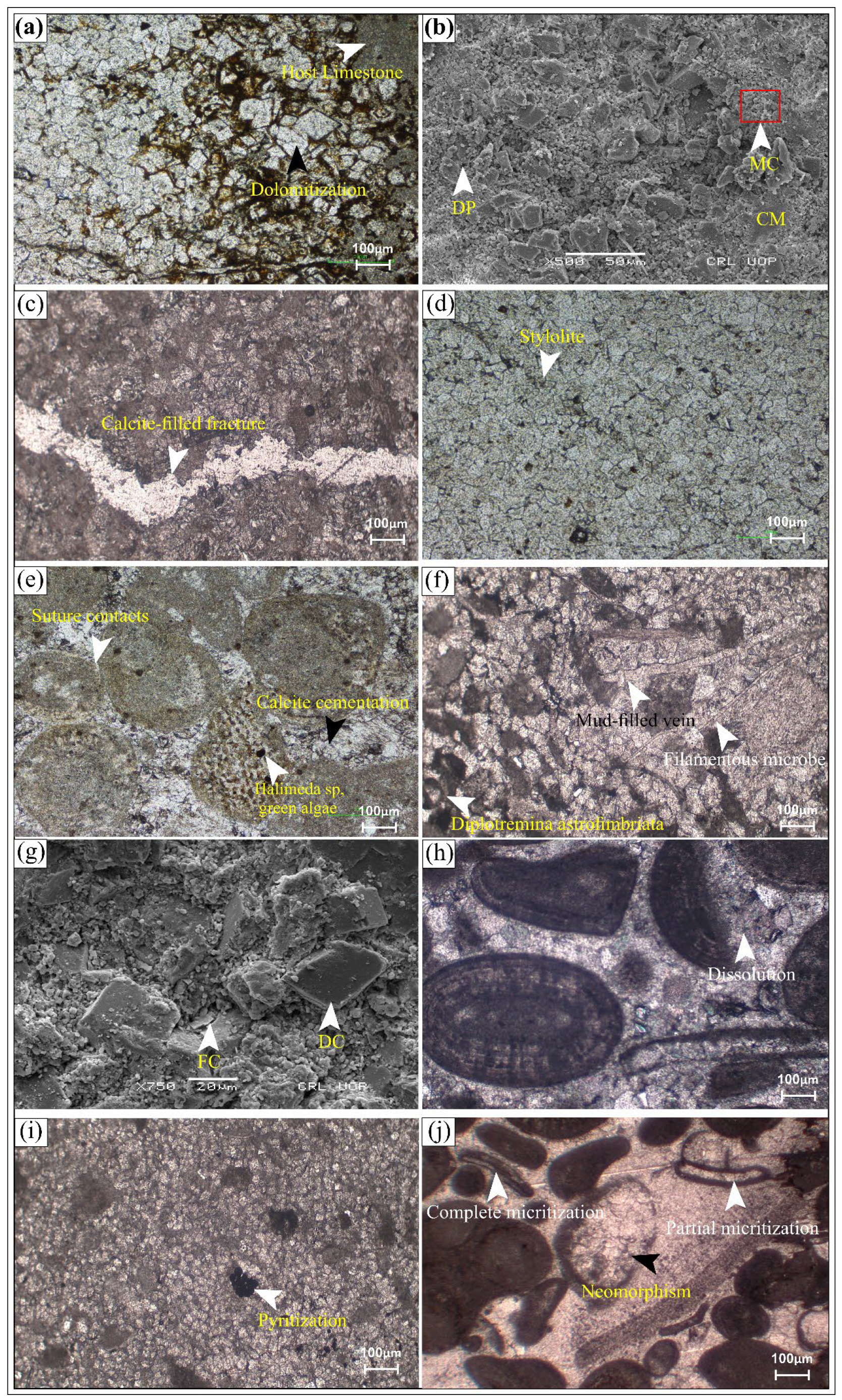
4.4. Diagenetic Processes
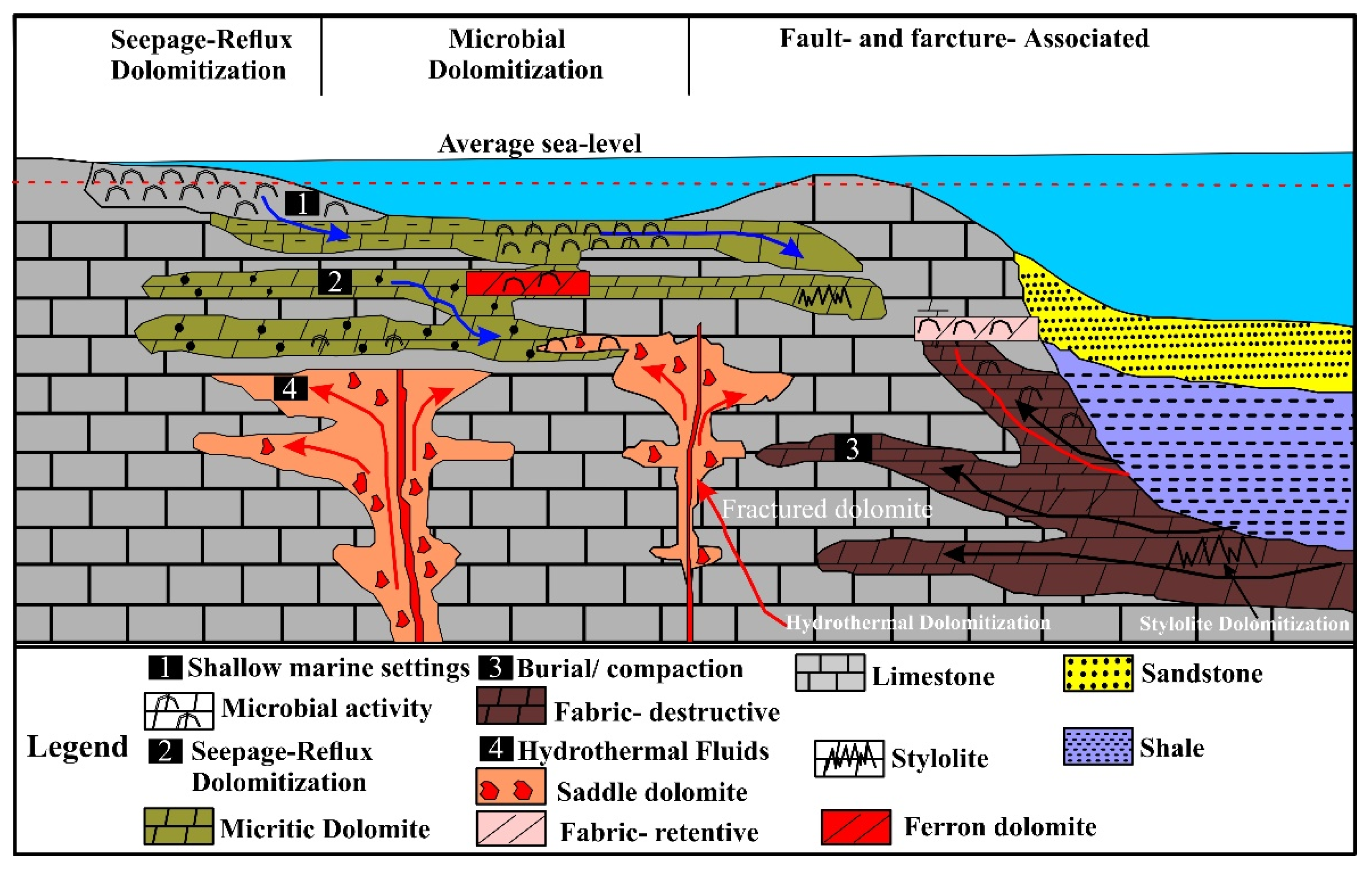
4.4.1. Dolomitization
4.4.2. Micritization
4.4.3. Cementation
4.4.4. Compaction/Stylolitization
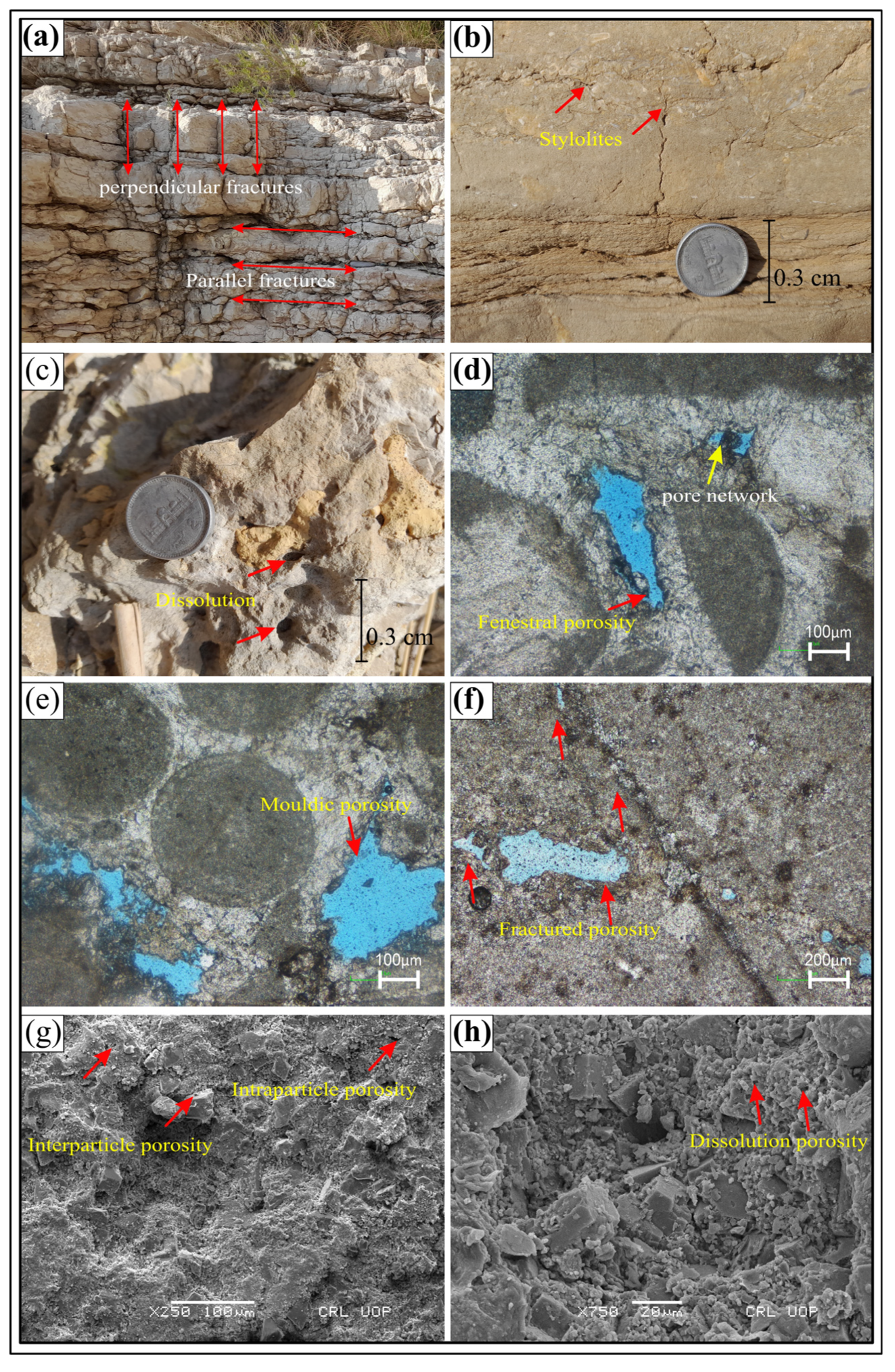
4.4.5. Dissolution
4.4.6. Fracturing
4.5. Reservoir Heterogeneity
5. Discussion
5.1. Microbial Activity
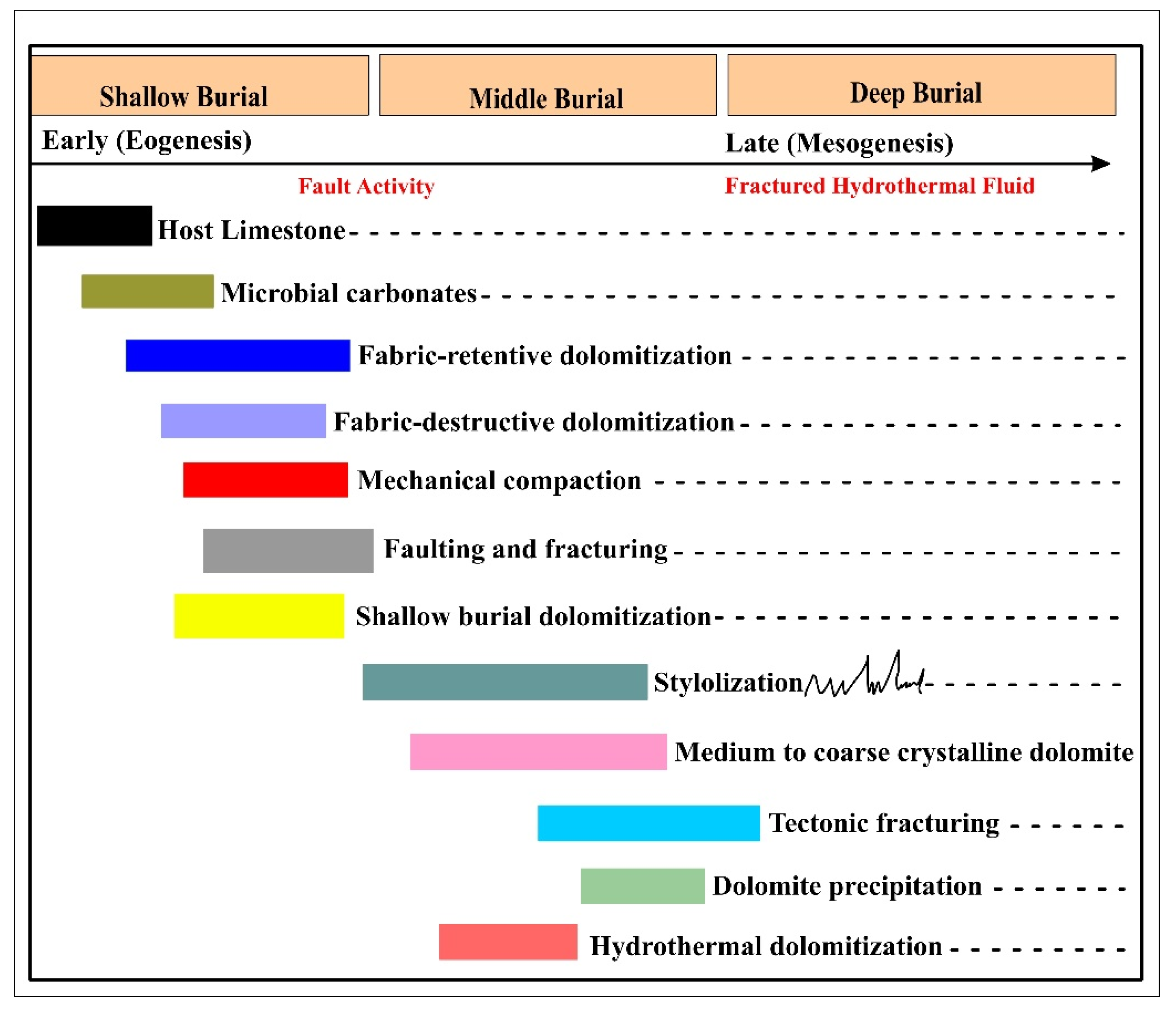
5.2. Paragenetic Sequence of Microbial Carbonates
5.3. Coupling of Microbial Activity, Diagenesis, and Tectonics
5.4. Study Limitations and Data Constraints
- Analysis of associated fault systems and fracture networks in Jurassic carbonates would be very helpful in comprehending the fluid pathways created due to tectonic forces. These pathways act as zones of amplified permeability in carbonates, thus facilitating multifold secondary migration and reservoir characteristics of the strata. Microbial activity can then be related to these zones with the help of microbial-induced mineralization and micro-textures. This may prove helpful in correlating the development of microbial carbonates with fluid flow primarily induced by the tectonic activity. Such multidimensional methodology can highlight the effects of tectonics on fluid flow, the effects of these fluids on the diagenesis, and the response of microbial activity under the aforementioned conditions.
- Fluid inclusion microthermometry data should be supplemented with isotopic data to integrate the role of temperature and salinity of diagenetic fluids. This gives the thermal history and evolution of the fluids involved. We know that carbonate rocks that are deformed by fracturing and faulting can change the compositions as well as the temperature of the fluids. Both of these changes can influence the diagenesis alongside microbial activity in carbonate rocks.
- Geochemical proxies would strengthen the discussion pertaining to the composition of diagenetic fluids and carbonate minerals that could influence the pore network in the carbonate reservoirs. These proxies include elemental ratios of major and trace elements along with stable and radioactive isotopes. These data sets and analyses provide critical insights, primarily into rock–water interaction, which causes alterations during diagenetic processes. These alterations govern the processes of dissolution, cementation, and dolomitization. The creation, modification, and distribution of pore networks are also dependent on these mechanisms. Reservoir heterogeneities can be better studied by the integration of structural and petrographic data with these indicators.
- The present study only discussed the integration of various pore types with roles in diagenesis, which could impact reservoir characterization. However, comprehensive studies focusing on the calculation of porosity percentages in carbonates would refine reservoir studies of microbial carbonate rocks.
6. Conclusions
- The key findings of this study are informed by the occasional microbial activity in the Jurassic marine deposition that was previously thought to be least associated in the Upper Indus Basin, East Gondwana Margin. Microbial carbonates were intermittently found in the exposed Jurassic carbonate sections represented by microbial dolomite lithofacies and microbial dolomudstone microfacies.
- These microbial facies exhibit diagenetic features, including micritization and physical compaction, that took place during the shallow-burial phase. Therefore, diagenetic phenomena in ancient microbial carbonates also provide excellent sites for the integration of sedimentological, mineralogical, and geochemical signatures to explain the pore network distribution in carbonate reservoirs.
- Diagenetic processes including dolomitization and dissolution enhance reservoir pores, while calcite cementation and micritization inhibit the pore network. Moreover, fractures and bedding-perpendicular stylolitization also facilitate reservoir pore distribution.
- Reservoir heterogeneity is mainly controlled by dolomitization, dissolution, and fracturing found at the outcrop scale, seen in petrographic data and SEM images, where the combined effect of these diagenetic events enhances the reservoir quality of the microbial carbonates. Hence, this study recommends targeting reservoir intervals that have experienced the combined impact of fracturing, dissolution, and dolomitization, which are potential diagenetic events for enhanced pore network distribution and mainly serve as production targets for petroleum.
- The study also highlights the significant changes in paleoenvironmental conditions and subsequent diagenesis on the development of petroleum reservoirs that could provide an insight into re-evaluating the avenue of microbial carbonates in shallow marine environments, reconsidering the pore network distribution, and refining the reservoir potential of the marine Jurassic carbonates in this region.
Author Contributions
Funding
Data Availability Statement
Acknowledgments
Conflicts of Interest
References
- Wang, Y.; Wang, S.; Yan, H.; Zhang, Y.; Zhao, Z.; Ma, D. Microbial carbonate reservoir characteristics and their depositional effects, the IV Member of Dengying Formation, Gaoshiti-Moxi area, Sichuan Basin, Southwest China. Sci. Rep. 2023, 13, 18965. [Google Scholar] [CrossRef]
- Jiang, W.; Luo, Q.; Shi, K.; Liu, B.; Wang, Y.; Gao, X. Origin of a microbial-dominated carbonate reservoir in the Lower Cambrian Xiaoerbulake Formation, Bachu-Tazhong area, Tarim Basin, NW China. Mar. Pet. Geol. 2021, 133, 105254. [Google Scholar] [CrossRef]
- Zhang, Z.; Zhao, L.; Zhang, D.; Li, Q.; Chen, H.; Wen, L.; Zhang, B.; Zhou, G.; Zhong, Y.; Wenzheng, L. Diagenetic evolution and cementation mechanism in deep Carbonate reservoirs: A case study of Dengying Fm. 2 in Penglai, Sichuan Basin, China. Mar. Pet. Geol. 2024, 170, 107084. [Google Scholar] [CrossRef]
- Li, C.; Liu, K.; Liu, J. A petroliferous Ediacaran microbial-dominated carbonate reservoir play in the central Sichuan Basin, China: Characteristics and diagenetic evolution. Precambrian Res. 2023, 384, 106937. [Google Scholar] [CrossRef]
- Araújo, C.C.; Madrucci, V.; Homewood, P.; Mettraux, M.; Ramnani, C.W.; Spadini, A.R. Stratigraphic and sedimentary constraints on presalt carbonate reservoirs of the South Atlantic Margin, Santos Basin, offshore Brazil. AAPG Bull. 2022, 106, 2513–2546. [Google Scholar] [CrossRef]
- Alsharhan, A.S.; Kendall, C.G.S.C.; Al-Suwaidi, A.S. Abstracts of the International Conferences on Evaporite Stratigraphy, Structure and Geochemistry, and their role in Hydrocarbon Exploration and Exploitation. GeoArabia 2008, 13, 141–182. [Google Scholar] [CrossRef]
- Grotzinger, J.; Al-Rawahi, Z. Depositional facies and platform architecture of microbialite-dominated carbonate reservoirs, Ediacaran–Cambrian Ara Group, Sultanate of Oman. AAPG Bull. 2014, 98, 1453–1494. [Google Scholar] [CrossRef]
- Jonk, R.; Bohacs, K.; Potma, K. The Spatial and Temporal Evolution of Mixed Carbonate-Clastic Mud-Dominated Basin Fill Successions: The Middle to Late Devonian Shelf Margin, Western Canada. Basin Res. 2025, 37, e70079. [Google Scholar] [CrossRef]
- Yang, M.; Yu, X.; Zhu, D.; Long, K.; Lu, C.; Zou, H. Depositional framework and reservoir characteristics of microbial carbonates in the fourth member of the middle Triassic Leikoupo Formation, western Sichuan Basin, South China. Mar. Pet. Geol. 2023, 150, 106113. [Google Scholar] [CrossRef]
- Becker, S.; Reuning, L.; Amthor, J.E.; Kukla, P.A. Diagenetic Processes and Reservoir Heterogeneity in Salt-Encased Microbial Carbonate Reservoirs (Late Neoproterozoic, Oman). Geofluids 2019, 2019, 5647857. [Google Scholar] [CrossRef]
- Zhang, J.; Zhang, B.; Zhang, S.; Wang, H. Autochthonous Dolomitization and Dissolution in the Microbial Carbonate Rocks of the Fengjiawan Formation in the Ordos Basin. Acta Geol. Sin. Engl. Ed. 2022, 96, 1376–1387. [Google Scholar] [CrossRef]
- Al-Hattali, R.; Al-Sulaimani, H.; Al-Wahaibi, Y.; Al-Bahry, S.; Elshafie, A.; Al-Bemani, A.; Joshi, S.J. Fractured carbonate reservoirs sweep efficiency improvement using microbial biomass. J. Pet. Sci. Eng. 2013, 112, 178–184. [Google Scholar] [CrossRef]
- Bahniuk, A.M.; Anjos, S.; França, A.B.; Matsuda, N.; Eiler, J.; McKenzie, J.A.; Vasconcelos, C. Development of microbial carbonates in the Lower Cretaceous Codó Formation (north-east Brazil): Implications for interpretation of microbialite facies associations and palaeoenvironmental conditions. Sedimentology 2015, 62, 155–181. [Google Scholar] [CrossRef]
- Bosence, D.; Gibbons, K.; Heron, D.P.L.; Morgan, W.A.; Pritchard, T.; Vining, B.A. Microbial carbonates in space and time: Introduction. In Microbial Carbonates in Space and Time: Implications for Global Exploration and Production; Geological Society London: London, UK, 2015; Volume 418. [Google Scholar] [CrossRef]
- Jiang, L.; Hu, S.; Zhao, W.; Xu, Z.; Shi, S.; Fu, Q.; Zeng, H.; Liu, W.; Fall, A. Diagenesis and its impact on a microbially derived carbonate reservoir from the Middle Triassic Leikoupo Formation, Sichuan Basin, China. AAPG Bull. 2018, 102, 2599–2628. [Google Scholar] [CrossRef]
- Petrash, D.A.; Bialik, O.M.; Bontognali, T.R.R.; Vasconcelos, C.; Roberts, J.A.; McKenzie, J.A.; Konhauser, K.O. Microbially catalyzed dolomite formation: From near-surface to burial. Earth Sci. Rev. 2017, 171, 558–582. [Google Scholar] [CrossRef]
- Shilei, C.; Shunshe, L.; Shangfeng, Z.; Jianfeng, Z.; Jingao, Z.; Qiqi, L.; Xinshan, W. Discovery of Microbial Mounds and Its Geological Significance. Chem. Technol. Fuels Oils 2023, 59, 1112–1120. [Google Scholar] [CrossRef]
- Li, J.; Bai, B.; Bai, Y.; Lu, X.; Zhang, B.; Qin, S.; Song, J.; Jiang, Q.; Huang, S. Fluid evolution and hydrocarbon accumulation model of ultra-deep gas reservoirs in Permian Qixia Formation of northwest Sichuan Basin, SW China. Pet. Explor. Dev. 2022, 49, 719–730. [Google Scholar] [CrossRef]
- Chen, Y.; Shen, A.; Pan, L.; Zhang, J.; Wang, X. Features, origin and distribution of microbial dolomite reservoirs: A case study of 4th Member of Sinian Dengying Formation in Sichuan Basin, SW China. Pet. Explor. Dev. 2017, 44, 745–757. [Google Scholar] [CrossRef]
- Song, J.; Liu, S.; Li, Z.; Yang, D.; Sun, W.; Lin, T.; Wang, H.; Yu, Y.; Long, Y.; Luo, P. Porosity in Microbial Carbonate Reservoirs in the Middle Triassic Leikoupo Formation (Anisian Stage), Sichuan Basin, China. Carbonate Pore Syst. New Dev. Case Stud. 2019, 112. [Google Scholar] [CrossRef]
- Wang, H.; Yong, Z.; Song, J.; Lin, T.; Yu, Y. Microbialite Textures and Their Geochemical Characteristics of Middle Triassic Dolomites, Sichuan Basin, China. Processes 2023, 11, 1541. [Google Scholar] [CrossRef]
- Wei, L.; Zhao, J.; Su, Z.; Wei, X.; Ren, J.; Huang, Z.; Wu, C. Distribution and depositional model of microbial carbonates in the Ordovician middle assemblage, Ordos Basin, NW China. Pet. Explor. Dev. 2021, 48, 1341–1353. [Google Scholar] [CrossRef]
- Zhang, X.; Zhang, T.; Lei, B.; Zhang, J.; Zhang, J.; Zhao, Z.; Yong, J. Origin and characteristics of grain dolomite of Ordovician Ma55 Member in the northwest of Ordos Basin, NW China. Pet. Explor. Dev. 2019, 46, 1182–1194. [Google Scholar] [CrossRef]
- Li, Y.; Jiang, H.-X.; Wu, Y.-S.; Pan, W.-Q.; Zhang, B.-S.; Sun, C.-H.; Yang, G. Macro- and microfeatures of Early Cambrian dolomitic microbialites from Tarim Basin, China. J. Palaeogeogr. 2021, 10, 3. [Google Scholar] [CrossRef]
- Song, J.; Luo, P.; Yang, S.; Yang, D.; Zhou, C.; Li, P.; Zhai, X. Reservoirs of Lower Cambrian microbial carbonates, Tarim Basin, NW China. Pet. Explor. Dev. 2014, 41, 449–459. [Google Scholar] [CrossRef]
- Haddad, H.; Khaz’ali, A.R.; Mehrabani-Zeinabad, A.; Jazini, M. Investigating the potential of microbial enhanced oil recovery in carbonate reservoirs using Bacillus persicus. Fuel 2023, 334, 126757. [Google Scholar] [CrossRef]
- Jamil, M.; Ullah, I.; Rahim, H.U.; Khan, I.; Abbas, W.; Rehman, M.U.; Rashid, A.; Umar, M.; Ali, A.; Siddiqui, N.A. Tracking Depositional Architecture and Diagenetic Evolution in the Jurassic Carbonates, Trans Indus Ranges, NW Himalayas. Minerals 2024, 14, 1170. [Google Scholar] [CrossRef]
- Rahim, H.U.; Shah, M.M.; Khalil, R.; Jamil, M. Evaluation of fault and fracture controlled hydrothermal dolomitization in the Jurassic carbonate succession of the lesser Himalayas, NW Pakistan. Carbonates Evaporites 2025, 40, 32. [Google Scholar] [CrossRef]
- Rahim, H.U.; Qamar, S.; Shah, M.M.; Corbella, M.; Martín-Martín, J.D.; Janjuhah, H.T.; Navarro-Ciurana, D.; Lianou, V.; Kontakiotis, G. Processes associated with multiphase dolomitization and other related diagenetic events in the Jurassic Samana Suk Formation, Himalayan Foreland Basin, NW Pakistan. Minerals 2022, 12, 1320. [Google Scholar] [CrossRef]
- Khan, M.M.S.S.; Jadoon, Q.A.; Umar, M.; Khan, A.A. Sedimentary evolution of middle Jurassic epeiric carbonate ramp Hazara Basin Lesser Himalaya Pakistan. Carbonates Evaporites 2021, 36, 48. [Google Scholar] [CrossRef]
- Wadood, B.; Khan, S.; Li, H.; Liu, Y.; Ahmad, S.; Jiao, X. Sequence Stratigraphic Framework of the Jurassic Samana Suk Carbonate Formation, North Pakistan: Implications for Reservoir Potential. Arab. J. Sci. Eng. 2021, 46, 525–542. [Google Scholar] [CrossRef]
- Shahzeb, M.; Shah, M.M.; Rahim, H.U.; Jan, J.A.; Ahmad, I.; Khalil, R.; Shehzad, K. Depositional and diagenetic studies of the middle Jurassic Samana Suk Formation in the Trans Indus Ranges and western extension of Hill Ranges, Pakistan: An integrated sedimentological and geochemical approach. Carbonates Evaporites 2024, 39, 19. [Google Scholar] [CrossRef]
- Warren, J. Dolomite: Occurrence, evolution and economically important associations. Earth Sci. Rev. 2000, 52, 1–81. [Google Scholar] [CrossRef]
- Khattak, S.A.; Khan, N.; Khan, W.; Dhas, S.S.J.; Kontakiotis, G.; Islam, I.; Janjuhah, H.T.; Antonarakou, A. Sedimentology and reservoir characterisation of Lower Jurassic clastic sedimentary rocks, Salt and Trans Indus Ranges, Pakistan: Evidence from petrography, scanning electron microscopy and petrophysics. Depos. Rec. 2025, 11, 698–717. [Google Scholar] [CrossRef]
- Ehsan, M.; Latif, M.A.U.; Ali, A.; Radwan, A.E.; Amer, M.A.; Abdelrahman, K. Geocellular Modeling of the Cambrian to Eocene Multi-Reservoirs, Upper Indus Basin, Pakistan. Nat. Resour. Res. 2023, 32, 2583–2607. [Google Scholar] [CrossRef]
- Bilal, A.; Yang, R.; Janjuhah, H.T.; Mughal, M.S.; Li, Y.; Kontakiotis, G.; Lenhardt, N. Microfacies analysis of the Palaeocene Lockhart limestone on the eastern margin of the Upper Indus Basin (Pakistan): Implications for the depositional environment and reservoir characteristics. Depos. Rec. 2023, 9, 152–173. [Google Scholar] [CrossRef]
- Memon, F.H.; Tunio, A.H.; Memon, K.R.; Mahesar, A.A.; Abbas, G. Unveiling the Diagenetic and Mineralogical Impact on the Carbonate Formation of the Indus Basin, Pakistan: Implications for Reservoir Characterization and Quality Assessment. Minerals 2023, 13, 1474. [Google Scholar] [CrossRef]
- Fahad, M.; Khan, M.A.; Hussain, J.; Ahmed, A.; Yar, M. Microfacies analysis, depositional settings and reservoir investigation of Early Eocene Chorgali Formation exposed at Eastern Salt Range, Upper Indus Basin, Pakistan. Carbonates Evaporites 2021, 36, 41. [Google Scholar] [CrossRef]
- Mir, A.; Khan, M.R.; Wahid, A.; Iqbal, M.A.; Rezaee, R.; Ali, S.H.; Erdal, Y.D. Petroleum System Modeling of a Fold and Thrust Belt: A Case Study from the Bannu Basin, Pakistan. Energies 2023, 16, 1474. [Google Scholar] [CrossRef]
- Qureshi, K.A.; Rizwan, M.; Janjuhah, H.T.; Islam, I.; Kontakiotis, G.; Bilal, A.; Arif, M. An integrated petrographical and geochemical study of the Tredian Formation in the Salt and Trans-Indus Surghar ranges, North-West Pakistan: Implications for palaeoclimate. Depos. Rec. 2024, 10, 33–50. [Google Scholar] [CrossRef]
- Riaz, M.; Latif, K.; Zafar, T.; Xiao, E.; Ghazi, S. Morphology and genesis of the Cambrian oncoids in Wuhai Section, Inner Mongolia, China. Carbonates Evaporites 2021, 37, 4. [Google Scholar] [CrossRef]
- Xiao, E.; Riaz, M.; Zafar, T.; Latif, K. Cambrian marine radial cerebroid ooids: Participatory products of microbial processes. Geol. J. 2021, 56, 4627–4644. [Google Scholar] [CrossRef]
- Reinhold, C. Multiple episodes of dolomitization and dolomite recrystallization during shallow burial in Upper Jurassic shelf carbonates: Eastern Swabian Alb, southern Germany. Sediment. Geol. 1998, 121, 71–95. [Google Scholar] [CrossRef]
- Hauck, T.E.; Corlett, H.J.; Grobe, M.; Walton, E.L.; Sansjofre, P. Meteoric diagenesis and dedolomite fabrics in precursor primary dolomicrite in a mixed carbonate–evaporite system. Sedimentology 2018, 65, 1827–1858. [Google Scholar] [CrossRef]
- Abd-Elhameed, M.; Attia, G.; Salama, Y.; El-Moghazy, A.; Mahmoud, A. Microfacies analysis and diagenetic history of Lower to Middle Eocene carbonates at Umm Russies area in the northeastern desert of Egypt. Sci. Rep. 2025, 15, 20159. [Google Scholar] [CrossRef] [PubMed]
- Qamar, S.; Shah, M.M.; Janjuhah, H.T.; Kontakiotis, G.; Shahzad, A.; Besiou, E. Sedimentological, Diagenetic, and Sequence Stratigraphic Controls on the Shallow to Marginal Marine Carbonates of the Middle Jurassic Samana Suk Formation, North Pakistan. J. Mar. Sci. Eng. 2023, 11, 1230. [Google Scholar] [CrossRef]
- Purser, B.H.; Brown, A.; Aissaoui, D.M. Nature, Origins and Evolution of Porosity in Dolomites. In Dolomites; Wiley: Hoboken, NJ, USA, 1994; pp. 281–308. [Google Scholar]
- Pearce, M.A.; Timms, N.E.; Hough, R.M.; Cleverley, J.S. Reaction mechanism for the replacement of calcite by dolomite and siderite: Implications for geochemistry, microstructure and porosity evolution during hydrothermal mineralisation. Contrib. Mineral. Petrol. 2013, 166, 995–1009. [Google Scholar] [CrossRef]
- Kaczmarek, S.E.; Gregg, J.M.; Bish, D.L.; Machel, H.G.; Fouke, B.W. Dolomite, Very High-Magnesium Calcite, and Microbes—Implications for The Microbial Model of Dolomitization. SEPM Spec. Publ. 2017, 109, 7–20. [Google Scholar] [CrossRef]
- Sun, S.Q. Dolomite Reservoirs: Porosity Evolution and Reservoir Characteristics. AAPG Bull. 1995, 79, 186–204. [Google Scholar] [CrossRef]
- Tavakoli, V. Macroscopic Heterogeneity. In Carbonate Reservoir Heterogeneity: Overcoming the Challenges; Tavakoli, V., Ed.; Springer International Publishing: Cham, Switzerland, 2020; pp. 69–96. [Google Scholar]
- Tavakoli, V. Microscopic Heterogeneity. In Carbonate Reservoir Heterogeneity: Overcoming the Challenges; Tavakoli, V., Ed.; Springer International Publishing: Cham, Switzerland, 2020; pp. 17–51. [Google Scholar]
- McCormick, C.A.; Corlett, H.; Clog, M.; Boyce, A.J.; Tartèse, R.; Steele-MacInnis, M.; Hollis, C. Basin scale evolution of zebra textures in fault-controlled, hydrothermal dolomite bodies: Insights from the Western Canadian Sedimentary Basin. Basin Res. 2023, 35, 2010–2039. [Google Scholar] [CrossRef]
- Tavakoli, V. Reservoir Heterogeneity: An Introduction. In Carbonate Reservoir Heterogeneity: Overcoming the Challenges; Tavakoli, V., Ed.; Springer International Publishing: Cham, Switzerland, 2020; pp. 1–16. [Google Scholar]
- Correia, M.G.; Maschio, C.; Schiozer, D.J. Integration of multiscale carbonate reservoir heterogeneities in reservoir simulation. J. Pet. Sci. Eng. 2015, 131, 34–50. [Google Scholar] [CrossRef]
- Zhao, Y.; Gao, D.; Ngia, N.R.; Hu, M.; Zhao, S. Influence of sea-level changes and dolomitization on the formation of high-quality reservoirs in the Cambrian Longwangmiao Formation, central Sichuan basin. J. Pet. Explor. Prod. Technol. 2025, 15, 99. [Google Scholar] [CrossRef]
- Tan, Q.; Shi, Z.; Tian, Y.; Wang, Y.; Li, W. Petrological and geochemical constraints on the origin of dolomites: A case study from the early Cambrian Qingxudong Formation, Sichuan Basin, South China. Carbonates Evaporites 2019, 34, 1639–1656. [Google Scholar] [CrossRef]
- Worden, R.H.; Armitage, P.J.; Butcher, A.R.; Churchill, J.M.; Csoma, A.E.; Hollis, C.; Lander, R.H.; Omma, J.E. Petroleum reservoir quality prediction: Overview and contrasting approaches from sandstone and carbonate communities. Reserv. Qual. Clastic Carbonate Rocks Anal. Model. Predict. 2018, 435. [Google Scholar] [CrossRef]
- Nader, F.H.; Swennen, R.; Ellam, R. Reflux stratabound dolostone and hydrothermal volcanism-associated dolostone: A two-stage dolomitization model (Jurassic, Lebanon). Sedimentology 2004, 51, 339–360. [Google Scholar] [CrossRef]
- Wright, D.T.; Oren, A. Nonphotosynthetic Bacteria and the Formation of Carbonates and Evaporites Through Time. Geomicrobiol. J. 2005, 22, 27–53. [Google Scholar] [CrossRef]
- Liu, J.; Jiang, Y.; Yang, Z.; Wang, W. Seepage reflux dolomitization and telogenetic karstification in Majiagou Formation in the Ordos Basin, China. Geol. J. 2019, 54, 2145–2159. [Google Scholar] [CrossRef]
- Zhao, W.; Shen, A.; Qiao, Z.; Pan, L.; Hu, A.; Zhang, J. Genetic types and distinguished characteristics of dolomite and the origin of dolomite reservoirs. Pet. Explor. Dev. 2018, 45, 983–997. [Google Scholar] [CrossRef]
- Perri, E.; Tucker, M. Bacterial fossils and microbial dolomite in Triassic stromatolites. Geology 2007, 35, 207–210. [Google Scholar] [CrossRef]
- Coimbra, R.; Immenhauser, A.; Olóriz, F. Spatial geochemistry of Upper Jurassic marine carbonates (Iberian subplate). Earth Sci. Rev. 2014, 139, 1–32. [Google Scholar] [CrossRef]
- Arenas, C.; Pomar, L. Microbial deposits in upper Miocene carbonates, Mallorca, Spain. Palaeogeogr. Palaeoclimatol. Palaeoecol. 2010, 297, 465–485. [Google Scholar] [CrossRef]
- Murphy, M.A.; Sumner, D.Y. Variations in Neoarchean microbialite morphologies: Clues to controls on microbialite morphologies through time. Sedimentology 2008, 55, 1189–1202. [Google Scholar] [CrossRef]
- Vescogni, A.; Colombo, F.; Guido, A. New Insights into Upper Messinian Microbial Carbonates: A Dendrolite-Thrombolite Build-Up from the Salento Peninsula, Central Mediterranean. Geobiology 2025, 23, e70023. [Google Scholar] [CrossRef] [PubMed]
- Riding, R. Microbial carbonates: The geological record of calcified bacterial–algal mats and biofilms. Sedimentology 2000, 47, 179–214. [Google Scholar] [CrossRef]
- Mutti, M.; Hallock, P. Carbonate systems along nutrient and temperature gradients: Some sedimentological and geochemical constraints. Int. J. Earth Sci. 2003, 92, 465–475. [Google Scholar] [CrossRef]
- Ehrenberg, S.N.; Eberli, G.P.; Keramati, M.; Moallemi, S.A. Porosity-permeability relationships in interlayered limestone-dolostone reservoirs. AAPG Bull. 2006, 90, 91–114. [Google Scholar] [CrossRef]
- Nader, F.H.; De Boever, E.; Gasparrini, M.; Liberati, M.; Dumont, C.; Ceriani, A.; Morad, S.; Lerat, O.; Doligez, B. Quantification of diagenesis impact on the reservoir properties of the Jurassic Arab D and C members (Offshore, U.A.E.). Geofluids 2013, 13, 204–220. [Google Scholar] [CrossRef]
- Wang, Y.; Shi, K.; Liu, B. Sedimentary structures of microbial carbonates in the fourth member of the Middle Triassic Leikoupo Formation, Western Sichuan Basin, China. Sci. Rep. 2023, 13, 2300. [Google Scholar] [CrossRef]
- Flügel, E. Diagenesis, Porosity, and Dolomitization. In Microfacies of Carbonate Rocks: Analysis, Interpretation and Application; Flügel, E., Ed.; Springer: Berlin/Heidelberg, Germany, 2004; pp. 267–338. [Google Scholar]
- Immenhauser, A.; HillgÄRtner, H.; Van Bentum, E. Microbial-foraminiferal episodes in the Early Aptian of the southern Tethyan margin: Ecological significance and possible relation to oceanic anoxic event 1a. Sedimentology 2005, 52, 77–99. [Google Scholar] [CrossRef]
- Renaut, R.W. Morphology, distribution, and preservation potential of microbial mats in the hydromagnesite-magnesite playas of the Cariboo Plateau, British Columbia, Canada. Hydrobiologia 1993, 267, 75–98. [Google Scholar] [CrossRef]
- Partha Pratim, C.; Priyabrata, D.; Subhojit, S.; Kaushik, D.; Shruti Ranjan, M.; Pritam, P. Microbial mat related structures (MRS) from Mesoproterozoic Chhattisgarh and Khariar basins, Central India and their bearing on shallow marine sedimentation. Int. Union Geol. Sci. 2012, 35, 513–523. [Google Scholar] [CrossRef]
- Salih, N.; Mansurbeg, H.; Kolo, K.; Préat, A. Hydrothermal Carbonate Mineralization, Calcretization, and Microbial Diagenesis Associated with Multiple Sedimentary Phases in the Upper Cretaceous Bekhme Formation, Kurdistan Region-Iraq. Geosciences 2019, 9, 459. [Google Scholar] [CrossRef]
- Al-Mojel, A.; Dera, G.; Razin, P.; Le Nindre, Y.-M. Carbon and oxygen isotope stratigraphy of Jurassic platform carbonates from Saudi Arabia: Implications for diagenesis, correlations and global paleoenvironmental changes. Palaeogeogr. Palaeoclimatol. Palaeoecol. 2018, 511, 388–402. [Google Scholar] [CrossRef]
- Feng, M.; Shang, J.; Shen, A.; Wen, L.; Wang, X.; Xu, L.; Liang, F.; Liu, X. Episodic hydrothermal alteration on Middle Permian carbonate reservoirs and its geological significance in southwestern Sichuan Basin, SW China. Pet. Explor. Dev. 2024, 51, 81–96. [Google Scholar] [CrossRef]

Disclaimer/Publisher’s Note: The statements, opinions and data contained in all publications are solely those of the individual author(s) and contributor(s) and not of MDPI and/or the editor(s). MDPI and/or the editor(s) disclaim responsibility for any injury to people or property resulting from any ideas, methods, instructions or products referred to in the content. |
© 2026 by the authors. Licensee MDPI, Basel, Switzerland. This article is an open access article distributed under the terms and conditions of the Creative Commons Attribution (CC BY) license.
Share and Cite
Ullah, I.; Jamil, M.; Rahim, H.U.; Khan, I.; Ali, A.; Muzammil, M.; Abbas, W.; Umar, M.; Shah, F.; Usman, M. Impact of Diagenesis on Microbial Carbonate Reservoirs in the Upper Indus Basin, NW Himalayas. Minerals 2026, 16, 111. https://doi.org/10.3390/min16010111
Ullah I, Jamil M, Rahim HU, Khan I, Ali A, Muzammil M, Abbas W, Umar M, Shah F, Usman M. Impact of Diagenesis on Microbial Carbonate Reservoirs in the Upper Indus Basin, NW Himalayas. Minerals. 2026; 16(1):111. https://doi.org/10.3390/min16010111
Chicago/Turabian StyleUllah, Ihsan, Muhammad Jamil, Hamad Ur Rahim, Imran Khan, Asad Ali, Muhammad Muzammil, Wahid Abbas, Muhammad Umar, Faisal Shah, and Muhammad Usman. 2026. "Impact of Diagenesis on Microbial Carbonate Reservoirs in the Upper Indus Basin, NW Himalayas" Minerals 16, no. 1: 111. https://doi.org/10.3390/min16010111
APA StyleUllah, I., Jamil, M., Rahim, H. U., Khan, I., Ali, A., Muzammil, M., Abbas, W., Umar, M., Shah, F., & Usman, M. (2026). Impact of Diagenesis on Microbial Carbonate Reservoirs in the Upper Indus Basin, NW Himalayas. Minerals, 16(1), 111. https://doi.org/10.3390/min16010111