Article

Assessment of Gravity Deportment of Gold-Bearing Ores: Gravity Recoverable Gold Test

1
Department of Environmental Engineering, Faculty of Mining and Geology, VSB—Technical University of Ostrava, 708 00 Ostrava, Czech Republic
2
Department of Mining Engineering and Safety, Faculty of Mining and Geology, VSB—Technical University of Ostrava, 708 00 Ostrava, Czech Republic
*
Author to whom correspondence should be addressed.
Minerals 2024, 14(12), 1279; https://doi.org/10.3390/min14121279
Submission received: 21 November 2024 / Revised: 10 December 2024 / Accepted: 12 December 2024 / Published: 16 December 2024

Abstract

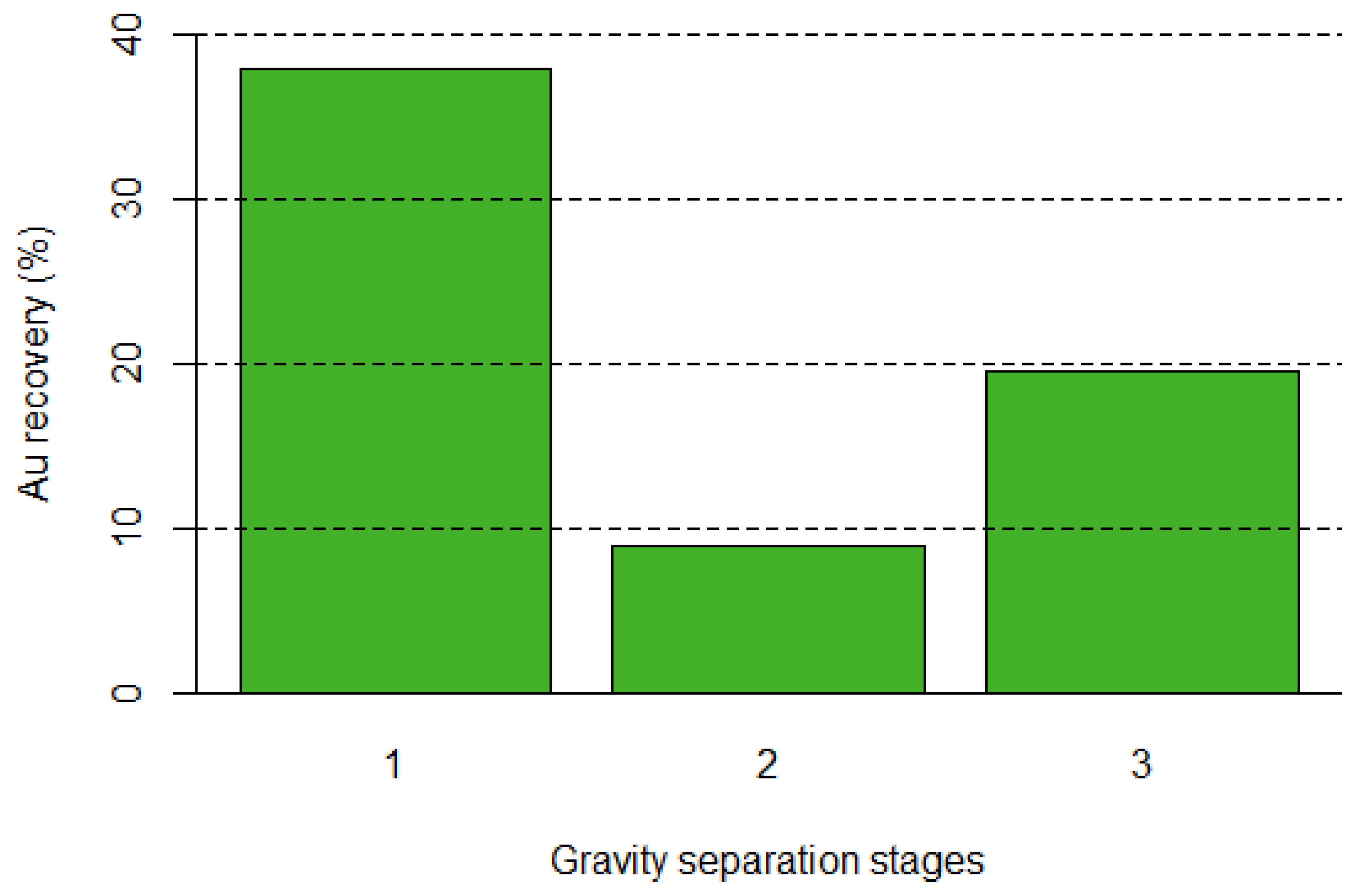
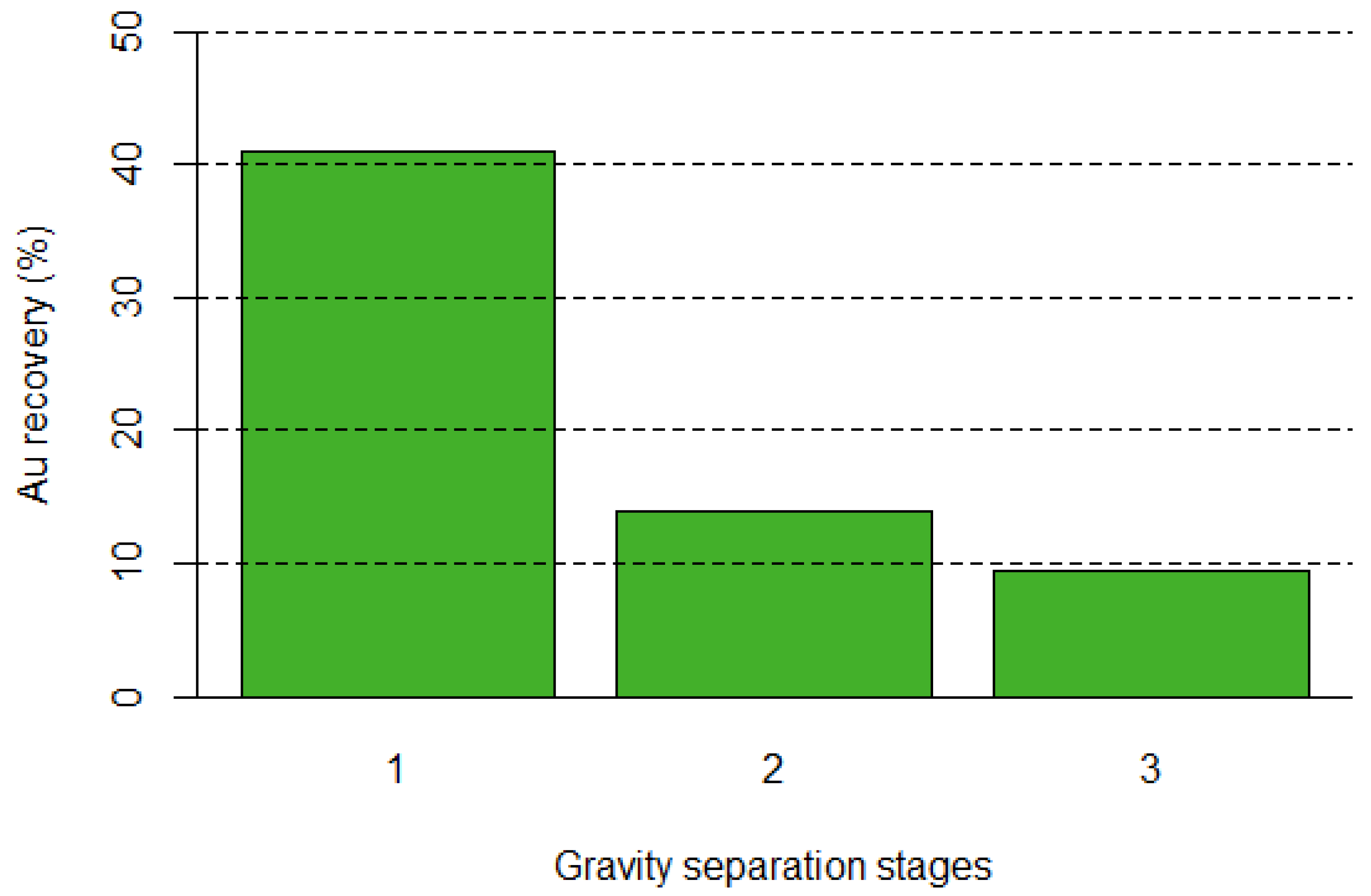
This study investigated the potential of low-grade gold deposits in modern mining, particularly in the context of declining high-grade resources. The primary method for processing these ores was gravity separation with the Knelson concentrator. A GRG test (gravity recoverable gold test) was conducted on two gold-bearing samples: a polymetallic Cu-Zn-Au ore from Zlaté Hory–Západ (Czech Republic) containing refractory gold and an ore with free gold from Kašperské Hory (Czech Republic). The study evaluated the effectiveness of the GRG test for gold recovery from these ores. The results showed that the Kašperské Hory sample predominantly contained relatively large gold grains, with recovery rates dropping significantly upon finer comminution. In the sample from the Zlaté Hory–Západ deposit, the greatest GRG release occurred in the first and last test stages, suggesting that larger sulfide grains with bound gold passed predominantly in the first stage, while fine gold with residual sulfides passed in the third. Both samples achieved high overall GRG recovery rates, with 64.2% for Kašperské Hory and more than 66% for Zlaté Hory–Západ, demonstrating the efficacy of centrifugal concentrators for both ores.
Keywords: Knelson concentrator; gold-bearing ore treatment; GRG test; gold; Kašperské Hory; Zlaté Hory–Západ Knelson concentrator; gold-bearing ore treatment; GRG test; gold; Kašperské Hory; Zlaté Hory–Západ