Article

Coupling Relationships between Sedimentary Microfacies, Sand Bodies, and Tectonic Fracture Characteristics in Braided River Deltas: A Case Study of the Bashijiqike Formation in the Keshen 2 Area

1
Key Laboratory of Deep-Time Geography and Environment Reconstruction and Applications of Ministry of Natural Resources, Institute of Sedimentary Geology, Chengdu University of Technology, Chengdu 610059, China
2
Institute of Sedimentary Geology, Chengdu University of Technology, Chengdu 610059, China
3
Tarim Oilfield, PetroChina, Korla 841000, China
*
Author to whom correspondence should be addressed.
Minerals 2023, 13(8), 1020; https://doi.org/10.3390/min13081020
Submission received: 15 June 2023 / Revised: 22 July 2023 / Accepted: 29 July 2023 / Published: 30 July 2023

Abstract

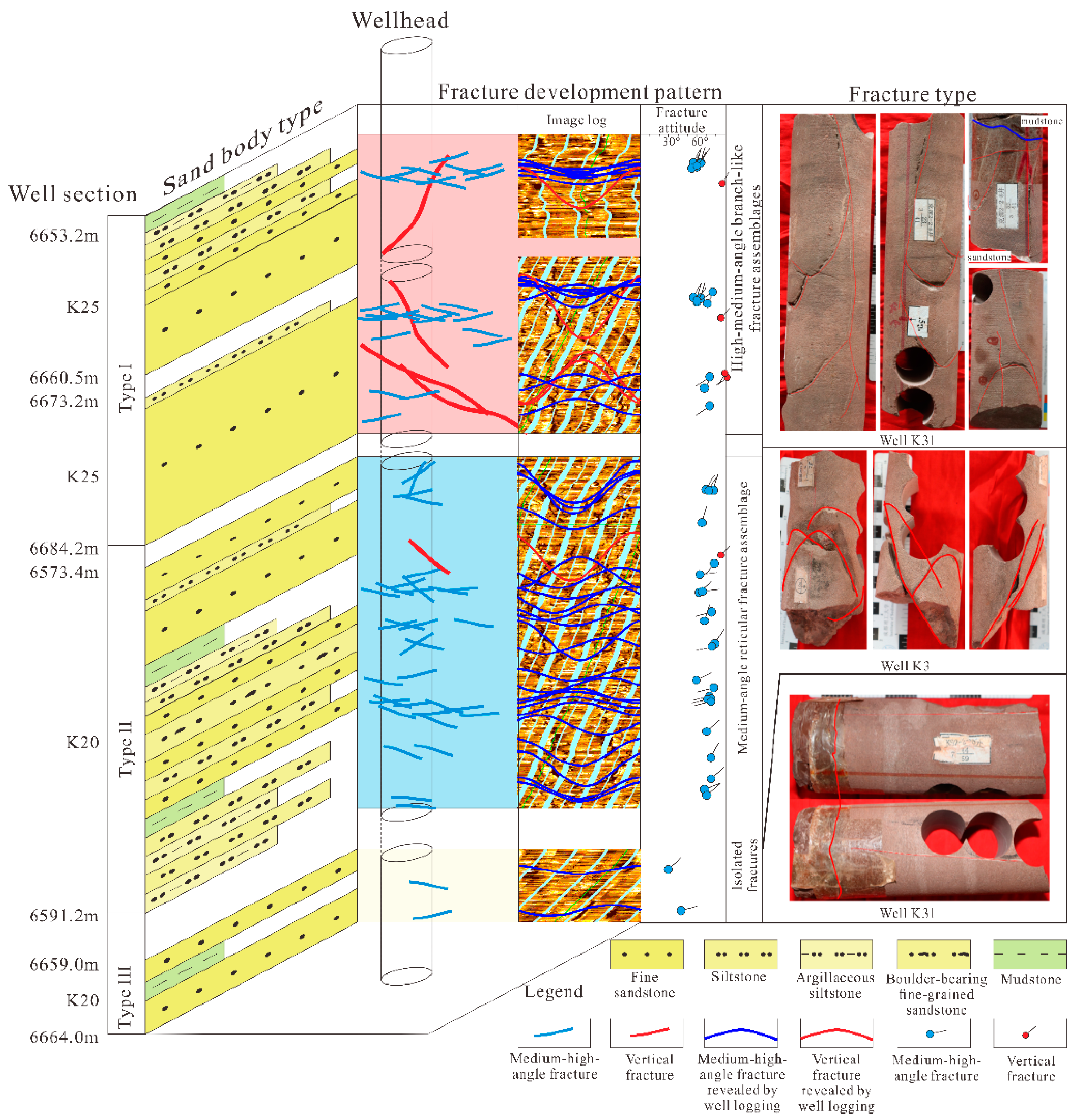
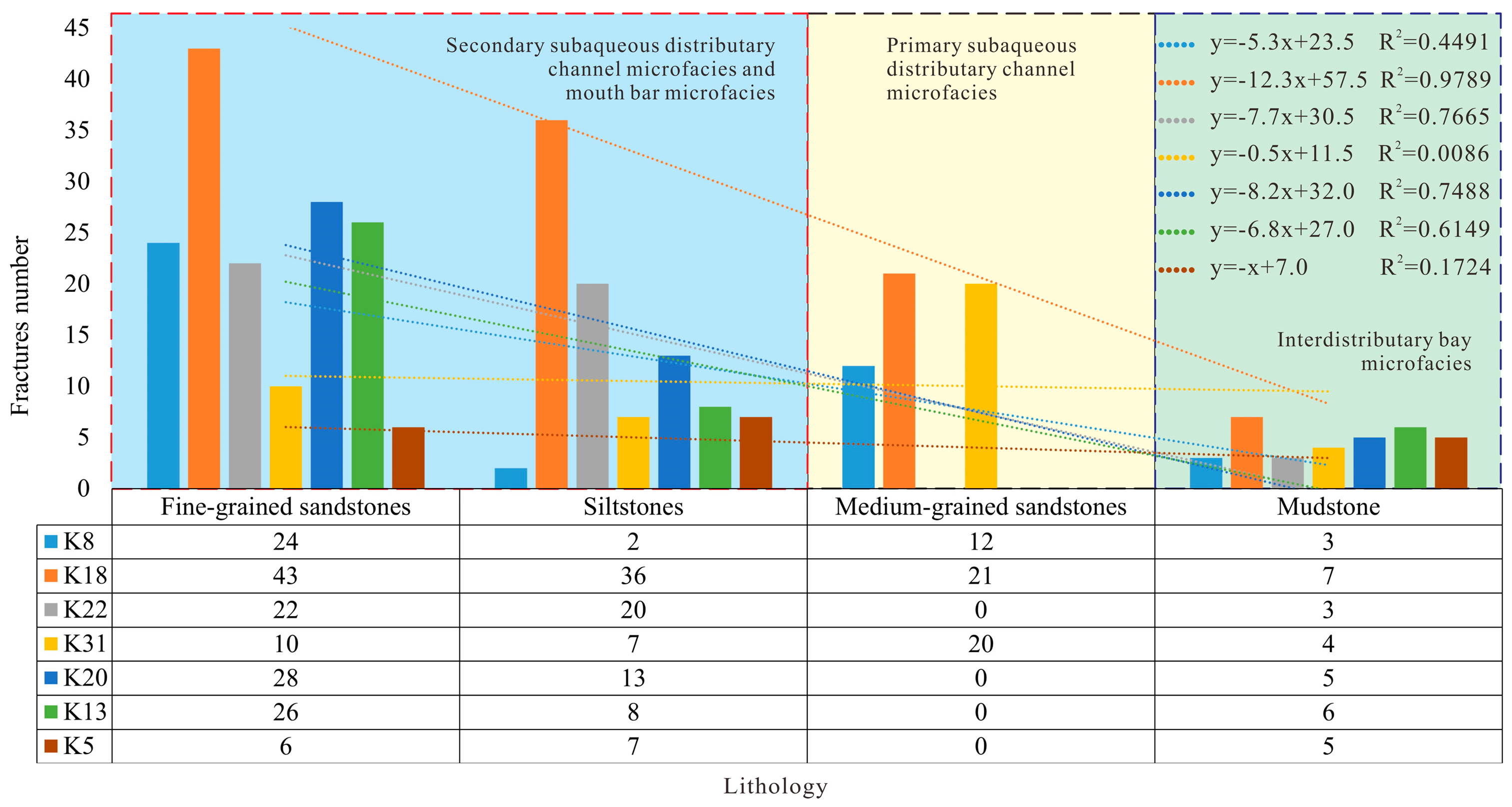
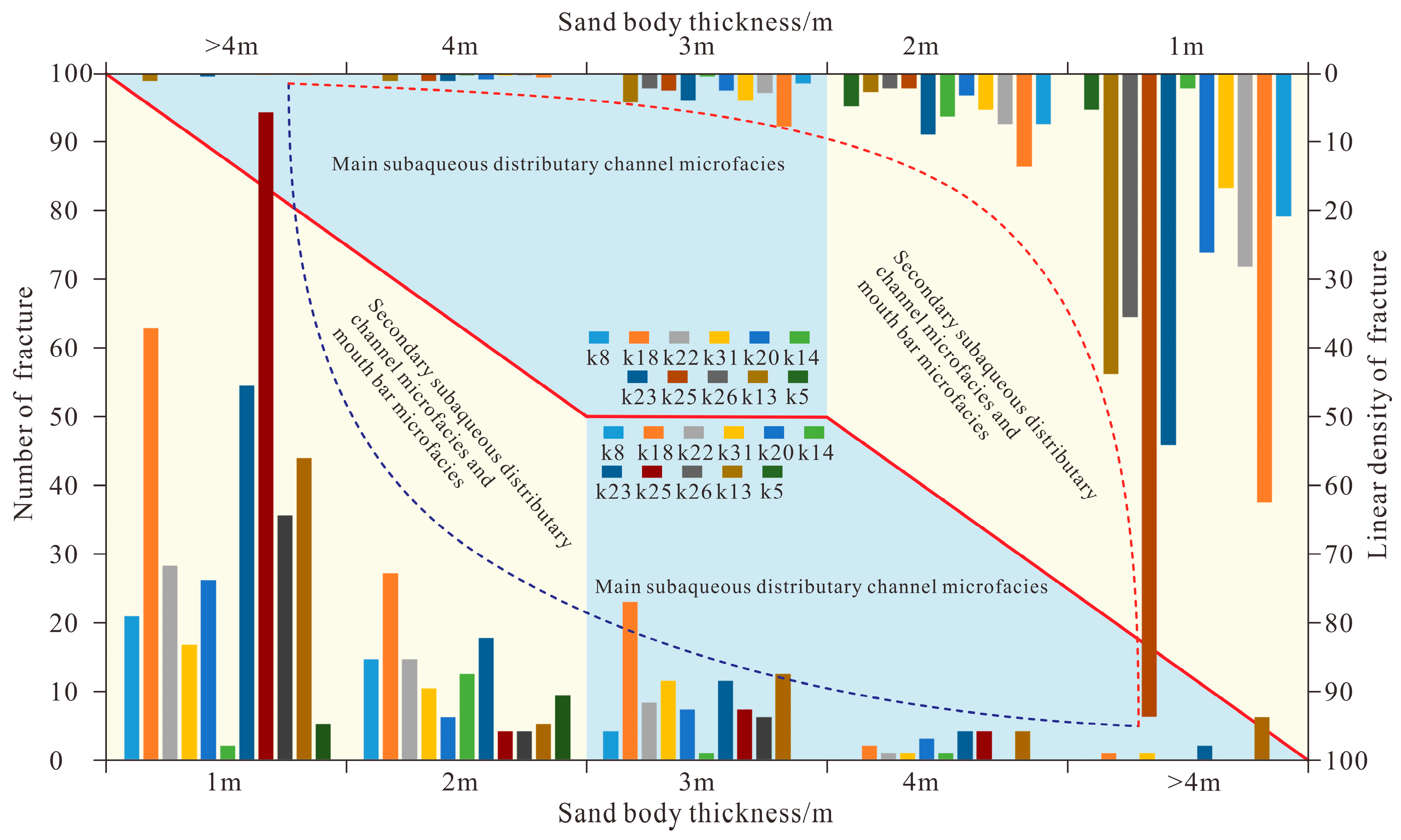
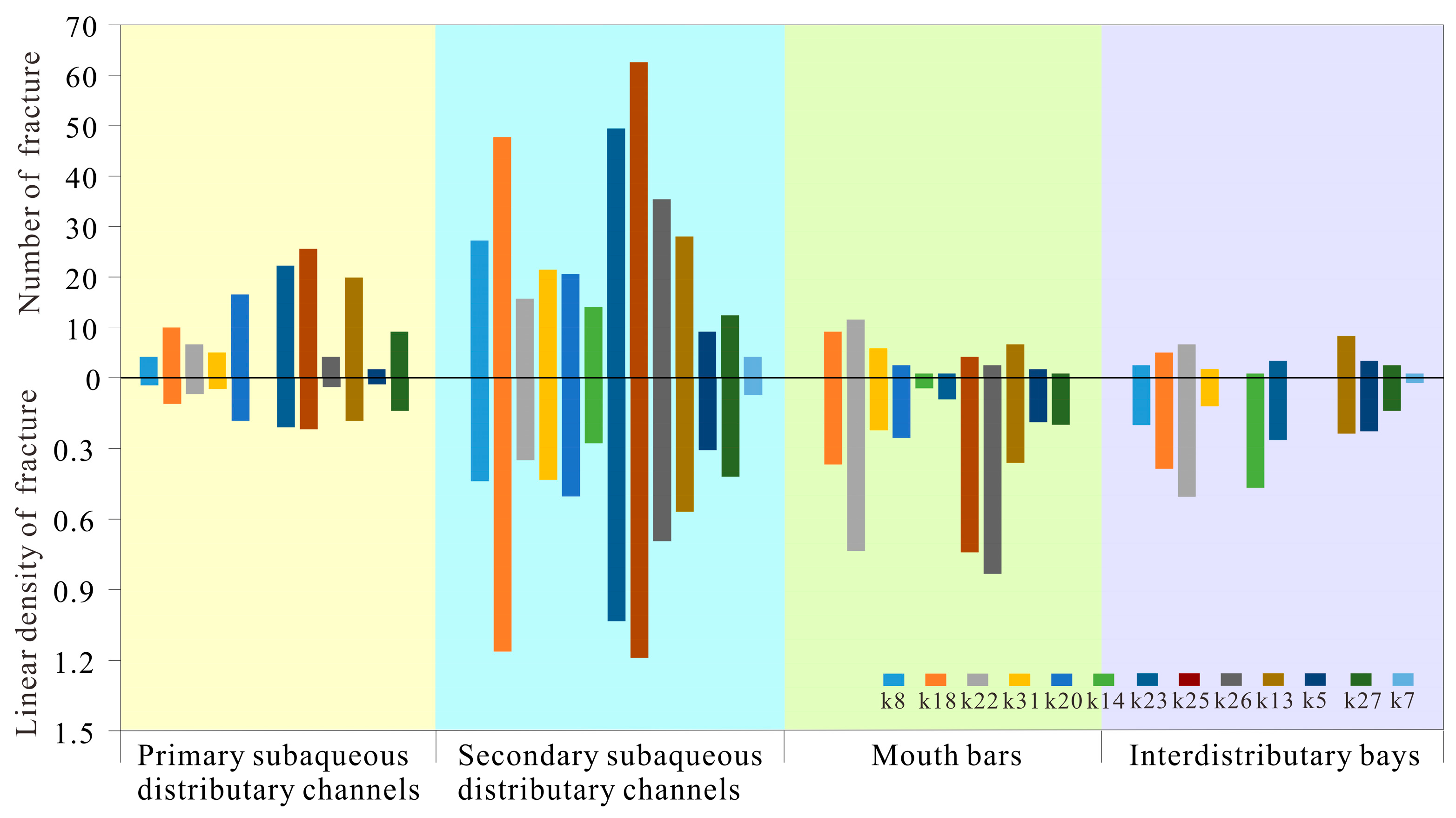
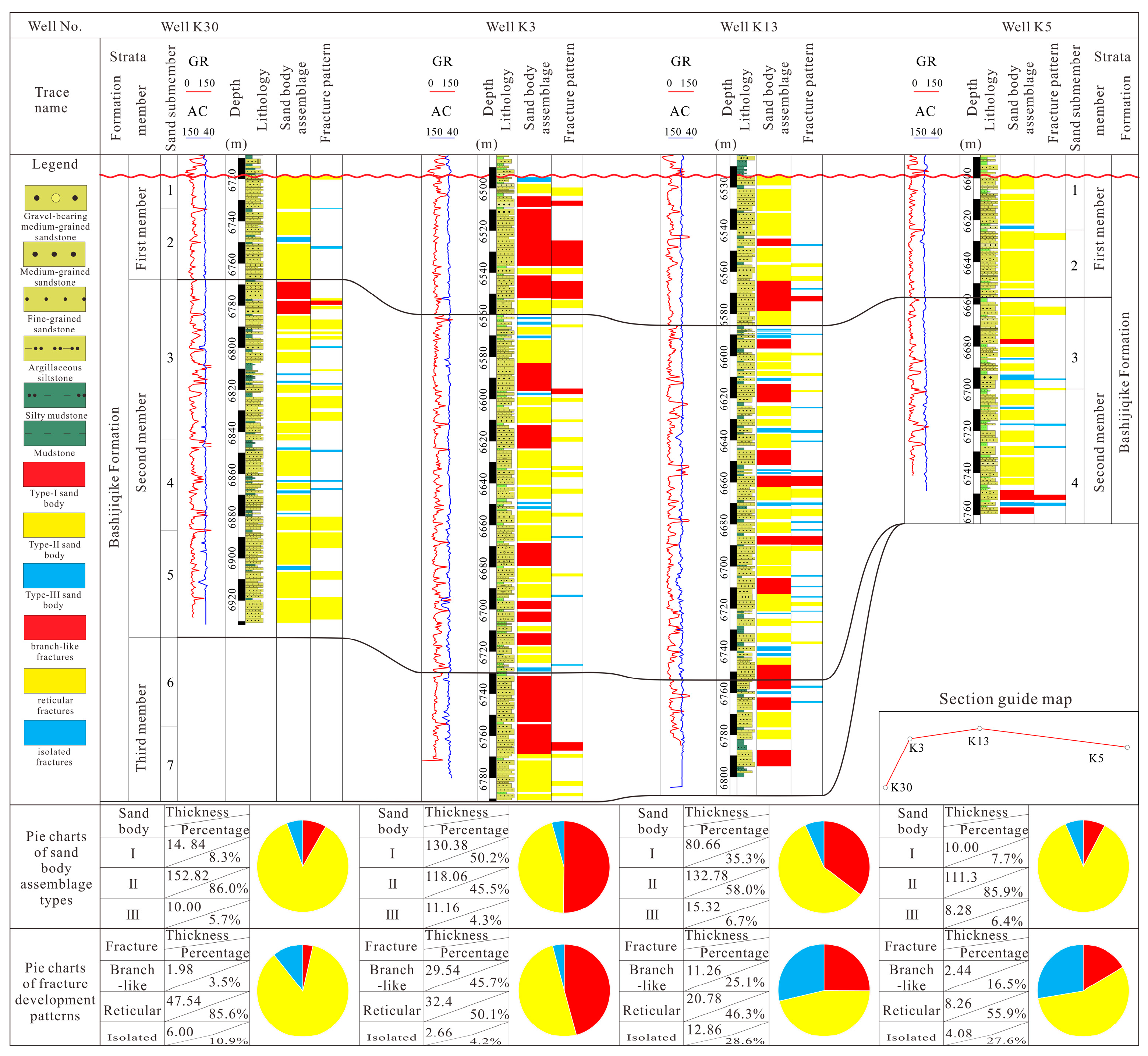
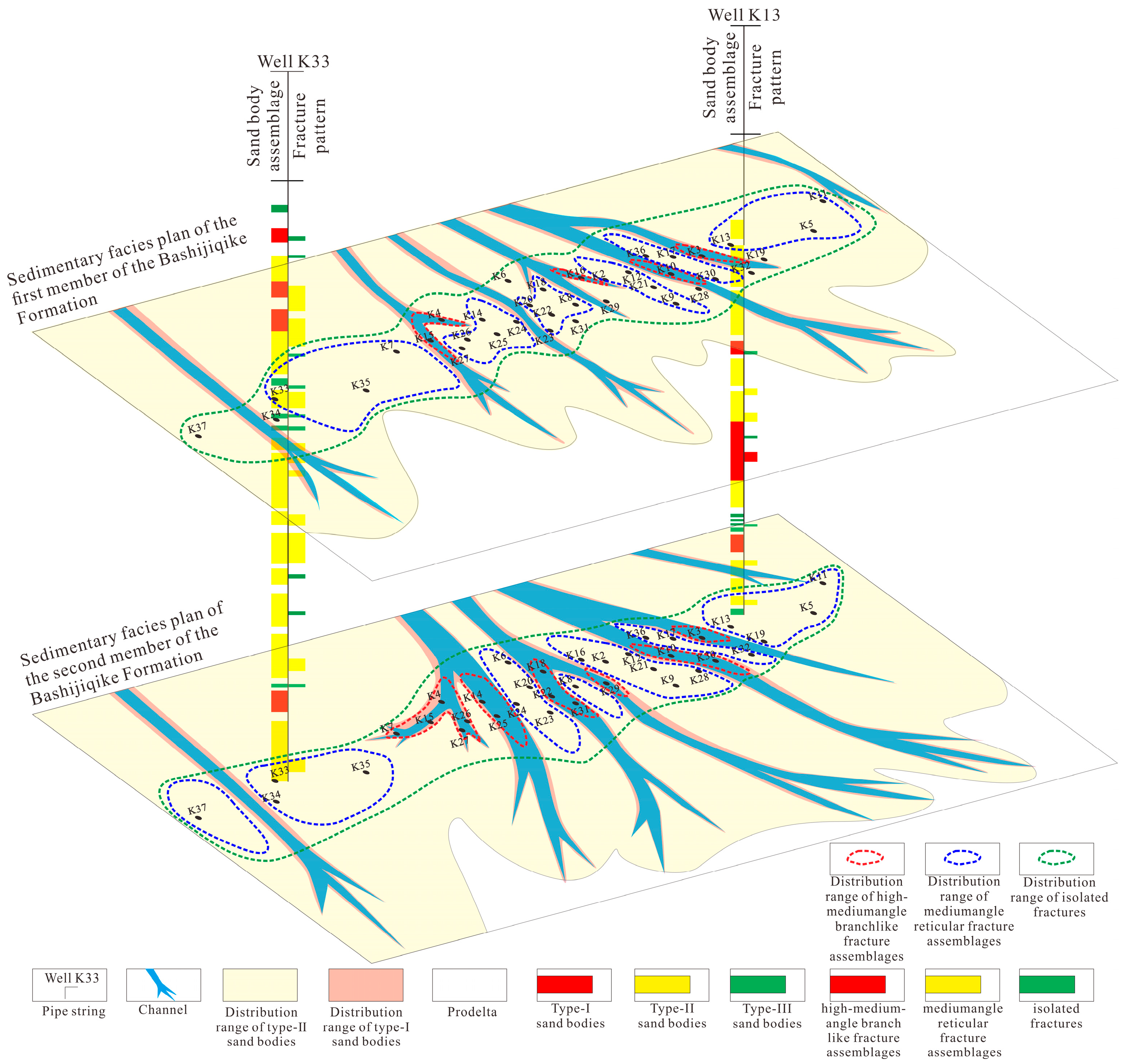
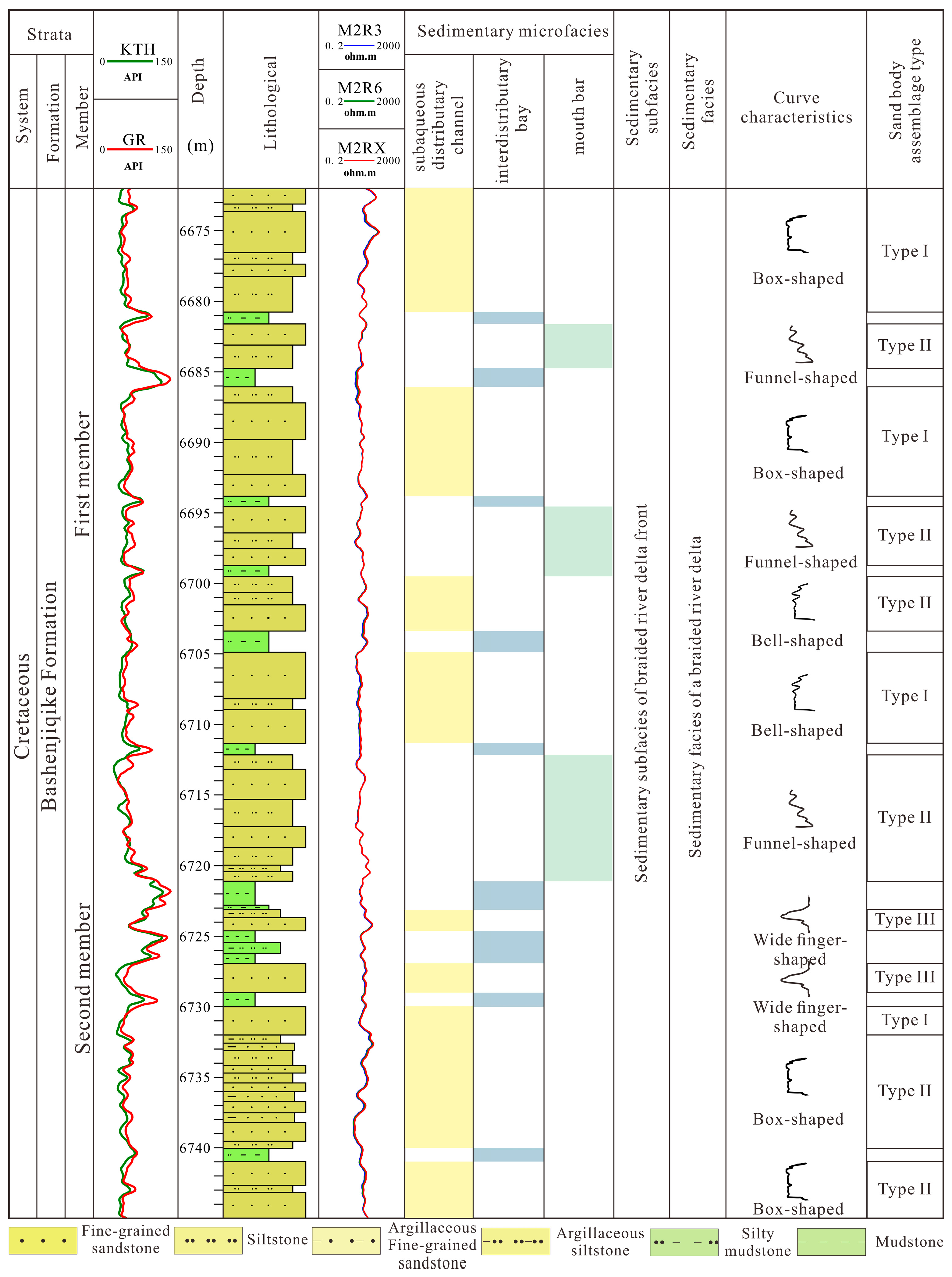
Fractures are crucial as main natural gas transport channels in tight sandstone reservoirs. In order to reveal the correlation between the combination of fractures in Block Keshen 2 and sandstone, we have collected drilling core data, logging curve data, imaging logging data, and rock thin-section data from the Bashjiqike Formation in the Keshen 2 area, and by classifying and statistically analyzing the different influencing factors of fractures, we have established a correlation between the development of fractures and sandstone thickness, lithology, and sedimentary microfacies. The results reveal the following: (1) frequent vertical superposition and lateral migration occur in the sedimentary sand bodies of the Bashijiqike Formation. Three types of patterns of sand bodies have been identified according to the changes in microfacies. Type I refers to the patterns of sand bodies developed in main subaqueous distributary channels, type II refers to the patterns of sand bodies developed in secondary subaqueous distributary channels or mouth bars, and type III refers to the patterns of sand bodies developed in isolated subaqueous distributary channels; (2) three types of fracture patterns have been described in the various sand bodies of the Bashijiqike Formation in the Keshen area, including high–medium-angle branch-like fracture patterns, medium-angle reticular fracture patterns, and isolated fractures; (3) the coupling relationship among sedimentary microfacies, sand body patterns, and fracture patterns has been established. The high–medium-angle branch-like fracture patterns mainly develop in the main underwater distributary channel and the type I sand body patterns. The medium-angle reticular fracture patterns mainly develop in the secondary underwater distributary channel and mouth bars, as well as the type II sand body patterns. Isolated fractures can occur in all sedimentary microfacies but are sporadically distributed within the three types of sand body patterns. The research results present the regularity of fracture development in fractured reservoirs, which can be applied to oil and gas fields with the same background, providing certain geological evidence for exploration and development.
Keywords: braided river delta; sedimentary sand body patterns; fracture complex; response model; Bashijiqike formation; Kuqa depression braided river delta; sedimentary sand body patterns; fracture complex; response model; Bashijiqike formation; Kuqa depression