


The Role of Biomodification in Mineral Processing
Abstract
1. Introduction
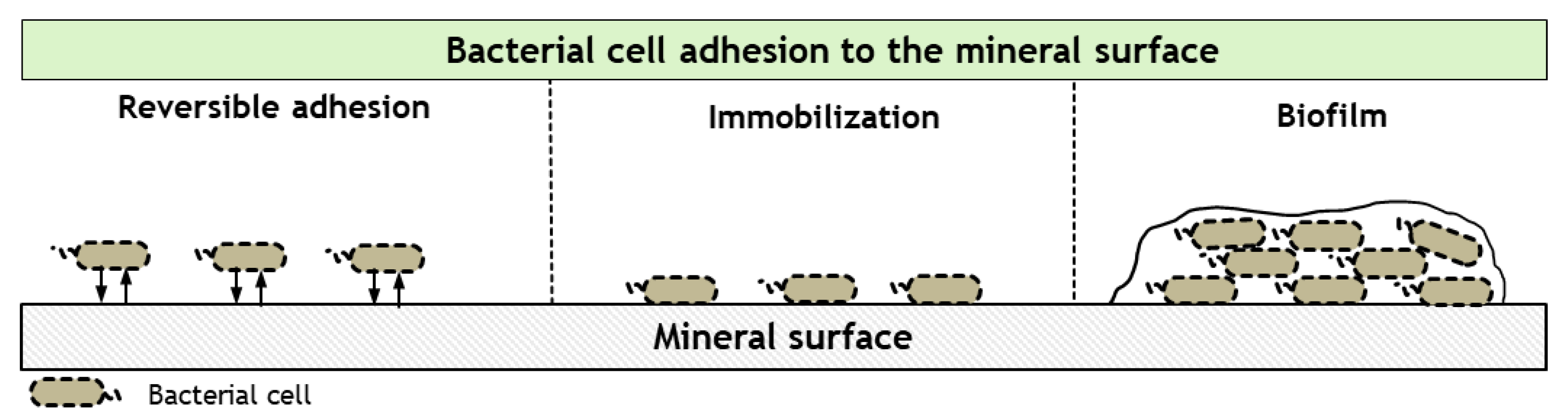
2. Adhesion of Microorganisms to the Mineral Surface
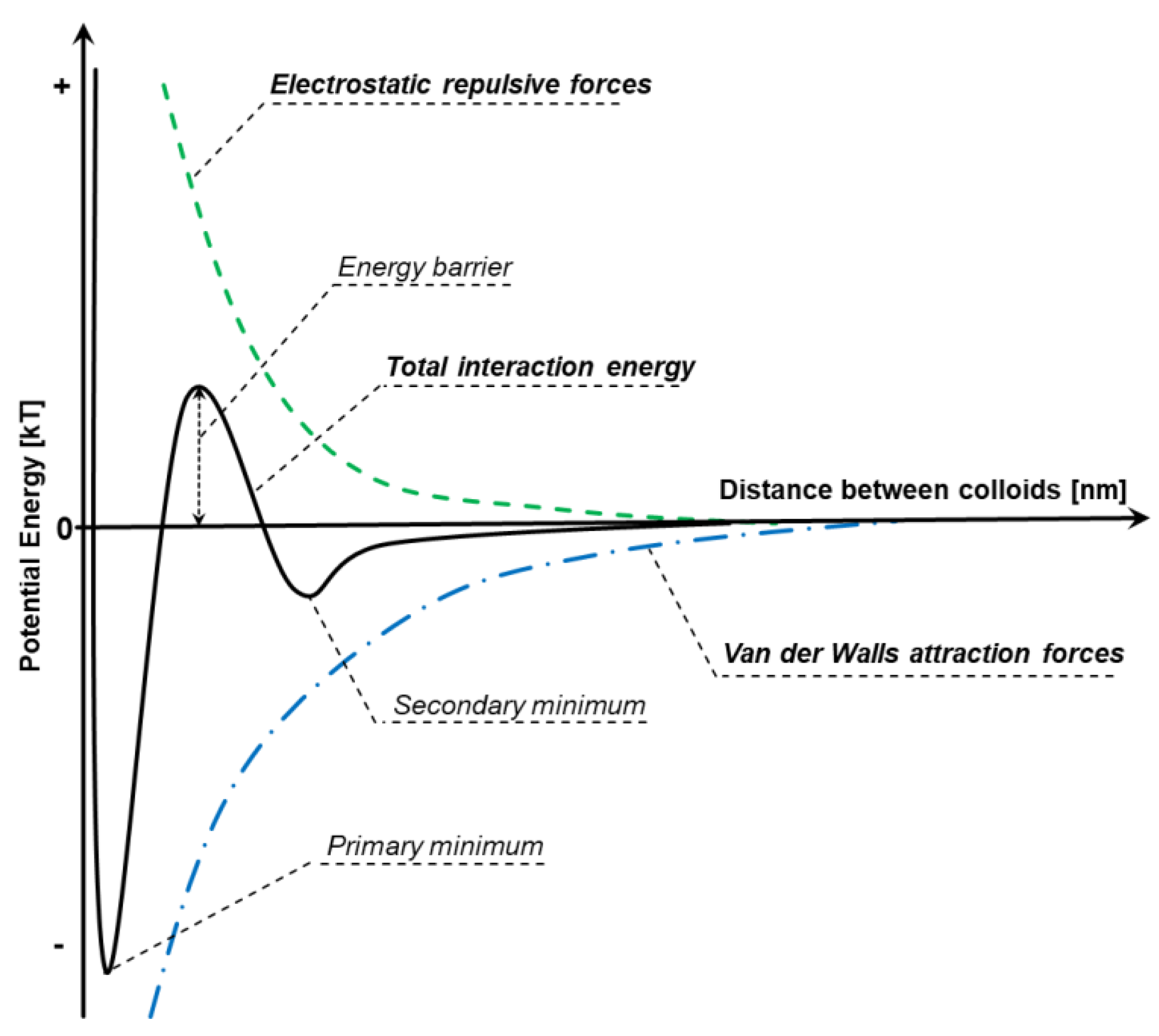
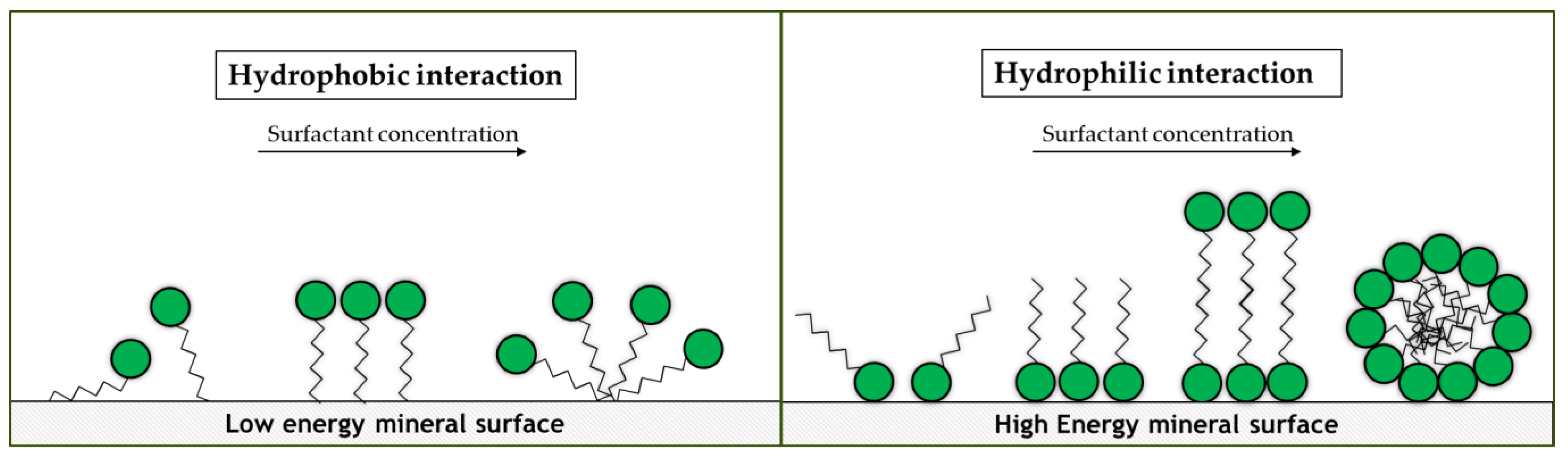
Theoretical Models Used to Describe Biosurfactant-Mineral Surface Interactions
3. Adsorption of Microbial By-Products on the Mineral Surface
4. Bioflotation
4.1. Bacterial Cell Application
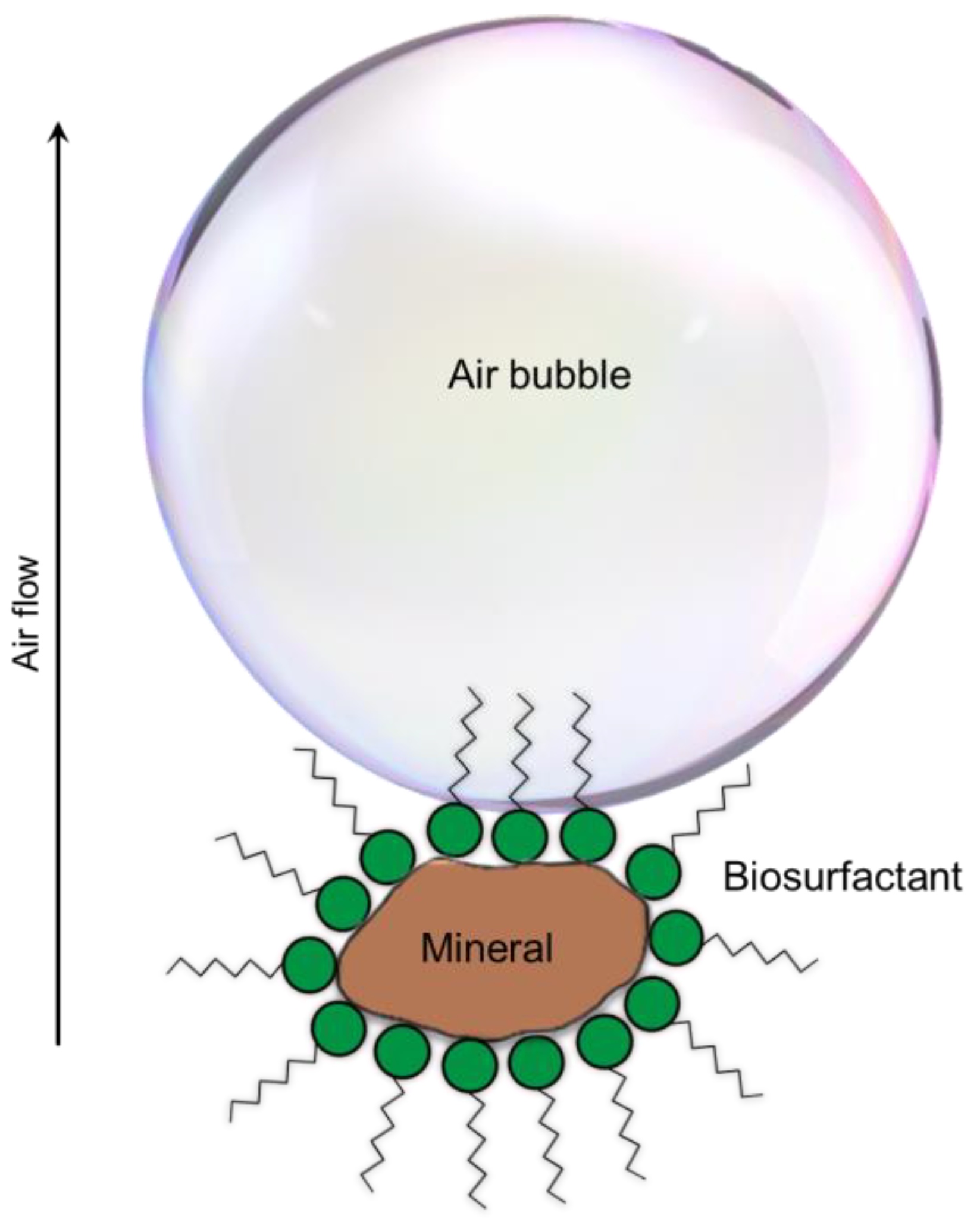
4.2. Application of Microbial Surface-Active Compounds
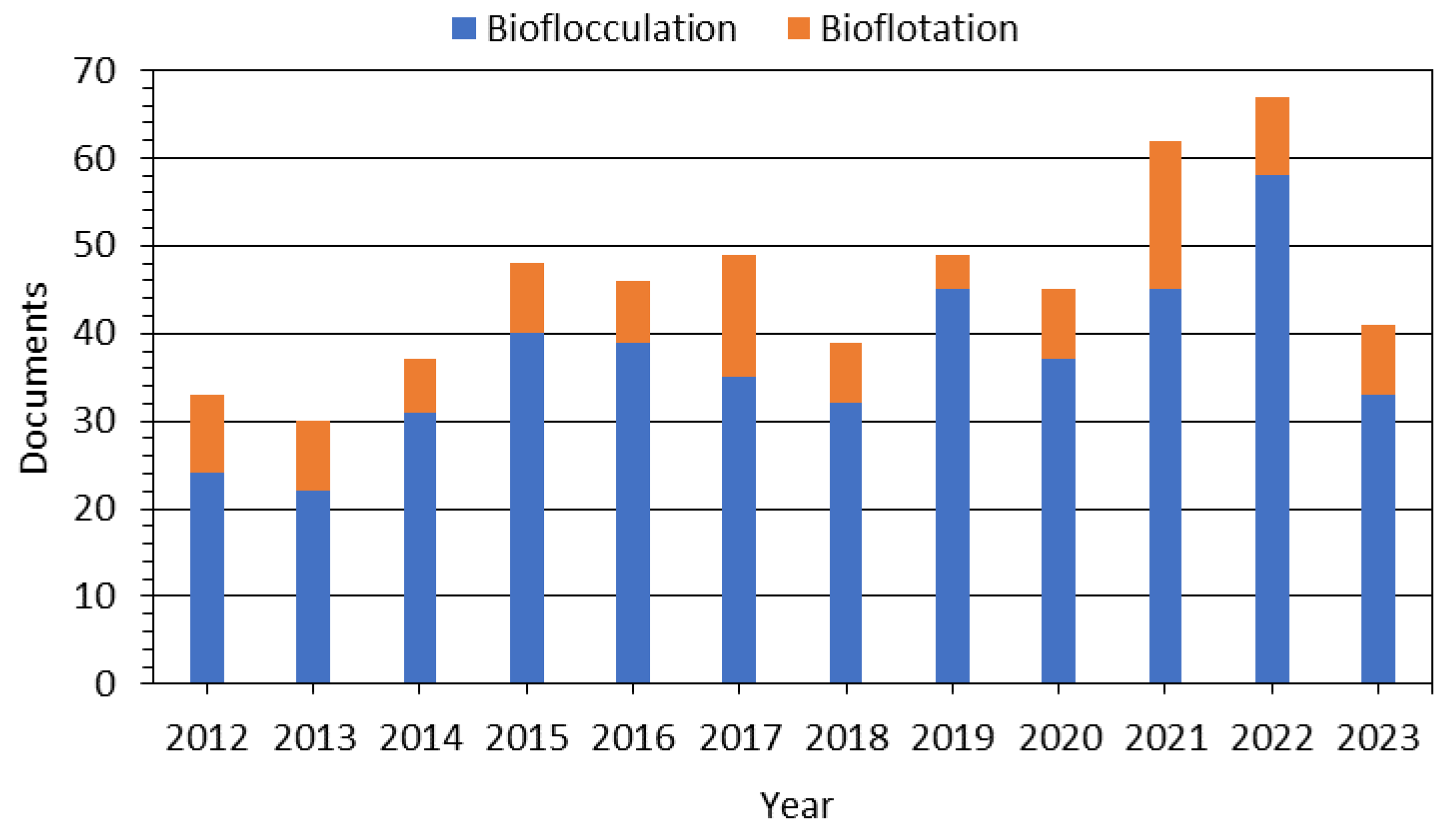
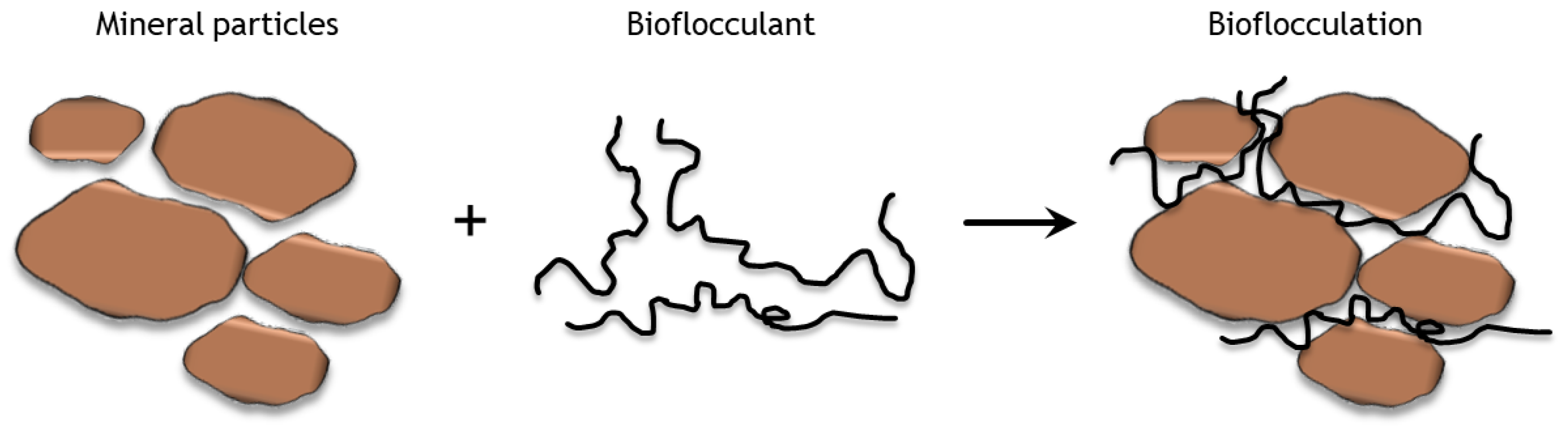
5. Bioflocculation of Minerals
6. Summary
7. Conclusions
- Pyrite depression was caused by bacteria such as A. ferrooxidans, A. ferrooxydans, L. ferrooxidans, Halobacillus, Alkalibacillus and A. almallahensis, H. boliviensis, Halobacillus and Halomonas sp., and B. pumilus, Marinobacter sp. and allowed separation of pyrite mixtures with coal and chalcopyrite.
- Hematite surface biomodified using B. subtilis, P. polymyxa, S. marcescens PW114, S. marcescens S20, Acinetobacter sp. MSG8, Stenotrophomonas sp. MB-1-6-5, R. ruber, R. erythropolis, and M. phlei become more hydrophobic, increasing their floatability.
- The interaction of quartz with the metabolites of B. mucilaginosus and B. licheniformis increases its hydrophobicity, facilitating flotation.
- Hydrophobisation of the apatite surface is possible with the use of R. opacus, B. cereus, and P. songnenensis.
- B. licheniformis enhances the hydrophobicity of barite.
- Galena modified with lysed B. subtilis can be floated from sphalerite.
- Dolomite destabilisation was achieved using rhamnolipids produced by P. aeruginosa.
Author Contributions
Funding
Data Availability Statement
Conflicts of Interest
References
- Sarubbo, L.A.; Silva, M.d.G.C.; Durval, I.J.B.; Bezerra, K.G.O.; Ribeiro, B.G.; Silva, I.A.; Twigg, M.S.; Banat, I.M. Biosurfactants: Production, properties, applications, trends, and general perspectives. Biochem. Eng. J. 2022, 181, 108377. [Google Scholar] [CrossRef]
- Banat, I.M.; Satpute, S.K.; Cameotra, S.S.; Patil, R.; Nyayanit, N.V. Cost effective technologies and renewable substrates for biosurfactants’ production. Front. Microbiol. 2014, 5, 697. [Google Scholar] [CrossRef]
- Oulkhir, A.; Lyamlouli, K.; Danouche, M.; Ouazzani, J.; Benhida, R. A critical review on natural surfactants and their potential for sustainable mineral flotation. Rev. Environ. Sci. Biotechnol. 2023, 22, 105–131. [Google Scholar] [CrossRef]
- Chandraprabha, M.N.; Natarajan, K.A. Microbially induced mineral beneficiation. Miner. Process. Extr. Metall. Rev. 2010, 31, 1–29. [Google Scholar] [CrossRef]
- Rao, K.H.; Subramanian, S. Bioflotation and bioflocculation of relevance to minerals bioprocessing. In Microbial Processing of Metal Sulfides; Springer: Dordrecht, The Netherlands, 2007. [Google Scholar] [CrossRef]
- Smith, R.W.; Miettinen, M. Microorganisms in flotation and flocculation: Future technology or laboratory curiosity? Miner. Eng. 2006, 19, 548–553. [Google Scholar] [CrossRef]
- Mishra, S.; Panda, S.; Akcil, A.; Dembele, S. Biotechnological Avenues in Mineral Processing: Fundamentals, Applications and Advances in Bioleaching and Bio-beneficiation. Miner. Process. Extr. Metall. Rev. 2023, 44, 22–51. [Google Scholar] [CrossRef]
- Behera, S.K.; Mulaba-Bafubiandi, A.F. Microbes Assisted Mineral Flotation a Future Prospective for Mineral Processing Industries: A Review. Miner. Process. Extr. Metall. Rev. 2017, 38, 96–105. [Google Scholar] [CrossRef]
- Asgari, K.; Huang, Q.; Khoshdast, H.; Hassanzadeh, A. A Review on Bioflotation of Coal and Minerals: Classification, Mechanisms, Challenges, and Future Perspectives. Miner. Process. Extr. Metall. Rev. 2022, 1–31. [Google Scholar] [CrossRef]
- Kinnunen, P.; Miettinen, H.; Bomberg, M. Review of potential microbial effects on flotation. Minerals 2020, 10, 533. [Google Scholar] [CrossRef]
- Roberto, F.F.; Schippers, A. Progress in bioleaching: Part B, applications of microbial processes by the minerals industries. Appl. Microbiol. Biotechnol. 2022, 106, 5913–5928. [Google Scholar] [CrossRef] [PubMed]
- Potysz, A.; Bartz, W. Bioweathering of minerals and dissolution assessment by experimental simulations—Implications for sandstone rocks: A review. Constr. Build. Mater. 2022, 316, 125862. [Google Scholar] [CrossRef]
- Vilinska, A.; Rao, K.H.; Forssberg, K. Microorganisms in Flotation and Flocculation of Minerals—An Overview. In International Mineral Processing Congress; American Science Press Inc.: Valencia, CA, USA, 2008; Available online: https://www.diva-portal.org/smash/get/diva2:1008378/FULLTEXT01.pdfTest (accessed on 29 June 2023).
- Yin, W.; Wang, Y.; Liu, L.; He, J. Biofilms: The microbial ‘protective clothing’ in extreme environments. Int. J. Mol. Sci. 2019, 20, 3423. [Google Scholar] [CrossRef]
- Su, G.; Li, S.; Deng, X.; Hu, L.; Praburaman, L.; He, Z.; Zhong, H.; Sun, W. Low concentration of Tween-20 enhanced the adhesion and biofilm formation of Acidianus manzaensis YN-25 on chalcopyrite surface. Chemosphere 2021, 284, 131403. [Google Scholar] [CrossRef] [PubMed]
- Su, G.; Deng, X.; Hu, L.; Praburaman, L.; Zhong, H.; He, Z. Comparative analysis of early-stage adsorption and biofilm formation of thermoacidophilic archaeon Acidianus manzaensis YN-25 on chalcopyrite and pyrite surfaces. Biochem. Eng. J. 2020, 163, 107744. [Google Scholar] [CrossRef]
- Zhang, R.; Neu, T.R.; Blanchard, V.; Vera, M.; Sand, W. Biofilm dynamics and EPS production of a thermoacidophilic bioleaching archaeon. New Biotechnol. 2019, 51, 21–30. [Google Scholar] [CrossRef]
- Ali, K.; Ahmed, B.; Khan, M.S.; Musarrat, J. Differential surface contact killing of pristine and low EPS Pseudomonas aeruginosa with Aloe vera capped hematite (α-Fe2O3) nanoparticles. J. Photochem. Photobiol. B 2018, 188, 146–158. [Google Scholar] [CrossRef]
- Diao, M.; Taran, E.; Mahler, S.; Nguyen, T.A.H.; Nguyen, A.V. Quantifying adhesion of acidophilic bioleaching bacteria to silica and pyrite by atomic force microscopy with a bacterial probe. Colloids Surf. B Biointerface 2014, 115, 229–236. [Google Scholar] [CrossRef]
- Wang, G.; Chen, L.; Weng, D.; Wang, J. Role of extracellular polymeric substances in the adhesion interaction of Streptococcus mutans on TiO2 and SiO2 surfaces with different wettability. Colloids Interface Sci. Commun. 2020, 39, 100315. [Google Scholar] [CrossRef]
- Vardanyan, A.; Vardanyan, N.; Khachatryan, A.; Zhang, R.; Sand, W. Adhesion to mineral surfaces by cells of Leptospirillum, Acidithiobacillus and Sulfobacillus from Armenian sulfide ores. Minerals 2019, 9, 69. [Google Scholar] [CrossRef]
- Bellenberg, S.; Díaz, M.; Noël, N.; Sand, W.; Poetsch, A.; Guiliani, N.; Vera, M. Biofilm formation, communication and interactions of leaching bacteria during colonization of pyrite and sulfur surfaces. Res. Microbiol. 2014, 165, 773–781. [Google Scholar] [CrossRef]
- Hong, Z.N.; Jiang, J.; Li, J.Y.; Xu, R.K. Preferential adhesion of surface groups of Bacillus subtilis on gibbsite at different ionic strengths and pHs revealed by ATR-FTIR spectroscopy. Colloids Surf. B Biointerfaces 2018, 165, 83–91. [Google Scholar] [CrossRef]
- Zhang, X.; Zhang, Q.; Yan, T.; Jiang, Z.; Zhang, X.; Zuo, Y.Y. Quantitatively Predicting Bacterial Adhesion Using Surface Free Energy Determined with a Spectrophotometric Method. Environ. Sci. Technol. 2015, 49, 6164–6171. [Google Scholar] [CrossRef] [PubMed]
- Islam, A.M.; Chowdhry, B.Z.; Snowden, M.J. Heteroaggregation in colloidal dispersions. Adv. Colloid Interface Sci. 1995, 62, 109–136. [Google Scholar] [CrossRef]
- Rubio-Ríos, A.; Rosales-Marines, L.; Solanilla Duque, J.F.; Reyes-Acosta, Y.K.; Salazar-Sánchez, M.; Rodríguez-Herrera, R.; Farías-Cepeda, L. Biobased Nanoemulsions: Concept, Formulation, and Applications. In Nanobiotechnology in Bioformulations; Nanotechnology in the Life Sciences; Prasad, R., Kumar, V., Kumar, M., Choudhary, D., Eds.; Springer: Cham, Switzerland, 2019; pp. 1–31. [Google Scholar]
- Eskhan, A.O.; Abu-Lail, N.I. Force-Averaging DLVO Model Predictions of the Adhesion Strengths Quantified for Pathogenic Listeria monocytogenes EGDe Grown under Variable pH Stresses. Langmuir 2020, 36, 8947–8964. [Google Scholar] [CrossRef]
- Bayoudh, S.; Othmane, A.; Mora, L.; Ouada, H.B. Assessing bacterial adhesion using DLVO and XDLVO theories and the jet impingement technique. Colloids Surf. B Biointerfaces 2009, 73, 1–9. [Google Scholar] [CrossRef]
- Zuki, F.M.; Edyvean, R.G.J.; Pourzolfaghar, H.; Kasim, N. Modeling of the van der waals forces during the adhesion of capsule-shaped bacteria to flat surfaces. Biomimetics 2021, 6, 5. [Google Scholar] [CrossRef]
- Alam, F.; Kumar, S.; Varadarajan, K.M. Quantification of Adhesion Force of Bacteria on the Surface of Biomaterials: Techniques and Assays. ACS Biomater. Sci. Eng. 2019, 5, 2093–2110. [Google Scholar] [CrossRef]
- Quba, A.A.A.; Schaumann, G.E.; Karagulyan, M.; Diehl, D. Quality control of direct cell-mineral adhesion measurements in air and liquid using inverse AFM imaging. RSC Adv. 2021, 11, 5384–5392. [Google Scholar] [CrossRef]
- Srivastava, R.K.; Bothra, N.; Singh, R.; Sai, M.C.; Nedungadi, S.V.; Sarangi, P.K. Microbial Originated surfactants with multiple applications: A comprehensive review. Arch. Microbiol. 2022, 204, 452. [Google Scholar] [CrossRef]
- Dolman, B.M.; Wang, F.; Winterburn, J.B. Integrated production and separation of biosurfactants. Process Biochem. 2019, 83, 1–8. [Google Scholar] [CrossRef]
- Dwyer, R.; Bruckard, W.J.; Rea, S.; Holmes, R.J. Bioflotation and bioflocculation review: Microorganisms relevant for mineral beneficiation. Trans. Inst. Min. Metall. Sect. C Miner. Process. Extr. Metall. 2012, 121, 65–71. [Google Scholar] [CrossRef]
- Law, K.Y. Definitions for hydrophilicity, hydrophobicity, and superhydrophobicity: Getting the basics right. J. Phys. Chem. Lett. 2014, 5, 686–688. [Google Scholar] [CrossRef] [PubMed]
- Jia, K.; Lu, Y.; Liu, J.; Cheng, S.; Liu, S.; Cao, Y.; Li, G. Selective flotation separation of hemimorphite from quartz using the biosurfactant sodium N-lauroylsarcosinate as a novel collector. Miner. Eng. 2023, 198, 108073. [Google Scholar] [CrossRef]
- Wood, T.L.; Gong, T.; Zhu, L.; Miller, J.; Miller, D.S.; Yin, B.; Wood, T.K. Rhamnolipids from Pseudomonas aeruginosa disperse the biofilms of sulfate-reducing bacteria. NPJ Biofilms Microbiomes 2018, 4, 22. [Google Scholar] [CrossRef]
- Didyk-Mucha, A.; Polowczyk, I.; Sadowski, Z.; Kudelko, J. Electrokinetic and Flotation Investigations of Surface Properties Modification of Magnesite and Serpentinite Using Biosurfactants and Surfactants. J. Phys. Sci. Appl. 2015, 15, 87–95. [Google Scholar] [CrossRef][Green Version]
- Didyk-Mucha, A.; Pawlowska, A.; Sadowski, Z. Modification of mineral surfaces by adsorption of biosurfactants produced by Streptomyces sp. Colloids Surf. A Physicochem. Eng. Asp. 2019, 579, 123677. [Google Scholar] [CrossRef]
- Kalam, S.; Abu-Khamsin, S.A.; Kamal, M.S.; Patil, S. Surfactant Adsorption Isotherms: A Review. ACS Omega 2021, 6, 32342–32348. [Google Scholar] [CrossRef]
- Didyk, A.M.; Sadowski, Z. Flotation of serpentinite and quartz using biosurfactants. Physicochem. Probl. Miner. Process. 2012, 48, 607–618. [Google Scholar] [CrossRef]
- Wills, B.A.; Finch, J.A. (Eds.) Froth flotation. In Wills’ Mineral Processing Technology, 8th ed.; Butterworth-Heinemann: Boston, MA, USA, 2016; pp. 265–380. [Google Scholar] [CrossRef]
- Hernández, S.B.; Cava, F. New approaches and techniques for bacterial cell wall analysis. Curr. Opin. Microbiol. 2021, 60, 88–95. [Google Scholar] [CrossRef]
- Pecina-Treviño, E.T.; Ramos-Escobedo, G.T.; Gallegos-Acevedo, P.M.; López-Saucedo, F.J.; Orrantia-Borunda, E. Bioflotation of sulfide minerals with Acidithiobacillus ferrooxidans in relation to copper activation and surface oxidation. Can. J. Microbiol. 2012, 58, 1073–1083. [Google Scholar] [CrossRef]
- Bleeze, B.; Zhao, J.; Harmer, S.L. Selective attachment of Leptospirillum ferrooxidans for separation of chalcopyrite and pyrite through bio-flotation. Minerals 2018, 8, 86. [Google Scholar] [CrossRef]
- Sanwani, E.; Chaerun, S.; Mirahati, R.; Wahyuningsih, T. Bioflotation: Bacteria-Mineral Interaction for Eco-friendly and Sustainable Mineral Processing. Procedia Chem. 2016, 19, 666–672. [Google Scholar] [CrossRef]
- Nasrollahzadeh, A.; Chegeni, M.J.; Moghooeinejad, A.; Manafi, Z. Bio-flotation of Chalcopyrite using Halophilic Bacteria Separately and Their Combination as Pyrite bio-Depressant. J. Min. Environ. 2022, 13, 119–1138. [Google Scholar] [CrossRef]
- Bafti, A.M.N.; Chegeni, M.J.; Moghooeinejad, A.; Manafi, Z. Investigating Possibility of Replacing Some Chemical Reagents used in Sulfide Copper Flotation with Halophilic Bacteria. J. Min. Environ. 2023, 14, 243–258. [Google Scholar] [CrossRef]
- Mhonde, N.; Smart, M.; Corin, K.; Schreithofer, N. Investigating the electrochemical interaction of a thiol collector with chalcopyrite and galena in the presence of a mixed microbial community. Minerals 2020, 10, 553. [Google Scholar] [CrossRef]
- Consuegra, G.L.; Kutschke, S.; Rudolph, M.; Pollmann, K. Halophilic bacteria as potential pyrite bio-depressants in Cu-Mo bioflotation. Miner. Eng. 2020, 145, 106062. [Google Scholar] [CrossRef]
- Hołda, A.; Młynarczykowska, A. Bioflotation as an alternative method for desulphurization of fine coals—Part I. Inz. Miner. 2014, 15, 263–268. [Google Scholar]
- El-Midany, A.A.; Abdel-Khalek, M.A. Reducing sulfur and ash from coal using Bacillus subtilis and Paenibacillus polymyxa. Fuel 2014, 115, 589–595. [Google Scholar] [CrossRef]
- Abdel-Khalek, M.A.; El-Midany, A.A. Adsorption of Paenibacillus polymyxa and its impact on coal cleaning. Fuel Process. Technol. 2013, 113, 52–56. [Google Scholar] [CrossRef]
- Yang, Z.C.; Feng, Y.L.; Li, H.R.; Da Wang, W.; Teng, Q. Effect of biological pretreatment on flotation recovery of pyrolusite. Trans. Nonferrous Met. Soc. China 2014, 24, 1571–1577. [Google Scholar] [CrossRef]
- Lopez, L.Y.; Merma, A.G.; Torem, M.L.; Pino, G.H. Fundamental aspects of hematite flotation using the bacterial strain Rhodococcus ruber as bioreagent. Miner. Eng. 2015, 75, 63–69. [Google Scholar] [CrossRef]
- Merma, A.G.; Torem, M.L. Bioflotation of apatite and quartz: Particle size effect on the rate constant. Rev. Esc. Minas 2015, 68, 343–350. [Google Scholar] [CrossRef][Green Version]
- Merma, A.G.; Torem, M.L.; Morán, J.J.V.; Monte, M.B.M. On the fundamental aspects of apatite and quartz flotation using a Gram positive strain as a bioreagent. Miner. Eng. 2013, 48, 61–67. [Google Scholar] [CrossRef]
- Olivera, C.A.C.; Merma, A.G.; Torem, M.L. Evaluation of hematite and quartz flotation kinetics using surfactant produced by Rhodococcus erythropolis as bioreagent. Rev. Esc. Minas 2019, 72, 655–659. [Google Scholar] [CrossRef]
- Olivera, C.A.C.; Merma, A.G.; Puelles, J.G.S.; Torem, M.L. On the fundamentals aspects of hematite bioflotation using a Gram positive strain. Miner. Eng. 2017, 106, 55–63. [Google Scholar] [CrossRef]
- Farghaly, M.G.; Abdel-Khalek, N.A.; Abdel-Khalek, M.A.; Selim, K.A.; Abdallah, S.S. Physicochemical study and application for pyrolusite separation from high manganese-iron ore in the presence of microorganisms. Physicochem. Probl. Miner. Process. 2021, 51, 273–283. [Google Scholar] [CrossRef]
- Yang, H.; Li, T.; Tang, Q.; Wang, C.; Ma, W. Development of a bio-based collector by isolating a bacterial strain using flotation and culturing techniques. Int. J. Miner. Process. 2013, 123, 145–151. [Google Scholar] [CrossRef]
- Yang, H.F.; Li, T.; Chang, Y.H.; Luo, H.; Tang, Q.Y. Possibility of using strain F9 (Serratia marcescens) as a bio-collector for hematite flotation. Int. J. Miner. Metall. Mater. 2014, 21, 210–215. [Google Scholar] [CrossRef]
- Kim, G.; Choi, J.; Silva, R.A.; Song, Y.; Kim, H. Feasibility of bench-scale selective bioflotation of copper oxide minerals using Rhodococcus opacus. Hydrometallurgy 2017, 168, 94–102. [Google Scholar] [CrossRef]
- Abdallah, S.S.; Abdel-Khalek, N.A.; Farghaly, M.G.; Selim, K.A.; Abdel-Khalek, M.A. Role of Pseudomonas songnenensis-apatite interaction on bio-flotation of calcareous phosphate ore. Biointerface Res. Appl. Chem. 2021, 11, 14451–14462. [Google Scholar] [CrossRef]
- Abdallah, S.S.; Selim, K.A.; Hassan, M.M.A.; El-Amir, A.; Farghaly, M.G.; Elsayed, S.M. Bioprocessing of natural phosphate ore with Staphylococcus aureus bacteria. Rudarsko Geolosko Naftni Zbornik 2022, 37, 53–60. [Google Scholar] [CrossRef]
- El-Ghammaz, M.R.; Abdel-Khalek, N.A.; Hassan, M.K. Proteomic Profile To Explain The Mechanism Of The Bacillus Cereus-Phosphate Mineral Interaction. Physicochem. Probl. Miner. Process. 2021, 57, 136–150. [Google Scholar] [CrossRef]
- Ashkavandi, R.A.; Azimi, E.; Hosseini, M.R. Bacillus licheniformis a potential bio-collector for Barite-Quartz selective separation. Miner. Eng. 2022, 175, 107285. [Google Scholar] [CrossRef]
- Vasanthakumar, B.; Ravishankar, H.; Subramanian, S. Selective bio-flotation of sphalerite from galena using mineral—Adapted strains of Bacillus subtilis. Miner. Eng. 2017, 110, 179–184. [Google Scholar] [CrossRef]
- Włodarczyk, A.; Szymańska, A.; Skłodowska, A.; Matlakowska, R. Determination of factors responsible for the bioweathering of copper minerals from organic-rich copper-bearing Kupferschiefer black shale. Chemosphere 2016, 148, 416–425. [Google Scholar] [CrossRef]
- Govender, Y.; Gericke, M. Extracellular polymeric substances (EPS) from bioleaching systems and its application in bioflotation. Miner. Eng. 2011, 24, 1122–1127. [Google Scholar] [CrossRef]
- Vasanthakumar, B.; Ravishankar, H.; Subramanian, S. Microbially induced selective flotation of sphalerite from galena using mineral-adapted strains of Bacillus megaterium. Colloids Surf. B Biointerfaces 2013, 112, 279–286. [Google Scholar] [CrossRef] [PubMed]
- Vasanthakumar, B.; Ravishankar, H.; Subramanian, S. A novel property of DNA—As a bioflotation reagent in mineral processing. PLoS ONE 2012, 7, e39316. [Google Scholar] [CrossRef]
- Legawiec, K.J.; Kruszelnicki, M.; Bastrzyk, A.; Polowczyk, I. Rhamnolipids as effective green agents in the destabilisation of dolomite suspension. Int. J. Mol. Sci. 2021, 22, 591. [Google Scholar] [CrossRef] [PubMed]
- Gholami, A.; Khoshdast, H. Using artificial neural networks for the intelligent estimation of selectivity index and metallurgical responses of a sample coal bioflotation by rhamnolipid biosurfactants. Energy Sources Part A Recovery Util. Environ. Eff. 2020, 1–19. [Google Scholar] [CrossRef]
- Merma, A.G.; Olivera, C.A.C.; Hacha, R.R.; Torem, M.L.; Santos, B.F.D. Optimization of hematite and quartz BIOFLOTATION by AN artificial neural network (ANN). J. Mater. Res. Technol. 2019, 8, 3076–3087. [Google Scholar] [CrossRef]
- Çelik, P.A.; Çakmak, H.; Aksoy, D.Ö. Green bioflotation of calcite using surfactin as a collector. J. Dispers. Sci. Technol. 2021, 44, 911–921. [Google Scholar] [CrossRef]
- Koca, S.; Aksoy, D.; Ozdemir, S.; Çelik, P.A.; Çabuk, A.; Koca, H. Surfactin as an alternative microbial collector to oleate in magnesite-quartz selective flotation. Sep. Sci. Technol. 2023, 58, 394–405. [Google Scholar] [CrossRef]
- Aksoy, D.Ö.; Özdemir, S.; Çelik, P.A.; Koca, S.; Çabuk, A.; Koca, H. Effects of Surfactin, a Promising Carbonate Ore Collector, on the Physicochemical Properties of Magnesite Surface. Min. Metall. Explor. 2023, 40, 1–12. [Google Scholar] [CrossRef]
- Elmahdy, A.; El Mofty, S.; Khalek, M.A.; Khalek, N.A.; El Midany, A. Dolomite-apatite separation by amphoteric collector in presence of bacteria. J. Cent. South Univ. 2013, 20, 1645–1652. [Google Scholar]
- Teng, Q.; Wen, Q.; Yang, Z.; Liu, S. Evaluation of the biological flotation reagent obtained from Paenibacillus amylolyticus in magnetite and phlogopite flotation system. Colloids Surf. A Physicochem. Eng. Asp. 2021, 610, 125930. [Google Scholar] [CrossRef]
- Ghashoghchi, R.A.; Hosseini, M.R.; Ahmadi, A. Effects of microbial cells and their associated extracellular polymeric substances on the bio-flocculation of kaolin and quartz. Appl. Clay Sci. 2017, 138, 81–88. [Google Scholar] [CrossRef]
- Zhao, J.; Wu, W.; Zhang, X.; Zhu, M.; Tan, W. Characteristics of bio-desilication and bio-flotation of Paenibacillus mucilaginosus BM-4 on aluminosilicate minerals. Int. J. Miner. Process. 2017, 168, 40–47. [Google Scholar] [CrossRef]
- El-Sayed, S.M.; Abdalla, S.S.; Abdel-Khalek, M.A. Influence of Bacillus subtilis on the surface behavior and separation of talc and chlorite minerals. Tenside Surfactants Deterg. 2022, 59, 524–533. [Google Scholar] [CrossRef]
- Augustyn, A.R.; Pott, R.W.M.; Tadie, M. The interactions of the biosurfactant surfactin in coal flotation. Colloids Surf. A Physicochem. Eng. Asp. 2021, 627, 127122. [Google Scholar] [CrossRef]
- Lai, H.; Fang, H.; Huang, L.; He, G.; Reible, D. A review on sediment bioflocculation: Dynamics, influencing factors and modeling. Sci. Total Environ. 2018, 642, 1184–1200. [Google Scholar] [CrossRef] [PubMed]
- Poorni, S.; Natarajan, K.A. Flocculation behaviour of hematite-kaolinite suspensions in presence of extracellular bacterial proteins and polysaccharides. Colloids Surf. B Biointerfaces 2014, 114, 186–192. [Google Scholar] [CrossRef]
- Selim, K.A.; Rostom, M. Bioflocculation of (Iron oxide—Silica) system using Bacillus cereus bacteria isolated from Egyptian iron ore surface. Egypt. J. Pet. 2018, 27, 235–240. [Google Scholar] [CrossRef]
- Yang, Z.; Wang, W.; Liu, S. Flocculation of Coal Waste Slurry Using Bioflocculant Produced by Azotobacter chroococcum. Energy Fuels 2017, 31, 1460–1467. [Google Scholar] [CrossRef]
- Lee, C.S.; Chong, M.F.; Robinson, J.; Binner, E. A review on development and application of plant-based bioflocculants and grafted bioflocculants. Ind. Eng. Chem. Res. 2014, 53, 18357–18369. [Google Scholar] [CrossRef]
- Mohanty, S.S.; Koul, Y.; Varjani, S.; Pandey, A.; Ngo, H.H.; Chang, J.-S.; Wong, J.W.C.; Bui, X.-T. A critical review on various feedstocks as sustainable substrates for biosurfactants production: A way towards cleaner production. Microb. Cell Factories 2021, 20, 120. [Google Scholar] [CrossRef]
- Helmy, Q.; Kardena, E.; Funamizu, N. Wisjnuprapto, “Strategies toward commercial scale of biosurfactant production as potential substitute for it’s chemically counterparts. Int. J. Biotechnol. 2011, 12, 66–86. [Google Scholar]



| Mineral/Ore | Particle Size | Biosurfactant | Form of Application | Role | Surface Modification Effect | Ref. |
|---|---|---|---|---|---|---|
| Pyrite Chalcopyrite | 38–75 µm | Leptospirillum ferrooxidans (No data on pathogenicity) | Bacterial culture/ EPS | Depressant | The bacterial cells had a depressive effect on both minerals. The presence of only EPS led to greater separation via selective suppression of pyrite under acidic conditions. The best separation efficiency (95.8%) was achieved for the EPS supernatant extracted from bacteria grown on chalcopyrite. | [45] |
| Pyrite | 37–74 µm | Bacillus pumilus SKC-2 Alicyclobacillusferrooxydans SKC/SAA-2 (No data on pathogenicity) | Bacterial culture | Surface modifier/depressant | Decrease in bacterial cell and pyrite surface tension in time from 67.5 mN/m to 51.6 mN/m for B. pumilus and 55.7 mN/m for A. ferrooxydans. A decrease in surface tension changed the contact angle values, that is, the hydrophobicity of the pyrite surface, which could be attributed to bacterial cell adhesion and/or metabolic product interactions. | [46] |
| Pyrite Chalcopyrite | −74 μm | Halobacillus sp., A. almallahensis Alkalibacillus sp. Marinobacter sp. Alkalibacillus salilacus (No data on pathogenicity) | Bacterial culture | Collector/ depressant | Bioflotation with Halobacillus sp., A. almallahensis, and Alkalibacillus sp. gave recovery of pyrite depression of 30.9, 30.3, and 34.0%, respectively, and flotation of chalcopyrite of 52.9, 68.6, and 55.7%, respectively, which indicated the high selectivity of these bacteria in flotation. The application of three types of bacteria (33.3% of each type) resulted in pyrite depression better than other tests (27.5%). Chalcopyrite recovery yielded 72.6%. | [47] |
| Sulfide copper ore | −2 mm | Halobacillus sp. Alkalibacillus almallahensis Marinobacter sp. Alkalibacillus sp. (No data on pathogenicity) | Cells | Depressant | Pyrite depression (chemical collector was used), pH 7–8; Bacteria were able to replace industrial depressants such as sodium metabisulfite and pH regulators used in industry such as lime. Chalcopyrite recovery was lower than that of standard flotation. The use of collectors (gas oil, Z11, and C7240) together with halophilic bacteria was required for successful flotation. | [48] |
| Chalcopyrite Galena | 38–108 μm | Mixed culture of microbes/ Sodium ethyl xanthate | Cells | Surface modifier/ depressant | A reduction in electronegativity of zeta potential of chalcopyrite and galena after 1 h contact with microbial culture was observed. The adhesion occurred even when both the mineral and the bacteria were negatively charged, suggesting hydrophobic interactions or enhancing adsorption due to the high affinity for the hydroxide film on the oxidised tested mineral surface. Microorganisms exhibited negative zeta potentials within the pH range 2–12 due to the presence of negatively charged functional groups such as -COOH, -NH2, and -OH. The application of microbial community, induced hydrophilicity on the mineral surface, for which polysaccharides were responsible, causing poor flotation. Chalcopyrite pretreatment with bacterial culture inhibited effective adsorption of the chemical collector to the sulphide surface. When the collector was first adsorbed, the bacteria did not influence the mixed potentials of the mineral surface. In the case of galena, bacteria inhibited the interaction of the collector via mineral surface passivation. When the collector was first adsorbed, bacteria also decreased the mixed potential of the minerals, probably as a result of its continuous oxidation. | [49] |
| Pyrite Chalcopyrite | 100–200 µm | Halomonas boliviensis Marinobacter spp. Halobacillus sp. Marinococcus sp. Halomonas sp. (No data on pathogenicity) | Cells | Depressant | Bacterial adhesion to pyrite was observed for Halobacillus sp. and Halomonas sp. and chalcopyrite only for H. boliviensis and Halomonas sp. Sodium isopropyl xanthate was used as a collector, and bacteria as depressants. The biodepression of pyrite was observed when halophilic bacteria were used as replacements for lime. Pyrite microflotation was reduced from around 68% to less than 10% depending on the bacterium used; H. boliviensis, Halobacillus sp., and Halomonas sp. were the best pyrite depressants in the microflotation experiments. Chalcopyrite depression was observed from 40% to 9% with H. boliviensis and 14% with Halomonas sp. The mechanism of halophilic microorganisms' adhesion to pyrite was considered to be hydrophobic. In the pH range of 4-8, the adhesion of bacteria to minerals resulted in a change in the zeta potential towards more negative values. The zeta potential of pyrite was approximately between −20 and −70 mV and chalcopyrite −30 to −60 mV for pH 2 and pH 10, respectively. | [50] |
| Galena Sphalerite | 105−150 µm | Bacillus subtilis (NCIM 2063) (No data on pathogenicity) | Cells | Surface modifier | Adaptation of bacteria to the mineral increases the flotation recovery of that mineral compared to that without adaptation. Selective flotation tests on a synthetic mixture of galena and sphalerite confirm that sphalerite can be preferentially floated from galena in the presence of the insoluble fraction of thermolysed cells of B. subtilis initially adapted to sphalerite, with a high selectivity index. Thermolysis disrupted the structure of the bacterial cells, releasing molecules responsible for surface modification. The amphipathic DNA molecule hydrophobised sphalerite surface, whereas other macromolecules present after cell disruptions bound to galena, leading to its depression. | [68] |
| Galena Sphalerite | 105–150 μm | Bacillus megaterium (No data on pathogenicity) | Cells/ EPS/eDNA * | Surface modifier/Collector | Cells and metabolites of B. megaterium aid in the selective flotation of sphalerite. Sphalerite-adapted cells yield the highest selectivity of separation. Dissolved metal ions, protein, and DNA components modulated the bacterial surface charge. At pH 2–10, the surface charge of the unadapted B. megaterium cells was negative and increased with increasing pH. The zeta potential of sphalerite and galena, adapted cells exhibited less negative values compared to the unadapted bacteria, probably due neutralisation of negative charges on the bacterial cell surface by the free cations leached out from the mineral. Bacteria secreted a larger amount of eDNA in the presence of either sphalerite or galena compared to in their absence. The magnitude of the negative zeta potential of both sphalerite and galena after adaptation was found to decrease compared to that of the unadapted mineral, as a result of the adsorption of proteinaceous secretions on the mineral surfaces. Selective flotation of sphalerite (over 80%) was achieved using thermolysed cells, a soluble fraction of thermolysed cells, and secreted proteins of bacteria adapted to sphalerite. | [71] |
| Apatite Calcite | −150 μm | Pseudomonas songnenensis (No data onpathogenicity) | Cells | Collector | Bacterial cells improved the flotation of apatite minerals in phosphate ore; Tested pH 3–11. Maximum floatability 98% at pH 6–7 in the presence of 4 × 10⁷ cells/ml. Low affinity of a bacterial cell to the calcite surface; No significant effect on flotation. The flotation of a binary mixture contained 25% P2O5 and 20% CaCO3, resulting in a concentrate of 32.7% P2O5 and 6.8% CaCO3 in the presence of 4 × 10⁷ cells/ml at 25 °C and pH 6.5. Natural phosphate ore flotation contained 21.2% P2O5 and 25.6% CaCO3, which produced a concentrate of 31.5% P2O5 and 9.1% CaCO3. | [64] |
| Apatite Quartz | Not specified | Bacillus cereus (Pathogenic) | Bacterial culture | Collector | An isoelectric point (IEP) occurred at pH 4.7 for apatite and pH 2.1 for quartz. The IEP of the treated apatite with B. cereus decreased from 4.7 to 1.8. There was no significant change in the IEP value of quartz. The adsorption of bacteria onto apatite was attributed to electrostatic forces, hydrogen bonding, and chemical interaction. The higher floatability of apatite compared to that of quartz was due to the higher affinity of B. cereus for apatite. | [66] |
| Barite Quartz | 63–90 µm | Bacillus licheniformis (PTCC1320) (No data on pathogenicity) | Cells/ purified culture medium/ medium containing metabolites | Collector | Bacteria adhered better to the barite surface, which was attributed to a strong electrostatic effect between the cell and the mineral as a result of the opposite charges revealed in zeta potential measurements. Bacterial cell adsorption decreased with an increase in pH due to the negative charge of the minerals and cells and the strong repulsive electrostatic forces. B. licheniformis cells enhanced barite hydrophobicity as a bio-collector, resulting in the separation of quartz impurities from barite minerals. Under the optimal treatment and separation conditions (6.55 × 10³ cells/ml, 20 min, pH = 3), a maximum of 87% barite and 15% quartz flotation recoveries were obtained after 3 min of aeration. Flotation experiments in 1:1 mineral mixtures (0.5 g of each mineral) led to barite and quartz recoveries of approximately 76% and 4% and a product grade of 96.3% with a separation efficiency of 72%. Barite flotation recovery was highest at pH 3 for bacterial cells (87%), and quartz for pH 9 and metabolites (16%). | [67] |
| Dolomite Apatite | Not specified | Corynebacterium diphtheriae (Pathogenic) Pseudomonas aeruginosa (Pathogenic) | Bacterial culture | Surface modifier | Preferential adsorption of P. aeruginosa was observed on dolomite. Corynebacterium caused an increase in the mean particle size diameter from 5 to ~12μm, while Pseudomonas increased to ~30 μm. The best grade (0.7% of MgO and 31.8% of P2O5) with high recovery (>80%) was obtained for bacteria-collector interactions at pH = 11, 3 kg/t dodecyl-N-carboxyethyl-N-hyroxyethyl-imidazoline, and a concentration of P. aeruginosa of 4 × 10⁷ cells/ml. The collector−bacteria interaction improved the flotation selectivity. | [79] |
| Hematite Pyrolusite Iron ore | −74 µm | Paenibacillus polymyxa (No data on pathogenicity) | Cells | Collector | The adsorption of bacterial cells was pH dependent and decreased at pH 6–10. Bacteria cells showed higher adhesion to pyrolusite, but the FTIR results showed that chemical adsorption occurred on hematite, which made it more hydrophobic than pyrolusite. Conditioning with a bacteria suspension changed the IEP to higher values. Bioflotation of a binary hematite-pyrolusite mixture at pH 3 for 10 minutes in the presence of 5 × 10¹⁰ cells/ml, floated hematite with a manganese reduction of 65%. Flotation of a natural iron ore containing 8.79% MnO2, 0.49% SiO2 and 67.90% Fe2O3 at pH 3, conditioning with bacteria for 10 min. gave a concentrate that contained 3.7% MnO2, 0.5% SiO2 and 71.30% Fe2O3, with a hematite recovery of 72.46%. | [60] |
| Hematite | <30 μm | Serratia marcescens (Pathogenic) Acinetobacter sp. MSG8 (Pathogenic) Stenotrophomonas sp. MB-1-6-5 (Non-pathogenic) | Cells | Surface modifier/ collector | With 60 mg/L of a single strain at pH 6, the hematite recovery rates for tested species were all greater than 75%. Stenotrophomonas sp. MB-1-6-5 was non-pathogenic to humans and could be of practical use as a bio-collector for hematite flotation. The surface area of the cells belonging to this strain was strongly hydrophobic (contact angle 69 ± 1°) and highly negatively charged (zeta potential was -27.8 mV; pH 6). Bacteria adsorption on the hematite surface might occur via chemical adsorption, where interactions of phosphate groups with the hematite surface and hydrophobic associations among hydrophobic hematite particles play a crucial role. | [61] |
| Hematite | <30-μm | S. marcescens (Pathogenic) | Cells | Collector | Bacteria (contact angle 69 ± 1°; zeta potential −4.5 for pH 3 to −36.3 mV for pH 10) were used as a bio-collector during hematite flotation. At a bacteria cell concentration of 60 mg/L, the recovery of hematite was close to 80%. The addition of bacteria cells during hematite flotation increased the hydrophobicity of hematite and the hematite particle size. Bacteria adhesion to hematite occurs mainly via chemical adsorption, including chemical interactions between carboxylic groups and the hematite surface and hydrophobic associations among hydrophobic hematite particles. Hydrophobic agglomerates are formed. | [62] |
| Quartz Hematite | 75–106 μm | Rhodococcus erythropolis (No data on pathogenicity) | Cells/ Metabolites | The high selectivity of biosurfactant for hematite gave flotation efficiency close to 100% and around 33% for quartz. The floatability of quartz was improved using a surfactant concentration within pH 3-5 (15–35%). Above pH 7, there was no significant effect (<5%). Hematite flotation was significantly improved via surfactant concentration within pH 3–5 (>85%). Above pH 7, the effect of collector addition floatability did not exceed 30%. | [75] | |
| Magnetite Phlogopite | 37–74 μm | Paenibacillus amylolyticus (No data on pathogenicity) | Bacterial culture | Surface modifier | Bacteria exhibited a higher adsorption to magnetite. Cell adhesion caused the magnetite surface to be more hydrophobic and the phlogopite to be more hydrophilic. For magnetite, flotation efficiency (pH 6.6) decreased with increasing bacteria concentration and incubation time. The dose of bacterial culture above 3.0 mL had little impact on phlogopite. Pretreatment with bacteria increased mineral recovery. The maximum difference in floatability between magnetite and phlogopite was observed when the minerals were pretreated for 10 days. The flotation separation was driven by the selective adsorption of bacterial cells and metabolic products (including proteins and polysaccharides) mechanism. | [80] |
| Kaolin Quartz | (38 μm) | B. licheniformis (PTCC1320) (No data on pathogenicity) | Cells/ Bacteria culture both/ Metabolites | Flocculant | About 40% improvement in kaolin settling was observed using bacterial cells and metabolite at pH = 7 and 3, respectively. Quartz sedimentation was > 50% at pH = 1–3. Polysaccharide was more effective in kaolin flocculation, and protein was more influential in quartz agglomeration. All biosurfactants were more likely adsorbed on quartz. Application of bacteria culture broth (metabolites) caused quartz sedimentation to be 90% at pH 1. When polysaccharides were used, quartz sedimentation yielded 82% at pH 5. In the case of protein, 78% of the quartz was flocculated at pH 1. Increasing the pH value decreased the reagent adsorption and mineral flocculation, probably as a result of repulsive forces between the particles, as they became progressively negative with increasing pH. Electrostatic interactions are the most important driving forces in the surfactant adsorption to both minerals. In the case of polysaccharides and protein adsorption at neutral to alkaline pH, it might be due to chemical, van der Waals, hydrogen bonding, or depletion forces. | [81] |
| Bauxite Kaolinite | 58–75 μm | Paenibacillus mucilaginosus BM-4 (No data on pathogenicity) | Cells/ polysaccharides/ proteins | Surface modifier | The interaction of bacteria with kaolinite increased the contact angle between the mineral and the water from 36.5° to 64.1°, increasing its hydrophobicity. The contact of bacteria with bauxite contact angles between water and bauxite declined the contact angle from 34.2° to 24.3°, enhancing mineral hydrophilicity. Therefore, the tested bacteria could be used as the collector of kaolinite and the inhibitor of bauxite, respectively. The floatability of bauxite was significantly depressed by strain, while those of kaolinite were enhanced. The bioflotation test of the mixture of bauxite and kaolinite (mass ratio 5:1) showed that the Al/Si ratios improved from 3.05 to 8.60 after bacterial conditioning due to the depression of the bauxite. 83.0% of Al2O3 was recovered from mixed minerals. Kaolinite flotation recovery improved from 50.1% to 65.3% to 77.3% due to the adsorption of bacteria. For bauxite, it decreased from 48.9% to 25.7%–27.8% after adsorption with P. mucilaginosus. | [82] |
| Talc Chlorite minerals | −0.105 mm | B. subtilis (No data on pathogenicity) | Bacterial culture | Collector | The talc surface was covered by biofilm, while there was no significant bacterial cell adhesion to the chlorite surface. The maximum separation efficiency of talc from chlorite was achieved at pH 4. A talc concentrate with 98% quality and approximately 95% recovery was prepared from a binary talc/chlorite mixture containing 85% talc under optimum conditions of 8 × 10⁵ cells/ml, pH 4, 35 °C, and a contact time of 10 min. The results show that the negativity of zeta potential decreased strongly after bacterial treatment, whereas the surface of the chlorite mineral was less affected by bacteria adhesion IEP shifted to 4.15 instead of 4.85 before treatment). Both minerals had a negative value of the zeta potential, and adhesion occurs due to the presence of polysaccharides, hydrophobic and ionic moieties, hydrogen bonds and chemical interactions. The maximum difference in the floatability of the talc and chlorite treated with B. subtilis was obtained in the presence of 8 × 10⁵ cells/ml at pH 4, 35 °C, and a contact time of 10 min. | [83] |
| Coal | Not specified | Rhamnolipid | Purified surfactant obtained from the bacterial culture of Pseudomonas aeruginosa MA01 | Depressant | Rhamnolipid had a negative effect on coal flotation selectivity, both in the absence and in the presence of a chemical collector. The potential mechanism responsible for the depression process involves the van der Waals bonding between surfactant molecules with aromatic functions on the surface of coal particles in the absence of a chemical collector or physical bonds with the collector’s hydrocarbon rings. | [74] |
| Coal | ~44 μm | Surfactin lipopeptide | Surfactant solution | Collector | Coal modification by surfactin shifted the zeta potential of the solid toward more negative values with increasing concentration of surfactant. Two types of interactions were proposed: polar interactions (hydrogen bonding) between surfactin and coal-oxygenated groups and non-polar chain interactions (via van der Waals forces) with the hydrophobic carbonaceous surface. Physisorption via hydrophobic interaction was proposed. The best flotation recovery (74%) was achieved at pH 3 and 10, using 15 mg/L of biosurfactant. | [84] |
| Bacterial Culture/Cells | Microbial Surface-Active Compounds |
|---|---|
| ADVANTAGES | |
|
|
| DISADVANTAGES | |
|
|
Disclaimer/Publisher’s Note: The statements, opinions and data contained in all publications are solely those of the individual author(s) and contributor(s) and not of MDPI and/or the editor(s). MDPI and/or the editor(s) disclaim responsibility for any injury to people or property resulting from any ideas, methods, instructions or products referred to in the content. |
© 2023 by the authors. Licensee MDPI, Basel, Switzerland. This article is an open access article distributed under the terms and conditions of the Creative Commons Attribution (CC BY) license (https://creativecommons.org/licenses/by/4.0/).
Share and Cite
Pawlowska, A.; Sadowski, Z. The Role of Biomodification in Mineral Processing. Minerals 2023, 13, 1246. https://doi.org/10.3390/min13101246
Pawlowska A, Sadowski Z. The Role of Biomodification in Mineral Processing. Minerals. 2023; 13(10):1246. https://doi.org/10.3390/min13101246
Chicago/Turabian StylePawlowska, Agnieszka, and Zygmunt Sadowski. 2023. "The Role of Biomodification in Mineral Processing" Minerals 13, no. 10: 1246. https://doi.org/10.3390/min13101246
APA StylePawlowska, A., & Sadowski, Z. (2023). The Role of Biomodification in Mineral Processing. Minerals, 13(10), 1246. https://doi.org/10.3390/min13101246