
Article

Ore Genesis of the Toudaochuan Gold Deposit in Central Jilin Province, NE China: Constraints from Fluid Inclusions and C–H–O–S–Pb Isotopes

1
School of Earth Sciences and Resources, China University of Geosciences, Beijing 100083, China
2
School of Earth Science, Institute of Disaster Prevention, Sanhe 065201, China
3
College of Earth Sciences, Jilin University, Changchun 130061, China
*
Author to whom correspondence should be addressed.
Minerals 2022, 12(8), 964; https://doi.org/10.3390/min12080964
Submission received: 7 July 2022 / Revised: 23 July 2022 / Accepted: 27 July 2022 / Published: 29 July 2022
(This article belongs to the Special Issue Genesis and Metallogeny of Non-ferrous and Precious Metal Deposits)

Abstract

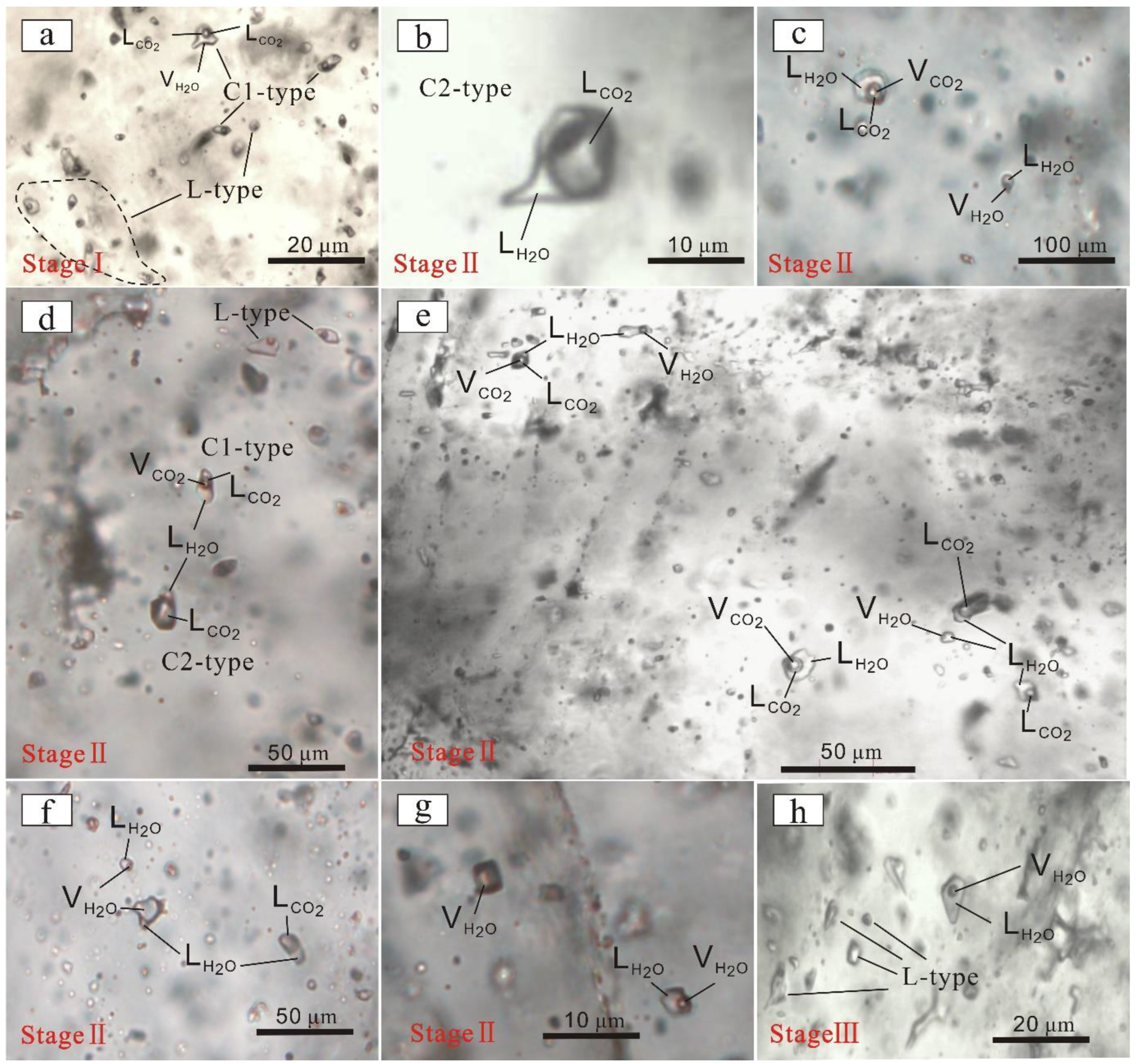
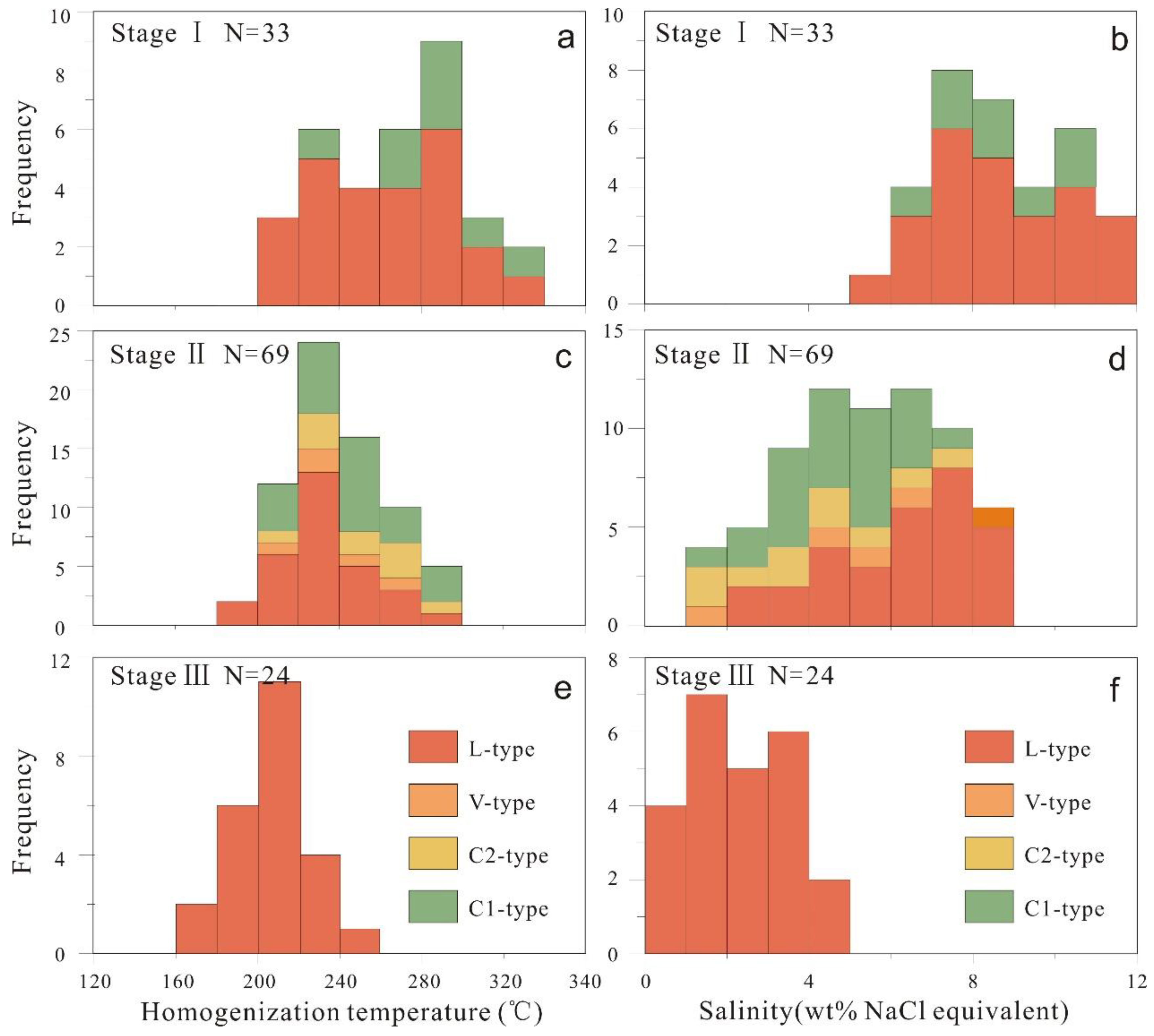
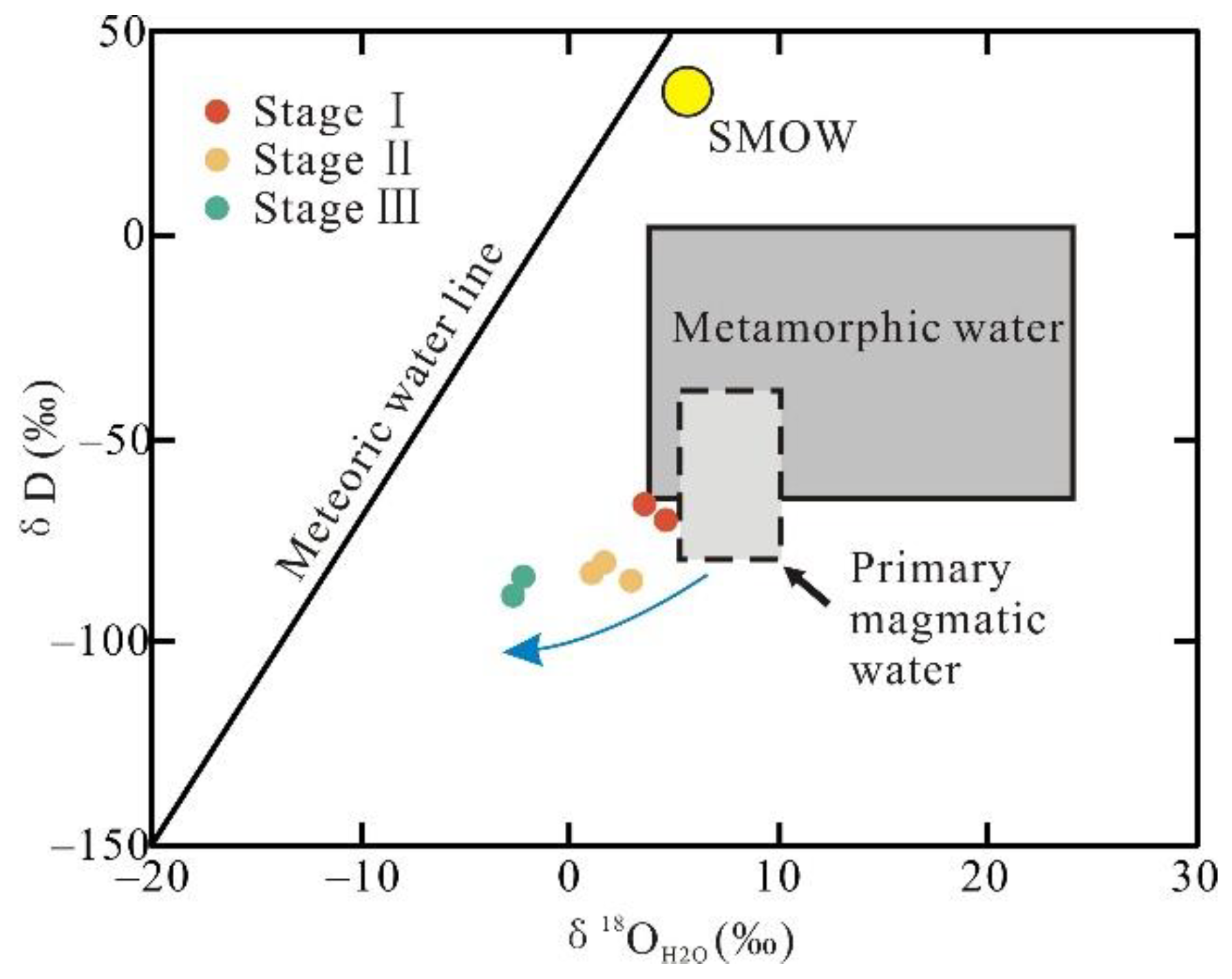
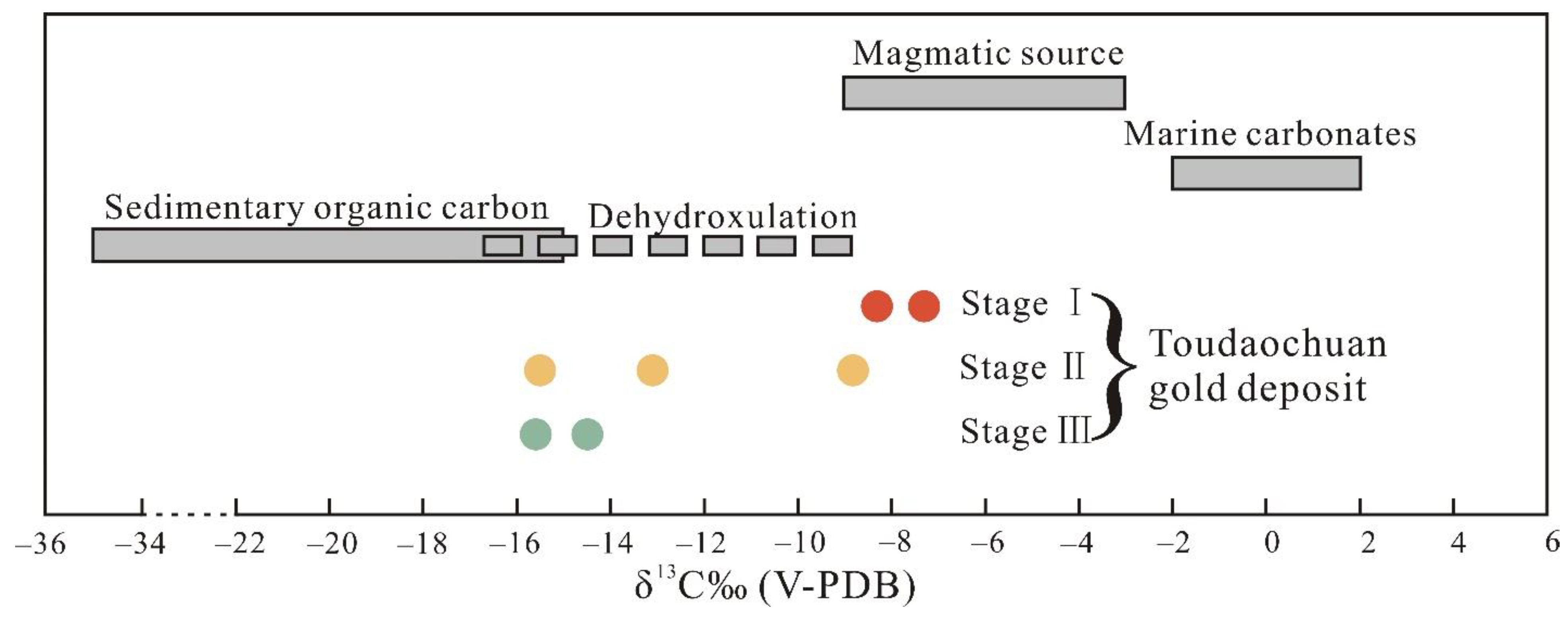
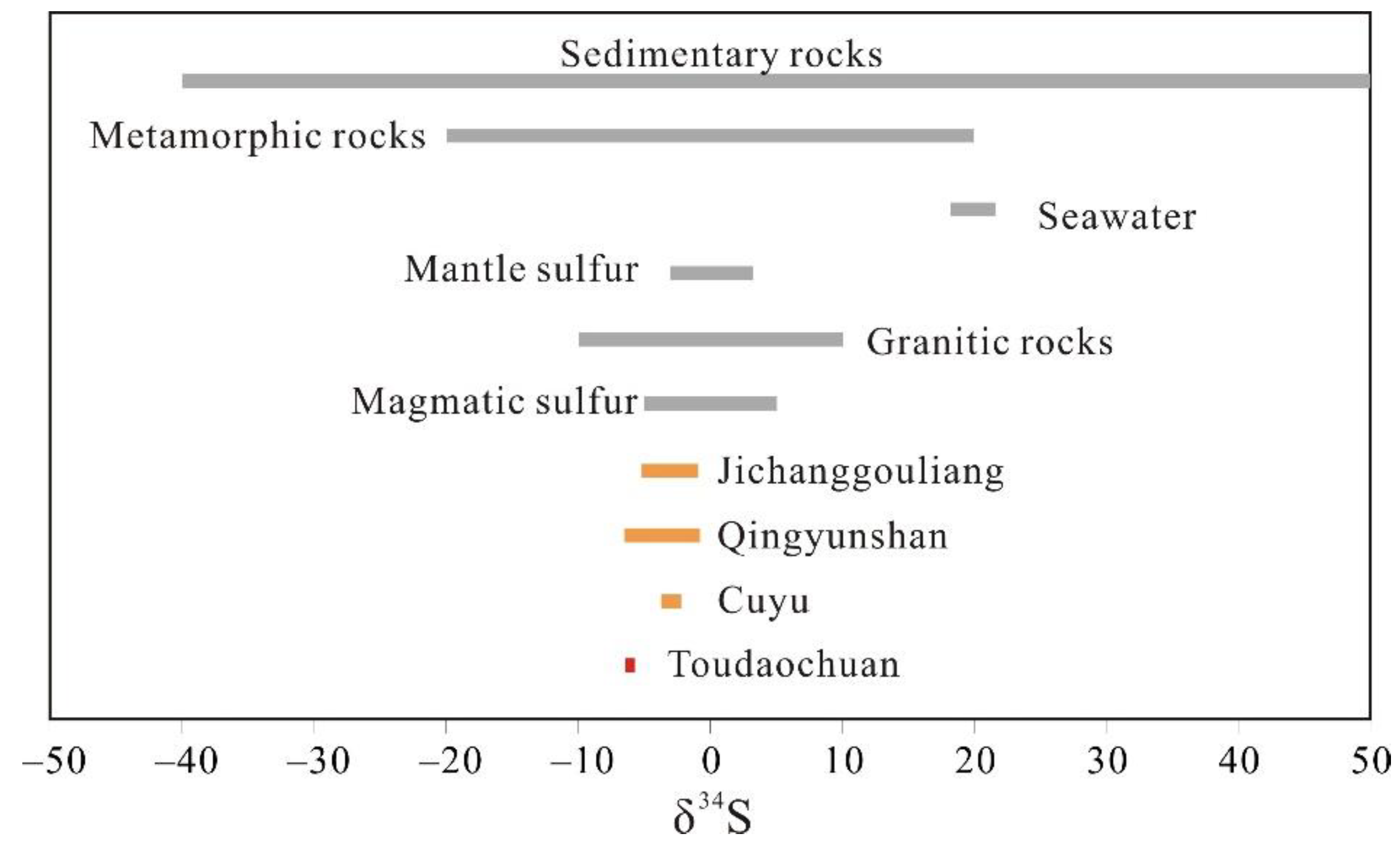
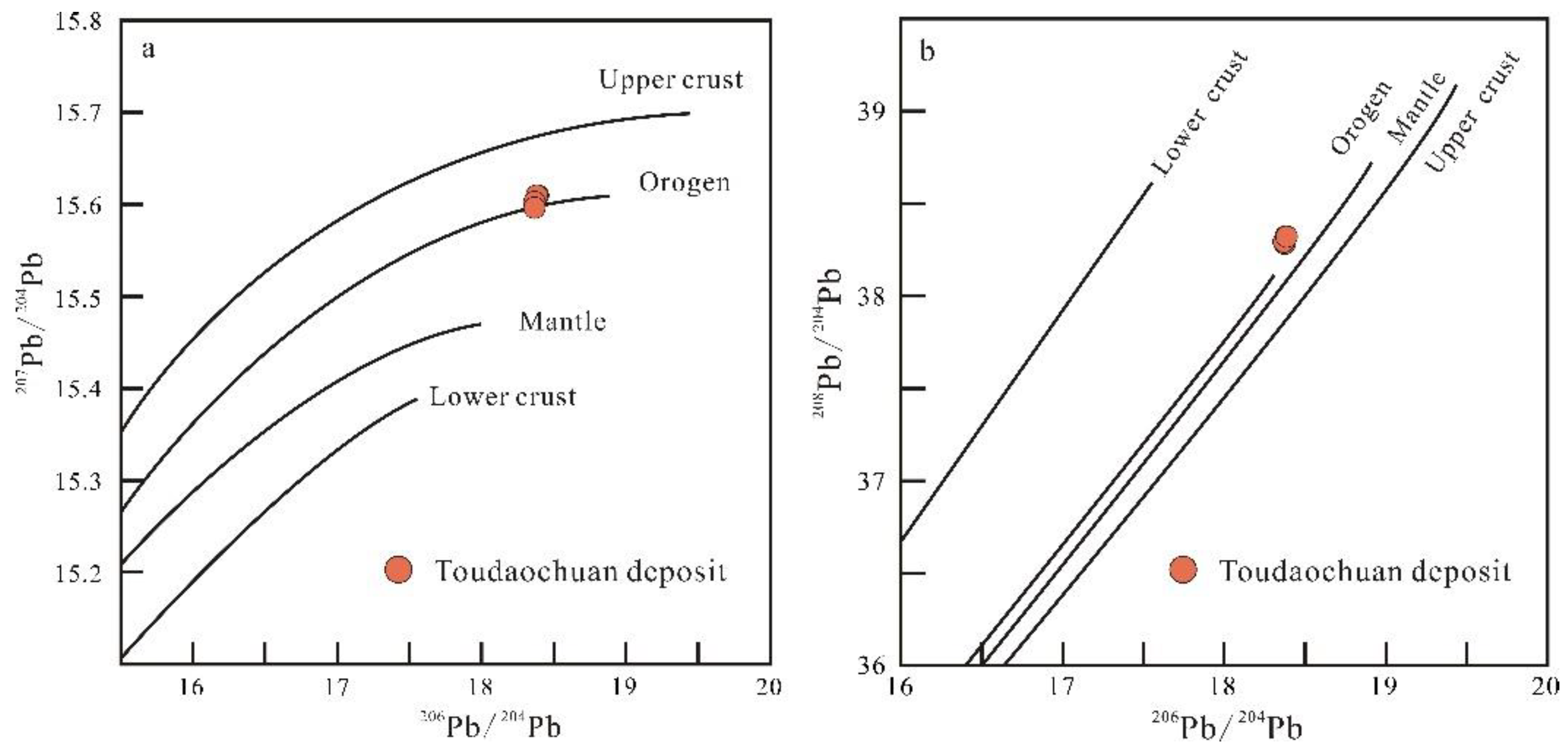
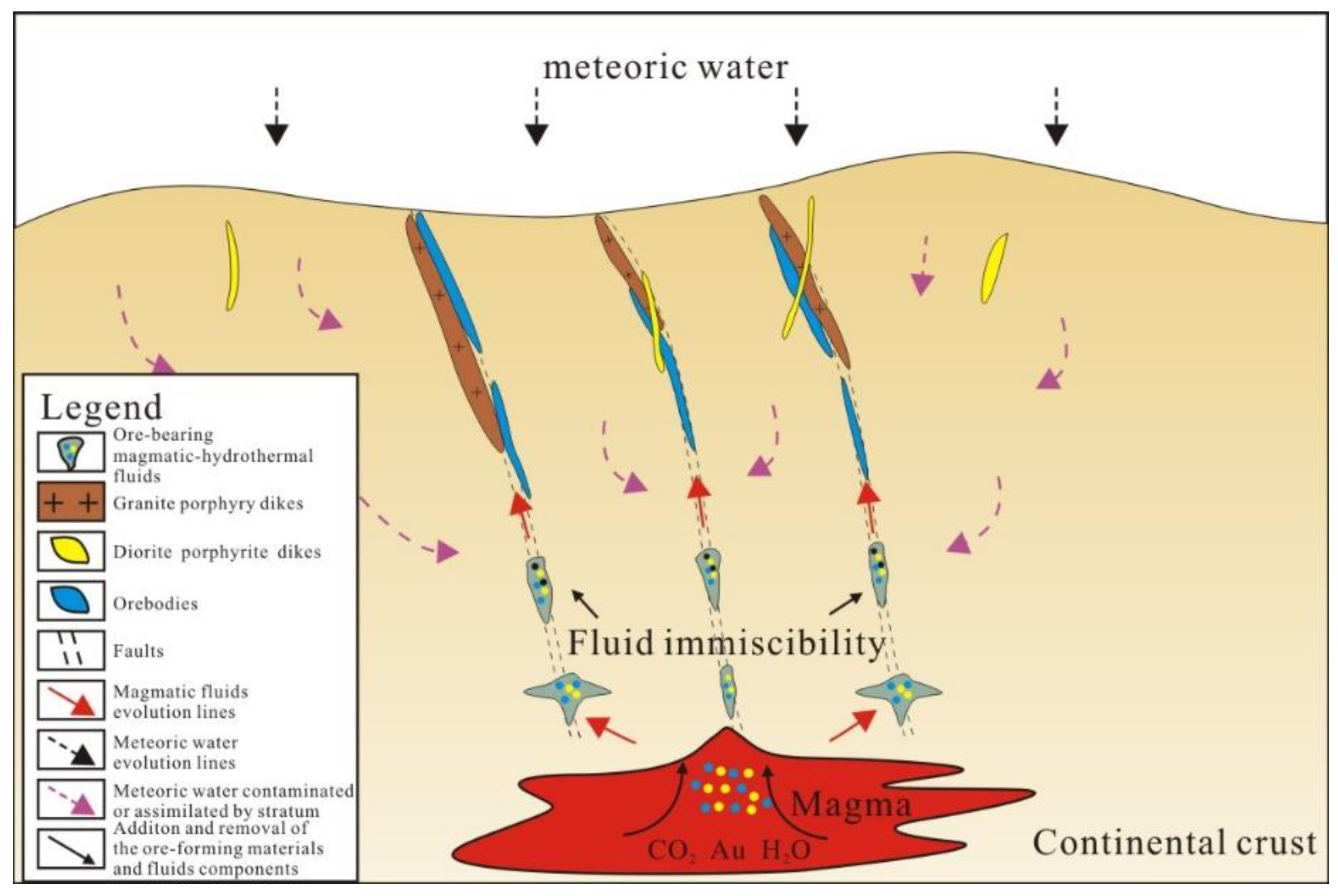
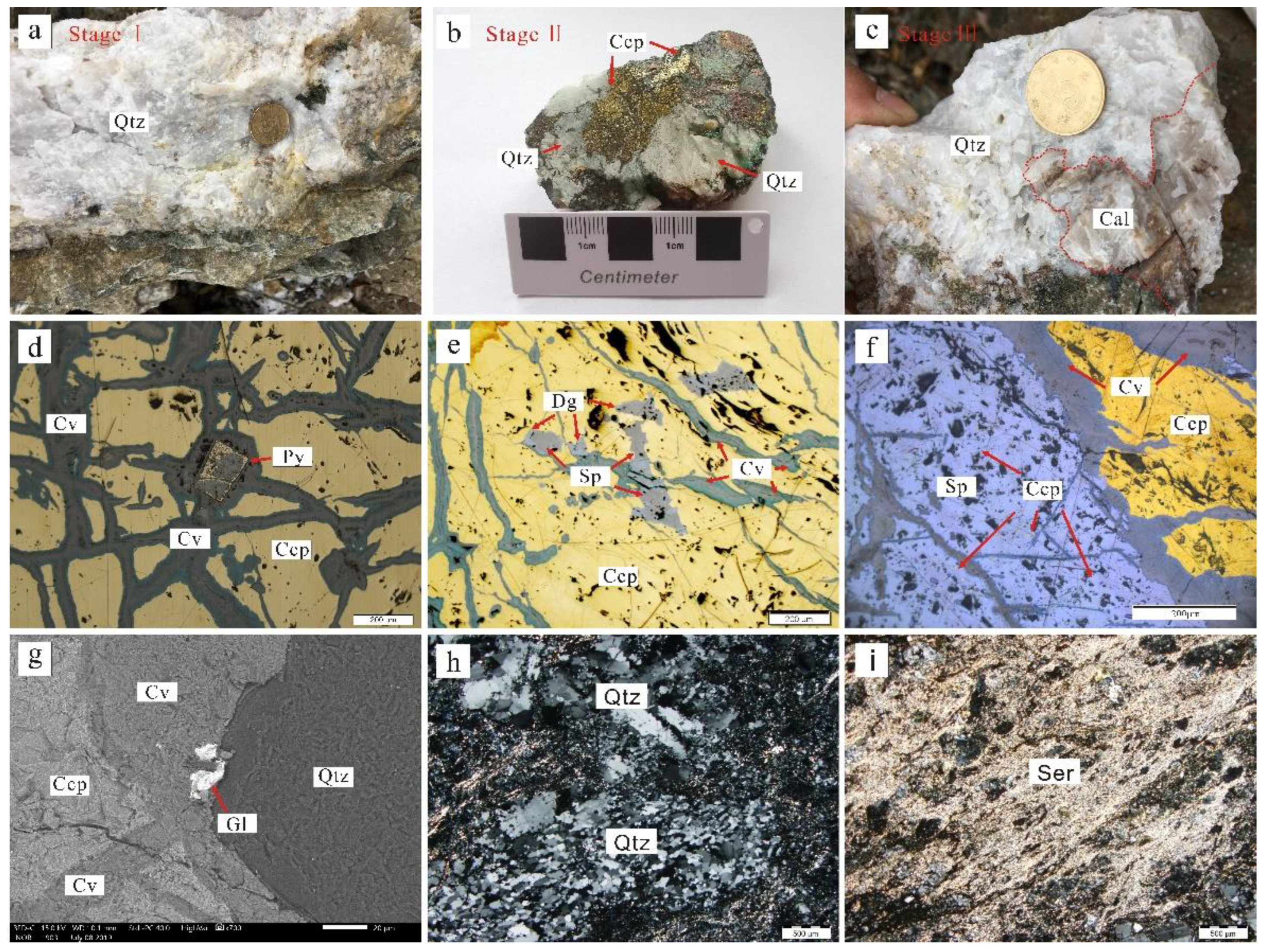
The Toudaochuan gold deposit is a recently discovered lode gold deposit in Central Jilin Province. Gold ore bodies are dominantly controlled by NE-trending fault. The major hydrothermal period can be further divided into the quartz–pyrite stage (stage I), quartz–gold–polymetallic sulfides stage (stage II, major gold mineralization stage), and quartz–carbonate stage (stage III). Primary fluid inclusions (FIs) identified in quartz at different hydrothermal stages include liquid-rich aqueous FIs (L-type), CO2 FIs (C-type, including CO2-bearing C1-type FIs and CO2-rich C2-type FIs), and minor vapor-rich aqueous FIs (V-type). Microthermometry studies on different fluid inclusions indicate that the original ore-forming fluids belonged to the CO2–H2O–NaCl system characterized by a moderate–low temperature and low salinity in stages I and II, and they finally evolved into a H2O–NaCl system characterized by low temperature and low salinity in stage III. Fluid immiscibility is considered to be the key ore-forming mechanism. The initial ore-forming fluid was originated from magmatic water and was mixed with meteoric water in the later stage. The S and Pb isotope data suggest that the ore metal materials were derived from the mixed source of mantle and crust. Based on all the above data, therefore, it can be proposed that the Toudaochuan gold deposit is a mesothermal magmatic–hydrothermal gold deposit.
Keywords: ore genesis; fluid inclusions; C–H–O–S–Pb isotopes; Toudaochuan gold deposit; Central Jilin province ore genesis; fluid inclusions; C–H–O–S–Pb isotopes; Toudaochuan gold deposit; Central Jilin province