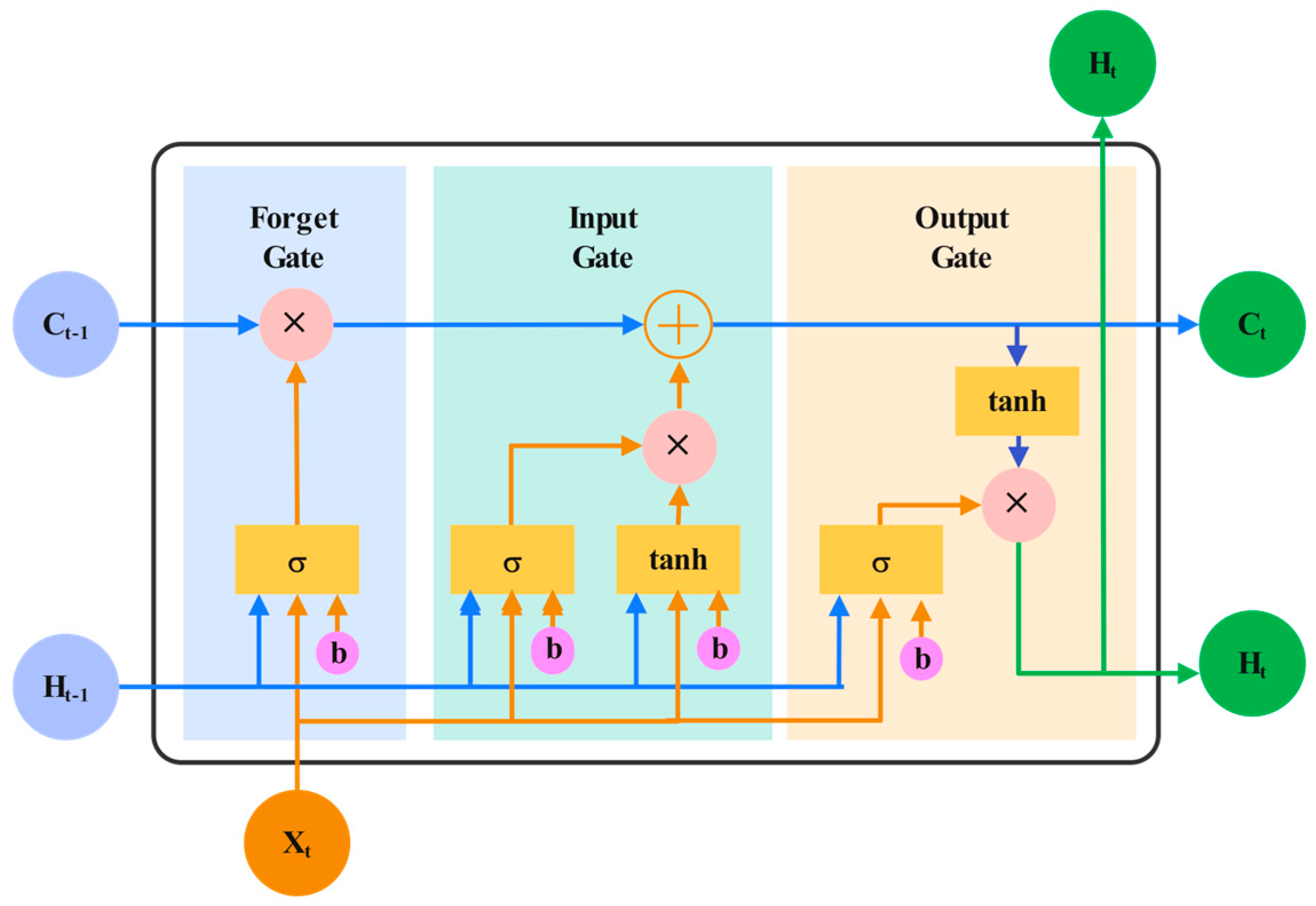
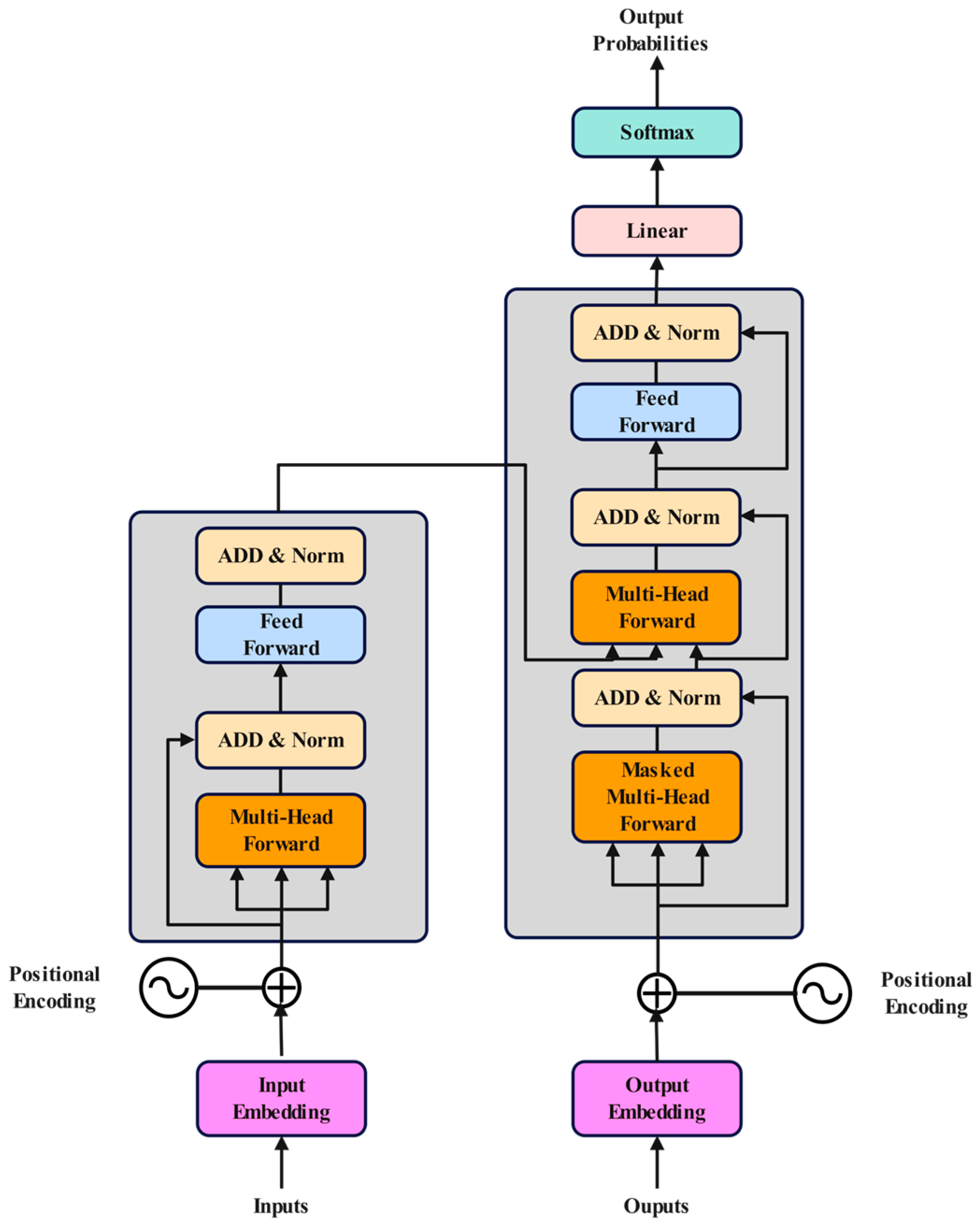
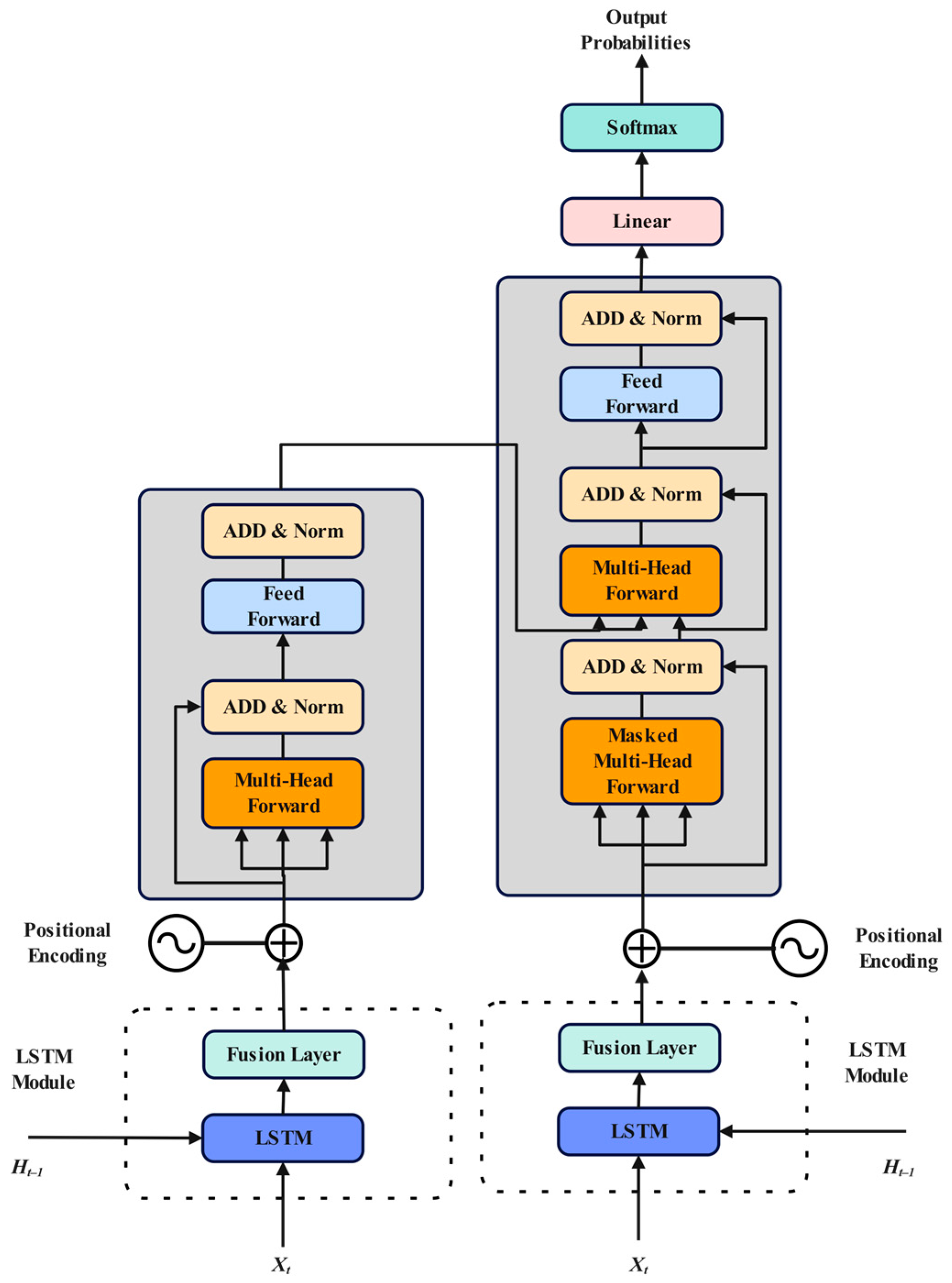
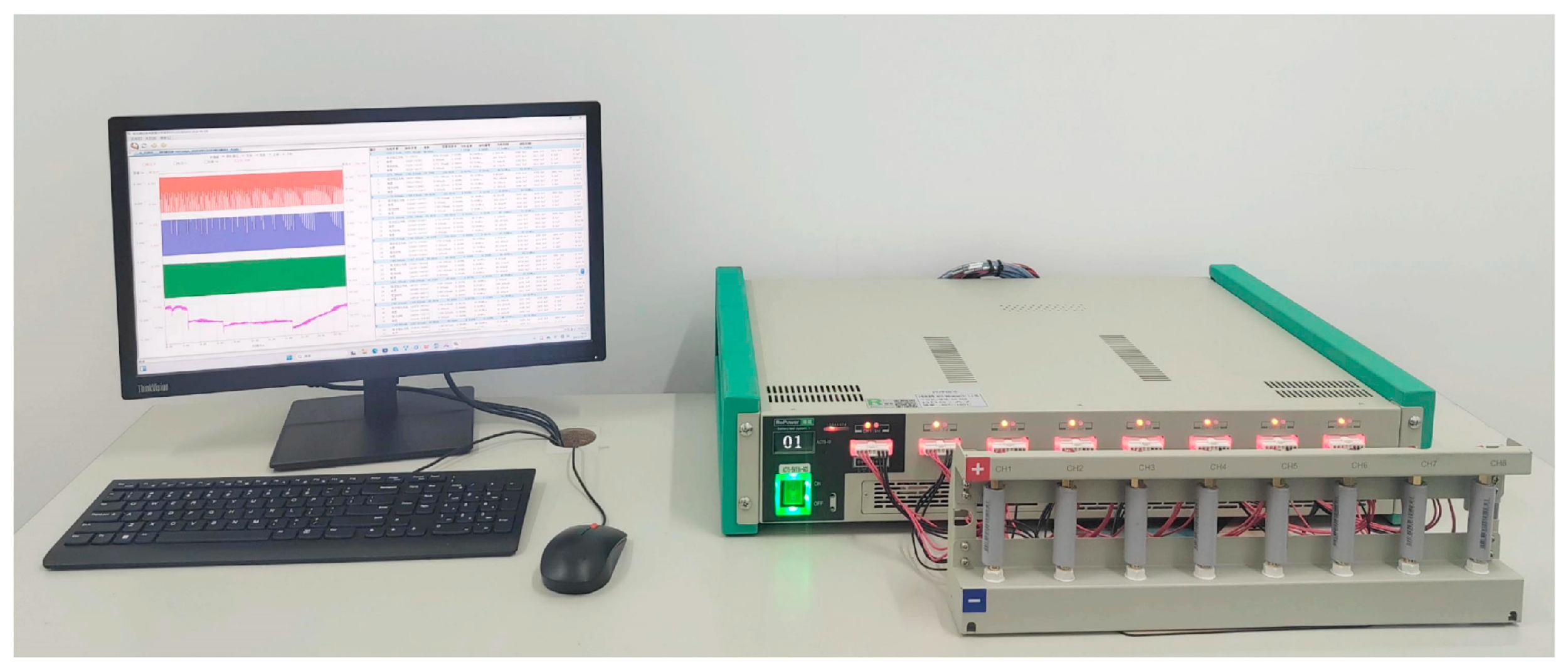
The acceleration of the transformation of the global energy structure and the in-depth advancement of the strategic goals of ‘carbon peaking and carbon neutrality’ have led to explosive growth in renewable energy sources such as wind and solar power [
1,
2]. However, their intermittent and fluctuating nature poses a serious challenge to the stable operation of the electricity grid [
3]. In July 2025, the National Energy Administration of China released the ‘China New Energy Storage Development Report (2025)’. By 2024, the total installed capacity of operational new energy storage projects around the world had reached approximately 180 million kilowatts, marking a surge of approximately 98% compared to the end of 2023, with an additional installed capacity of around 90 million kilowatts. China’s cumulative installed capacity of completed and operational new energy storage projects reached 73.76 million kilowatts/168 million kilowatt-hours, marking a surge of over 130% since the end of 2023. The annual increase in new energy storage installed capacity was 42.37 million kilowatts/101 million kilowatt-hours. Of the various new energy storage technologies, LIBs dominate, accounting for around 96.4% of the operational installed capacity [
4]. LIBs have swiftly become dominant in the electrochemical energy storage market due to their numerous advantages, including high energy density, a long cycle life, a fast response speed, and high technical maturity. They are widely used in two core areas: energy storage power stations and electric vehicles [
5]. In the field of large-scale energy storage power plants, LIB systems are essential for the construction of smart grids, microgrids, and emergency backup power supplies. They significantly improve energy utilization efficiency and grid reliability by participating in grid frequency regulation and peak shaving through ‘peak shaving and valley filling’. In the electric vehicle sector, LIBs are the ‘heart’ of the vehicle; their performance directly affects the vehicle’s range, safety, and service life [
6]. With the rapid increase in the number of electric vehicles and retired batteries, batteries are increasingly being seen not only as a source of power but also as a potential distributed energy storage resource. The importance of managing their SOH is therefore increasingly apparent [
7]. Although LIBs have a wide range of potential applications in energy storage, there are still many serious challenges to overcome in their actual operation, particularly in the following areas. (1) Performance degradation issues: During long-term cyclic use, complex electrochemical side reactions occur inside the battery, leading to problems such as the loss of active lithium and damage to the structure of the electrode material. These problems manifest themselves as external characteristics, such as reduced capacity and increased internal resistance, i.e., a decrease in the SOH. (2) Safety issues: Risks such as uneven battery aging, overcharging, overdischarge, and thermal runaway are always present. An accurate assessment of the SOH is essential for battery management systems (BMSs) to perform effective thermal management, balancing, and safety warning functions. Failure to assess the SOH can result in serious accidents. (3) Economic issues: The SOH of batteries directly impacts the total lifecycle cost and economic efficiency of energy storage systems. An accurate SOH assessment is crucial for realizing battery reuse, value assessment, and optimizing replacement strategies and for reducing system costs. Therefore, the development of a highly robust, high-precision LIB SOH assessment method is of great theoretical significance and of great value for engineering application. This will ensure the safe and stable operation of energy storage systems, maximize the lifecycle value of batteries, and promote the healthy development of the new energy industry [
8,
9]. The SOH of LIBs cannot be obtained through direct measurement. Instead, it is estimated using algorithmic models based on measurable physical quantities, such as voltage, current, and temperature [
10]. Currently, methods for assessing the SOH of LIBs can be broadly categorized into three main types: physics-based models, data-driven approaches, and hybrid models incorporating multi-source data fusion. Physics-based methods primarily involve the establishment of a dynamic model that can describe the external characteristics and internal states of LIBs. This model reflects the dynamic response behavior of batteries, enabling the estimation of the SOH. Commonly used physical models include equivalent circuit models (ECMs) and electrochemical models (EMs). ECMs simulate the external electrical behavior of batteries using simple circuit components such as voltage sources, resistors, and capacitors. Examples include the Rint model [
11], the Thevenin model [
12], the Partnership for a New Generation of Vehicles (PNGV) model [
13], and the dual polarization (DP) model [
14]. ECMs are the most widely used models in current BMSs due to their simple structure, efficient computation, and reliable simulation of battery dynamics [
15]. However, ECMs can only describe the external voltage response of batteries and cannot reveal internal electrochemical reactions, changes in LIB concentration, side reactions, or aging mechanisms. Furthermore, the accuracy of these models depends heavily on the range of operating conditions based on their calibration. Once the actual operating conditions of the battery exceed this range, the predictive capability of the model will decrease significantly [
16]. In contrast to the ECM, the EM is a mechanism-based model that is rooted in physicochemical principles, such as porous electrode theory and concentrated solution theory. It utilizes a series of partial differential equations (PDEs) to describe the migration, diffusion, and reactions of LIBs within the electrodes and electrolytes. The EM demonstrates strong predictive capability, good extrapolation performance, and high accuracy. The pseudo-two-dimensional (P2D) electrochemical model can be used to describe the dynamic characteristics of batteries with high prediction accuracy through PDEs [
17]. However, the EM is highly complex, and solving coupled non-linear PDEs requires substantial computational resources, making it unsuitable for real-time BMSs. Nevertheless, it is applicable to battery design, mechanism research, and offline analysis [
18]. With the rapid advancement of artificial intelligence (AI) technology, data-driven estimation methods for the SOH of LIBs have been extensively researched and applied [
19]. The core of these approaches lies in feature extraction and model construction. SOH estimation requires the collection or calculation of battery data, such as voltage, current, temperature, and internal resistance. By analyzing these data to identify trend patterns, features correlated with the SOH can be extracted. Various data-driven algorithmic models are then employed to establish the mapping relationship between these features and the SOH, thus estimating the unknown SOH [
20]. The present paper proposes a data-driven SOH estimation method based on the area of the constant current charging and discharging voltage curves of LIBs as health features (HFs). The validity of the method was validated using four typical battery datasets, and then the HFs of the battery and its SOH were selected. The results show a strong correlation. Subsequently, the two HFs were utilized as inputs to the Gaussian Process Regression (GPR), LSTM, and BP algorithms for SOH estimation [
21]. Tian et al. [
22] proposed a method for estimating the SOH, which involved the extraction of HFs from sampled surface temperatures. A segment of the differential temperature curves within a specified voltage range was utilized to establish a correlation with the SOH by employing the support vector regression method. Lin et al. [
23] proposed a data-driven methodology for estimating the SOH of LIBs, incorporating the effects of internal resistance. The model was employed as a bridge to facilitate the effective integration of the ECM and the data-driven method. In data-driven algorithms, researchers widely apply artificial neural networks (ANNs) [
24], support vector machines (SVMs) [
25], LSTM networks [
26], and convolutional neural networks (CNNs) [
27]. A temperature-compensated Bi-LSTM with an integrated attention mechanism (AM) was proposed by Xu et al. [
28] for the co-estimation of the SOC and SOH. Compared to bidirectional LSTMs, the proposed method improved precision by 21.45%. Bockrath et al. [
29] presented an algorithm for estimating the SOH of LIBs using different segments of partial discharge profiles. Raw sensor data was fed directly into a temporal CNN, eliminating the need for feature engineering. This neural network can process raw sensor data and estimate the SOH of battery cells in various aging and degradation scenarios. Another approach involves battery health assessment based on hybrid models and multi-source data fusion. This method enhances battery health evaluation performance by integrating deep learning models with traditional models [
30]. Traditional models extract battery features, while deep learning models handle non-linear feature fusion and dimensionality reduction [
31,
32]. Hybrid models typically comprise three stages: (1) Feature extraction and fusion. Traditional models extract battery features, whereas deep learning models perform non-linear feature fusion and dimensionality reduction. (2) Model fusion. The weighted integration of outputs from deep learning and traditional models enhances prediction accuracy. (3) Data augmentation and correction. Deep learning models correct the outputs of traditional models to compensate for their limitations in complex scenarios. Yin et al. [
33] proposed a novel approach using Deep Reinforcement Learning (DRL) to optimize the parameters of an Adaptive Unscented Kalman Filter (AUKF). The DRL agent learns to adjust the AUKF parameters by interacting with the battery environment to maximize estimation accuracy. The experimental results demonstrate that the DRL-optimized AUKF outperforms traditional UKF methods in terms of state of charge (SOC) and SOH estimation accuracy, highlighting its potential for enhancing BMSs. Mazzi et al. [
34] proposed a real-time SOH estimation model based on a deep learning framework. This model combines two distinct architectures: a one-dimensional convolutional neural network (1D-CNN) and a bidirectional gated recurrent unit (BiGRU). The hybrid CNN-BiGRU utilizes the 1D-CNN layer to extract relevant features from the input data and then relies on the Bi-GRU layer to learn sequences in both directions. The data fed into the 1D-CNN layer originates from current, voltage, and temperature readings acquired by the BMS. Due to the significant impact of hyperparameters on the performance of neural networks, Bayesian optimization techniques based on Gaussian processes were employed to tune the hyperparameters of the CNN-BiGRU model. Gao et al. [
35] addressed the challenge of accurately estimating battery SOH across different types and operating conditions using a single network. Their paper proposed a novel hybrid network that combines a Hierarchical Feature Coupled Module (HFCM) and an LSTM module. This enables the full extraction of raw data information and allows for a more accurate estimation of battery SOH across various types and operating conditions. The HFCM first extracts feature information from raw samples, which are then modeled as time series data by an LSTM module. Based on the HFCM-LSTM architecture, the model incorporates data directly from the battery itself, allowing for SOH estimation. The experimental results demonstrate that the proposed SOH estimation algorithm outperforms others in terms of both accuracy and versatility. However, existing research suffers from the following limitations: (1) Whether based on physical models or data-driven approaches, the performance of existing models is highly dependent on the range of operating conditions covered by the training data. Once the actual operating conditions of LIBs exceed the scope of the training data, predictive performance deteriorates significantly. (2) Current data-driven methods heavily rely on hand-crafted feature engineering to extract HFs related to the SOH from raw data (voltage, current, temperature). These features often require domain-specific prior knowledge and may fail to comprehensively capture multidimensional degradation information during battery aging. (3) A single model struggles to strike the balance between accuracy, robustness, and generalization capability. Although hybrid model fusion strategies have been explored, the lack of an effective cross-modal feature fusion mechanism results in low information utilization efficiency. Gui et al. [
36] proposed a novel cross-domain SOH estimation framework called MM-LG-CNNT, which integrates multi-modal data and a parallel CNN–Transformer architecture with a multi-information alignment strategy to achieve accurate and robust battery health state prediction under limited data conditions. However, the CNN–Transformer excels in local feature extraction and global time series modeling. In the context of lithium-ion battery SOH detection, the LSTM–Transformer demonstrates unique advantages in capturing long-term dependencies and handling complex non-linear relationships, potentially offering better generalization capabilities, particularly with small sample data. This paper proposes a hybrid deep learning model integrating LSTM networks and the Transformer architecture to estimate the SOH of LIBs. The LSTM unit is particularly effective at capturing long-term dependencies in time series data, enabling it to recognize the temporal patterns of battery degradation. Meanwhile, the self-attention mechanism in the Transformer allows for the parallel computation of global dependencies, providing the model with an enhanced ability to capture critical features and improve model interpretability. The combination of these two architectures aims to achieve more accurate and robust modeling of the battery degradation process. The main contributions of this paper are as follows: (1) A novel symmetrical hybrid architecture LSTM–Transformer is proposed that overcomes the limitations of traditional data-driven models in terms of temporal modeling. This architecture achieves a balance between local dynamic detail preservation and global pattern capture, analogous to a functional symmetry in handling multi-scale temporal features. This significantly enhances the model’s ability to represent complex temporal dynamics. (2) An HF learning mechanism is constructed to enable the model to automatically learn HFs that are highly correlated with the SOH directly from raw battery data, thus eliminating the need for manual feature engineering. (3) The recurrent structure of the LSTM and the Transformer’s hierarchical attention mechanism ensures powerful feature extraction capabilities while reducing computational redundancy. This optimization decreases the computational load on non-critical data, thereby enhancing real-time performance.