Article

Symmetry-Guided Theoretical Study on Photoexcitation Characteristics of CdSe Quantum Dots Hybridized with Graphene and BN


School of Physics, Liaoning University, Shenyang 110036, China
*
Author to whom correspondence should be addressed.
These authors contributed equally to this work.
Symmetry 2025, 17(11), 1972; https://doi.org/10.3390/sym17111972
Submission received: 26 October 2025 / Revised: 9 November 2025 / Accepted: 11 November 2025 / Published: 15 November 2025
(This article belongs to the Topic Advances in Computational Materials Sciences)

Abstract

This study employs density functional theory (DFT) and time-dependent DFT (TD-DFT) to systematically investigate the ground- and excited-state properties of hybrid systems composed of CdSe quantum dots (QDs) with graphene and boron nitride (BN). Through Multiwfn wavefunction analysis, we calculated the highest occupied molecular orbital–lowest unoccupied molecular orbital (HOMO–LUMO) gaps and density of states (DOS), revealing distinct symmetry-dependent electronic characteristics. The HOMO–LUMO gap analysis demonstrates graphene’s superior charge transfer capability compared to BN, attributed to its higher structural symmetry enabling more efficient orbital overlap. DOS analysis further confirms the enhanced electrical conductivity in symmetry-matched graphene hybrids. The independent gradient model (IGM) and reduced density gradient (RDG) analyses reveal fundamentally different interfacial interaction patterns: the graphene hybrid exhibits uniform van der Waals interactions, consistent with its hexagonal symmetry, while the BN system shows heterogeneous interactions with localized hydrogen bonding due to symmetry reduction from heteroatomic composition. Binding energy calculations indicate greater stability in the graphene-based hybrid, reflecting optimal symmetry matching at the interface. UV–Vis spectra analysis shows that graphene dominates the optical response in its hybrid system, maintaining its symmetric spectral characteristics, while CdSe QDs govern the BN hybrid’s absorption. Electrostatic potential distributions remain essentially unchanged post-hybridization, preserving the intrinsic charge symmetry of components. Two-photon absorption (TPA) characterization reveals significant nonlinear optical properties in CdSe QDs, particularly at the first excited state. This work provides the first systematic comparison of charge transfer dynamics in CdSe QDs hybridized with graphene versus BN, demonstrating how material symmetry governs optoelectronic modulation mechanisms. The findings establish symmetry–property relationships that inform the design of low-dimensional hybrid materials for photonic applications.

1. Introduction

In recent years, quantum dot (QD) research has become a hot spot in scientific investigations. Colloidal QDs are nano-semiconductor crystals, which are widely used in various fields such as light-emitting diodes (LEDs) [1], photovoltaics [2], solar cells [3], and field-effect transistors [4]. Graphene, as one of the most prominent two-dimensional materials, has been extensively studied in recent years, for applications such as graphene nanostructure [5], graphene QDs [6], and graphene-based materials [7]. The high electrical conductivity and tunable band structure of graphene make it an ideal platform for constructing symmetric and asymmetric hybrid systems with quantum-confined nanostructures.
In 2011, Junwen Li et al. performed first-principles calculations of the electronic properties of graphene QDs embedded in hexagonal BN monolayers. The calculation results show that the bandgap of QDs is determined by the quantum confinement effect and the hybridization of the atomic orbitals of B, N, and C [8]. In 2016, Liu Lu et al. experimentally prepared cadmium selenide QDs materials and used their self-made confocal microscope system to study the scintillation characteristics of QDs on glass, single silver nanowires, and aligned double nanowires, providing a new way to suppress the scintillation behavior of QDs through plasma hot spots [9]. In the same year, Xiaochun Chi et al. conducted a detailed investigation into the photoluminescence (PL) characteristics of semiconductor cadmium selenide QDs gathered on copper nanowires, and the data show that the activation energy of cadmium selenide QDs may be reduced due to the good heat transfer performance and plasma effect of copper nanowires [10]. In 2017, Shuo Cao et al. constructed a spherical cadmium selenide QD structure doped with graphene and conducted theoretical investigations. In this model, the length and width of single graphene were 15.67 Å and 14.67 Å, respectively, with a lattice constant of 1.42 Å. Weak interaction analysis revealed that the slight structural distortion of graphene observed in the hybrid system did not alter the weak interaction [11]. In the following year, the research team conducted further study on this structure, with a particular focus on the charge-transfer-related properties of the system. Their work proved the charge-transfer channel in the mixed QD–GR structure, exploring the inherent coupling properties of the two low-dimensional nanomaterials [12].
Despite these advances, a symmetry-oriented understanding of the interfacial and optical properties of CdSe QD–2D hybrid materials remains incomplete. In particular, the role of structural and electronic symmetry (and symmetry breaking) in governing charge transfer and nonlinear optical responses has not been systematically addressed. In this work, we expand the graphene model to 236 atoms to better capture boundary and symmetry effects and hybridize it with CdSe QDs for a detailed investigation of their optoelectronic properties. For comparative analysis, a BN sheet of identical dimension and structural symmetry is used as a counterpart substrate. This comparative design—contrasting conductive graphene with insulating BN—enables clear evaluation of how symmetry matching and electronic structure influence interfacial interactions, binding energy, density of states, and two-photon absorption properties. Through symmetry-aware computational analysis, this study provides new insights into the role of symmetry in low-dimensional hybrid photonic materials.

2. Model Construction and Calculation Method

This study employed Gaussian 16 [13] and Materials Studio 2021 [14] for all quantum chemical calculations and structural modeling. The hybrid systems of CdSe QDs with graphene and BN were constructed using GaussView 6.0 [15]. Each hybrid system comprised 262 atoms in total, with 26 atoms forming the CdSe QDs and 236 atoms constituting each two-dimensional substrate. The stability of this specific CdSe QD, which adopts a core–cage structure, has been confirmed by mass spectrometry [16]. The optimized structural configurations (Figure 1) reveal a slight deformation in both graphene and BN layers upon QD adsorption. This phenomenon can be conceptually understood by analogy to a small ball placed on a taut cloth, causing local deformation.
We first completed the modeling of CdSe QD monomers in GaussView. The modeling of graphene and BN monomers was completed by means of cell expansion and cutting in Materials Studio. Subsequently, these components were combined into hybrid systems within GaussView, with the edges of both graphene and BN structures saturated with H atoms. Geometric optimizations were performed on the monolayers of graphene and BN using Gaussian 16 software, employing the B3LYP [17] functional and 6-31G (d) [18] basis set, respectively. The optimized graphene and BN structures exhibit highly symmetric regular hexagonal morphologies with side lengths of 19.10 Å and 19.17 Å, respectively. These dimensions are consistent with experimentally fabricated nanosheets [19] and the symmetric hexagonal configuration aligns with established DFT models of two-dimensional materials [20,21,22], validating the structural rationality of our approach.
The structure of CdSe QDs is optimized using the B3LYP functional with the Lanl2DZ pseudopotential base set, where the Lanl2DZ base set is specifically selected for Cd and Se atoms to account for relativistic effects. The corresponding electronic configurations for Se and Cd are [Ar] 3d10 4s2 4p4 and [Kr] 4d10 5s2, respectively. The optimized QDs are then combined with graphene/BN hybrids, and the structure of the hybrid systems are further optimized while maintaining the original base set. The convergence criteria for all structural optimizations are set to a maximum force less than 0.00045 Hartree/Bohr and a maximum displacement less than 0.00180 Bohr. We then used time-dependent density functional theory (TDDFT) [23] with the CAM-B3LYP, functional [24], 6-31G (d), and Lanl2DZ basis sets to calculate the excited states of the optimized system. Considering the conjugated structure of the system and the significant impact of long-range dispersion interactions, Grimme’s DFT-D3(BJ) correction was employed throughout. Using Multiwfn [25] wave function analysis software, we visually analyzed and processed the results before and after excitement, obtaining relevant data and graph outputs. Combined with visual molecular dynamics (VMD) program [26], we produced the highest occupied molecular orbital–lowest unoccupied molecular orbital (HOMO-LUMO) orbital diagram, charge differential density (CDD) diagram, and electrostatic potential of the system. Data extracted from Multiwfn were processed using Origin 2021 software to generate density of states (DOS), UV–Vis absorption spectra, Raman spectra, and two-photon absorption (TPA) spectra for the CdSe QD systems, enabling a comprehensive symmetry-aware analysis of their electronic and optical properties.
It should be explicitly stated that the molecular cluster model employed in this study may yield quantitatively different results in characterizing long-range structural deformations compared to periodic models. Nevertheless, the key conclusions regarding bonding interactions and relative stability reported in this work are fundamentally unaffected by this limitation and are expected to be robust.

3. Results and Discussion

3.1. HOMO–LUMO Orbit Analysis

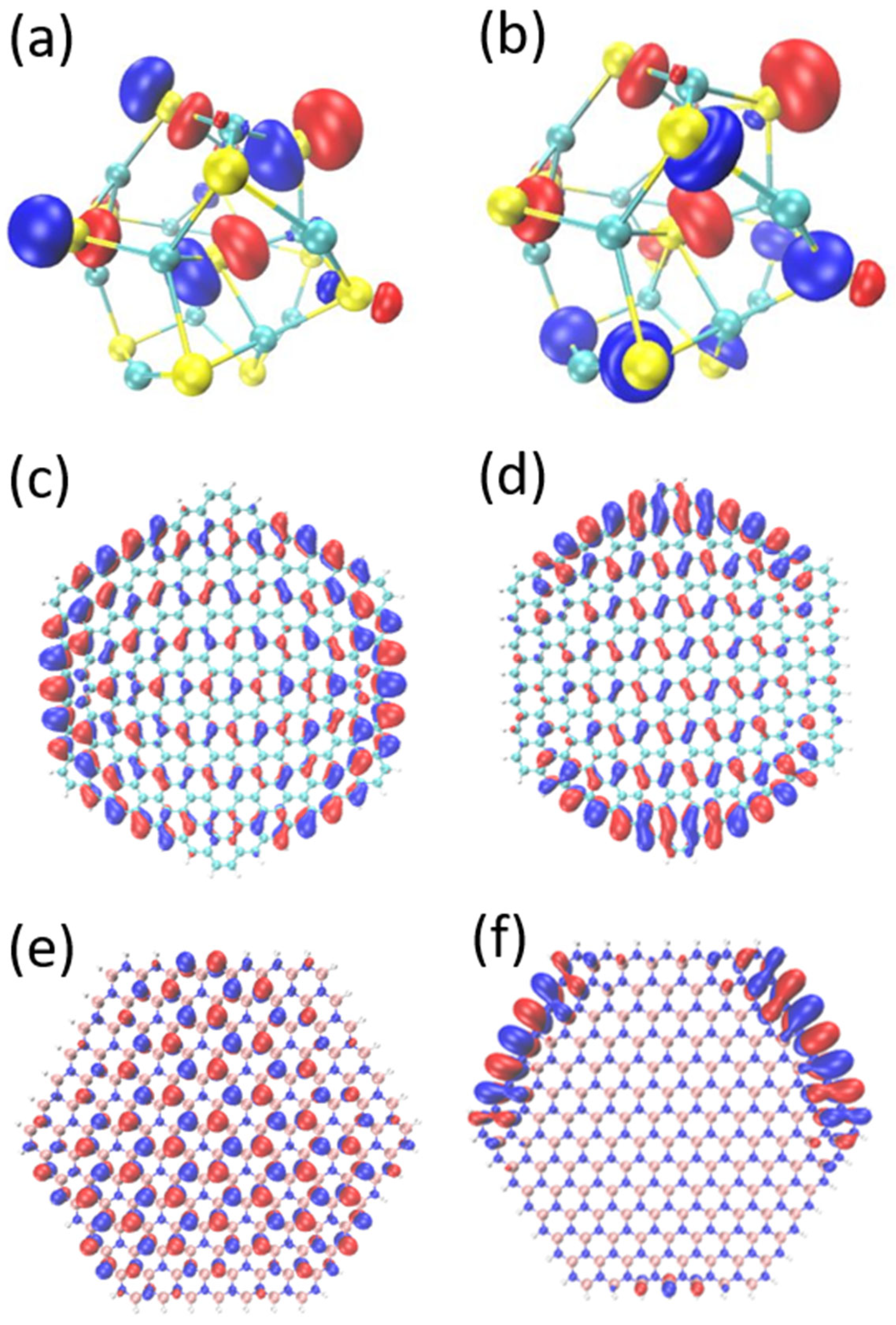
In the molecular orbital analysis of the model, the orbital with the highest energy level in the orbital occupied by electrons is called the HOMO orbital, while the orbital with the lowest energy level in the orbital unoccupied by electrons is called the LUMO orbital. Occupied orbitals tend to lose electrons, whereas unoccupied orbitals tend to gain electrons. DFT results are dependent on the selection of the exchange-correlation functional. The fundamental gaps are typically underestimated at the B3LYP level. Additionally, the use of a finite basis set may also introduce errors into the gap calculation [27]. As shown in Figure 2, where red and blue regions represent the positive and negative phases of orbital wavefunctions respectively, the isosurface values are set to ±0.03 a.u. for CdSe QDs and ±0.01 a.u. for both graphene and BN, reflecting their electron density distributions. Figure 2a shows that the 117th orbital of the CdSe QDs corresponds to its HOMO orbital, with an orbital energy value of −6.528 eV. Figure 2b shows that the 118th orbit of the CdSe QD represents the LUMO orbit, having an orbital energy value of −3.472 eV. The resulting HOMO–LUMO gap of 3.056 eV directly reflects the electron transition capability. A smaller HOMO–LUMO gap indicates better conductivity, meaning electrons can transition more easily. Figure 2c,d show that the 903rd and 904th orbitals of graphene correspond to its HOMO and LUMO orbitals, with orbital energies of −4.211 eV and −3.216 eV, respectively, demonstrating a narrow gap of 0.995 eV and delocalized π-electron clouds with well-defined symmetry. In contrast, Figure 2e,f reveal that the 903rd and 904th orbitals of BN represent its HOMO (−6.334 eV) and LUMO (−0.181 eV) orbitals, respectively, exhibiting a substantially wider gap of 6.153 eV and different orbital symmetry characteristics.
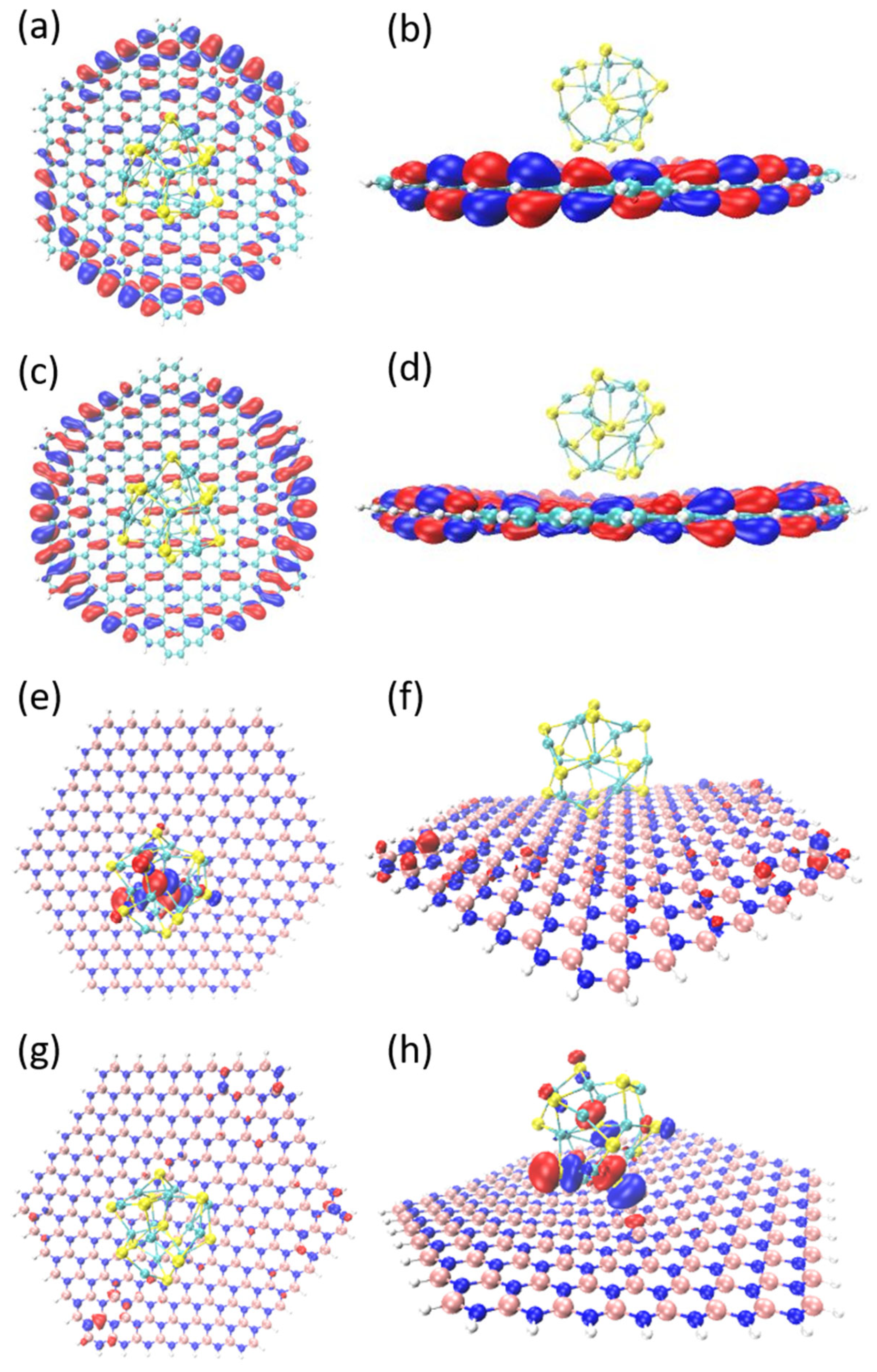
Comparative analysis of the hybrid systems reveals distinctive symmetry-dependent electronic properties. As shown in Figure 3, the CdSe QD–graphene hybrid system exhibits a HOMO (orbital 1020, −4.190 eV) and LUMO (orbital 1021, −3.192 eV) with a narrow gap of 0.998 eV, where both orbitals are predominantly localized within the graphene substrate, indicating effective symmetry matching and orbital hybridization at the interface. Conversely, the CdSe QD–BN hybrid displays a HOMO (orbital 1020, −6.274 eV) primarily localized on the QDs and a LUMO (orbital 1021, −3.210 eV) concentrated on the BN, resulting in a significantly wider gap of 3.064 eV. This marked contrast in bandgaps (0.998 eV versus 3.064 eV) and orbital distribution patterns conclusively demonstrates the role of symmetry matching in enhancing charge transfer capability, with the CdSe–graphene system exhibiting superior electronic communication due to compatible orbital symmetries.

3.2. State of Density Analysis

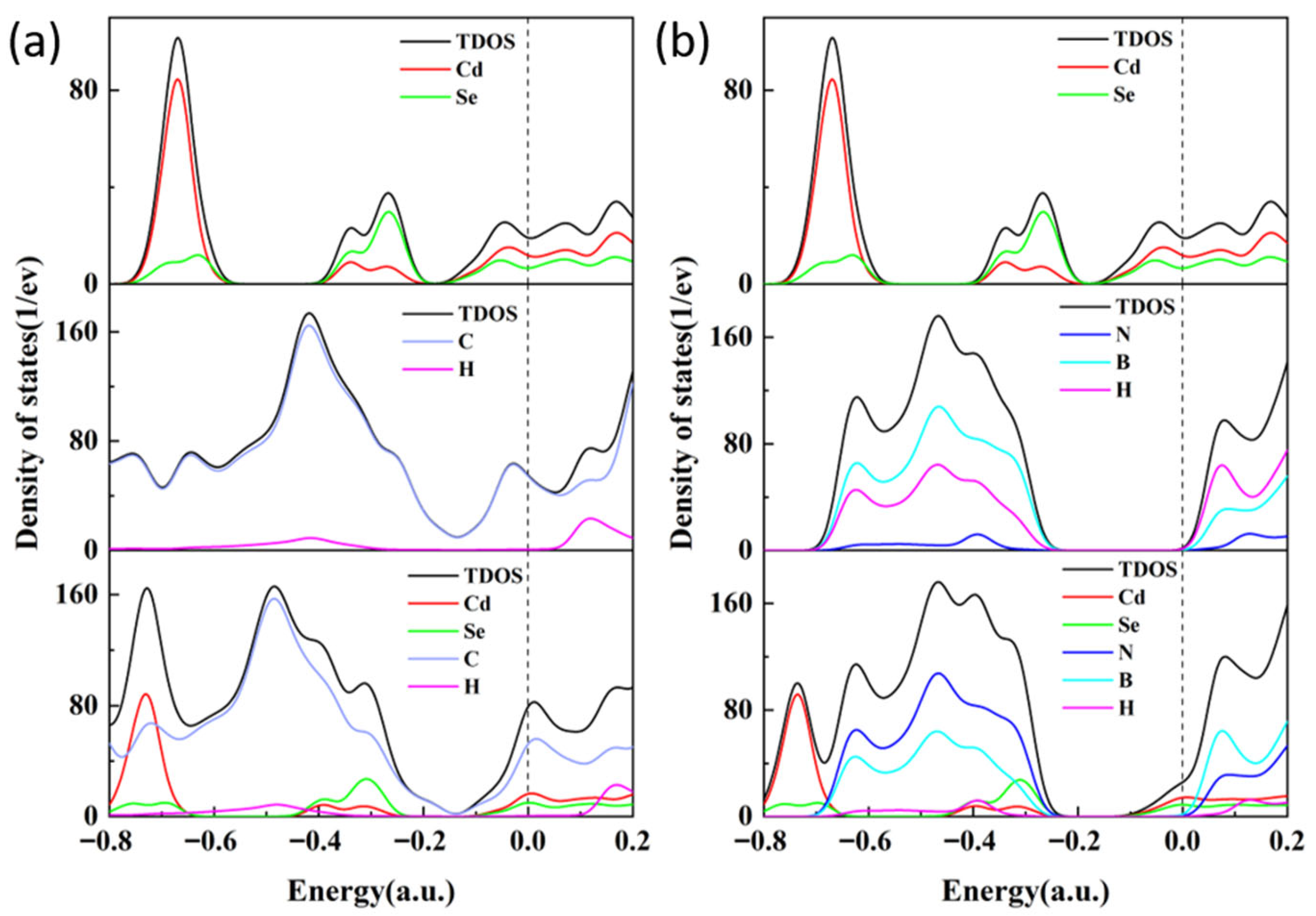
The partial density of states (DOS) analysis clearly reveals the contribution of each atomic species to the total DOS. Figure 4 presents the combined results of total and partial DOS analysis. Figure 4a displays the DOS distribution of CdSe QDs, graphene, and their hybrid system, where carbon atoms in graphene dominantly contribute to the total DOS, while hydrogen used for graphene edges passivation exhibit negligible influence. Figure 4b shows the comparative DOS of QDs, BN, and their hybrid system, demonstrating BN has a greater influence on the total DOS. The dotted line corresponds to the position of the Fermi level. Fermi level analysis indicates that the system in Figure 4a has a gold property and good electrical conductivity, whereas the BN in Figure 4b displays a semiconductor property. The properties of nitrogen atoms in DOS of hybrid systems are consistent with the reported hybrid systems [28]. The DOS of carbon atoms in hybrid systems is also basically consistent with the literature findings [29]. This confirms that the CdSe QD–graphene hybrid system indeed possesses superior charge transfer capability and conductive properties.

3.3. Weak Interaction Analysis

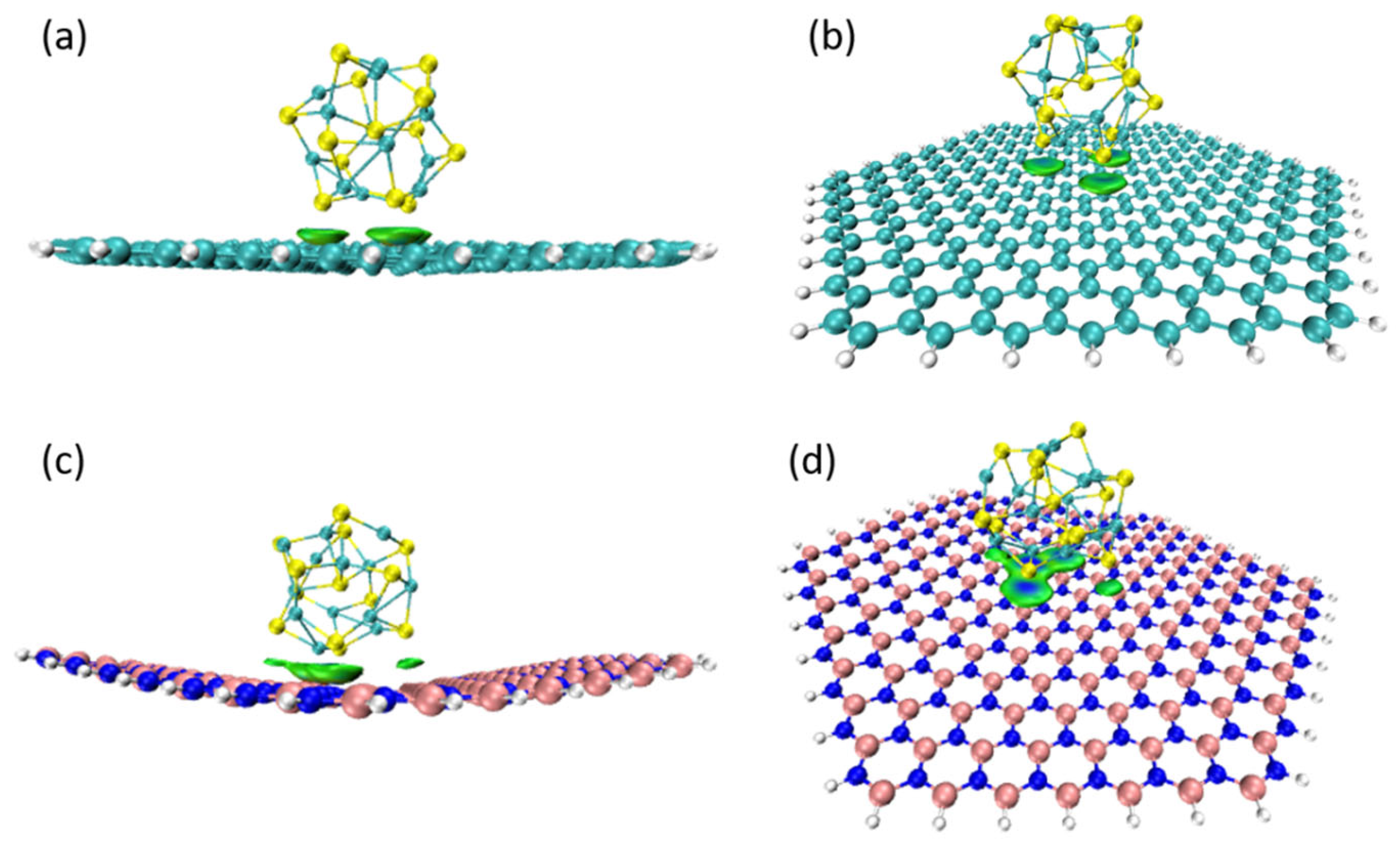
We used the independent gradient model (IGM) to calculate the weak interaction in the system, as shown in Figure 5. The IGM analysis visualizes interaction regions through isosurfaces by computing electron density gradients, where the reduced density gradient (RDG) specifically highlights non-covalent interaction regions (e.g., van der Waals forces). As shown in Figure 5a,b, the CdSe QD–graphene hybrid system exhibits significant weak interactions, predominantly van der Waals forces (indicated by green IGM isosurfaces). The uniform distribution of these interactions across the interface reflects the high degree of symmetry matching between the hexagonal lattices of graphene and the CdSe QDs, facilitating optimal interfacial contact. In comparison, Figure 5c,d reveal that the CdSe QD–BN hybrid system also exhibits van der Waals interactions as the dominant interfacial force. However, the distinct blue regions observed in the central isosurface confirm the additional presence of hydrogen bonding interactions. This heterogeneous distribution of interaction types arises from the polar character of B-N bonds, which introduces local symmetry breaking and creates specific sites for directional hydrogen bonding formation.
The contrast in interaction patterns between the two hybrid systems demonstrates how intrinsic material symmetry governs interfacial binding characteristics. The highly symmetric graphene enables uniform van der Waals contact, while the lower symmetry of BN results in mixed interaction types with localized bonding features, providing a structural basis for understanding the differential stability and charge transfer behavior observed in these hybrid configurations.
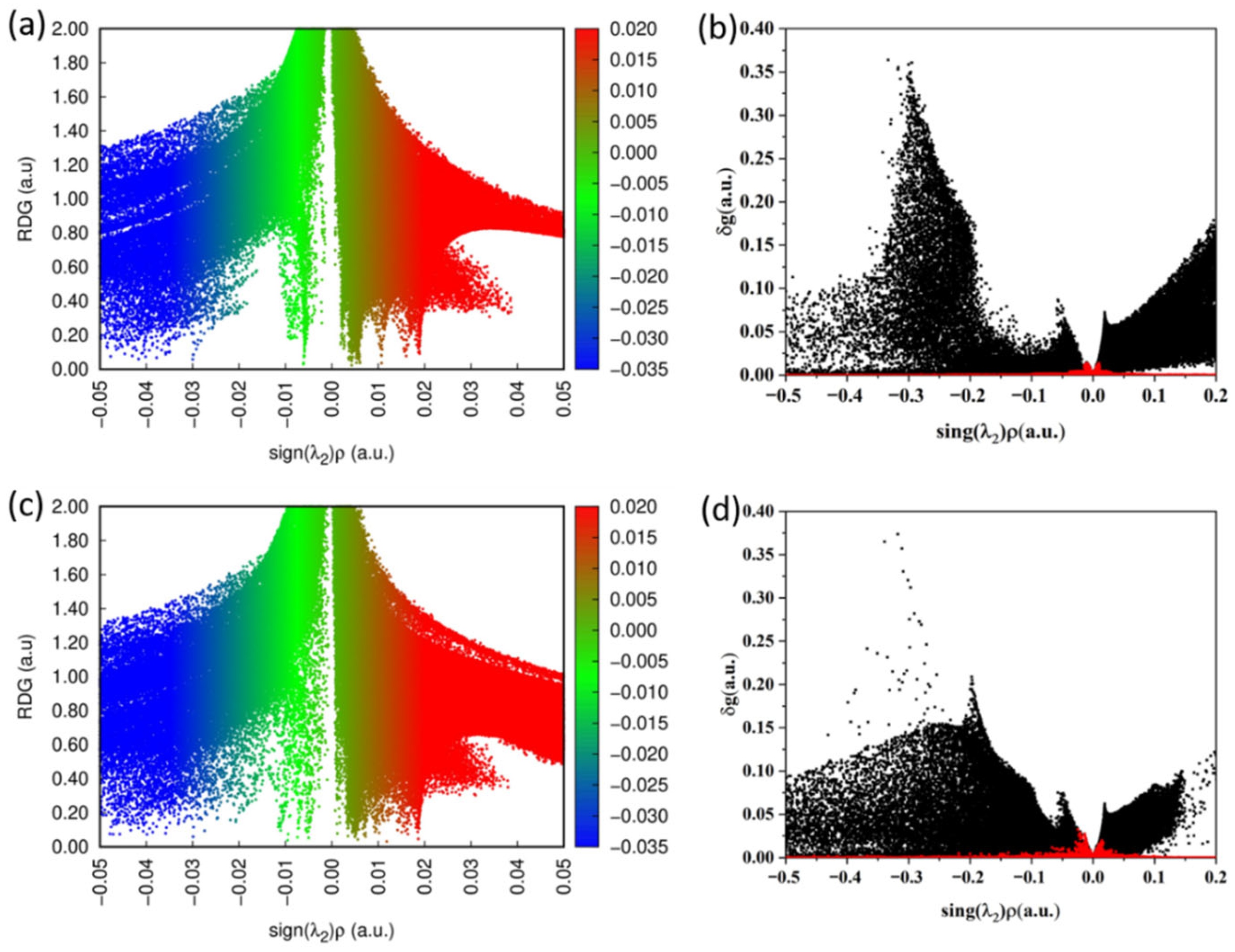
In order to further identify the types of weak interactions in the two systems, this study adopted two previously described methods to generate scatter plots, as shown in Figure 6. In both diagrams, the region to the right of 0 represents the steric effect, while the left side represents hydrogen bonds and chemical bonds. Regions on either side of 0 represent the van der Waals forces. In Figure 6b, the IGM scatter plot exhibits a peak near −0.04 a.u., suggesting the existence of hydrogen bonds in the corresponding system. The negative region in the RDG scatter plot (Figure 6a) also confirms the existence of hydrogen bonds, indicating that the system’s weak interactions include hydrogen bonds. Additionally, there are large peaks in the region where the s i g n λ 2 ρ ( a . u . ) is negative, and, because of the high electron density at these locations, they can be considered as points corresponding to the chemical bond region. In the IGM scatter plot, the red scatter indicates inter-fragment interactions, while the black scatter indicates intra-fragment interactions. It can be seen that the interactions between systems are weak interaction forces, including van der Waals forces, hydrogen bonds, and so on.
Figure 6c,d display the QD hybrid BN system. Through analysis of the IGM isosurface diagram, it can be observed that the interaction force between the systems is van der Waals force, with the blue isosurface indicating the existence of hydrogen bonds. The RDG scatter plot shows the presence of near-zero van der Waals forces in the range of −0.01 a.u. to 0.01 a.u. The existence of hydrogen bonds is also demonstrated in the negative region. Finally, the characteristic peak at −0.04 a.u. on the horizontal axis of the IGM scatter plot proves the existence of hydrogen bonds, confirming the existence of weak interaction forces in the CdSe QD hybrid BN system.
The interaction forces between the systems were calculated using the RDG function and IGM method. The results demonstrate that weak interactions exist between the two monomers in both the CdSe QD–graphene and CdSe QD–BN hybrid systems, with van der Waals forces and hydrogen bonding being the dominant types. It is worth noting that the uniform distribution of interactions in the graphene hybrid system aligns with the high hexagonal symmetry of its lattice, whereas the localized hydrogen bonding in the BN hybrid system correlates with the symmetry breaking induced by the polar B-N bonds. This difference in symmetry provides a structural basis for understanding the distinct interfacial stability of the two hybrid configurations.

3.4. Binding Energy Analysis

The binding energy is an important parameter for evaluating the stability of the system and a factor for judging the weak interaction force between the systems. For a hybrid system consisting of two monomers, the binding energy can be obtained by the formula
Δ E = E A B E A E B
where E A and E B are the energies of the two monomers in the hybrid system before binding, and E A B is the energy of the entire hybrid system. Negative binding energies indicate thermodynamically favorable hybridization processes. Their unit is kJ/mol.
The calculated binding energies for both systems are summarized in Table 1. These values were corrected for basis set superposition error (BSSE) using the standard Boys–Bernardi counterpoise method to ensure computational accuracy. The CdSe QD–graphene hybrid exhibits a binding energy of −4326.842 kJ/mol, while the CdSe QD–BN system shows a value of −3988.134 kJ/mol. The significantly larger magnitude (more negative value) of the binding energy for the graphene-based hybrid confirms its superior thermodynamic stability compared to the BN system. This stability difference can be rationally explained through symmetry considerations. The higher symmetry matching between the hexagonal lattices of graphene and CdSe QDs enables more optimal orbital overlap and stronger interfacial interactions, resulting in enhanced stabilization. In contrast, the polar character of B-N bonds introduces local symmetry breaking in the BN system, reducing the efficiency of interfacial orbital interactions and consequently leading to lower binding energy. These findings demonstrate how intrinsic material symmetry directly influences interfacial stability in low-dimensional hybrid systems.

3.5. UV–Vis Absorption Spectrum Analysis

UV–Vis absorption spectroscopy is an analytical method based on the absorption characteristics of material molecules to electromagnetic waves in the ultraviolet and visible regions. The spectra provide quantitative insights into the contribution of specific molecular orbitals to absorption peaks while also reflecting symmetry-related selection rules governing electronic transitions.
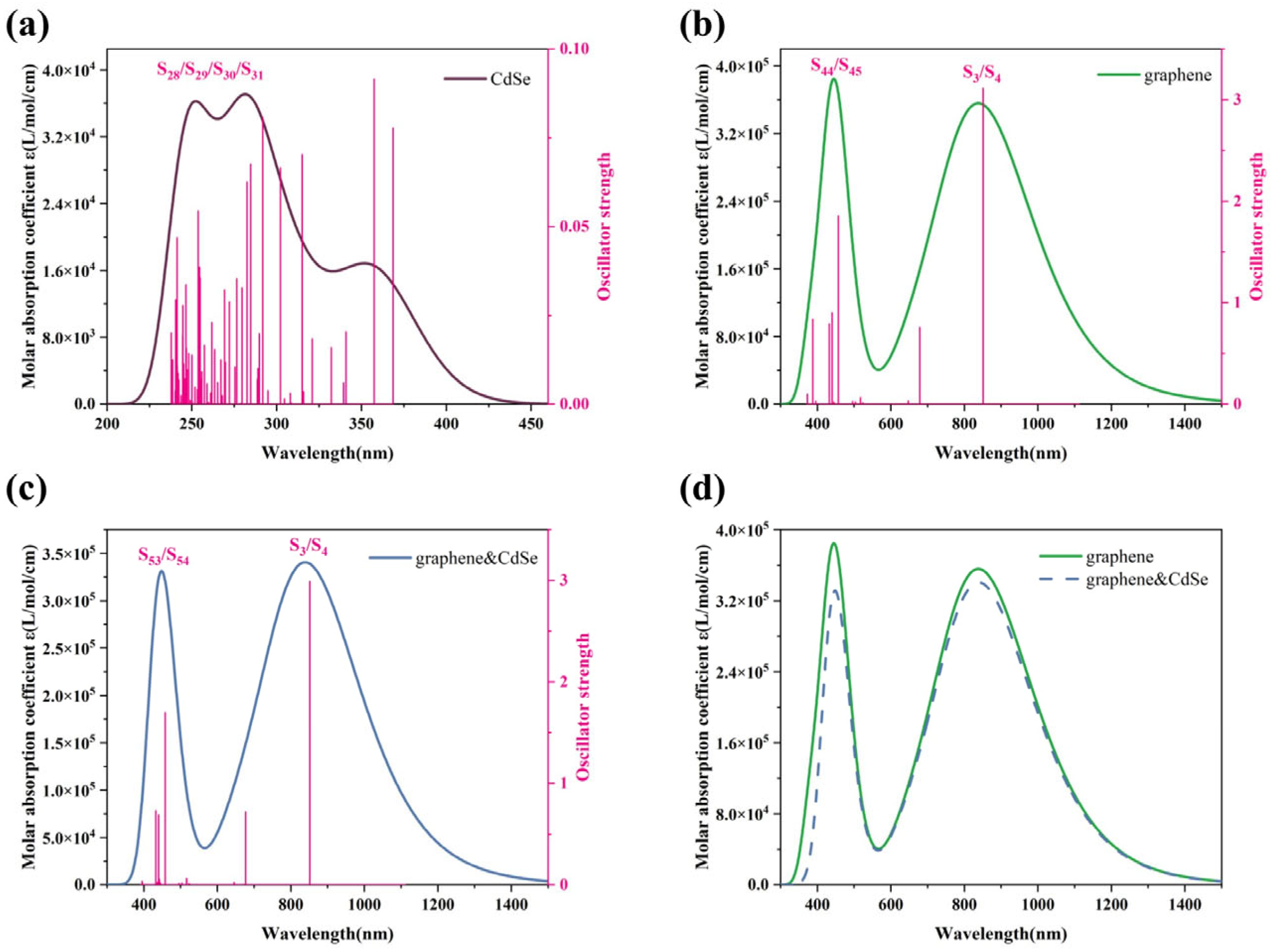
Figure 7 shows the UV–Vis absorption spectra of CdSe QDs in their monomeric form, graphene monomer, and their hybrid system. Figure 7a shows the UV–Vis spectrum of CdSe QDs, with the highest absorption peak at 271.35 nm, primarily contributed by the excited states of S30, S31, S29, and S28. This absorption peak originates from the HOMO → LUMO+3 orbital transition of CdSe QDs, exhibiting characteristic symmetry-allowed transition behavior. Figure 7b displays the UV–Vis spectrum of the graphene monomer, exhibiting a characteristic double-peak and one-valley pattern in the range of 440–826.99 nm. The first absorption peak appears at 441.45 nm, mainly contributed by the excited states of S44 and S45, corresponding to the HOMO-3 → LUMO+4 transition. The highest absorption peak is at 826.99 nm, primarily contributed by the excited states of S4 and S3, while the lowest valley at 575.54 nm is caused by the excited states S11 and S12. The extended spectral range of graphene reflects its highly symmetric π-conjugated system enabling broadband absorption. Figure 7c illustrates the UV–Vis spectrum of the CdSe QD hybrid graphene system, which also exhibits a double-peak and one-valley feature. The highest peak at 448.54 nm is mainly contributed by the excited states of S53 and S54, whereas the highest peak at 827.61 nm arises from the excited states of S3 and S4. Comparative analysis with Figure 7d reveals that the graphene monomer and CdSe QD–graphene hybrid system exhibit nearly overlapping characteristic peak wavelength ranges, indicating that graphene predominantly governs the UV–Vis absorption properties of the hybrid system. This spectral preservation suggests effective symmetry matching between components, allowing maintenance of graphene’s intrinsic optical characteristics.
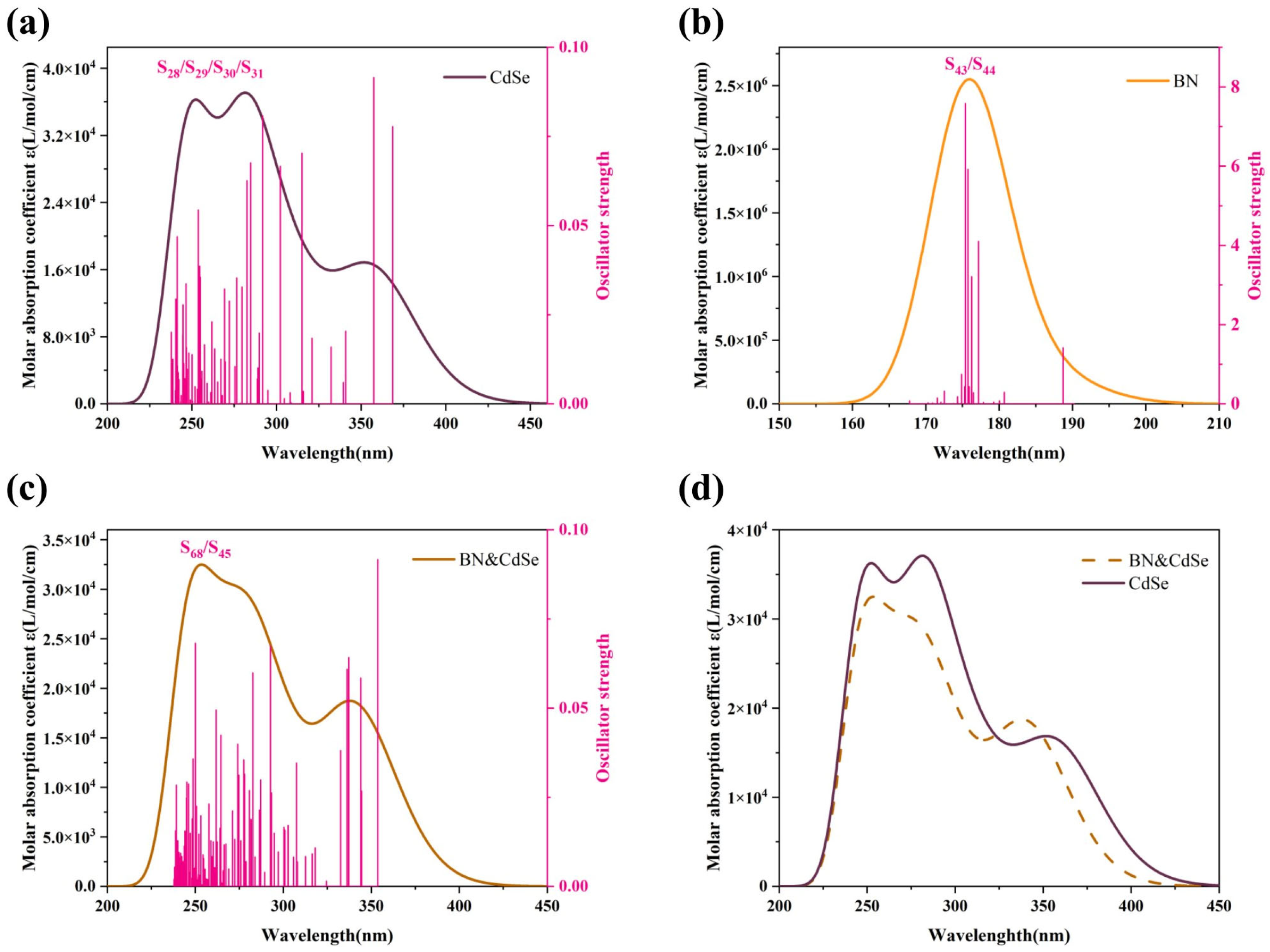
Figure 8 shows the UV–Vis absorption spectra of the CdSe QDs hybrid BN. Figure 8b presents the UV–Vis spectrum of BN monomers, exhibiting an absorption peak at 176.07 nm, primarily contributed by the excited states S43 and S44. Figure 8c displays the UV–Vis spectrum of CdSe QD hybrid BN, showing a characteristic absorption peak. There is a peak at 260.92 nm, mainly attributed to the excited states S68 and S45. Comparative analysis reveals that in the system of QD hybrid BN, the CdSe QD monomer has a more pronounced influence on the UV–Vis absorption spectra. The spectral features of both QDs and BN are predominantly concentrated in the ultraviolet region, while graphene exhibits a broader spectral distribution spanning ultraviolet, visible, and infrared regions. This difference in spectral breadth and hybridization behavior can be attributed to the distinct symmetry properties and electronic structures of the constituent materials, where symmetry matching in the graphene hybrid enables preservation of extended absorption characteristics, while the different symmetry properties of BN lead to more localized UV-dominant absorption features.
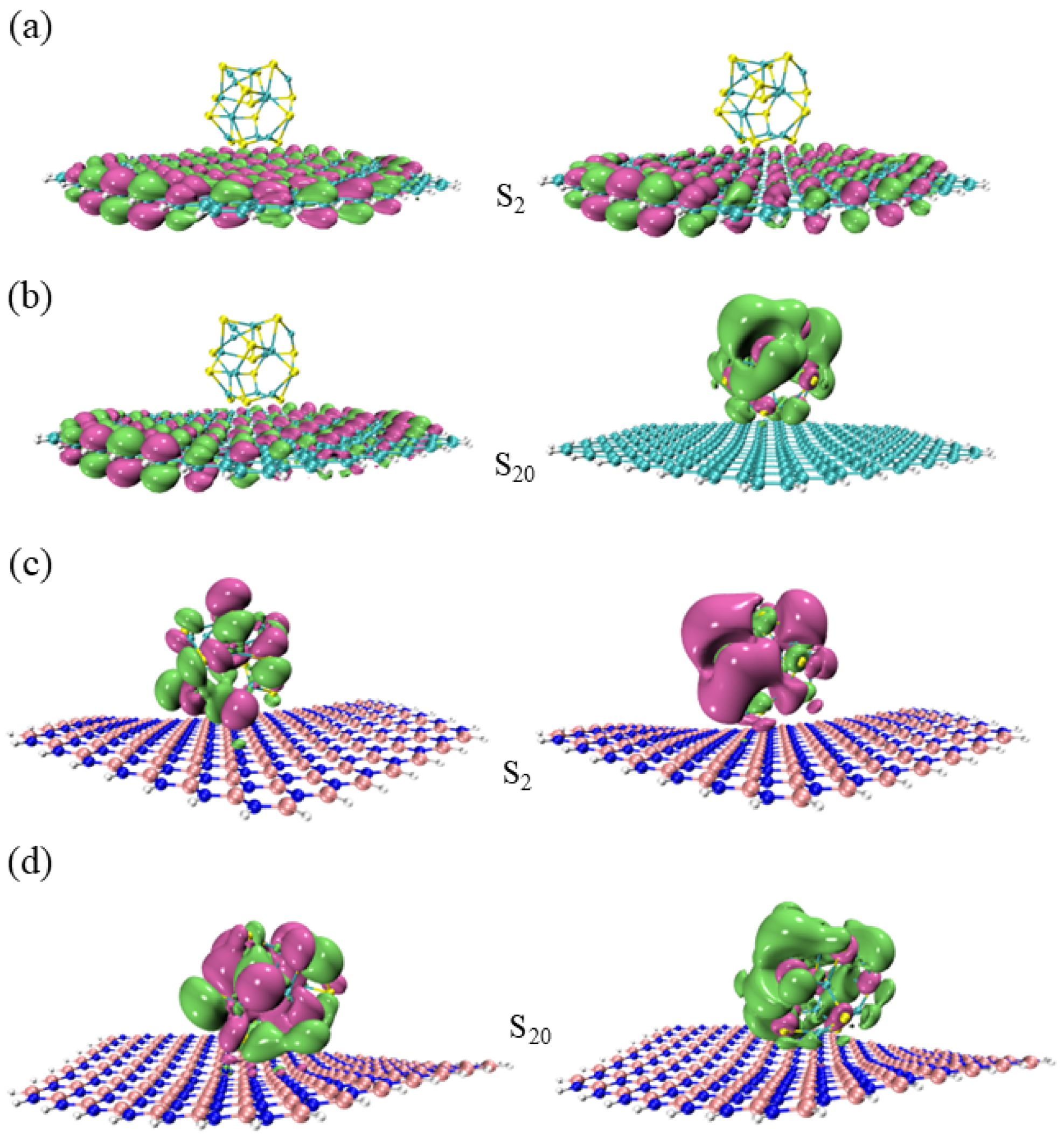
The natural transition orbitals (NTOs) obtained from TD-DFT calculations visually illustrate the dominant components of the electronic excitation process in the particle–hole picture. In Figure 9, the purple color represents occupied orbitals, and the green color represents unoccupied orbitals. Figure 9a,b show the NTO pair distributions for the QD–graphene hybrid system in the S2 and S20 excited states, respectively. In the S2 state, both hole and particle wavefunctions are localized in the graphene region, indicating that the excitation is dominated by graphene. In contrast, the S20 state shows spatial separation between the hole and particle wavefunctions. The NTO analysis of the QD–BN hybrid system in Figure 9c,d reveals that both hole and particle wavefunctions are predominantly localized in the QD region across different excited states, further confirming that CdSe QDs play a leading role in the electronic excitation process of this hybrid system.

3.6. Electrostatic Potential Analysis

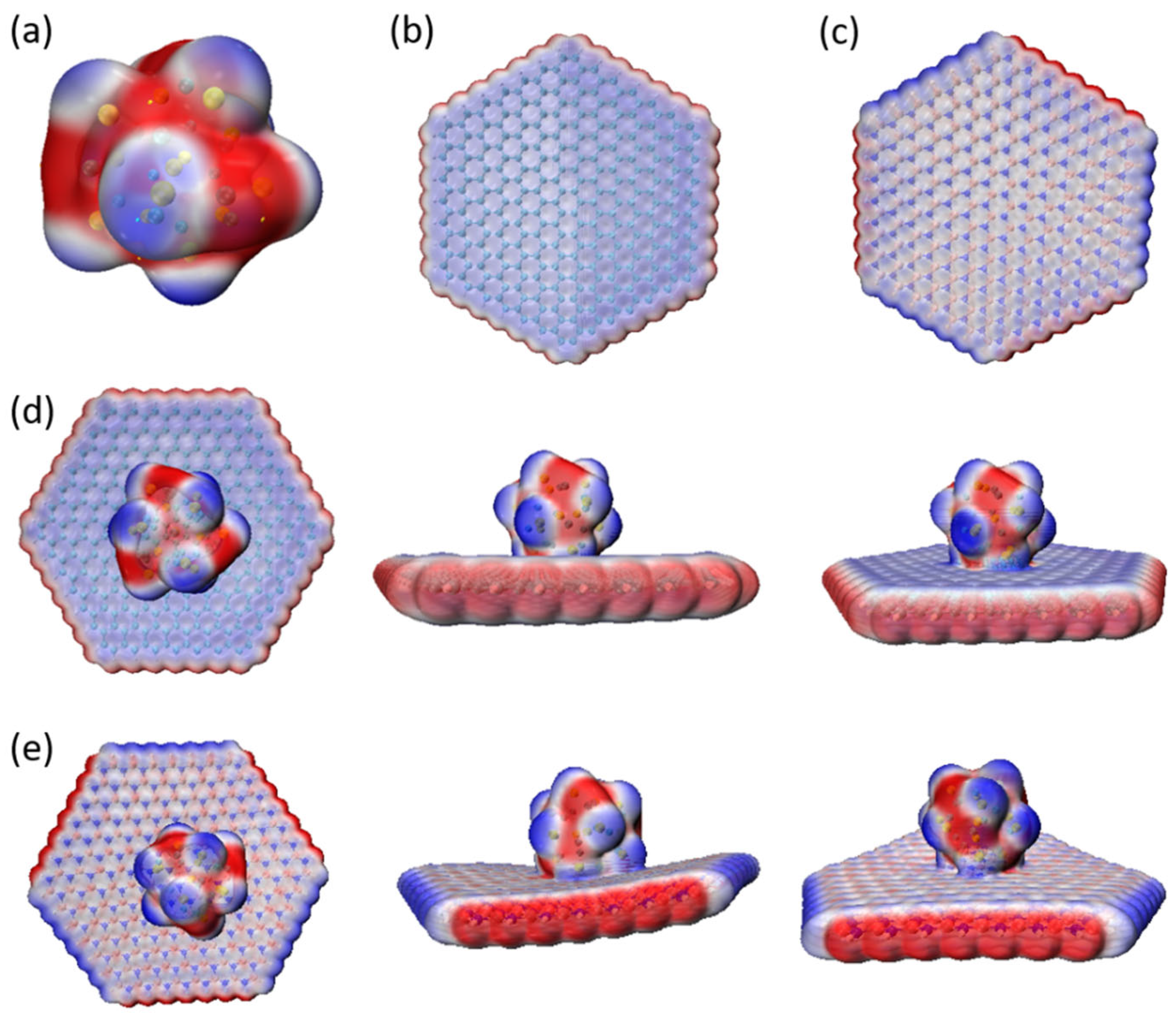
Electrostatic potential (ESP) characterizes the electric potential distribution within an electrostatic field. As shown in Figure 10, the distinct spatial segregation of positive (red) and negative (blue) ESP regions can be clearly observed. Analysis reveals that in CdSe QDs, positive ESP accumulates predominantly on Se atoms, while negative ESP localizes on Cd atoms, reflecting the intrinsic charge polarization of the material.
The ESP distribution exhibits notable symmetry-related patterns. In graphene, positive ESP concentrates on the edge-passivating hydrogen atoms, while negative ESP distributes uniformly across the inner carbon network, maintaining the hexagonal symmetry of the π-conjugated system. This symmetric charge distribution contrasts with the more localized ESP patterns observed in the other components. Notably, both the CdSe QD–graphene and CdSe QD–BN hybrid systems preserve their respective characteristic ESP distributions without significant alteration compared to their isolated components. The BN monolayer specifically displays positive ESP in hydrogen regions bonded to B atoms and negative ESP in areas associated with N atoms, demonstrating the polar character arising from its heteroatomic composition. The preservation of these distinct ESP patterns in the hybrid systems indicates that the interfacial interactions do not substantially disrupt the intrinsic charge distribution symmetry of the individual components. These consistent observations across all systems demonstrate that the hybridization process maintains the original ESP characteristics, suggesting that the weak interfacial interactions preserve the inherent symmetry properties of each constituent material. This symmetry conservation in electrostatic properties provides important insights into the electronic structure preservation at hybrid interfaces.

3.7. Raman Spectrum Analysis

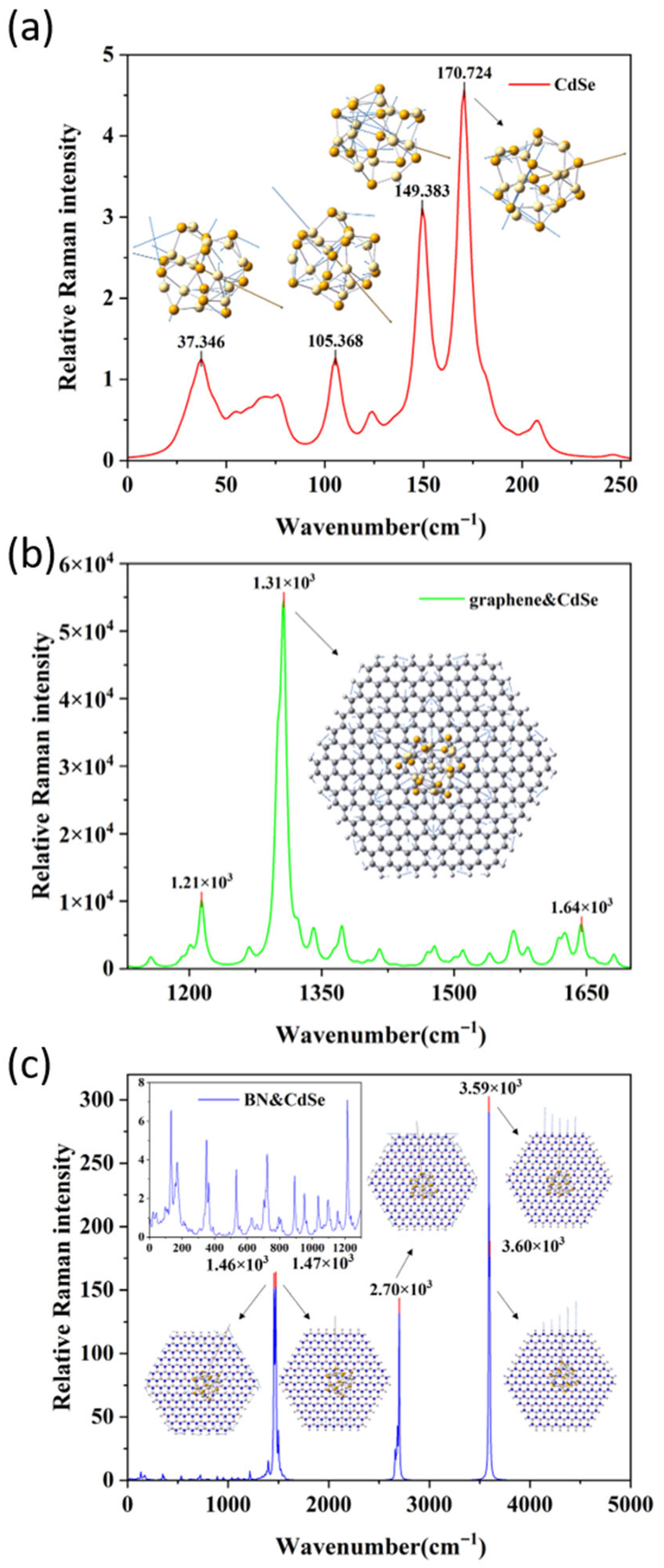
Raman spectroscopic analysis was performed to characterize the vibrational properties of the materials [30]. Figure 11 shows the Raman spectra generated based on the broadening of Raman activity. Figure 11a displays the Raman spectrum of CdSe QDs, where the four most intense peaks and their corresponding vibration modes are identified. The strongest vibration observed at 170.72 cm−1 corresponds to a symmetric stretching mode, reflecting the characteristic vibrational symmetry of the Cd-Se bonds. Figure 11b,c show the Raman spectra of quantum dots hybrid graphene/BN. The graphene hybrid exhibits a prominent peak at 1.31 × 103 cm−1 attributed to combined C-C symmetric stretching, C-H stretching, and QD vibrations, while the BN hybrid displays a complex pattern with multiple peaks between 0 and 1500 cm−1, including strong N-H stretching vibration at 3.59 × 103 cm−1 and characteristic bending modes at 1.46 × 103 cm−1 and 1.47 × 103 cm−1. The diverse vibrational features in the BN system indicate symmetry reduction compared to the graphene hybrid, consistent with the lower intrinsic symmetry of the BN lattice and the formation of specific N-H bonds. These distinct vibrational signatures provide clear evidence of different molecular interaction mechanisms in each hybrid system. The graphene hybrid maintains predominantly C-related symmetric vibrations, while the BN hybrid exhibits N-H bonding characteristics with reduced symmetry.

3.8. Two-Photon Analysis

Two-photon absorption (TPA) refers to a quantum process where two photons act cooperatively to induce the system transition from the ground state to the excited state, with simultaneous absorption of both photons. Unlike single-photon absorption (OPA), TPA represents a nonlinear optical process requiring the synchronous participation of two photons. Therefore, the TPA intensity exhibits a quadratic dependence on light intensity, whereas OPA, as a linear optical process, shows a linear relationship with light intensity.
The TPA cross-section serves as a crucial physical parameter characterizing a material’s TPA capability, with its magnitude reflecting the photon absorption probability. A larger value indicates stronger TPA capacity, meaning the material more readily undergoes ground-state to excited-state transitions under two-photon excitation. The calculation formula for the TPA cross-section [31,32] is
σ t p = 4 π 2 a 0 5 α 15 c 0 ω 2 g ( ω ) Γ f δ t p
where c 0 is the speed of light, Γ f is the spectral line width of TPA, a 0 is the Bohr radius, α is the fine structure constant, ω is the energy of the incident light, and g ( ω ) represents the Gaussian spectral-broadening function. The expression of the transfer probability δ t p in the absorption cross-section formula is
δ t p = 8 j g j f f μ j 2 j μ g 2 ω j ω f / 2 2 + Γ f 2 1 + 2 cos 2 θ j + 8 Δ μ fj 2 f μ g 2 ω j / 2 2 + Γ f 2 1 + 2 cos 2 ϕ
where
Δ μ fj = f μ j j μ g
represents the difference in permanent dipole moments between the excited state and ground state.
Equation (3) expresses the whole process from the ground state through the intermediate states to the final state. The type of g denotes the ground state, f represents the final state, j indicates all possible intermediate states, μ is the electron dipole moment, ω j is the energy of the excited state, θ j is the angle between vectors f μ j and j μ g , and ϕ is the angle between vectors Δ μ fj and f μ g . The physical meanings of parameters in the TPA cross-section equations are provided in Table 2.
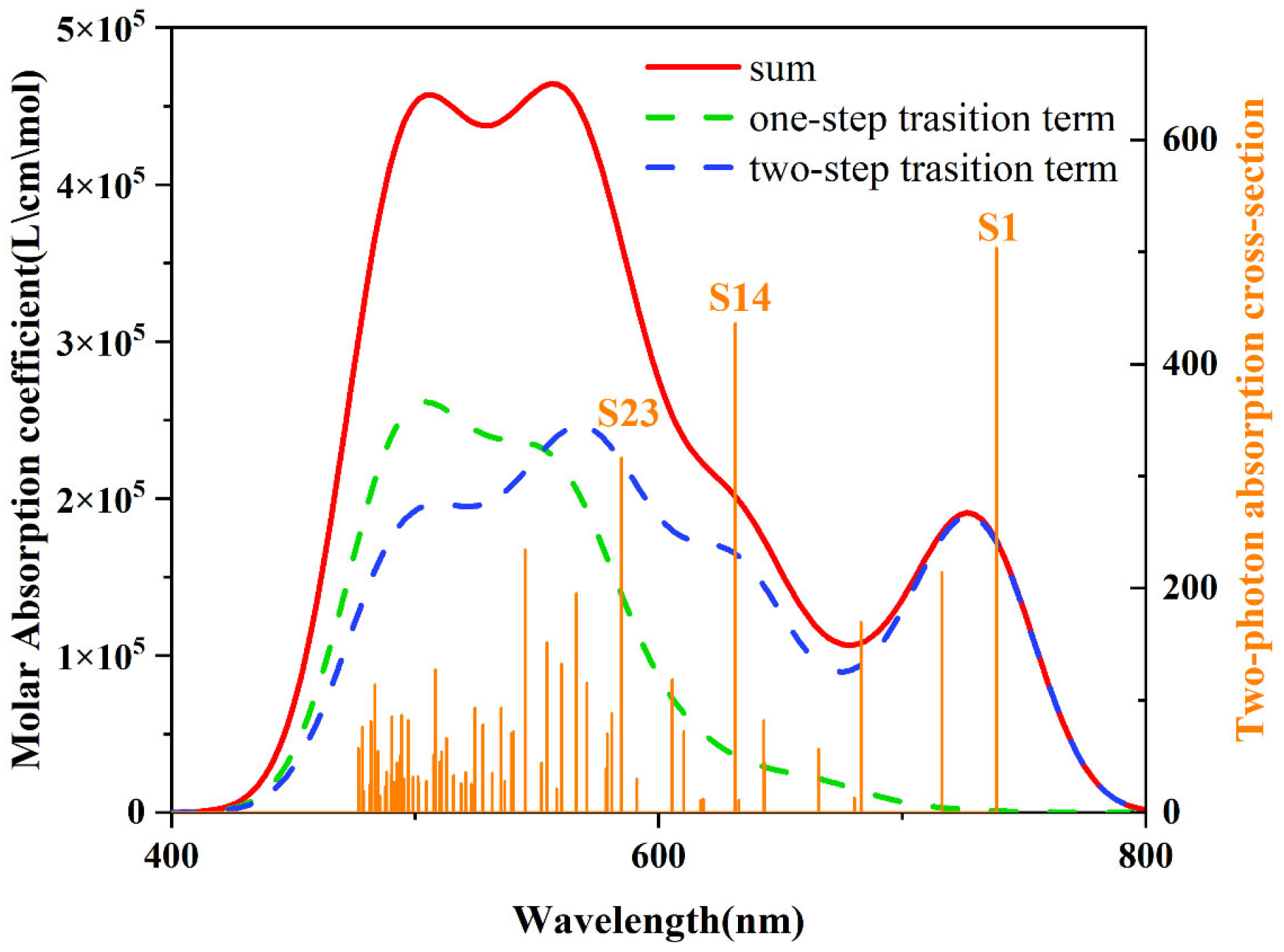
Figure 12 shows the TPA spectrum of CdSe QDs. It can be seen that the state with the largest TPA cross-section is the first excited state (S1) at a wavelength of 738.37 nm, followed by the 14th excited state (S14) at 631.11 nm. In the figure, the green dashed line represents the two-step transition, the blue dashed line represents the one-step transition, and the red solid line represents the total TPA absorption coefficient. The results indicate that the maximum cross-section of the two-step transition is contributed by the S39 excited state at 545.02 nm, followed by the S31 excited state at 565.96 nm. Meanwhile, the maximum cross-section of the one-step transition occurs at a wavelength of 738.37 nm (corresponding to the S1 excited state), with the second highest value observed for the S14 excited state at 631.11 nm. TPA can be regarded as a two-step transition process. The first step involves excitation from the ground state to an intermediate state, and the second step proceeds from the intermediate state to the final excited state. Notably, the choice of the intermediate state is not unique.
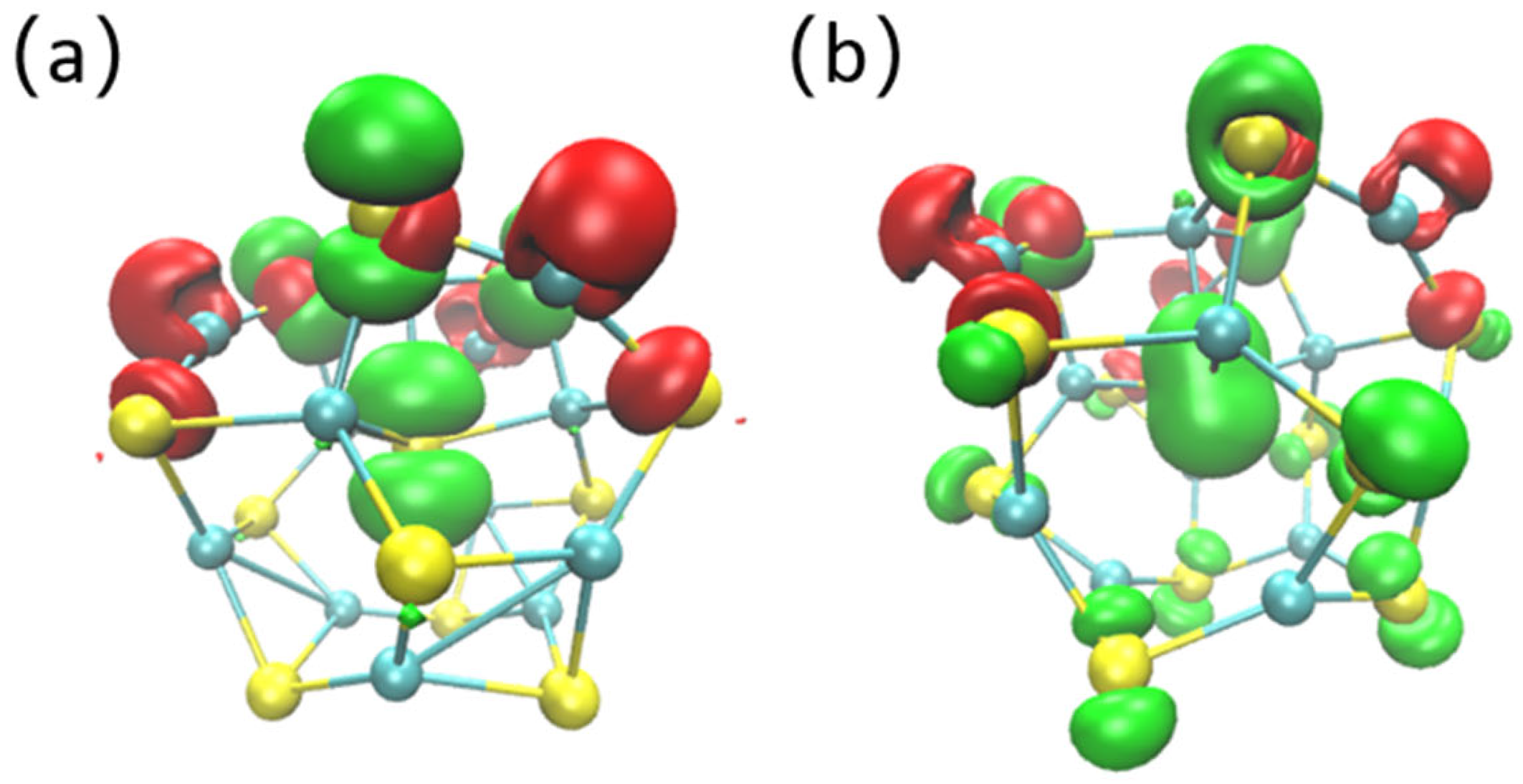
Figure 13 shows the charge density difference (CDD) diagram of excited states S1 and S39, corresponding to the states exhibiting maximum absorption cross-sections in the two transitions. The green color corresponds to holes, and the red color corresponds to electrons. A significant increase in hole density can be observed, indicating a high probability of electron transition under two-photon excitation. These features provide direct evidence for the TPA intensity.

4. Conclusions

This study systematically investigated the electronic and optical properties of CdSe quantum dots hybridized with graphene and BN through first-principles calculations. The HOMO–LUMO orbital analysis revealed that graphene exhibits a narrow gap of 0.995 eV, while BN shows a significantly wider gap of 6.153 eV, confirming graphene’s superior conductivity. The hybrid systems displayed distinct interfacial characteristics: CdSe/graphene showed a minimal gap of 0.998 eV, whereas CdSe/BN exhibited a substantially larger gap of 3.064 eV, indicating enhanced charge transfer capability in the graphene-based hybrid. The DOS analysis elucidated atom-specific contributions to the electronic structure, with Fermi level analysis further verifying the facilitated charge transfer in graphene-containing systems. The symmetry-preserving nature of graphene’s hexagonal lattice enabled optimal orbital overlap and efficient charge delocalization across the interface. In contrast, the polar character of B-N bonds introduced symmetry-breaking effects that localized electronic states and reduced charge transfer efficiency. Weak interaction analysis using IGM and RDG methods, supported by scatter plots and isosurface visualization, confirmed the predominance of van der Waals interactions in both hybrid systems, with additional hydrogen bonding identified in the BN-based hybrid. The uniform distribution of weak interactions in the graphene hybrid reflected its high interfacial symmetry matching, while the heterogeneous interaction patterns in the BN system resulted from symmetry reduction due to its heteroatomic composition. Binding energy calculations demonstrated greater stability in the graphene-hybridized system, consistent with its superior symmetry matching and orbital overlap. UV–Vis spectroscopy revealed that graphene dominates the optical response in its hybrid with CdSe QDs, while QDs govern the absorption characteristics in the BN hybrid system. The preserved electrostatic potential distribution after hybridization indicated maintained charge symmetry in both systems. TPA investigations identified significant nonlinear optical properties in CdSe QDs, particularly at the first excited state.
The distinct behaviors observed in the two hybrid systems fundamentally originate from their different symmetry characteristics: the high symmetry of graphene enables uniform interfacial interactions and efficient charge transfer, while the intrinsic symmetry reduction in BN leads to localized states and modified optical properties. Future research should focus on symmetry-guided defect engineering in CdSe QD hybrids and experimental validation through controlled synthesis and characterization to verify these theoretical predictions regarding symmetry–property relationships.

Author Contributions

Conceptualization, S.C. and J.W.; methodology, Y.D. and Z.D.; software, Y.D.; validation, Z.D. and J.S.; formal analysis, Y.D.; investigation, Y.D.; writing—original draft preparation, Y.D.; writing—review and editing, J.W.; visualization, Y.D.; supervision, Z.D. and J.W.; project administration, Z.D. and J.W.; funding acquisition, S.C. and J.W. All authors have read and agreed to the published version of the manuscript.

Funding

This work was supported by the National Natural Science Foundation of China (grant Nos. 12304379 and 12374181).

Data Availability Statement

The original contributions presented in this study are included in this article. Further inquiries can be directed to the corresponding author.

Conflicts of Interest

The authors declare no conflicts of interest.

References

  1. Yang, Z.; Gao, M.; Wu, W.; Yang, X.; Sun, Y.W.; Zhang, J.; Li, H.; Li, Y.; Li, M.; Han, L.; et al. Recent advances in quantum dot-based light-emitting devices: Challenges and possible solutions. Mater. Today 2019, 24, 69–93. [Google Scholar] [CrossRef]
  2. Cheng, Y.; Arinze, E.S.; Palmquist, N.; Thon, S.M. Advancing colloidal quantum dot photovoltaic technology. Adv. Mater. 2016, 5, 31–54. [Google Scholar] [CrossRef]
  3. Nahak, B.K.; Roshan, R.; Jhariya, N.; Sahu, A.; Patra, G.K.; Sahu, S.; Sahu, P.; Kumar, A. Study on photoinduced charge transfer between Citrus Limon capped CdS quantum dots with natural dyes. Surf. Interfaces 2023, 42, 103351. [Google Scholar] [CrossRef]
  4. Hetsch, F.; Zhao, N.; Kershaw, S.V.; Rogach, A.L. Quantum dot field effect transistors. Mater. Today 2013, 16, 312–325. [Google Scholar] [CrossRef]
  5. Zhou, J.; Li, D. Improving the thermoelectric properties of graphene through zigzag graphene–graphyne nanoribbon heterostructures. Eur. Phys. J. B 2021, 94, 52. [Google Scholar] [CrossRef]
  6. Ahirwar, S.; Mallick, S.; Bahadur, D. Electrochemical Method To Prepare Graphene Quantum Dots and Graphene Oxide Quantum Dots. ACS Omega 2017, 2, 8343–8353. [Google Scholar] [CrossRef] [PubMed]
  7. Latorrata, S.; Balzarotti, R. Advances in Graphene and Graphene-Related Materials. Appl. Sci. 2023, 13, 8929. [Google Scholar] [CrossRef]
  8. Li, J.; Shenoy, V.B. Graphene quantum dots embedded in hexagonal boron nitride sheets. Appl. Phys. Lett. 2011, 98, 013105. [Google Scholar] [CrossRef]
  9. Lu, L.; Tong, X.; Zhang, X.; Huang, Y.; Zheng, Q.; Xu, J.; Qian, H.; Li, Z.; Zhang, Z. Hot spot assisted blinking suppression of CdSe quantum dots. Chem. Phys. Lett. 2016, 652, 167–171. [Google Scholar] [CrossRef]
  10. Chi, X.; Wang, Y.; Gao, J.; Wang, Y.; Wang, Y.; Ma, D.; Li, X. Study of photoluminescence characteristics of CdSe quantum dots hybridized with Cu nanowires. Luminescence 2016, 31, 1298–1301. [Google Scholar] [CrossRef]
  11. Cao, S.; Wang, J.; Ding, Y.; Ma, F.; Sun, M. Visualization of weak interactions between quantum dot and graphene in hybrid materials. Sci. Rep. 2017, 7, 417. [Google Scholar] [CrossRef] [PubMed]
  12. Cao, S.; Wang, J.; Ma, F.; Sun, M. Charge-transfer channel in quantum dot–graphene hybrid materials. Nanotechnology 2018, 29, 145202. [Google Scholar] [CrossRef] [PubMed]
  13. Frisch, M.J.; Trucks, G.W.; Schlegel, H.B.; Scuseria, G.E.; Robb, M.A.; Cheeseman, J.R.; Scalmani, G.; Barone, V.; Petersson, G.A.; Nakatsuji, H.; et al. Gaussian 16, Rev. C.01; Gaussian, Inc.: Wallingford, CT, USA, 2016.
  14. BIOVIA Material Studio, Version 2021; Dassault Systèmes: San Diego, CA, USA, 2020.
  15. Dennington, R.; Todd, A.; Millam, J.M. GaussView, Version 6; Semichem Inc.: Shawnee Mission, KS, USA, 2016.
  16. Kasuya, A.; Sivamohan, R.; Barnakov, Y.A.; Dmitruk, I.M.; Nirasawa, T.; Romanyuk, V.R.; Kumar, V.; Mamykin, S.V.; Tohji, K.; Jeyadevan, B.; et al. Ultra-stable nanoparticles of CdSe revealed from mass spectrometry. Nat. Mater. 2004, 3, 99–102. [Google Scholar] [CrossRef] [PubMed]
  17. Lee, C.; Yang, W.; Parr, R.G. Development of the Colle-Salvetti correlation-energy formula into a functional of the electron density. Phys. Rev. B 1988, 37, 785–789. [Google Scholar] [CrossRef]
  18. Rassolov, V.A.; Ratner, M.A.; Pople, J.A.; Redfern, P.C.; Curtiss, L.A. 6-31G basis set for third-row atoms. J. Comput. Chem. 2001, 22, 976–984. [Google Scholar] [CrossRef]
  19. Zhao, X.; Wang, R.; Guo, S.; Zhang, Y.; Zhang, Z.; Wang, G. Hexagonal WSe2 Nanoplates for Large-Scale Continuous Optoelectronic Films. ACS Appl. Nano Mater. 2021, 4, 5014–5021. [Google Scholar] [CrossRef]
  20. Montejo-Alvaro, F.; Alfaro-López, H.M.; Salinas-Juárez, M.G.; Rojas-Chávez, H.; Cruz-Martínez, H.; Medina, D.I. Metal clusters/modified graphene composites with enhanced CO adsorption: A density functional theory approach. J. Nanopart. Res. 2022, 25, 11. [Google Scholar] [CrossRef]
  21. Paudel, R.K.; Ren, C.Y.; Chang, Y.C. Semi-Empirical Pseudopotential Method for Graphene and Graphene Nanoribbons. Nanomaterials 2023, 13, 2066. [Google Scholar] [CrossRef]
  22. Tachikawa, H.; Kawabata, H. Additions of fluorine atoms to the surfaces of graphene Nanoflakes: A density functional theory study. Solid State Sci. 2019, 97, 106007. [Google Scholar] [CrossRef]
  23. Gross, E.K.U.; Kohn, W. Local Density-Functional Theory of Frequency-Dependent Linear Response. Phys. Rev. Lett. 1986, 57, 923. [Google Scholar] [CrossRef]
  24. Yanai, T.; Tew, D.P.; Handy, N.C. A new hybrid exchange–correlation functional using the Coulomb-attenuating method (CAM-B3LYP). Chem. Phys. Lett. 2004, 393, 51–57. [Google Scholar] [CrossRef]
  25. Lu, T.; Chen, F. Multiwfn: A multifunctional wavefunction analyzer. J. Comput. Chem. 2012, 33, 580–592. [Google Scholar] [CrossRef] [PubMed]
  26. Humphrey, W.; Dalke, A.; Schulten, K. VMD: Visual molecular dynamics. J. Mol. Graph. 1996, 14, 33–38. [Google Scholar] [CrossRef]
  27. Yu, J.; Su, N.Q.; Yang, W. Describing Chemical Reactivity with Frontier Molecular Orbitalets. JACS Au 2022, 2, 1383–1394. [Google Scholar] [CrossRef] [PubMed]
  28. Carvalho, A.C.M.; Bezerra, C.G.; Lawlor, J.A.; Ferreira, M.S. Density of states of helically symmetric boron carbon nitride nanotubes. J. Phys. Condens. Matter 2014, 26, 015303. [Google Scholar] [CrossRef]
  29. Tang, H.; Xiang, Y.; Zhan, H.; Du, Y.; Ouyang, Y.; Zhu, L.; Chen, X.; Li, Y. DFT investigation of transition metal-doped graphene for the adsorption of HCl gas. Diam. Relat. Mater. 2023, 136, 109995. [Google Scholar] [CrossRef]
  30. Xue, Y.; Xie, Y.; Xu, C.; Wang, X.; Wang, Y.; Lv, S.; Zhang, Y.; Li, M.; Si, W.; Liu, F.; et al. 0D/2D heterojunction of graphene quantum dots/MXene nanosheets for boosted hydrogen evolution reaction. Surf. Interfaces 2022, 30, 101907. [Google Scholar] [CrossRef]
  31. Mu, X.; Zong, H.; Zhu, L.; Sun, M. External Electric Field-Dependent Photoinduced Charge Transfer in a Donor–Acceptor System in Two-Photon Absorption. J. Phys. Chem. C 2020, 124, 2319–2332. [Google Scholar] [CrossRef]
  32. Sun, M.; Chen, J.; Xu, H. Visualizations of transition dipoles, charge transfer, and electron-hole coherence on electronic state transitions between excited states for two-photon absorption. J. Chem. Phys. 2008, 128, 064106. [Google Scholar] [CrossRef]
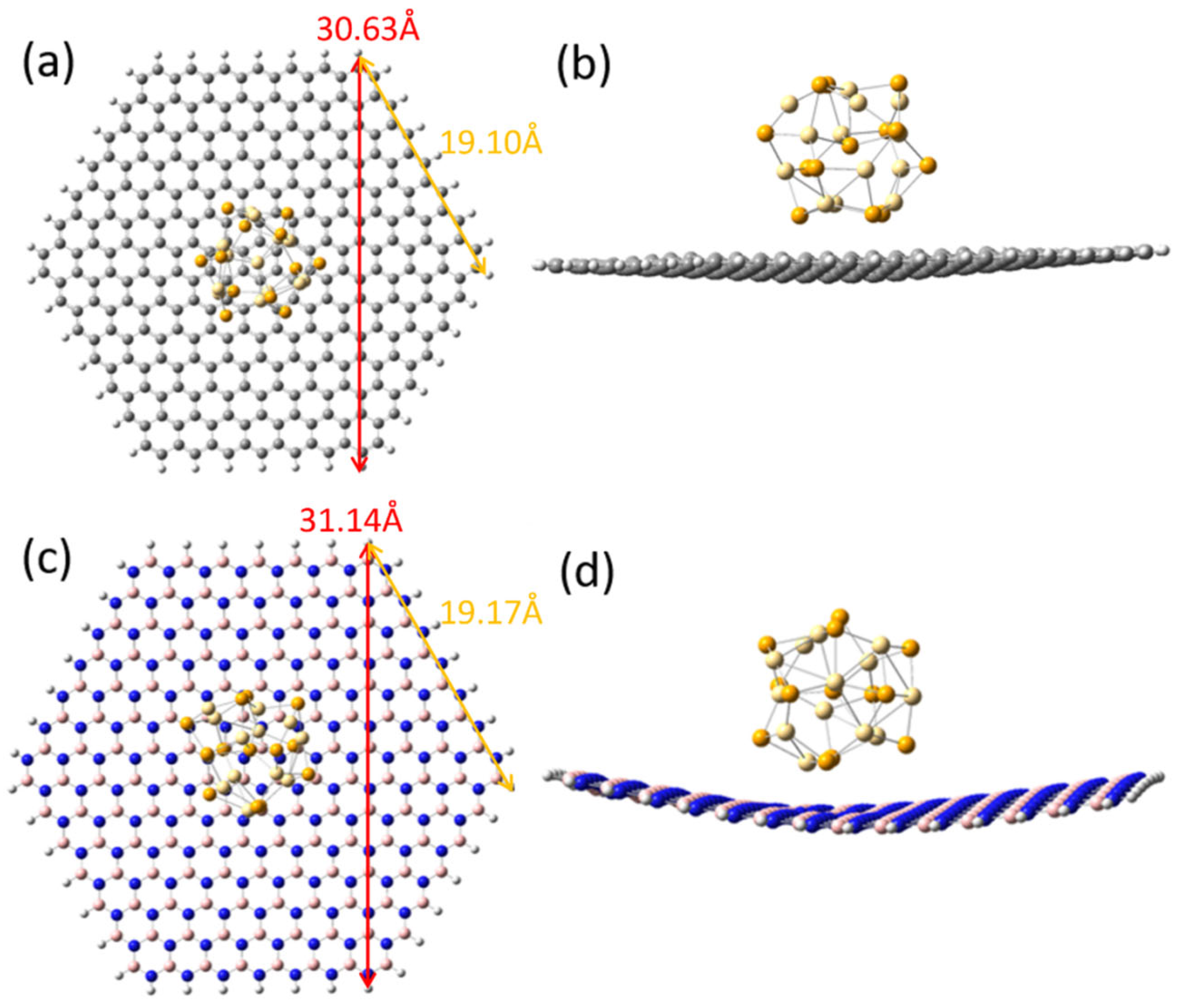
Figure 1. Schematic diagram of model structure: (a) top view of CdSe QD hybrid graphene, (b) front view of CdSe QD hybrid graphene, (c) top view of CdSe QD hybrid BN, (d) front view of CdSe QD hybrid BN.
Symmetry 17 01972 g001
Figure 2. HOMO–LUMO orbital diagrams of the monomer. (a) HOMO orbital diagram of CdSe QDs. (b) LUMO orbital diagram of CdSe QDs. (c) Graphene HOMO orbital diagram. (d) Graphene LUMO orbital diagram. (e) BN HOMO orbital diagram. (f) BN LUMO orbital diagram. The isosurfaces of CdSe QDs are ±0.03 a.u., and the isosurfaces of graphene and BN are ±0.01 a.u.
Symmetry 17 01972 g002
Figure 3. HOMO–LUMO orbital diagrams of hybrid systems. (a,b) HOMO orbital map of CdSe QD hybrid graphene. (c,d) LUMO orbital diagram of CdSe QD hybrid graphene. (e,f) HOMO orbital diagram of CdSe QD hybrid BN. (g,h) LUMO orbital diagram of CdSe QD hybrid BN. The isosurfaces of QD hybrid graphene are ±0.01 a.u. and those of QDs hybrid BN are ±0.02 a.u.
Symmetry 17 01972 g003
Figure 4. Partial DOS diagrams of two hybrid systems. (a) DOS diagram of CdSe QD hybrid graphene. (b) DOS diagram of CdSe QD hybrid BN. The dotted line represents the Fermi level.
Symmetry 17 01972 g004
Figure 5. IGM contour map. (a,b) IGM isosurface map of CdSe QD–graphene hybrid system. (c,d) IGM isosurface map of CdSe QD–BN hybrid system.
Symmetry 17 01972 g005
Figure 6. Scatter diagram. (a) RDG scatter plot of CdSe QD hybrid graphene. (b) IGM scatter plot of CdSe QD hybrid graphene. (c) RDG scatter plot of CdSe QD hybrid BN. (d) IGM scatter plot of CdSe QD hybrid BN.
Symmetry 17 01972 g006
Figure 7. UV–Vis absorption spectra of (a) CdSe quantum dots, (b) graphene monomer, (c) CdSe quantum dots hybrid graphene. (d) Comparative spectra of both the hybrid system and graphene monomer.
Symmetry 17 01972 g007
Figure 8. UV–Vis absorption spectra of (a) CdSe quantum dots, (b) BN monomer, (c) CdSe QD hybrid BN, and (d) comparative spectra of the CdSe–BN hybrid system and CdSe QDs.
Symmetry 17 01972 g008
Figure 9. NTO pairs for (a) CdSe QD–graphene hybrid in the S2 excited state, (b) CdSe QD–graphene hybrid in the S20 excited state, (c) CdSe QD–BN hybrid in the S2 excited state, and (d) CdSe QD–BN hybrid in the S20 excited state. The purple and green colors denote the occupied and unoccupied orbitals, respectively.
Symmetry 17 01972 g009
Figure 10. ESP maps of (a) CdSe QDs, (b) graphene, (c) BN, (d) CdSe QD hybrid graphene, and (e) CdSe QD hybrid BN. The red regions indicate positive ESP, and blue regions indicates the area of negative ESP.
Symmetry 17 01972 g010
Figure 11. Raman spectra and vibration modes of (a) CdSe QDs, (b) CdSe QD hybrid graphene, (c) CdSe QD hybrid BN.
Symmetry 17 01972 g011
Figure 12. TPA spectrum of CdSe QDs. The red solid curve shows the total TPA cross-section, while the green and blue dashed lines represent the two-step and one-step transition pathways, respectively.
Symmetry 17 01972 g012
Figure 13. CDD diagrams of CdSe QDs. (a) The first excited state, (b) the 39th excited state. Red and green isosurfaces (±0.001 a.u.) represent electrons and holes, respectively. The green and red colors indicate the hole and electron distributions, respectively.
Symmetry 17 01972 g013
Table 1. Binding energy of two systems.
CdSeGrapheneGraphene/CdSeCdSeBNBN/CdSe
Energy (Hartree)−745.942−11,231.217−11,978.807−745.942−11,745.106−13,492.567
Total binding energy−4326.842 KJ/mol−3988.134 KJ/mol
Table 2. Physical meaning of parameters in TPA cross-section equations.
σ t p Γ f g ( ω ) δ t p μ
NameTPA cross sectionTPA spectral line widthGaussian spectrum broadening functionTransition probabilityThe electronic dipole moment
Physical meaningA physical quantity that describes the ability of a material to absorb two photon in a two-photon absorption process, The larger the σ t p   , the higher the two-phono absorption efficiency.The frequency range at which a substance can absorb two photons in the two-photon absorption process in indicated.It is used to describe spectral broadening and energy distribution to ensure that theoretical calculations agree with experimental results.It is used to calculate the electron transition in two-photon absorption.The asymmetry of charge distribution and the strength of photon-electron coupling are described, which determines the transition probability.
Disclaimer/Publisher’s Note: The statements, opinions and data contained in all publications are solely those of the individual author(s) and contributor(s) and not of MDPI and/or the editor(s). MDPI and/or the editor(s) disclaim responsibility for any injury to people or property resulting from any ideas, methods, instructions or products referred to in the content.