Article

Kinematic Analysis of the Forward Head Posture Associated with Smartphone Use

1
Neurosurgery Department, Medical University of Gdansk, 80-214 Gdansk, Poland
2
Scientific Circle of Neurology and Neurosurgery, Medical University of Gdansk, 80-214 Gdansk, Poland
3
Department of Neurosurgery, Marciniaks Hospital, 54-049 Wrocław, Poland
4
Institute of Medicine, Opole University, 45-052 Opole, Poland
*
Author to whom correspondence should be addressed.
Symmetry 2023, 15(3), 667; https://doi.org/10.3390/sym15030667
Submission received: 20 November 2022 / Revised: 28 February 2023 / Accepted: 3 March 2023 / Published: 7 March 2023
(This article belongs to the Special Issue Symmetry/Asymmetry in Musculoskeletal Science)

Abstract

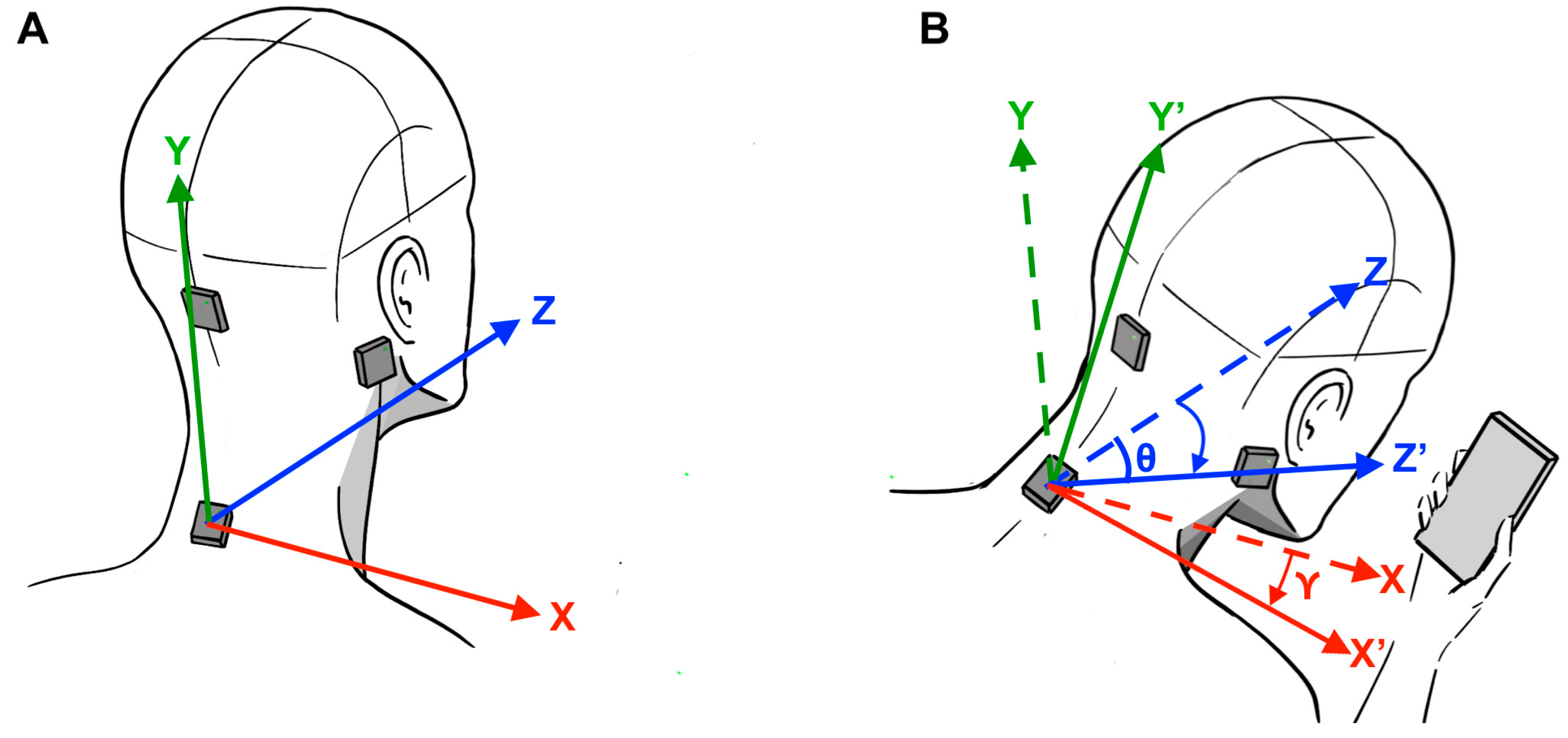
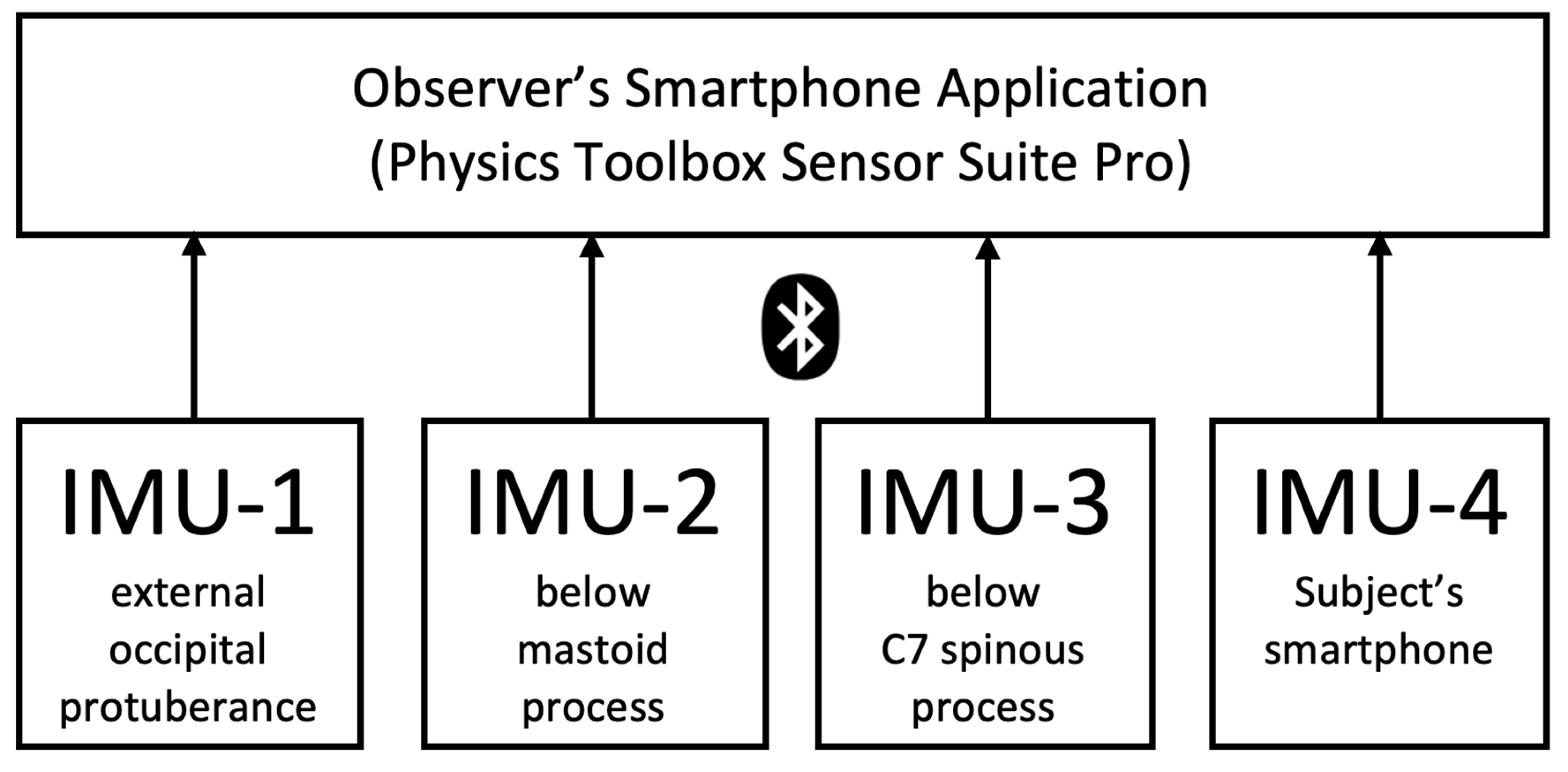
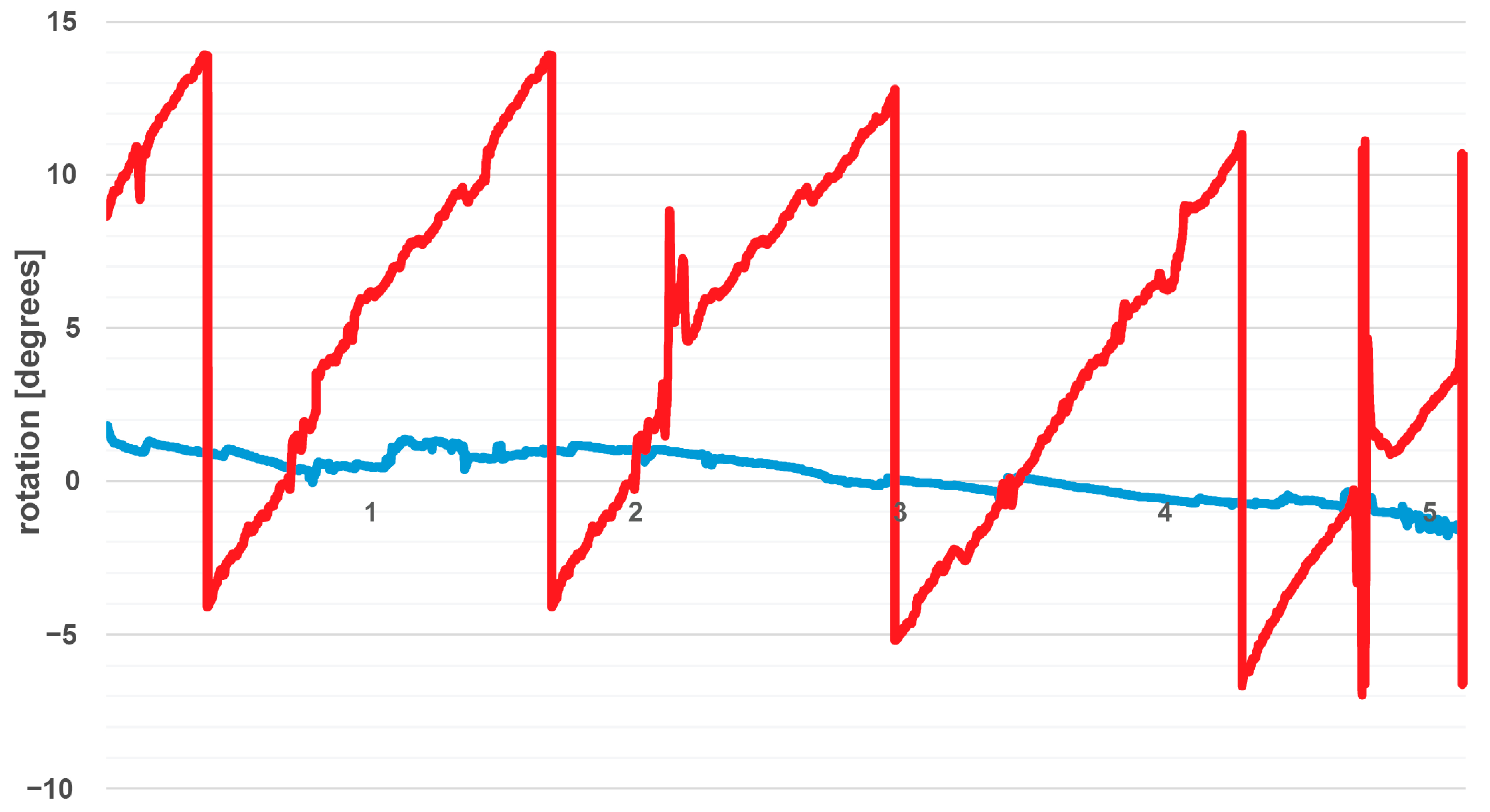
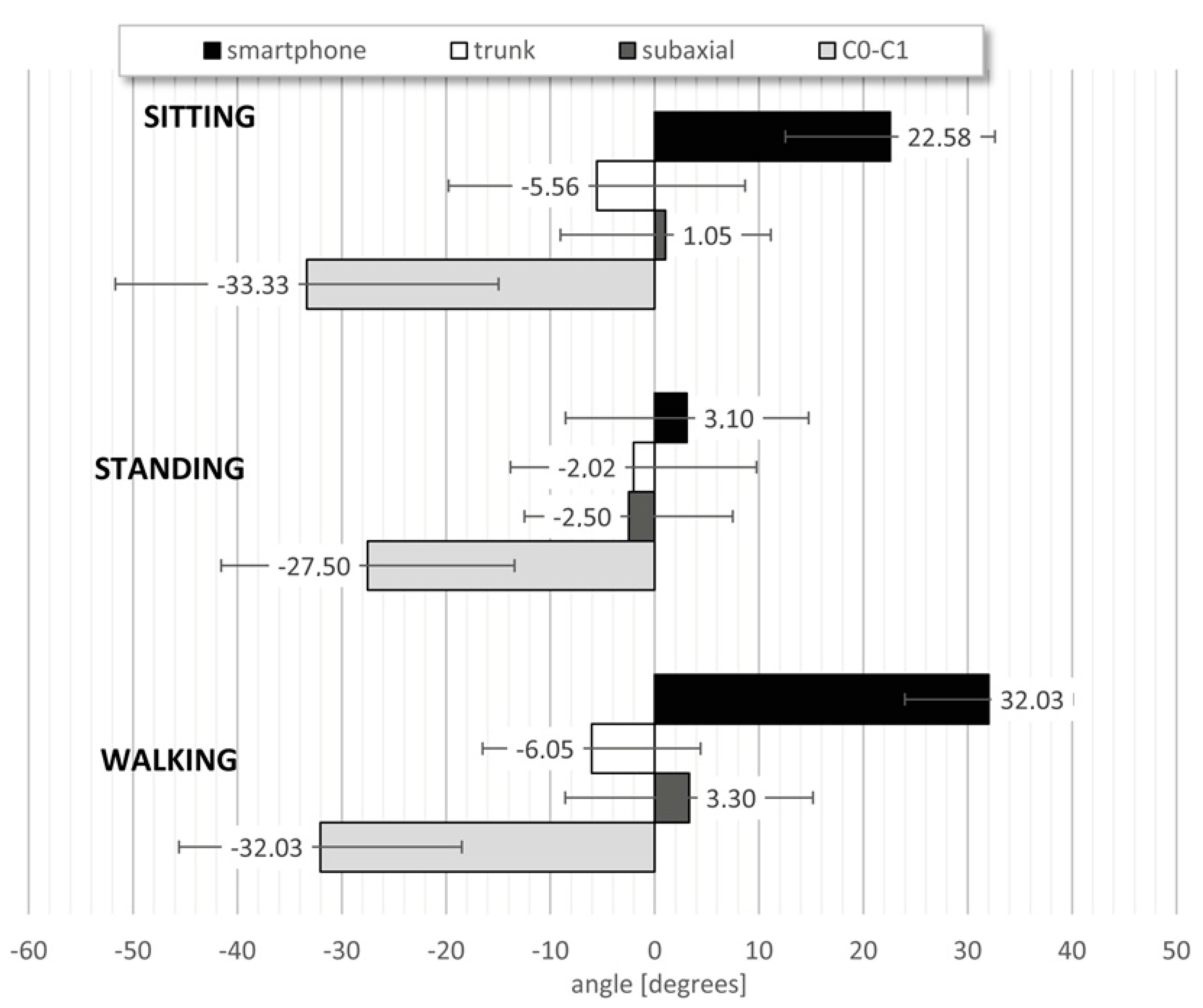
Background: Frequent use of mobile devices has a known association with musculoskeletal neck pain. This study sought out to localize the region with greatest flexion in the cervical spine and explored the role of symmetry in maintaining the pose during texting. Methods: Three inertial measuring units (IMUs) superficially attached along the cervical spine divided the cervical spine into two measurable segments. Twenty-five subjects participated in the study and performed three tasks when using smartphones: sitting, standing, and walking. Data from each IMU were used to calculate the flexion of cervical divided into two segments: craniocervical junction (C0–C1) and subaxial (C1–C7). Results: The greatest flexion by far occurred at C0–C1. While sitting, standing, and walking, the mean flexion angles were 33.33 ± 13.56°, 27.50 ± 14.05°, and 32.03 ± 10.03° for the C0–C1 joint and −3.30 ± 10.10°, 2.50 ± 9.99°, and −1.05 ± 11.88° for the C2–C7 segment, respectively. There is a noticeable pattern of yaw movement of the head, with a slow rotation toward symmetry and a fast corrective movement toward the smartphone held in one hand. Conclusions: This study identified the region of greatest contribution toward forward flexion along the cervical parameters during various tasks involving smartphone use. With each task, the greatest contributor to head flexion was the C0–C1 joint. There is involuntary rotation of the cervical spine toward symmetry when texting.
Keywords: spine; motion analysis; wearable sensors; biomechanics; smartphone spine; motion analysis; wearable sensors; biomechanics; smartphone