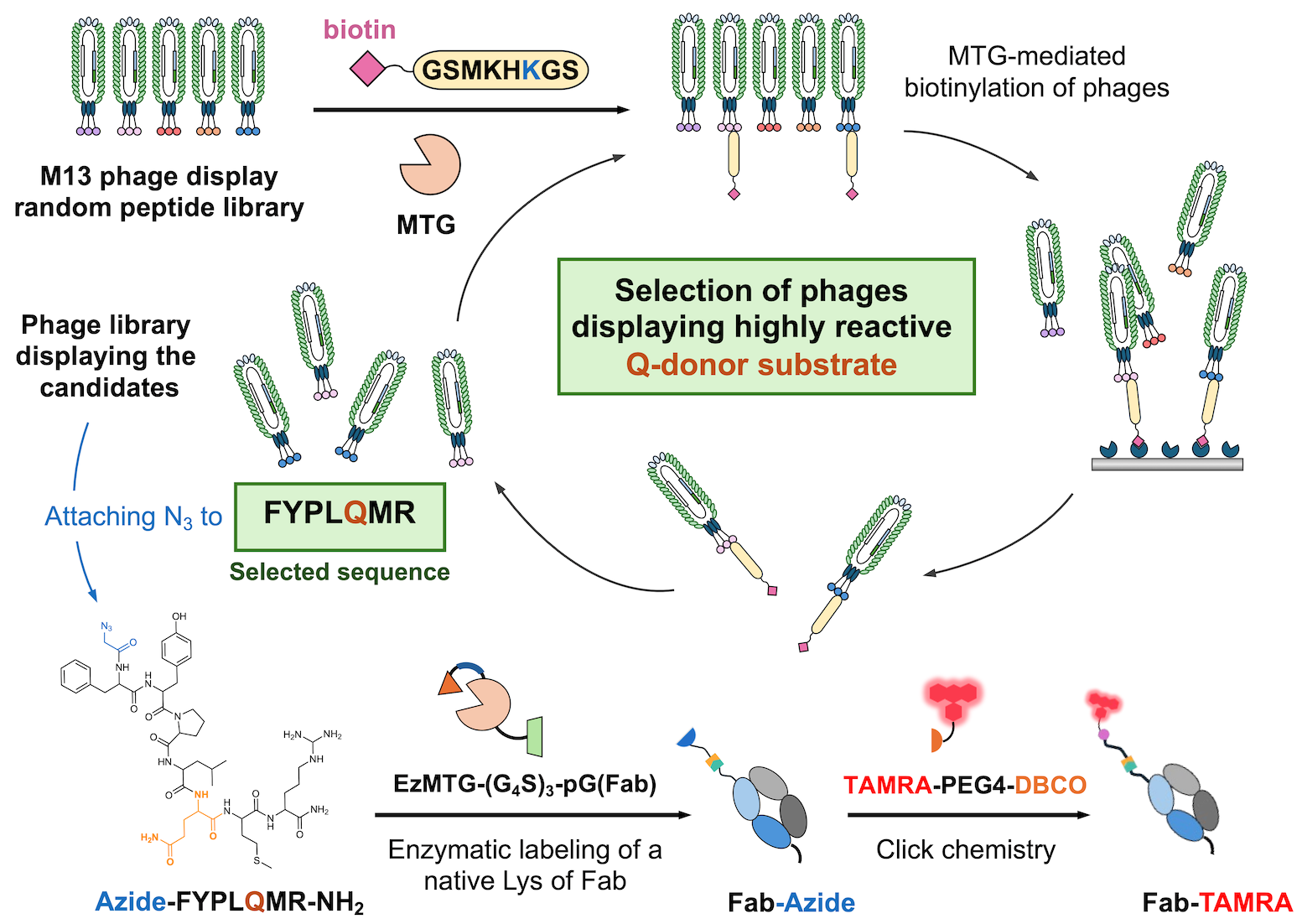

Phage-Selected Clickable Gln-Donor Peptide for Lys-Selective Fab Labeling Using Engineered Microbial Transglutaminase


Abstract
1. Introduction
2. Materials and Methods
2.1. Materials
2.2. Phage Display Selection of MTG Substrate Sequences
2.3. Enzymatic Labeling of Fab with Azide-Modified Gln-Donor Substrates by EzMTG-pG
2.4. Evaluation of Binding Affinity of the Azide-Modified Fab
2.5. Analysis of Modification Site in Fab
2.6. Preparation of TAMRA-Modified Fab by Click Reaction
3. Results
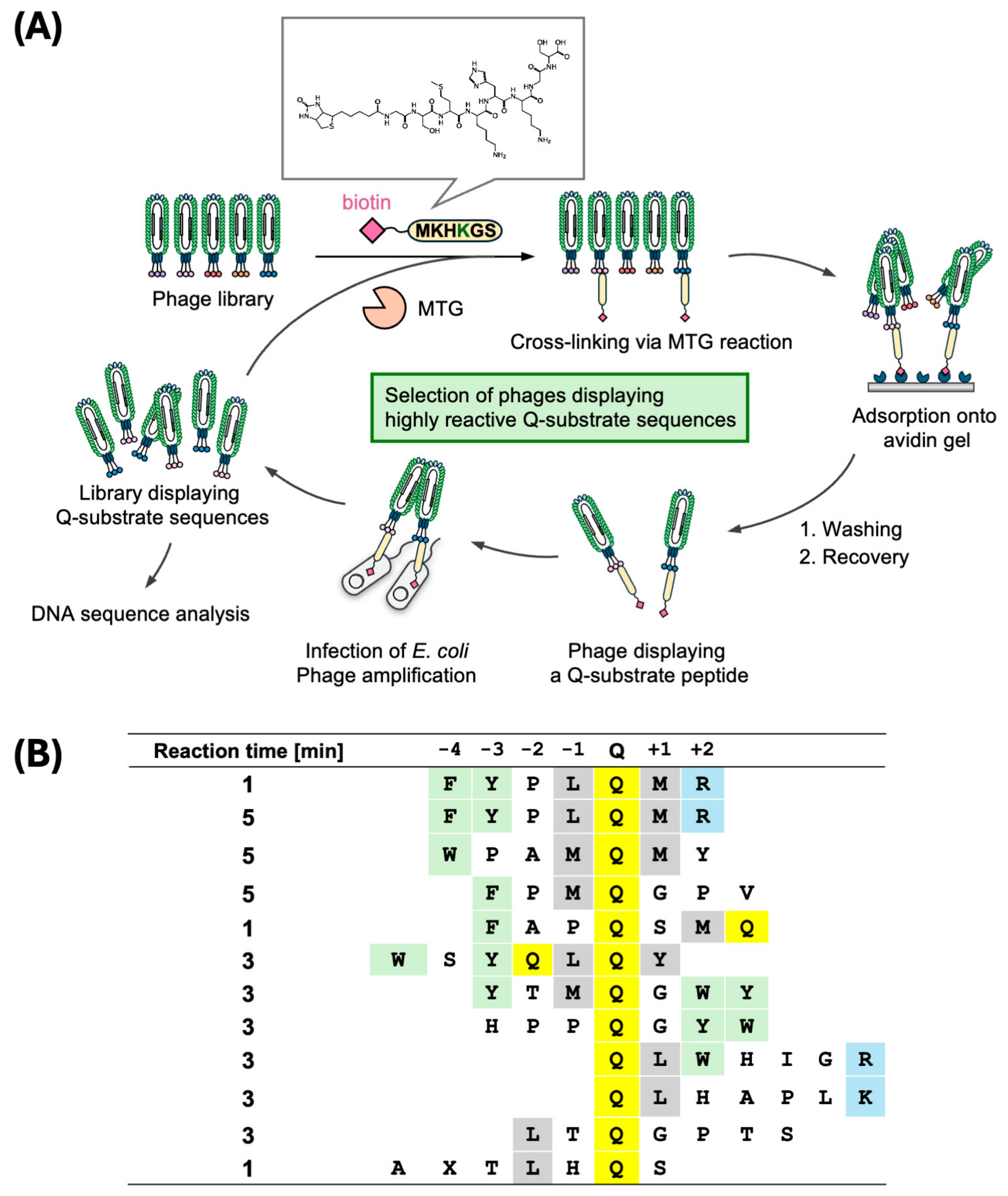
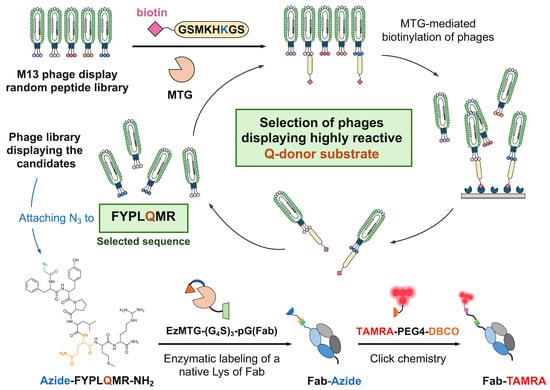
3.1. Screening of MTG Substrates Using Phage Display
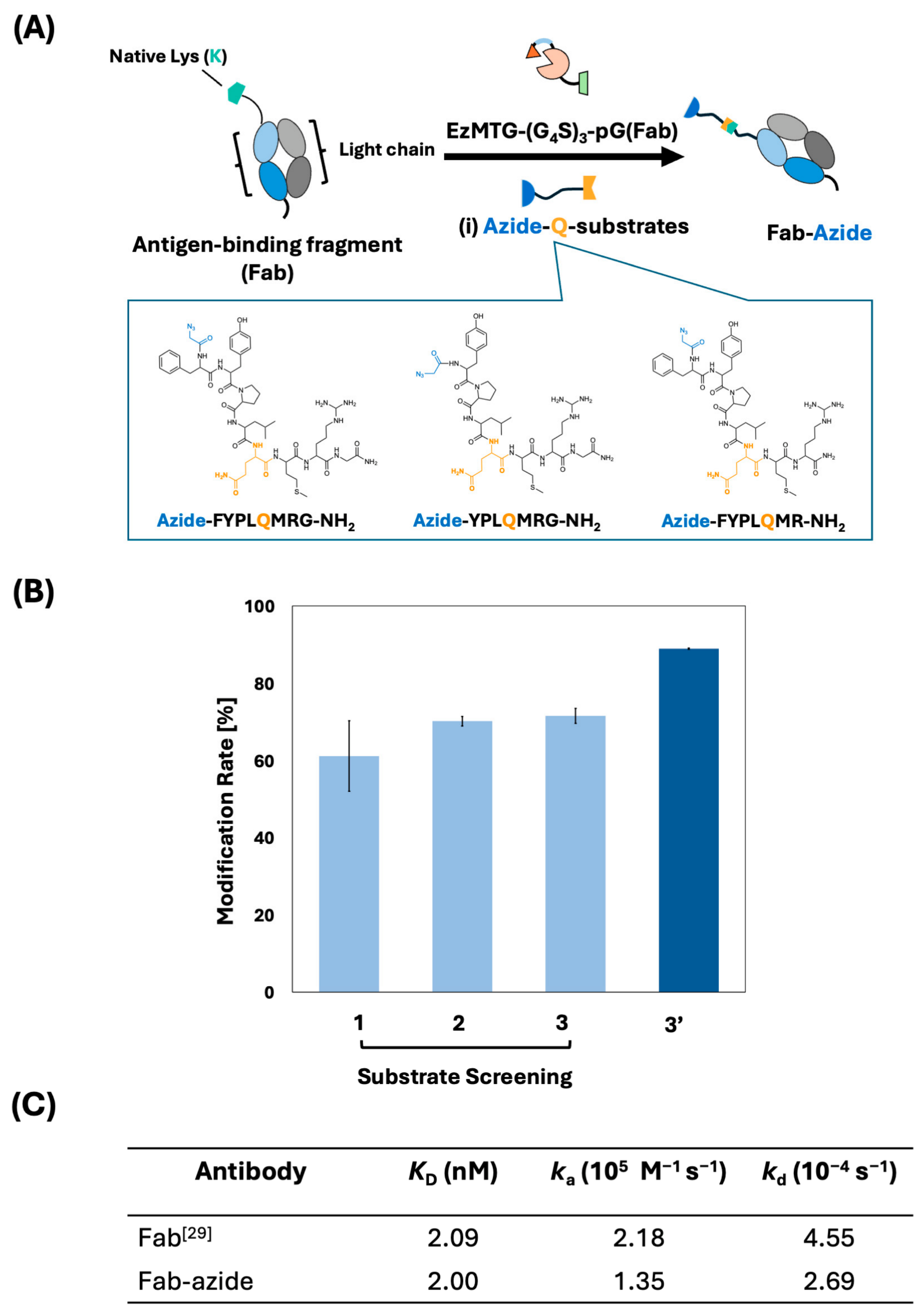
3.2. Design of an Azide-Labeled Gln-Donor Peptide for Chemoenzymatic Labeling of Fab Fragments
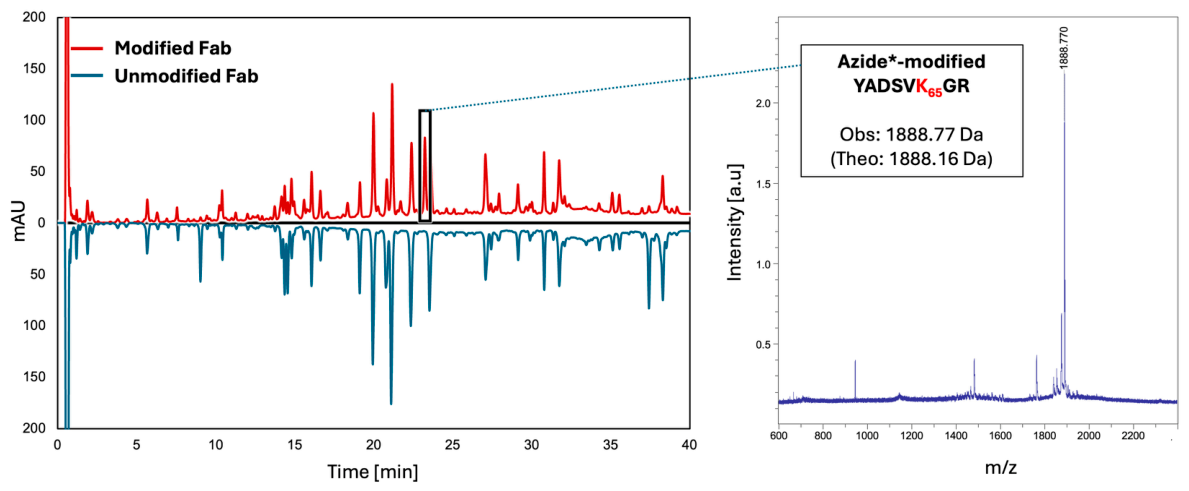
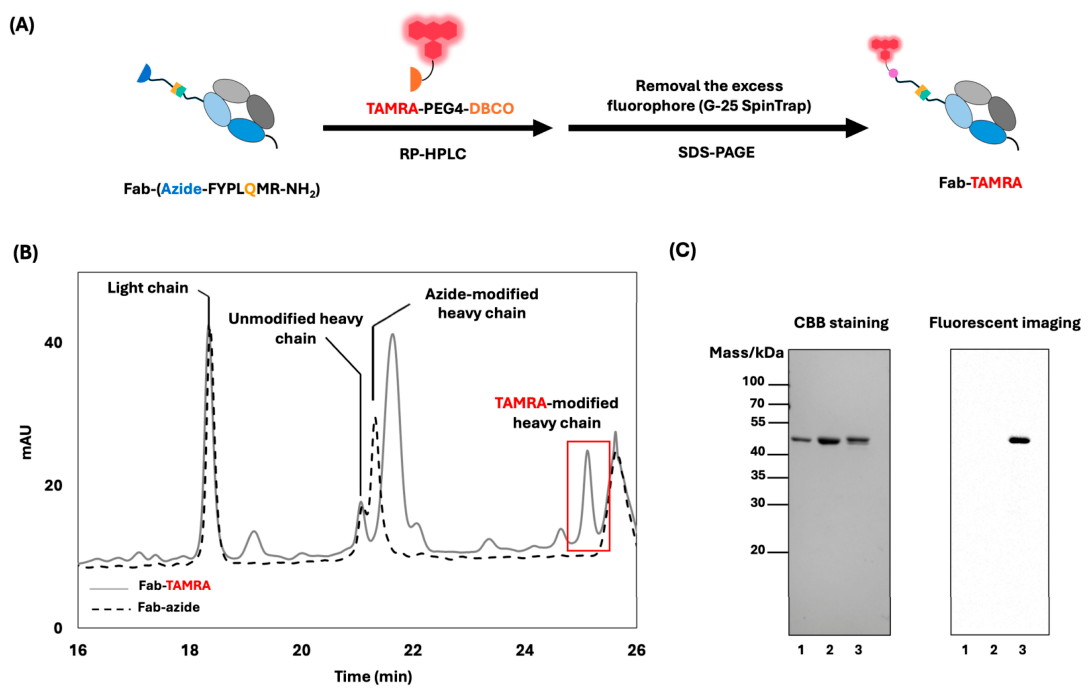
3.3. Preparing and Evaluation of a Fluorescent Fab Conjugate with a New Gln-Donor Substrate
4. Discussion
5. Conclusions
Supplementary Materials
Author Contributions
Funding
Data Availability Statement
Acknowledgments
Conflicts of Interest
Abbreviations
| Fab | Antigen-binding fragment of antibody |
| DBCO | Dibenzocyclooctyne |
| MTG | Microbial transglutaminase |
| EzMTG-pG | Engineered zymogen of MTG fused with protein G |
| HER2 | Human epidermal growth factor receptor 2 |
| SPAAC | Strain-promoted azide-alkyne cycloaddition |
References
- Xenaki, K.T.; Oliveira, S.; van Bergen En Henegouwen, P.M.P. Antibody or Antibody Fragments: Implications for Molecular Imaging and Targeted Therapy of Solid Tumors. Front. Immunol. 2017, 8, 1287. [Google Scholar] [CrossRef] [PubMed]
- Wissler, H.L.; Ehlerding, E.B.; Lyu, Z.; Zhao, Y.; Zhang, S.; Eshraghi, A.; Buuh, Z.Y.; McGuth, J.C.; Guan, Y.; Engle, J.W.; et al. Site-Specific Immuno-PET Tracer to Image PD-L1. Mol. Pharm. 2019, 16, 2028–2036. [Google Scholar]
- Kolossov, V.L.; Kanakaraju, K.; Sarkar, S.; Arogundade, O.H.; Kuo, C.-W.; Mara, N.R.; Smith, A.M. Quantum Dot-Fab′ Conjugates as Compact Immunolabels for Microtubule Imaging and Cell Classification. ACS Nano 2024, 18, 15084–15095. [Google Scholar] [CrossRef] [PubMed]
- Bai, X.; Liu, W.; Jin, S.; Zhao, W.; Xu, Y.; Zhou, Z.; Chen, S.; Pan, L. Facile Generation of Potent Bispecific Fab via Sortase A and Click Chemistry for Cancer Immunotherapy. Cancers 2021, 13, 4540. [Google Scholar] [CrossRef] [PubMed]
- Wei, E.; Bou-Nader, C.; Perry, M.L.; Fattah, R.; Zhang, J.; Stephen, H.L.; Bothra, A. S9.6 Antibody–Enzyme Conjugates for the Detection of DNA–RNA Hybrids. Bioconjugate Chem. 2023, 34, 834–844. [Google Scholar] [CrossRef]
- Singh, K.; Canakci, M.; Kanjilal, P.; Williams, N.; Shantalingam, S.; Osborne, B.A.; Thayumanavan, S. Evaluation of Cellular Targeting by Fab′ vs Full-Length Antibodies in Antibody–Nanoparticle Conjugates (ANCs) Using CD4 T-cells. Bioconjugate Chem. 2022, 33, 486–495. [Google Scholar] [CrossRef]
- Yamazaki, S.; Shikida, N.; Takahashi, K.; Matsuda, Y.; Inou, K.; Shimbo, K.; Mihara, Y. Lipoate-acid ligase a modification of native antibody: Synthesis and conjugation site analysis. Bioorg. Med. Chem. Lett. 2021, 51, 128360. [Google Scholar] [CrossRef]
- Yu, W.; Gillespie, K.P.; Chhay, B.; Svensson, A.-S.; Nygren, P.-Å.; Blair, I.A.; Yu, F.; Tsourkas, A. Efficient Labeling of Native Human IgG by Proximity-Based Sortase-Mediated Isopeptide Ligation. Bioconjugate Chem. 2021, 32, 1058–1066. [Google Scholar]
- Schneider, H.; Deweid, L.; Avrutina, O.; Kolmar, H. Recent progress in transglutaminase-mediated assembly of antibody-drug conjugates. Anal. Biochem. 2020, 595, 113615. [Google Scholar] [CrossRef] [PubMed]
- Dennler, P.; Chiotellis, A.; Fischer, E.; Brégeon, D.; Belmant, C.; Gauthier, L.; Lhospice, F.; Romagne, F.; Schibli, R. Transglutaminase-Based Chemo-Enzymatic Conjugation Approach Yields Homogeneous Antibody–Drug Conjugates. Bioconjugate Chem. 2014, 25, 569–578. [Google Scholar] [CrossRef]
- Jeger, S.; Zimmermann, K.; Blanc, A.; Grünberg, J.; Honer, M.; Hunziker, P.; Struthers, H.; Schibli, R. Site-Specific and Stoichiometric Modification of Antibodies by Bacterial Transglutaminase. Angew. Chem. Int. Ed. 2010, 49, 9995–9997. [Google Scholar] [CrossRef]
- Beck, S.; Schultze, J.; Räder, H.-J.; Holm, R.; Schinnerer, M.; Barz, M.; Koynov, K.; Zentel, R. Site-Specific DBCO Modification of DEC205 Antibody for Polymer Conjugation. Polymers 2018, 10, 141. [Google Scholar] [CrossRef] [PubMed]
- Wehrmüller, J.E.; Frei, J.C.; Hechler, T.; Kulke, M.; Pahl, A.; Béhé, M.; Schibli, R.; Spycher, P.R. Site-Specific Modification of Native IgGs with Flexible Drug-Load. ChemBioChem 2025, 26, e202400511. [Google Scholar] [CrossRef] [PubMed]
- Haque, M.; Forte, N.; Baker, J.R. Site-selective lysine conjugation methods and applications towards antibody–drug conjugates. Chem. Commun. 2021, 57, 10689. [Google Scholar] [CrossRef] [PubMed]
- Ohtsuka, T.; Sawa, A.; Kawabata, R.; Nio, N.; Motoki, M. Substrate Specificities of Microbial Transglutaminase for Primary Amines. J. Agric. Food Chem. 2000, 48, 6230–6233. [Google Scholar] [CrossRef] [PubMed]
- Gundersen, M.T.; Keillor, J.W.; Pelletier, J.N. Microbial transglutaminase displays broad acyl-acceptor substrate specificity. Appl. Microbiol. Biotechnol. 2014, 98, 219–230. [Google Scholar] [PubMed]
- Malešević, M.; Migge, A.; Hertel, T.C.; Pietzsch, M. A Fluorescence-Based Array Screen for Transglutaminase Substrates. ChemBioChem 2015, 16, 1169–1174. [Google Scholar] [CrossRef] [PubMed]
- Chio, T.I.; Demestichas, B.R.; Brems, S.L.; Tumey, L.N. Expanding the Versatility of Microbial Transglutaminase Using α-Effect Nucleophiles as Noncanonical Substrates. Angew. Chem. Int. Ed. 2020, 59, 13814–13820. [Google Scholar] [CrossRef] [PubMed]
- Spidel, J.L.; Vaessen, B.; Albone, E.F.; Cheng, X.; Verdi, A.; Kline, J.B. Site-Specific Conjugation to Native and Engineered Lysines in Human Immunoglobulins by Microbial Transglutaminase. Bioconjugate Chem. 2017, 28, 2471–2484. [Google Scholar] [CrossRef] [PubMed]
- Spycher, P.R.; Amann, C.A.; Wehrmüller, J.E.; Hurwitz, D.R.; Kreis, O.; Messmer, D.; Ritler, A.; Küchler, A.; Blanc, A.; Béhé, M.; et al. Dual, Site-Specific Modification of Antibodies by Using Solid-Phase Immobilized Microbial Transglutaminase. ChemBioChem 2017, 18, 1923–1927. [Google Scholar] [CrossRef] [PubMed]
- Sugimura, Y.; Yokoyama, K.; Nio, N.; Maki, M.; Hitomi, K. Identification of preferred substrate sequences of microbial transglutaminase from Streptomyces mobaraensis using a phage-displayed peptide library. Arch. Biochem. Biophys. 2008, 477, 379–383. [Google Scholar] [CrossRef] [PubMed]
- Ohtsuka, T.; Ota, M.; Nio, N.; Motoki, M. Comparison of Substrate Specificities of Transglutaminases Using Synthetic Peptides as Acyl Donors. Biosci. Biotechnol. Biochem. 2000, 64, 2608–2613. [Google Scholar] [CrossRef] [PubMed]
- Caporale, A.; Selis, F.; Sandomenico, A.; Jotti, G.S.; Tonon, G.; Ruvo, M. The LQSP tetrapeptide is a new highly efficient substrate of microbial transglutaminase for the site-specific derivatization of peptides and proteins. Biotechnol. J. 2015, 10, 154–161. [Google Scholar] [PubMed]
- Schneider, H.; Deweid, L.; Pirzer, T.; Yanakieva, D.; Englert, S.; Becker, B.; Avrutina, O.; Kolmar, H. Dextramabs: A Novel Format of Antibody-Drug Conjugates Featuring a Multivalent Polysaccharide Scaffold. ChemistryOpen 2019, 8, 354–357. [Google Scholar] [PubMed]
- Ebenig, A.; Juettner, N.E.; Deweid, L.; Avrutina, O.; Fuchsbauer, H.-L.; Kolmar, H. Efficient Site-Specific Antibody–Drug Conjugation by Engineering a Nature-Derived Recognition Tag for Microbial Transglutaminase. ChemBioChem 2019, 20, 2411–2419. [Google Scholar] [CrossRef] [PubMed]
- Fuchsbauer, H.-L. Approaching transglutaminase from Streptomyces bacteria over three decades. FEBS J. 2022, 289, 4680–4703. [Google Scholar] [PubMed]
- Nishioka, R.; Lida, R.; Minamihata, K.; Sato, R.; Kimura, M.; Kamiya, N. Transglutaminase-mediated proximity labeling of a specific Lys residue in a native IgG antibody. Chem. Commun. 2024, 60, 8545–8548. [Google Scholar] [CrossRef]
- Murozono, K.; Nishioka, R.; Kawaguchi, Y.; Kimura, M.; Kamiya, N. Proximity-based site-specific labeling of a native IgG Fab fragment by a fusion microbial transglutaminase-protein G variant. New Biotechnol. 2025, 90, 56–64. [Google Scholar] [CrossRef]
- Agustriana, E.; Murozono, K.; Nishioka, R.; Kawaguchi, Y.; Kimura, M.; Kamiya, N. Chemoenzymatic method for site-selective fluorophore conjugation of a native IgG Fab fragment. J. Biosci. Bioeng. 2026, 142, 38–44. [Google Scholar] [CrossRef] [PubMed]
- Sugimura, Y.; Hosono, M.; Wada, F.; Yoshimura, T.; Maki, M.; Hitomi, K. Screening for the Preferred Substrate Sequence of Transglutaminase Using a Phage-displayed Peptide Library. J. Biol. Chem. 2006, 281, 17699–17706. [Google Scholar] [CrossRef] [PubMed]
- Tominaga, J.; Kamiya, N.; Doi, S.; Ichinose, H.; Goto, M. An enzymatic strategy for site-specific immobilization of functional proteins using microbial transglutaminase. Enzym. Microb. Technol. 2004, 35, 613–618. [Google Scholar] [CrossRef]
- Dudchak, R.; Podolak, M.; Holota, S.; Szewczyk-Roszczenko, O.; Roszczenko, P.; Bielawska, A.; Lesyk, R.; Bielawski, K. Click chemistry in the synthesis of antibody-drug conjugates. Bioorg. Chem. 2024, 143, 106982. [Google Scholar] [CrossRef] [PubMed]
- Mills, B.J.; Kruger, T.; Bruncko, M.; Zhang, X.; Jameel, F. Effect of Linker-Drug Properties and Conjugation Site on the Physical Stability of ADCs. J. Pharm. Sci. 2020, 109, 1662–1672. [Google Scholar] [CrossRef] [PubMed]
- Dickgiesser, S.; Rieker, M.; Mueller-Pompalla, D.; Schröter, C.; Tonillo, J.; Warszawski, S.; Raab-Westphal, S.; Kühn, S.; Knehans, T.; Könning, D.; et al. Site-Specific Conjugation of Native Antibodies Using Engineered Microbial Transglutaminases. Bioconjugate Chem. 2020, 31, 1070–1076. [Google Scholar] [CrossRef] [PubMed]
- Wijdeven, M.A.; van Geel, R.; Hoogenboom, J.H.; Verkade, J.M.M.; Janssen, B.M.G.; Hurkmans, I.; De Bever, L.; Van Berkel, S.S.; Van Delft, F.L. Enzymatic glycan remodeling–metal free click (GlycoConnectTM) provides homogenous antibody-drug conjugates with improved stability and therapeutic index without sequence engineering. mAbs 2022, 14, e2078466. [Google Scholar] [CrossRef] [PubMed]
- Zimmerman, E.S.; Heibeck, T.H.; Gill, A.; Li, X.; Murray, C.J.; Madlansacay, M.R.; Tran, C.; Uter, N.T.; Yin, G.; Rivers, P.J.; et al. Production of Site-Specific Antibody–Drug Conjugates Using Optimized Non-Natural Amino Acids in a Cell-Free Expression System. Bioconjugate Chem. 2014, 25, 351–361. [Google Scholar] [CrossRef] [PubMed]
- Lee, J.-H.; Song, C.; Kim, D.-H.; Park, I.-H.; Lee, S.-G.; Lee, Y.-S.; Kim, B.-G. Glutamine (Q)-peptide screening for transglutaminase reaction using mRNA display. Biotechnol. Bioeng. 2013, 110, 353–362. [Google Scholar] [PubMed]
- van Geel, R.; Wijdeven, M.A.; Heesbeen, R.; Verkade, J.M.M.; Wasiel, A.A.; van Berkel, S.S.; van Delft, F.L. Chemoenzymatic Conjugation of Toxic Payloads to the Globally Conserved N-Glycan of Native mAbs Provides Homogeneous and Highly Efficacious Antibody–Drug Conjugates. Bioconjugate Chem. 2015, 26, 2233–2242. [Google Scholar] [CrossRef] [PubMed]
- Luo, H.; Hernandez, R.; Hong, H.; Graves, S.A.; Yang, Y.; England, C.G.; Theuer, C.P.; Nickles, R.J.; Cai, W. Noninvasive brain cancer imaging with a bispecific antibody fragment, generated via click chemistry. Proc. Natl. Acad. Sci. USA 2015, 112, 12806–12811. [Google Scholar] [CrossRef] [PubMed]
- Baalmann, M.; Neises, L.; Bitsch, S.; Schneider, H.; Deweid, L.; Werther, P.; Ilkenhans, N.; Wolfring, M.; Ziegler, M.J.; Wilhelm, J.; et al. A Bioorthogonal Click Chemistry Toolbox for Targeted Synthesis of Branched and Well-Defined Protein–Protein Conjugates. Angew. Chem. Int. Ed. 2020, 59, 12885–12893. [Google Scholar] [CrossRef] [PubMed]
- van Zundert, I.; Bravo, M.; Deschaume, O.; Cybulski, P.; Bartic, C.; Hofkens, J.; Uji-i, H.; Fortuni, B.; Rocha, S. Versatile and Robust Method for Antibody Conjugation to Nanoparticles with High Targeting Efficiency. Pharmaceutics 2021, 13, 2153. [Google Scholar] [CrossRef] [PubMed]


Disclaimer/Publisher’s Note: The statements, opinions and data contained in all publications are solely those of the individual author(s) and contributor(s) and not of MDPI and/or the editor(s). MDPI and/or the editor(s) disclaim responsibility for any injury to people or property resulting from any ideas, methods, instructions or products referred to in the content. |
© 2026 by the authors. Licensee MDPI, Basel, Switzerland. This article is an open access article distributed under the terms and conditions of the Creative Commons Attribution (CC BY) license.
Share and Cite
Agustriana, E.; Murozono, K.; Minamihata, K.; Nishioka, R.; Kamiya, N. Phage-Selected Clickable Gln-Donor Peptide for Lys-Selective Fab Labeling Using Engineered Microbial Transglutaminase. Antibodies 2026, 15, 56. https://doi.org/10.3390/antib15040056
Agustriana E, Murozono K, Minamihata K, Nishioka R, Kamiya N. Phage-Selected Clickable Gln-Donor Peptide for Lys-Selective Fab Labeling Using Engineered Microbial Transglutaminase. Antibodies. 2026; 15(4):56. https://doi.org/10.3390/antib15040056
Chicago/Turabian StyleAgustriana, Eva, Koki Murozono, Kosuke Minamihata, Riko Nishioka, and Noriho Kamiya. 2026. "Phage-Selected Clickable Gln-Donor Peptide for Lys-Selective Fab Labeling Using Engineered Microbial Transglutaminase" Antibodies 15, no. 4: 56. https://doi.org/10.3390/antib15040056
APA StyleAgustriana, E., Murozono, K., Minamihata, K., Nishioka, R., & Kamiya, N. (2026). Phage-Selected Clickable Gln-Donor Peptide for Lys-Selective Fab Labeling Using Engineered Microbial Transglutaminase. Antibodies, 15(4), 56. https://doi.org/10.3390/antib15040056