Article

Glacier and Snow Cover Dynamics and Their Affecting Factors on the Pamir Plateau Section of the China–Pakistan Economic Corridor

1
College of Geographic Science and Tourism, Xinjiang Normal University, Urumqi 830054, China
2
Xinjiang Arid Area Lake Environment and Resources Laboratory, Key Laboratory of Xinjiang Uygur Autonomous Region, Urumqi 830054, China
3
Xinjiang Key Laboratory of Water Cycle and Utilization in Arid Zone, Urumqi 830011, China
4
State Key Laboratory of Desert and Oasis Ecology, Key Laboratory of Ecological Safety and Sustainable Development in Arid Lands, Xinjiang Institute of Ecology and Geography, Chinese Academy of Sciences, Urumqi 830011, China
5
State Key Laboratory of Lithospheric and Environmental Coevolution, Institute of Geology and Geophysics, Chinese Academy of Sciences, Beijing 100029, China
*
Authors to whom correspondence should be addressed.
Land 2025, 14(4), 880; https://doi.org/10.3390/land14040880
Submission received: 4 March 2025 / Revised: 11 April 2025 / Accepted: 15 April 2025 / Published: 16 April 2025

Abstract

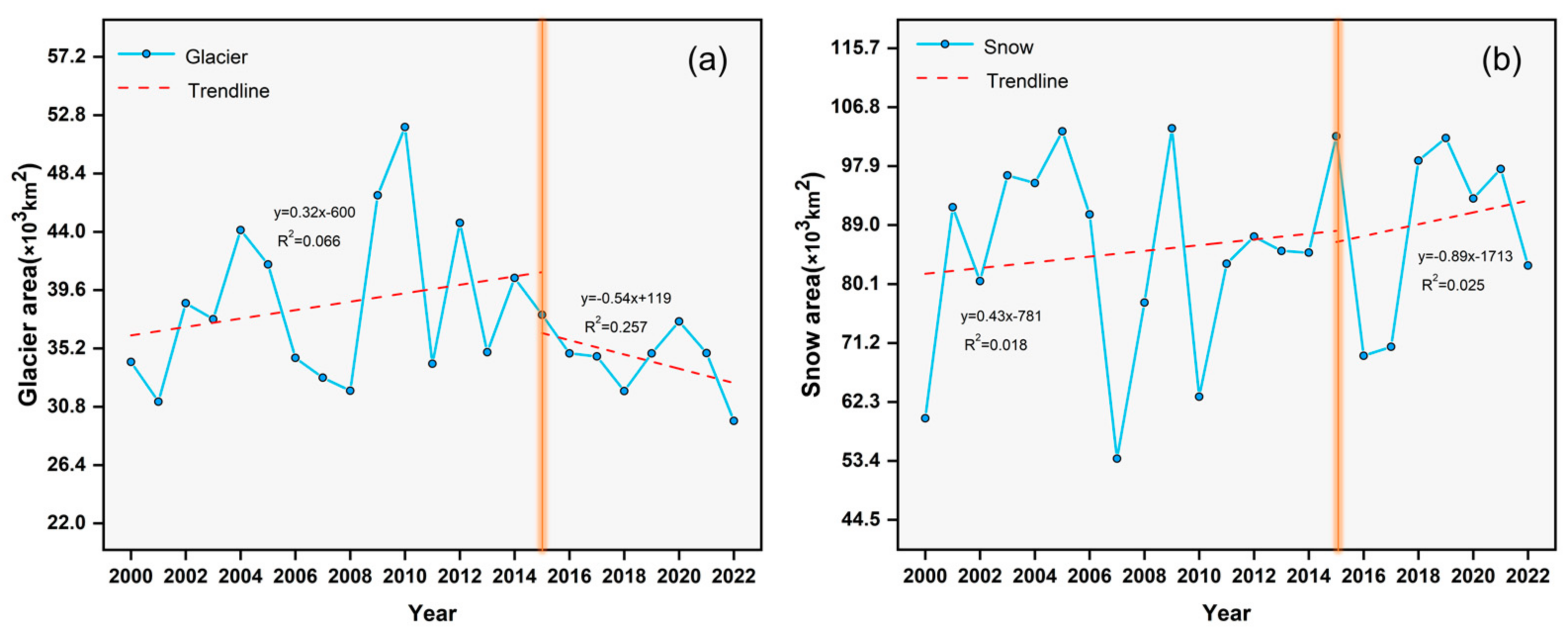
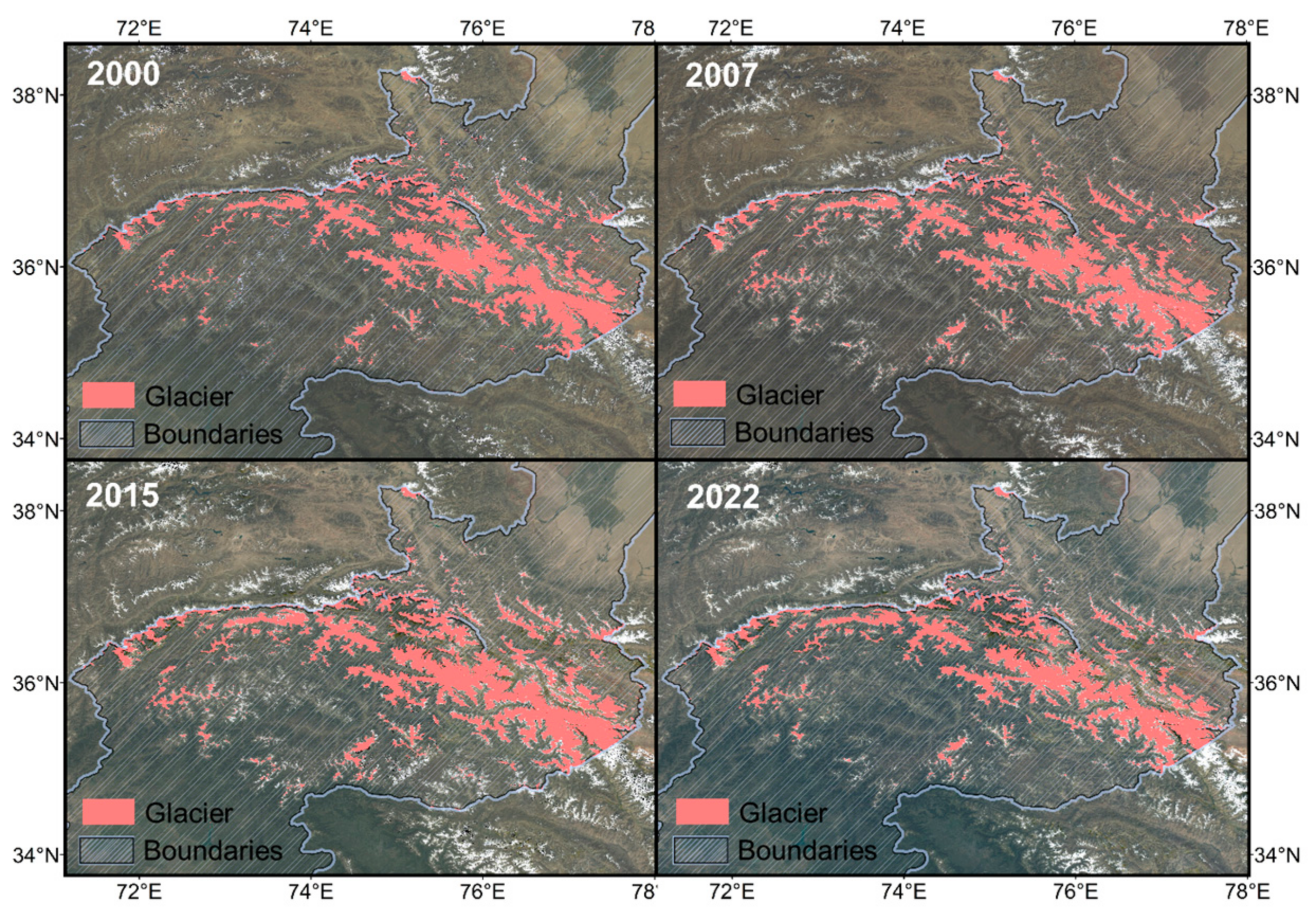
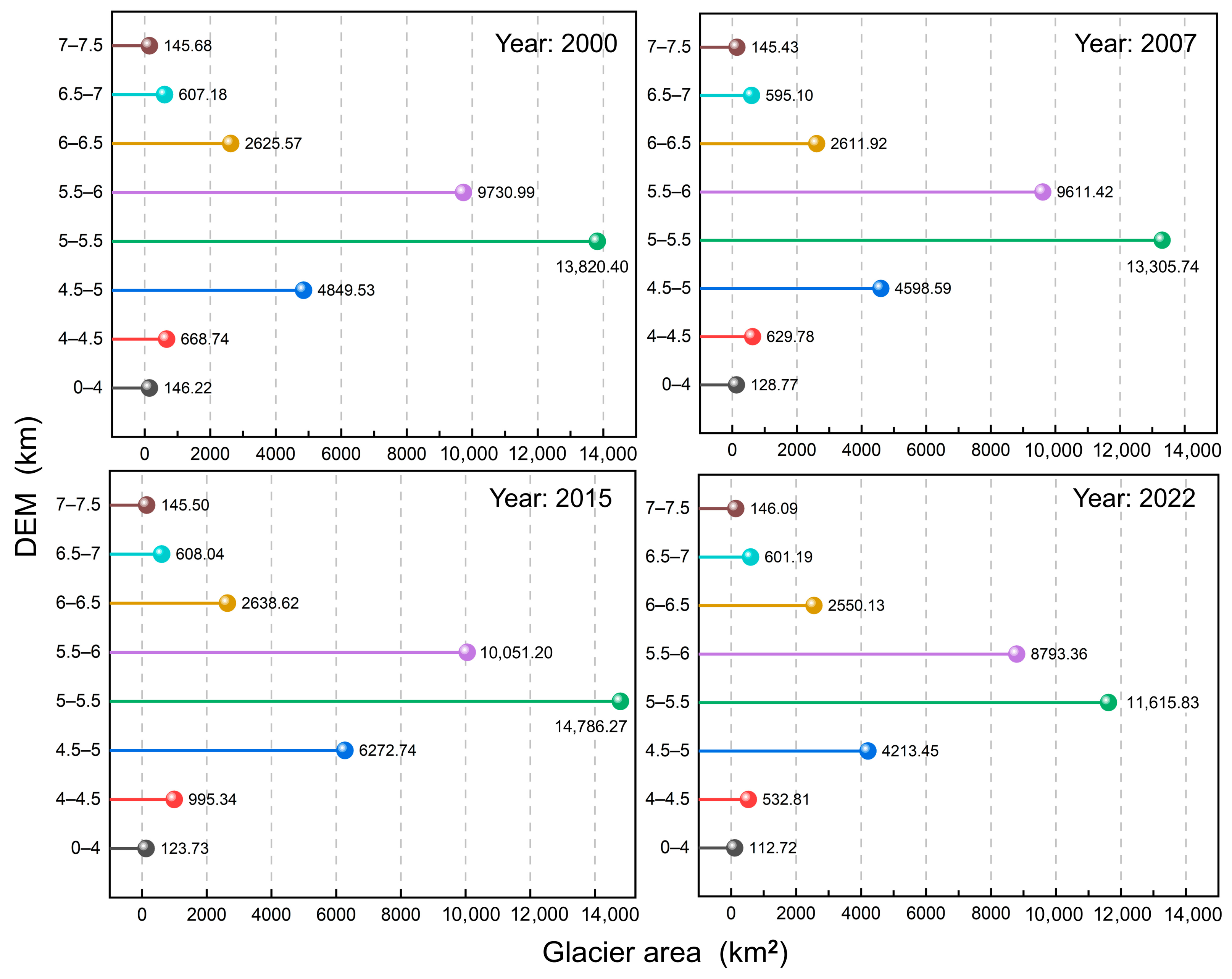
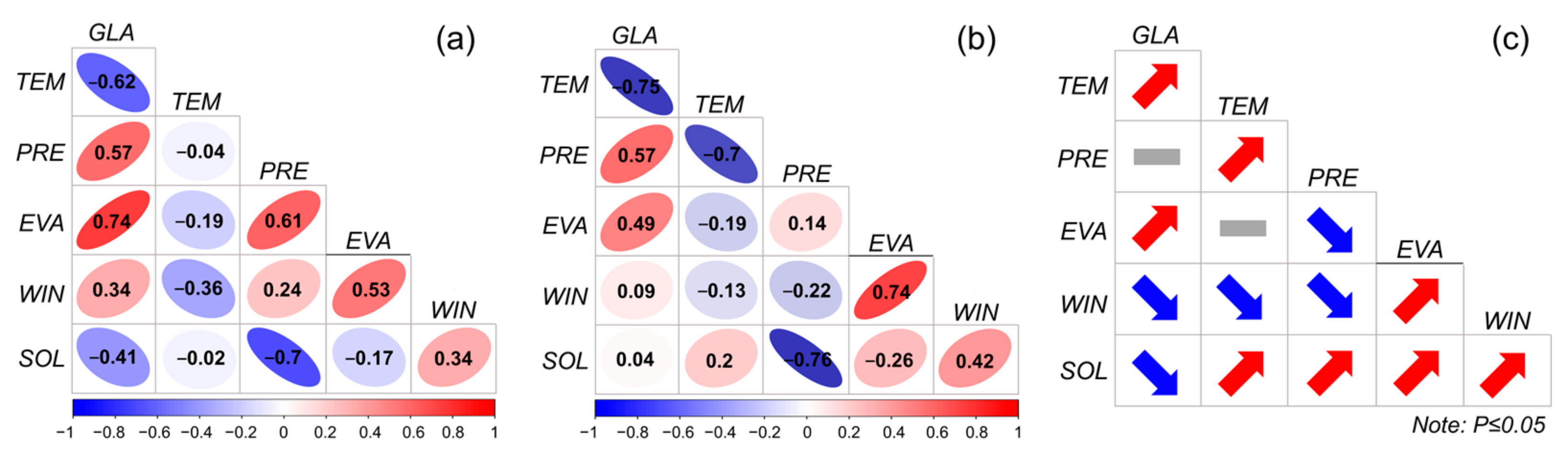
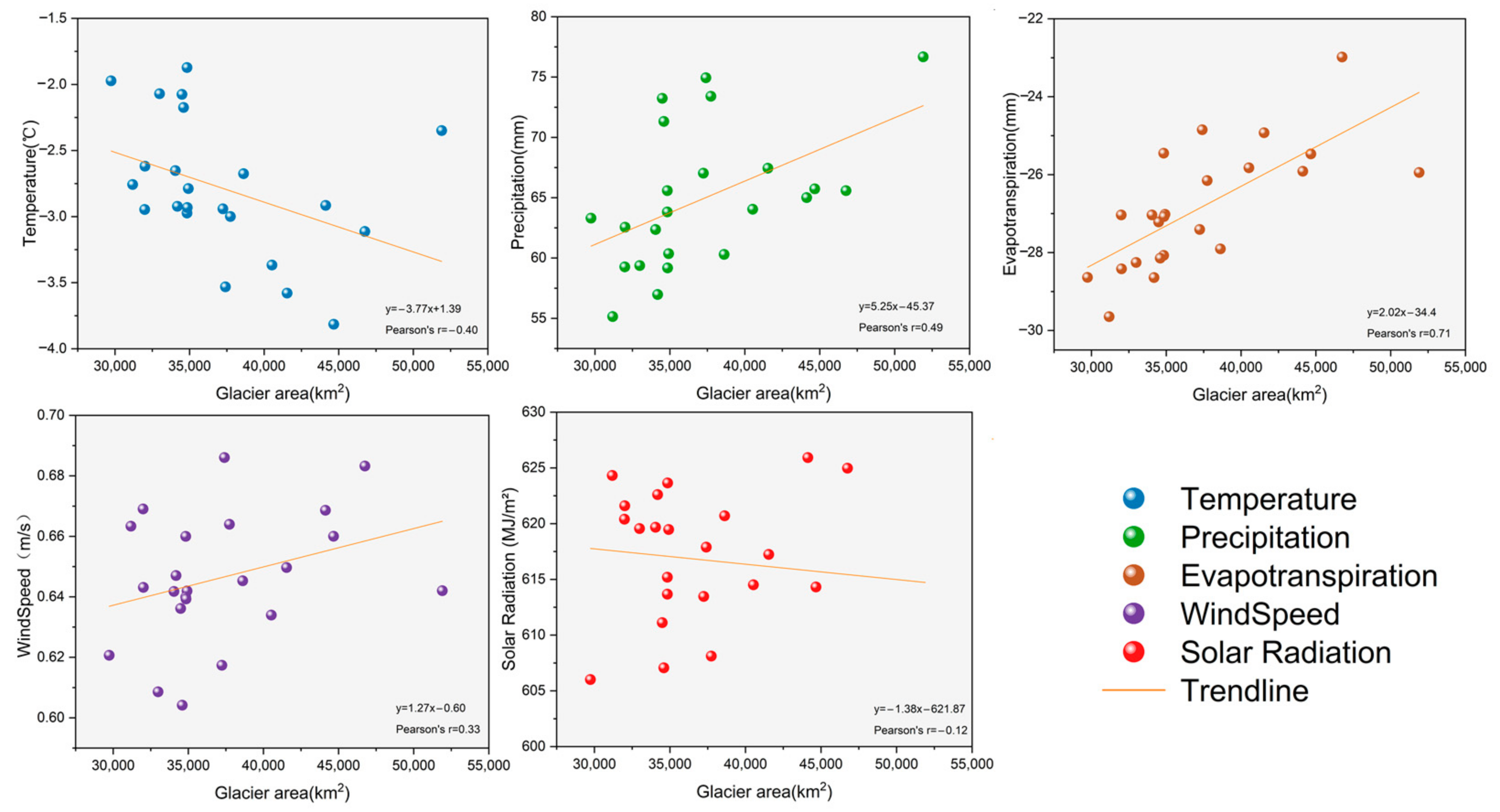
The China–Pakistan economic corridor (CPEC) traverses the ecologically fragile and geologically hazardous Pamir plateau (PP), where glacier dynamics are critical for water resources and ecological stability. This study analyzes glacier changes in the PP segment of CPEC from 2000 to 2022 using Google Earth engine (GEE) and an improved glacier and snow cover extraction method. Results show that before CPEC’s initiation (2000–2014), glacier area fluctuated with an annual increase of 422 km2, peaking in 2010. After 2015, glacier area declined continuously at 1000 km2 per year, reaching a minimum in 2022. Snow cover also declined, especially post-2015. Glacier retreat was most severe in low-altitude regions, particularly in the eastern and southern PP, while higher altitudes (5000–7000 m) exhibited slower retreat. Climatic analysis reveals a strengthening negative correlation between temperature, evapotranspiration, and glacier area, indicating accelerated retreat due to global warming. These findings provide scientific support for ecological protection, water resource management, and geological hazard mitigation along CPEC.
Keywords: China–Pakistan economic corridor; Pamir plateau; glacier and snow cover dynamics; climate change; geological hazards China–Pakistan economic corridor; Pamir plateau; glacier and snow cover dynamics; climate change; geological hazards