1. Introduction
With the development of society and the economy, urbanization has continued to spread into rural areas, replacing traditional agricultural living spaces with highly intensive production and lifestyle patterns. The gradual encroachment of traditional agricultural land and rural settlements within irrigation districts has resulted in several problems, including the gradual loss of irrigation districts’ traditional characteristics and cultural heritage, as well as the destruction of landscape characteristics [
1]. Against this backdrop, China has put forth the Rural Revitalization Strategy, which opens up new avenues for rural development by integrating the management of ecological and environmental problems in rural areas, the conservation of traditional landscape elements, and the continuation of agricultural civilization [
2]. As the principal conduits for rural water management and land cultivation, irrigation district landscapes are essential to preserving rural landscapes, safeguarding regional heritage, and passing on unique agricultural civilization [
3,
4]. One prominent example of Chengdu’s Rural Revitalization Strategy in action is the Dujiangyan Essence Irrigation District. As a World Natural Heritage Site, World Cultural Heritage Site, and World Irrigation Engineering Heritage Site, it has several qualities that make it valuable [
5].
The three aspects of landscapes are natural, social, and perceptual, according to the “Landscape Character Assessment Guidance for England and Scotland”, one of the initiatives funded by the European Landscape Convention [
6]. It sees landscapes as a particular setting for human existence that includes both ecological and productive areas. As a result, landscape characteristics are a broad notion that exhibits diversity and complexity by including both natural and human elements. In terms of conceptual definitions, different researchers and research teams have proposed varying interpretations of the term “landscape characteristics.” While some researchers define landscape characteristics as geological strata or landscape pattern indices [
7], more recent research defines landscape characteristics as the totality of natural and human elements that were formed in a region over a given time period and that are spatially manifested in both natural and human environments [
8]. In terms of research perspective, related studies either adopt a typological approach, using a multi-scale classification system of “national-regional-local” to explore the patterns of landscape type differentiation under specific time slices [
9], or focus on the evolutionary patterns and driving mechanisms of landscape patterns in typical landform units such as plain villages, plateau hill areas, and island villages from a genesis perspective [
10]. In terms of research content, some scholars have developed indicator systems for landscape characteristics in traditional settlements and scenic areas, drawing on the British Landscape Character Assessment (LCA), emphasizing rural landscape diversity and the evaluation of landscape resources [
11,
12]. Some researchers have incorporated humanistic values and public engagement into the assessment of LCA and landscape management [
13]. Overall, research has transitioned from a conventional static viewpoint to a dynamic interrelation of pattern-process-effect, from a singular material form to a multi-dimensional valuation of “nature-culture-society”, and from the segregation of regional elements to comprehensive spatial coordination. The research presently encompasses several topics and materials, featuring multiple perspectives, and has made substantial advancements in practical applications. Nonetheless, limits persist in recognizing regional landscape characteristics within irrigation districts, and a systematic framework for identifying landscape characteristics indicative of water conservancy infrastructure, such as channel distribution, has yet to be developed. Specifically, empirical investigation into the dynamic interplay between the evolution of landscape characteristics and policy execution necessitates additional examination. This may result in a deficient and erroneous comprehension and evaluation of landscape characteristics, constraining the scientific rigor and accuracy of sustainable landscape management in irrigation districts, thus obstructing the establishment of landscape development principles and associated strategies. This study delineates landscape characteristics as the comprehensive natural and human elements that emerge within a specific region during a particular period, exhibiting spatial manifestation, uniqueness, and representativeness, informed by contemporary insights into rural landscapes and related theoretical research. These encompass topography, hydrology, land utilization, architecture, and historical and cultural legacy, along with various other natural and human elements.
Previous research has primarily utilized methods such as local geomancy qualitative analysis and Landscape Character Assessment (LCA) to summarize the characteristics of rural landscape patterns [
14]. Or it has integrated geographic information analysis techniques to discern landscape elements across various scales and perform spatiotemporal simulations. The integration of historical geographic information system big data and service platforms to analyze landscape characteristic evolution is now feasible through the implementation of geographic information map translation technology [
15]. Furthermore, the coupling, overlay, and clustering of multi-level landscape elements have been facilitated by methods that are based on machine learning algorithms [
16], which have opened up new opportunities for the examination of rural landscape characteristics at the irrigation district scale.
The term “irrigation structure”, as defined by the International Commission on Irrigation and Drainage (ICID), denotes “historical, traditional, and distinctive water conservancy (including drainage) engineering projects developed over an extended period by a nation or society [
17].” In China, shaped by the irregular precipitation of the monsoon climate and the complex mountainous-basin topography, ancient inhabitants established a conducive living environment through techniques such as river damming and canal excavation, ultimately resulting in numerous stable, locally anchored irrigation district landscapes based on irrigation [
18]. Historically, studies on irrigation districts have predominantly been undertaken in the fields of hydraulic engineering and agriculture, with the former concentrating on hydraulic structures and water resource distribution, while the latter frequently investigates agricultural engineering and agricultural economics in relation to irrigation districts. Recent studies have examined landscape systems primarily influenced by aquatic environments, as well as examinations of irrigation districts focused on agricultural water conservation, including polders and weirs, from a landscape architecture viewpoint. The Dujiangyan Irrigation District, recognized as a global cultural heritage monument, has garnered significant interest from scholars owing to its esteemed water conservancy engineering and plentiful water resources. Current research has predominantly concentrated on irrigation water systems, highlighting the administration, irrigation techniques, water quality evaluation, and interdisciplinary references [
19]. It has addressed subjects like hydraulic engineering, resource allocation, historical significance, ecological importance, and landscape design [
20]. Related research has examined the evolutionary patterns of human settlement ecological knowledge in the Dujiangyan Irrigation District [
21]. Nevertheless, there has been scant focus on the identification and evolution of landscape characteristics in the Dujiangyan Irrigation District from a multi-dimensional perspective, and the landscape of this region has yet to be designated as a separate subject of research. The examination of irrigation district landscapes exemplifies the profound integration of human intervention and natural ecology, enhancing landscape characteristics theory while offering a scientific foundation for the sustainable development of irrigation districts, the preservation of water heritage, and rural landscapes.
This study focuses on the Dujiangyan Essence Irrigation District, employing a framework of “landscape information collection—landscape information processing—landscape information output”, and integrates it with a landscape characteristics evaluation system to enhance research methodologies and systematically examine the evolutionary characteristics of the regional landscape within the irrigation district. Initially, significant characteristics characterizing the landscape aspects of the study area were selected through a literature review and field research. The study employed GIS, ENVI, and additional technologies alongside the landscape characteristics evaluation system to detect multi-temporal landscape elements within the study area. This facilitated a systematic examination of the dynamic progression of landscape characteristics and predominant characteristics within the irrigation district. The study aims to clearly evaluate how landscape characteristics have changed in the Dujiangyan Essence Irrigation District and to find out the dominant factors and changes caused by relevant policies. The results offer scientific evidence for the preservation of regional landscapes and the enhancement of rural living conditions within the irrigation district.
2. Methodology
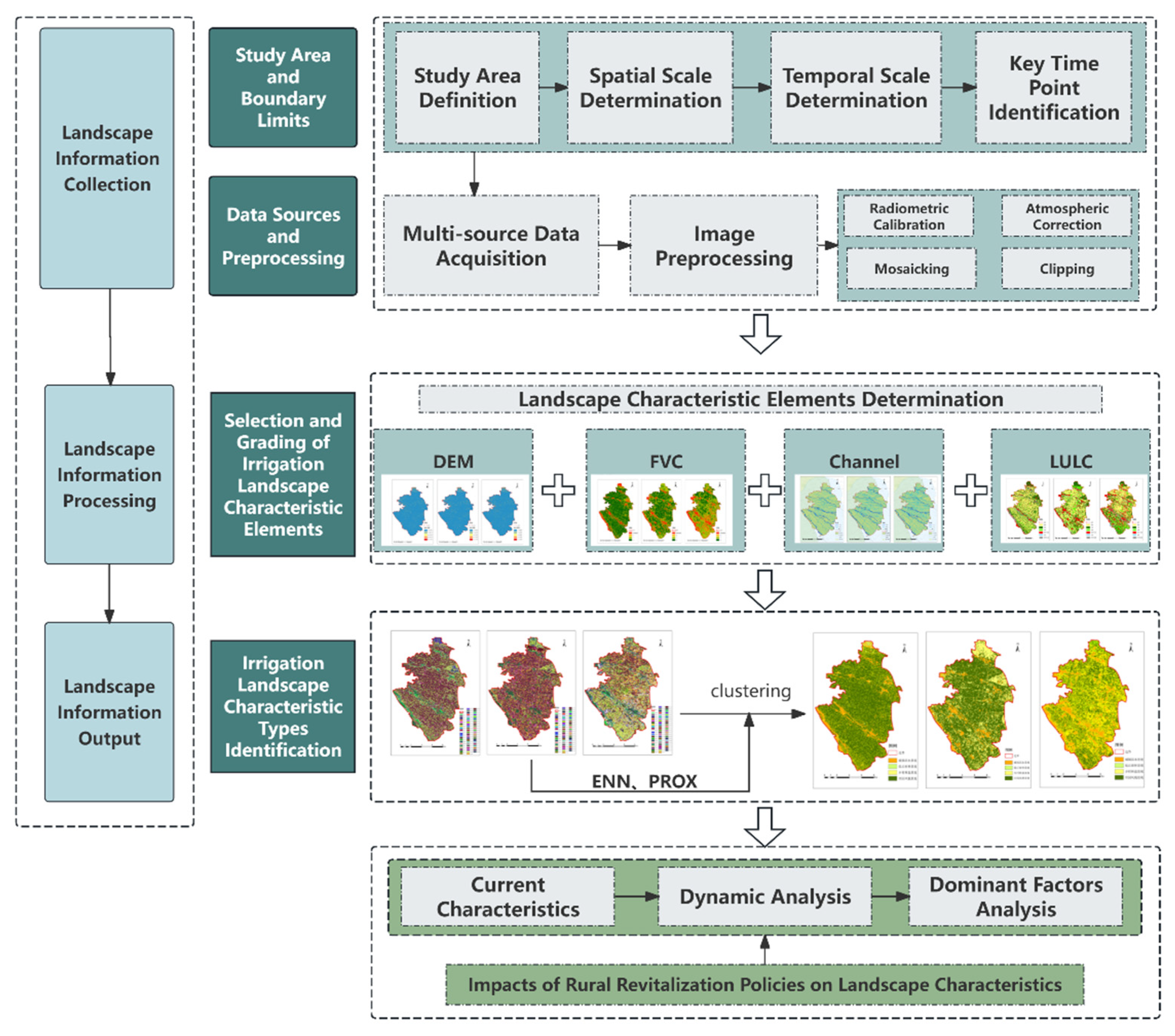
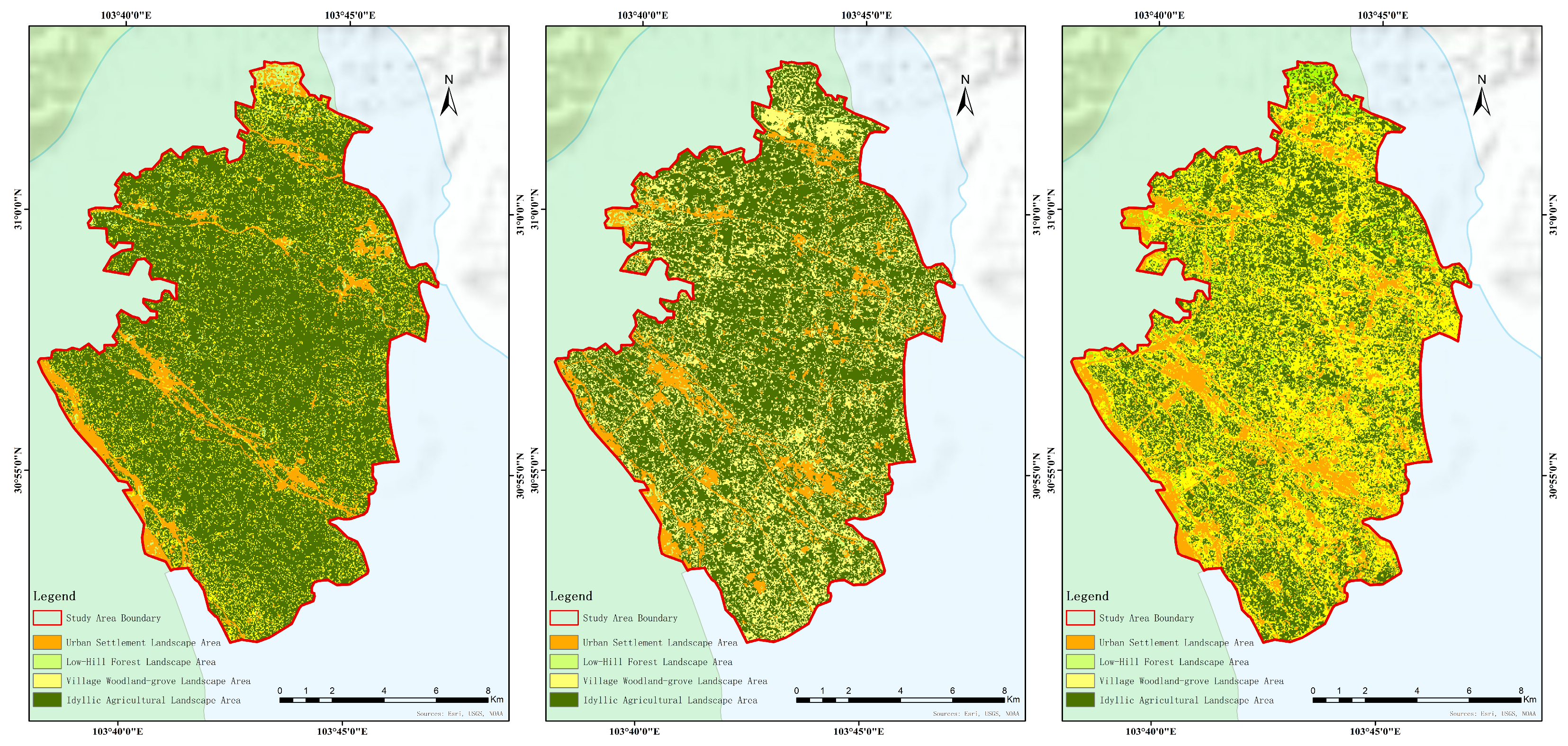
Figure 1 illustrates the research framework. The study uses concepts and theories from LCA, as well as the connotations and mechanisms of landscape pattern evolution, to find different types of landscape characteristics and to accurately analyze the evolution of landscape characteristics in the Dujiangyan Essence Irrigation District. We established the study area boundaries and time slices through data collection and processing, which facilitated mapping and analysis using administrative boundary data. Then, bibliometric approaches and frequency statistics were employed to determine the aspects of landscape characteristics characterization in the study area. Subsequently, GIS, Fragstats, ENVI, and other technological tools were utilized to perform overlay analysis, quantification, and clustering of the landscape characteristics characterization elements in the study area for the years 2000, 2010, and 2020, combined with field surveys to identify landscape characteristic type maps. Finally, analyzing the identification results shows how various landscape characteristic types evolve over time, as well as the primary Land Use and Land Cover Change (LULC) that influences these changes. We examine how policy implementation influences the development of regional landscape characteristics in the irrigation district. The following sections will detail the methods and implementation steps for each phase.
2.1. Study Area and Boundary Limits
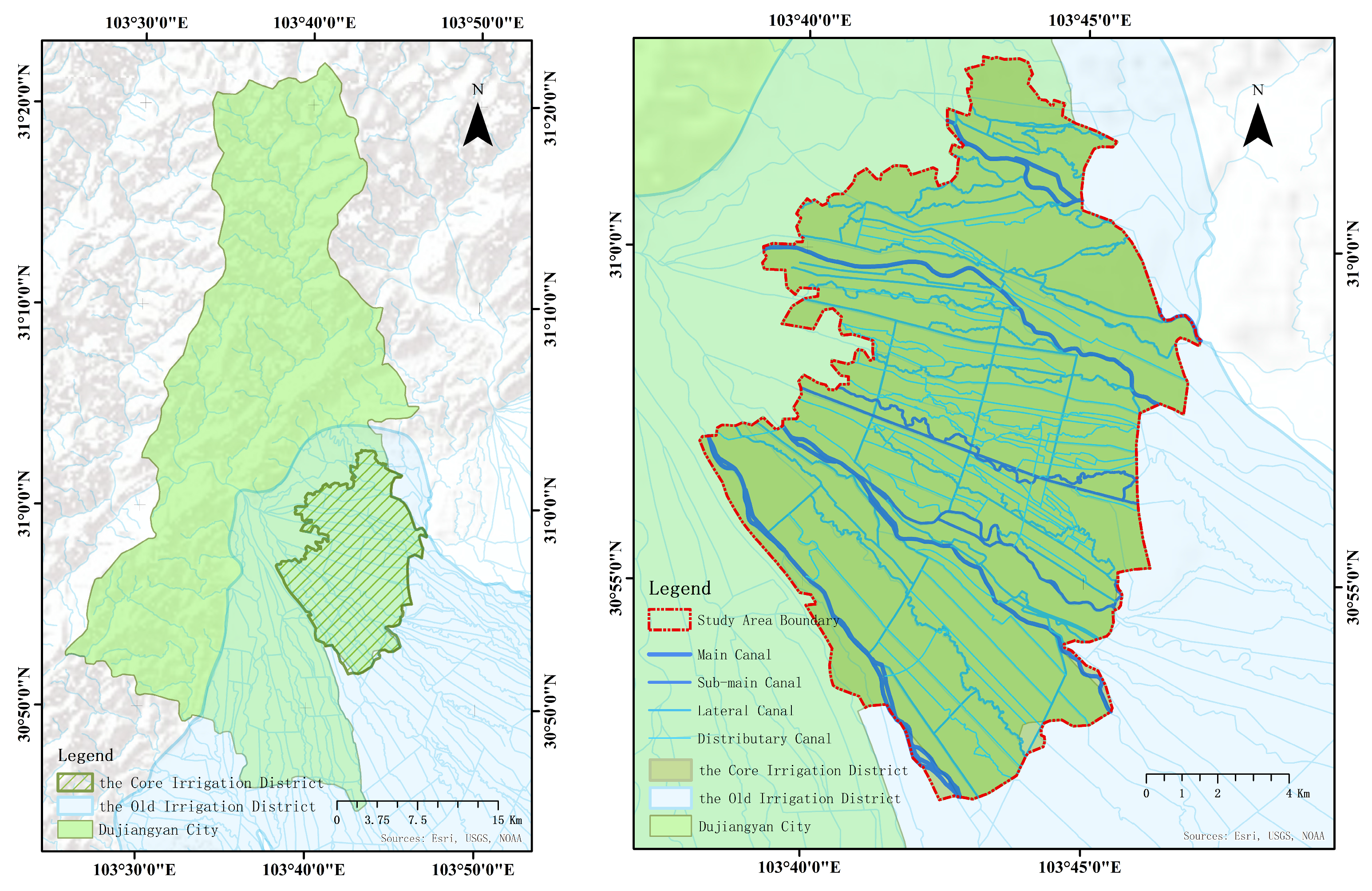
The study area is delineated according to the limits of the Dujiangyan Essence Irrigation District as specified in “the Dujiangyan Essence Irrigation District Urban-Rural Integration Master Plan.” The landscape characteristics of the Irrigation District are the focus of the research subject. The study area (103.25° E~105.46° E, 29.26° N~31.28° N) is located in the middle region of the Chengdu Plain. It has four townships: Chongyi Town, Tianma Town, Xujia Town, and Juyuan Town, covering a total area of approximately 161.36 km
2 (
Figure 2). The analysis classifies the study area as a regional-scale area. The area is intersected by multiple rivers, with the Min River and its tributaries acting as the principal sources of irrigation water. The area is mostly agricultural, featuring extensive arable land that predominantly produces rice, wheat, corn, and rapeseed. The study area is a precursor of Chengdu’s agricultural civilization, fulfilling many roles in habitation, production, and ecology for Dujiangyan City. The area embodies the essence of China’s self-sustaining irrigation systems and serves as a pivotal implementation domain for Chengdu’s rural regeneration policy, holding considerable research and development significance.
2.2. Data Sources and Preprocessing
The study selected remote sensing image data from the study area for the years 2000, 2010, and 2020. Because the data for these years is complete, it enables an assessment of the impact of different development stages and policy implementations on landscape characteristics. The year 2000 serves as a baseline, representing the pre-policy landscape condition prior to the full implementation of major national urban-rural integration initiatives. The 2010 time slice corresponds to the initial completion phase of post-Wenchuan earthquake reconstruction, capturing landscape reorganization following a major natural disaster and subsequent recovery interventions. The 2020 data reflects the early-stage outcomes of recent planning directives, notably the Dujiangyan Essence Irrigation District Regional Plan promulgated in 2019, allowing assessment of contemporary rural revitalization strategies. The data were obtained from the Resource and Environmental Science and Data Center (RESDC), Chinese Academy of Sciences, with a spatial resolution of 30 m, including Landsat-4 TM, Landsat-7 TM, and Landsat-8 OLI images. These images were selected from February to March to ensure the accuracy and comparability of classification results, with cloud cover below 10%. The boundaries of the study area were obtained from the Dujiangyan City Government. The digital elevation model (DEM) data for the study area were obtained from RESDC, with a spatial resolution of 30 m. Historical satellite imagery data for the study area were obtained from Shuijingzhu, a platform known for its publicly available and accurate data, widely used in related research. These data were utilized to extract key elements such as elevation, topographic relief, slope, Fractional Vegetation Coverage (FVC), and canal distribution, thereby accurately reflecting the landscape characteristics of the Dujiangyan Essence Irrigation District. The image preparation steps, including cropping, atmospheric correction, mosaicking, and radiometric calibration, were done using the remote sensing processing program ENVI 5.3. To ensure a Kappa coefficient greater than 0.9 and thus data accuracy, ArcGIS 10.4 software was utilized for manual visual interpretation, cropping, and reclassification.
2.3. Selection and Grading of Irrigation Landscape Characteristic Elements
An initial research framework for the characterization of landscape characteristics was established through the review of LCA case studies and both domestic and international research [
22]. The framework was subsequently enhanced via frequency analysis and correlation analysis of landscape characteristics within the study area to improve the characterization system. The landscape characteristics classification system includes two dimensions—natural and social—and four elements: topography and landform, FVC, hydrological characteristics, and LULC (
Table 1). This classification system enables a thorough and multidimensional identification and interpretation of landscape characteristics in the study area by recognizing information pertaining to both natural and social aspects.
In terms of the topographic factor, the study followed the classification criteria and maximum elevation difference method proposed by Li et al. (2008) [
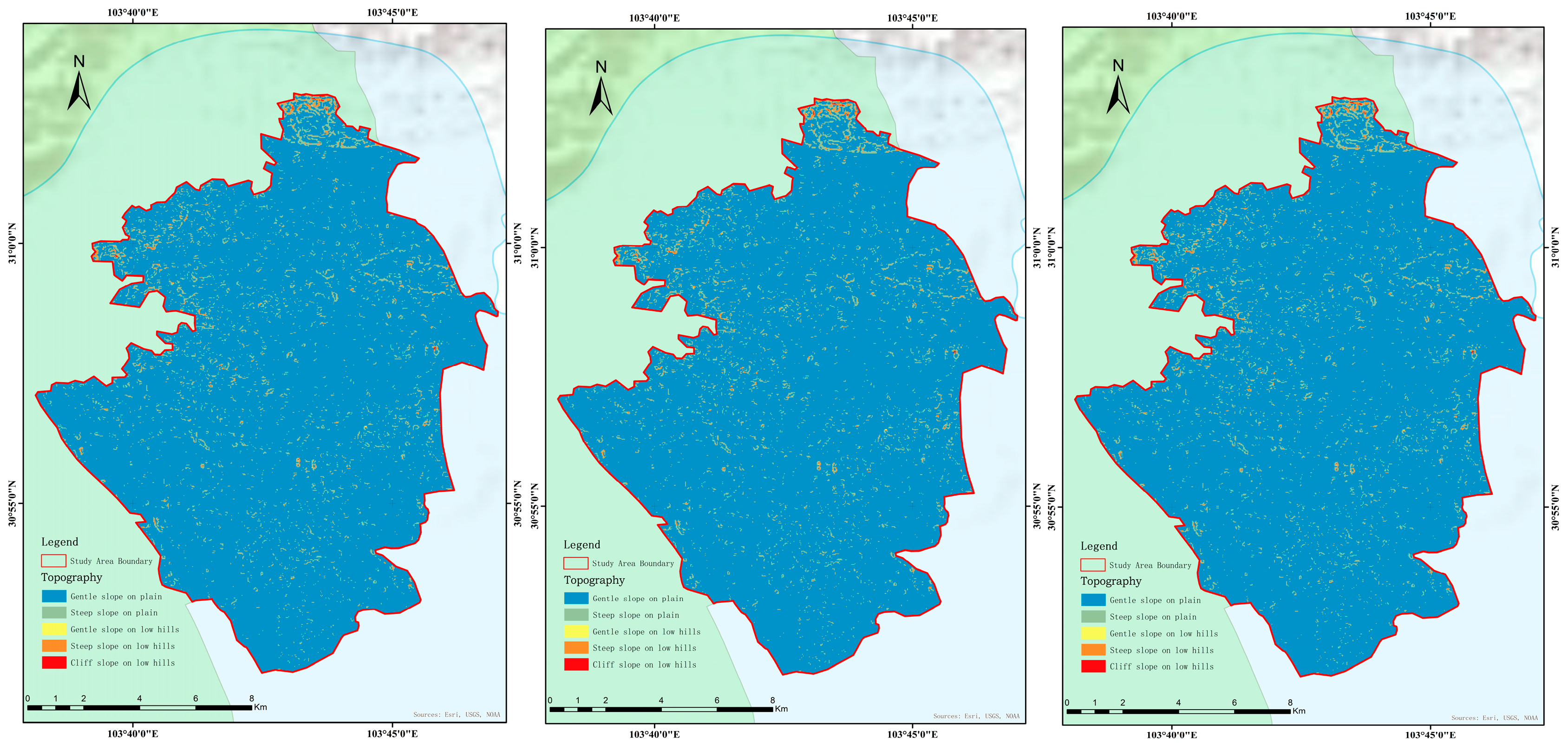
23], using ArcGIS 10.4 to sort out elevation, topographic relief, and slope. Because of the high correlation between elevation, undulation, and slope, to reduce the cumulative impact of these three indicators, ArcGIS 10.4 was used to combine the elevation, topographic relief, and slope data from 2000, 2010, and 2020, creating maps of the terrain and topography (
Figure 3). The terrain and topography were categorized into five classifications: gentle slope on plain, steep slope on plain, gentle slope on low hills, steep slope on low hills, and cliff slope on low hills.
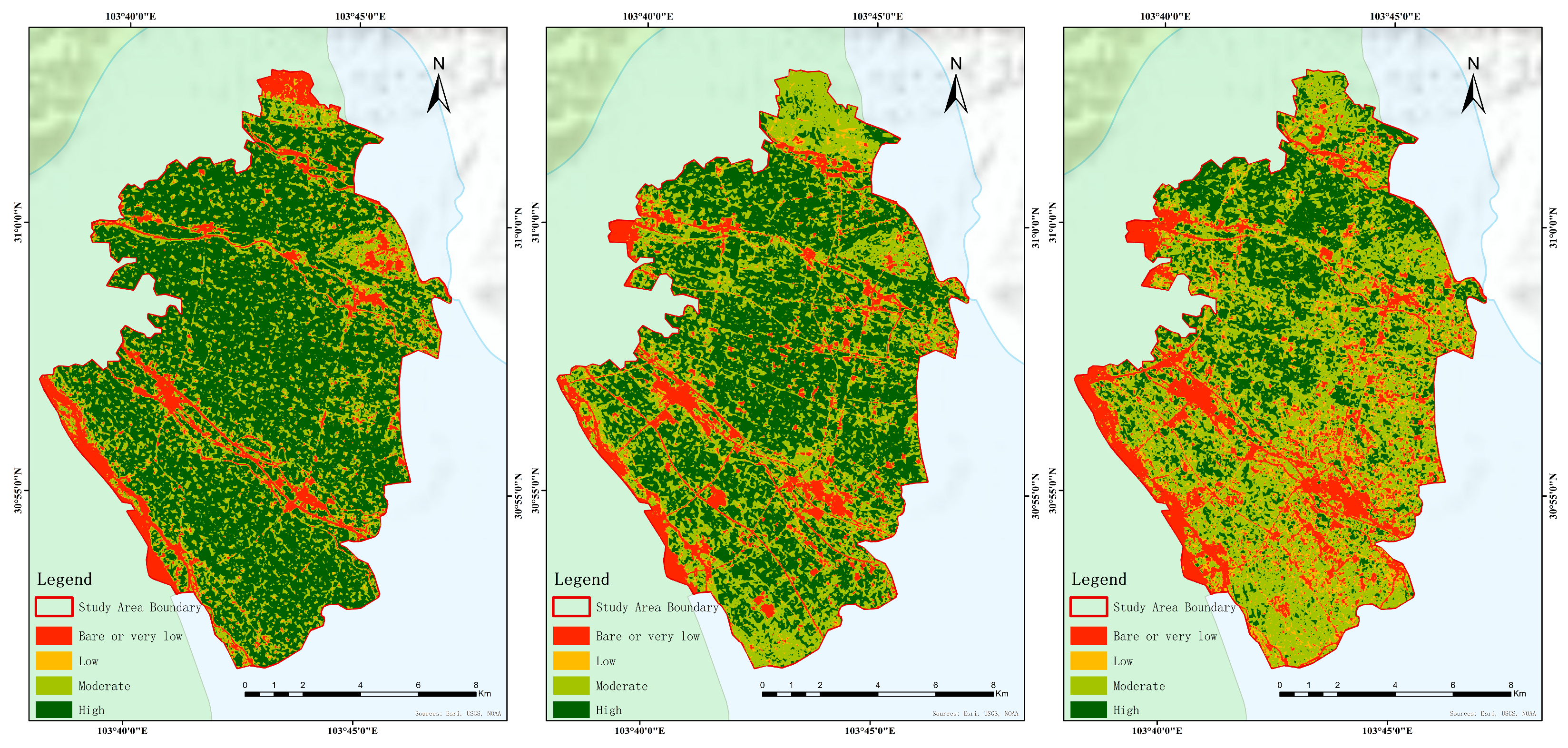
In terms of the FVC factor, FVC can be determined using the Normalized Difference Vegetation Index (NDVI). The NDVI contains 90% of the information about vegetation and is very sensitive to changes in how plants grow and how much area they cover [
24,
25], which is why it is widely used for monitoring vegetation [
26]. The subsequent formulas pertain to NDVI (1) and FVC (2):
In the above equation, the NIR (near-infrared band) in Landsat TM/ETM+ imagery is represented by Band 4, with a wavelength range of 0.76–0.90 μm, while the RED (red band) is represented by Band 3, with a wavelength range of 0.63–0.69 μm. In Landsat OLI imagery, the NIR corresponds to Band 5, with a wavelength range of 0.85–0.88 μm, and the RED corresponds to Band 4, with a wavelength range of 0.64–0.67 μm.
In the above equation, NDVI denotes the NDVI value of pixels with vegetation coverage, while NDVI signifies the NDVI value of pixels without vegetation coverage.
Based on the above calculation results, the ArcGIS 10.4 reclassification function was employed to categorize the vegetation coverage data for the study area in 2000, 2010, and 2020 into gradients (
Figure 4).
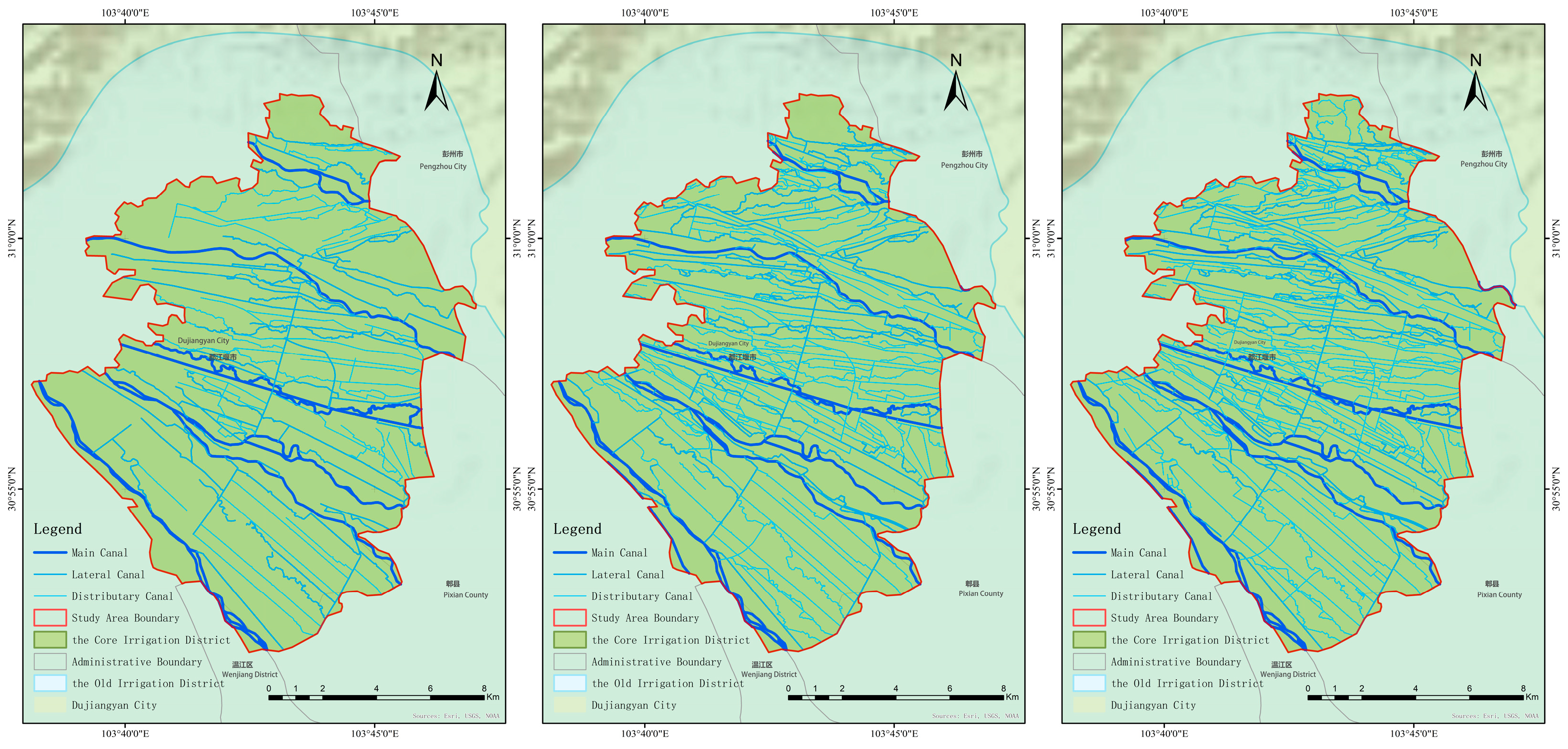
In terms of the hydrological features factor, the Dujiangyan Essence Irrigation District Channel System denotes a comprehensive water conveyance engineering network consisting of rivers, canals, irrigation channels, and drainage ditches. It is categorized into four tiers according to water utilization and irrigation expanse: main canals, lateral canals, distributary canals, and agricultural canals. These channels demonstrate stability, but the smaller channels beneath agricultural canals (minor canals) are predominantly seasonal and transient. Channels at all levels are interlinked, interacting and influencing each other, hence constituting the Dujiangyan Irrigation District Channel System [
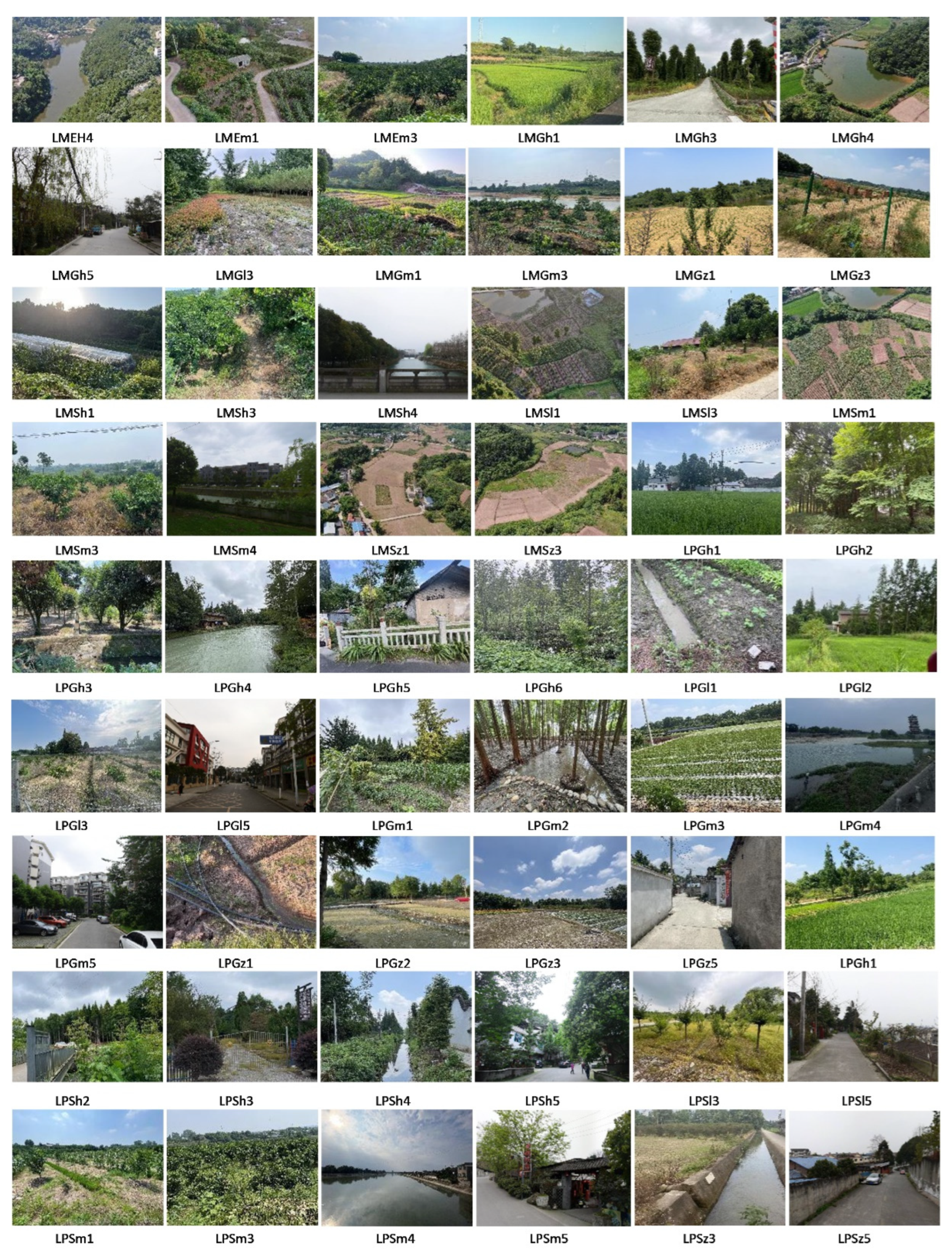
27]. Distribution information of the channel system is extracted using remote sensing imagery, digital elevation models, and other data through image processing, feature extraction, and model calculation techniques. The canal system is detected and evaluated in remote sensing imaging using attributes including color, texture, and geometry. The canal system is further validated and enhanced through ground surveys, field investigations, and historical satellite imagery, leading to the creation of canal system distribution maps for the study area in 2000, 2010, and 2020 (
Figure 5).
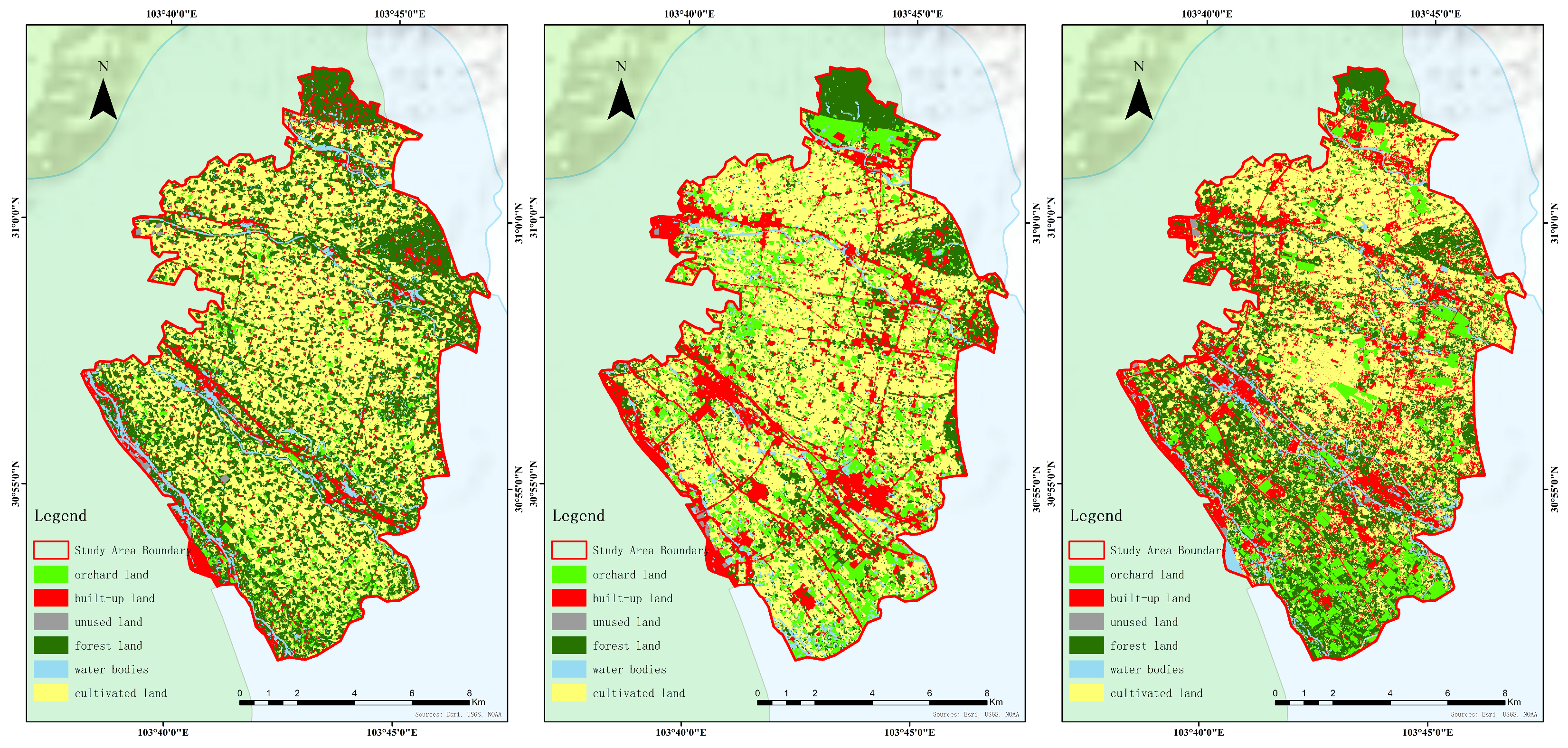
Land use categories are the basis of regional landscapes and serve as vital material resources for the production and daily activities of local inhabitants. Examining them facilitates a precise comprehension of landscape characteristics [
28]. According to LULC classification standards and the prevailing land use conditions in the Dujiangyan Essence Irrigation District, the study area was categorized into six types: cultivated land, forest land, orchard land, water bodies, built-up land, and unused land [
29]. The research employed a human–machine interaction analysis approach, utilizing ENVI 5.3 software to perform supervised classification of several land use categories within the study region. Spectral analysis and topographic characteristics were utilized to interpret farmland, water bodies, forests, and buildings within the study area’s sample objects. These findings were juxtaposed with high-resolution historical remote sensing images to extract information on diverse land use types, facilitating visual interpretation. The results were subsequently confirmed, yielding a Kappa coefficient of 0.91, surpassing the minimum accuracy threshold of 0.9 and fulfilling the research requirements [
30]. Ultimately, high-resolution historical imagery from Shuijingzhu and Landsat imagery was utilized to provide training samples. The green space and building data in the study area’s land use data were rectified using the integration of manual visual interpretation and field verification procedures, utilizing comparisons with historical satellite imagery maps. Green spaces were classified into two categories: forest land and orchard land, while building land was divided into unused land and built-up land. The LULC for the study area in 2000, 2010, and 2020 was acquired (
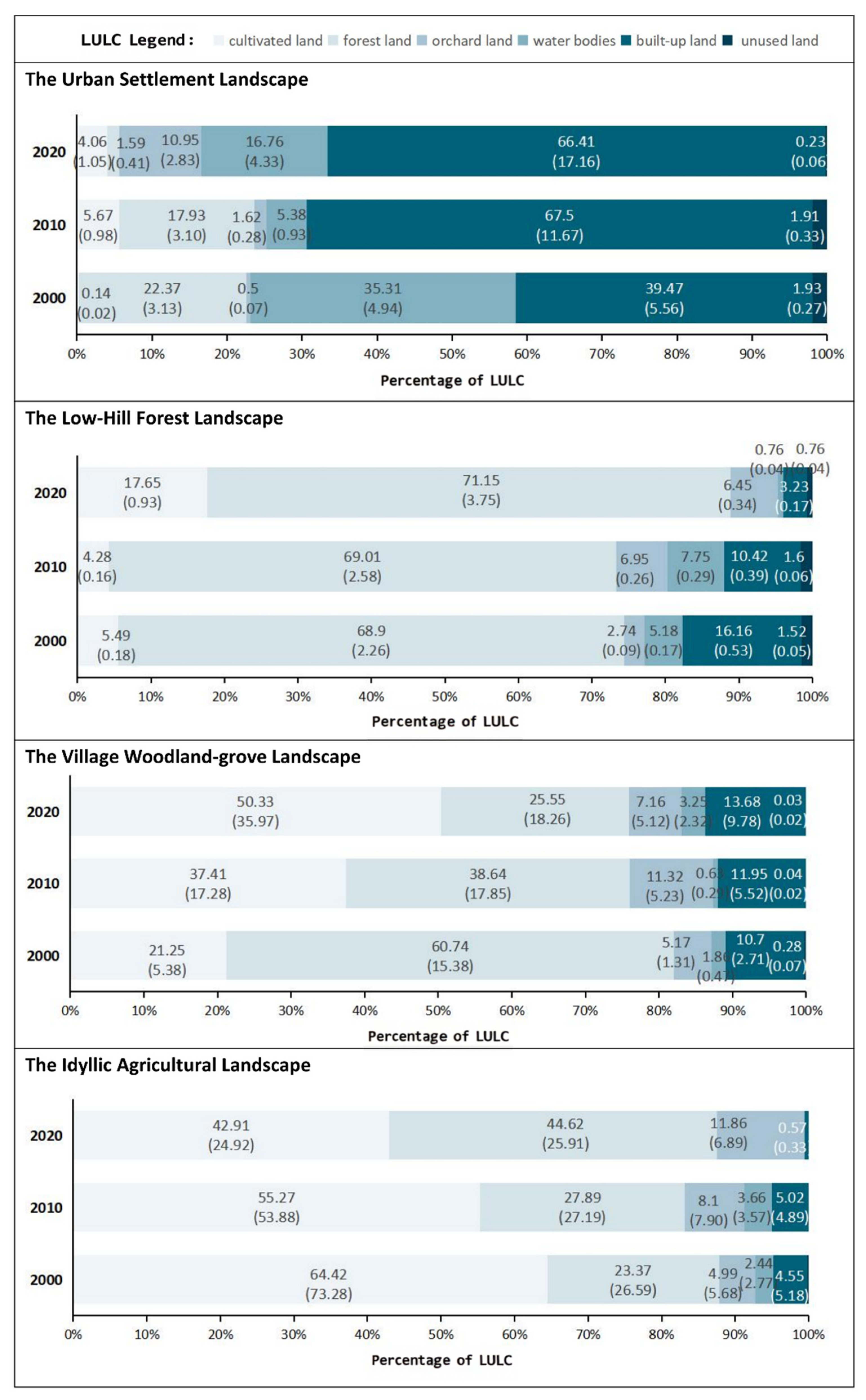
Figure 6).
2.4. Irrigation Landscape Characteristic Types Identification
The structural classification system for studies connected to landscape characteristics can be categorized into two types: nested and non-nested. Classification methods generally encompass two categories: decompositional and agglomerative [
31]. The predominant method in use today relies on the scale attributes of landscapes, employing graphic overlay techniques or multivariate clustering approaches to categorize landscape characteristics [
32]. This method offers advantages such as the capacity to deconstruct intricate landscape characteristics into simpler components, thereby enhancing comprehension and classification of landscapes; the incorporation of the cumulative effects of multiple landscape elements, which allows for more precise description and analysis; and the capability to amalgamate diverse landscape elements into distinct types and zones, rendering classification outcomes more practical and applicable. The preliminary landscape characteristic types in the study area were determined using GIS 10.4 overlay techniques. Consequently, Fragstats v4.2.1 was employed to compute the landscape pattern indices Proximity Index (PROX) and Average Nearest Neighbor Distance (ENN), which delineate the spatial dispersion patterns among patches, thereby mitigating the impact of subjective factors and enhancing the precision of landscape characteristic classification [
33]. The database was processed using SPSS 27.0, and the resulting matrix served as an indicator factor for K-means clustering analysis to classify various landscape characteristic type maps, thereby enhancing the comprehension of landscape characteristic evolution. The subsequent formulas pertain to PROX (3) and ENN (4):
In Equation (3), aij denotes the neighboring region between patch i and central patch j, whereas hij represents the shortest distance between patch i and central patch j.
In Equation (4), n represents the quantity of spots; di denotes the distance between the i-th spot and its nearest neighboring spot.
4. Discussions
4.1. The Impact of Rural Revitalization Policies on the Evolution of Regional Landscape Characteristics in the Dujiangyan Essence Irrigation District
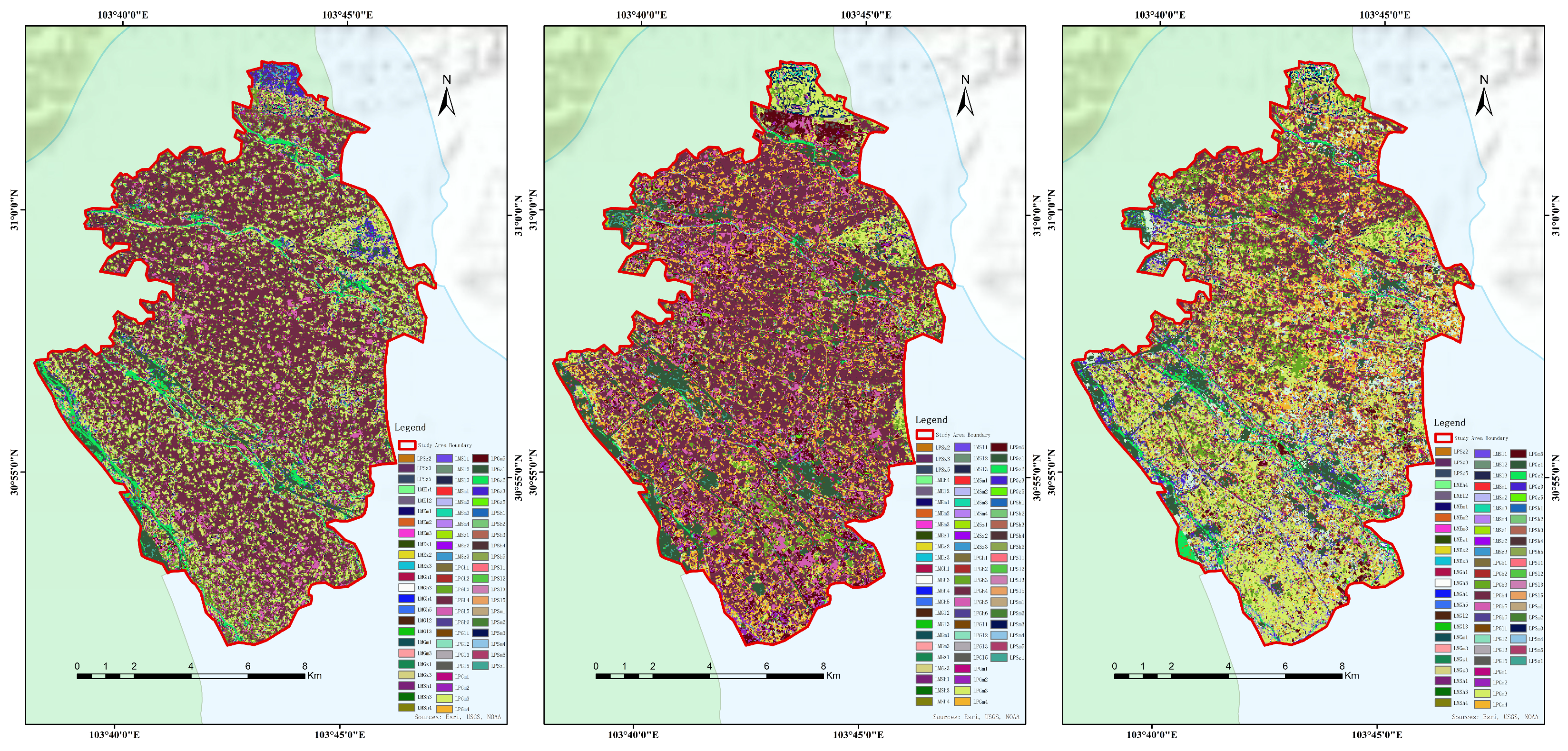
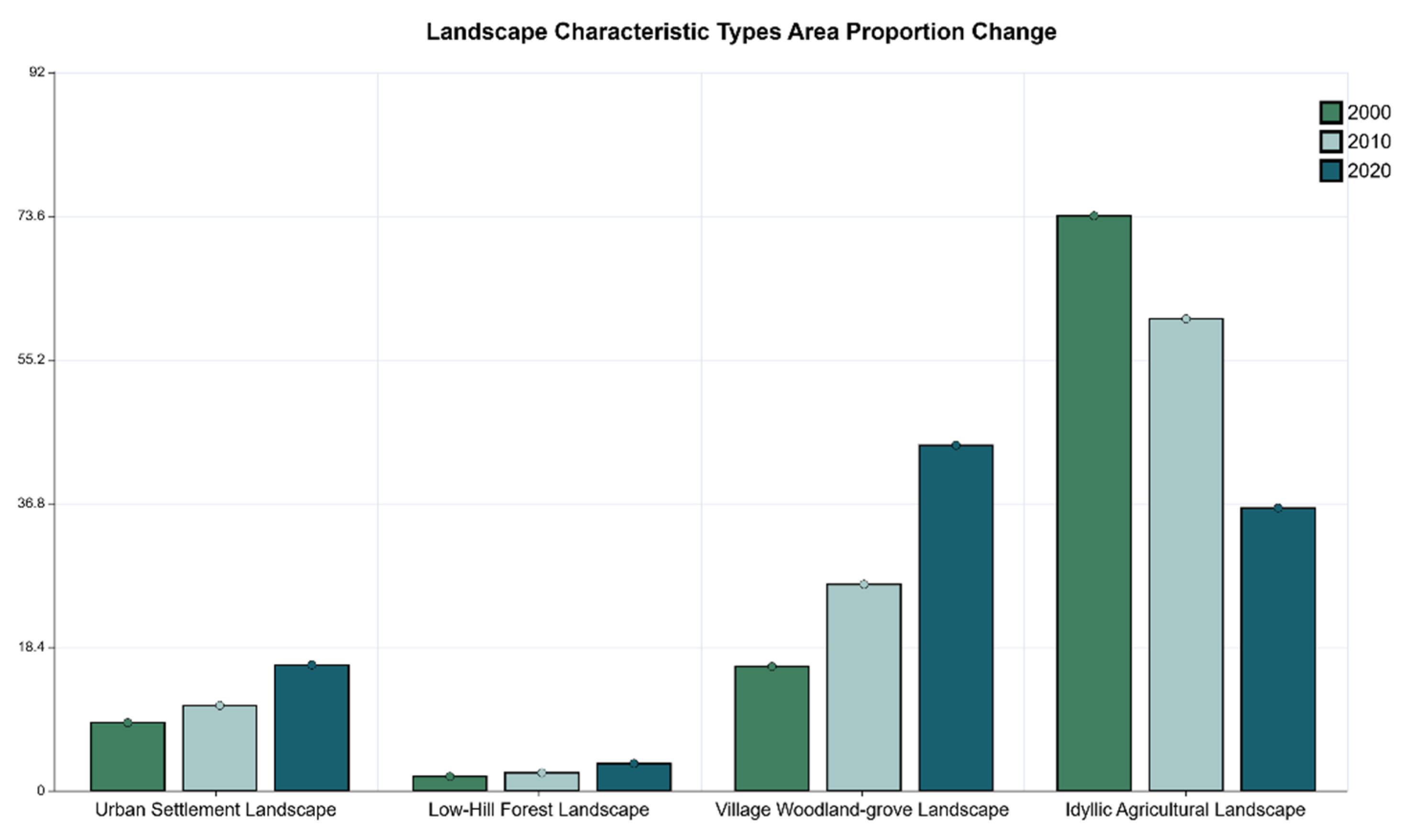
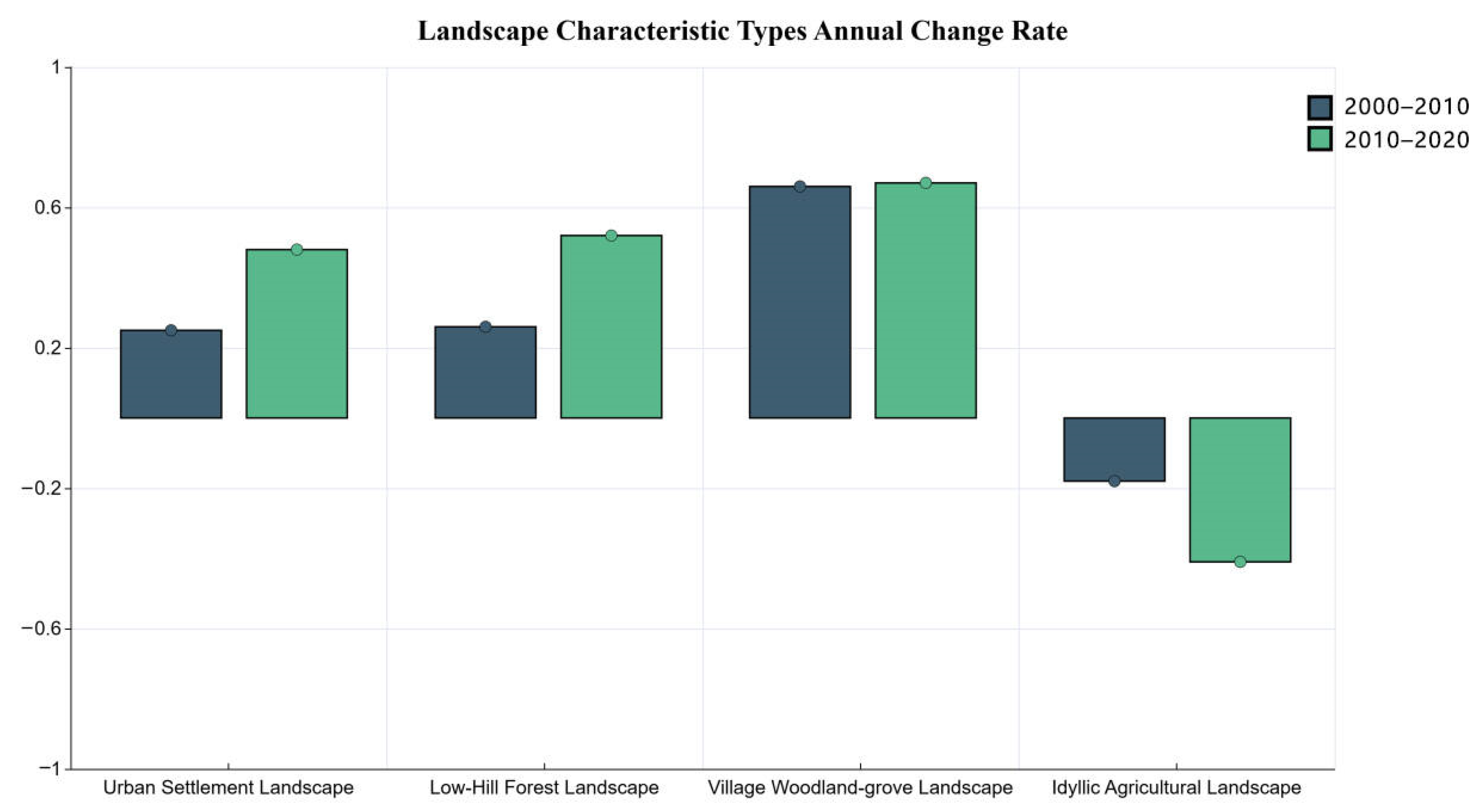
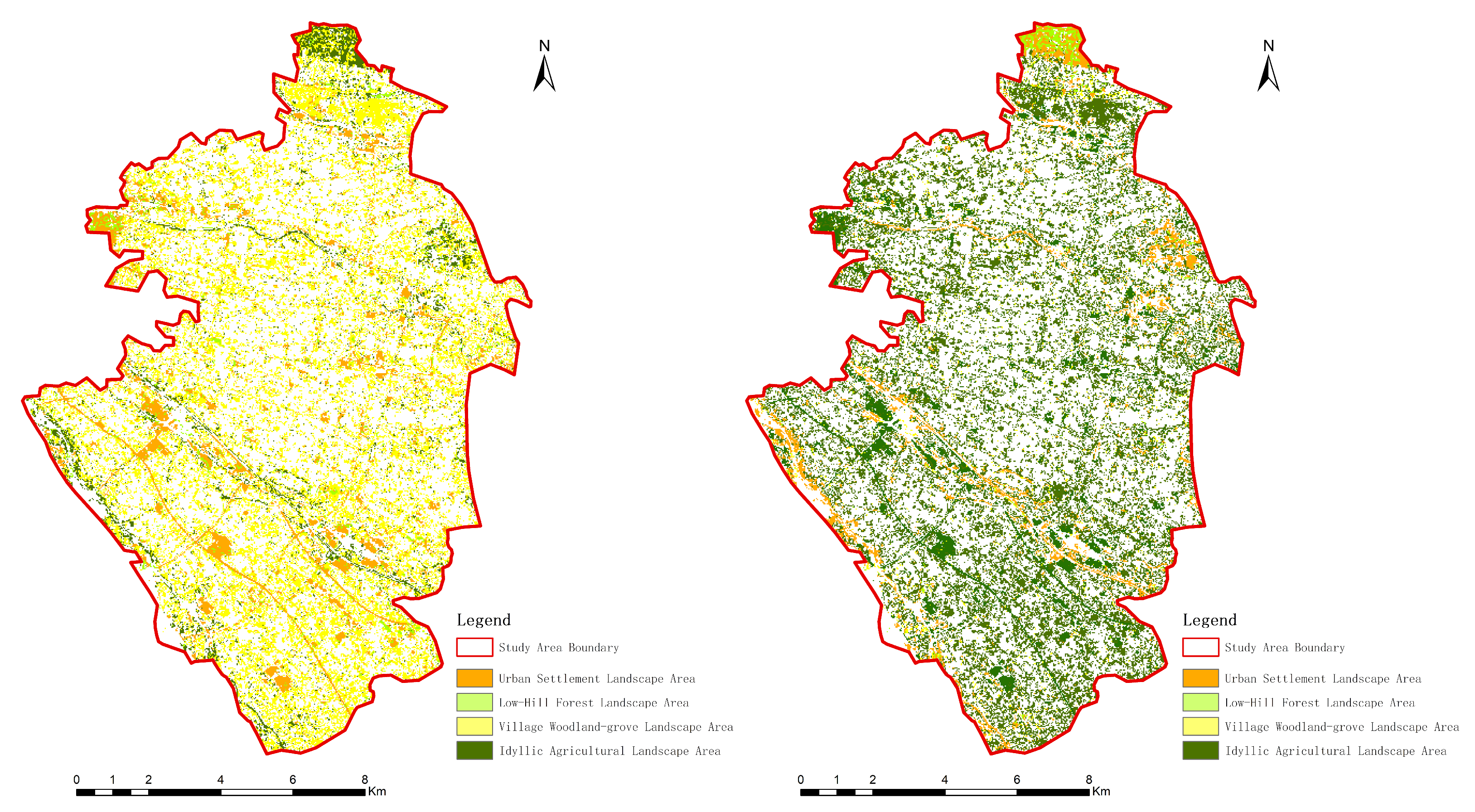
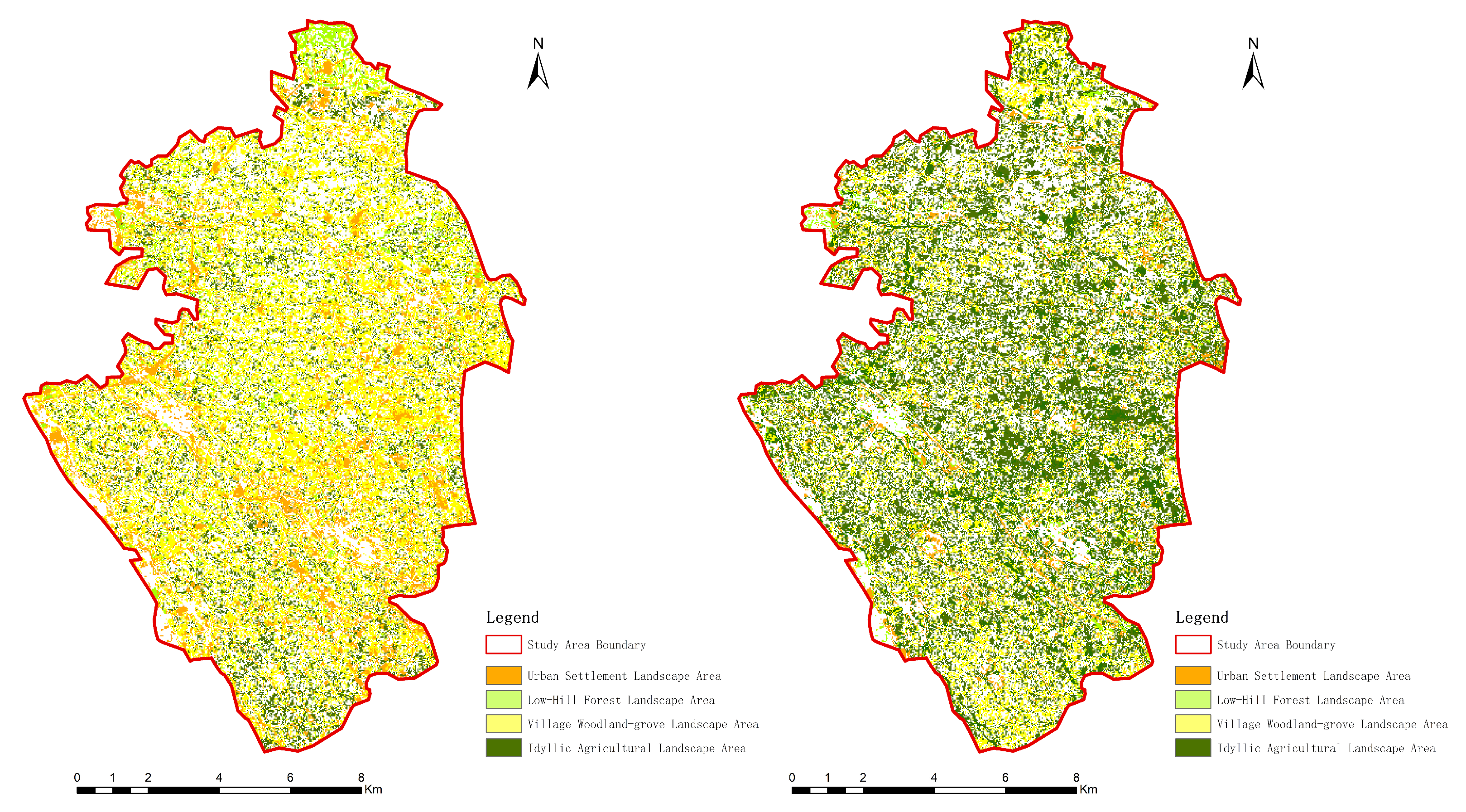
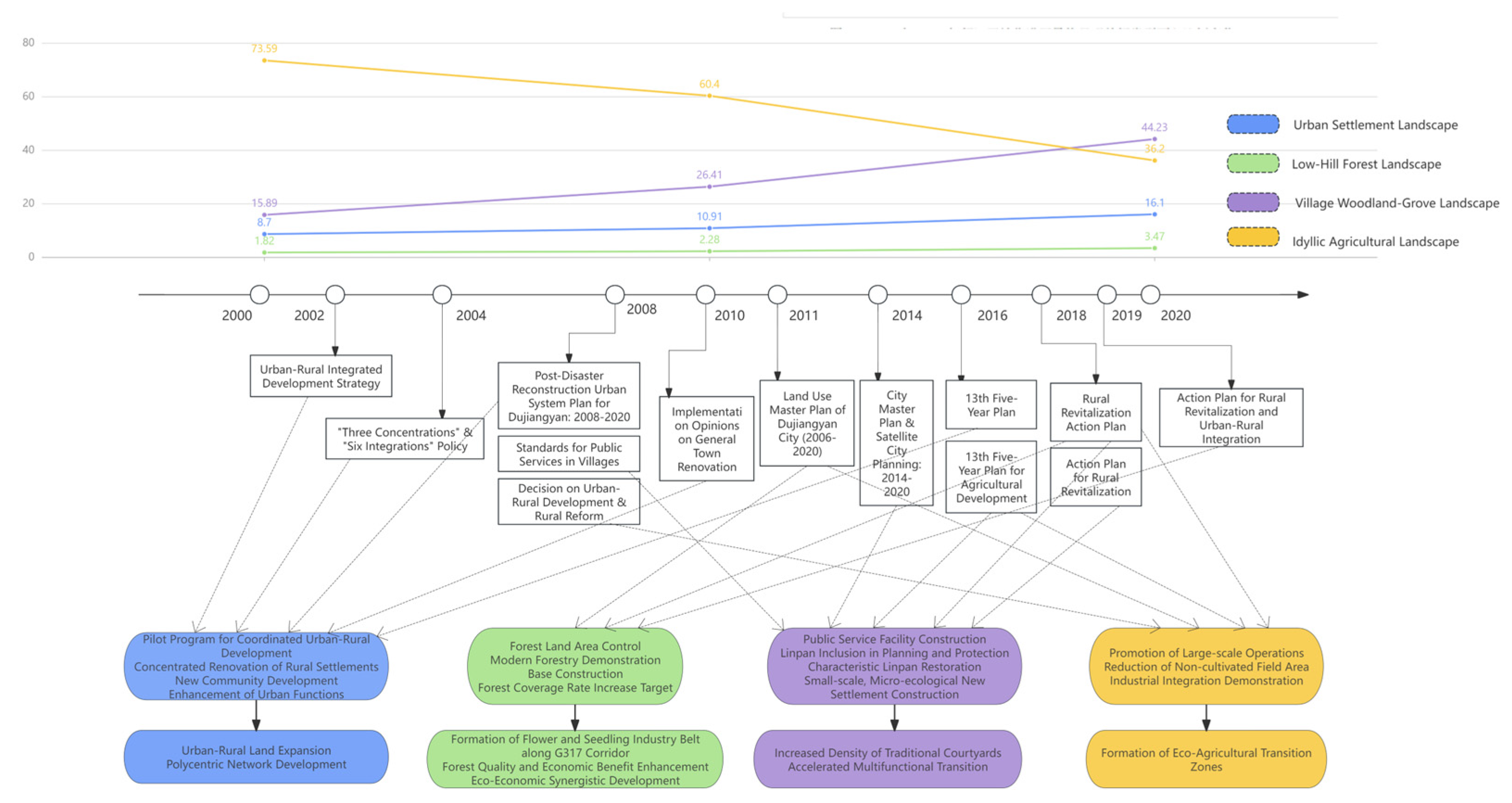
Under the impetus of rural revitalization policies, the regional landscape characteristics of the Dujiangyan Essence Irrigation District have undergone significant changes. An examination of the changes in various landscape characteristic types and their dominant factors allows for a comprehensive understanding of the impact of policies on the development of the district’s regional landscape characteristics (
Figure 14). Specifically, the growth of the Urban Settlement Landscape is primarily attributed to the expansion of built-up land. From 2000 to 2020, the percentage of built-up land rose from 29.47% to 66.41%. The implementation of relevant policies has augmented the expanse of urban and industrial land, with the transformation of rural residential land resulting in an expansion of the Urban Settlement Landscape. In the Low-Hill Forest Landscape, the percentage of forest land has exhibited a consistent increase during the year, rising from 68.90% to 71.15%. The alterations in this landscape type are attributable to the expansion of forest land. The implementation of policies has partially facilitated the establishment of forestry industry bases, enhanced forest landscapes, and increased the number of flower and nursery decorative bases, which in turn has influenced changes in the Low-Hill Forest Landscape. The expansion of Village Woodland-gro Landscape is chiefly due to the transformation of forest land into built-up land, cultivated land, and orchard land. In the last 20 years, the percentage of built-up land has grown from 10.70% to 13.68%, while the percentage of cultivated land has increased from 21.25% to 50.33%. Designated farmhouse forests in western Sichuan province are recognized as vital local protected resources, attracting substantial investment and development, hence facilitating the swift expansion of farmhouse forest landscapes. This illustrates the significant function of farmhouse forests in enhancing rural living conditions and fostering rural industrial revitalization. The Idyllic Agricultural Landscape is predominantly characterized by cultivated land (54.20%) and forest land (31.96%). In 2000, cultivated land constituted 64.42% of the entire landscape area, but this figure dropped to 42.91% by 2020. In 2000, forest land comprised 23.37% of the total land area, rising to 44.62% by 2020. Chengdu City and Dujiangyan City have implemented a set of regulations for the Dujiangyan Essence Irrigation District. These policies are important steps to improve the area’s economy and society, aimed at meeting the needs of industrial growth and changing the scattered rural farms into a connected layout that meets today’s production standards. Their implementation has led to substantial alterations in the attributes and aesthetics of the Idyllic Agricultural Landscape.
4.2. Impact of Rural Revitalization Policies on the Evolution of Canal Systems in the Dujiangyan Essence Irrigation District
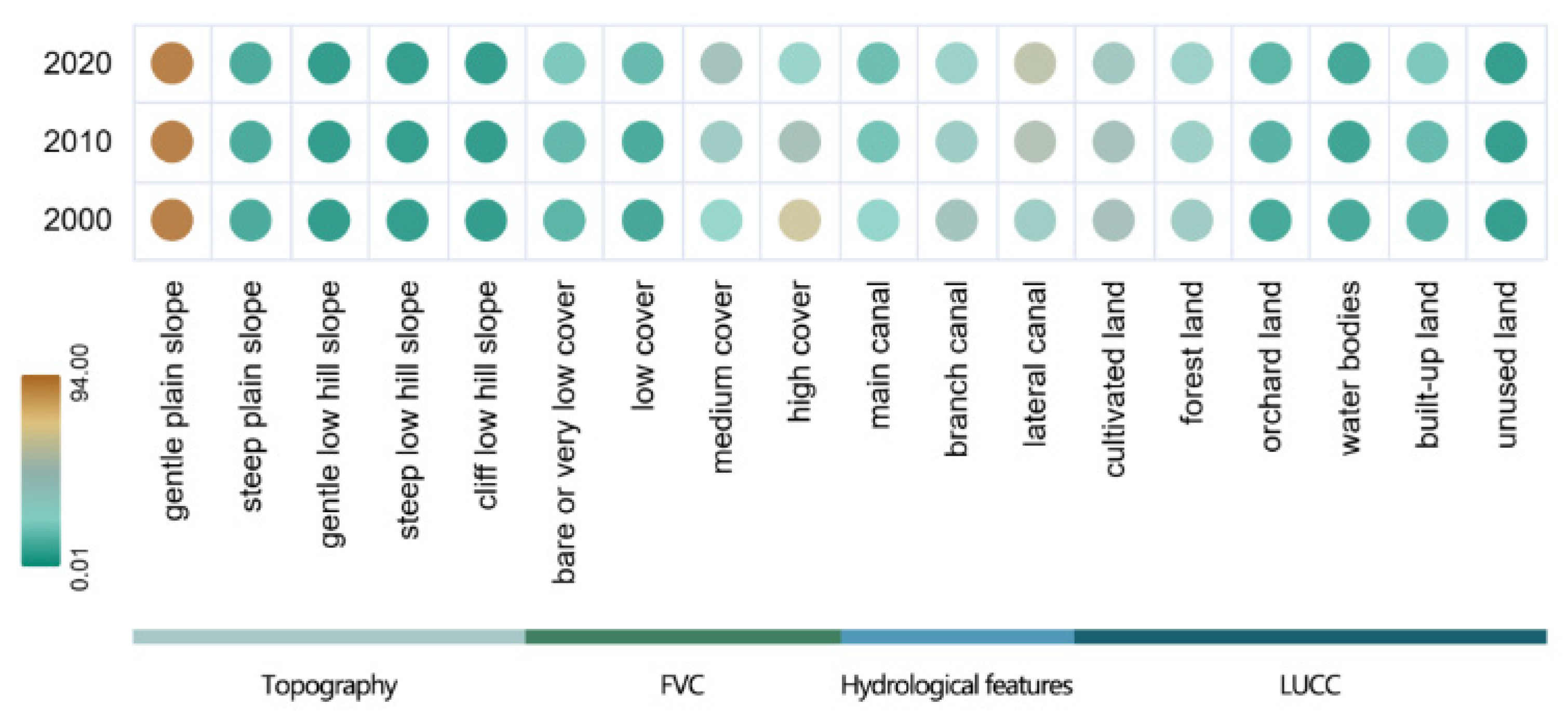
The findings of this study indicate that the evolution rates of branch canals and lateral canals are significantly higher than those of the main canal network (
Figure 10). This phenomenon reflects that, against the backdrop of rural revitalization, the irrigation systems in the study area are undergoing a systematic transformation to adapt to new development demands.
First, agricultural modernization has driven the structural upgrading of irrigation systems. Land consolidation and large-scale farming operations have broken away from the traditional fragmented field and canal patterns, prompting the reconstruction of irrigation systems to meet the demands of modernization through standardization and large-scale adaptation, as outlined in the *Chengdu Agricultural and Rural Economic Development “13th Five-Year Plan”*.
Secondly, the diversification of rural functions has driven the expansion of irrigation channel systems. With the advancement of the protection and restoration of Linpan in West Sichuan Plain and the construction of the Tianfu Greenway, the functions of irrigation channels have expanded beyond their original role of supplying water for agricultural production to encompass ecological landscapes and tourism services, as guided by the *Dujiangyan City Master Plan and Chengdu Satellite City Plan (2014–2020)*. To create water features and develop eco-tourism, numerous new landscape channels and ecologically renovated channels have emerged, further intensifying the evolution of the branch canals and lateral canals.
4.3. Policy Implications and Recommendations
Based on the current evolution of landscape characteristics within the study area, this research preliminarily establishes landscape development guidelines and policy recommendations for each landscape characteristic type. These guidelines address four key aspects: landscape conservation, landscape restoration, landscape enhancement, and landscape renewal. They aim to guide the comprehensive optimization and development of the landscape within the Dujiangyan Irrigation District in the context of rural revitalization.
For the Urban Settlement Landscape, where intensive development has led to habitat degradation, interventions guided by landscape renewal should be implemented. Core strategies include establishing spatial zoning control systems to effectively curb the uncontrolled expansion of built-up areas by defining urban growth boundaries. New development demands should be directed toward infill development within existing built-up areas and brownfield redevelopment zones, thereby alleviating the encroachment pressure exerted by urban spaces on surrounding agricultural landscapes.
In the Low-Hill Forest Landscape, which maintains sound ecological conditions due to effective conservation. Moving forward, a strategy balancing landscape conservation and landscape enhancement should be consistently implemented. Through fiscal transfer payments, this mechanism incentivizes local communities and governments to sustainably protect and enhance forest ecosystems, closely linking their ecological benefits to regional objectives such as water conservation and biodiversity preservation.
Regarding the Village Woodland-Grove Landscape, significant improvements in ecological conservation, traditional architecture, and tourism infrastructure have been achieved through policy support. To ensure refined development and quality enhancement, landscape conservation and landscape renewal should be implemented alongside ongoing preservation efforts, integrating factors such as village location, industrial layout, and landscape corridor planning to synergize ecological, living, and productive functions.
As for the Idyllic Agricultural Landscape, which serves as the core foundation of the irrigation district, landscape preservation and landscape renewal must be prioritized to maintain its unique value amid urbanization and rural revitalization. Critical measures include stringently enforcing the prime farmland protection zone system and utilizing legal and planning instruments to resolutely curb non-agricultural conversion.
4.4. Limitations and Future Work
There are several limitations to this study. On the one hand, limits in data resolution may obscure boundary identification accuracy, thus impacting the precision of landscape characteristics classification. This may restrict the precision of small-scale agricultural and forestry land adjacent to farmhouse forest, despite the widely acknowledged productive potential of such land [
36]. On the other hand, owing to constraints in data gathering and processing technology, the study predominantly picked three temporal intervals from 2000, 2010, and 2020. Although these may indicate long-term trends, they might neglect evolutionary traits resulting from process-driven abrupt occurrences. The establishment of irrigation districts is a complex outcome of various interacting forces [
37]. Consequently, subsequent research could integrate additional dimensional data and information, including socioeconomic data, policy documents, population migration, public interests, and social aesthetics, to enhance and refine the representation of landscape characteristics, thus facilitating a more thorough analysis and understanding of landscape characteristics evolution and its underlying mechanisms.